Browsed by
Month: June 2021

Taking a New Look: A Chronological Overview of GFTFF Titles
Taking a New Look: A Chronological Overview of GFTFF Titles

Hello, fellow film fanatics!

I’ve had a few requests over the years to tally my votes for whether each of the titles in Peary’s GFTFF is must-see or not (in my opinion), and I’m now a little closer to that.

If you click on this page — named “Chronological Listing of Peary’s Titles – With Votes!” on the Navigation bar — you’ll see all of Peary’s titles from both the front and back of his book in one meta-list, arranged chronologically from 1914 to 1987, with hyperlinks to my own reviews when available — as well as my votes.

YES is in obnoxious red, just to make it super-obvious. (Currently I count 1,409 out of 2,967 titles, or 30.3%, as YES.)

As a reminder, my “Yes” or “No” vote on a title — like for Peary — doesn’t necessarily indicate whether I think a film is amazing… or awful… or somewhere in between. It’s simply my best attempt to indicate whether I think film fanatics of all ages and stripes would benefit from checking it out at some point in their movie-watching career. With that said, there are a ton of “No” votes on my site that I actually think are worthy viewing — just not essential. For instance, often I’ll recommend a film as “worth checking out” if you happen to like a particular actor or director or style…

While there will always be some movies that are indisputably must-see for EVERYONE, in many other cases it’s much less cut-and-dry. Should all film fanatics be familiar with every title that’s been given a Best Picture Academy Award, for instance? You might think so, but … I don’t. I have actually voted No to a few Best Picture Winners (and full admission that I was deeply disappointed in this year’s selection of Nomadland — an okay but flawed indie film that is worth a look if you’re curious, but simply doesn’t cut it as Best Picture material).

However — who’s to say, really? Peary notoriously had his say in Alternate Oscars (which I love citing from), though some of his own selections are pretty questionable… And just because I happen to loathe My Fair Lady (1964) doesn’t mean everyone feels that way; clearly, many don’t.

Back to my new list: by arranging all of Peary’s titles in chronological order, I’ve attempted to get a better sense of the arc of movies he’s recommending (with an abrupt end somewhere in 1987). There are only 12 titles listed from the 1910s (six of which I consider must-see so far) and 138 from the 1920s, but a whopping 673 from the 1950s! Meanwhile, since Peary was so intentional about including foreign titles in his GFTFF, we can somewhat see the range of world cinema over the years — albeit limited to titles that were available to American audiences when he published his book, and certainly not all-inclusive.

At any rate, chronological order remains just one way to try to make sense of cinema over the ages; other schemes I’ve been offering on this site for many years now include categorizing by actor, by director, by genre, and by topic or theme — and of course, simply by those titles reviewed in the front of his book, and those listed in the back.

Regardless of how you choose to peruse your GFTFF titles, I hope you enjoy looking over this new list and seeing how many votes you agree with — or not! (The debate continues… ’twas ever thus.)

– Sylvia (FilmFanatic)

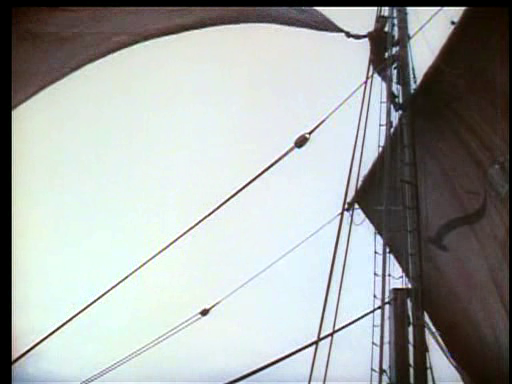
P.S. If you’re a hardcore film fanatic, I would argue you should instantly know which film the still I’ve included up on top of this post is from — but just in case you need a reminder, click here.
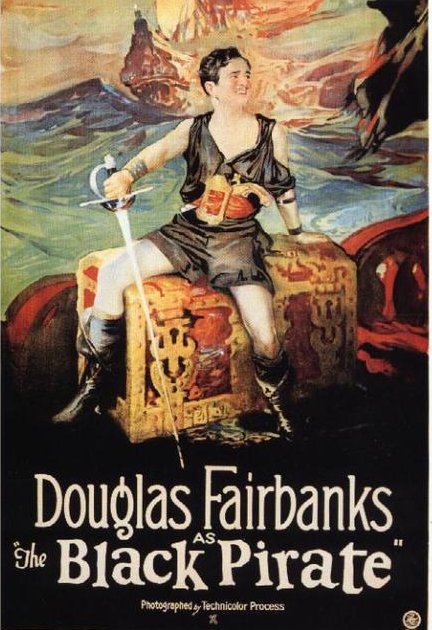
Black Pirate, The (1926)

Black Pirate, The (1926)

“It was the custom of these pirates to subdue their prey, loot the ship, bind their captives and blow them up.”

Synopsis:
A duke (Douglas Fairbanks, Sr.) who escapes the marauding of a merchant vessel by a band of cutthroat pirates seeks revenge and earns his way into their graces, soon helping them single-handedly take over another ship — this one with a beautiful maiden (Billie Dove) on board. Can Fairbanks save Dove from a terrible fate while eliciting support from the nearby government?

Genres, Themes, Actors, and Directors:

  • Donald Crisp Films
  • Douglas Fairbanks, Sr. Films
  • Pirates
  • Revenge
  • Silent Films

Review:
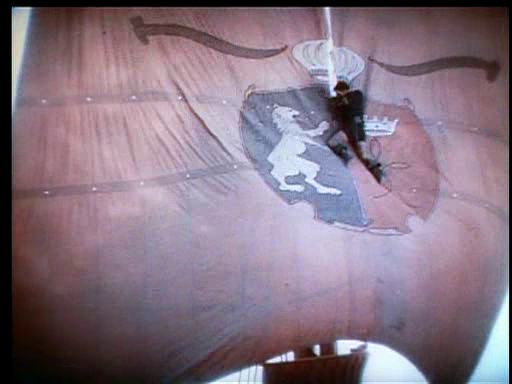
This Douglas Fairbanks, Sr. film is one of only two listed in Peary’s GFTFF, along with The Mark of Zorro (1920) (though I’ve also included The Thief of Bagdad as a missing title). The Black Pirate is notable not only for Fairbanks’ agile derring-do — on ample display, as always — but for its use of an early two-strip Technicolor process. A couple of especially memorable scenes include Fairbanks slicing down the sails of a captured pirate ship with his dagger:

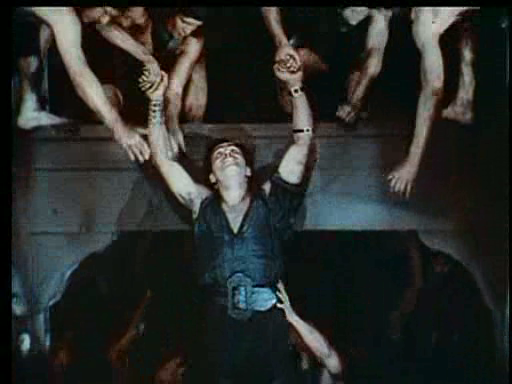
… and the final rescue scene involving a crew of nimble men in swimming shorts:


However, while it’s pretty to look at and Fairbanks is as impressive as ever, the storyline is nothing more than a boy’s fantasy writ large, including hidden treasure, walking the plank, and plenty of pirate-y mischief; it was accurately described by Mordaunt Hall of the New York Times as “a series of robust scenes slung on a slender thread of a story.” This one is will be of interest to Fairbanks fans (or silent film lovers), but isn’t required viewing for all film fanatics.

Redeeming Qualities and Moments:

  • Several enjoyable action scenes

  • Impressive two-strip Technicolor

Must See?
No. Listed as a film with Historical Importance in the back of Peary’s book.

Links:

Guardsman, The (1931)

Guardsman, The (1931)

“It’s a soldier she’s longing for.”

Synopsis:
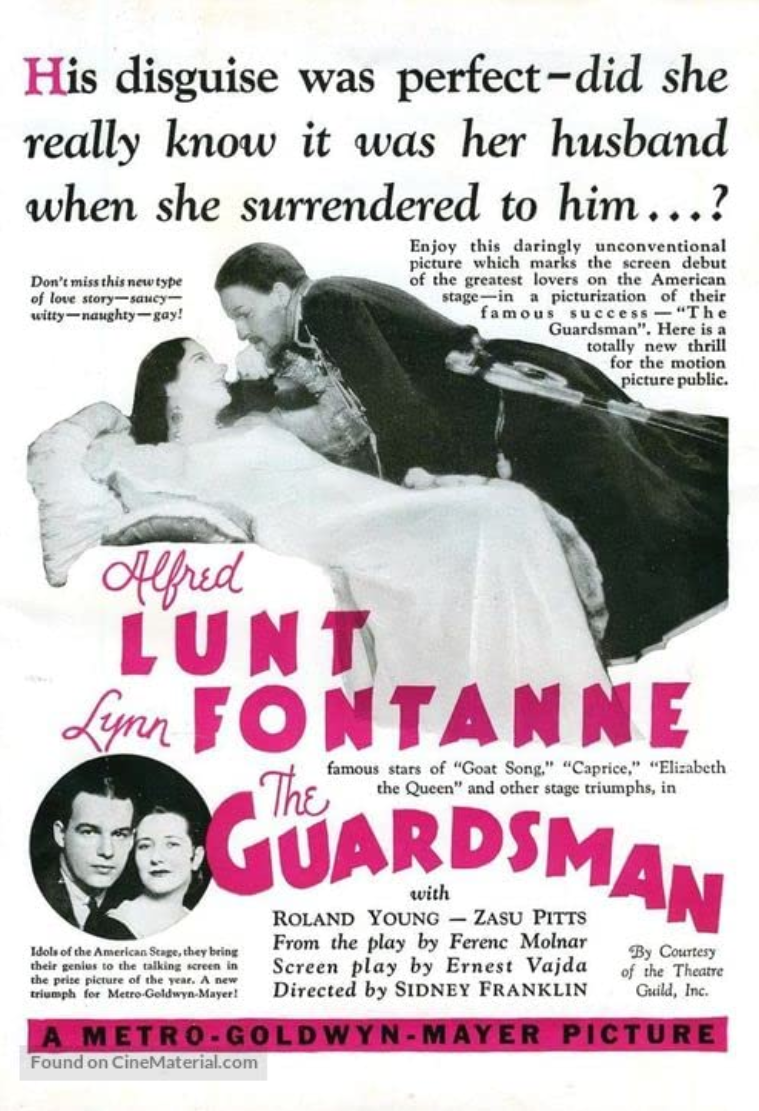
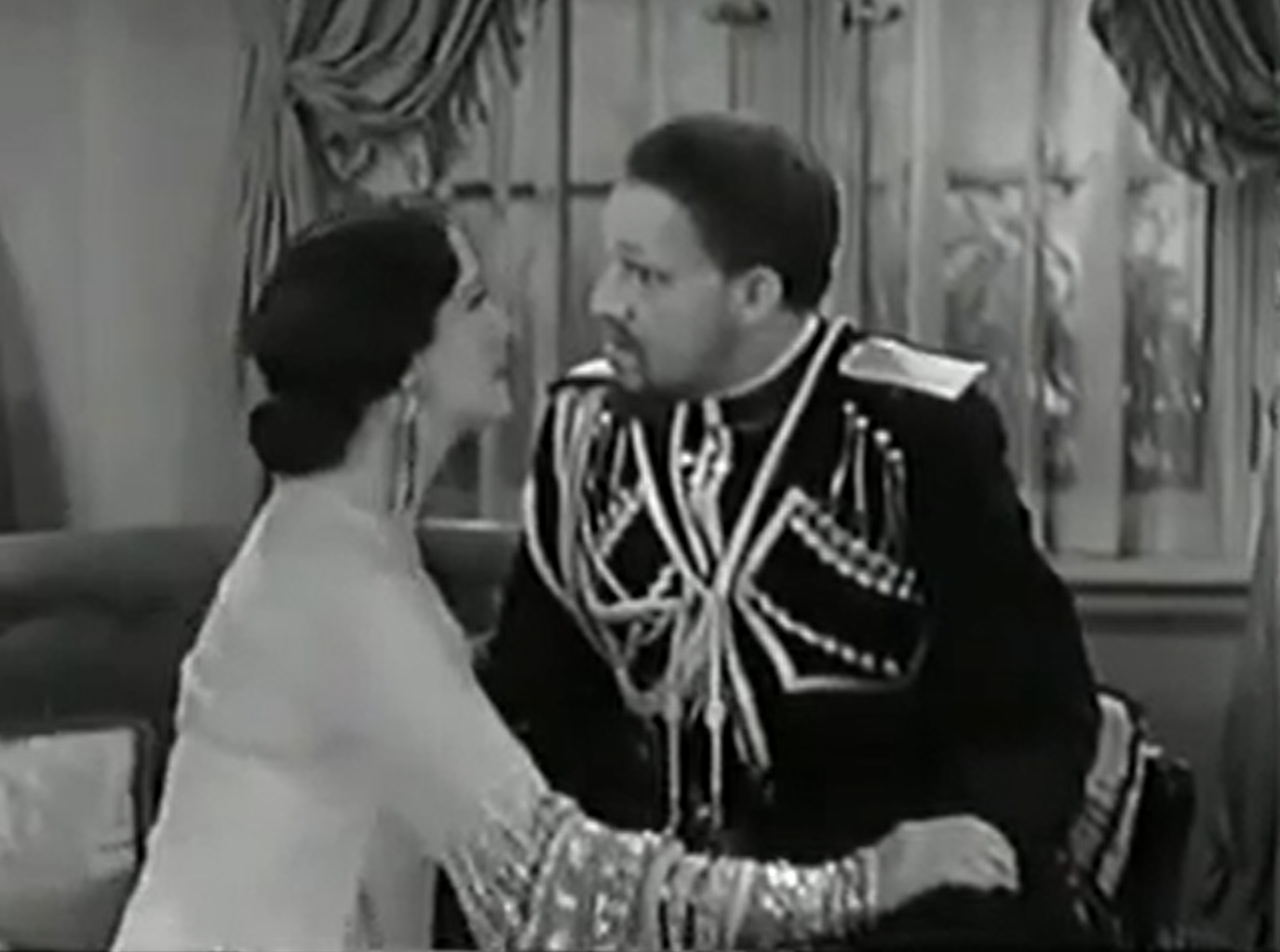
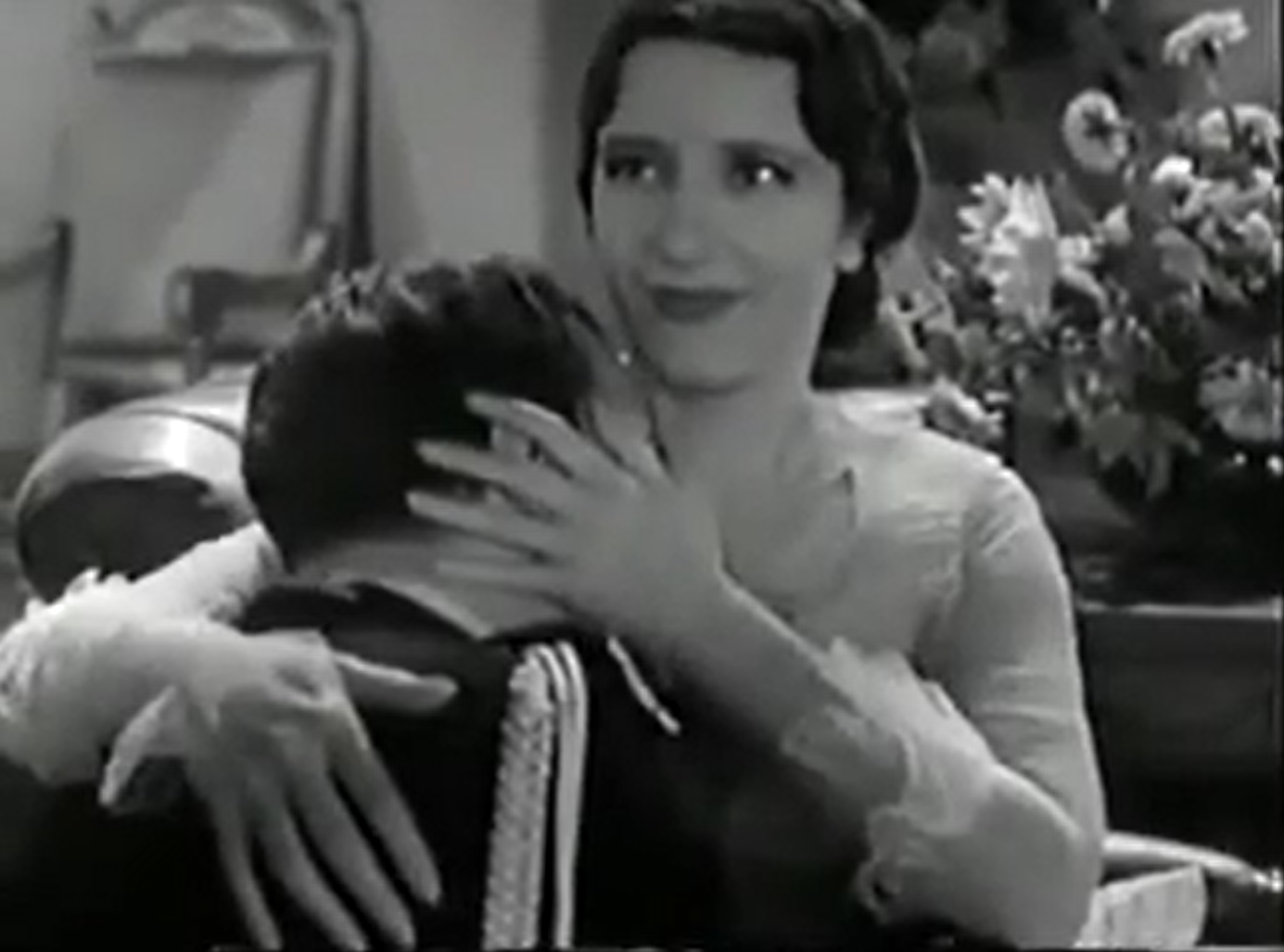
An actor (Alfred Lunt) who is insanely jealous of his wife (Lynn Fontanne) pretends to be a Russian soldier wooing her, taking only his friend The Critic (Roland Young) into his confidences. Will his wife betray him — with himself?

Genres, Themes, Actors, and Directors:

  • Actors and Actresses
  • Jealousy
  • Marital Problems
  • Mistaken or Hidden Identities
  • Play Adaptations
  • Roland Young Films
  • Romantic Comedy
  • Zasu Pitts Films

Review:
Legendary acting couple Alfred Lunt and Lynn Fontanne were both nominated for Academy Awards for their leading roles in this adaptation of Ferenc Molnar’s comedic play about a husband so insanely jealous that he disguises himself as his wife’s suitor to catch her cheating. Does his ruse work? Well, that’s the crux of the somewhat limited storyline, so it wouldn’t be fair to say more; suffice it to say that it’s clear why audiences at the time would have enjoyed a talkie like this, though its current appeal remains simply as a curio, to see this beloved couple on screen together for the first and only time.

Redeeming Qualities and Moments:

  • Lunt and Fontanne’s obvious chemistry together
  • An enjoyable closing shot

Must See?
No, though it’s worth a look if you’re curious to see Lunt and Fontanne. Listed as a film with Historical Importance in the back of Peary’s book.

Links:

Lion and the Horse, The (1952)

Lion and the Horse, The (1952)

“I’d of risked my neck to claim that horse for my own.”

Synopsis:
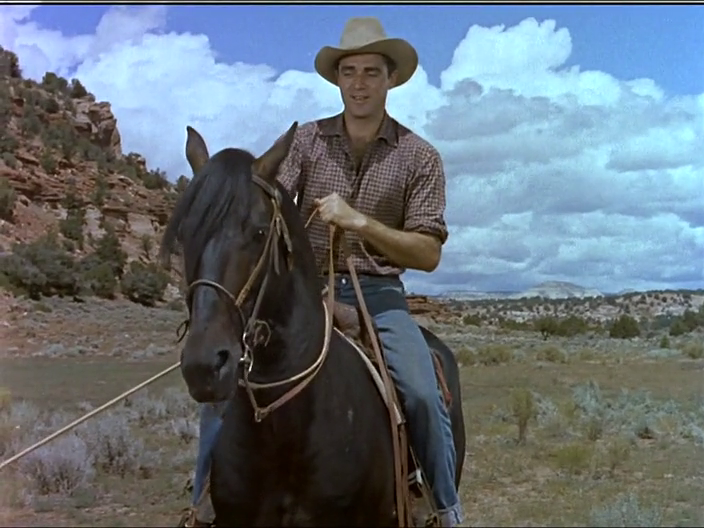
When a cowboy (Steve Cochran) falls in love with a wild stallion he names Wildfire, he hopes to buy the horse but instead is forced to kidnap Wildfire from a cruel rodeo owner (Ray Teal) and hide out on a ranch owned by the avuncular grandfather (R.H. Macy) of a horse-loving girl (Sherry Jackson).

Genres, Themes, Actors, and Directors:

  • Cowboys
  • Horses
  • Rodeos
  • Westerns

Review:
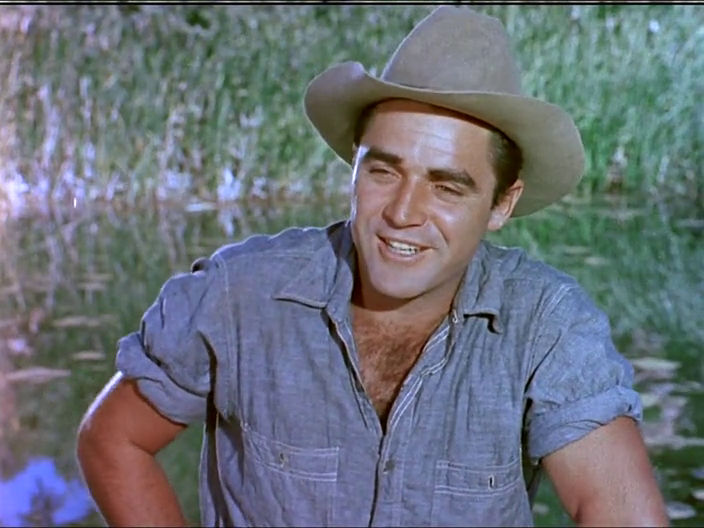
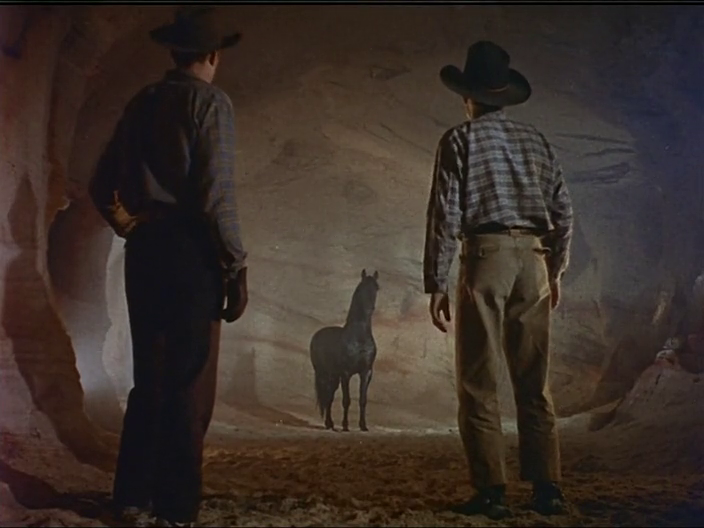
This kid-friendly western delivers exactly what its title promises: a dramatic showdown between an (escaped) lion and a horse. While these final scenes may be a bit brutal for younger kids, the storyline until then seems perfectly geared towards children who dream of horses. Cochran is given a wonderfully generous role to play, as a man who would do anything to prevent a magnificent creature like Wildfire from abuse and subjugation.

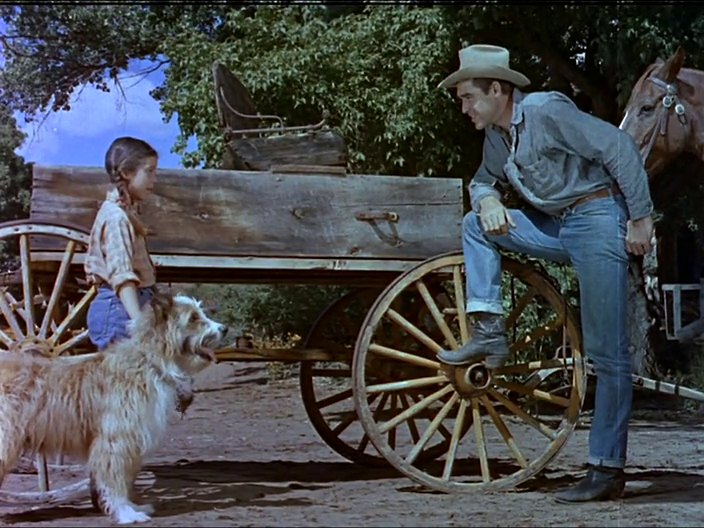
It’s also refreshing to see a girl in the central kid-role (Jackson is likeable and appropriately feisty):

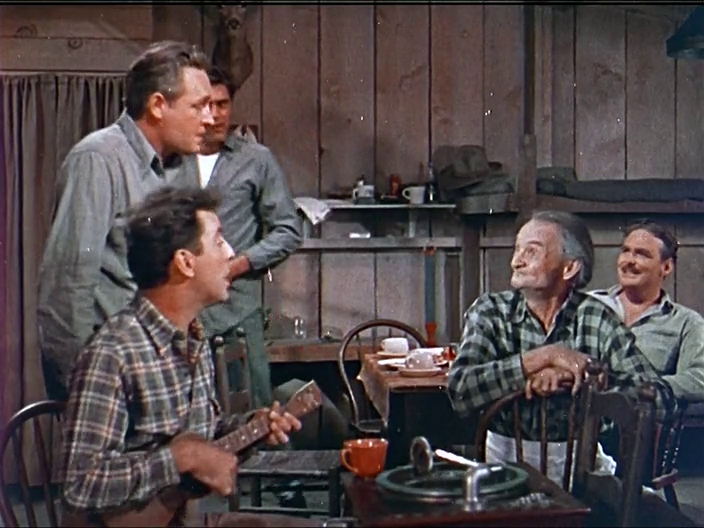
… and there’s a fun musical interlude involving a cowhand learning to play the ukulele by record player:

However, this isn’t must-see viewing for anyone other than Cochran fans, or those who may somehow fondly remember it from their own childhood.

Redeeming Qualities and Moments:

  • Steve Cochran as Ben Kirby
  • Fine cinematography

Must See?
No. Listed as a Sleeper in the back of Peary’s book, which makes sense. I’m not sure how many people these days know about this title!

Links: