Browsed by
Month: August 2020

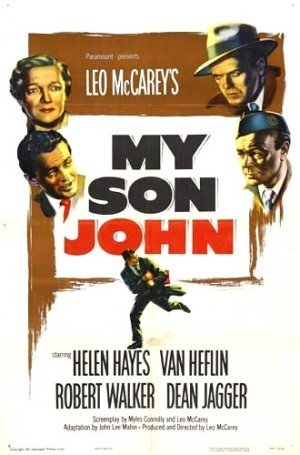
My Son John (1952)

My Son John (1952)

“What’s happened to my boy?”

Synopsis:
A devoutly Catholic couple (Dean Jagger and Helen Hayes) are happy to visit with their two Korea-bound sons (Richard Jaeckel and James Young), but distressed when their third son, John (Robert Walker), shows up late and appears to reject his family’s morals. Could a stranger (Van Heflin) Jagger and Hayes meet during a fender-bender actually be investigating Walker for subversive activities?

Genres, Themes, Actors, and Directors:

  • Cold War
  • Dean Jagger Films
  • Helen Hayes Films
  • Leo McCarey Films
  • Play Adaptation
  • Richard Jaeckel Films
  • Robert Walker Films
  • Small Town America
  • Spies
  • Suffering Mothers
  • Van Heflin Films

Review:
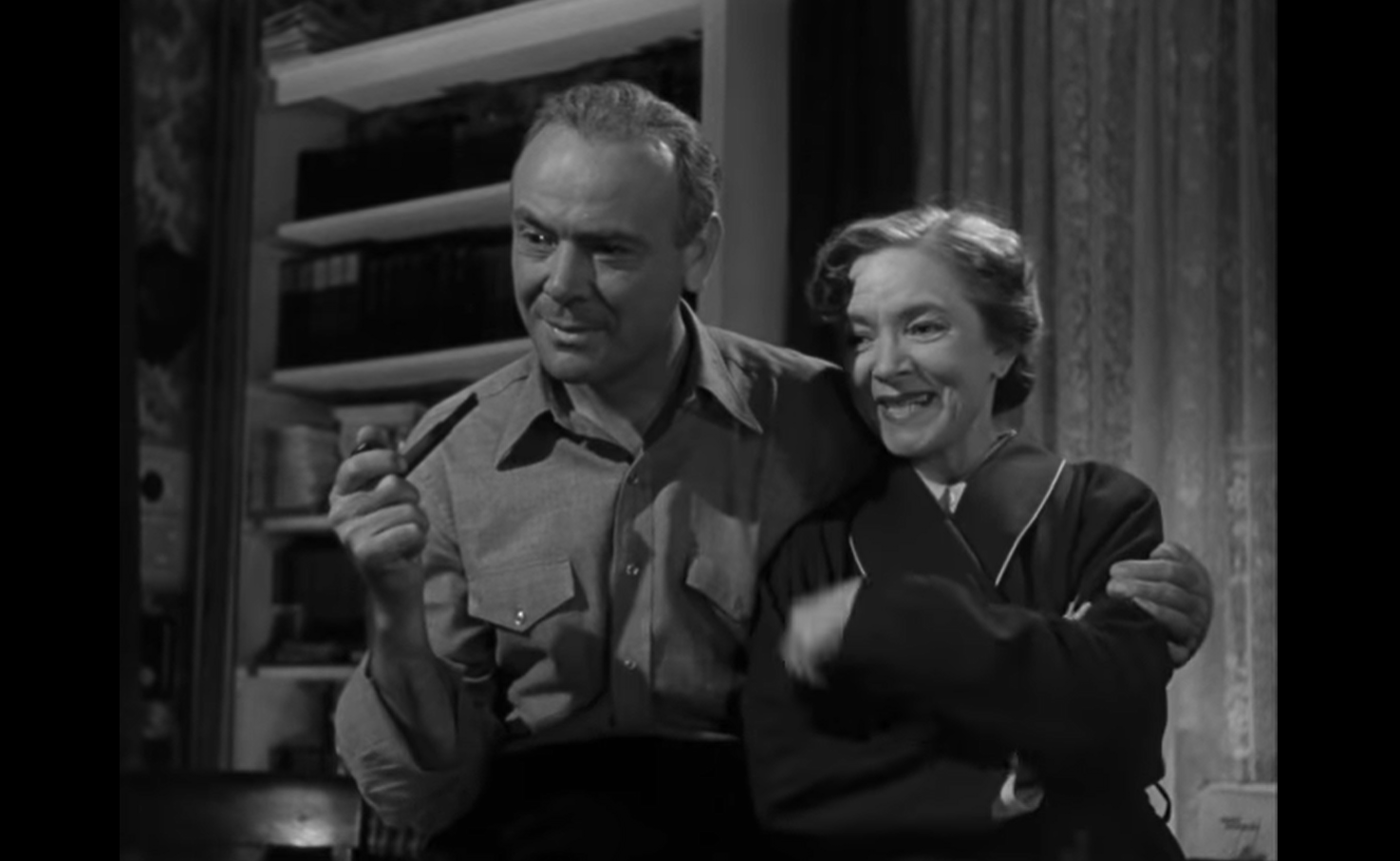
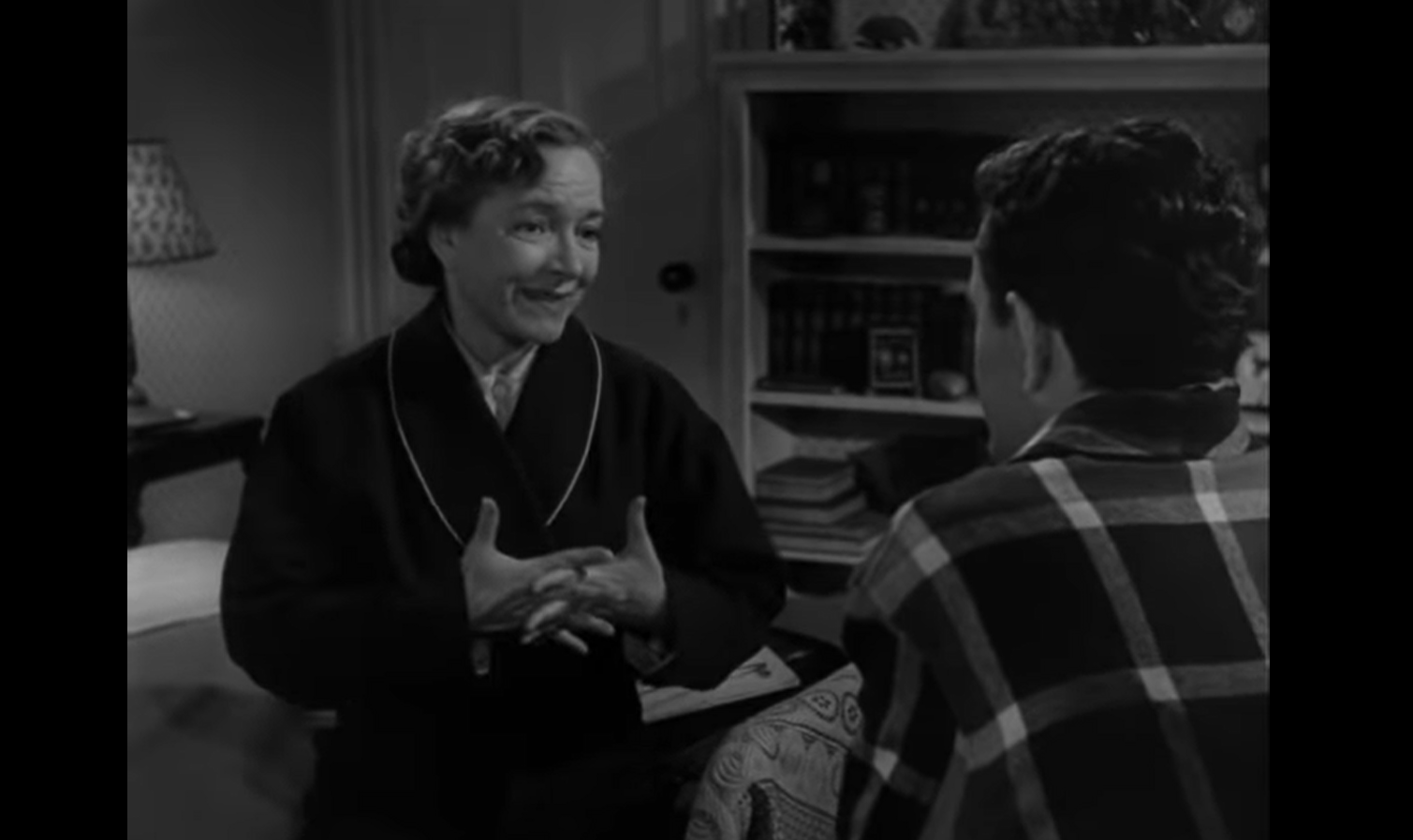
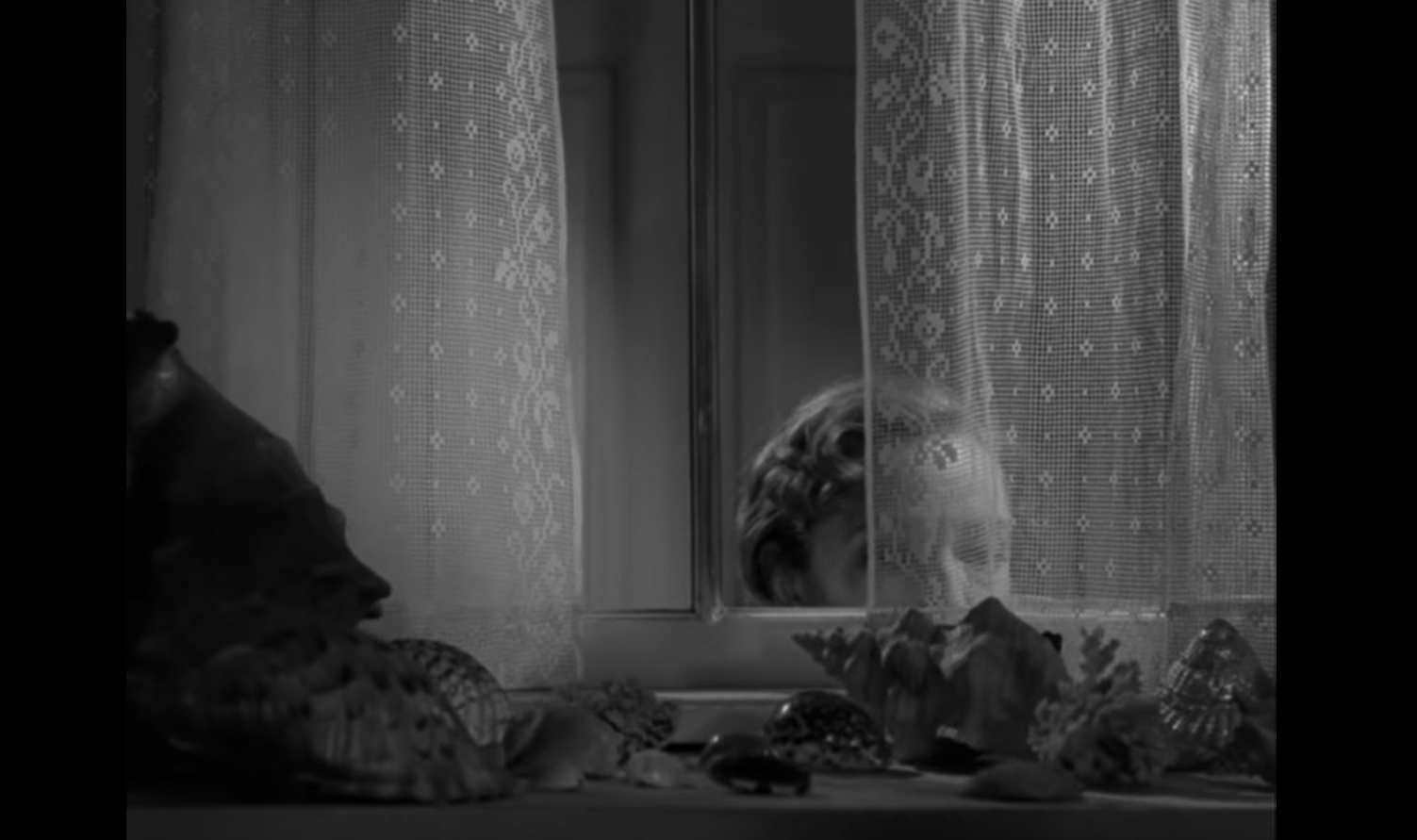
Leo McCarey — best known for helming a variety of audience favorites, including Duck Soup (1933), The Awful Truth (1937), Love Affair (1939) [as well as its remake An Affair to Remember (1957)], and Going My Way (1944) — also directed this Cold War-era curiosity, notorious for being Robert Walker’s last film before his premature death at just 32 years old. It’s too bad things went awry for this flick, given it starts off with a surprisingly powerful punch, nicely highlighting the tensions that can arise between parents and their grown children when their political and/or religious views have diverged:

— a phenomenon that’s never gone away, and is perhaps at a current zenith. Hayes’ performance (her first on-screen in nearly two decades) is heartwarming and natural; indeed, all the actors were apparently asked to improvise, with a resulting authenticity that feels rare in a film of this kind (though apparently it drove Walker crazy; see TCM’s detailed article for more information on this and other aspects of the film’s production).

Unfortunately, the storyline about the Red Scare as an omnipresent force in the hearts and minds of small-town America suffers from lack of clarity and/or credibility in a couple of key areas — primarily the “coincidence” between Heflin’s “accidental” meeting with Hayes and Jagger and his true identity, as well as Walker’s critical involvement with an unseen female character shown only in a newspaper article. Meanwhile, the kludging in of footage of Walker from Strangers on a Train (1951) is decidedly jarring, as are (laughably so) the final moments taking place in a university hall. Again, this is too bad, since the film otherwise possesses some enduring power as a tale of generational divides, parental suffering, and Communist hysteria.

Redeeming Qualities and Moments:

  • Helen Hayes as Lucille Jefferson
  • Harry Stradling’s cinematography

Must See?
No, but it’s worth a look for Hayes’ performance and for its historical noteworthiness. Listed as a Camp Classic (!) in the back of Peary’s book.

Links:

Revenge of the Creature (1955)

Revenge of the Creature (1955)

“Here at Ocean City it will live — if it lives at all — and become the object of scientific study.”

Synopsis:
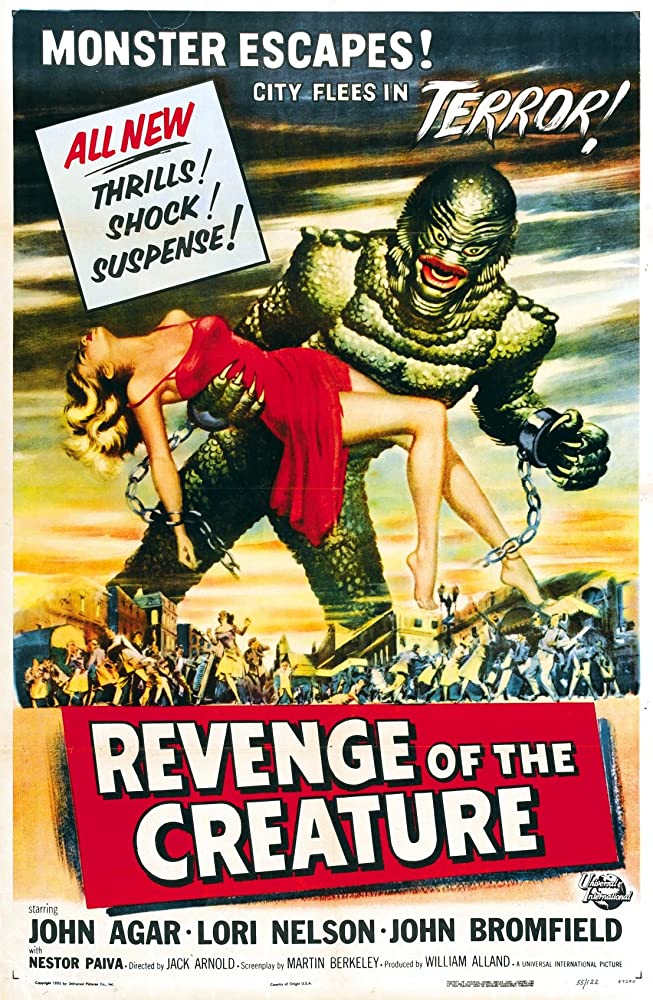
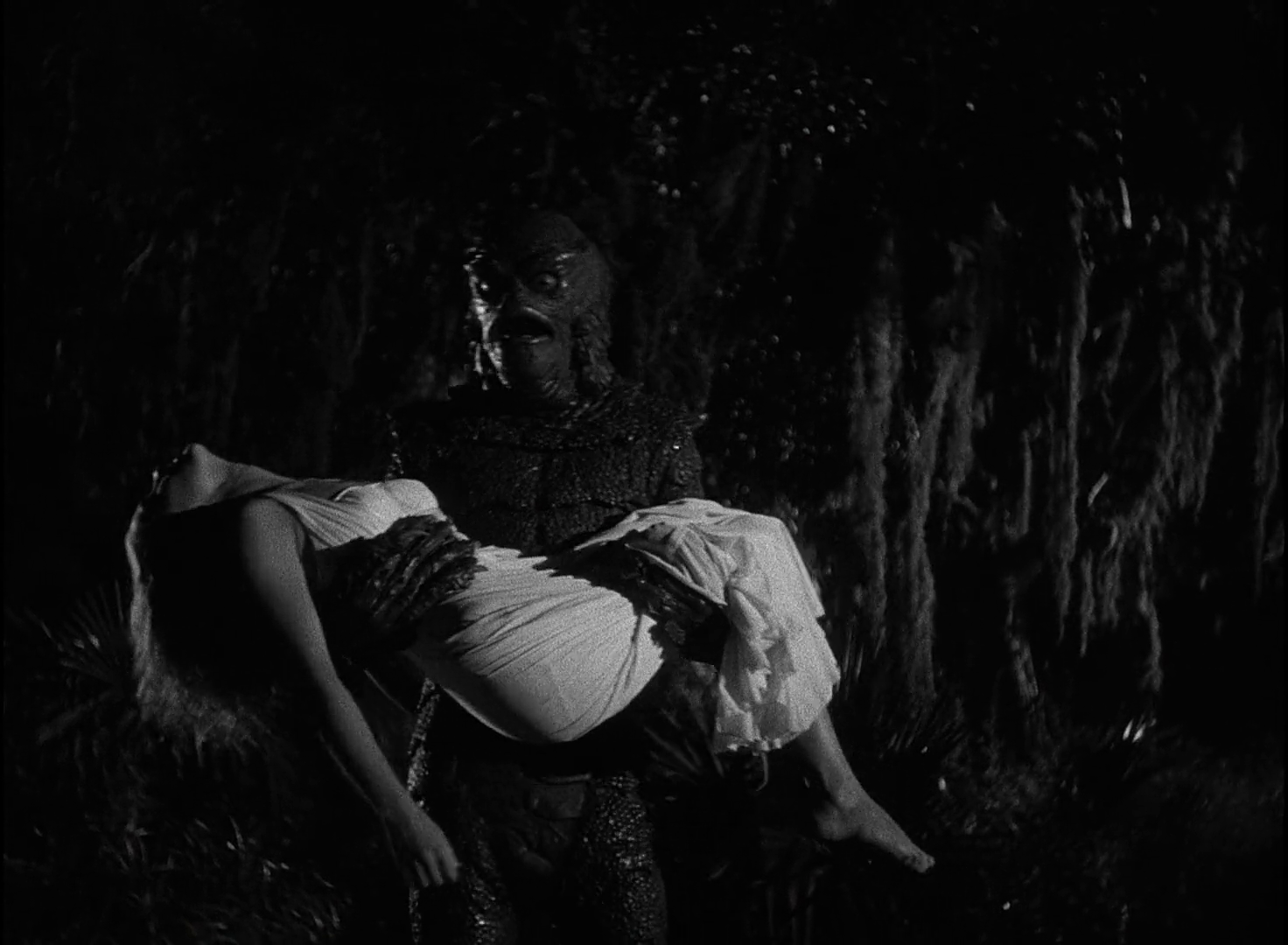
After being captured and put into a Floridian marine park, the Gill-Man (Tom Hennesy and Ricou Browning) is observed by a psychologist (John Agar) and an ichtyology student (Lori Nelson) who meanwhile are falling in love; but when the Gill-Man escapes from his chains, Nelson’s life is in immediate danger.

Genres, Themes, Actors, and Directors:

  • Jack Arnold Films
  • John Agar Films
  • Mutant Monsters
  • Science Fiction
  • Scientists

Review:
This sequel to The Creature From the Black Lagoon (1954) — the second in a trilogy — primarily succeeds in showing off some nifty underwater photography as well as the new-ish spectacle of marine parks (key portions of the film were shot at Florida’s Marineland). Poor “Gill-Man” — happily existing on his own in the Black Lagoon before his capture — is treated terribly, poked and prodded and put on display as a tourist attraction while being studied like the specimen he’s become (echoes of King Kong are once again strongly present); it’s no wonder he gets pissed off and wants more for himself. Meanwhile, the dialogue between Agar and Nelson (repeatedly objectified as that “pretty young student”) is enjoyably laughable at times:

Nelson: “You’re not at all like I expected.”
Agar (smiling): “I’m glad I disappointed you.”

Nelson: (to Agar) “You know, sometimes I wonder how I got started in all this. Science, fish, icthyology… Where will it all lead me?”

With that said, the entire affair is once again solidly directed by Jack Arnold, who knows how to build tension, especially during the final kidnap and chase sequences.

Redeeming Qualities and Moments:

  • Effective cinematography (both on-land and in-water)

Must See?
No; you can skip this one unless you’re especially enamored by this series.

Links:

Sun Also Rises, The (1957)

Sun Also Rises, The (1957)

“Everyone behaves badly, given the proper chance.”

Synopsis:
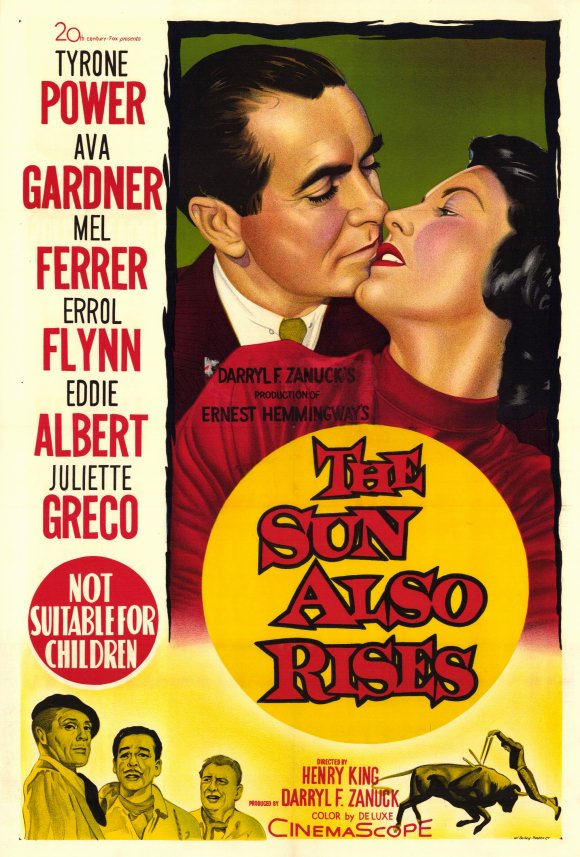
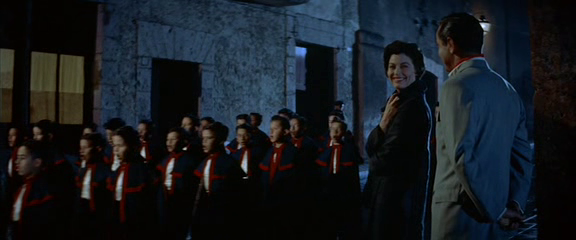
A disillusioned and disabled WWI veteran (Tyrone Power), joined by his American buddy (Eddie Albert), works as a journalist in Europe, drinking at night while pining for his one true yet unattainable love (Ava Gardner) and watching her navigate romantic entanglements with an alcoholic British nobleman (Errol Flynn), a jealous boxer (Mel Ferrer), and a studly young bullfighter (Robert Evans).

Genres, Themes, Actors, and Directors:

  • Ava Gardner Films
  • Bullfighting
  • Eddie Albert Films
  • Errol Flynn Films
  • Henry King Films
  • Love Triangle
  • Mel Ferrer Films
  • Star-Crossed Lovers
  • Tyrone Power Films
  • Veterans
  • Writers

Review:
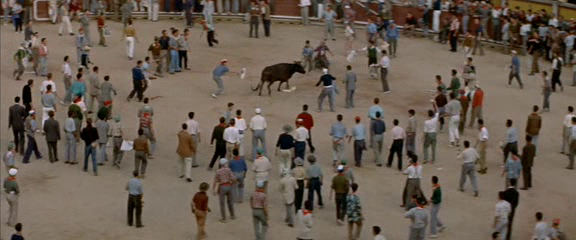
Ernest Hemingway’s classic 1926 novel was finally turned into a film several decades later by director Henry King and screenwriter Peter Viertel. Unfortunately, the storyline about a “lost generation” of Americans and Brits drinking away their lives in Europe isn’t well suited for the screen, other than the inclusion of countless colorful scenes of bullfighting and the annual Running of the Bulls in Pamplona, Spain. The most memorable character (coming across in an unintentionally humorous fashion) is Flynn’s besotted, penniless nobleman, who somehow manages to survive on the fumes of generosity. The central dilemma of Power having become impotent from war wounds — and thus unable to legitimate a relationship with his One True Love (Gardner) — is simply not enough to sustain the narrative; as DVD Savant writes in his review, “I have a feeling that if the pair really cared for each other, a short discussion of biological workarounds would suffice to give them some kind of intimate satisfaction.” Meanwhile, Savant is also spot on in his derision of a terribly miscast figure in the story, writing:

“The kiss of death is Robert Evans, who as the supposedly magnetic matador Pedro Romero projects no charm whatsoever. In most of his close-ups, Evans looks cross-eyed or mentally challenged, and his line deliveries make Ferrer look like Brando. When Gardner’s Brett tosses everything to the wind to follow Evans’ Pedro, the movie goes out the side door and doesn’t come back.”

In other words, feel free to skip this one, unless you’re a Gardner completist or in the mood for lots of drinking and bull(s).

Redeeming Qualities and Moments:

  • Fine location shooting with vibrant CinemaScope cinematography by Leo Tover
  • An interesting sociological glimpse at bullfighting (though numerous other films also provide this) and the Running of the Bulls

Must See?
Nope; this one isn’t must-see.

Links:

Moon is Blue, The (1953)

Moon is Blue, The (1953)

“I really thought you were a nice girl — I really did.”

Synopsis:
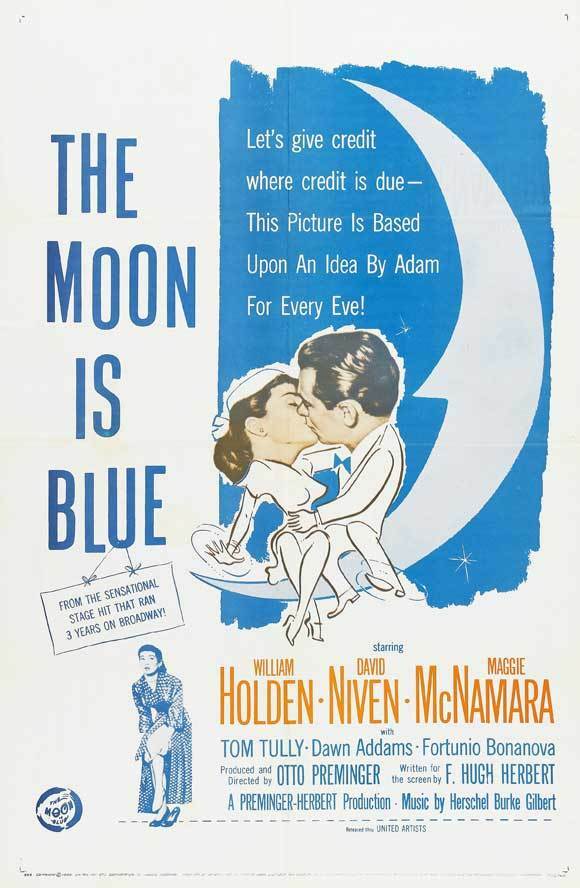
A virginal aspiring actress (Maggie McNamara) accompanies an architect (William Holden) to his apartment, where she soon meets his embittered would-be girlfriend (Dawn Addams) and Addams’ playboy father (David Niven) — who, naturally, becomes interested in McNamara.

Genres, Themes, Actors, and Directors:

  • David Niven Films
  • Love Triangle
  • Morality Police
  • Otto Preminger Films
  • Play Adaptations
  • Romantic Comedy
  • Strong Females
  • William Holden Films

Review:
Otto Preminger’s cinematic adaptation of F. Hugh Herbert’s 1951 Broadway play was notorious for its open discussion of topics such as virginity, pregnancy, mistresses, and seduction; indeed, the entire storyline focuses on a refreshingly candid young woman (McNamara) who refuses to play romantic games, and isn’t afraid to voice exactly what she wants. While the film is very much of its era in terms of gender politics, it also plays with such notions openly — for instance, McNamara hopes to marry an older man and doesn’t mind if he already has kids, yet she’s more interested in cooking meals than living a pampered life. McNamara (who looks distractingly like Jean Simmons, though others have noted her resemblance to Debbie Reynolds) is well-cast in the lead role — and though her cadence-filled voice takes some getting used to, it’s at least distinctive. While the script is certainly no longer scandalous, the film remains an interesting historical glimpse into what once passed as controversial.

Redeeming Qualities and Moments:

  • Ernest Laszlo’s cinematography

Must See?
No, but it’s worth a look.

Links: