Browsed by
Category: Response Reviews

My comments on Peary’s reviews in Guide for the Film Fanatic (Simon & Schuster, 1986).

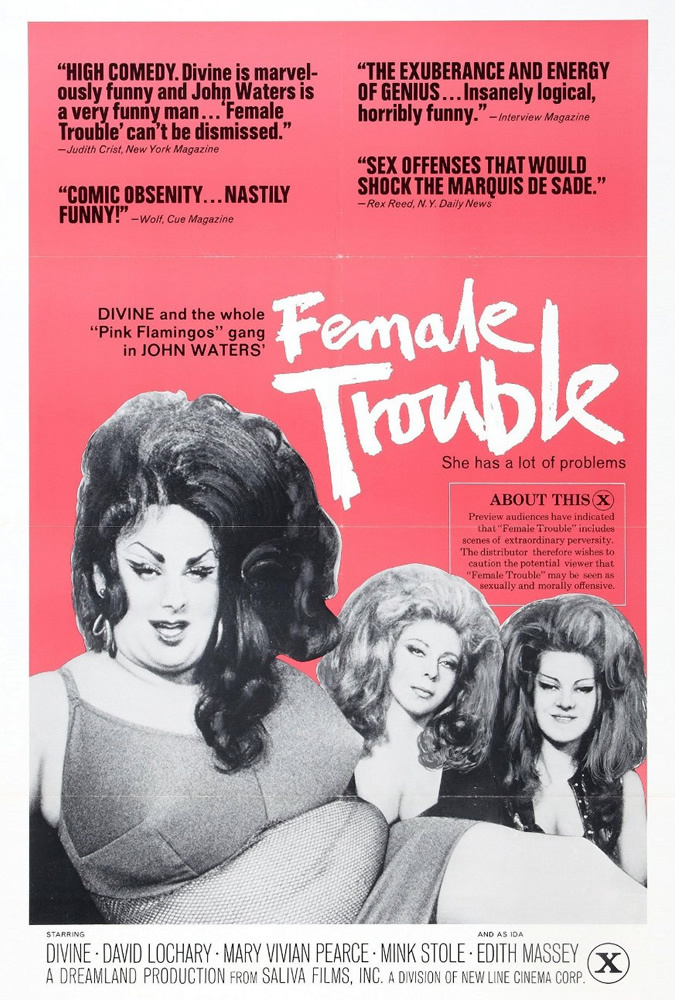
Female Trouble (1974)

Female Trouble (1974)

“We have a theory that crime enhances one’s beauty.”

Synopsis:
A former juvenile delinquent (Divine) is impregnated and promptly abandoned by a man (Divine) she hitches a ride with, then raises an insufferable daughter (Mink Stole) while surviving on her own as a prostitute and thief. After marrying a hairdresser (Michael Potter) whose aunt (Edith Massey) wishes he was gay, Divine is offered work as a model by hair salon owners (Mary Vivian Pearce and David Lochary) obsessed with capturing her unique “beauty” during criminal acts — but Divine soon becomes enraptured by her own fame, and loses all sight of reality.

Genres, Themes, Actors, and Directors:

  • Black Comedy
  • John Waters Films
  • Kidnapping
  • Mental Breakdown
  • Models
  • Rise-and-Fall
  • Single Mothers
  • Thieves and Criminals

Response to Peary’s Review:
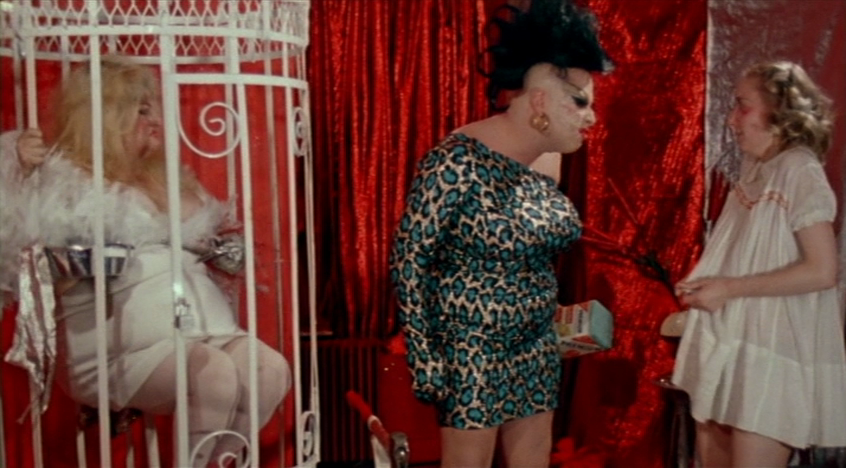
Peary writes that “John Waters’s wickedly funny cult film is a celebration of Crime and Beauty, both personified by Divine”. He notes that the “comedy contains child abuse, a hand being hacked off, acid thrown in Divine’s face (she’s told she looks better afterward):

… rapes, a woman being kept in a cage, [and] attempted incest”, but that “the really bad taste is evident in Waters’s well-chosen costumes, hairdos, furniture, decor, and, of course, cast members.” He argues that while “the picture is not consistently funny, and… Waters goes too far too often”, he appreciates that “this is the picture in which Divine really broke loose”: she is “not only unique but genuinely hilarious — even doing a deadpan tumbling act that would have made the great silent comics proud.” I don’t share Peary’s fondness for this film, or for Divine’s performance, and don’t consider it “wickedly funny” at all — though I suppose I can see how its fans might. My favorite moment is when Stole finally finds peace with the Hare Krishnas — this is the first and only movie I’ve seen where joining that brainwashing cult is made to seem like a smart and life-affirming choice.

Redeeming Qualities and Moments:

  • Typically outrageous and colorful sets, scenes, costumes, and make-up

Must See?
Nope; skip it unless you’re a Waters fan.

Links:

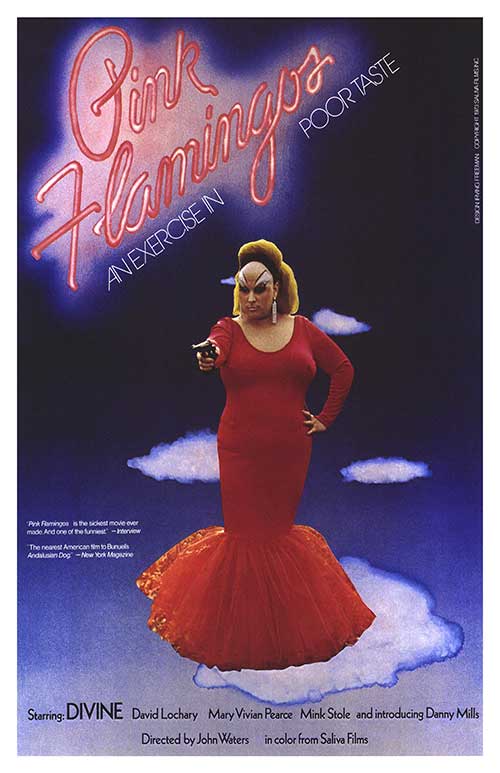
Pink Flamingos (1972)

Pink Flamingos (1972)

“I love you even more than my own filthiness!”

Synopsis:
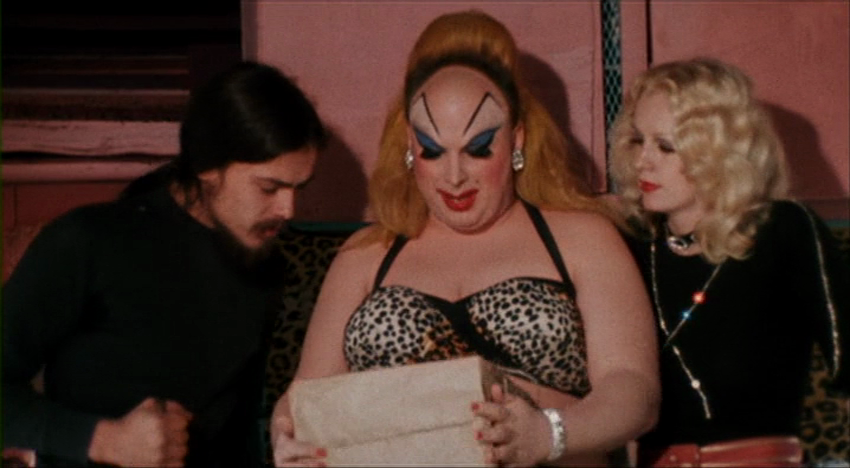
When a murderous rivalry ensues between the Filthiest Human in the World (Divine) and her competitors (David Lochary and Mink Stole), no action is too low or disgusting to enter the fray. Babs (Divine), her companion Cotton (Mary Vivian Pearce), and her son Crackers (Danny Mills) retaliate against a spy (Cookie Mueller) sent by Lochary and Stole — who employ a cross-dressing butler (Channing Wilroy) to impregnate women they kidnap in order to sell their babies to lesbian couples — to scope out their trailer, then celebrate Divine’s birthday in trashy style while Babs’ obese, baby-like mother (Edith Massey) is romanced by The Egg Man (Paul Swift), who wants to marry her — but Lochary and Stole are so consumed with envy and fury, they resort to fiery revenge.

Genres, Themes, Actors, and Directors:

  • Black Comedy
  • John Waters Films
  • Kidnapping
  • Revenge
  • Rivalry
  • Serial Killers

Response to Peary’s Review:
Peary writes that “John Waters’s cult classic, one of the most successful midnight movies and arguably his best film, is a movie you can’t believe was actually scripted, storyboarded, acted in, shot, and shown in legitimate theaters.” He notes that “the ‘King of Sleaze’ wants to shock people out of their complacent viewing habits”, and “invariably succeeds by writing the most obscene storylines, shooting the most vulgar images, and presenting the most repulsive characters imaginable.” Peary argues that Waters “can make you laugh uncontrollably even when you’re repelled”, and that “you’ve got to respect a guy who can make ‘stars’ out of the weirdos who stock his Baltimore repertory company”. However, he concedes that “you have to be disturbed by his anything-different-is-positive theme and by the fact that he succeeds in making people laugh by depicting pain, destruction of property, and strong violence.”

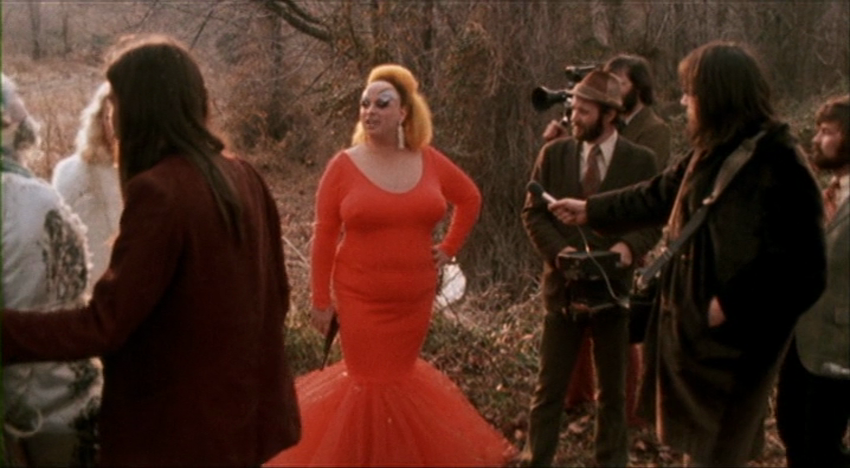
So, is Pink Flamingos worth sitting through? Yes, for its cult status. However, don’t expect to be entertained, simply disgusted — again, and again, and again. As I’ve noted about Waters’ earlier films, degeneracy for its own sake — or, in this case, “filth”, defined by Merriam Webster as “moral corruption or defilement” — doesn’t offer any inherent value. The characters are ridiculous and loathsome, and one shudders to think of them existing anywhere close to real life. What’s the point? However, I don’t think film fanatics will want to miss seeing Divine (who Peary nominates as one of the Best Actors of the Year in his Alternate Oscars!) in his infamously outrageous wig, make-up, and gowns (his red mermaid dress is perhaps the most memorable). Speaking of memorable… Yes, the final scene remains as disgusting as ever; once you’ve seen it, you can’t unsee it. Be forewarned. Discussed at length in Peary’s Cult Movies book.

Redeeming Qualities and Moments:

  • Many classically outrageous, colorful, memorable scenes


Must See?
Yes, once, as a cult favorite.

Categories

  • Cult Movie

(Listed in 1001 Movies You Must See Before You Die)

Links:

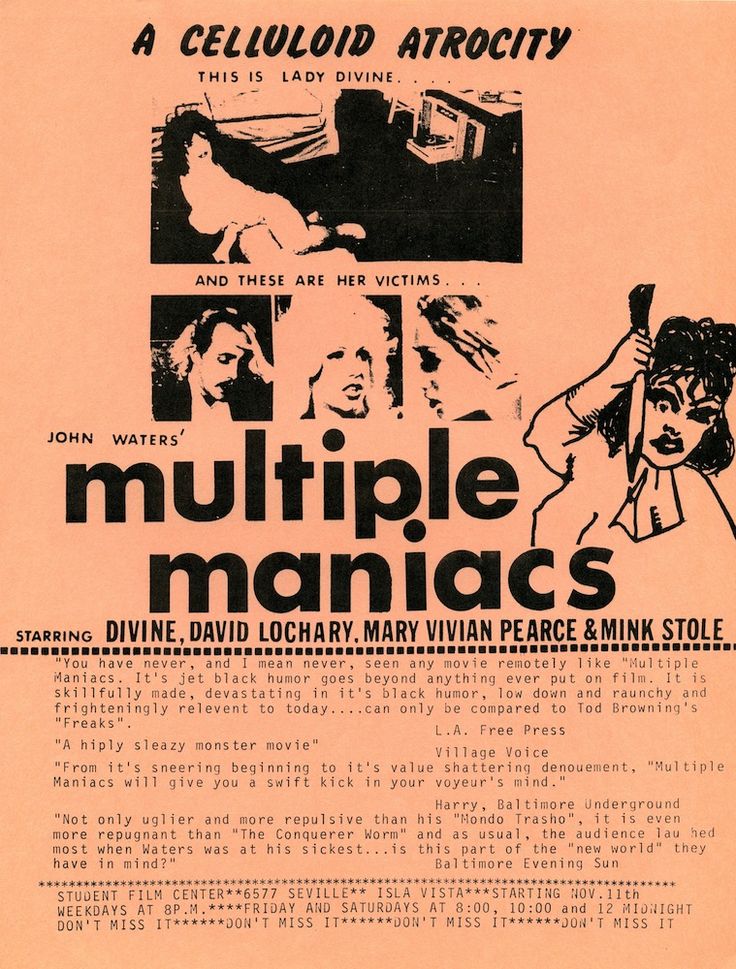
Multiple Maniacs (1970)

Multiple Maniacs (1970)

“I’m a maniac that cannot be cured!”

Synopsis:
The narcissistic, murderous owner (Divine) of a “Cavalcade of Perversions” travelling show becomes enraged when she learns from a gossipy barista (Edith Massey) that her lover (David Lochary) has a mistress (Mary Vivian Pearce). With assistance from her new lesbian lover (Mink Stole), she plots revenge and true mayhem ensues, involving Divine’s drugged-out daughter (Cookie Mueller) and another troupe member (Rick Morrow).

Genres, Themes, Actors, and Directors:

  • Black Comedy
  • Carnivals and Circuses
  • John Waters Films
  • Plot to Murder
  • Rape

Response to Peary’s Review:
Peary writes that this “typically outrageous and degenerate — and funny — John Waters film” features Divine “becoming increasingly mad” (she’s literally foaming at the mouth by the end) and was “inspired by the Sharon Tate murders” (thus explaining the final massacre scene in an apartment). He notes that the “picture starts with what [he thinks] is [the] funniest Waters sequence” (I disagree) “and most revealing of him as an artist out to shock viewers through bad taste: suburbanites (representing us?) are repulsed, but don’t run away from perverted acts.” However, he argues that while “this is Waters’s own favorite film”, he doesn’t “think it reaches the heights (depths?) of Pink Flamingos or Female Trouble” because “Divine’s character is not as flamboyant or formidable as the ones she plays in those films”. He writes:

“Divine is at ‘her’ funniest when her character is constantly aggravated, dumped on, or humiliated; here, where she manages to achieve a coveted social position and retain faith in her beautiful self, she is too much in control.”

It’s been too long since I’ve seen Waters’ later films for me to compare, so I’ll judge this film on its own merits — and truly, I don’t believe it offers more than a slightly more “polished” version of earlier themes in Mondo Trasho, albeit pushing various outrage and disgust envelopes even further (and containing actual live dialogue). However, I’m not really the target audience for this kind of material, since I don’t see the point in degeneracy for its own sake. Sure, the infamous rosary scene and lobster rape scene are outrageous — but who in the world really cares about any of these folks and what happens to them?

Redeeming Qualities and Moments:

  • Some typically outrageous and bizarro Waters scenes

Must See?
No; while you may be curious to check it out, I think only completists need to include this one in their must-see list.

Links:

Mondo Trasho (1969)

Mondo Trasho (1969)

“It isn’t easy being Divine!”

Synopsis:
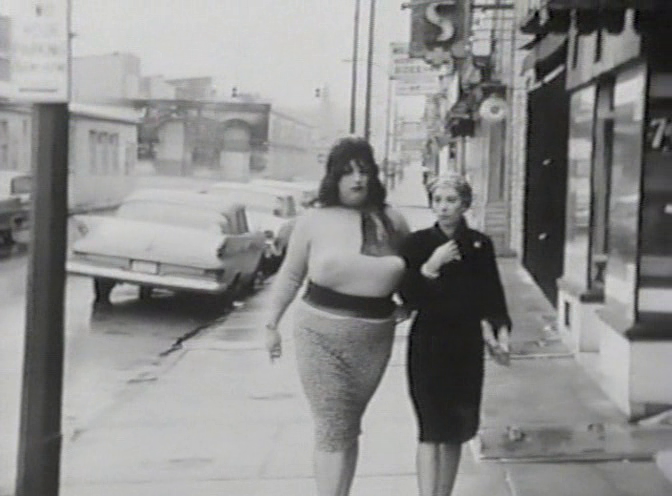
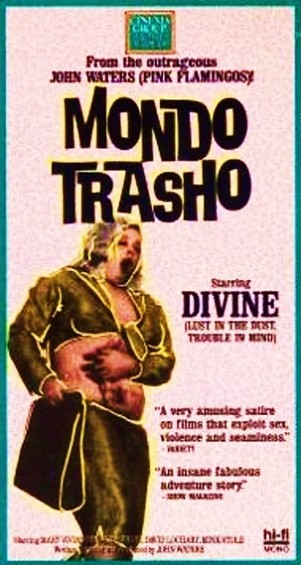
While ogling a naked hitchhiker, a beefy transvestite (Divine) accidentally runs over a young woman (Mary Vivian Pearce) who was recently accosted by a foot fetishist in the park. After Divine envisions the Virgin Mary (Margie Skidmore), she and Pearce are kidnapped and taken to a lunatic asylum, where they witness a semi-nude tapdancer (Mink Stole) performing, then escape to a clinic run by a mad scientist (David Lochary) who wants to mangle Pearce’s feet.

Genres, Themes, Actors, and Directors:

  • John Waters Films
  • Living Nightmare
  • Mad Doctors and Scientists
  • Surrealism

Response to Peary’s Review:
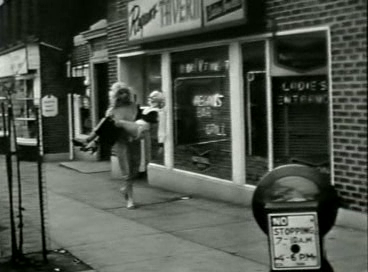
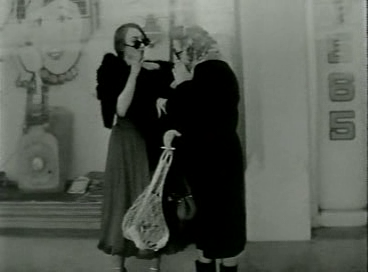
Peary writes that “John Waters’s first feature-length film” “has an offensive pre-title sequence” and “if you walk out at this point, you won’t miss much.” He acknowledges there’s some “humor at the beginning when star Mary Vivian Pearce (who’s made up to look like a sluttish Jean Harlow) has her toes sucked on by a stranger in the park while she excitedly fantasizes she’s scrubbing floors and being pushed around by her stepsisters”, as well as “a couple of funny moments when Divine pushes Pearce’s unconscious body around in a wheelchair” and “a funny finale when Pearce suddenly appears on a Baltimore street by clicking her heels together and finds herself being mercilessly insulted by two women trying to guess what kind of lowlife she is.” However, as he points out, “the rest of the film will bore all but Waters’s strongest fanatics”, given that “little is funny or comprehensible”. He concedes that “it does have a fabulous old rock soundtrack… but Waters is like a nervous guy who can’t stop turning the radio dial” and “he’ll drive you crazy by switching songs every few seconds”. Peary’s assessment is pretty much spot on: while “some bits may be of interest because they would be repeated with better results in Waters’s more sophisticated films”, only his strongest fans need check out this early oddity.

Redeeming Qualities and Moments:

  • Some effectively surreal and/or notable moments

Must See?
No, unless you’re a diehard Waters fan.

Links:

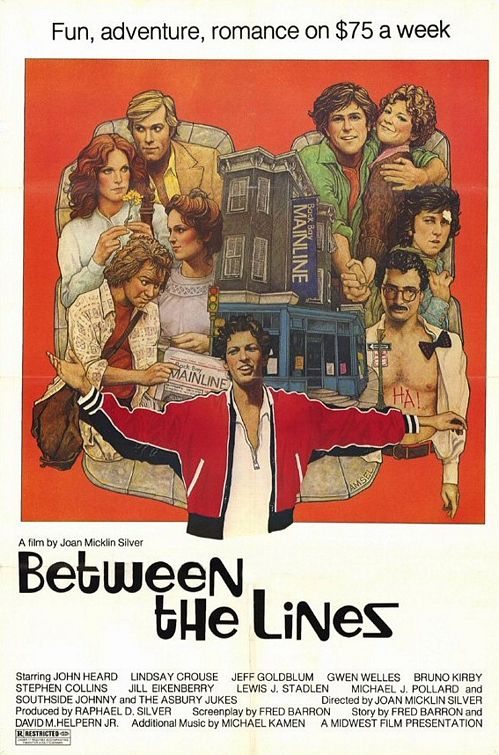
Between the Lines (1977)

Between the Lines (1977)

“We’re still about telling the truth. We’re still about something big here — and not many people can say that now.”

Synopsis:
The staff of an independent newspaper — including a reporter (John Heard), a photographer (Lindsay Crouse), a rock music critic (Jeff Goldblum), and a secretary (Jill Eikenberry) — mourn the changing of times as a new publisher (Lane Smith) takes over the company.

Genres, Themes, Actors, and Directors:

  • Ensemble Cast
  • Jeff Goldblum Films
  • John Heard Films
  • Journalists
  • Romantic Comedy

Response to Peary’s Review:
Peary begins his review of Joan Micklin Silver’s romantic comedy by referring to it as “one of those few films [he wishes] would never end”. He notes that “it’s a spirited, nostalgic, sexy, perceptive, warm-hearted character comedy” with a “beautifully organized” script (by Fred Barron) full of “real characters and situations you might identify with”. He adds that director Silver, “who obviously loves the characters who run the paper, gives her young, brilliant cast a lot of freedom and they come through with relaxed, flesh-and-blood performances”. He points out that “most interesting is how characters take turns acting like jerks, egocentrics, being temperamental, and occasionally disappoint us — just as real people do.”

Peary’s review accurately captures the infectious spirit of this ensemble piece, which emanates both the best and most annoying aspects of working on a young team, dating some co-workers and fending off others, managing the always-chaotic world of deadlines and rivalry. Heard and Crouse are perfectly cast as occasional lovers who get back together during the course of the movie, quibbling but always staying companions. Goldblum is as odd as ever; Peary notes that a highlight of the film includes his “nonsensical ad-libbed music lecture, at which young women dutifully take notes” — but I’m an even bigger fan of his stand-off against a performance artist who visits the office. Jill Eikenberry is both lovely and eminently likeable as the grounding force of the office. There’s a fascinating scene in which her character (Lynn) interacts with a nebbishy adsman (Lewis J. Stadlen as Stanley) who she spent time with recently:

Stanley: I didn’t want you to feel like there was any kind of innuendo or sexual connotation…
Lynn: You know, Stanley — I can’t accept that you didn’t want any sexual innuendo. Stanley, you literally jumped on top of me!
Stanley: Oh no… You see, I knew that you had interpreted it that way…
Lynn: Stanley, you did — there you were on my body, Stanley.
Stanley: What can I say, you know? I mean, it’s your perception, and it’s my perception, we were both there…
Lynn: No, listen Stanley — I couldn’t get up!
Stanley: Look, if that’s what you thought, I guess an apology is in the making.
Lynn: It’s okay — it’s okay, really.
Stanley: I mean, let me tell you I’m very sexually attracted to you. You know, nobody in their right mind wouldn’t be. I had a great time!
Lynn: You’re an incredible person, Stanley.
Stanley: And so are you. You’re an incredible person as well and listen… We’ll do it again sometime.

There are definite hints of Woody Allen here; it’s not surprising that Juliet Taylor, Allen’s longtime casting agent, did the casting for this film as well. What’s remarkable is how definitively Eikenberry exudes a relaxed but firm attitude — she’s chuckling and sympathetic throughout this exchange. Obnoxious, bow-tied Stanley is most definitely made the fool, while Eikenberry emerges victorious in every possible way. Similarly, Crouse completely shows up Heard during a scene when she “asks sharp questions of a stripper (Marilu Henner) and [strikes] a rapport with her while [Heard] wants to ask his stupid questions”. However, men are also shown bonding and having fun.

Part of the charm of this film is how pleasantly nostalgic it comes across — which is somewhat ironic, given that it was meant to reflect the end of a charmed era (the counterculture of the 1960s), but now represents an era of its own (the 1970s) that many may also reminisce about with wistful memories. Most notable of all, of course, is how radically sentimental one can’t help feeling about the pre-internet media age, when news was gathered and published in hard copy only, and reading selections were limited to just a few choices — including independent rags like this one. For better or for worse, that period is completely over, and we can now look back on “classic” cinema of the 1970s as reflecting a uniquely bygone era. Be sure to listen through the final scene while the credits begin to roll, as Goldblum chats up a new chum in a bar — it’s priceless.

Redeeming Qualities and Moments:

  • Many memorable, well-acted, humorous scenes
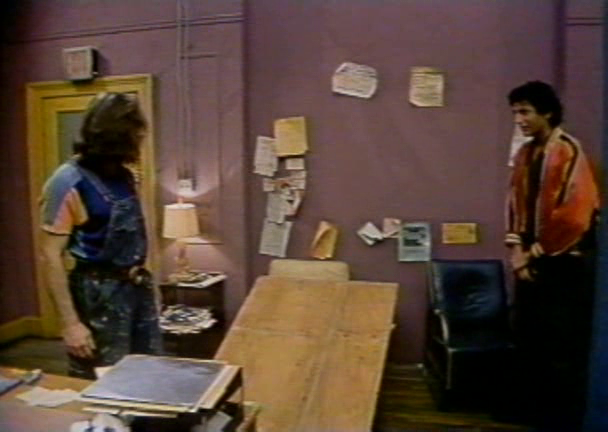

  • Good use of authentic Boston locales

Must See?
Yes, as a sleeper classic of a certain era.

Categories

  • Good Show

Links:

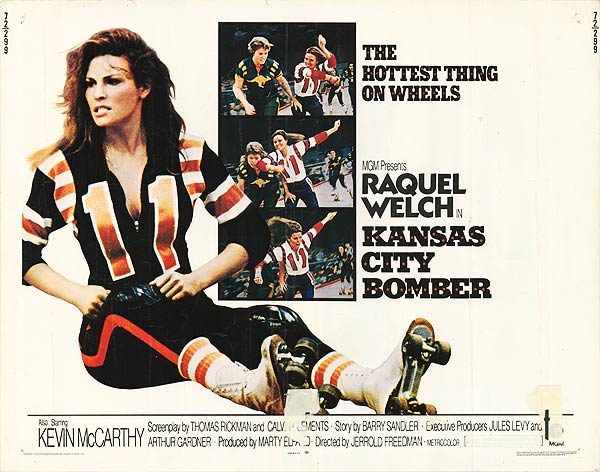
Kansas City Bomber (1972)

Kansas City Bomber (1972)

“We’re all used — you, me, anybody on two legs. That’s what it’s all about. That’s your American pie for you.”

Synopsis:
A single mother (Raquel Welch) working on the Roller Derby circuit while her two kids (Jodie Foster and Stephen Manley) live with her mom (Martine Bartlett) is transferred by a new team owner (Kevin McCarthy) from Kansas City to Portland, where she befriends two teammates (Katherine Pass and Norman Alden) but makes an instant rival in the team’s reigning alcoholic queen (Helena Kallianiotes).

Genres, Themes, Actors, and Directors:

  • Jodie Foster Films
  • Kevin McCarthy Films
  • Raquel Welch Films
  • Rivalry
  • Single Mothers
  • Sports
  • Strong Females

Response to Peary’s Review:
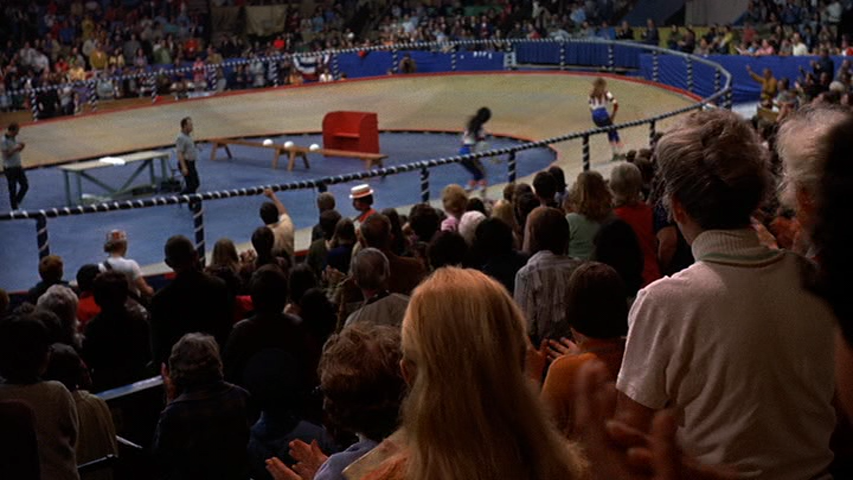
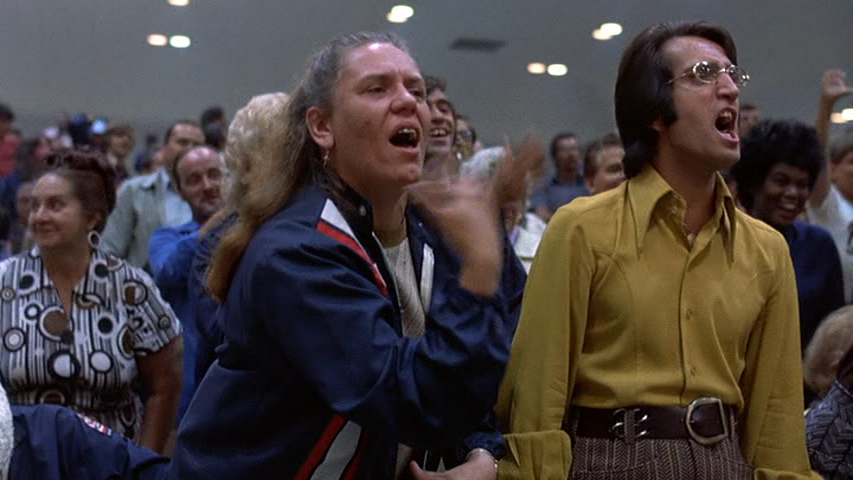
Peary writes that this “sleeper about the trials and tribulations of a roller-derby queen isn’t half bad” and “does contain what [he thinks] is Raquel Welch’s one genuinely fine movie performance”, noting somewhat disparagingly that “for once, she truly worked at establishing a real character.” He adds that the “picture has feminist slant; we get to admire this woman despite sleazy profession, as she stands alone against owner and jealous teammates — and we sympathize because she’s a working single mother who is always on the road and away from her child.” Like Peary, I was very pleasantly surprised by Welch’s characterization — not to mention her obvious skills on the derby rink. This film falls right in line with other movies about women (or men) trying to make a living in high-risk sports such a wrestling or boxing, who are ultimately pawns of those hoping to make a buck off of them at any cost. Both intense rivalry and loyal friendship are prevalant in a world like this — themes which the imperfect but serviceable script takes ample advantage of. While we don’t learn quite enough about Welch’s desire to be a derby girl, it is clear that this is one way she can provide for her family and escape from small-town drudgery. Watch for Jodie Foster in a small role as Welch’s daughter, and Martine Bartlett as a judgmental parent anyone would want to escape from (who can forget her role as Sally Field’s abusive mother in Sybil?).

Redeeming Qualities and Moments:

  • Raquel Welch as K.C.
  • An effectively seedy glimpse at fans and the sport itself


Must See?
No, but it’s well worth a look, and probably has a bit of a cult following.

Links:

Corbeau, Le / Crow, The / Raven, The / Little Town in France, A (1943)

Corbeau, Le / Crow, The / Raven, The / Little Town in France, A (1943)

“These letters are nothing but a web of slander and lies.”

Synopsis:
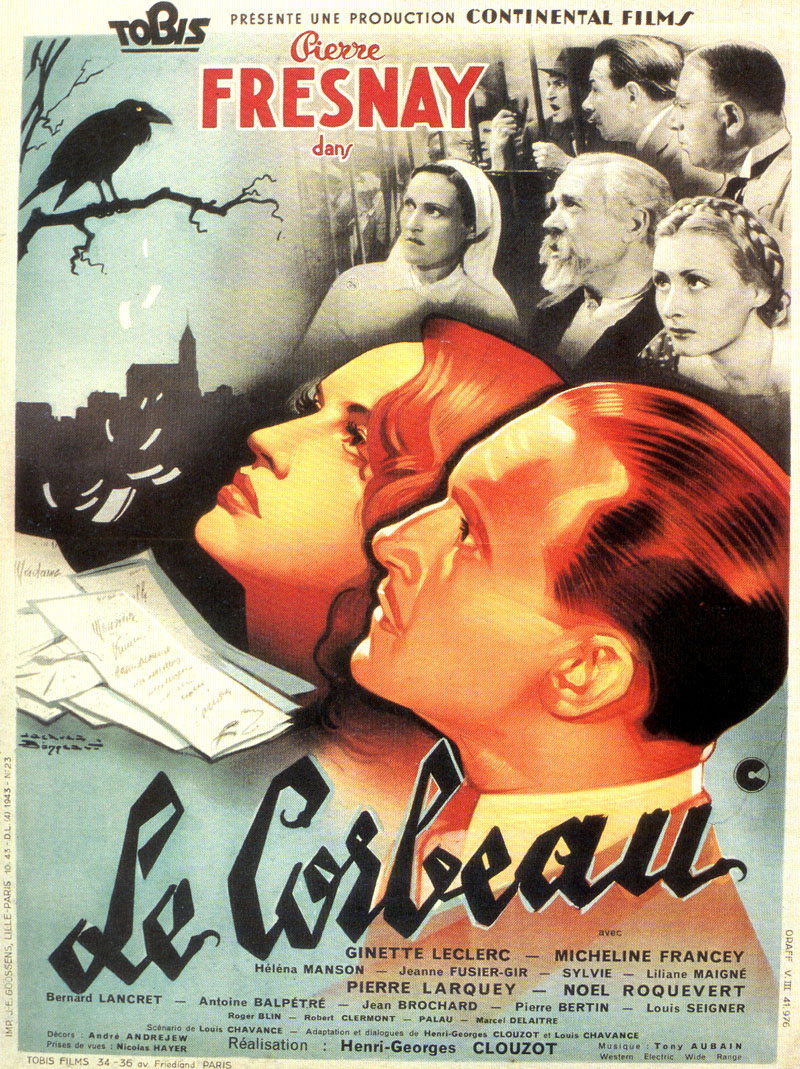
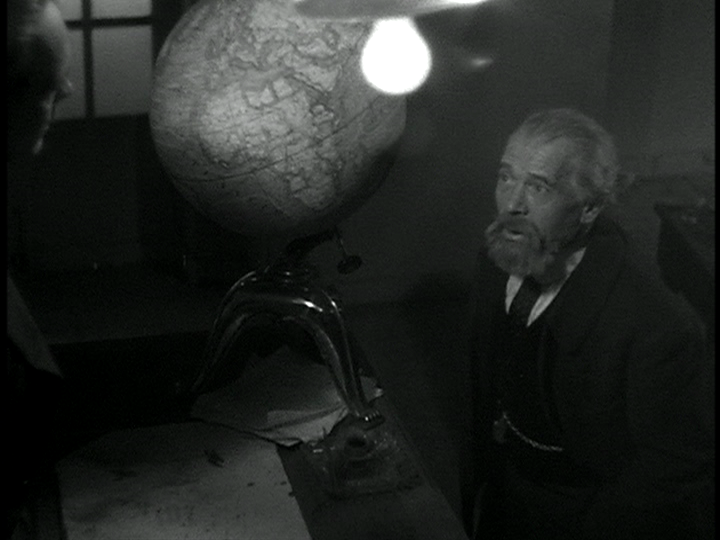
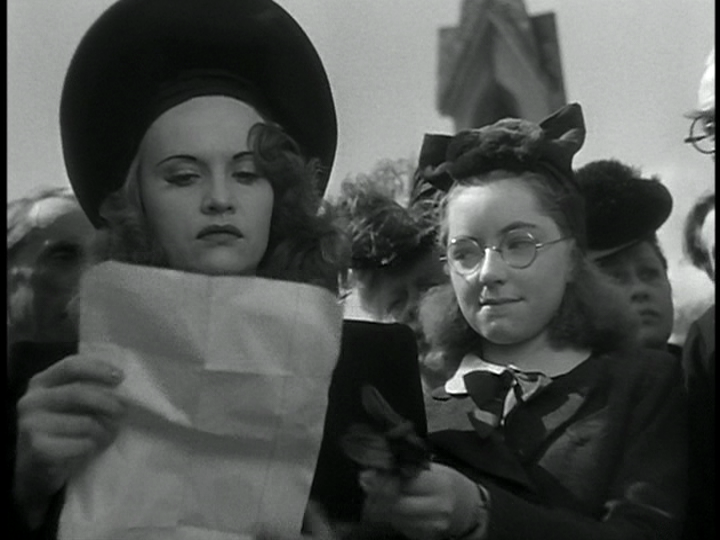
A new doctor (Pierre Fresnay) in a French village accused of committing adultery with the wife (Micheline Francey) of a psychiatrist (Pierre Larquey) is seduced by a lonely handicapped girl (Ginette Leclerc) with a nosy teenage sister (Liliane Maigné), and becomes one of many suspects — including Francey’s embittered sister (Héléna Manson) — when poison-pen letters by a mysterious author named “The Raven” begin to circulate, leading to death and misery in the town.

Genres, Themes, Actors, and Directors:

  • Blackmail
  • Doctors and Nurses
  • Falsely Accused
  • French Films
  • Henri-Georges Clouzot Films
  • Mistaken or Hidden Identities
  • Village Life

Response to Peary’s Review:
As Peary writes, this “unusual film” perfectly reflects director Henri-Georges Clouzot’s “suspicious, cynical view of people — particularly the French during the Occupation”, given that “the only characters who come through unscathed are those who are persecuted”. Peary argues (I disagree) that “the doctor’s past story is hokey, and the ending… is too berserk”, but concedes that “the picture succeeds because of its fabulous premise, excellent direction, and theme (which was relevant in 1943).” As DVD Savant writes in his review, “This is the anti-Capra film, a frightening stew of misanthropy.” He adds that:

Clouzot’s pitiless community is a satire, but we immediately recognize the group behaviors as authentic. Rumors are accepted as truth, and privacy and presumption of innocence fall by the wayside. Pretty soon nobody respects anybody and the town is overrun by civilized savagery.

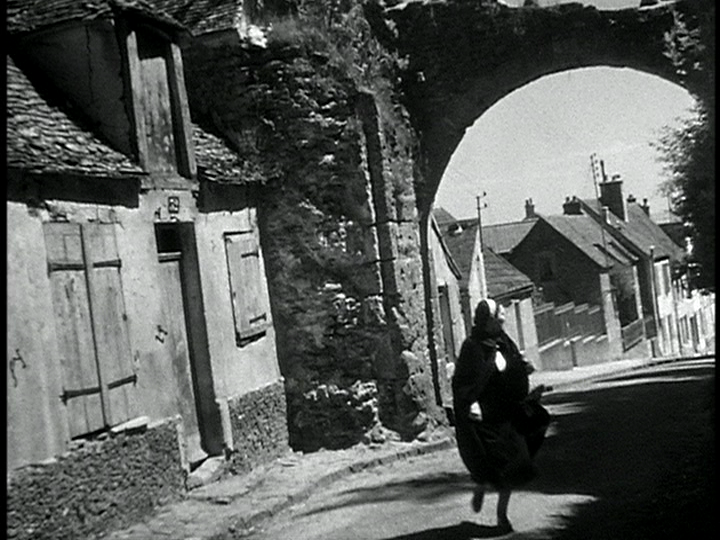
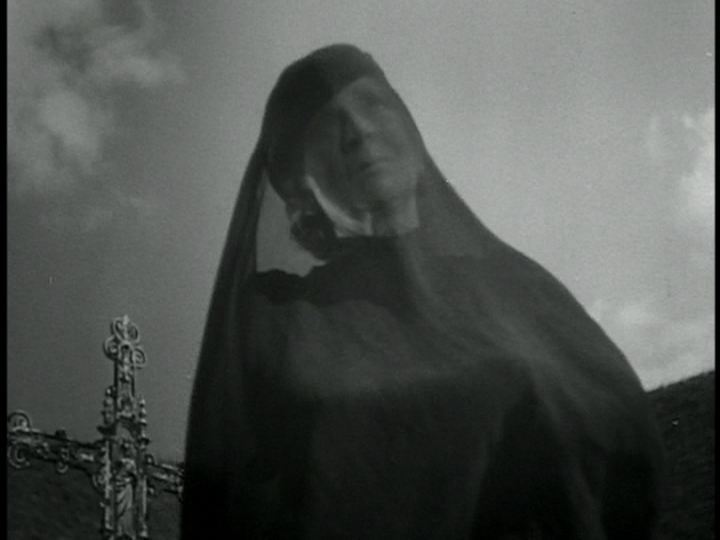
The imagery, cinematography, sets, and plot twists in Le Corbeau are all noteworthy, and there are more than enough embittered would-be suspects to keep viewers authentically on their toes. Film fanatics should certainly check this thriller out.

Redeeming Qualities and Moments:

  • Many memorable, haunting scenes

  • Atmospheric cinematography
  • A suspenseful script

Must See?
Yes, as a still-powerful wartime classic.

Categories

  • Foreign Gem
  • Historically Relevant

Links:

Dr. Jekyll and Mr. Hyde (1931)

Dr. Jekyll and Mr. Hyde (1931)

“It’s the things one can’t do that always tempt me.”

Synopsis:
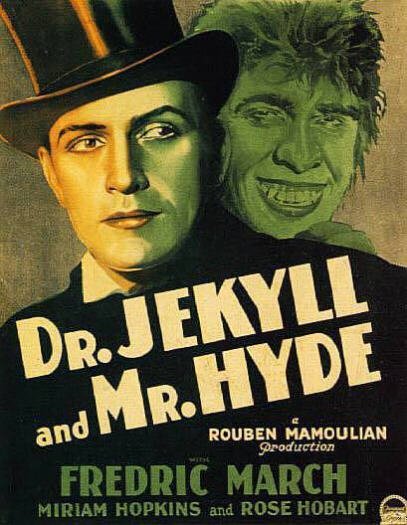
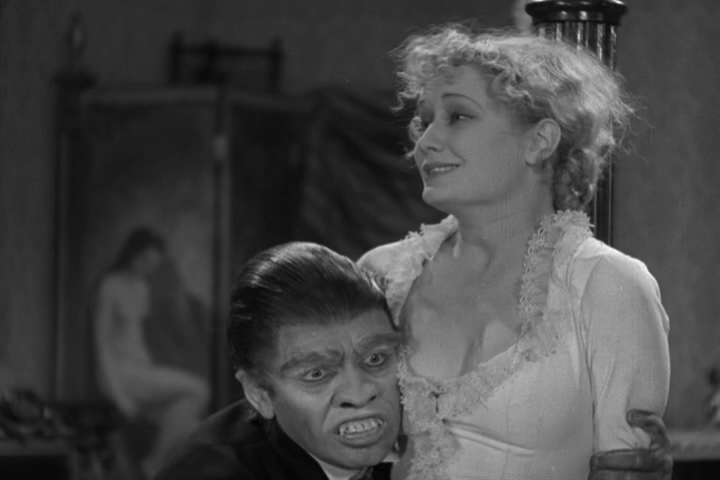
A kind and generous doctor (Fredric March) engaged to a high-society girl (Rose Hobart) begins torturing a local dancer (Miriam Hopkins) when his frustration over a delayed marriage date prompts him to take a potion that transforms him into a sadistic monster.

Genres, Themes, Actors, and Directors:

  • Fredric March Films
  • Horror
  • Mad Doctors and Scientists
  • Miriam Hopkins Films
  • Multiple Personalities
  • Rouben Mamoulian Films

Response to Peary’s Review:
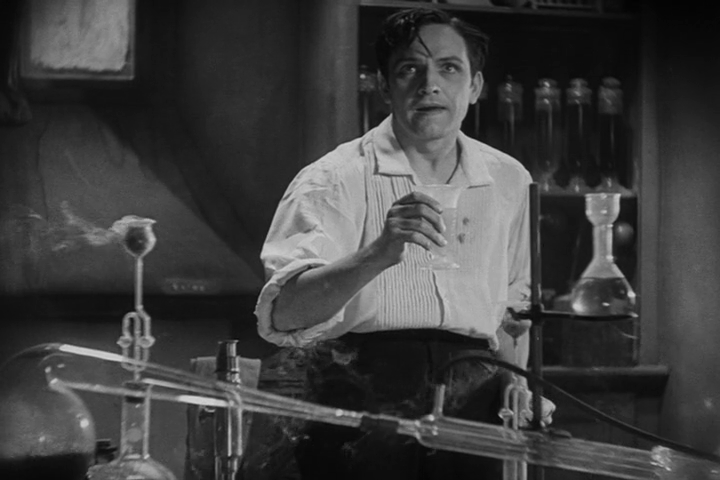
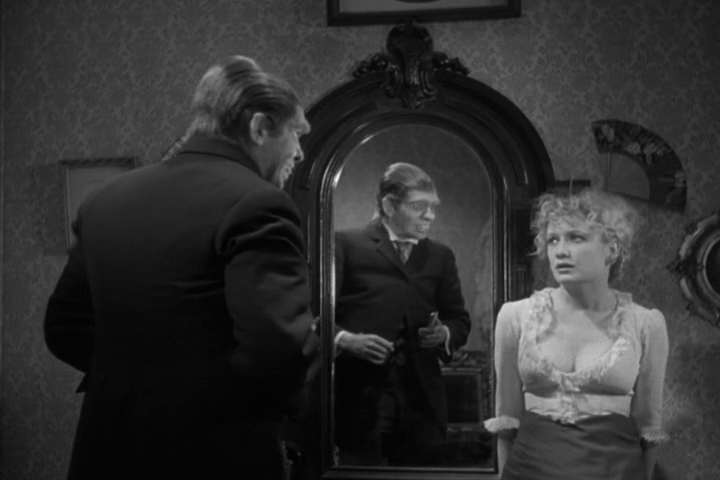
Peary writes that this “rare venture into horror films by Paramount in the wake of success by Universal” resulted in “one of the classiest entries in the genre, a true ‘A’ production” featuring a “forceful performance” by March. He notes that March’s Mr. Hyde is “one of the cinema’s most terrifying monsters, a sadistic female-batterer of the first order” who “resembles a demented monkey”, and points out that this pre-Code film “has strong sexual context and is too gruesome for young kids or the squeamish” — indeed, even seasoned film fanatics will likely recoil at how loathsome Hyde is, particularly given the lack of sufficient explanation for how such a monster could co-exist within saintly Dr. Jekyll. The film strongly promotes the notion that those perceived as most noble may harbor the most insidious pathologies — but what a terribly depressing “message” that is for humanity! It’s perhaps easier to focus on the film’s daring condemnation of sexual repression: with Hobart’s stodgy father (Halliwell Hobbes) insisting that March and Hobart postpone their marriage for eight months, Jekyll apparently feels justified in releasing his sexual tension through a manufactured alter ego. What’s unclear (and deeply unsettling) is why the Neanderthal-ish Mr. Hyde perpetrates such evil while satisfying his lust — and how gleeful he is whenever he emerges.

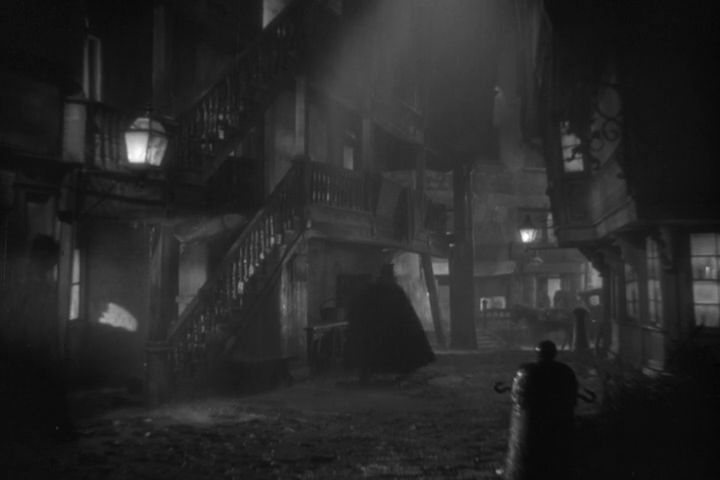
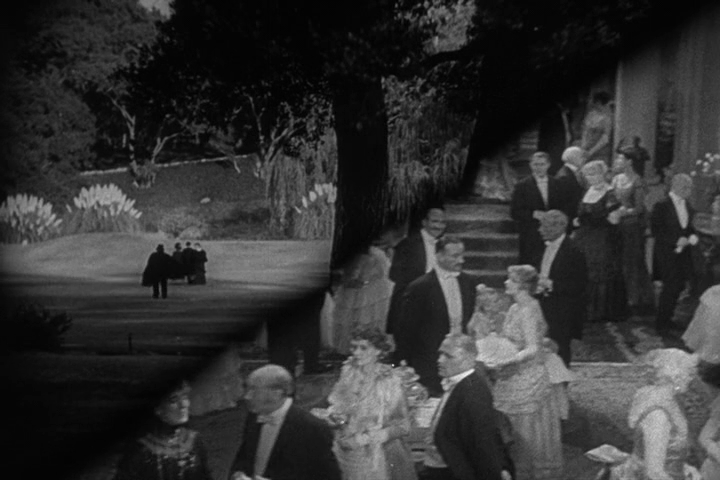
Hopkins gives the performance of her (early) career in this film, playing a visibly traumatized and terrorized young prostitute who understands that her life as she knew it is over. (Check out the very bottom photo and caption in And You Call Yourself a Scientist‘s extensive review; I agree with her sentiment — and her review is well worth a read.) Also noteworthy is Mamoulian’s “innovative, influential direction”, including experimentation “with split frames, superimposed shots (during impressive man-to-monster transformations), and point-of-view shots.” James Wong Howe’s stunning cinematography and Norbert A. Myles and Wally Westmore’s groundbreaking make-up and special effects merit mention as well; as noted in Moria’s review, “The transformation sequences were conducted by the unique effect of painting Frederic March’s face with certain types of greasepaint, the effects of which became more pronounced on the black-and-white film stock as different coloured lights were projected on his face.”

Redeeming Qualities and Moments:

  • Fredric March as Dr. Jekyll/Mr. Hyde (nominated by Peary as one of the Best Actors of the Year in his Alternate Oscars)
  • Miriam Hopkins as Ivy
  • Impressive make-up and special effects
  • Atmospheric, innovative cinematography

Must See?
Yes, as a disturbing classic — though you may not want to stomach it more than once.

Categories

  • Genuine Classic
  • Oscar Winner or Nominee

Links:

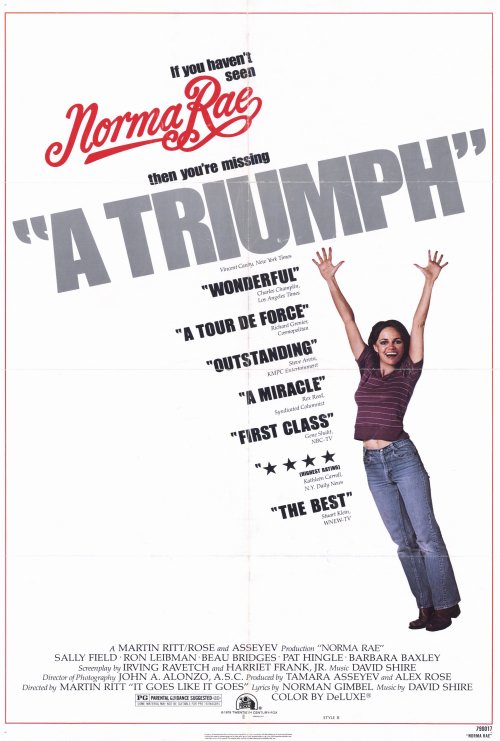
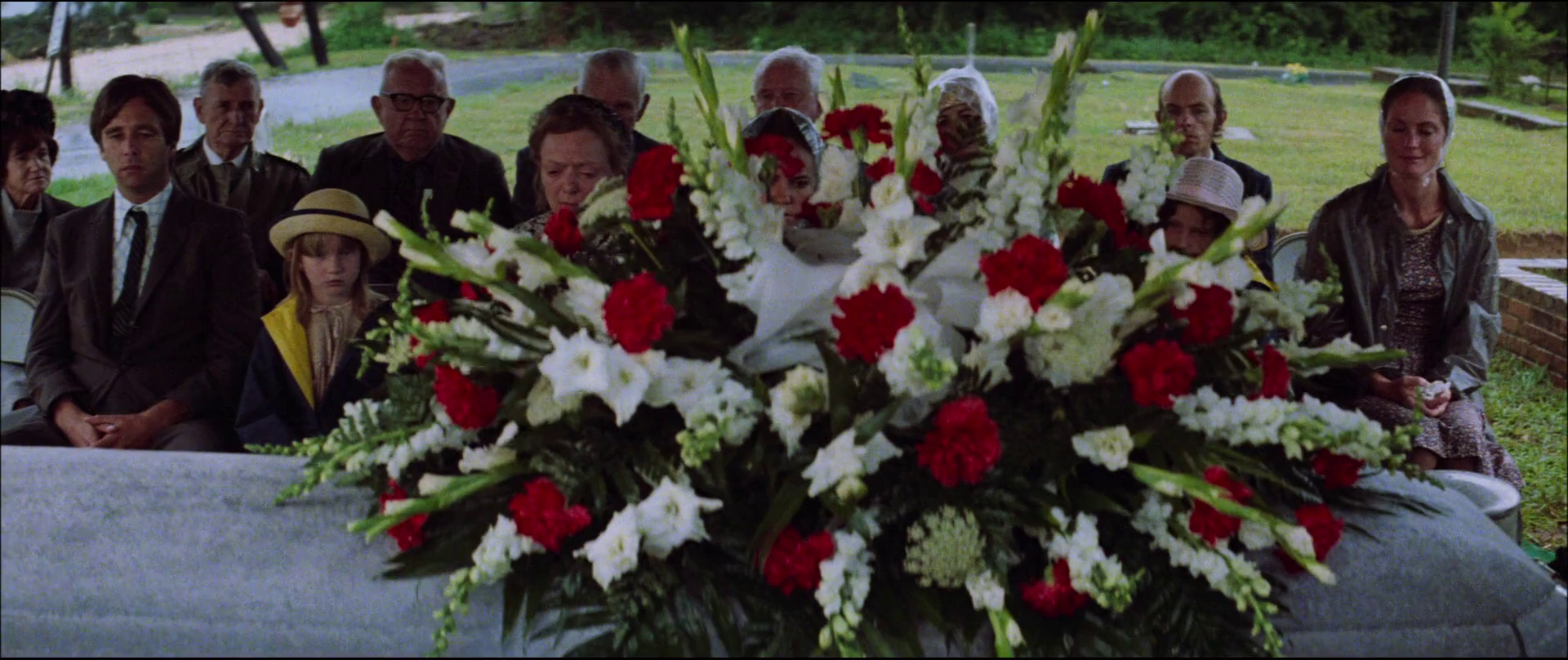
Norma Rae (1979)

Norma Rae (1979)

“You’re overpaid, you’re overworked… They’re shafting you right up to your tonsils.”

Synopsis:
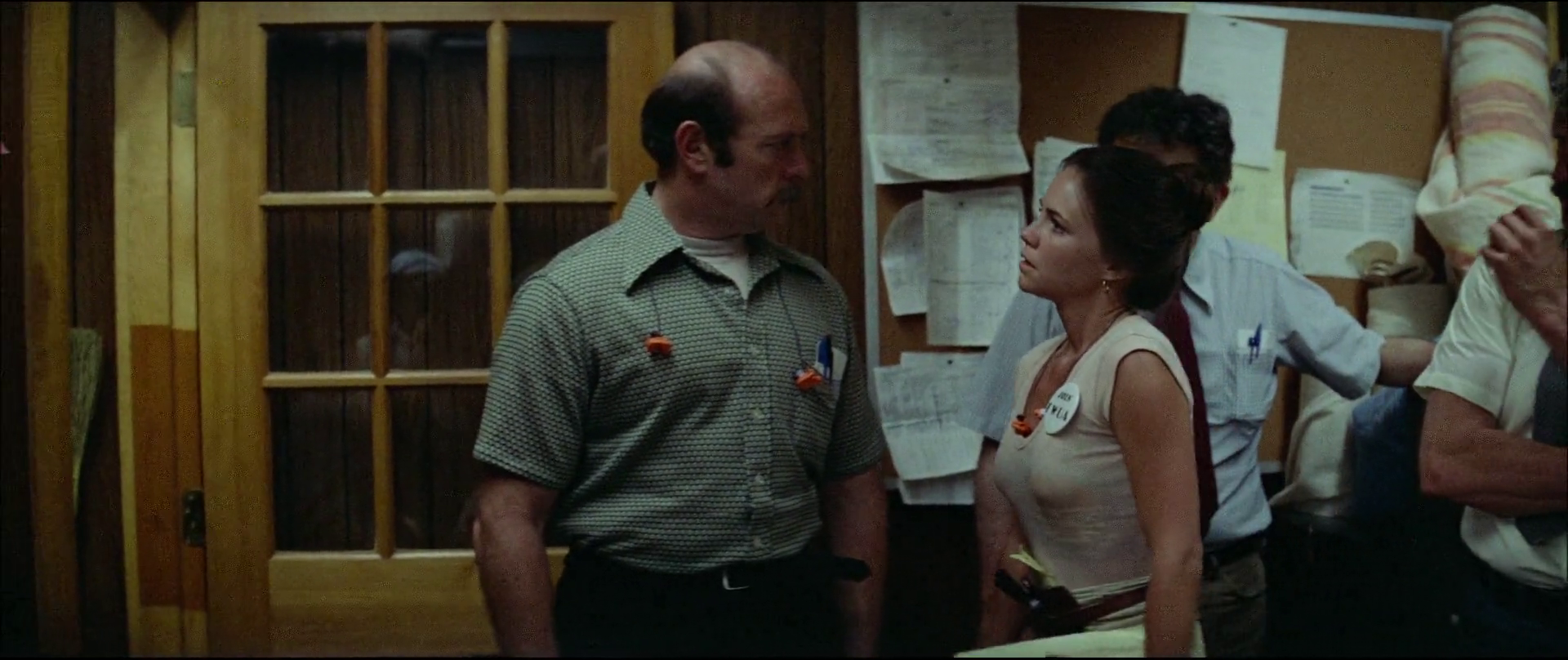
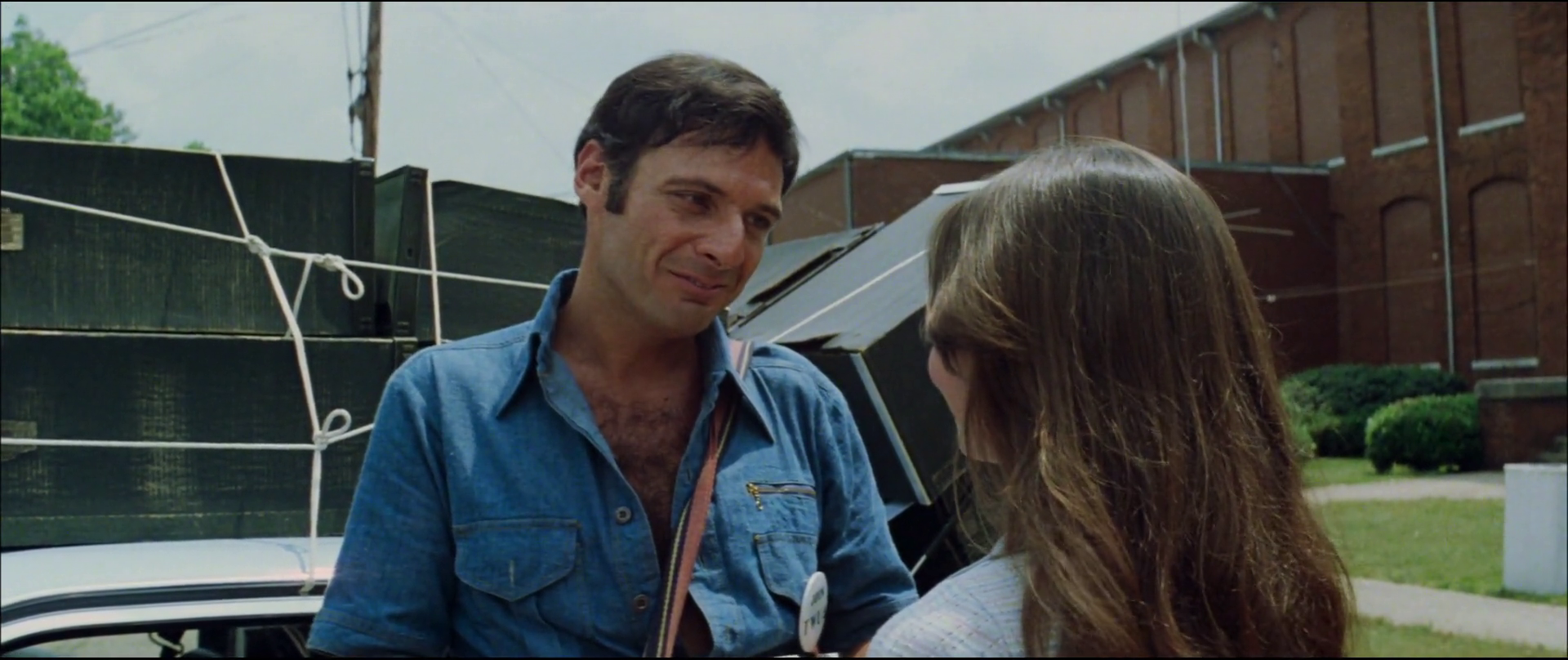
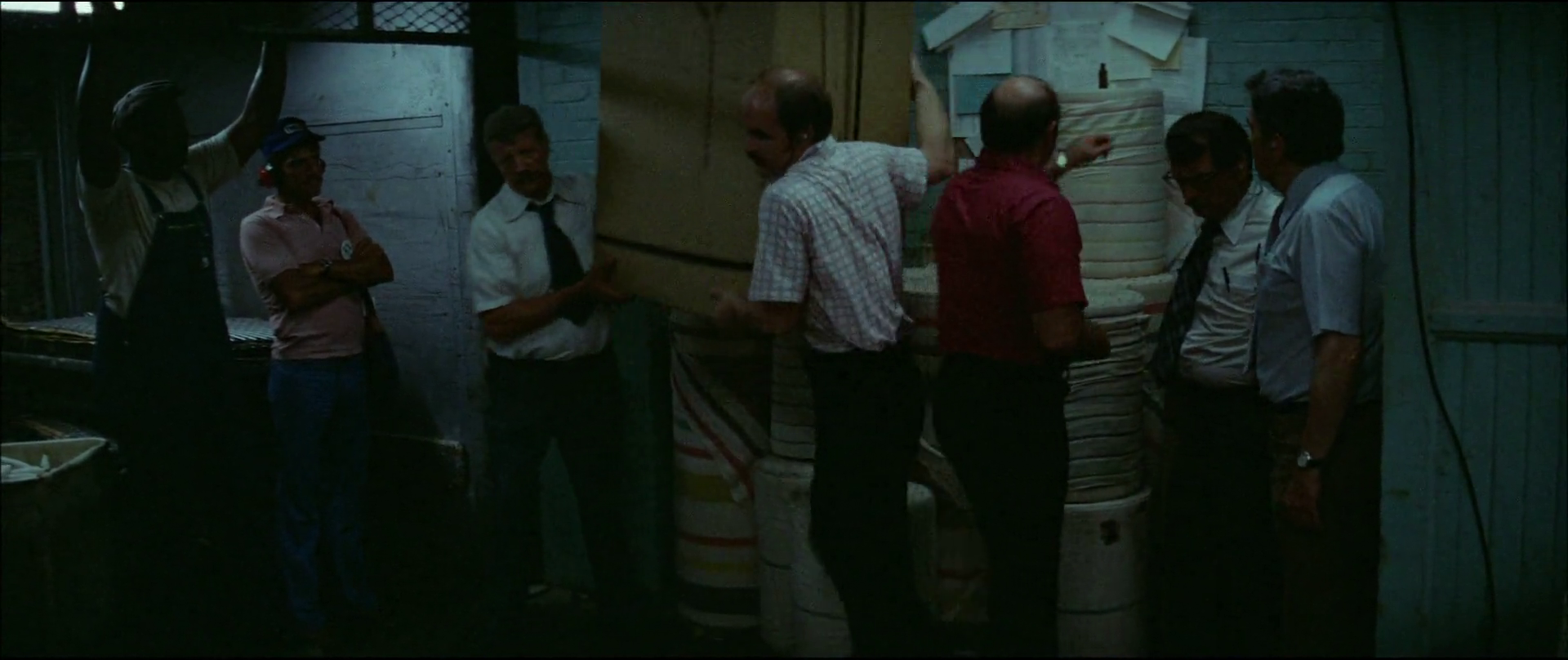
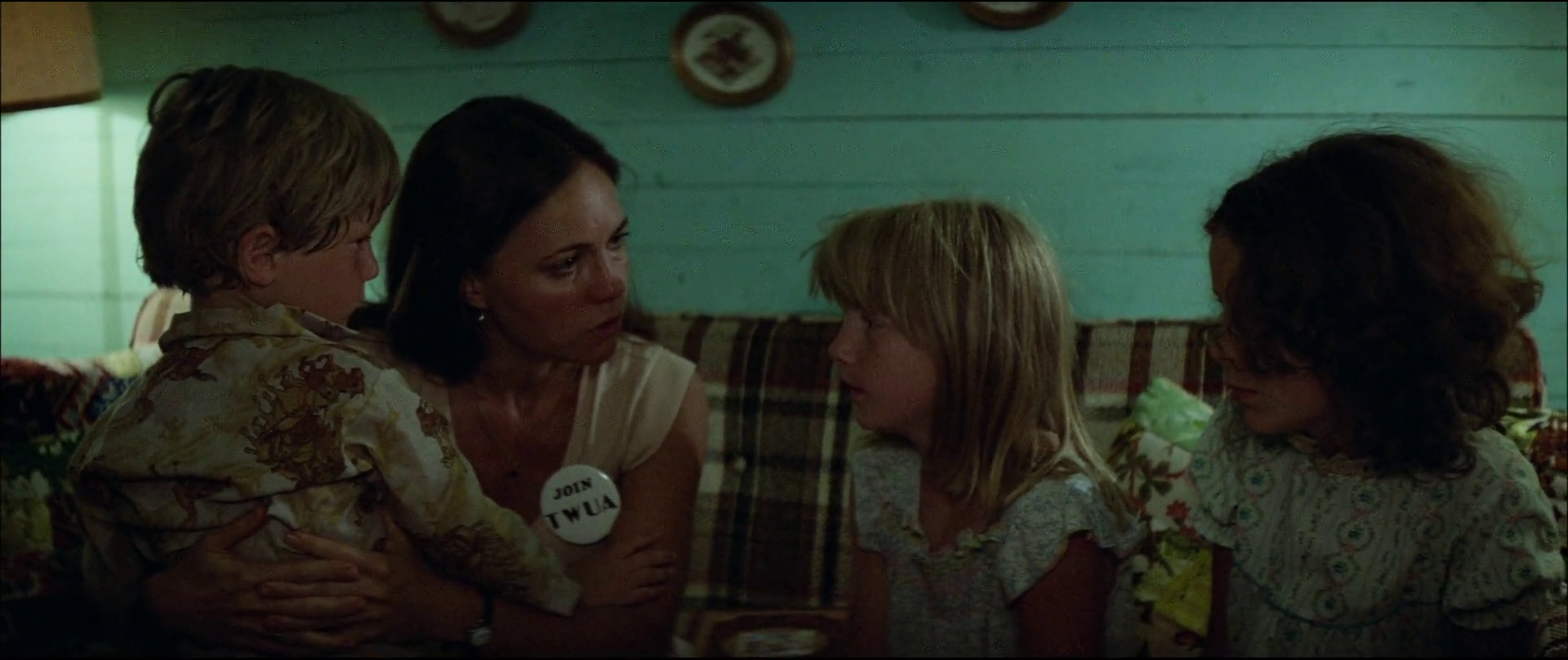
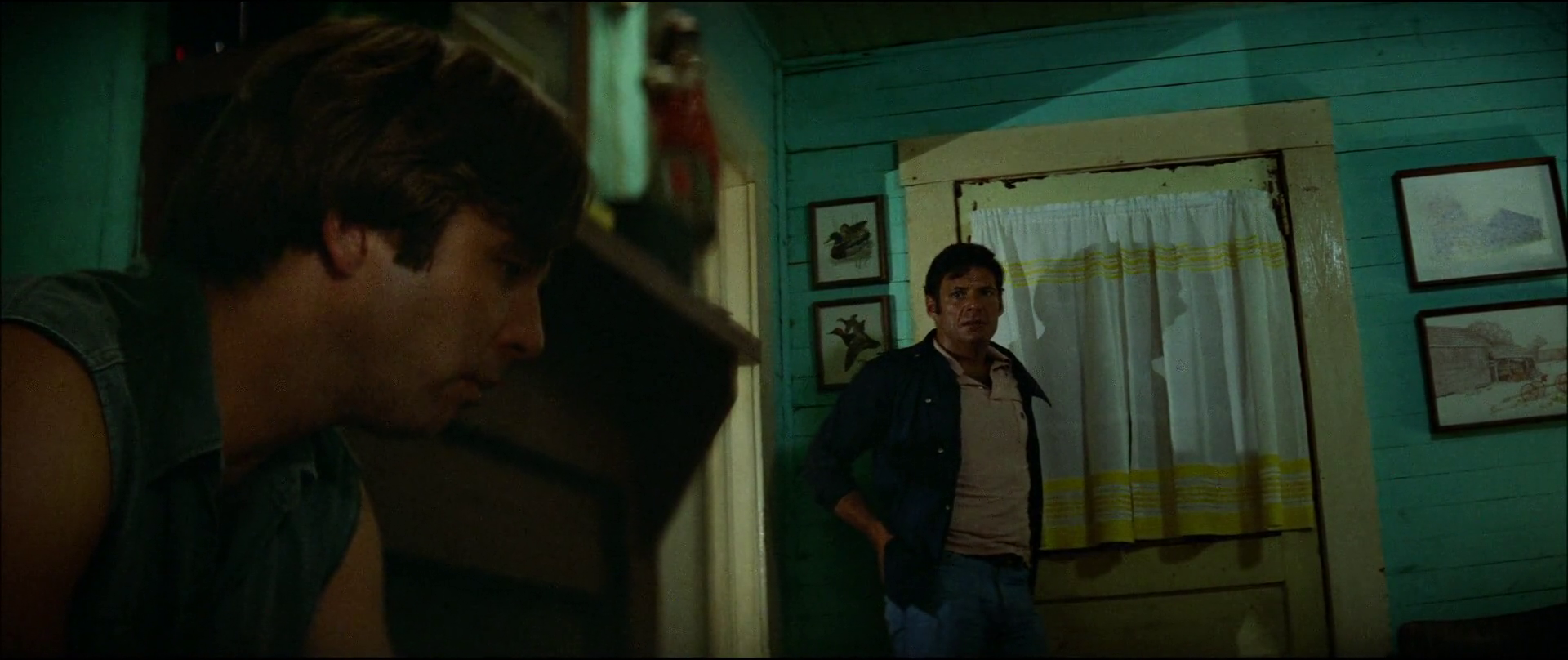
A Jewish labor organizer from New York (Ron Leibman) visits a textile mill in the deep South and convinces a feisty single mother (Sally Field) to assist him in forming a union, despite strong opposition from management and some frustration from Field’s new husband (Beau Bridges).

Genres, Themes, Actors, and Directors:

  • Beau Bridges Films
  • Deep South
  • Labor Movement
  • Martin Ritt Films
  • Pat Hingle Films
  • Sally Field Movies
  • Single Mothers
  • Strong Females

Response to Peary’s Review:
Peary writes that this Martin Ritt-directed film about “a stubbornly independent single mother who … becomes so obsessed with organizing that she has trouble with her employers… her minister… the law, and her new husband” is “extremely progressive: not only is it pro-union, but it also builds strong cases for women to be involved in political action (so they can enjoy personal growth) and for their men to share the housework…; it advocates friendships between blacks and whites and Jews and Christians, and says that men and women can work together without becoming lovers:

… and that husbands and wives can be friends as well as lovers”. He notes that “scenes that could come across as being extremely self-conscious… make us feel touched by their honesty”, and adds that the “picture has authentic atmosphere, surprising toughness, and characterizations by Field and Leibman that are downright inspirational”.

Peary elaborates on Field’s performance in his Alternate Oscars, where he agrees with the Academy in awarding Field Best Actress of the Year for her portrayal as “the closest to perfect any woman has been on the screen since Ingrid Bergman’s nun in The Bells of St. Mary’s.” He writes:

“Here’s a woman who has little education, who has a bad reputation, and who has never been kind to herself. Yet she says, ‘One of these days I will get myself all together’, and proceeds to pick herself up. And making good use of her heart, guts, hard head, and big mouth accomplishes so much that she deserves all the admiration she receives. What’s most commendable is that she isn’t interested in just improving her own life… She wants to improve the lot of all mill workers, which will make her own job more respectable.”

Peary further adds that “Field does an extraordinary job as this woman who displays remarkable courage and tenacity. It’s fun seeing this small-framed woman with a teenager’s face stand up to intimidating men, ignoring their threats, shouting at them, issuing threats of her own”, and notes that she “touches every scene with honest emotions”.

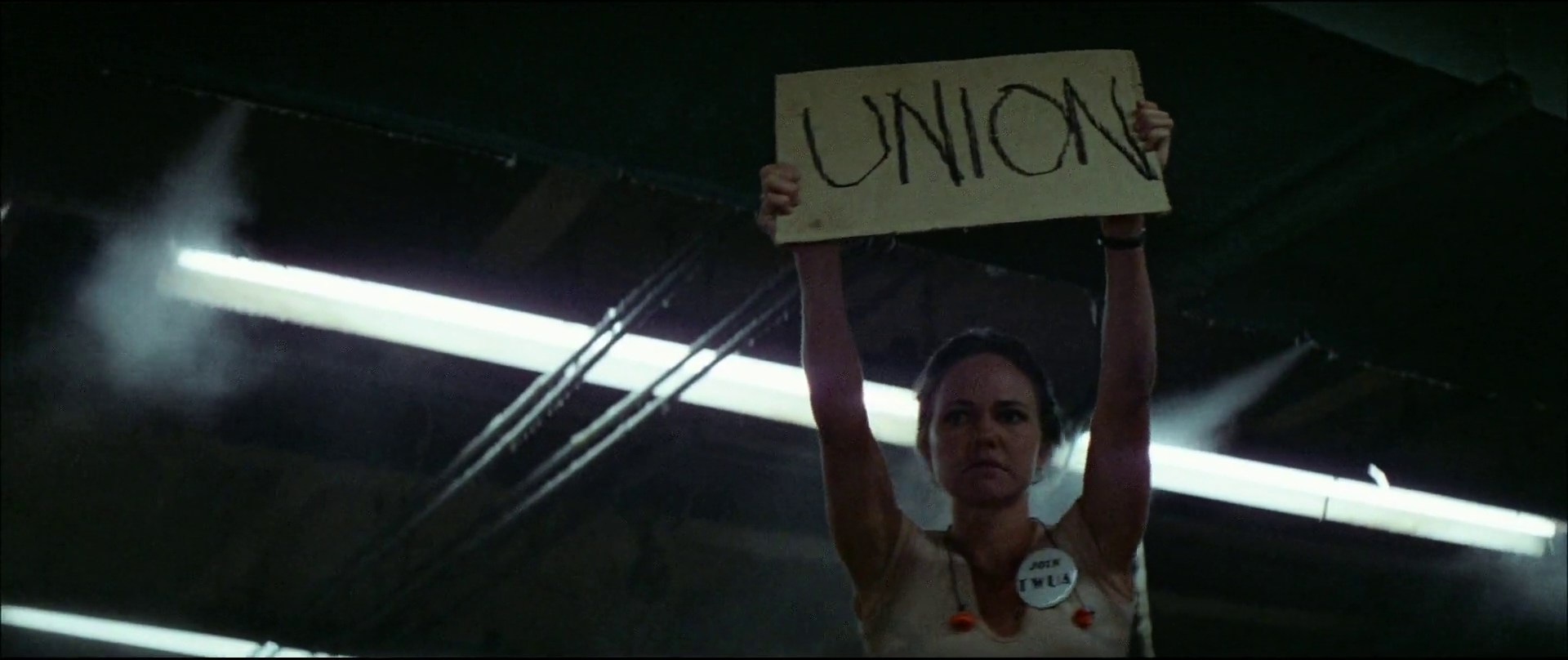
Peary’s praise is well-deserved: Field carries this film upon her tiny yet firm shoulders with incredible courage and chutzpah — speaking of which, Leibman’s role is equally critical to the film’s success, and his performance just as powerful as Field’s. The direction their relationship takes is both unexpected and refreshing. Meanwhile, the supporting cast and all details of this place-based film feel spot-on (check out TCM’s article for more details about filming on location in Alabama). The level of ongoing hubbub in the textile factory is authentically deafening, giving the film’s most famous scene additional “emotional impact: when Field stands on a table at the mill, holding high a sign that reads ‘Union’:

… [director] Ritt has all the workers look straight ahead at her so that it’s clear each of them turns off his or her machine because of Field and not because fellow workers are doing so.”

In an era of truly unsettling unknowns about the future of human labor, Norma Rae is a much-needed reminder that staunch activism, fearless leaders, and unwavering support are needed more than ever.

Redeeming Qualities and Moments:

  • Sally Field as Norma Rae (named Best Actress of the Year by Peary in his Alternate Oscars)
  • Ron Leibman as Reuben (nominated by Peary as one of the Best Actors of the Year in Alternate Oscars)
  • Strong supporting performances
  • A humane, realistic script


Must See?
Yes, as a worthy Oscar-winner. Nominated as one of the Best Pictures of the Year in Alternate Oscars.

Categories

  • Oscar Winner or Nominee

Links:

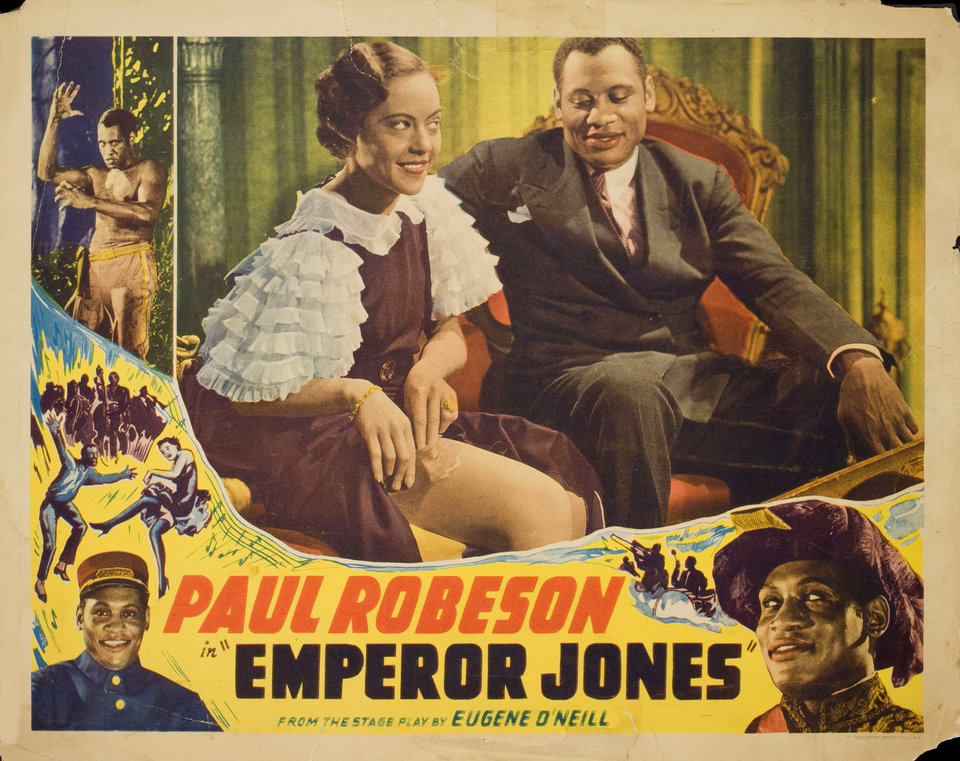
Emperor Jones, The (1933)

Emperor Jones, The (1933)

“It takes a silver bullet to kill Brutus Jones.”

Synopsis:
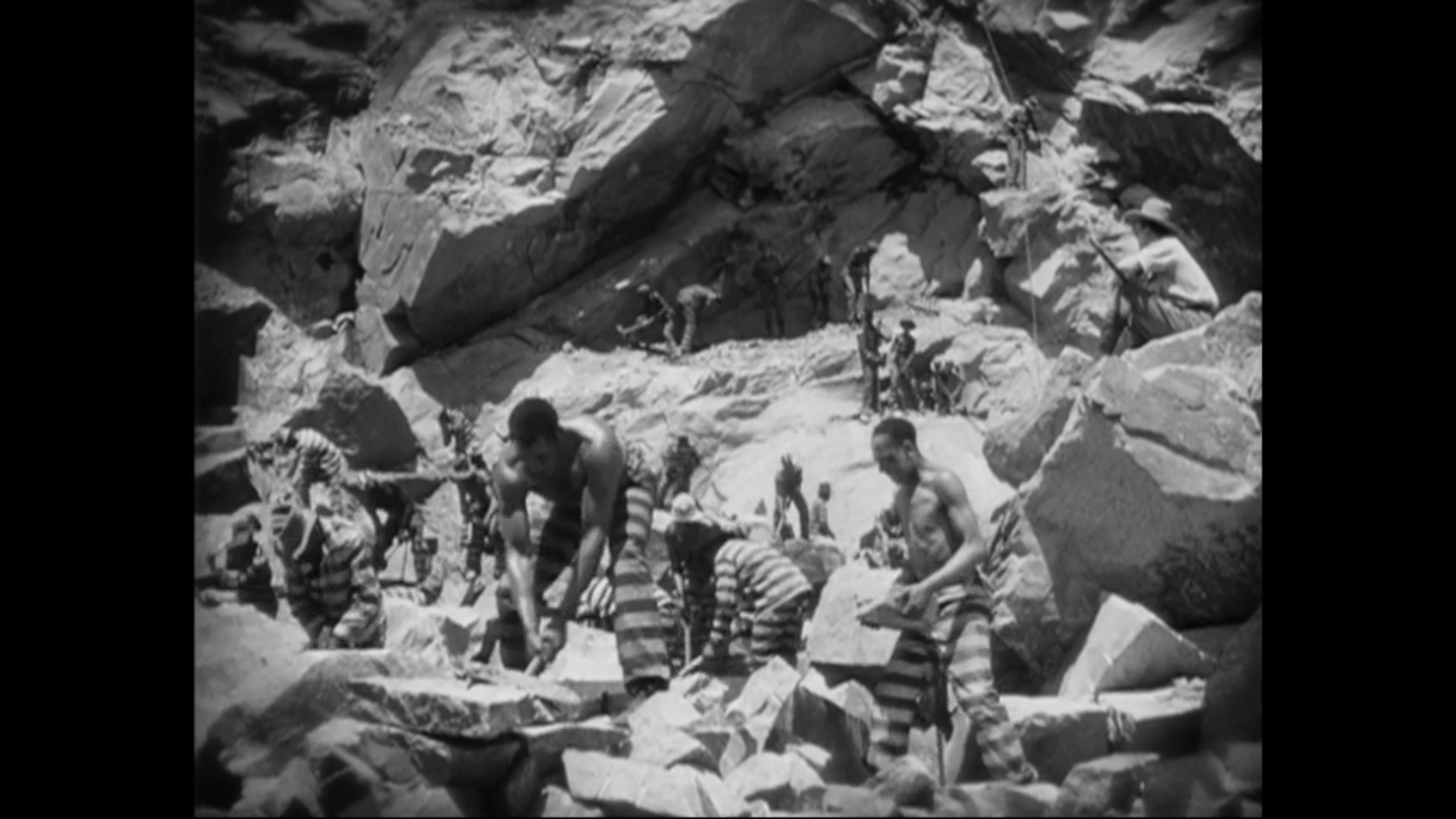
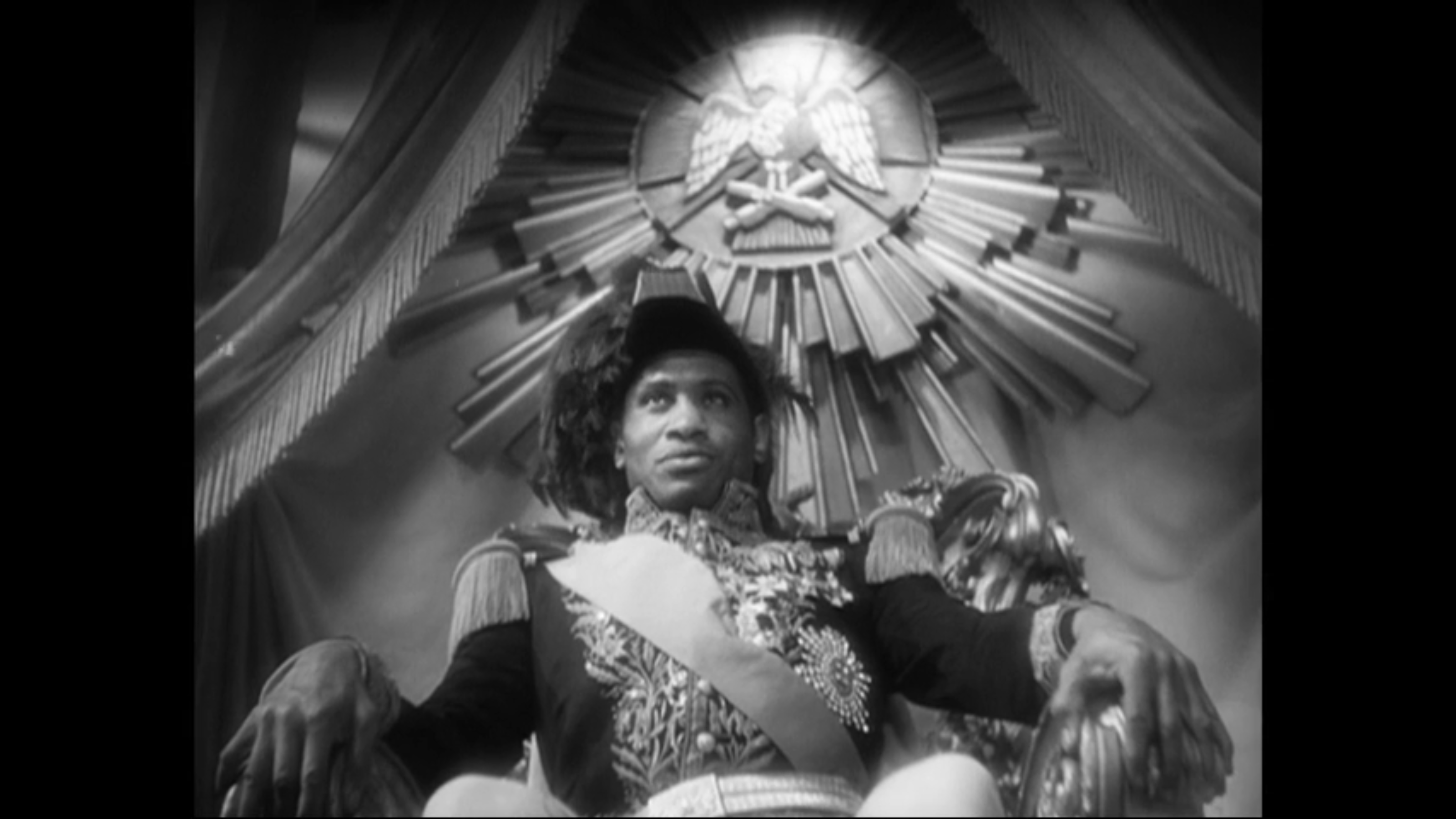
When Pullman porter Rufus Jones (Paul Robeson) accidentally kills a friend (Frank Wilson) in a craps game, he’s sent to a prison chain gang, but manages to escape to a Caribbean Island, where he’s bought by a white trader (Dudley Digges) and eventually comes to rule the island — for awhile.

Genres, Themes, Actors, and Directors:

  • African-Americans
  • Fugitives
  • Paul Robeson Films
  • Play Adaptations
  • Ruthless Leaders

Response to Peary’s Review:
Peary writes that this “curious adaptation of Eugene O’Neill[‘s] play” — inspired by the United States’ occupation of Haiti and the rise to power of repressive President Vilbrun Guillaume Sam — suggests “that one of [Jones’] crimes is that he comes to regard himself as better than his people, but in fact this character is shown to be better than the rest,” given that “of the blacks in the film, Jones is the only one with dignity or intelligence”, and he “certainly doesn’t fit in with the blacks in Harlem or the equally uncivilized natives.” He adds that “it’s good seeing a defiant black man on the screen, particularly in 1933, and one wonders how white audiences of the day reacted to Jones — or, more likely, Robeson — standing up to a white guard and outsmarting the others”. (According to an unsubstantiated claim on Wikipedia, “particularly in the South, the response [to the film’s release] was virulent: more than forty lynchings erupted in its opening week across the South where it wasn’t showing yet.”) Peary notes that “this is one of Robeson’s few opportunities to play a black man whose role isn’t to improve the lot of whites” but “it’s probable Jones is punished at the end because he overstepped his bounds when he didn’t kowtow to whites.”

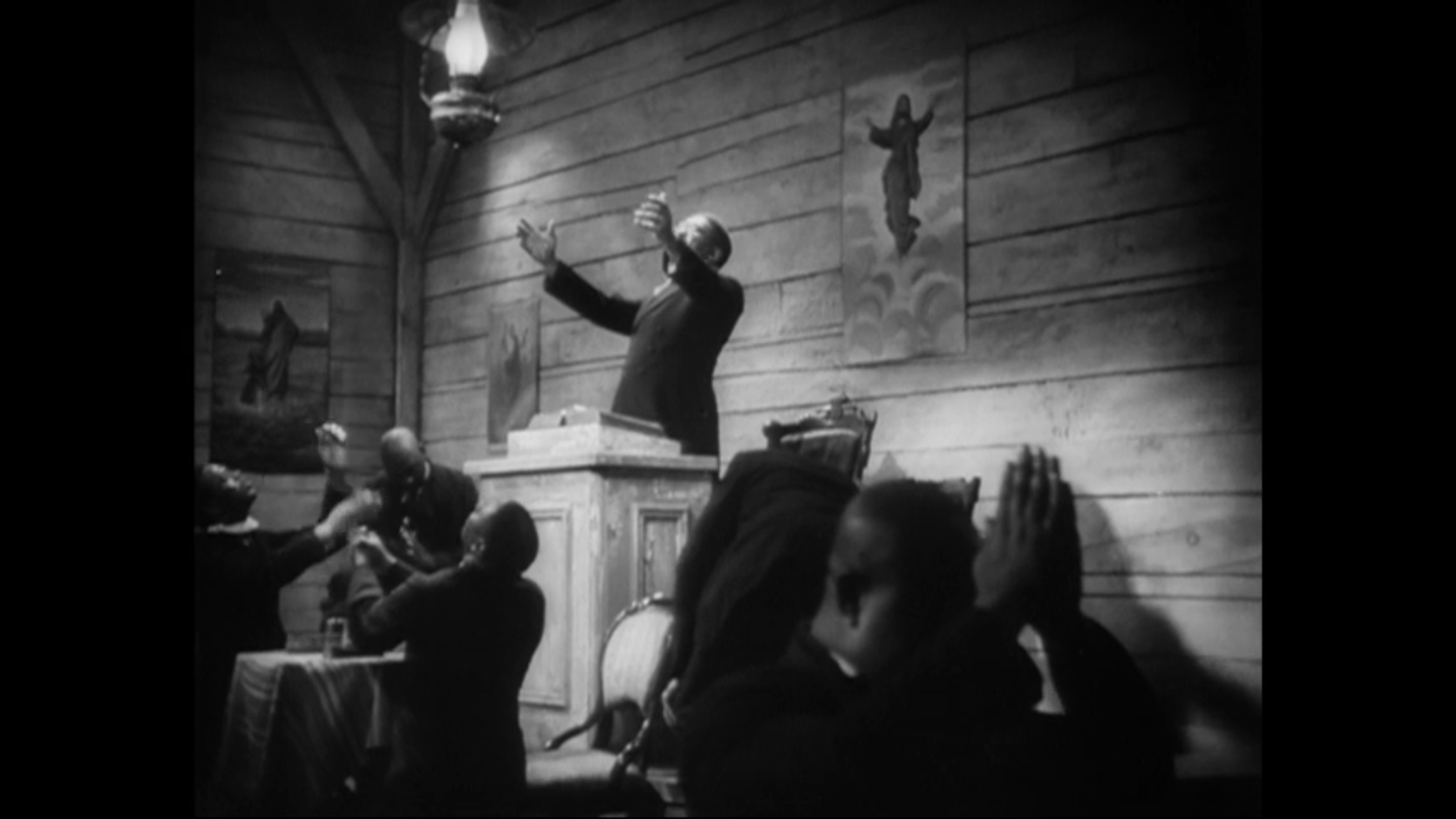
It’s truly challenging to know how to respond this film, which paradoxically broke new ground by starring an African-American in a strong leading role while simultaneously presenting countless problematic elements — including ample use of the “n” word and stereotypical presentation of most blacks as either religious naifs, clueless natives, or wily hucksters. Jeffrey C. Stewart‘s “academicky” but insightful commentary on the Criterion DVD release helps contextualize the story as one of internalized colonialism, with whitewashed Jones eager to take an imperial stance rather than work with and for “his people” (especially ironic given Robeson’s notorious Communist leanings in real life), and is recommended. This curious tale of ambition run amok remains troublesome on multiple levels, but Robeson’s commanding performance is well worth a watch, and film fanatics will want to at least be familiar with this pre-Code oddity.

Redeeming Qualities and Moments:

  • Fine cinematography and art direction


Must See?
Yes, for its historical relevance.

Categories

  • Historically Relevant

Links: