Browsed by
Category: Response Reviews

My comments on Peary’s reviews in Guide for the Film Fanatic (Simon & Schuster, 1986).

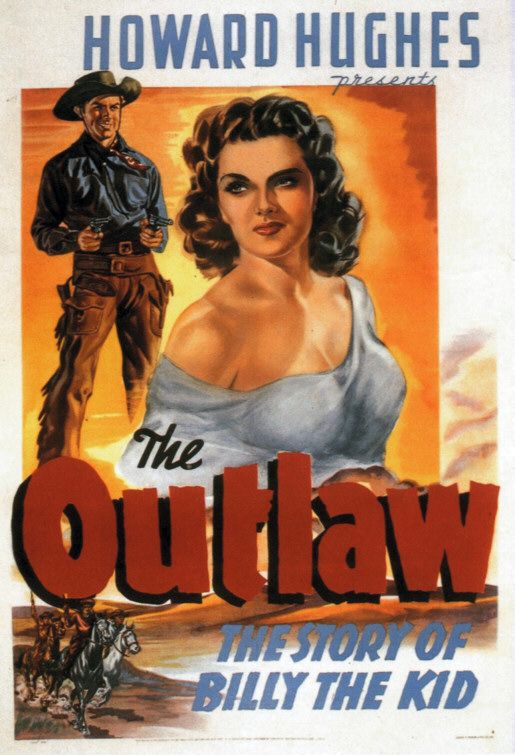
Outlaw, The (1943)

Outlaw, The (1943)

“Ever since you met him, you’ve treated me like a dog!”

Synopsis:
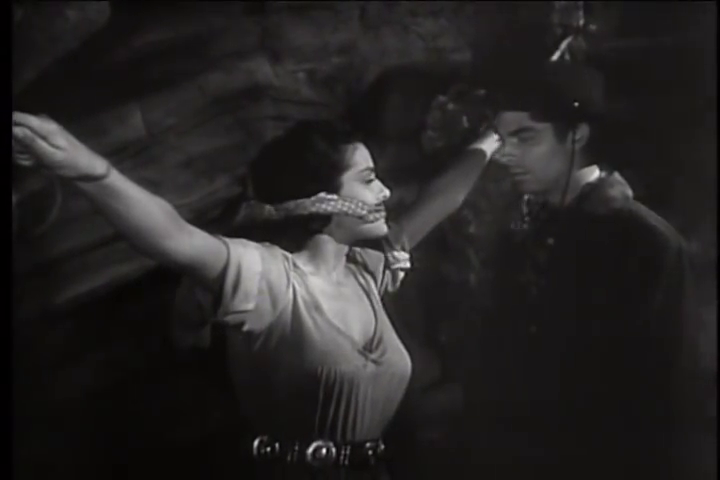
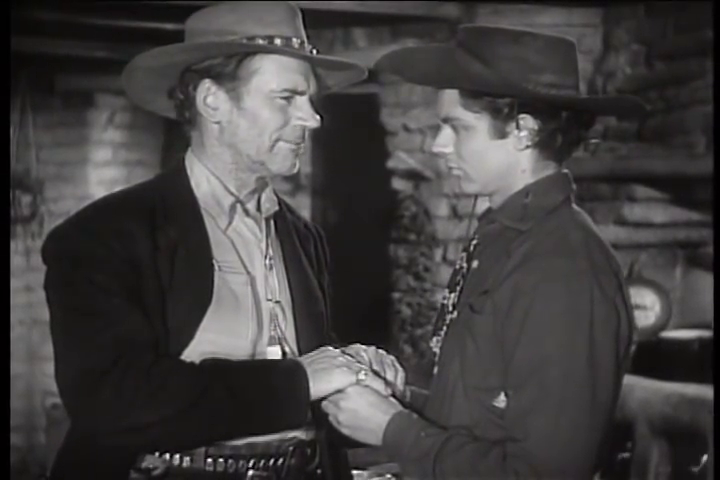
Doc Holliday (Walter Huston) befriends Billy the Kid (Jack Beutel) while alienating his buddy Pat Garrett (Thomas Mitchell). Huston and Beutel spar over not only Huston’s horse, but his mistress (Jane Russell), who initially hates Beutel for killing her brother yet soon falls for him and nurses him back to health.

Genres, Themes, Actors, and Directors:

  • Friendship
  • Jane Russell Films
  • Outlaws
  • Rivalry
  • Thomas Mitchell Films
  • Walter Huston Films
  • Westerns

Response to Peary’s Review:
Peary writes that this “‘notorious’ adult western” by “director-producer Howard Hughes” was “held back because of censorship problems due to newcomer Jane Russell’s sexually uninhibited performance” — which is exactly what business-savvy Hughes and his publicist Russell Birdwell were hoping for. As noted in TCM’s review:

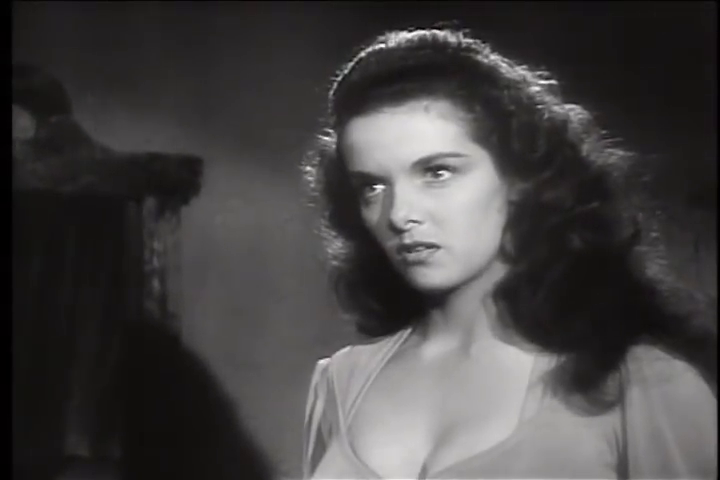
As soon as production began, The Hayes Office, charged with upholding the moral fiber of motion pictures, demanded a copy of the script for review. After reading it, The Hayes Office demanded several changes to what it considered “racy dialogue and situations,” and cautioned Hughes to “avoid sexual suggestiveness.” But Hughes had no intention of pouring water on his smoldering screenplay, and when the picture was finally released, Hughes got exactly what he expected. Censors objected not only to Russell’s low-cut blouse, but also the treatment of her character as merely a sex object.

Ironically, while the film does place ample emphasis on Russell’s photogenic bosom, the film is less focused on sexual dynamics between Russell and her two lovers than on, as Robert Lang notes in his book Masculine Interests: Homoerotics in Hollywood Films:

… the complications that arise when Doc Holliday (Walter Huston) falls in love with Billy the Kid (Jack Beutel) and Pat Garrett (Thomas Mitchell) becomes jealous of the bond that develops between the two men… [The] proper locus of the film’s sexuality is not embodied in Jane Russell as Rio MacDonald, but is played out in the relationship between the two men (and their horse).

Regardless of whether one reads the relationship between Huston and Beutel as sexual or not, it’s undeniable that the real “love triangle” here is between these men (who take an instant liking to one another, for no discernable reason) and Mitchell. In his review, however, Peary simply points out that “after a while there’s too much male talk and not enough about Russell”, adding that it’s “hard to believe” the “very pretty, buxom, teenage girl in the tight, revealing dresses” is “the same actress who’d confidently sing, dance, and be funny with Marilyn Monroe ten years later in Gentlemen Prefer Blondes (1953).”

The film itself, unfortunately, is a tonally inconsistent chore to sit through. Peary writes that the “comedy and music are intrusive”, but this is an understatement: Victor Young’s score is atrociously inappropriate for the melodramatic material, which doesn’t work as a comedy. Meanwhile, the film is at least half an hour too long, and Hughes didn’t know how to elicit strong performance from his leads. While the reasons for Beutel’s limited career are contested, it seems clear to me that he was more of a pretty face than a talented actor; as noted previously, it’s challenging to understand why Huston feels such loyalty for him.

Redeeming Qualities and Moments:

  • Gregg Toland’s cinematography

Must See?
No, though film fanatics will be curious to give it a once-through given its historical notoriety.

Links:

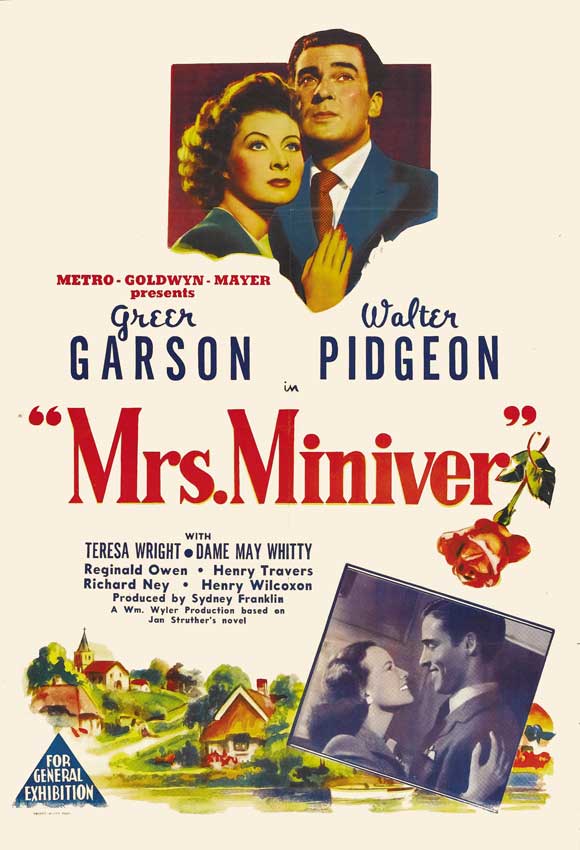
Mrs. Miniver (1942)

Mrs. Miniver (1942)

“He’s young and he loves life, but he may die — any day, any hour.”

Synopsis:
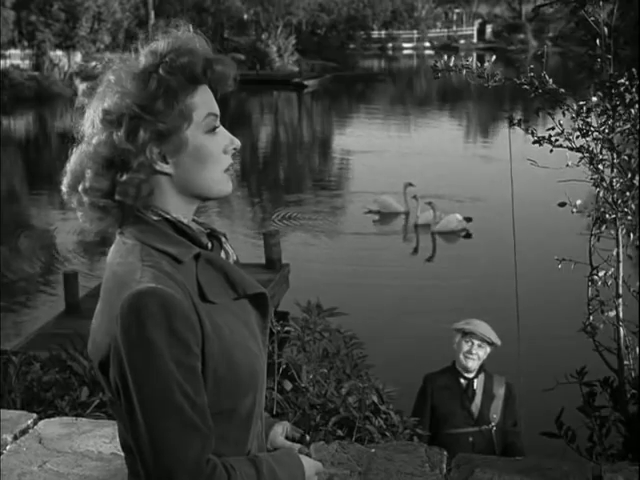
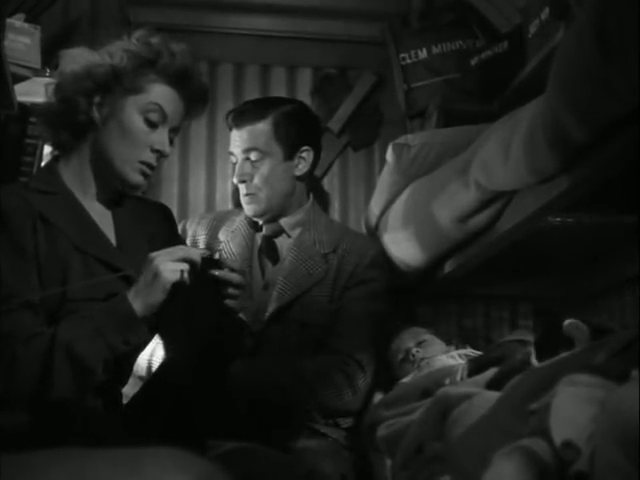
A British mother (Greer Garson) copes with the stress of her husband (Walter Pidgeon) helping with local war efforts, and her oldest son (Richard Ney) becoming an RAF pilot while romancing the granddaughter (Teresa Wright) of local nobility (Dame May Whitty). Meanwhile, the local stationmaster (Henry Travers) hopes to take home top prize at that year’s flower show, for a rose he’s named “Mrs. Miniver” in honor of Greer — but will Whitty allow “her” annual prize to be taken from her?

Genres, Themes, Actors, and Directors:

  • Greer Garson Films
  • Strong Females
  • Teresa Wright Films
  • Walter Pidgeon Films
  • William Wyler Films
  • World War Two

Response to Peary’s Review:
Peary writes that while the “typical British middle-class family” in this Best Picture winner — about individuals “whose cherished, hard-earned life of tranquility and security has been destroyed by war” — may be “phony”, they’re “exactly the same as Americans depicted in Hollywood films”, and ultimately “the type of people American viewers could identify with in 1942”.

He adds that “this was important because the purpose of MGM’s propaganda piece, which was filmed on the studio lot, was to motivate Americans to come to the aid of the British… and it is known to have succeeded to an astonishing degree.” With that said, as Peary notes, the “picture is self-conscious to an annoying degree”. He further admits that he has “always had mixed feelings about Greer Garson (and other actresses I can’t picture in blue jeans), but she deserves her Oscar if only because she agreed to be mother to an adult” (!!!).

[In Alternate Oscars, he snubs Garson altogether and splits the Best Actress Oscar between Carole Lombard in To Be or Not to Be and Ginger Rogers in The Major and the Minor.] Greer’s performance is earnest and consistent, but she only seems to depict a few primary expressions, and never really surprises us with any noteworthy acting moves.

Wyler would ultimately have much more success and authenticity with The Best Years of Our Lives (1946) — a film which has endured as a true wartime classic.

Note: This film was added to the National Film Registry in 2009 for being “culturally, historically, or aesthetically” significant.

Redeeming Qualities and Moments:

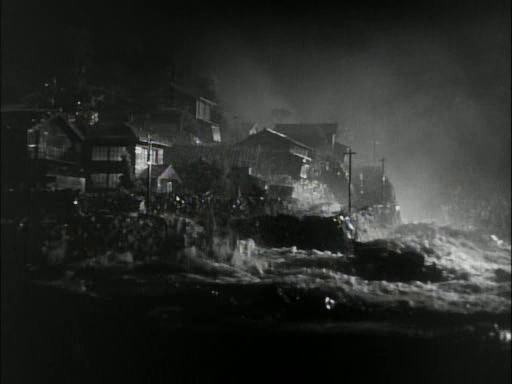
  • Gorgeous b&w cinematography by Joseph Ruttenberg


Must See?
No, though most film fanatics will be curious to check it out at least once given its history as a multiple Oscar winner and nominee.

Links:

Godzilla, King of the Monsters! (1956)

Godzilla, King of the Monsters! (1956)

“Neither man nor his machines are able to stop this creature.”

Synopsis:
An American journalist (Raymond Burr) recounts a story of witnessing an atomic sea monster destroying Tokyo, while a scientist (Akihiko Hirata) whose fiancee (Momoko Kochi) is in love with a captain (Akira Takarada) knows now is not the right time to reveal her shift in loyalties.

Genres:

  • Flashback Films
  • Japanese Films
  • Mutant Monsters
  • Nuclear Threat
  • Raymond Burr Films

Response to Peary’s Review:
Peary writes that “Japan’s answer to King Kong” began “as a 98-minute Japanese film called Gojira, directed by Inoshiro Honda”, which “won many awards and broke box-office records all over Japan”. He adds that this version, “directed by Terry Morse, eliminates a lot of of Honda’s material and introduces an American reporter… who serves as a narrator and, in cleverly edited scenes, appears to talk to the Japanese characters from Honda’s film”. Unfortunately, as Peary notes, Burr “bungles it” but “what makes both versions interesting — even though they aren’t enjoyable or exciting… is that, unlike all those giant creatures of American SF films of the fifties, Godzilla was not simply a bad consequence of foolhardy nuclear testing.” Rather, the “mericiless monster which kills and destroys with machine-like precision is meant to be the embodiment of the atomic bombs dropped on Hiroshima and Nagasaki”. He adds that “this horror film gave Americans one of their first opportunities to see Japanese rage and disgust over what America did to them in August 1945”.

Peary writes about the film at length in his Cult Movies 2 book, where he notes that “even with the popularity of campy (as in bad) movies, [he is] at a loss to explain the cult in American for Japanese monster movies”. He describes how beloved Godzilla — or Gojira — is in Japan, and cites Ed Godziszewski in noting it “is considered… by many to be the second greatest Japanese film ever made, next to Kurosawa’s The Seven Samurai” — and that because of its success, “Toho [Studios] produced a wave of science fiction and fantasy films until the mid-’70s”. Peary spends the bulk of his Cult Movies review comparing the two versions of the film (which have been re-released through Criterion with plenty of extras), noting inconsistencies and pointing out ways in which many (but not all) references to the A bomb were deleted in the Americanized version. In GFTFF, Peary concludes that “The Honda version ends gloomily, the Morse version optimistically” — but adds that “only Honda’s version makes a plea for peace and no more bomb-testing”.

Note: As a major cult movie, Godzilla has many fans who have written volumes about it and its many sequels (see Moria’s review for a run-down).

Redeeming Qualities and Moments:

  • Impressive special effects
  • Atmospheric cinematography


Must See?
Yes, for its cult status.

Categories

  • Cult Movie

Links:

Best Years of Our Lives, The (1946)

Best Years of Our Lives, The (1946)

“Last year it was ‘Kill Japs’ and this year it’s ‘Make money’.”

Synopsis:
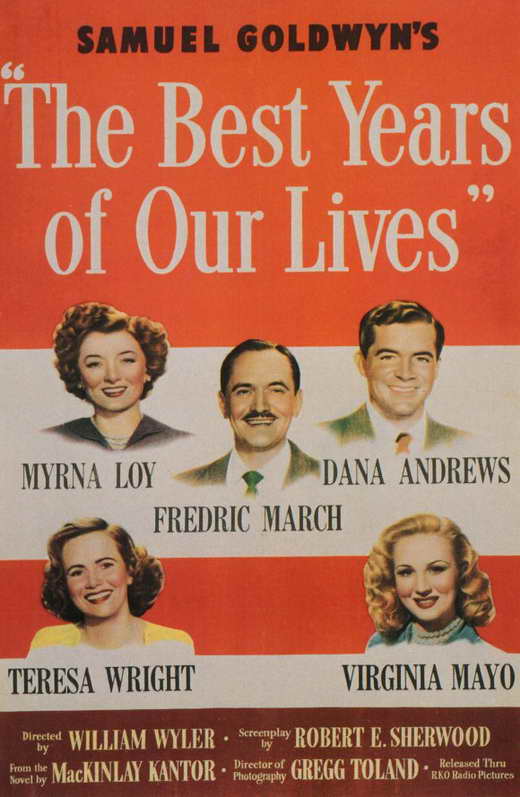
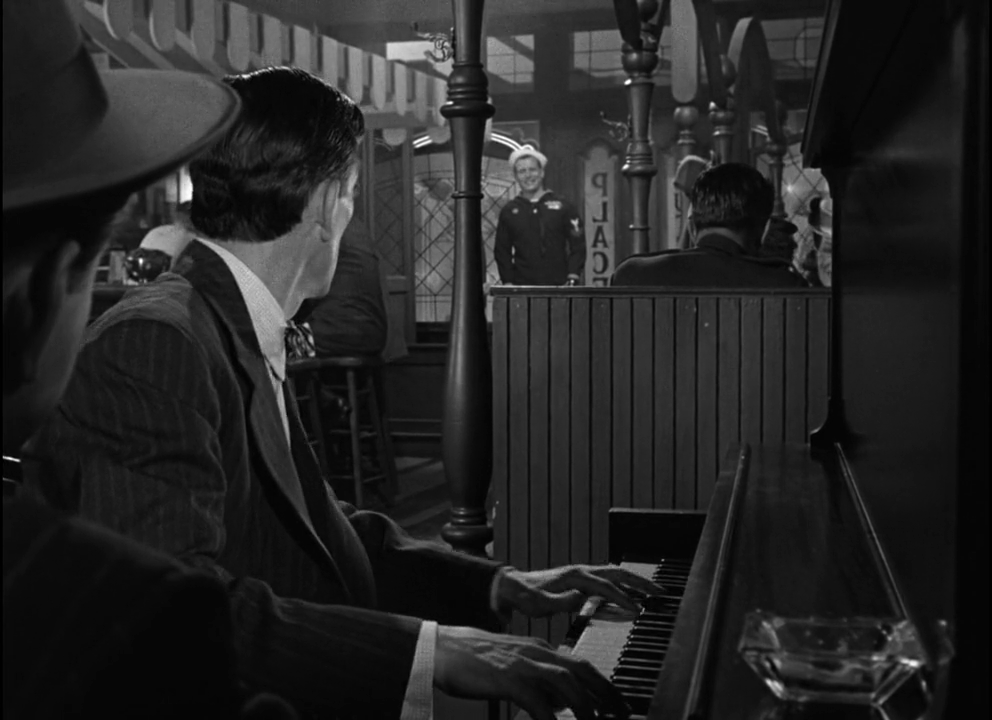
Three veterans (Fredric March, Dana Andrews, and Harold Russell) find their return home from World War II more challenging than expected. While March’s wife (Myrna Loy) is patient and loyal, his two children (Teresa Wright and Michael Hall) are now grown, and he is frustrated by his work for a bank that doesn’t sufficiently honor servicemen. Andrews — who struggles to find meaningful employment — learns that his war-time bride (Virginia Mayo) is more concerned about partying than settling down, and develops a growing crush on Wright. Meanwhile, Russell — who lost both hands during the war — suffers deep insecurity about the love and acceptance of his kind girlfriend (Cathy O’Donnell).

Genres, Themes, Actors, and Directors:

  • Dana Andrews Films
  • Disabilities
  • Fredric March Films
  • Marital Problems
  • Myrna Loy Films
  • Small Town America
  • Teresa Wright Films
  • Veterans
  • Virginia Mayo Films
  • William Wyler Films
  • World War Two

Response to Peary’s Review:
Peary writes that the subject matter of this “superlative Americana” — about “three returning war veterans… who have troubles readjusting to home lives, love lives, and work situations” — is “still extremely relevant”. (Indeed, writing this response review 32 years after the publication of GFTFF, it remains more so than ever.) He notes that “Robert Sherwood’s excellent, Oscar-winning script (adapted from [war correspondent] MacKinlay Kantor’s Glory for Me) was brutally frank for its time, perceptive and extremely poignant”: while “it is sympathetic towards its characters rather than being overly sentimental”, Peary advises viewers to “keep a supply of tissues on hand”. He points out that the film “is honest enough to show that even war heroes who are welcomed home with open arms will have to make an effort to achieve any degree of happiness in postwar America”, and concludes his review by stating that this Best Picture Oscar winner — which Peary nonetheless boots to the curb in his Alternate Oscars, giving the award to It’s a Wonderful Life instead — was “probably the best film of [Wyler’s] distinguished career”.

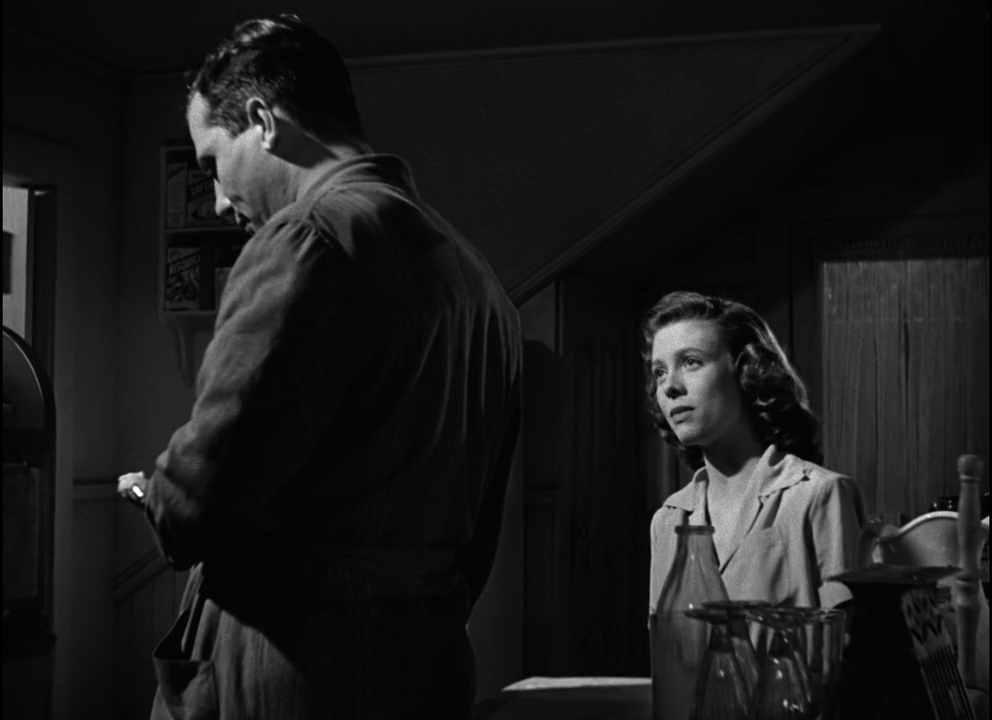
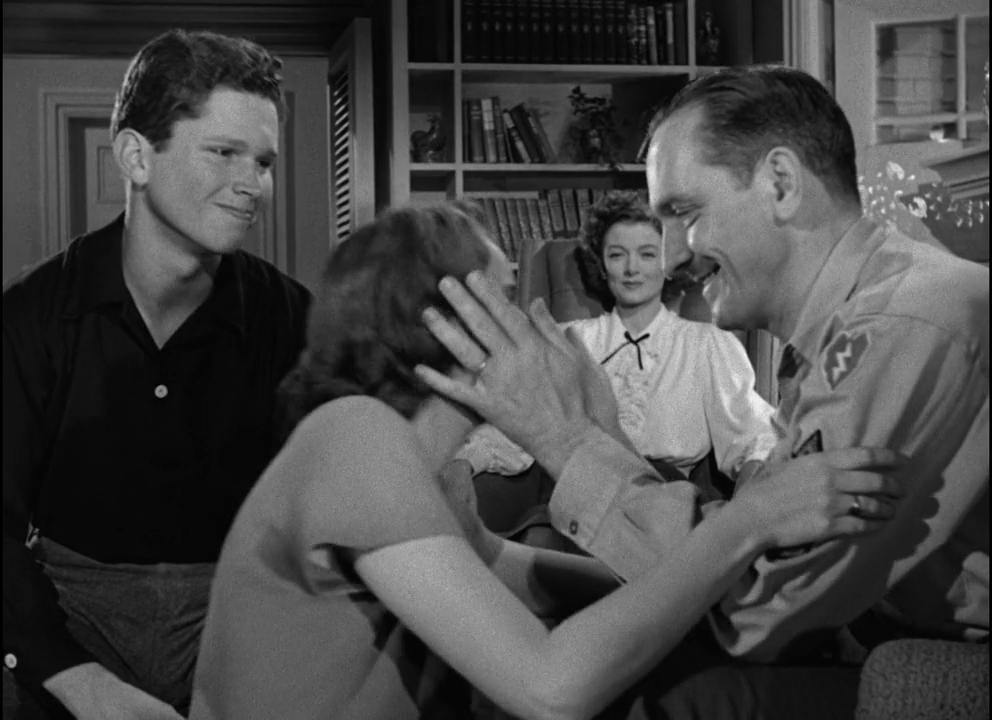
As Peary notes, the “entire cast is splendid”: “non-actor Russell was voted Best Supporting Actor”, while “March won Best Actor Oscar” for his performance — and while Peary opts for Jimmy Stewart’s leading role in It’s a Wonderful Life instead, he does note in Alternate Oscars that March was, “as usual”, a “strong, commanding presence” while also displaying tenderness and revealing “insecurities rarely evident in his earlier films”. Peary points out that “Loy, further establishing her ‘perfect wife’ image, deserved an Oscar as well, but didn’t even get a nomination”. Finally, in GFTFF, Peary details several memorable scenes among many from the movie — including the tear-jerking “reunion scene” between Loy and March; Andrews “walking through an airplane graveyard”; “handicapped Russell allowing his sweet, loyal girlfriend… to take off his metal arm attachment and put him to bed”; and “March and Loy telling their grown daughter, Teresa Wright, that their relationship hasn’t been as easy as she assumed”. I’m also especially fond of the wonderfully prolonged homecoming scene opening the film, which effectively highlights both the reticence and hope felt by these men as they returned to the land and people they risked their lives to defend.

Note: Be sure to check out the short documentary film — “Diary of a Sergeant” — that inspired Wyler to cast Russell.

Redeeming Qualities and Moments:

  • Fine performances across the board

  • Wyler’s strong direction

  • Gregg Toland’s cinematography

  • Many powerfully affecting scenes

Must See?
Yes, as an enduring and deserved classic.

Categories

(Listed in 1001 Movies You Must See Before You Die)

Links:

Go Tell the Spartans (1978)

Go Tell the Spartans (1978)

“He was a dink! I’m sick and tired of the goddamned, fish-stinkin’ dinks!”

Synopsis:
During the early years of the Vietnam War, a battle-weary major (Burt Lancaster) and his officer (Marc Singer) at a poorly manned outpost send a group of men — including promotion-hungry Lieutenant Hamilton (Joe Unger), burnt-out Sergeant Oleonowski (Jonathan Goldsmith), drug-addicted medic Corporal Abraham Lincoln (Dennis Howard), demolitions expert Corporal Courcey (Craig Wasson), communications expert Corporal Ackley (John Megna), and a half-Vietnamese translator named Cowboy (Evan Kim), in addition to mercernaries and South Vietnamese troops — to garrison the deserted hamlet of Muc Wa; but their journey is haunted by the ghosts of massacred French soldiers from an earlier conflict.

Genres, Themes, Actors, and Directors:

  • Burt Lancester Films
  • Soldiers
  • Vietnam War

Response to Peary’s Review:
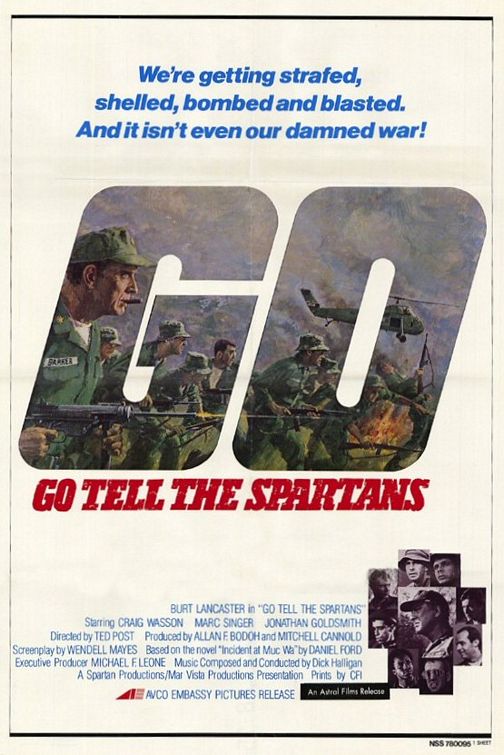
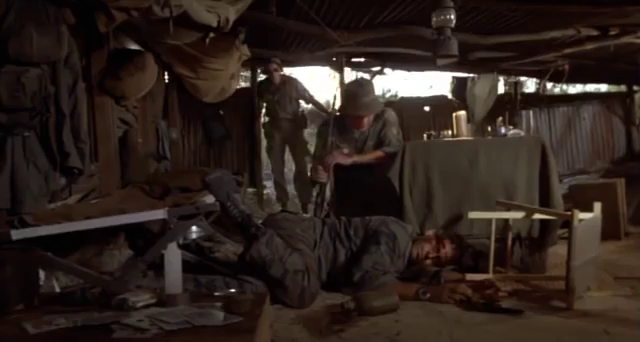
Peary writes that “the best Vietnam War film” in 1978 — directed in a “surprisingly assured” manner by Ted Post, best known for his work on Beneath the Planet of the Apes (1970) and the wacky cult-camp classic The Baby (1973) — “was overlooked because of the highly publicized The Deer Hunter, Apocalypse Now, and Coming Home.” He notes that this “convincing look at the war in 1964, before it escalated to mammoth proportions”, effectively shows the “sadistic, racist attitude” of some soldiers, as well as “the suicidal bent of some of the vets”. Based on a 1967 novel by correspondent Daniel Ford called Incident at Muc Wa — and made ten years after John Wayne’s now laughably-dated The Green Berets (1968)Go Tell the Spartans nonetheless feels like it’s from an earlier cinematic era, likely due to its low budget (the U.S. Army refused to provide monetary assistance unless significant changes were made to the script; thankfully, Burt Lancaster found it brilliant and fronted his own money). Unlike The Green Berets, … Spartans — which Peary refers to as “brutal and uncompromising” — has held up quite well; I’m not surprised by its minor cult status. Special kudos go to Dick Halligan for his memorably haunting score (which will linger in your head weeks later), and to Wendell Mayes’ sharp screenplay, which, despite taking “seven years to sell”, features “strong and realistic” dialogue as well as believable characters.

Redeeming Qualities and Moments:

  • A well-acted, no-holds-barred look at the insanity of war


Must See?
Yes, as a fine early depiction of the Vietnam War. Nominated by Peary as one of the Best Pictures of the Year in his Alternate Oscars.

Categories

Links:

Stranger, The (1946)

Stranger, The (1946)

“People can’t help who they fall in love with.”

Synopsis:
When a G-man (Edward G. Robinson) follows a former prisoner (Konstantin Shayne) from Latin America to a small Connecticut town, he finds that the daughter (Loretta Young) of the local judge (Philip Merivale) is about to marry a man (Orson Welles) with a secret past as a heinous Nazi criminal. Will Young’s loyalty to her new husband prevent her from helping Robinson catch his prey?

Genres, Themes, Actors, and Directors:

  • Detectives and Private Eyes
  • Edward G. Robinson Films
  • Fugitives
  • Loretta Young Films
  • Marital Problems
  • Mistaken or Hidden Identities
  • Nazis
  • Orson Welles Films
  • Small Town America

Response to Peary’s Review:
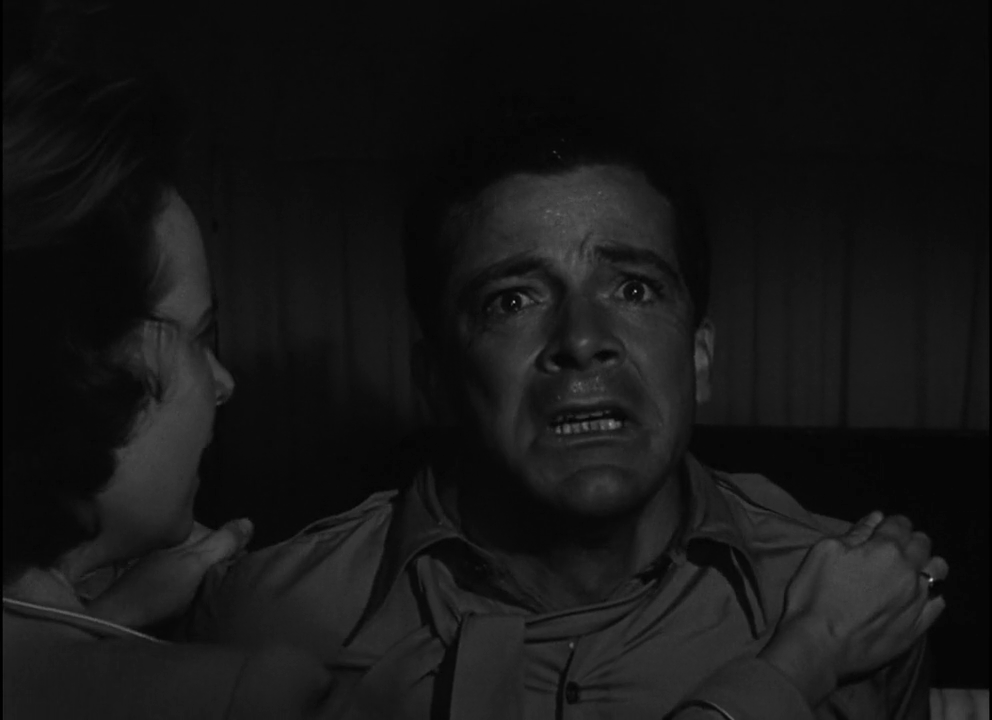
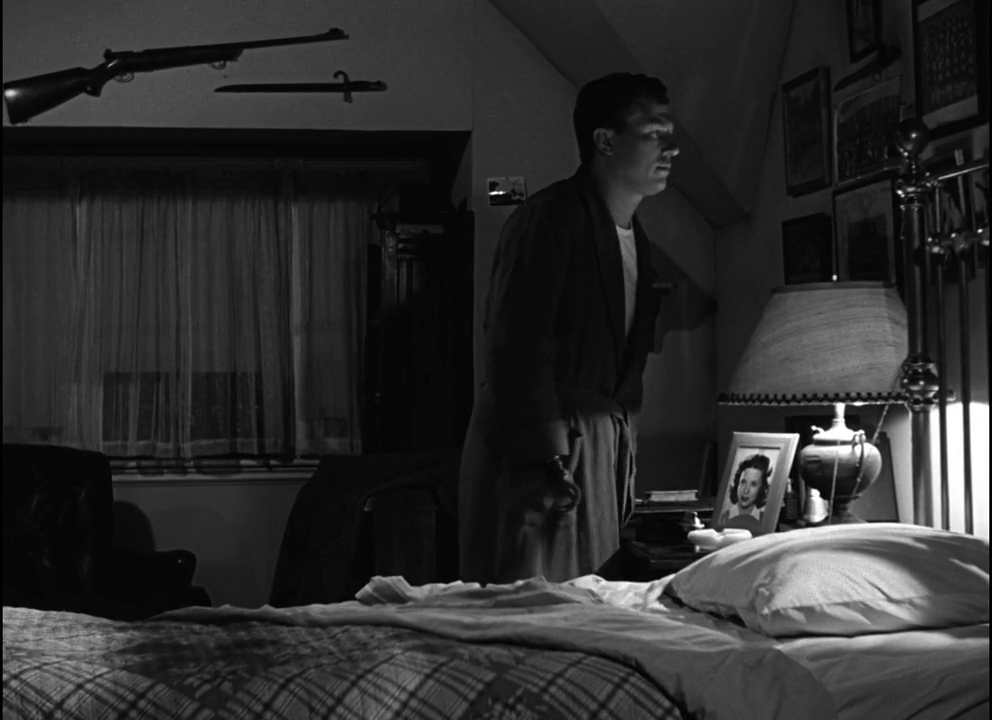
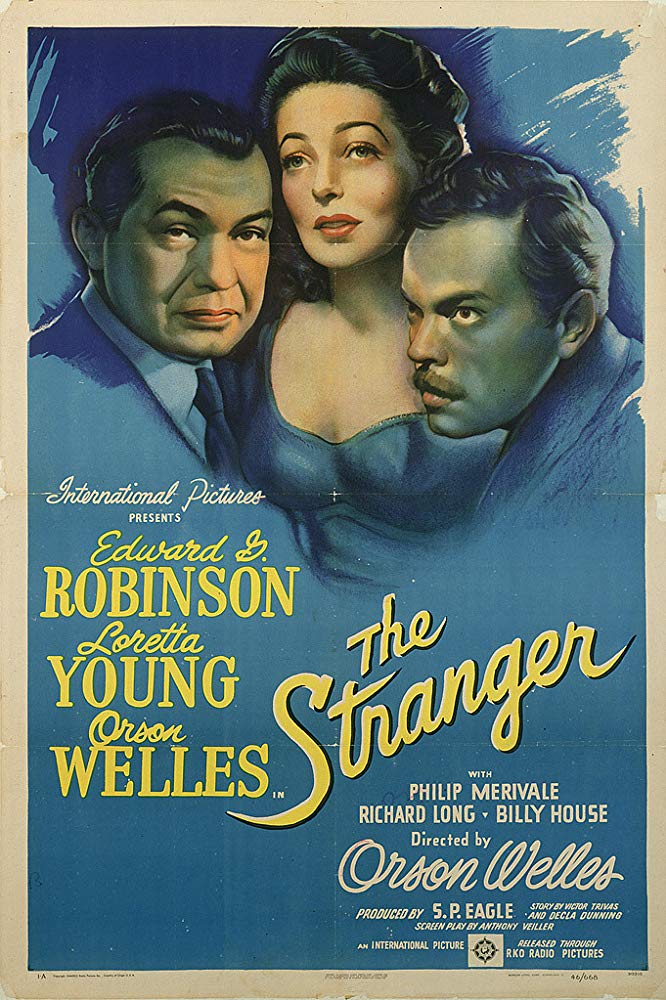
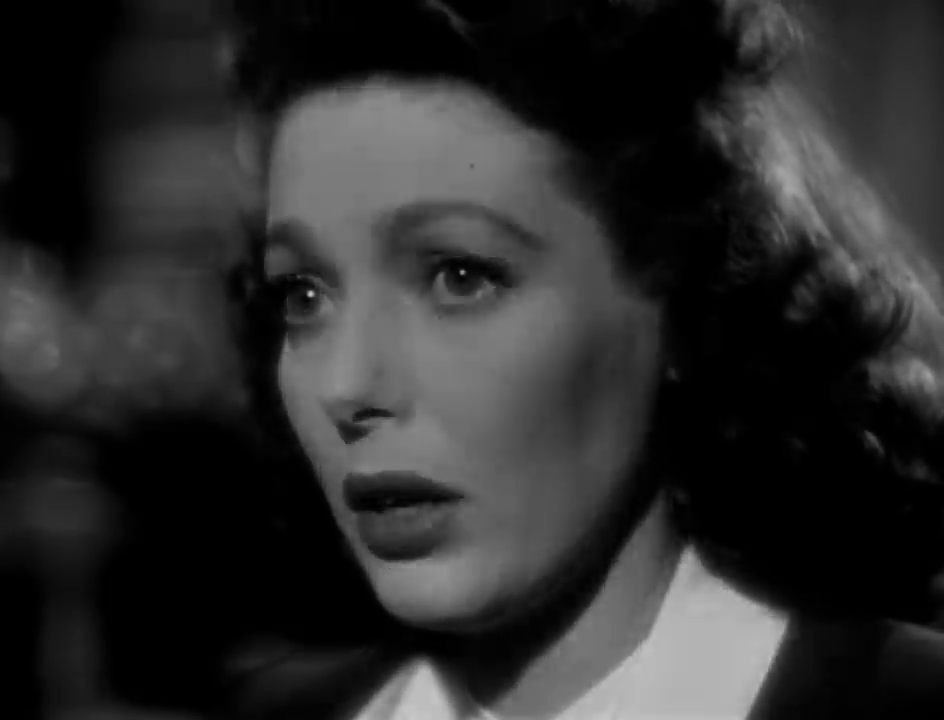
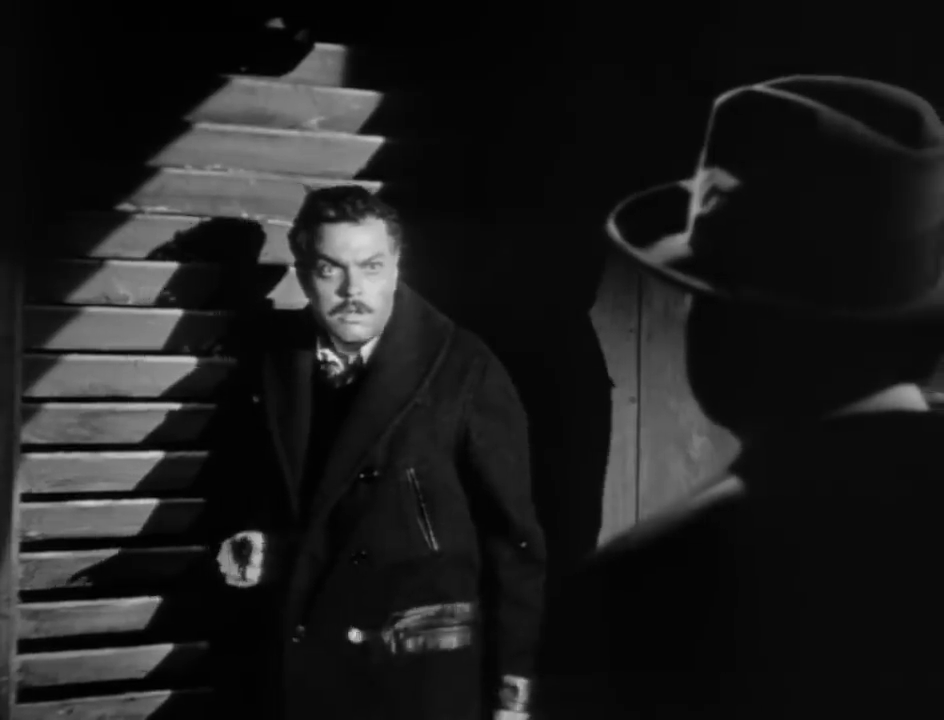
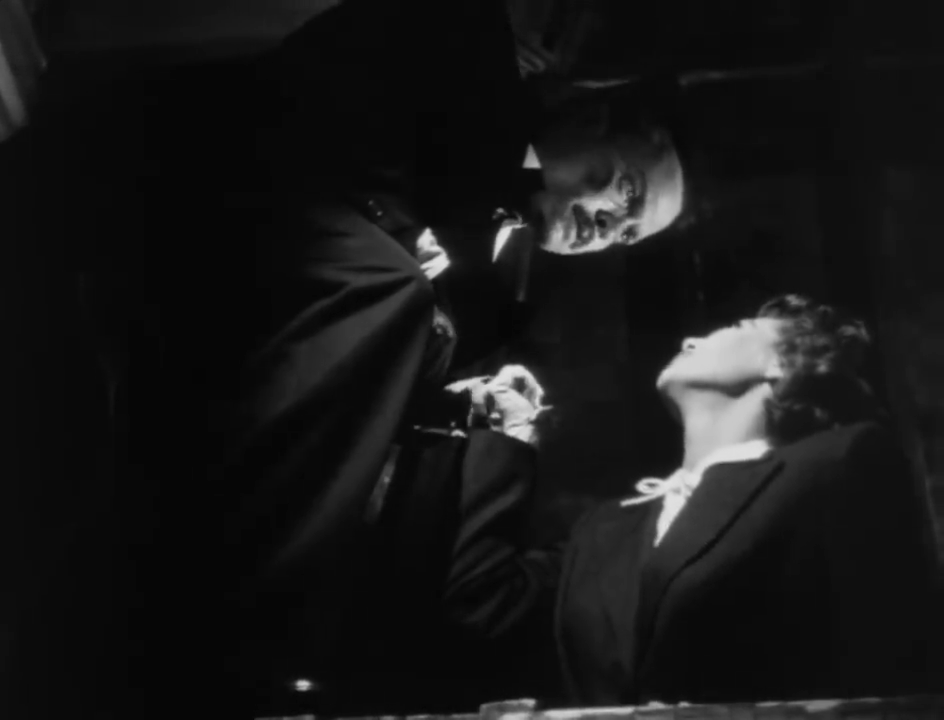
Peary writes that this Orson Welles outing — his third feature after Citizen Kane (1941) and The Magnificent Ambersons (1942) — is “one of several films in the forties in which people suspect that someone in their house isn’t as innocent as s/he appears, joining such pictures as Shadow of a Doubt, Gaslight, The Cat People, The Lodger, Suspicion, and The Spiral Staircase.” He accurately notes that Welles’ “most conventional film isn’t nearly as bad as he thought it was, although it’s not one of his masterpieces”, and that while Welles’ “acting is cockeyed, [he] makes a good, slimy villain, sweating underneath his suit…” He asserts that while “Robinson is a good adversary for Welles”, he wishes “they had a couple more scenes together, sparring with words”, and he argues that “Young’s character is poorly written” and “ridiculously naive” — but I’m actually a fan of both her performance and her character’s emotional trajectory: a dutiful young woman who has just given her body and soul to her new husband would very likely experience the kind of doubt and cognitive dissonance shown here.

Peary concedes that while “the story is still interesting, as is the evocation of smalltown life, far away from the public eye”, the “picture lacks something” — though he “can’t figure out what it is”, noting that “perhaps it’s that the Nazi is not up to any diabolical act at the time Robinson comes to town, so only at the end

[SPOILER]

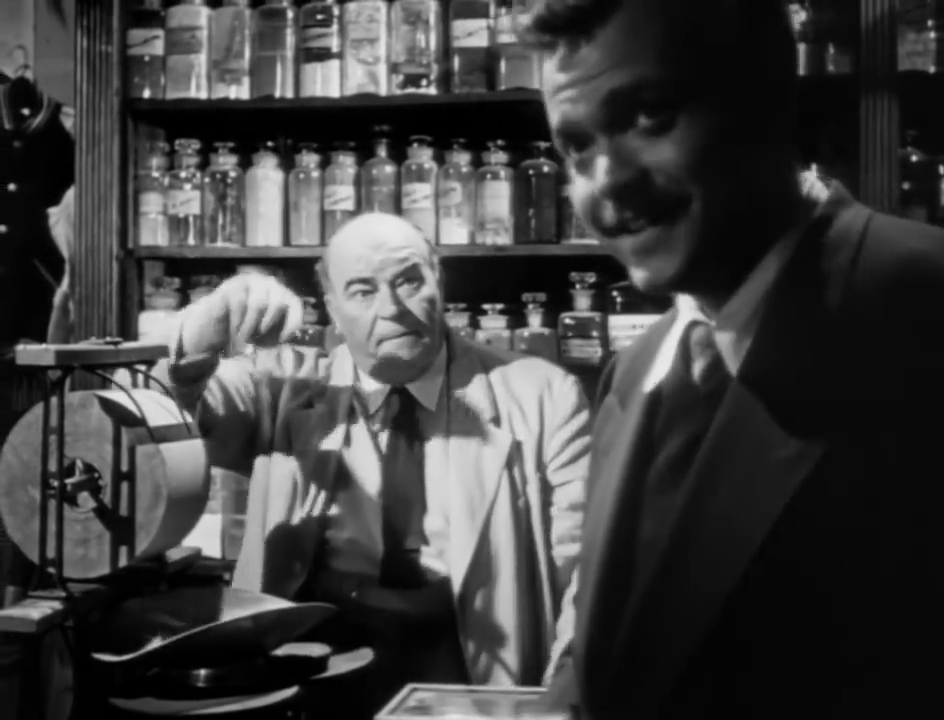
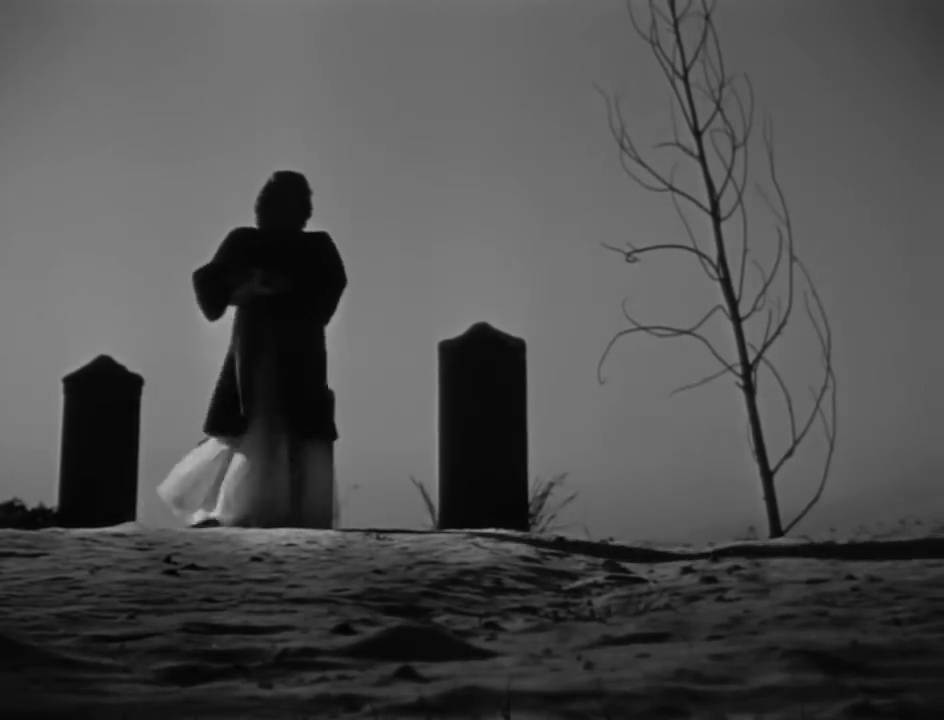
when Welles decides to murder Young is there any suspense.” However, I disagree: when Welles first meets with Shayne on the campus of the boys’ school where he’s clearly a beloved instructor, he nearly cackles with glee at his ability to cover up his past and craft a nifty new life for himself in a small American town — where, he notes, “I’ll stay… until they day when we strike again.” This is evidence aplenty of both his “diabolical” intentions and beliefs. Meanwhile, “there are novel touches throughout, including the manner in which Welles is done in, and the photography by Russell Metty is atmospheric”. With that said, the screenplay is far from perfect — likely due in part to the fact that 30 minutes of the original film were cut, including 19 minutes from the exposition, and a scene in which Young first meets Welles and walks with him through the town cemetery. However, it’s still worth a one-time look by all film fanatics.

Redeeming Qualities and Moments:

  • Loretta Young as Mary
  • Billy House in a memorable supporting role
  • Russell Metty’s highly atmospheric cinematography


  • Many creatively filmed shots and sequences

Must See?
Yes, once, as a fine if flawed outing by a master director.

Categories

(Listed in 1001 Movies You Must See Before You Die)

Links:

Polyester (1981)

Polyester (1981)

“This whole world stinks, Francine, so get used to it!”

Synopsis:
When a put-upon housewife (Divine) with an abusive mother (Joni Ruth White) learns that her sleazy husband (David Samson) has been cheating on her with his secretary (Mink Stole); that her drug-addicted son (Ken King) is the notorious Baltimore Foot Stomper; and that her teenage daughter (Mary Garlington) has become pregnant by her good-for-nothing boyfriend (Stiv Bators), she’s not sure how much more she can handle. Will her good friend Cuddles (Edith Massey) and a mysterious handsome stranger (Tab Hunter) help turn her life around?

Genres, Themes, Actors, and Directors:

  • Black Comedy
  • Family Problems
  • Housewives
  • Infidelity
  • John Waters Films
  • Marital Problems
  • Tab Hunter Films

Response to Peary’s Review:
Peary writes that this “disappointing John Waters comedy” was “filmed on 35mm on a much bigger budget than his midnight-movie classics”, and that perhaps due to “catering to a broader audience instead of shocking it, [the] film is a step backward on the outrageous scale” (it was Waters’s first R-rated film). He notes that “the scenes with all Waters’s regulars don’t have the spontaneity present in the earlier films — in fact, they seem to be showcase scenes meant to familiarize the new Waters viewers with the Waters style they’d heard about”; but “for veteran Waters fans, most of these scenes are [simply] watered-down versions of classic Waters scenes.” He concedes that “at least the reliable Divine gives a standout performance as harried, dissatisfied suburban housewife Francine Fishpaw” (that name!), but complains that “the dialogue by Waters is disappointing — more laughter comes from just paying attention to the props in Francine’s house and the film’s unbelievable wardrobe”.

I’m more or less in agreement with Peary’s assessment, which highlights the trajectory Waters’s films would take from then on: Hairspray (1988) — featuring Divine in his final performance before his premature death at the age of 42 — was made into a Tony-winning Broadway musical (which was then turned into a film of the musical based on the film…); Cry-Baby (1990) starred big-name Johnny Depp and was likewise turned into a Tony-nominated Broadway musical; and then — thankfully — Serial Mom (1994) became Waters’s most deliciously mainstream yet subversive film of his later career.

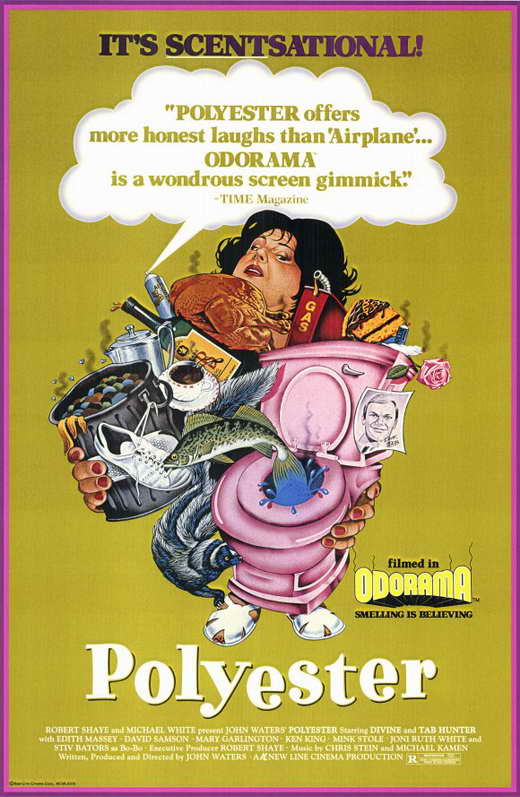
Polyester is most notable for its satirical send-up of Sirkian “women’s pictures”, and for its homage to William Castle by featuring “Odorama”, with the following scratch and sniff smells available to audience members: 1. Roses, 2. Flatulence, 3. Model Airplane Glue, 4. Pizza, 5. Gasoline, 6. Skunk, 7. Natural Gas, 8. New Car Smell, 9. Dirty Shoes, and 10. Air Freshener.

Redeeming Qualities and Moments:

  • Divine as Francine Fishpaw
  • Many typically OTT Waters sequences

Must See?
No, but it’s worth a one-time viewing.

Links:

Desperate Living (1977)

Desperate Living (1977)

“Look around you — it’s a village of idiots!”

Synopsis:
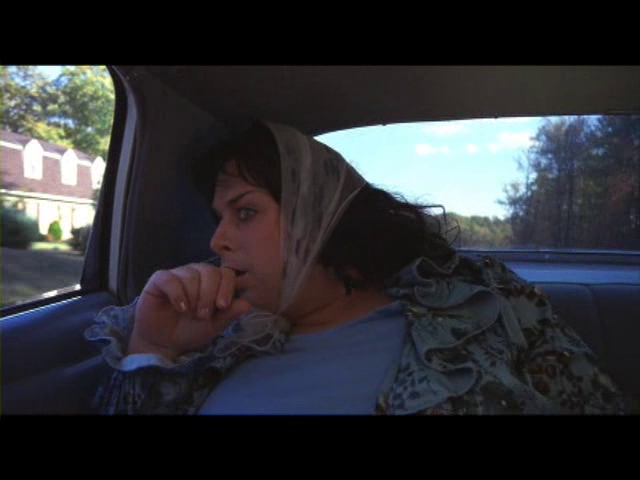
A neurotic housewife (Mink Stole) murders her husband (George Stover) and runs away with her housemaid (Jean Hill) to a shantytown named Mortville, where evil Queen Carlotta (Edith Massey) rules with an iron fist. They rent a room from a transgendered wrestler (Susan Lowe) seeking a sex-change operation in an attempt to please her lover (Liz Renay), and soon become involved in hiding Princess Coo-Coo (Mary Vivian Pearce), whose love affair with a nudist garbage collector (George Figgs) infuriates her mother (Massey). After Stole decides to join forces with Massey, true chaos and revolution erupt in Mortville.

Genres, Themes, Actors, and Directors:

  • Fantasy
  • John Waters Films
  • Lesbianism
  • Revolutionaries
  • Royalty and Nobility
  • Ruthless Leaders
  • Strong Females

Response to Peary’s Review:
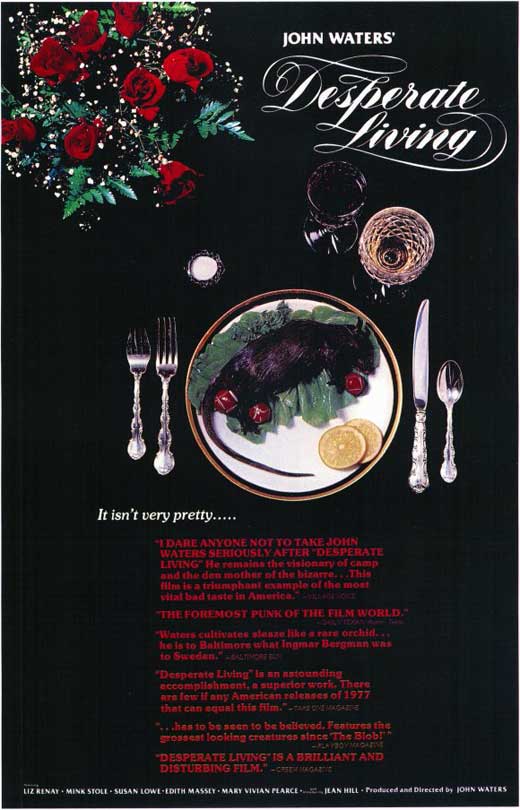
Peary writes that “although Divine isn’t in this John Waters classic, it is still Waters’s best film, one that he described in his book Shock Value as ‘a lesbian melodrama about revolution… a monstrous fairy-tale comedy dealing with mental anguish, penis envy, and political corruption’, [targeted at] ‘very neurotic adults with the mentalities of eight-year-olds’.” Peary asserts that “Divine isn’t needed because the film is filled with comparable whiners, screamers, grotesque ‘beauties’, conceited fascistic dames, and perverts.” He notes that while the “picture is about 20 minutes too long”, it “has the most comprehensive storyline of any Waters film and, considering there are several subplots, [it] is his most ambitious work” and features “the best acting, direction, and script”. He reminds us that “like all Waters’s films, it is filled with repulsive imagery”; as described in James Kendrick’s Q review:

It is typical of Waters’ movies that they inspire one to list all the offensive and grotesque things that happen in them, and Desperate Living is no different: cannibalism, rabies, road kill, a baby stuck in a refrigerator, a sex-change operation, self-castration with a pair of scissors, an eyeball gouged out with a high-heel shoe, the eating of roaches, and death by being smothered in a bowl of dog food.

Despite this considerable list of grotesquerie, Peary argues that “for once [Waters] goes no further than borderline offensive.” He concludes his review by noting that “this is probably the best, though by no means a safe, introduction to Waters”. I believe film fanatics will likely want to start with Pink Flamingos (1972) and proceed cautiously from there; but I’ll begrudgingly admit to finding this flick — while predictably repulsive — surprisingly innovative and memorable.

Redeeming Qualities and Moments:

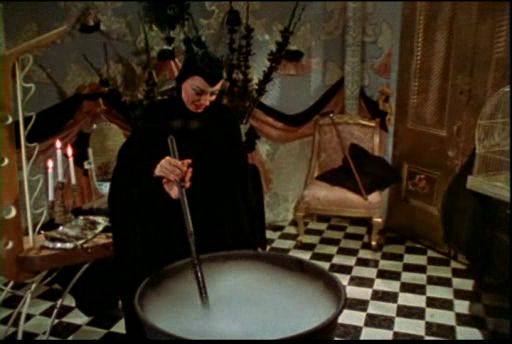
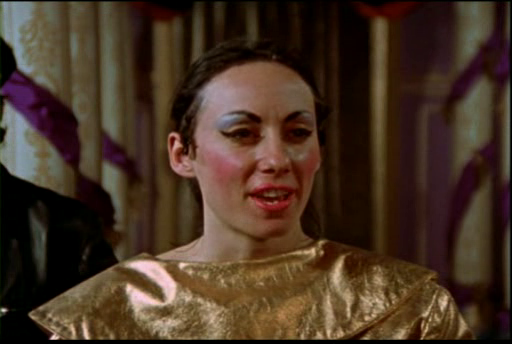
  • Colorful, inventive sets and costumes

  • Mink Stole as Peggy

Must See?
Yes, as perhaps Waters’ most visually and narratively innovative film — though naturally, it’s not for all tastes.

Categories

  • Cult Movie

Links:

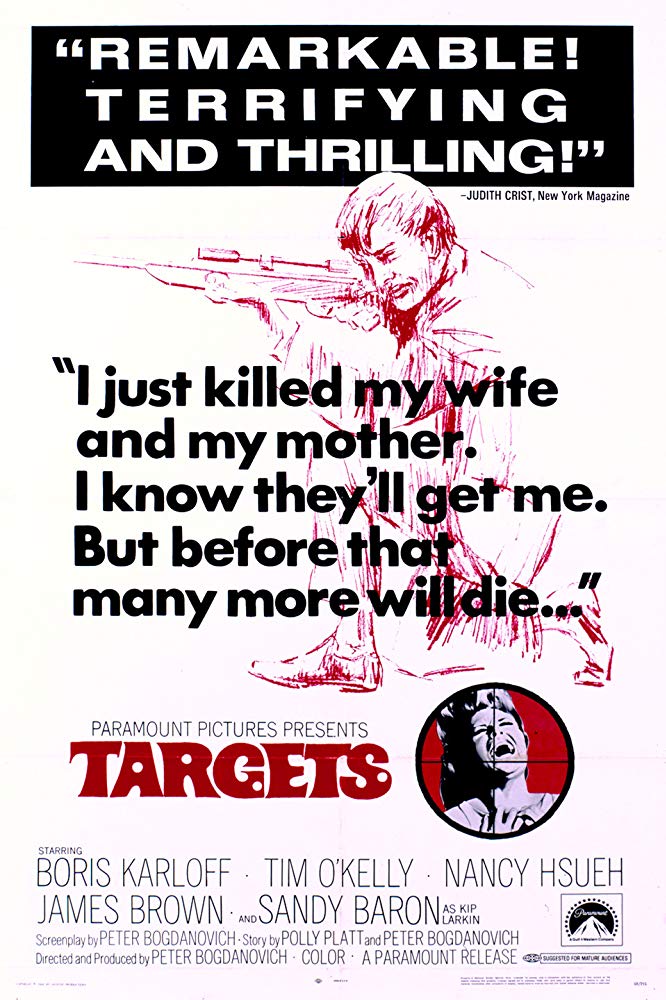
Targets (1968)

Targets (1968)

“I don’t know what’s happening to me. I get funny ideas.”

Synopsis:
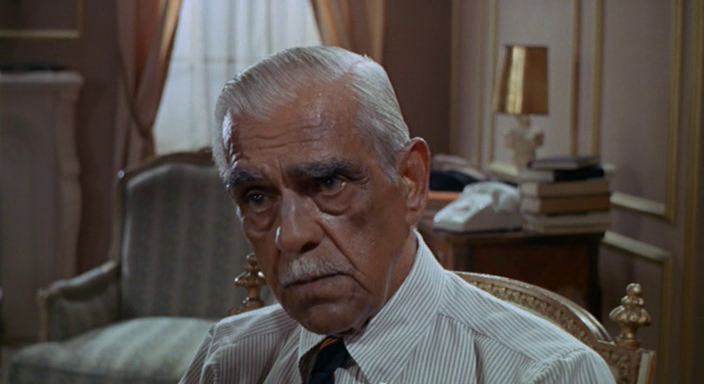
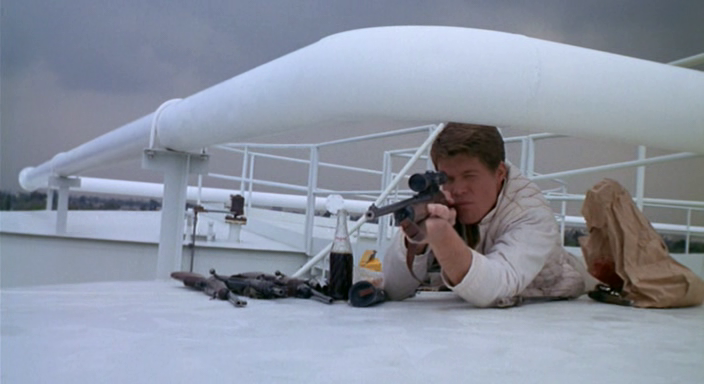
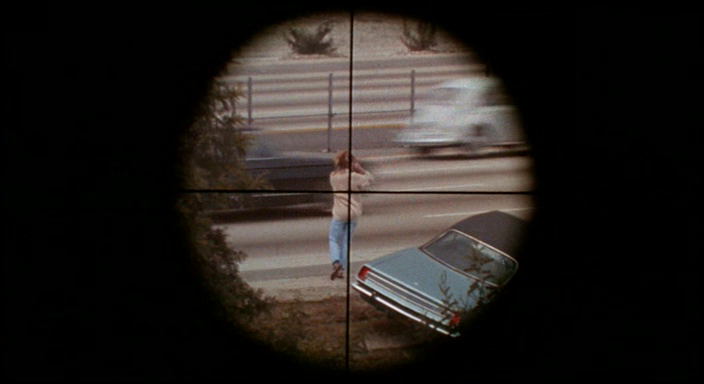
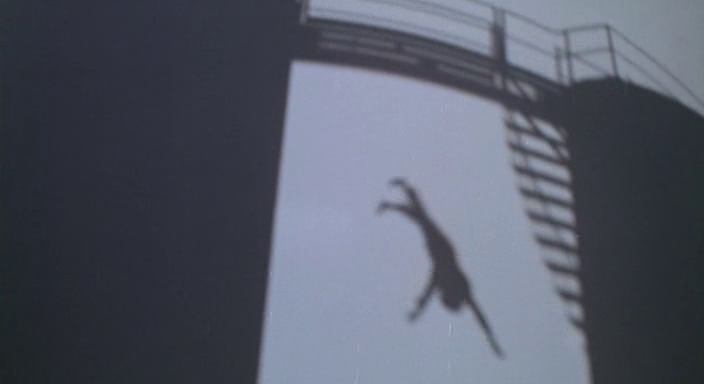
An aging horror star (Boris Karloff) is convinced by his personal assistant (Nancy Hsueh) and a young director (Peter Bogdanovich) to star in one more film after making an appearance at a drive-through screening of his latest flick. Meanwhile, a deranged insurance salesman (Tim O’Kelly) kills his wife (Tanya Morgan), mother (Mary Jackson), and a delivery boy (Warren White) before climbing a water tower and shooting random targets on the freeway below. He then escapes the police and flees to the drive-in theatre where Karloff will be appearing, continuing his sniper massacre and causing massive chaos.

Genres, Themes, Actors, and Directors:

  • Actors and Actresses
  • Boris Karloff Films
  • Horror Films
  • Movie Directors
  • Peter Bogdanovich Films
  • Psychopaths
  • Serial Killers

Response to Peary’s Review:
Peary writes that “Peter Bogdanovich’s debut film is remarkable not only because of the sophisticated camera work (by Laszlo Kovacs) but because it is a Hollywood picture daring enough to have both an anti-Hollywood bias and a strong social message.” He adds that “this picture is such a strong indictment of the proliferation of guns in America’s private sector that one would guess that Bogdanovich is calling for more than gun control” — but he notes that “Bodanovich denied he wanted to make a ‘message’ picture.” Regardless, the film remains a “unique picture… full of movie references, interesting offbeat touches, [and] frightening scenes” — especially the seemingly endless real-time takes showing “Bobby kill his wife and gun down innocent people (who could be us!)”. Bogdanovich and his screenwriting partner (then-wife Polly Platt) based the sniper story on both UT Tower killer Charles Whitman, and on the 1965 highway sniper attack in California; suffice it to say that this picture couldn’t resonate more profoundly today (perhaps most specifically recalling the 2017 Las Vegas massacre, in which the deeply disturbed killer’s motives remain unknown).

Targets’ narrative structure — with “two seemingly unrelated storylines that come together at the end” (Bogdanovich received behind-the-scenes assistance from Samuel Fuller) — works surprisingly well, demonstrating that explicit constraints can occasionally yield fruitful cinematic marriages. In this case, Bogdanovich was tasked by (uncredited) producer Roger Corman with: 1) incorporating footage from The Terror (1963); 2) utilizing Boris Karloff’s final two days under contract with Corman (Karloff ended up working five days without extra pay); and 3) staying within budget. As Peary notes in his lengthy essay on this “little-seen picture” for his Cult Movies book, “The Byron Orlok story is woven into the film quite well. The scenes between Sammy [Bogdanovich] and Orlok are entertaining and provide levity in an otherwise unrelentingly bleak film” — and it’s truly heart-warming seeing Karloff in “a picture which allowed him to play a real character rather than his one millionth bogeyman in succession.”

Note: Interested viewers should definitely check out a brilliantly animated documentary on the UT Tower shootings, called simply Tower (2016) — it’s must-see. Click here to read more about the presence of a brain tumor which likely impacted Whitman’s behavior.

Redeeming Qualities and Moments:

  • Boris Karloff as Byron Orlok
  • Tim O’Kelly as Bobby Thompson
  • Laszlo Kovacs’ cinematography
  • Strong direction, with many powerful scenes and sequences
  • Expert editing (both visual and sound)
  • An engaging script which cleverly mixes and matches diverse clips, genres, and storylines:

    “I have an appointment with him tonight… in Samarra.”

Must See?
Yes, as a deserved cult classic.

Categories

  • Cult Movie

(Listed in 1001 Movies You Must See Before You Die)

Links:

Old Maid, The (1939)

Old Maid, The (1939)

“I can’t imagine not waiting forever.”

Synopsis:
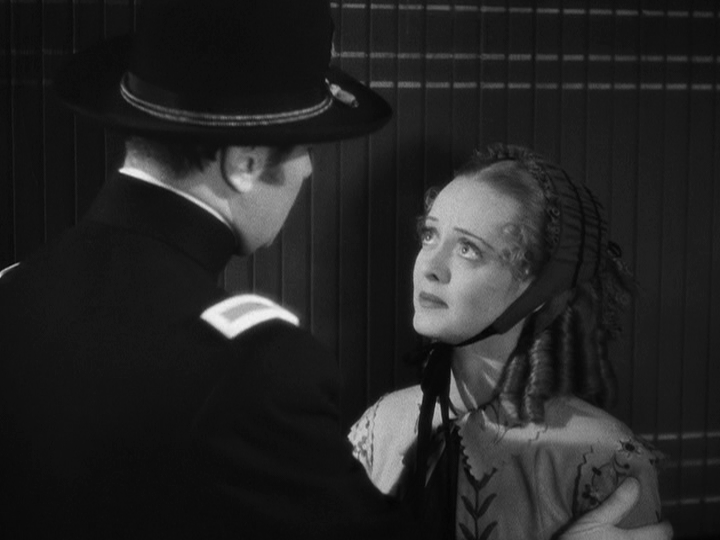
When her cousin (Miriam Hopkins) marries a wealthy man (James Stephenson) rather than waiting for her fiance (George Brent) to return home, Charlotte (Bette Davis) — who’s loved Brent all her life — has an affair with him before he heads to the Civil War and is killed. Davis secretly gives birth to a girl named Tina (Marlene Burnett), whose identity she conceals by managing an orphanage. When Hopkins learns the truth about Tina, she prevents Davis from marriage with her husband’s brother (Jerome Cowan), and convinces Davis to let her adopt the girl — but soon Davis’s resentment begins to build, especially as grown Tina (Jane Bryan) cares more for Hopkins than her strict “Aunt Charlotte”.

Genres, Themes, Actors, and Directors:

  • Bette Davis Films
  • Donald Crisp Films
  • Edmund Goulding Films
  • George Brent Films
  • Miriam Hopkins Films
  • Mistaken or Hidden Identities
  • Spinsters
  • Suffering Mothers

Response to Peary’s Review:
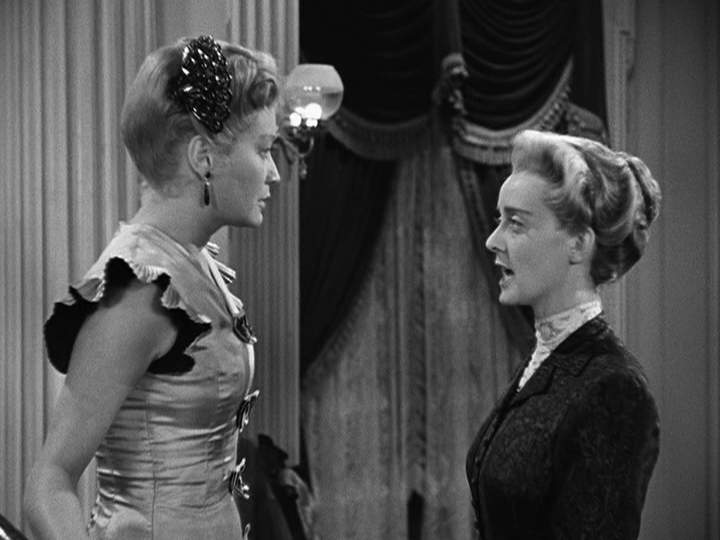
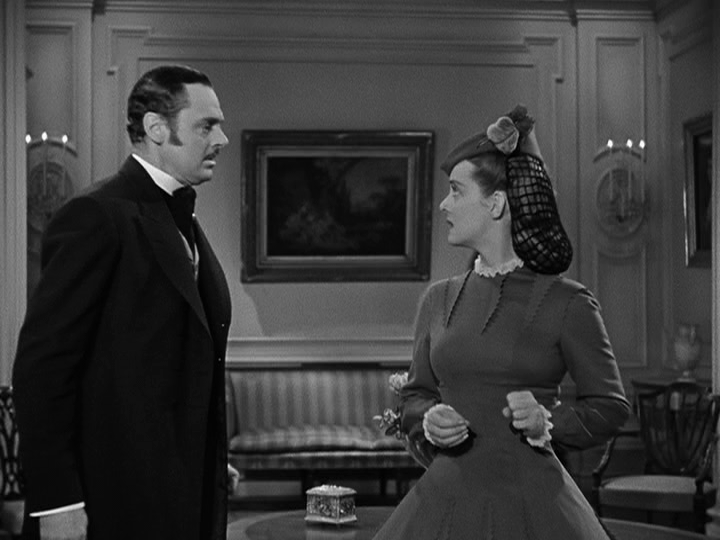
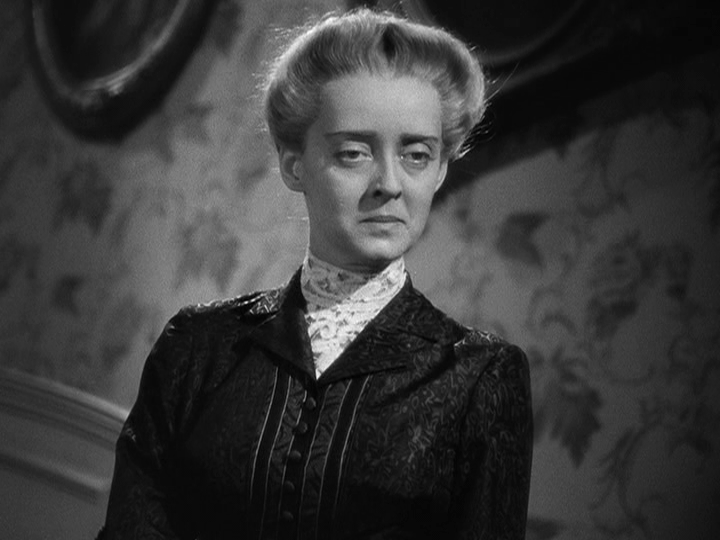
Peary writes that this “standard Victorian soap opera about unrequited love, sexual frustration, female rivalry, class obligations, and other sacrifices” benefits — “it goes without saying” — “from the casting of the two classy stars”. He notes that while he wishes “the two would have at least one hysterical screaming session” — and that “Davis in particular is just too restrained” — it’s fun watching Davis “young, in hoop dress and blond curls:

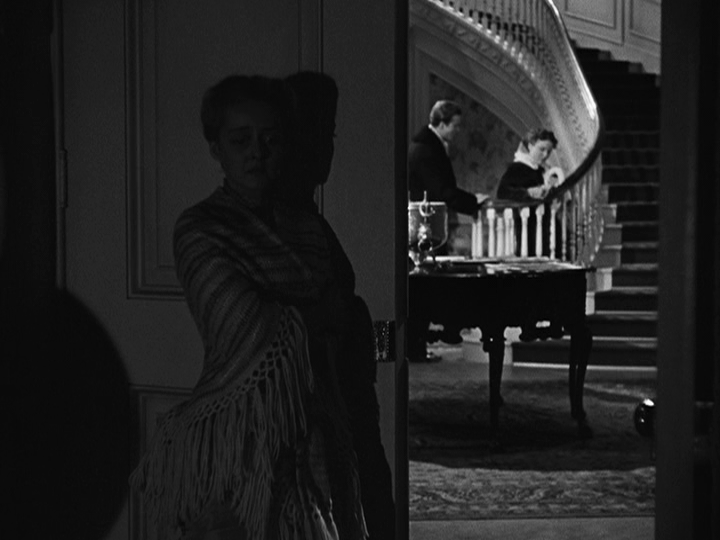
and old in her severe old-maid hairstyle”. (I’m not quite sure why he refers to this as fun, other than comparing how Davis aged in real life with how she’s “cinemagically” aged here.) Peary adds that “you’ll smile watching the two females resolve their problems”:

… and it’s true that the “final few scenes — for which you should have your hankies handy”, are touching. However, this dated “suffering mama” story — based on a novella by Edith Wharton, which was turned into a Pulitzer Prize-winning play by Zoe Akins — is only must-see for fans of Davis and/or Hopkins (whose performance is refreshingly restrained).

Redeeming Qualities and Moments:

  • Bette Davis as “Aunt Charlotte”

  • Tony Gaudio’s cinematography

Must See?
No, but it’s worth a look.

Links: