Browsed by
Category: Response Reviews

My comments on Peary’s reviews in Guide for the Film Fanatic (Simon & Schuster, 1986).

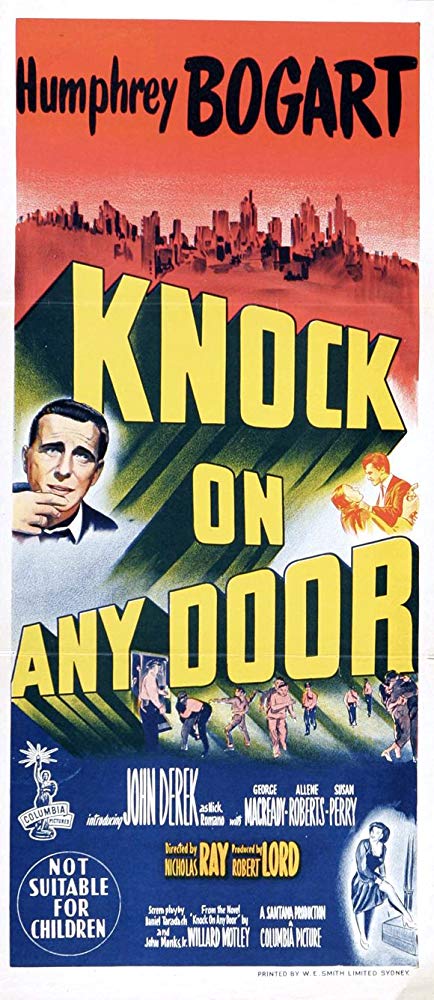
Knock on Any Door (1949)

Knock on Any Door (1949)

“Look, he’s a bad, weak kid!”

Synopsis:
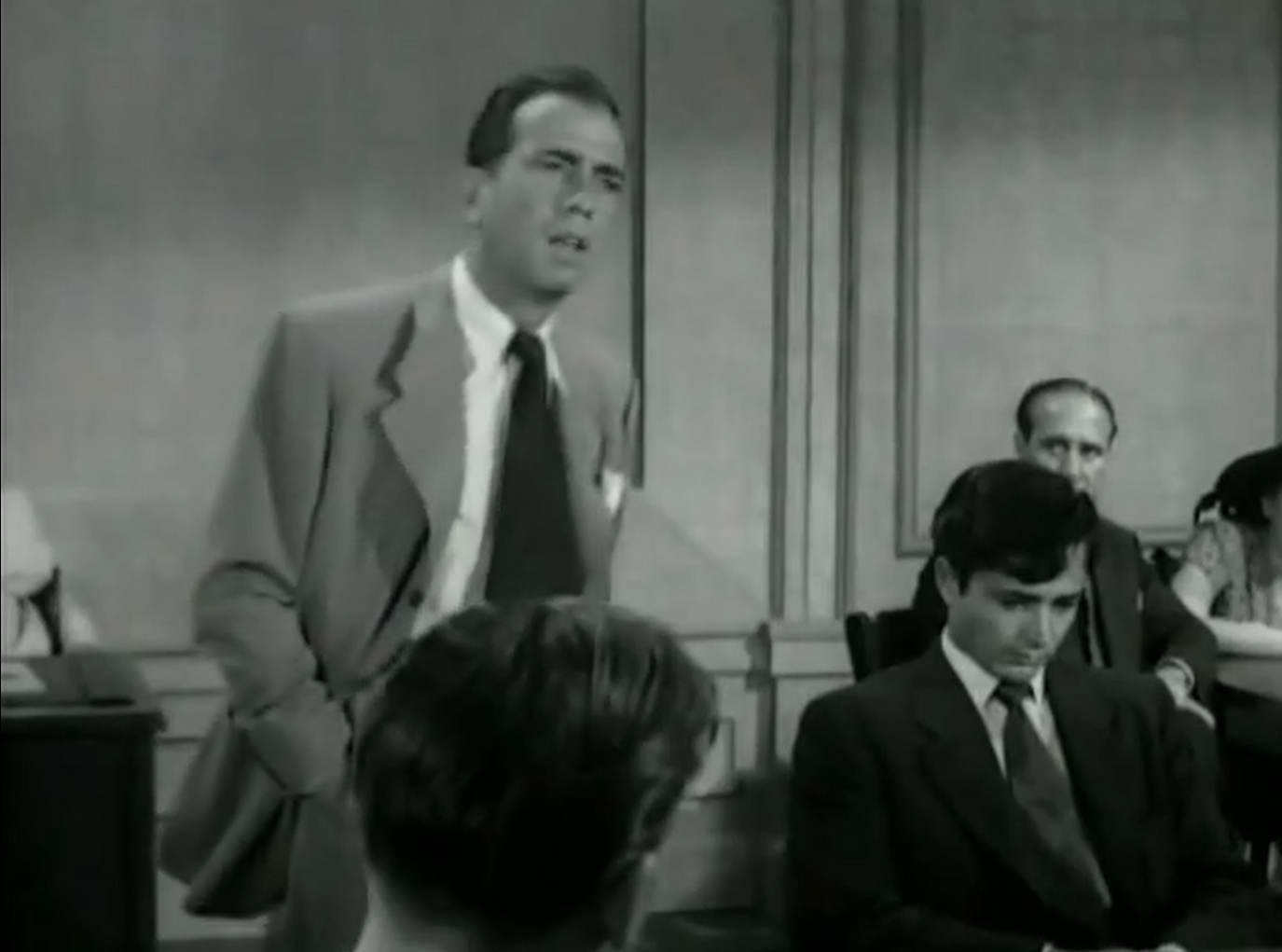
A lawyer (Humphrey Bogart) recounts the story of a young man (John Derek) on trial for murder, whose challenging history in the slums has led him towards despair and criminality.

Genres, Themes, Actors, and Directors:

  • Courtroom Drama
  • Flashback Films
  • George Macready Films
  • Humphrey Bogart Films
  • Juvenile Delinquents
  • Lawyers
  • Nicholas Ray Films

Response to Peary’s Review:
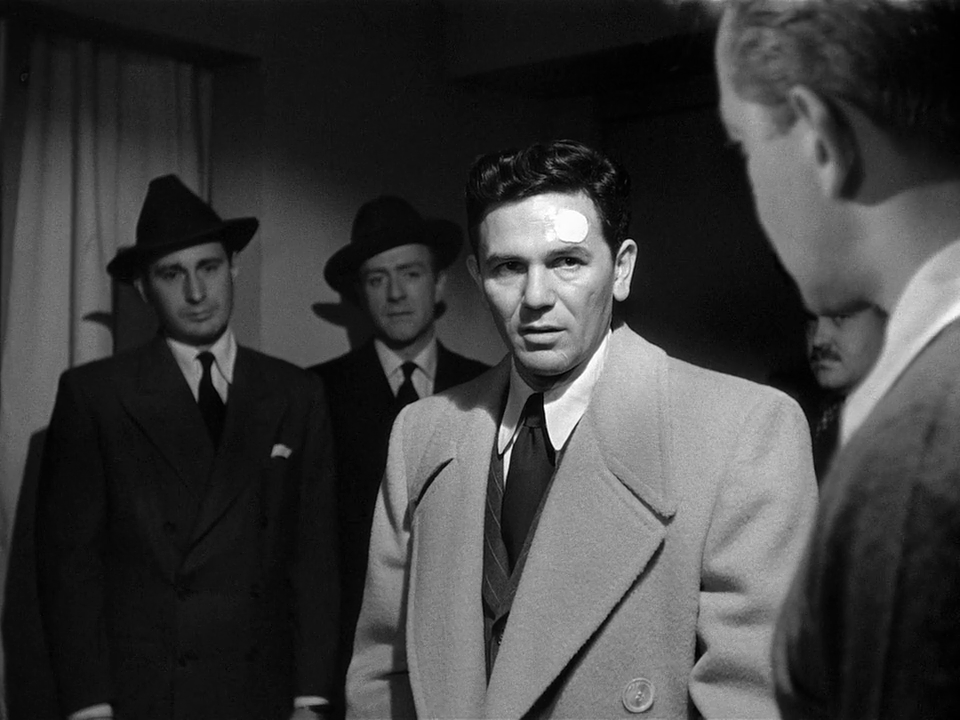
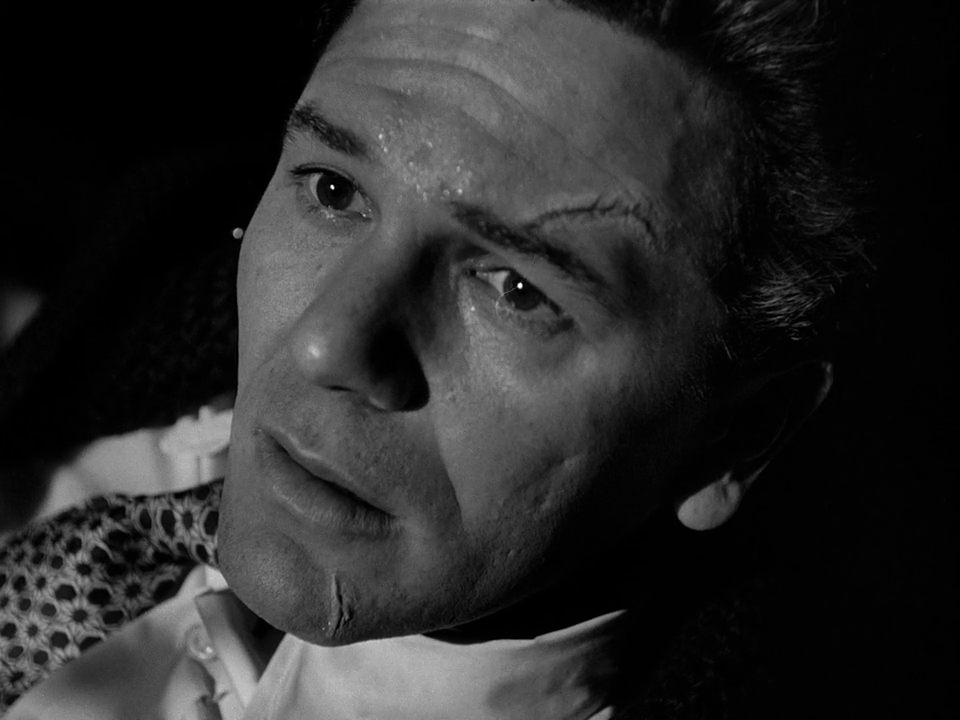
Peary writes that this “liberal social drama by Nicholas Ray” consists of lawyer Humphrey Bogart’s “flashbacks to a series of tragic incidents… that caused decent poor boy Derek to become a hardened criminal”.

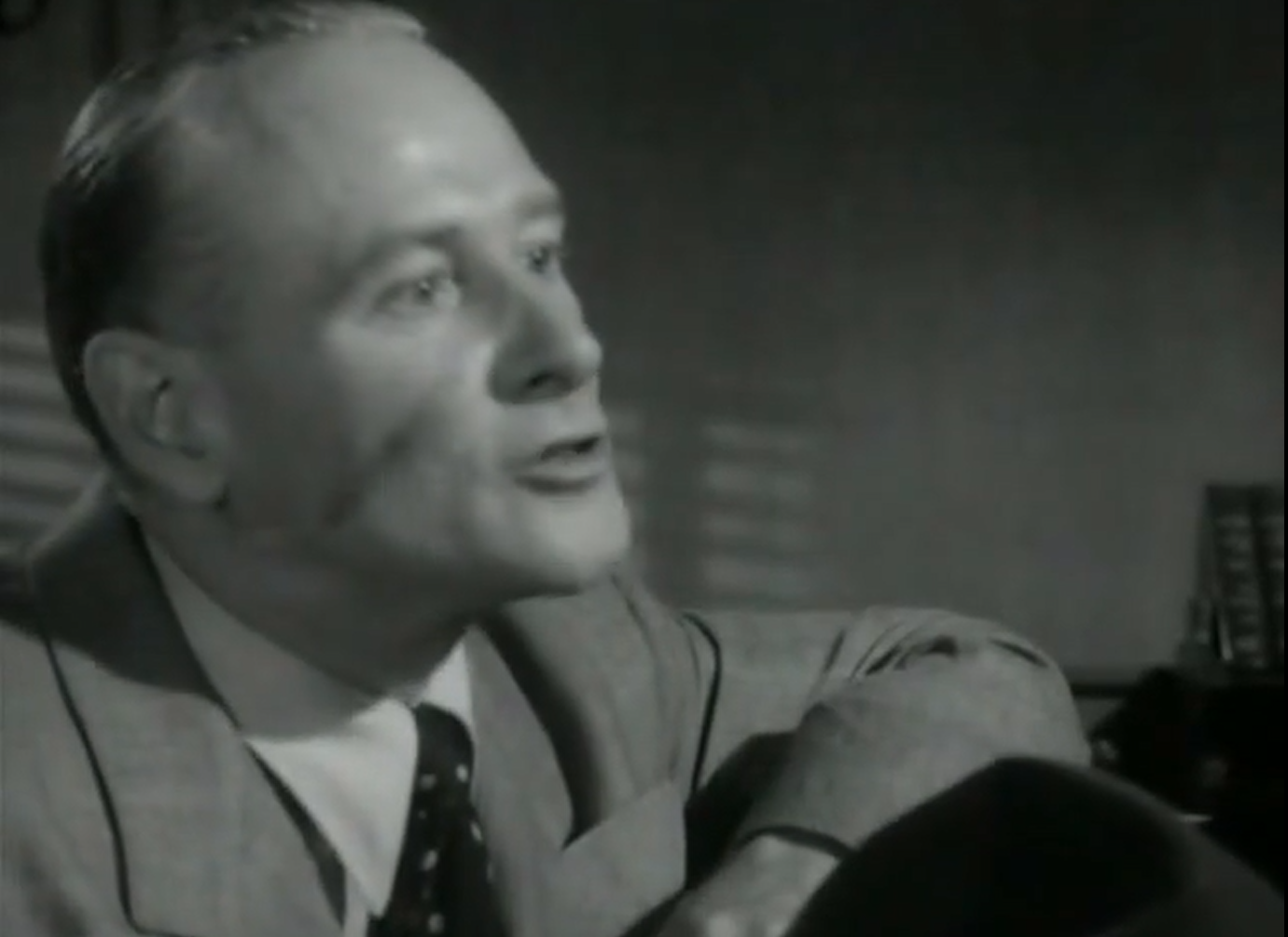
He notes that “it’s hard not to be on Bogart’s side, especially since the DA is a corrupt, vicious man with an ugly scar, played with extreme villainy by George Macready”:

— but “it’s weird seeing this socially conscious lawyer browbeat some of the indigent witnesses”, and “Derek’s character [Nick Romano], whose motto is ‘live fast, die young, and have a good-looking corpse’:

is too unpleasant to be used as an example by Bogart (or Ray) to arouse sympathy for real-life juveniles who are trapped by poverty and bad reputations into committing crimes.”

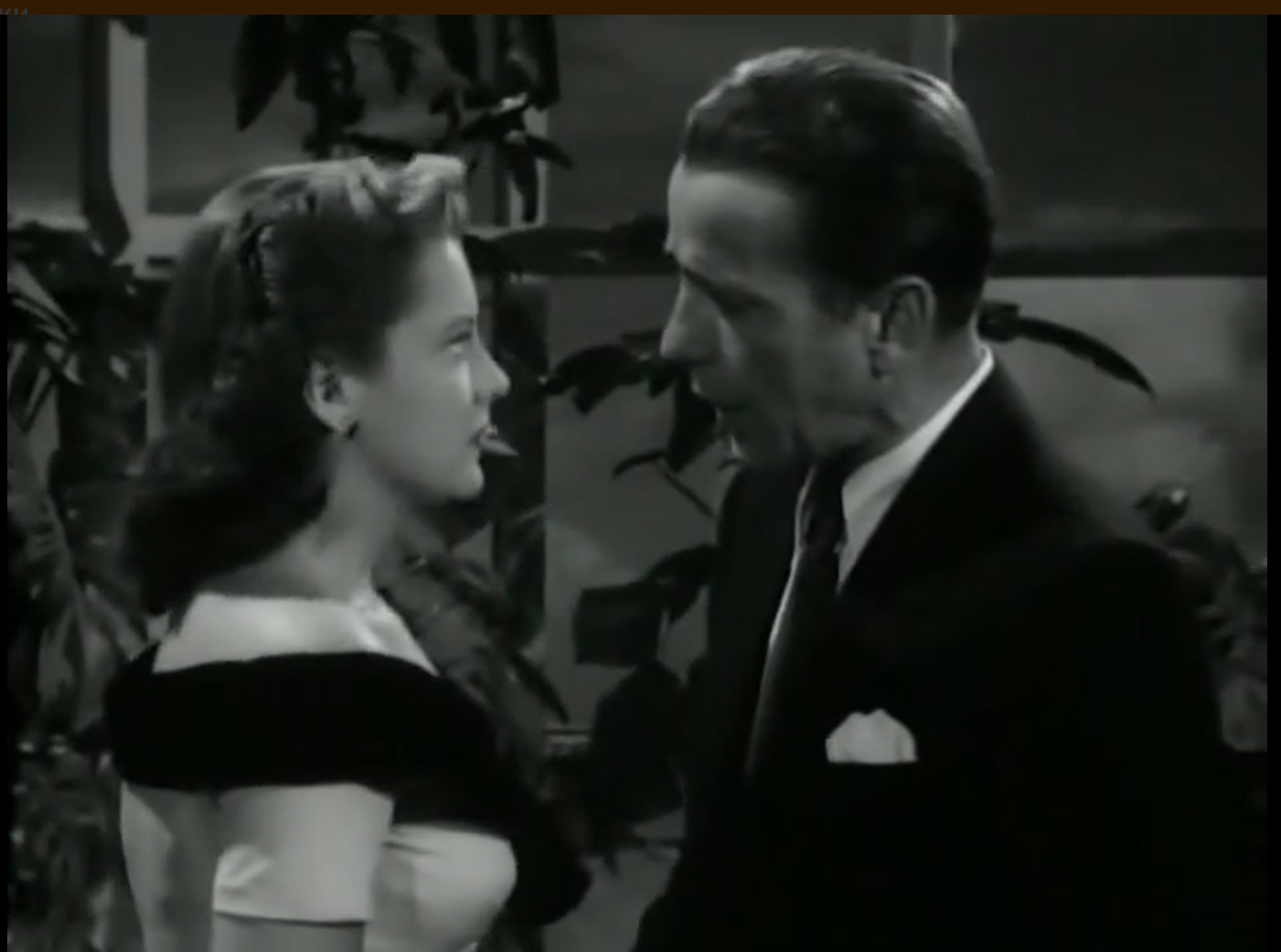
I’m in agreement with Peary’s assessment of this well-meaning flick, which nonetheless misses the mark in several key ways. Bogart’s character isn’t really solidified: all we know is that he came from a rough background himself and is being pressured by a couple of beautiful women to take Derek’s case — against the wishes of his firm.

Meanwhile, “pretty boy” Derek’s background and challenges don’t seem particularly noteworthy — though I suppose that’s the point; as Bogart’s character intones near the end:

Until we do away with the type of neighborhood that produced this boy, ten will spring up to take his place, a hundred, a thousand. Until we wipe out the slums and rebuild them, knock on any door and you may find Nick Romano.

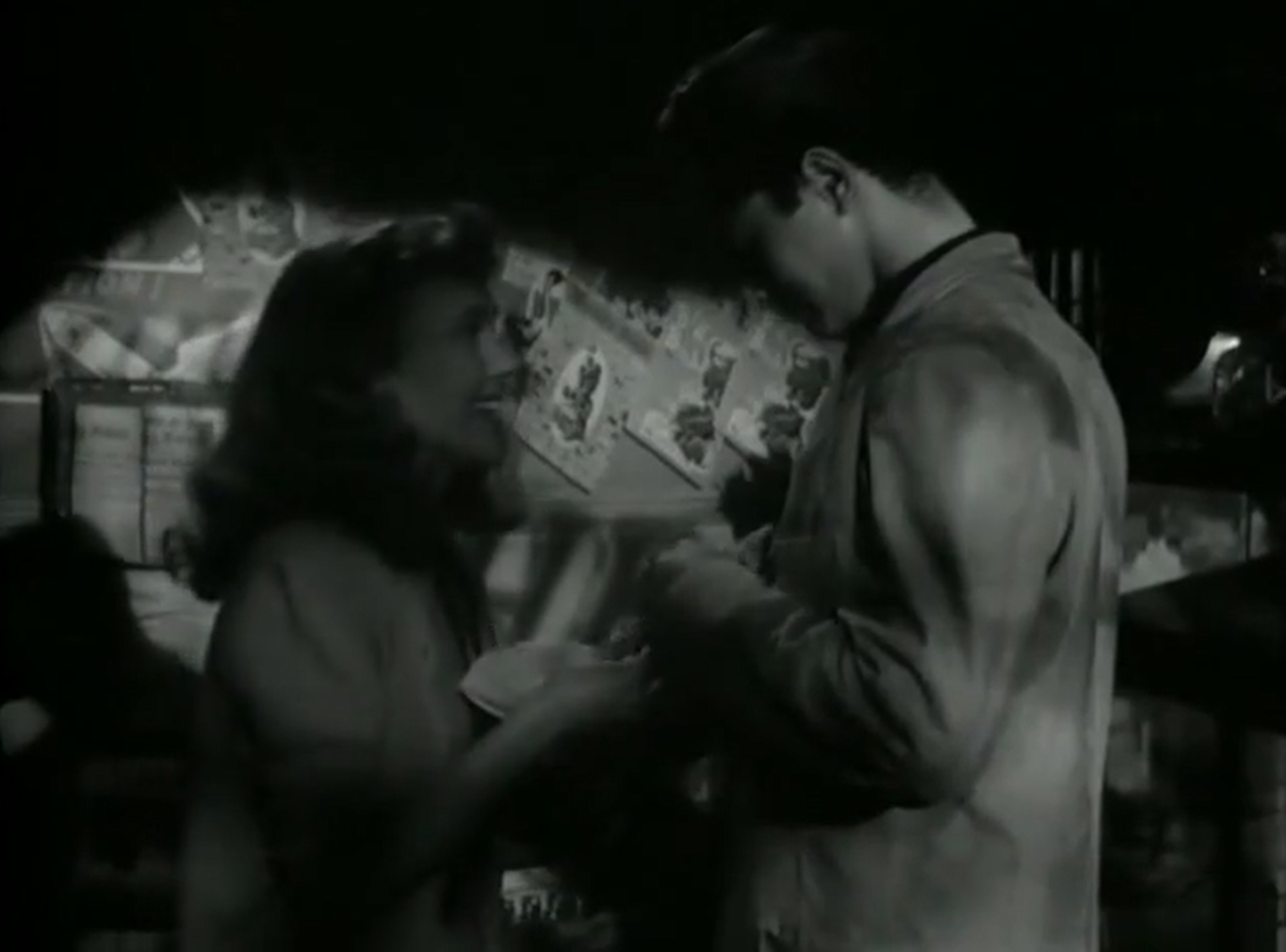
Speaking of the ending, I’m not a fan of the surprise twist — but I won’t say more at risk of spoiling. On the plus side, Burnett Guffey’s cinematography is solidly atmospheric throughout; Macready’s supporting performance is notable (check out his scar stroking); and Allene Roberts is sweet and sympathetic as Derek’s young wife.

Redeeming Qualities and Moments:

  • Atmospheric cinematography by Burnett Guffey
  • George Antheil’s score

Must See?
No, though it’s worth a one-time look.

Links:

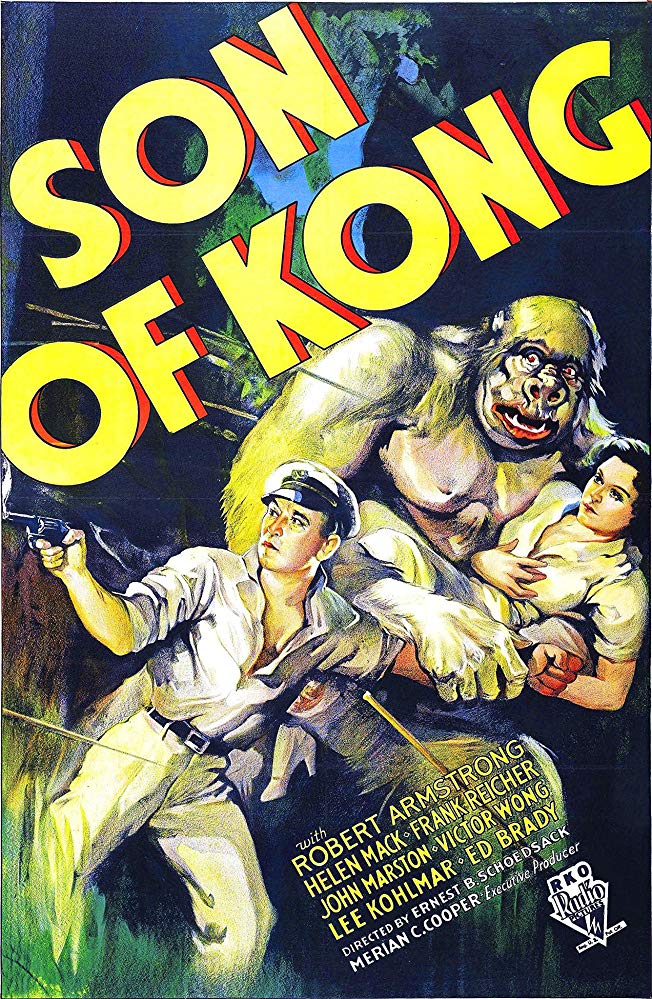
Son of Kong, The (1933)

Son of Kong, The (1933)

“Believe it or not, there’s a little Kong!”

Synopsis:
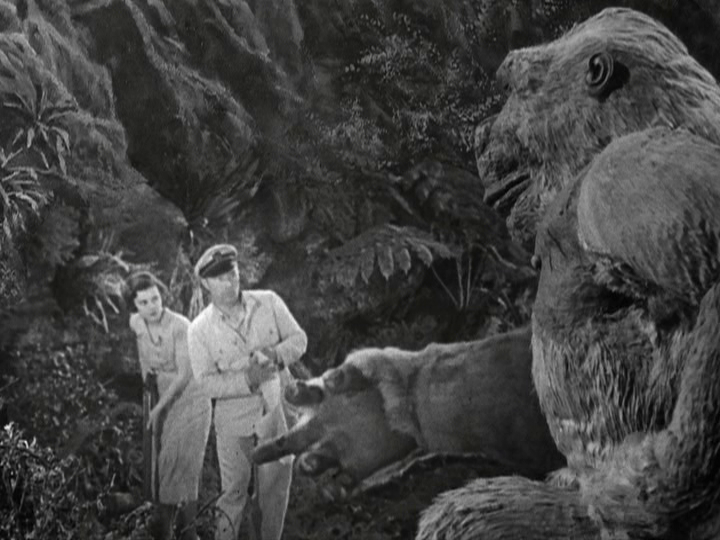
Wracked with guilt and looming debt, King Kong’s promoter (Robert Armstrong) joins his friend (Frank Reicher) on a sailing expedition, where he meets a beautiful runaway orphan (Helen Mack) and learns about hidden treasure on Skull Island from the unscrupulous man (John Marston) who gave him the original map. Little do they know they are about to encounter Kong’s friendly son on the island.

Genres, Themes, Actors, and Directors:

  • Fantasy
  • Hidden Treasure
  • Mutant Monsters

Response to Peary’s Review:
Peary writes that this “bargain-basement sequel to King Kong is a curio devoid of the original’s Freudian implications, mythic and dream elements” and notes that while “kids may like Kong, Jr.’s comical nature”, “fans of the original will be disappointed in most everything but the action finale.” He argues that the “picture is so rushed that one can’t even savor Willis O’Brien’s special effects”, but this isn’t quite true — there are a good handful of Kong-versus-beast battle scenes in the second half, though they don’t arrive until after an unnecessarily lengthy and unexceptional exposition. I agree with Peary that the “most interesting element as far as Kong lore goes is that Carl Denham [Armstrong] is very apologetic about what he felt he did to Kong in the original” — indeed, the entire movie is a form of apologia and redemption for Kong’s ignoble fate, with his son manifesting only his most helpful, playful, and silly qualities.

Redeeming Qualities and Moments:

  • Willis O’Brien’s special effects

Must See?
No; this one is for fans of the franchise.

Links:

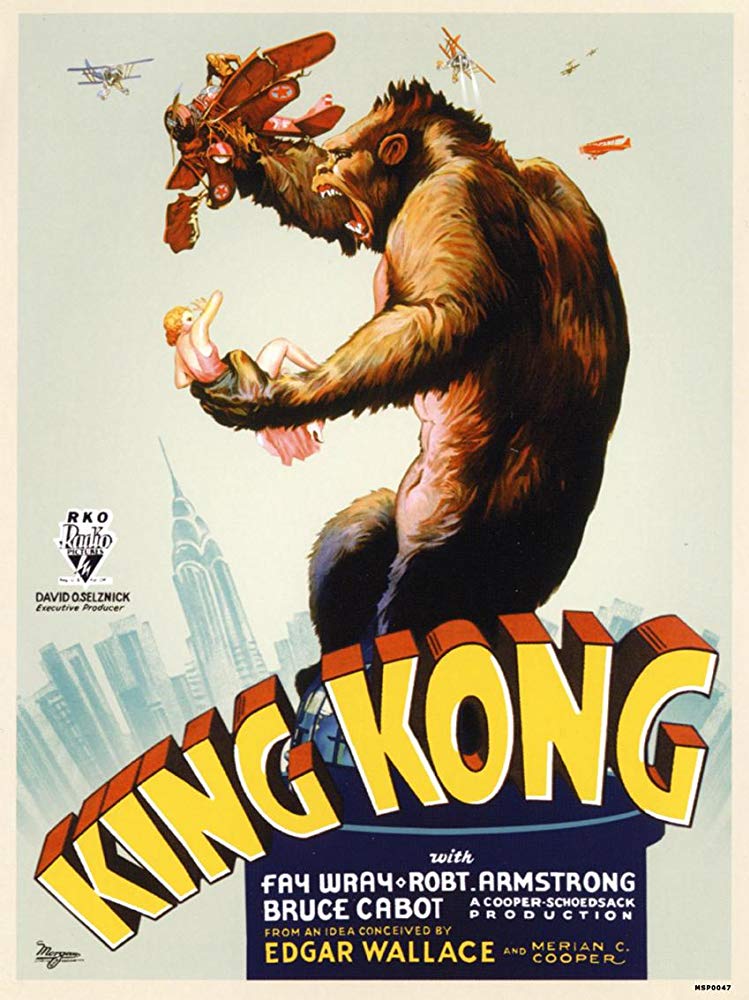
King Kong (1933)

King Kong (1933)

“Cover your eyes and scream, Ann — scream for your life!”

Synopsis:
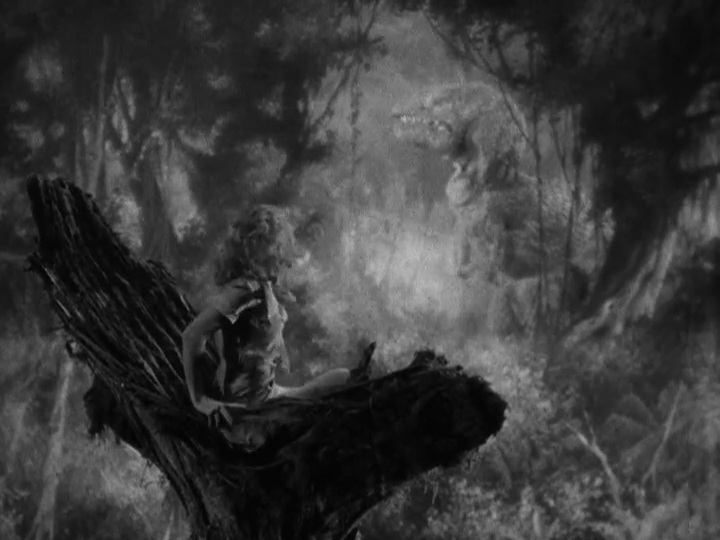
Intrepid director Carl Denham (Robert Armstrong) hires a destitute woman named Ann (Fay Wray) to travel with him to Skull Island, where he hopes to encounter and film a mythic creature known as Kong. Ann falls in love with the ship’s first mate Jack Driscoll (Bruce Cabot), who ends up rescuing her when she’s captured by Kong. Will Denham’s plan to bring Kong back to New York and display him as the 8th Wonder of the World be successful, or put Ann at risk once more?

Genres, Themes, Actors, and Directors:

  • Fay Wray Films
  • Horror Films
  • Kidnapping
  • Movie Directors
  • Mutant Monsters
  • Primates

Response to Peary’s Review:
Peary refers to this cult classic by co-directors Merian Cooper and Ernest Schoedsack as “the greatest of all horror films,” and notes the “masterly special effects… contributed by Willis O’Brien”, as well as composer Max Steiner’s understanding that “the film should be scored like a silent film.” The bulk of Peary’s GFTFF review — excerpted from his essay in the first Cult Movies book — focuses on his interpretation of Kong as “a manifestation of Denham’s subconscious”, with “Denham conjur[ing] up Kong as a surrogate to battle Driscoll for Ann’s love and to perform ‘sexually’ (their trip up the world’s largest phallic symbol) with her when he has never been willing (or able) to have a sexual encounter himself.” He posits that “although young and virile, Denham has traveled the world with an all-male crew to avoid intimate liasions”, and the “Kong is Denham’s female-lusting side — his alter ego.”

In Alternate Oscars, Peary names King Kong the best film of the year, referring to it as “the greatest, most popular, most entertaining, most influential, and most fascinating horror-fantasy film ever made.” He writes that it is a “brilliantly imaginative, thrilling adventure film with awesome special effects/stop-motion animation…; a splendid, emotion-manipulating… score; exciting monsters; amazing scenes of destruction and other classic sequences, including Kong’s death; and enjoyable performances by Armstrong, Cabot, and the sexy Fay Wray, the best screamer in Hollywood.” He asserts that “it can [be] — and is — enjoyed for being marvelous, escapist entertainment. But to have become such a part of the American psyche, it had to have been much more. It interests us so much because it exists on so many levels” — and he then moves on to the psycho-sexual analysis described above.

Personally, I’m more an admirer than a fan of this groundbreaking film, which certainly deserves acknowledgement and kudos on numerous technical fronts. The 159 minute documentary RKO Production 601: The Making of ‘Kong, the Eighth Wonder of the World’ is must-see for all film fanatics, simply to learn more about how and why this movie was revolutionary in so many ways. The creativity and innovation put into filming an emotive stop-motion beast on fantastical sets alongside live actors at this early stage in cinematic history can’t be understated, as much as it may seem simplistic and relatively straight-forward to modern audiences used to CGI. However, I’m not enamored by King Kong‘s narrative, which not only presents native Africans as a monolithic group of fear-driven ritualists, but places a disenfranchised and vulnerable young woman at the center of all risks and adventures (to be had exclusively by men). While she primarily screams (and boy, does she scream — time and time again), I will say I’m impressed by Wray’s ability to imbue her character with vivacity and authenticity; we genuinely believe she’s experiencing everything we see on screen.

Redeeming Qualities and Moments:

  • Fay Wray as Ann
  • Fine cinematography and sets

  • Willis O’Brien’s groundbreaking special effects
  • Max Steiner’s score

Must See?
Yes, of course, as a cult classic.

Categories

  • Cult Movie
  • Genuine Classic

(Listed in 1001 Movies You Must See Before You Die)

Links:

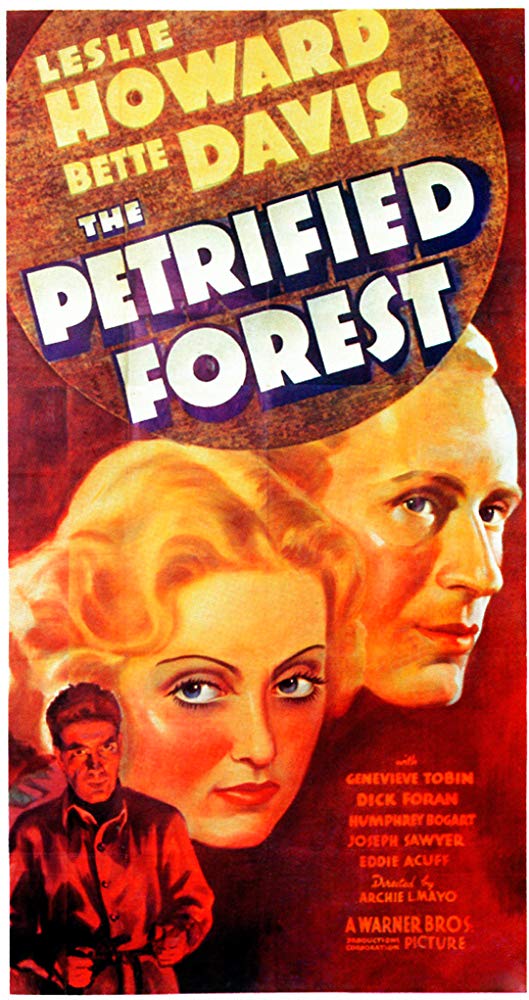
Petrified Forest, The (1936)

Petrified Forest, The (1936)

“There’s something in me that wants something different.”

Synopsis:
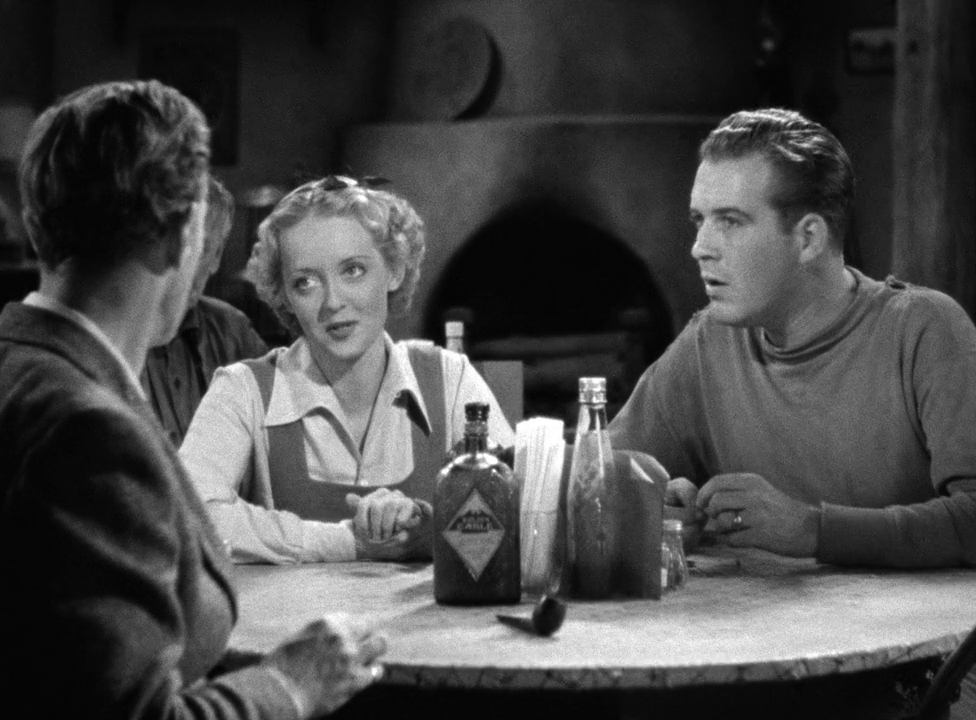
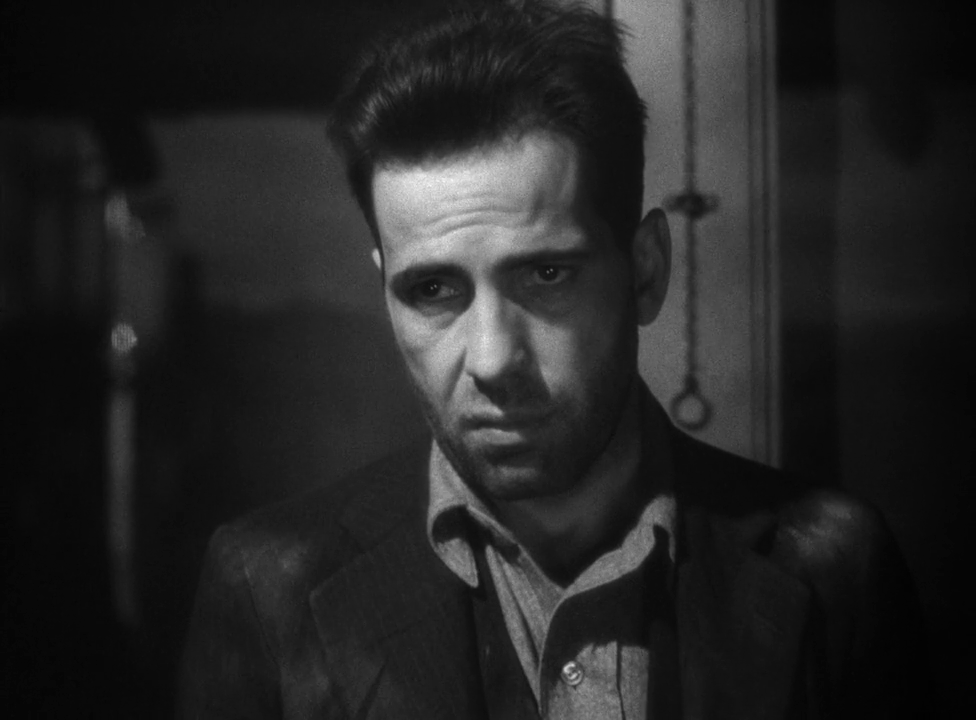
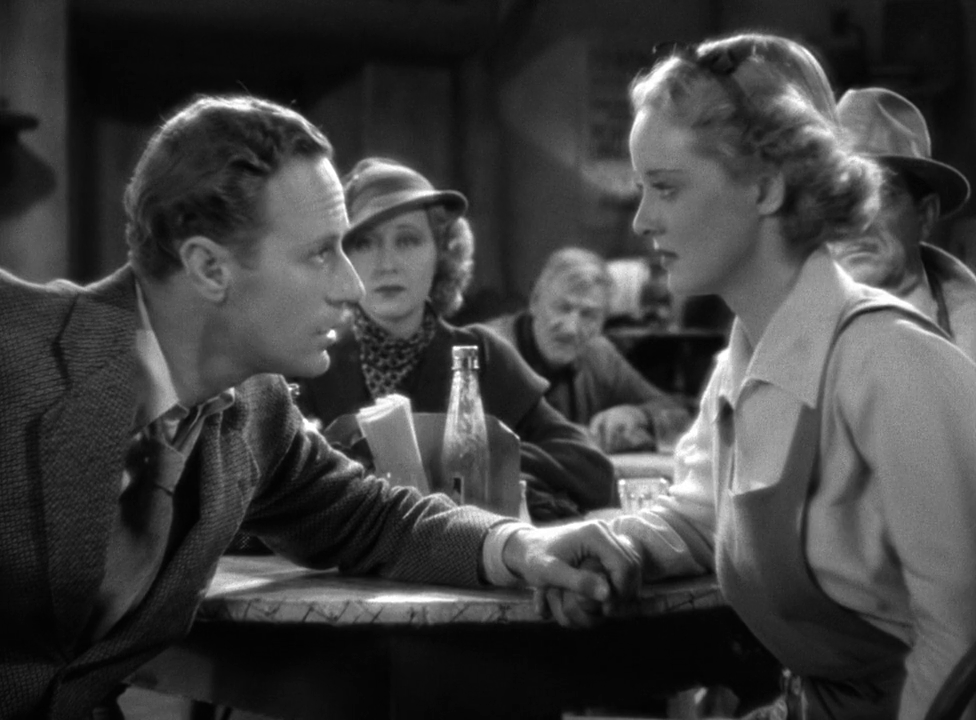
A penniless writer (Leslie Howard) stops at a roadside diner and becomes enamored with a poetic waitress (Bette Davis) who longs for a more exciting and romantic life. When notorious gangster Duke Mantee (Humphrey Bogart) and his men arrive and hold the diner’s inhabitants hostage, both Davis and Howard suddenly face life-changing choices.

Genres, Themes, Actors, and Directors:

  • Bette Davis Films
  • Gangsters
  • Hostages
  • Humphrey Bogart Films
  • Leslie Howard Films
  • Play Adaptation
  • Writers

Response to Peary’s Review:
Peary opens his review of this adaptation of “Robert E. Sherwood’s philosophical play” by noting it “provided the cinema with one of its few intellectual protagonists who wasn’t a mad scientist”, and adds that while the “adaptation is a bit stagy” it’s “generally well directed by Archie Mayo”. He notes that “wide-eyed Davis gives a fine, unassuming performance, and Howard, if he’d just stop talking for five seconds, is a good match for her”, while “Bogart and the other supporting players are well cast.” He points out a particularly interesting scene “in which a black gangster [Slim Thompson] reminds a black chauffeur [John Alexander], who needs orders from his rich white boss before doing anything, that they’ve been emancipated”, and notes that “Sherwood’s play is about the need for every repressed person to rebel against the particular ‘order’ — be it sexual, financial, racial, physical — in which he finds himself.” While I agree the film is a “bit stagy”, it never feels slow or boring, and I find it particularly interesting for both Davis’s uncharacteristically subdued performance and Howard’s charismatic presence — they make an appealing if star-crossed pair of would-be lovers.

Redeeming Qualities and Moments:

  • Bette Davis as Gabrielle
  • Leslie Howard as Alan
  • Humphrey Bogart as Duke Mantee
  • Sol Polito’s cinematography

Must See?
Yes, for its historical importance (as Bogart’s breakthrough role) and strong performances.

Categories

  • Historically Relevant

Links:

Body and Soul (1947)

Body and Soul (1947)

“Everything is addition or subtraction — the rest is conversation.”

Synopsis:
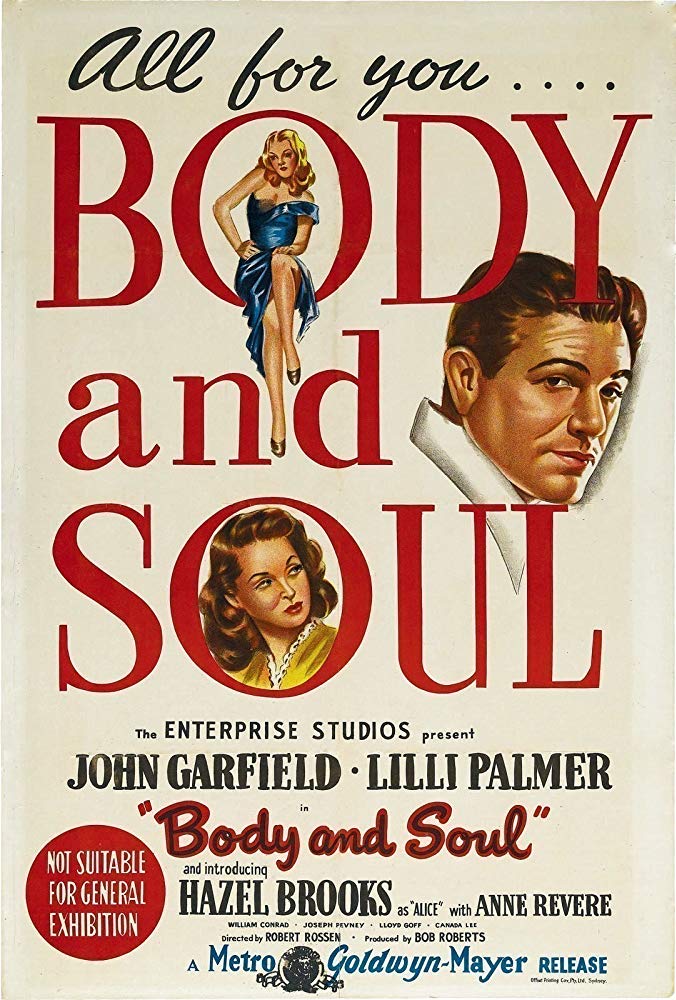
An amateur boxer (John Garfield) goes against the wishes of his mother (Anne Revere) when agreeing to work for a corrupt promoter (Lloyd Gough) in hopes of earning enough money to marry his artist-sweetheart (Lilli Palmer) — but will Garfield be able to resist the lure of easy money and women?

Genres, Themes, Actors, and Directors:

  • Boxing
  • Corruption
  • John Garfield Films
  • Robert Rossen Films

Response to Peary’s Review:
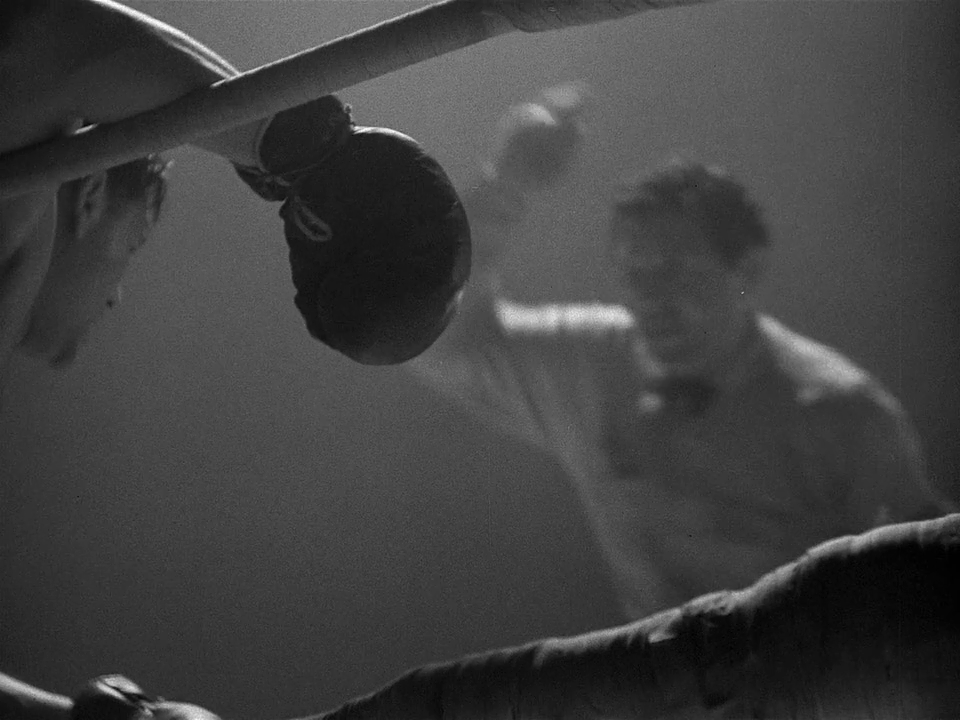
Peary writes that “this anti-boxing noir classic was powerfully directed by Robert Rossen” and features “John Garfield, the screen’s romantic rebel and symbol for the immigrant poor”, who “found an ideal role as Jewish boxer Charley Davis, a decent tenement dweller who becomes a boxer to earn much-needed money and is quickly corrupted”. (Peary adds that “as in Golden Boy, the boxing arena represents hell.”) Highlights include the “thrilling boxing finale, intensely shot by James Wong Howe”, and “a fine performance by Lilli Palmer” as Garfield’s “smart fiancee”. Peary provides an analysis of the “script by Marxist Abraham Polonsky” as “an indictment of capitalism”, with “boxing shown to be similar to any ruthless mainstream business” in which “employers not only exploit their boxer employees but own them by virtue of a contract; the employees, having no union, literally fight against one another in order to gain a higher rank.” He adds that “Polonsky speaks of the dignity of poverty (as represented by Revere, who will take none of her son’s earnings) and, through designer Palmer (whose career moves along as swiftly as Charley’s, without her selling her soul), he pays respect to the artist.”

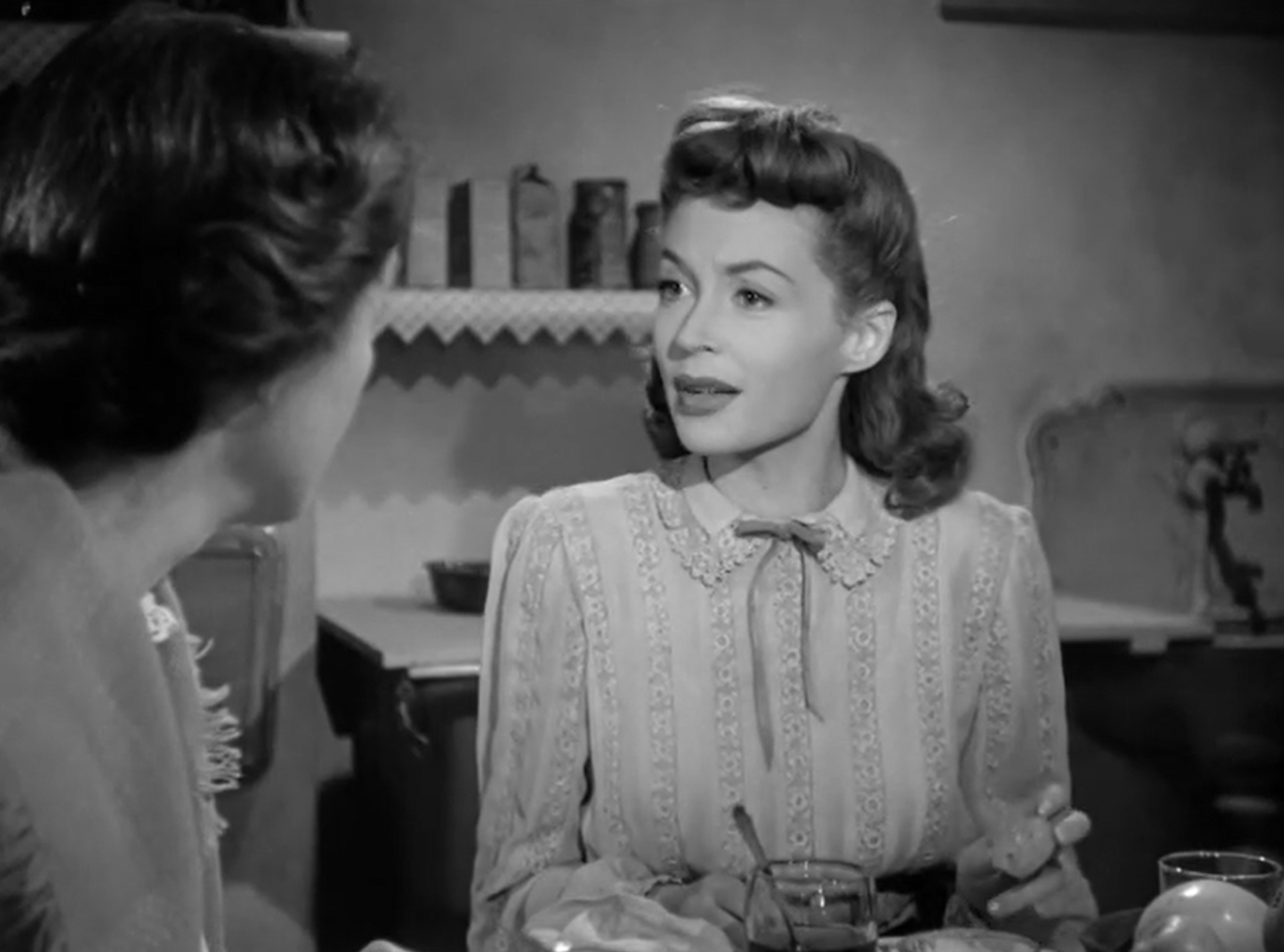
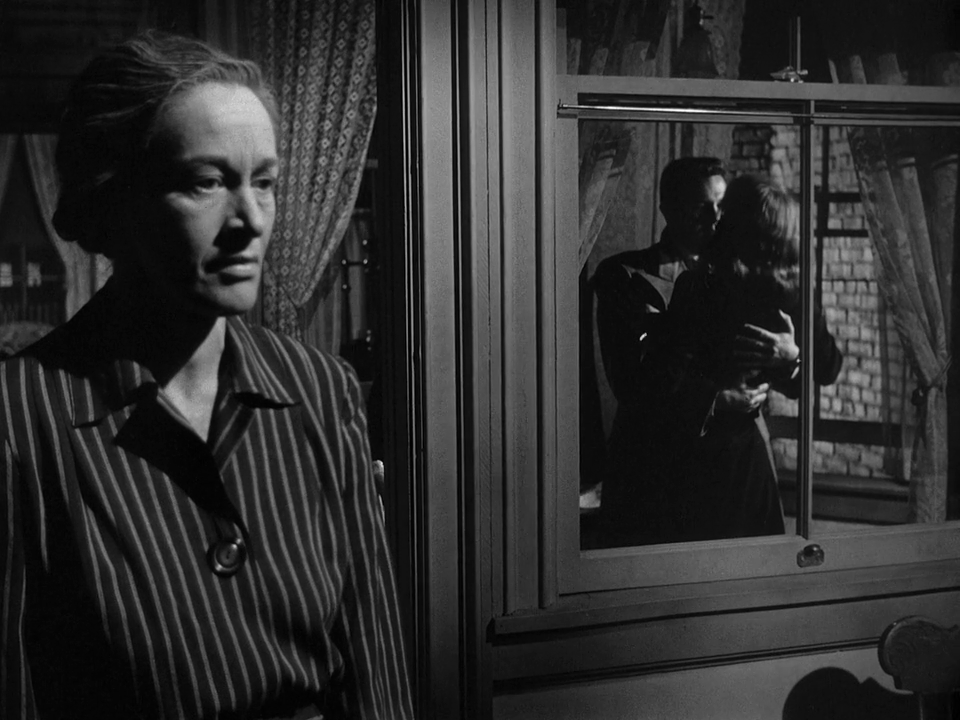
For better or for worse (or perhaps simply inevitably), Rossen and Polonsky’s film feels just as timely and relevant today as ever. Nothing about Garfield’s quest for money — earned through satisfyingly brutal fights that allow him to vent his anger at the world — or his relatively easy fall into corruption is unrealistic; aspiring boxing and wrestling stars today face exactly the same lures and corruptive oversight. Palmer’s character is refreshingly nuanced: she loves and supports Garfield, but knows her own limits and sticks to them.

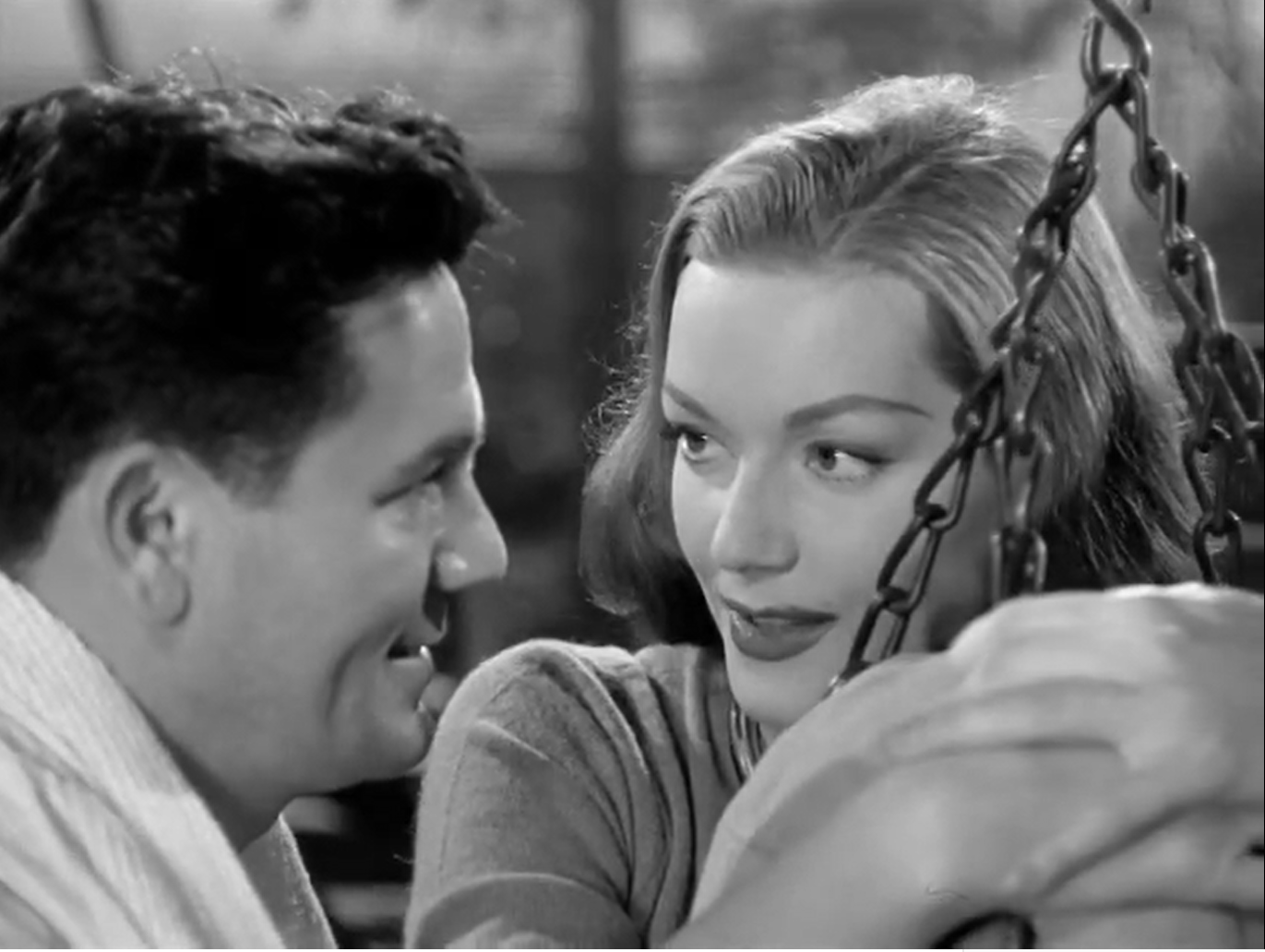
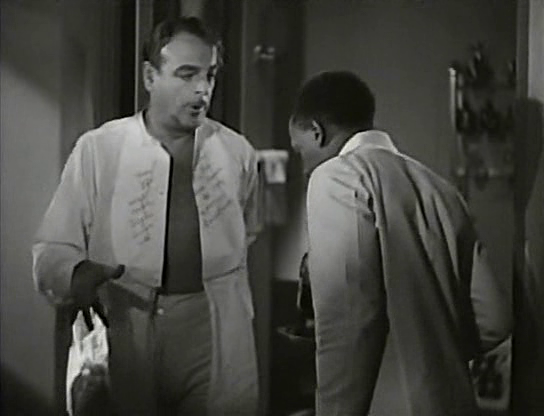
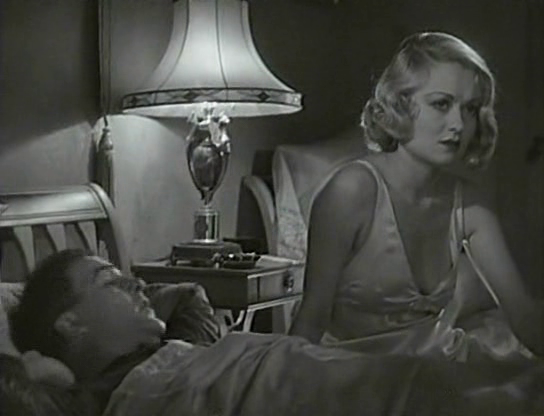
Hazel Brooks does a fine job playing a seductive groupie in it for the money:

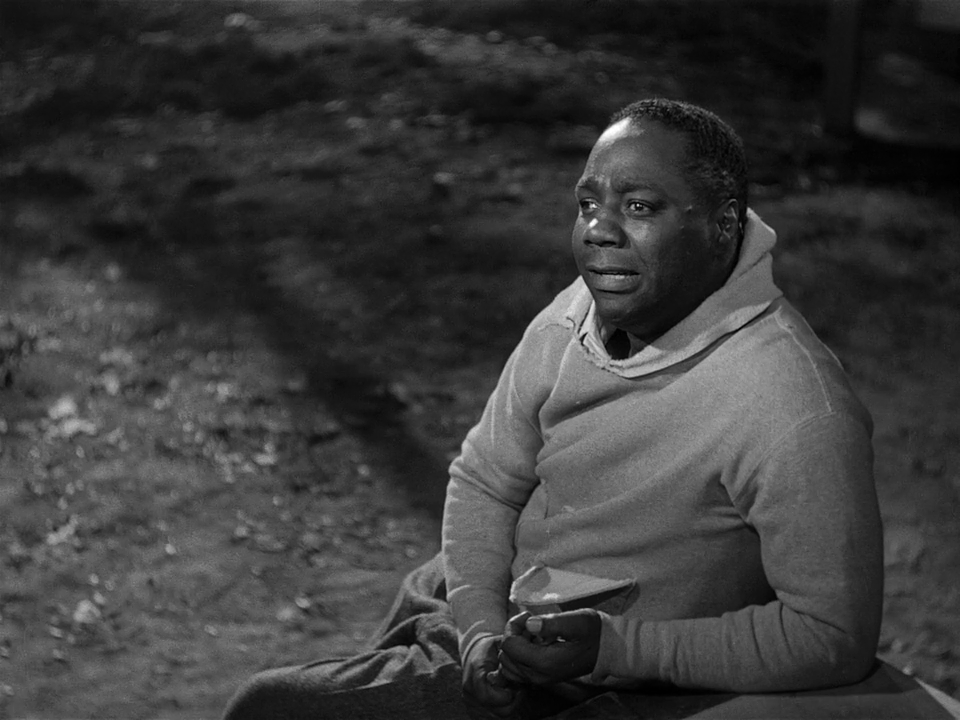
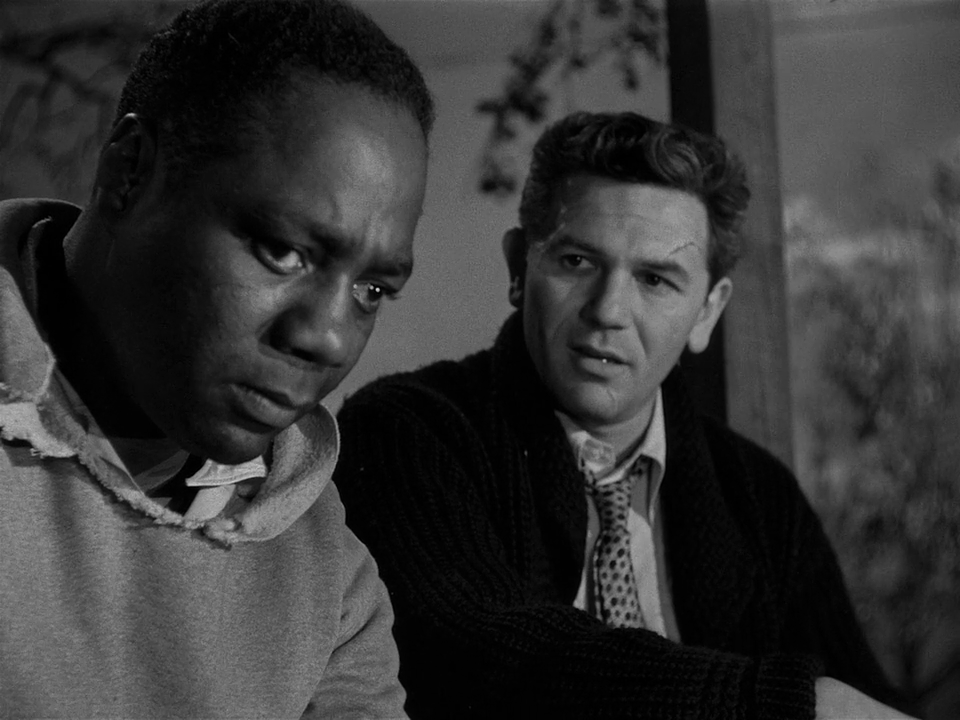
and Canada Lee is highly memorable in a critical supporting role as the black boxer who Garfield almost fatally knocks out, then hires to help him train; his story is nearly as impactful as Garfield’s.

Howe’s cinematography is phenomenal throughout, and Rossen directs with a fine sense of composition and atmosphere. This one remains well worth a visit.

Redeeming Qualities and Moments:

  • John Garfield as Charley
  • Lilli Palmer as Peg
  • Canada Lee as Ben
  • Fine direction by Rossen
  • Francis Lyon and Robert Parrish’s Oscar-winning editing
  • Excellent cinematography by James Wong Howe

Must See?
Yes, as a boxing classic and all-around good show.

Categories

  • Genuine Classic

Links:

Women, The (1939)

Women, The (1939)

“I knew this sort of thing happened to other people — but I never dreamed it could happen to us!”

Synopsis:
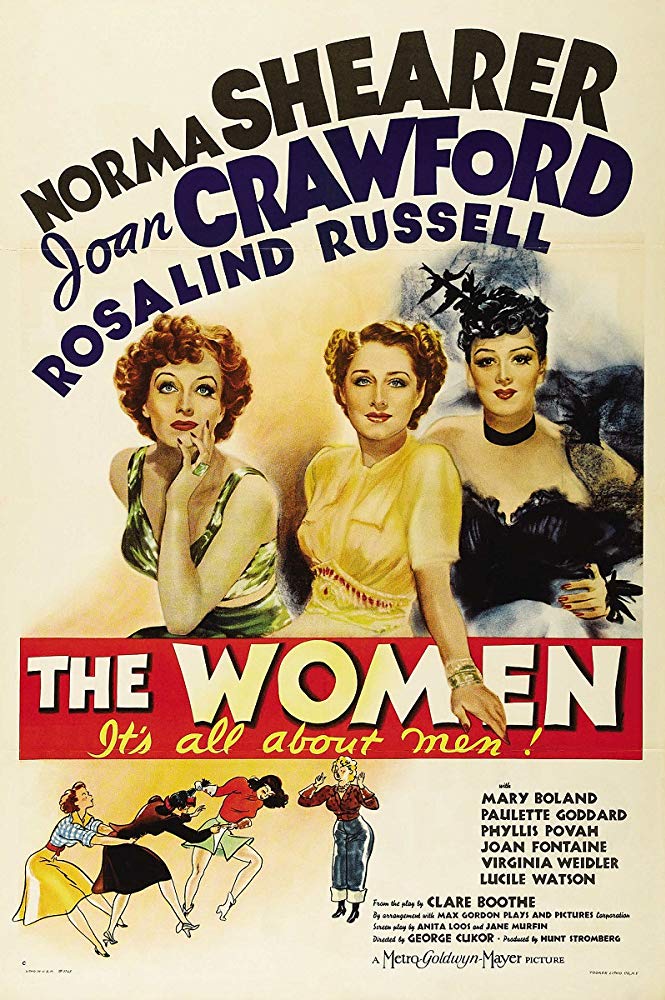
When a wife (Norma Shearer) learns her husband has been stolen by a ruthless golddigger (Joan Crawford), she files for divorce and soon finds herself in similar company with many of her friends — some old, some new. Will she find a way to get her husband back — and does she even want to?

Genres, Themes, Actors, and Directors:

  • Divorce
  • George Cukor Films
  • Gold Diggers
  • Infidelity
  • Joan Crawford Films
  • Joan Fontaine Films
  • Norma Shearer Films
  • Paulette Goddard Films
  • Play Adaptation
  • Rosalind Russell Films
  • Strong Females

Response to Peary’s Review:
Peary is clearly a fan of this “delicious adaptation (by Anita Loos) of Clare Boothe’s classic stage comedy, directed by George Cukor, and starring a peerless all-female cast”. He notes that “the characters are like wild animals — claws and fangs bared — let out of their cages”, and writes that the “picture is an ideal starting point for discussions on how women are portrayed in film”: while “some find the film’s portrayal of women objectionable”, these “women are resilient, always pulling through when men let them down”. He adds that “it’s a joy watching scenes between women who are friends — because, of course, friendships between women have traditionally been ignored by male filmmakers”; and “even though they often betray each other through gossip (a habit they don’t wish to break), there is camaraderie among them. They obviously care for one another, know the petty problems the others have living in a society where the men control the money.” Peary concludes his review by noting that “most unique is that all these women have a genuine sense of humor” — “Cukor obviously loves these characters”, so “we can forgive him for intentionally over-doing it.”

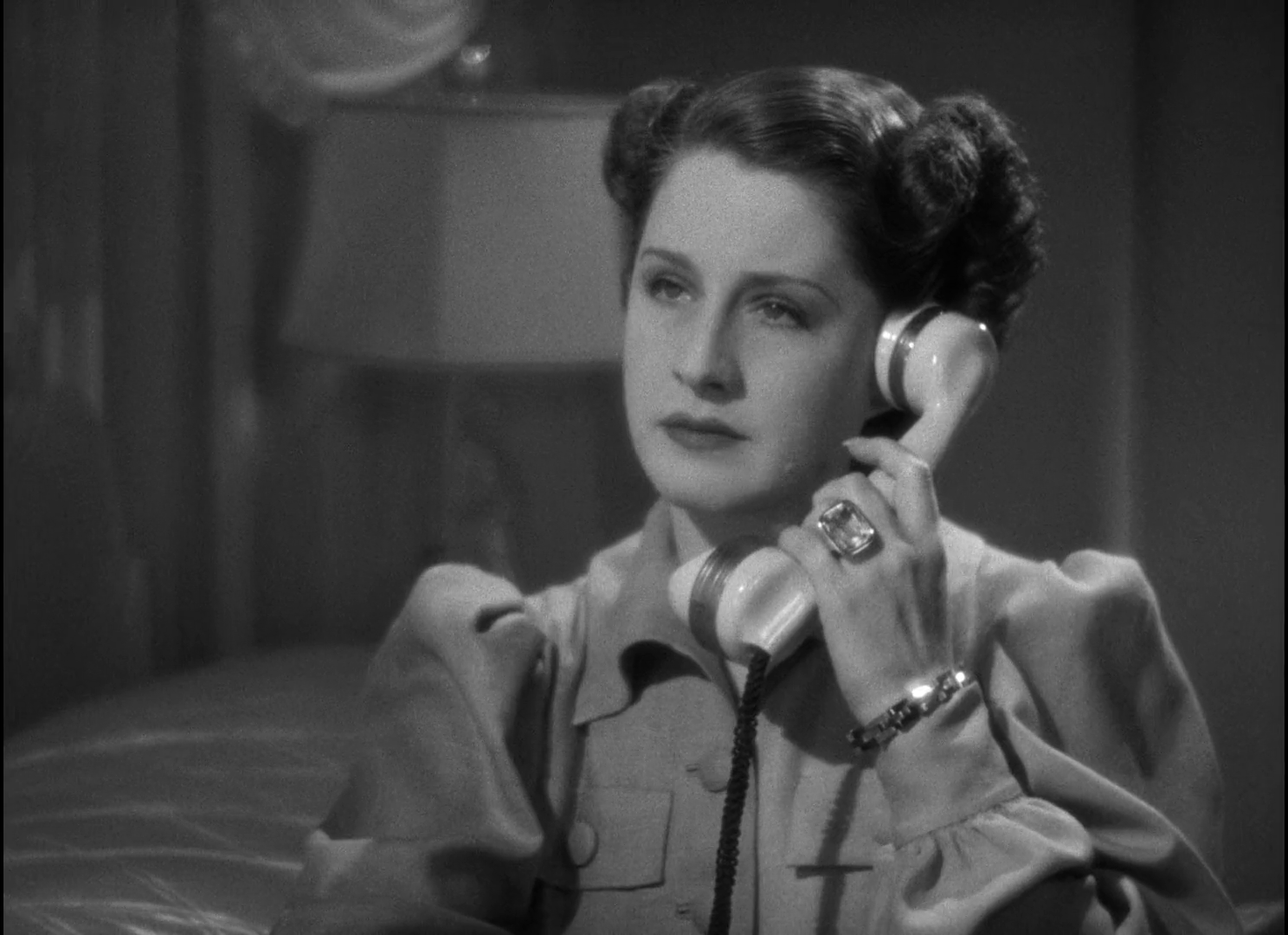
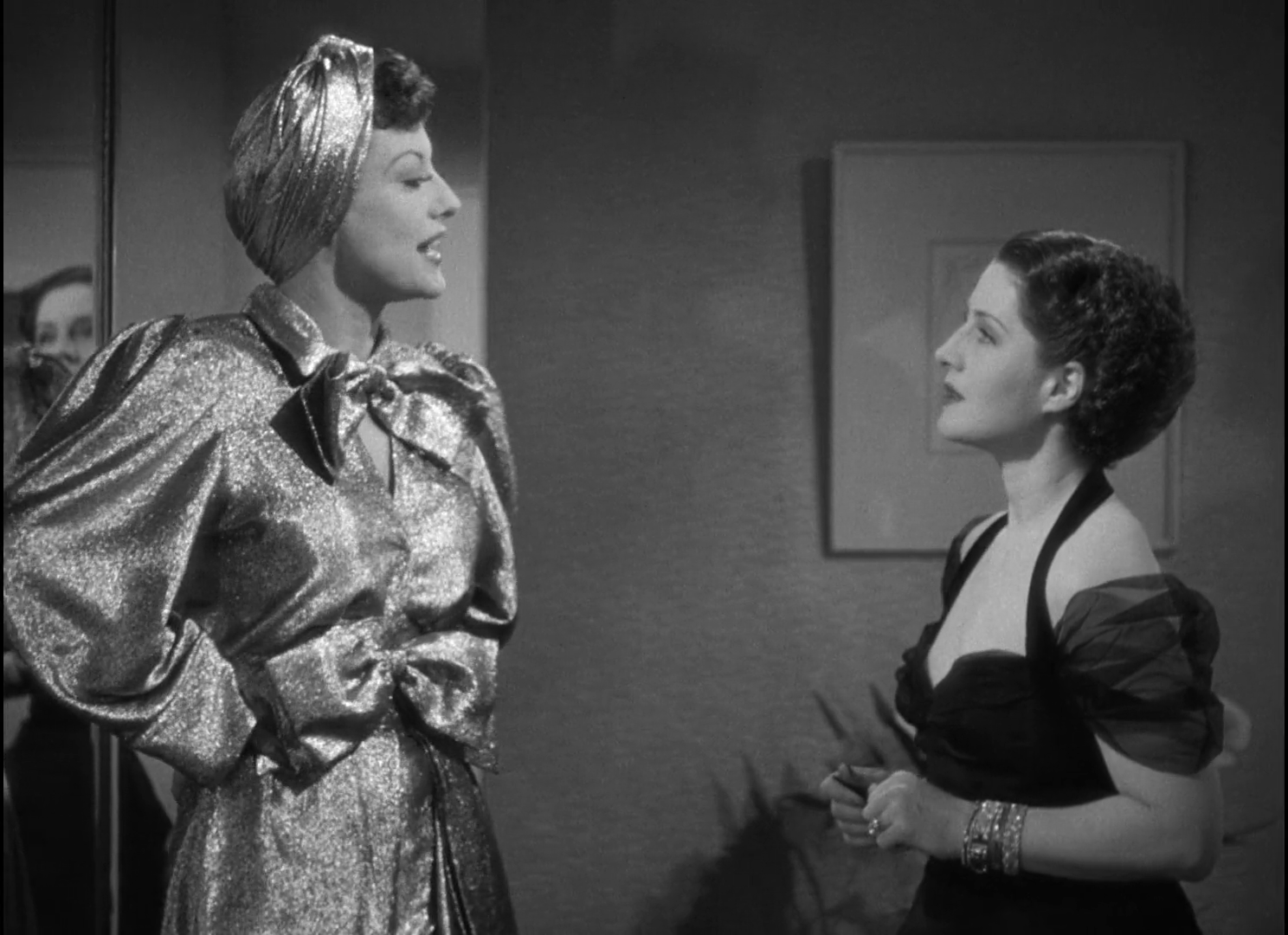
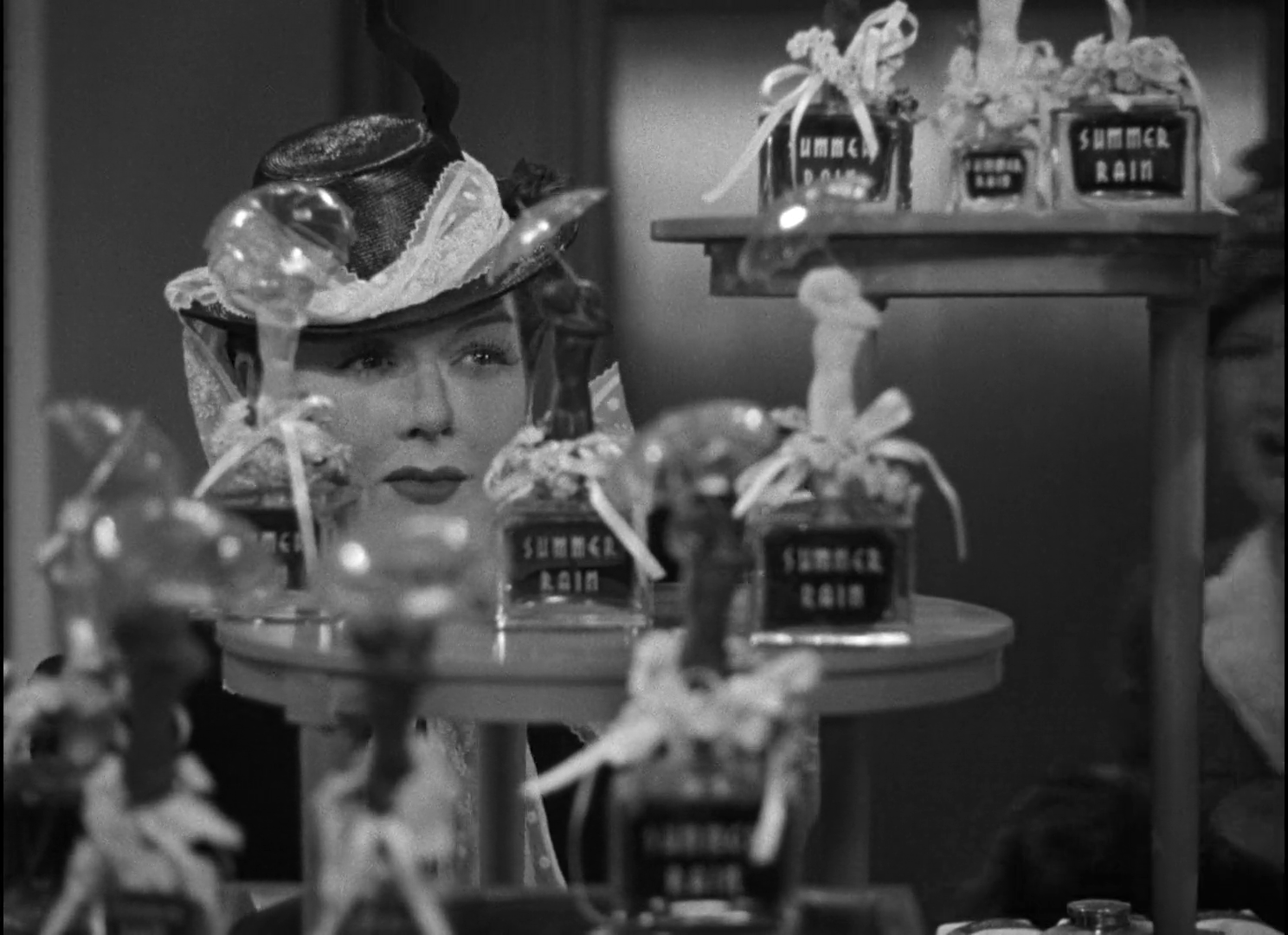
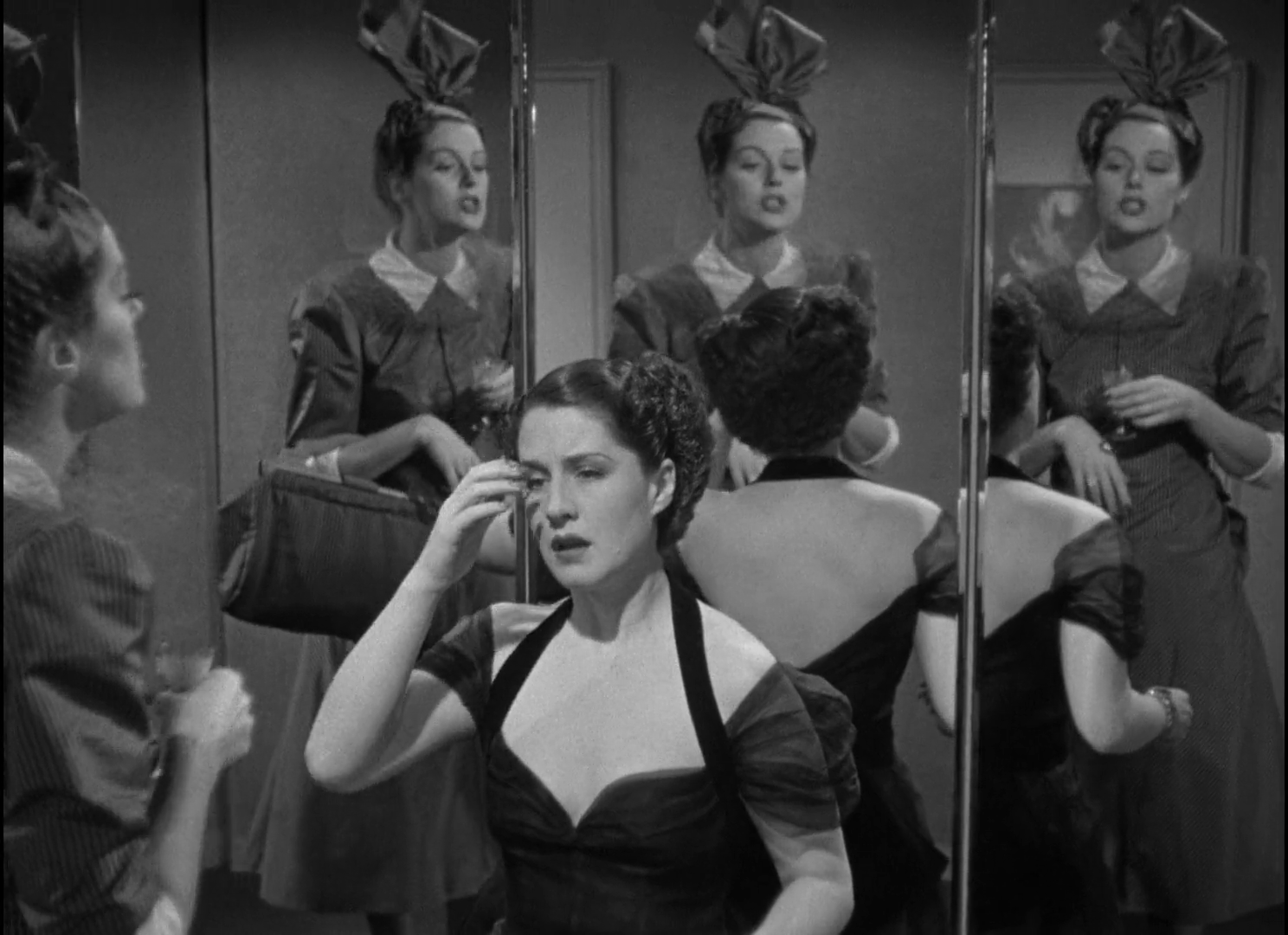
I’m in agreement with Peary’s assessment. Despite the story being set in a very specific time and place (an era when divorces necessarily involved a trip to Reno), and perhaps coming across as dated for that reason, it remains timeless in many ways, thanks to the nuanced portrayals of the various women. As Peary writes, “Shearer’s friends range from young to old (she also has a special relationship with her mother and daughter) and include golddiggers (Goddard), passive wives (Fontaine), those who financially support their men, those who use their husbands’ money to fritter their days away, those who push men around, and those who have been dumped by their wayward husbands”. The lack of any actual men in the cast or on screen (a clever convention of the original play) allows us to concentrate exclusively on the women of this story, which is surprisingly refreshing. Of course, it’s lacking in diversity in countless ways (we see no women of color or lesbians) — but it’s authentic to its milieu and realistically doesn’t stretch farther than Shearer’s actual life would. Speaking of Shearer, she’s in top form here, easily holding her own against Crawford’s iconically shrewish Crystal. The direction and cinematography are top-notch as well.

Redeeming Qualities and Moments:

  • Norma Shearer as Mary
  • Joan Crawford as Crystal
  • Fine direction and cinematography

  • A witty, often biting script

Must See?
Yes, as a cult classic. Nominated by Peary as one of the Best Pictures of the Year in his Alternate Oscars.

Categories

  • Oscar Winner or Nominee

Links:

Mutiny on the Bounty (1935)

Mutiny on the Bounty (1935)

“He doesn’t punish men for discipline; he likes to see men crawl.”

Synopsis:
When sadistic Captain Bligh (Charles Laughton) mistreats his crew to the point of abuse and death, his first officer (Clark Gable) leads a mutiny despite the protests of Bligh’s loyal midshipman (Franchot Tone).

Genres, Themes, Actors, and Directors:

  • At Sea
  • Charles Laughton Films
  • Clark Gable Films
  • Donald Crisp Films
  • Franchot Tone Films
  • Mutiny
  • Ruthless Leaders
  • South Sea Islands

Response to Peary’s Review:
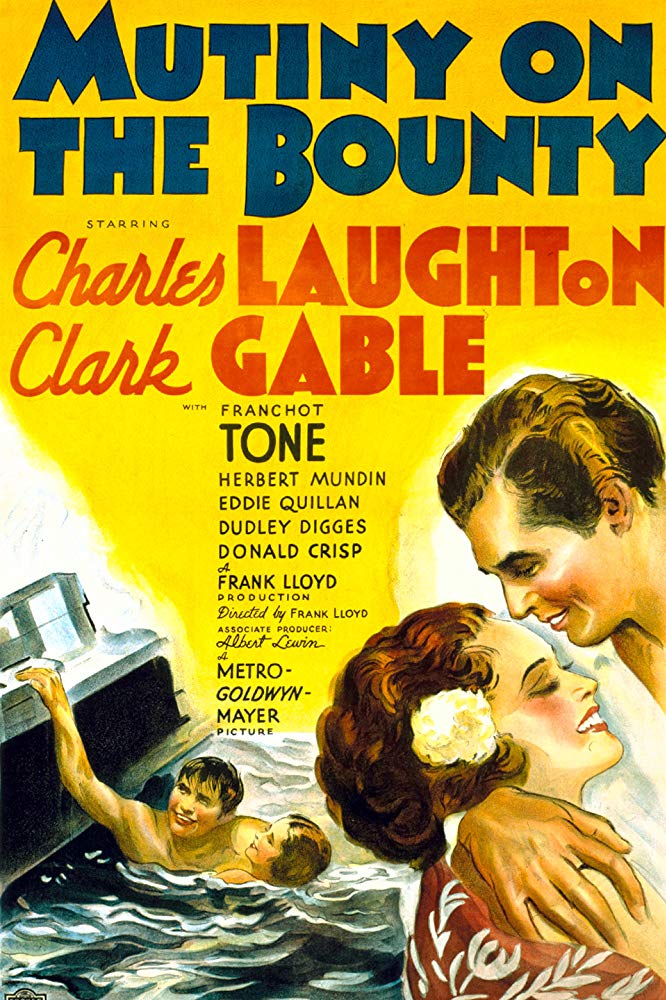
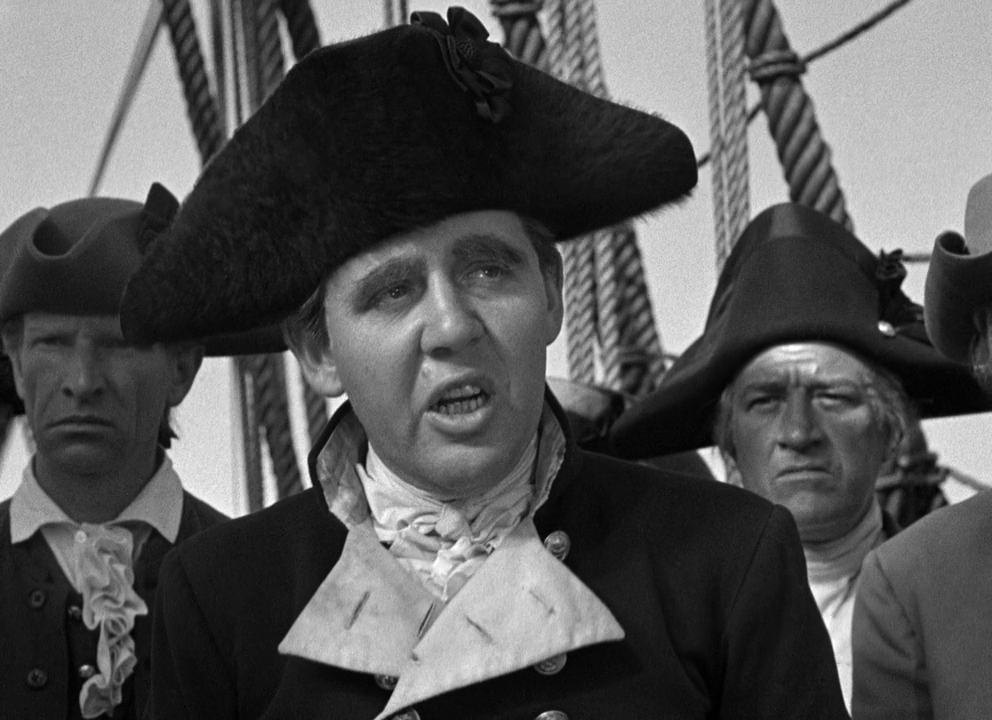
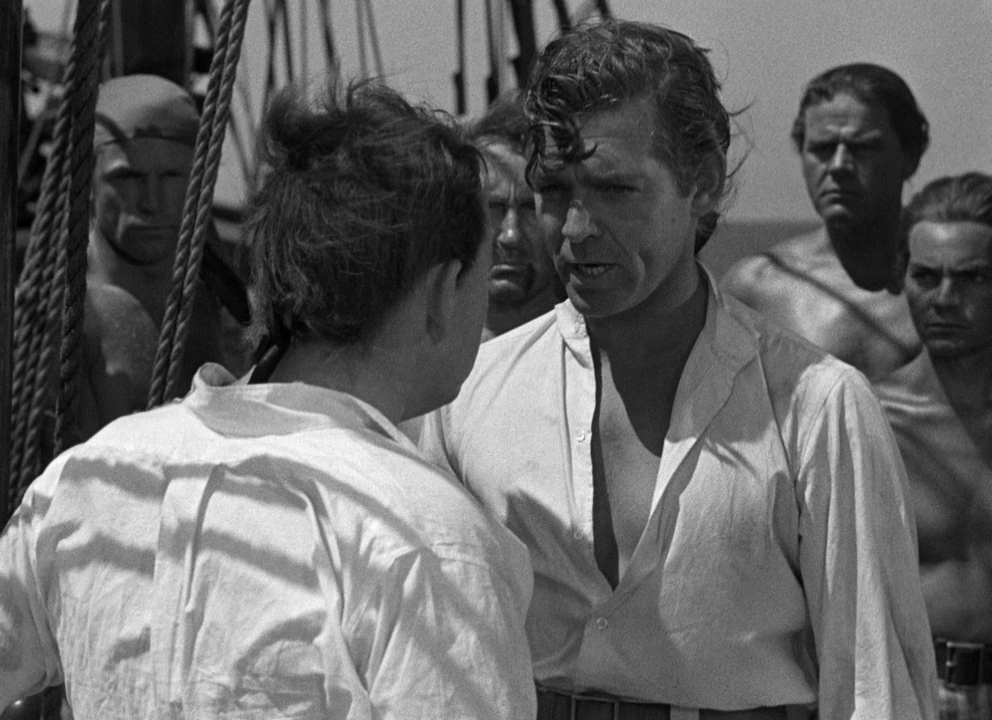
Peary writes that this “classic sea drama” about “a historical mutiny that took place in the 18th century on a British ship making a two-year voyage to retrieve breadfruit plants from Tahiti” still “holds up” well today. He argues that while the “film hasn’t the sense of adventure, eroticism, or psychological complexities of the 1962 remake with Trevor Howard and Marlon Brando… or the revisionist 1984 film, The Bounty, starring Anthony Hopkins and Mel Gibson”, it remains “the superior film”, and that “its power comes from neither Bligh nor Christian ever backing down from each other during an argument, even when the other has the upper hand.” In Alternate Oscars, however, Peary amends his assessment by noting it’s “too grouchy a picture”, given that “for two hours we see Laughton demean sailors and get away with it”; he asserts it’s not a film “you want to see every time [it turns] up at a repertory cinema or TV.” Meanwhile, he notes that while “Laughton’s Bligh is a villain for the ages, one of the most contemptuous figures in cinema history”, he believes “the role lets him down because it is without nuance — there is no way we can get into his head, no way to figure out if something in his past was responsible for his cruelty.”

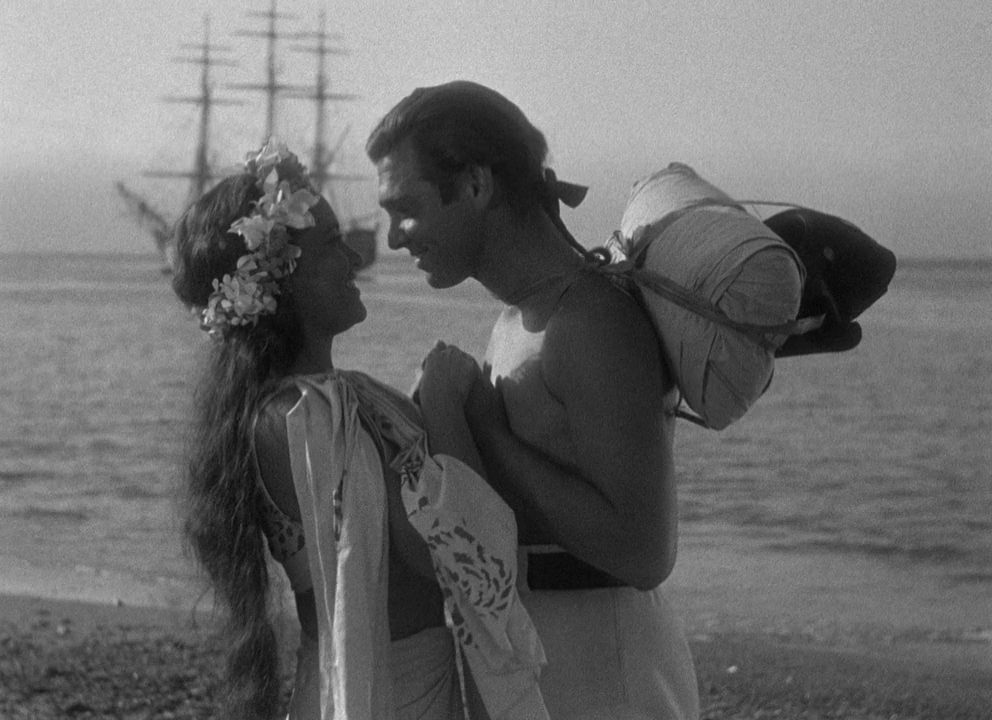
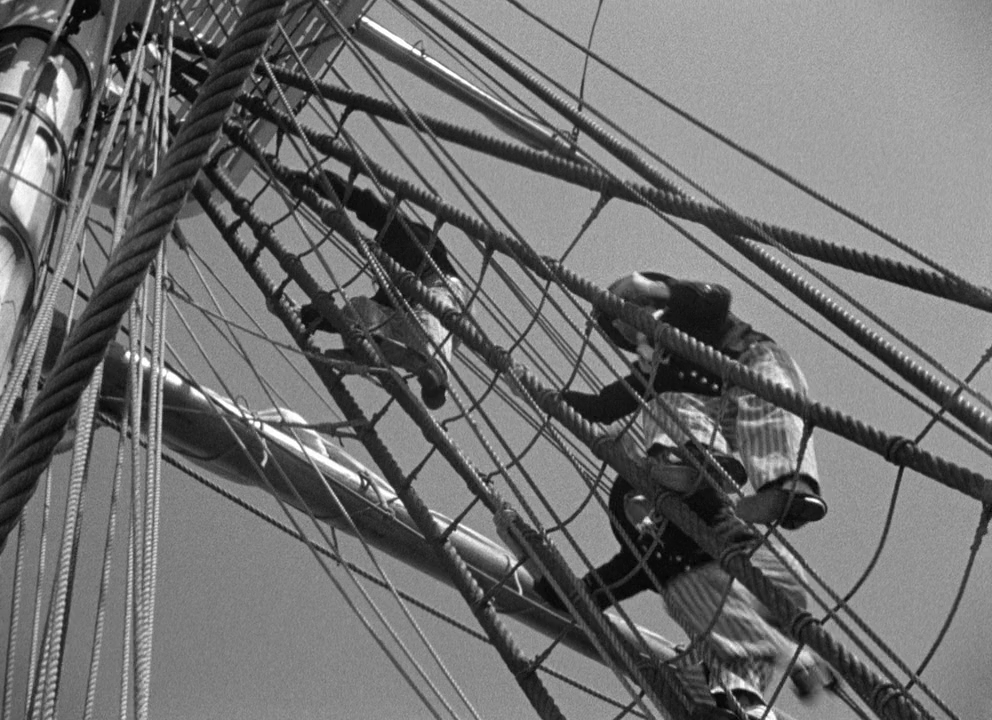
I’m essentially in agreement with Peary’s points. While Mutiny on the Bounty is an impressive production on nearly every count — from the on-location shooting to meticulous set design (both historical ships were recreated), expert editing, and fine performances — it is challenging to watch Bligh’s (fictionalized) behavior and then see him retaining loyalty from a reasonably large group of men, who are either deathly afraid of treason and/or believe his behavior is somehow justifiable. In addition, the film is a tad overlong, with too much time spent lingering on romantic dalliances in Tahiti (where the female characters aren’t given any dimensions other than beauty and loyalty). However, enough about this adventure-filled nautical movie remains powerful and well-crafted that it’s certainly worth a look by all film fanatics.

Redeeming Qualities and Moments:

  • Charles Laughton as Captain Bligh
  • Clark Gable as Christian Fletcher
  • Arthur Edeson’s cinematography

  • Margaret Booth’s masterful editing

Must See?
Yes, as an Oscar-winning classic.

Categories

  • Oscar Winner or Nominee

(Listed in 1001 Movies You Must See Before You Die)

Links:

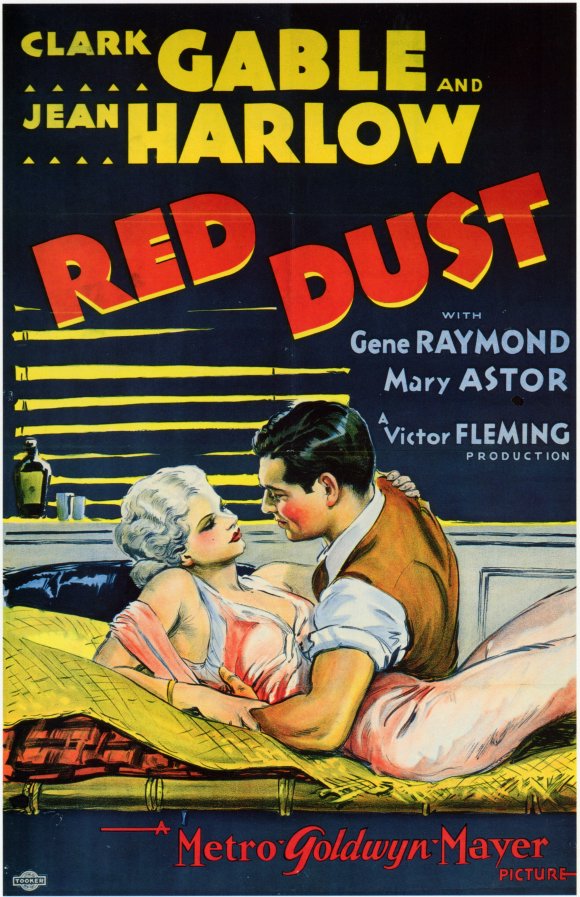
Red Dust (1932)

Red Dust (1932)

“Don’t mind me, boys — I’m just restless.”

Synopsis:
A prostitute (Jean Harlow) on the lam falls for the owner (Clark Gable) of a rubber plantation in Indochina, but Gable is primarily interested in the wife (Mary Astor) of a visiting engineer (Gene Raymond).

Genres, Themes, Actors, and Directors:

  • Clark Gable Films
  • Donald Crisp Films
  • Fugitives
  • Jean Harlow Films
  • Jungles
  • Love Triangle
  • Mary Astor Films
  • Prostitutes and Gigolos
  • Victor Fleming Films

Response to Peary’s Review:
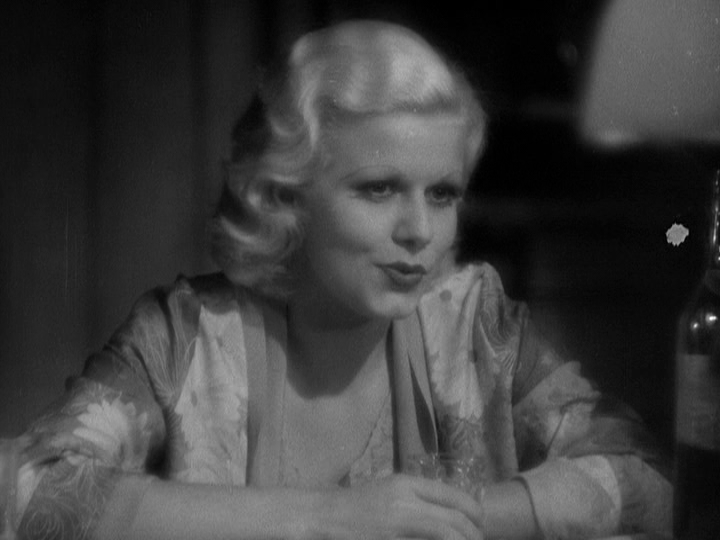
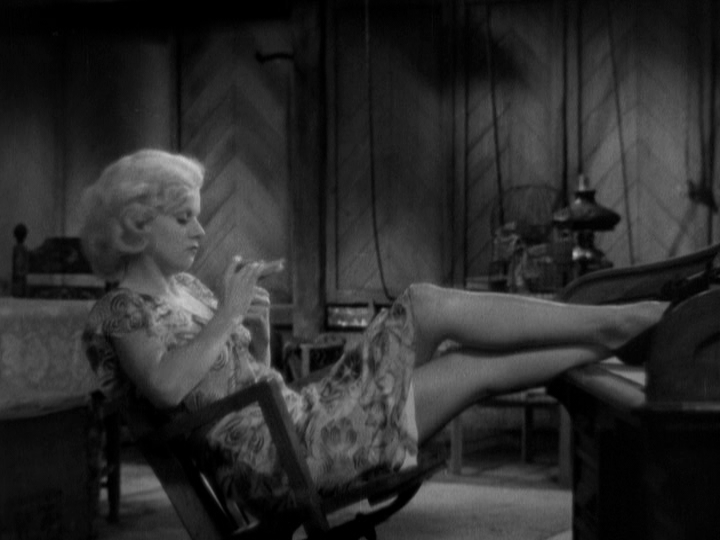
Peary writes that this “hot-blooded jungle romance” by director Victor Fleming (remade as Mogambo by John Ford in 1953) “still has the sexual charge that caused it to break box-office records in the early thirties”. He points out that “unshaven Gable and braless blonde Harlow have immense sexual chemistry at all times — whether he’s standing next to her while she takes her famous nude bath in a barrel or she sits by him as he lies on a bed, reading to him a children’s bedtime story while he’s putting his hand on her knee.” The storyline is simple but powerful, showing Gable’s sway over “well-bred Astor” (who hates herself for cheating on her noble husband), as well as Harlow’s immense patience and world-weariness. She’s been through enough that a disappointment like Gable choosing Astor over her stings a bit, but she’ll survive intact, and never loses her self-possession or sense of innate dignity. It’s easy to imagine Joan Crawford in a role like this; indeed, Red Dust and Rain (1932) — another film about a fugitive prostitute on a rainy island — would make a potent double-bill.

Redeeming Qualities and Moments:

  • Jean Harlow as Vantine
  • Harold Rossen and Arthur Edeson’s cinematography

  • A smart and sassy screenplay:

    “If it was the summer of 1894, I’d play games with you, sister. But life is much simpler now.”

Must See?
Yes, as a pre-Code classic. Selected in 2006 for preservation in the United States National Film Registry by the Library of Congress as being “culturally, historically, or aesthetically significant”.

Categories

  • Genuine Classic

Links:

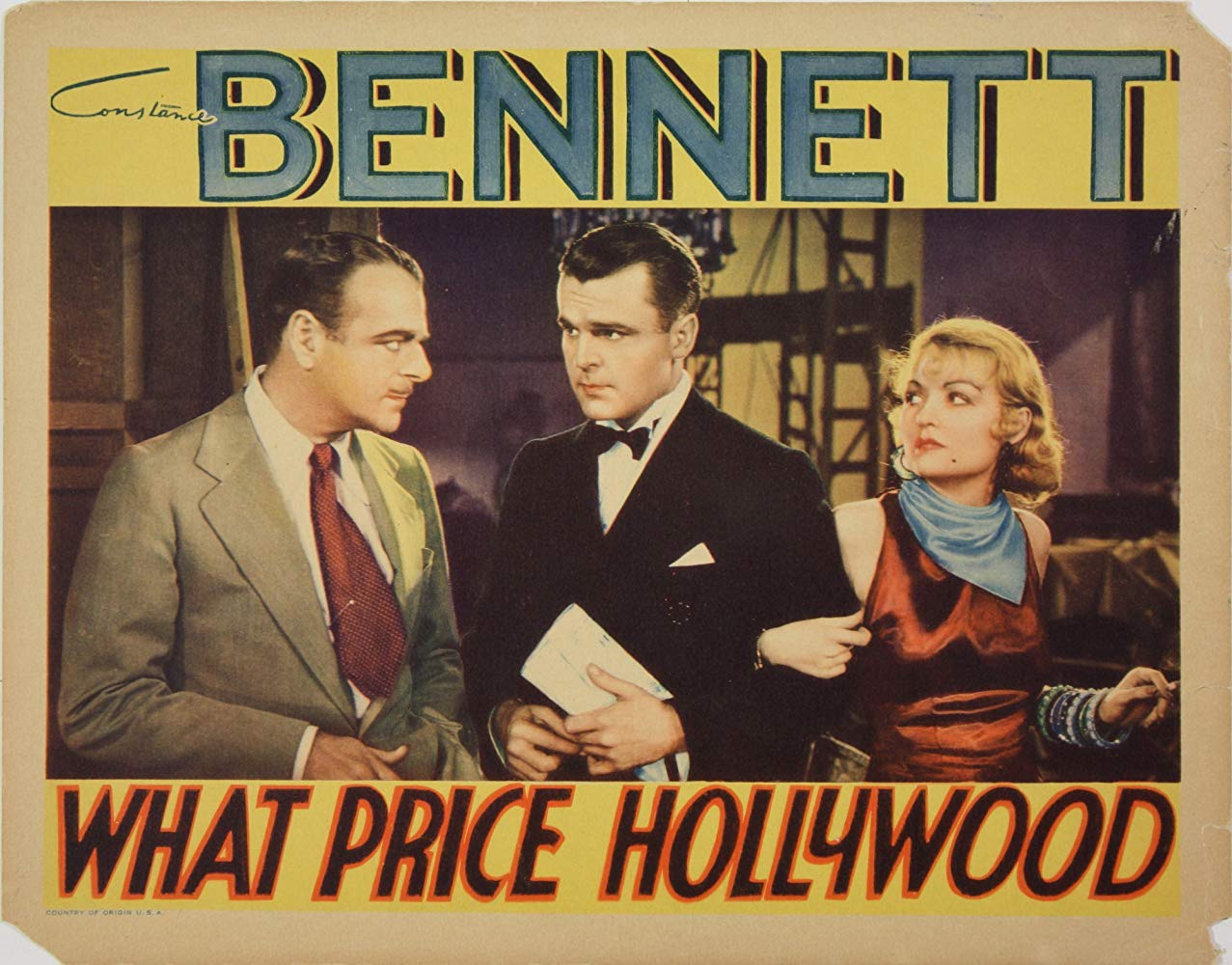
What Price Hollywood? (1932)

What Price Hollywood? (1932)

“We don’t live in the same world!”

Synopsis:
A waitress (Constance Bennett) hoping to make it big in Hollywood convinces an alcoholic director (Lowell Sherman) to take a chance on her, and soon her star is on the rise — but her new husband (Neil Hamilton) quickly tires of her hectic schedule, and gossip emerges around her enduring loyalty to Sherman no matter how low he falls.

Genres, Themes, Actors, and Directors:

  • Actors and Actresses
  • Alcoholism and Drug Addiction
  • Aspiring Stars
  • Constance Bennett Films
  • George Cukor Films
  • Hollywood

Response to Peary’s Review:
Peary writes that in “George Cukor’s classic” — precursor to A Star is Born (1937) and the musical remake Cukor himself directed in 1954 — “Constance Bennett is extremely appealing as Mary Evans, a spunky Brown Derby waitress” who remains “forever grateful” to the man (Sherman) who gives her a break in Hollywood, becoming “the only person who remains loyal once alcoholism ruins his career”. Peary points out that the “sharply written” script by “Jane Murfin, Ben Markson, Gene Fowler, and Rowland Brown” — who “adapted a story by Adela Rogers St. John” — is “more cynical [about Hollywood] than vicious: careers are shown to be fragile and personal lives are easily shattered, but at least the souls of good people are not destroyed.” Unfortunately, the “film wavers between being highly original and very conventional” — including “everything involving Hamilton”. Indeed, Mary’s marriage to Lonny (Hamilton) is particularly poorly handled; their “meet cute” is annoyingly protracted, placing both of them in a bad light and setting us up not to like either of them as a marriage partner. As Peary notes, “the best part of the film is the core relationship between Bennett, whose star is on the rise, and Sherman, whose career is in a drunken tailspin”; his final scene is a doozy indeed.

Redeeming Qualities and Moments:

  • Constance Bennett as Mary Evans
  • Lowell Sherman as Max
  • Fine cinematography
  • The impressively edited final sequence with Sherman

Must See?
No, though I’m tempted to say it’s a once-must for its strengths as well as its historical relevance.

Links:

Scarface, The Shame of the Nation (1932)

Scarface, The Shame of the Nation (1932)

“Colorful?! What color is a crawling louse?”

Synopsis:
A ruthless aspiring ganglord (Paul Muni) zealously protects his young sister (Ann Dvorak) from suitors while wooing the sultry mistress (Karen Morley) of his boss (Osgood Perkins); meanwhile, with help from his loyal henchman (George Raft), he wreaks murderous havoc on rival gangsters while attempting to take over new territory in Chicago.

Genres, Themes, Actors, and Directors:

  • Ann Dvorak Films
  • Boris Karloff Films
  • Gangsters
  • George Raft Films
  • Howard Hawks Films
  • Karen Morley Films
  • Paul Muni Films

Response to Peary’s Review:
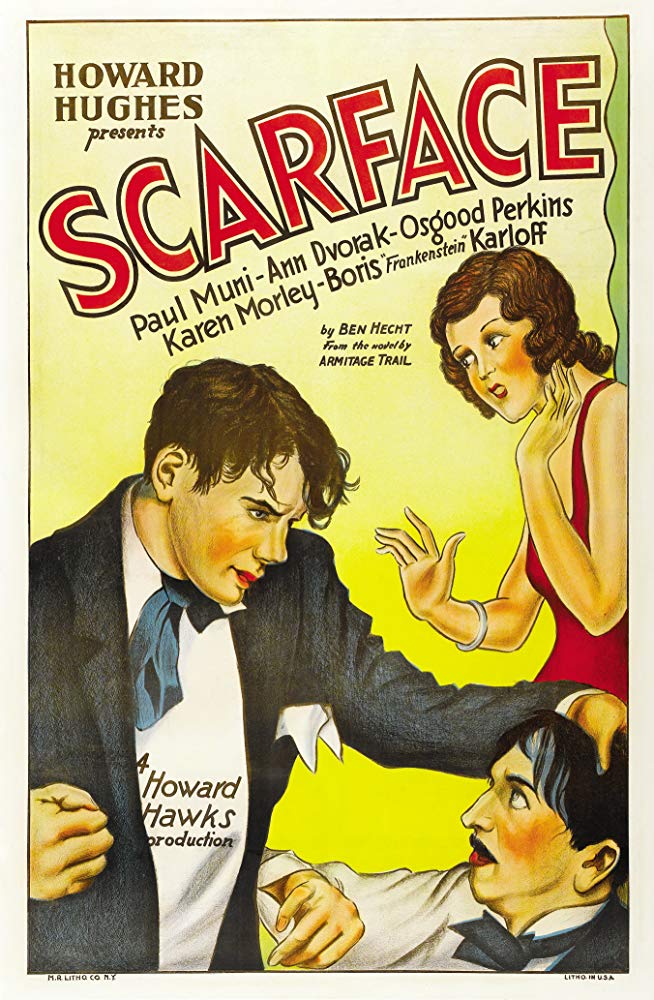
Peary begins his review of Scarface by noting that this “best of the early gangster films was completed by Howard Hawks in 1930 but was held up by censors until several changes were made”, in order for “the public to understand that the motion-picture industry was also infuriated by crime.” However, as Peary points out, this film hardly glamorizes gangster life, given that “Paul Muni’s Tony Camonte, who, like many movie gangsters, was based in part on Al Capone, is a stupid, loutish, ugly brute — his scar is his best facial feature since he’s made up to resemble an apeman (he’s like Fredric March’s Mr. Hyde minus the fangs).”

He adds that “screenwriter Ben Hecht based his crime family on the Borgias, so he had a model for the corruption, cruelty, power-lust and decadence that exists” — including “an incest theme” but minus any parental influence; Tony’s father is non-existent and his mother (Inez Palange) is completely ineffectual. Peary correctly notes that “no one who sees this film would want to emulate the lives of these criminals” — but with that said, the “film has exciting, atmospheric cinematography by Lee Garmes; taut, inspired direction by Hawks; and a powerful script by Hecht (with additional dialogue credit going to John Lee Mahin, Seton I. Miller, and W.R. Burnett).”

In GFTFF, Peary outlines several of the film’s highlights, including “the opening, in which the camera pans for several minutes across an emptying party room and ends up showing the first victim being murdered”; and “gangster Boris Karloff being shot just as he bowls — the camera follows the ball down the lane, where it knocks over all the pins, including the king pin, which spins for a while and topples over.” In Alternate Oscars — where he names this the Best Film of the Year — Peary writes that “for real, reel-to-reel excitement, no film filled the bill better than” Scarface, “the best and most ferocious of the gangster cycle.” He notes that “the gangster world Hawks presents is unsavory, sordid, and not enticing” — though “males might be drawn to the beautiful, trampy women played by Ann Dvorak and Karen Morley (two of the great unsung actresses of the period).” (Indeed, Dvorak “almost steals the film”.) Peary adds that “the gangsters themselves are childlike, ignorant brutes who could stand no other company but their own and play dangerously stupid games… We don’t want to be like them and we don’t want to walk the streets when they’re around.”

In GFTFF, Peary writes that Muni “gives one of his finest performances — it is his one character for whom you can feel no sympathy”, and he awards Muni Best Actor of the Year in Alternate Oscars, noting that “Muni plays his character as if he were a cocky punk teenager. Unsophisticated and immature (like all other gangsters), he’s self-impressed, overrates his intelligence (he is proud to use the word disillusioned), boasts nonstop, acts tough, doesn’t listen to his mother…, and is always looking for a good time.” He considers machine guns “toys”, women “meat”, and “likes anything that is ‘hot’.” While he “is usually having a good time” — at which moments “we fear his recklessness” — he “suddenly shifts from being carefree to being serious” and is “downright creepy.” As “Muni’s eyes, face, and tone of voice quickly change”, we “realize what a frightening, depraved individual Tony is.” I find Muni’s performance a tad overdone, but would agree he’s fully invested in his role and quite memorable — as is the entire atmospherically filmed narrative, which is well worth a look by all film fanatics.

Redeeming Qualities and Moments:

  • Strong performances throughout

  • Lee Garmes’ cinematography


  • Ben Hecht’s script

Must See?
Yes, as an early gangster classic.

Categories

(Listed in 1001 Movies You Must See Before You Die)

Links: