Browsed by
Category: Original Reviews

Responses to Peary’s “must see” movie reviews, as well as my own “must see” movie reviews up to and after 1986 (when Peary’s book was published).

Captains Courageous (1937)

Captains Courageous (1937)

“Fifteen years I been fisherman — first time I ever fish a boy like you!”

Synopsis:
The spoiled son (Freddie Bartholomew) of a distracted magnate (Melvyn Douglas) accidentally falls overboard and is rescued by a Portuguese fisherman (Spencer Tracy) who takes him under his wing. Soon Bartholomew has learned to work hard and take responsibility, and develops deep respect for Tracy and the rest of the ship’s crew, including the captain (Lionel Barrymore) and his son (Mickey Rooney). Will his new work ethos last beyond the duration of the trip?

Genres, Themes, Actors, and Directors:

  • At Sea
  • Character Arc
  • Coming of Age
  • Fishermen
  • Freddie Bartholomew Films
  • John Carradine Films
  • Lionel Barrymore Films
  • Melvyn Douglas Films
  • Mickey Rooney Films
  • Spencer Tracy Films
  • Victor Fleming Films

Review:
Spencer Tracy won his first Oscar playing a quirky, music-loving Portuguese fisherman in this adaptation of Rudyard Kipling’s novel, which nicely shows the progression of a manipulative boy — who’s authentically confused about why no one seems to like him — into someone who’s learned the value of hard work and cooperation. The storyline is very clearly set up for Tracy to serve as an alternative father figure for Bartholomew, which he does admirably — and Bartholomew himself turns in a nuanced, empathetic performance (not easy when playing a spoiled rich kid). Most of the film takes place during rocky days at sea, showing ample footage of fishing and rivalry with a nearby ship; I got a little bit seasick watching the proceedings, but can imagine young boys fantasizing about just such a real-life adventure. While not quite a classic, this one has held up reasonably well.

Redeeming Qualities and Moments:

  • Freddie Bartholomew as Harvey
  • Spencer Tracy as Manuel (nominated by Peary as one of the Best Actors of the Year in Alternate Oscars)
  • Fine cinematography

Must See?
No, though it’s worth a look. Listed as a film with Historical Relevance and a Personal Recommendation in the back of Peary’s book.

(Listed in 1001 Movies You Must See Before You Die)

Links:

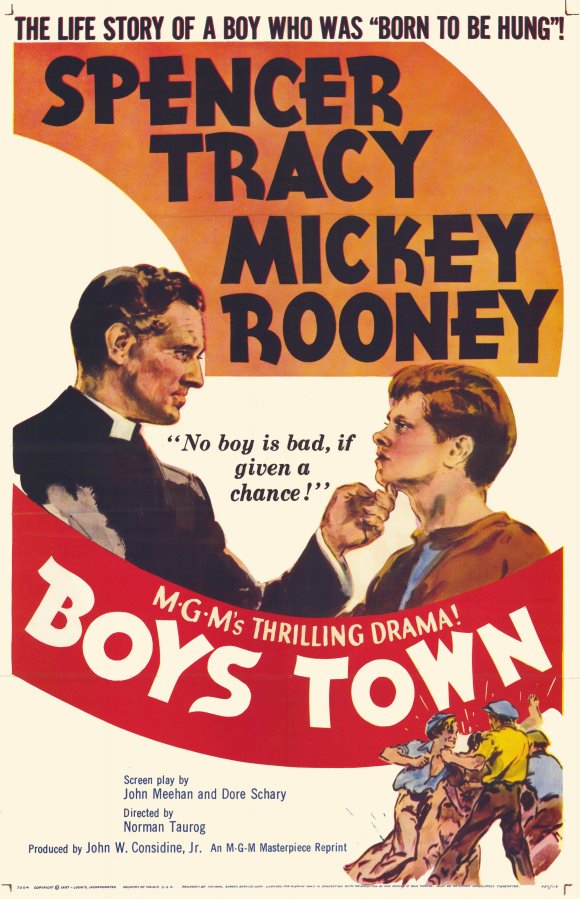
Boys Town (1938)

Boys Town (1938)

“There is no bad boy.”

Synopsis:
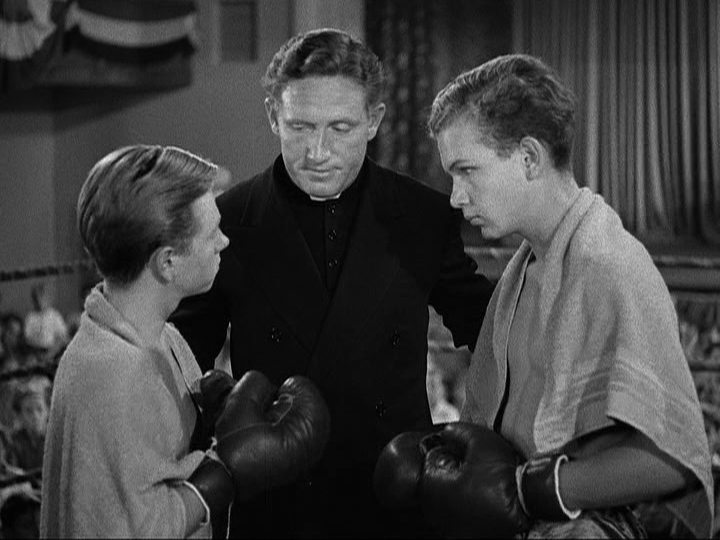
An idealistic but fiscally irresponsible priest (Spencer Tracy) opens a home for delinquent boys named Boys Town, but meets his match when an unruly youngster (Mickey Rooney) refuses to fall in line with the community’s principles.

Genres, Themes, Actors, and Directors:

  • Do-Gooders
  • Juvenile Delinquents
  • Mickey Rooney Films
  • Orphans
  • Priests and Ministers
  • Spencer Tracy Films

Review:
Spencer Tracy won his second Best Actor award in a row for his portrayal as the real-life Father Flanagan, a saintly and sympathetic father figure renowned for his pioneering efforts in providing a meaningful, respectful alternative to reform school. Unfortunately, MGM’s fictional accounting of Flanagan’s work comes across as hopelessly simplistic and unrealistic. DVD Savant, not a fan of this film, writes that “Boys Town now seems painfully dated, wrong-headed and, worst of all, smugly insincere”. While I don’t agree it’s wrong-headed, it’s certainly whitewashed beyond belief — starting from the near total lack of diversity despite the proclamation that all races and creeds are welcome. The plot twists are all cliched heart-wrenchers, and the final narrative turn — with Rooney running into his criminal brother (Edward Norris) at just the wrong moment — beggars belief. With that said, Tracy does turn in a respectable and respectful performance; one can see why he and the film were popular with audiences of the day. Meanwhile, Rooney is full of energy and can’t be faulted for his efforts, either.

Redeeming Qualities and Moments:

  • Spencer Tracy as Father Flanagan

Must See?
No, though it’s worth a look for Tracy’s Oscar-winning performance and for its erstwhile popularity. Listed as a film with Historical Importance in the back of Peary’s book.

Links:

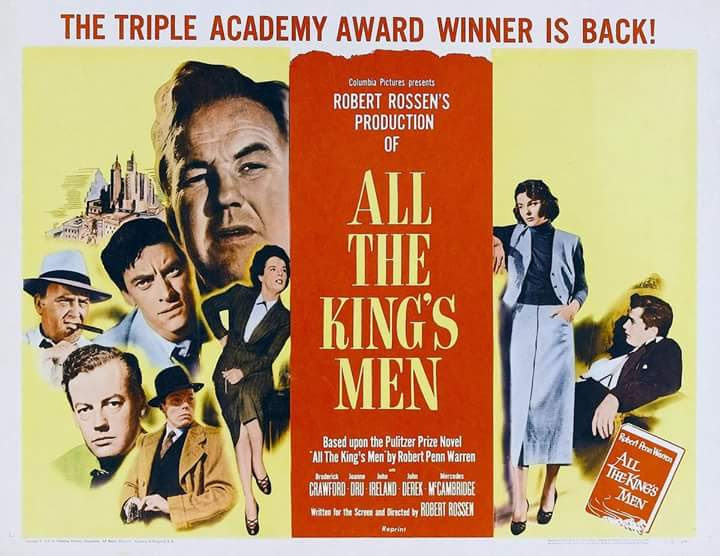
All the King’s Men (1949)

All the King’s Men (1949)

“Man is conceived in sin and born in corruption.”

Synopsis:
A small-town farmer-turned-lawyer (Broderick Crawford) rises to prominence in politics, aided by a hard-talking political aide (Mercedes McCambridge) and a sympathetic reporter (John Ireland) whose girlfriend (Joanne Dru) becomes Crawford’s lover. However, as Crawford becomes increasingly corrupt, he puts the well-being and reputations of many — including his own son (John Derek) and Dru’s esteemed uncle (Raymond Greenleaf) — at risk.

Genres, Themes, Actors, and Directors:

  • Broderick Crawford Films
  • Joanne Dru Films
  • John Ireland Films
  • Journalists
  • Mercedes McCambridge Films
  • Political Corruption
  • Robert Rossen Films

Review:
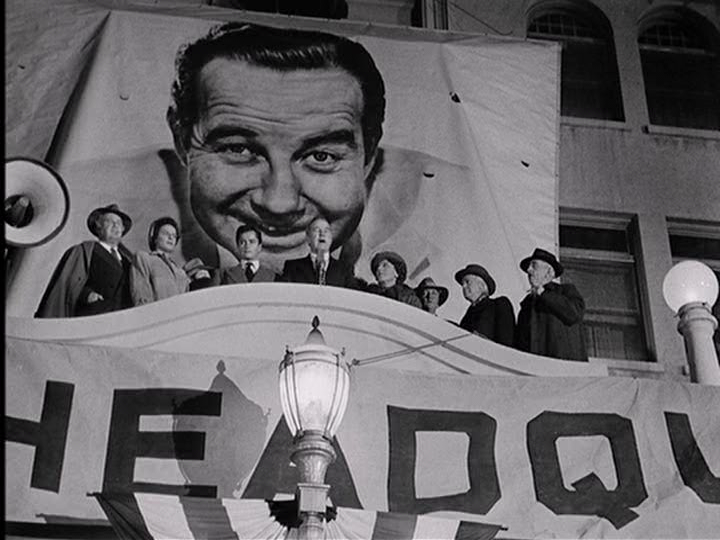
Loosely based on the life of Louisiana politician Huey Long, this adaptation of Robert Penn Warren’s Pulitzer Prize winning novel — directed and scripted by Robert Rossen — won an Academy Award as Best Picture of the Year, and a Best Actor of the Year award for Crawford. Peary disagrees with both these choices in his Alternate Oscars, where he notes that “cynical movies about the simultaneous moral corruption of individuals and society — with the sheeplike masses just waiting to be manipulated by false prophets — flourished in the postwar years”, including such 1950s titles as “Billy Wilder’s The Big Carnival/Ace in the Hole and Elia Kazan’s A Face in the Crowd” which “made viewers ashamed of themselves”. He writes that while some elements of All the King’s Men — particularly “those [scenes] that illustrate how our political system ‘works'”, as well as the many “authentic crowd scenes” — remain powerful, “the politics get lost because of some romantic subplots and a conventional secondary story involving Stark’s relationship with his disrespectful son”.

Regarding Crawford, Peary asserts that he “became arguably the worst actor ever to win a Best Actor Academy Award” (!), cynically noting that “after a dozen undistinguished years of performances that failed to prove he deserved anything better than to be in films nobody saw”, he was lucky enough to be “perfectly cast” here as “a two-fisted corrupt politician.”
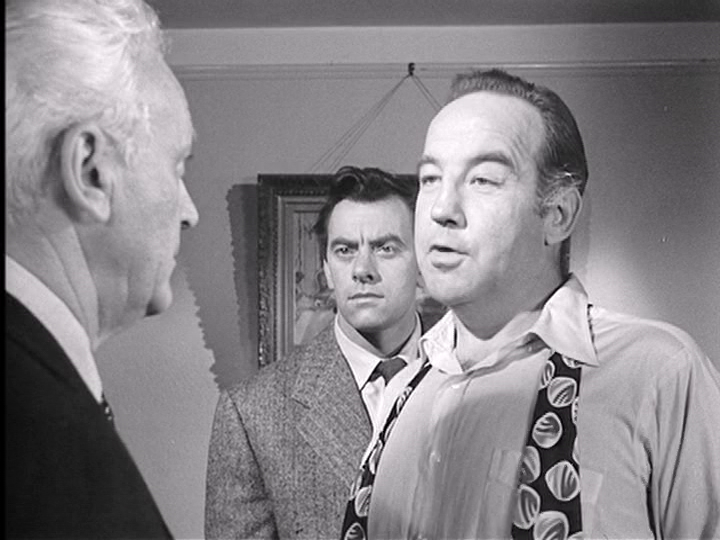
While I’m not well-versed enough in Crawford’s career to comment on him, I’ll agree this character study remains one of the lesser (though still intermittently powerful) attempts by Hollywood to expose political corruption and herd-like adoration of a Strong Leader — which, it should be noted, remain salient themes today. The framing narrative by and about Ireland is particularly weak; we lose respect for him fairly early on, as he remains committed to a man who may once have had good intentions but has clearly turned rotten. However, the direction and cinematography are strong, and the final scenes remain shocking and unexpected. Check out TCM’s article for a fascinating overview of the unconventional editing process that pared this film down to manageable size.

Redeeming Qualities and Moments:

  • Effective direction by Rossen and cinematography by Burnett
Must See?
Yes, for its historical importance as an Oscar winner. Listed as a film with Historical Relevance in the back of Peary’s book.

Categories

Links:

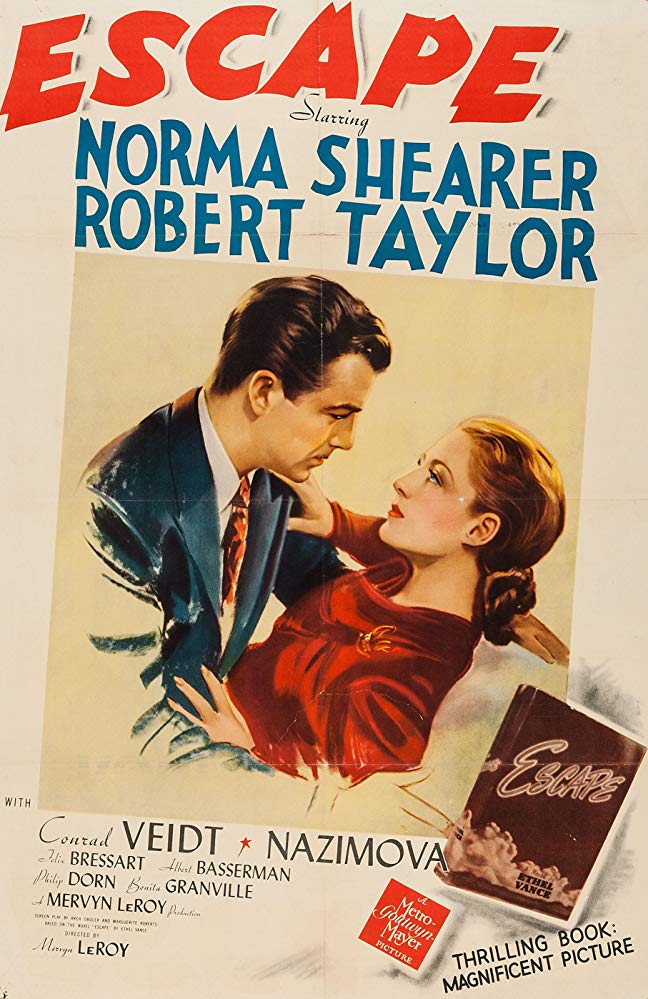
Escape (1940)

Escape (1940)

“My mother — what’s she got to do with death? She’s life!”

Synopsis:
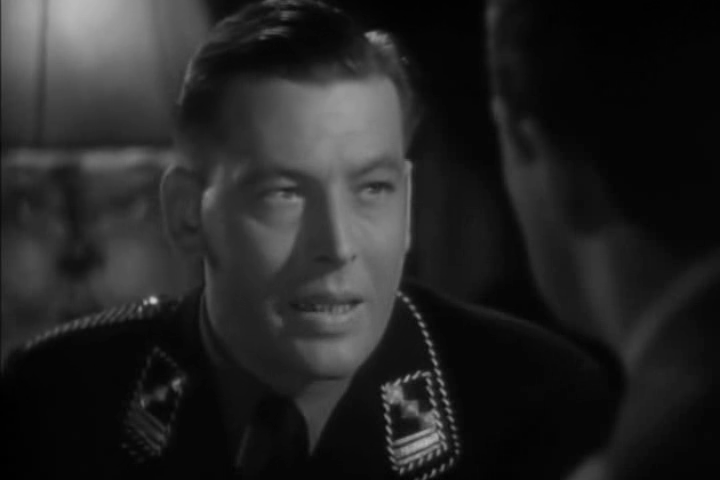
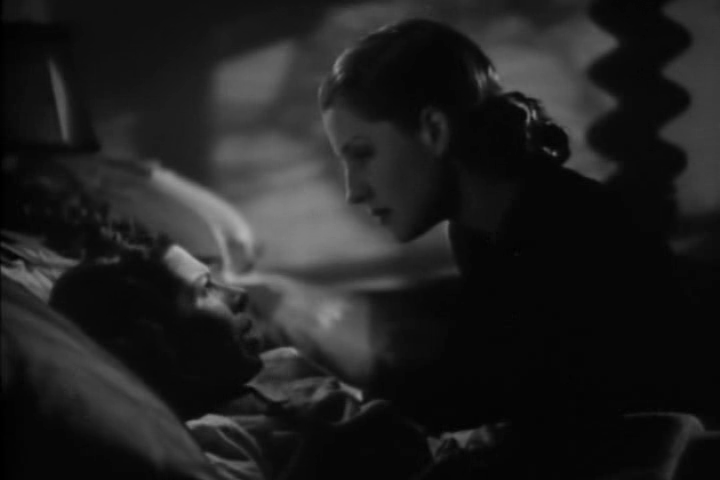
The son (Robert Taylor) of a famous actress (Nazimova) who has gone missing after selling her late husband’s estate in Germany attempts to track her down, but finds all citizens fearful and evasive about her fate in a concentration camp. Will Taylor be able to count on either the support of an American-born, widowed countess-turned-headmistress (Norma Shearer) whose lover (Conrad Veidt) is a general in the Nazi army, or a kind-hearted doctor (Philip Dorn) with a lifelong admiration for Nazimova?

Genres:

  • Actors and Actresses
  • Bonita Granville Films
  • Conrad Veidt Films
  • Mervyn LeRoy Films
  • Nazis
  • Norma Shearer Films
  • Robert Taylor Films
  • Search

Review:
This early anti-Nazi film by MGM Studios was banned by Hitler — no surprise, given that it pulls absolutely no punches about the dangers of Germany’s totalitarian government, which is shown as willing to mercilessly execute a beloved actress for attempting to legitimately take her own money out of the country. Shearer’s character feels a bit too deliberately crafted as a beautiful American with torn loyalties, but Dutch-born Dorn (who fled Nazi-occupied Europe to continue his career) is excellent as a doctor who shows increasing bravery over the course of the story. We’re kept on our toes about how things will work out, and a very real air of death looms over the entire affair, making it a worthy entry in early cinematic outings about the Nazi threat to humanity.

Redeeming Qualities and Moments:

  • Philip Dorn as Dr. Ditten
  • Robert Planck’s cinematography

Must See?
No, but it’s worth seeking out by fans of films from this unique era.

Links:

Winning Team, The (1952)

Winning Team, The (1952)

“It isn’t enough that I believe in him — baseball’s got to believe in him, too.”

Synopsis:
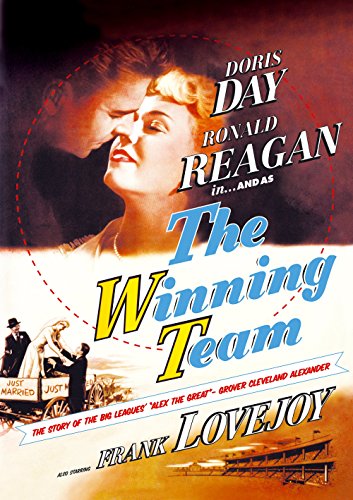
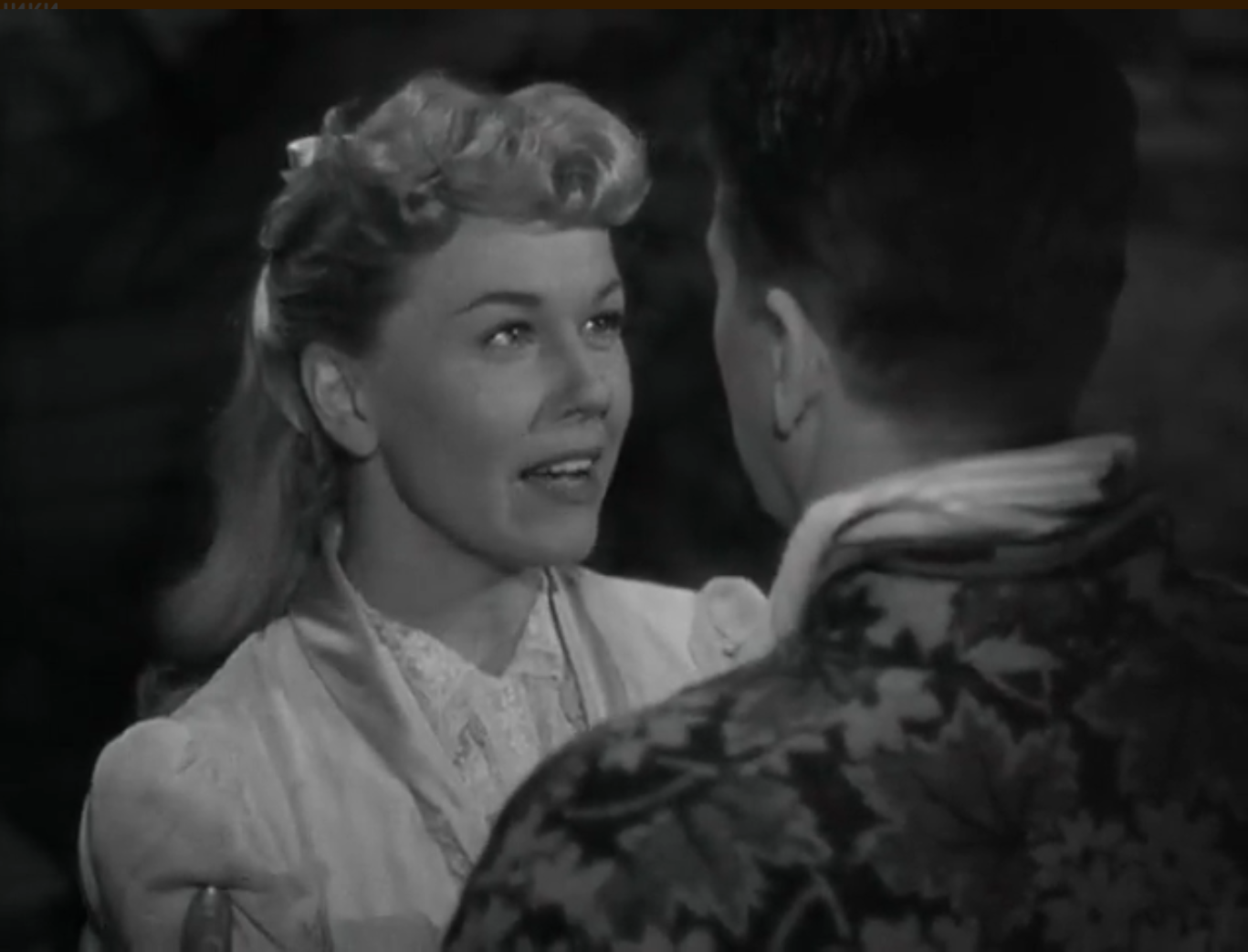
Farmer-turned-pitcher Grover Cleveland Alexander (Ronald Reagan) finds support from his loving wife (Doris Day) while pursuing a career in major league baseball — but after being hit in the head, his vision and stability are never quite the same. Will Alexander be able to make a come-back?

Genres, Themes, Actors, and Directors:

  • Baseball
  • Biopics
  • Doris Day Films
  • Rise-and-Fall
  • Ronald Reagan Films

Review:
This unexceptional biopic about Baseball Hall-of-Famer Grover Cleveland Alexander is likely included in Peary’s GFTFF (1986) both because it starred then-president Ronald Reagan in one of his final roles before turning to politics, and because it centered on Peary’s favorite sport. Unfortunately, Alexander’s tragically complicated story — involving an early work-place accident, war-induced PTSD, alcoholism, and unacknowledged epilepsy — is framed as a dual tale of “never give up” can-do-ism and selfless marital support (together, Reagan and Day are a “winning team”).

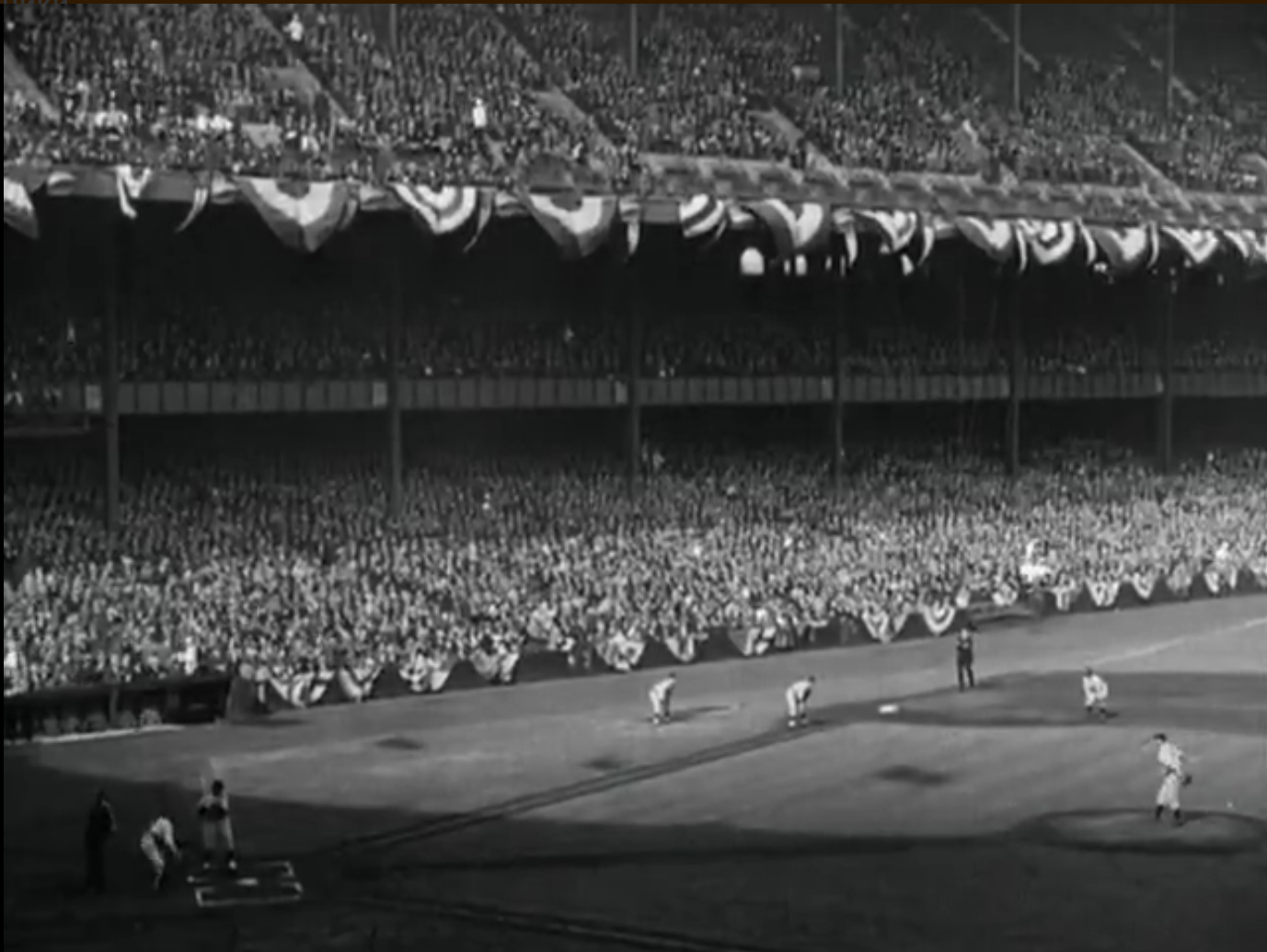
Baseball fans will likely enjoy seeing numerous cameos by real-life stars — as well as footage from the 1926 World Series, featuring Babe Ruth — but others needn’t bother seeking this one out.

Redeeming Qualities and Moments:

  • Sidney Hickox’s cinematography

Must See?
No; you can skip this one.

Links:

Strawberry Blonde, The (1941)

Strawberry Blonde, The (1941)

“I’d have quit long ago if that horse didn’t have such interesting teeth.”

Synopsis:
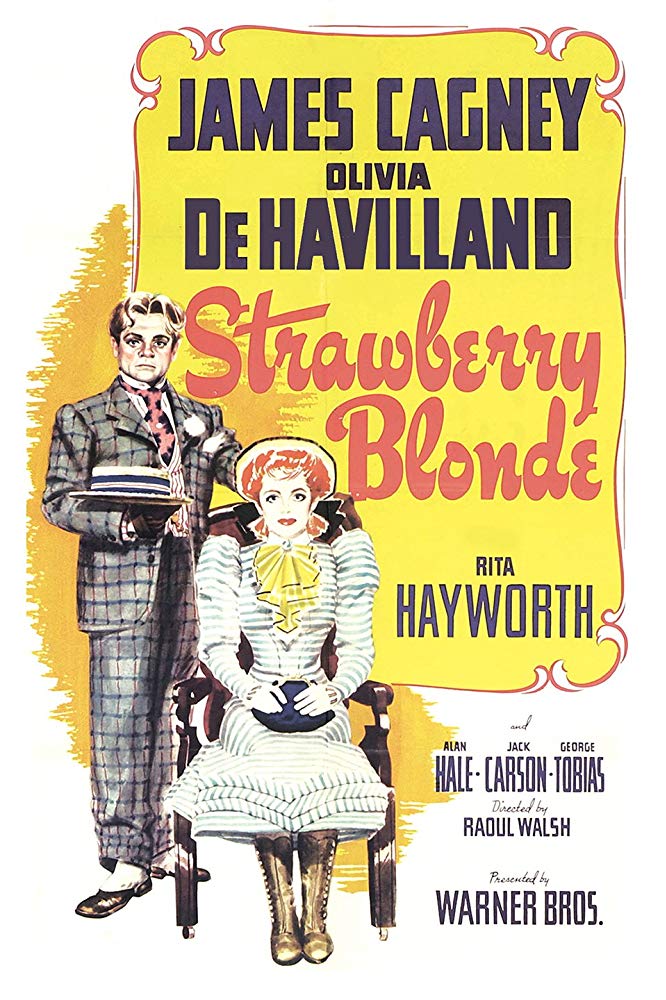
In 1890s New York, an aspiring dentist (Jimmy Cagney) falls instantly in love with a flirty blonde (Rita Hayworth), but accepts comfort and romance with Hayworth’s friend (Olivia de Havilland) instead when his buddy (Jack Carson) steals Hayworth from under his nose.

Genres, Themes, Actors, and Directors:

  • Alan Hale Films
  • Dentists
  • Flashback Films
  • Historical Drama
  • Jack Carson Films
  • Jimmy Cagney Films
  • Love Triangle
  • Olivia de Havilland Films
  • Raoul Walsh Films
  • Rita Hayworth Films
  • Romantic Comedy

Review:
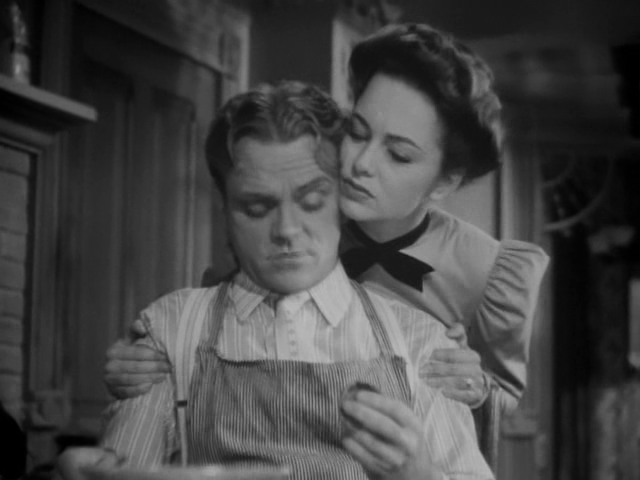
Raoul Walsh directed this lighthearted romantic comedy about the vagaries of love and courtship, framed through a flashback story of a married dentist reminiscing about his infatuation with the local “strawberry blonde” beauty (Hayworth).

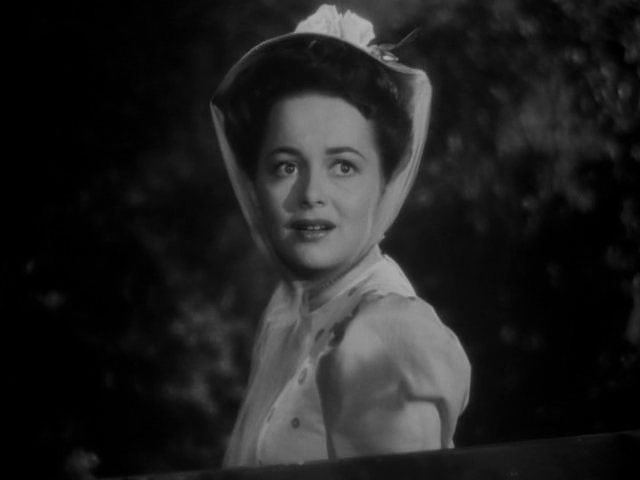
Since we know Cagney didn’t end up with Hayworth, the story of how and why his romantic intent failed — as well as the story behind his recent past as a “jailbird” — inform the twist-filled narrative, in which most people aren’t quite what they seem (some for the worse, some for the better). While she’s not the title character, Olivia de Havilland stands out as the most memorable and sassy female in the film, and is given numerous fun lines; she’s nicely filmed by James Wong Howe, who offers stand-out cinematography as usual. Cagney’s character is a bit of an enigma — given his lifelong dreams of dentistry, would he really accept a random job from Carson without hesitation? — but at least we see him evolving, and the overall moral of the story is a satisfying one.

Redeeming Qualities and Moments:

  • Olivia de Havilland as Amy
  • James Cagney as Biff
  • James Wong Howe’s cinematography

Must See?
No, though it’s a pleasant enough diversion if you’re in the mood for this type of flick.

Links:

Anna and the King of Siam (1946)

Anna and the King of Siam (1946)

“Women do not exist in Siam — they simply do not exist.”

Synopsis:
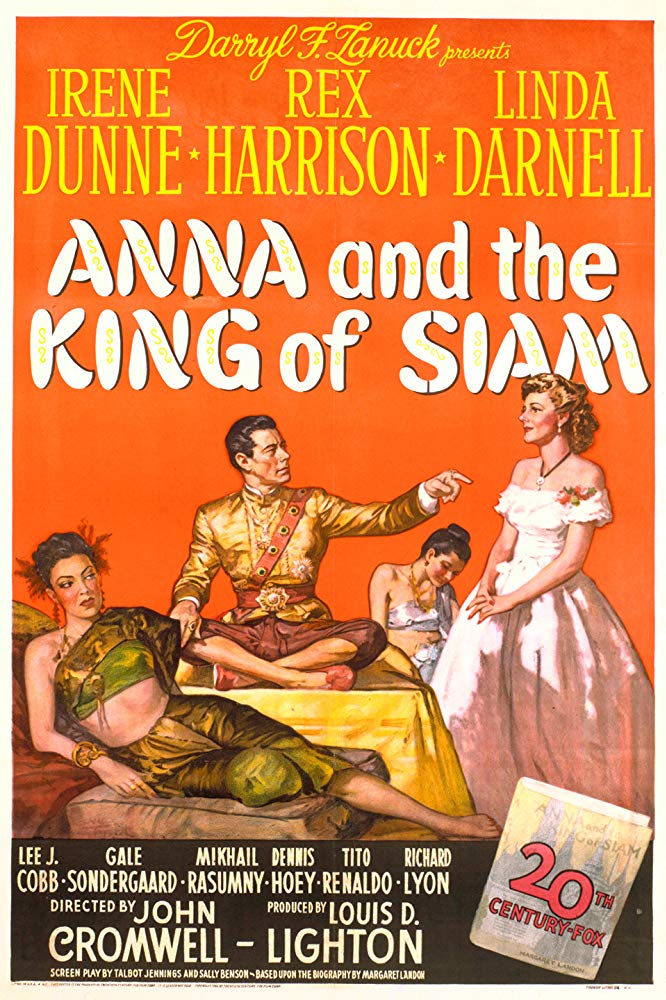
A widowed schoolteacher (Irene Dunne) arrives in Siam with her son (Richard Lyon) prepared to teach the many wives and children of King Mongkut (Rex Harrison) — including the son (Tito Renaldo) of Mongkut’s first wife (Gale Sondergaard). She’s quickly taught by Mongkut’s right-hand-man (Lee J. Cobb) about his many quirks and sexist beliefs, but pushes back when Mongkut refuses to give her the house he promised. When Anna witnesses Mongkut’s “number one wife” (Linda Darnell) being mistreated, she feels she’s had enough — but can she be convinced to stay?

Genres:

  • Feminism and Women’s Issues
  • Historical Drama
  • Irene Dunne Films
  • John Cromwell Films
  • Lee J. Cobb Films
  • Linda Darnell Films
  • Rex Harrison Films
  • Royalty and Nobility
  • Teachers

Review:
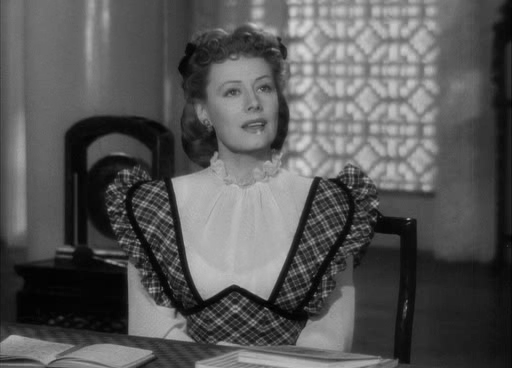
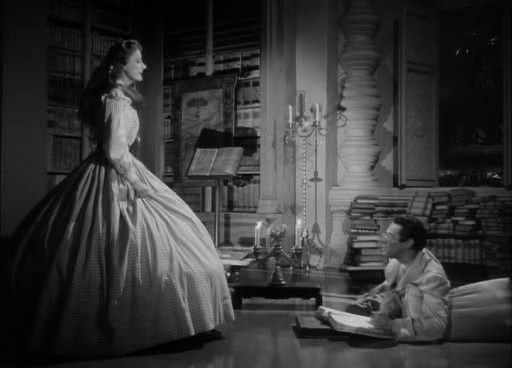
This first cinematic adaptation (by director John Cromwell) of Margaret Langdon’s biographical novel about Anna Leonowens is a worthy predecessor to its more famous musical remake, The King and I (1956). Dunne matches Deborah Kerr in both intensity and believability as a bold widow who stands up to toxic patriarchy and corruption in a foreign country while remaining sympathetic to the conflicted goals of its intelligent but brutal leader. Refreshingly, there is no hint of romantic interest between Dunne and Harrison; their relationship is one of begrudging mutual respect (and, for Dunne, eventually deep commitment). Of note are both Arthur Miller’s cinematography and Bernard Herrmann’s score, adding to the quality of this slightly over-long but engaging feminist tale.

Redeeming Qualities and Moments:

  • Irene Dunne as Anna (nominated as one of the Best Actresses of the Year in Peary’s Alternate Oscars)
  • Rex Harrison as the King (nominated as one of the Best Actors of the Year in Alternate Oscars)
  • Arthur C. Miller’s cinematography
  • Bernard Herrmann’s score (check out the horror-flick ambience as Anna is leaving the king’s palace at night and hears a baby crying on her way home)

Must See?
No, but it’s certainly recommended for one-time viewing.

Links:

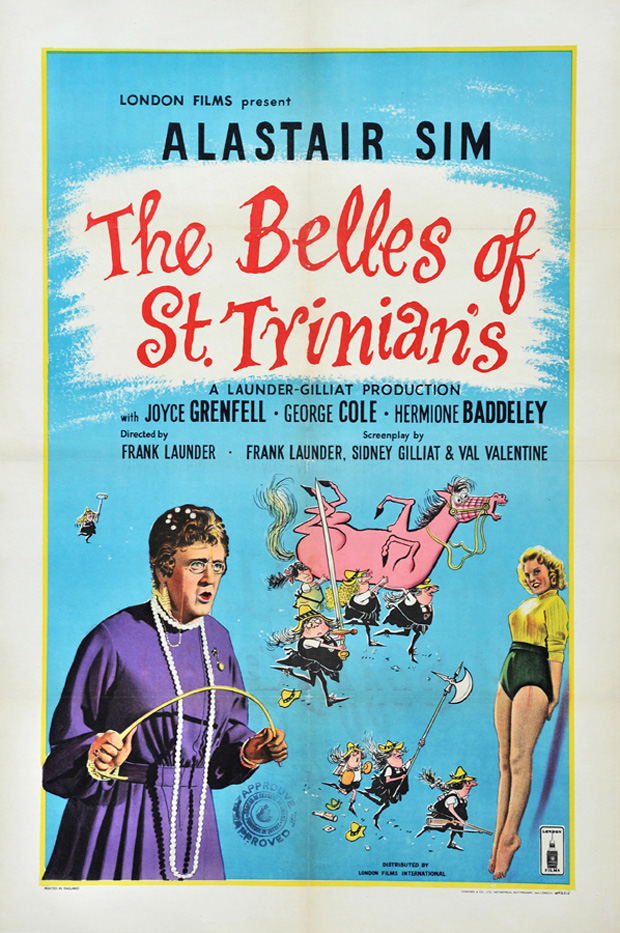
Belles of St. Trinian’s, The (1954)

Belles of St. Trinian’s, The (1954)

“This school has practically reduced me to a nervous wreck!”

Synopsis:
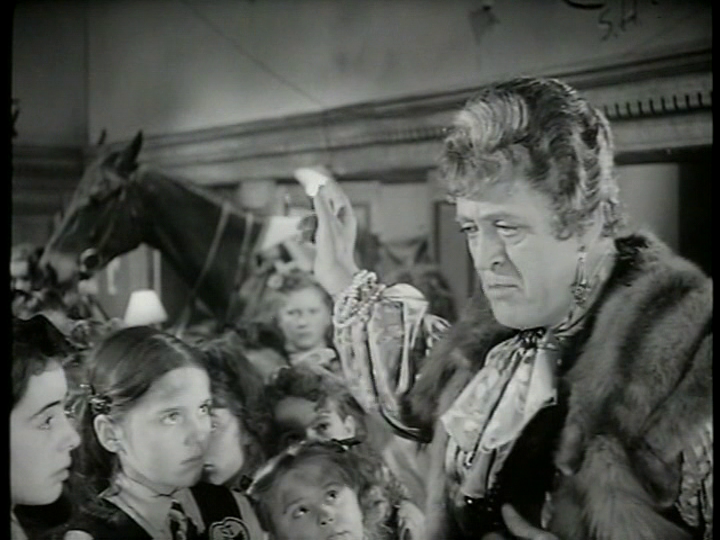
An undercover detective (Joyce Grenfell) is sent to investigate the situation at an anarchic boarding school for girls, whose cash-strapped headmistress (Alastair Sim) is betting money on an Arabian racehorse to save her institution. Meanwhile, Sim’s brother (also Alastair Sim) brings his rebellious daughter (Vivienne Martin) back to the school in order to learn more information about the racehorse, which is owned by the recently arrived daughter (Lorna Henderson) of a sultan (Eric Pohlmann).

Genres, Themes, Actors, and Directors:

  • Alastair Sim Films
  • Boarding School
  • Comedy
  • Gambling
  • Get Rich Quick

Review:
Based on a popular comic strip series by British satirist Ronald Searle, this first of four films in the popular “St. Trinian’s” series takes place at a boarding school where wild-haired girls run rampant while their vampy teachers smoke cigarettes and schmooze. It will primarily appeal either to those familiar with the strip or fans of Sim, who is in fine comedic mettle here playing dual roles as siblings (though he spends most of his time in drag as Millicent). He’s nicely matched by Grenfell as a determined detective who resorts to ultra-creative evidence gathering in the film’s final moments. Director Frank Launder co-wrote the screenplay with Sidney Gilliat, with whom he had previously scripted The Lady Vanishes (1938) and Night Train to Munich (1940); fans of those earlier classics should be forewarned that this flick is much more broadly slapstick, relying heavily on caricatures and the ridiculousness of a kidnapped horse.

Redeeming Qualities and Moments:

  • Joyce Grenfell as Sgt. Ruby Gates

Must See?
No; this one will likely only appeal to fans of Sim or Searle’s work.

Links:

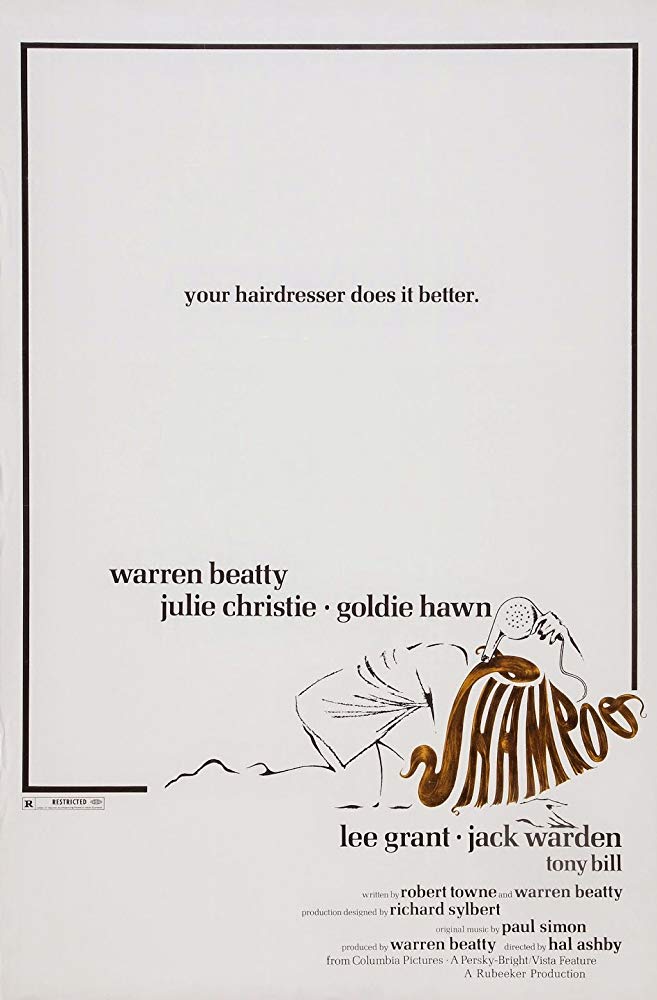
Shampoo (1975)

Shampoo (1975)

“Women can get to be an occupational hazard.”

Synopsis:
A hairdresser (Warren Beatty) lies to and cheats on his steady girlfriend (Goldie Hawn) while bedding the wife (Lee Grant), daughter (Carrie Fisher), and mistress (Julie Christie) of the man (Jack Warden) he’s hoping to secure funding from to open his own salon.

Genres, Themes, Actors, and Directors:

  • Goldie Hawn Films
  • Hal Ashby Films
  • Julie Christie Films
  • Lee Grant Films
  • Love Triangle
  • Warren Beatty Films
  • Womanizers

Review:
Warren Beatty and Robert Towne co-wrote this satire (directed by Hal Ashby) about the vacuous lives of various Hollywood denizens, both rich and aspiring-rich, who mostly want sexual satisfaction and financial freedom but occasionally (like Hawn) show leanings towards something a little more wholesome — say, kids. It’s a depressing yet amusing farce, set during Nixon’s triumphant election over Humphrey in 1968, presumably to show that self-absorbed individuals may merit leadership by equally self-absorbed politicians. However, the primary focus is on George (Beatty) as he zips around L.A. (helmetless) on his Triumph motorcycle:

doing women’s hair while hopping from one bed to the next. Beatty plays on his own public image as a sexual Lothario, ultimately coming across as hedonistically distracted at the cost of any other considerations (including loyalty, honesty, or the chance to open his own business). The most charitable character by far is Hawn, who thankfully has other options available to her.

Redeeming Qualities and Moments:

  • Warren Beatty as George
  • Laszlo Kovacs’ cinematography

Must See?
No, but it’s worth a one-time look.

Links:

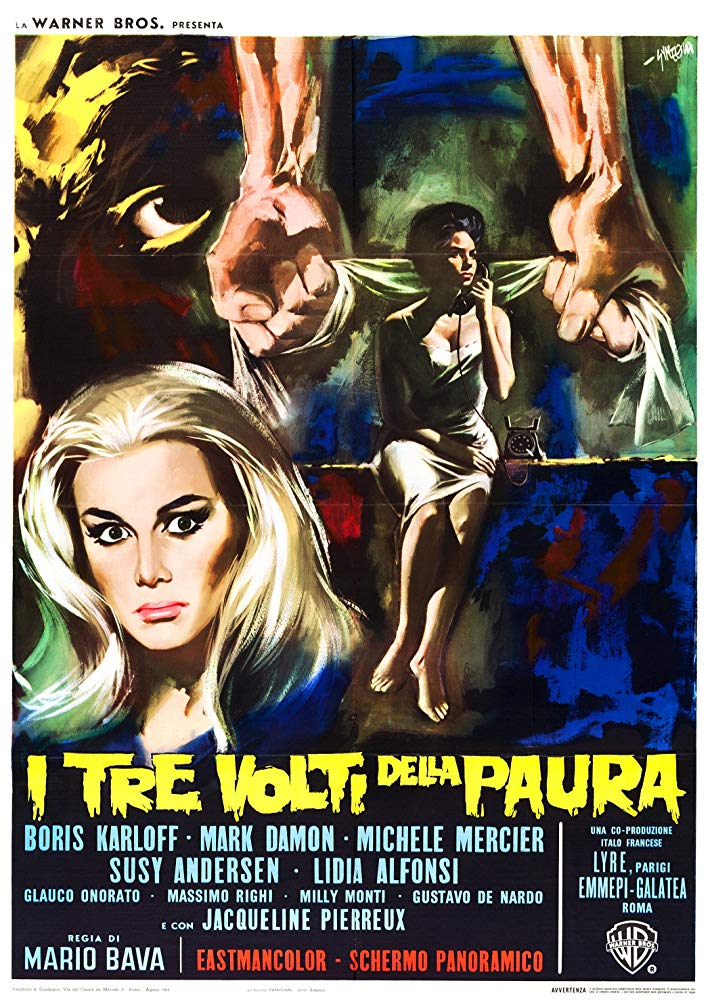
Black Sabbath (1964)

Black Sabbath (1964)

“There’s no fooling around with ghosts, because they take revenge!”

Synopsis:
Boris Karloff introduces a trio of horror stories about a woman (Michele Mercier) seeking solace from an estranged friend (Lydia Alfonsi) while she’s menaced by an ex-lover threatening to kill her; a patriarch (Boris Karloff) returning to his family home and bringing a dreaded curse with him; and a nurse (Jacqueline Pierreux) who foolishly steals a special ring from a corpse.

Genres, Themes, Actors, and Directors:

  • Boris Karloff Films
  • Episodic Films
  • Horror Films
  • Mario Bava Films
  • Vampires

Review:
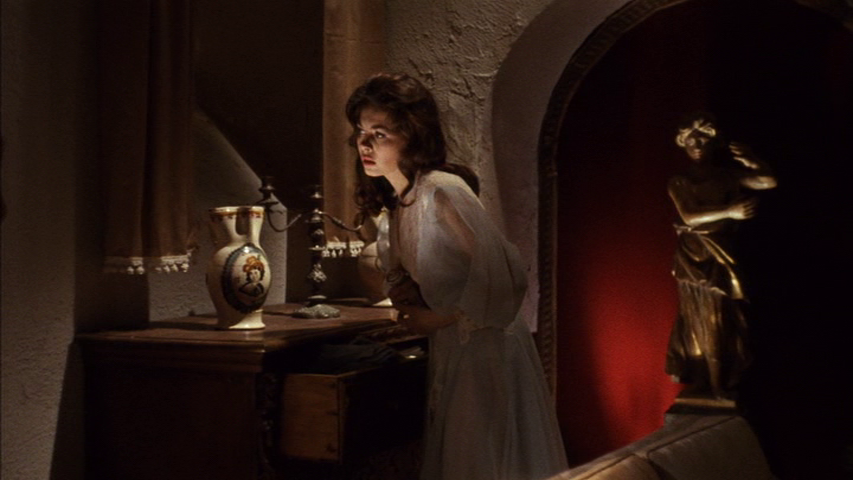
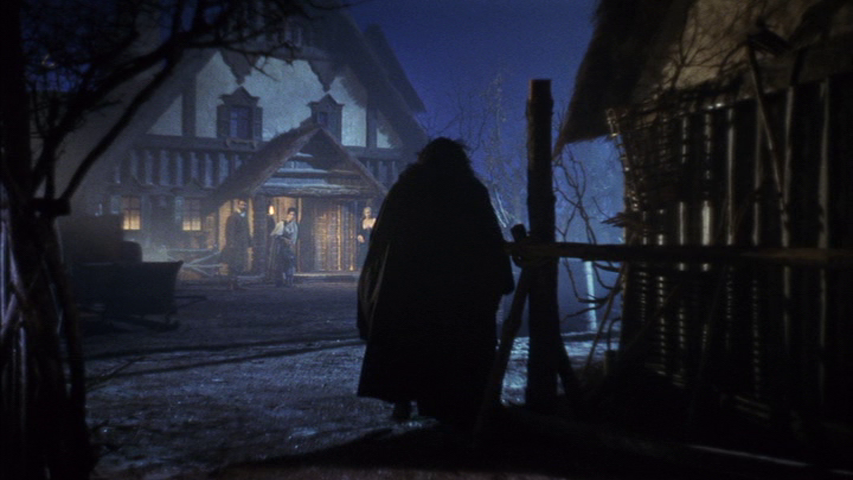
Mario Bava’s seventh credited directorial effort was this omnibus of horror shorts, retitled from “The Three Faces of Fear” for American audiences to bank on his beloved debut film Black Sunday (1960). Black Sabbath (yes, the band took direct naming inspiration from this movie) offers plenty of spooky, atmospheric visuals tied to simple yet tight storylines that serve their purpose — but it’s the visuals that really linger. DVD Savant, a huge Bava fan, describes the unique quality of Bava’s lighting style:

It’s difficult to properly express the ‘special’ quality of Mario Bava’s artistic lighting… Favoring bright primary hues, sets are bathed in washes of color that can only be called hallucinatory. Electric greens and crimson reds, steely blues and deep purples give the screen depth and character. The heroines are bathed in warm golds and lit in non-traditional ways that make them look lusciously alive (Mercier) or nervously cold (Pierreux)… The fact that Bava’s lighting makes frequent use of unmotivated, un-sourced colored lights only adds to the feeling of fantasy. Images disturb precisely because their lighting is so ‘impossible’.

Film fanatics should enjoy checking out this cult favorite, though it’s only must-see for Bava fans.

Redeeming Qualities and Moments:

  • Highly atmospheric cinematography and sets


Must See?
No, but it’s worth a look as a solid set of short films by a master director.

Links: