Browsed by
Category: Original Reviews

Responses to Peary’s “must see” movie reviews, as well as my own “must see” movie reviews up to and after 1986 (when Peary’s book was published).

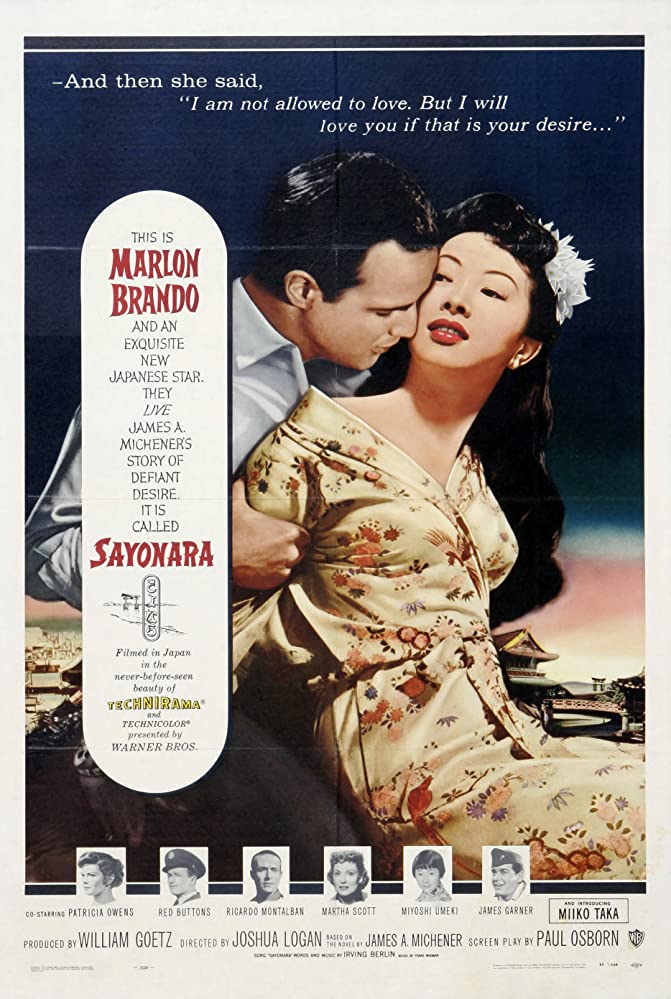
Sayonara (1957)

Sayonara (1957)

“I find myself becoming intrigued by everything in Japan.”

Synopsis:
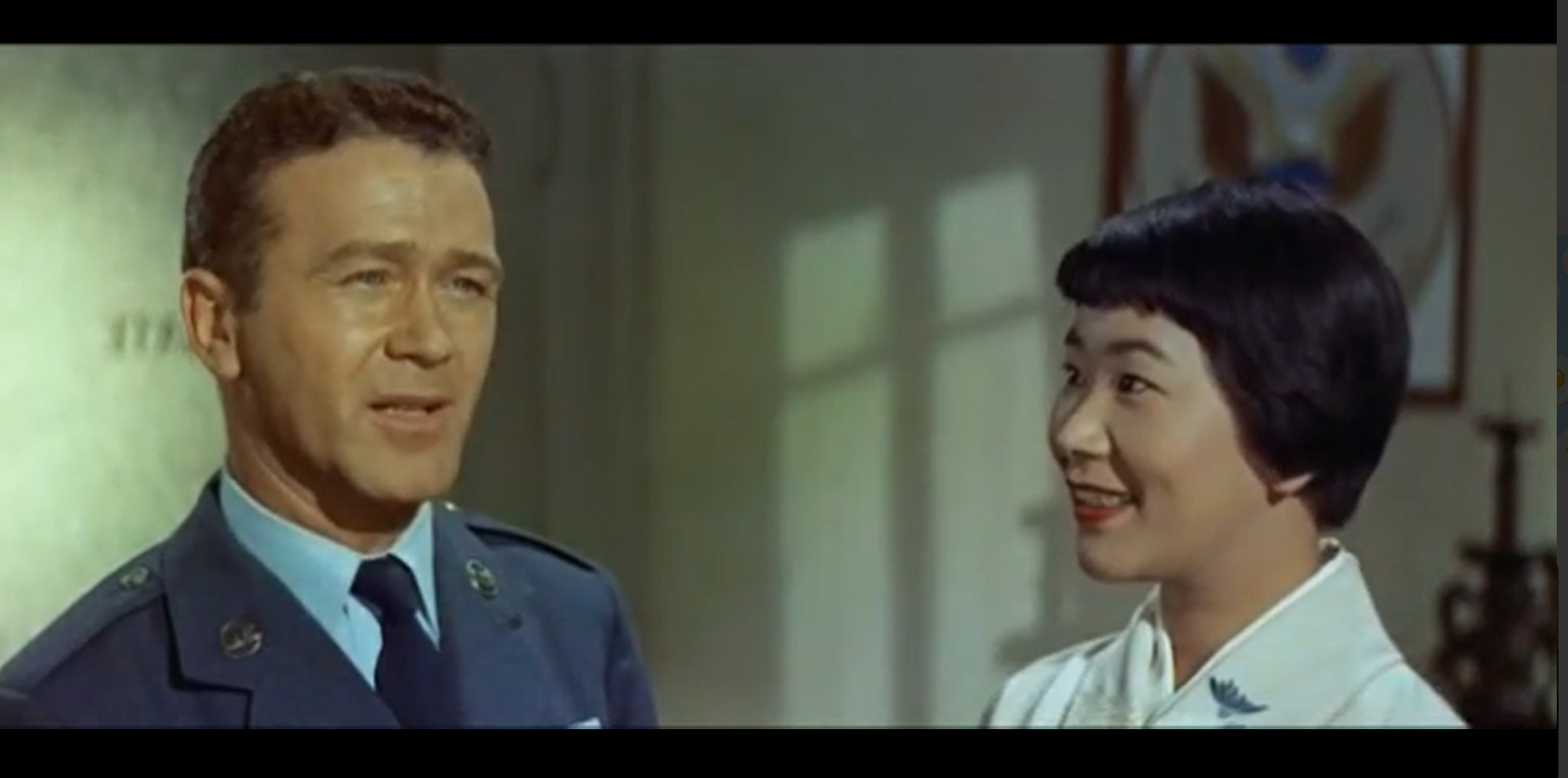
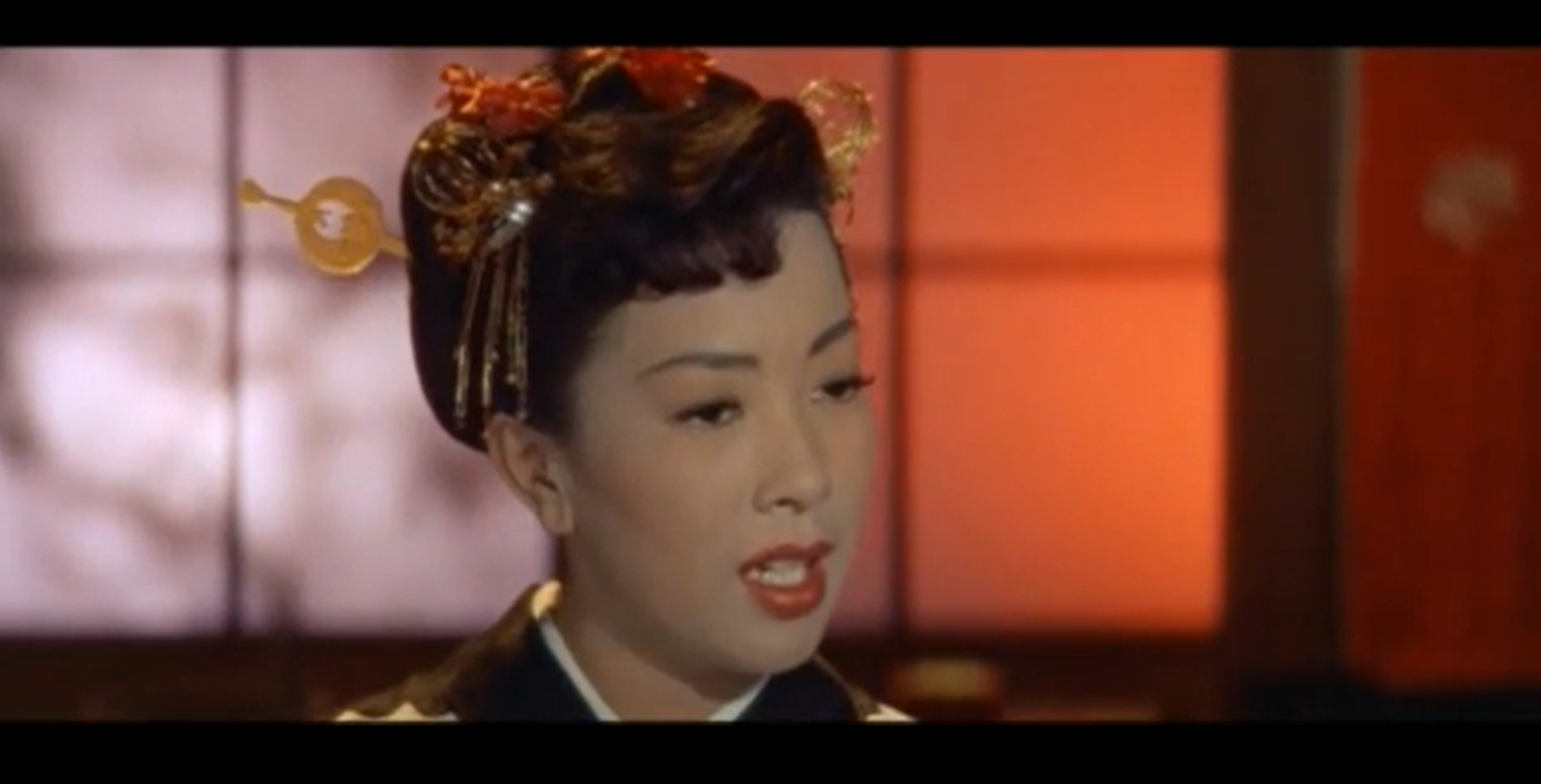
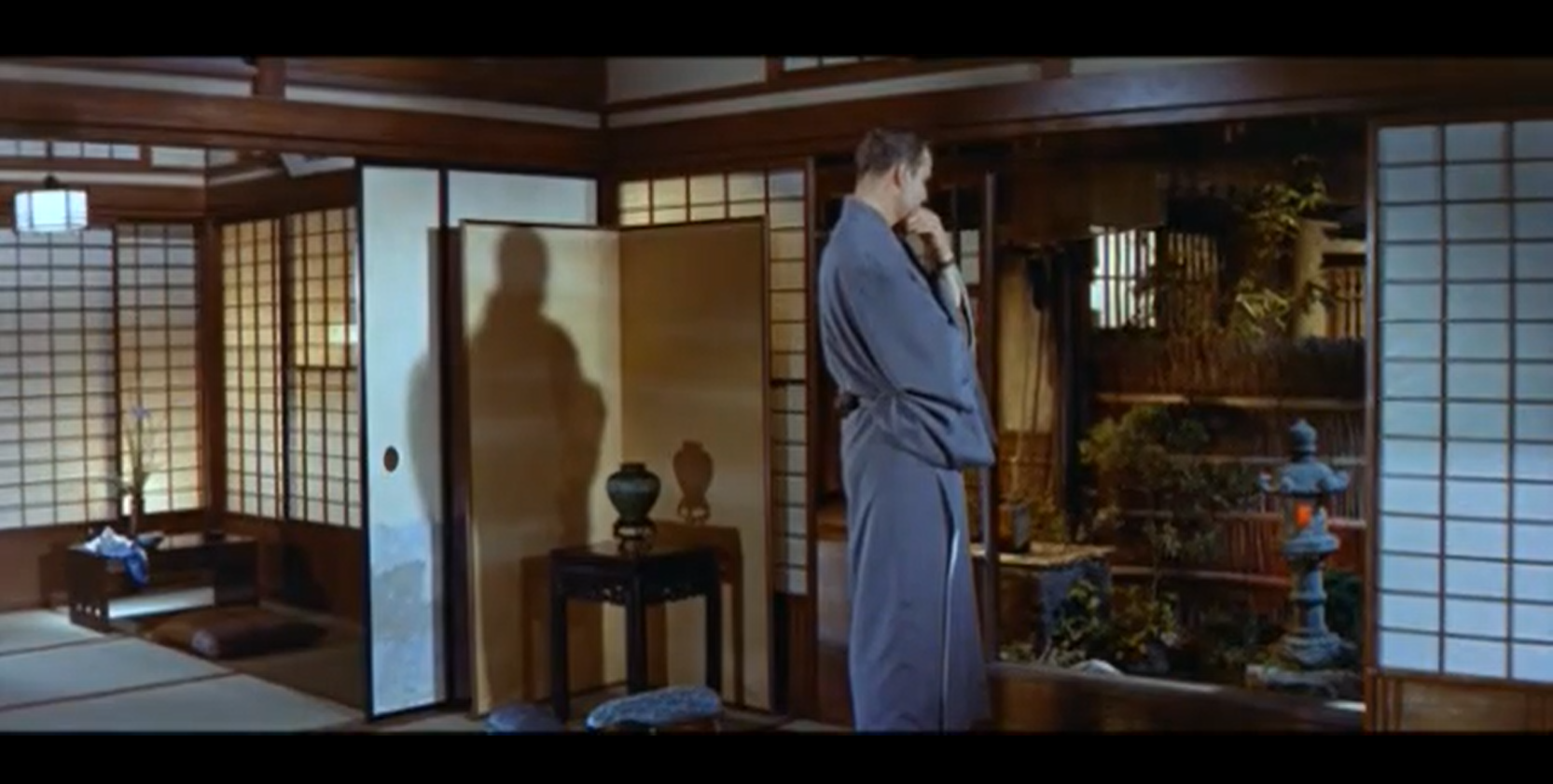
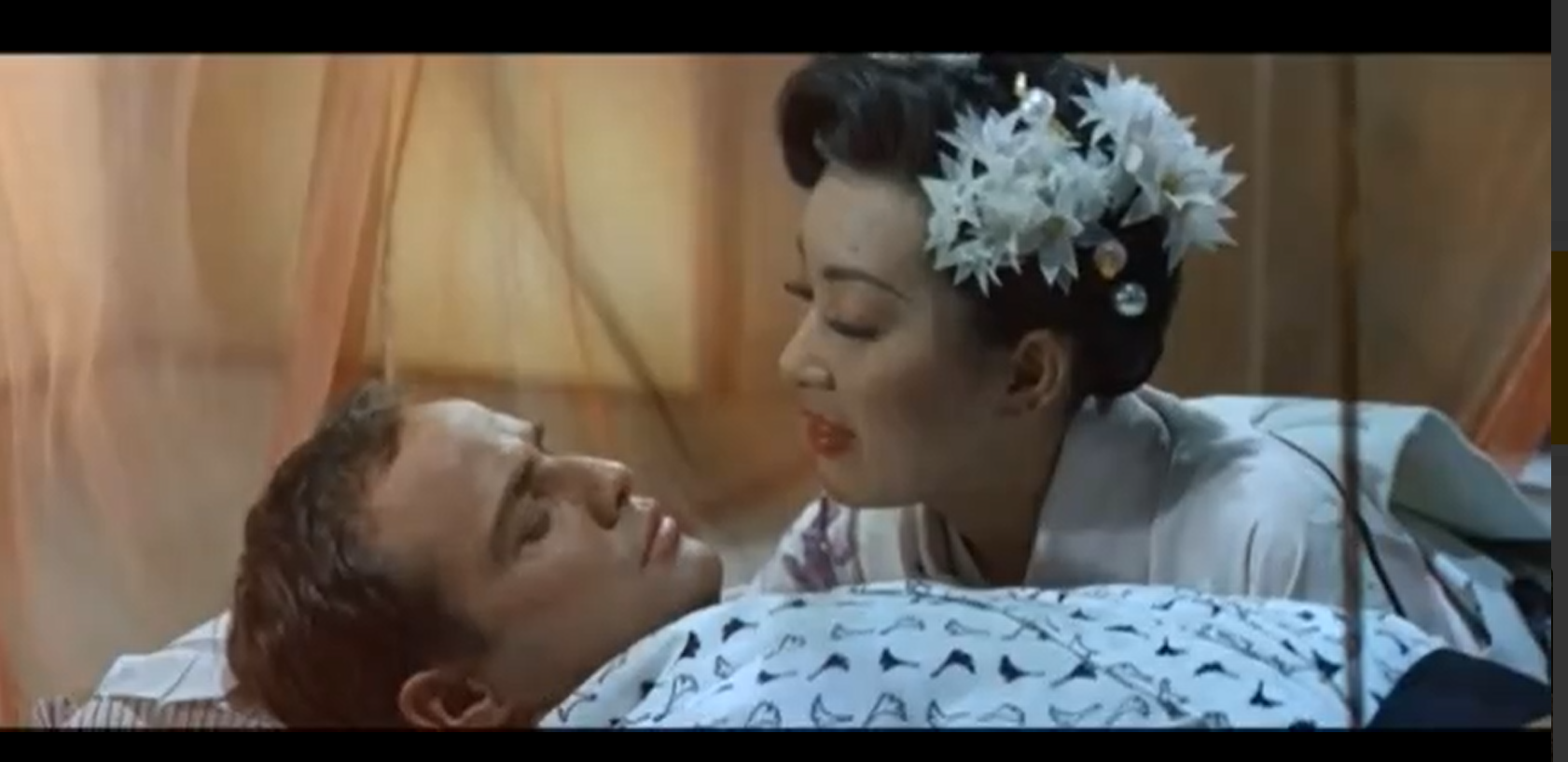
A soldier (Marlon Brandon) stationed in Japan during the Korean War serves as best man when his friend (Red Buttons) marries a Japanese woman (Miyoshki Umeki); soon he falls in love himself with a beautiful Japanese singer (Miiko Taka). Brandon’s former fiancee (Patricia Owens) and her general-father (Kent Smith) try to warn Buttons and Brando that their actions are against military regulations, but the men’s love is stronger than the institutionalized racism that surrounds them.

Genres, Themes, Actors, and Directors:

  • Cross Cultural Romance
  • James Garner Films
  • Joshua Logan Films
  • Marlon Brando Films
  • Military
  • Race Relations and Racism
  • Red Buttons Films
  • Ricardo Montalban Films

Review:
Joshua Logan directed this adaptation of James Michener’s novel about the taboo of cross-cultural romances in the 1950s. Brando’s “natural” performance (he was apparently a childish pill on set) doesn’t really fit with the overall tone of the film; faring much better is Oscar-winning Red Buttons as an “ordinary” G.I. whose love of his Japanese wife feels much more grounded and authentic than Brando’s semi-stalking (orientalist?) fascination with beautiful Taka. To its credit, the film tackles challenging topics such as institutionalized racism, reminding or informing modern audiences exactly how racist and nationalist both America and Japan were during this era. Meanwhile, the movie is gorgeously filmed in Technirama, making it a visual treat.

Redeeming Qualities and Moments:

  • Red Buttons as Joe
  • Beautiful cinematography and sets


Must See?
No, but it’s certainly worth a one-time look.

Links:

Renaldo and Clara (1978)

Renaldo and Clara (1978)

“If you follow Bob long enough, I think maybe you can translate these things.”

Synopsis:
While Bob Dylan performs on tour in 1975, fictional vignettes are randomly interspersed, some of which involve him played by other actors.

Genres, Themes, Actors, and Directors:

  • Concert Films
  • Counterculture
  • Harry Dean Stanton Films
  • Singers

Review:
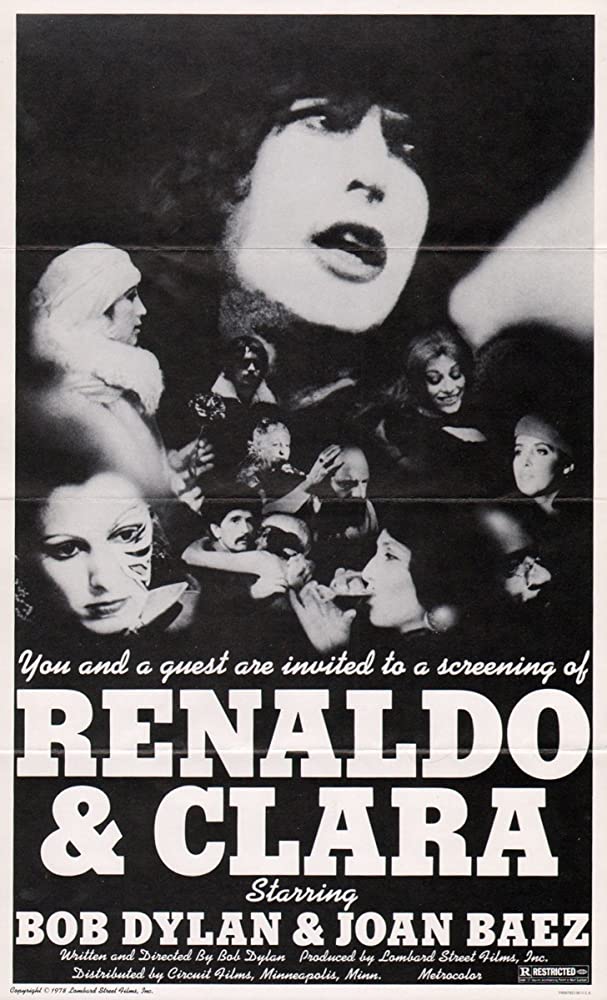
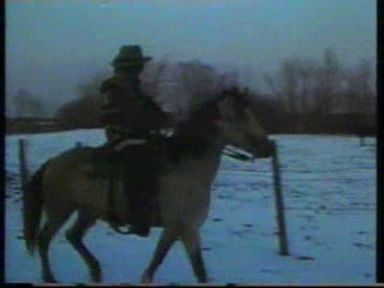
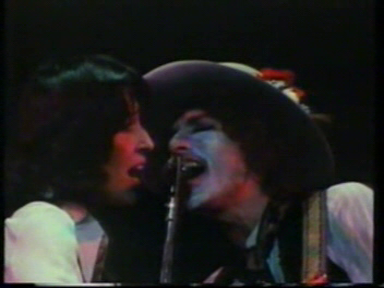
It’s challenging to describe exactly how tedious this hours-long experimental “cubist” film by Bob Dylan (with writing support from Sam Shepard) really is. It’s boring, illogical, pompous, and laughably amateur. The only way I can imagine finding any enjoyment in it at all would be to watch it with others and provide a continuous commentary on its ineptitude, with occasional breaks to listen to some of the actual musical performances — so, in that spirit, here are just a few of my thoughts as I suffered my way through this painful slog:

Why is this film called “Renaldo and Clara” if those characters (played by Bob Dylan and his wife Sara) are only peripheral to the “storyline”?

Oh, there’s the hitchhiker (Helena Kallianiotes) from Five Easy Pieces (1970)! She looks exactly the same. What’s she doing here?

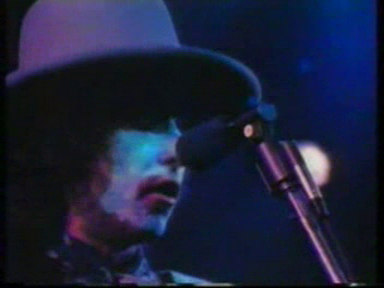
What’s the deal with Dylan wearing white face paint on stage? Is it meant to “subvert blackface”, “hide” his visage, or be a clownish homage (as some claim) to Les Enfants du Paradis (1945)?

Who’s the dude on the pinball machine who keeps showing up to comment on how he once knew and interacted with Dylan?

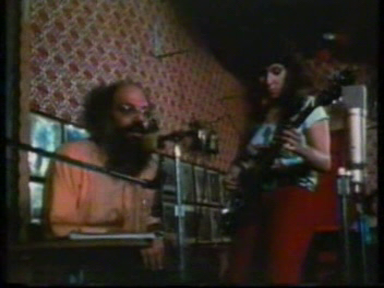
Could Allen Ginsberg’s presence and performances here be any more embarrassing?

What is Joan Baez doing in this mess, other than supporting her former lover and singing a few songs? Why is she occasionally sporting a hideous accent while wearing a white turban?

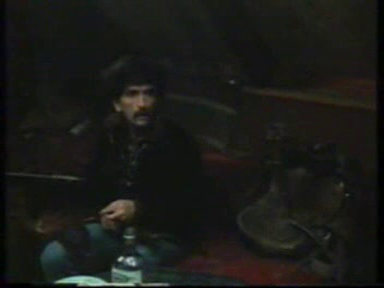
Why is Harry Dean Stanton subjected to a short scene in which he’s accused of trading his horse for Baez?


Do ANY of these “narrative threads” connect back to Dylan’s actual songs in some way? Is this all meant to be an insider’s “egg hunt”?

I could go on and on, but won’t. Just — be forewarned.

Redeeming Qualities and Moments:

  • Occasional enjoyable musical numbers (for fans of Dylan)

Must See?
Nope. Listed as a Cult Movie in the back of Peary’s book, which it may have been at one time but surely isn’t any longer.

Links:

Voice in the Wind (1944)

Voice in the Wind (1944)

“Every man has to fight with the weapon for which he’s best fitted — and your weapon is music.”

Synopsis:
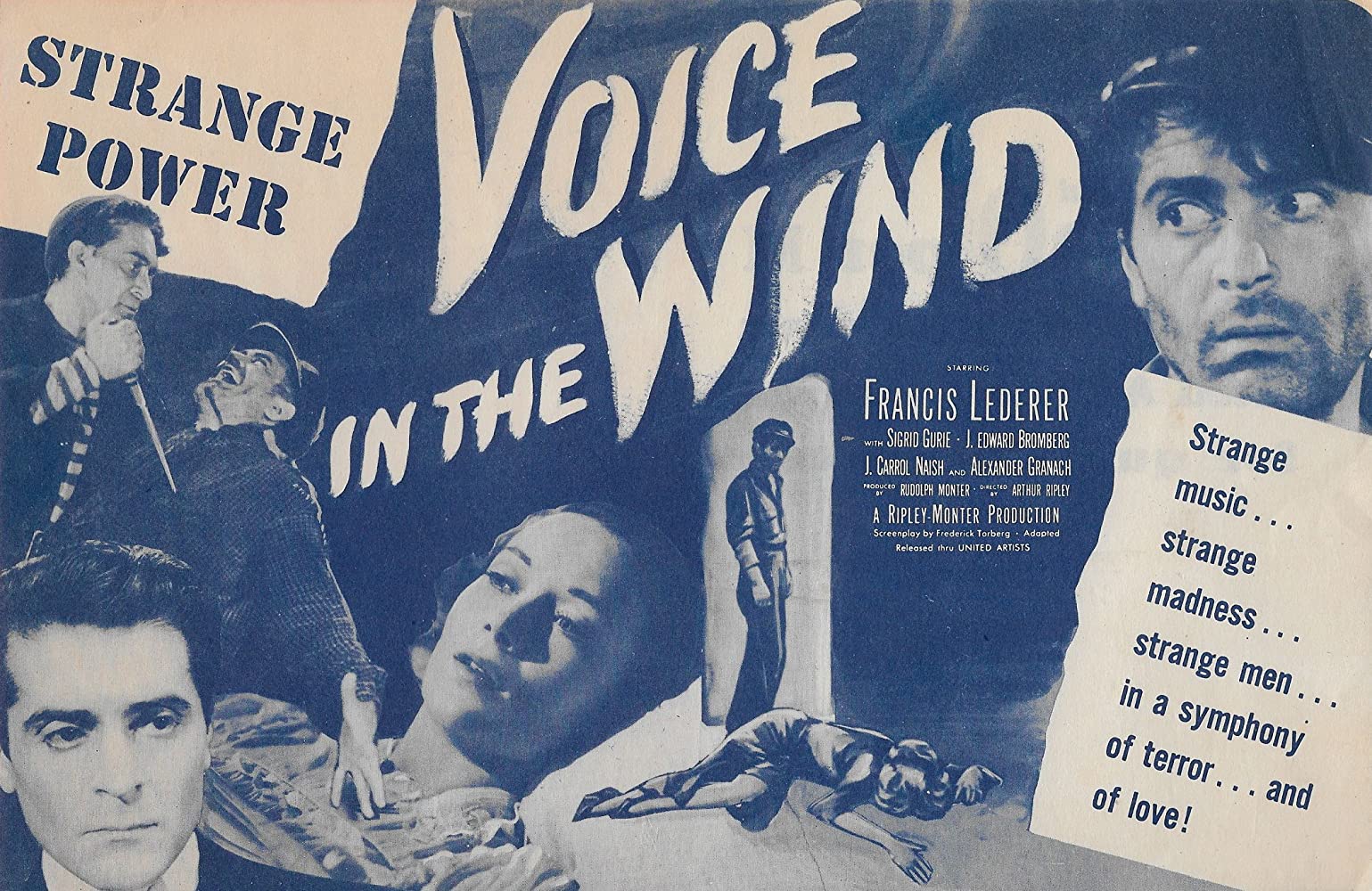
A Czech concert pianist (Francis Lederer) tortured by the Nazis for playing Smetana’s “The Moldau” is wandering as an amnesiac on a Caribbean island, where his wife (Sigrid Gurie) lies dying from the heartache of losing him.

Genres, Themes, Actors, and Directors:

  • Amnesia
  • Flashback Films
  • Musicians
  • Refugees
  • Star-Crossed Lovers
  • World War II

Review:
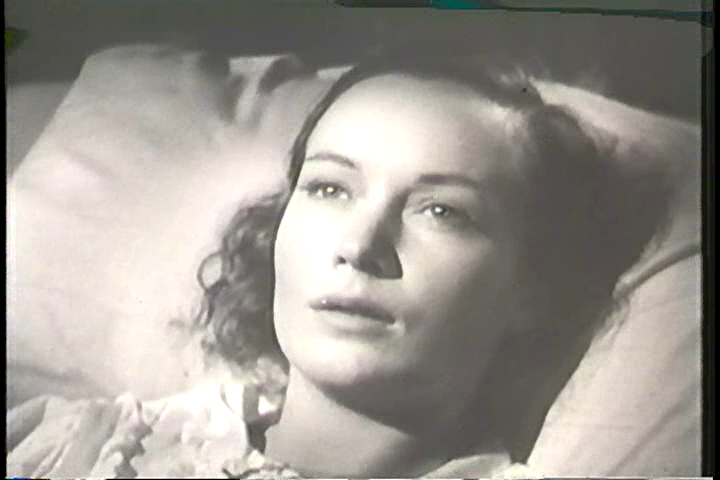
This well-intended but relentlessly gloomy, tediously paced flashback drama lingers for more than 15 minutes in an ill-defined opening space (which turns out to be the refugee mid-way island of Guadaloupe in the Antilles) on an unnamed woman (Gurie) in a deathbed:

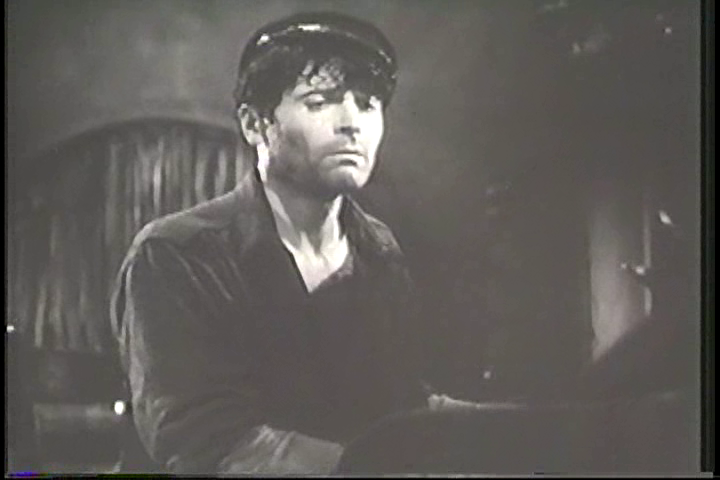
… and a pianist (Lederer) who seems to have no memory.

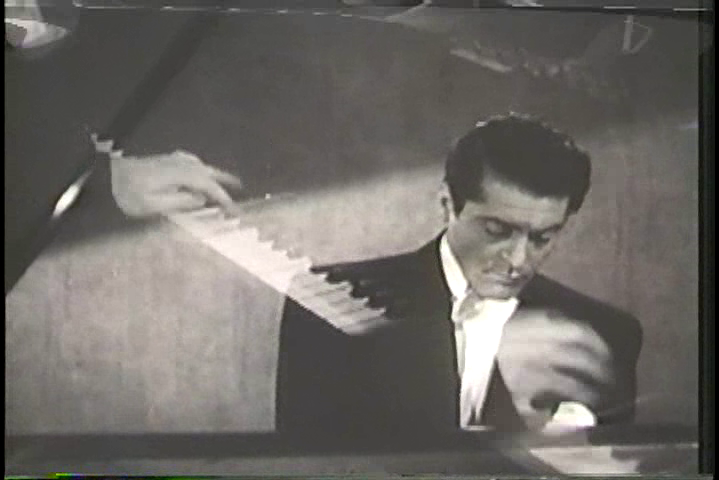
Once we’re finally given a glimpse back into their life together (yes, they were a couple), we see that Lederer was banished from Europe for daring to a play a Czech nationalist song during a broadcast concert:

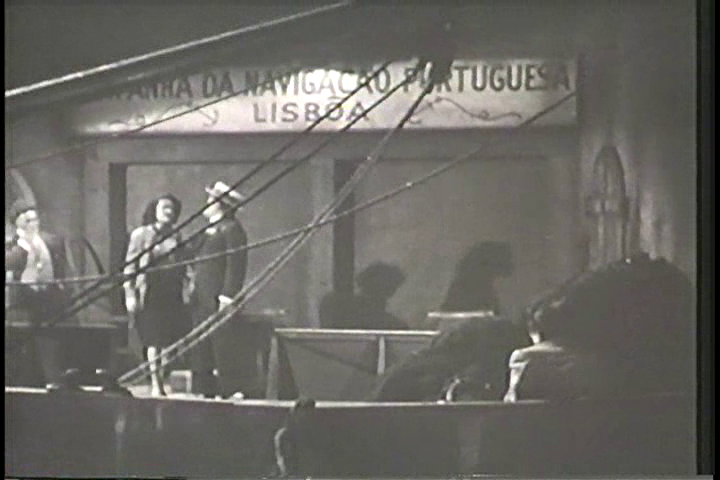
… and is now stranded on an island by the captain of a “murder boat” (i.e., a boat intended to take refugees partway to America and no further).

Given that this film was made and released during the midst of WWII, it makes sense that audience members might be shocked to hear about this type of atrocity, and grateful for a chance to hiss at venal Nazis — but these days it simply comes across as poorly acted and overly melodramatic.

Redeeming Qualities and Moments:

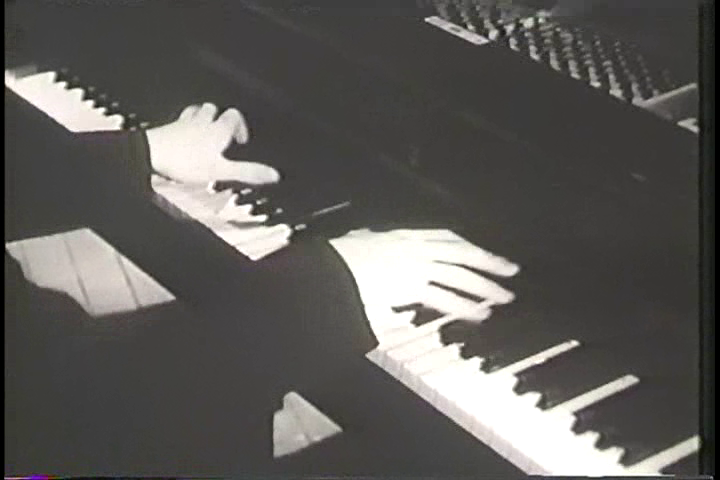
  • Some beautiful piano music

Must See?
No; there’s no need to seek this one out. Listed as a Sleeper and a Cult Movie in the back of Peary’s book (though I can’t imagine it currently being one).

Links:

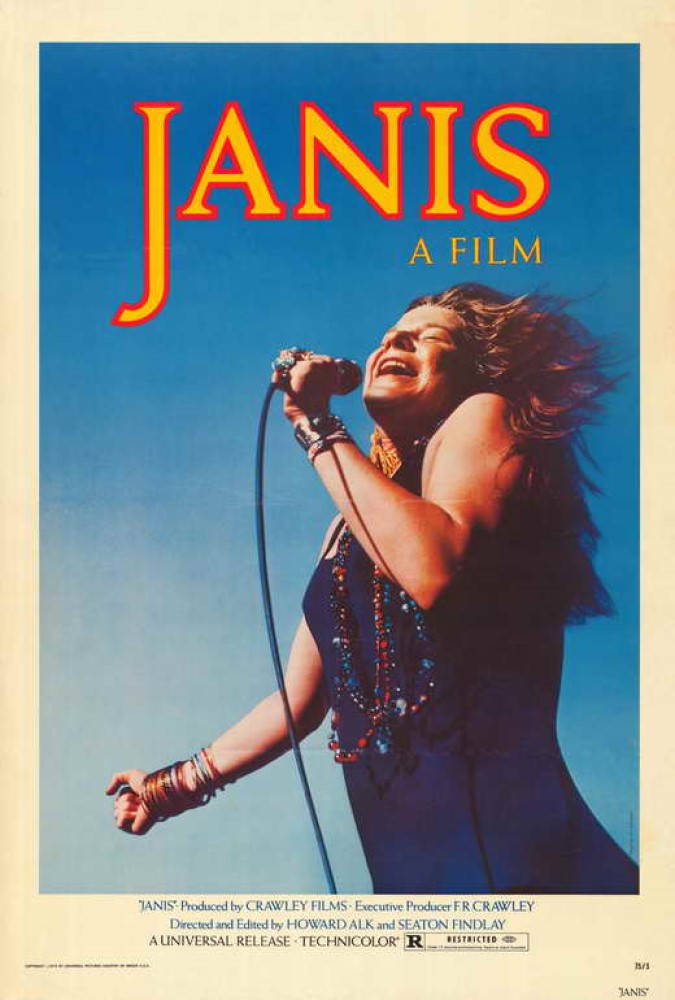
Janis (1974)

Janis (1974)

“They always hold up something more than they’re prepared to give.”

Synopsis:
Just before her death at the age of 27, Janis Joplin rehearses, performs, tours, visits her 10th high school reunion, and discusses her art with interviewers.

Genres, Themes, Actors, and Directors:

  • Biopics
  • Singers

Review:
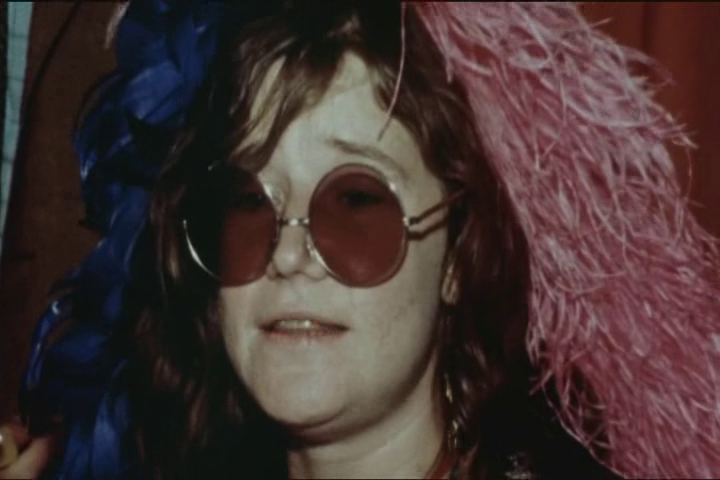
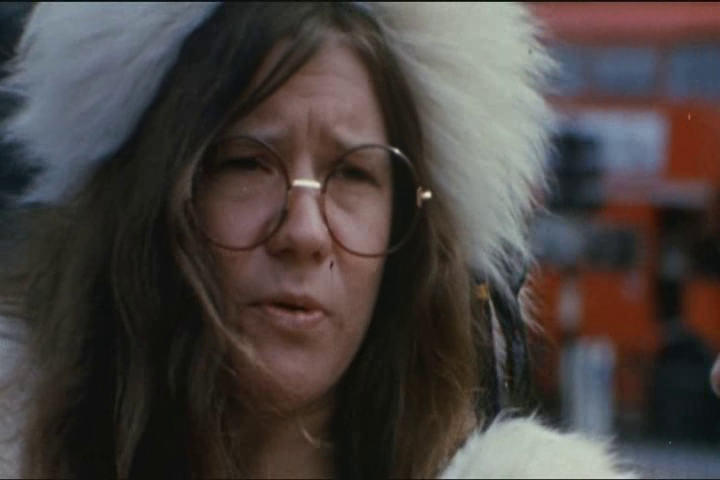
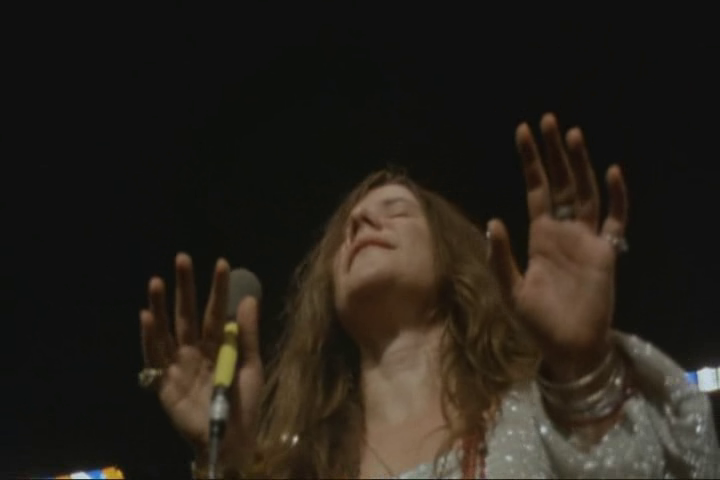
This documentary about legendary rock star Janis Joplin — part of the infamous “27 Club” as one among too many artists who died at such a young age — is comprised exclusively of archival footage, without any additional narration or commentary (or, for that matter, any mention of her death). Though limited, it remains a poignant piece of collated cinema that may not answer many questions, but does give us a glimpse into the life of this traumatized young singer whose life was consumed by drugs. To that end, we’re able to clearly see how high and/or out-of-it Joplin was for much of her existence, while simultaneously giving powerhouse performances that — paraphrasing her own words — were what gave her energy and purpose in life. In this footage — as in her songs — she puts it all out there, being as consistently authentic as possible. While it will be of most interest — indeed, essential viewing — for Joplin fans, I think it’s worth a look by all film fanatics for its historical value.

Redeeming Qualities and Moments:

  • Many memorable sequences and songs


Must See?
Yes, as an invaluable time capsule of Joplin’s short life.

Categories

  • Historically Relevant

Links:

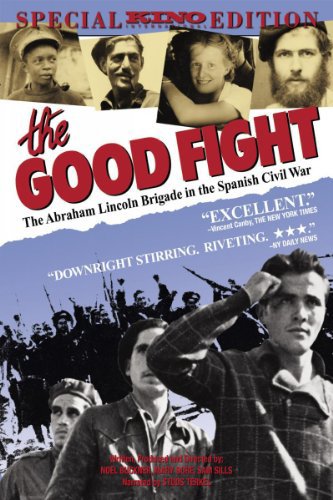
Good Fight, The (1984)

Good Fight, The (1984)

“There was this enormous feeling of wanting to come to grips, and not being able to.”

Synopsis:
Veterans of an American Communist militia fighting on behalf of the Spanish Republic during the Spanish Civil War reflect back on their experiences and motivations for joining this cause.

Genres, Themes, Actors, and Directors:

  • Documentary
  • Soldiers
  • Spanish Civil War
  • Veterans

Review:
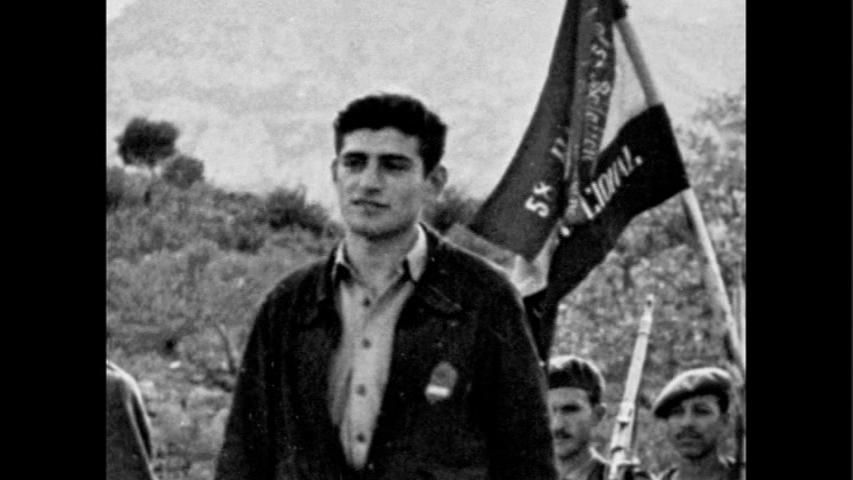
I’ll admit to knowing very little about the Spanish Civil War (1936-1939) prior to watching this illuminating documentary, other than the fact that Hemingway was a vocal ally of the cause and wrote For Whom the Bell Tolls about this period of history. Thankfully, back in the early 1980s, filmmakers Noel Buckner, Mary Dore, and Sam Sills decided to fill in America’s collective knowledge gap with this much-needed overview of what led to the Spanish Civil War, why a significant number (~45,000) of Americans decided to voluntarily join, what it was like for them to fight on behalf of a nation other than their own, and how the entire affair was perceived back in the U.S.

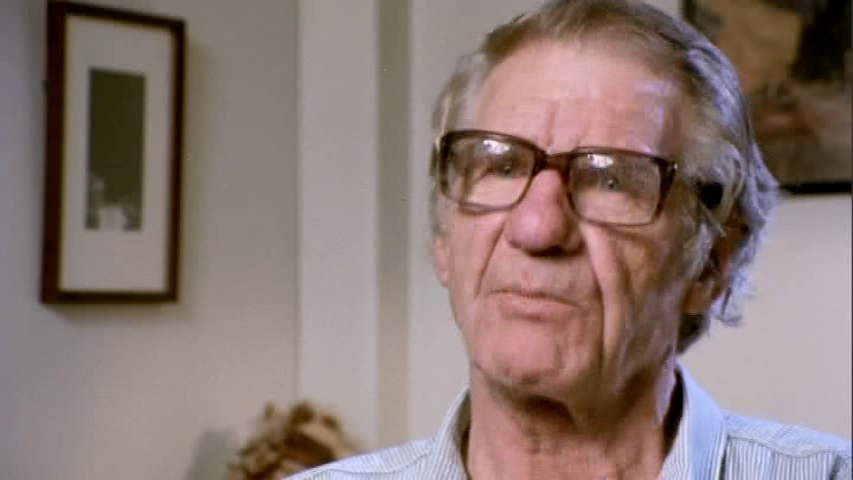
This is all highly complex — made even more so given that the American militia members (men and women, black and white) were overtly joining forces with the USSR and the Mexican Communist Party, an association which led to ostracization and blackballing once they returned back to an increasingly anti-Communist mid-century America. As the film clearly shows, their experiences in Spain were harrowing: they were underfunded, underfed, under-armed, and unexperienced, yet stayed with their cause at any cost, demonstrating the power of convictions and a desire to make a difference in the world. Listening to this feisty group of marginalized Americans discuss their willingness to sacrifice their lives to fight global fascism makes for fascinating viewing.

Note: This film was originally much more ambitious in scope, at ~6 hours long. It ended up focusing exclusively on the American militia in its ultimate 98 minute running time, but it is made clear that this truly was an international effort of militias from many nations joining the cause.

Redeeming Qualities and Moments:

  • Many invaluable historical and present-day clips about the American militia’s involvement in Spain


Must See?
Yes, as a powerful historical document.

Categories

  • Historically Relevant

Links:

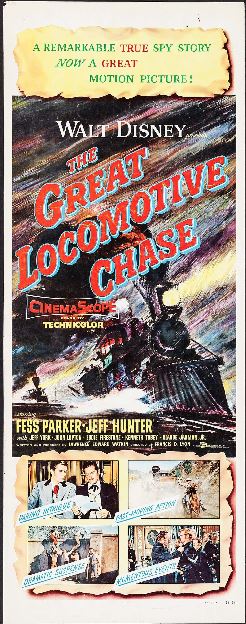
Great Locomotive Chase, The (1956)

Great Locomotive Chase, The (1956)

“Won’t anything stop that train?”

Synopsis:
A Union soldier (John Lupton) receiving one of the first Congressional Medals of Honor reflects back on the leader (Fess Parker) who organized him and others as spies while boldly attempting to steal a Confederate train known as the General — a plot ultimately foiled due to the persistence of the General’s conductor, William A. Fuller (Jeffrey Hunter).

Genres, Themes, Actors, and Directors:

  • Civil War
  • Fess Parker Films
  • Flashback Films
  • Historical Drama
  • Jeffrey Hunter Films
  • Soldiers
  • Spies
  • Trains and Subways

Review:
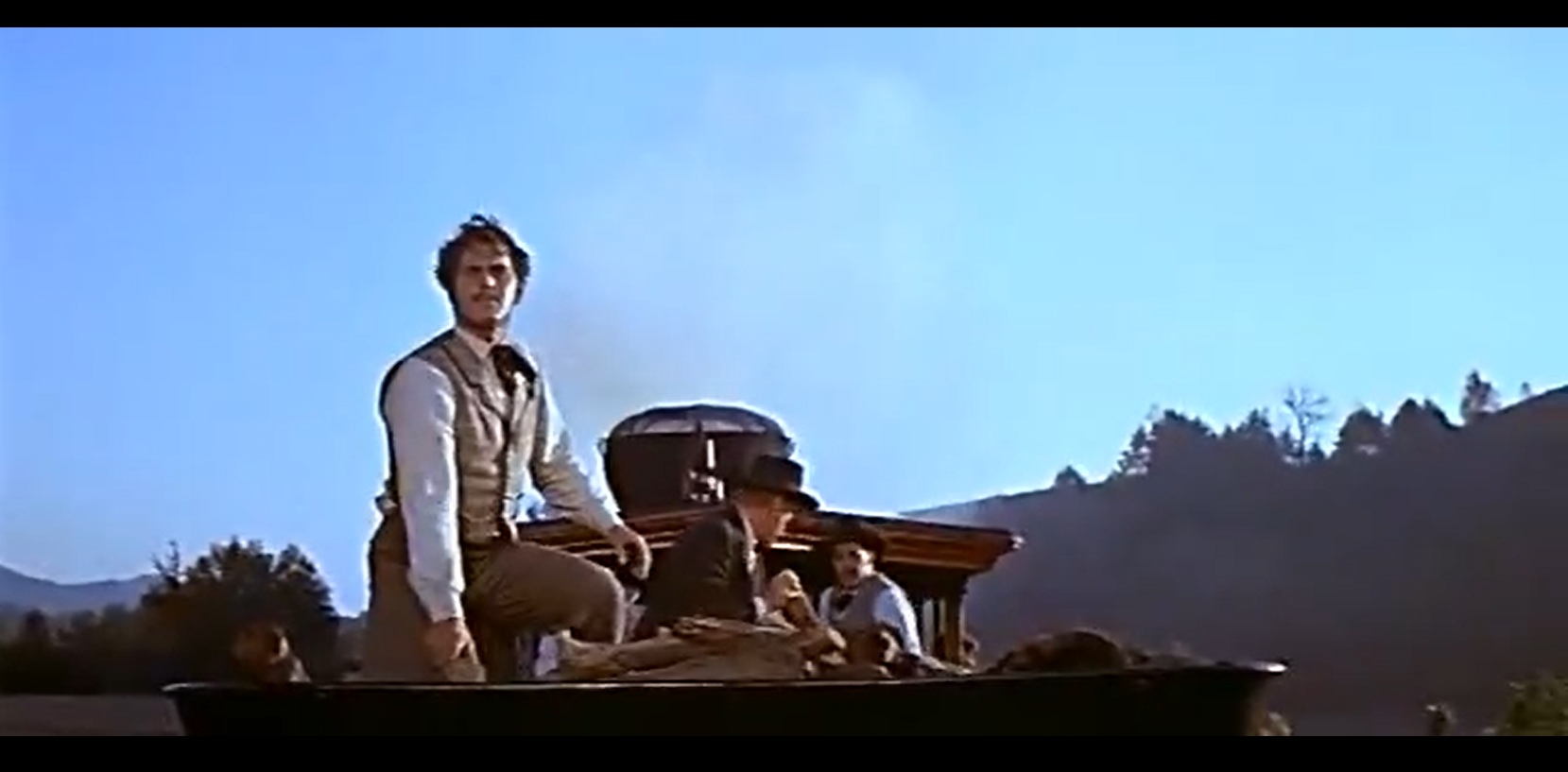
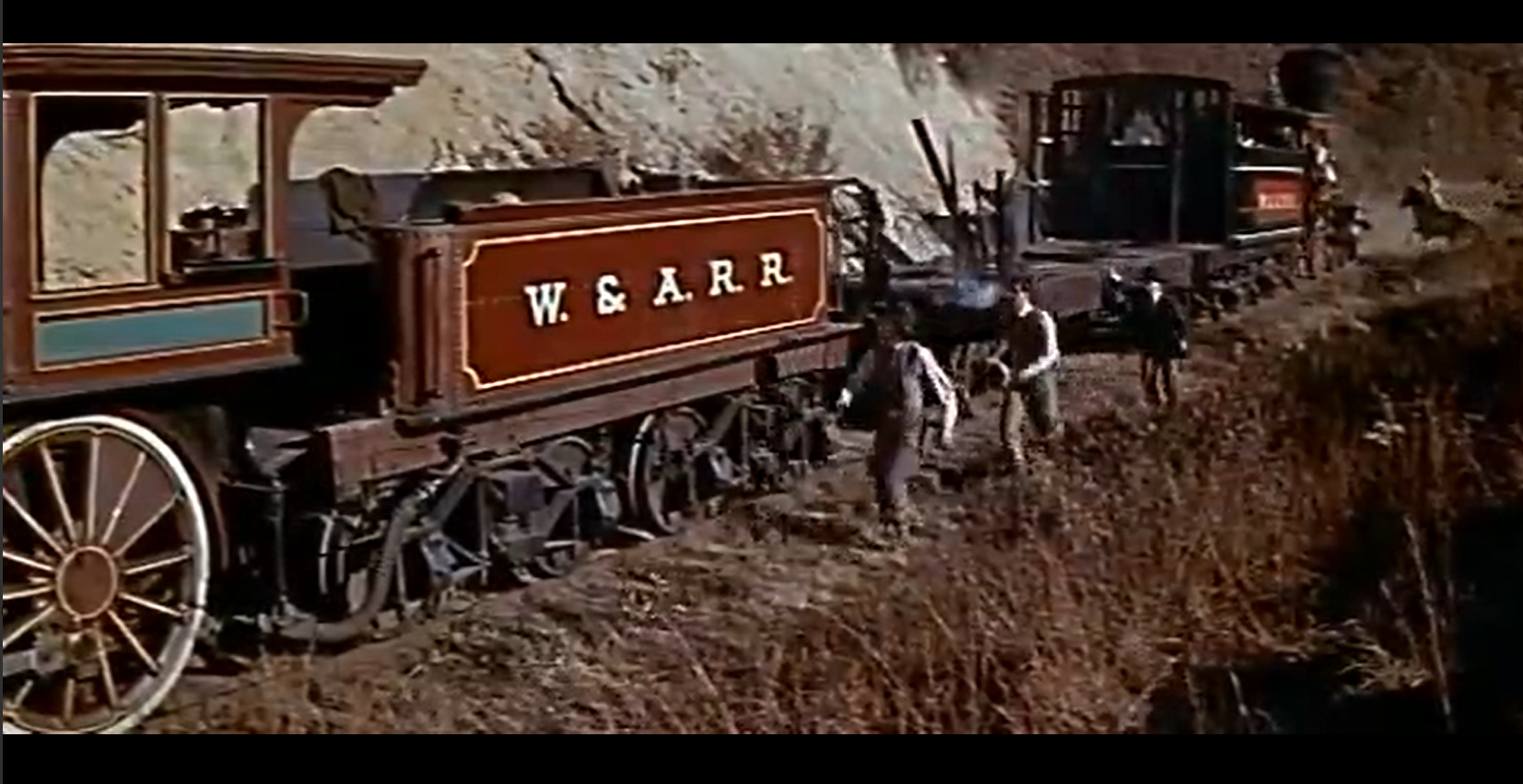
Based on the same historical episode (known as “The Great Locomotive Chase”) which inspired Buster Keaton’s The General (1926), this Disney live-action film is distinct in hewing closer to the authentic details of the event and telling the story from “the other [winning] side”. Given that the ending of the episode is known, the excitement lies in seeing the attempted act carried out (and fought against by Fuller) with such skill and bravery. Attention to historical detail with the trains is impressive as well; see TCM’s article (or Wikipedia) for more information on how similar trains were found and rented. Unfortunately, Parker — best known for playing Davey Crockett in Disney’s TV mini-series — is as dull as can be in the lead role; it’s difficult to see how he might have grown his career, given the limited range and affect he displays here. Faring much better is Hunter as Fuller, though he’s on the hissing side.

Redeeming Qualities and Moments:

  • Numerous exciting, well-filmed action sequences in realistic locations and with well-matched replicas of the trains

Must See?
No; you can skip this one unless you’re a fan of the topic and historical era.

Links:

Wagon Master (1950)

Wagon Master (1950)

“Ain’t likely any posse will look for us in a Mormon wagon train, now is it?”

Synopsis:
Two young horse traders (Harry Carey and Ben Johnson) are hired by the head of a Mormon wagon train (Ward Bond) to help guide them towards their promised land. They are soon joined by a travelling “medicine man” (Alan Mowbray) and his two female assistants (Ruth Clifford and Joanne Dru), who have been stranded without water on the desert for several days. Their journey becomes even more complicated when a murderous gang (led by Charles Kemper) holds them hostage in an attempt to escape detection from the law.

Genres, Themes, Actors, and Directors:

  • Ben Johnson Films
  • Hostages
  • Joanne Dru Films
  • John Ford Films
  • Outlaws
  • Settlers
  • Ward Bond Films
  • Westerns

Review:
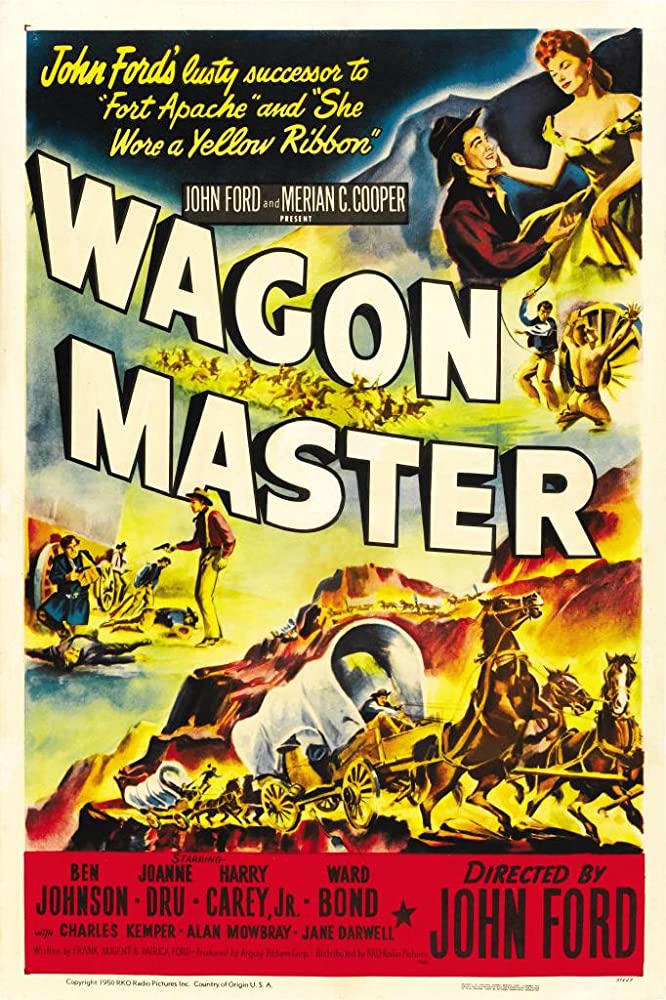
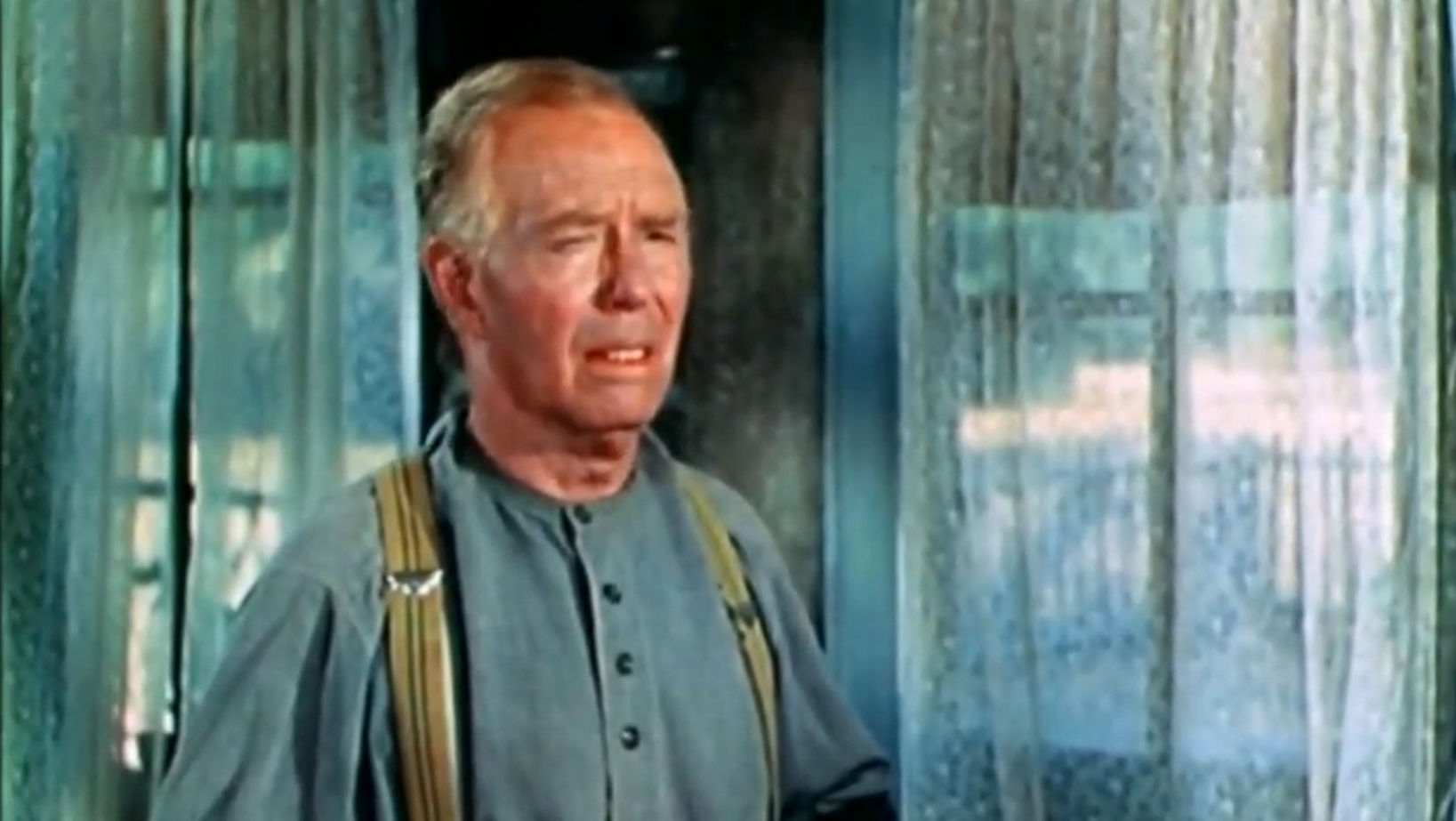
John Ford purportedly had two personal favorite films among his vast oeuvre: The Sun Shines Bright (1953) and this unassuming little flick about a wagon train of misfits. The protagonists (Carey and Johnson) are perfectly content with their lives of horse trading, but willing to help out a persuasive group with a clear goal — especially given how pretty one of the young Mormons (Kathleen O’Malley) is. Prior to this, however, the film is kicked off by the murderous Clegg clan, shown in the creatively shot opening sequence robbing a bank before the title song and credits begin to roll — and their arrival at the wagon train provides all the tension necessary to bring the proceedings to a climactic denouement. However, it’s the unusual pacing of the film that catches one’s attention; as noted in TCM’s article:

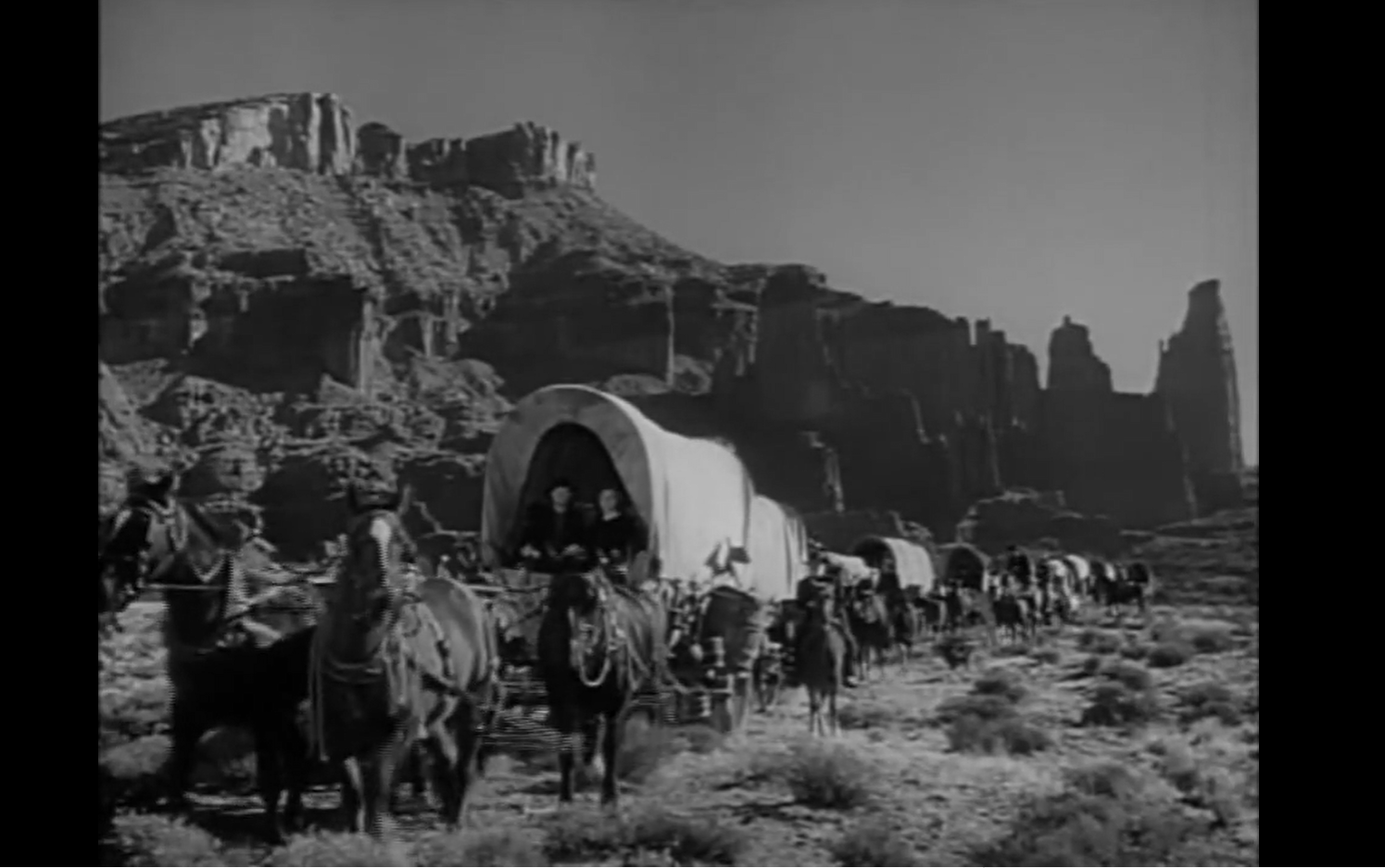
The story often pauses to revel in the characters dancing, whittling or singing (the soundtrack is packed with old Western songs), and to show pastoral sequences of the wagons simply moving through the landscape or crossing a river. These scenes become the emotional core of the film, and they undoubtedly are what Ford was so satisfied to have achieved.

Apparently the film’s production was an enjoyable family affair, with Ford’s brother, daughter, and son all involved in some way. Ultimately, this western is a must-see for Ford fans or for those, as DVD Savant writes, “who like ‘pure’ westerns that showcase good horse riding and other cowboy skills”.

Redeeming Qualities and Moments:

  • Excellent location shooting
  • An appropriately rugged depiction of wagon trains

Must See?
No, but it slowly grows on you and is worth a look.

Links:

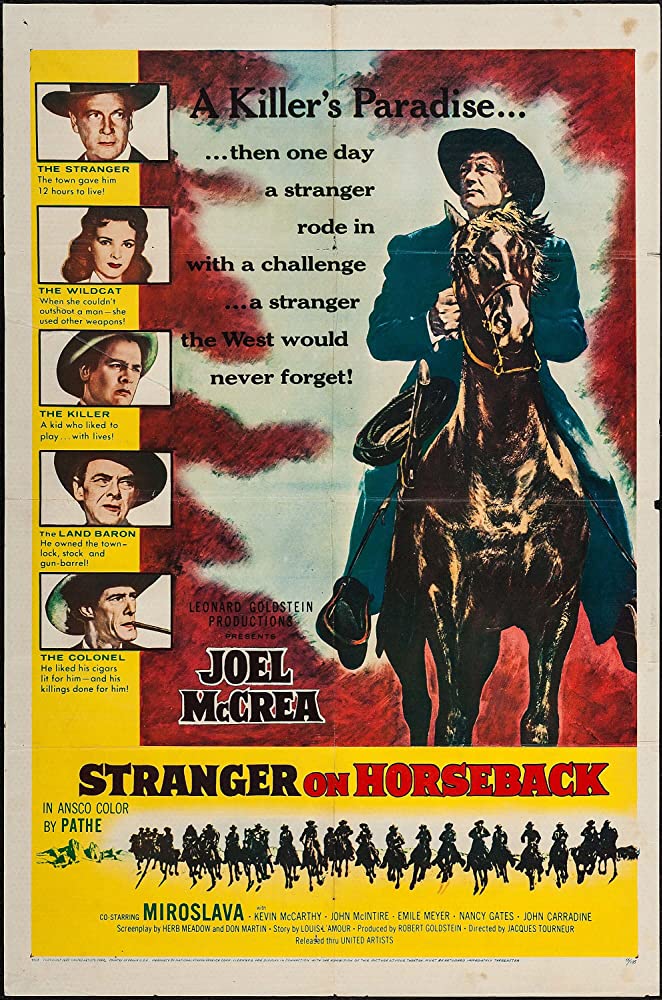
Stranger on Horseback (1955)

Stranger on Horseback (1955)

“That’s the funny thing about the Bannermans: folks are always picking on ’em.”

Synopsis:
A circuit judge (Joel McCrea) rides into the town of Bannerman and learns that everything is controlled by patriarch Josiah Bannerman (John McIntire), whose son (Kevin McCarthy) has just killed an innocent man, and whose niece (Miroslava) is determined to protect her family at any cost. Can McCrea convince at least a few of the town’s inhabitants to give law and order a chance?

Genres, Themes, Actors, and Directors:

  • Jacques Tourneur Films
  • Joel McCrea Films
  • John Carradine Films
  • John McIntire Films
  • Judges
  • Kevin McCarthy Films
  • Westerns

Review:
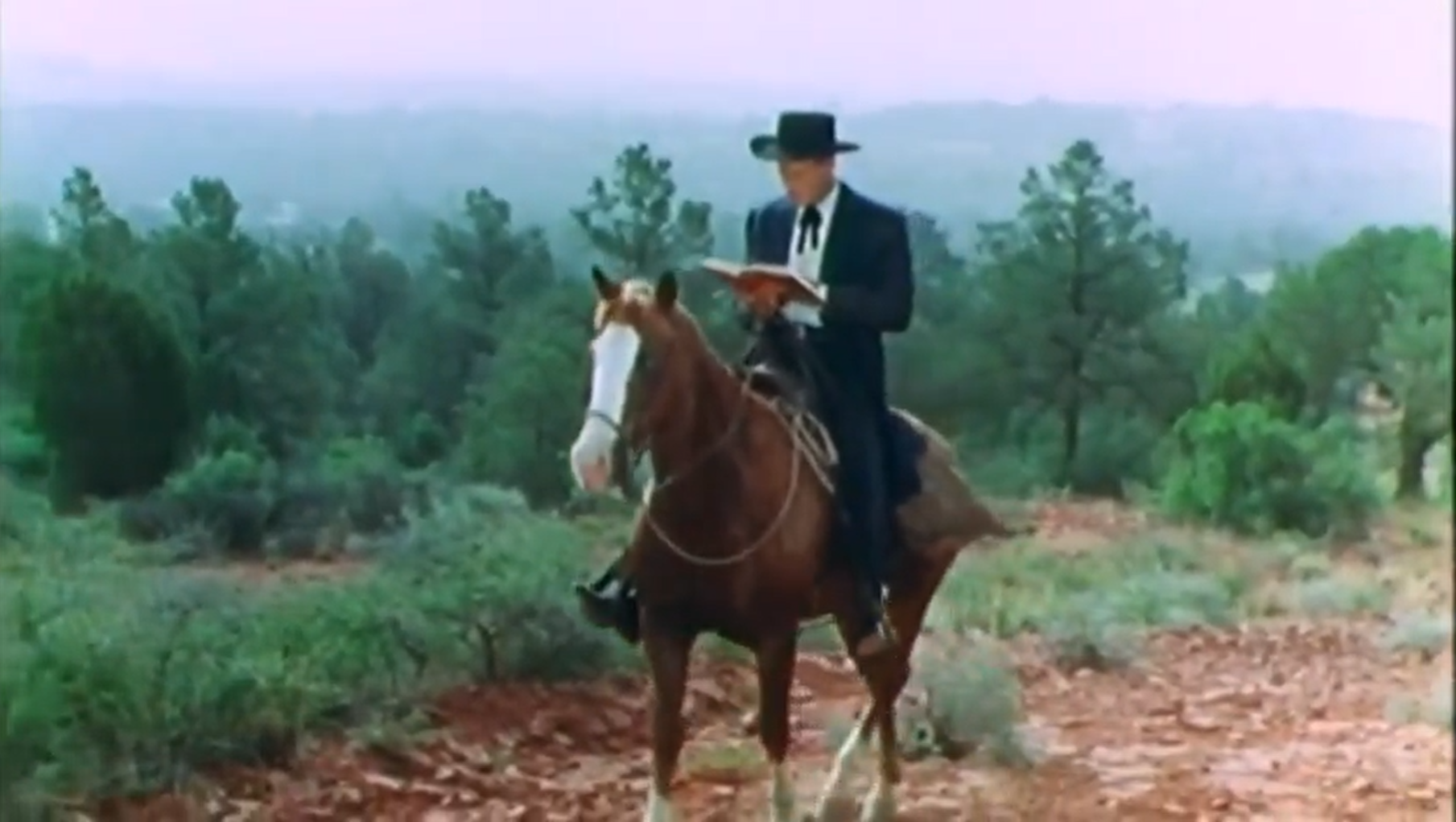
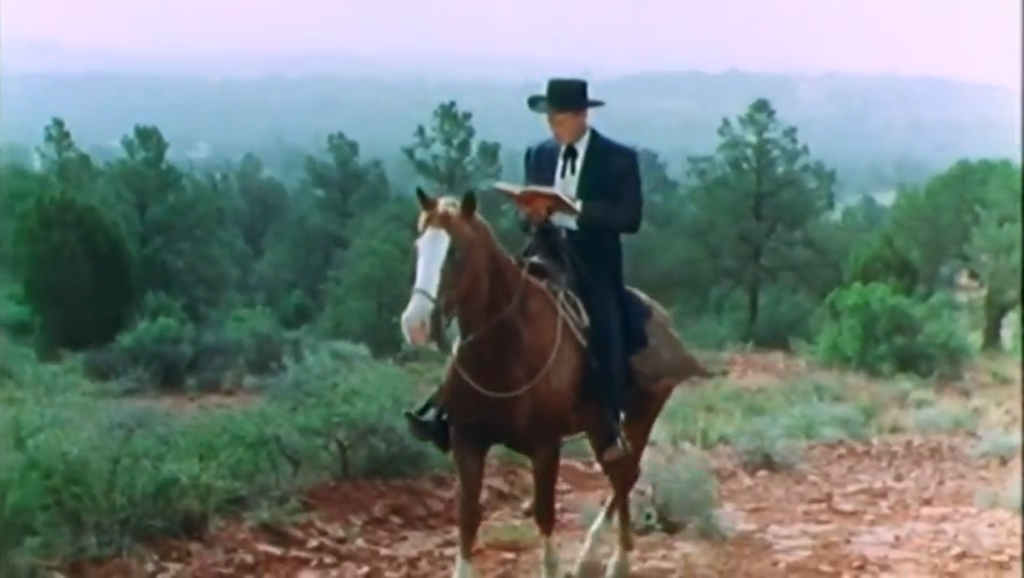
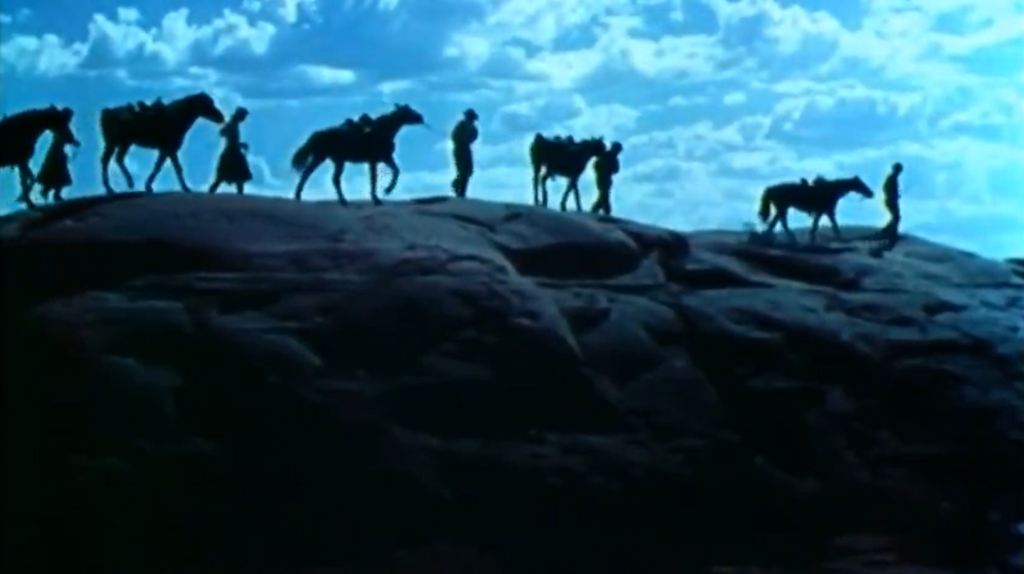
Jacques Tourneur directed this nifty, economically scripted western about “law and order” — in the form of a circuit judge on horseback:
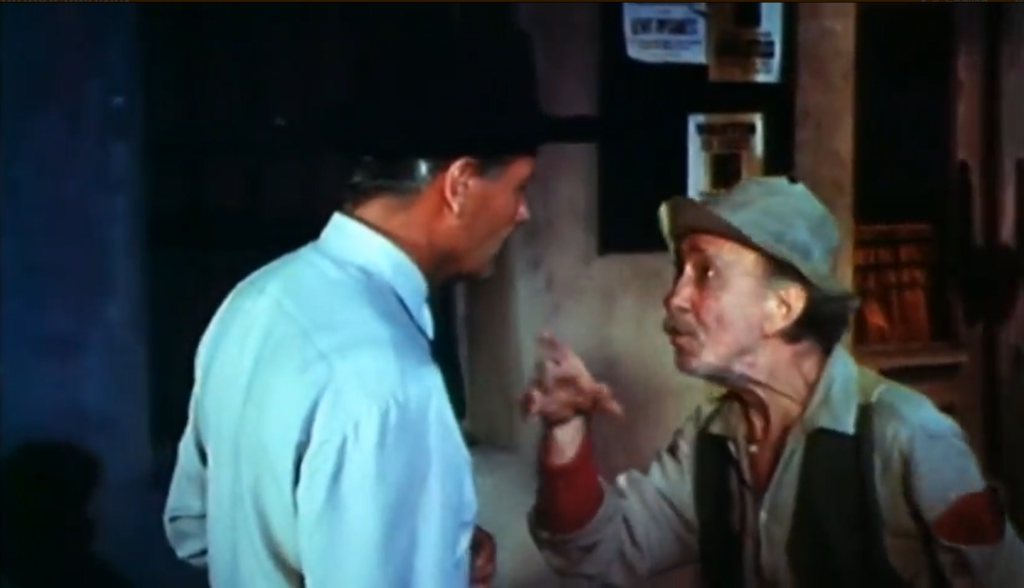
— arriving in a town which is bound and determined to retain the Mafia-like stronghold of its founding family. Through a series of interactions with the family’s skulking “lawyer” (John Carradine):
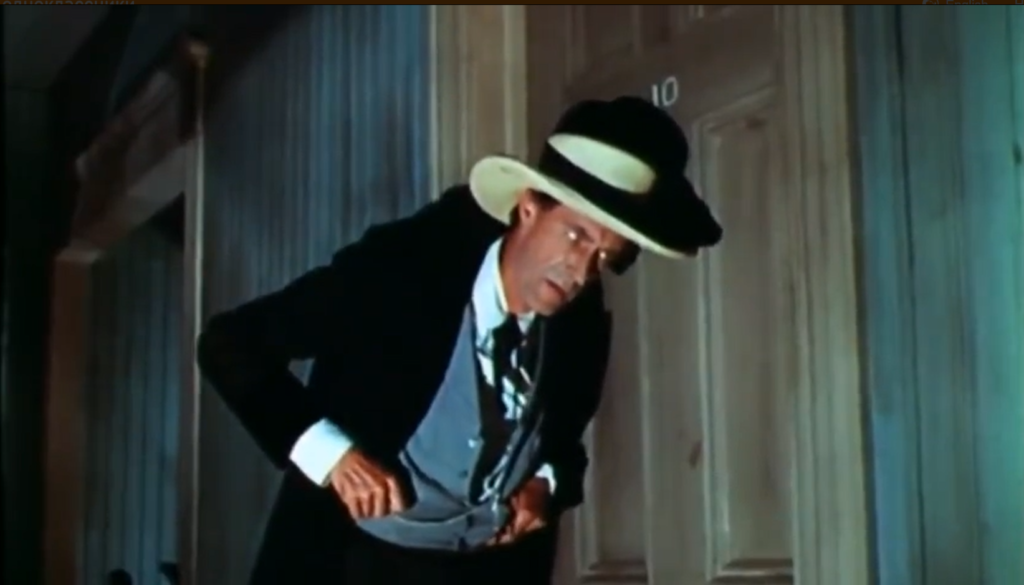
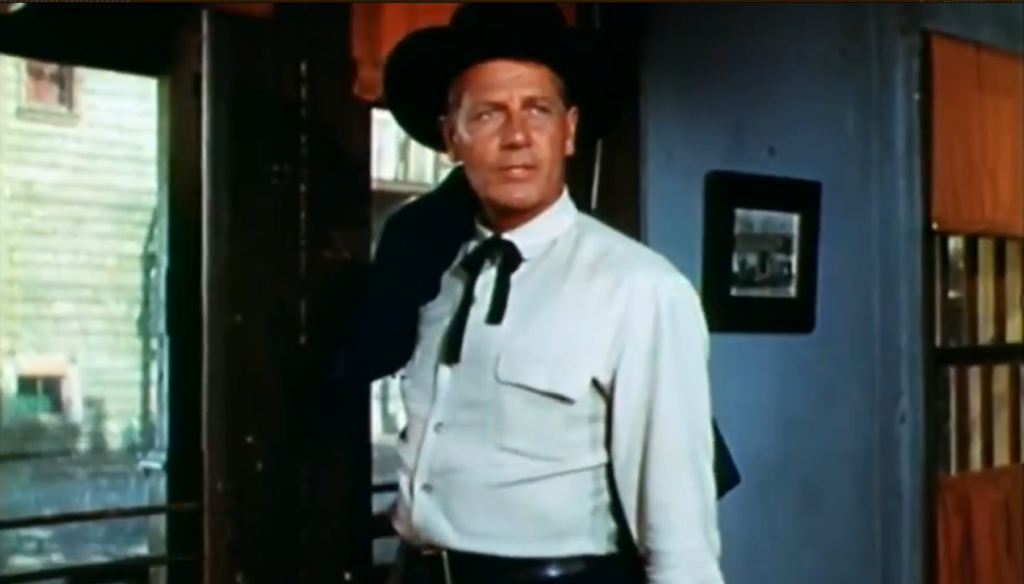
we’re quickly shown exactly how much of a stranglehold the Bannermans have on all aspects of life in the town — with the strong and automatic assumption that anyone daring to question the status quo will either be brought into the Bannermans’ fold or bullied out. The film’s omnipresent protagonist is Judge Thorne (stalwart McCrea):
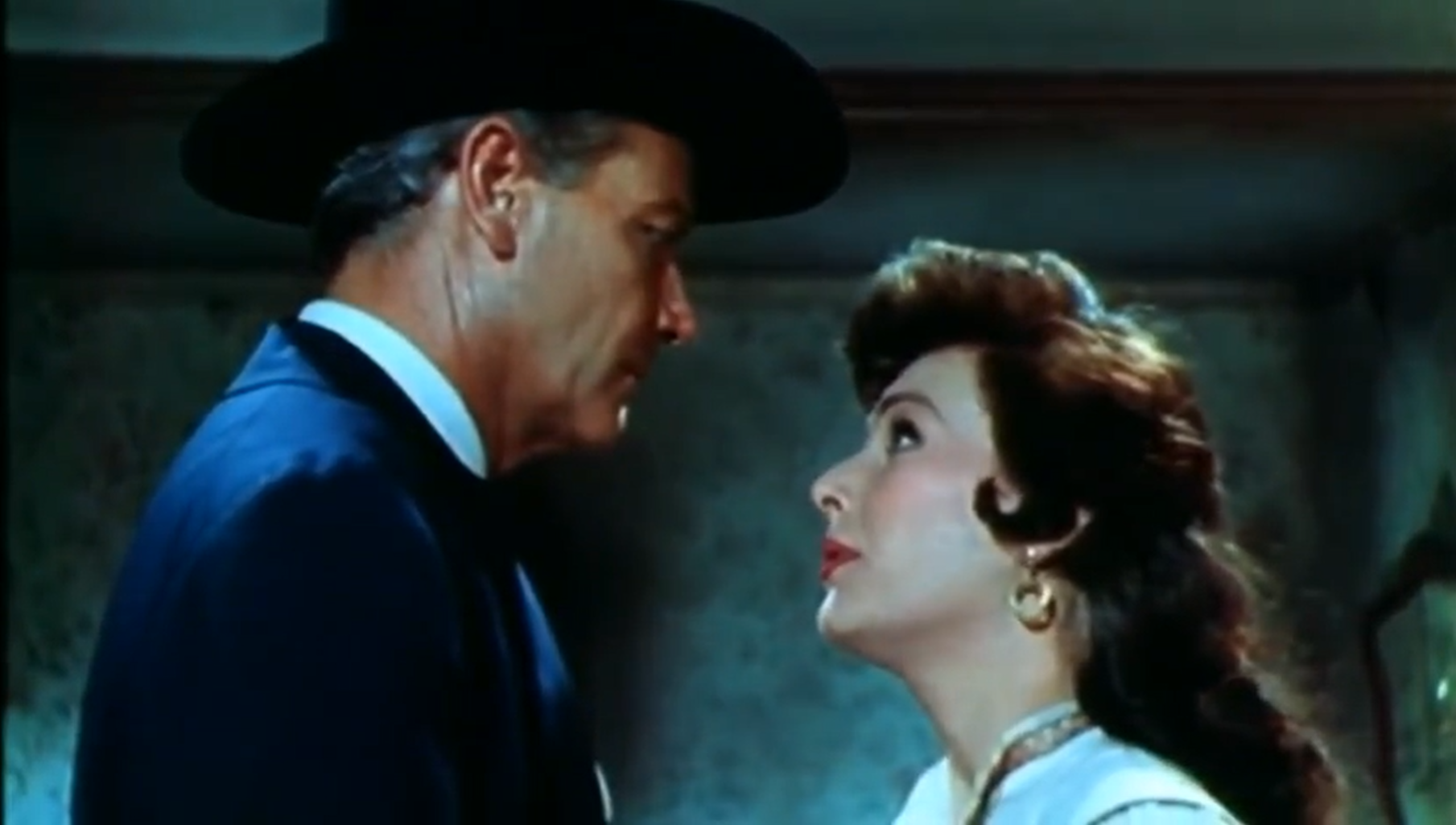
… a man ready and willing to push back against this assumption at every turn. He may be temporarily seduced by beautiful Miroslava:
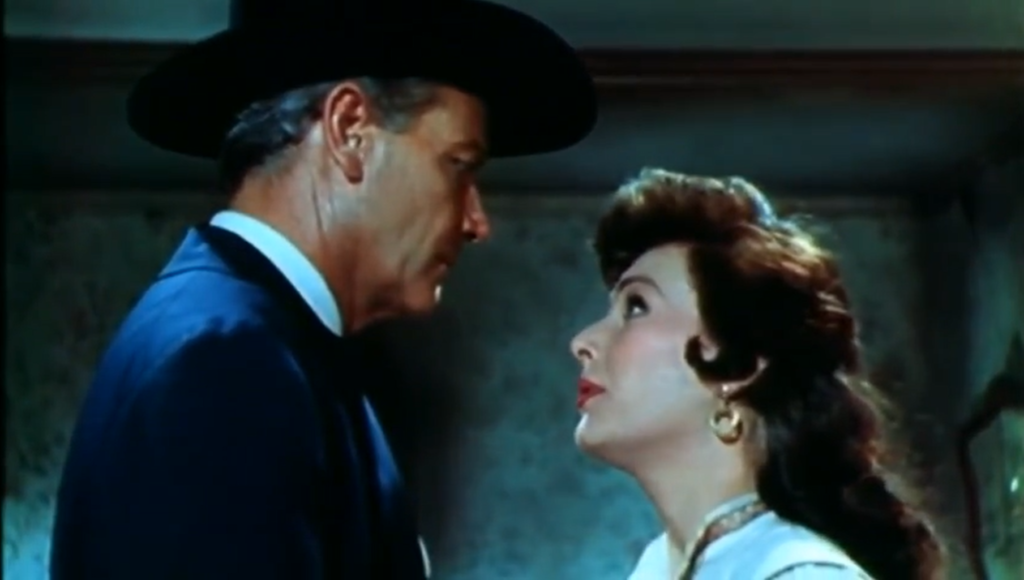
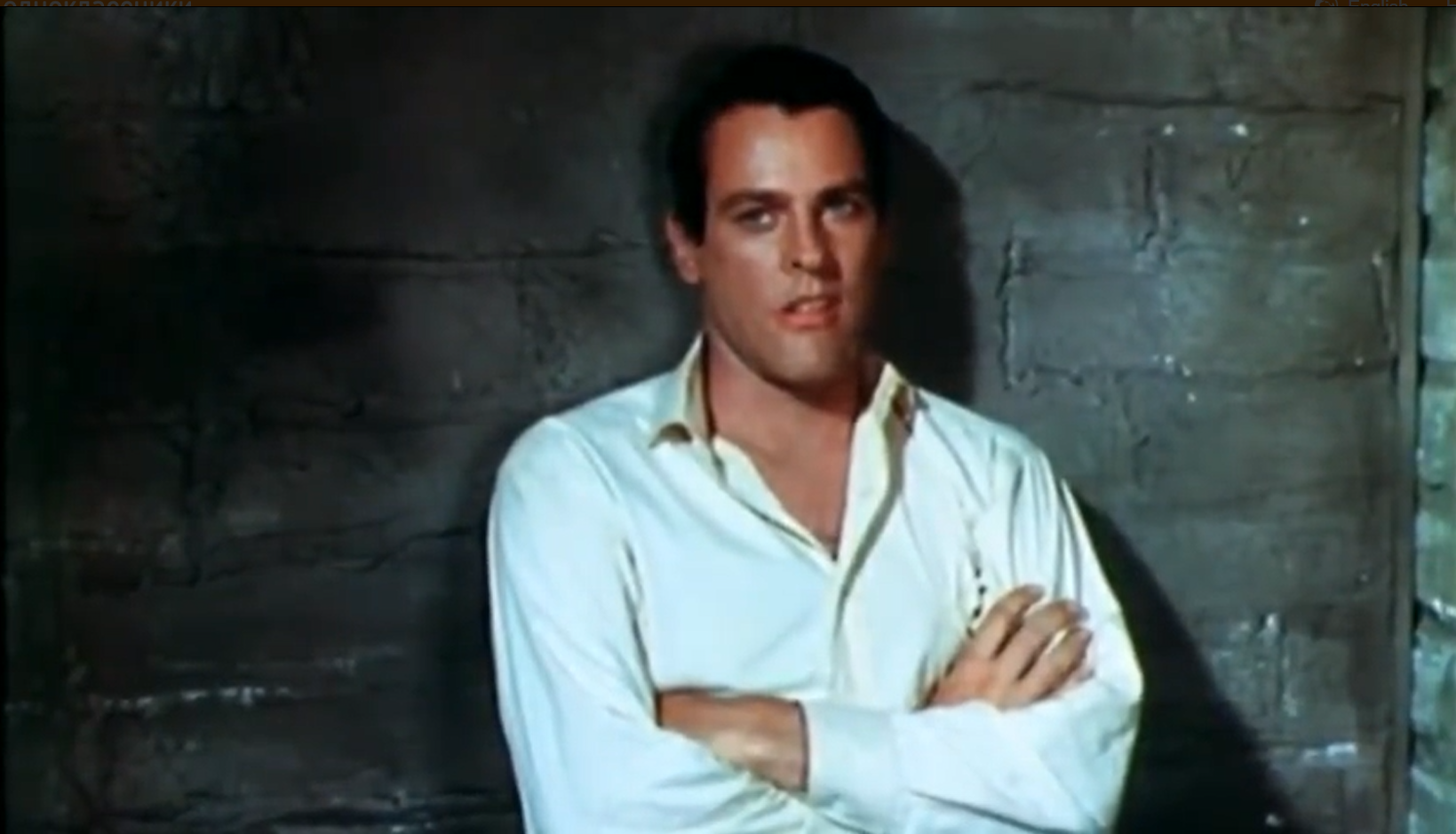
but quickly gets back on track with his investigation, fighting the forces of both irascible Bannerman Sr. (McIntire is a bully with a childishly petulant bent) and Bannerman Jr. (McCarthy is chillingly sociopathic).
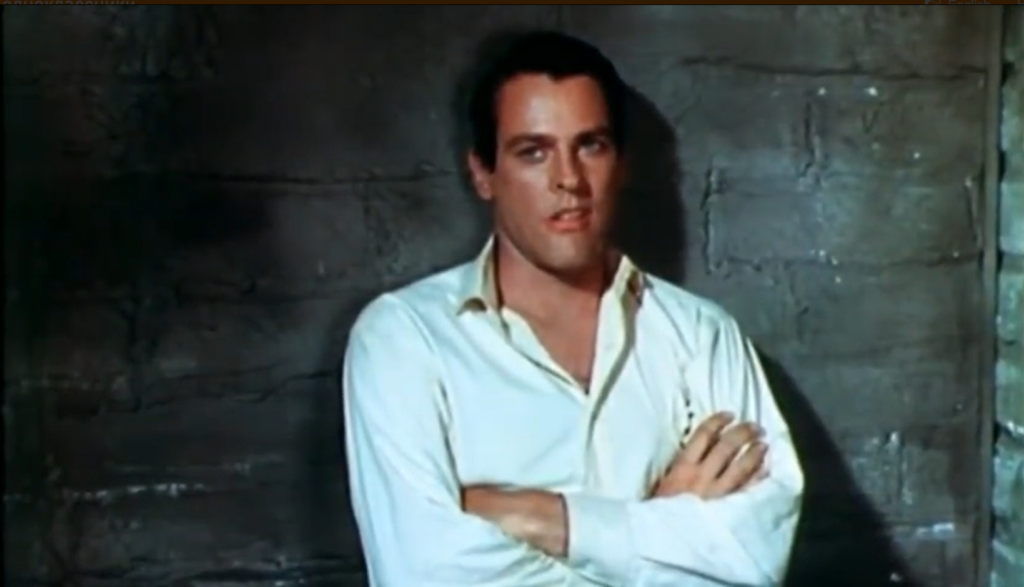
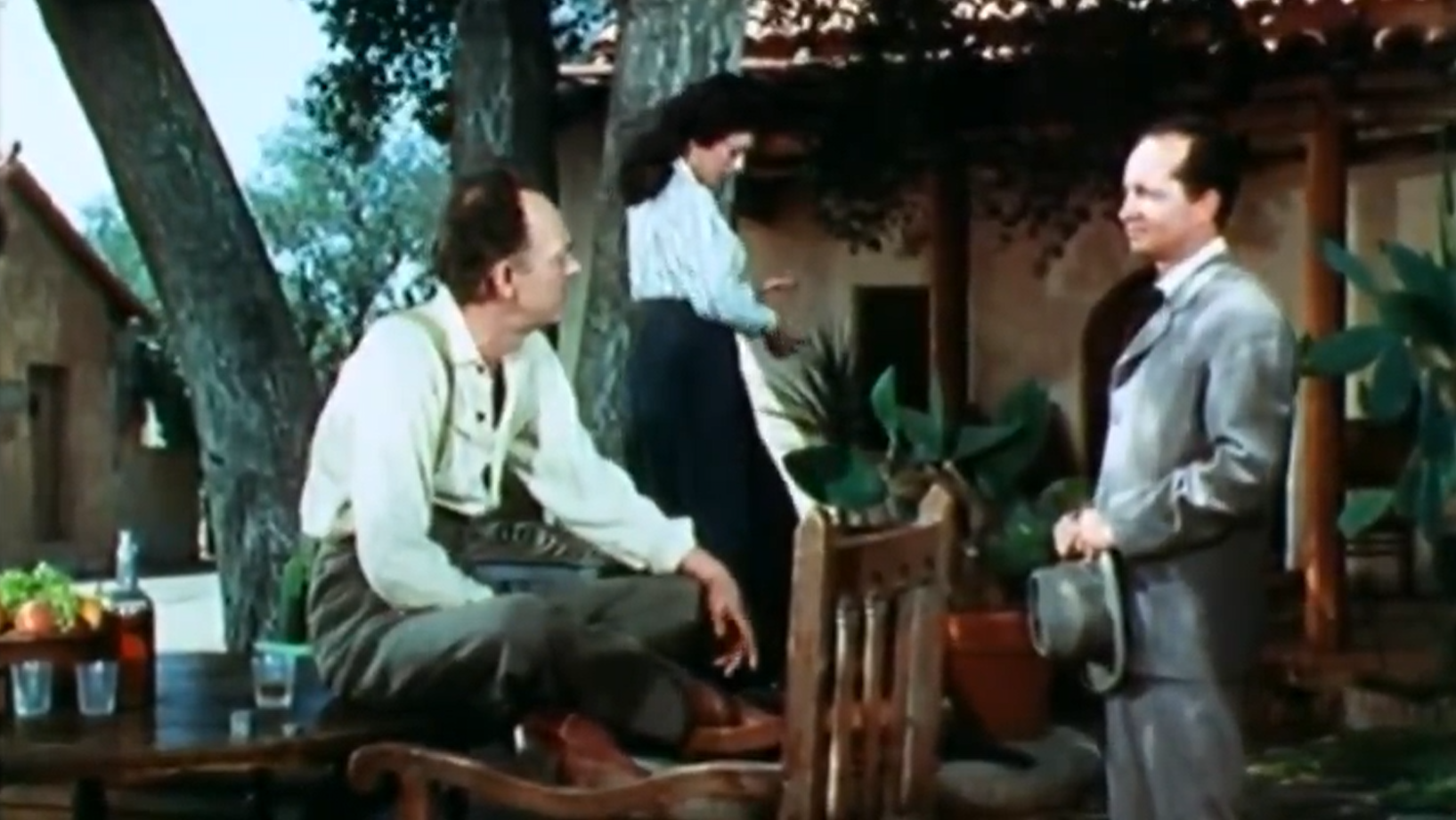
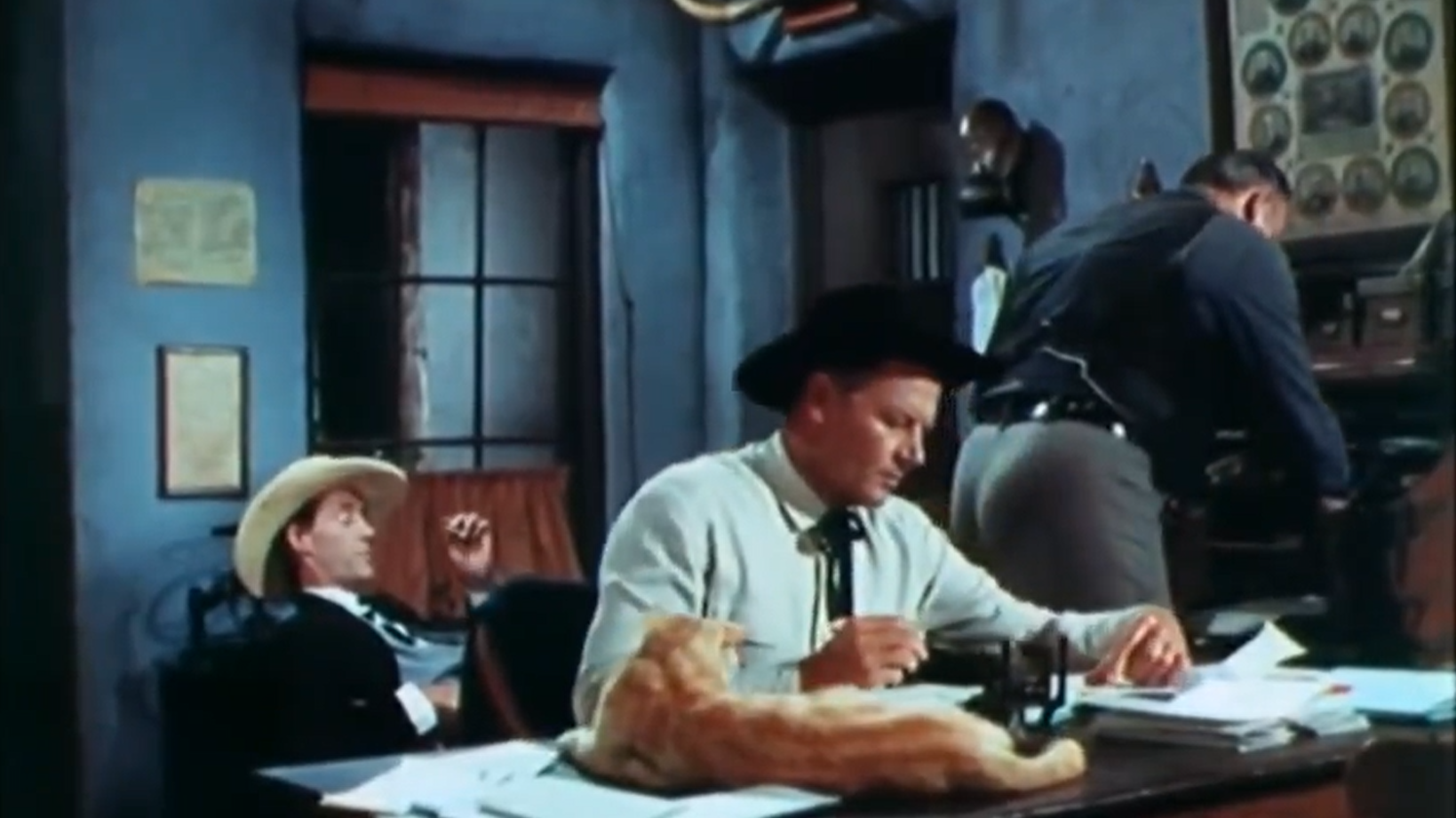
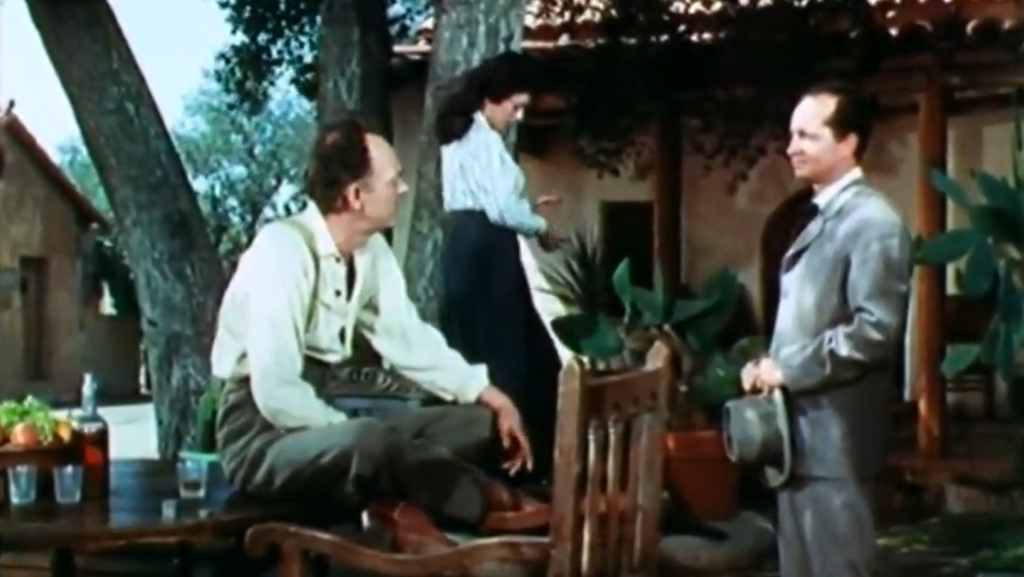
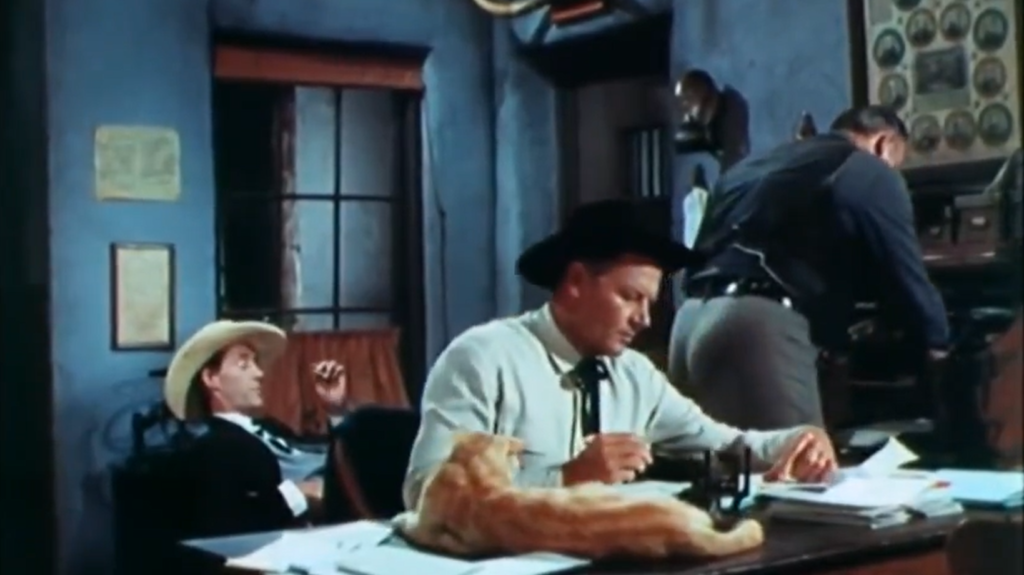
Close attention is paid to detail throughout the film: a cat lounges on the sheriff’s desk in full view; McIntire sits cross-legged (he and his son are selfish children at heart) on a table outside his residence while preventing Miroslava’s would-be suitor (Robert Cornthwaite) from sitting down in a chair nearby.
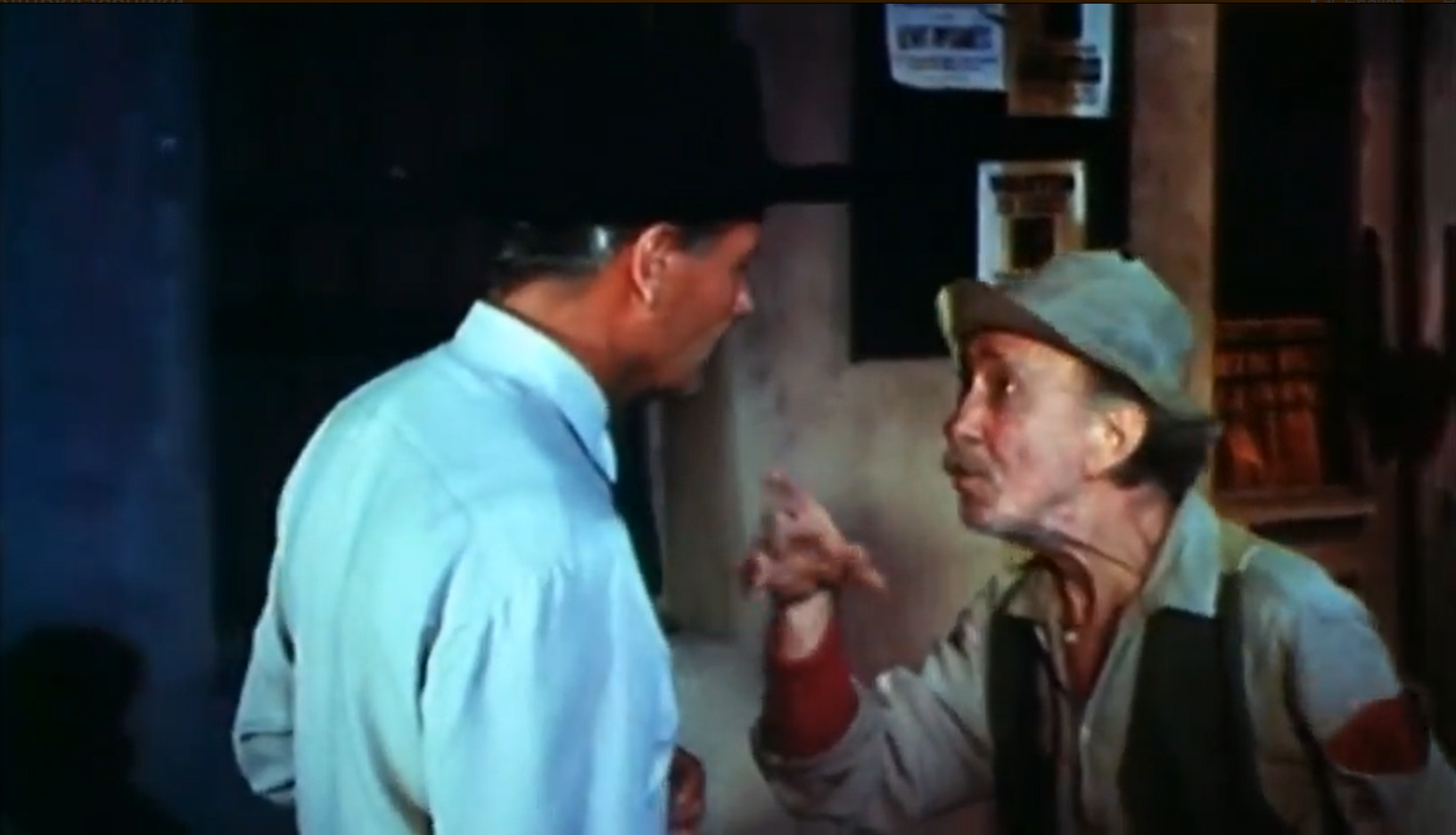
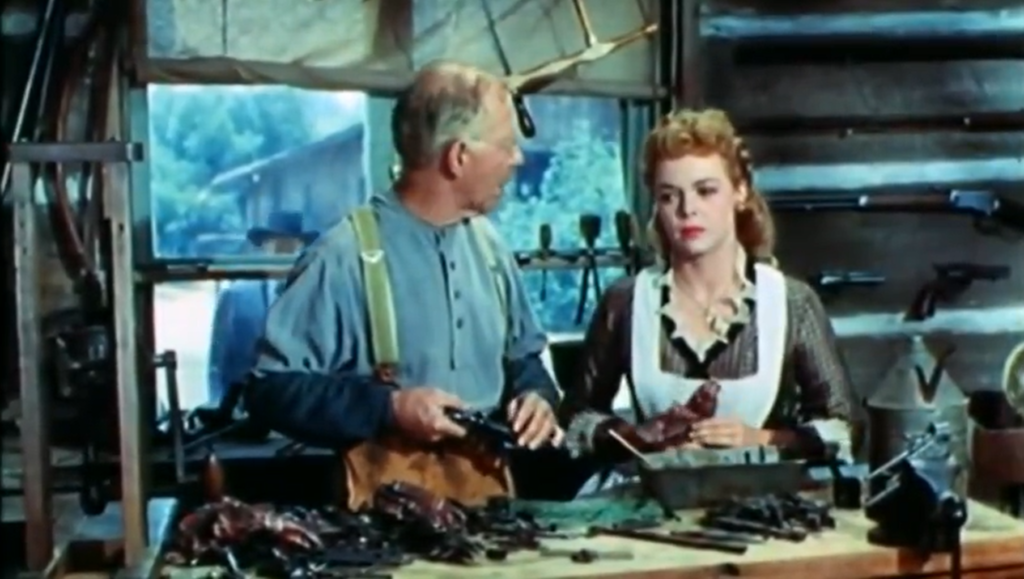
The supporting roles are filled with great care, including a jumpy town drunk (Emmett Lynn) who literally can’t stay still, and a frightened neighbor (Walter Baldwin) who tries to convince his pretty daughter (Nancy Gates) that she has no realistic chance of breaking into the Bannerman clan through marriage.
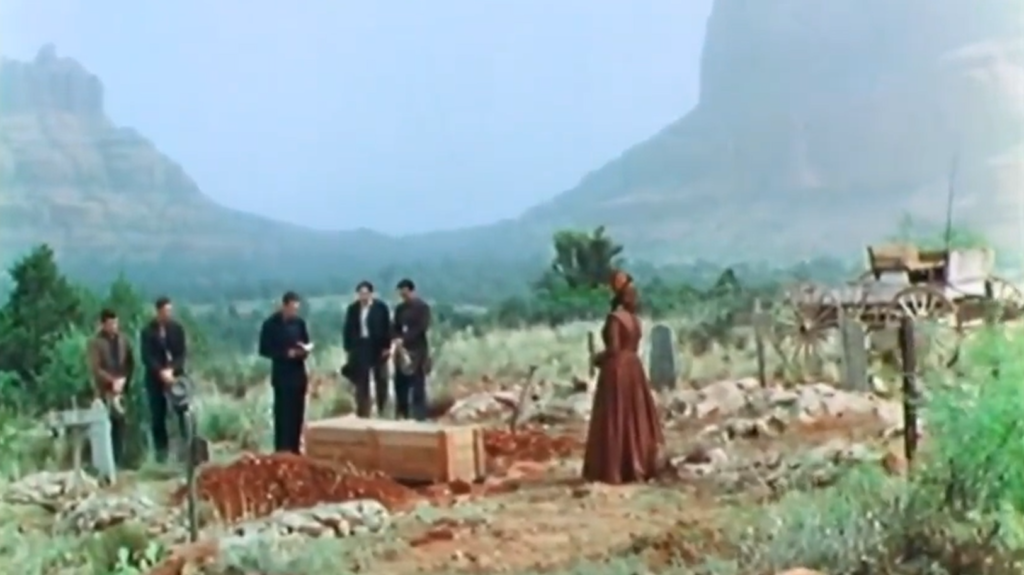
Much of the film is shot on location in Sedona, Arizona and Placerita Canyon, California, and the natural sets are gorgeous — though the entire print needs a serious clean-up and restoration.
A couple of minor quibbles include the score (which doesn’t seem to quite jibe with the proceedings) and the oddly paced ending, which leaves several questions unanswered. But overall, this remains a fine and worthy film to seek out.

Redeeming Qualities and Moments:

  • Excellent performances by the entire cast (including minor supporting roles)
  • A strong sense of direction and detail
  • Lovely (if badly-in-need-of-restoration) Ansco Color cinematograpy
Must See?
Yes, as a dandy little western.

Categories

  • Good Show

Links:

Intruder in the Dust (1949)

Intruder in the Dust (1949)

“I don’t want help — I pays my way.”

Synopsis:
A falsely accused black man (Juano Hernandez) in Mississippi seeks help from a white teenager (Claude Jarman, Jr.) and his lawyer-uncle (David Brian) in finding evidence that will exonerate him. Meanwhile, an angry white mob is demanding a lynching, yet unexpected help comes from a feisty and righteous older white woman (Elizabeth Patterson) who knows it’s her duty to step in.

Genres, Themes, Actors, and Directors:

  • African-Americans
  • Clarence Brown Films
  • David Brian Films
  • Deep South
  • Falsely Accused
  • Juano Hernandez Films
  • Lawyers
  • Murder Mystery
  • Race Relations and Racism

Review:
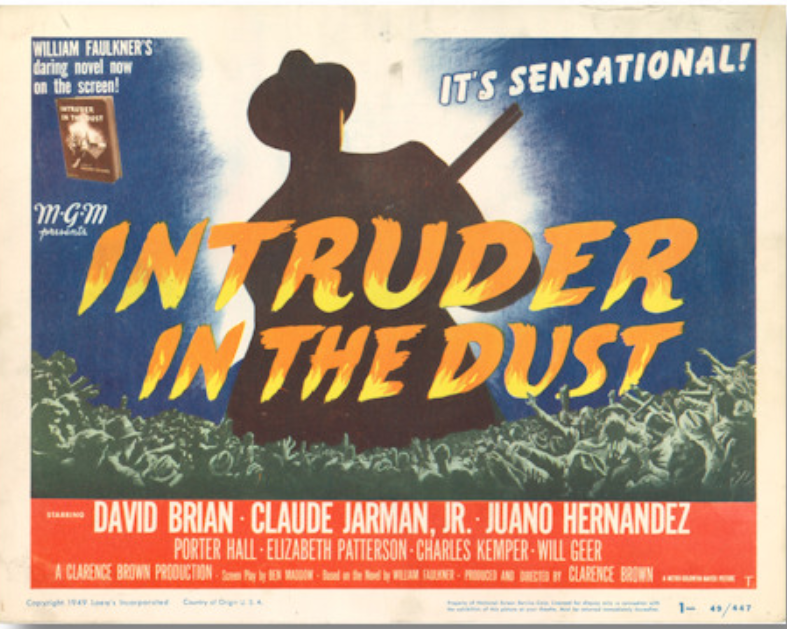
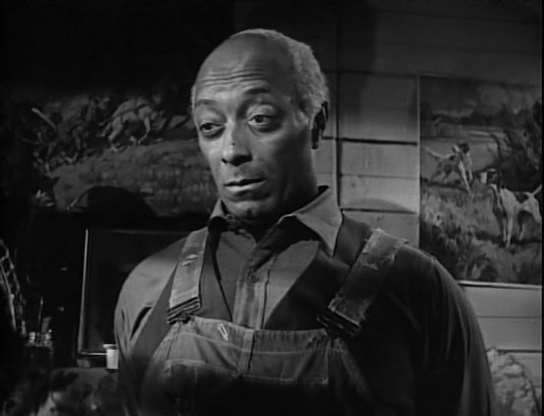
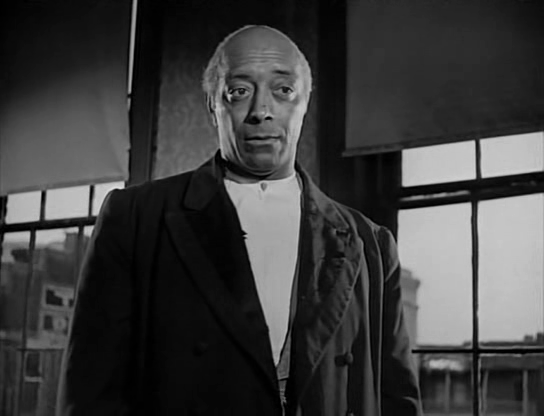
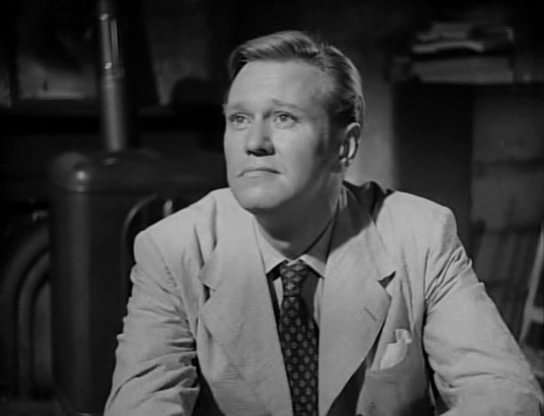
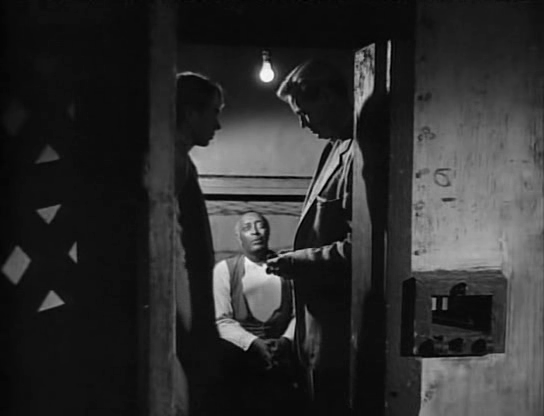
This adaptation of William Faulkner’s 1948 Nobel Prize-winning novel — directed by Clarence Brown and scripted by Ben Maddow — remains a unique Hollywood film for its era, featuring a ground-breaking performance by Hernandez as a fiercely independent African-American man who refuses to accept racism or denigration on any level.

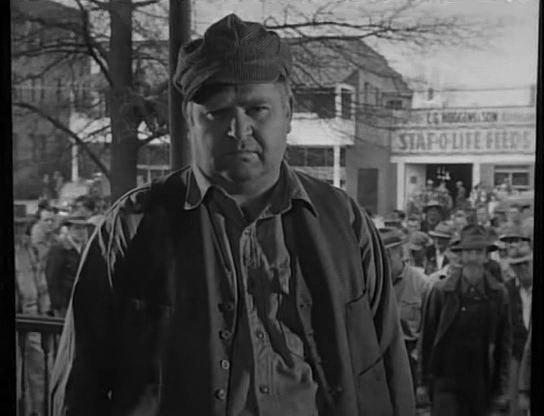
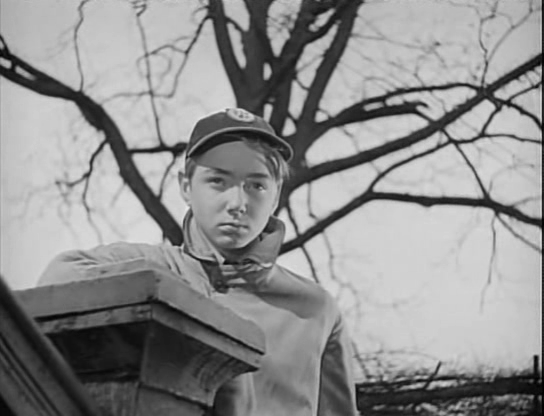
The film centers on a young man (Jarman) steeped in his town’s culture of white supremacy, forced to acknowledge and deal with the cognitive distortions that arise when his life is saved by Hernandez and Hernandez rejects payment of any kind. Jarman’s anger at Hernandez — including his desire for the “revenge” of paying Hernandez to complete their “transaction” — is a bold narrative choice, refusing to sugarcoat the intensely personal and challenging process of dismantling racism. Indeed, the entire film could be viewed as an exercise in revealing and exposing racism on every level — from the overtly murderous cries of the lynch-happy white mob, to Jarman’s internalized fury, to Brian’s initial conviction that nothing can ultimately save Hernandez, regardless of his guilt or innocence.

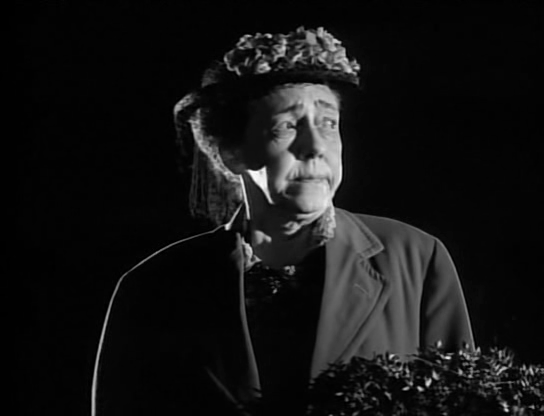
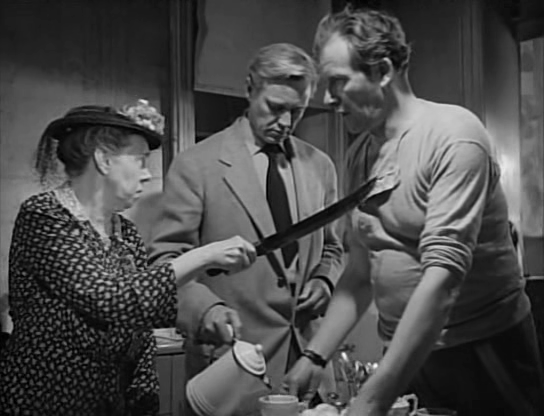
The storyline is atmospherically filmed (by Robert Surtees) throughout, with the very-real threat of white violence present around every corner, adding to the film’s authentic sense of danger — yet there are pleasant surprises as well, primarily the inclusion of a feisty old woman (Patterson) who accepts that it’s her responsibility to help out in whatever way she can.

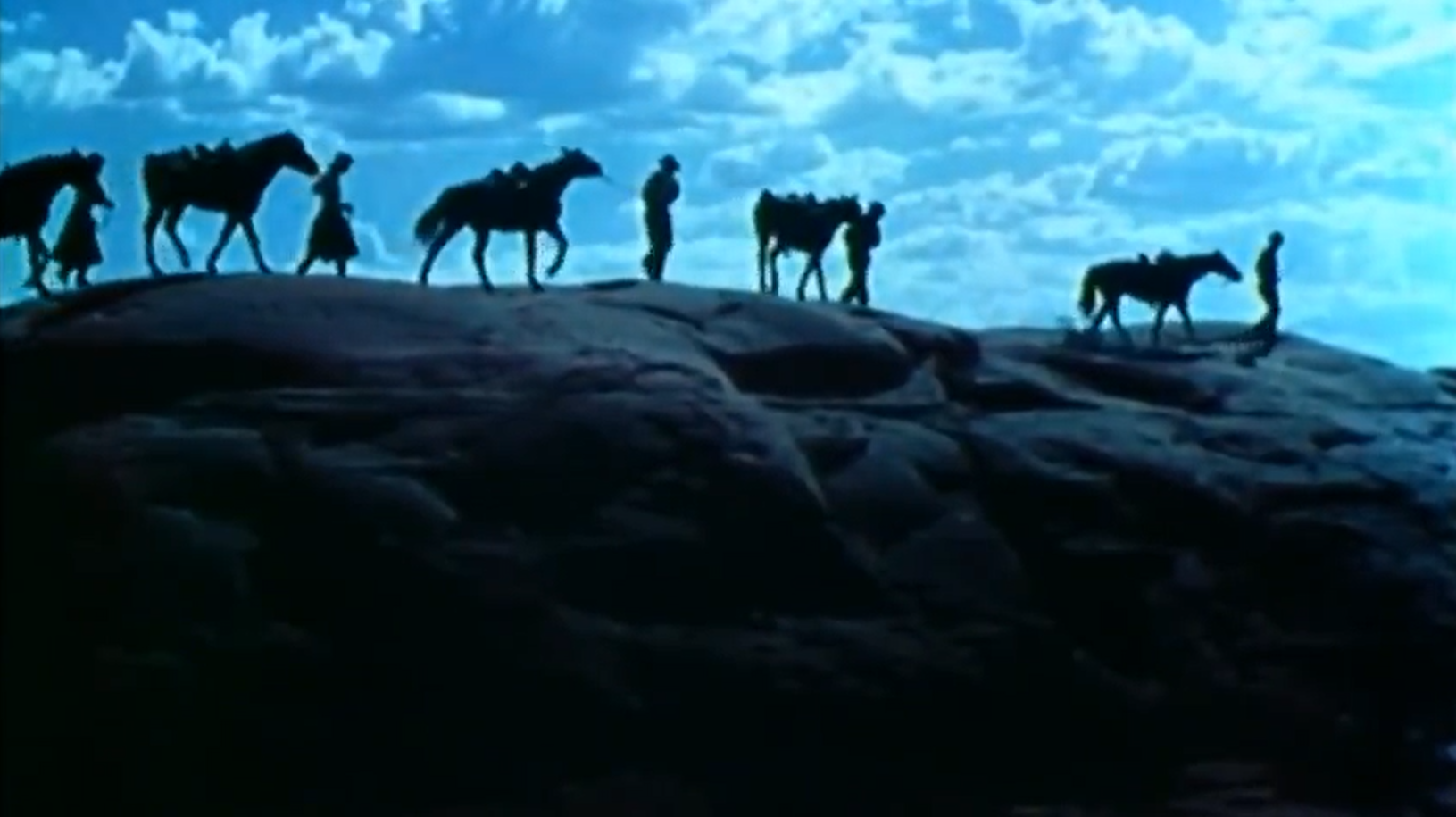
Indeed, without Patterson’s seemingly random presence as Jarman is talking about the matter with Brian, the film wouldn’t progress as it does. The scene of Patterson and Elzie Emanuel (playing the teenage son of Jarman’s family servants) driving along in her rickety jalopy to the cemetery while Jarman rides a horse in front of them is a truly surreal one:

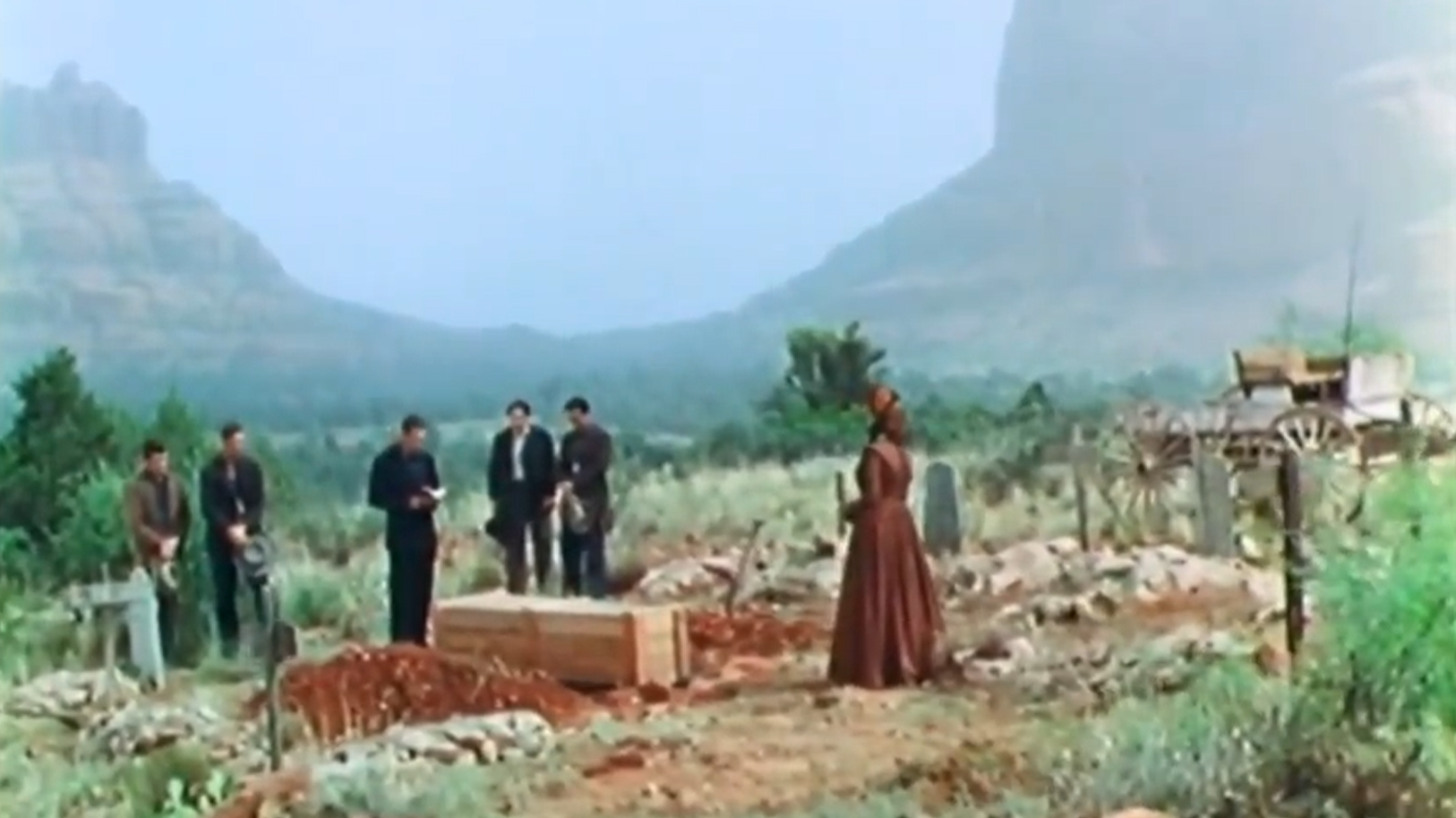
as is the entire scene that ensues. The gradual discovery of proof exonerating Hernandez is simultaneously miraculous and numbingly mundane — a vivid anecdote of how many black men in American have been killed on circumstantial “evidence” alone.

Redeeming Qualities and Moments:

  • Juano Hernandez as Lucas Beauchamp
  • David Brian as John Stevens
  • Elizabeth Patterson as Miss Eunice
  • Claude Jarman, Jr. as Chick Mallison
  • Atmospheric cinematography

  • Ben Maddow’s fine script

Must See?
Yes, as an unusual and still-powerful tale of racial (in)justice.

Categories

  • Good Show
  • Historically Relevant

Links:

Jackie Robinson Story, The (1950)

Jackie Robinson Story, The (1950)

“No matter what happens on the ball field, you can’t fight back.”

Synopsis:
After being hired by a Major League scout (Minor Watson), Jackie Robinson — with support from his wife Rae (Ruby Dee) — faces prejudice, doubt, and threats to his life while demonstrating his tremendous skills on the field.

Genres, Themes, Actors, and Directors:

  • African-Americans
  • Baseball
  • Biopics
  • Ruby Dee Films

Review:
Jackie Robinson starred as himself in this poignant depiction of his groundbreaking integration into Major League Baseball. Made on a small budget, the film covers just the basics of Robinson’s earlier life, but we learn enough to understand how he arrived at his historical role. To its credit, the film — made during ongoing segregation in many U.S. states — doesn’t shy away from showing ample evidence of systemic racism: the n-word is used several times; Robinson and his wife sit at the back of the bus; a game is cancelled when it’s announced Robinson will be playing; riots are threatened. Equally distressing is the onslaught of personal prejudice Robinson faces from both his teammates (some of whom sign a petition against him) and audience members (he endures no end of taunts, boos, and jeers, including a black cat being tossed down to him and his life being threatened by the KKK).

The following exchange early on — between Watson (as Branch Rickey) and Robinson — demonstrates his willingness to put his life and dignity on the line for a chance at an authentically remunerated career (“Negro” leagues were infamously low-paying and non-contracted):

Branch Rickey: Think you’ve got guts enough to play the game no matter what happens? They’ll shout insults at you. They’ll come into you spikes first. They’ll throw at your head.

Jackie Robinson: They’ve been throwing at my head for a long time, Mr. Rickey.

Branch Rickey: Suppose I’m a player in the heat of an important game. Suppose I collide with you at second base and when I get up I say, ‘You – you dirty black so-and-so!’ What do you do?

Jackie Robinson: Mr. Rickey, do you want a ballplayer who’s afraid to fight back?

Branch Rickey: I want a ballplayer with guts enough not to fight back. You got to do this job with base hits, stolen bases, and fielding ground balls, Jackie. Nothing else! Now I’m playing against you in a World Series and I’m hot-headed. I want to win this game. So I go into you spikes first. You jab the ball in my ribs and the umpire says, ‘Out.’ I flare. All I can see is your black face – that black face right over me. So I haul off and punch you right in the cheek. What do you do?

Jackie Robinson: Mr. Rickey, I’ve got two cheeks.

Branch Rickey: Good.

While it’s a modestly made flick, all film fanatics should watch this movie for its historical value as a film which dared to show at least some of the truth of what Robinson experienced during his path to well-earned fame.

Redeeming Qualities and Moments:

  • A powerful depiction of mid-century American racism


  • Robinson’s natural performance

Must See?
Yes, for its historical importance.

Categories

  • Historically Relevant

Links: