|
Genres, Themes, Actors, and Directors:
- Barbara Rush Films
- Dean Martin Films
- Edward Dmytryk Films
- Hope Lange Films
- Lee Van Cleef Films
- Marlon Brando
- Maximilian Schell Films
- Montgomery Clift Films
- Soldiers
- World War II
Review:
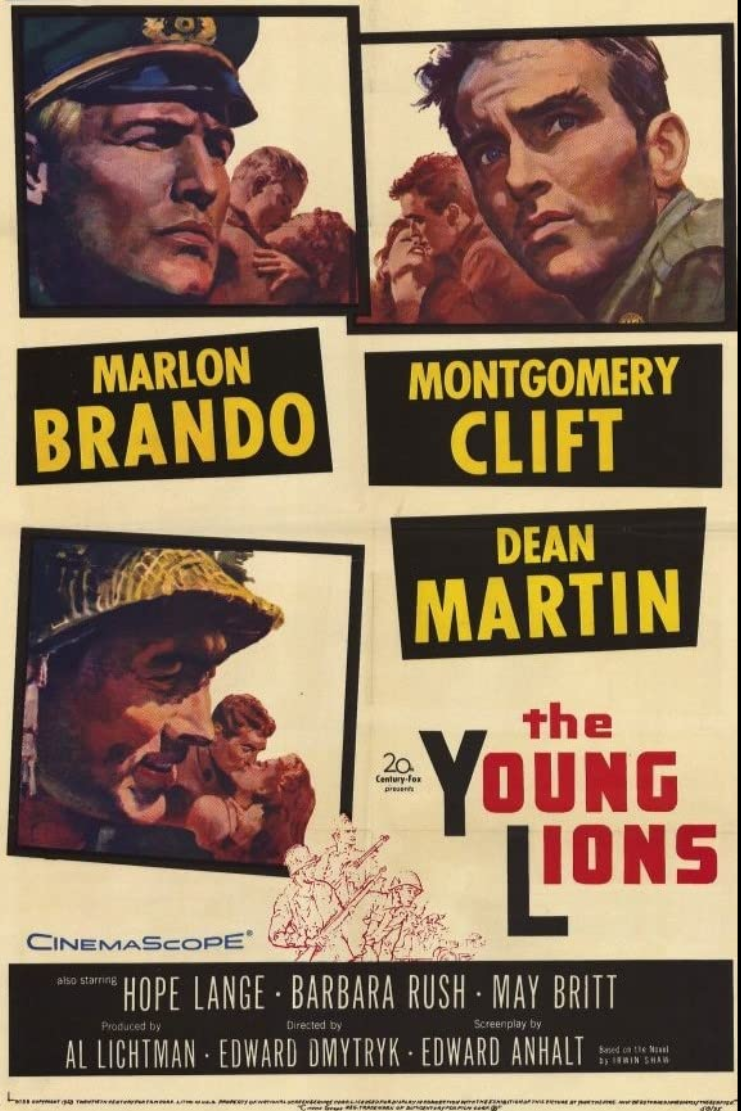
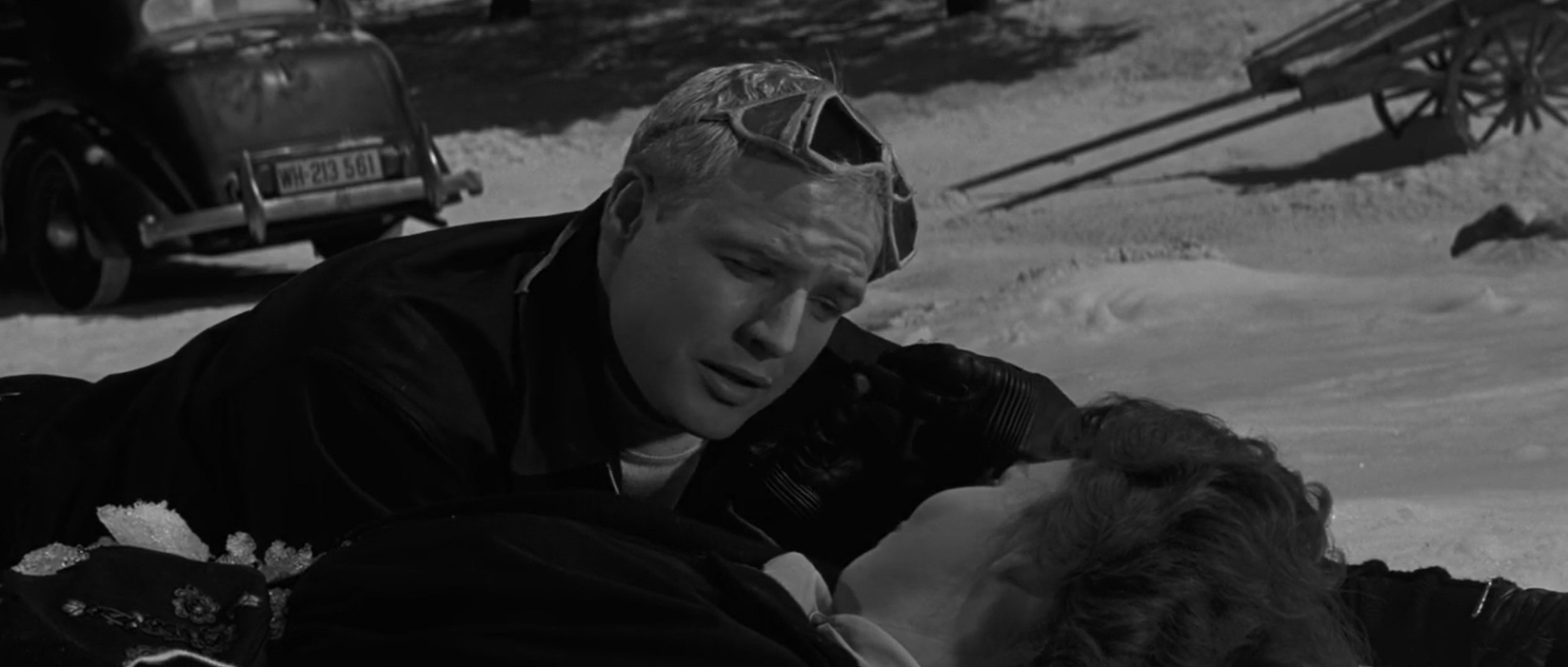
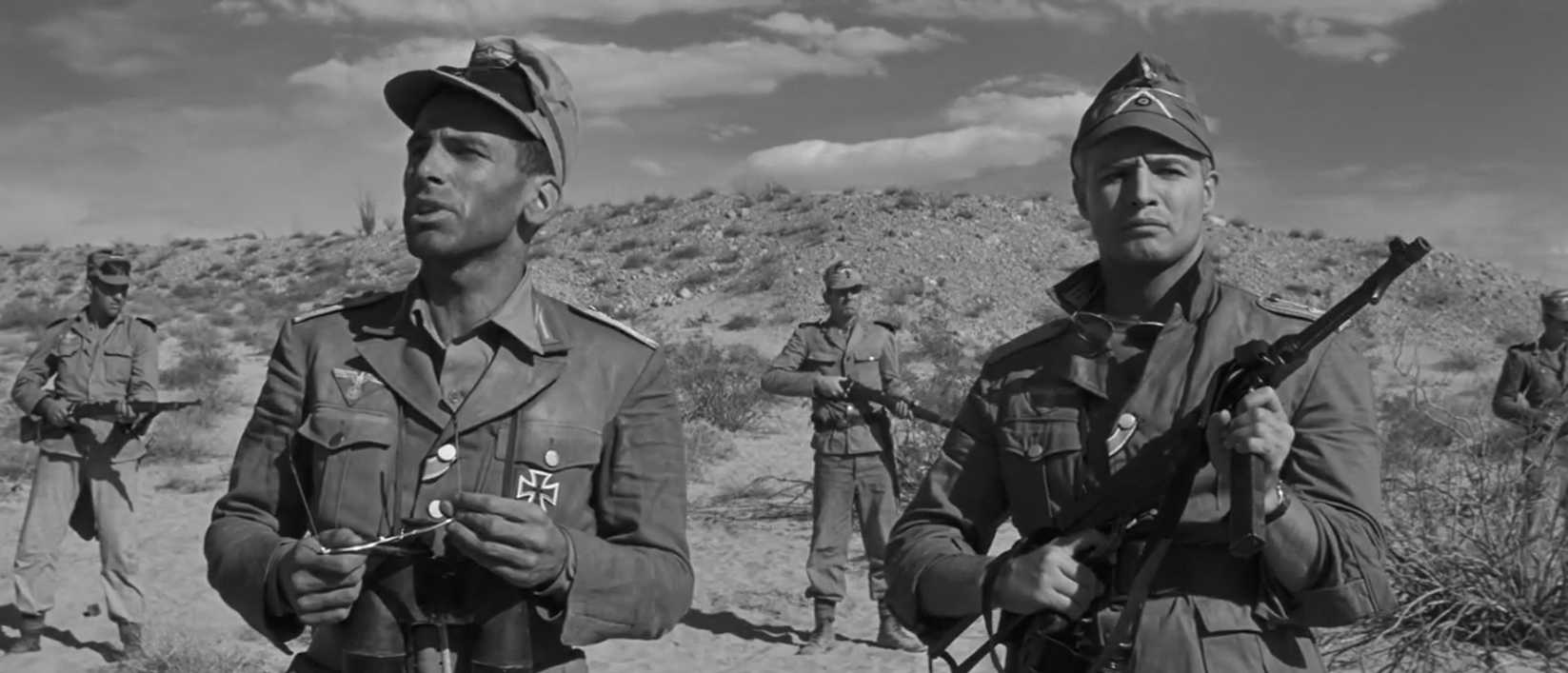
Formerly blacklisted director Edward Dmytryk helmed this nearly-three-hour adaptation of Irwin Shaw’s 1948 novel, covering the trajectories of three different soldiers and their girls during World War II. Other than the convenient intersection of Brando and Rush in the film’s earliest scenes (at a ski resort):
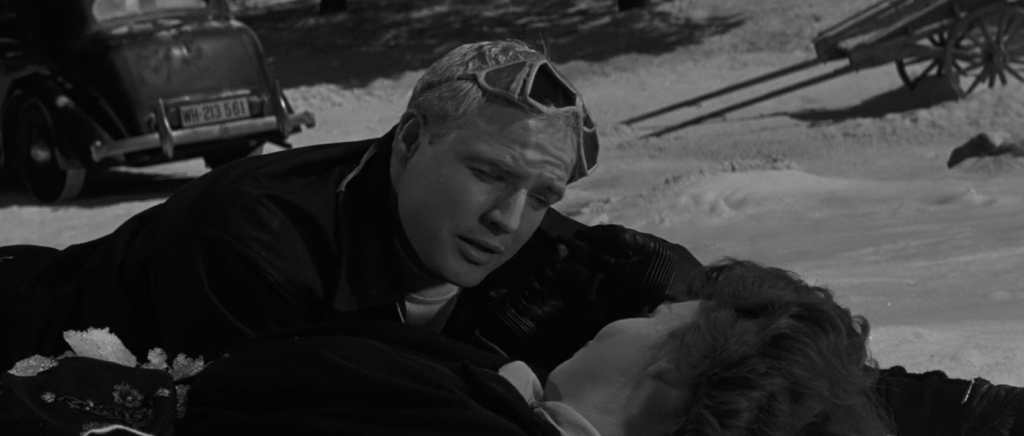
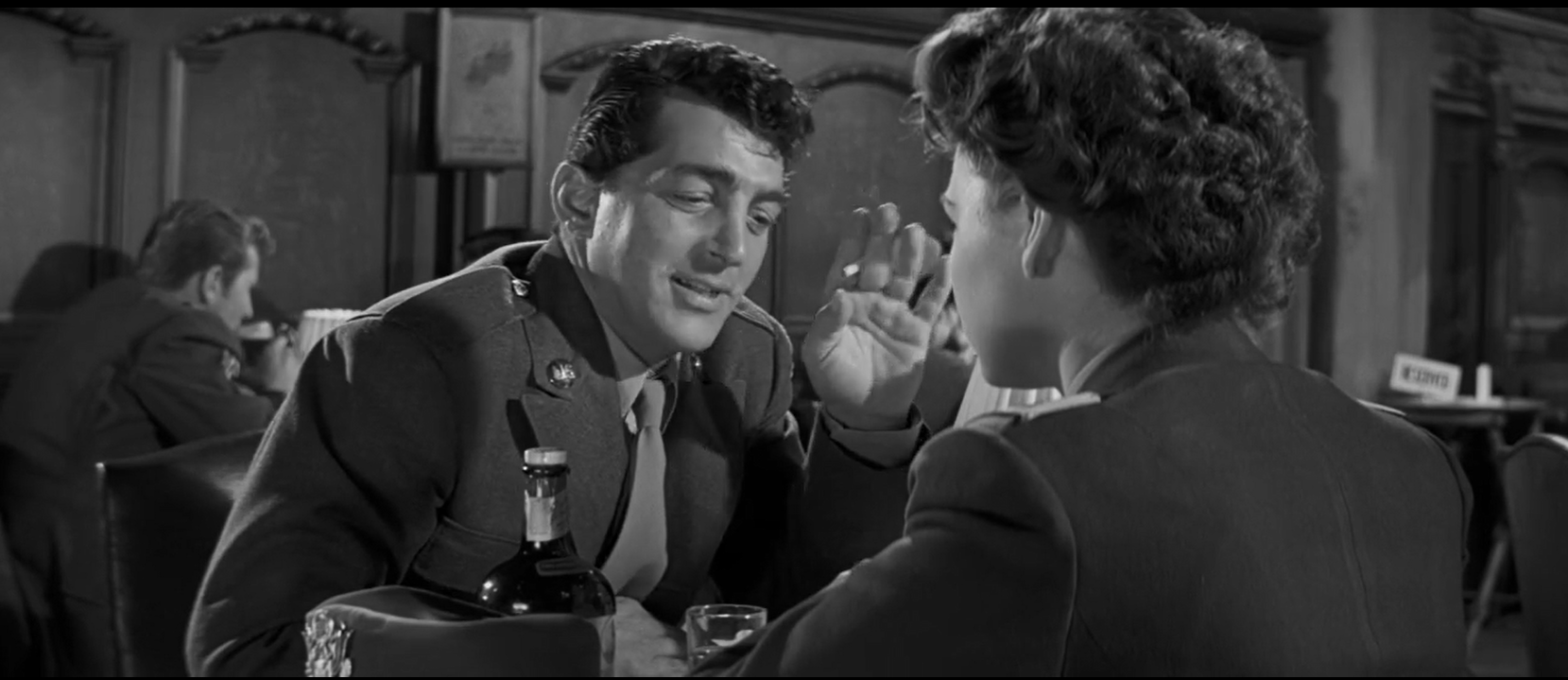
… it’s difficult to understand why these particular storylines have been pulled together, other than to show us how American and German lives inevitably intersected. To that end, Martin’s character gets the film’s best line, spoken early on when he’s explaining his resistance to fighting:
“Look, I’ve read all the books. I know that in 10 years we’ll be bosom friends with the Germans and the Japanese. Then I’ll be pretty annoyed that I was killed.”
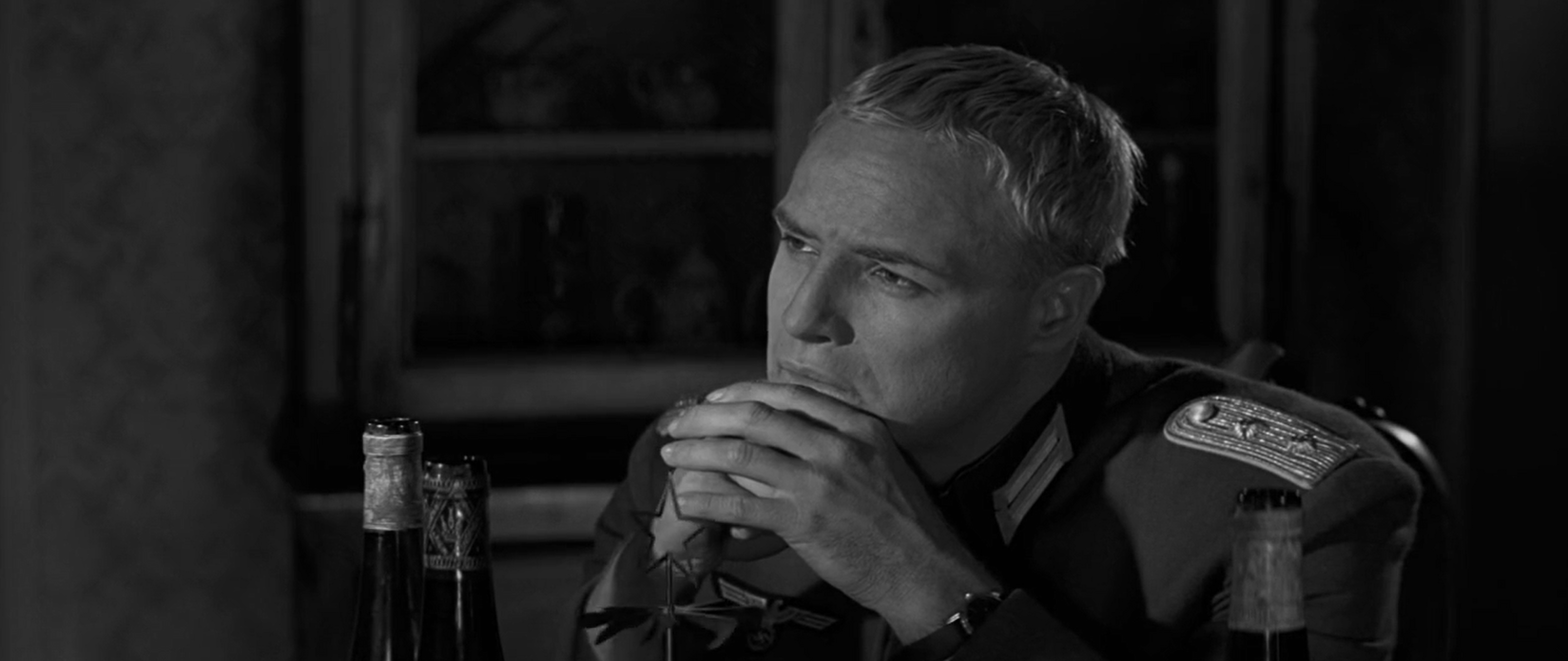
indeed, given that this film was released more than 10 years after the end of the war, some perspective had been gained — and it was likely easier for viewers to empathize with a conflicted Nazi like Brando.
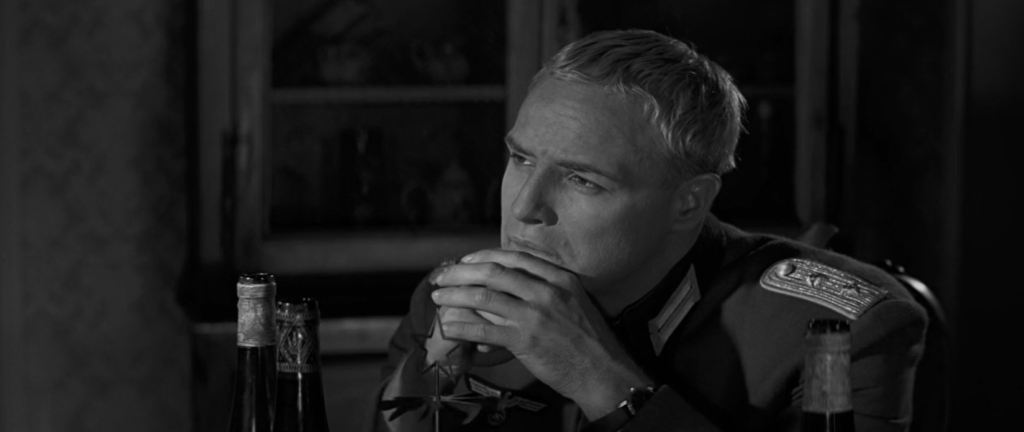
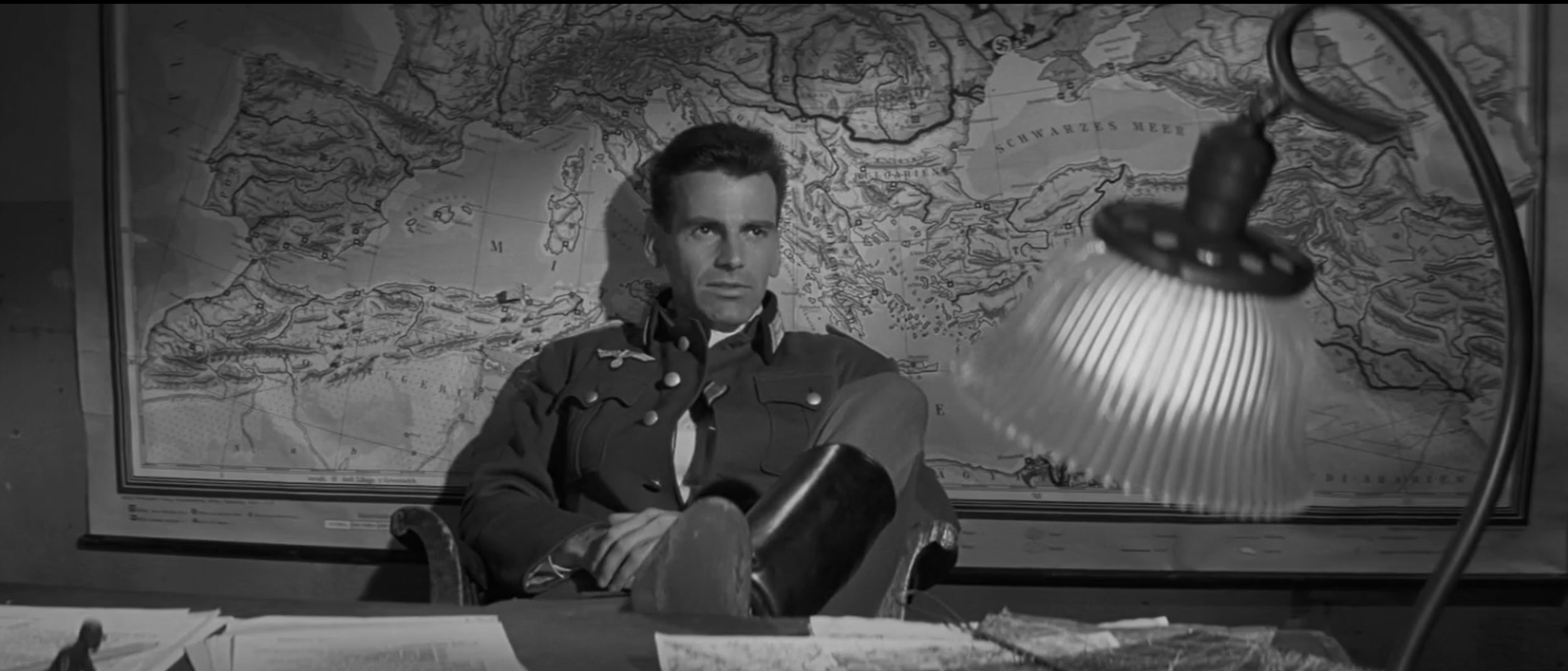
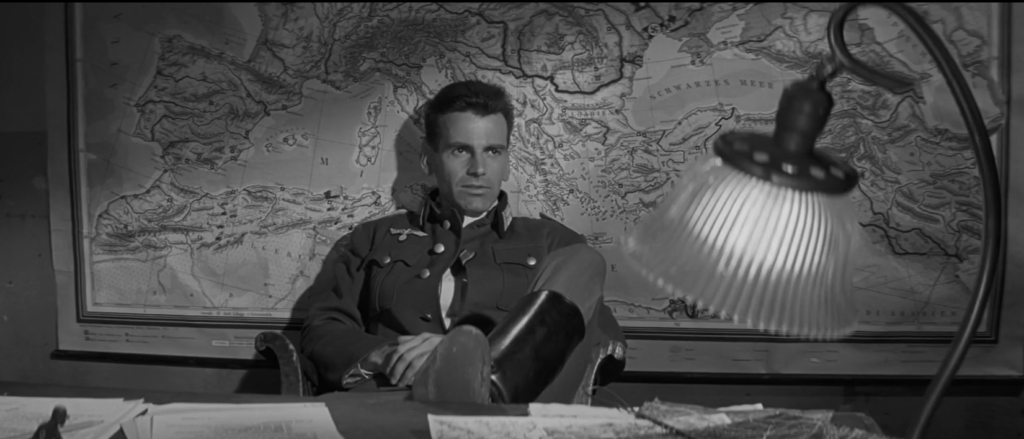
Schell, on the other hand (in his American screen debut), simply oozes Aryan arrogance:
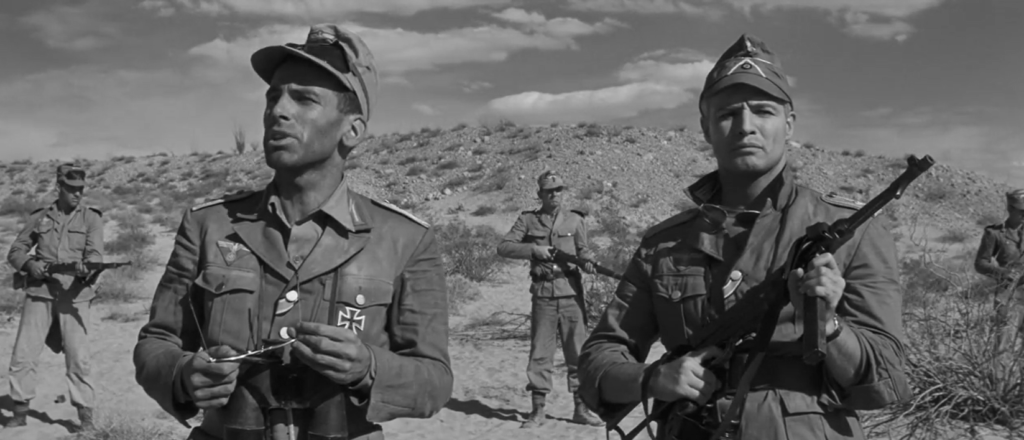
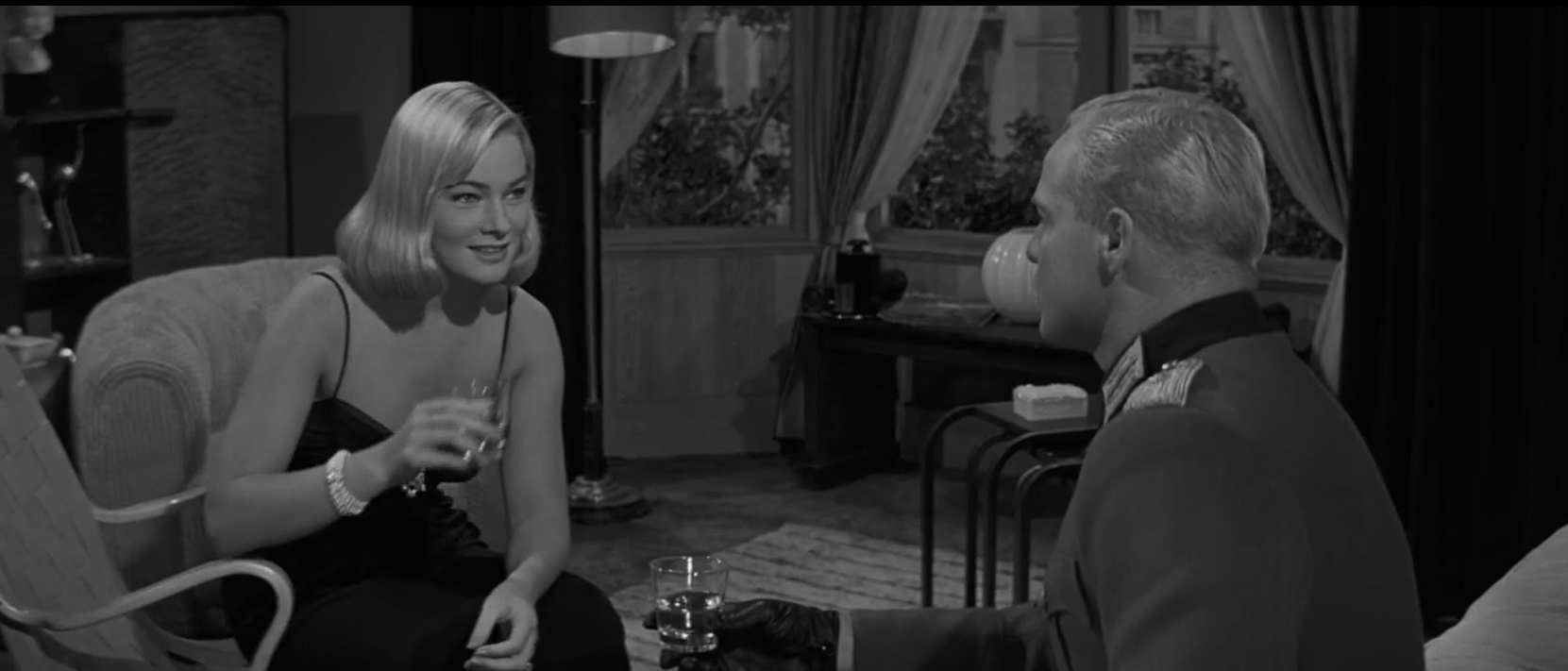
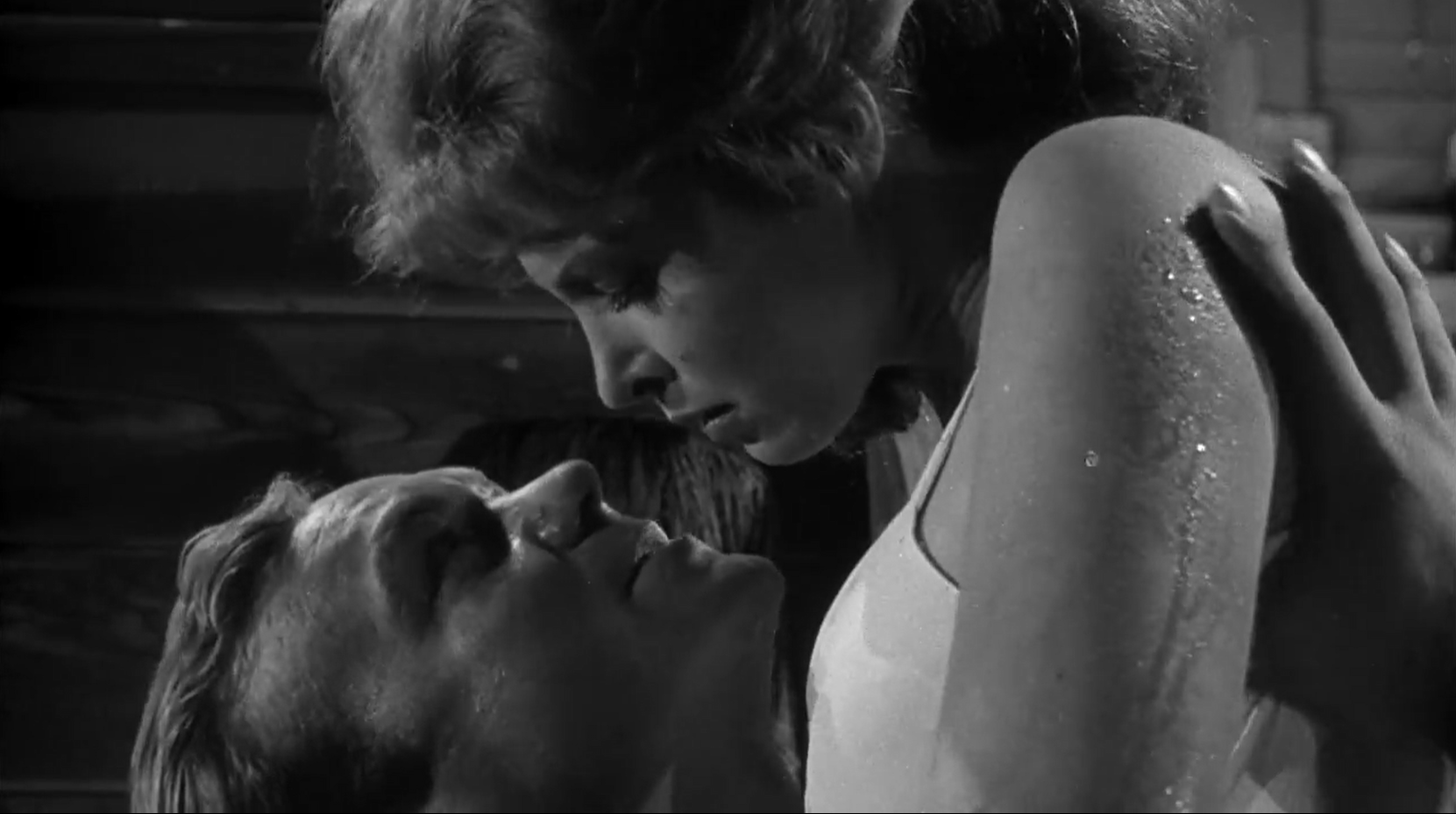
… representing everything about the Nazis’ approach to life and war that Brando comes to detest. Meanwhile, it’s unclear what kind of “understanding” Schell has with his beautiful wife (Britt), who almost instantly propositions Brando when he goes to visit her (at Schell’s request):
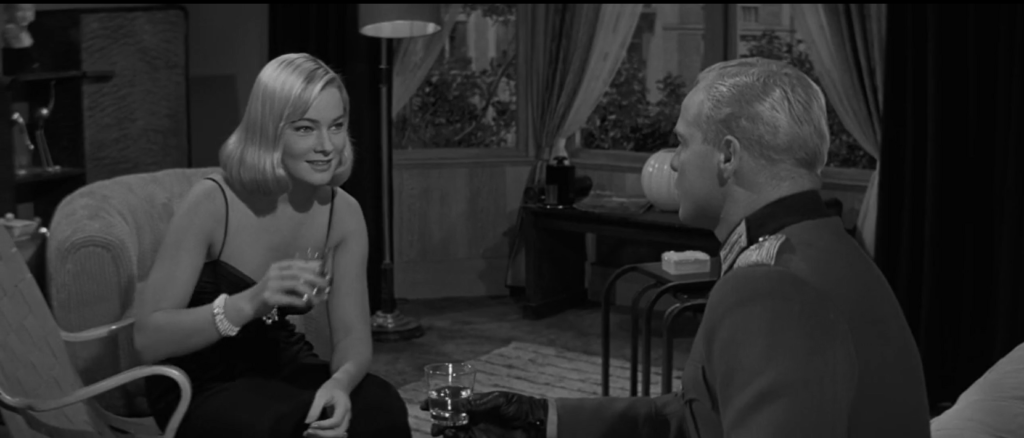
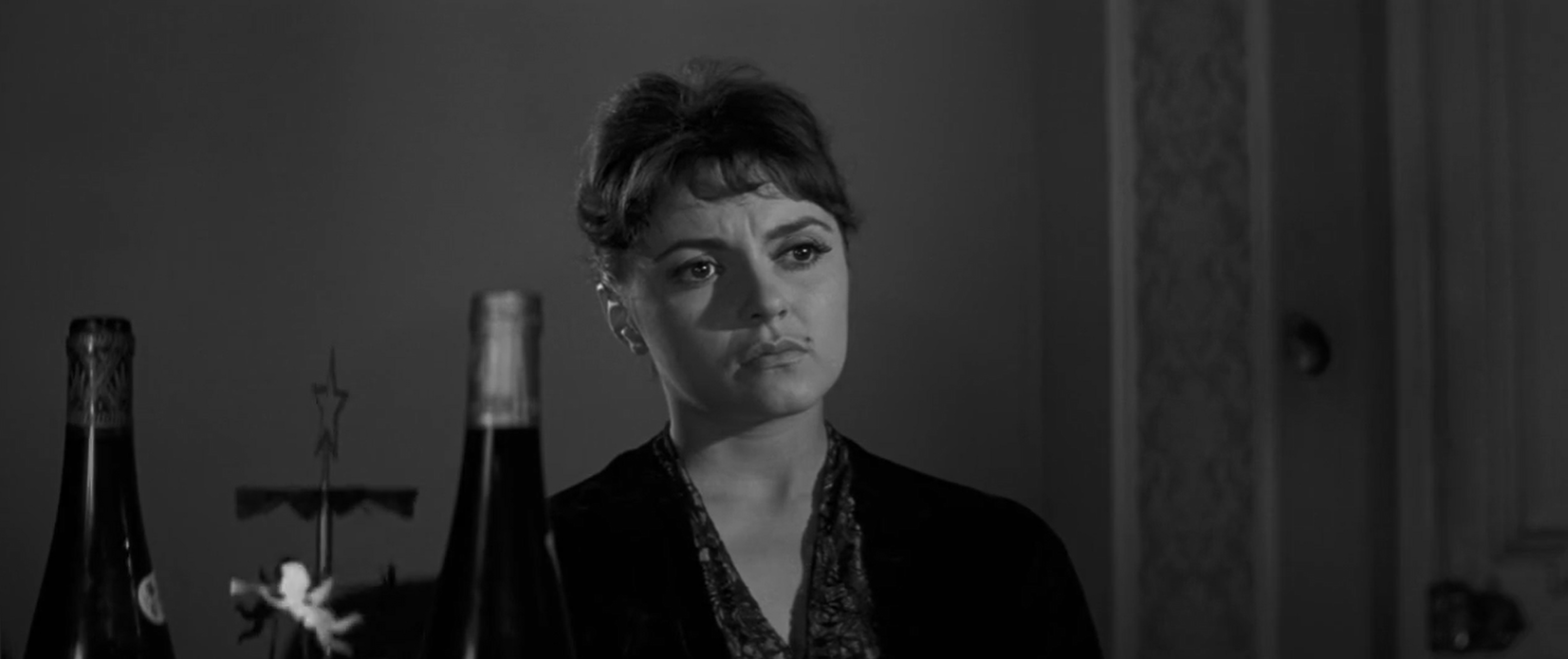
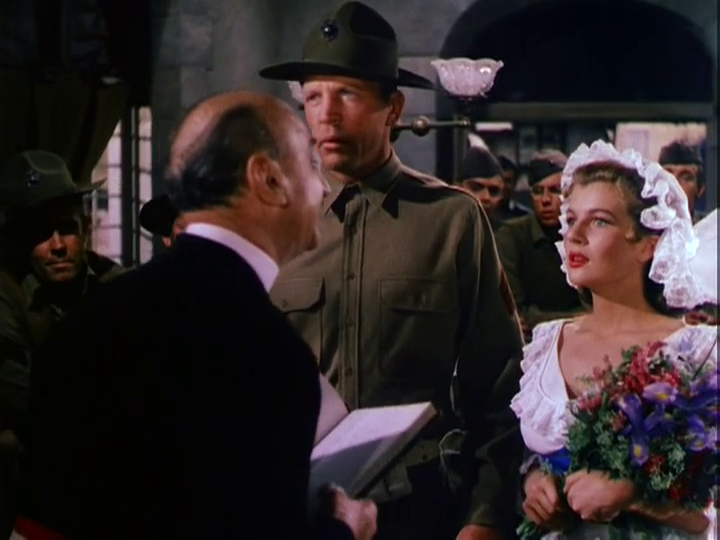
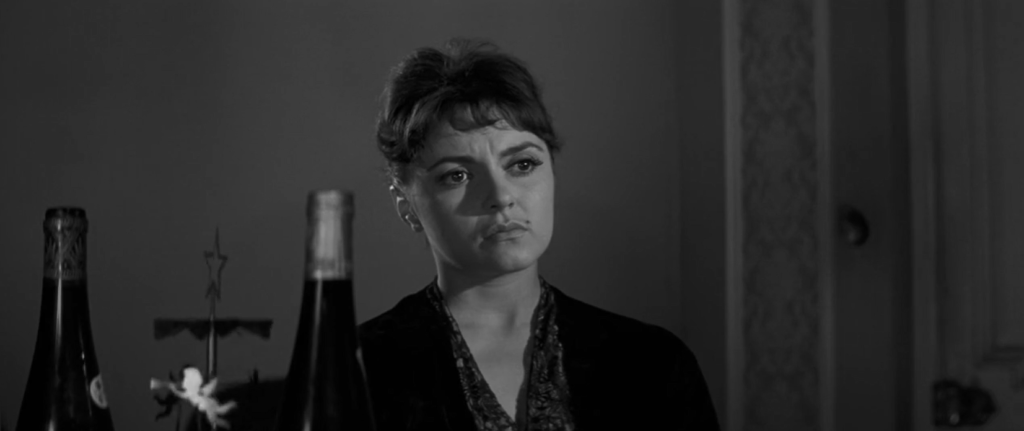
Brando’s other would-be love interest — patriotic Francoise (Montvecchi) — seems included simply to show his conflicted desire for more than Germany.
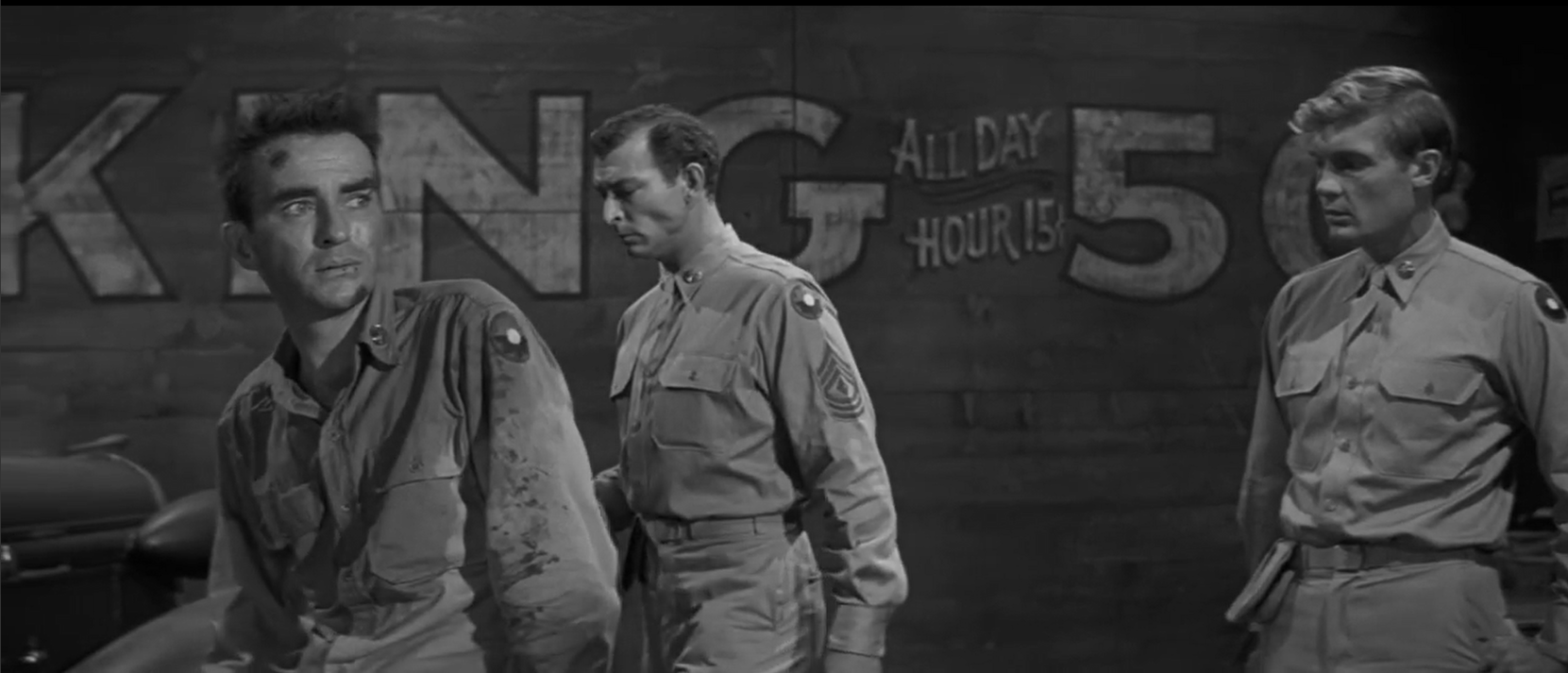
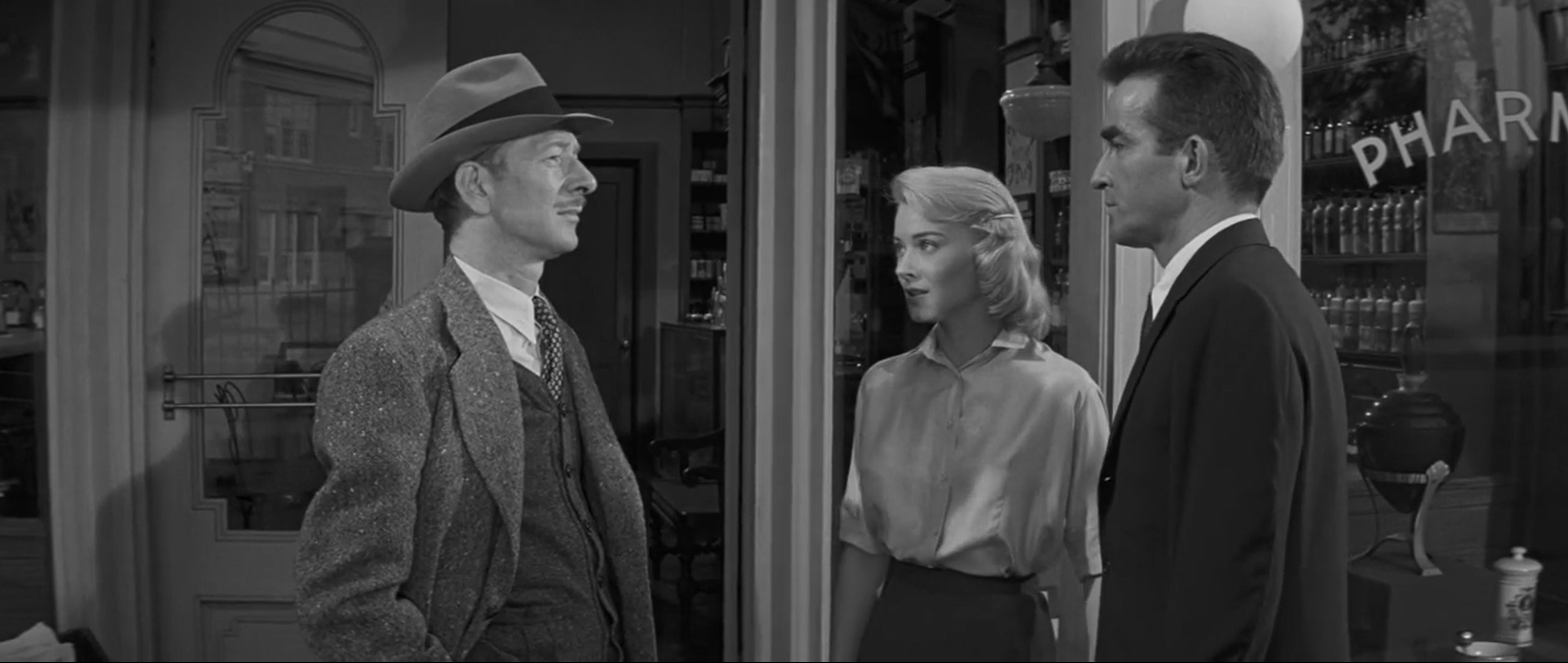
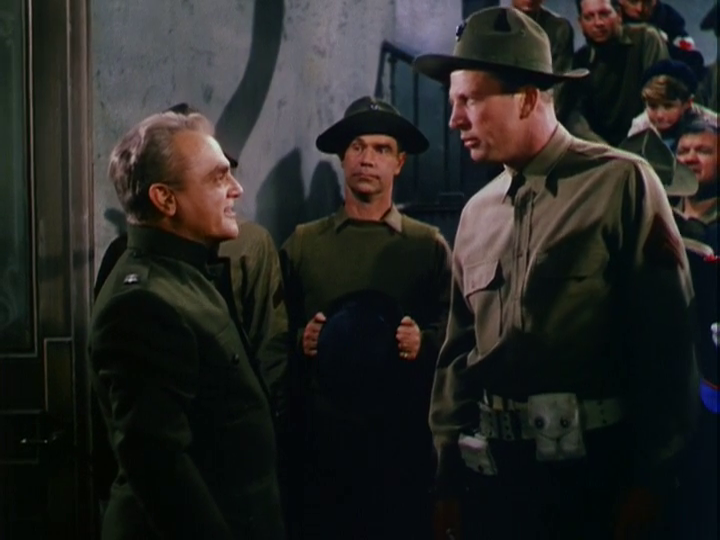
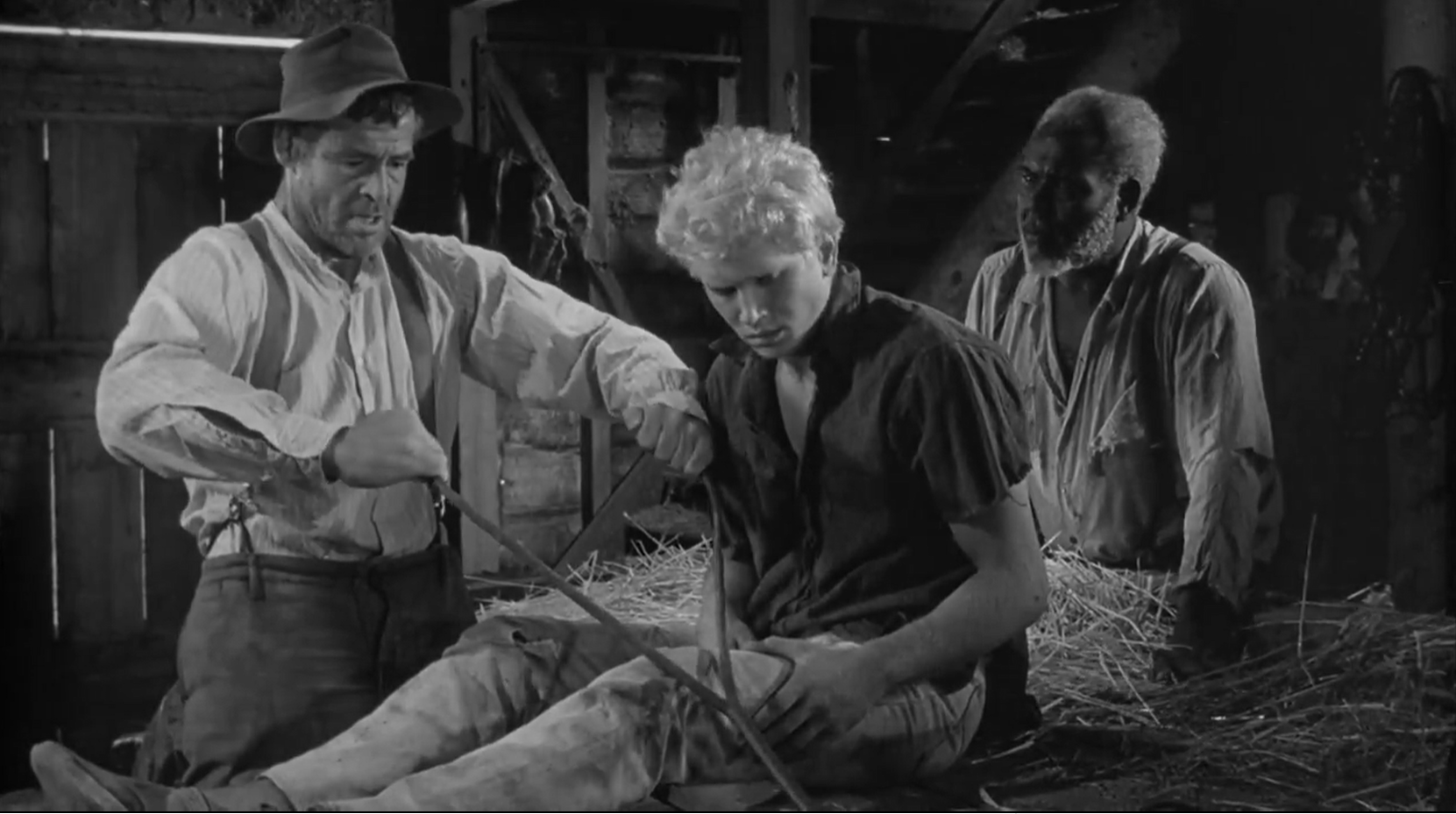
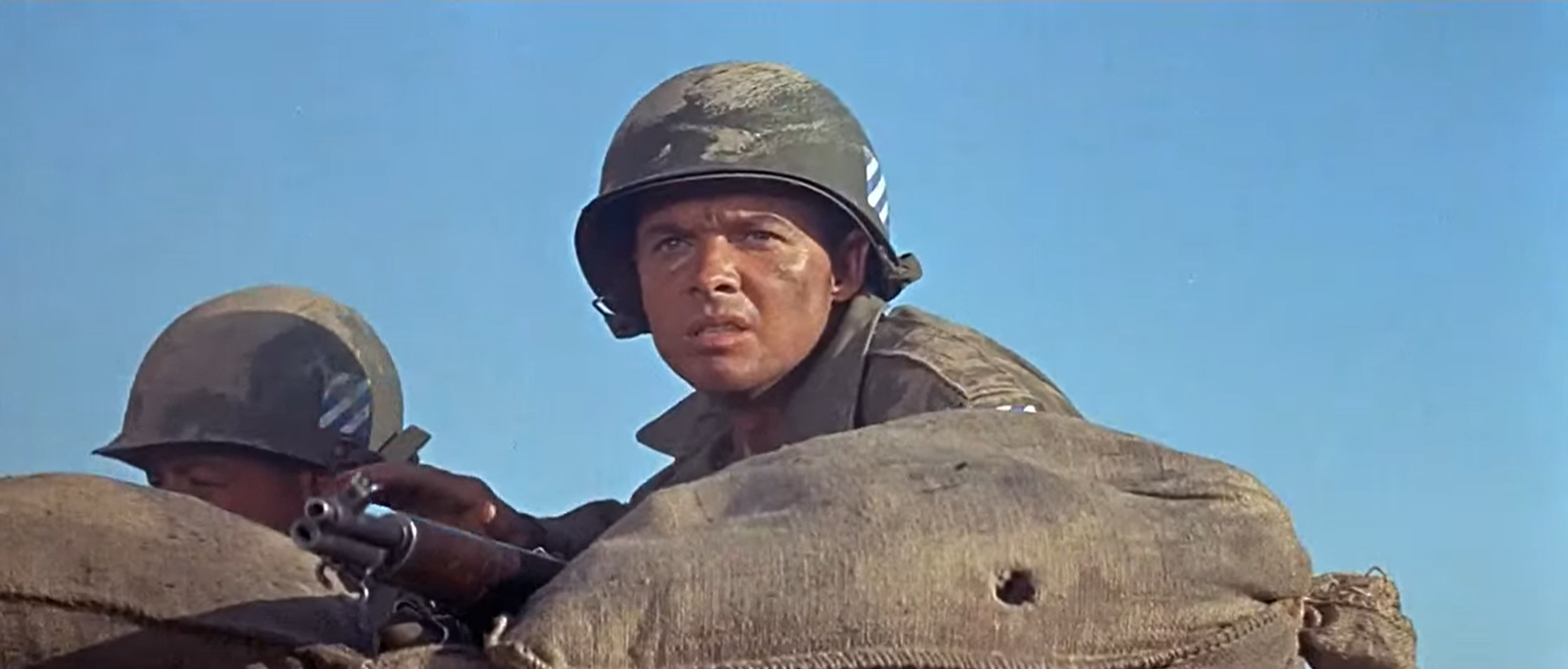
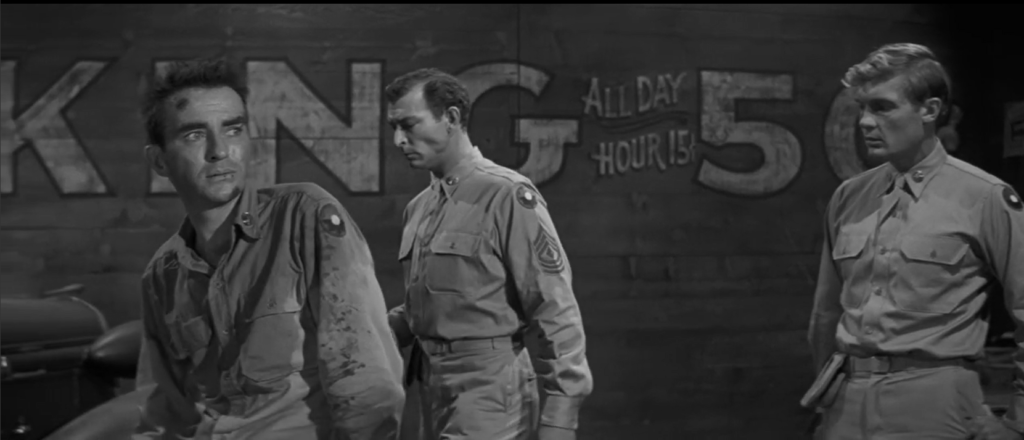
On the American side of things, the storyline about Clift’s “Noah Ackerman” hints at parallels to his character in From Here to Eternity (1953) — though this time he chooses to fight in order to stand up against (anti-Semitic) bullies who have stolen his money and are determined to give him a hard time:
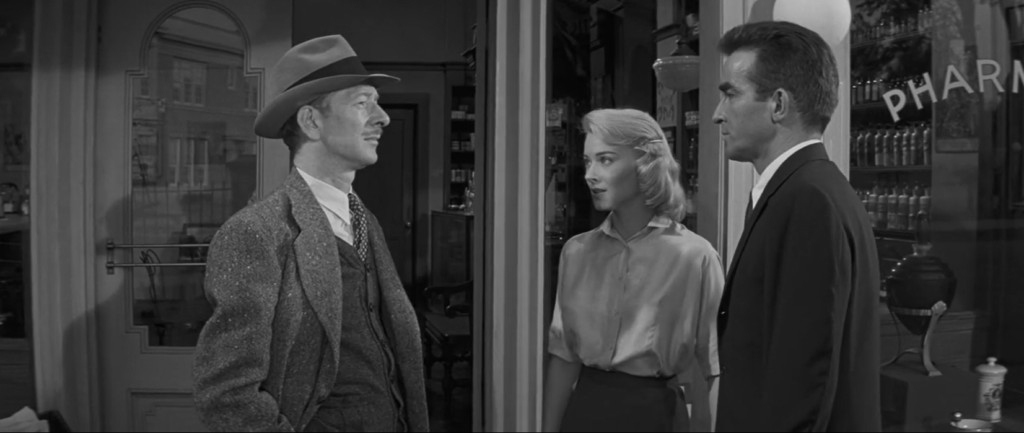
Lange is appealing as Clift’s romantic partner waiting for him back at home, and her character’s world also exposes us to a bit more of America’s thinly veiled anti-Semitism when we hear her father (Vaughn Taylor) — who “never knew a Jew before” — openly telling Clift he wishes “to heaven [he’d] turn around and get on [a] bus and never see” his daughter again. (He has a change of heart.)
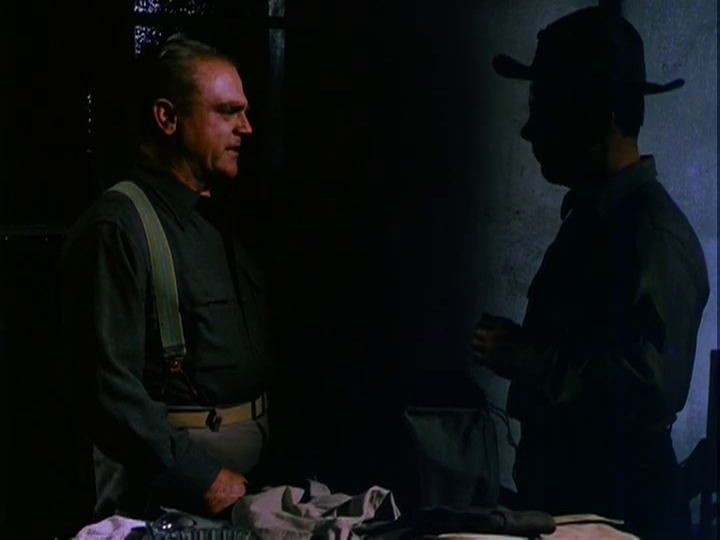
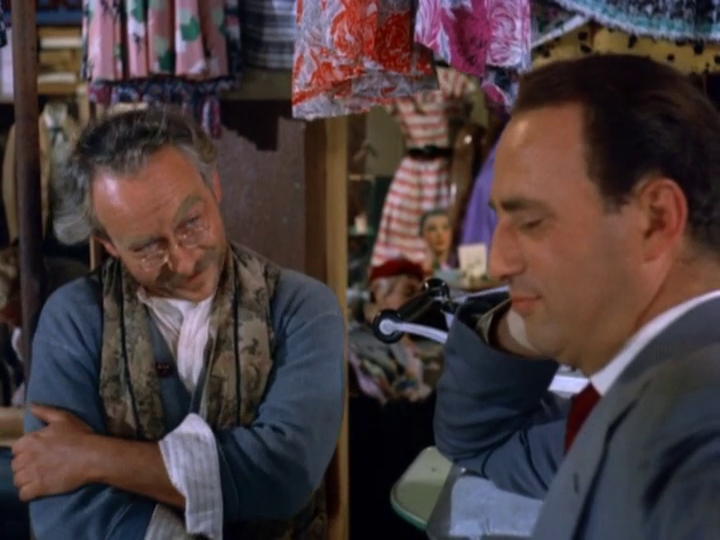
Martin’s “Michael Whiteacre” is the least developed of the three; we simply see him as a man who initially resists joining the army, but knows he must eventually move past his cowardice.
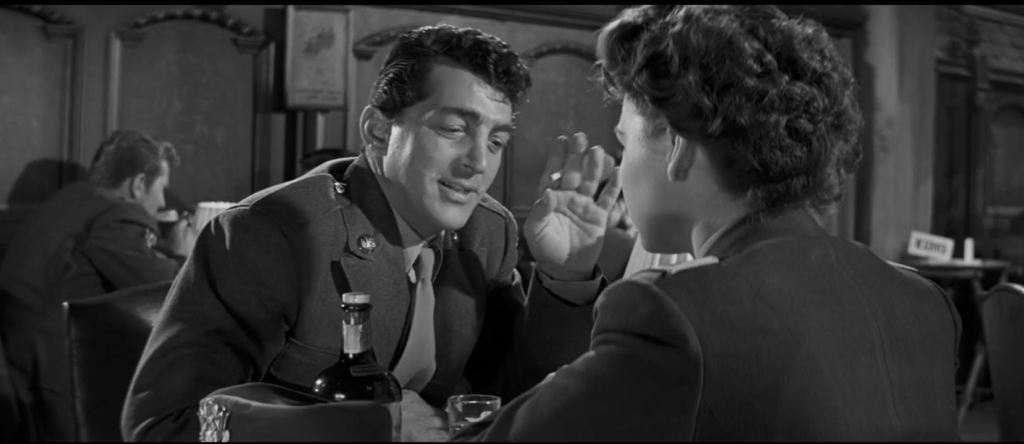
All three men grow and mature in some way, which is refreshing — but the overall storyline isn’t quite satisfying enough to recommend this one.
Notable Performances, Qualities, and Moments:
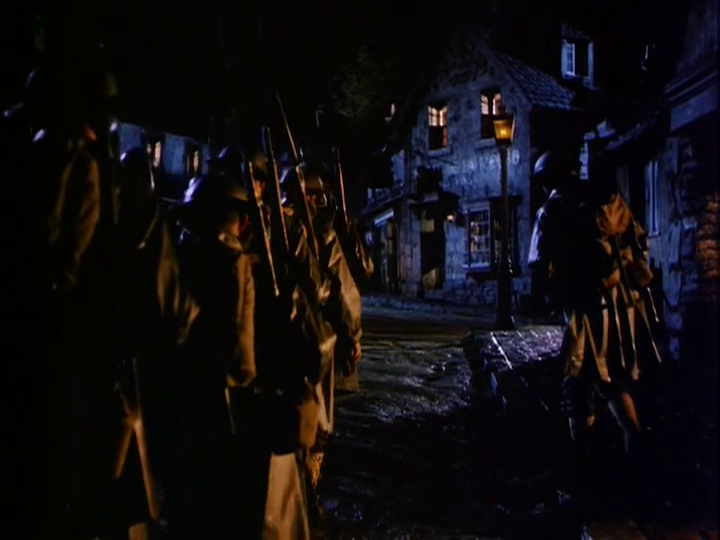
- Joseph MacDonald’s CinemaScope cinematography
Must See?
No; it’s only must-see for fans of the lead actors.
Links:
|