Browsed by
Category: Original Reviews

Responses to Peary’s “must see” movie reviews, as well as my own “must see” movie reviews up to and after 1986 (when Peary’s book was published).

Cruising (1980)

Cruising (1980)

“There’s a lot you don’t know about me.”

Synopsis:
A naive cop (Al Pacino) goes undercover in New York’s gay S&M scene in order to help capture a serial killer.

Genres, Themes, Actors, and Directors:

  • Al Pacino Films
  • Homosexuality
  • Karen Allen Films
  • Murder Mystery
  • S&M
  • Serial Killers
  • Undercover Cops and Agents
  • William Friedkin Films

Review:
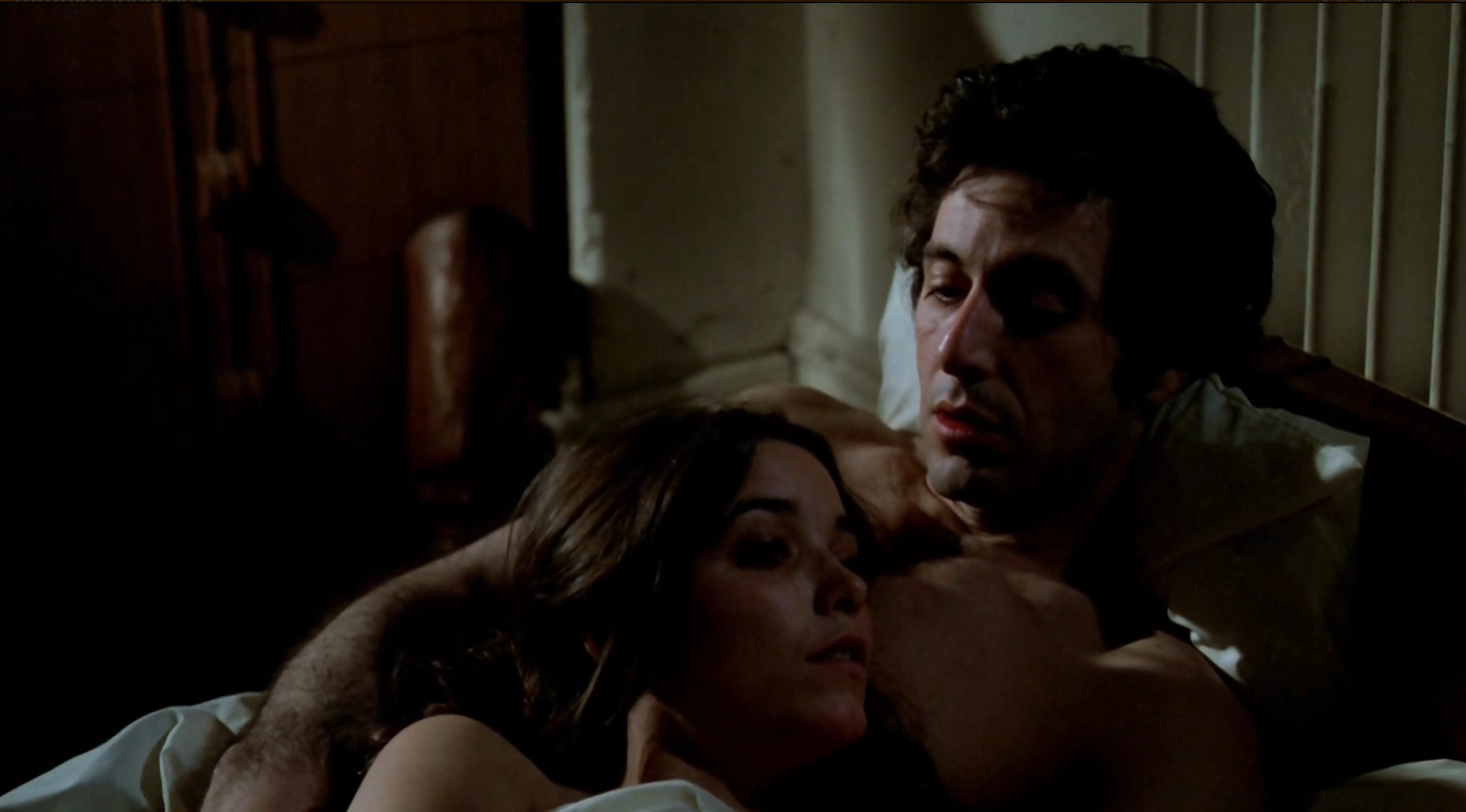
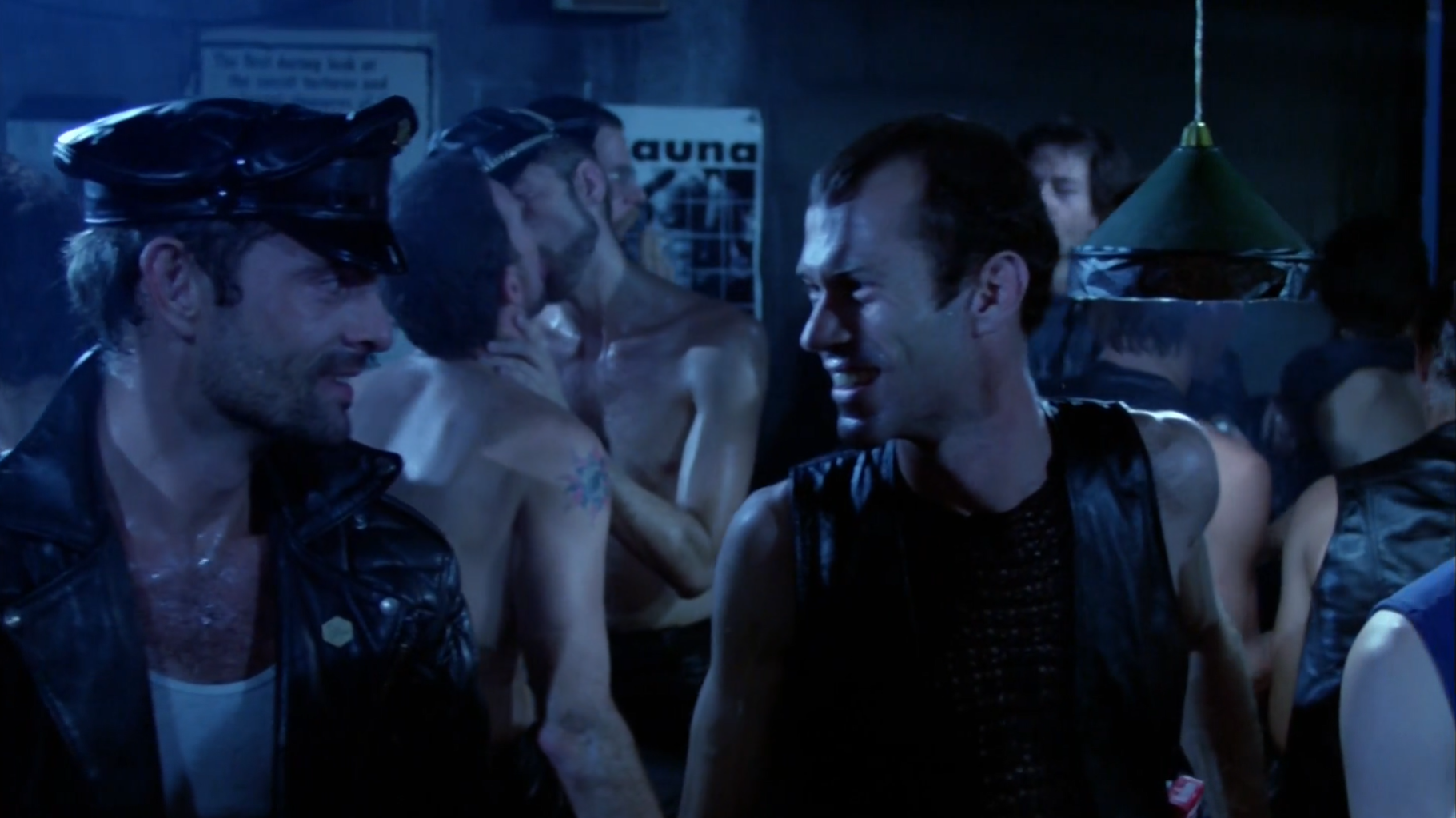
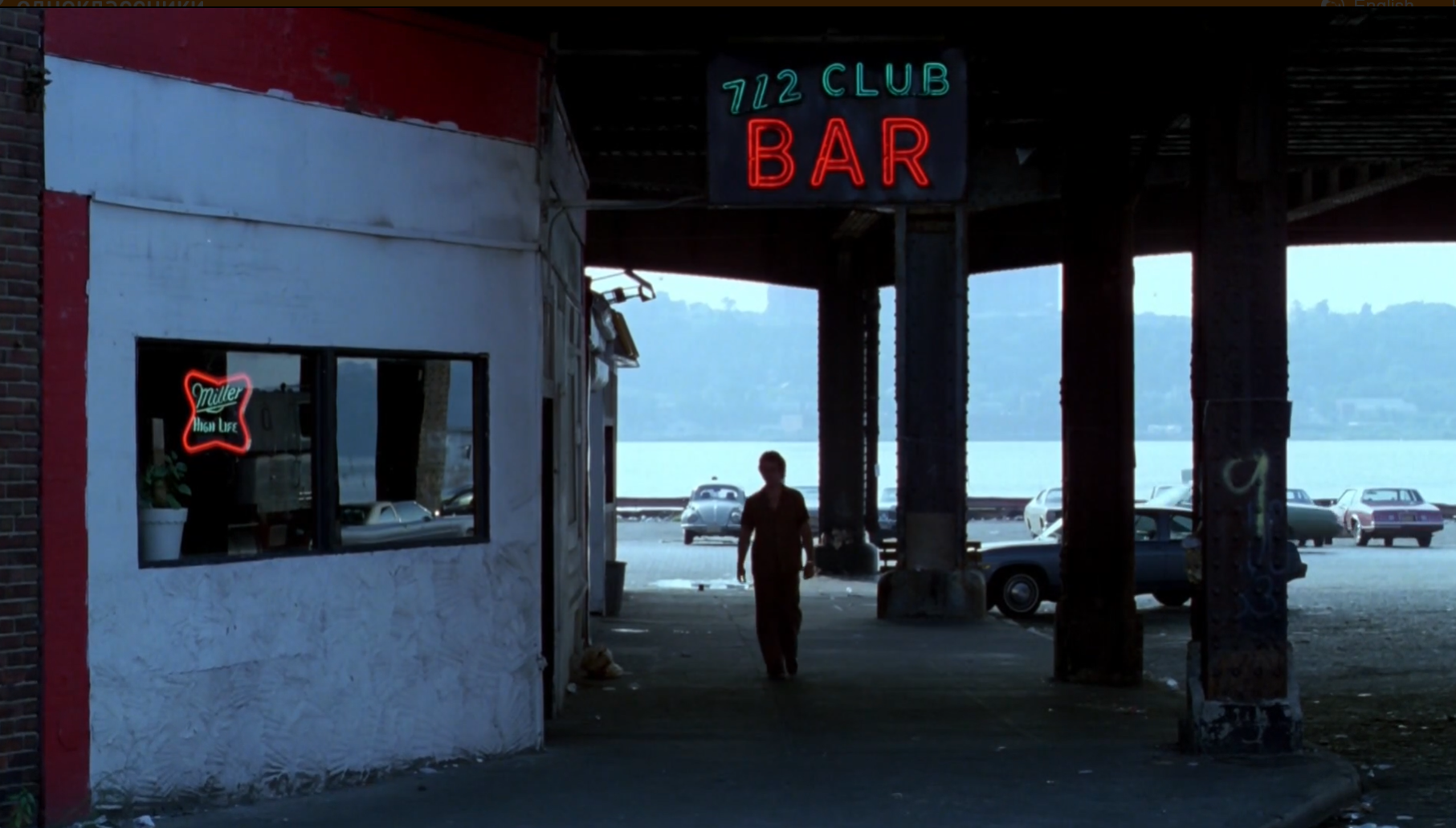
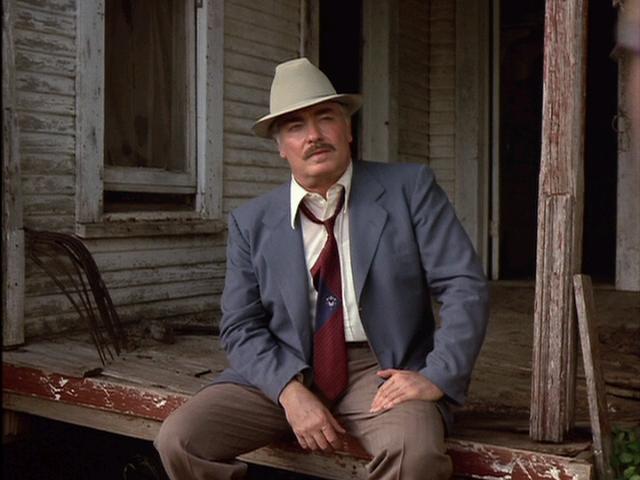
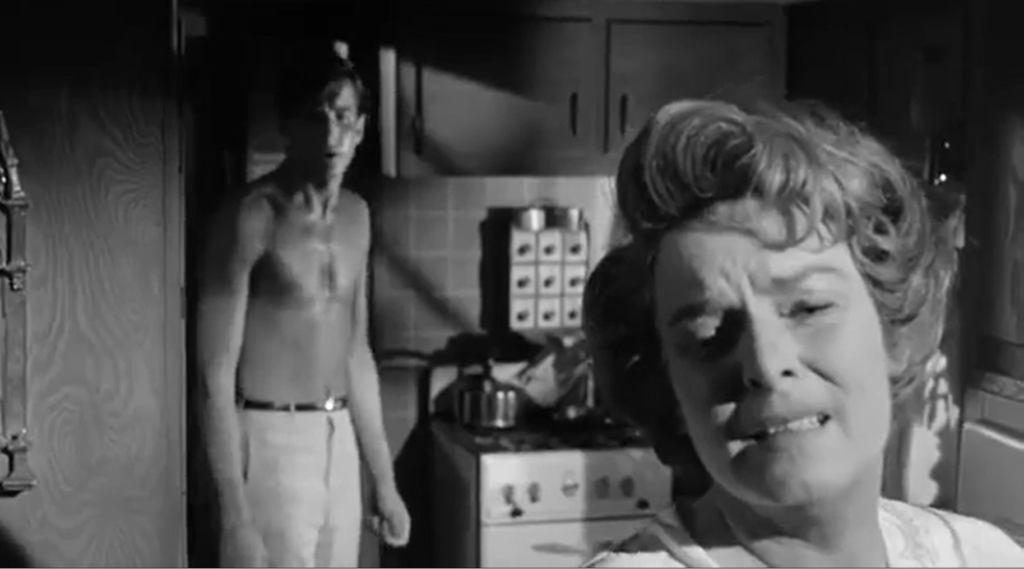
This notorious thriller — lambasted upon its release by many gay rights groups and critics — is ultimately more of a voyeuristic mood piece than an effective murder-mystery. While director Friedkin does a good job establishing the racy milieu of underground S&M clubs (his attention to detail is almost that of an anthropologist), his plot falters when it comes to characterization and consistency. We never learn enough about Pacino’s character to understand — or care about — the transformation he undergoes:

… and Karen Allen as his girlfriend (a potential protagonist for audiences to relate to) is wasted in a bit role.

In addition, the killer’s motivations are never satisfactorily explored, and the film’s resolution — when a likable character is inexplicably killed off — is confusing. With that said, Cruising remains must-see viewing simply for its erstwhile notoriety, and for Friedkin’s attempt at depicting one man’s “descent” into an uncomfortably foreign world.

Redeeming Qualities and Moments:

  • Effective use of NY’s underground S&M scene as a setting
  • Fine cinematography

Must See?
Yes, simply for its historical notoriety.

Categories

  • Controversial Film

Links:

Solid Gold Cadillac, The (1956)

Solid Gold Cadillac, The (1956)

“Did you hear her when I announced we were voting ourselves bonuses? She practically called us crooks!”

Synopsis:
When a small-time stockholder (Judy Holliday) of a large corporation starts asking too many questions, she’s given a meaningless job by the board of directors (including Fred Clark and John Williams) to keep her quiet. Soon, however, she discovers hidden layers of corruption in the corporation, and is determined to brings its honest CEO (Paul Douglas) back into a position of power.

Genres, Themes, Actors, and Directors:

  • Big Business
  • Collective Action
  • Corruption
  • Judy Holliday Films
  • Paul Douglas Films
  • Play Adaptations
  • Romantic Comedy

Review:
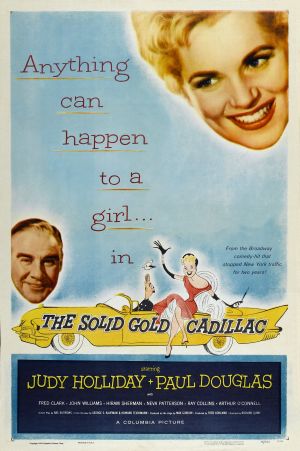
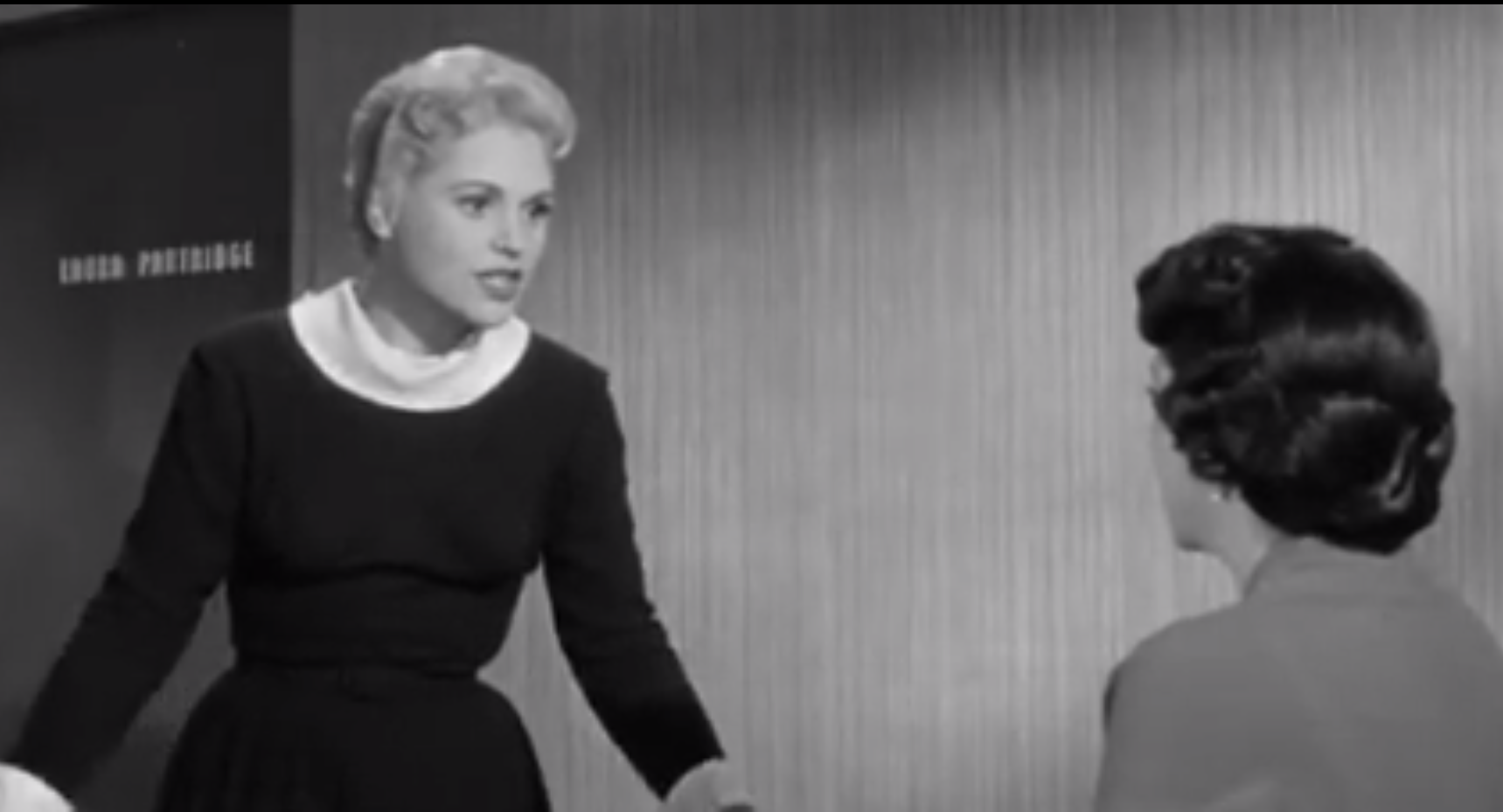
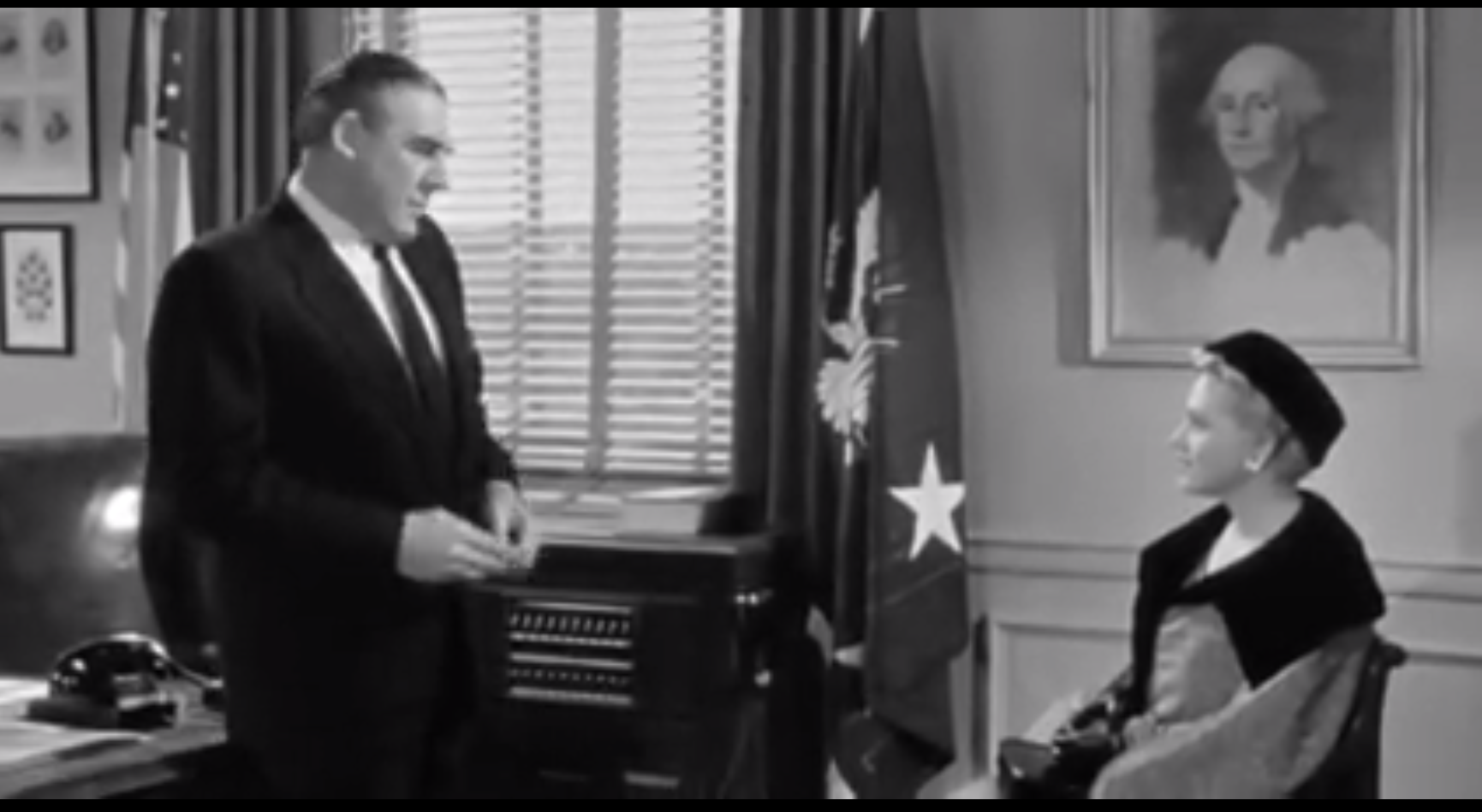
The Solid Gold Cadillac — based on a hit Broadway play — offered comedic actress Judy Holliday yet another chance to perfect her series of iconic performances as not-so-dumb blondes. Here, she’s perfectly cast as a naive yet persistent woman who dares to take on the corrupt behemoth of International Corporation (how’s that for a blandly descriptive name?), and finds herself falling in love (with Douglas) as a bonus. It’s not Holliday’s best film, but, as all fans of the ill-fated actress (who died far too early at the age of 44) will agree, it’s a treat to see her in nearly anything.

Redeeming Qualities and Moments:

  • Judy Holliday as Laura Partridge
  • Paul Douglas as Ed McKeever, Holliday’s love interest
  • A clever, often amusing tale of collective action

Must See?
No, but it’s recommended, and definitely must-see viewing for any fans of Judy Holliday.

Links:

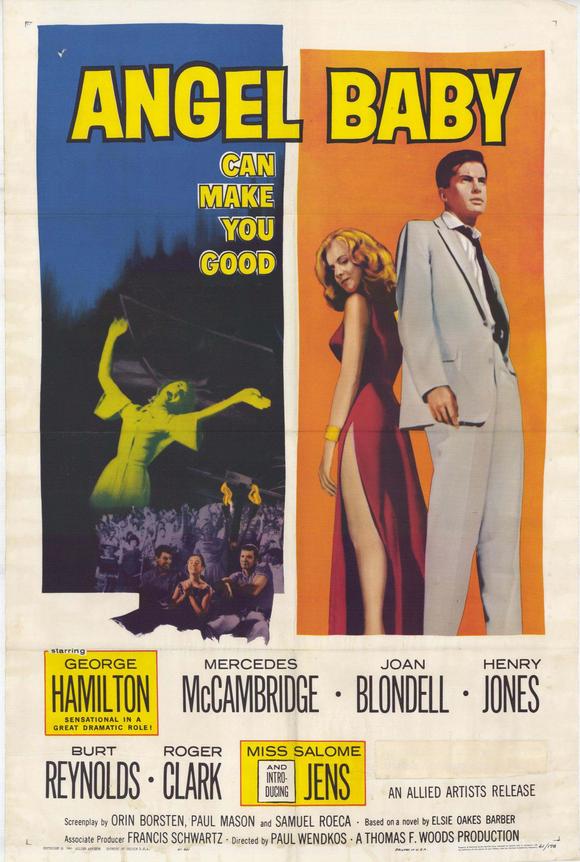
Angel Baby (1961)

Angel Baby (1961)

“God gave her voice, and he said, ‘Angel Baby, you teach them scriptures with your voice!'”

Synopsis:
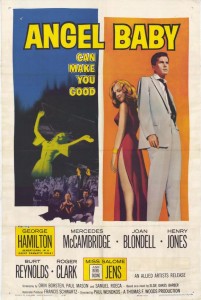
When a mute woman (Salome Jens) believes she’s been healed by a revivalist (George Hamilton), her faith in God is renewed, and she starts preaching. Soon she’s taken in by a crooked promoter (Roger Clark), who hopes to convince the public that “Angel Baby” can heal.

Genres, Themes, Actors, and Directors:

  • Burt Reynolds Films
  • Corruption
  • Deep South
  • George Hamilton Films
  • Love Triangle
  • Mercedes McCambridge Films
  • Missionaries and Revivalists

Review:
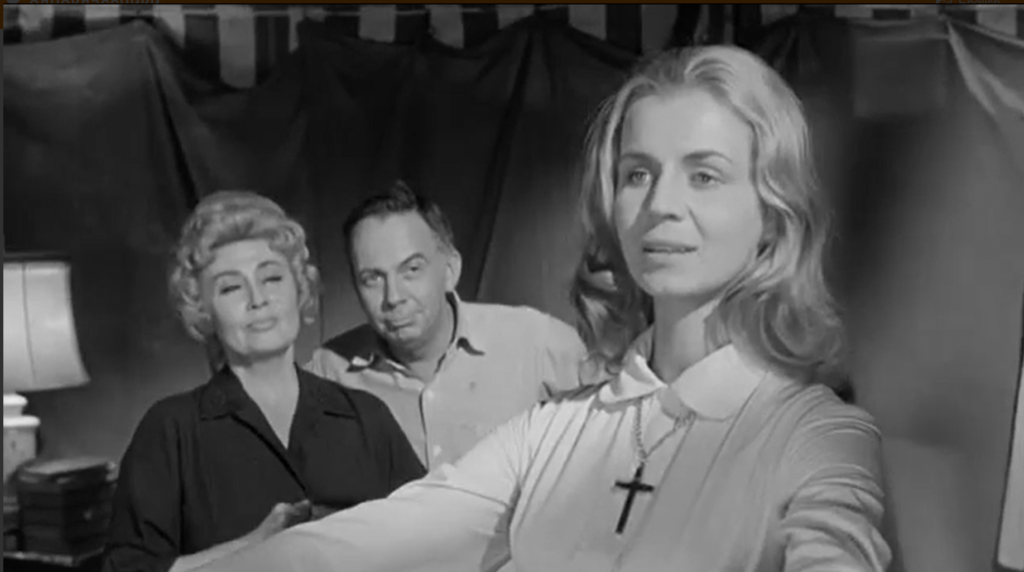
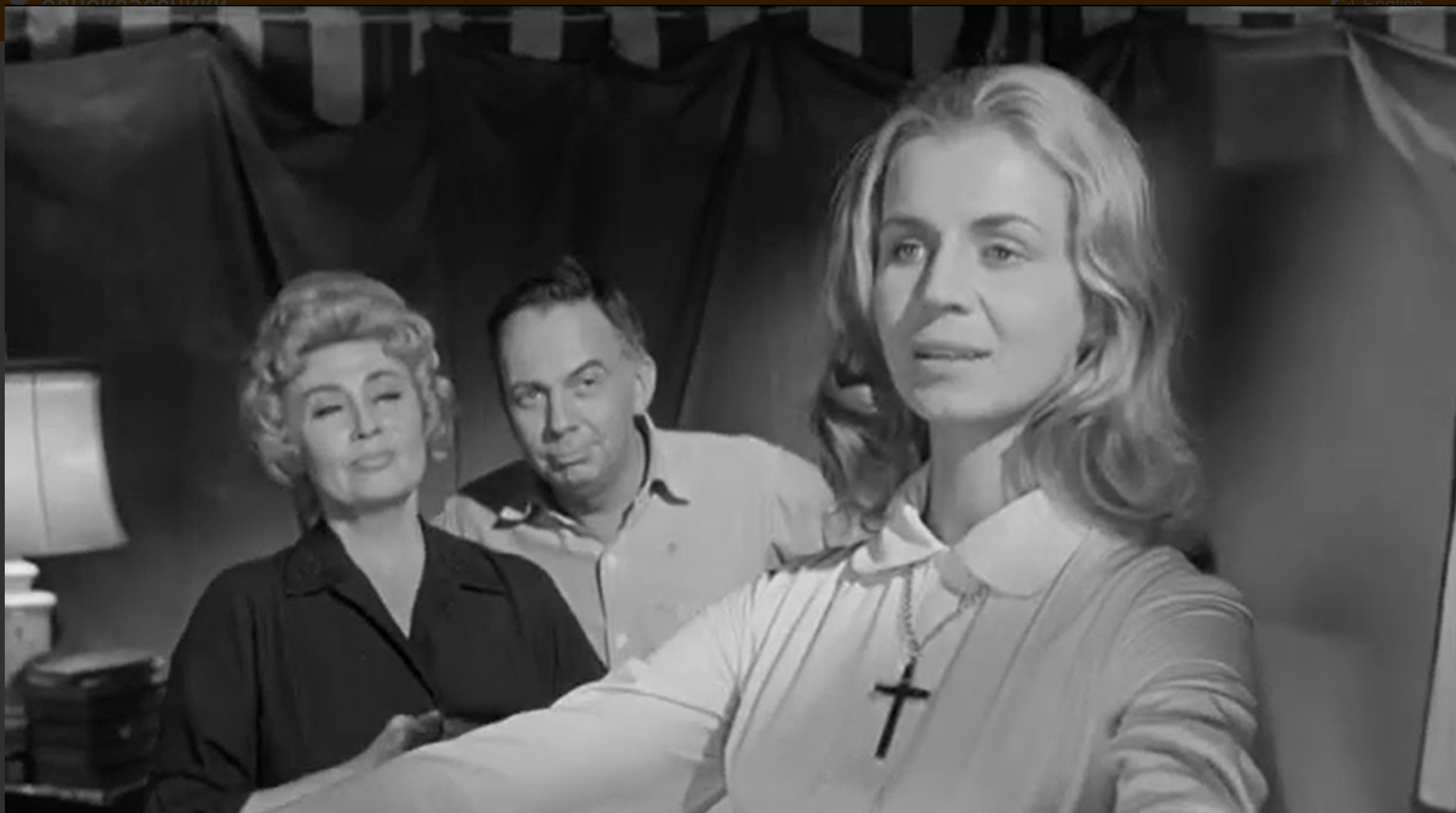
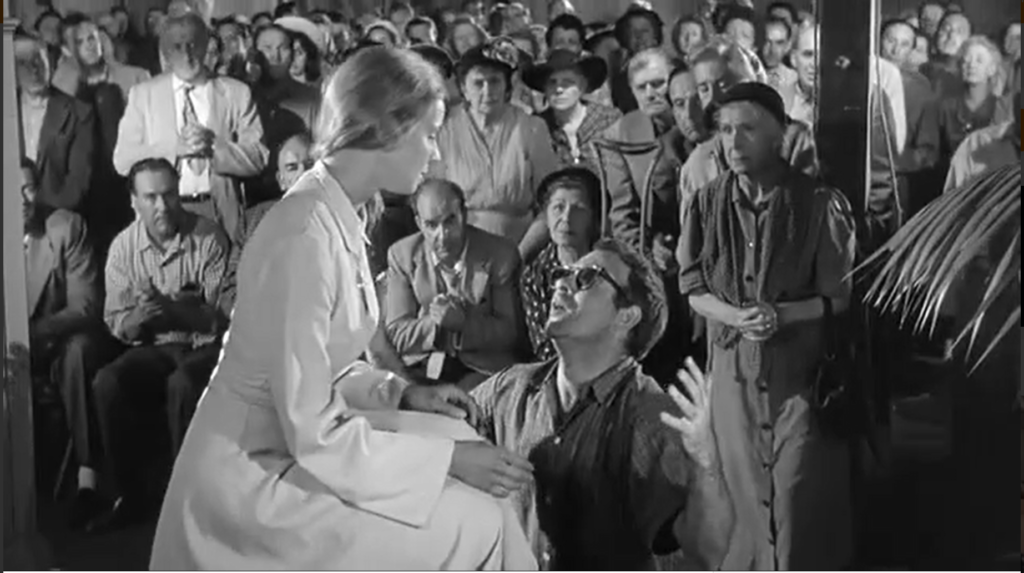
This B-level Elmer Gantry remains an enjoyable look at backwoods evangelism and the power of faith to shape lives. Salome Jens is convincing in the lead role as a troubled woman who naively believes that God (working through handsome George Hamilton) has performed a miracle; equally compelling is Mercedes Cambridge as Hamilton’s devout older wife, who uses her faith as a sincere excuse to manipulate those around her. Indeed, it’s the role of faith as a manipulative ploy which drives the film’s narrative; then — as now — faith healers continue to dupe willing audiences, simply because of their desire to believe.

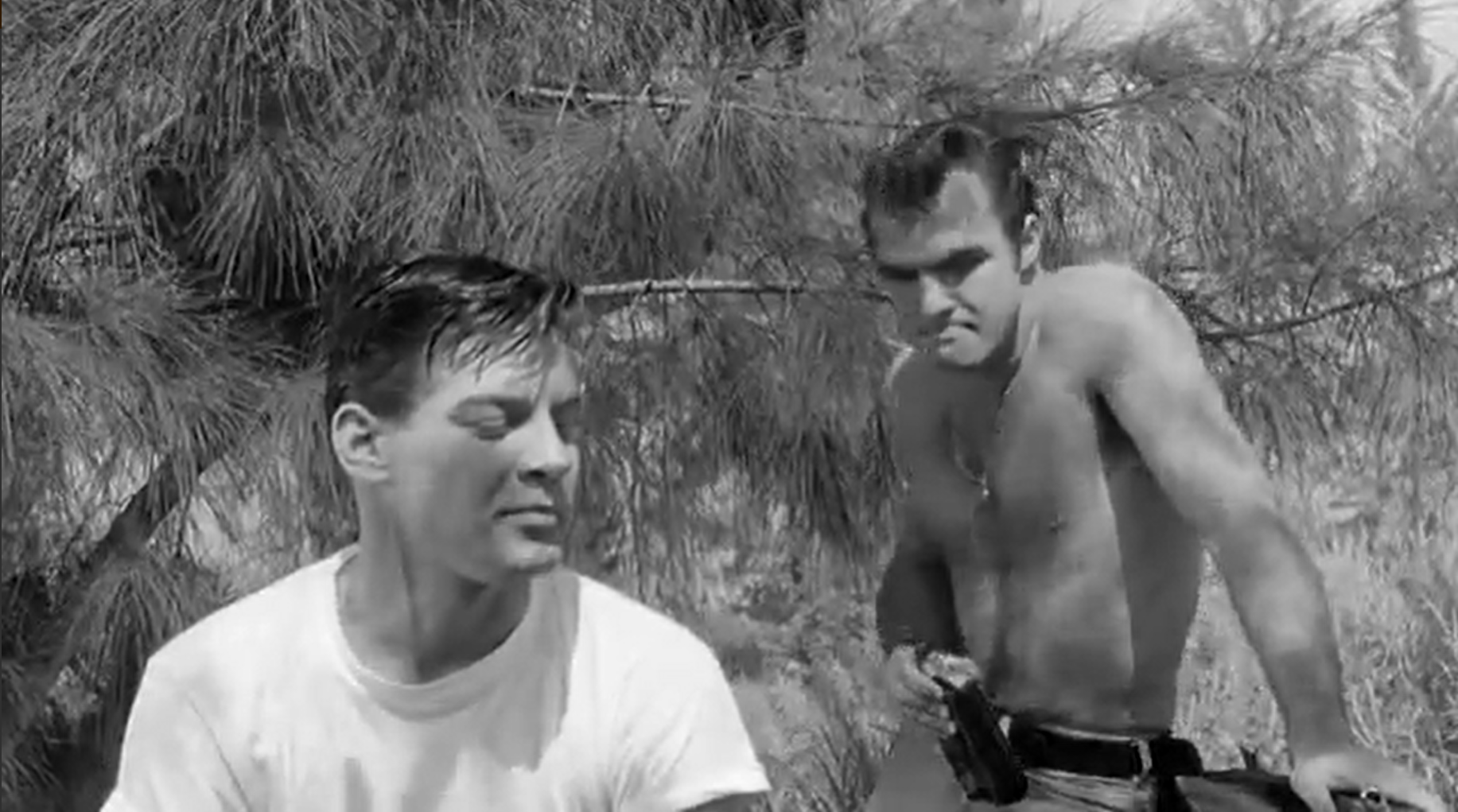
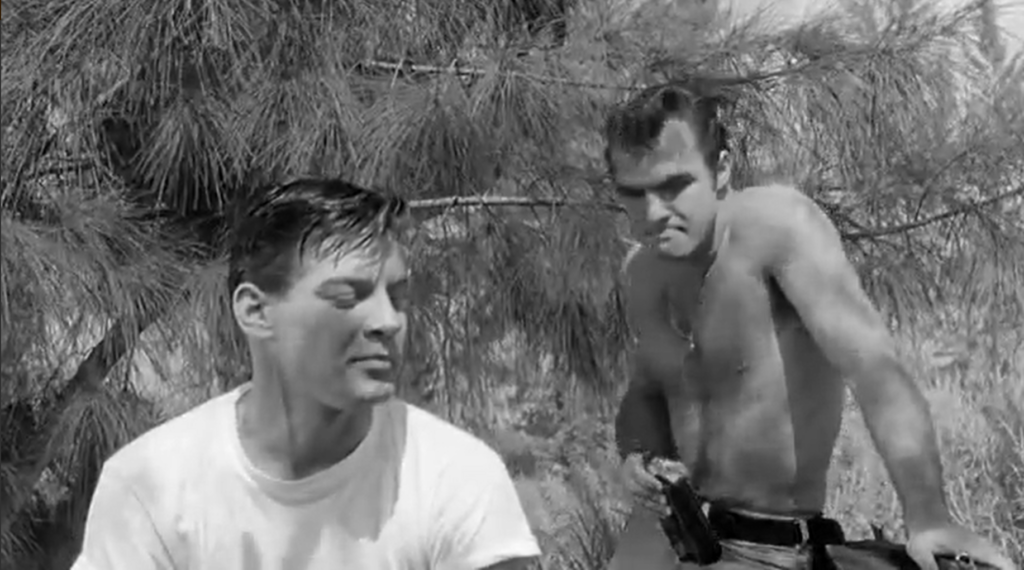
P.S. Angel Baby is also notable as Burt Reynolds’ screen debut.
Redeeming Qualities and Moments:

  • Salome Jens as Angel Baby
  • Mercedes McCambridge as “Sister Sarah”
  • An effective portrayal of belief in faith healing
Must See?
No, but it’s recommended.

Links:

Titicut Follies (1967)

Titicut Follies (1967)

“I have a perfect right to be excited! I’ve been here for a year and a half, and this place is doing me harm!”

Synopsis:
In his debut film, Frederick Wiseman documents the lives of criminally insane inmates at the Massachusetts Correctional Institution.

Genres, Themes, Actors, and Directors:

  • Documentaries
  • Mental Illness
  • Prisoners

Review:
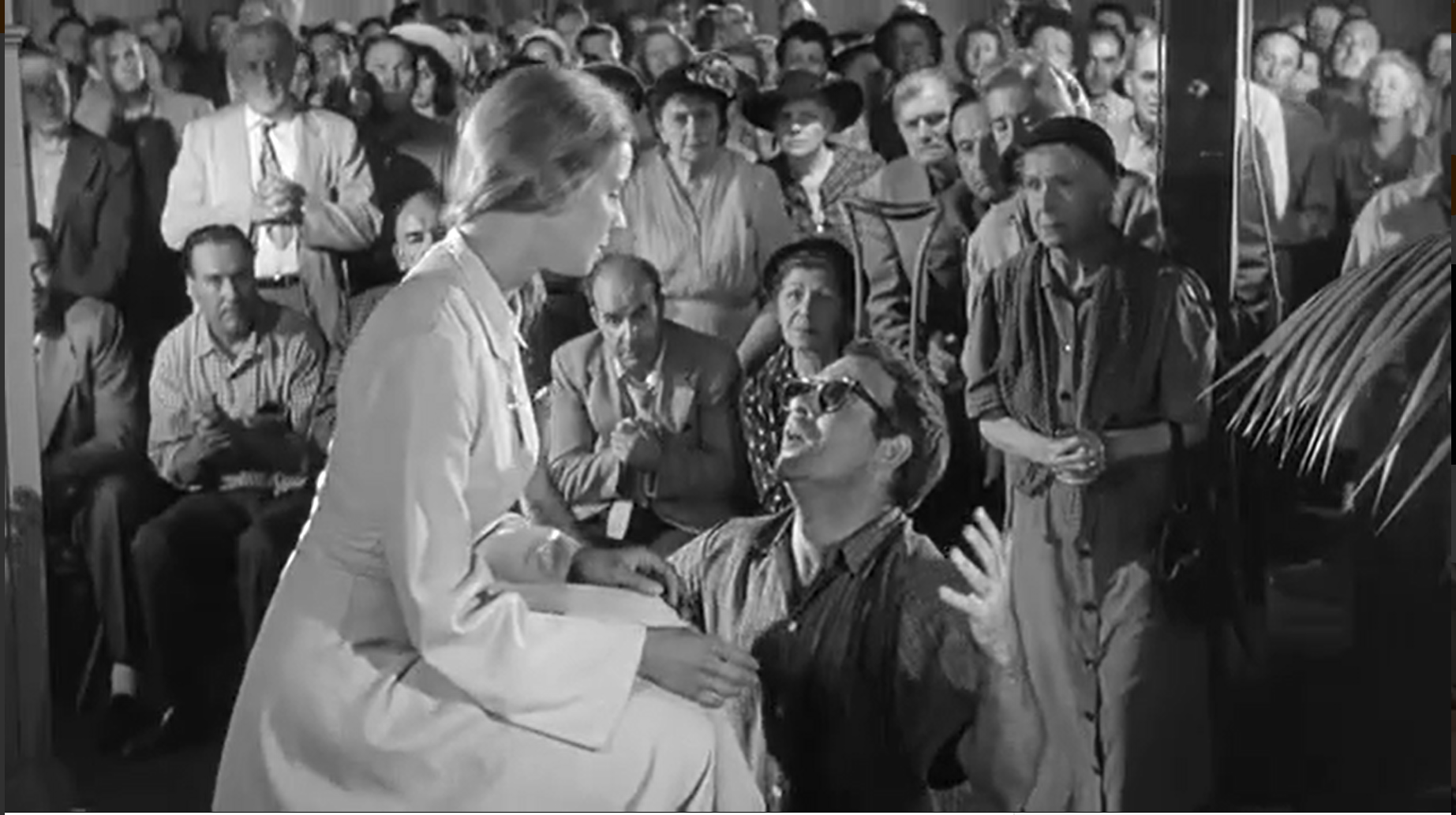
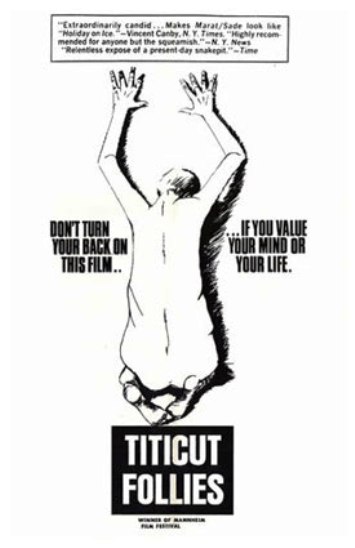
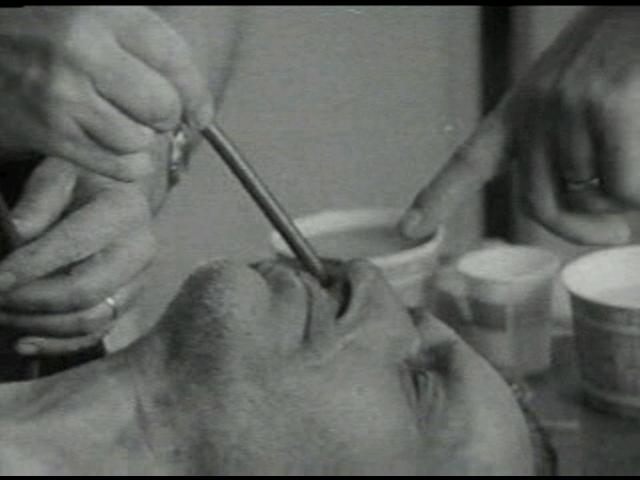
Frederick Wiseman’s first documentary showcases his signature “cinema verite” style: hand-held cameras, extreme close-ups, fly-on-the-wall observations, lengthy shots, and judicious back-and-forth editing. As in his next film, High School (1968) , Wiseman takes a no-holds-barred approach to his sticky subject matter, never flinching from even the most uncomfortable interactions. In one particularly memorable scene, a starving man is force-fed through his nose; in another, a paranoid schizophrenic pleads to be sent back to a “regular” prison, but — stuck in a Kafka-esque nightmare — nothing he says to his jailers makes any difference. On a broader level, inmates in the film routinely walk around without any clothes on (there’s plenty of full frontal nudity), and are frequently patronized by both guards and doctors. It’s easy to see why the Commonwealth of Massachusetts was upset enough with the film to sue Wiseman and his cohorts; Massachusetts won, and the film was immediately removed from circulation.

Redeeming Qualities and Moments:

  • A no-holds-barred look at daily life for criminally insane inmates
  • Effective use of close-ups and hand-held camerawork

Must See?
Yes. This controversial documentary holds a unique place in history, and should be seen by all film fanatics.

Categories

  • Controversial Film
  • Historically Relevant

Links:

Night and Day (1946)

Night and Day (1946)

“Night and day, you are the one…”

Synopsis:
With the help of his devoted wife (Alexis Smith) and friend (Monty Woolley), Cole Porter (Cary Grant) rises from obscurity to worldwide fame.

Genres, Themes, Actors, and Directors:

  • Alan Hale Film
  • Alexis Smith Films
  • Biopics
  • Cary Grant Films
  • Composers
  • Jane Wyman Films
  • Marital Problems
  • Michael Curtiz Films
  • Monty Woolley Films
  • Musicals

Review:
The plot of this notoriously fictionalized biopic (made while Porter was still alive) is, as noted in the DVD Verdict review (see link below), “little more than a clothesline on which the musical numbers hang.” Indeed, the narrative takes so many liberties with Porter’s life — incorrectly positing him as a war hero, and neglecting to mention his homosexuality — that one must choose simply to ignore the facts and enjoy the music. On the other hand, Grant — while still indubitably “Cary Grant” — does a fine job depicting Porter as someone who’s more interested in kissing his wife passionately on the cheek than on the lips, and who remains resolutely untempted by the bevy of adoring singers constantly surrounding him; if you read between the lines, hints are definitely there. Comparisons between this and the more recent “authentic” Porter biopic De-Lovely (starring Kevin Kline) are inevitable, but I must say I prefer the original — for my money, it’s much more effective at portraying the exuberance and joy Porter brought to the world through his inimitable, sophisticated musical style.

Redeeming Qualities and Moments:

  • Many creatively staged renditions of Porter’s songs

Must See?
No, though it’s an enjoyable diversion.

Links:

Trip to Bountiful, The (1985)

Trip to Bountiful, The (1985)

“I guess when you’ve lived longer than your house and your family, then you’ve lived long enough.”

Synopsis:
An elderly woman (Geraldine Page) living with her grown son (John Heard) and controlling daughter-in-law (Carlin Glynn) escapes on a road trip to her home town of Bountiful.

Genres, Themes, Actors, and Directors:

  • Elderly People
  • Geraldine Page Films
  • Grown Children
  • John Heard Films
  • Play Adaptation
  • Road Trip

Review:
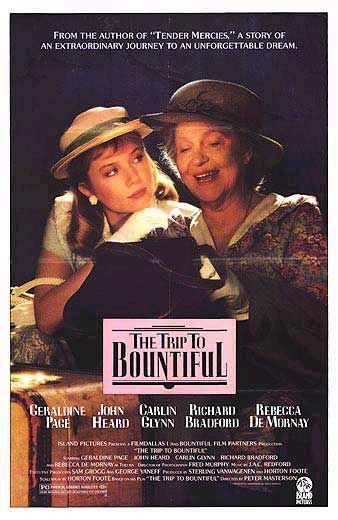
Geraldine Page deservedly won an Oscar for her lead performance in this adaptation of Horton Foote’s stage play. Page’s Carrie Watts is sympathetic yet never cloying, often ornery but usually for good reason. Equally impressive is the cast of supporting actors, most notably Rebecca De Mornay in an atypical role as a kind young bride, and Richard Bradford’s unexpectedly nuanced performance as a local sheriff. As in Foote’s Tender Mercies (1983), The Trip to Bountiful is ultimately more concerned with character than action; however, there’s a definite arc to the narrative here, as Page moves (literally) from the stuffy confines of her Houston apartment to the open road, and then, finally, to Bountiful. The result is a gently paced story which nonetheless holds genuine suspense, as we wonder what will befall Page once she reaches her beloved destination.

Note: Bountiful is reminiscent of Yasujiro Ozu’s Tokyo Story (1953) in its depiction of the difficulties facing elderly parents who live with their grown children.

Redeeming Qualities and Moments:

  • Geraldine Page as Carrie Watts
  • Rebecca De Mornay as a young army bride Page meets at the bus station
  • Richard Bradford as a kindly sheriff
  • Horton Foote’s screenplay
  • Stirring use of the hymn “Softly and Tenderly”

Must See?
Yes, simply for Page’s Oscar-winning performance.

Categories

  • Noteworthy Performance(s)
  • Oscar Winner or Nominee

Links:

Devil’s Bride, The / Devil Rides Out, The (1968)

Devil’s Bride, The / Devil Rides Out, The (1968)

“Simon here is playing the most dangerous game known to mankind.”

Synopsis:
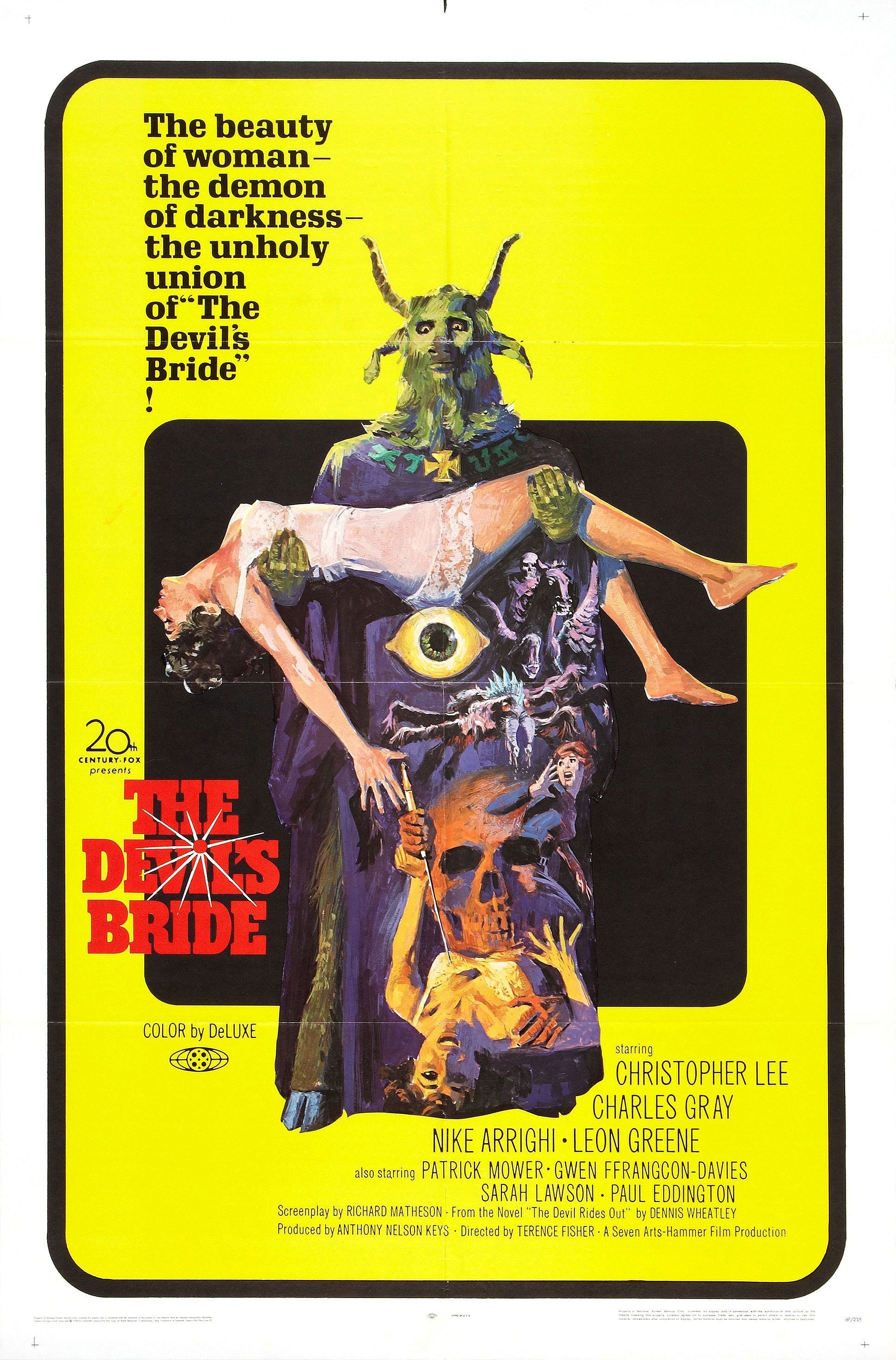
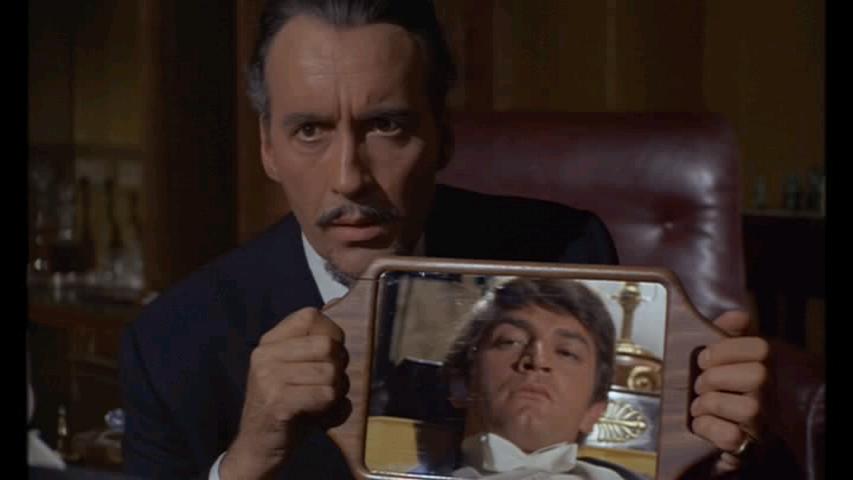
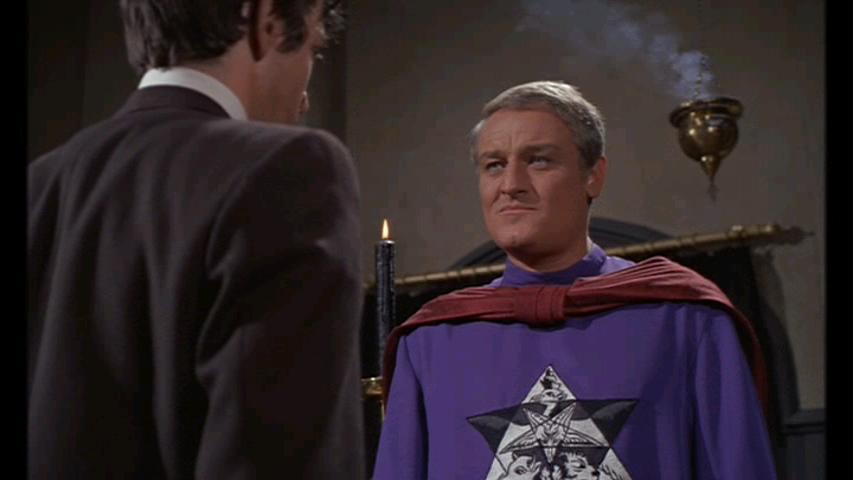
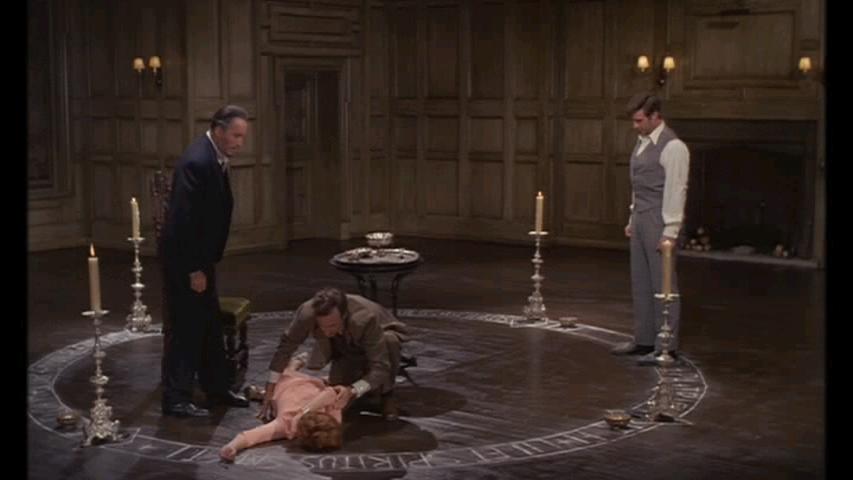
When the Duc de Richleau (Christopher Lee) and his friend Rex (Leon Greene) arrive at the house of their mutual friend Simon (Patrick Mower), they find he has been abducted into a satanic coven led by the warlock Mocata (Charles Gray). After rescuing Simon and a young initiate named Tanith (Nike Arrighi), they seek refuge in the home of the Duc’s niece (Sarah Lawson) and her husband (Paul Eddington).

Genres, Themes, Actors, and Directors:

  • Christopher Lee Films
  • Demonic Possession
  • Horror
  • Satanists
  • Witches, Wizards, and Magicians

Response to Peary’s Review:
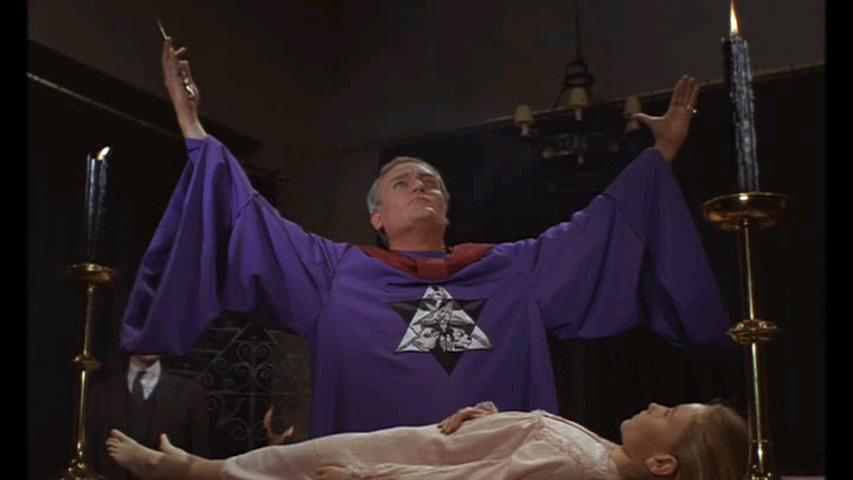
This “classy” horror film earns my vote as one of the best Hammer Studios flicks. The script, musical score, acting, and set designs all contribute towards the creation of a suspenseful, sometimes humorous tale of demonic possession in our midst. What makes the film so successful as a thriller is the fact that none of these characters — well-meaning or not — are immune to the powers of Mocata, who is capable of forcing them to act against their own wishes; as a result, we never know who to trust, and even the most eminently likeable characters eventually take their turn as a creepy vessel for the dark side. The special effects — particularly, as Peary notes, in the “visually spectacular finale” — are remarkably effective, and convey a frighteningly believable alternate universe.

Redeeming Qualities and Moments:

  • A powerful tale of demonic possession and satanism
  • Chrisopher Lee in an atypically heroic role
  • Charles Gray as the sinister warlock Mocata
  • Nike Arrighi as the tragic, beautiful Tanith
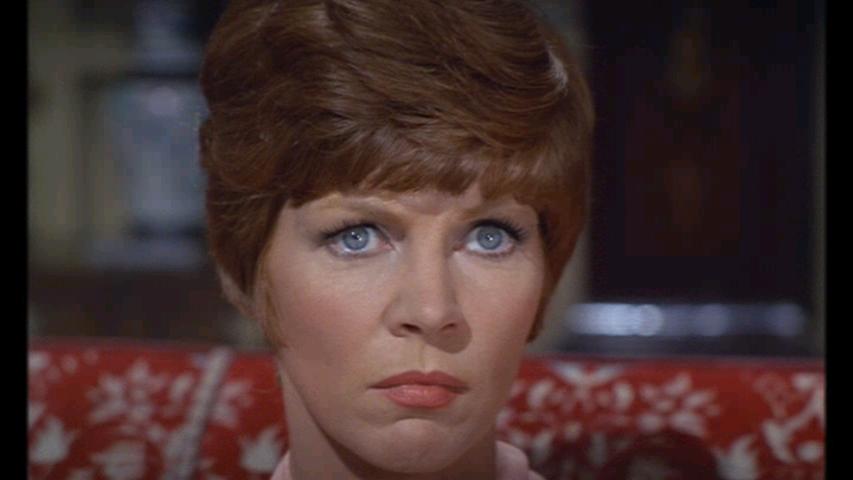
  • Sarah Lawson (who looks uncannily like Vicki Lawrence) as the Duc’s niece
  • Patrick Mower as Simon
  • The simple yet effective special effects
  • Atmospheric sets
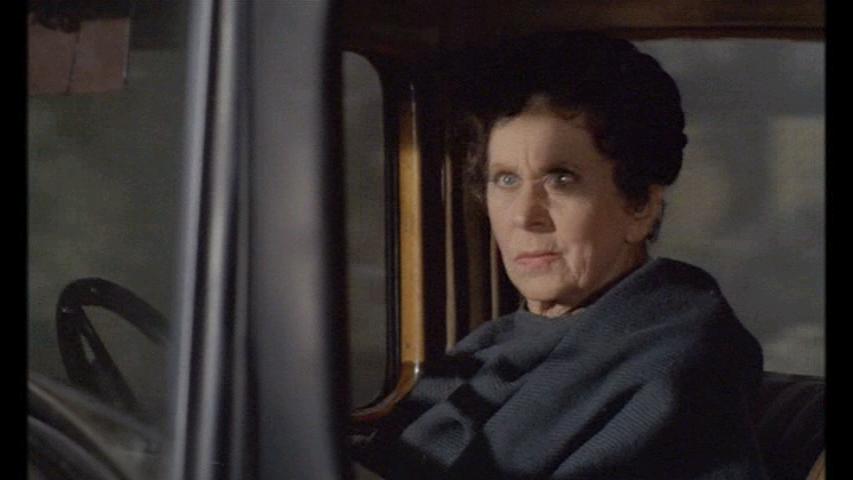
  • Some surprising moments of humor — as when Rex is nearly run over by the cross-eyed Countess (Gwen Ffrangcon Davies)
  • The exciting car chase
  • A smart, tightly woven script
  • James Bernard’s score

Must See?
Yes. This cult horror classic should be seen by all film fanatics.

Categories

  • Cult Movie

Links:

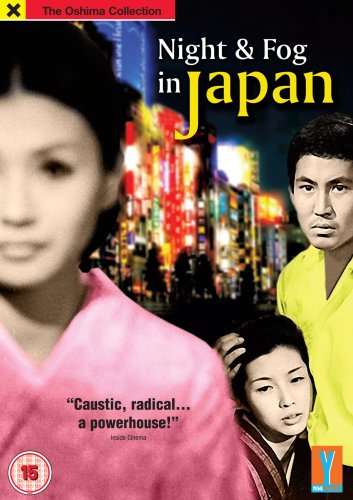
Night and Fog in Japan (1960)

Night and Fog in Japan (1960)

“It’s the world-wide, peace-loving Americanism that is gaining in strength and oppressing the lives of us Japanese, and making the lives of our youth hopeless.”

Synopsis:
During a wedding, former revolutionaries in Japan reflect on love and betrayal during their years as students.

Genres, Themes, Actors, and Directors:

  • Flashback Films
  • Japanese Films
  • Nagisa Oshima Films
  • Revolutionaries

Review:
This deeply personal, highly politicized film by Japanese director Nagisa Oshima is a difficult film for Western viewers to grasp. It plunges us immediately into a period of Japanese history most will be unfamiliar with, and the back-and-forth storyline makes it hard to keep track of (or care much about) any of the individual characters. Although we quickly understand the basic gist of the film — former revolutionaries accuse one another in an attempt to solve the mystery of a tragic in-group death — ultimately Oshima keeps things too stylized (and talky) to generate much dramatic interest. Those curious about mid-century Japanese political movements will certainly want to check this one out; all others should be forewarned.

Redeeming Qualities and Moments:

  • A sincere, sometimes powerful attempt to portray post-revolutionary guilt

Must See?
No; avoid watching it as your first Oshima experience.

Links:

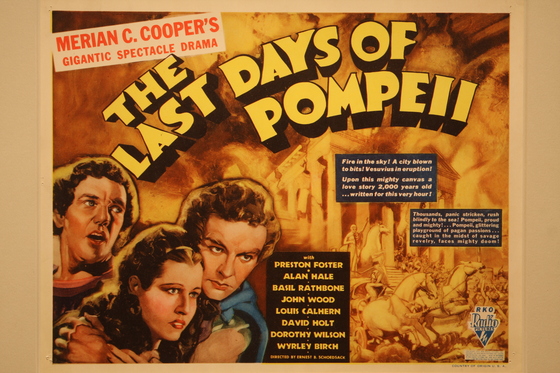
Last Days of Pompeii, The (1935)

Last Days of Pompeii, The (1935)

“Money is easy to get… All you have to do is kill!”

Synopsis:
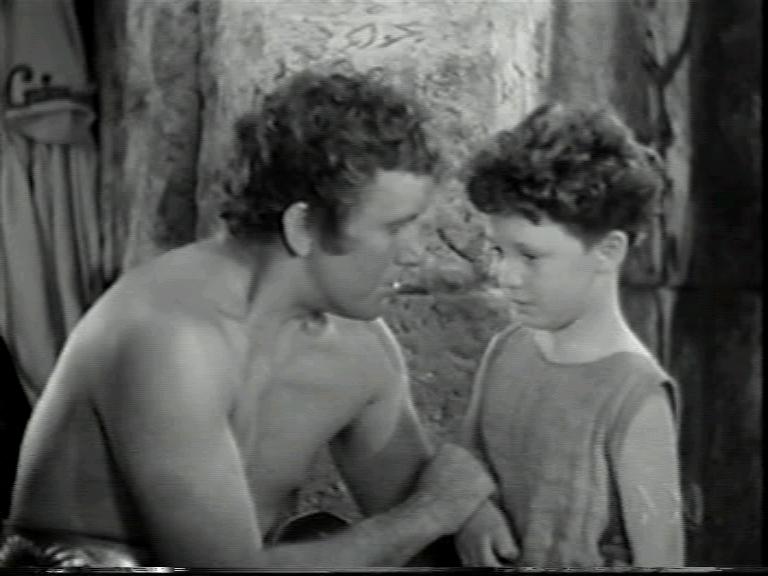
After the accidental death of his wife (Gloria Shea) and infant son, a poor but happy blacksmith (Preston Foster) in Pompeii reluctantly becomes a gladiator. Out of guilt, he adopts the son (David Holt) of an opponent he has killed, and soon becomes a prosperous horse trader. Years later, his grown son (John Wood) is more interested in freeing slaves than in inheriting his father’s wealth and status.

Genres, Themes, Actors, and Directors:

  • Alan Hale Films
  • Ancient Greece and Rome
  • Basil Rathbone Films
  • Character Arc
  • Disaster Flicks
  • Father and Child
  • Historical Drama
  • Louis Calhern Films
  • Preston Foster Films
  • Slavery

Review:
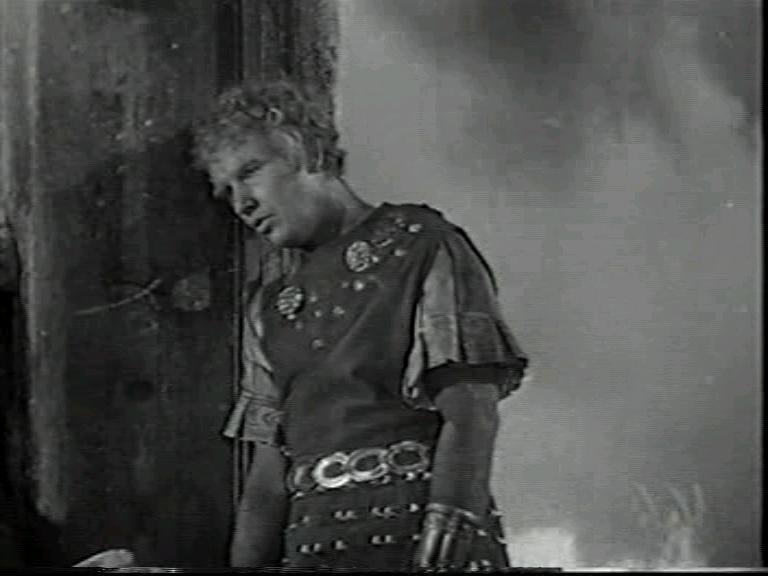
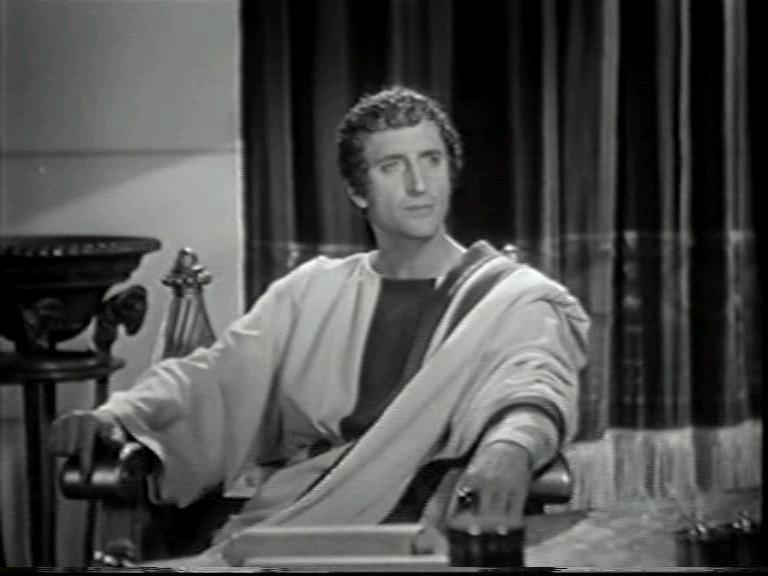
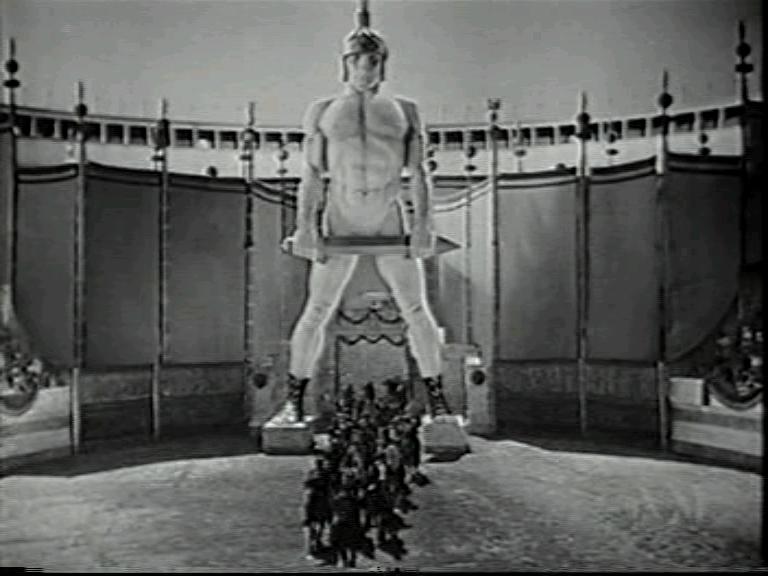
Loosely inspired by Edward Bulwer-Lytton’s 1834 novel of the same name, this historical epic by the producers of King Kong (1933) is primarily notable for its depiction of Mount Vesuvius erupting onto Pompeii. However, these final scenes — while impressive — play second fiddle to the bulk of the film, which tells a surprisingly heartfelt story of fatherly devotion. Preston Foster does a fine job depicting Marcus’s transformation from a gentle blacksmith to an ambitious horse trader, and is believable as an older man. Basil Rathbone is equally impressive — and appropriately regal — in his brief scenes as Pontius Pilate. Unfortunately, the film is marred by Roy Webb’s generic score, which makes no attempt to transport viewers into ancient times; we eventually believe in this world despite the soundtrack, not because of it.

Redeeming Qualities and Moments:

  • Preston Foster as Marcus
  • David Holt as young Flavius
  • Basil Rathbone as Pontius Pilate
  • Impressive set designs
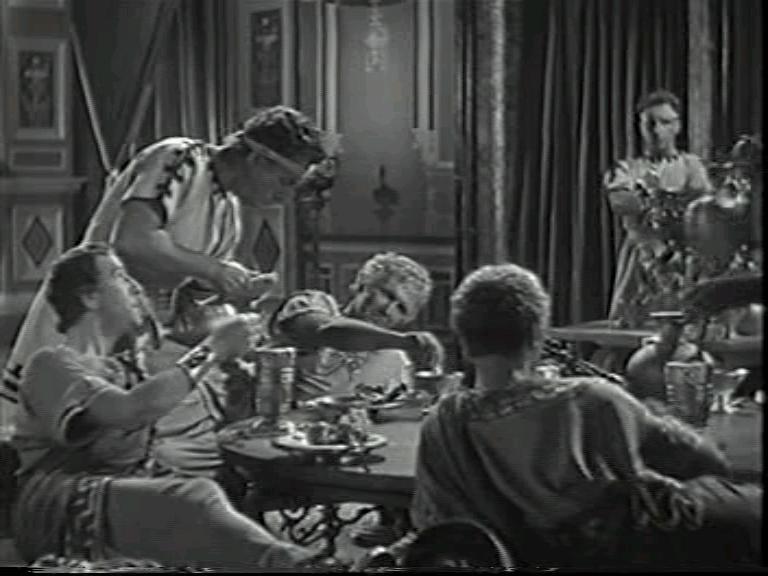
  • A reasonably accurate depiction of ancient Roman life

Must See?
No. While it holds some historical interest and is enjoyable to watch, this is ultimately not must-see viewing.

Links:

Champagne Murders, The (1967)

Champagne Murders, The (1967)

“I thought I was cured… But instead, it’s getting worse!”

Synopsis:
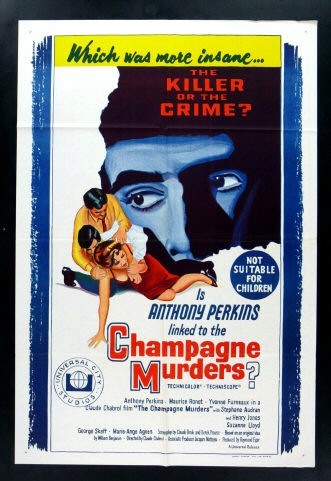
The opportunistic owner (Yvonne Furneaux) of a champagne factory enlists the help of her husband (Anthony Perkins) in convincing her mentally unstable business partner (Maurice Ronet) to sell the rights to his famous last name. Soon a mysterious rash of murders occurs, with Ronet the prime suspect.

Genres, Themes, Actors, and Directors:

  • Anthony Perkins Films
  • Claude Chabrol Films
  • French Films
  • Mental Illness
  • Murder Mystery

Review:
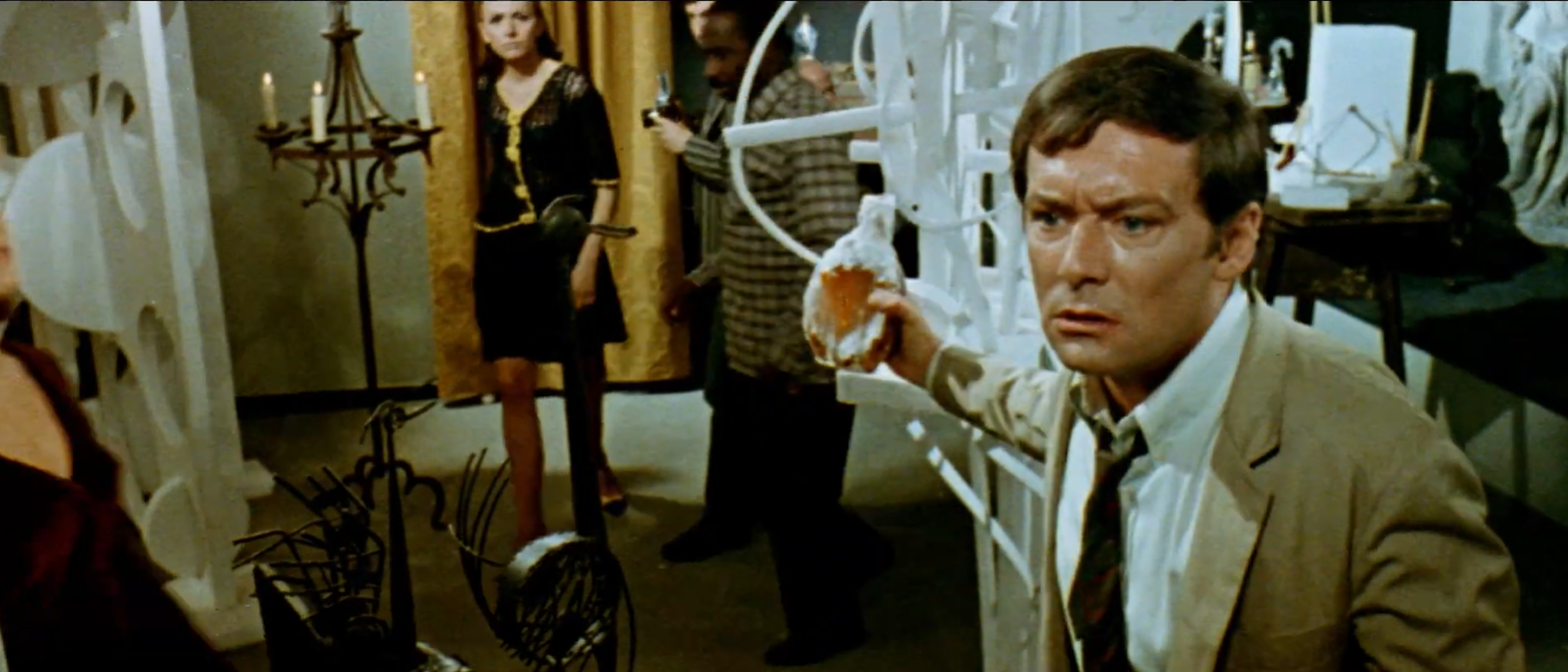
This mess of a murder mystery by French director Claude Chabrol aspires towards Hitchcockian thrills, but comes across as a lame, ineffectual satire instead. The acting by everyone involved is either over-the-top (Furneaux, Ronet):

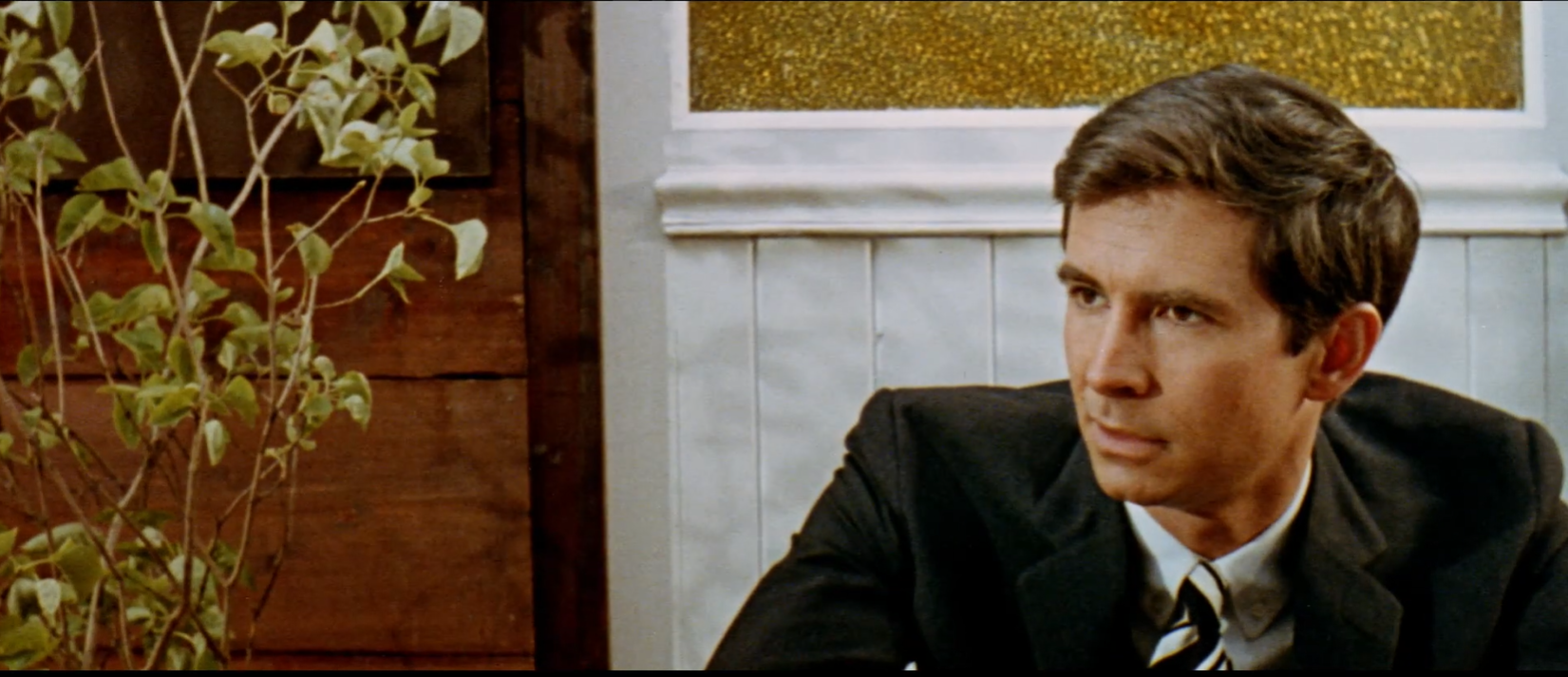
… and/or cliched (Perkins):

None of the characters are likeable; and the script makes no sense from beginning to end. Although the final resolution of “whodunit” comes as a surprise, this can’t make up for the remainder of the insipid story, which is eminently unwatchable. A major disappointment.

Redeeming Qualities and Moments:

  • Fine cinematography and sets

Must See?
No. While it’s inexplicably listed as a Personal Recommendation in the back of Peary’s book, this is a disappointing entry in Chabrol’s oeuvre, and definitely not must-see viewing.

Links: