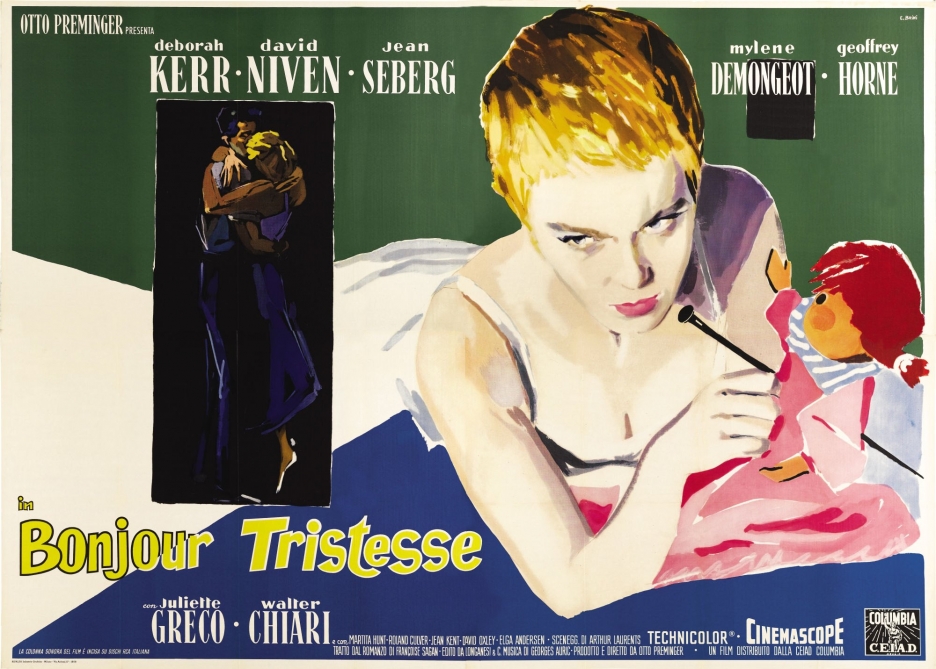
Bonjour Tristesse (1958)
“She’s changed him; she’ll change me — she’ll change everything!”
|
Synopsis: |
|
Genres, Themes, Actors, and Directors:
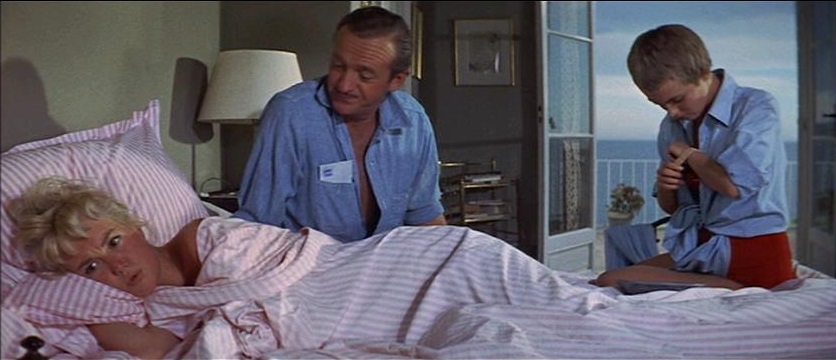
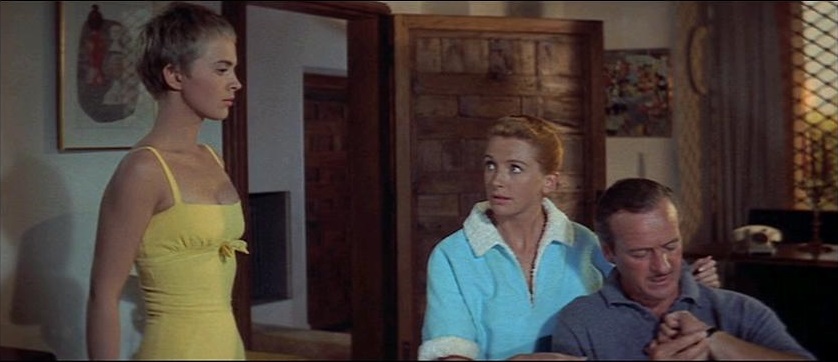
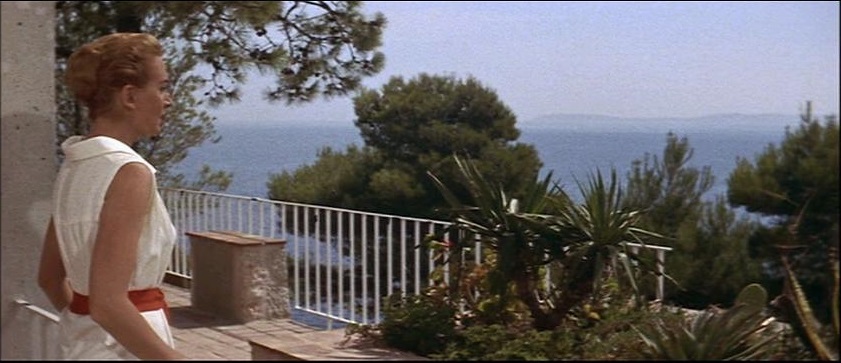
Review: Unfortunately, young Seberg hadn’t yet discovered her acting chops; her delivery of lines is stilted at best, and the obvious post-dubbing doesn’t help matters any. Yet she exudes charm and youthful beauty, and remains compelling to watch. Her character’s close relationship with Niven (nicely cast against type) reminds one of Gidget and her widowed father, though with a decidedly sensual tinge; Cecile is remarkably comfortable with the explicit knowledge of her father’s summertime affair with the sexy yet safely innocuous Elsa (Mylene Demongeot). Also impressive is Deborah Kerr in a thankless yet pivotal role as Cecile’s godmother — a ruinous presence in Cecil’s idyllic existence. Other than Seberg and Kerr, the most memorable elements of the film are the gorgeous Technicolor visuals and sun-drenched French Riviera settings — this is very much a summertime film, with events compressed into the span of one tragically memorable vacation. The closing shot — reminiscent of Glenn Close in Dangerous Liaisons — makes for a daringly downbeat finale in an era of mostly cheerful denouements; in a way, it’s easy to see why modern critics (such as Eric Henderson at Slant Magazine) cite Bonjour Tristesse as a film waiting to be reclaimed: like Douglas Sirk, Preminger is now viewed by many as an auteur whose talents remained largely misunderstood during his lifetime. Redeeming Qualities and Moments:
No, but it’s recommended. Links: |