Browsed by
Category: Original Reviews

Responses to Peary’s “must see” movie reviews, as well as my own “must see” movie reviews up to and after 1986 (when Peary’s book was published).

Quartet (1948)

Quartet (1948)

“In one way or another, I’ve used in my writings pretty well everything that’s happened to me in the course of my life.”

Synopsis:
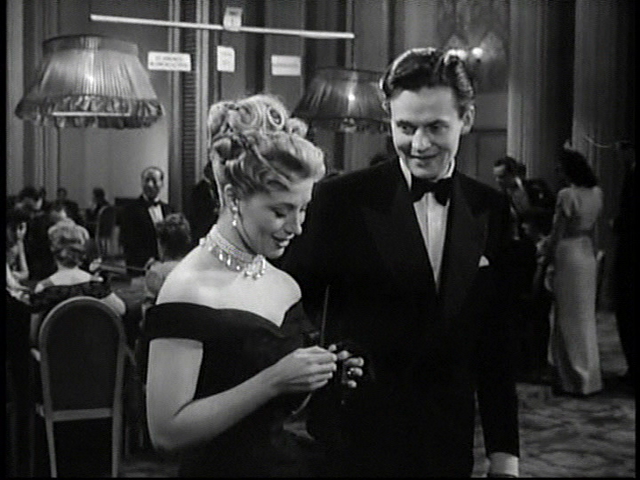
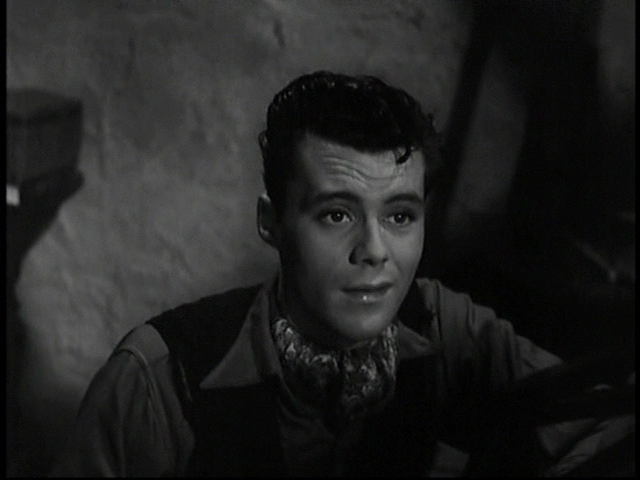
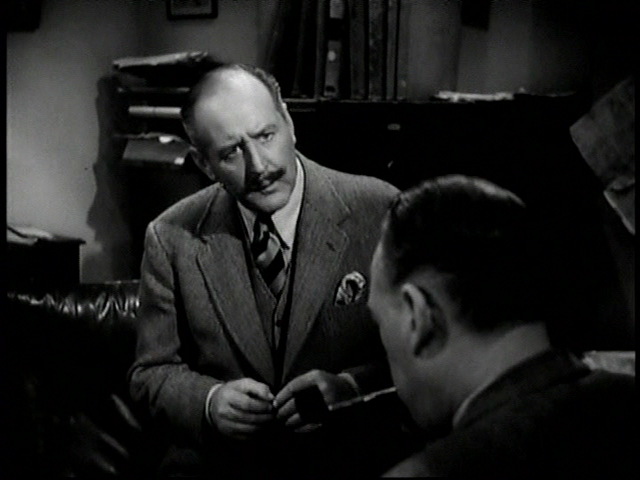
W. Somerset Maugham introduces four cinematic adaptations of his short stories: in “The Facts of Life”, a young man (Jack Watling) disregards his father’s advice about gambling while on a trip to Montecarlo, and is duly pursued by a deceitful young woman (Mai Zetterling); in “The Alien Corn”, an aspiring pianist (Dirk Bogarde) is given two years by his wealthy father (Raymond Lovell) and mother (Irene Browne) to prove himself worthy of the career; in “The Kite”, a grown mama’s boy (George Cole) finds that his passion for kites is jeopardizing his new marriage; and in “The Colonel’s Lady”, a self-absorbed colonel (Cecil Parker) is startled to learn that his meek wife (Nora Swinburne) has published a best-selling book of romantic poetry.

Genres:

  • Aspiring Stars
  • Dirk Bogarde Films
  • Episodic Films
  • Marital Problems
  • Musicians
  • Writers

Review:
This surprisingly enjoyable quartet of films may very well represent the best of “short story cinema”. While directed by four different men (Ken Annakin, Arthur Crabtree, Harold French, and Ralph Smart), the half-hour segments possess a unifying sensibility which elevates the whole to more than simply the sum of its parts. Each story touches in some way upon relations between the sexes: callow youths are taught valuable life lessons by older women, and troubled spouses must evince humility and compromise in order to repair the damage done to their marriages. As with all episodic movies, it’s nearly impossible not to pick favorites (the final one here — “The Colonel’s Lady” — is widely acknowledged as the best of the bunch), but I found each one to be an enjoyable — albeit undeniably melancholy — morsel. With the possible exception of “The Facts of Life”, these are not necessarily light-hearted diversions; the most devastating tale is undoubtedly the second one, which — thanks in large part to Dirk Bogarde’s sensitive performance — is a true weeper.

Redeeming Qualities and Moments:

  • An enjoyable, light-hearted tale of deceit and luck (“The Facts of Life”)
  • Dirk Bogarde as the aspiring pianist in “The Alien Corn”
  • A remarkably touching story of middle-aged marriage and masculine insecurity (“The Colonel’s Lady”)
  • Cecil Parker as Colonel Peregrine

Must See?
Yes; this is a “jolly good show”, and should be seen by all film fanatics. Listed as a film with historical importance and a Personal Recommendation in the back of Peary’s book.

Categories

  • Good Show
  • Historically Relevant

Links:

Wedding in Blood (1973)

Wedding in Blood (1973)

“I’m truly very happy — happy to see that, thanks to my wife, your widowhood is not too hard for you.”

Synopsis:
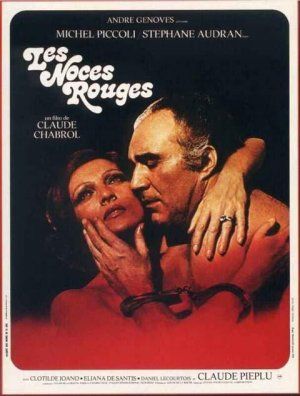
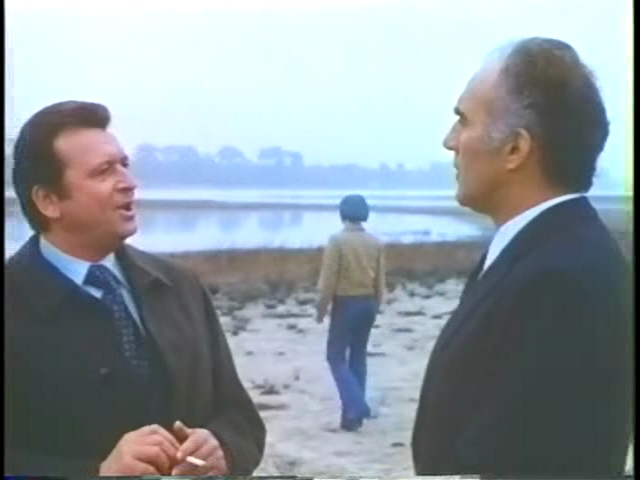
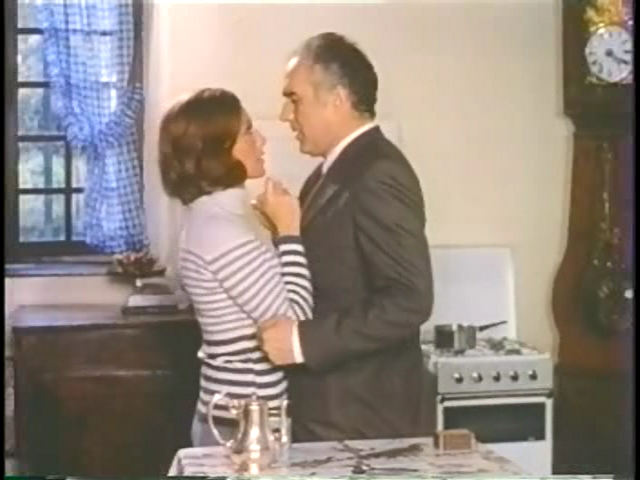
The wife (Stephane Audran) of a small town mayor (Claude Pieplu) carries on a torrid affair with her husband’s married deputy (Michel Piccoli); soon they’re driven to spousal murder by their uncontrollable lust for one another.

Genres, Themes, Actors, and Directors:

  • Claude Chabrol Films
  • French Films
  • Infidelity
  • Plot to Murder

Review:
While this Hitchcockian thriller by Claude Chabrol doesn’t tread much new ground in its treatment of adulterous lovers who are driven to murder, it remains a reasonably entertaining satire of the foolhardy passions which often simmer beneath the veneer of bourgeois respectability. The most enjoyable character in the film (despite his pigheaded, corrupt demeanor) is undoubtedly Claude Pieplu as the cuckolded husband who takes what he believes will be sweet revenge on his philandering wife; his reaction to learning about her affair is both classic and original. Less satisfying is the odd denouement, which hinges entirely on the emergent morality of Audran’s beautiful teenage daughter (Eliana De Santis) — unfortunately, she’s not a strong enough character (as written) to make this plot device convincing. Although Wedding in Blood has been lauded by many critics as one of Chabrol’s best outings, I can’t quite agree.

Redeeming Qualities and Moments:

  • Claude Pieplu as Audran’s cuckolded yet cocky husband
  • Audran and Piccoli’s ridiculously passionate love affair

Must See?
No, but it’s worth viewing once. Listed as a film with Historical Importance (although I’m not sure why) and a Personal Recommendation in the back of Peary’s book.

Links:

Wee Geordie (1955)

Wee Geordie (1955)

“I only wish, McTaggart, that you had acquired as much in knowledge as you have in height and weight.”

Synopsis:
A tiny Scottish lad (Paul Young) grows into a “gentle giant” (Bill Travers) who learns to throw hammers, and is recruited to represent Britain in the Australian Olympics.

Genres, Themes, Actors, and Directors:

  • Alastair Sim Films
  • Comedy
  • Scotland
  • Sports

Review:
This enjoyable Scottish fable — reminiscent of Bill Forsyth’s recent imports, particularly Local Hero (1983) — plays like a biopic, but is pure fiction all the way. It’s an innocuous fairy tale which can easily be described as “heartwarming” — after all, what’s not to love about this handsome “gentle giant” who, despite his other-worldly strength, longs for little more than the hills of Scotland, his own sweet lass (Norah Gerson), and a chance to proudly wear his father’s kilt in the Olympics? While the story gets bogged down in the final reel by an inane subplot about a female Danish athlete (Doris Goddard) who lusts after Geordie, until then it’s all sweet, breezy sailing.

Redeeming Qualities and Moments:

  • “Wee Geordie” starting his mail-order exercise regime
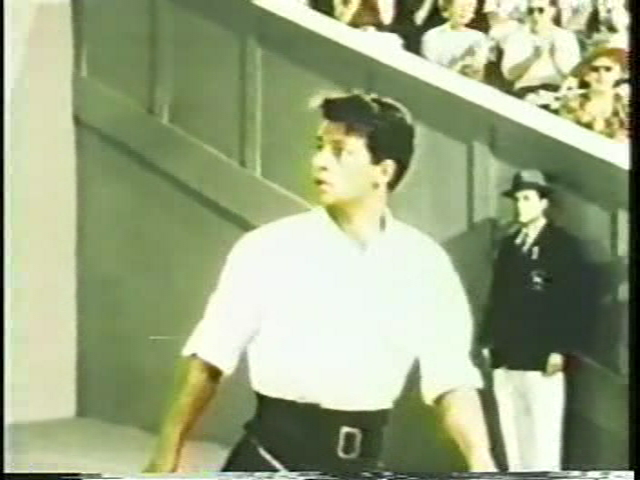
  • Geordie walking out during the Olympics in his father’s Black Watch kilt
  • Alastair Sim as a local laird who takes a fatherly interest in Geordie

Must See?
No, but it’s worth a look.

Links:

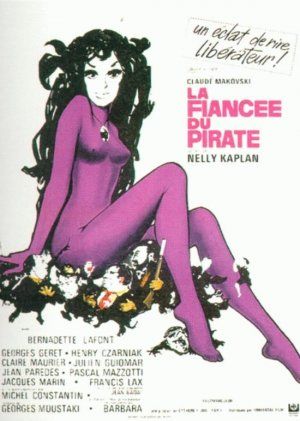
Very Curious Girl, A (1969)

Very Curious Girl, A (1969)

“Things’ve changed. Got any money for me?”

Synopsis:
When her mother dies, a gypsy girl named Marie (Bernadette La Font) — who for years has been treated as the town slut — begins charging the boorish villagers for her sexual favors; soon she embarks upon an even more elaborate plan of revenge.

Genres, Themes, Actors, and Directors:

  • Black Comedy
  • Character Arc
  • Feminism and Women’s Issues
  • French Films
  • Gypsies
  • Prostitutes and Gigolos
  • Revenge
  • Strong Females

Review:
This most unusual erotic black comedy — the directorial debut of Nelly Kaplan — tells the satisfying tale of a beautiful gypsy girl who manages to single-handedly transform herself from victim to victor, leaving plenty of sweet justice in her wake. While the grotesque opening scenes are hard to stomach (the unenlightened townsfolk treat Marie literally like chattel), her eventual triumph makes the rocky beginning worth sitting through. It’s rather broad satire, but the point is well-made that hypocrisy will eventually out, with everyone ultimately paying for his or her dirty desires. La Font is wonderful in the lead role; she’s ferocious in her late-earned dignity, and displays enormous satisfaction both in the transformation of her tin shack into a cozy space, and in the power she knows she’s accumulated over her piggish neighbors. It’s a delight to watch Marie pursue her plan with such calculated tenacity.

Redeeming Qualities and Moments:

  • Bernadette La Font as Marie
  • A satisfying tale of feminist growth and revenge
  • The hilarious ending

Must See?
Yes, as a most unusual French film. Listed as a Personal Recommendation in the back of Peary’s book.

Categories

  • Foreign Gem

Links:

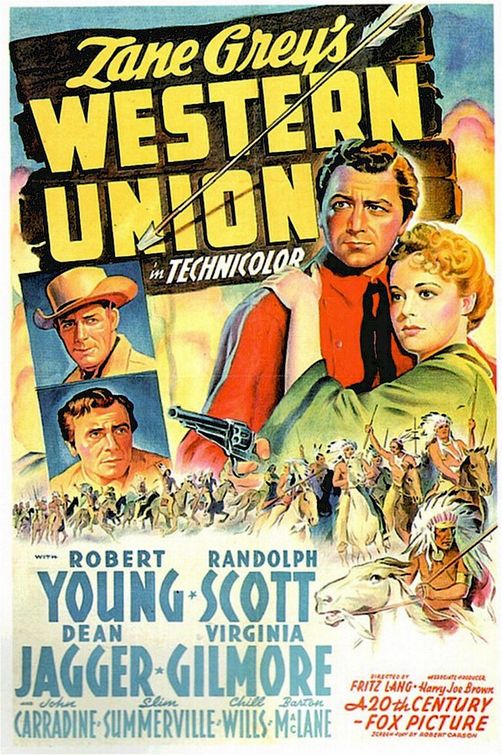
Western Union (1941)

Western Union (1941)

“Tell him that the Great White Father who speaks with lightning over the singing wire is sorry for the wounding of his Indian son — but that the lightning talk is strong medicine, and it must go through.”

Synopsis:
When a former outlaw (Randolph Scott) saves the life of a Western Union engineer (Dean Jagger), he’s offered a job with the company. As they string wires across the United States, the workers must confront tribes of Indians, as well as a gang of outlaws led by Scott’s brother, Slade (Barton MacLane). Meanwhile, both Scott and an east coast dandy (Robert Young) are interested in Jagger’s beautiful sister (Virginia Gilmore).

Genres, Themes, Actors, and Directors:

  • Dean Jagger Films
  • Fritz Lang Films
  • Native Americans
  • Randolph Scott Films
  • Robert Young Films
  • Westerns

Review:
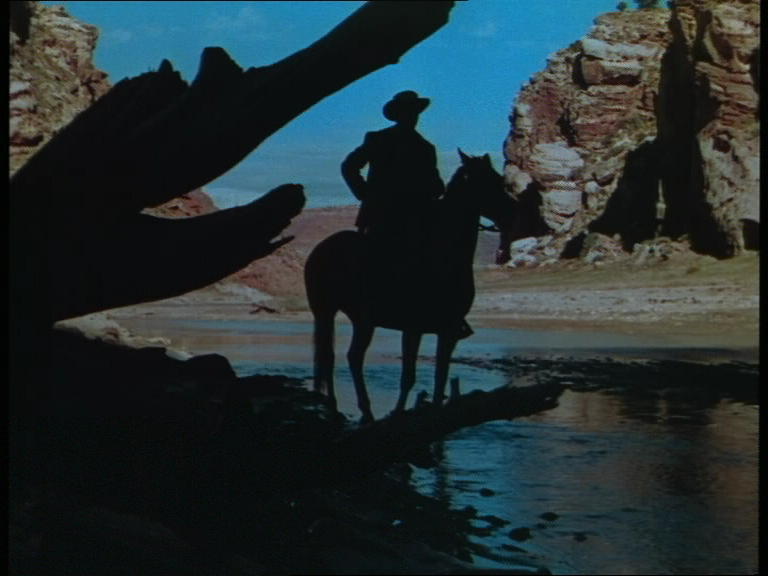
Few would guess that this historical western about the spread of telegraph lines across the American frontier was directed by Fritz Lang, an iconic director known primarily for his noir dramas and atmospheric visuals. Lang apparently wanted to alter the screenplay of Western Union, but was not given permission to do so; the result is a narrative which never quite rises above mediocrity, and is too often played for laughs. While Scott’s central dilemma — whether to betray his brother or not — is compelling, it’s constantly interrupted by inane subplots, particularly the underdeveloped “love triangle” between Scott, Young, and Gilmore. As in Lang’s first western (The Return of Frank James), the storyline here is almost entirely fictional; Lang himself noted that “in reality, nothing happened during the entire building of the line except that they ran out of wood for the telegraph poles, and the only other thing that disturbed the laying of the line was the ticks on the buffaloes; the buffaloes got itchy and rubbed themselves against the poles, and the poles tumbled. And that was all that happened.” Personally, I wouldn’t have minded seeing the buffaloes…

Redeeming Qualities and Moments:

  • Beautiful Technicolor cinematography
  • Slim Summerville responding indignantly to questions about his cooking abilities

Must See?
No, but it’s worth a look.

Links:

Murder by Decree (1979)

Murder by Decree (1979)

“You create allegiance above your sworn allegiance to protect humanity: you shall not care for them, or acknowledge their pain. There lies the madness.”

Synopsis:
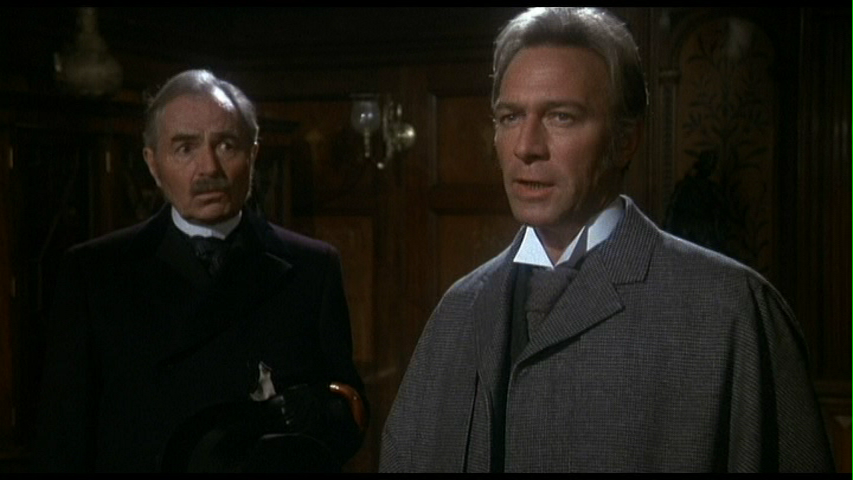
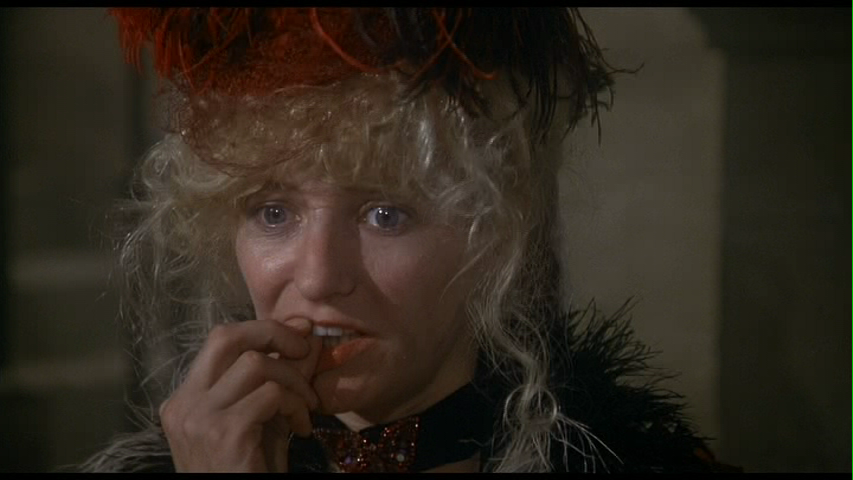
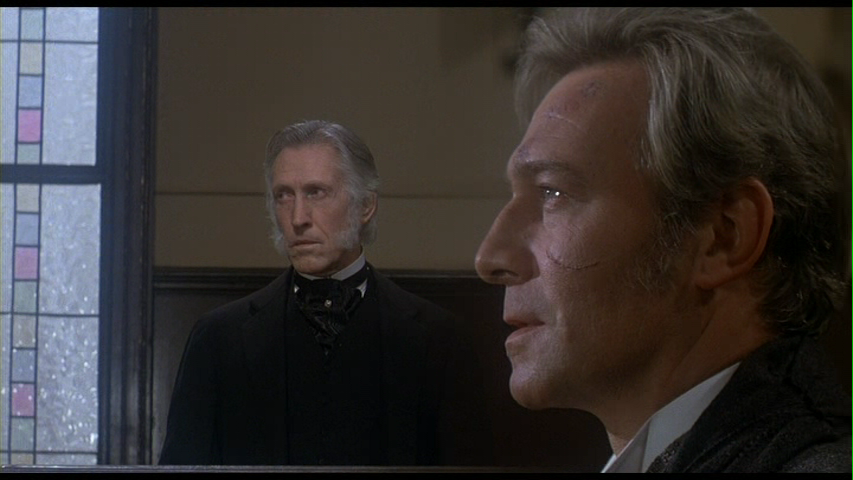
Sherlock Holmes (Christopher Plummer) and Dr. Watson (James Mason) try to unravel the mystery of Jack the Ripper, who has been killing prostitutes across London; when they learn that a high-level conspiracy may be behind the murders, they attempt to track down the woman (Genevieve Bujold) who holds the key to the entire affair.

Genres, Themes, Actors, and Directors:

  • Christopher Plummer Films
  • Detectives and Private Eyes
  • Genevieve Bujold Films
  • Historical Drama
  • Jack the Ripper
  • John Gielgud Films
  • James Mason Films
  • Murder Mystery
  • Prostitutes and Gigolos
  • Serial Killers
  • Sherlock Holmes Films
  • Susan Clark Films

Review:
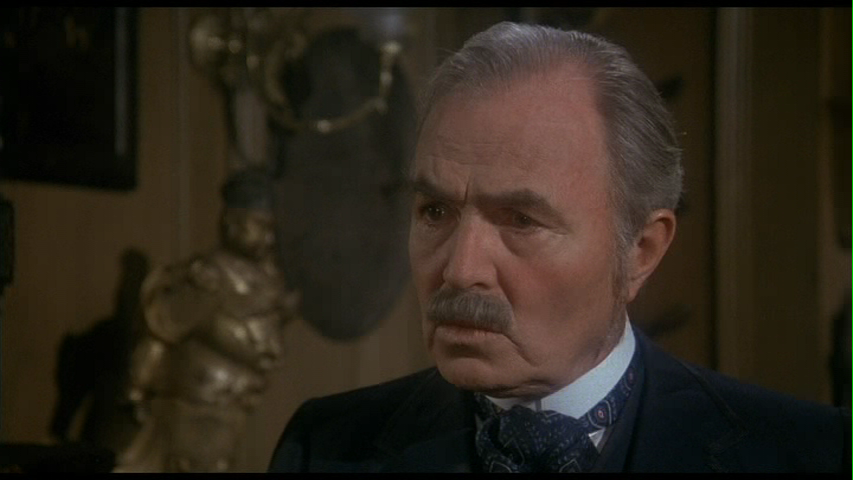
This oddly unsatisfying Victorian-era thriller should be much better than it is: despite the inspired casting (Plummer and Mason are wonderful together), an effective recreation of foggy London, several unexpectedly humorous moments, and a satisfying denouement, it’s too bloody difficult to follow. Only during the final 15 minutes of the film — once Holmes neatly unravels the entire affair in front of the British prime minister (John Gielgud) — does one finally understand who all the key players are, and why Holmes has been tracking them; indeed, Murder by Decree is a rare thriller which may be more enjoyable upon second viewing. Plummer and Mason are the main reasons to check this one out.

Redeeming Qualities and Moments:

  • Christopher Plummer as Holmes
  • James Mason as Watson
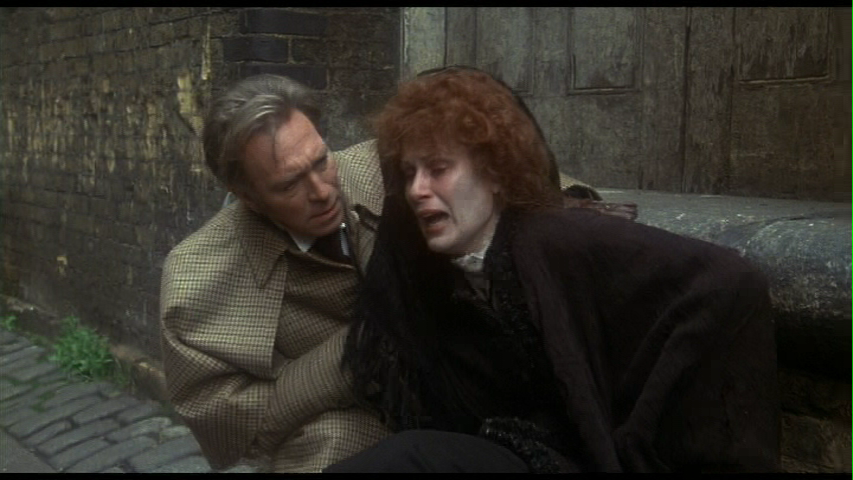
  • Susan Clark as frightened prostitute Mary Kelly
  • Watson chatting with a prostitute who’s inordinately proud to still have all her teeth
  • The clever ending, in which Holmes solves everything

Must See?
No, but fans of Sherlock Holmes will certainly want to check it out. Listed as a Sleeper and a Personal Recommendation in the back of Peary’s book.

Links:

Woman’s Secret, A (1949)

Woman’s Secret, A (1949)

“I want you to get this straight once and for all: you’re not going to give up your career!”

Synopsis:
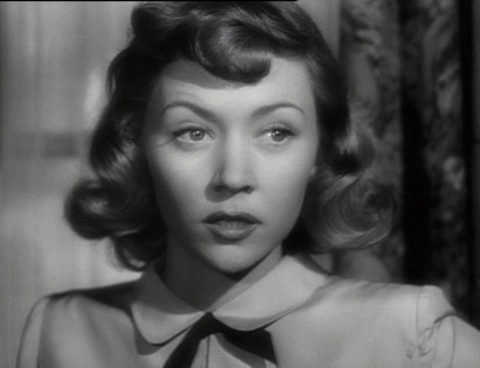
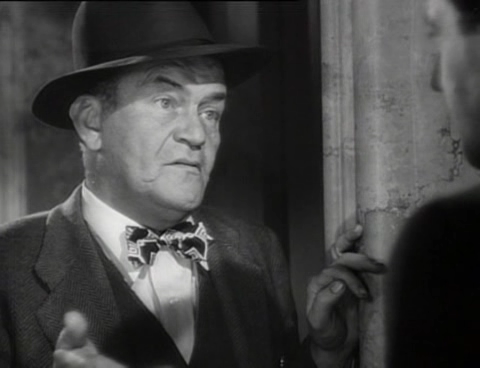
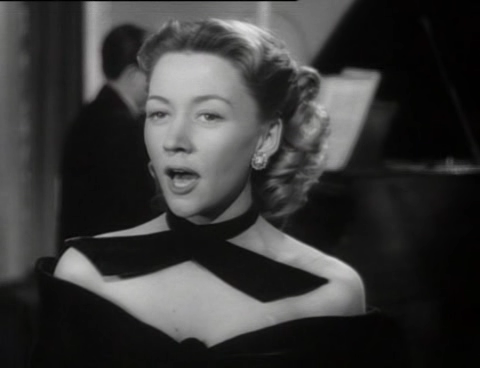
When former singer Marian Washburn (Maureen O’Hara) confesses to shooting her young protegee (Gloria Grahame), Marion’s pianist-friend (Melvyn Douglas) tries to convince police detective Jim Fowler (Jay C. Flippen) that she’s lying.

Genres, Themes, Actors, and Directors:

  • Criminal Investigation
  • Flashback Films
  • Gloria Grahame Films
  • Maureen O’Hara Films
  • Melvyn Douglas Films
  • Mentors
  • Nicholas Ray Films
  • Singers

Review:
This melodramatic flashback film — written by Citizen Kane‘s Herman Mankiewicz, and directed by Nicholas Ray — bears a vague resemblance to All About Eve (1950) in its tale of quibbling mentor/protegee, but is ultimately much less satisfying: because the characters (particularly O’Hara) are underdeveloped, we never quite believe or understand their motivations, and the entire narrative drifts along without much defining energy. Fortunately, O’Hara and Douglas are both fine (albeit unexceptional) in their roles, and Grahame gives a typically eccentric performance as loopy Susan — though it’s undeniably strange to hear her dubbed voice (in real life, she was tone deaf) crooning beautiful melodies. I was most impressed by Edward Stevenson’s lovely gowns; both leading ladies look gorgeous in them.

Redeeming Qualities and Moments:

  • Gloria Grahame as Susan
  • Jay C. Flippen as droll Inspector Fowler
  • Edward Stevenson’s gowns

Must See?
No, but it’s worth viewing once.

Links:

Murder at the Gallop (1963)

Murder at the Gallop (1963)

“A wealthy old gentleman with a weak heart had a pathological horror of cats: what easier than for some interested party to slip a cat into the house, a cat that the old man will come upon unexpectedly? Yes — old Enderby was frightened to death!”

Synopsis:
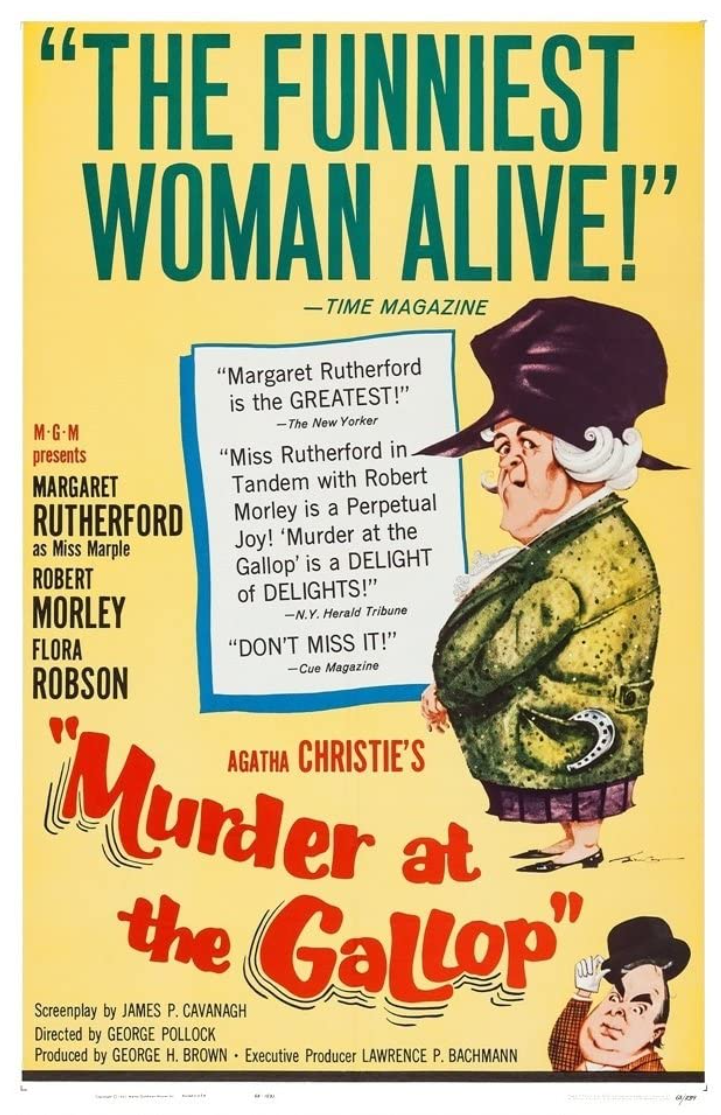
When wealthy Mr. Enderby (Finlay Currie) falls dead from a heart attack, plucky Miss Marple (Margaret Rutherford) suspects foul play, and tries to determine who among his greedy heirs is the murderer.

Genres, Themes, Actors, and Directors:

  • Amateur Sleuths
  • Inheritance
  • Margaret Rutherford Films
  • Murder Mystery
  • Robert Morley Films

Review:
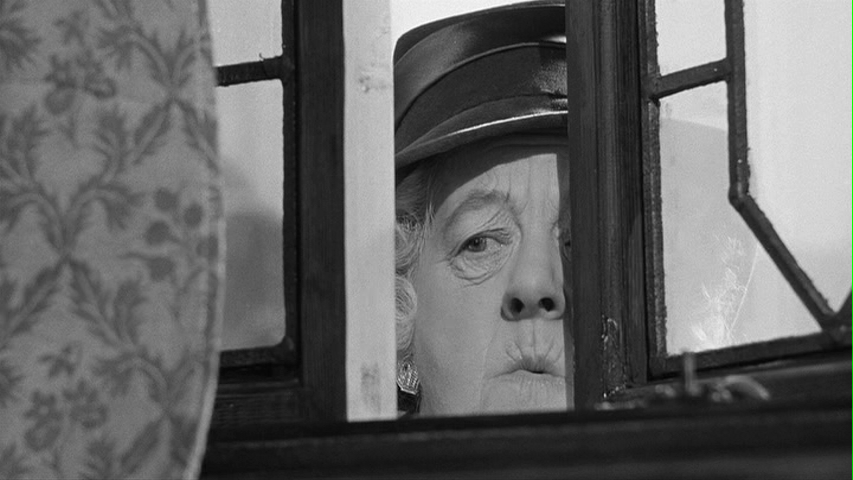
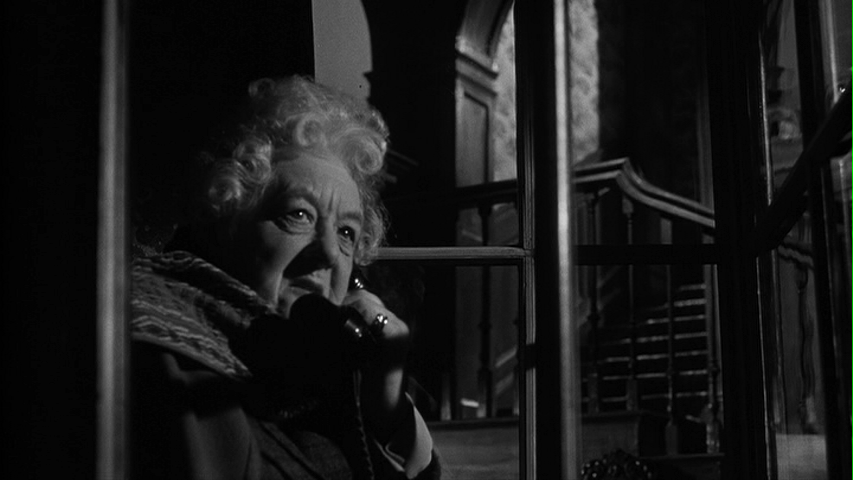
British comedic actress Margaret Rutherford is primarily known for two eccentric characterizations: medium Madame Arcati in Noel Coward’s Blithe Spirit (1945) (originally a stage play), and amateur sleuth Miss Marple in George Pollock’s four screen adaptations of Agatha Christie’s novels; of the latter, Murder at the Gallop is the only one listed in Peary’s book, and thus is the only one I’ve seen (so far). While purists have complained that jowly Rutherford doesn’t fit Christie’s description of prim, spinsterish Miss Marple, the inimitable actress brings her own unique charm and energy to the role, and the result is sheer delight: with her otherworldly facial grimaces and her indomitable lust for sleuthing (and snooping), Rutherford carries the film with ease. The mystery itself is well-plotted (I was unable to guess the true culprit), the supporting performances are all fine, and Ron Goodwin’s lilting thematic score provides a welcome touch of humor to the proceedings.

Redeeming Qualities and Moments:

  • Margaret Rutherford as Miss Marple
  • Atmospheric b&w cinematography

Must See?
Yes, simply for Rutherford’s performance — but it’s likely that any of the other three films in the series (Murder She Said, Murder Most Foul, or Murder Ahoy) would suffice as well.

Categories

  • Noteworthy Performance(s)

Links:

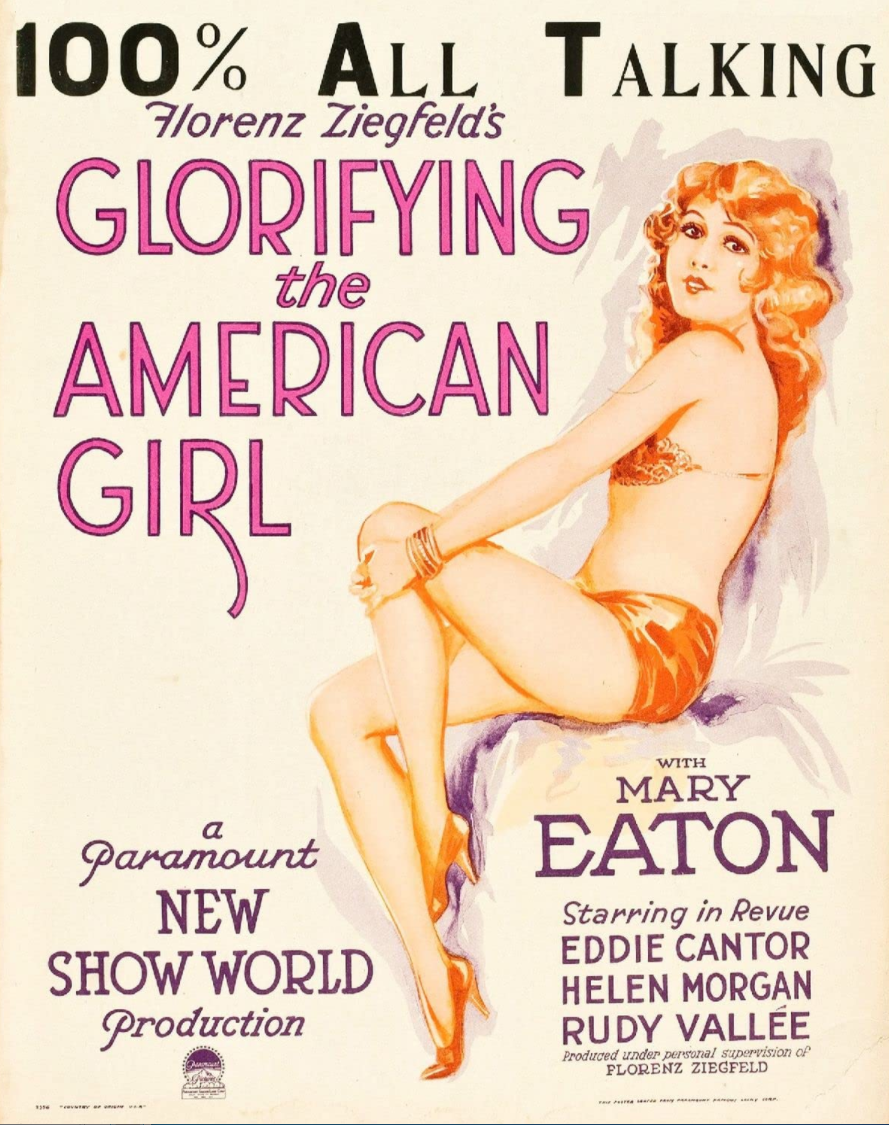
Glorifying the American Girl (1929)

Glorifying the American Girl (1929)

“I’ve gotta dance now. I’ve waited all my life for this opportunity, and I’m not going to let it get away from me!”

Synopsis:
An aspiring dancer (Mary Eaton) leaves behind her small-town sweetheart (Edward Crandall) for a chance at fame in New York; meanwhile, her corrupt partner (Dan Healy) takes advantage of her, and her best friend (Gloria Shea) hopes Crandall will fall for her instead.

Genres, Themes, Actors, and Directors:

  • Aspiring Stars
  • Career-versus-Marriage
  • Dancers
  • Love Triangle

Review:
This early variation on the cinematic trope of marriage-versus-career — with an enormous dollop of “I want to be a star!” thrown in — received decidedly lukewarm reviews upon its release, for good reason. The performances are sub-par (most of the actors lean towards the over-emoting techniques of silent cinema), while the narrative is full of cliches — including a tepid “unrequited-love” triangle, an overbearing stage mother, and a lecherous Broadway cad. One scene in particular — in which poor Gloria Shea is run over by a car after being left behind by Crandall and Eaton — is so ridiculous it nearly approaches camp. Glorifying the American Girl is primarily notable these days for showcasing a handful of famous performers (including Eddie Cantor and Helen Morgan) in their prime, and for its cinematically innovative opening sequence; it’s too bad the rest of the film fails to live up to this early potential.

Redeeming Qualities and Moments:

  • The creative opening sequence, depicting streams of hopeful starlets heading across the United States towards New York
  • The dazzling “Follies” finale

Must See?
No.

Links:

Burroughs (1983)

Burroughs (1983)

“My whole life has been resistance to the ugly spirit.”

Synopsis:
Famed writer William Burroughs reads excerpts from his novels and shares anecdotes about his tumultuous, drug-filled life.

Genres, Themes, Actors, and Directors:

  • Biopics
  • Documentaries
  • Writers

Review:
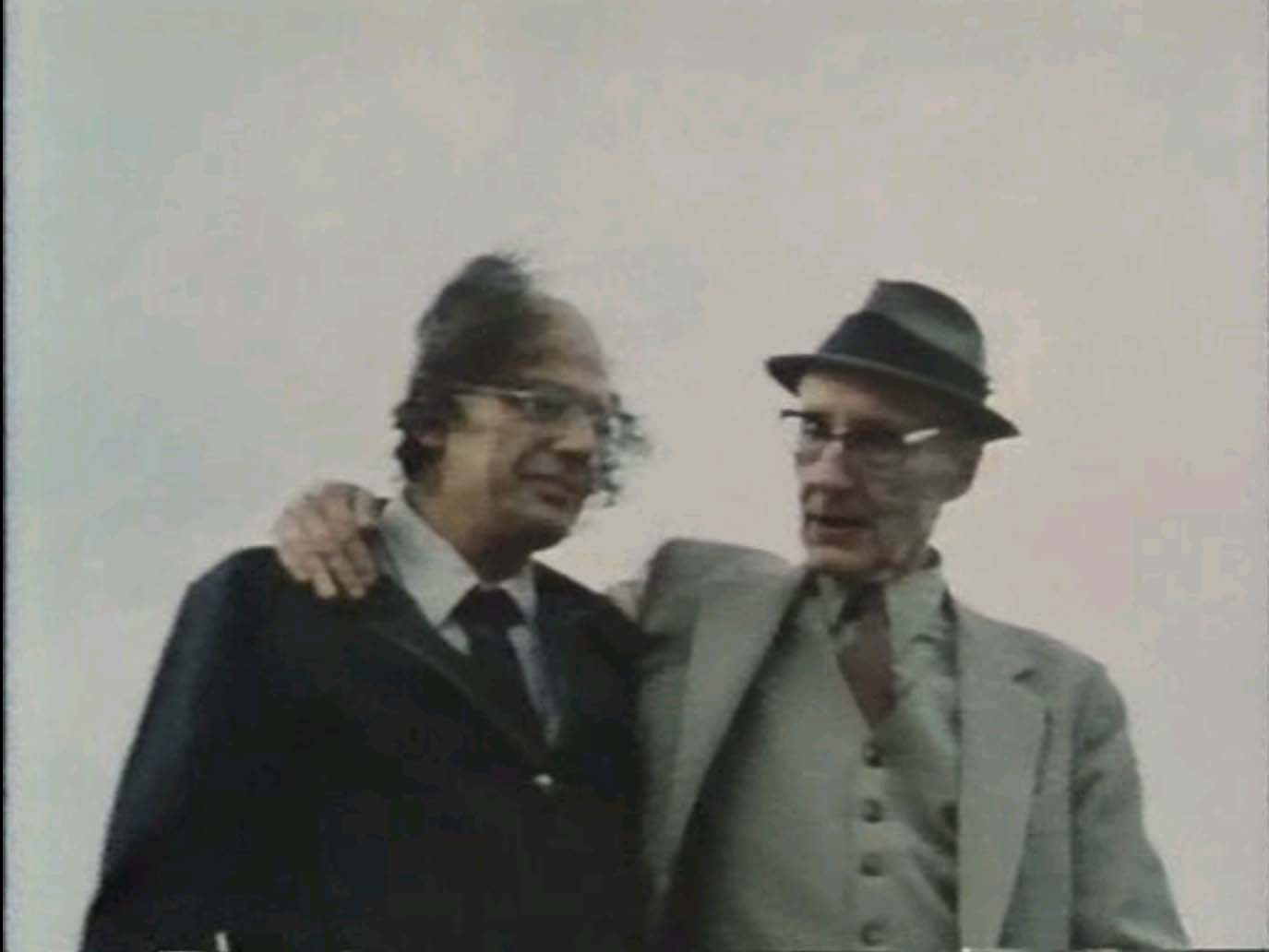
Made when its titular subject was 69 years old, and appearing to be on the brink of death — though the tenacious coot lived another 14 years — this bio-doc offers a gritty, first-hand glimpse into the past and personality of one of America’s strangest novelists. Through extensive interviews with Burroughs himself, as well as other key figures in his life — including his good friend (and erstwhile lover) Allen Ginsberg, his sycophantic personal assistant, and his aloof, dismissive brother — one gradually discovers the seemingly limitless number of personal demons Burroughs fought against all his life (including the accidental shooting of his wife, a heroin addiction, and the premature death of his drug-addicted son). While Burroughs remains indispensable as a cultural document, however, it’s not particularly innovative cinema, and thus isn’t must-see viewing for film fanatics.

Redeeming Qualities and Moments:

  • An intriguing overview of Burroughs’ tragic life
  • Fun banter between lifelong friends Burroughs and Allen Ginsberg
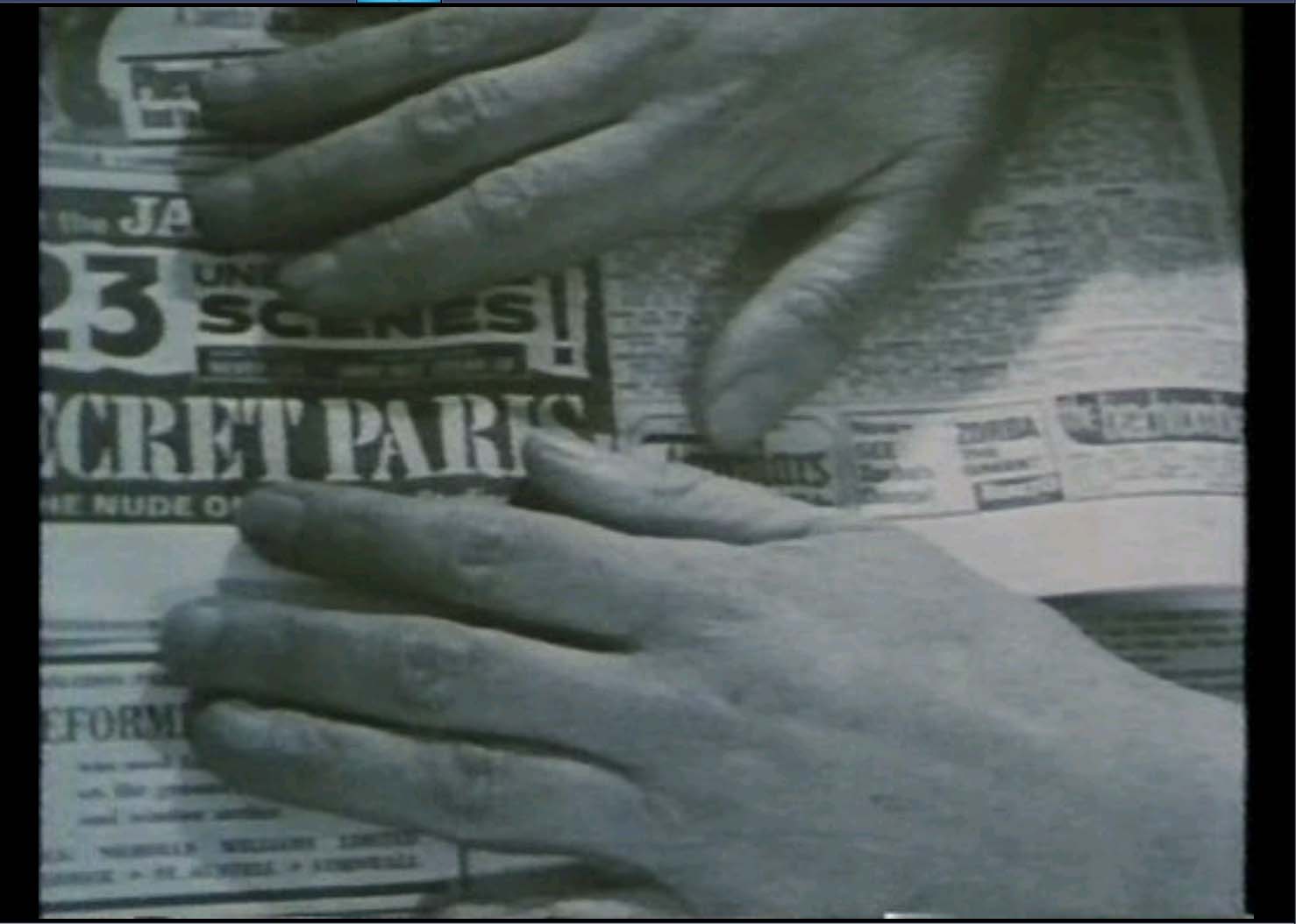
  • Burroughs describing his technique of “cut-ups”

Must See?
No; while interesting, this one is only must-see for Burroughs fans.

Links: