Browsed by
Category: Original Reviews

Responses to Peary’s “must see” movie reviews, as well as my own “must see” movie reviews up to and after 1986 (when Peary’s book was published).

Black Windmill, The (1974)

Black Windmill, The (1974)

“I’ve got to know what’s going to happen to David!”

Synopsis:
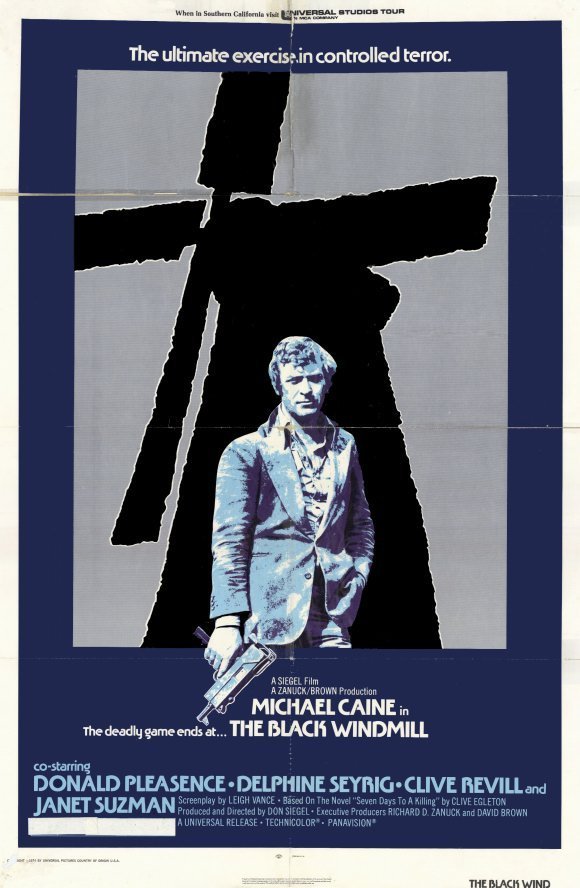
A British agent (Michael Caine) is suspected by his boss (Donald Pleasence) of kidnapping his own son (Paul Moss), and must take matters into his own hands.

Genres, Themes, Actors, and Directors:

  • Delphine Seyrig Films
  • Don Siegel Films
  • Donald Pleasence Films
  • Kidnapping
  • Michael Caine Films
  • Spies
  • Vigilantes

Review:
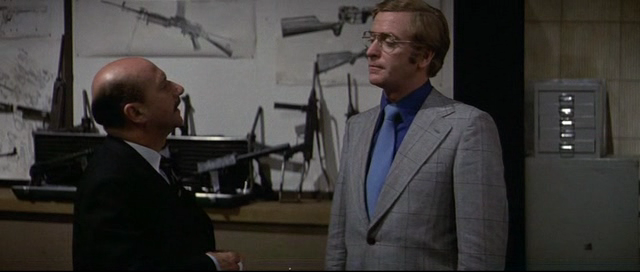
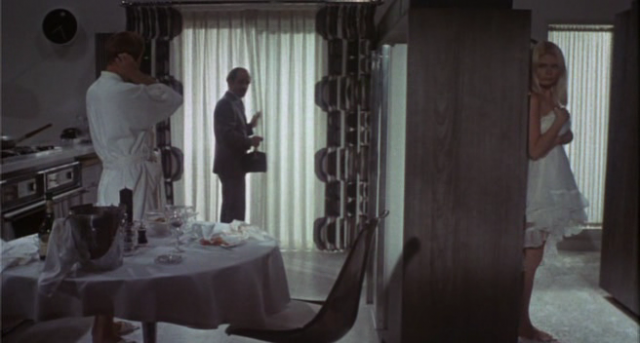
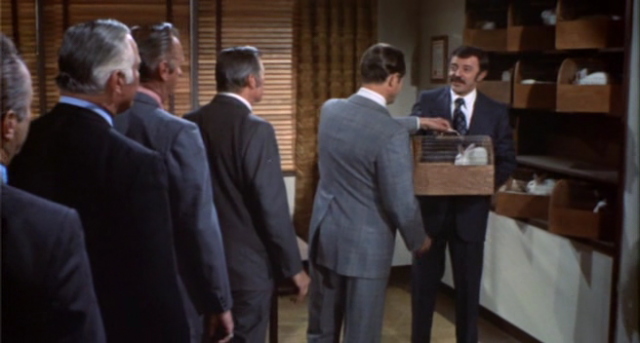
Based on Clive Egleton’s novel Seven Days to a Killing, this British spy-cum-vigilante flick is a curiously dull disappointment. With director Don Siegel at the helm and Michael Caine in the leading role, one would expect both excitement and nuance — but the overly linear storyline fails to generate much tension, and Caine is a bit too icy cool as an agent who’s almost immediately suspected of playing a part in his own son’s kidnapping:

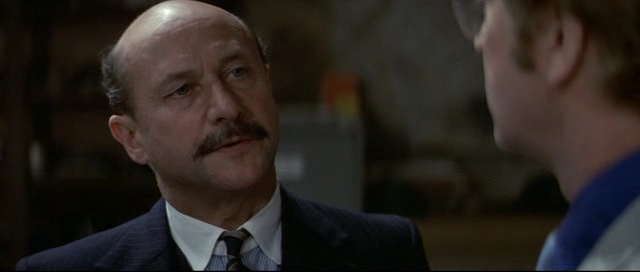
While we understand that Caine’s reserved attitude is scripted to arouse suspicion, he takes this guise too far, and loses our sympathy. Donald Pleasence fares better as Caine’s twitchy superior, who somehow seems to have it in for Caine (if only we better understood why). Meanwhile, John Vernon and Delphine Seyrig (as “Ceil Burrows” — great name) remain sadly underdeveloped villains. The dramatic climax, taking place in the title’s picturesque locale, unfortunately comes too late to redeem the rest of the lackluster script.

Redeeming Qualities and Moments:

  • Donald Pleasence as Cedric Harper

Must See?
No, though Siegel completists will certainly want to take a look.

Links:

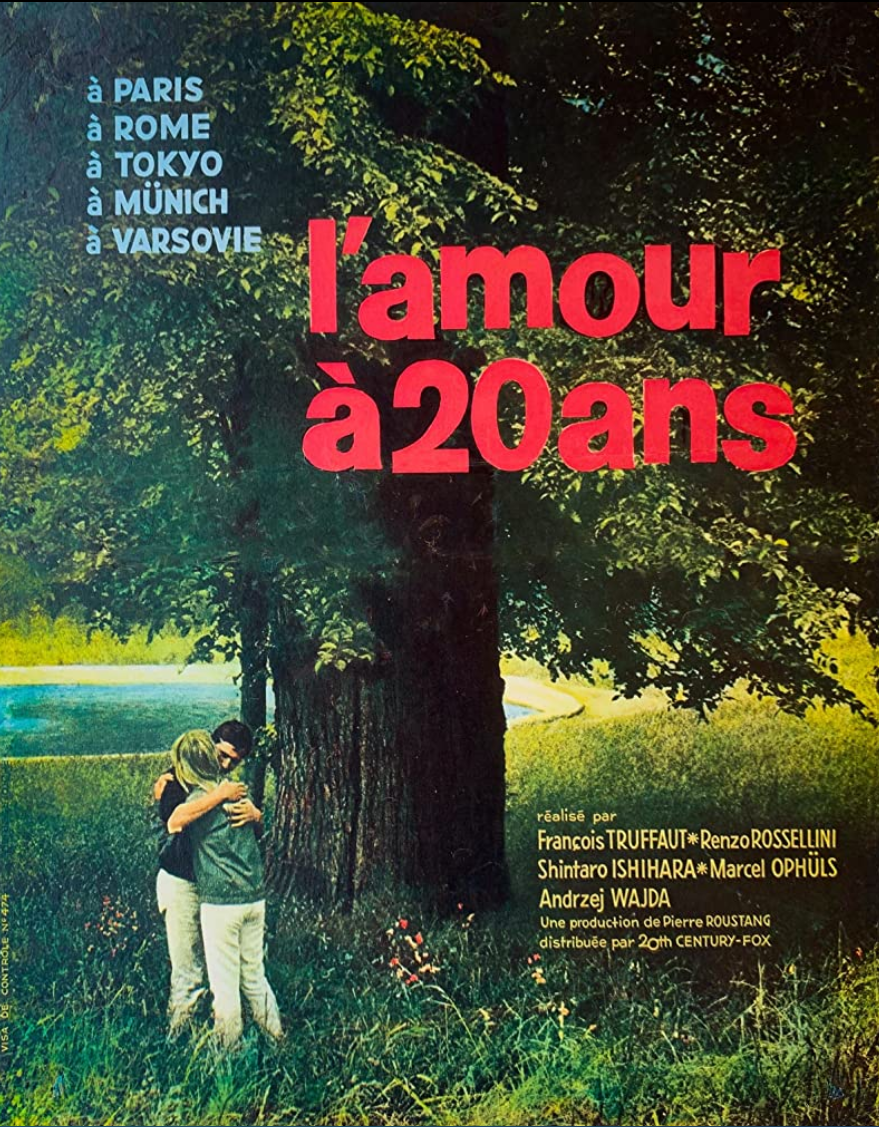
Love at Twenty (1962)

Love at Twenty (1962)

“All evening I watched her hair and neck. I couldn’t keep my eyes off of her.”

Synopsis:
Filmmakers from France, Italy, Germany, Poland, and Japan tell short stories about the joy and heartbreak of young love.

Genres, Themes, Actors, and Directors:

  • Episodic Films
  • Eastern European Films
  • Francois Truffaut Films
  • French Films
  • German Films
  • Japanese Films
  • Jean-Pierre Léaud Films
  • Obsessive Love

Review:
Judging from the stories told in this little-seen international omnibus film, love as experienced by 20-year-olds tends to be obsessive, all-consuming, heartbreaking, and/or dangerous. In Francois Truffaut’s opening segment (“Antoine and Colette”, a.k.a. “Paris”), his alter ego Antoine Doinel (Jean-Pierre Leaud) learns that attraction isn’t always reciprocated, but may lead to friendship. This delightful short story, the longest of the bunch, is an essential “adolescent” intermediary between the childhood tale of The 400 Blows (1959) and Doinel’s emergence as an adult in Stolen Kisses (1968). Unlike the other segments in the film, it’s now widely available as part of a box set of “Antoine Doinel” DVDs — and film fanatics won’t want to miss it.

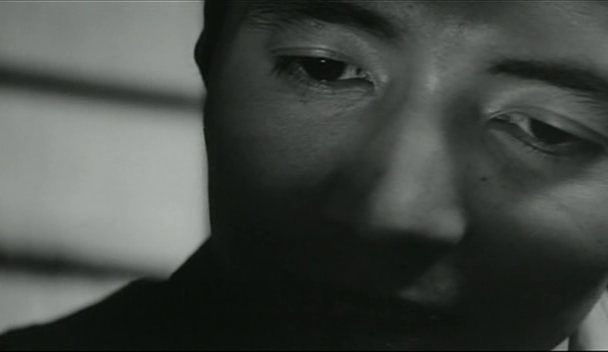
Renzo Rossellini’s “Rome” — about a callow young man (Geronimo Meynier) whose older lover (Eleonora Rossi Drago) bitterly tries to warn her young rival (Cristina Gaioni) about Meynier’s “true nature” — is effectively filmed, but, as one of the shortest of the film’s six tales, ultimately doesn’t leave much of a lasting impression. Shintaro Ishihara’s equally short “Tokyo” packs much more of a punch: it’s a hauntingly shot vignette about a delusional factory worker (Koji Furuhata) whose obsessive love for a beautiful woman he walks by every day taps into his violent tendencies. Meanwhile, Marcel Ophuls’ “Munich” aims for more depth in its tale of a womanizing businessman (Christian Doermer) undergoing — perhaps — a change of heart when he visits a girl (Barbara Frey) who has just given birth to his son; it’s engaging, and hints at the potential for a longer film.

Andrzej Wajda’s “Warsaw” is my personal favorite of the collection. Featuring Zbigniew Cybulski (the bespectacled star of Wajda’s Ashes and Diamonds, 1958), it packs a punch from the opening sequence, as we watch a little girl who has fallen into a polar bear’s den at the zoo being rescued by a man (Cybulski) with seemingly limitless bravery. A beautiful blonde (Barbara Lass) — previously seen kissing her young lover (Wladyslaw Kowalski) — immediately shifts allegiances when her boyfriend simply takes a photo of the tragedy rather than jumping in to help; Lass invites Cybulski back to her home, and — in typical Eastern European cinematic fashion — the situation becomes increasingly absurd, until events erupt into a poignant meditation on post-traumatic stress and the callowness of youth.

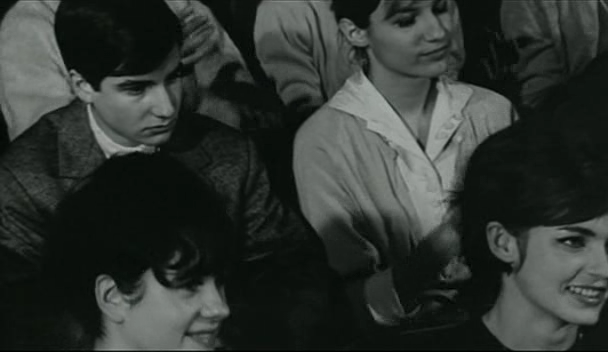
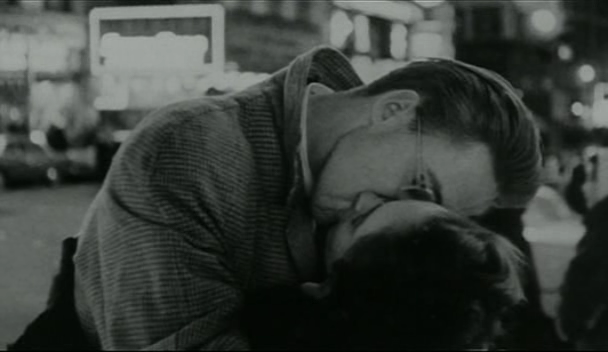
Weaving the five vignettes together is an absorbing montage of stills (by Henri Cartier-Bresson) showing (real-life?) young lovers on the street, and the reactions of those around them; in the background, Xavier Depraz sings Georges Delerue’s “Love at Twenty” in multiple languages, reiterating the universality of young love. It’s too bad that the most recent attempt at such an international collection of thematic shorts — Paris, Je T’Aime (2006) — was largely disappointing, since this earlier effort (strangely unavailable on DVD as of yet) shows that omnibus films can be quite effective, given the right combination of talent. Perhaps part of the solution lies in limiting the number of stories (Paris, Je T’Aime had a whopping twenty), so that more depth is allowed in each tale.

Redeeming Qualities and Moments:

  • Truffaut’s entire “Paris” story
  • Wajda’s “Warsaw” segment
  • Zbigniew Cybulski as “the hero” in “Warsaw”

  • Shigeo Murata’s haunting cinematography in “Tokyo”
  • Henri Cartier-Bresson’s inter-segment montage stills
Must See?
Yes, as a most enjoyable and insightful collection of short films.

Categories

  • Foreign Gem

Links:

Charlie Chan at the Opera (1936)

Charlie Chan at the Opera (1936)

“Small things sometimes tell large story.”

Synopsis:
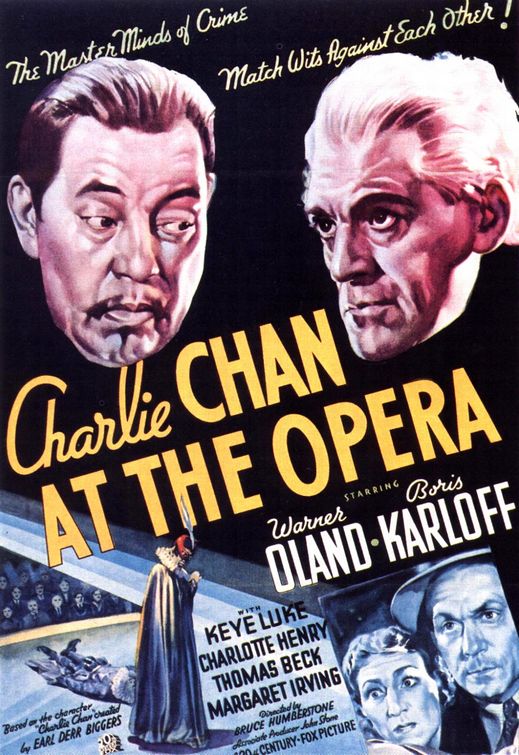
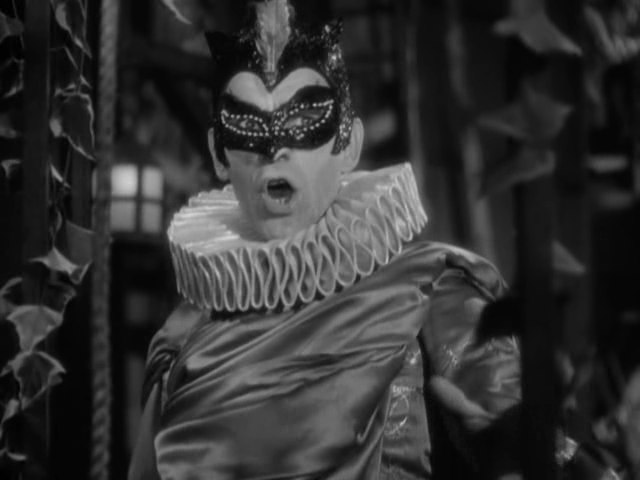
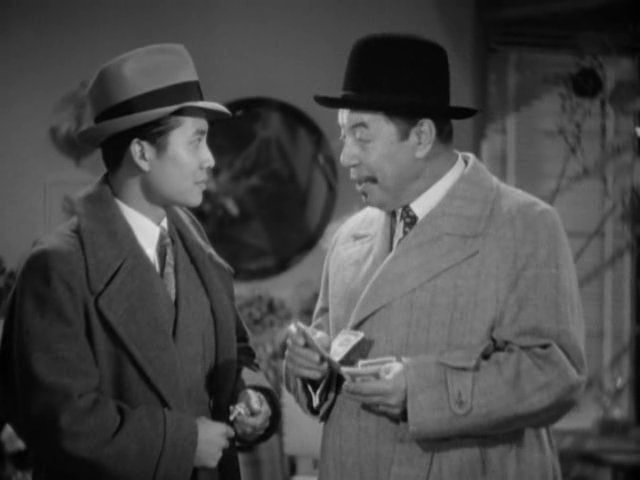
When a delusional amnesiac (Boris Karloff) escapes from a sanitarium in search of an opera singer (Margaret Irving), Chinese detective Charlie Chan (Warner Oland) and his “number one son” (Keye Luke) are on the case.

Genres, Themes, Actors, and Directors:

  • Asian-Americans
  • Boris Karloff Films
  • Detectives and Private Eyes
  • Murder Mystery
  • Opera

Review:
As I wrote in my review of Charlie Chan at Treasure Island (1939), it’s a shame that Hollywood primarily cast white actors in the central role of this popular and long-running detective series (though it should be noted that Asian actors were originally tried, without box office success). Swedish actor Warner Oland was the original “white” Chan, appearing in no less than 16 films in the series before his untimely death from pneumonia in 1938. While Oland does a fine job, it’s much more refreshing (from an historical perspective) to see Chinese-American Keye Luke playing his Number One Son — and the presence of Boris Karloff in a meaty supporting role as a delusional former opera singer will surely be a delight for film fanatics. The story itself (about murder and jealousy among opera singers) is reasonably enjoyable, making good use of just a couple of settings — primarily an opera house during opening night of a new opera (written by Oscar Levant!). You’re sure to be kept guessing about the outcome, and will likely find yourself innocently entertained throughout.

Note: While it’s frustrating to see Chinese Americans portrayed in the Chan series as either benevolent or stereotypically eager-beaver, Charlie Chan and his son are at least a welcome alternative to the “yellow peril” posited in the notorious character of Fu Manchu; in addition, the screenwriters do a nice job presenting William Demarest’s skeptical, racist detective as a clueless dolt.

Redeeming Qualities and Moments:

  • Boris Karloff as Gravelle
  • Keye Luke as Lee Chan
  • An innocuously fun yet challenging murder mystery

Must See?
Yes, simply to see the best of Oland’s Chan films.

Categories

  • Representative Film

Links:

Twice Upon a Time (1983)

Twice Upon a Time (1983)

“The spring is on the loose. We’ve got to get it, and we’ve got to get it now!”

Synopsis:
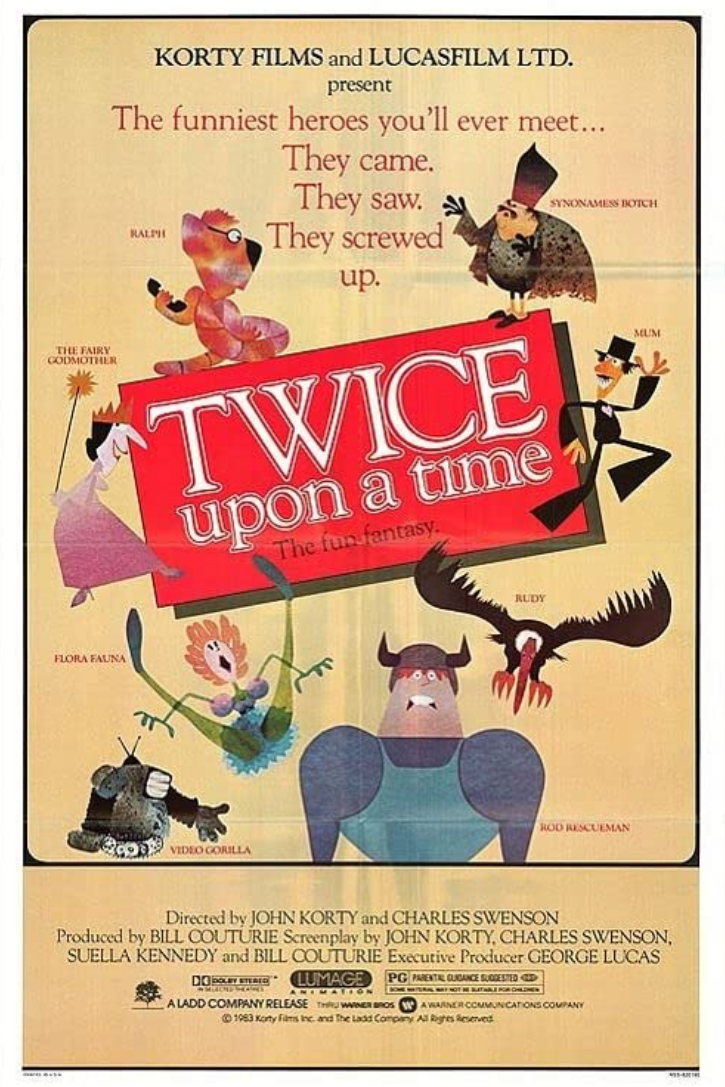
Ralph the All-Purpose-Animal (Lorenzo Music) and his sidekick, Mum, are tricked by evil Synonamess Botch (Marshall Efron) — ruler of Murkworks Nightmare Factory — into releasing the “Magic Mainspring” from a “Cosmic Clock” of time, thus freezing activity in the human world of Din. They join forces with an inept superhero named Rod Rescueman (James Cranna) to free Greensleeves (Hamilton Camp) — the ruler of Frivoli, Home of Sweet Dreams — from Botch’s clutches, and prevent Botch from unleashing a torrent of nightmares on Din.

Genres, Themes, Actors, and Directors:

  • Animated Features
  • Fantasy
  • John Korty Films
  • Superheroes

Review:
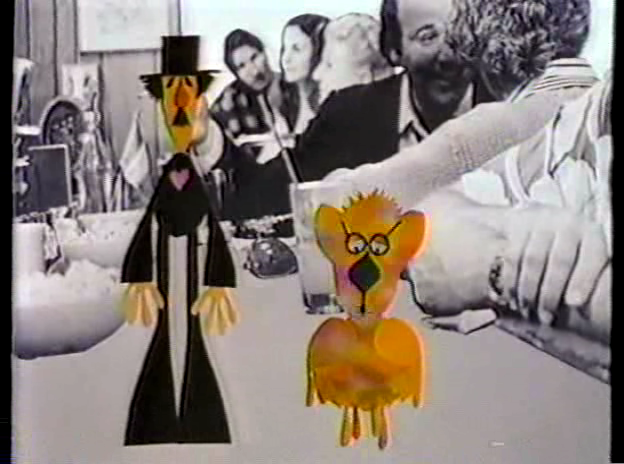
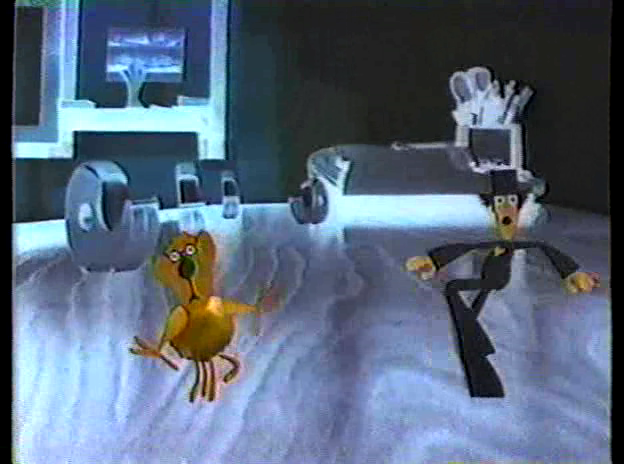
This little-seen animated fantasy (produced by George Lucas, and co-directed by John Korty) features a unique form of animation known as “Lumage”, in which cut-out pieces of plastic and fabric are illuminated by light tables and combined with live-action stills and footage to create an effect much like that in Terry Gilliam’s animation, or found in the television series “South Park”. The overall result is both stunning and consistently innovative, helping to make up for the film’s supremely dated ’80s soundtrack (you’ll want to plug your ears) and rather labyrinthine storyline. Indeed, you’ll probably need more than one viewing to understand exactly who all the characters are in Twice Upon a Time, how they’re related, and what they’re up to — but you won’t mind rewinding, since the visuals are unique enough to merit another look.

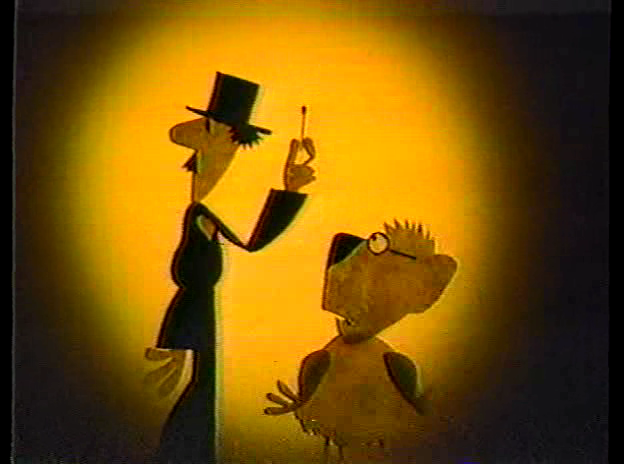
In a creatively surreal twist, the main character (Lorenzo Music, best known as the voice of Garfield) is capable of changing animal-shapes as needed to best suit his situation (his “default” mode is an innocuously bearish-looking fellow); meanwhile, his black-hatted sidekick Mum — true to his name — never says a word, instead simply conducting a steady stream of magic tricks (they’re like a less abrasive, vertically altered version of Penn and Teller). These two hapless but well-meaning souls are thrown willy-nilly into a plot in which a motley crew of would-be heroes and superheroes must save the world from eternal nightmares — with the wry “assistance” of a hilariously no-holds-barred New York Fairy Godmother (“Call me FGM; I hate excess verbiage.”).

Despite its overt fairytale leanings, however, this one isn’t necessarily for kids — at least not the version I saw, which is full of surprisingly salty profanity (at one point Botch yells, “So come on, you garlic breathing, garbage sucking dipshits. Move out! I’m not talking tomorrow! Haul ass, you mothers!”) Apparently an alternate, sanitized version was also released, but regardless of which version you locate, the story itself may still be too scary and baroque for kids to fully “get”; it’s ultimately more for adults or adolescents. Read Ward Jenkins’ interview with writer Taylor Jessen for many more details about the making of the film, as well as all the various and sundry reasons for its failure to be released on DVD. For now, you’ll have to catch a rare copy on video or try to search for a streamed version online.

Redeeming Qualities and Moments:

  • Impressive, highly creative “Lumage” animation

  • Enjoyably irreverent characterizations
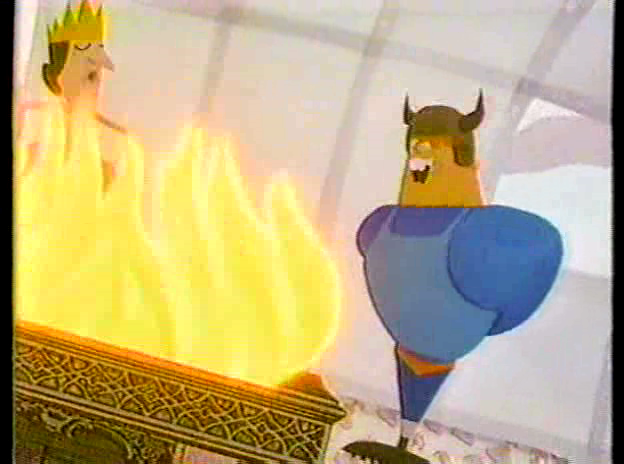
  • Rod Rescueman’s botched “superhero test” with the Fairy Godmother
  • The “office nightmare” sequence

Must See?
Yes, as an historically important animated film. Listed as a Sleeper in the back of Peary’s book – for good reason!

Categories

  • Historically Relevant

Links:

Canterbury Tales, The (1972)

Canterbury Tales, The (1972)

“You take a path to Canterbury — well, good luck. The holy blessed martyrs will reward you.”

Synopsis:
A group of pilgrims travel to Canterbury, telling various bawdy tales along the way.

Genres, Themes, Actors, and Directors:

  • Black Comedy
  • Episodic Films<
  • Historical Drama
  • Hugh Griffith Films
  • Pier Paolo Pasolini Films

Review:
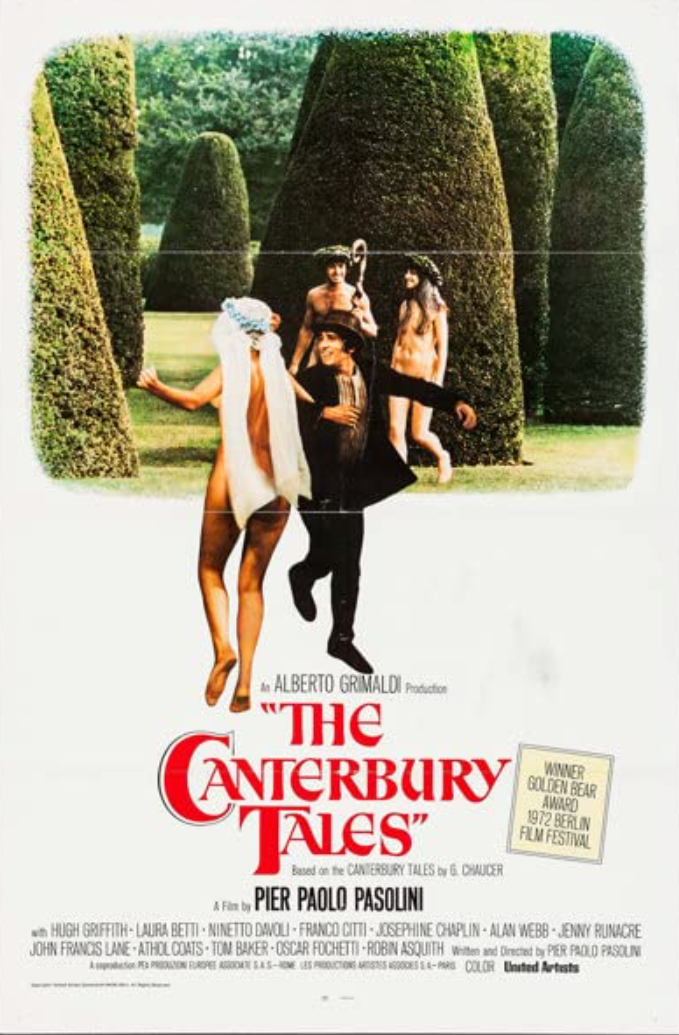
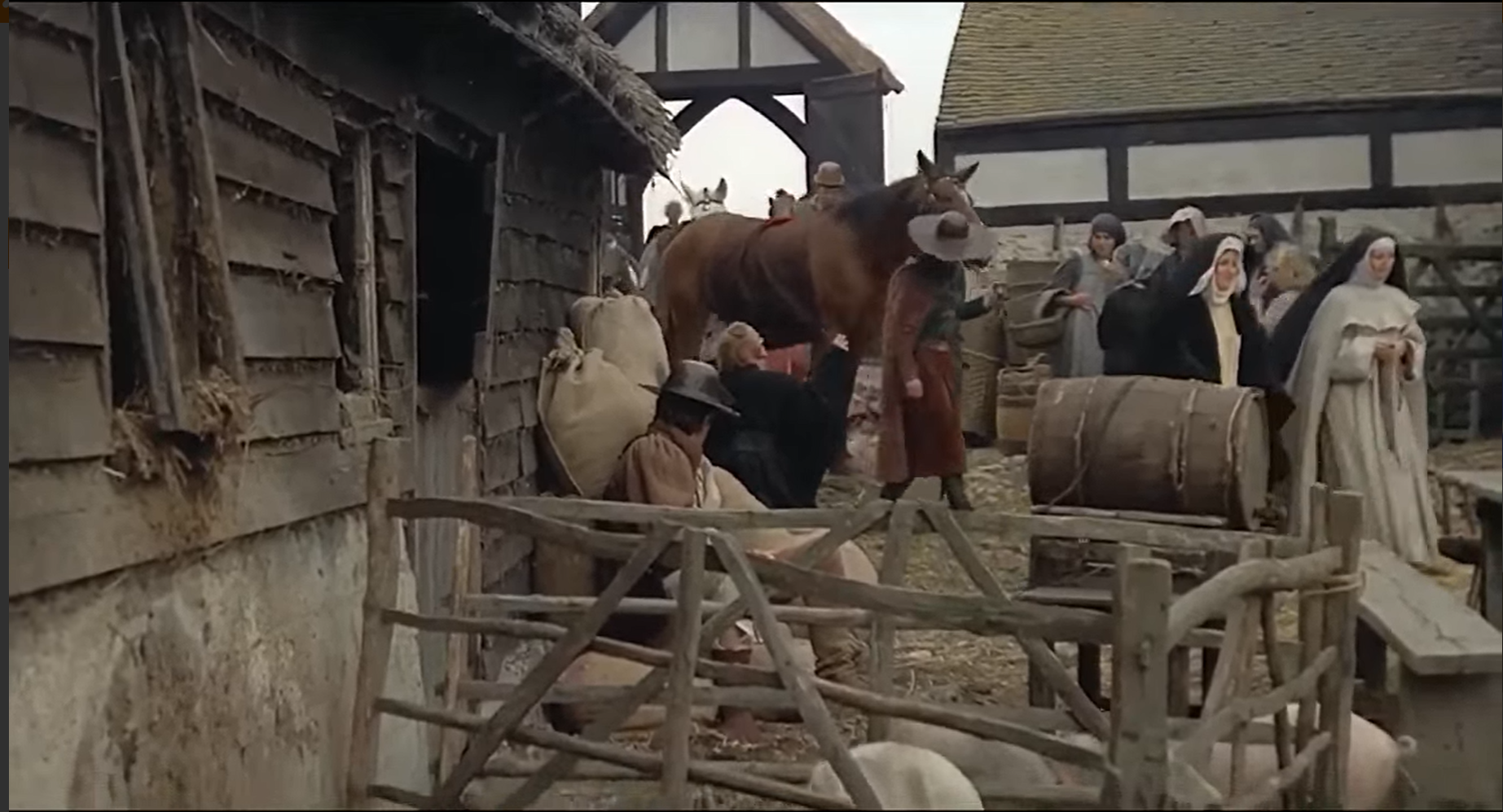
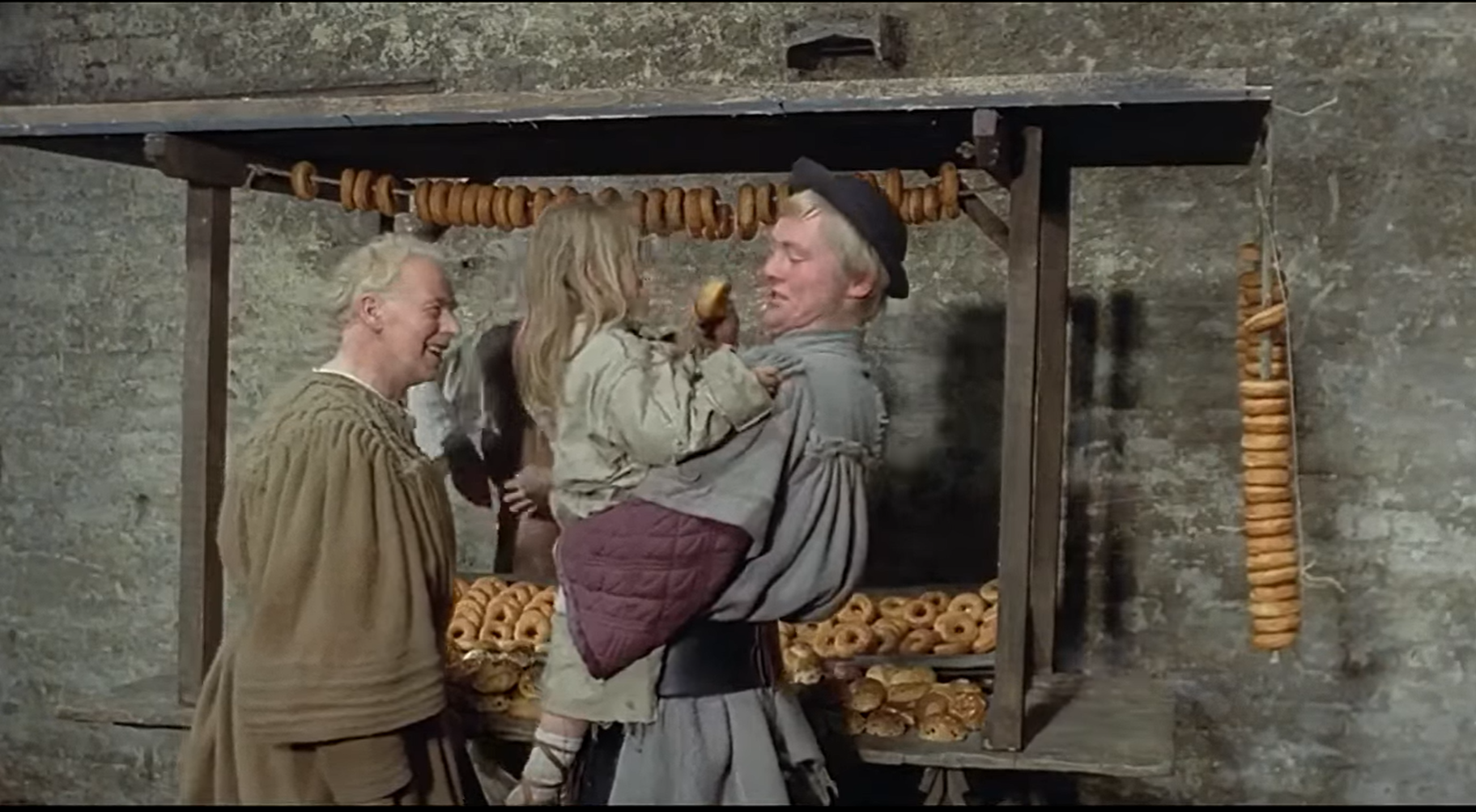
Pier Paolo Pasolini’s follow-up to his delightfully irreverent adaptation of Boccaccio’s The Decameron (1971) was this disappointing take on Chaucer’s Canterbury Tales. Casting many of the same actors, and utilizing authentic-looking costumes, sets, and props, Pasolini once again excels at viscerally evoking the grime and vibrancy of medieval Europe — but the same can’t be said for his storytelling abilities. Pasolini only loosely follows Chaucer’s actual text — indeed, it’s frustratingly difficult to figure out exactly who’s who, or which particular tales are being told; instead, he selectively draws from the book’s characters and situations in order to depict his own uniquely bawdy vision of hypocrisy, sexuality, and religion during the Middle Ages.

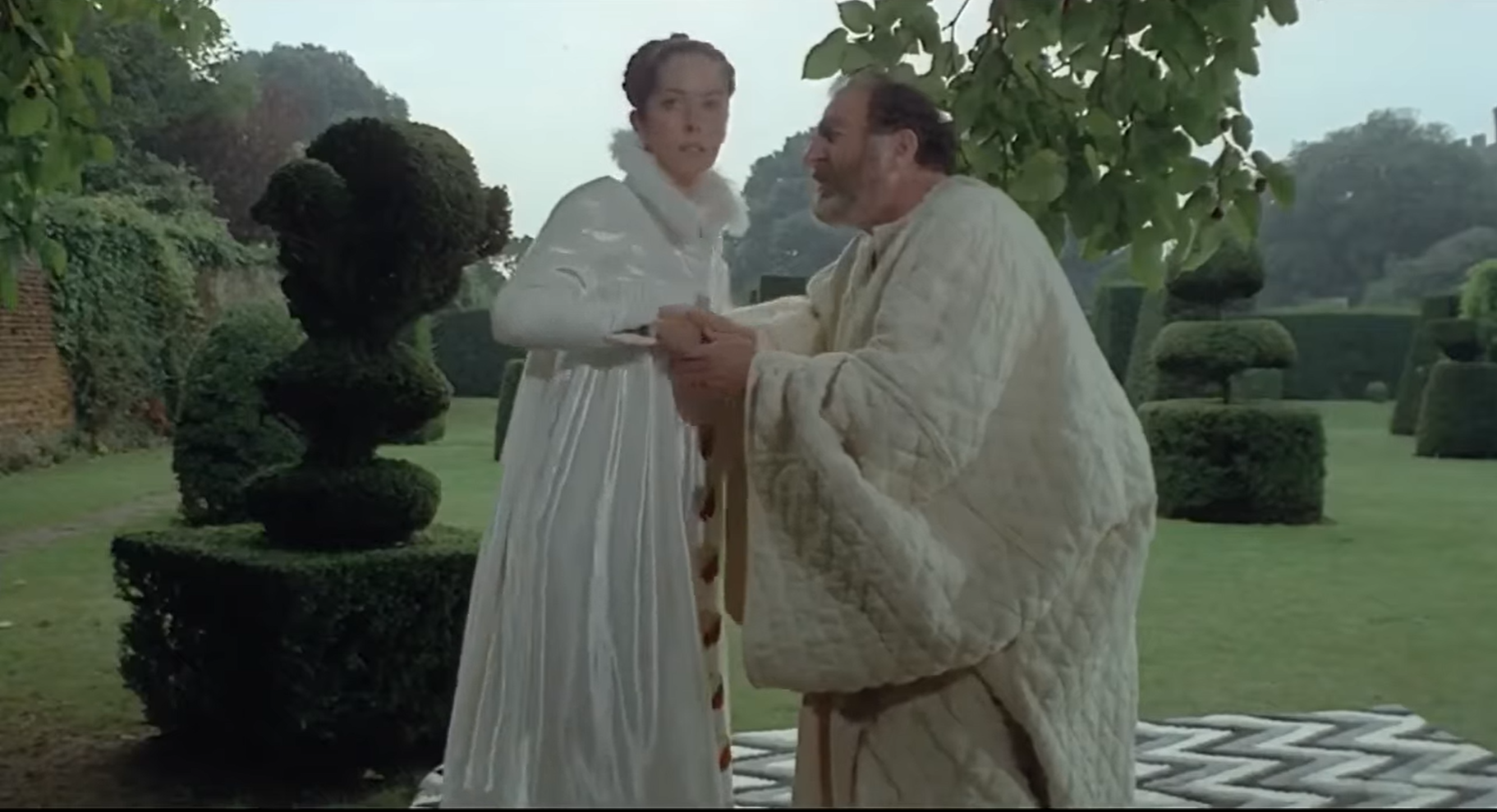
The opening story (“The Merchant’s Tale”), about a lecherous merchant named Sir January (Hugh Griffith) whose beautiful new wife, May (Josephine Chaplin), cuckolds him while he’s under a spell of blindness, is only mildly amusing, but at least promises more of the same type of naughty tales we saw in The Decameron.

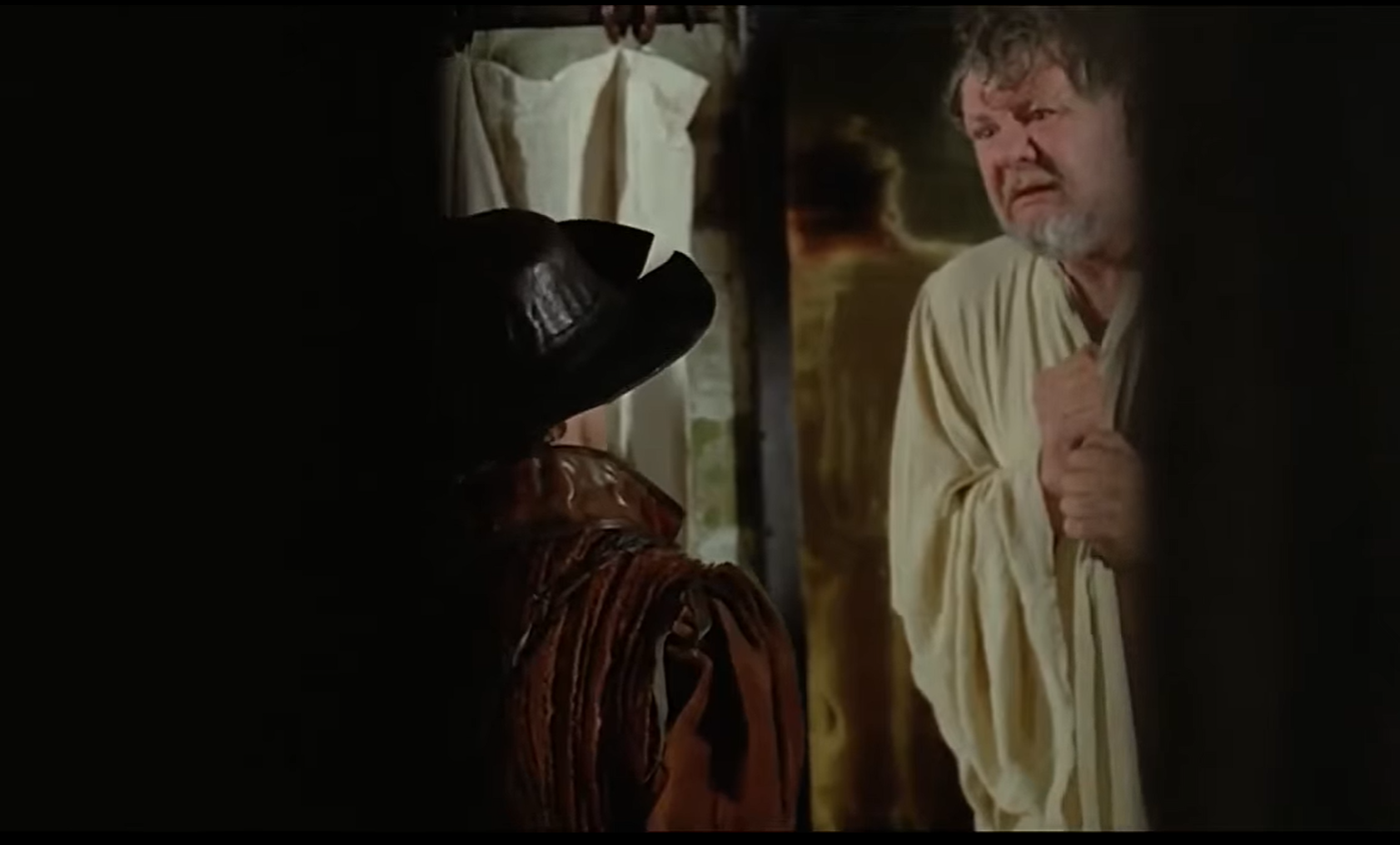
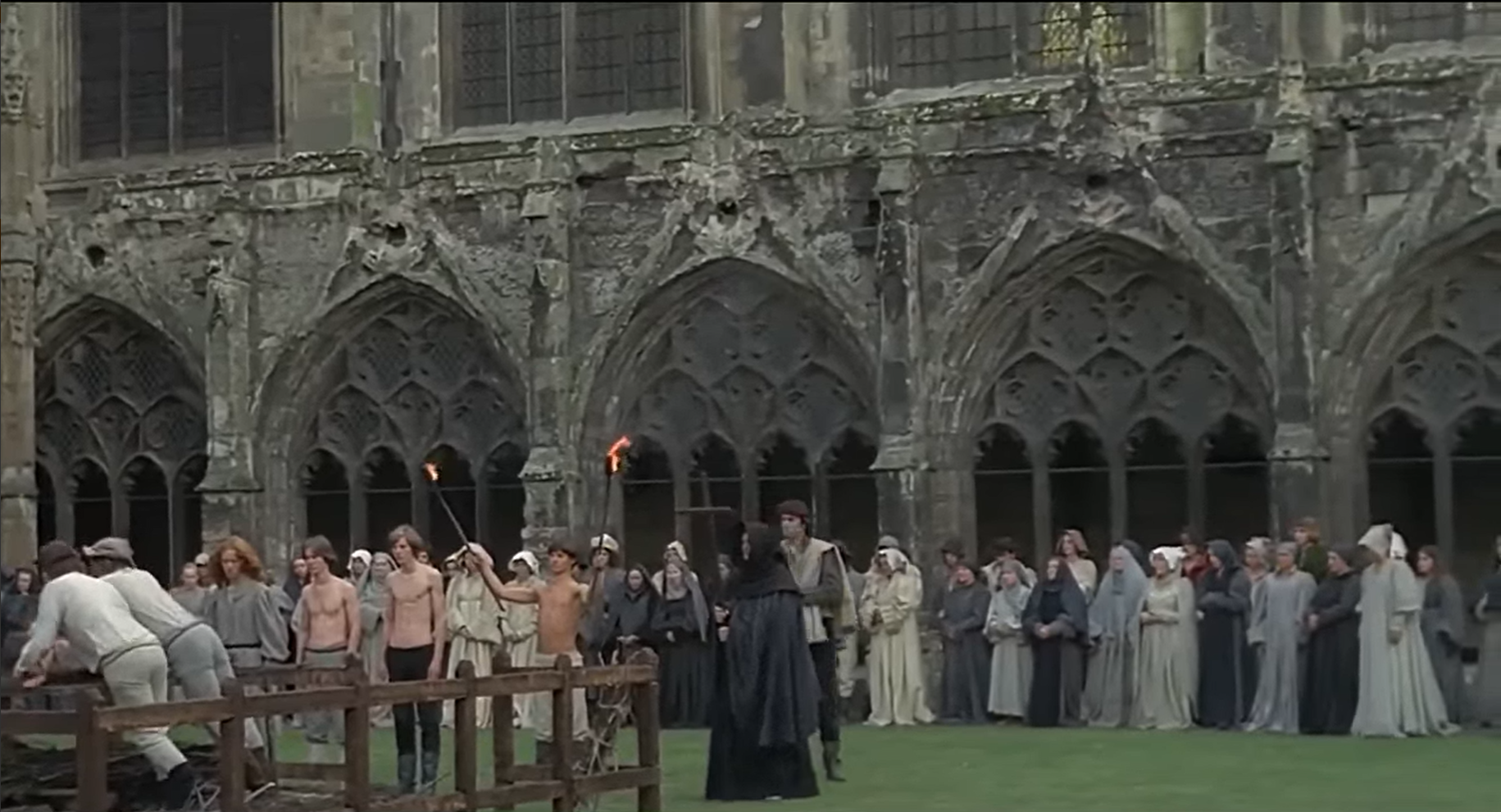
The next vignette takes on a much darker tone, as we watch two different men — one wealthy, one poor — being spied on while committing the heretical act of “buggering”, then blackmailed.

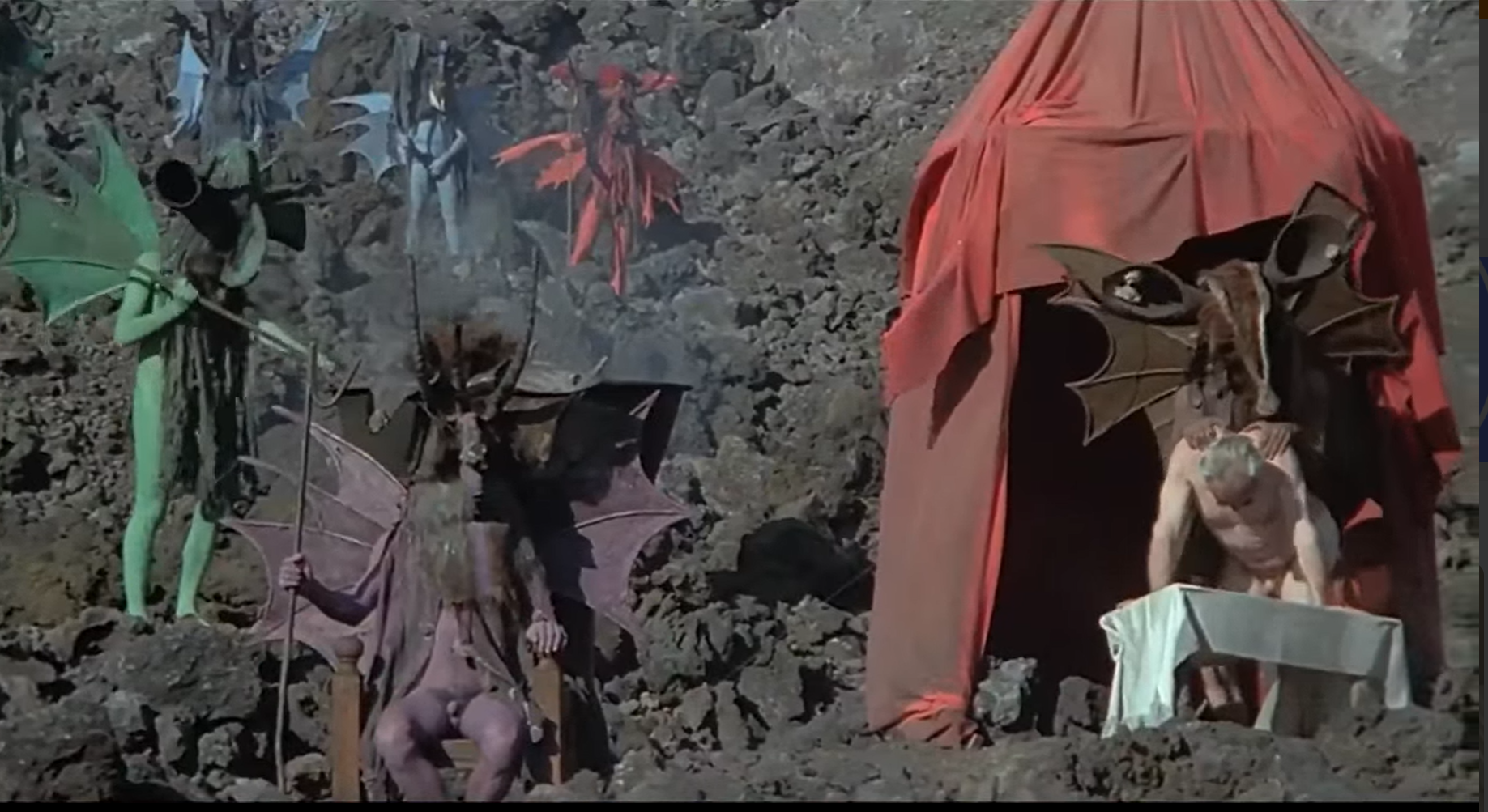
The gruesome outcome poignantly points out the hypocrisy of medieval “pardoning”. The rest of the film, unfortunately, quickly goes downhill, as tale after tale fails to provide either much humor or insight. We’re exposed to plenty of explicit sex and genitalia, several explosive farts, and — in Pasolini’s infamous vision of hell near the end of the film — a red-skinned devil literally defecating friars.

Those who enjoy such coarse imagery will be delighted, but the rest of us will simply suffer.

Redeeming Qualities and Moments:

  • Fine historical costumes, sets, and production design

  • The second tale, about the gruesome hypocrisy of “pardoning”

Must See?
No, though it’s worth a look simply as the second in Pasolini’s famed “Trilogy of Life” (followed in 1974 with Arabian Nights). Listed as a film with Historical Importance in the back of Peary’s book.

Links:

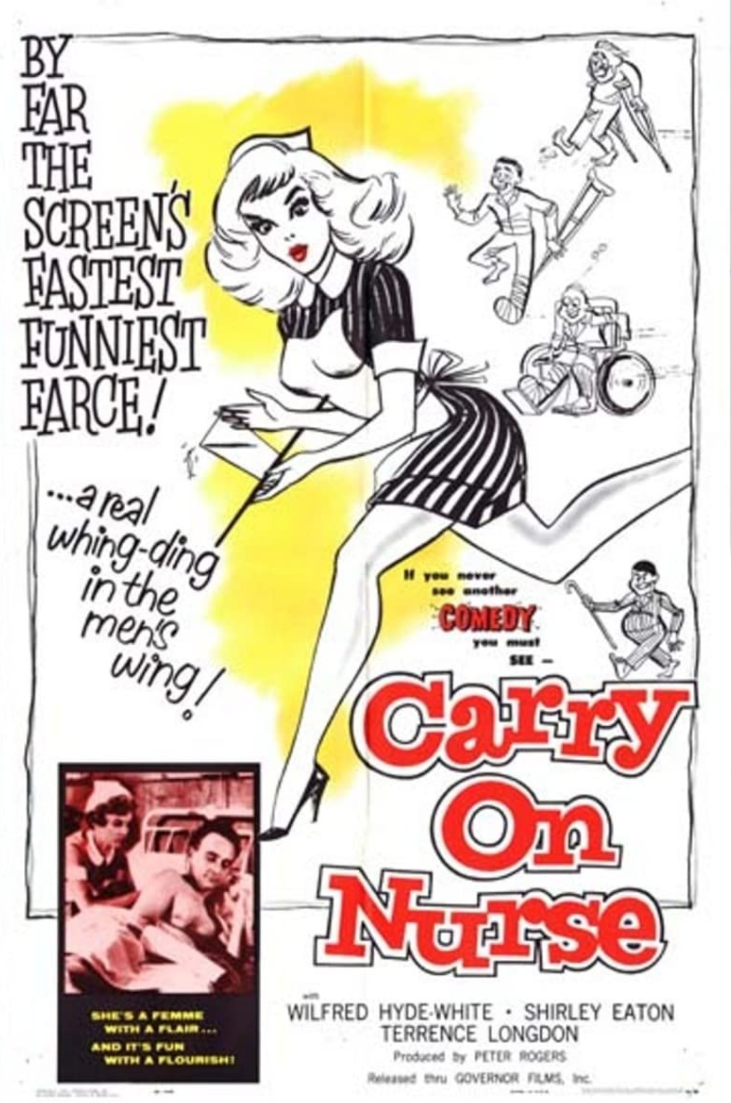
Carry On, Nurse (1959)

Carry On, Nurse (1959)

“Listen: hospital life from the patient’s point of view… A series, it’s surefire.”

Synopsis:
A motley group of patients at a British hospital — including a journalist, a boxer, and a colonel — interact with nurses, visitors, and each other.

Genres, Themes, Actors, and Directors:

  • Comedy
  • Doctors and Nurses

Review:
Between 1958 and 1978, 29 films in the enormously successful “Carry On” comedy series — directed by Gerald Thomas, and produced by Peter Rogers — were made at Pinewood Studios in England. Carry On, Nurse (the second in the series) was the highest grossing film in Britain in 1959, and is considered by many to be one of the best early entries in the series. Wikipedia describes the films as “an energetic mix of parody, farce, slapstick and double entendres” — but I must admit that they leave me completely cold. I didn’t laugh a single time throughout …Nurse, and am genuinely hard-pressed to understand what others might find humorous about the series.

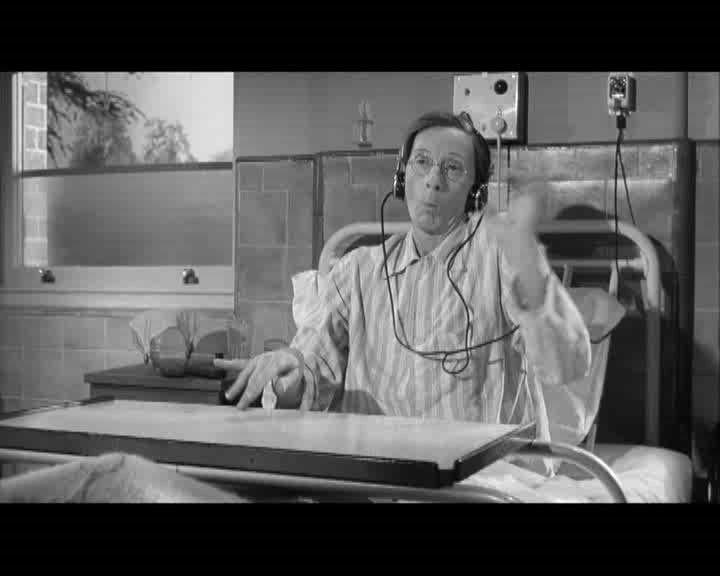
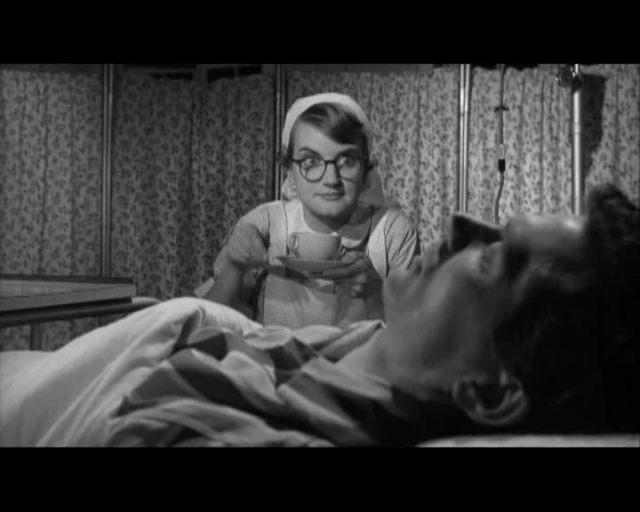
There’s no real plot to speak of in Carry On, Nurse; instead, we’re meant simply to laugh at the exploits of the patients and their foibles, as well as those of the nurses trying to avoid the wrath of their glowering matron (Hattie Jacques). Every now and then, we’re treated to some amusingly risque statements — such as when a bumbling student nurse (Joan Sims) expresses frustration with a male patient who’s embarrassed to strip and take a bath in front of her, then looks down at his nether regions and coyly states, “Hmm… To think I called you a baby!” Other attempts at humor — such as the mere presence of a gay patient (Charles Hawtrey) who enjoys flamboyantly “conducting” while listening to music on his headphones — are much weaker.

All told, Carry On, Nurse is guaranteed to be a delightfully nostalgic treat for those who enjoy the series, but a tedious snooze for those (like me) who don’t quite “get” the humor.

Redeeming Qualities and Moments:

  • A few mildly amusing scenarios (such as an overly diligent nurse who literally watches her patient 24/7)
  • The final “bunion surgery” scene

Must See?
Yes, but only as a representative sample of the series; another would likely do just as well, and don’t expect to be amused.

Categories

  • Historical Importance

Links:

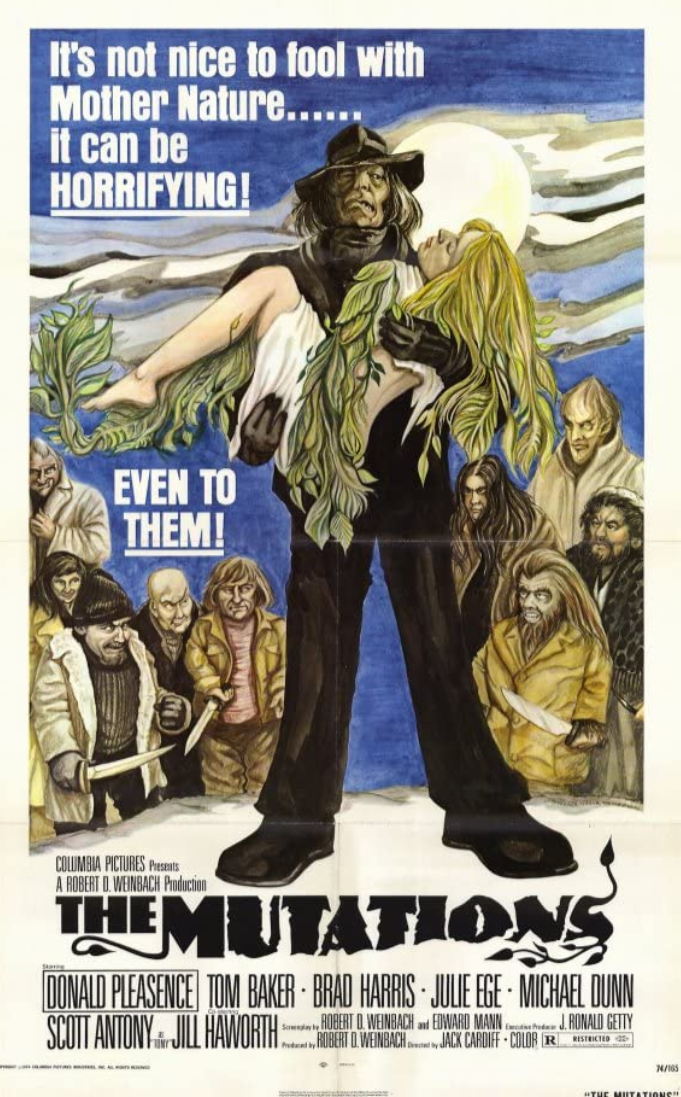
Mutations, The (1974)

Mutations, The (1974)

“He’ll soon be neither human nor plant, but with the characteristics and advantages of both: a plant that can move and think; a man who can set down roots.”

Synopsis:
A mad scientist (Donald Pleasence) obsessed with merging plant and human life forms has his facially deformed assistant (Tom Baker) kidnap university students (Olga Anthony and Scott Anthony) so he can perform genetic experiments on them; meanwhile, their friends (Julie Ege, Brad Harris, and Jill Haworth) try to find out why they’ve disappeared.

Genres, Themes, Actors, and Directors:

  • Carnivals and Circuses
  • Donald Pleasence Films
  • Horror
  • Killer Plants
  • Mad Doctors and Scientists
  • Science Fiction

Review:
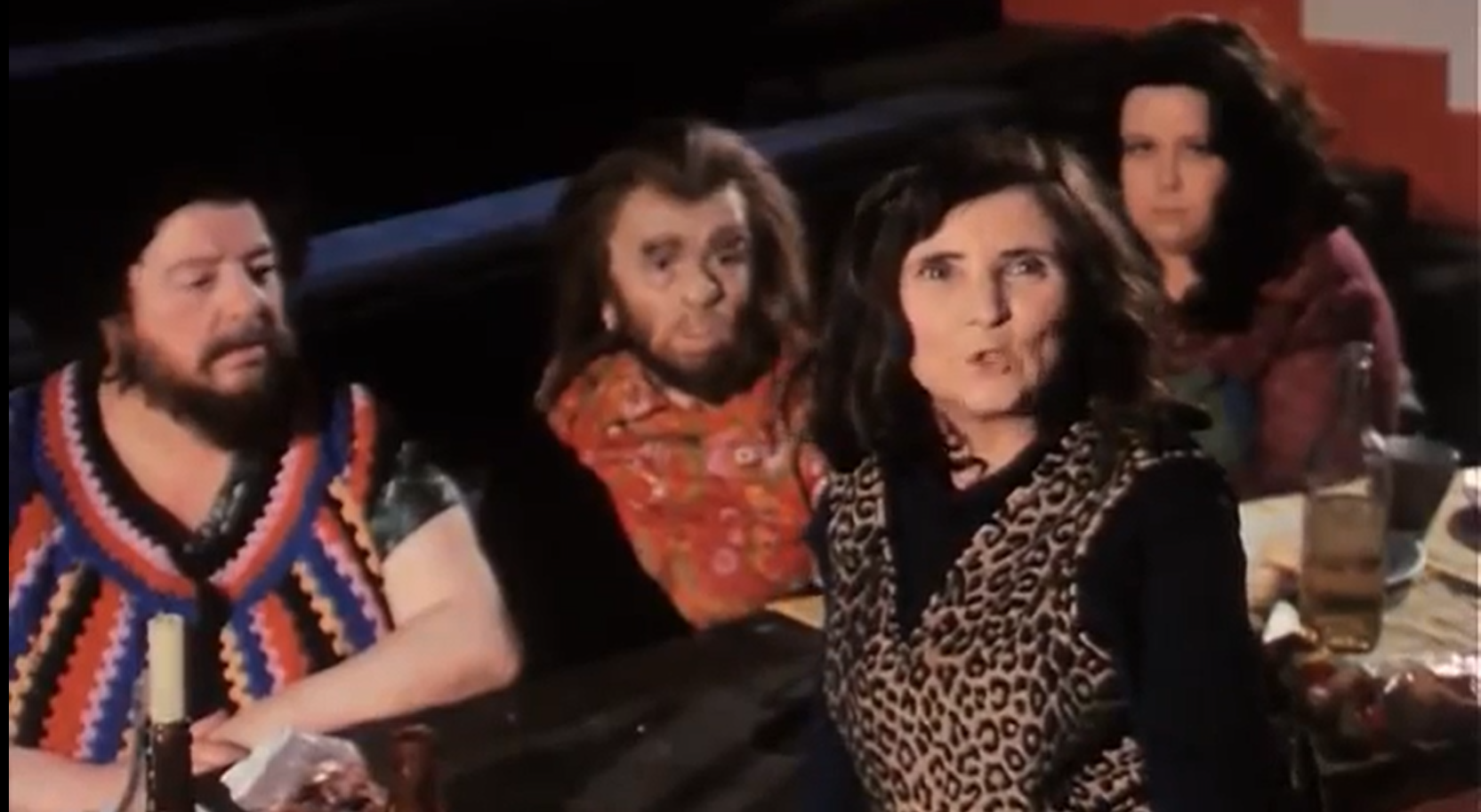
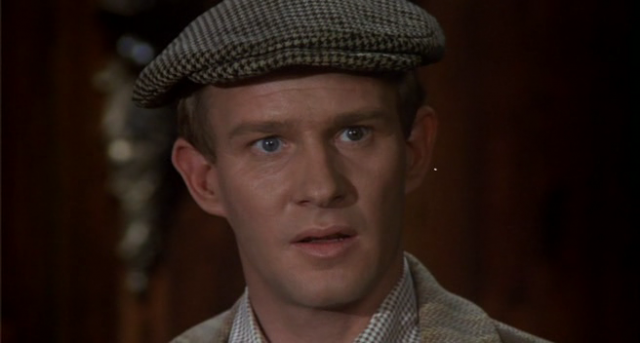
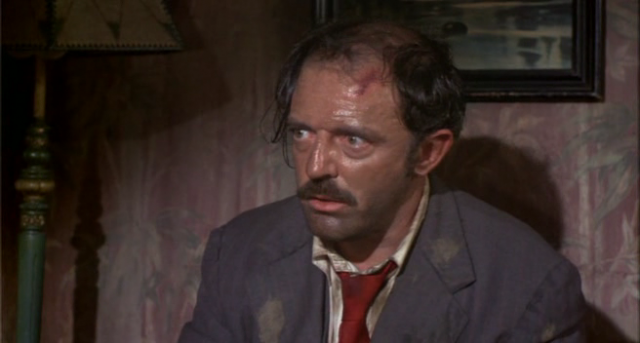
Famed cinematographer Jack Cardiff directed over a dozen feature-length films during his illustrious career; this campy cult horror film was the last of them. It’s inspired in part by Tod Browning’s Freaks (1932), given its cast of physically “abnormal” performers who are upset that their nominal leader (Baker) doesn’t consider himself “one of them” — in fact, the infamous “We accept you, one of us!” dinner party sequence from Freaks is directly replicated here.

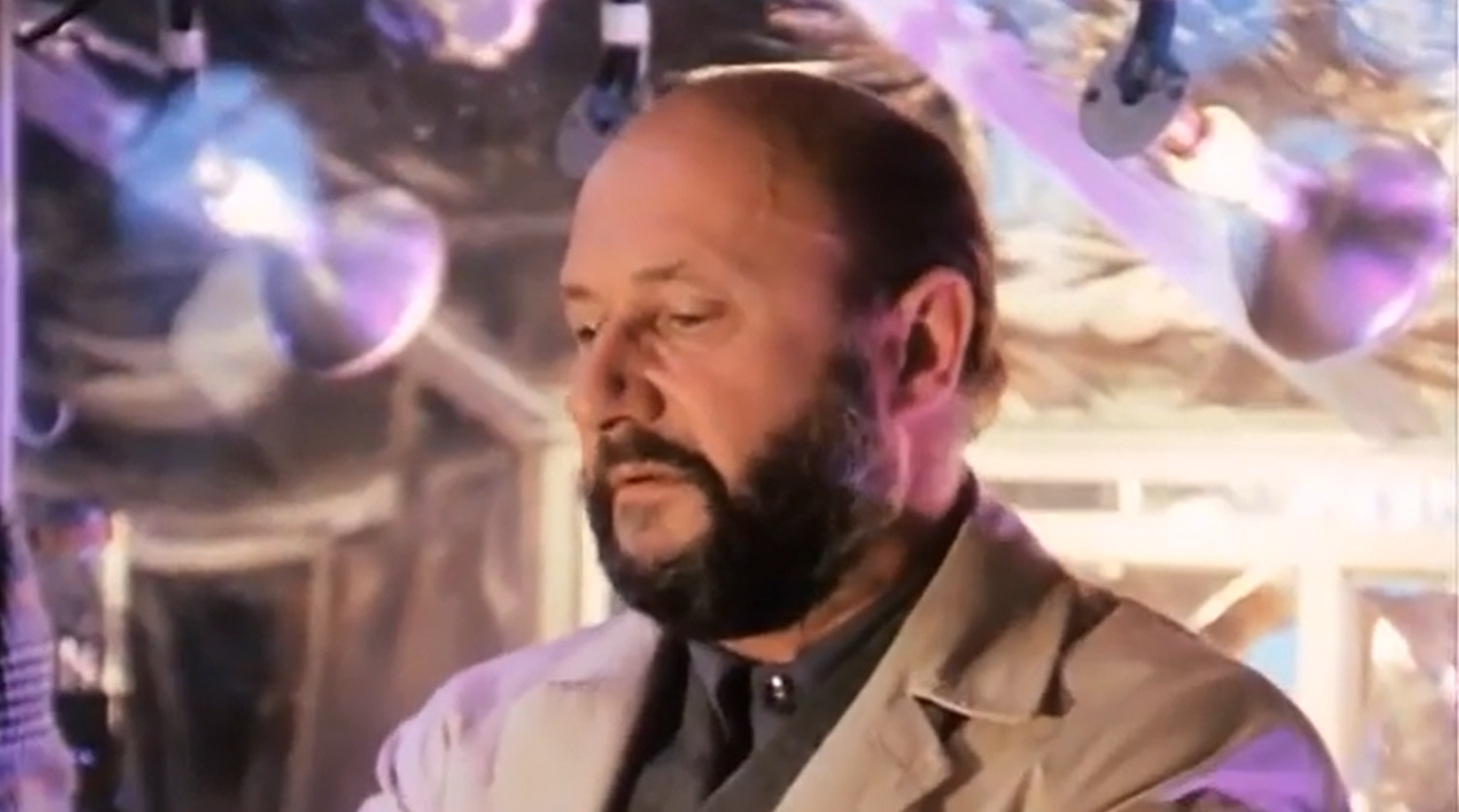
Unfortunately, the bulk of the movie is taken up with a rather nonsensical mad scientist plot, in which Pleasence — with completely noble goals, of course:

— turns his experimental “subjects” (conveniently, two of them are his own students) into laughably silly-looking plant-monsters.

At least the picture looks good, with vibrantly colorful set designs — and the mid-film “freak show” is worth a look.

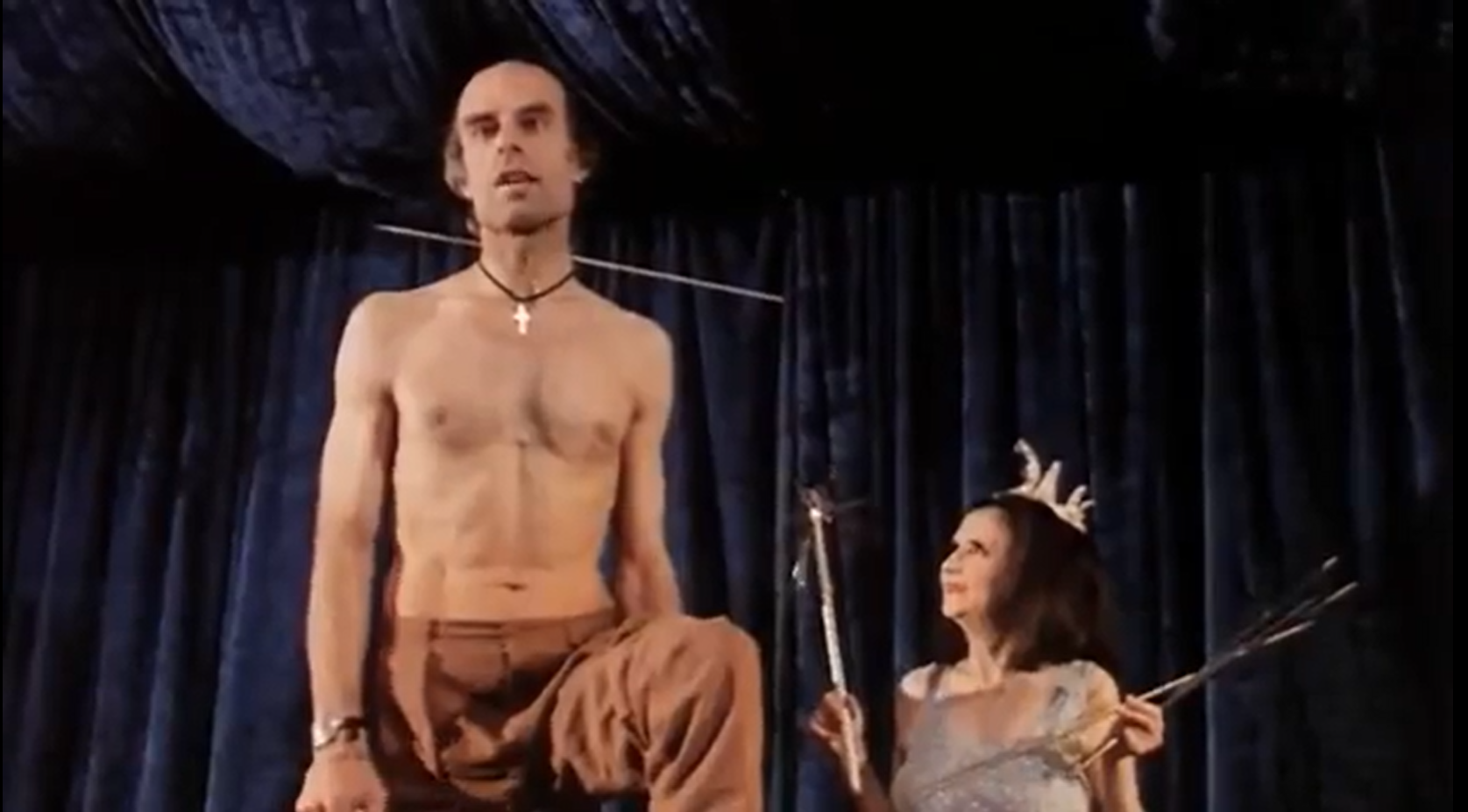
I like how these actors — including a real-life “Alligator Lady”, “Bearded Lady”, “Frog Boy”, and “Human Pincushion”, as well as a man known as “Popeye” who can bug his eyes out at will:


— are treated with relative dignity, and each allowed to carefully explain their syndrome to the audience if they wish. These sympathetic characters should have been the central focus of the film.

Redeeming Qualities and Moments:

  • The undeniably fascinating carnival “freak show”
  • Colorful set designs

Must See?
No. Listed as a Cult Movie in the back of Peary’s book.

Links:

Atalante, L’ (1934)

Atalante, L’ (1934)

“Paris, Paris! Oh infamous, marvelous city!”

Synopsis:
A pair of young newlyweds (Dita Parlo and Jean Daste) find their happiness threatened when Parlo becomes bored with life aboard Daste’s barge, L’Atalante, and desires more excitement in Paris.

Genres:

  • At Sea
  • City vs. Country
  • French Films
  • Marital Problems
  • Newlyweds

Review:
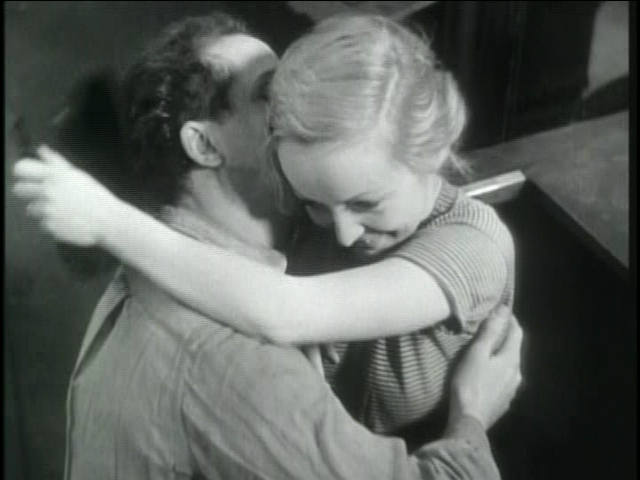
In addition to his 47-minute featurette Zero de Conduite (1933), Jean Vigo only made one full-length film — this tale of newlywed bliss and strife — before his untimely death from lung failure at the age of 29. More a visual “tone poem” than a complex narrative (indeed, the dialogue is almost superfluous), L’Atalante tells the simple yet powerful story of newlyweds whose marital happiness is quickly disrupted by Parlo’s realization that life aboard her husband’s shipping vessel is cramped, dirty, and boring, and won’t offer nearly the level of excitement she was hoping for when leaving her provincial home. Fortunately, photogenic Parlo never comes across as shrewish in her demands; rather, she’s seductively sweet as a true innocent learning about both the wider world and conjugal bliss for the first time. Her scenes with Daste — they grasp for each other at every chance — are alternately playful and deeply erotic, effectively depicting the strong sexual tensions holding this couple together despite the challenges they face.

Parlo gains at least some measure of enjoyment from getting to know “Papa Jules” (Michel Simon), Daste’s grizzled shipmate with a penchant for odd curios, and a mild crush on the young bride. Whenever he’s on-screen, Simon — only 40 in real life, though his character appears to be older — dominates the story. Simon was an acknowledged star by this point in his career, and his semi-improvised scenes throughout L’Atalante show why; with his hound dog countenance and clownish demeanor, he’s both riveting and hilarious to behold. He’s incorrigible, too — as indicated in his irreverent retort to Daste when questioned about a photo of a nude woman on his cabin wall:

Daste: “What’s the picture?”
Simon: “Me as a kid!”

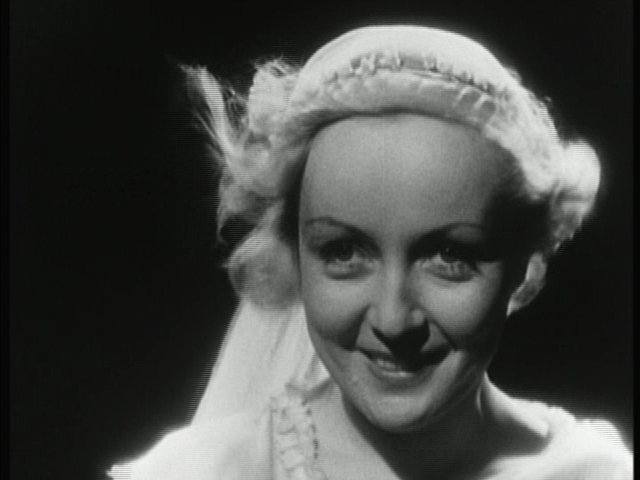
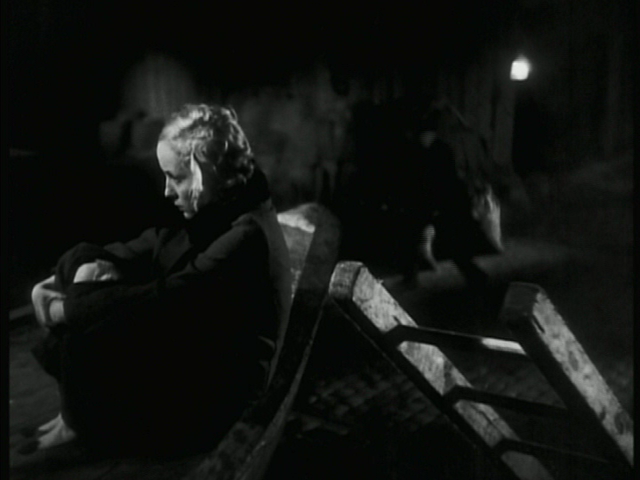
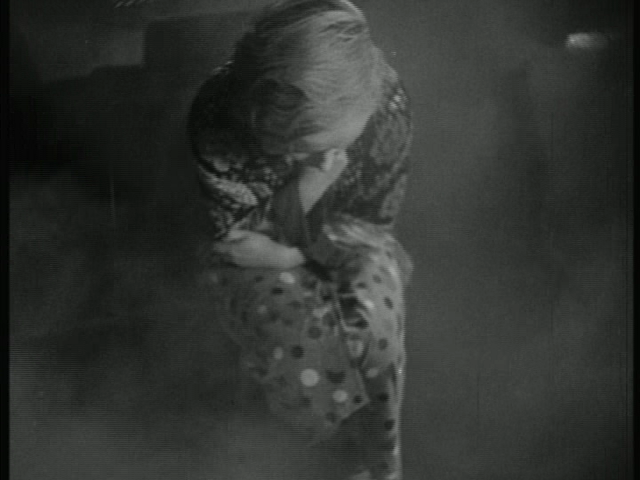
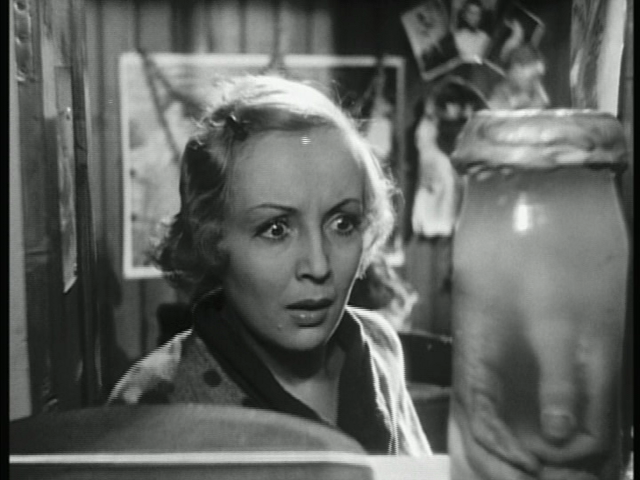
The true “stars” of L’Atalante, however, are Vigo and cinematographer Boris Kaufman (along with composer Maurice Jaubert), who collectively depict some of the most haunting and memorable images in French film history. Notable sequences (just a few among many) include the opening “wedding march”; Parlo discovering Simon’s “pickled hands” in a jar; Daste seeing Parlo’s bridal visage while swimming underwater; and Vigo’s masterful depiction of the couple reaching out to one another in sleep from their separate beds. L’Atalante makes it clear that Vigo possessed a uniquely poetic voice in cinema; this “first feature” is a sad hint of his future genius, had he lived past the age of 30.

Redeeming Qualities and Moments:

  • A sweet, sensual depiction of newlywed love
  • Michel Simon as Papa Jules
  • Dita Parlo as Juliette
  • Excellent use of naturalistic locales
  • Boris Kaufman’s cinematography
  • Countless memorable images and scenes


  • Maurice Jaubert’s playful score

Must See?
Yes, as an early classic of French cinema. Listed as a film with Historical Importance and a Personal Recommendation in the back of Peary’s book.

Categories

  • Foreign Gem

(Listed in 1001 Movies You Must See Before You Die)

Links:

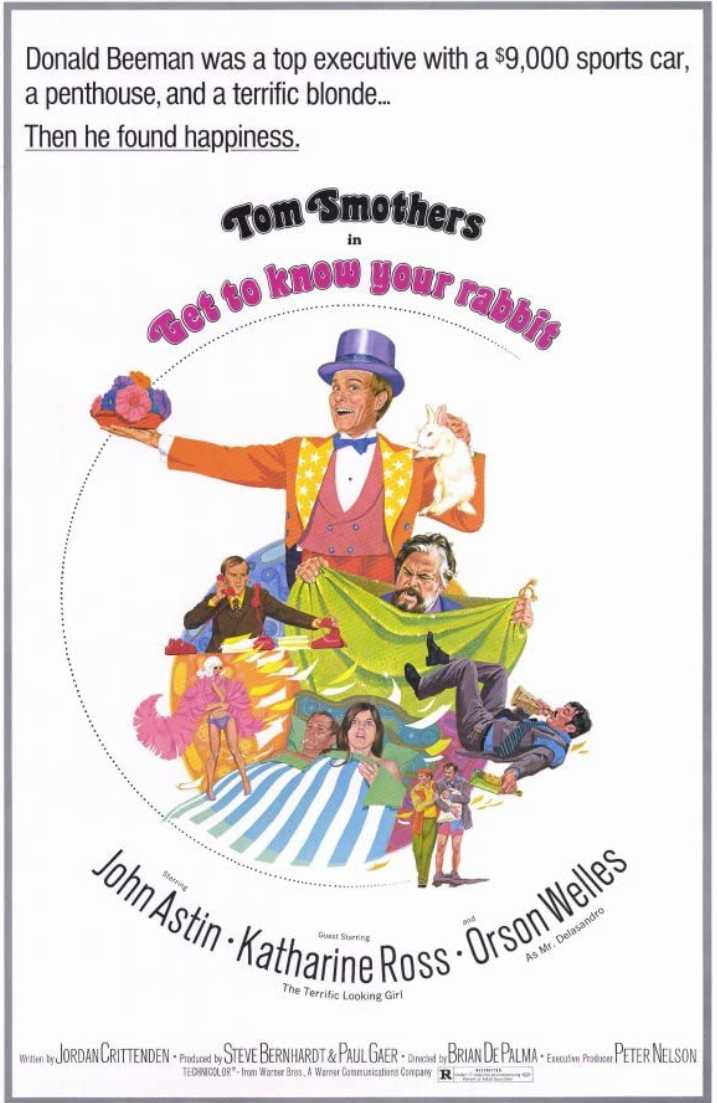
Get to Know Your Rabbit (1972)

Get to Know Your Rabbit (1972)

“To work that hard would be unfair to your rabbit – but I can see that you’re sincere.”

Synopsis:
A burned-out executive (Tom Smothers) escapes from his job and studies with a famed instructor (Orson Welles) to become a tap-dancing magician. When his former colleague (John Astin) shows up at his doorstep desperate for work, Smothers hires him as his manager — with unexpected results.

Genres:

  • Allen Garfield Films
  • Black Comedy
  • Brian De Palma Films
  • Character Arc
  • Katharine Ross Films
  • Magicians
  • Nonconformists

Review:
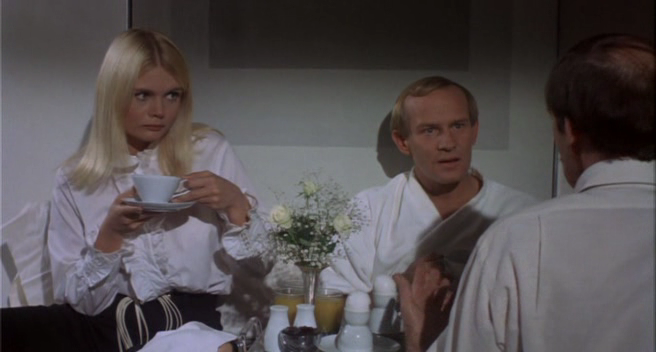
Get to Know Your Rabbit was Brian De Palma’s final comedy before he turned to making the Hitchockian and/or supernatural thrillers — Sisters (1972), Carrie (1976), Dressed to Kill (1980) — he’s best known for. While it’s little-seen these days, …Rabbit deserves a wider audience: it’s consistently clever and surreally anarchic. Stand-up comedian Tom Smothers is perfectly cast as an overworked business executive who seemingly “has it all” — money, a gorgeous apartment, a willing girlfriend (Susanne Zenor) — but leaves all this behind to pursue his real passion in life.

From the opening sequence, in which both Smothers and his assistant (a delightful John Astin) distractedly ignore a phone call warning that a bomb is about to go off in their building, to Smothers’ equally bizarre encounter shortly thereafter with an overly solicitous piano tuner, it’s clear that Jordan Crittenden’s screenplay will continue to take us in decidedly unexpected directions.

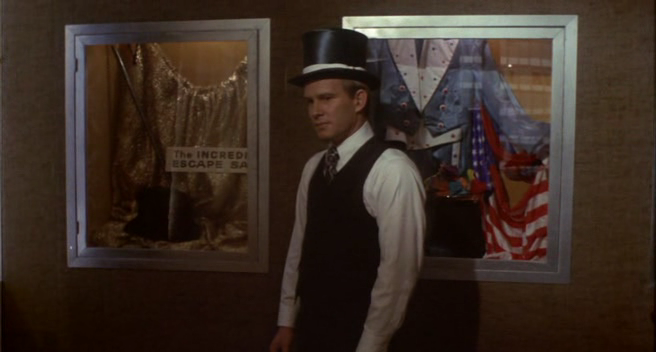
Indeed, it’s refreshing to watch a counter-cultural story so grounded in satirical “mainstream” reality: Smothers doesn’t (as predicted) go off to drop out and smoke pot; instead, he very much has a real working alternative in mind, one he knows will provide him with the “seedy” lifestyle he truly craves. As fate would have it, he turns out to be a pretty dismal magician (though this doesn’t deter him in the slightest); fortunately we’re spared from seeing him perform all that often.

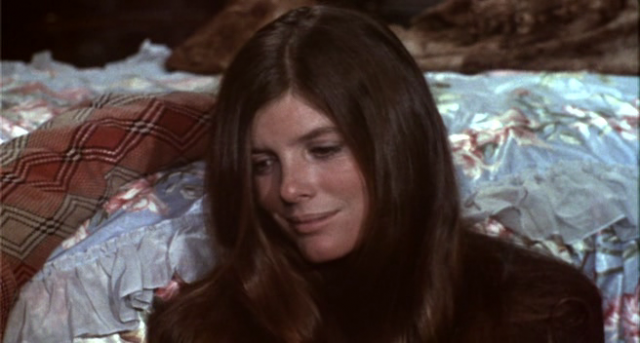
Instead, two different subplots unfold: in one, Smothers woos a nameless “terrific-looking girl” (Katharine Ross) who’s fallen head-over-heels for his “heroic” hands; in the other, Astin pursues a relentless drive to build up a new company around Smothers’ anarchic notion of “living life from the gut level”. Naturally, the two stories eventually collide, resulting in a most satisfying conclusion to a bizarrely entertaining fairytale.

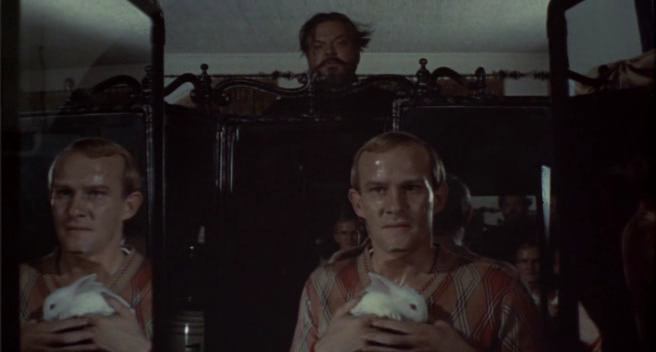
Note: Be forewarned that Welles’ role is essentially a cameo — he only shows up in a few scenes, and then disappears forever.

Redeeming Qualities and Moments:

  • Tom Smothers as Donald Beeman
  • John Astin as Mr. Turnbull
  • Katharine Ross as the “Terrific-Looking Girl” who falls for Beeman
  • De Palma’s unique directorial touch
  • Jordan Crittenden’s surreally humorous screenplay

Must See?
Yes, as a distinctive early picture by De Palma.

Categories

  • Important Director

Links:

Bluebeard’s Eighth Wife (1938)

Bluebeard’s Eighth Wife (1938)

“The minute I saw you in that store, I said to myself, ‘There’s the girl I’m going to marry.'”

Synopsis:
A multi-millionaire (Gary Cooper) with seven failed marriages successfully woos a poor French noblewoman (Claudette Colbert) — but when she discovers his history of offering $50,000 “contracts” to his wives in case of divorce, she bitterly decides to call him on his own game, and make his life as miserable as possible until he divorces her.

Genres, Themes, Actors, and Directors:

  • Claudette Colbert Films
  • Cross Class Romance
  • David Niven Films
  • Ernst Lubitsch Films
  • Gary Cooper Films
  • Marital Problems
  • Millionaires
  • Romantic Comedy

Review:
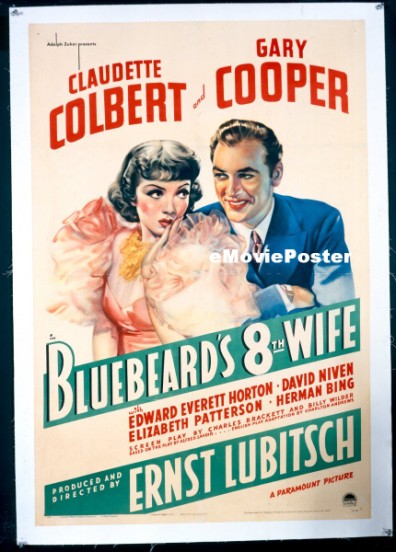
With a screenplay by Charles Brackett and Billy Wilder, and Ernst Lubitsch behind the camera, one would expect this romantic comedy to be a delightful souffle — but despite containing all the right ingredients, it falls surprisingly flat. The core problem is that we never believe in Cooper and Colbert’s romance (which is all an elaborate set-up anyway): she’s rightfully wary of him from the get-go, and her sudden willingness to marry him — after a couple of predictable flip-flops — simply doesn’t ring true. Brackett and Wilder’s scripted repartee is occasionally witty, but their overall conceit wears thin immediately — and while typecast Colbert is appropriately feisty as a woman who refuses to believe in marriage as a commodity, Cooper is as much of a stiff lug as always. No need to bother with this one.

Redeeming Qualities and Moments:

  • Occasionally clever dialogue: “I’ll fight you with every vegetable at my disposal!”

Must See?
No; only diehard Lubitsch fans need seek this one out.

Links: