Browsed by
Category: Original Reviews

Responses to Peary’s “must see” movie reviews, as well as my own “must see” movie reviews up to and after 1986 (when Peary’s book was published).

I Wake Up Screaming (1941)

I Wake Up Screaming (1941)

“She had youth, looks, a good figure. What more do you want?

Synopsis:
When an aspiring model (Carole Landis) is killed, her sister (Betty Grable) and her agent (Victor Mature) are questioned by a menacing police detective (Laird Cregar); meanwhile, they try to solve the murder mystery, and find themselves falling in love.

Genres, Themes, Actors, and Directors:

  • Amateur Sleuths
  • Aspiring Stars
  • Betty Grable Films
  • Carole Landis Films
  • Detectives and Private Eyes
  • Elisha Cook Jr. Films
  • Flashback Films
  • Laird Cregar Films
  • Murder Mystery
  • Obsessive Love
  • Victor Mature Films

Review:
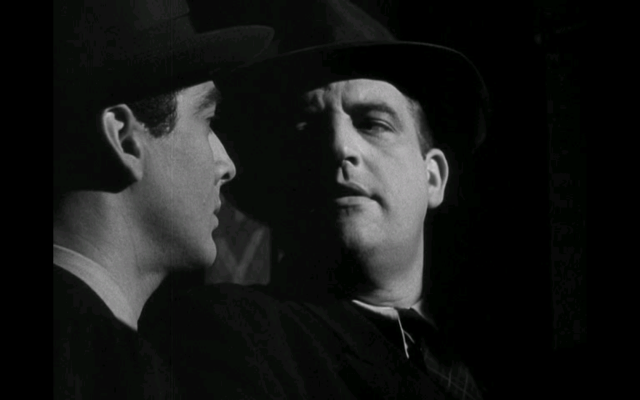
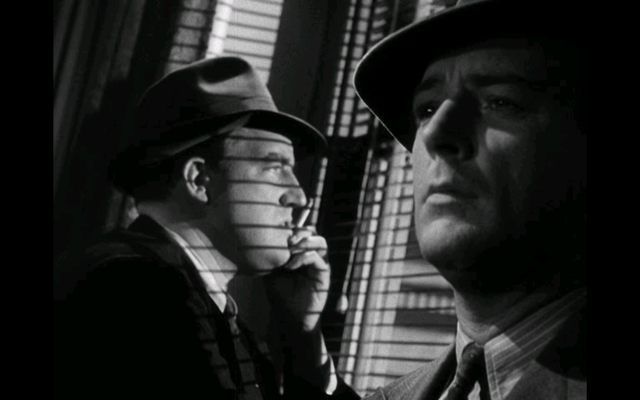
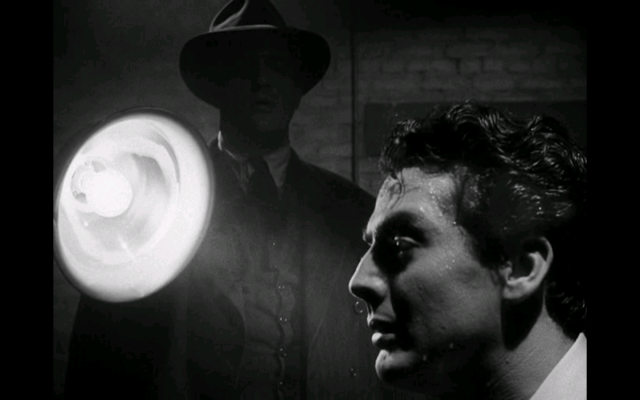
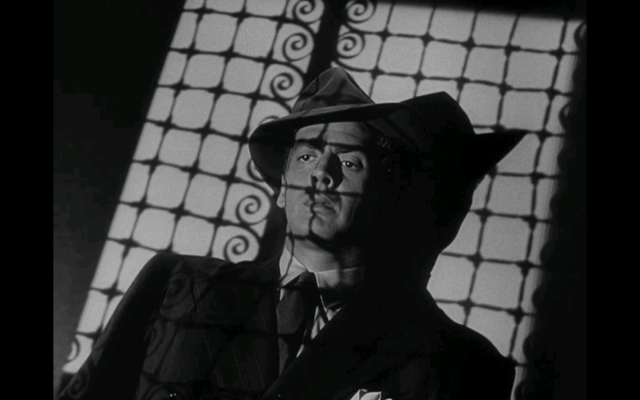
I Wake Up Screaming remains a minor but intriguing mid-century American noir for two central reasons. First and most importantly, it’s a truly stunning visual treat: director H. Bruce Humberstone and cinematographer Edward Cronjager effectively transform a rather “prosaic melodrama into a highly influential exercise in sculpted lighting”, one so full of strategic contrasts and stylized imagery that its atmosphere is practically palpable. See stills below for just a few representative examples.

Second, the film is memorable for a creepy supporting performance by the solid (literally) character actor Laird Cregar:

— perfectly cast here as a menacing police detective who lurks around every street corner, shows up unannounced in suspects’ apartments, and mutters with deadpan certainty in response to Grable’s rhetorical question:

Grable: “What’s the good of living without hope?”
Cregar: “It can be done.”

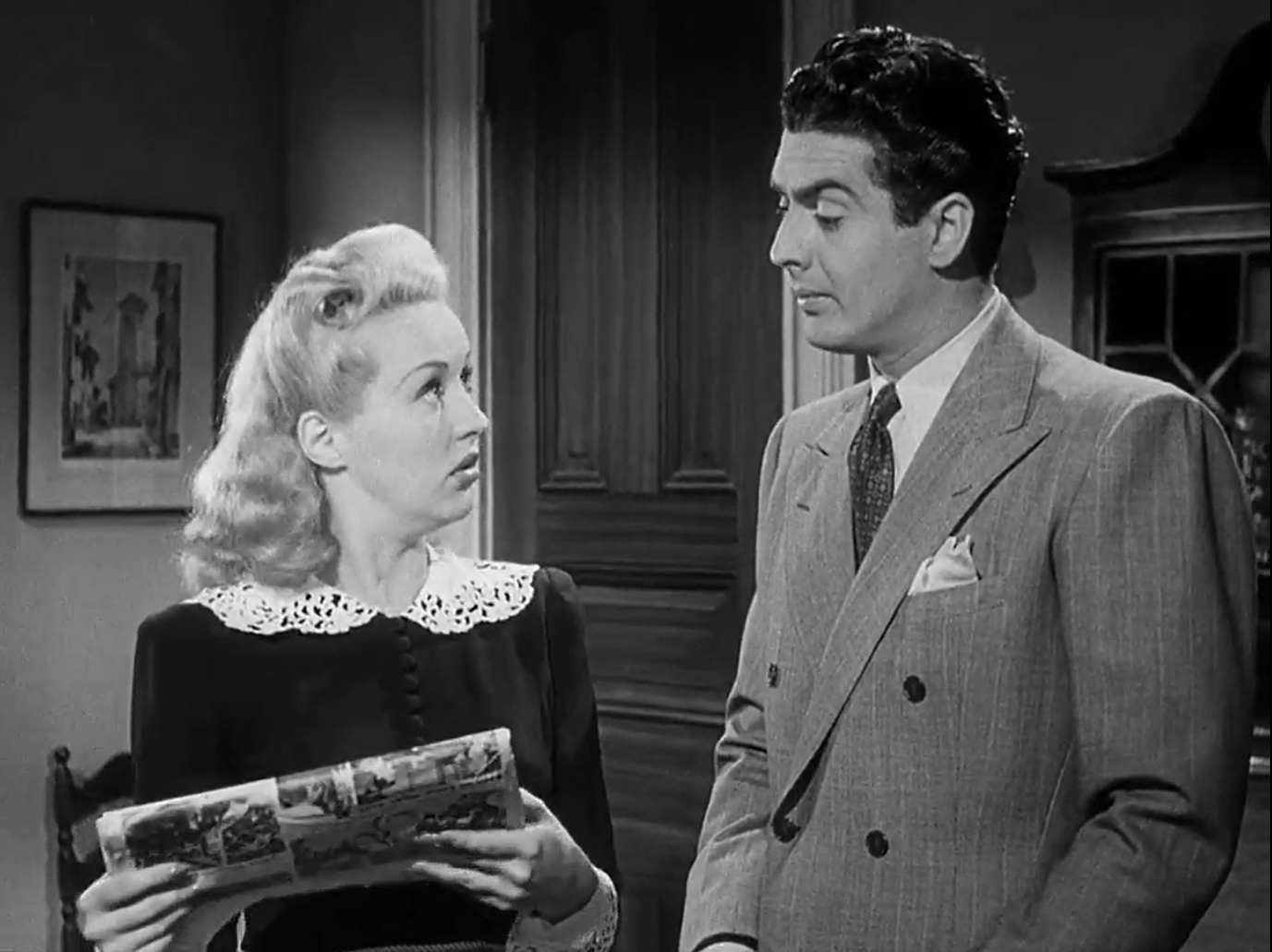
We believe him instantly. Meanwhile, Mature and Grable are solid romantic sleuthing leads:

and Landis (check IMDb for more on her tragic personal story) is effective as the aspiring starlet who propels the entire story into motion.

Listen for interesting use of “Over the Rainbow” as Grable’s theme song (!).

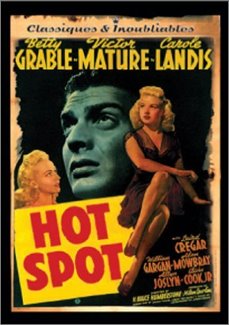
Note: The film’s original title — until close to its release — was Hot Spot, hence the alternate title on the movie poster included in this review. The last-minute switch in names is unfortunate, since no character ever “wakes up screaming” in the film, and this title leads one to believe it’s a horror film rather than noir.

Redeeming Qualities and Moments:

  • Laird Cregar as Detective Cornell
  • Stunning noir cinematography


  • Plenty of enjoyable one-liners:

    “Why should I go on slinging hash when I can sling other things?”
    “I wouldn’t be in your shoes for all the gold in Kentucky.”
    “Must be a great life — like a garbage man, only with people.”

Must See?
Yes, simply for its stunning noir visuals and for Cregar’s performance.

Categories

  • Noteworthy Performance(s)
  • Representative Film

Links:

Court Jester, The (1955)

Court Jester, The (1955)

“I’d like to get in, get on with it, get it over with, and get out. Get it?”

Synopsis:
A lowly performer (Danny Kaye) helps a revolutionary maiden (Glynis Johns) restore the rightful heir — a baby with a purple pimpernel birth mark — to the throne of England by going undercover as a court jester.

Genres, Themes, Actors, and Directors:

  • Angela Lansbury Films
  • Basil Rathbone Films
  • Comedy
  • Danny Kaye Films
  • Glynis Johns Films
  • John Carradine Films
  • Mind Control and Hypnosis
  • Mistaken Identities
  • Musicals
  • Royalty and Nobility

Review:
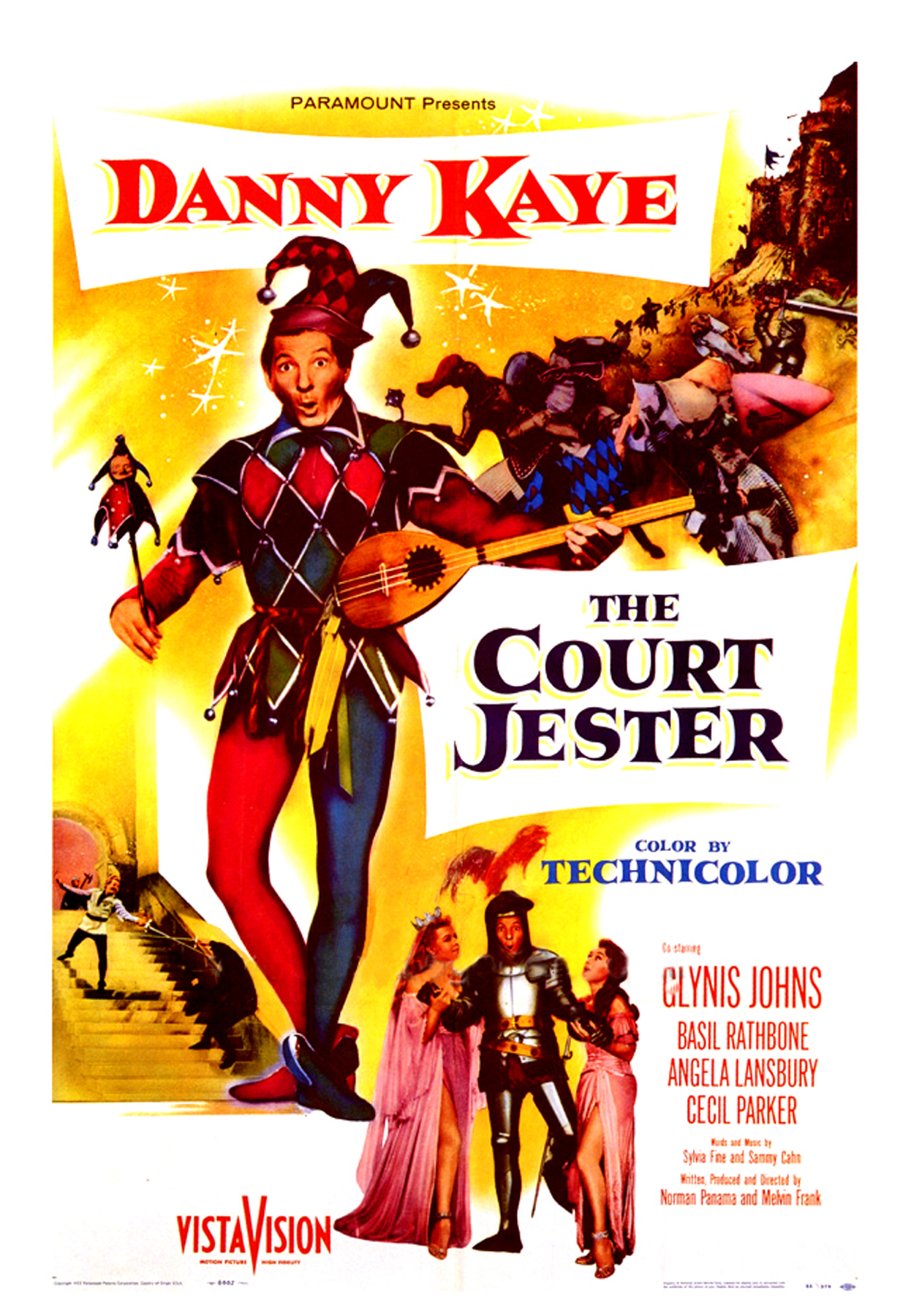
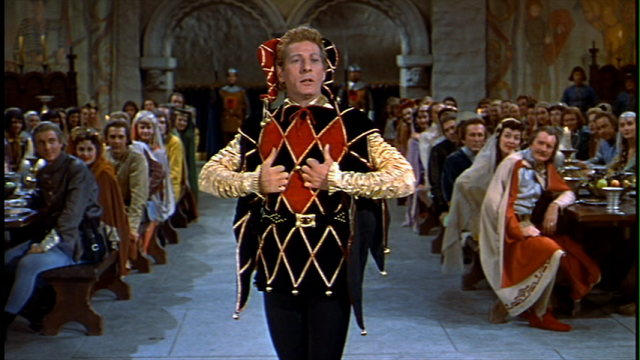
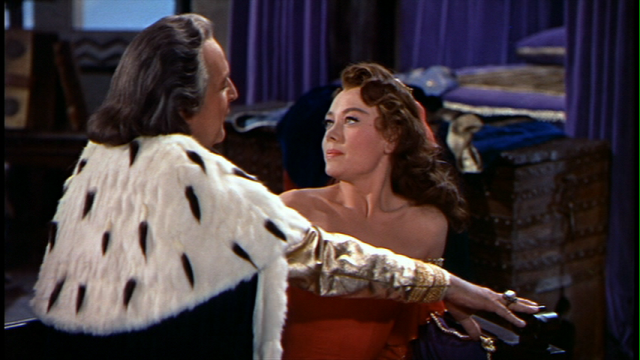
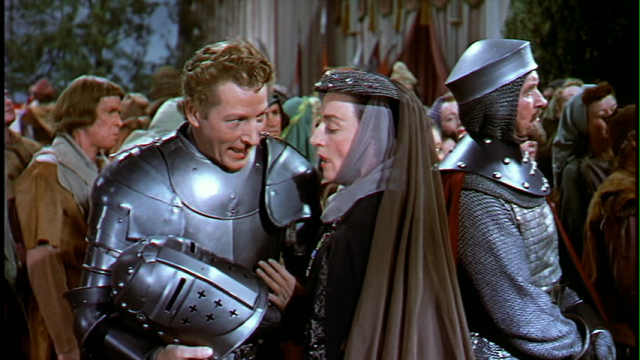
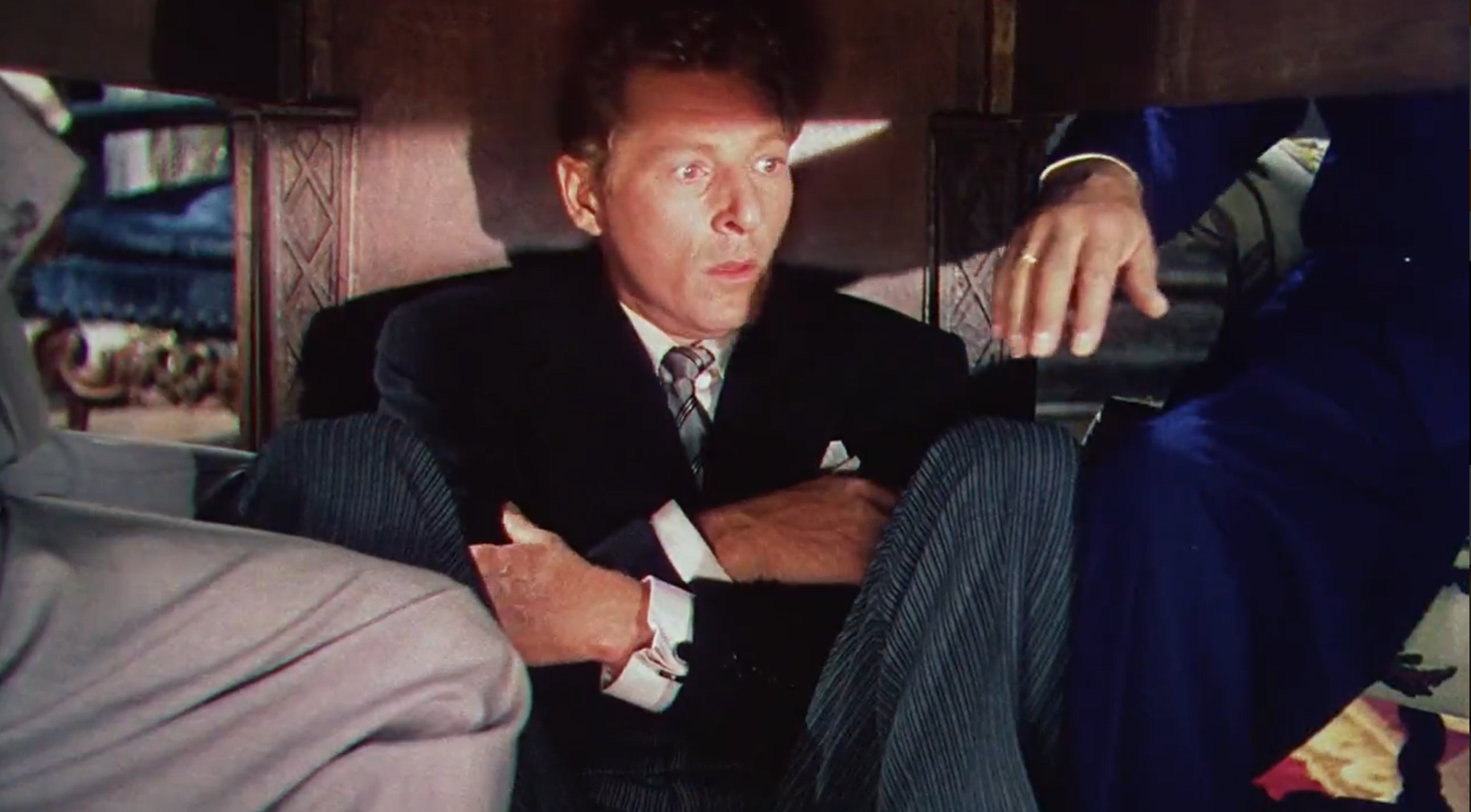
Along with his title roles in The Secret Life of Walter Mitty (1947) and Hans Christian Andersen (1952), Danny Kaye is probably best known for his performance in this spoof of Robin Hood-era swashbucklers. As in most of his other films, Kaye is cast here as a mild-mannered nebbish who is suddenly thrust into a world of excitement and danger, and must call upon inner resources to help save the day (all while tentatively romancing a beautiful leading lady — in this case, Glynis Johns). I find the film on the whole not all that amusing or particularly inventive, but there are some enjoyable sequences — most memorably, of course, Kaye’s confusion over a “vessel with a pestle” and a “chalice from the palace”, one of which is poisonous and the other of which contains “brew that is true”. This lively scene is indicative of the film’s overall infectious sense of wordplay — as in the following exchange (Kaye’s tongue is limber indeed!):

The Duchess dove at the Duke just when the Duke dove at the Doge. Now the Duke ducked, the Doge dodged, and the Duchess didn’t. So the Duke got the Duchess, the Duchess got the Doge, and the Doge got the Duke!

Watch for Angela Lansbury, Basil Rathbone, Mildred Natwick, and John Carradine (among others) in nicely turned supporting roles.

Redeeming Qualities and Moments:

  • Danny Kaye as Hubert Hawkins
  • Glynis Johns as Maid Jean
  • The justifiably famous “pestle in the vessel” sequence
  • The amusing final swashbuckling encounter between Kaye and Rathbone

Must See?
Yes. While The Secret Life of Walter Mitty remains my favorite Kaye film, The Court Jester is beloved by many, and should be seen at least once by all film fanatics.

Categories

  • Historically Relevant

Links:

Rosa Luxemburg (1986)

Rosa Luxemburg (1986)

“We live in times of violent change, ready to collapse.”

Synopsis:
Socialist activist Rosa Luxemburg (Barbara Sukowa) campaigns for peace in the midst of impending war in Europe.

Genres, Themes, Actors, and Directors:

  • Biopics
  • German Films
  • Historical Drama
  • Revolutionaries
  • Strong Females

Review:
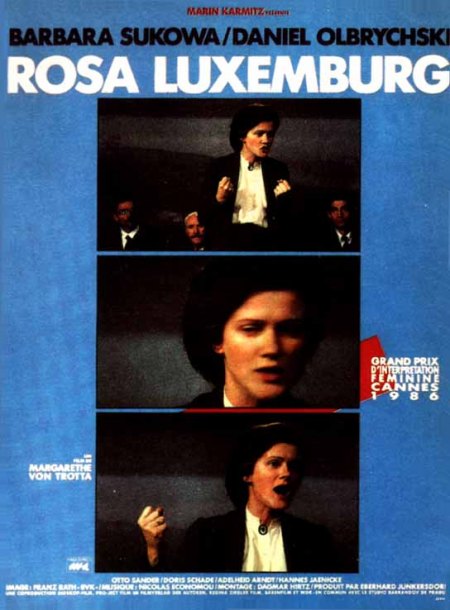
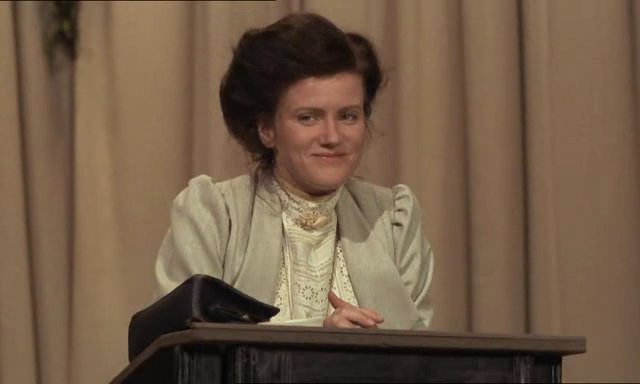
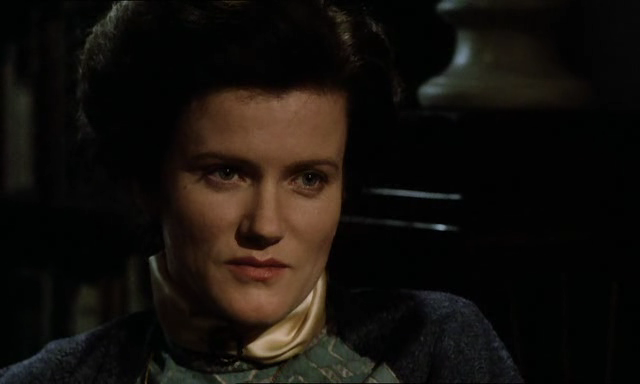
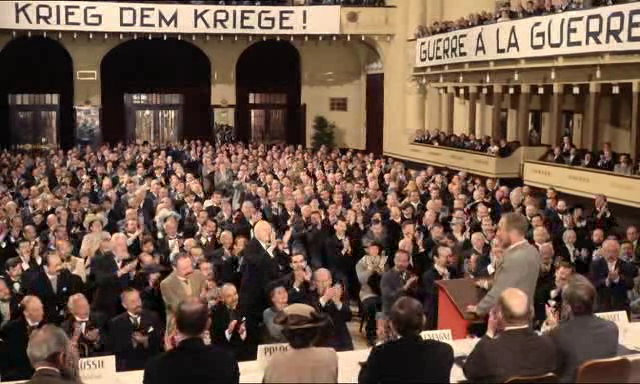
Those not already deeply interested in the political history of pre-WWI Europe may find it challenging to engage with this sincere but pedantic biopic of Rosa Luxemburg, a radical Polish Socialist who was assassinated by the ruling German party in 1919. Without concern for her childhood or past, the storyline plunges us immediately into the thick of Luxemburg’s post-doctorate political career, as we see her campaigning tirelessly with colleagues on behalf of The Cause. Given that the script is heavily based on Luxemburg’s writings and speeches, we get to hear a LOT of her thoughts on the need for worldwide revolution by the proletariat; while a bit of time is given over to speculations about her romantic life (in a nicely handled scene, for instance, we witness her gradual recognition that her lover and compatriot — Daniel Olbrychski — has betrayed her), in essence this film is all about Luxemburg the Socialist, who literally devoted her life to her beliefs. Sukowa effectively humanizes Luxemburg — watch her breaking into giddy smiles while giving passionate political speeches, for instance:

— turning her into a character we may not relate to but can certainly believe in. Yet neither Sukowa’s award-winning performance, nor the film’s overall quality production values, are enough to elevate it to must-see status — other than for those genuinely interested in this particular bit of world history.

Redeeming Qualities and Moments:

  • Barbara Sukowa as “Bloody Rosa”
  • Fine period sets
  • Franz Rath’s cinematography

Must See?
No; this one isn’t must-see viewing for all film fanatics.

Links:

Secret Life of Walter Mitty, The (1947)

Secret Life of Walter Mitty, The (1947)

“Walter, you’re getting more absent-minded each day. It’s all that daydreaming you do!

Synopsis:
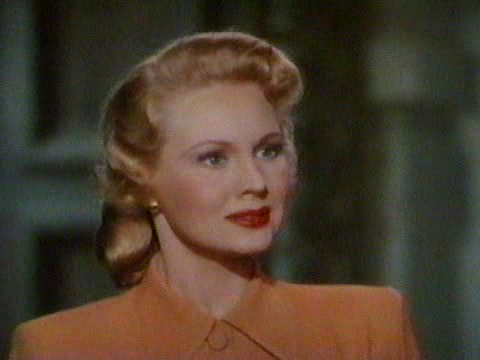
A henpecked proofreader (Danny Kaye) with a wild imagination finds himself embroiled in a real-life drama when he encounters a mysterious blonde (Virginia Mayo) in a taxi cab.

Genres, Themes, Actors, and Directors:

  • Boris Karloff Films
  • Comedy
  • Danny Kaye Films
  • Fay Bainter Films
  • Thieves and Criminals
  • Virginia Mayo Films

Review:
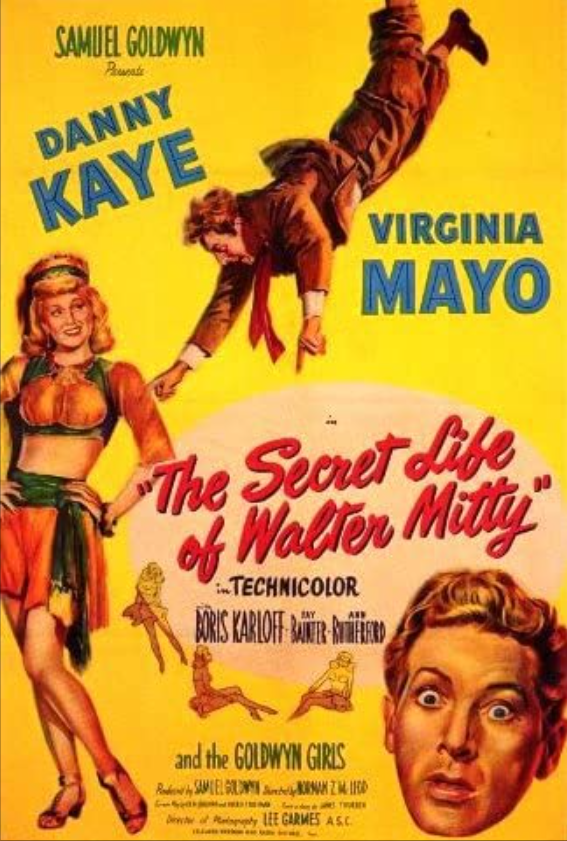
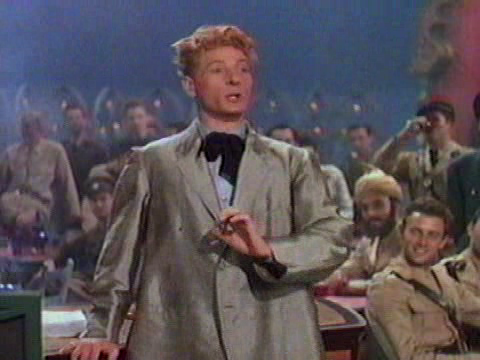
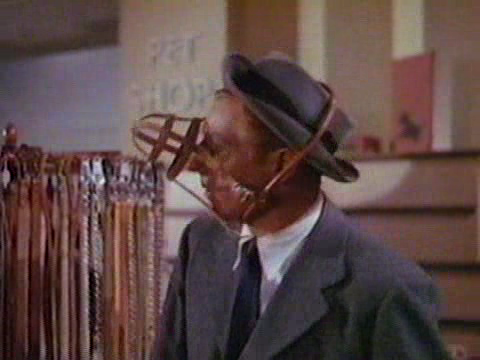
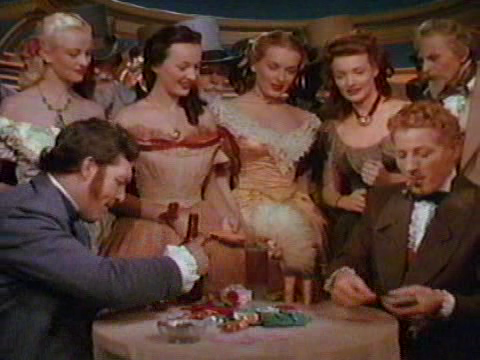
Danny Kaye is at the top of his game in this delightful comedy — loosely based upon James Thurber’s beloved short story — about a nebbishy pulp magazine proofreader who escapes his henpecked existence through a rich and varied fantasy life. The sequences in which he imagines himself a daring sea captain, a renowned surgeon, a WWII flying ace, a fey fashion designer, a Western gunslinger, and a riverboat gambler are each genuinely amusing, as are the patter songs incorporated throughout. The surrounding storyline — involving a “little black book” detailing the locations of stolen Dutch artwork, which various Bad Men want to get their hands on — eventually goes on for a little too long, and devolves into slapstick by the end; but Kaye and his supporting cast make this one well worth a look. Watch for Boris Karloff in an all-too-brief appearance as one of the parties interested in obtaining the “black book” — his opening line (“I know of a way to kill a man and leave no trace.”) remains a zinger.

Redeeming Qualities and Moments:

  • Danny Kaye as Walter Mitty
  • Virginia Mayo as Rosalind van Hoorn
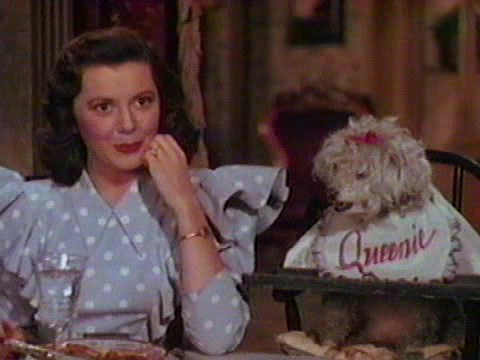
  • Ann Rutherford as Walter’s fiancee, Gertrude Griswold
  • Many genuinely amusing sequences


Must See?
Yes, as a comedy classic.

Categories

  • Genuine Classic
  • Noteworthy Performance(s)

Links:

Song is Born, A (1948)

Song is Born, A (1948)

“It’s getting hotter and hotter, so stay in the icebox like a good little salad.”

Synopsis:
A shy musicologist (Danny Kaye) falls in love with a gangster’s moll (Virginia Mayo) in hiding to protect her boyfriend (Steve Cochran).

Genres, Themes, Actors, and Directors:

  • Danny Kaye Films
  • Fugitives
  • Gangsters
  • Howard Hawks Films
  • Musicals
  • Professors
  • Virginia Mayo Films

Review:
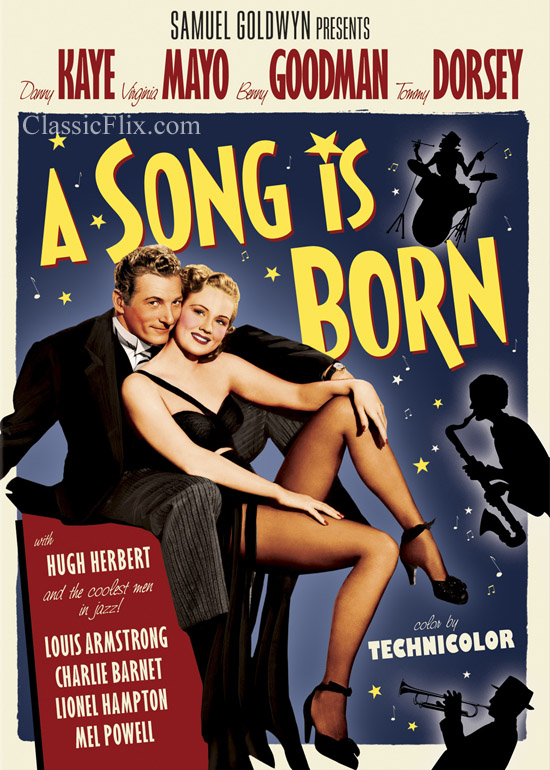
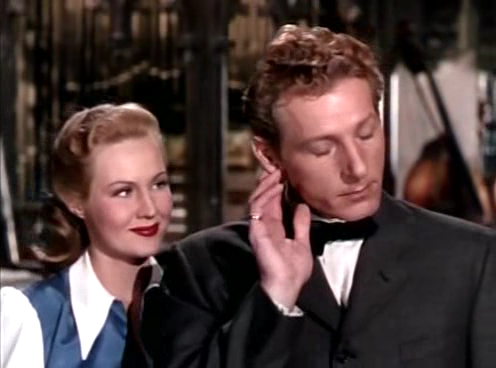
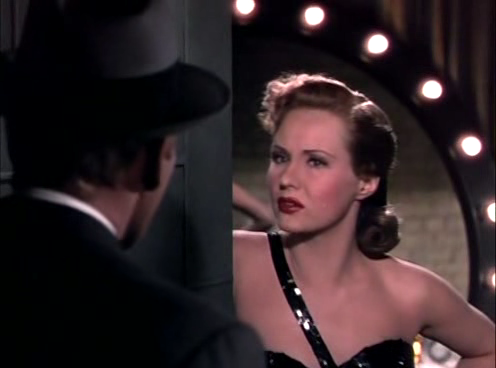
It’s somewhat surprising to learn that this tepid musical remake of Howard Hawks’ Ball of Fire (1941) was actually helmed by Hawks himself — that is, until one reads TCM’s article on the film, where it’s noted that Hawks — who “always said he hated” the film, and considered its production “an altogether horrible experience” — “never watched the rushes or even saw the final product”; apparently he agreed to do the work for Samuel Goldwyn “purely because of the $250,000 paycheck it delivered”. Knowing that Kaye had recently separated from his wife (lyricist Sylvia Fine) and was undergoing daily counseling may explain why (in Hawks’ own words) Kaye is “about as funny as a crutch” in the film:

Indeed, since he’s only given a handful of opportunities to exhibit his trademark wit, he seems horribly miscast. Fortunately, Virginia Mayo (while arguably no match for Barbara Stanwyck in the original) brings some much needed energy and brio to the proceedings; whenever she’s on-screen, the story is at least bearable. Jazz fans will probably find value in seeing some legendary musicians gathered together here, but the rest of this clunker is eminently skippable.

Redeeming Qualities and Moments:

  • Virginia Mayo as Honey Swanson
  • Some enjoyable musical sequences by jazz greats (including Benny Goodman in “cameo” as one of Kaye’s uptight musicologist buddies)

Must See?
No; this one is only must see viewing for Howard Hawks completists, or diehard Danny Kaye fans.

Links:

Love and Money (1982)

Love and Money (1982)

“What you must accept is that my people are no longer for sale.”

Synopsis:
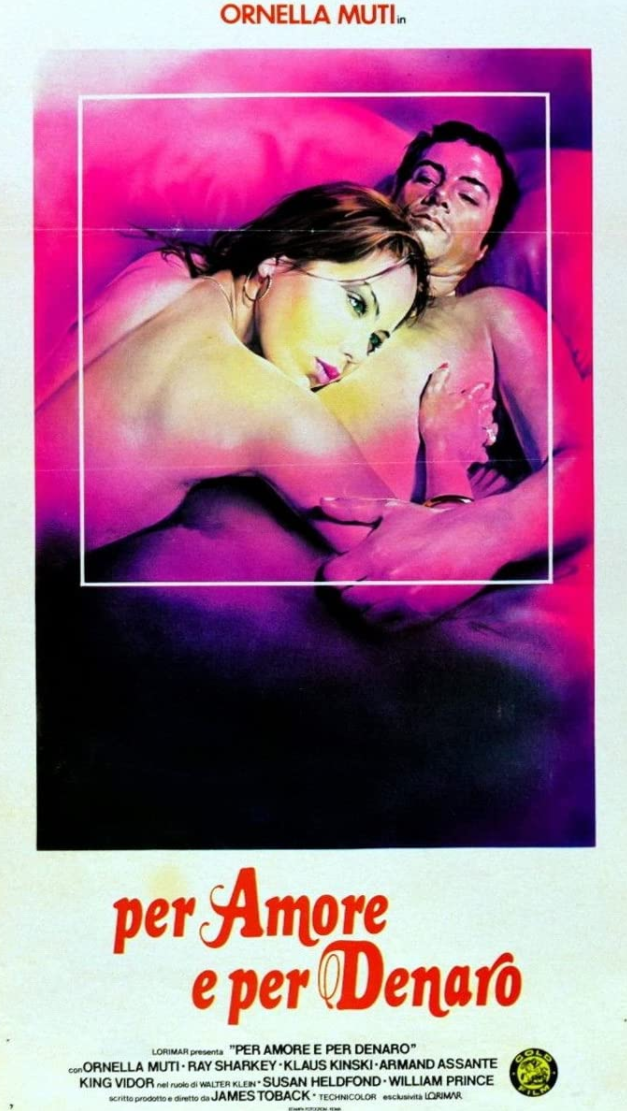
A bored banker (Ray Sharkey) falls in lust with the wife (Ornella Muti) of an industrialist (Klaus Kinski) who has hired him to influence his childhood friend (Armand Assante) — now a leftist dictator of a South American country.

Genres:

  • Infidelity
  • South and Central America

Review:
Writer/director James Toback’s follow-up to his critically lauded debut film, Fingers (1978), was this incredibly tedious clunker. Filled with self-absorbed characters, trite dialogue (“Why are you asking me this: to hurt me, or to excite yourself?”), and a ludicrously derivative storyline (set partially in L.A., partially in an unnamed South American country), it appears to exist namely as a vehicle for showing off sexy Ornella Muti’s bronzed bod. Simply squirm-worthy.

Redeeming Qualities and Moments:

  • Not much of anything

Must See?
No; don’t bother seeking out this pablum. Really.

Links:

Knock on Wood (1954)

Knock on Wood (1954)

“I don’t know what’s wrong, Marty; the words keep coming out — I can’t seem to control them anymore.

Synopsis:
When a ventriloquist (Danny Kaye) subconsciously sabotages his most recent relationship via his dummy, he seeks treatment from a beautiful psychotherapist (Mai Zetterling) and falls in love with her; meanwhile, he’s pursued by members of competing spy rings seeking weapon blueprints hidden in his two newest dummies.

Genres, Themes, Actors, and Directors:

  • Comedy
  • Danny Kaye Films
  • Psychotherapy
  • Puppets and Ventriloquism
  • Spies

Review:
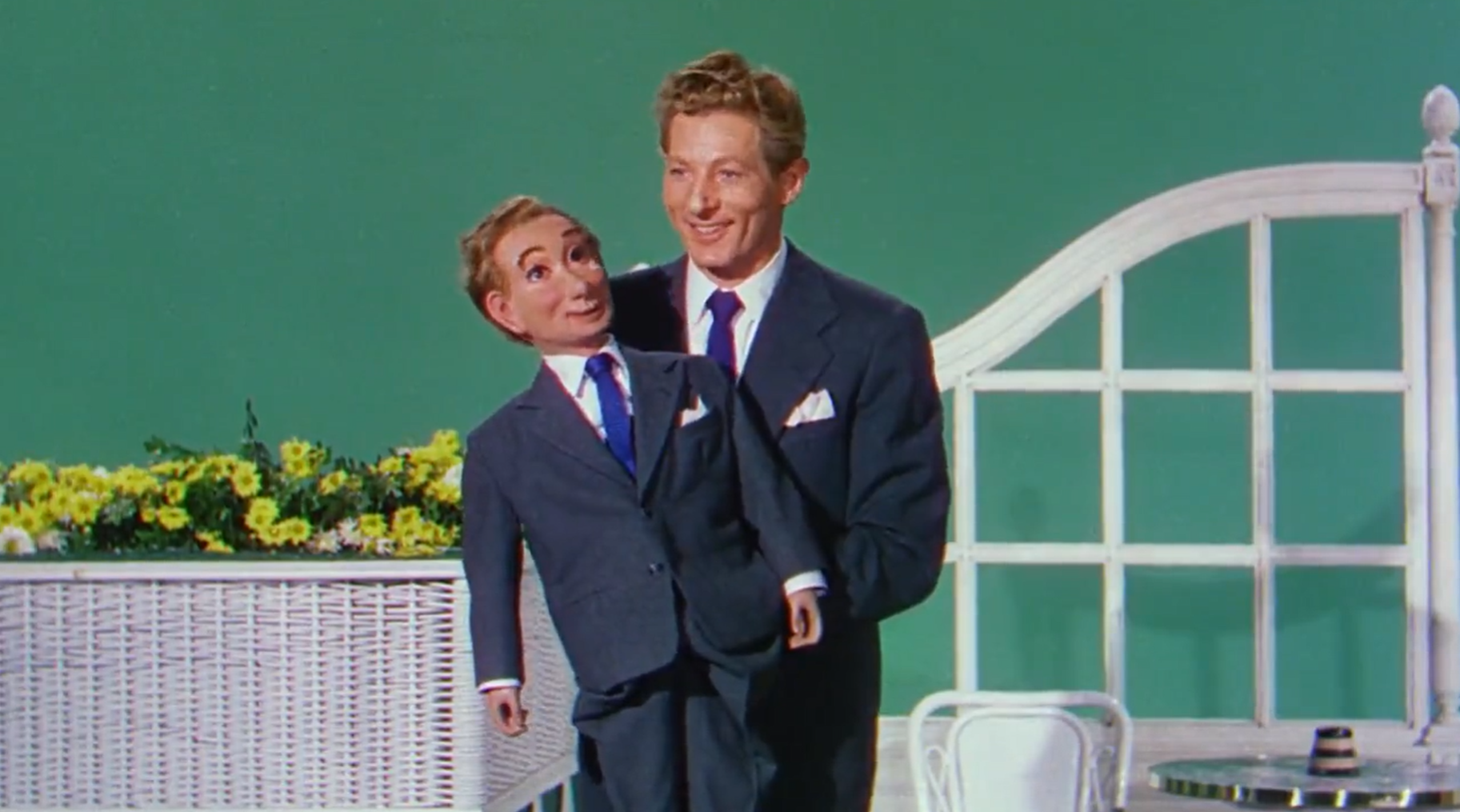
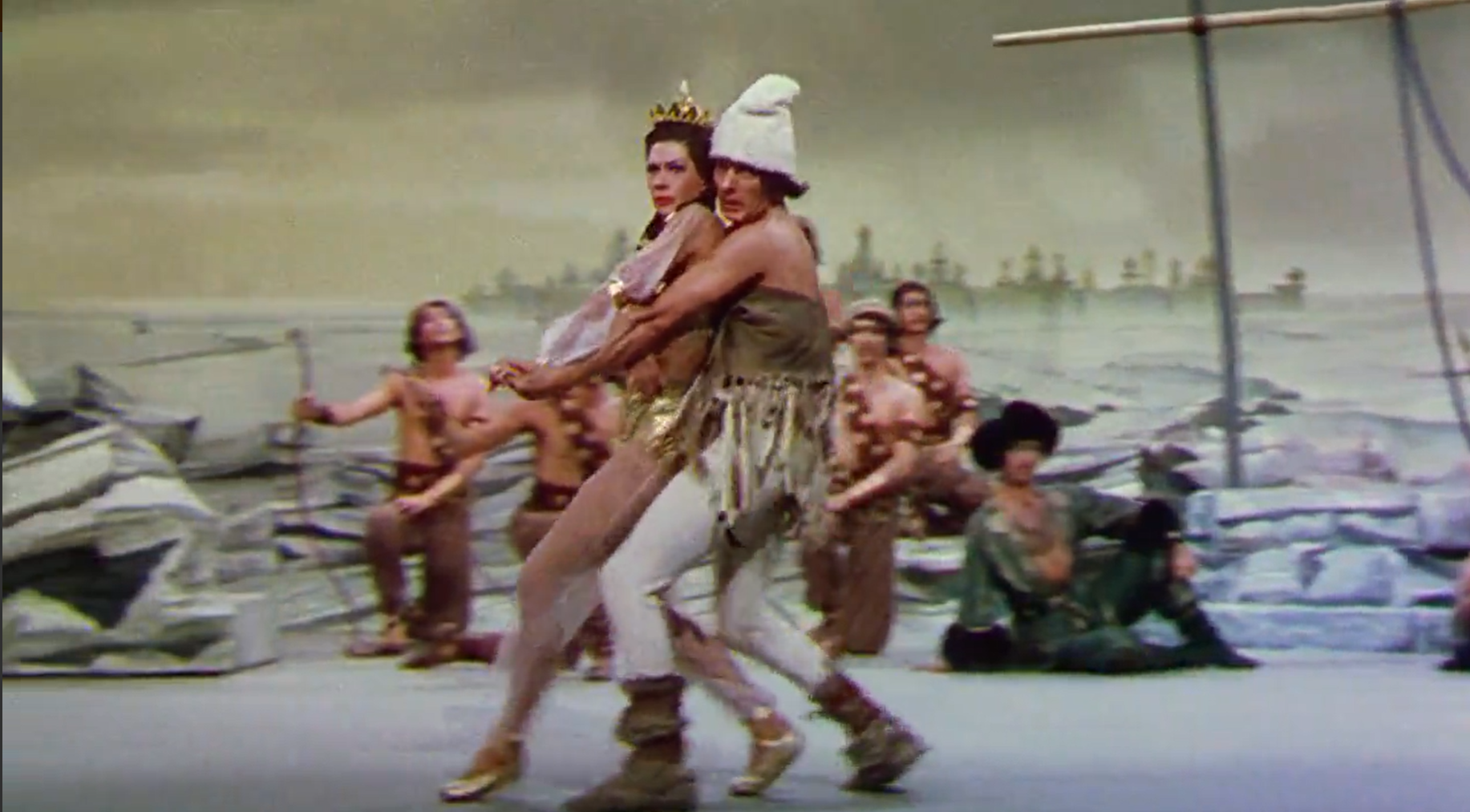
In his review of Danny Kaye’s The Inspector General (1949), Peary acknowledges that “most Kaye vehicles [have] dated badly” — and this innocuous Cold War comedic thriller is no exception. Likely inspired by the “Ventriloquist’s Dummy” segment in Dead of Night (1946) (and/or Erich von Stroheim’s earlier The Great Gabbo, 1926), Knock on Wood capitalizes on the inherently creepy notion of a ventriloquist’s dummy “turning” on him; unfortunately, the opening sequence — in which Kaye’s dummy spews vitriolic statements about Kaye’s fiancee waiting in the wings — is so unpleasant and decidedly unfunny that is gets the film off to a rocky non-comedic start.

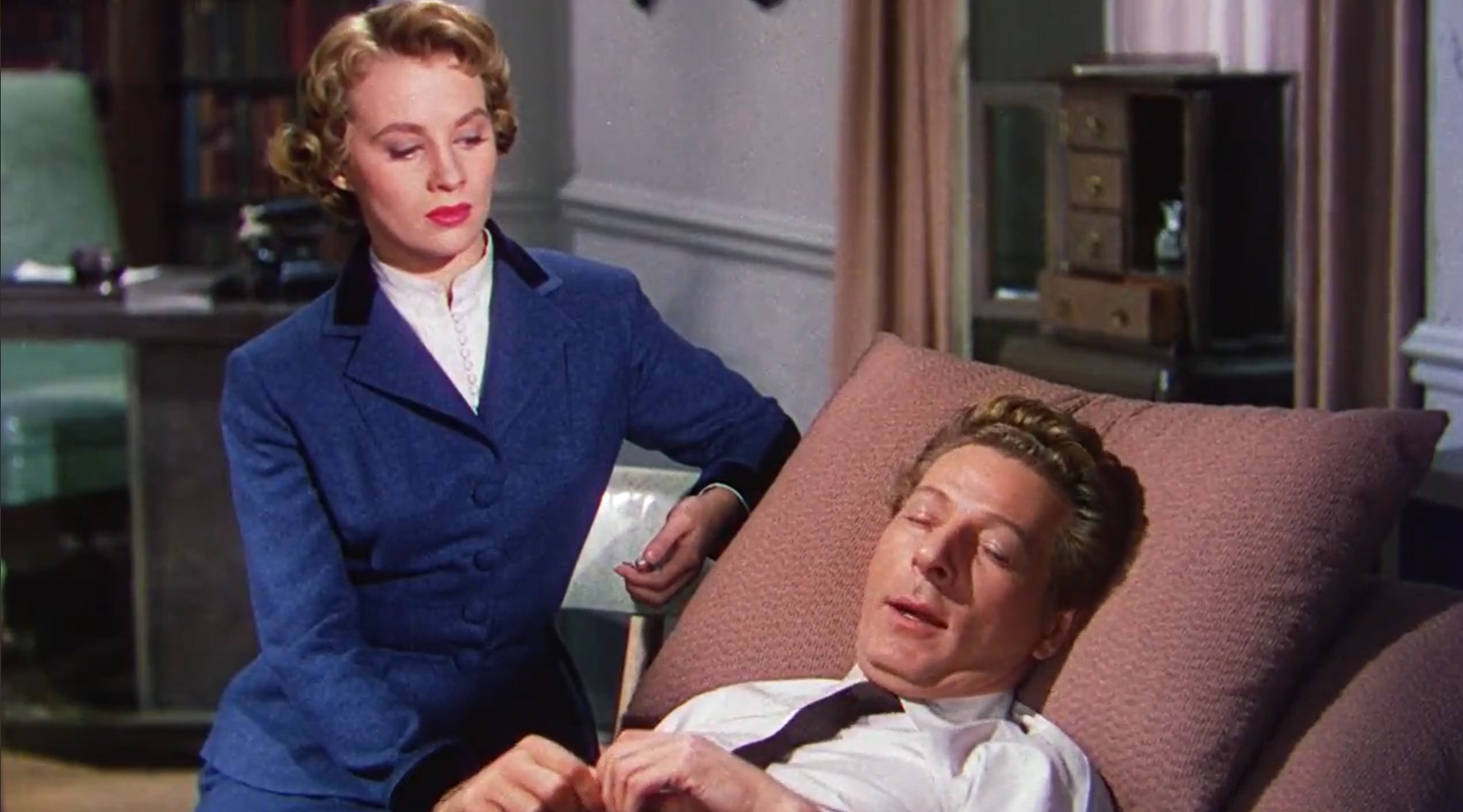
From there, we’re subjected to two equally dull storylines, as Kaye romances his beautiful new psychotherapist (who has psychological hangups of her own, naturally):

… and rival spy rings go after high-profile blueprints located in the heads of Kaye’s new dummies. Fortunately, there are a few sequences in the second half of the film in which Kaye finally gets to strut his comedic chops, but they’re not nearly enough to recommend the film as a whole.

Redeeming Qualities and Moments:

  • A few amusing sequences


Must See?
No; this one is strictly for Danny Kaye fans

Links:

Pickpocket (1959)

Pickpocket (1959)

“Could one turn a blind eye to certain kinds of theft?”

Synopsis:
A young man (Martin LaSalle) becomes addicted to pickpocketing as a way of life, much to the distress of his concerned friends (Marika Green and Pierre Leymarie).

Genres, Themes, Actors, and Directors:

  • Character Studies
  • French Films
  • Robert Bresson Films
  • Thieves and Criminals

Review:
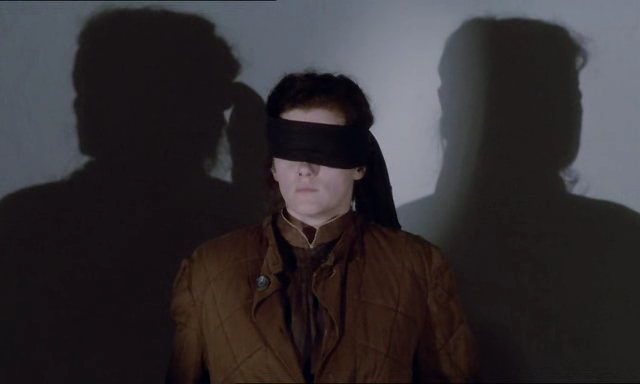
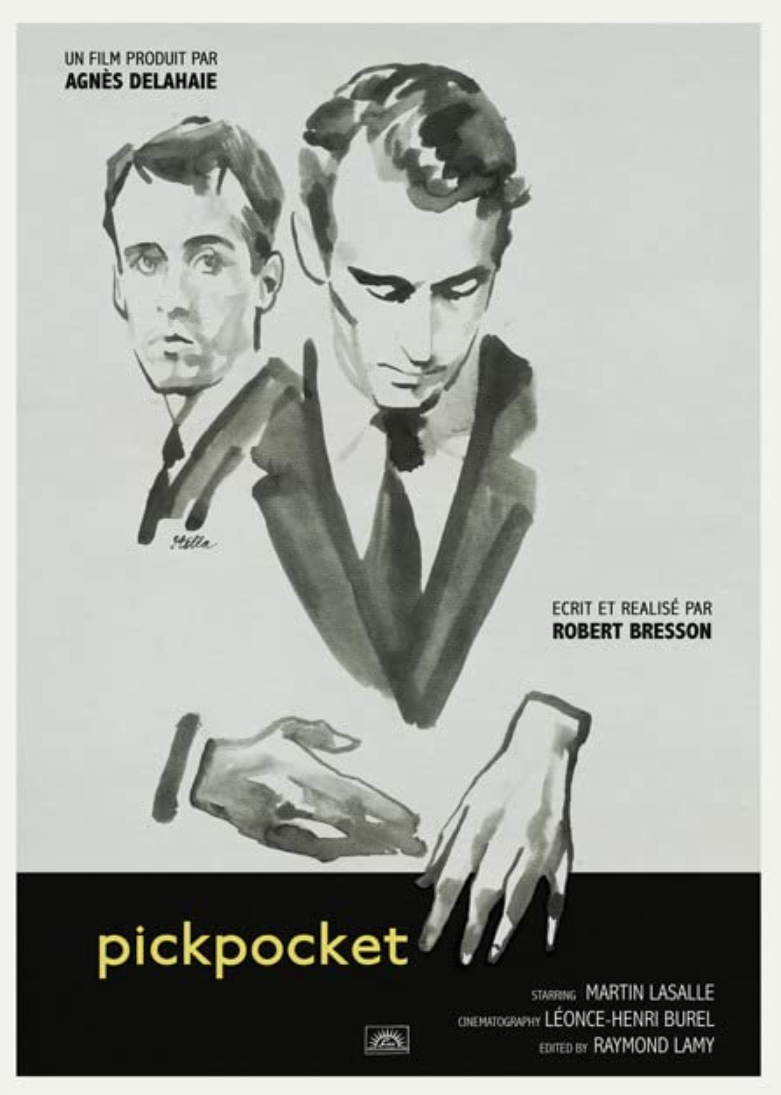
While most reviews and analyses of this Crime and Punishment-inspired character study by Robert Bresson are adulatory, DVD Savant’s take rings the truest to me. He argues that “Bresson’s deliberately intellectual approach is going to be a long reach for all but the most dedicated and focused audiences”, and he humorously notes that the primary actors — infamously directed by Bresson to not act — all “have a slightly glazed look in their eyes, like Pod people not quite comfortable in human bodies”, moving “as if it took a conscious act of will to do simple things like turn around or look in a certain direction”. Indeed, while LaSalle is effectively enigmatic for about the first ten minutes of the film, his mannerisms (an intense yet empty gaze; a tendency to look down at the floor, then glance back up again) quickly become not only tiresome but downright irritating.

Meanwhile, it’s devilishly difficult to care at all for his Raskolnikov-inspired character, who we’re purposely emotionally distanced from — given that he (and all the other characters) “behave in a way that expresses nothing beyond the exact words they say and things they do”. To that end, the most useful advice I’ve read about Bresson’s films is to view them more like graphic novels than filmed theatrical dramas; Bresson was aiming for “pure cinema”, and believed this was the best artistic direction to take. While Pickpocket is cited by many as Bresson’s masterpiece, however, I would argue that his earlier Diary of a Country Priest (1951) is the film in which his ascetic directorial style is best served. And for a much more engaging look at the “art” of pickpocketing, check out Sam Fuller’s vigorously anarchic Pickup on South Street (1953) — a truly enjoyable “must see” classic.

Redeeming Qualities and Moments:

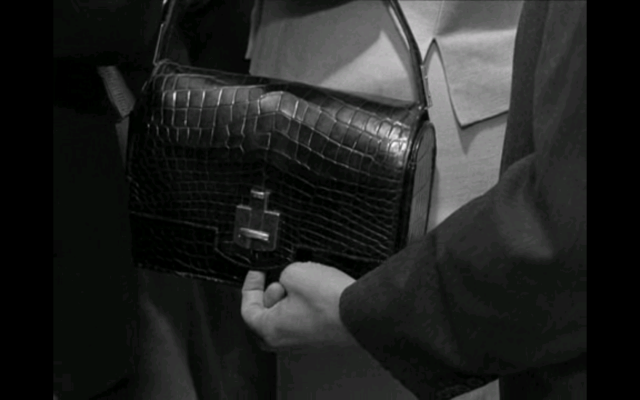
  • The remarkably tense opening pickpocket sequence (at the racetrack)

Must See?
Yes, simply for its historical relevance; but it won’t be for all tastes. Listed as a film with Historical Importance and a Personal Recommendation in the back of Peary’s book.

Categories

  • Historically Relevant
  • Important Director

(Listed in 1001 Movies You Must See Before You Die)

Links:

Teorema (1968)

Teorema (1968)

“You have filled my life with a total, real interest.”

Synopsis:
A mysterious guest (Terence Stamp) at an Italian villa provokes erotic desire in all its inhabitants — including the mother (Silvana Mangano), the father (Massimo Girotti), the teenage son and daughter (Andres Jose Cruz Soublette and Anne Wiazemsky), and their maid (Laura Betti).

Genres, Themes, Actors, and Directors:

  • Bourgeois Society
  • Catalysts
  • Italian Films
  • Pier Paolo Pasolini Films
  • Sexuality
  • Terence Stamp Films

Review:
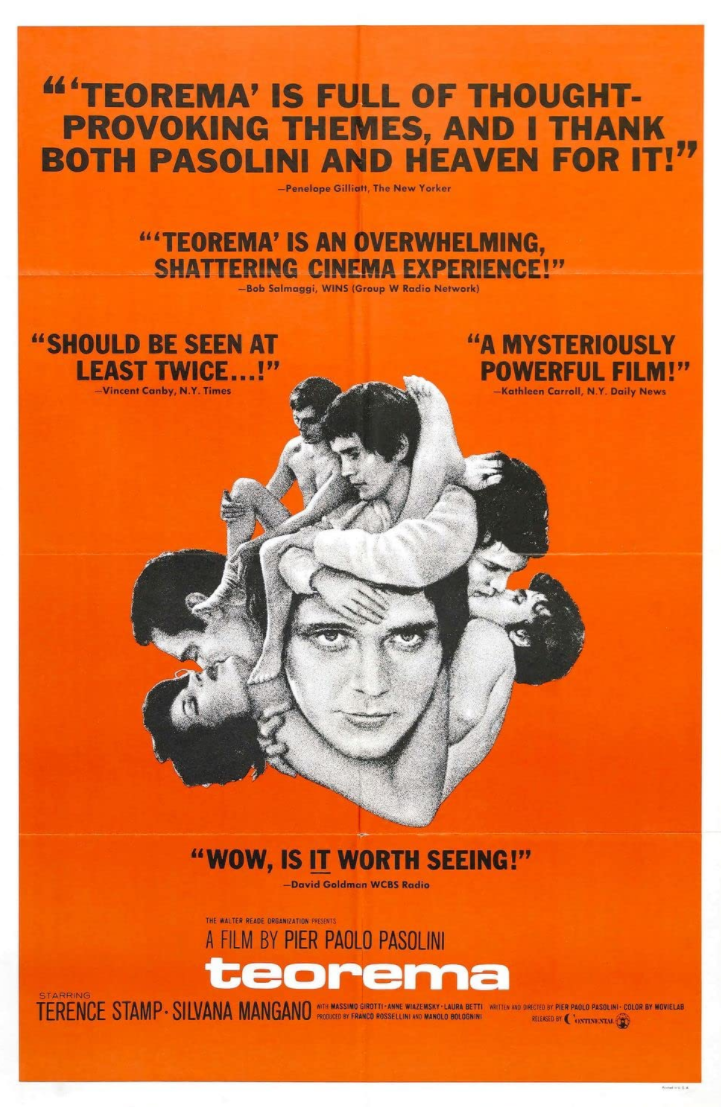
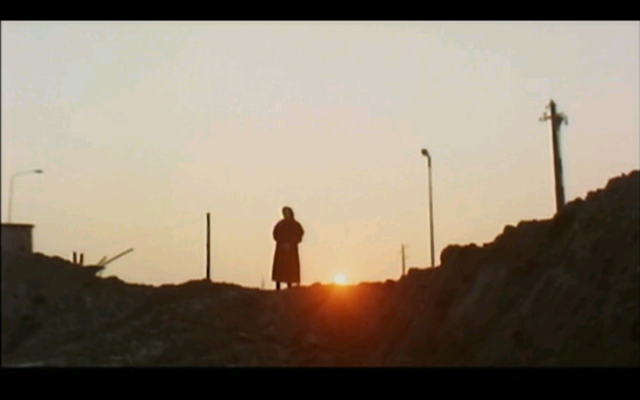
Pier Paolo Pasolini’s enigmatic religio-political allegory (is Stamp a Christ figure, an emissary of the dark side, or a quietly liberating revolutionary?) falls squarely within his unique oeuvre of audaciously provocative films. Little overtly “happens” in Teorema, and even less is said; most of the film’s sparse dialogue occurs midway through the narrative, as each character reflects on how Stamp’s arrival has changed them, and the impact his imminent departure will have upon them (with responses ranging from “You’ve simply destroyed the idea I’ve always had of myself.” to “You have filled my life with a total, real interest.”). Otherwise, the bulk of the screenplay is filled with surprisingly chaste erotic encounters, and bouts of personal crisis — the most intriguing of which is Betti’s emergence as some sort of village saint. As Dan Callahan notes in his review for Slant Magazine, “It’s all very grand and vague and shapeless, filmed better than most of Pasolini’s movies, but indulgent and fairly meaningless”; DVD Savant accurately asserts that “viewers will need to already be riding Pasolini’s specific philosophical wavelength to appreciate it — for most it will be a slow and uninvolving experience.” Featuring a weird, often incongruous score by Ennio Morricone.

Redeeming Qualities and Moments:

  • Effective cinematography and lighting

Must See?
No, though it’s worth a look simply for its historical importance. Listed as a Cult Movie in the back of Peary’s book.

Links:

Ghost and Mrs. Muir, The (1947)

Ghost and Mrs. Muir, The (1947)

“I’m here because you believe I’m here. Keep on believing, and I’ll always be real to you.”

Synopsis:
A headstrong widow (Gene Tierney) develops an unusual relationship with the ghost (Rex Harrison) haunting her new seaside house.

Genres, Themes, Actors, and Directors:

  • Anna Lee Films
  • Gene Tierney Films
  • Ghosts
  • Historical Drama
  • Joseph L. Mankiewicz Films
  • Natalie Wood Films
  • Rex Harrison Films
  • Romance
  • Sailors
  • Star-Crossed Lovers
  • Widows and Widowers

Review:
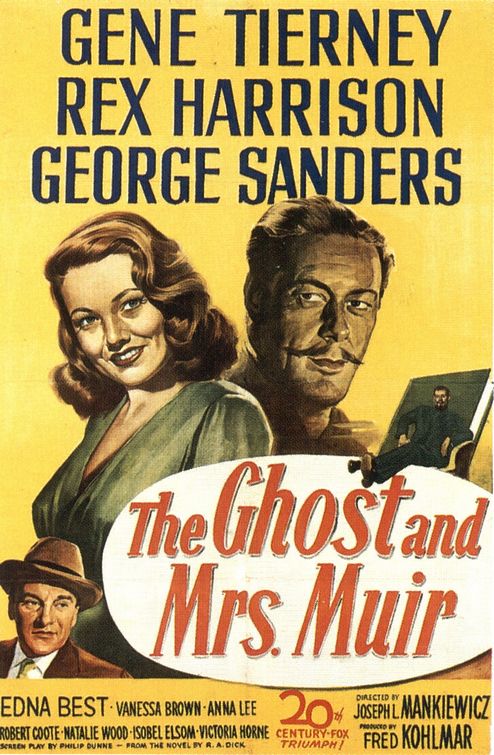
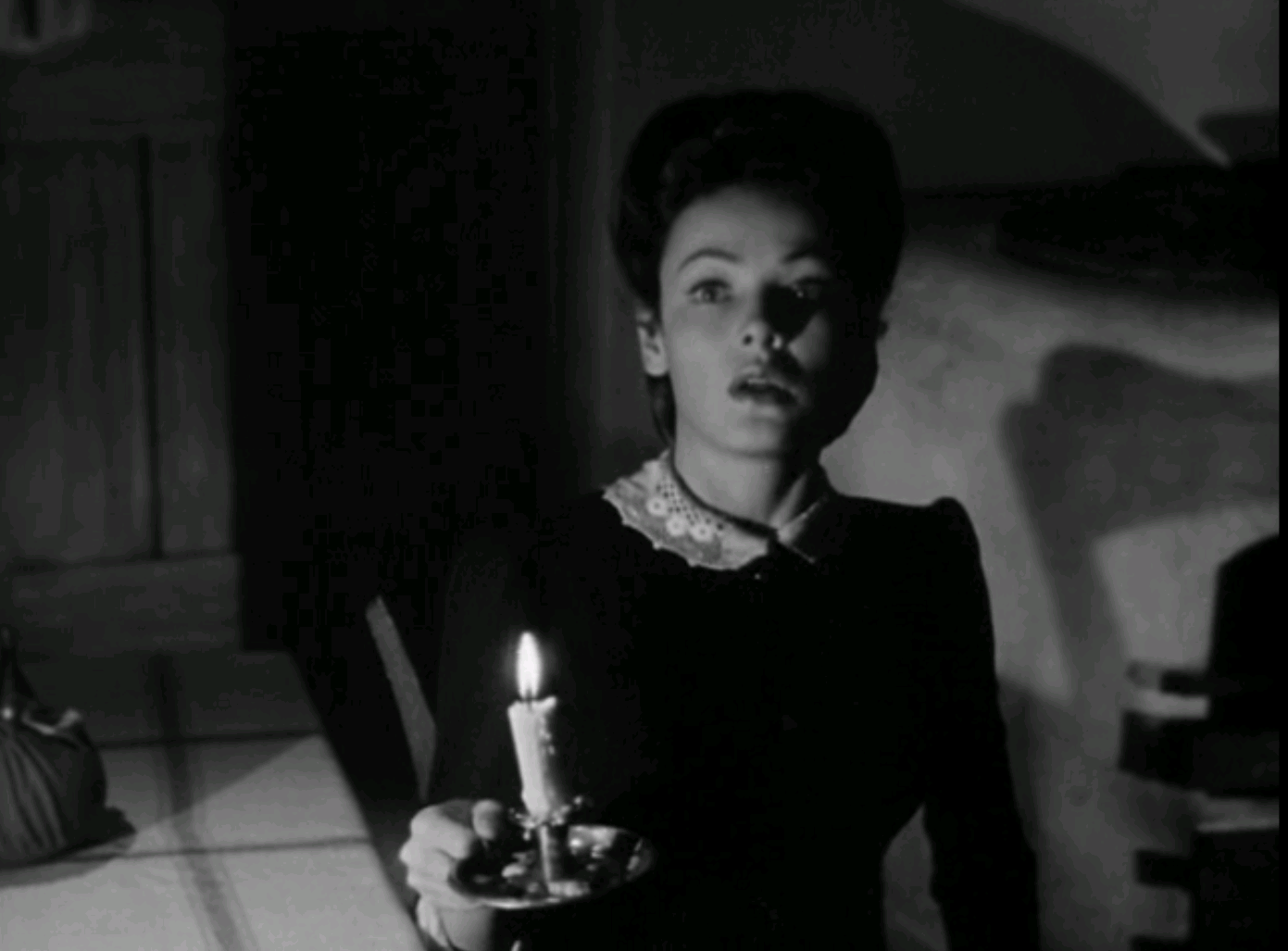
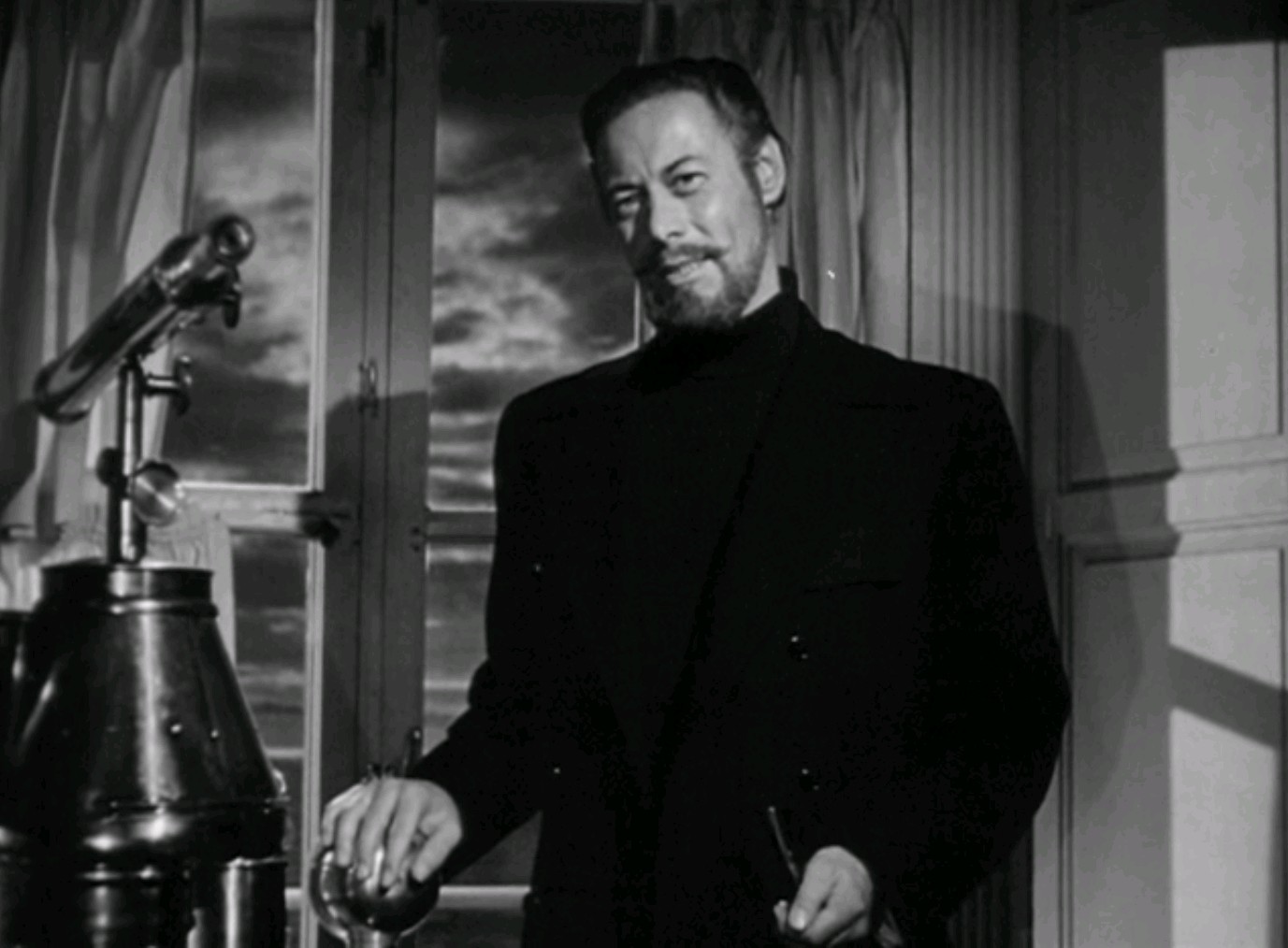
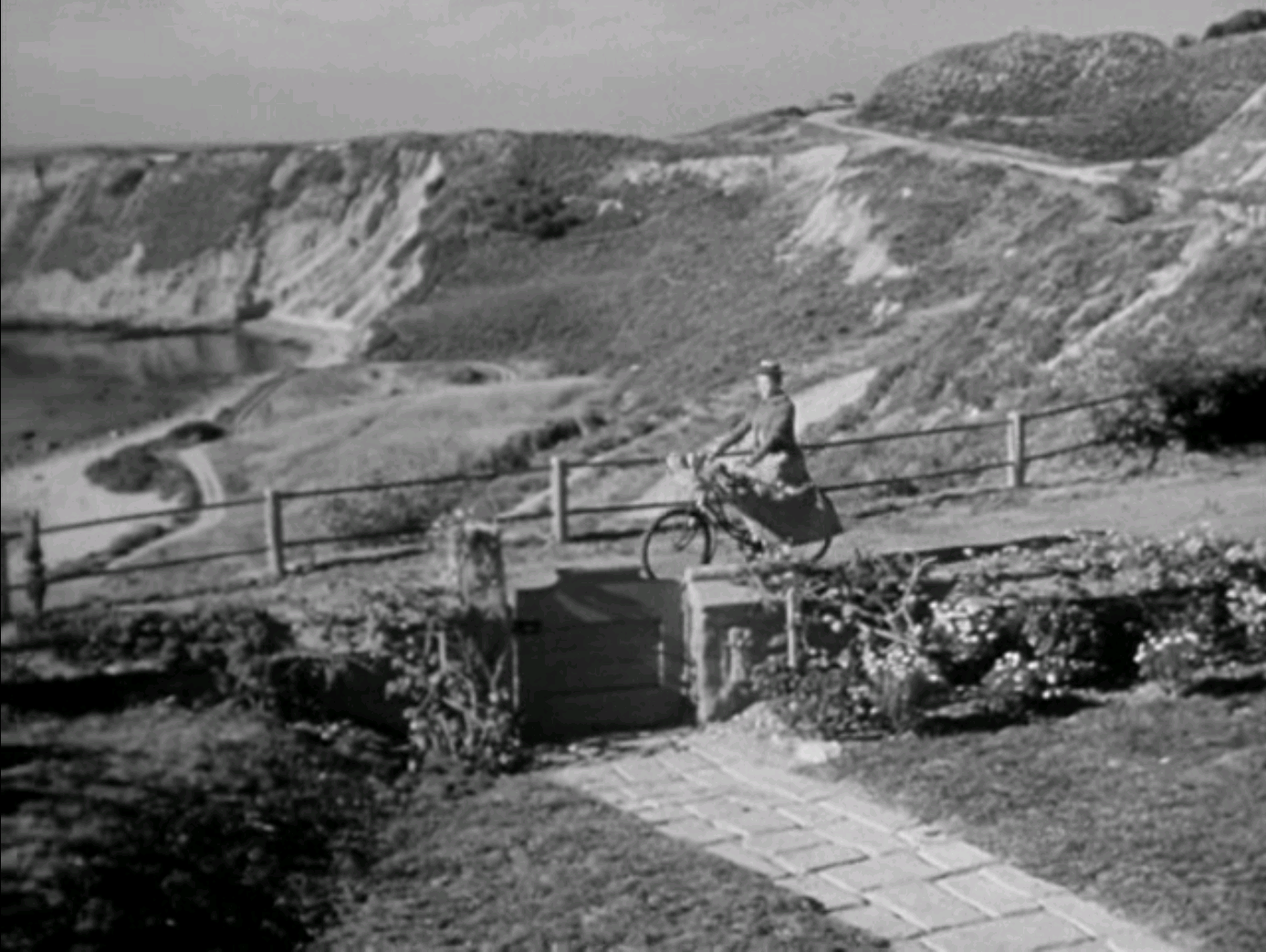
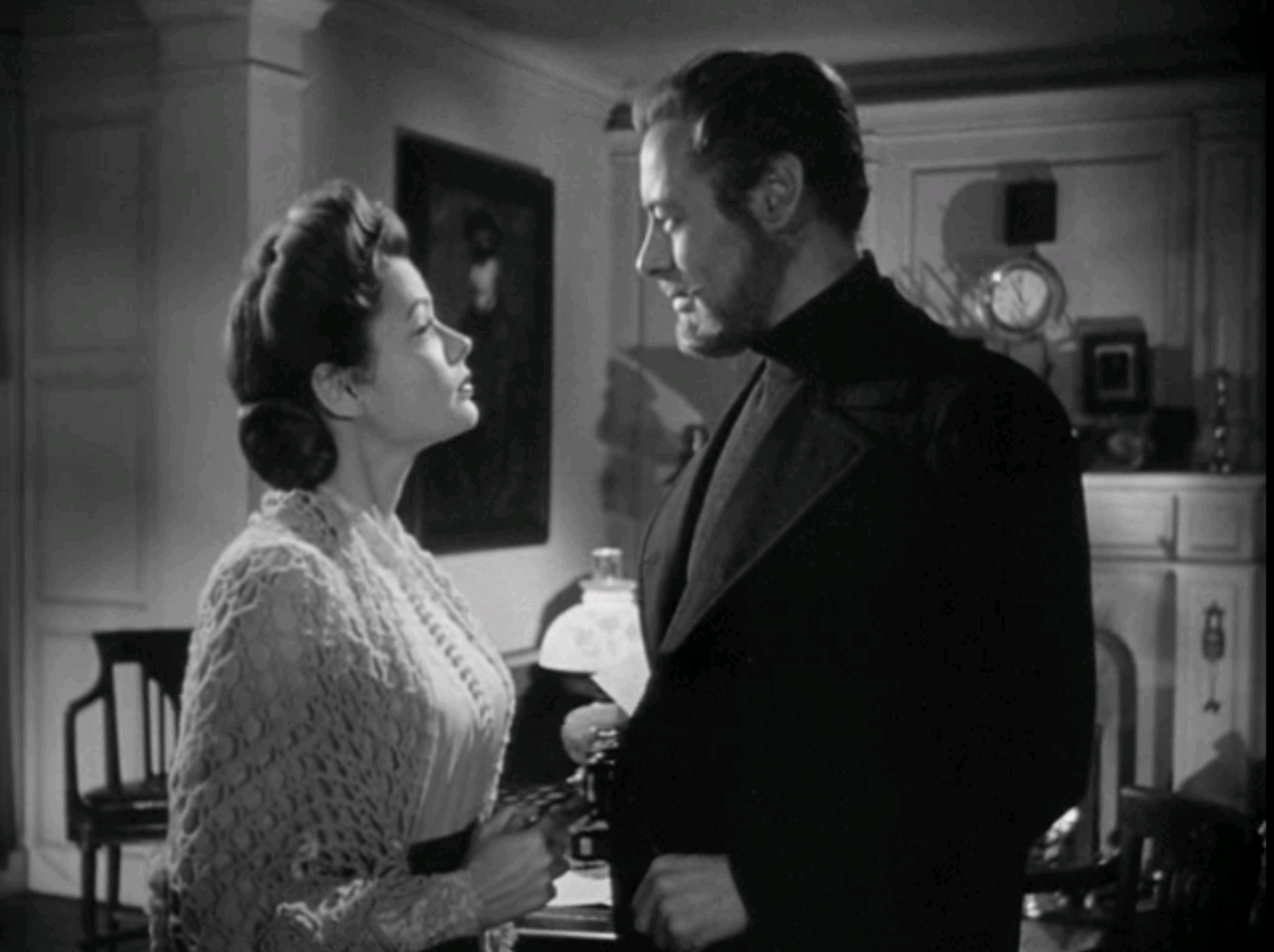
Made during a decade replete with supernatural fantasies — including Here Comes Mr. Jordan (1941), A Guy Named Joe (1943), The Canterville Ghost (1944), It’s a Wonderful Life (1946), A Matter of Life and Death / Stairway to Heaven (1946) and Portrait of Jennie (1948), among many others — The Ghost and Mrs. Muir remains one of the best of the bunch. Gene Tierney gives a mature and heartfelt performance in the title role as a widow and single mother determined to survive on her own; her romance with Harrison emerges naturally and gradually, alongside their respectful “working relationship”. Indeed, Philip Dunne’s nuanced screenplay — based on a novel by R.A. Dick — effectively weaves feminist issues into period romance, deftly incorporating a love triangle (George Sanders is nicely cast as a dubiously motivated author attracted to Tierney) and a number of plot twists along the way. Perhaps most satisfying is the fact that we’re led to wonder whether Tierney’s belief in Harrison’s presence — is he “real”, or a figment of her imagination? — might simply be a function of her loneliness and desire for “true love” at last; I’ll buy that as a compelling premise for a ghost story any day. Haunting cinematography, fine period sets, and Bernard Herrmann’s lovely score all contribute to making Mrs. Muir a surprisingly enjoyable minor classic.

Note: Nearly all reviews give away major spoilers, so if you haven’t seen it yet, be forewarned.

Note: Watch for Natalie Wood in a small role as Lucy’s young daughter, Anna.

Redeeming Qualities and Moments:

  • Gene Tierney as Lucy Muir
  • Rex Harrison as Captain Daniel
  • Charles Lang’s cinematography
  • Fine period detail and sets
  • Philip Dunne’s romantic screenplay
  • Bernard Herrman’s score

Must See?
Yes, as a most unusual and satisfying supernatural romance.

(Listed in 1001 Movies You Must See Before You Die)

Categories

  • Genuine Classic

Links: