Road to Zanzibar (1941)
“If he’s a god, I’M Mickey Mouse!”
|
Synopsis: |
|
Genres, Themes, Actors, and Directors:
Review: Redeeming Qualities and Moments:
Must See? Categories
Links: |
Responses to Peary’s “must see” movie reviews, as well as my own “must see” movie reviews up to and after 1986 (when Peary’s book was published).
“If he’s a god, I’M Mickey Mouse!”
|
Synopsis: |
|
Genres, Themes, Actors, and Directors:
Review: Redeeming Qualities and Moments:
Must See? Categories
Links: |
“A study of history confirms the validity of the Big Hunt theory: it is mankind’s safety valve.”
|
Synopsis: |
|
Genres, Themes, Actors, and Directors:
Response to Peary’s Review: Redeeming Qualities and Moments:
Must See? Categories
Links: |
“The International House of Pancakes is the one consistent thing in my life.”
|
Synopsis: |
|
Genres, Themes, Actors, and Directors:
Review:
and eventually resorts to more extreme measures, including painting his entire town pink, shipping in a troupe of African safari animals, attempting to teach an elephant to water ski, and much more:
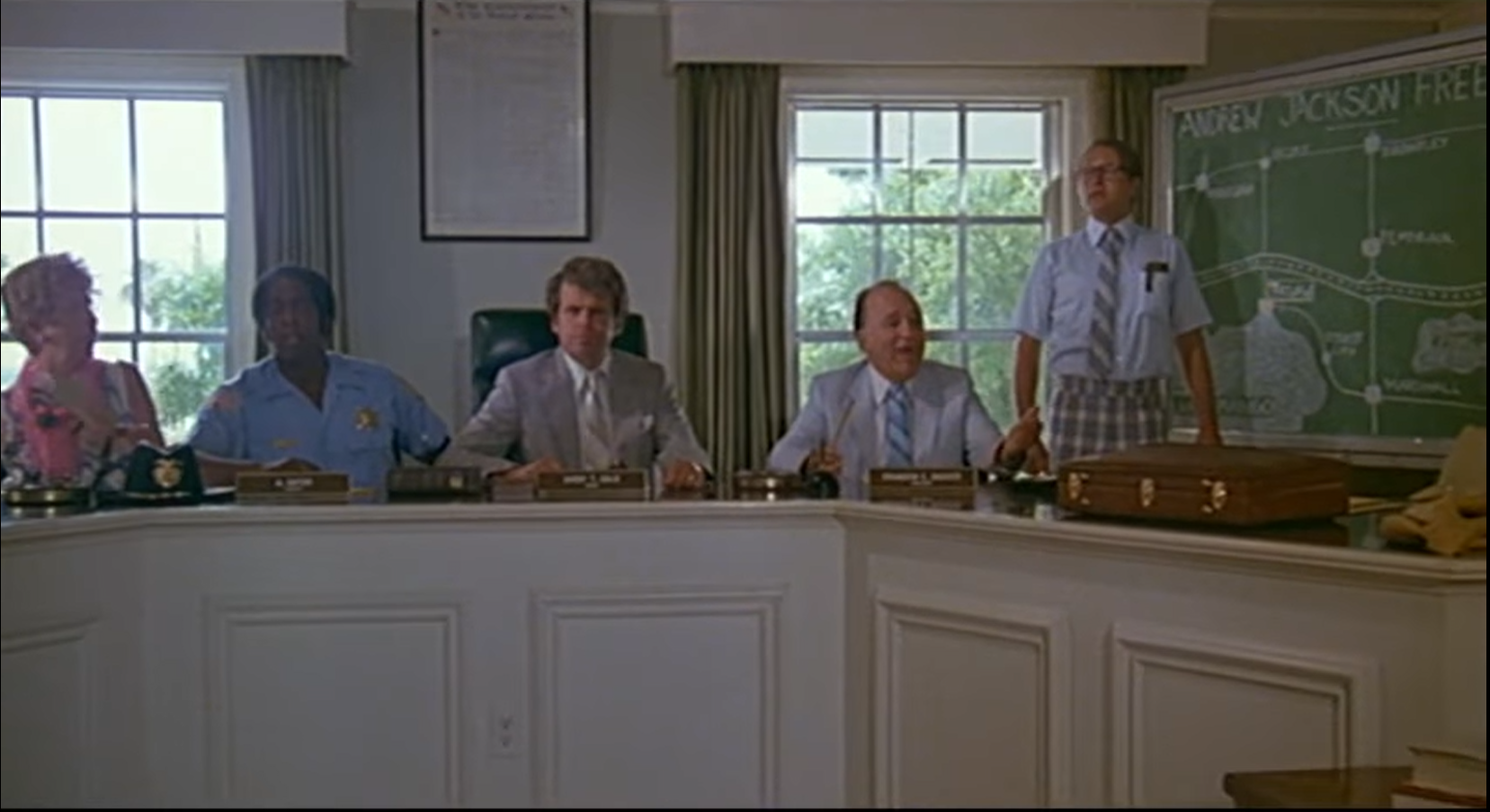
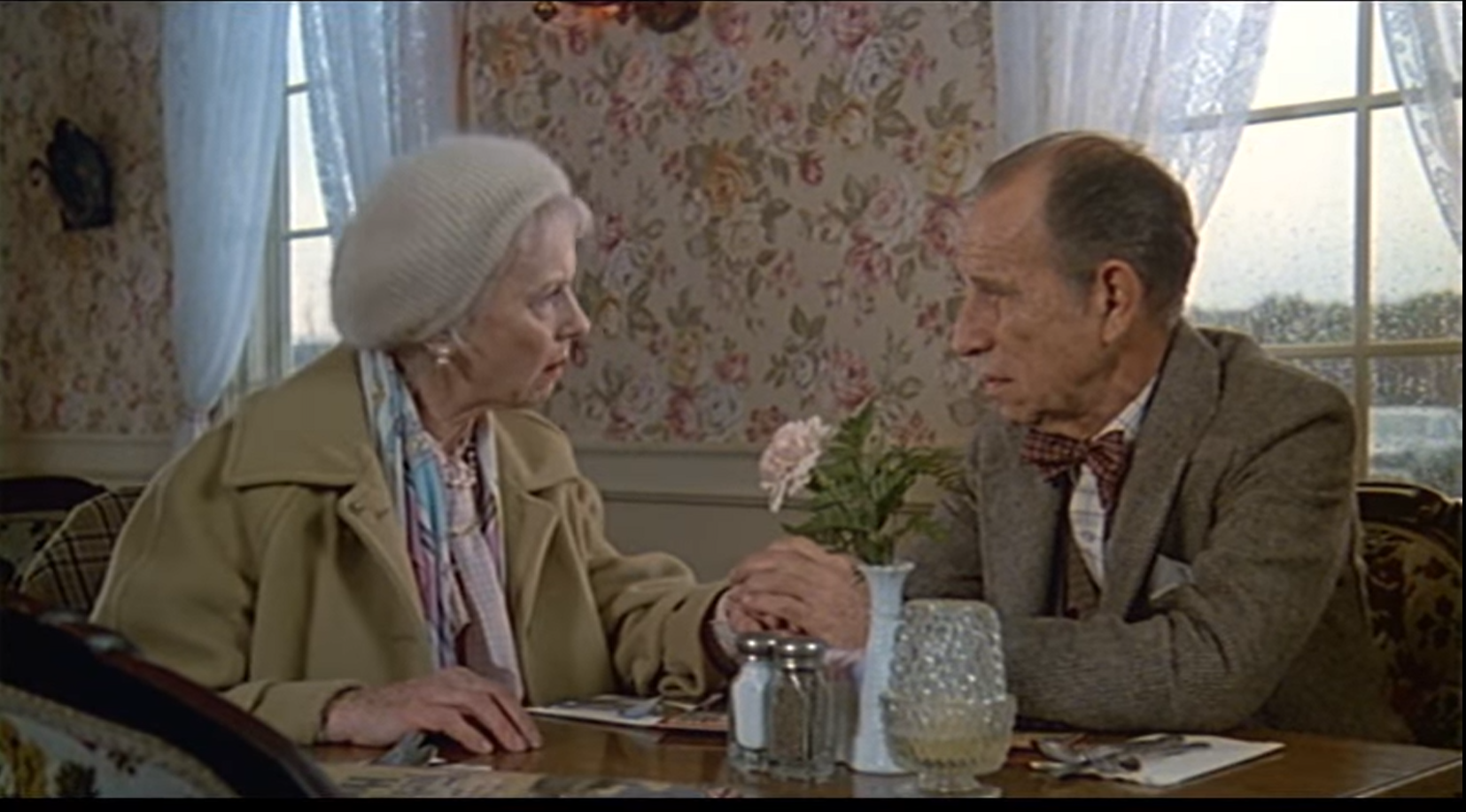
— sets it up as a wannabe “drolly comedic commentary” on the eccentricities of America. Unfortunately, however, while every single situation and character in the script seems designed to milk laughs, I never chuckled — not once. Like most comedies, this film has its core set of devoted fans: many viewers seem to find inherent humor simply in the IDEA of a children’s story about “Ricky the Carnivorous Pony”, pronounced “Licky” by the group of generically “Asian-American” orphans; or the concept of a blonde floozy gathering her mother’s ashes from a drive-in mortuary and driving with them to Florida, accidentally allowing them to spill and be snorted by a cokehead in the meantime; or the notion of a young boy (Billingsley) who hates peeing in his RV’s urinal so much he holds it in for hours; or the portrayal of a defiant elderly woman who insists she ISN’T an alcoholic since she “only” indulges in mixed drinks and never hides her bottles:
… or the revelation that a young nun (Rush) actually longs for sensual experiences like swimming. Well, there’s clearly no point in going on — either it works for you, or it doesn’t. The biggest mystery is why Peary includes this clunker in the back of his book, without any kind of revealing “code”. Is he a fan himself? Or does he consider it simply too historically notorious to miss? Regardless, it’s most certainly NOT must-see. Redeeming Qualities and Moments:
Must See? Links: |
“That’s our agreement — no women, remember?”
|
Synopsis: |
|
Genres, Themes, Actors, and Directors:
Response to Peary’s Review:
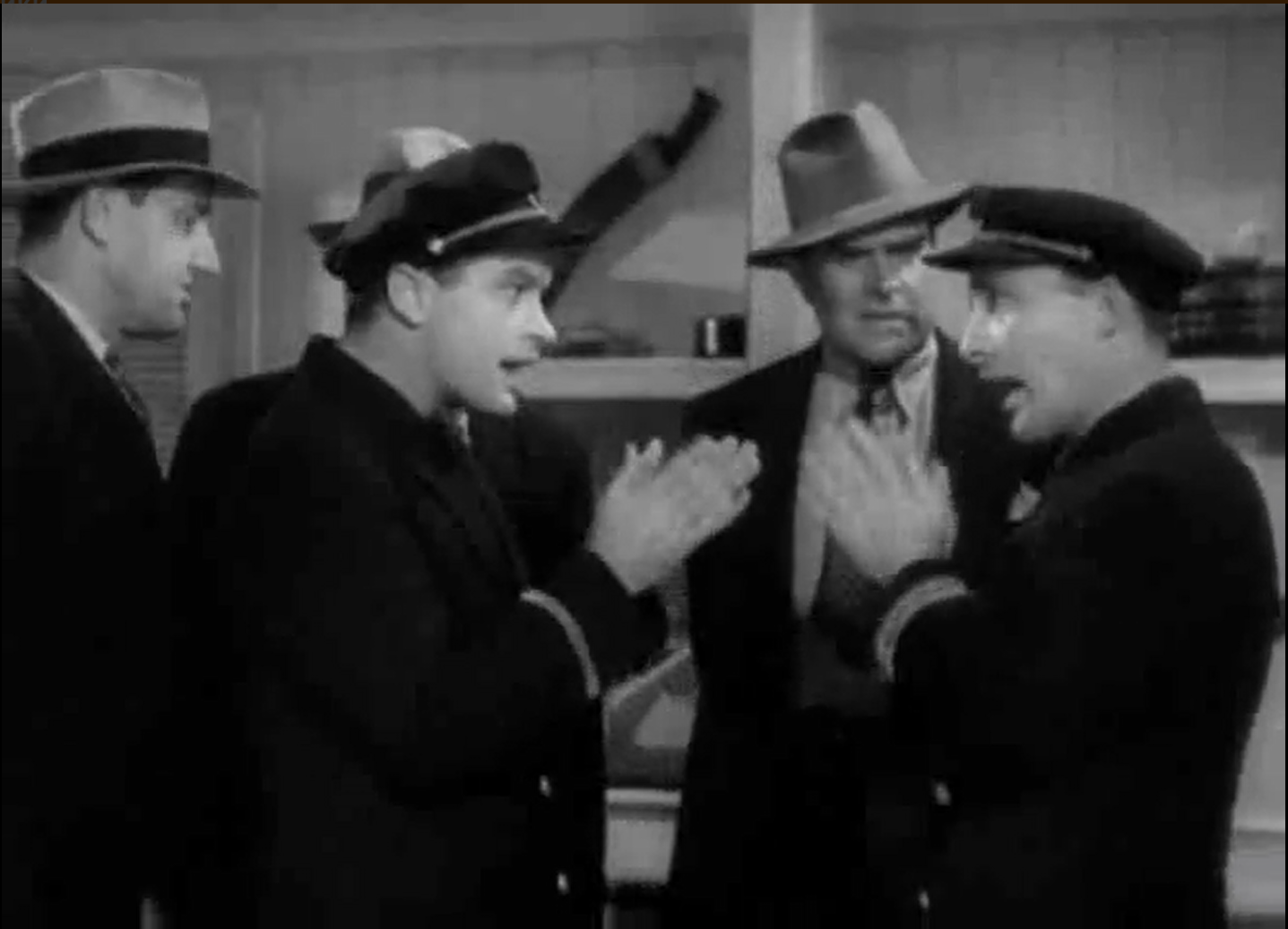
… and capable supporting work”. Indeed, fans of the series’ particular brand of humor will surely find much here to enjoy (though there’s obviously none of the self-referential humor evident in the later entries). Watch for a fun supporting performance by Judith Barrett as Crosby’s jilted fiancee:
Her lack of discomfiture at Crosby’s continual attempts to break off their engagement is truly unexpected, and most amusing. Note: According to TCM’s article on this first film in the series, “Though both men knew a major cash-cow when they were riding one, and thus were able to maintain a façade of deep friendship, they were highly competitive egotists who never missed an opportunity to belittle each other. And it wasn’t always in good fun.” Click here to read more. Redeeming Qualities and Moments:
Must See? Links: |
“I dislike children intensely — and yours, if I may say so, have peculiarly repulsive habits and manners.”
|
Synopsis: |
|
Genres, Themes, Actors, and Directors:
Review: Given that Mr. Belvedere is decidedly asexual (or, depending on how you look at it, secretly “coded” as homosexual), the fact that the film’s storyline eventually hinges on Robert Young’s jealous suspicions that his wife is engaging in a romantic dalliance with her nanny is simply ludicrous. Yet such narrative quibbles are somehow easily forgiven, given the overall outlandish flavor of the screenplay — which eventually takes an unexpected twist that places the entire story in a new context. And Webb is given so many delicious lines to spout that it’s pure fun simply waiting to hear how he’ll handle the next one. Watch for an enjoyable supporting turn by British comedic actor Richard Haydn (who played a dramatically different character in Preminger’s Forever Amber the previous year). Note: This film (or rather, Webb’s impersonation as Mr. Belvedere) was so popular that two sequels — Mr. Belvedere Goes to College (1949) and Mr. Belvedere Rings the Bell (1951) — quickly followed; while they get half-hearted ratings, I’ll admit I’m smitten enough by Webb-as-Belvedere to want to check them out. UPDATE, 12/9/11: I recently watched Mr. Belvedere Goes to College (1949) on YouTube (some kind soul uploaded it there), and thought I would write a quick capsule review here (especially given that no reviews at all are linked to this obscure little title on IMDb). As expected, it’s not nearly as “complete” a comedy as Sitting Pretty, and certainly isn’t must-see viewing for film fanatics — but fans of Webb won’t regret checking it out. His “Lynn Belvedere” remains in peak form in the sequel, responding to the rhetorical question, “You’re not serious…?!” with a resolute, “I’m grim.” (Only HE could make that retort sound convincing!) The film’s title explains itself: given that his formal education apparently consisted of no more than “two revolting weeks of Kindergarten”, Belvedere decides — for reasons I can’t name without spoiling the first picture a bit — to finally get a college degree. This allows the filmmakers ample opportunity to expose the hazards of freshman hazing — to which, interestingly enough, Mr. Belvedere allows himself to be subjected (to a certain extent, anyway). Unfortunately, far too little time is actually spent on Belvedere’s travails in the classroom; NONE, actually (we simply see him reading books wherever he goes). Instead, a rather insipid subplot is allowed to dominate the proceedings, involving a would-be romance between a grown-up Shirley Temple (whose annoying character possesses a significant secret identity) and Tom Drake (of boy-next-door Meet Me in St. Louis fame); as might be expected, whenever this narrative takes center stage, things grind to a deadening halt. Enter Mr. Belvedere again, however, and one’s energies are immediately restored: he’s just THAT delightful. As Bosley Crowther laudingly describes him in his review for the New York Times, he’s “brilliantly, classically clever and often delightfully droll, but he is also profoundly earnest”; in sum, he’s “a fellow who knows himself thoroughly and who has the good sense to realize that modesty would be false”. Indeed. Redeeming Qualities and Moments:
Must See? Categories Links: |
“We can only get rid of the Nazis if we lose the war.”
|
Synopsis: |
|
Genres, Themes, Actors, and Directors:
Review: Unlike in Sophie Scholl — which, as its name implies, is primarily concerned with showcasing the final days of Sophie herself — the screentime here is shared amongst a number of different White Rose protagonists, thus allowing us to learn a bit more about the group’s clandestine efforts to spread its urgent message. Through close attention to detail, the film effectively reminds us of the sobering truth, that during this infamous period of European history, one could lose one’s life for daring to write an anti-government missive — and that an act as simple as buying several dozen postage stamps could mark one immediately as a potential traitor to one’s country. Unfortunately, there are a few too many narrative threads hanging loose throughout the screenplay — such as a confusing subplot about Hans’s apparent romantic dalliances with two different women (Anja Kruse and Mechthild Reinders); but admirers of Sophie Scholl are sure to want to check out this essential cinematic counterpart, which fills in the gaps about an infamous, little told episode in German history. Redeeming Qualities and Moments:
Must See? Links: |
“The princess was quite right: the name of Fontenoy was a magic word, the ‘Open Sesame’ of the war ministry.”
|
Synopsis: |
|
Genres, Themes, Actors, and Directors:
Review: Redeeming Qualities and Moments:
Must See? Links: |
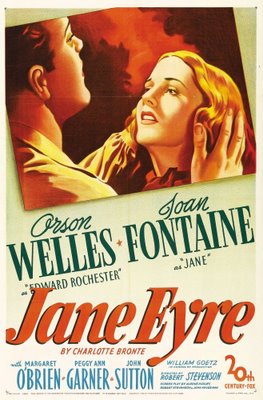
“Your duty is to prepare yourself to do God’s work in the world.”
|
Synopsis: |
|
Genres, Themes, Actors, and Directors:
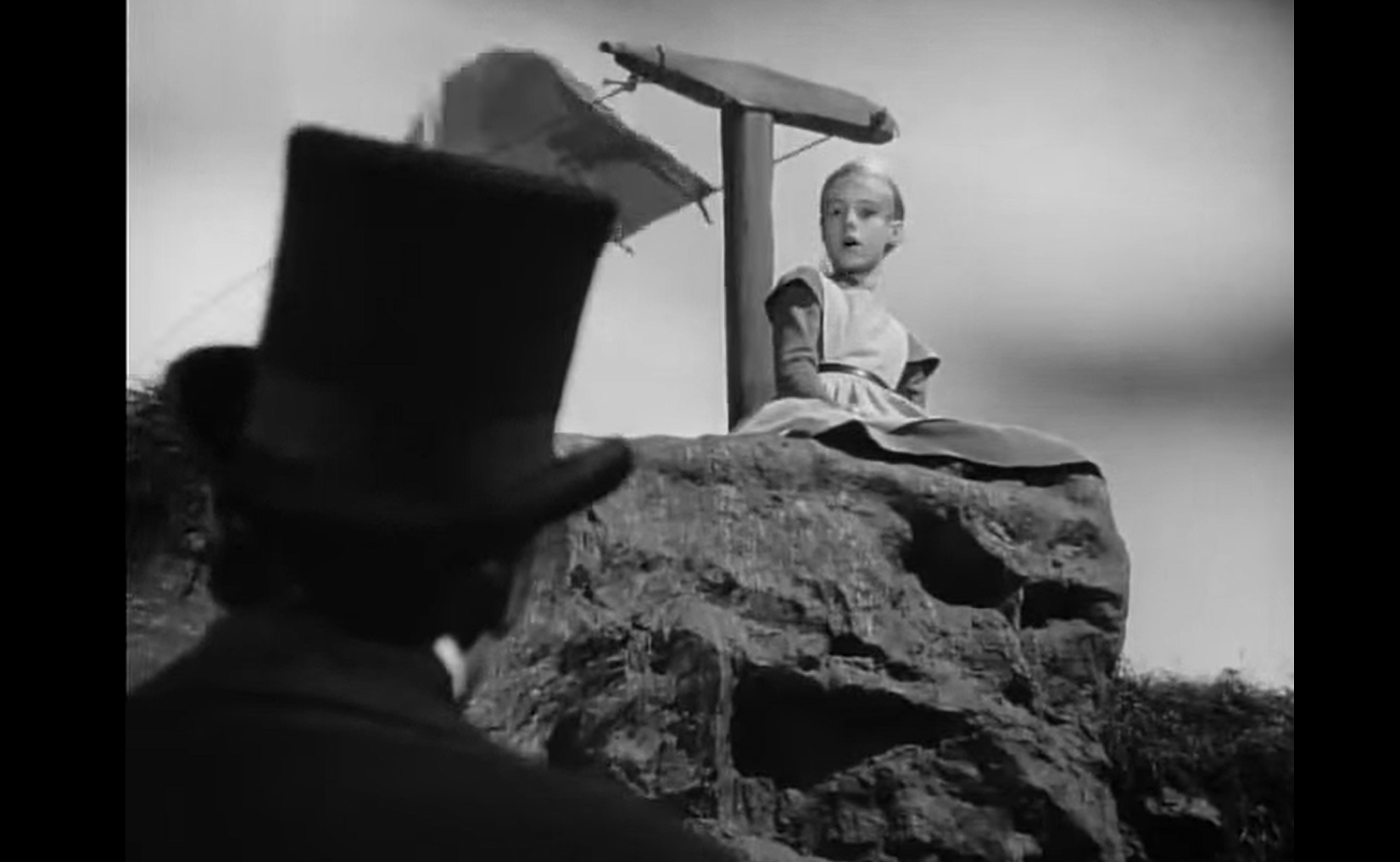
Review:
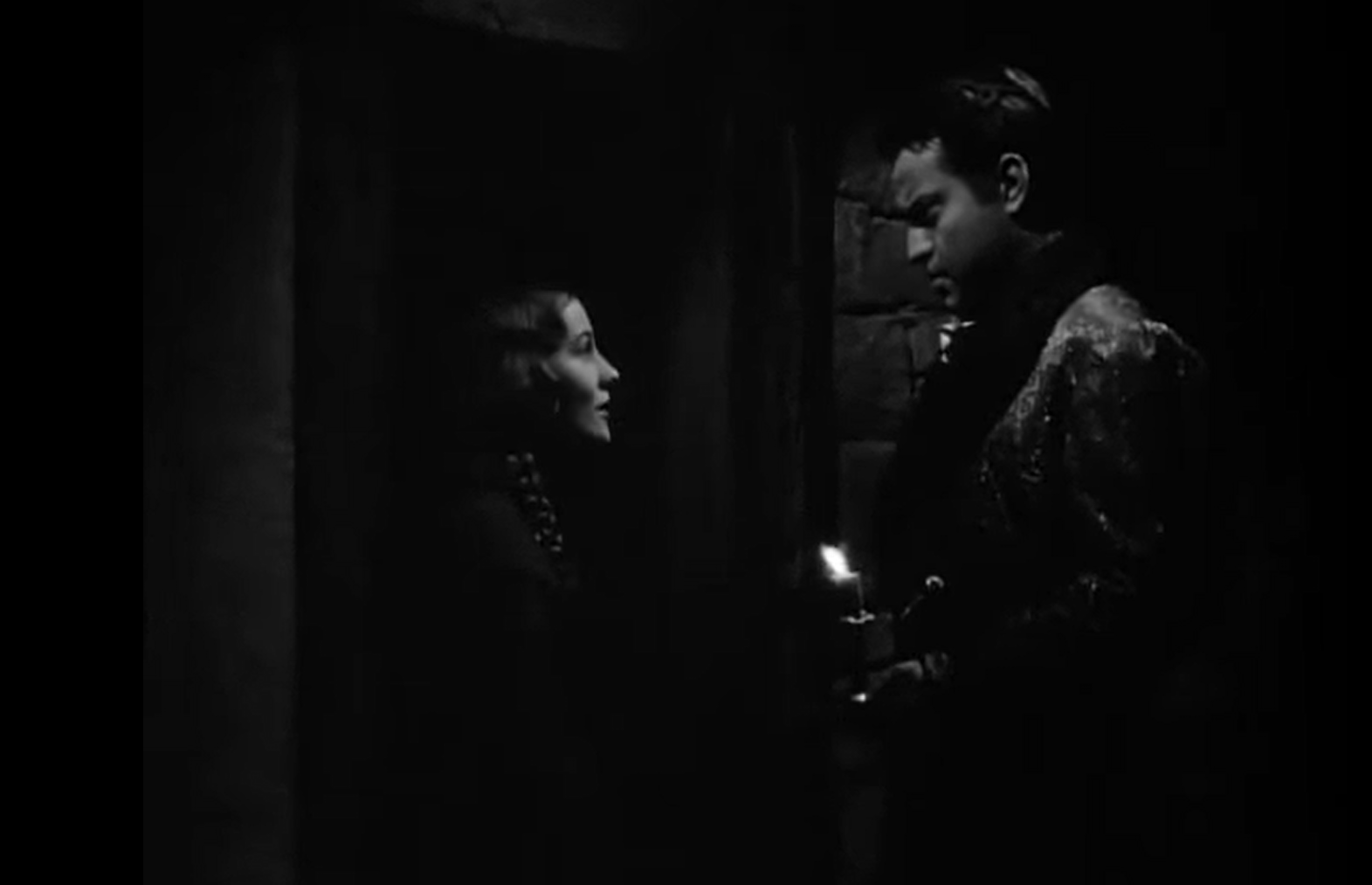
is sent away by her forbidding aunt (Agnes Moorehead, also perfectly cast):
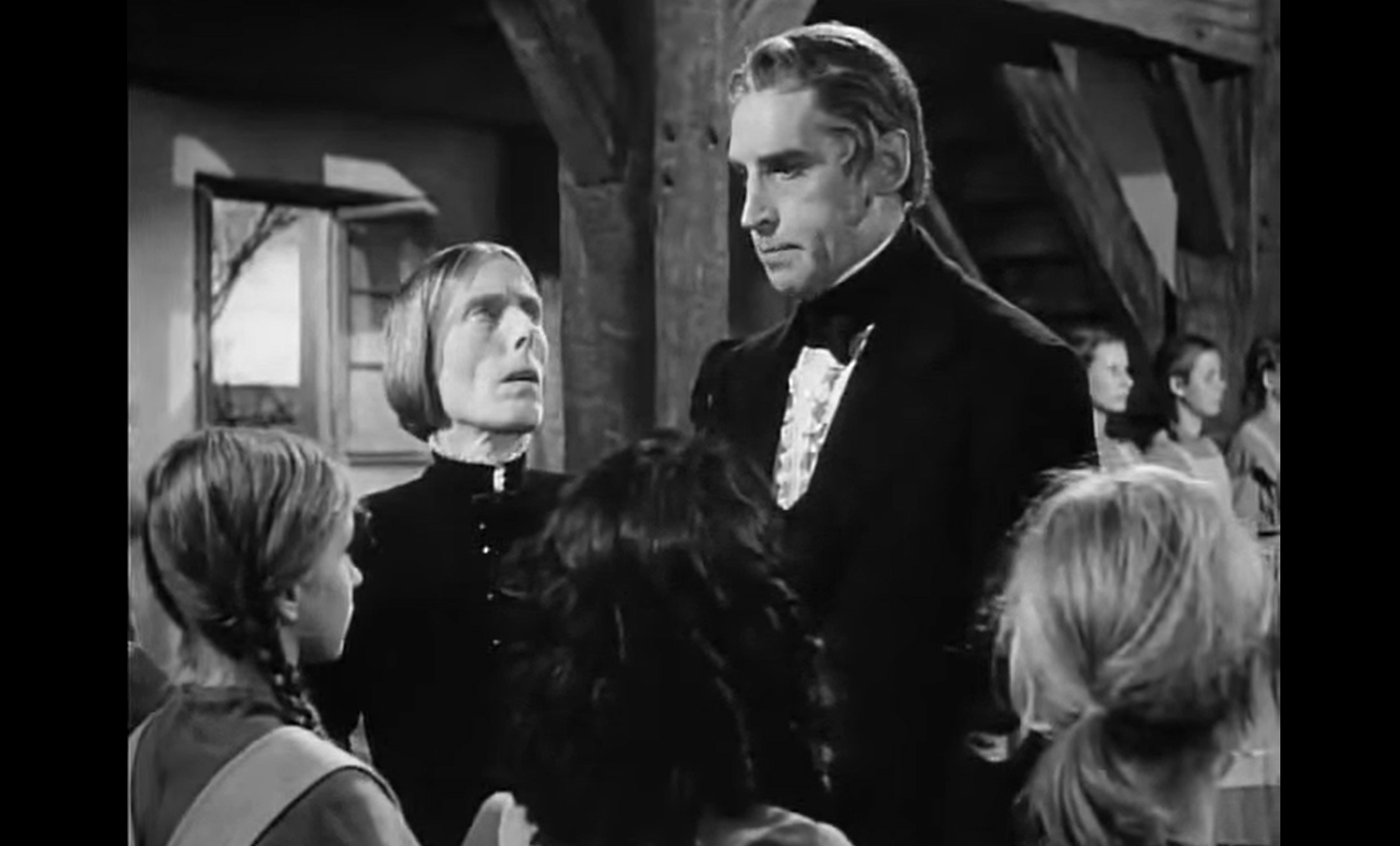
to live in a boarding school, where she’s cruelly mistreated by its brutal headmaster (Henry Daniell):
… yet manages to form a fleeting friendship with tragic Helen Burns (a young, beautiful, uncredited Elizabeth Taylor).
Unfortunately, the second half of the film isn’t as convincing or compelling. While not all agree, Joan Fontaine’s grown Jane simply didn’t impress me as the “fiercely independent” heroine Bronte wrote her to be.
Fontaine spends most of her screentime looking plaintively at “fearsome” Mr. Rochester (Orson Welles) — who, for his part, never quite manages to shed his own out-sized, Wellesian persona.
(When Rochester bellows at the world, it’s Welles-as-Rochester making his presence known). Their budding relationship does gradually pull one in, but never really emerges as anything more complex than a schoolgirl crush made manifest. Meanwhile, the critical “subplot” concerning the mysterious woman locked away in Rochester’s home is given surprisingly short shrift, and is resolved far too quickly:
… and the inevitable compression of the rest of the novel’s events towards the final half hour of the film presents another challenge for viewers hoping to feel more invested in Jane’s fate. With all those complaints aired (my, how hard we are on literary adaptations!), this remains solid filmmaking, with George Barnes’ moody camerawork particularly striking throughout. As noted in Slant Magazine’s review, in a nutshell, this is “a well-constructed piece of studio work” — and overall, it’s certainly worth a look, particularly given its historical interest as an early “Orson Welles film”. (While he didn’t officially direct, he undeniably had a hand in the production). Redeeming Qualities and Moments:
Must See? Links: |
“Son, this is a Washington, D.C. kind of lie. It’s when the other person knows you’re lying, and also knows you know he knows.”
|
Synopsis: |
|
Genres, Themes, Actors, and Directors:
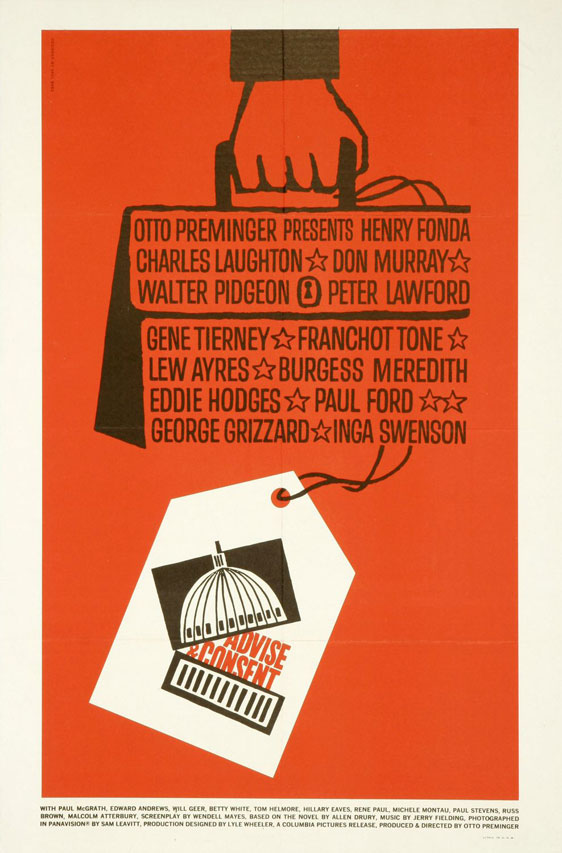
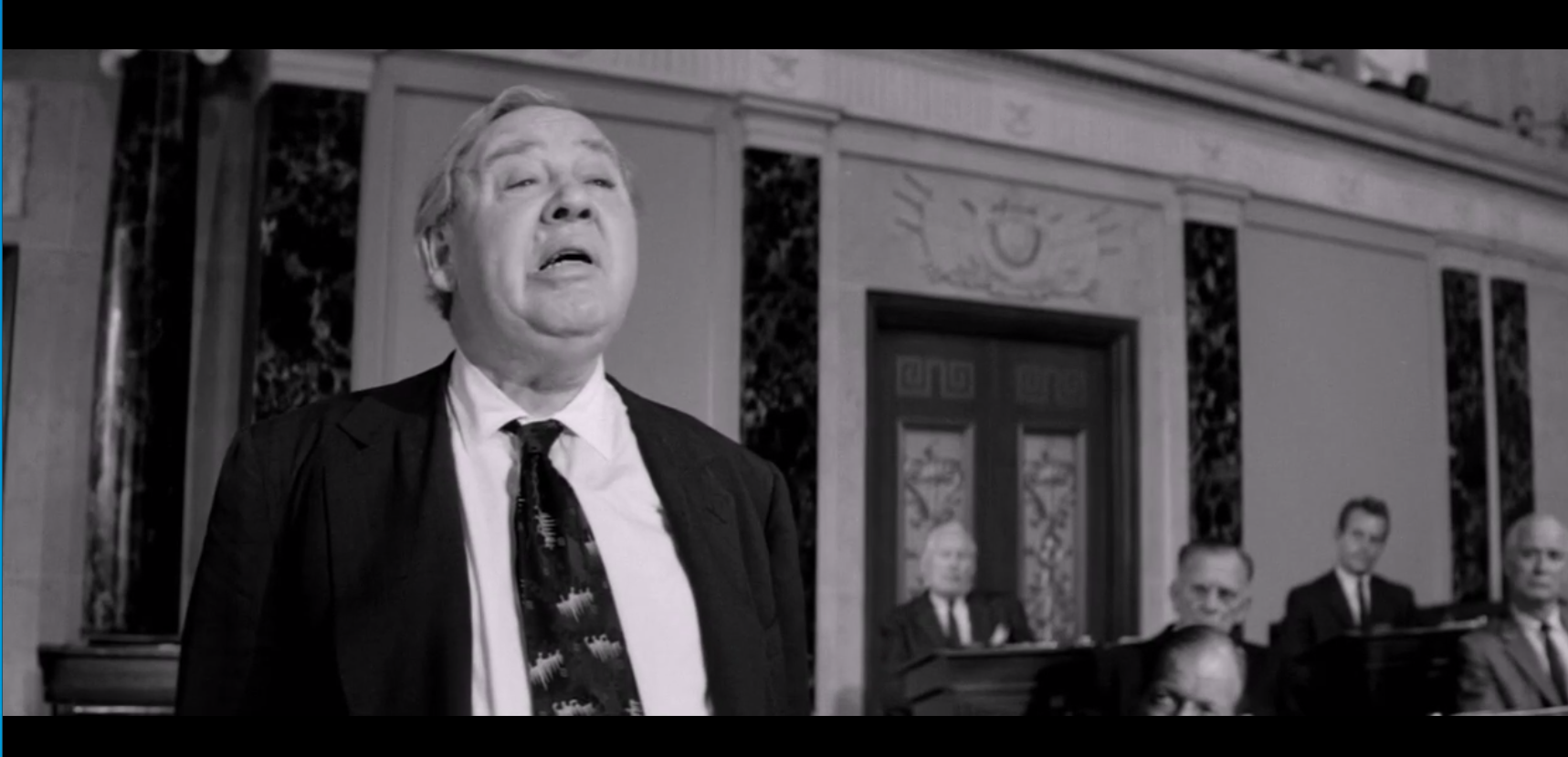
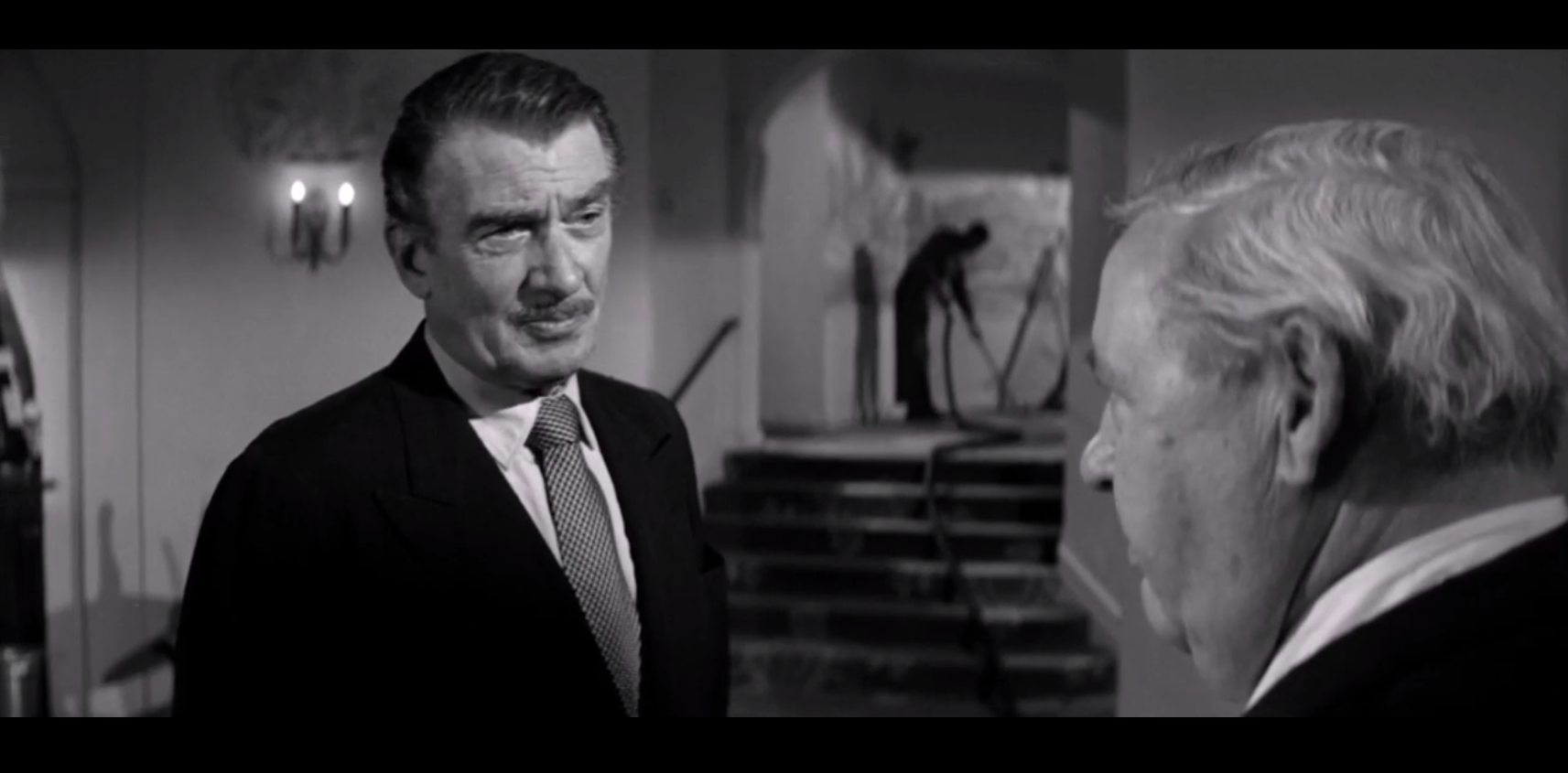
Review: Other than the slowly gripping storyline itself (which takes its time getting to the crux of the drama), what’s perhaps most memorable about Advise & Consent are the documentary-like glimpses it affords of Washington, D.C. at work, complete with underground shuttles taking the senators to and from their sessions, and highly realistic interactions on the senate floor (with the senators referring to each other in third person). And, as Eric Henderson writes in his review of the film for Slant Magazine, “Preminger’s filmed version of the novel makes up for the various excised subplots and legal-procedural nitty-gritty with a typically unerring sense of spatial intrigue” — in other words, it’s surprisingly visually arresting for a “courtroom” drama. Meanwhile, the ensemble performances throughout are largely top-notch, and feature some unexpected surprises (i.e., a young Betty White in her film debut as an outspoken senator). Don Murray (whose notable earlier roles included ‘Bo’ in Bus Stop, and Johnny in Hatful of Rain) is perfectly cast, and entirely believable, in what turns out to be the film’s tragic central role — that of Senator Brigham Anderson, a “family man” with a conflicted history he’s determined to keep hidden at all costs. In his final role (playing Southern Senator “Seab” Cooley), Charles Laughton gives a typically nuanced yet showy performance; and Walter Pidgeon is solidly effective in a smaller role as the Senate House Majority Leader. P.S. If you haven’t seen the film or read the novel, be careful reading reviews online; almost all give away the central plot “twist”, which I’ve only hinted at here. Redeeming Qualities and Moments:
Must See? Categories Links: |
“You are a backwards step in the evolution of mankind!”
|
Synopsis: |
|
Genres, Themes, Actors, and Directors:
Review: The brief synopsis provided above only hints at the wacky trajectory of Skidoo‘s storyline, which eventually devolves into massive LSD tripping and the most creative prison break ever depicted on-screen. Preminger had apparently experimented with acid himself, and was genuinely interested in attempting to portray such experiences on film — indeed, it’s Preminger’s sincerity with the entire venture that ultimately affords it its campy seal of “approval”. Taken strictly on face value — as an earnest attempt to tell a tale of redemption and cross-cultural understanding — the characters and situations are undeniably ludicrous and naive; viewed as a wacky congruence of fearless caricatures and boldly outrageous scenarios, it may provide you with just the type of cinematic misadventure you can’t look away from. Redeeming Qualities and Moments:
Must See? Categories
Links: |