Browsed by
Category: Original Reviews

Responses to Peary’s “must see” movie reviews, as well as my own “must see” movie reviews up to and after 1986 (when Peary’s book was published).

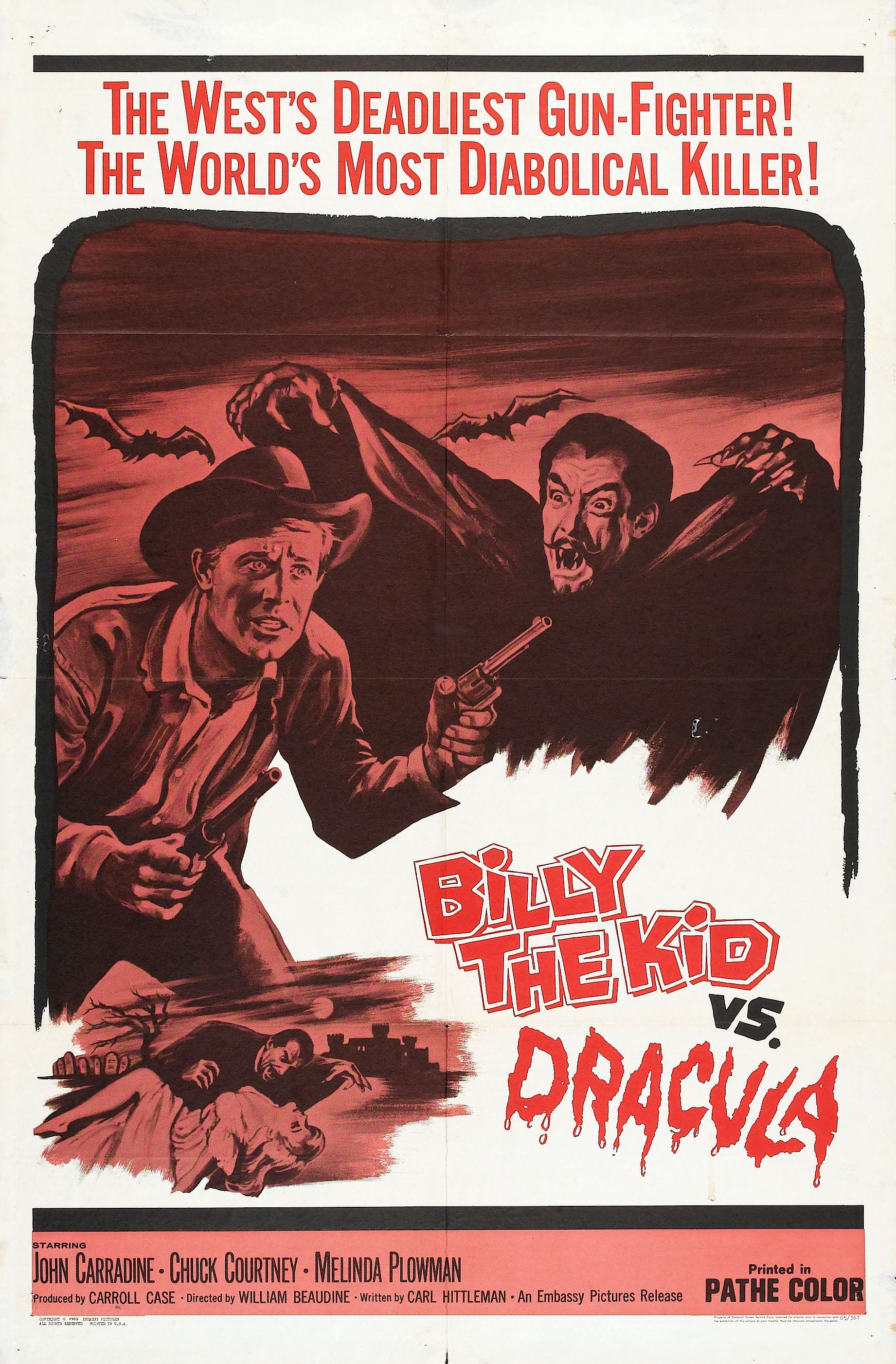
Billy the Kid Versus Dracula (1966)

Billy the Kid Versus Dracula (1966)

“My Lisa is dead — the marks of a vampire on her throat!”

Synopsis:
A vampire (John Carradine) pretends to be the uncle of a beautiful young woman (Melinda Plowman) engaged to Billy the Kid (Chuck Courtney).

Genres, Themes, Actors, and Directors:

  • John Carradine Films
  • Mistaken Identities
  • Vampires
  • Westerns

Review:
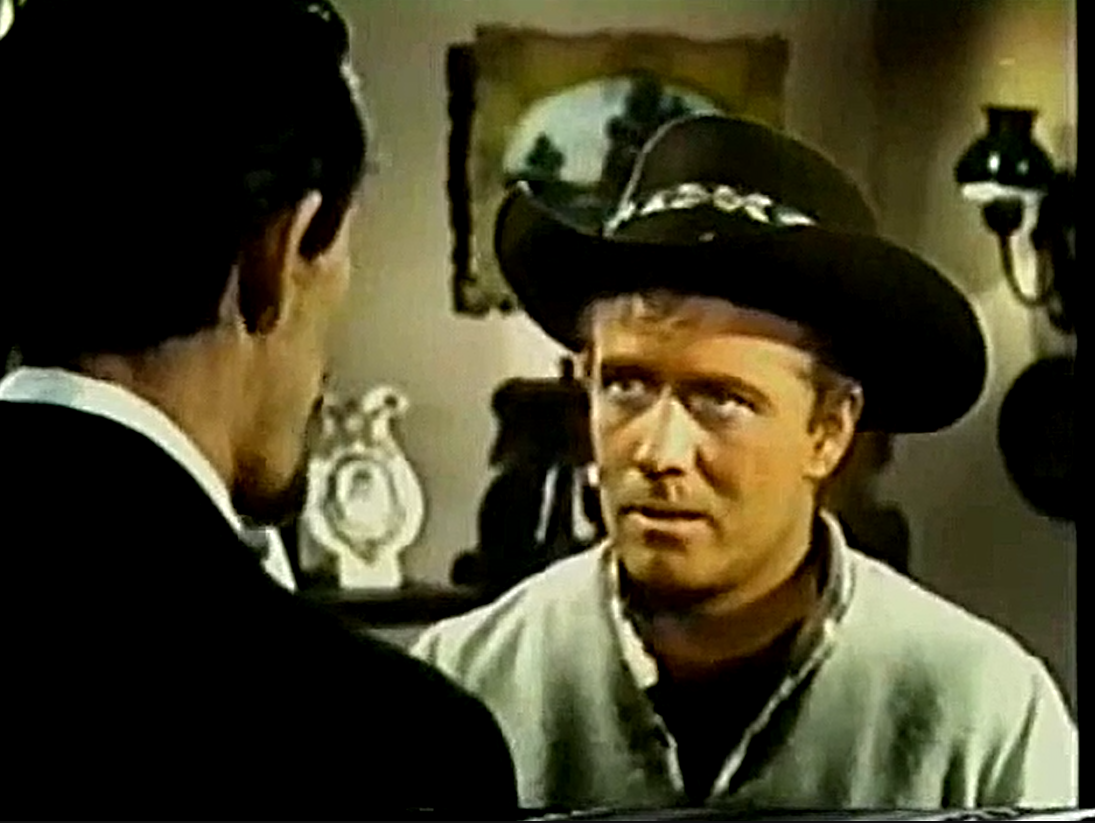
Shot in just eight days in Simi Valley — back-to-back with its “counterpart”, Jesse James Meets Frankenstein’s Daughter (1966) — this infamously awful hybrid horror-western by director William “One Shot” Beaudine is, like its companion piece, based upon a reasonably inspired revisionist concept: what if a famous western outlaw (like Billy the Kid or Jesse James) were brought back to life and given a chance to interact with a notorious horror icon such as Dracula or Dr. Frankenstein? Unfortunately, the concepts behind these two clunkers are the best things about them. In this case, Courtney makes for a disappointingly boring Billy the Kid (who has reformed from his murderous ways):

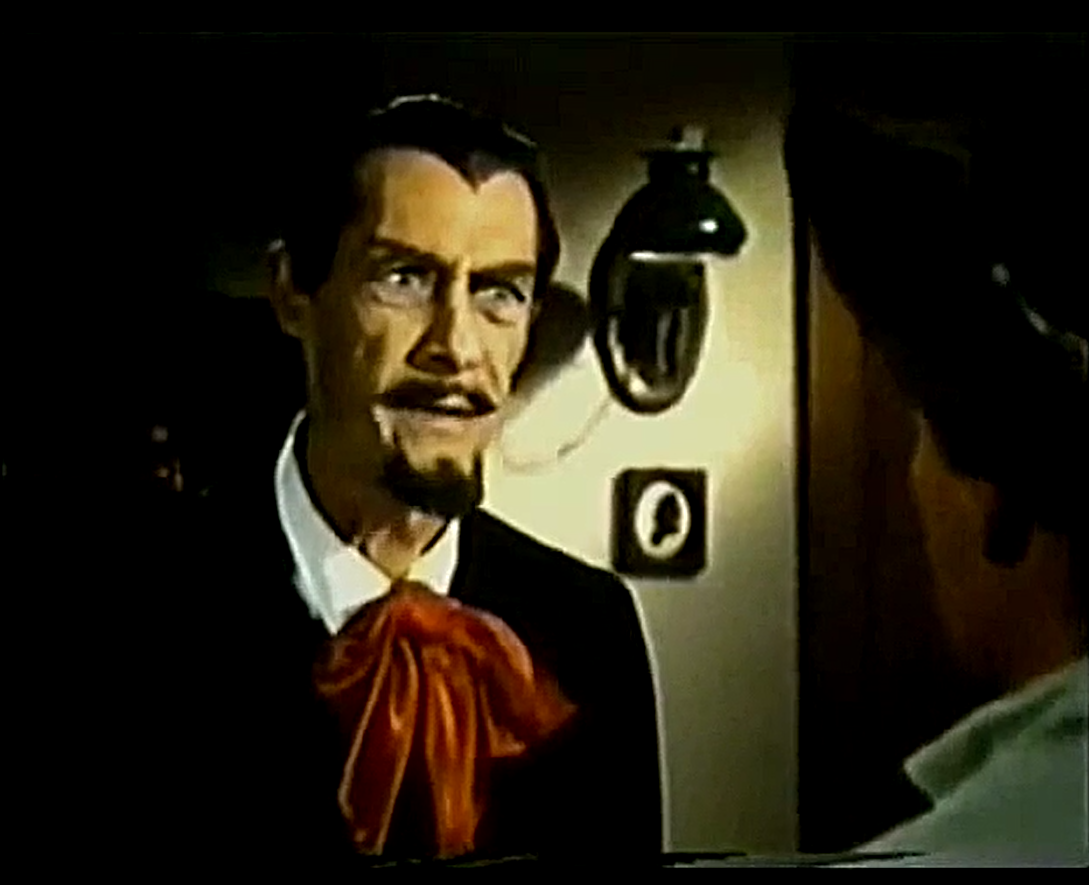
… and while Carradine is given a few pieces of choice dialogue to spout — “Where do I find this backwoods female pill slinger?” — he doesn’t quite ham it up enough to make his role all that memorable.

Meanwhile, everything else about the production is just sloppy enough to be mildly laughable (n.b. the presence of lackadaisical western music playing in the background while Billy tells Betty [Plowman] the shocking news that her mother has been killed in a stagecoach attack by Indians; the noticeably shoddy attempt to film night-time sequences during the day; Carradine’s transformation into a silly rubber bat on a string) — but not sloppy ENOUGH to categorize it as even close to Ed Wood’s “league” of truly bad films. It does earn additional “sloppy points”, however, for its egregiously lazy attempt to validate Dracula as a viable protagonist in the film: as pointed out by Richard Scheib of Moria Reviews, Dracula (who is never named as such in the film, btw — only in the title) is actually “of little consequence to the plot”, given that he could just have easily been conceived as “a conman attempting to steal the land”, and is noticeably “allowed to walk about in daylight”.

Redeeming Qualities and Moments:

  • Virginia Christine’s refreshingly sincere performance as an immigrant woman wary of Carradine from the start

Must See?
Yes, simply to have seen at least one of Beaudine’s infamously titled “bad movies” (though either would probably suffice). Listed as a Camp Classic in the back of Peary’s book.

Links:

Jesse James Meets Frankenstein’s Daughter (1966)

Jesse James Meets Frankenstein’s Daughter (1966)

“I do not trust the Frankensteins: they’re wicked; they’re terrible people. They will destroy you!”

Synopsis:
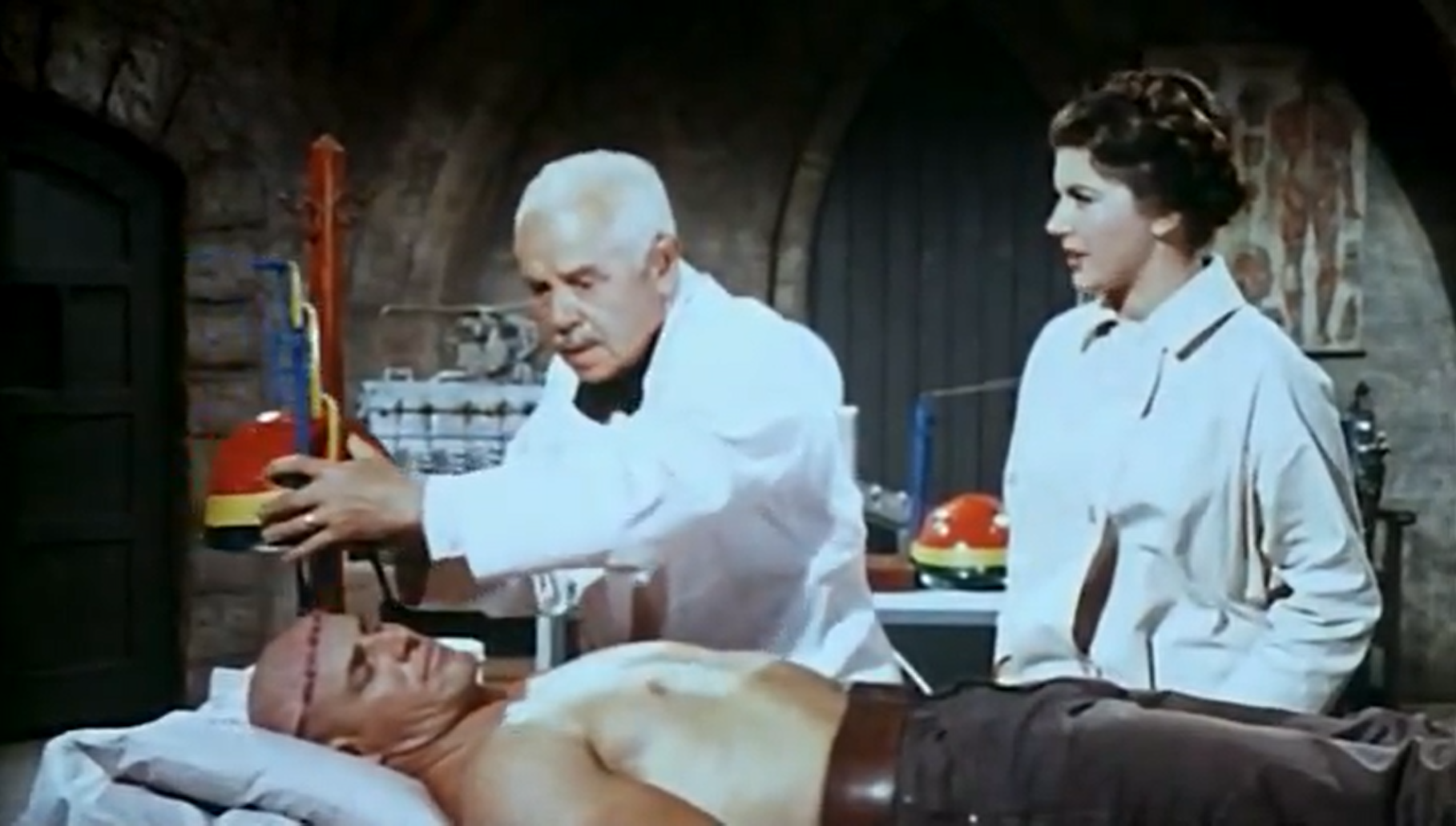
Although presumed dead, Jesse James (John Lupton) emerges alive and well in a border town with his buddy Hank (Cal Bolder), who gets shot during an attempted hold-up. With the help of Jesse’s new love interest, Juanita (Estelita Rodriguez), Hank is taken to the home of Dr. Maria Frankenstein (Narda Onyx), who dreams of transplanting her infamous grandfather’s brain into Hank’s body.

Genres, Themes, Actors, and Directors:

  • Frankenstein
  • Mad Doctors and Scientists
  • Thieves and Criminals
  • Westerns

Review:
As numerous critics have noted, this revisionist genre-hybrid by director William “One Shot” Beaudine — shot at the same time as its “companion piece”, Billy the Kid Versus Dracula (1966) — is disappointing on all counts save one: Narda Onyx’s campy portrayal as the original Frankstein’s granddaughter (not daughter, as she’s mis-identified in the title). Whenever she’s on-screen, spouting her delusional dreams of mad doc grandeur, we’re mildly intrigued; whenever she’s not, we’re utterly bored. Lupton is okay but ultimately a tad too milquetoast as a Robin Hood-esque Jesse James (did he decide to sort of mend his ways after being falsely presumed dead?), and his “relationship” with hunk-o-beef Cal Bolder (what a name!) is simply begging for homoerotic analysis.

Unfortunately, there aren’t nearly enough laughably bad scenes or snippets of dialogue here to satisfy those who enjoy “bad movies” for exactly this reason; chances are you’ll be checking your watch long before it’s over. With that said, Z-grade reviewer Joe Bob Briggs’ commentary on the 2003 DVD release is apparently worth a listen (though I watched my copy taped off of TCM, so didn’t have a chance to catch this myself.)

Redeeming Qualities and Moments:

  • Onyx’s campily earnest portrayal as Maria Frankenstein

Must See?
No — though I’m pretty sure most film fanatics won’t be able to resist briefly checking out this infamously titled bad movie (nominated for a Golden Turkey award in the Medved brothers’ book as one of the worst-titled films in cinematic history). Listed as a Camp Classic in the back of Peary’s book.

Links:

Cuban Rebel Girls (1959)

Cuban Rebel Girls (1959)

“When you become a rebel, you give up a lot of things that make a feminine life easier.”

Synopsis:
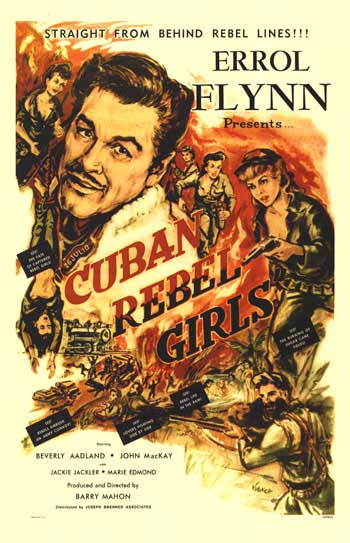
A journalist (Errol Flynn) in Cuba during Castro’s revolution narrates the story of two “rebel girls” — including a naive American (Beverly Aadland) searching for her boyfriend (John McKay).

Genres, Themes, Actors, and Directors:

  • Cuba
  • Errol Flynn Films
  • Revolutionaries

Review:
Errol Flynn’s final film before his premature death from alcoholism at the age of 50 was this true historical oddity: a pseudo-documentary about Castro’s revolution in Cuba, centering its “narrative” (I use that word loosely) on the travails of a naïve American beautician (Flynn’s own under-aged paramour at the time, Beverly Aadland) who heads to Cuba to locate her rebel boyfriend and quickly finds herself a sympathizer in the cause.

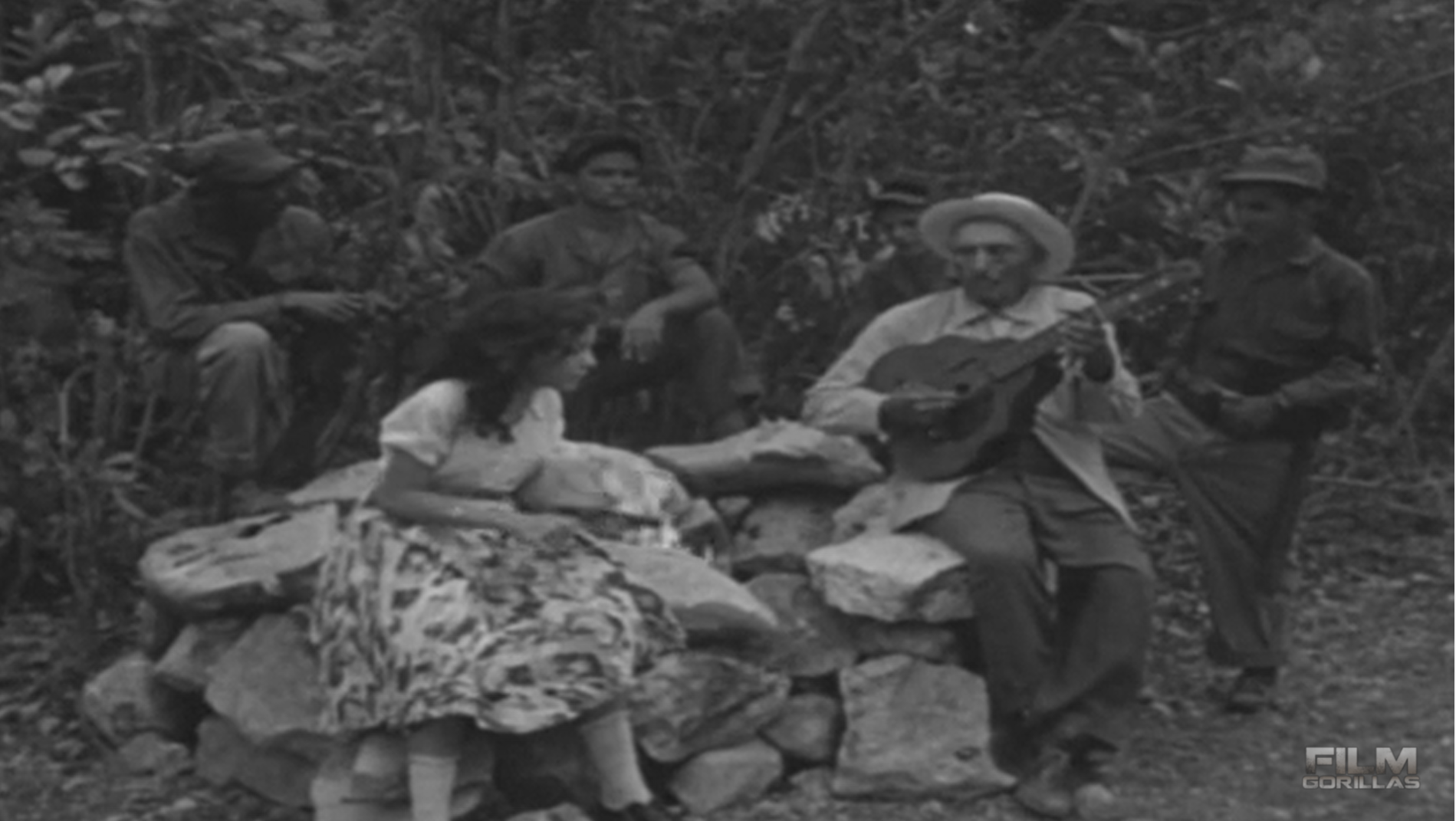
“I guess there’s more to this war stuff than I thought”, she notes — with typically brilliant insight — at one point. Unfortunately, Cuban Rebel Girls is really, really bad — but never in an amusing way. At just an hour’s length, it feels far too long, and viewers will be hard pressed to pay attention past the first 15 minutes or so. Poor Aadland can’t act to save her life, and Flynn (playing a variation on his later self — apparently he owned property in Cuba and was a genuine supporter of the revolution) only appears on-screen during the film’s bookends, looking and sounding somewhat disoriented.

A bit of trivia: While making Cuban Rebel Girls, Flynn simultaneously cobbled together a shoddy documentary called Cuban Story, which I have no intention of checking out, though it was apparently released on DVD recently, for those with insatiable curiosity.

Redeeming Qualities and Moments:

  • An all-too-brief brief snippet of a most interesting folk tune, played about 35 minutes into the film for just a few seconds (I’m really stretching here)

Must See?
No, though I suppose it’s worth a cursory glance (two minutes or so will do) simply for its status as an historical oddity. Listed as a Cult Classic in the back of Peary’s book.

Links:

Why Worry? (1923)

Why Worry? (1923)

“You boys will have to stop this fighting — it’s bad for my heart.”

Synopsis:
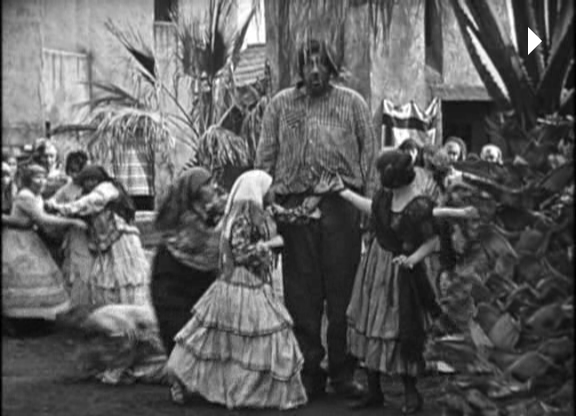
A wealthy hypochondriac (Harold Lloyd) and his nurse (Jobyna Ralston) arrive on a supposedly peaceful South American island which has just been taken over by revolutionaries. When Lloyd befriends an imprisoned giant (John Aasen) by helping him get rid of an aching tooth, he acquires an instant bodyguard and loyal servant.

Genres, Themes, Actors, and Directors:

  • Comedy
  • Harold Lloyd Films
  • Revolutionaries
  • Silent Films
  • South and Central America

Review:
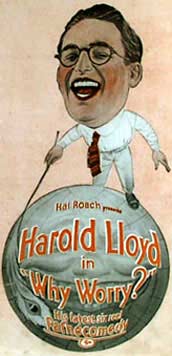
Peary lists no less then nine films by bespectacled comedian Harold Lloyd in his GFTFF, including the two generally acknowledged as his best: Safety Last! (1923) and The Freshman (1925). Unfortunately, while Why Worry? is technically solid (Lloyd, as always, did his own stuntwork here), the silly storyline is repetitive and ultimately one-note in its lack of character arc or narrative complexity — indeed, the scenario seems much better suited for a comedic short than a full-length film. Not must-see unless you’re a diehard fan of Lloyd or of slapstick comedy in general.

Redeeming Qualities and Moments:

  • A few clever situational moments

Must See?
No. Listed as a film with Historical Relevance and a Personal Recommendation in the back of Peary’s book.

Links:

Cafe Express (1980)

Cafe Express (1980)

“Coffee is the best friend a man ever had.”

Synopsis:
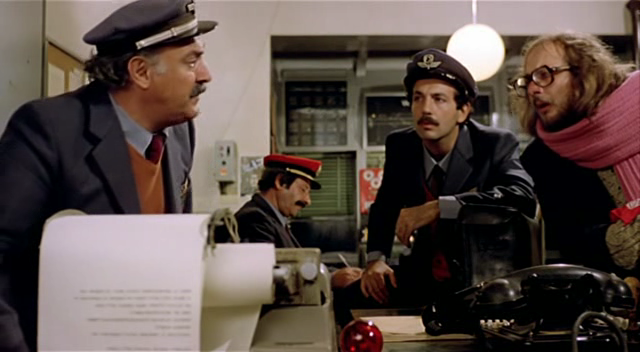
A one-armed coffee vendor (Nino Manfredi) with a sick teenage son (Giovanni Piscopo) attempts to elude a trio of policemen while illicitly selling coffee on a train.

Genres, Themes, Actors, and Directors:

  • Cat-and-Mouse
  • Comedy
  • Italian Films
  • Trains and Subways

Review:
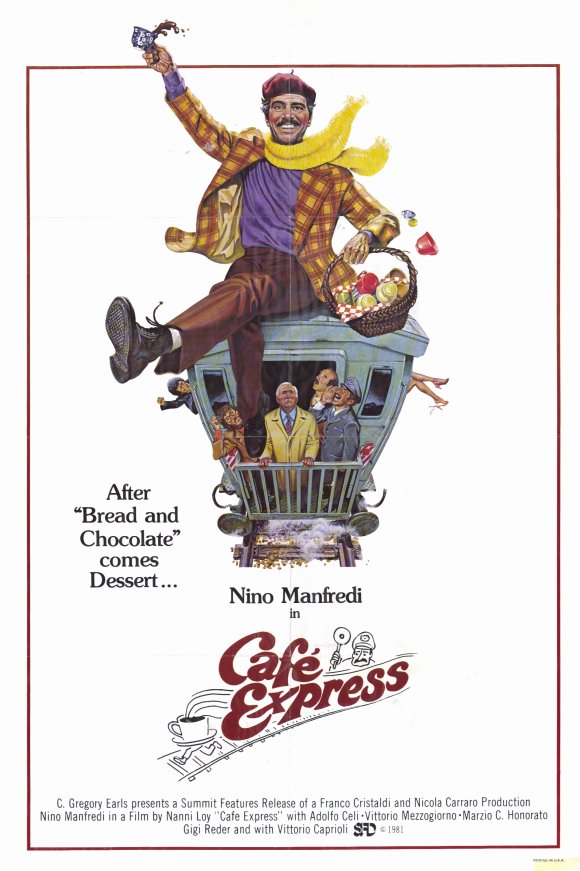
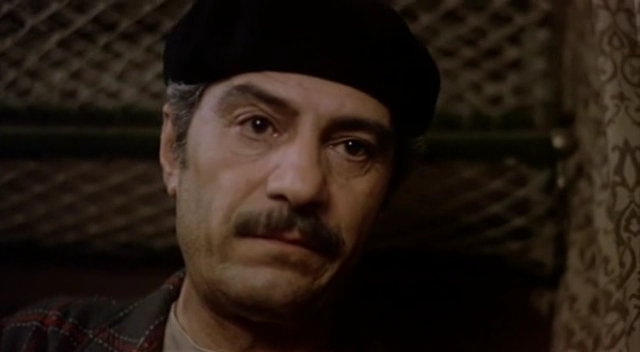
Essentially an extended cat-and-mouse tale, Nanni Loy’s surprisingly touching and entertaining comedy takes place primarily within the confines of a moving train. The storyline is simple — and pretty much covered in the brief synopsis provided above — but remains compelling viewing throughout given our growing investment in the lead protagonist’s fate. Indeed, Nino Manfredi anchors the film, and provides it with its essential heart: he’s wily yet sympathetic, never afraid to call things as they are, and ultimately emerges as an unexpected folk hero of sorts. A minor quibble: one can’t help wondering why the railroad company isn’t allowing Manfredi to sell his coffee legitimately, given that it’s clearly desired by the passengers — but one must simply chalk this up to cultural idiosyncrasies. Not required viewing, but definitely worth seeking out.

Redeeming Qualities and Moments:

  • Nino Manfredi as Michele Abbagnano
  • A clever, surprisingly hard-hitting comedic screenplay

Must See?
No, but it’s certainly recommended.

Links:

Popeye (1980)

Popeye (1980)

“I yam what I yam and I yam what I yam that I yam.”

Synopsis:
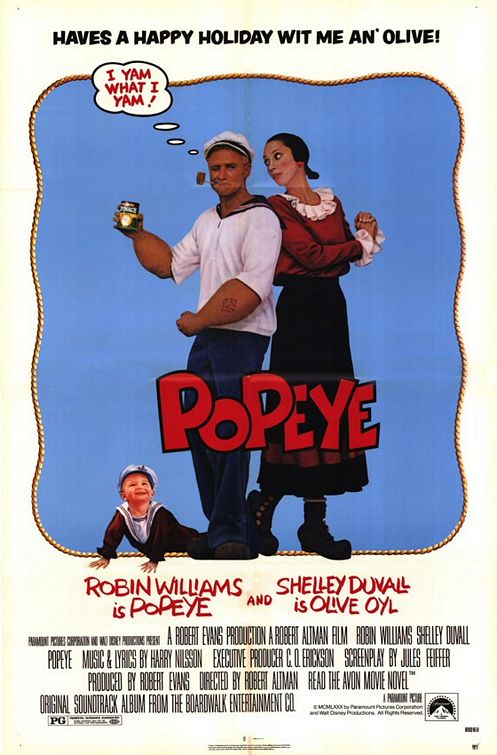
A squinty sailor (Robin Williams) searching for his long-lost father (Ray Walston) arrives in a seaside town called Sweet Haven, where he falls in love with quirky Olive Oyl (Shelly Duvall) and, with Olive, becomes the father of a foundling named Swee’ Pea (Wesley Ivan Hurt).

Genres, Themes, Actors, and Directors:

  • Comedy
  • Comics and Comic Strips
  • Kidnapping
  • Love Triangle
  • Musicals
  • Robert Altman Films
  • Robin Williams Films
  • Sailors
  • Shelley Duvall Films
  • Small Town America

Review:
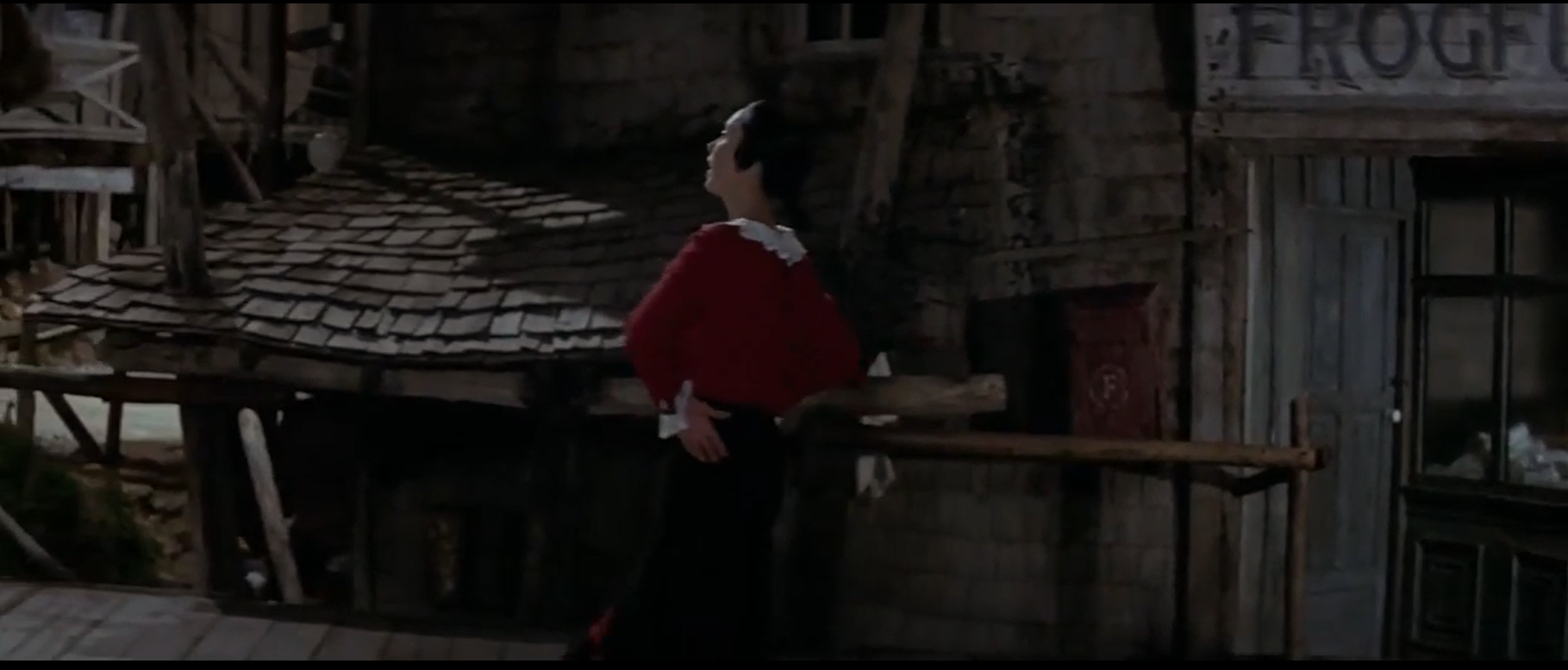
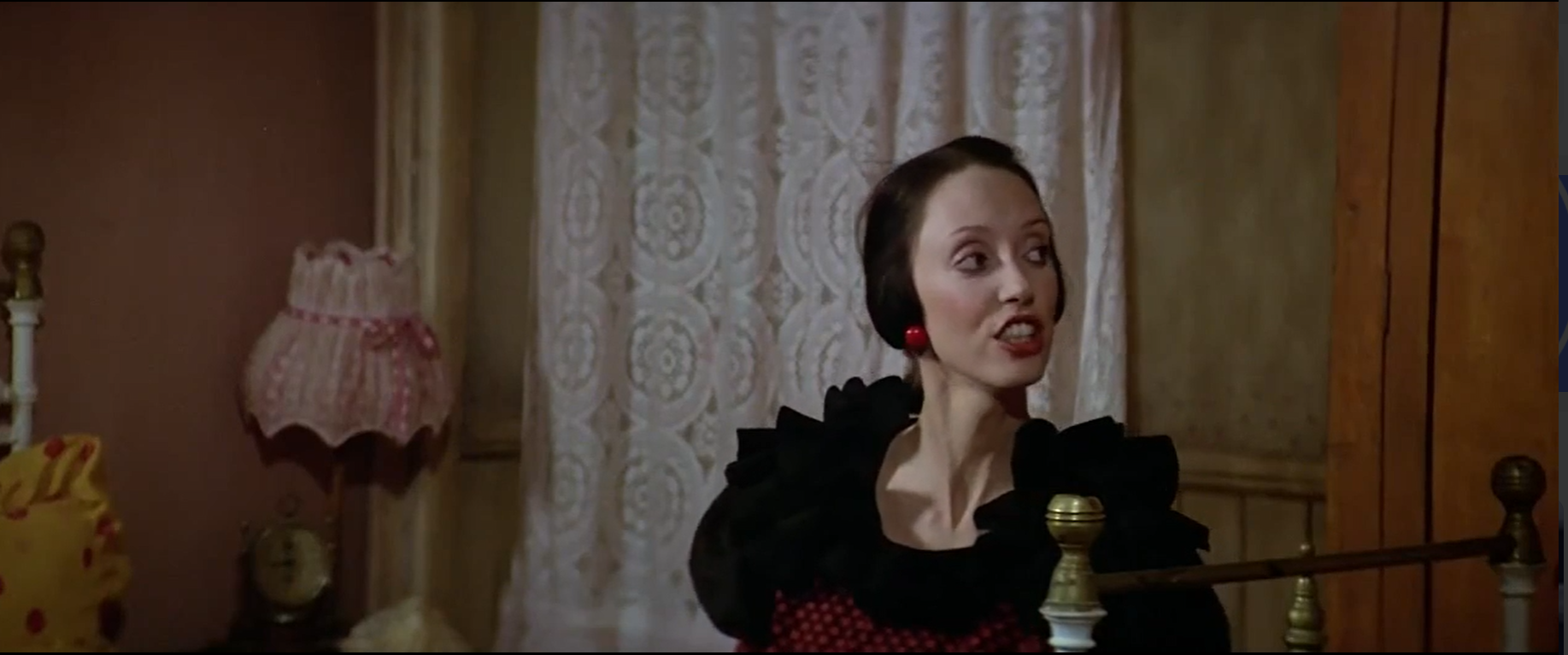
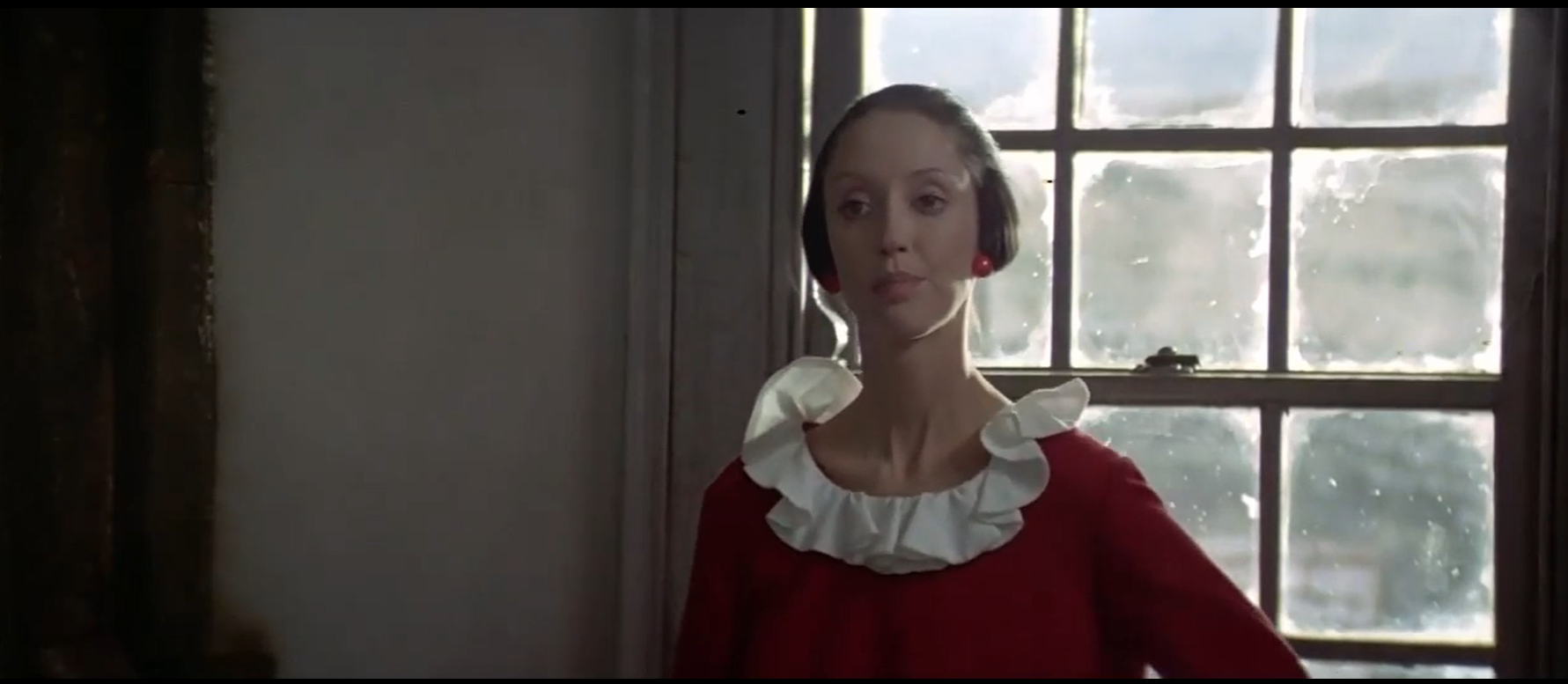
Robert Altman’s Popeye continues to be viewed by many as merely another ill-conceived failure in the infamously checkered yet estimable career of this iconoclastic director. Altman’s attempt to bring E.C. Segar’s beloved comic strip (or, more accurately, Fleischer Studios’ animated shorts from the 1930s-50s) to the big screen as a musical-comedy — complete with his characteristic ensemble cast and overlapping dialogue — seems like an odd venture to be sure, and isn’t entirely successful. But it’s redeemed at least in part by a casting choice made in heaven: Shelley Duvall as spindly-legged Olive Oyl. Duvall brings Olive’s comic presence to full-blooded life, craning her neck and stumbling across the sets with a physical dexterity and verisimilitude one can only marvel at; she emerges as the most fully realized character in the film.

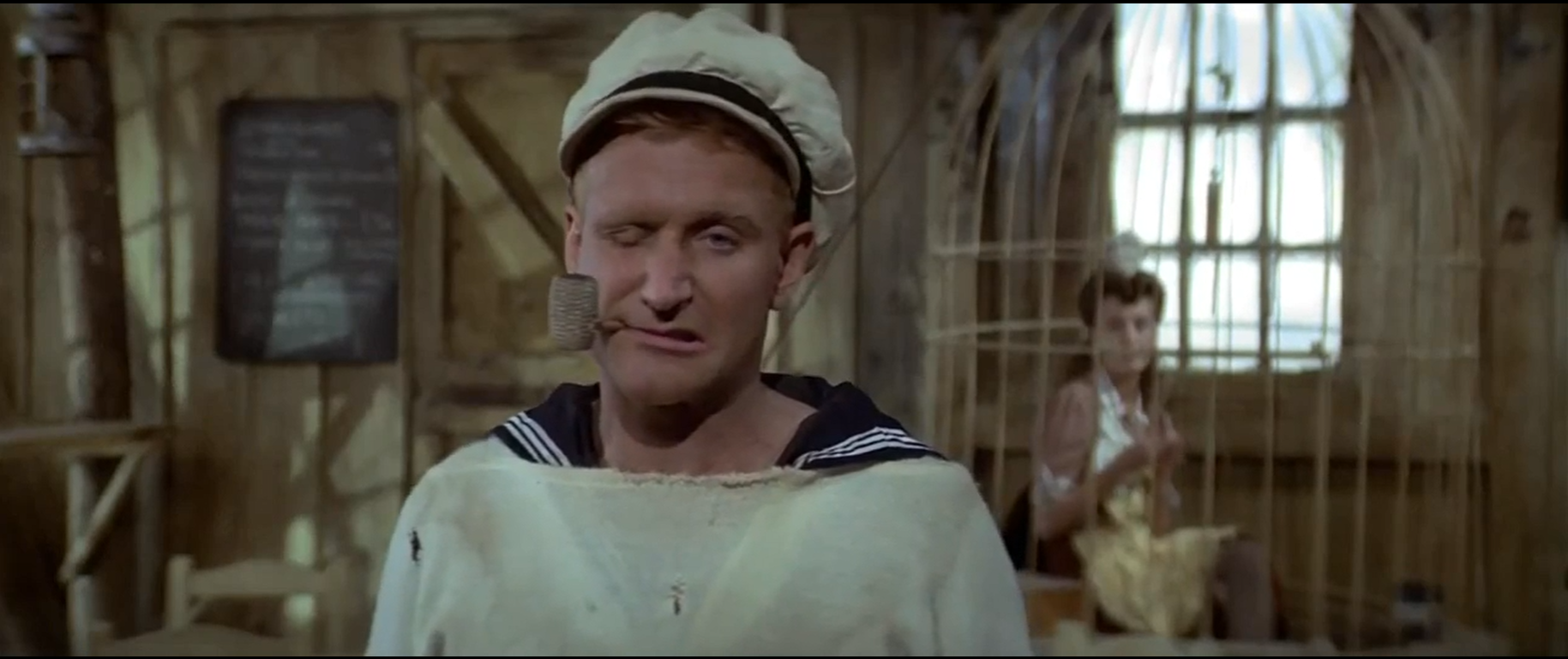
Meanwhile, Williams himself is fine and believable (if oddly restrained) in the title role:

and other supporting actors — including Altman’s own grandson as Swee’ Pea, and Paul Dooley as Wimpy — are nicely cast as well.

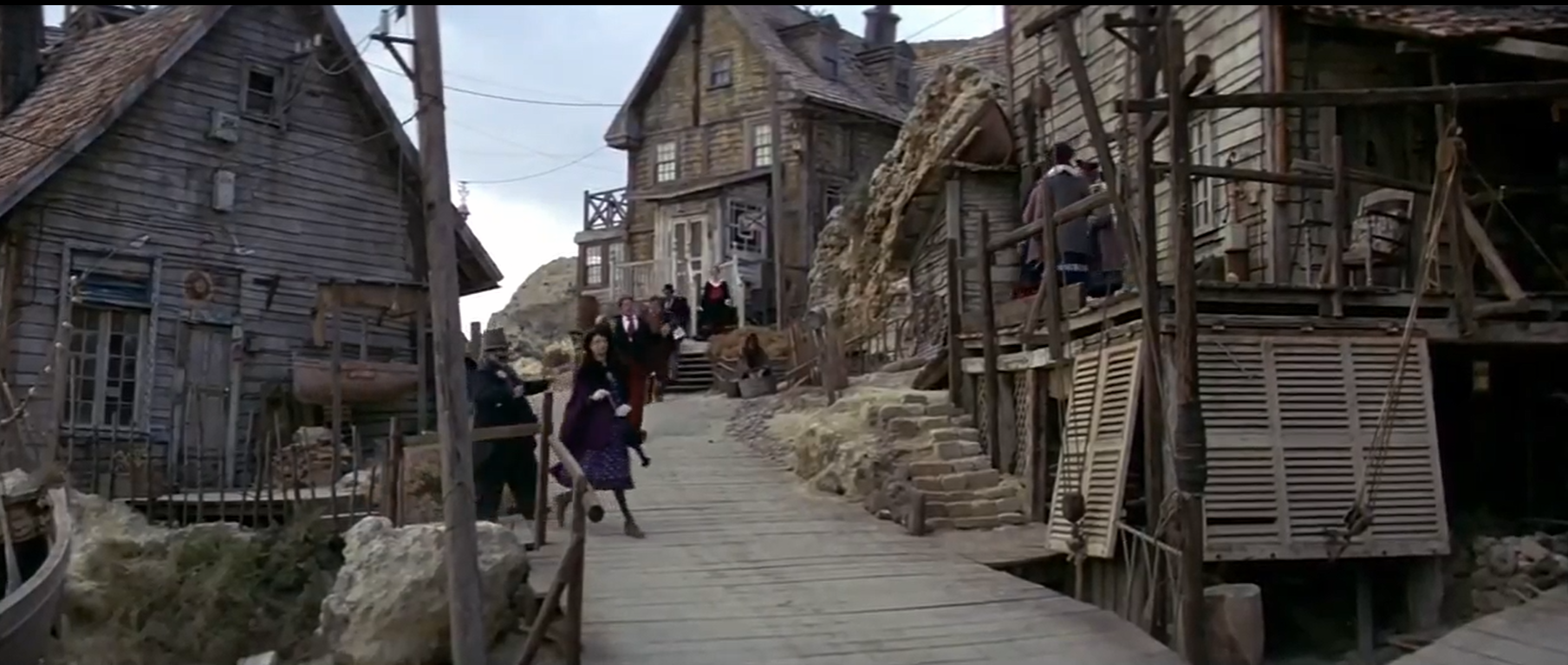
Wolf Krueger’s production design is the second primary reason to check this film out. Built on the island of Malta (and apparently still in existence as a significant tourist attraction), the set is a sight to behold, effectively portraying Sweet Haven as a quirky, ramshackle alter-universe.

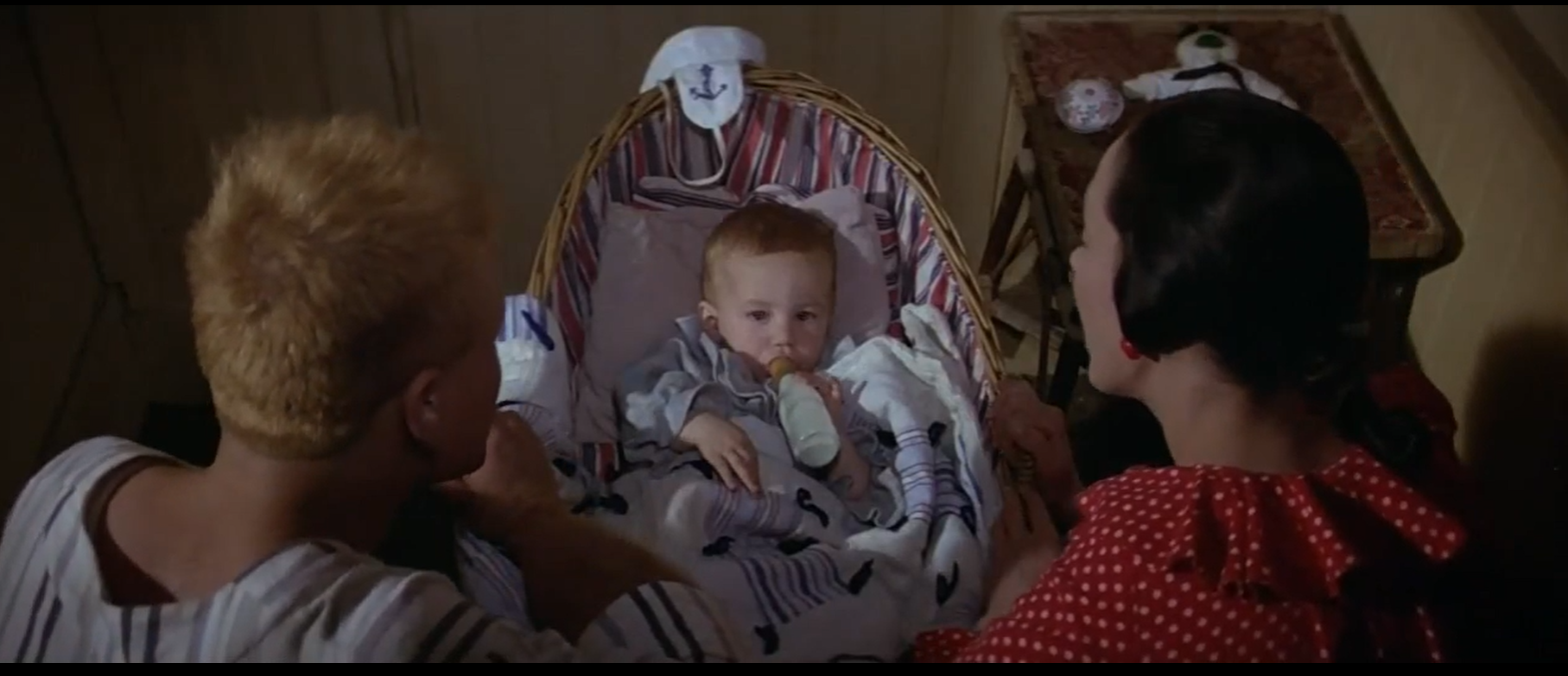
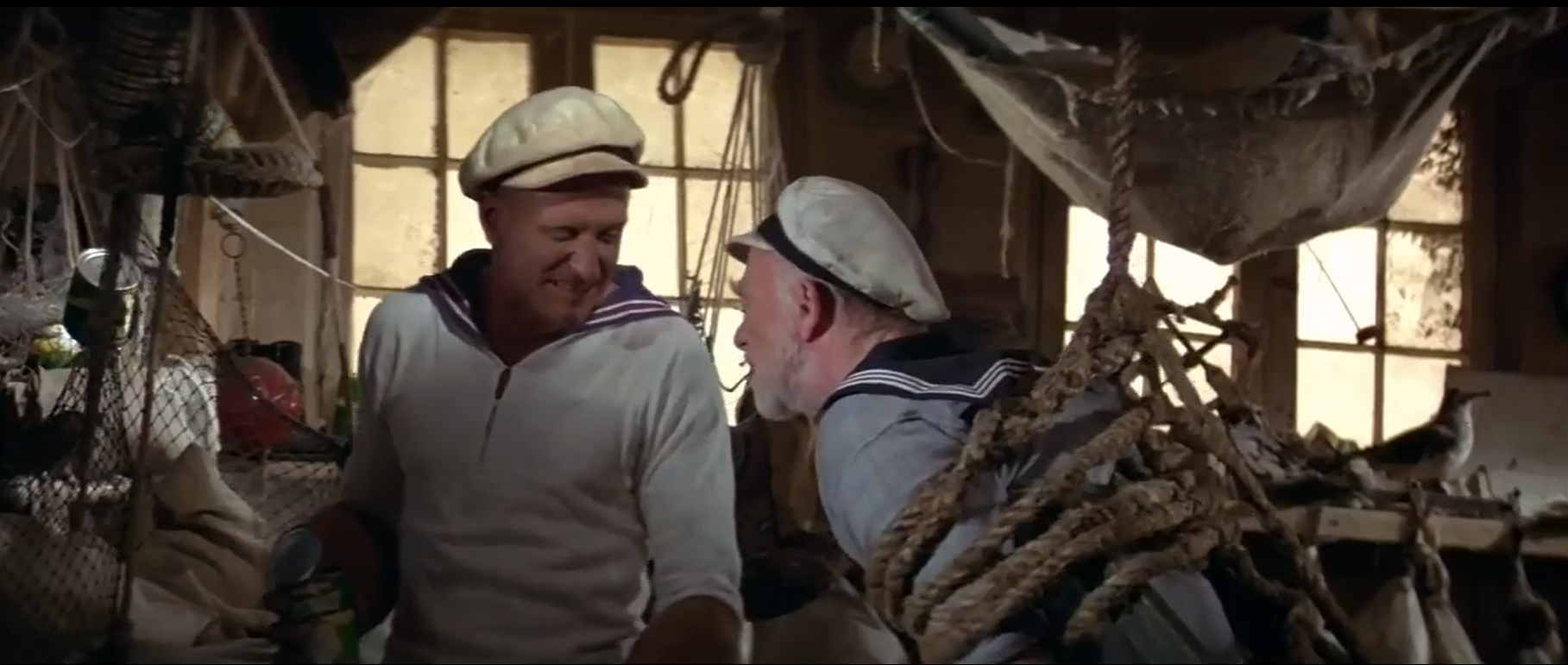
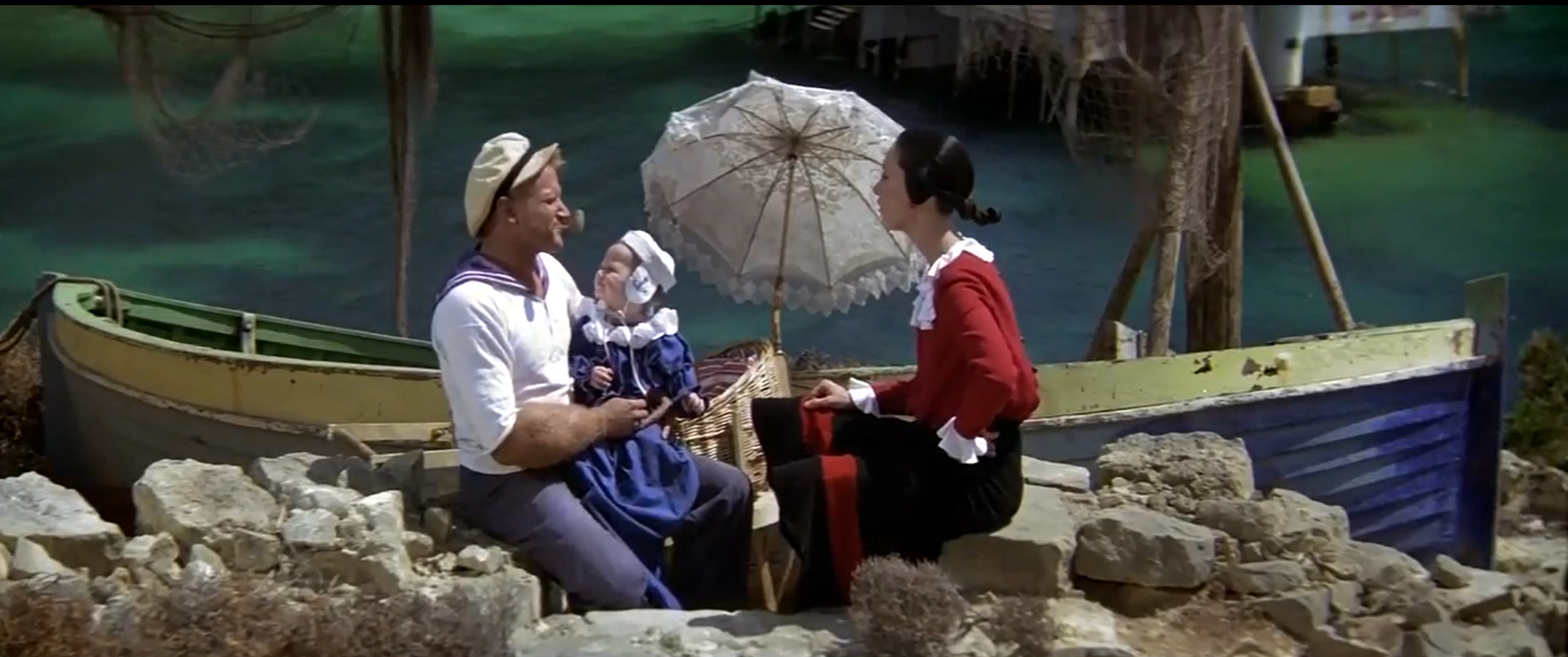
Where the film stumbles, ironically, is in its faithfulness to its comic origins. While there’s something undeniably tickling about seeing these 2-D characters made manifest (at least for fans of the original Fleischer shorts, like myself), the storyline — including a kidnapping of Swee’ Pea by Bluto (Paul L. Smith), and Popeye’s weird reconciliation with his absentee father:

— eventually devolves into too much slapstick for its own good. Meanwhile, the songs (all written by Harry Nilsson) are decidedly hit-or-miss, with a number of them instantly forgettable. However, when Olive sings one of the more memorable tunes — “He’s Large” — in defense of her choice in beaus, and repeatedly states, “He may not be the best/But he’s large/And he’s mine”, one simply can’t help giggling.

Redeeming Qualities and Moments:

  • Shelley Duvall as Olive Oyl
  • Wolf Kroeger’s production design

Must See?
No, but I think most Altman fans will be curious to check it out. Listed as a Sleeper in the back of Peary’s book.

Links:

Road to Hong Kong (1962)

Road to Hong Kong (1962)

“I bet you never thought you’d have a fortune riding in the old melon.”

Synopsis:
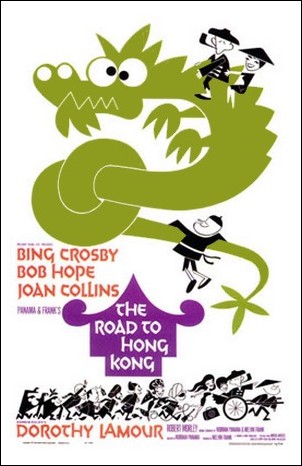
When a con-man (Bob Hope) accidentally memorizes a secret formula coveted by an underground terrorist organization (led by Robert Morley), one of its members (Joan Collins) does everything she can to wrest it from him; meanwhile, she finds herself falling in love with his partner (Bing Crosby).

Genres, Themes, Actors, and Directors:

  • Bing Crosby Films
  • Bob Hope Films
  • Comedy
  • Joan Collins Films
  • Mistaken Identities
  • Musicals
  • Peter Sellers Films
  • Robert Morley Films
  • Science Fiction
  • Space Exploration
  • Spies

Review:
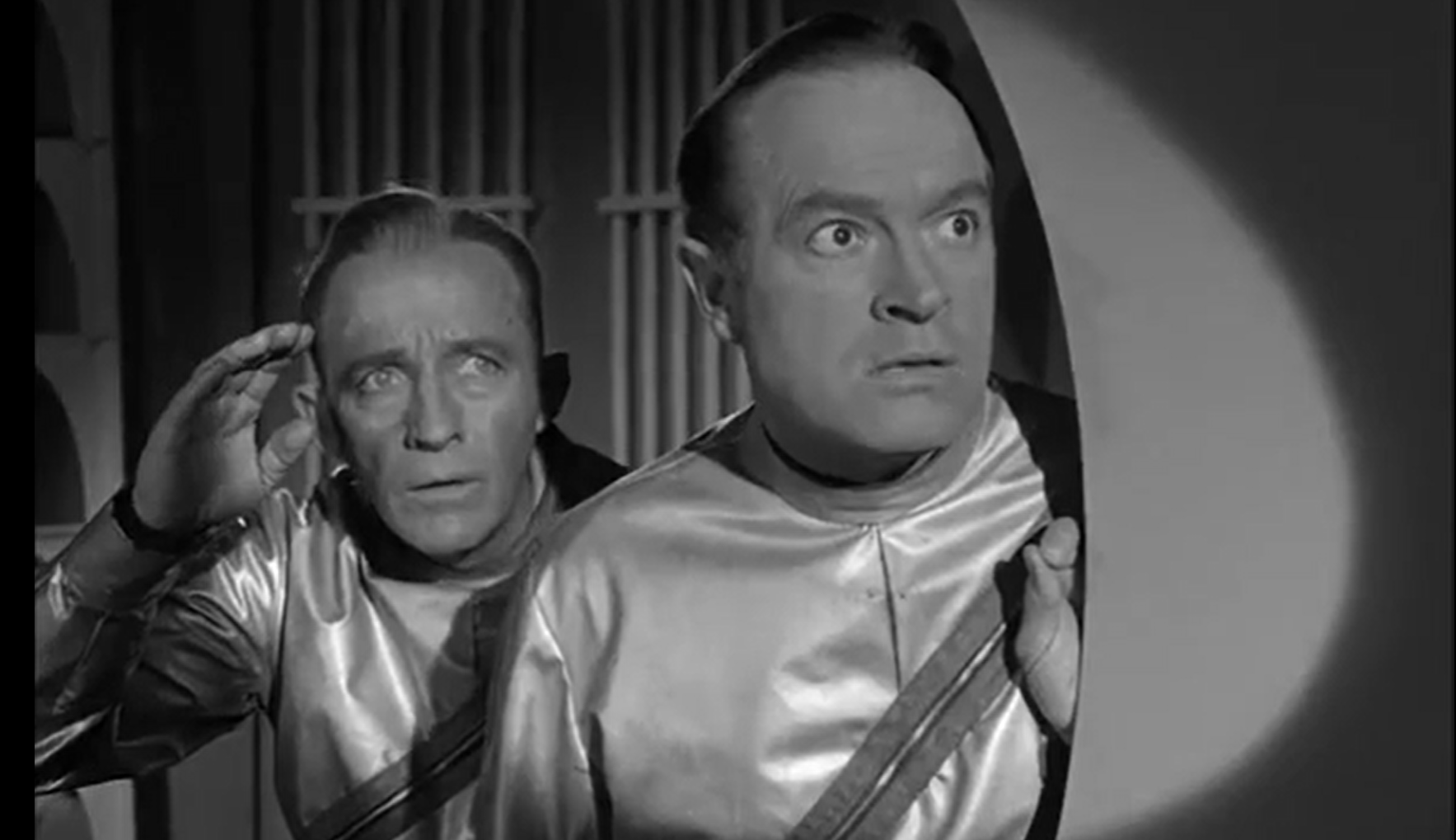
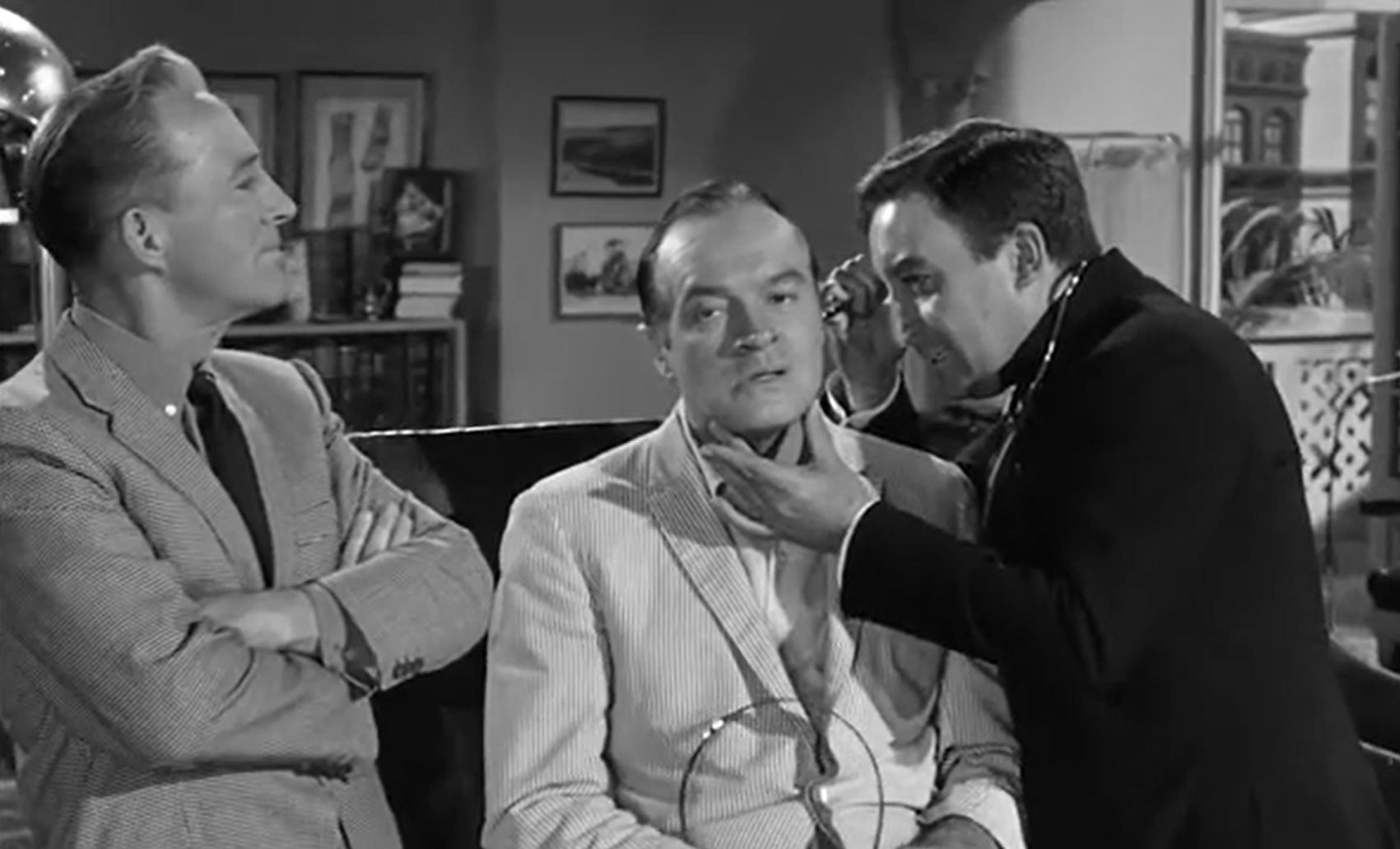
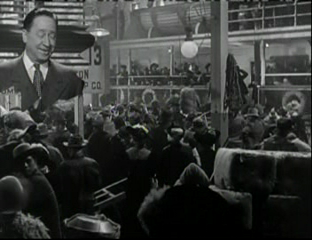
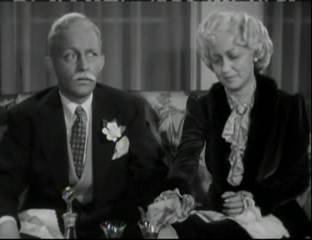
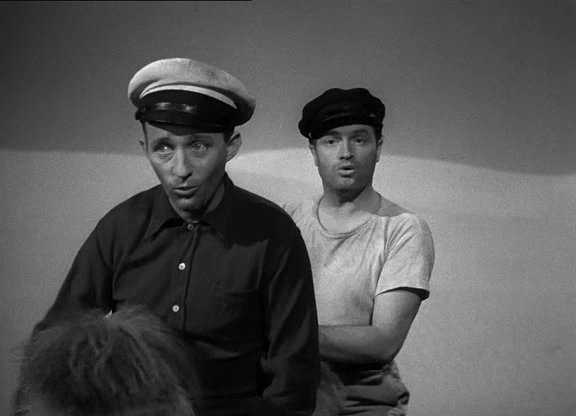
This final entry in the long-running, enormously popular Road to… franchise is often dismissed as its worst, and cited as evidence that the series had finally run its course; therefore, I was surprised to find myself enjoying its silly sci-fi premise (a spoof of Dr. No, released the same year) as much as I did. Hope and Crosby, despite their advancing ages, still manage to generate plenty of amusing comedic synergy:

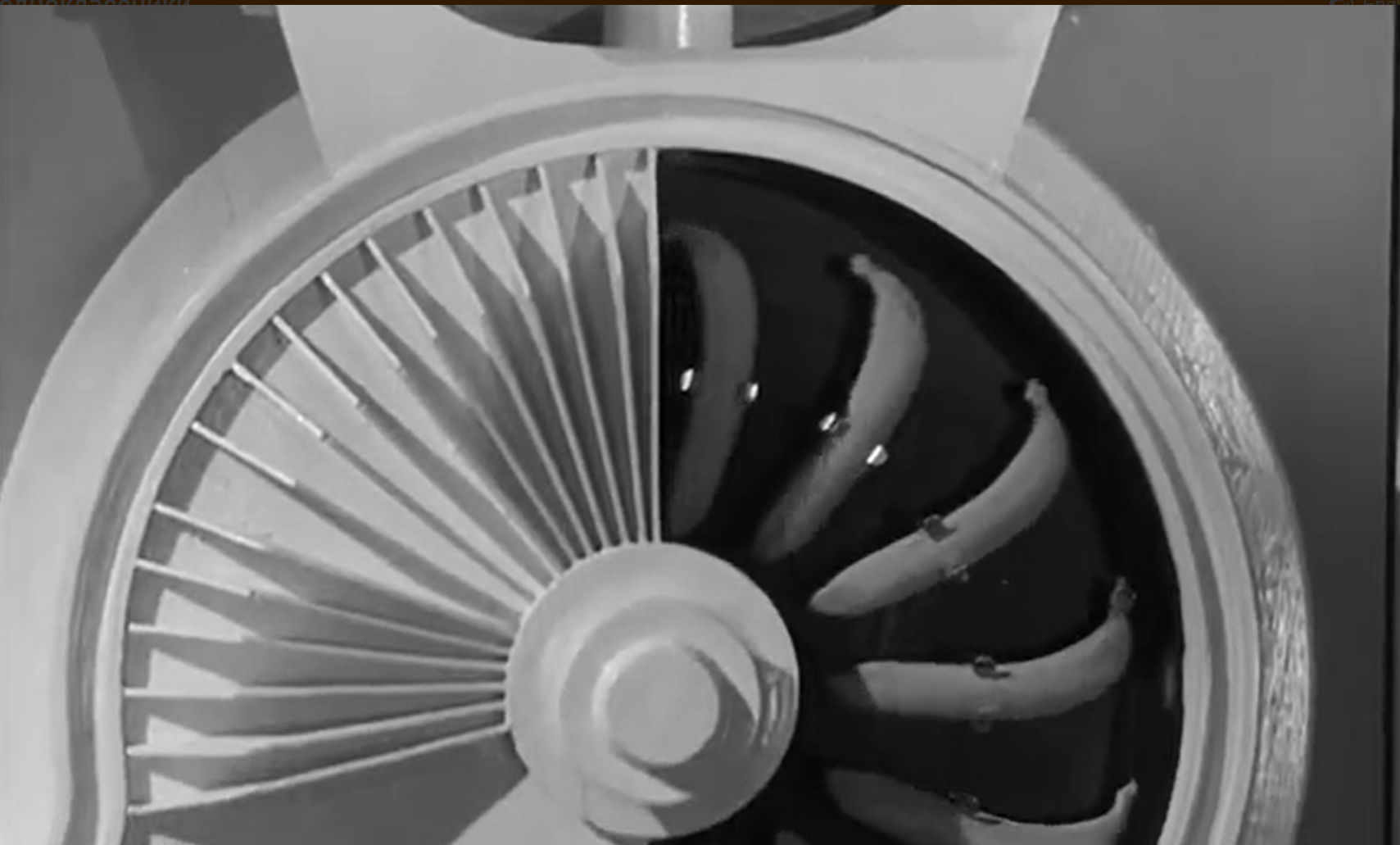
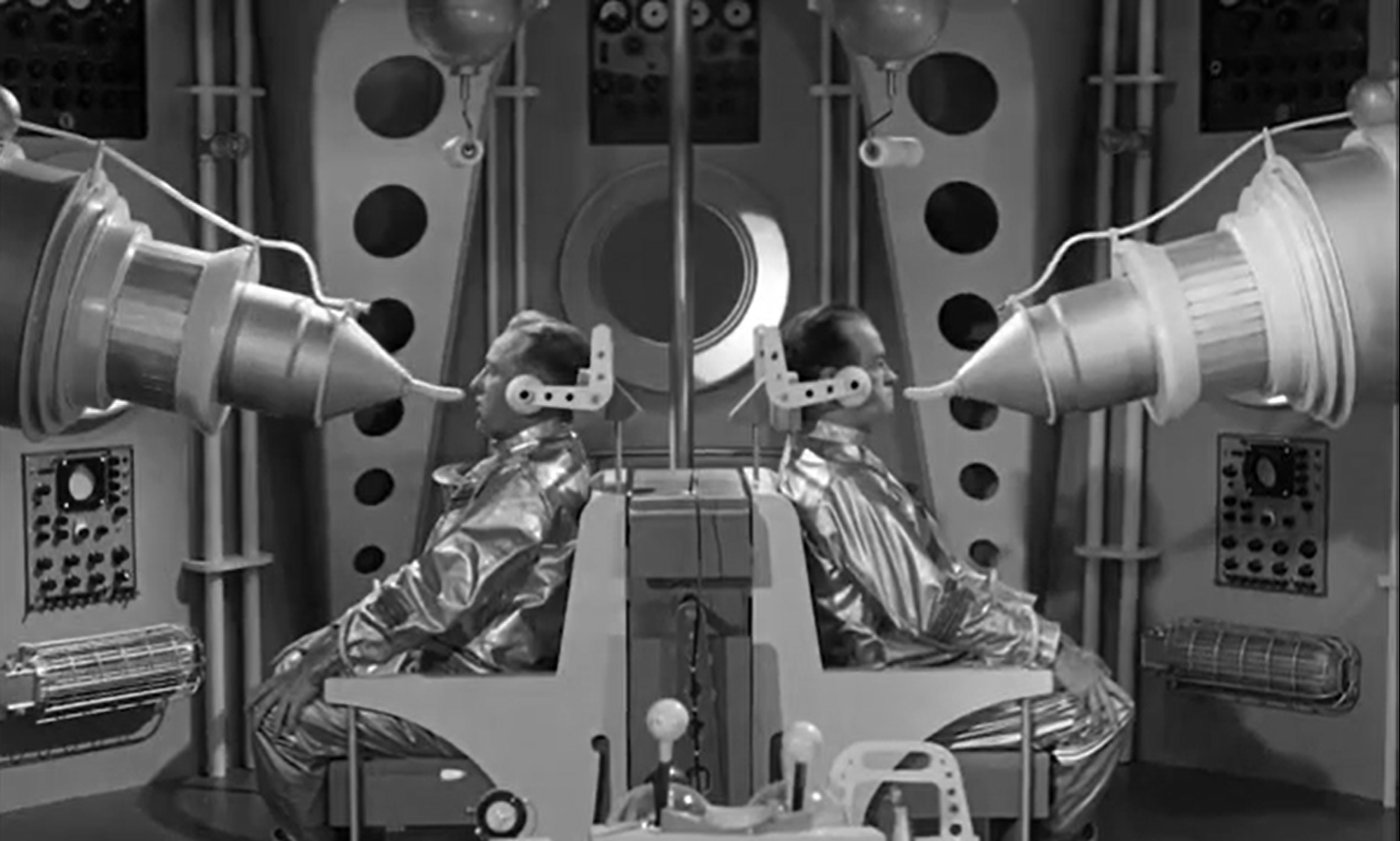
… and gamely allow themselves to get into all sorts of foolish situations; meanwhile, the space travel plot is so ridiculous — in true Road to… fashion — that you can’t help watching in anticipation of what bizarre twist will come next (just wait for the banana-feeding machine).

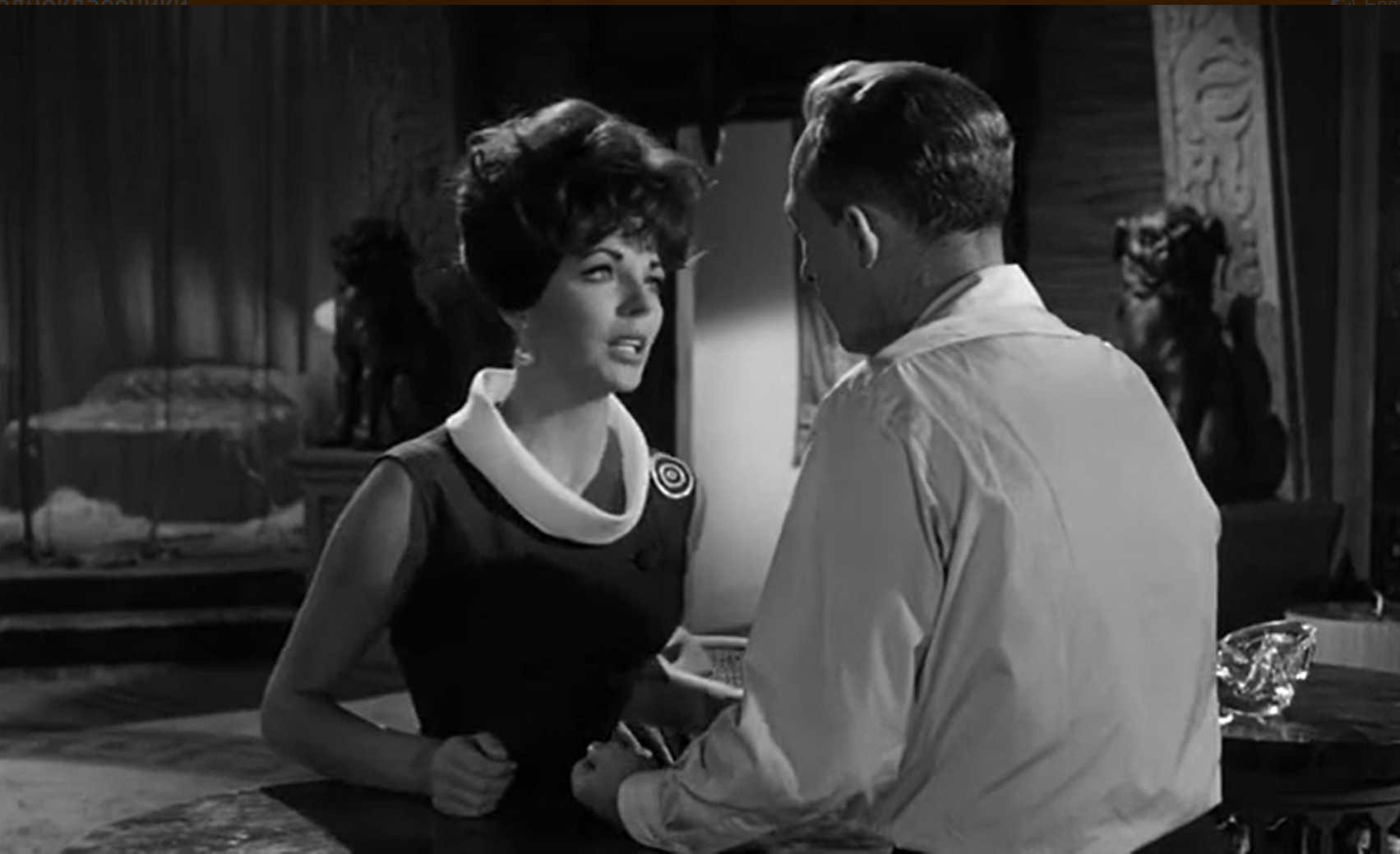
Meanwhile, Collins is actually a fine replacement for Lamour, exhibiting natural chemistry with both aging leads, and taking the silly plot just seriously enough.

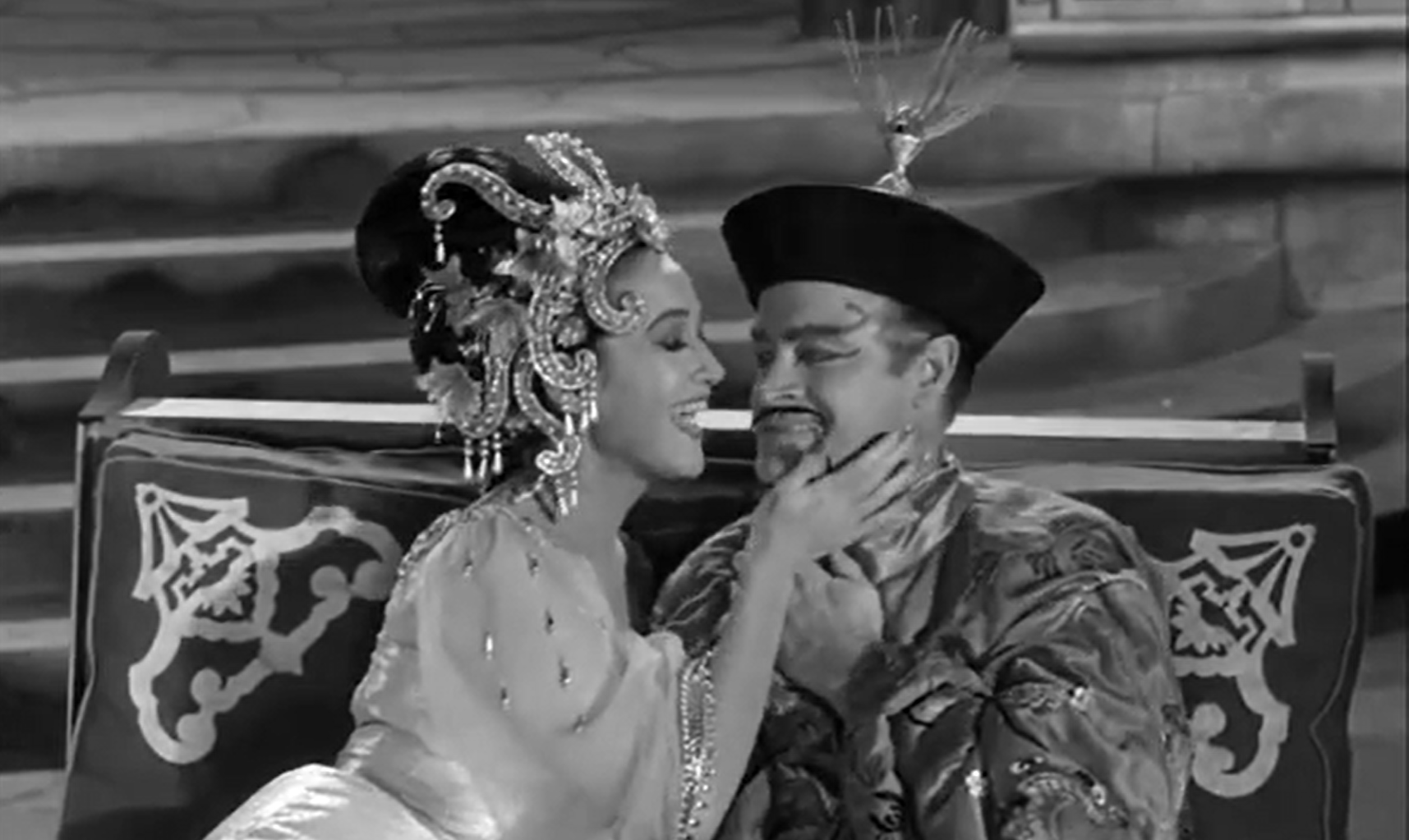
Speaking of Lamour, however, her brief cameo appearance late in the film is unfortunately a bit pathetic. While she had every right — as an essential member of the earlier Road to… trio — to insist on appearing in this film, her over-the-top nightclub performance here (playing herself) simply doesn’t provide her with a dignified exit from the series.

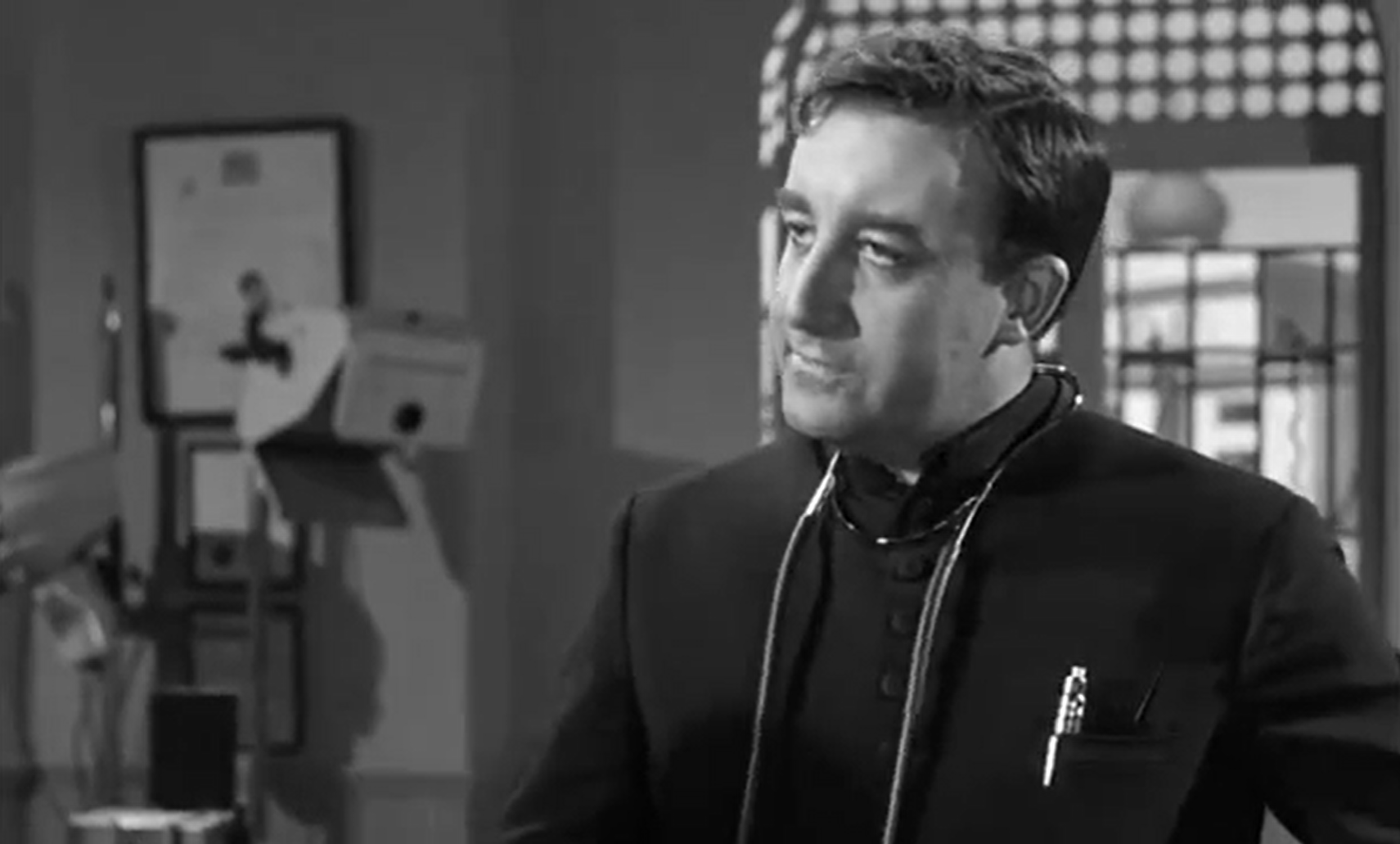
Note: Watch for Peter Sellers in an early, uncredited scene as an Indian neurologist attempting to diagnose Hope’s memory loss — he (temporarily) steals the film.

Redeeming Qualities and Moments:

  • Peter Sellers’ brief but indelible early scene as an Indian neurologist
  • A number of incredibly silly jokes, sequences, and gags

Must See?
No, but it’s actually recommended for good, clean Hope & Crosby fun.

Links:

Road to Rio (1947)

Road to Rio (1947)

“I can’t figure that Lucy out: one minute she’s sweet as pie, and the next, a heel!”

Synopsis:
A pair of out-of-work musicians (Bob Hope and Bing Crosby) stow away on a cruise ship to Rio, where they meet a wealthy young woman (Dorothy Lamour) who’s being hypnotized by her evil caretaker (Gale Sondergard).

Genres, Themes, Actors, and Directors:

  • Bing Crosby Films
  • Bob Hope Films
  • Comedy
  • Dorothy Lamour Films
  • Love Triangle
  • Mind Control and Hypnosis
  • Musicians
  • Musicals
  • Rivalry
  • South America

Review:
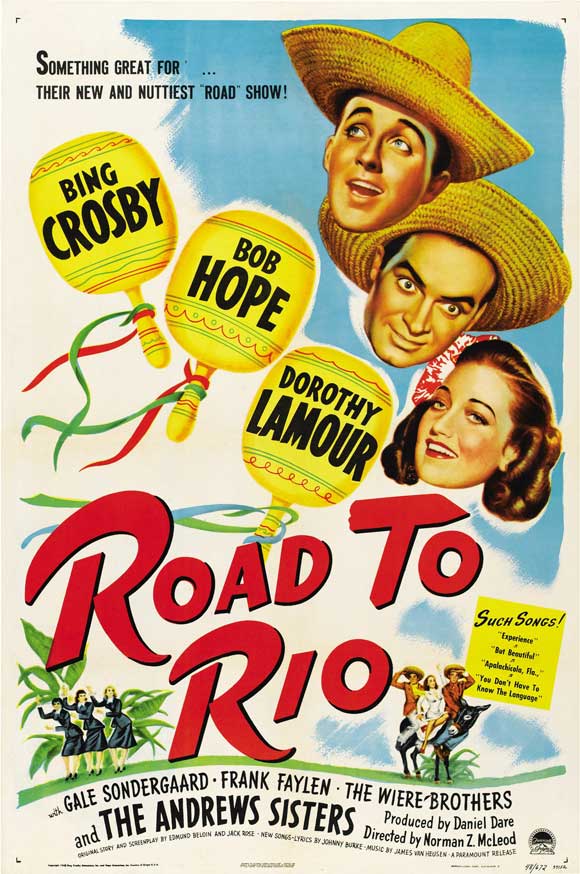
This fifth entry in the enduringly popular Road to… film series is also its longest, and shows signs of the comedic formula beginning to wear thin. While Hope and Crosby are still in fine form together, and Lamour is as lovely as ever, a number of the running gags — including an extended sequence involving Hope, Crosby, and Lamour teaming up with a trio of non-English-speaking singers, played by the Wiere brothers — fall somewhat flat. Despite its status as one of the “least” of the series, however, there’s still plenty of enjoyable shtick here for fans to appreciate. Followed in 1952 by Road to Bali — the only “Road” film (inexplicably) not listed in Peary’s book — and then in 1962 by the series’ humorously off-beat final entry, The Road to Hong Kong.

Redeeming Qualities and Moments:

  • Hope and Crosby, still going strong in their humorous rivalry
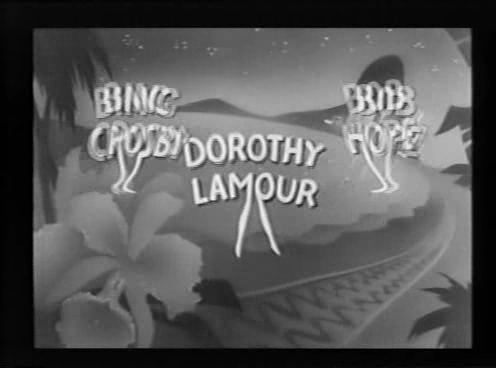
  • Creative opening credits
  • Memorable one-liners: Hope [greeting Sondergard under his breath]:

    “It’s tall, dark and cyanide!”

Must See?
No, though it’s an enjoyable enough entry in the series, and certainly must-see for diehard Road to… fans. Listed as a Cult Movie in the back of Peary’s book.

Links:

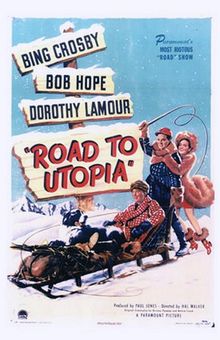
Road to Utopia (1946)

Road to Utopia (1946)

“Are you sure they’re the right men? They don’t look like killers to me.”

Synopsis:
A pair of vaudeville performers (Bob Hope and Bing Crosby) traveling to Alaska impersonate a pair of fugitive killers named Sperry (Robert Barrat) and McGurk (Jack LaRue), and fall in love with a singer (Dorothy Lamour) determined to secure a coveted map stolen from her father.

Genres, Themes, Actors, and Directors:

  • Alaska
  • Bing Crosby Films
  • Bob Hope Films
  • Comedy
  • Dorothy Lamour Films
  • Flashback Films
  • Fugitives
  • Gold Seekers
  • Love Triangle
  • Mistaken Identities
  • Musicals
  • Rivalry

Review:
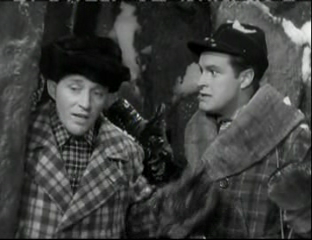
Although its predecessor (Road to Morocco) tends to get the bulk of the fame and glory of the Road to… series, I’ll admit to enjoying this next entry even a bit more. As noted by Mike Bracken in his Epinions review, at this point in the series’ history, the films’ essential plot elements — “Hope and Crosby wind up in a mess, meet Dorothy, compete for her, and sing a few songs along the way” — were already securely in place, thus allowing the comedic duo plenty of creative room to simply do what they did so well together (all while slyly breaking the fourth wall of cinema by commenting on the making of the film itself). Possessing a storyline just as silly as all the others in the series — with perhaps just a tad more narrative cohesion and logic — the primary enjoyment here lies in the series of running gags, most of which are quite amusing.

In an interesting twist, the film (structured as an extended flashback sequence) opens up by showing Lamour and Hope as an aging married couple, thus piquing audience interest immediately, given that Crosby was notoriously the “winner” time and again in their never-ending rivalry for Lamour’s affections. The suspense of how this unexpected pairing came about pays off in a remarkably risque denouement, which must be seen to be believed (seriously). I’m not voting this film “must see”, because I’ve already applied that designation to two other entries in the series, and film fanatics shouldn’t have to sit through more than that unless they choose to — but this one is certainly recommended if you’re at all a fan of Hope-and-Crosby’s silly, self-referential humor.

Redeeming Qualities and Moments:

  • Hope and Crosby’s characteristically enjoyable rivalry and rapport
  • Fun meta-cinematic commentary
  • The astonishingly risque final shot

Must See?
No, but it’s recommended as one of the better films in the series — and should definitely be checked out simply for that last scene! Listed as a Cult Movie in the back of Peary’s book.

Links:

Road to Morocco (1942)

Road to Morocco (1942)

“This is the screwiest picture I was ever in.”

Synopsis:
A pair of castaways (Bob Hope and Bing Crosby) fall in love with an Arabian princess (Dorothy Lamour), whose jealous fiance (Anthony Quinn) is determined to keep her for himself.

Genres, Themes, Actors, and Directors:

  • Anthony Quinn Films
  • Bing Crosby Films
  • Bob Hope Films
  • Comedy
  • Dorothy Lamour Films
  • Love Triangle
  • Musicals
  • Rivalry
  • Royalty and Nobility

Review:
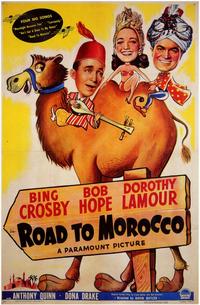
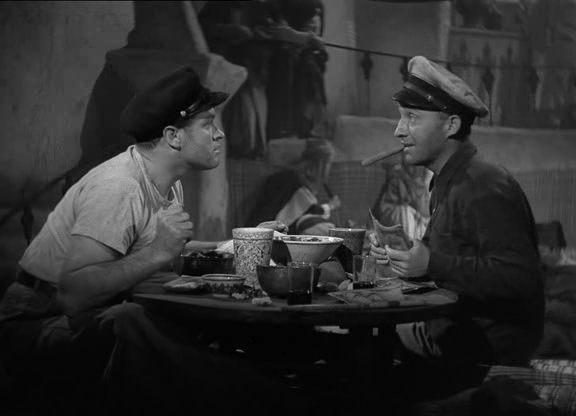
This third entry in the enormously popular Hope/Crosby Road to… series is acknowledged by many as one of the best of the bunch. As in Road to Zanzibar (1941), the storyline in …Morocco is ridiculous beyond belief, and not meant to evoke anything close to reality; instead, viewers should simply relax and enjoy the zany rapport between Hope and Crosby, whose complicated rivalry for beautiful Lamour reaches new heights here, and even includes an additional love interest for Hope (earnest Dona Drake). Interestingly, …Morocco has risen to the top of the series’ rankings over the years, earning a coveted invitation to the National Film Registry in 1996, and appearing on Premiere Magazine’s “50 Greatest Comedies of All Time”. To be honest, however, having recently rewatched the entire series, I find it simply on a par with several of the other Road to… titles, and am not sure it deserves to be particularly called out in this fashion. Nonetheless, it’s certainly a worthy and representative entry, and should probably be seen by all film fanatics simply for its historical notoriety.

Note: Road to Morocco is notable as the first film in the series with an entirely “original” screenplay, not based on another story.

Redeeming Qualities and Moments:

  • Hope and Crosby’s effectively droll rapport together
  • Plenty of fun “meta-cinematic” humor and slyly self-referential jokes

Must See?
Yes, simply as another representative Road to… flick, acknowledged by many as one of the best. Listed as a Cult Movie in the back of Peary’s book.

Categories

  • Historically Relevant
  • Representative Film

Links: