Browsed by
Category: Original Reviews

Responses to Peary’s “must see” movie reviews, as well as my own “must see” movie reviews up to and after 1986 (when Peary’s book was published).

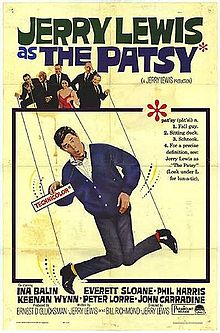
Patsy, The (1964)

Patsy, The (1964)

“Now listen, and listen carefully — this kid can and will be whatever we want him to be.”

Synopsis:
When a famous comedian dies in a plane crash, his creative entourage (Everett Sloan, Ina Balin, John Carradine, Keenan Wynn, Phil Harris, and Peter Lorre) decides to turn a bumbling bellboy named Stanley (Jerry Lewis) into their next big star.

Genres, Themes, Actors, and Directors:

  • Aspiring Stars
  • Comedians
  • Comedy
  • Hans Conried Films
  • Jerry Lewis Films
  • John Carradine Films
  • Keenen Wynn Films
  • Peter Lorre Films

Review:
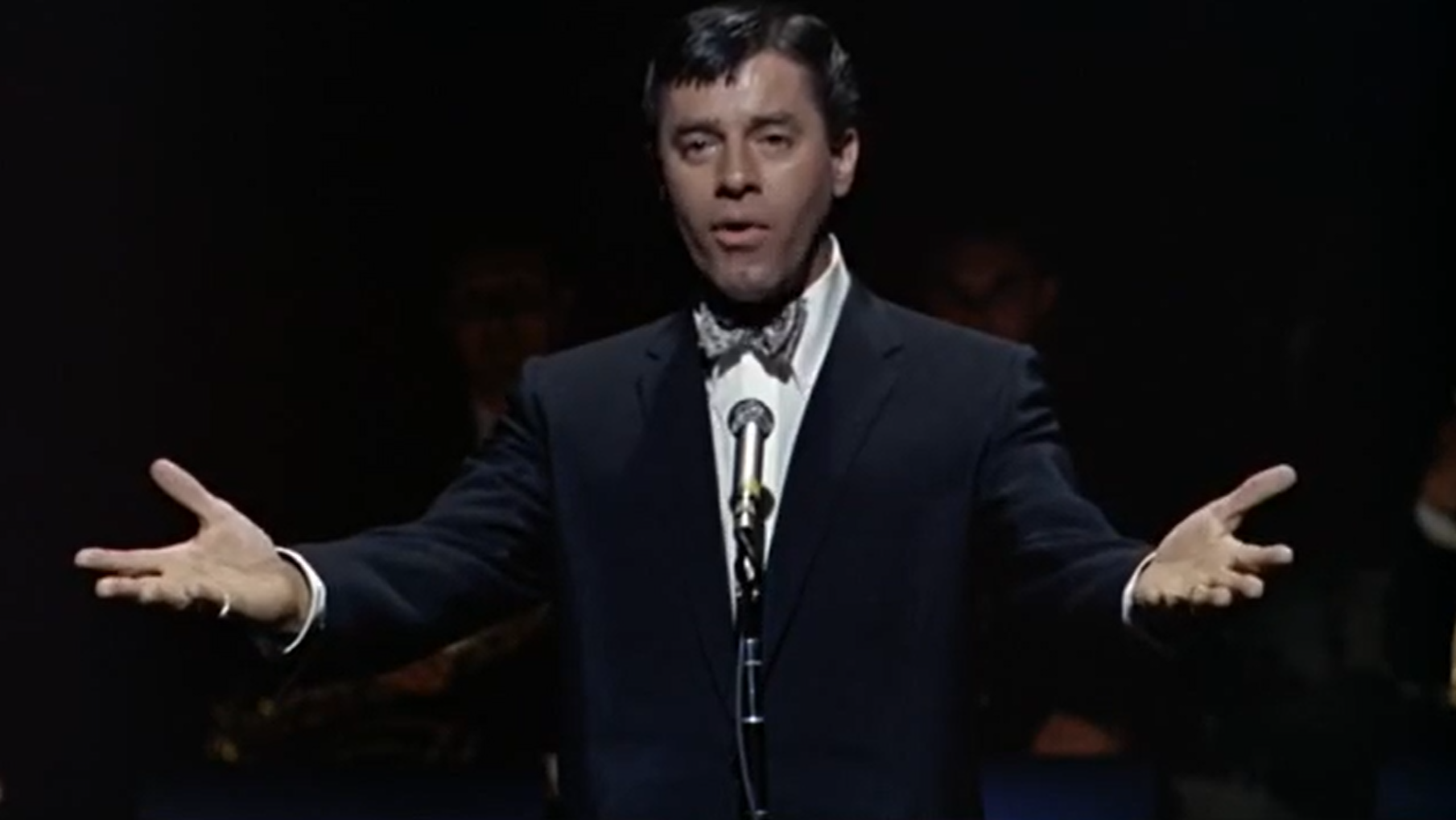
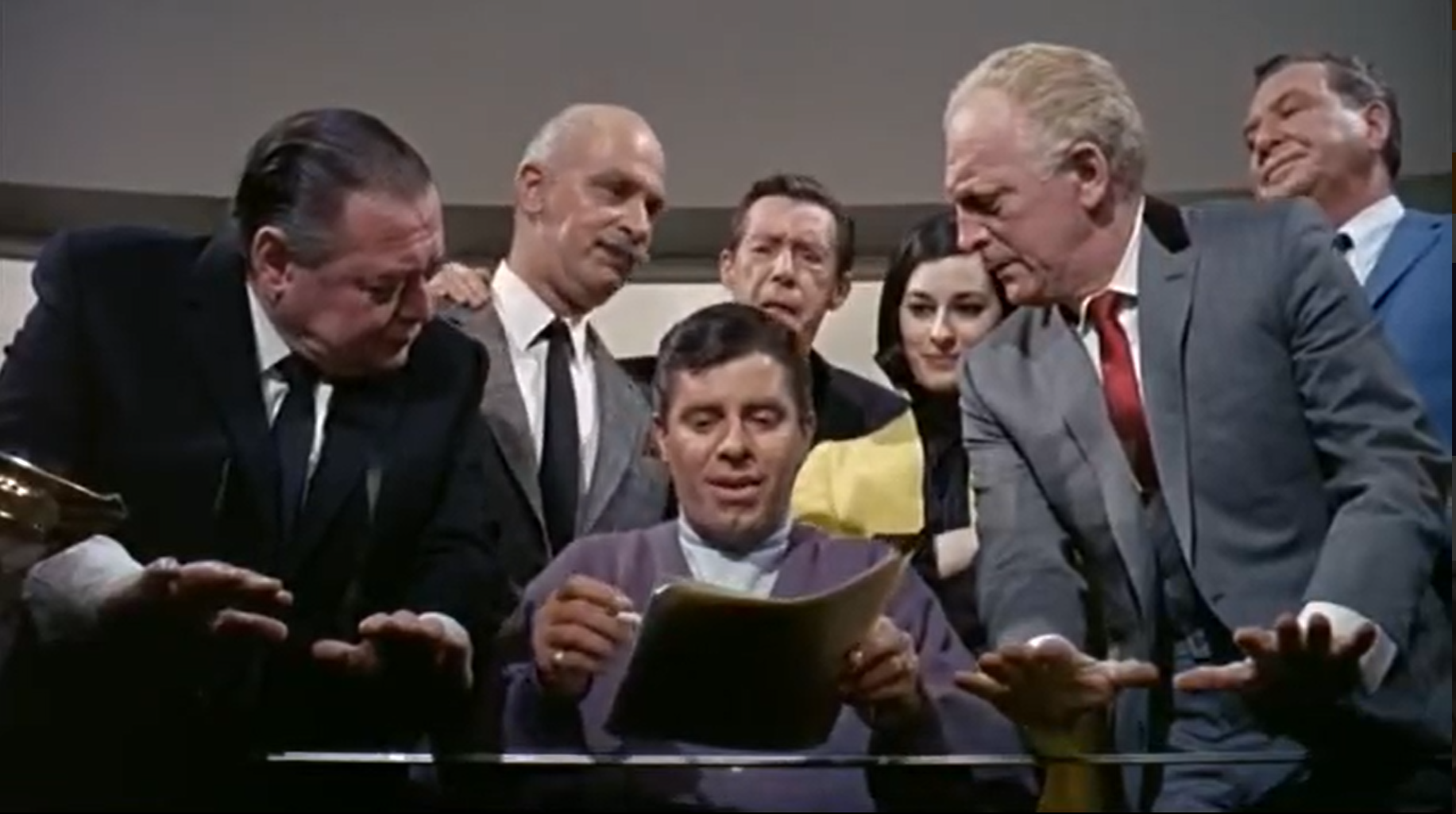
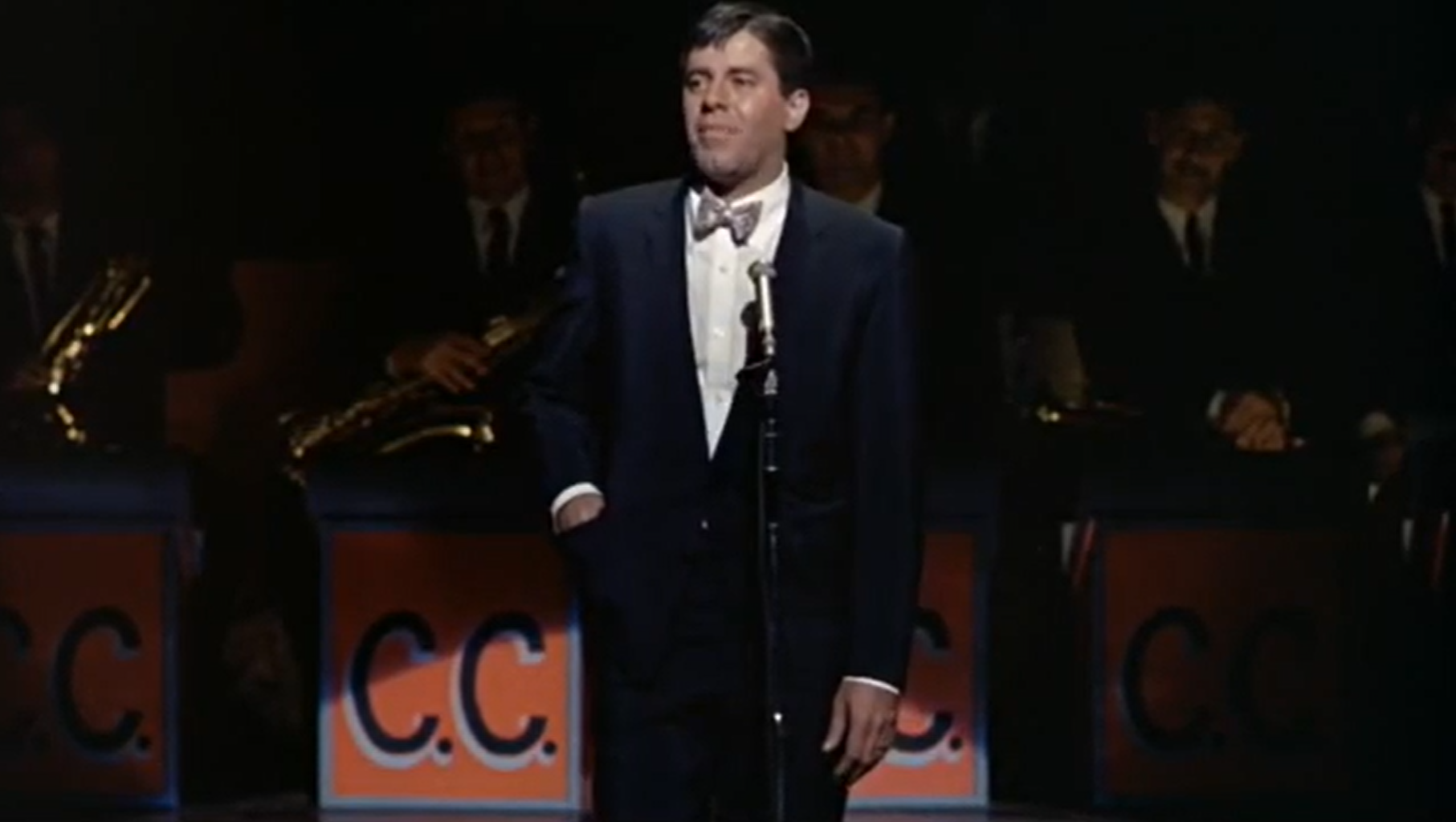
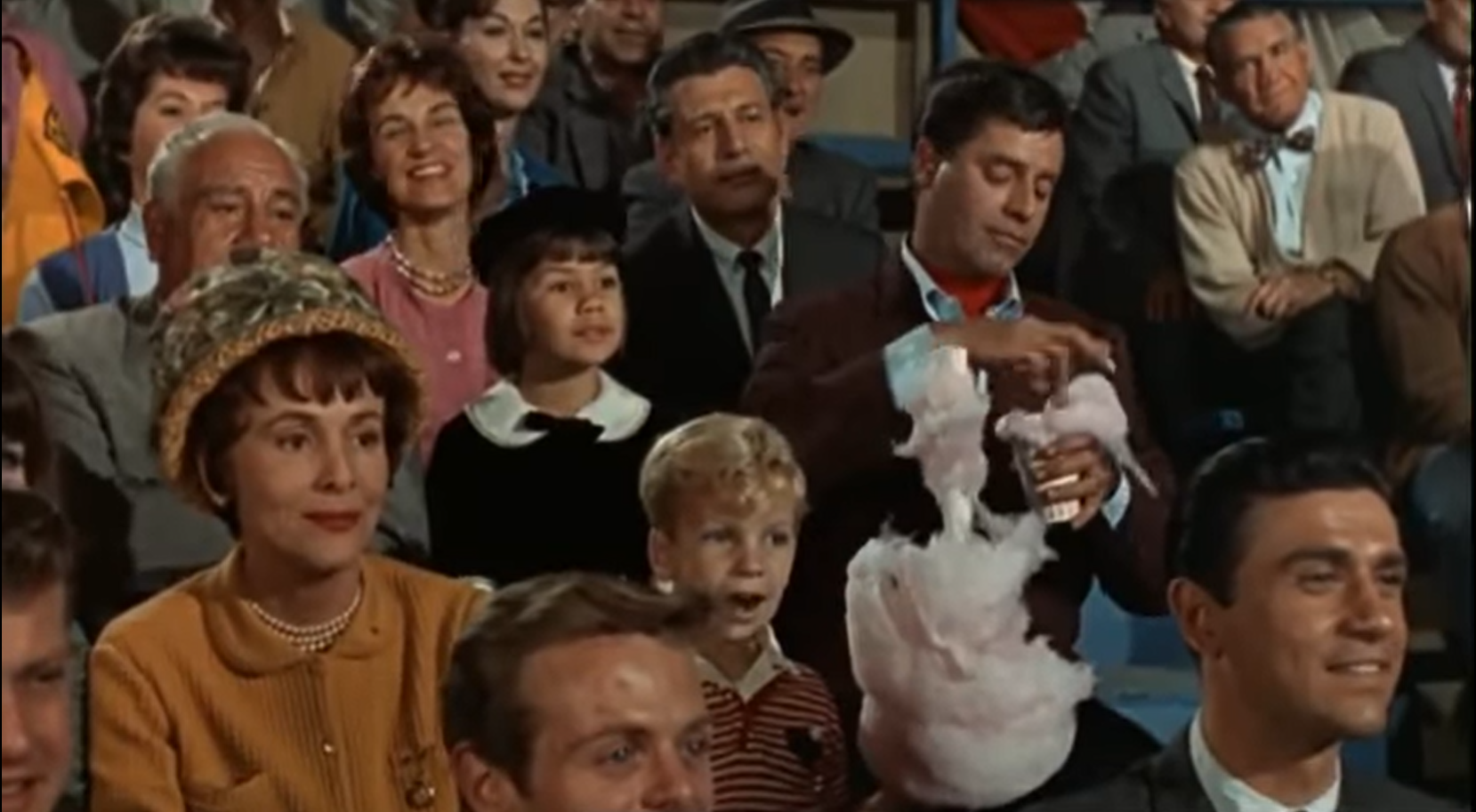
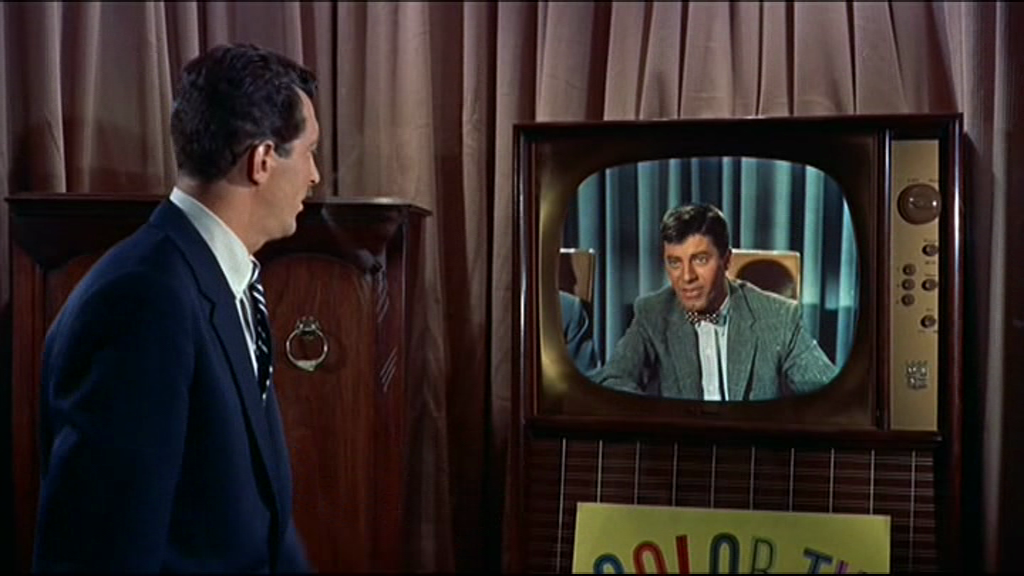
The intention of Jerry Lewis’s self-directed variation on Frank Tashlin’s The Girl Can’t Help It (1956) is somewhat murky: while he seems to be making a clear case that a talent like his is NOT random (that is, you can’t simply pluck any old Joe off the street and turn him into a star of “Jerry Lewis caliber”), the film’s head-scratching denouement — an extension to the similarly self-congratulatory finale of The Errand Boy (1961) — effectively neutralizes this sentiment. With that said, The Patsy remains of interest given how close it comes (at times) to the tone of Scorsese’s King of Comedy (1982): Stanley’s failed nightclub debut is seriously discomfiting, bringing the film’s invisible laughtrack to a dead halt.

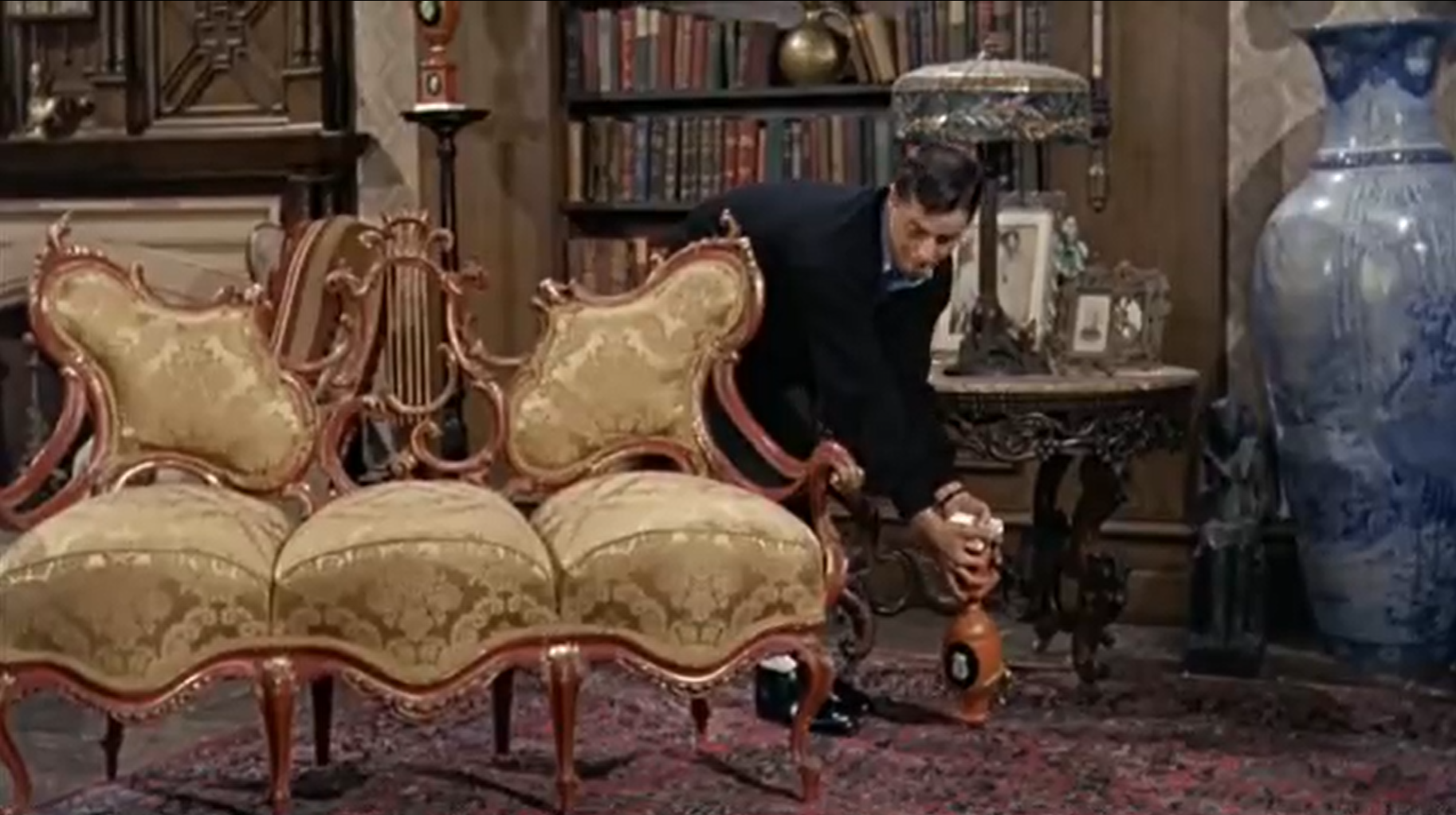
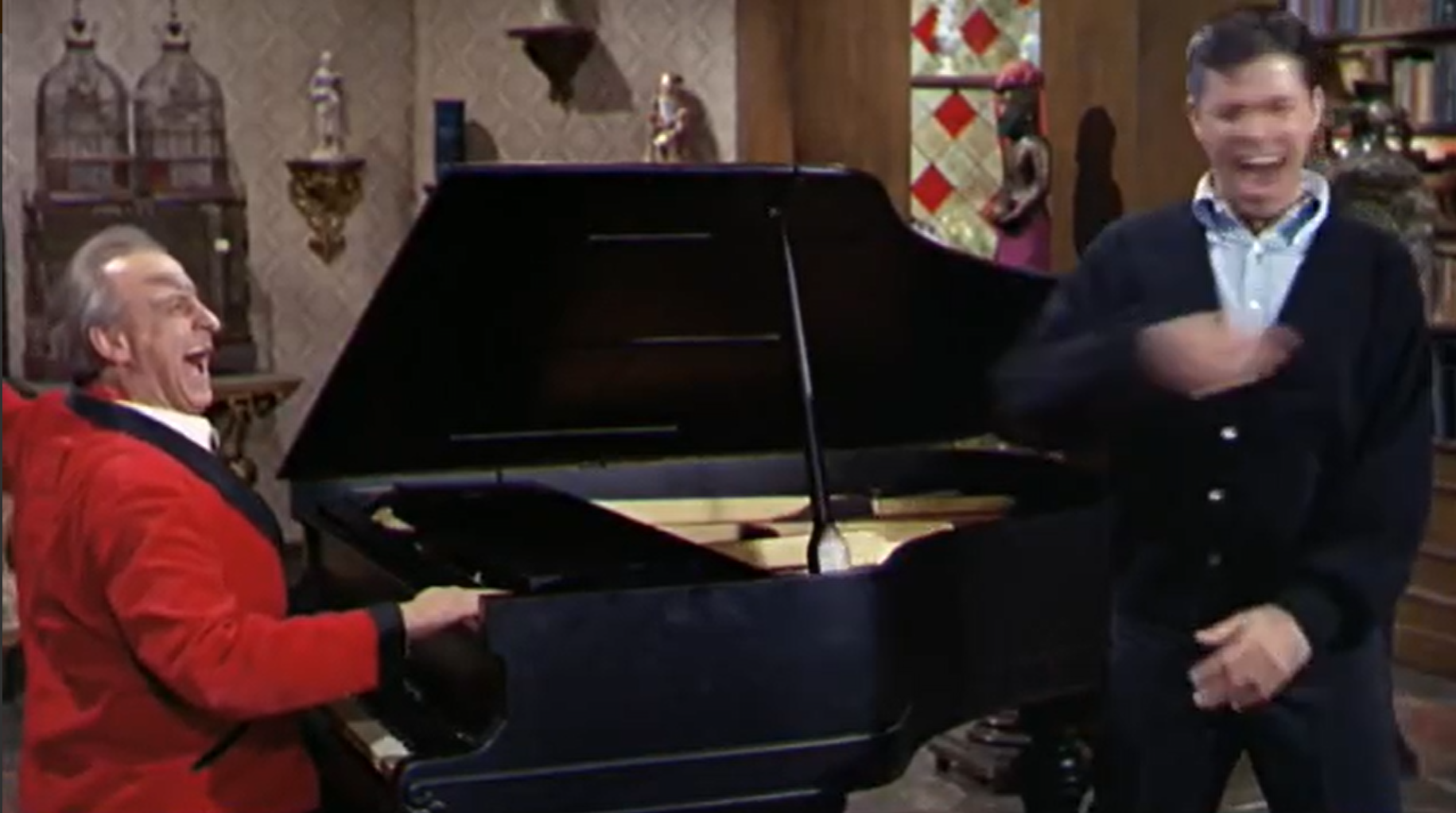
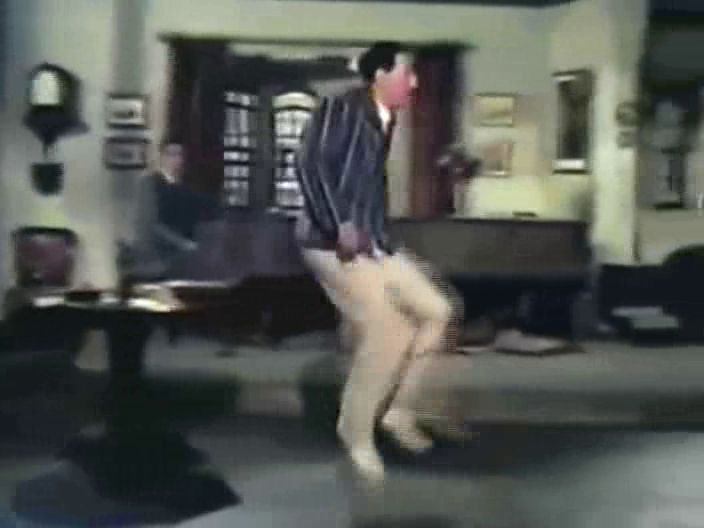
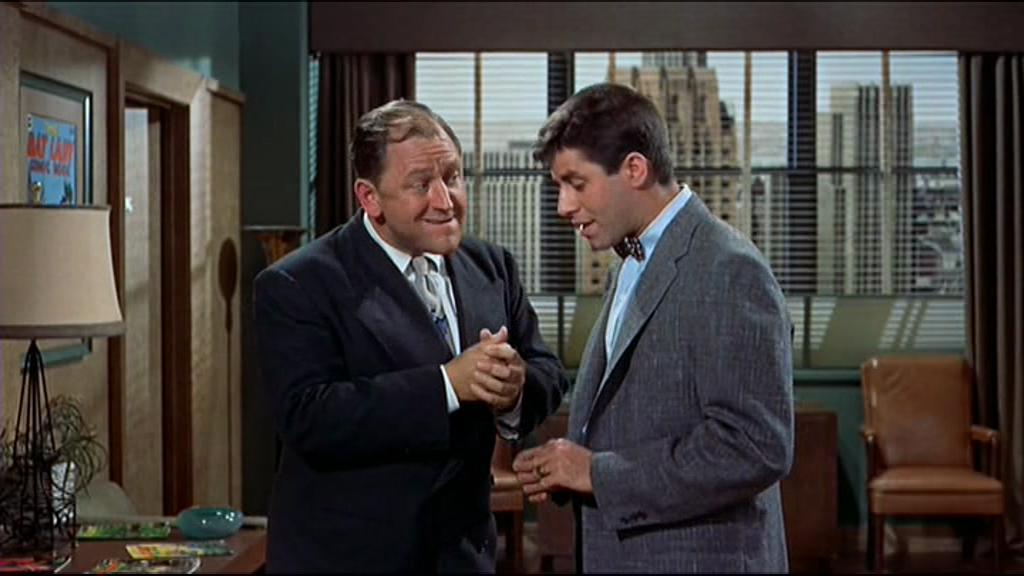
The rest of the movie remains a mixed bag of random chuckles (Lewis is in classic klutzy form when visiting Hans Conried’s antiques-riddled home for a music lesson):

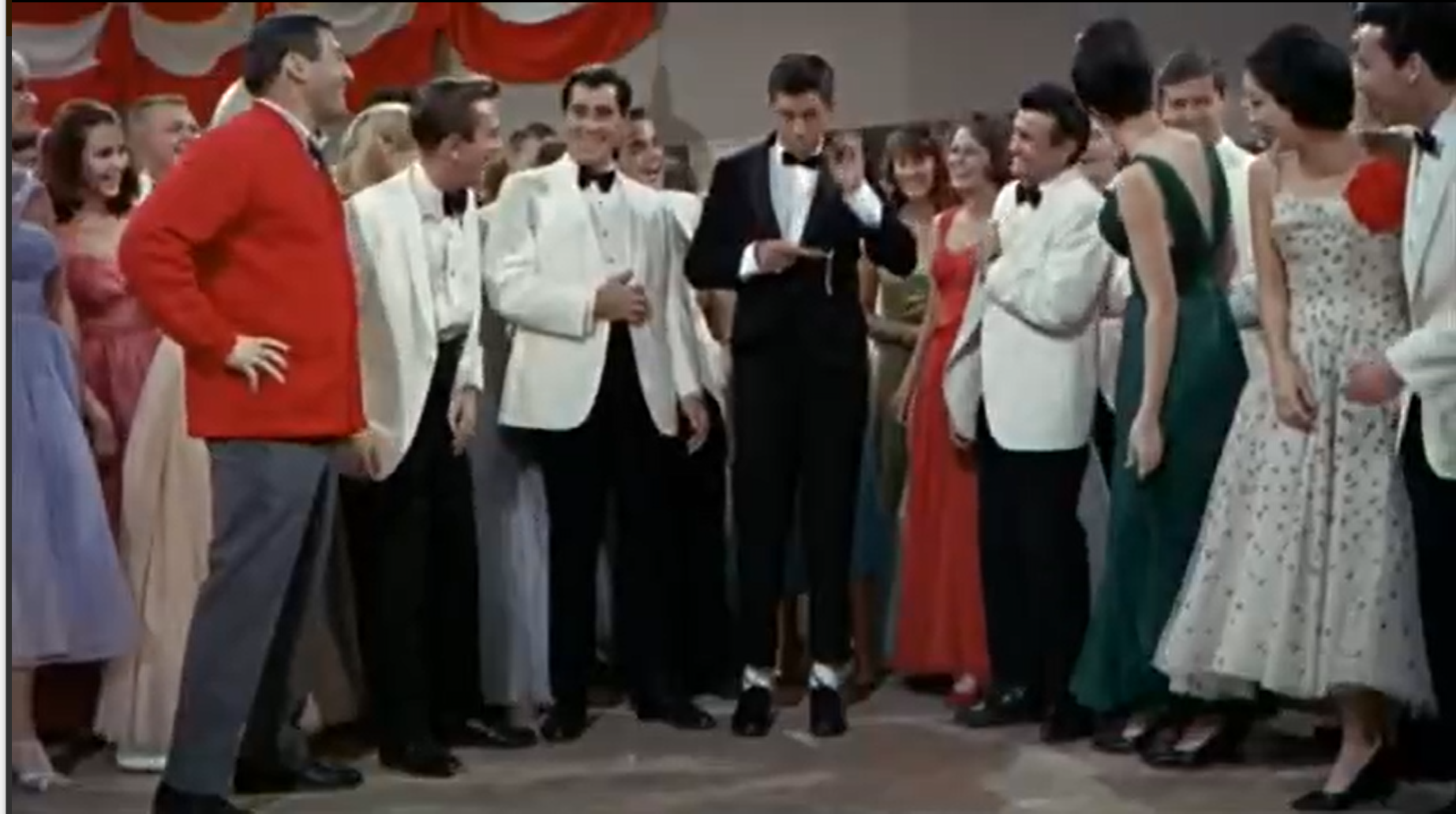
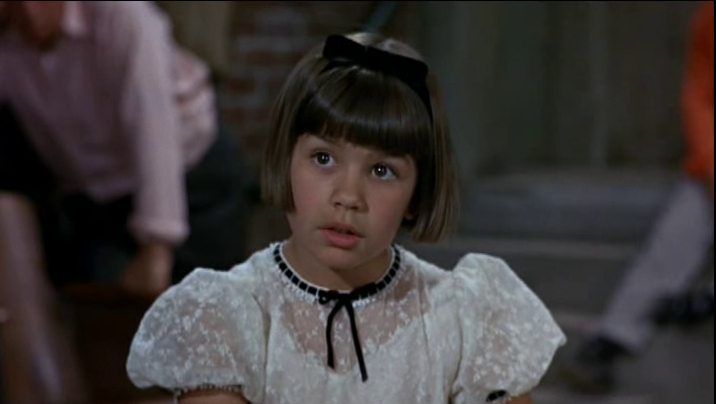
… occasional pathos (as during the oddly charming high school dance flashback sequence):

and rehashed cliches from earlier films — including obligatory romantic tension between nerdy Stanley and an impossibly sympathetic goddess (in this case, Ina Balin), who seems merely pleasantly bemused by his actions at all times.

Be forewarned about the irritatingly dated “final” comment made by Stanley, which is similar to Lewis’s own stated view of female comedians:

[2000] I don’t like any female comedians. Seeing a woman in comedy sets me back a bit… I think of her as a producing machine that brings babies into the world.

Note: This shouldn’t technically be considered a “Peter Lorre film” given that his role here (his last) is not only incredibly tiny, but Lorre seems utterly disinterested and bored the entire time. “We got the wrong guy”, his character mutters in one of his very few lines, and one can’t help sensing he’s referring to himself.

Redeeming Qualities and Moments:

  • Stanley’s disastrous visit with Hans Conried’s antiques-collecting music teacher
  • The cringingly honest nightclub scene

Must See?
No — though it’s one of the more intriguing Lewis entries included in Peary’s book, and worth a look.

Links:

Scared Stiff (1953)

Scared Stiff (1953)

“You may joke, my dear, but unfortunately, the legends about the castle are not to be taken lightly.”

Synopsis:
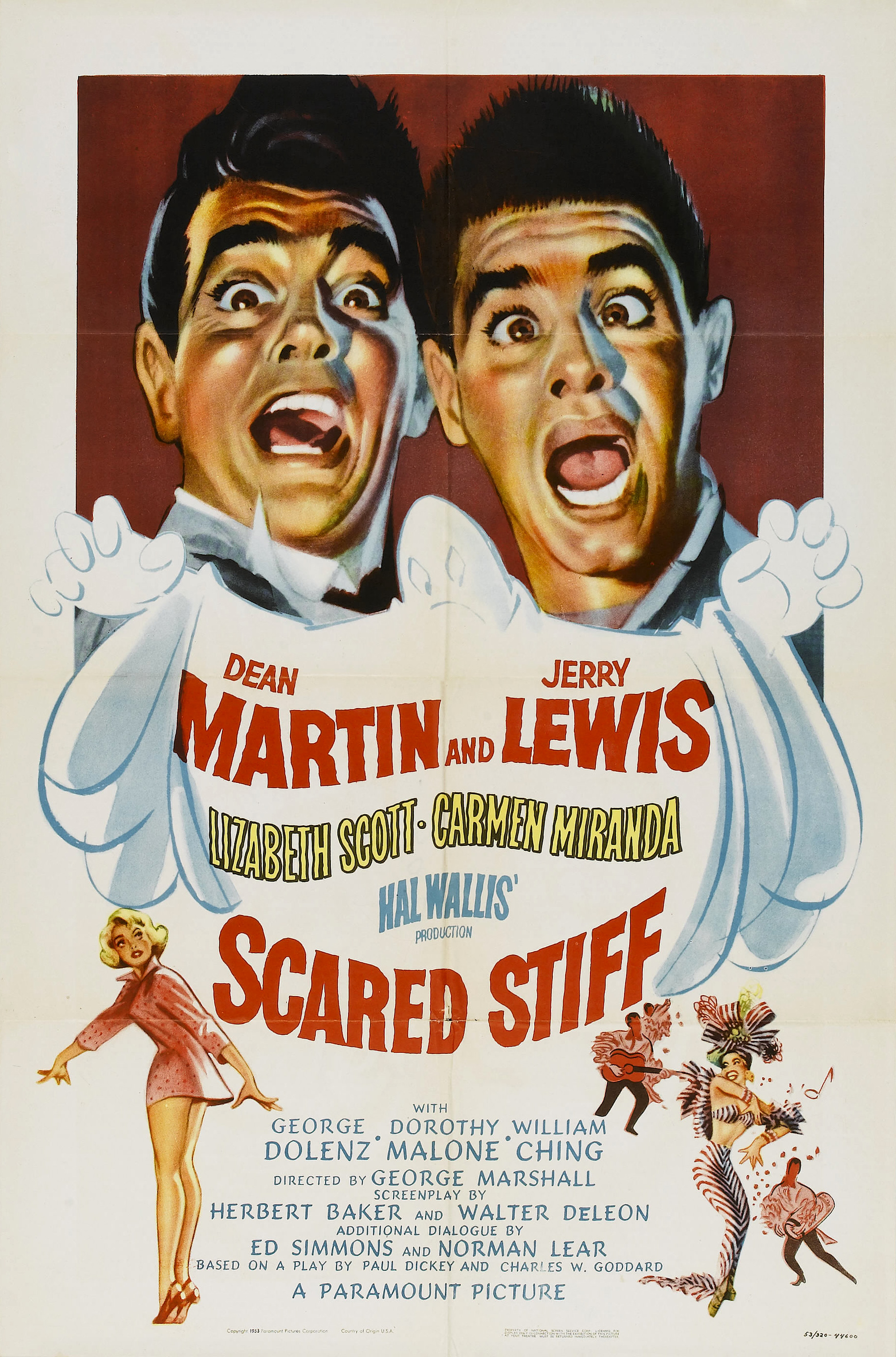
A dimwitted busboy (Jerry Lewis) and his buddy — a nightclub singer (Dean Martin) who wrongly believes he’s murdered a gangster — stow away on a cruise ship to Havana, and befriend a woman (Lizabeth Scott) who has inherited a supposedly haunted castle on an island.

Genres, Themes, Actors, and Directors:

  • Carmen Miranda Films
  • Comedy
  • Dean Martin Films
  • Dorothy Malone Films
  • Fugitives
  • Jerry Lewis Films
  • Lizabeth Scott Films
  • Musicals
  • Old Dark House

Review:
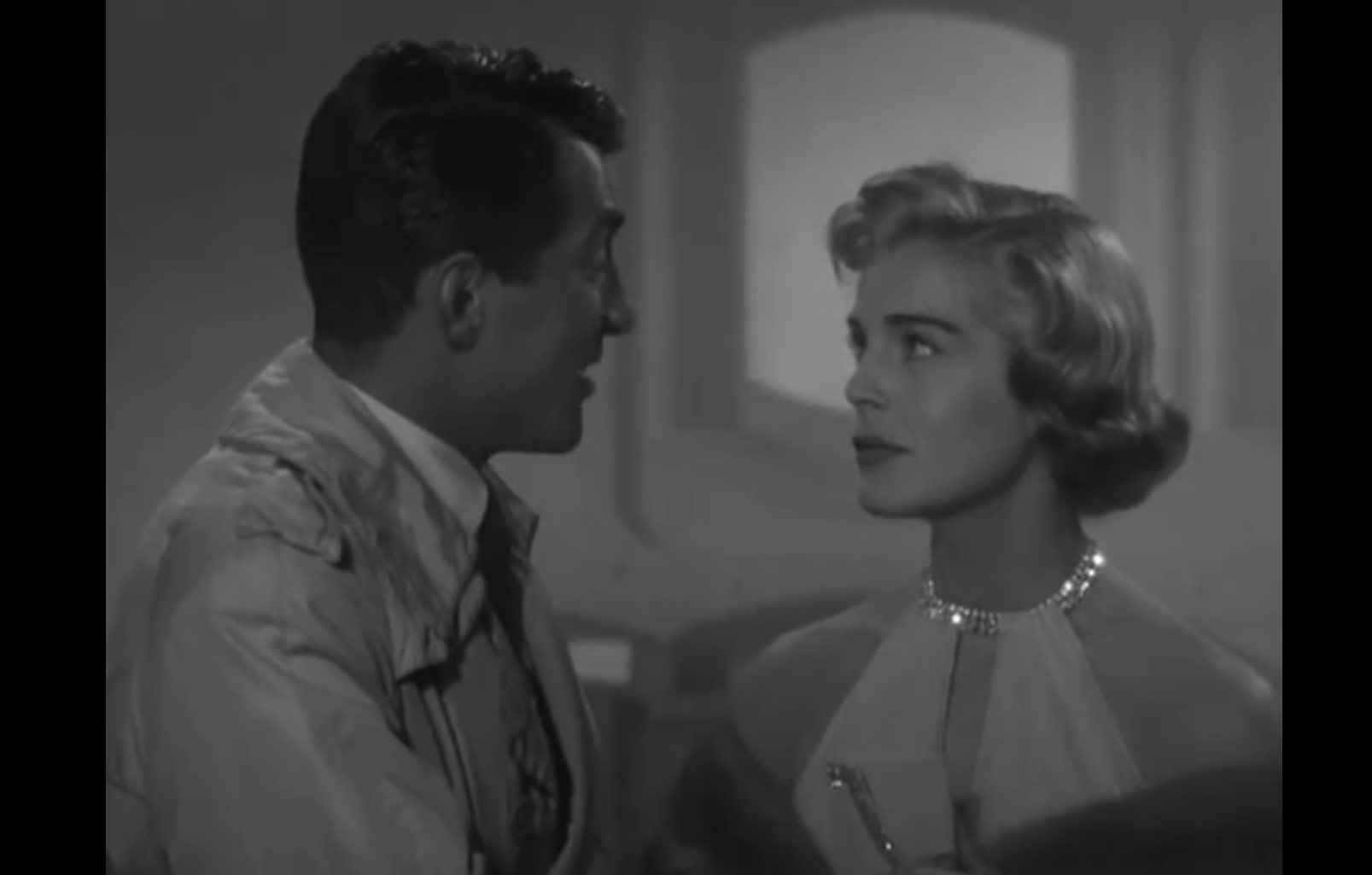
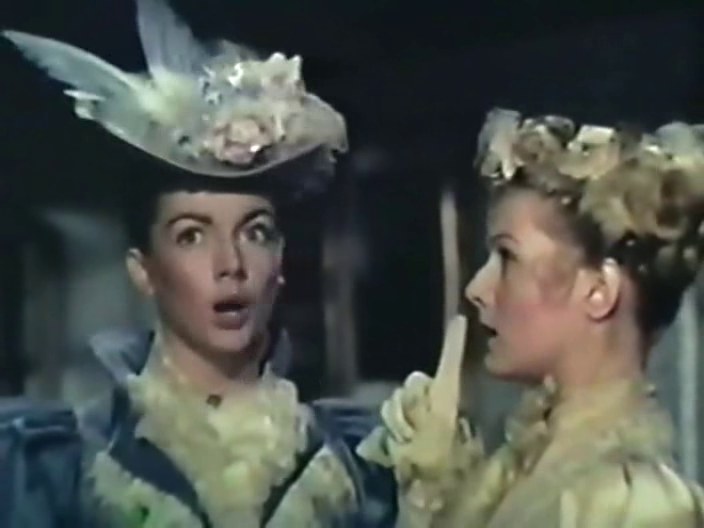
George Marshall remade his own 1940 comedic-horror hit Ghost Breakers (1940) (starring Bob Hope and Paulette Goddard) into this tepid Martin & Lewis vehicle, which will likely only really appeal to their fans. Both the original film and this later iteration essentially function as vehicles for their stars, and suffer from rather lame, unnecessarily complex screenplays — but Scared Stiff, unfortunately, is even more awkwardly paced than its predecessor, taking 80 long minutes to finally bring the protagonists to their spooky destination (and even at that point, there are precious few ghosts or zombies peppering the screen). On the plus side: Lizabeth Scott is a perky, likeable romantic heroine, and she and Martin come across as genuinely attracted to one another:

On the negative side, Lewis is even more neurotically annoying and clingy than usual.

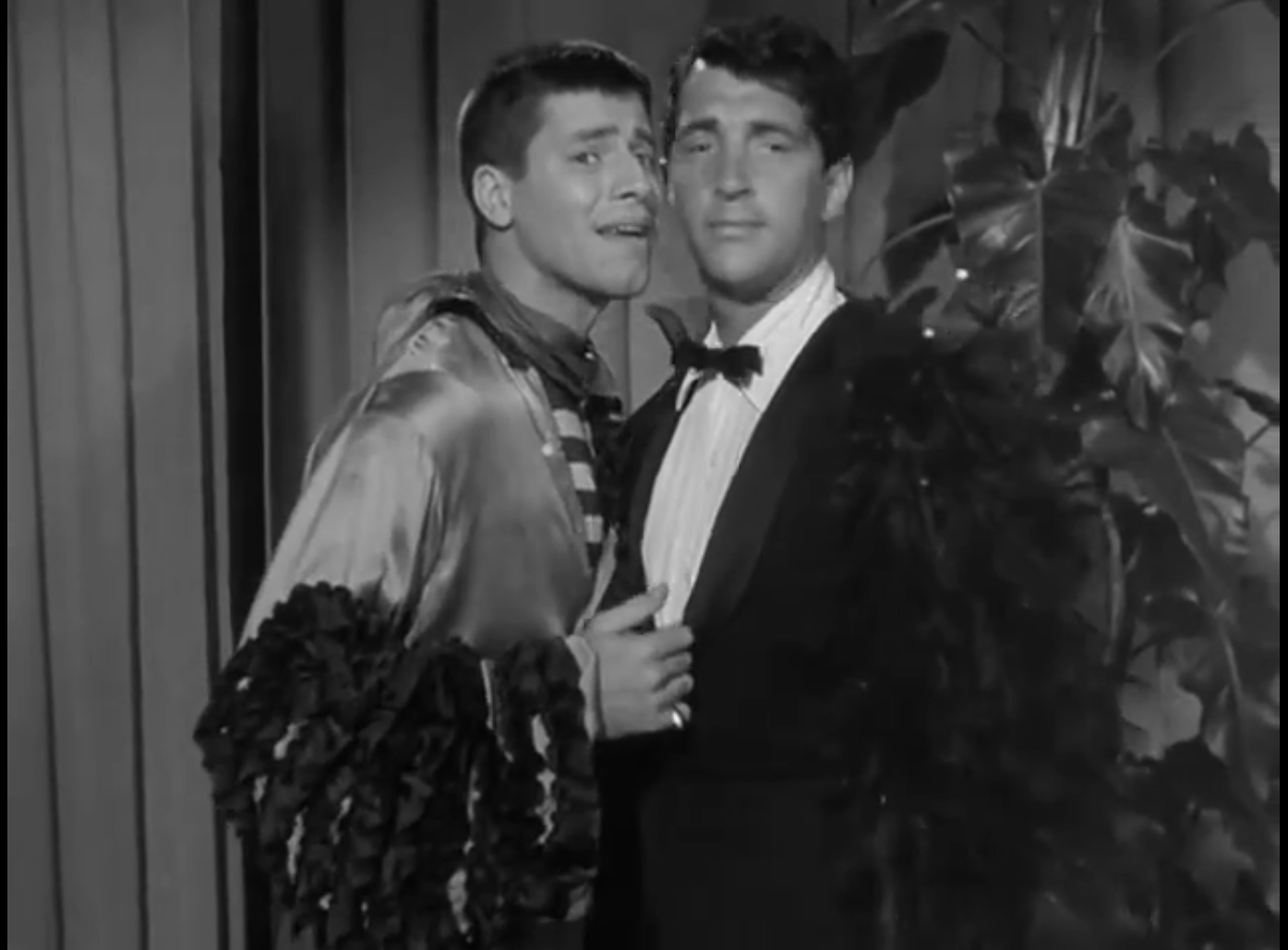
Of primary interest is an early nightclub scene in which we get a glimpse of Lewis and Martin’s live “charisma” together (with assistance from Dorothy Malone as Martin’s girlfriend); it feels like an honest approximation of their esteemed on-stage career together.

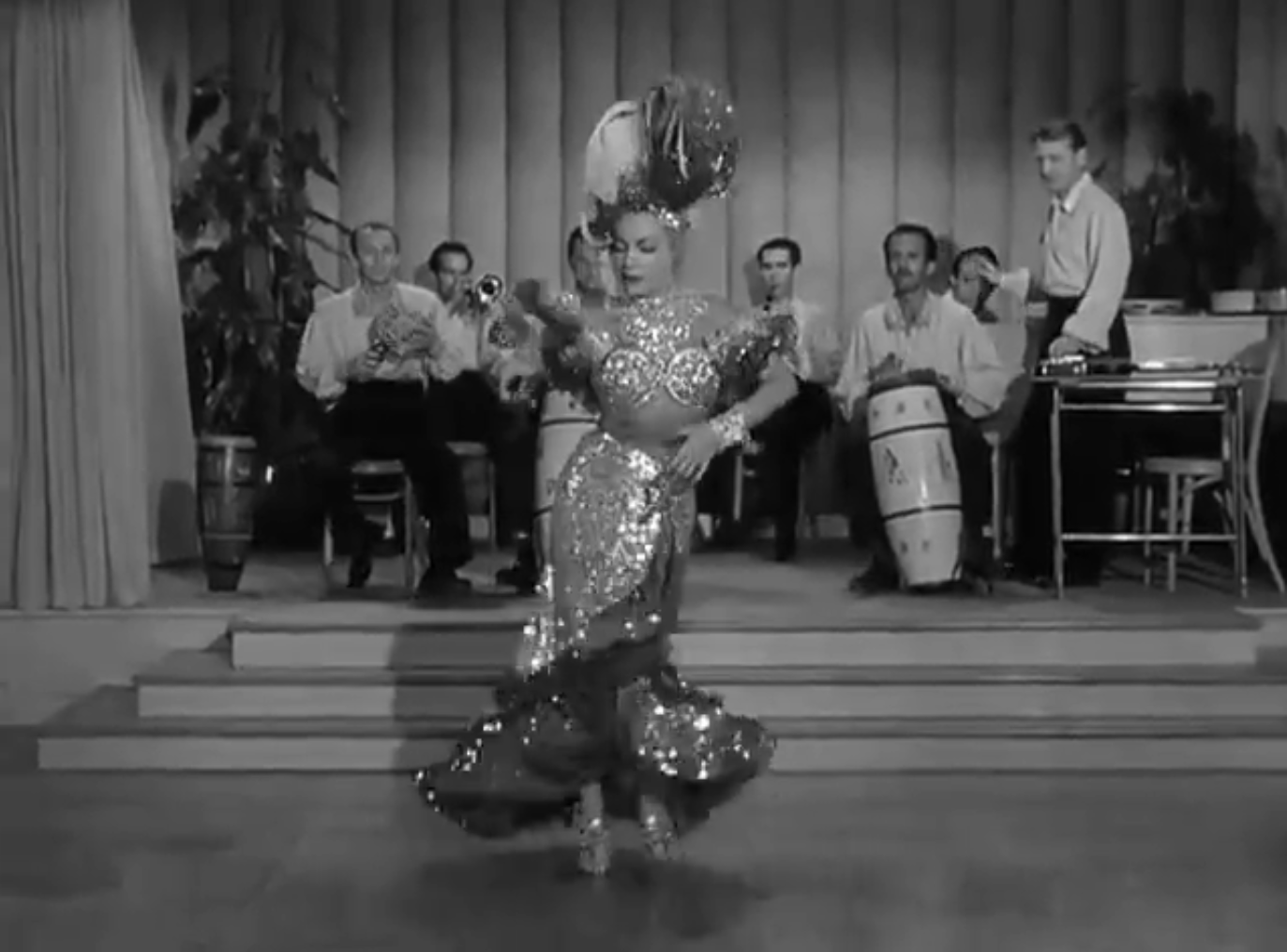
Note: This was Carmen Miranda’s final film (she died two years later); however, while her energetic performances are always welcome:

Lewis’s imitation of her (the ostensible reason for her presence here) is… depressingly unfunny.

Redeeming Qualities and Moments:

  • The early nightclub comedy routine
  • Lizabeth Scott as Mary

Must See?
No — this one is definitely only must-see for Martin & Lewis fans.

Links:

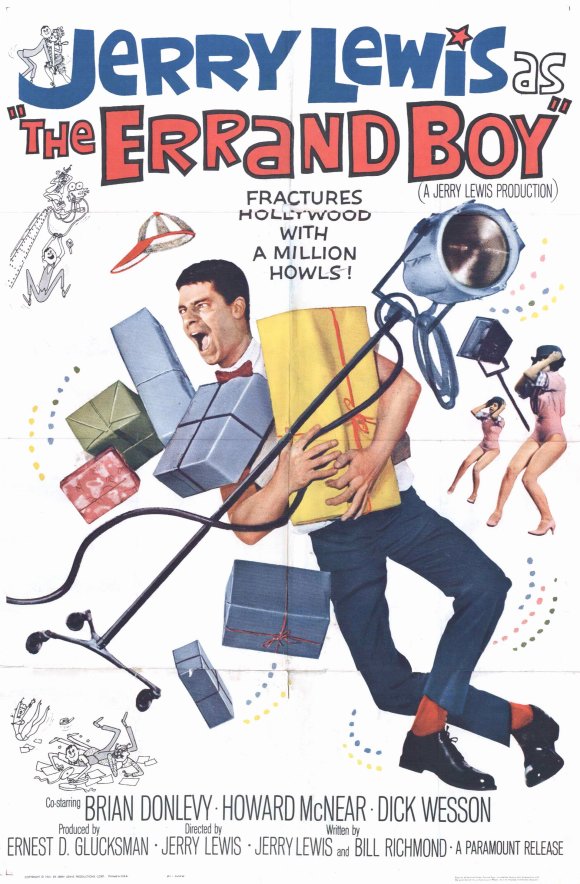
Errand Boy, The (1961)

Errand Boy, The (1961)

“From the first day I got here, I’ve caused everybody nothing but trouble.”

Synopsis:
A clumsy errand boy (Jerry Lewis) on the Paramutual Pictures lot is tasked by its studio head (Brian Donlevy) with spying on all its employees, to determine where money is being wasted — but instead, all Morty (Lewis) seems capable of doing is causing havoc wherever he goes.

Genres, Themes, Actors, and Directors:

  • Brian Donlevy Films
  • Comedy
  • Hollywood
  • Jerry Lewis Films
  • Spies

Review:
The premise of Jerry Lewis’s third film as writer/director/star is likely to appeal to most film fanatics, given that we’re promised an insider’s look at Hollywood movie-making on the Paramount (er, Paramutual) Studios lot — and, for the first portion of the film, it’s easy enough to stay engaged, as Lewis’s Morty Tashman humorously flubs the various names of the (mostly Jewish) executives he’s introduced to:
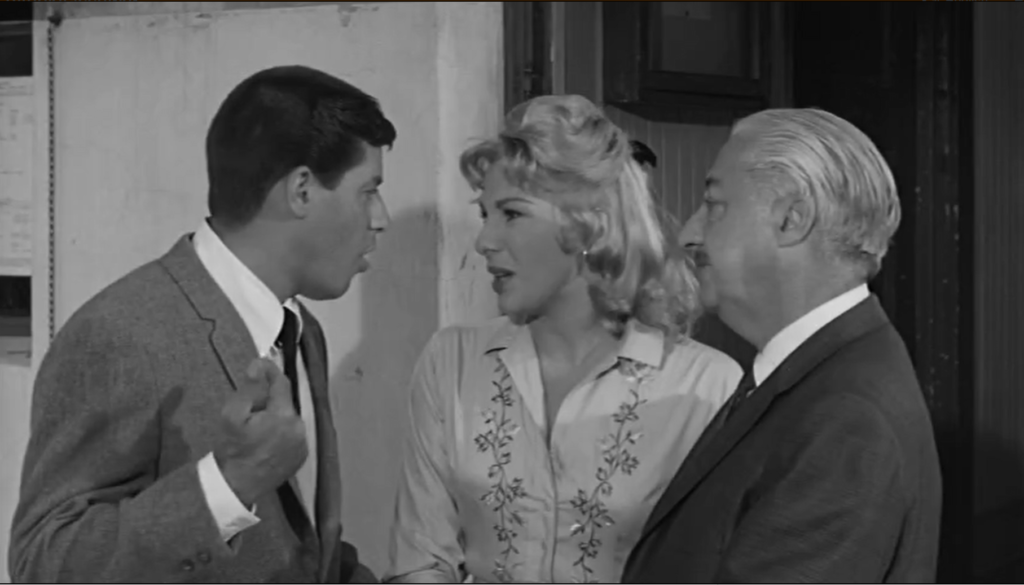
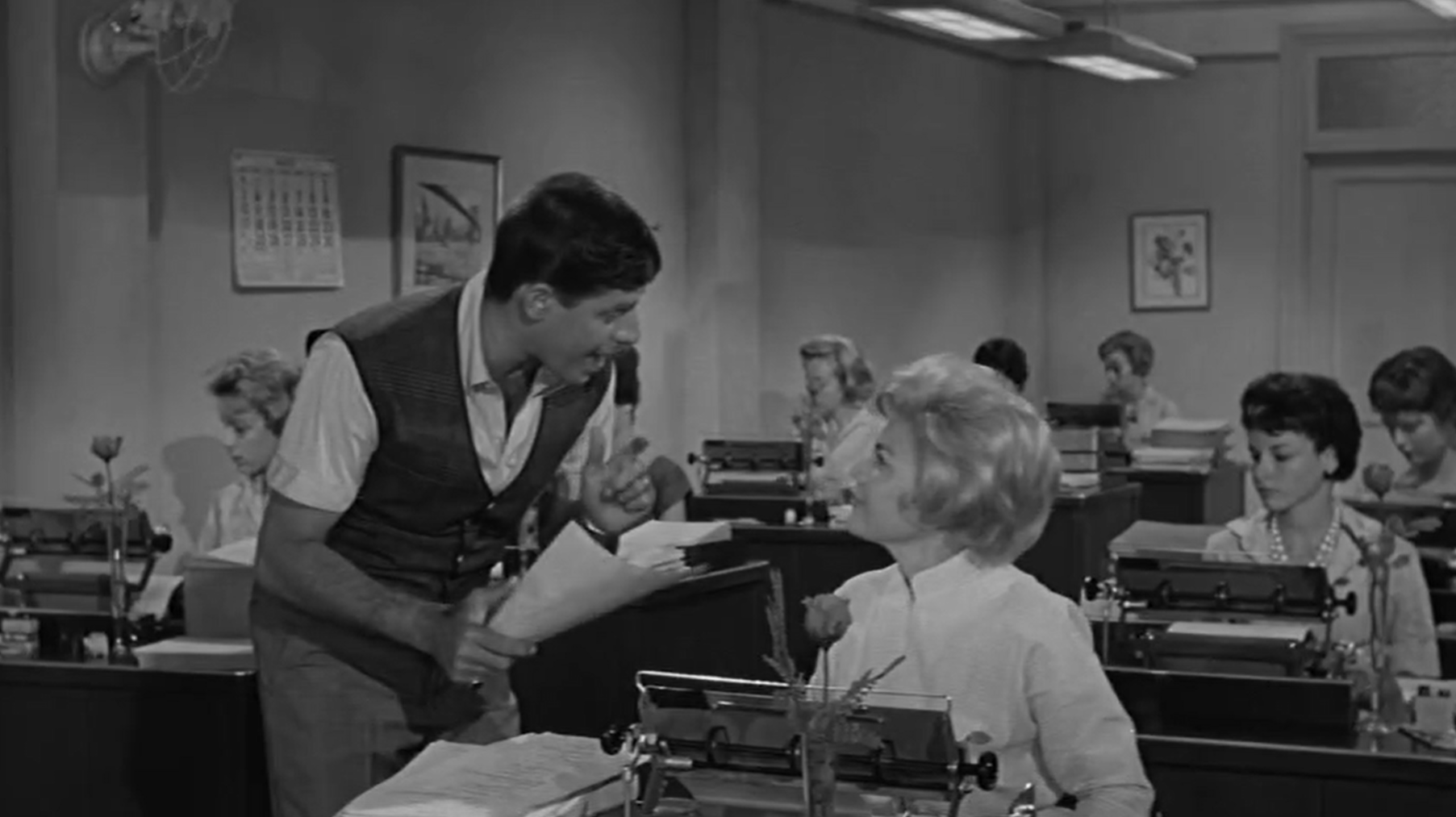
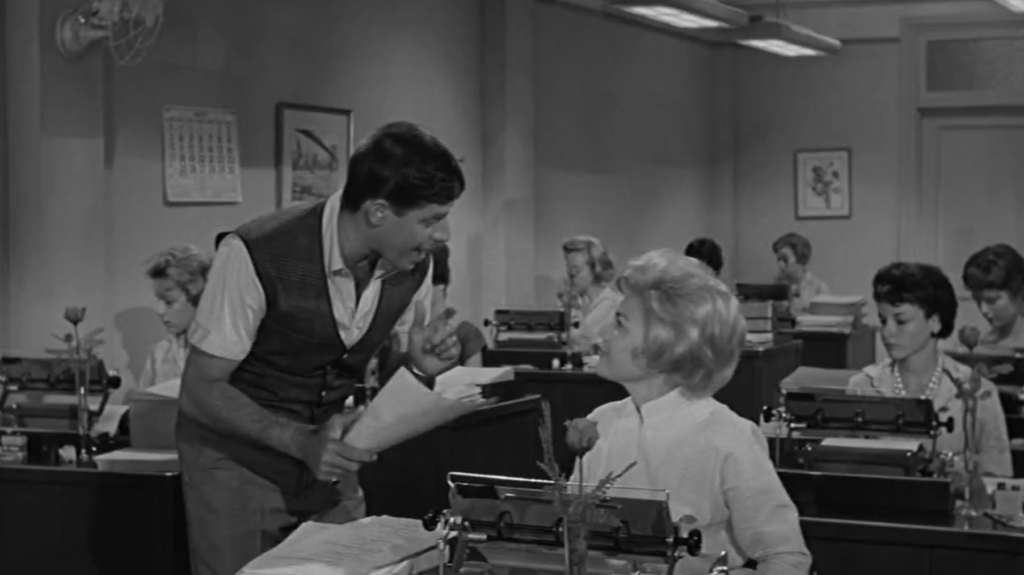
… fails at the seemingly simple task of bringing a few updated script pages to a room full of secretaries:
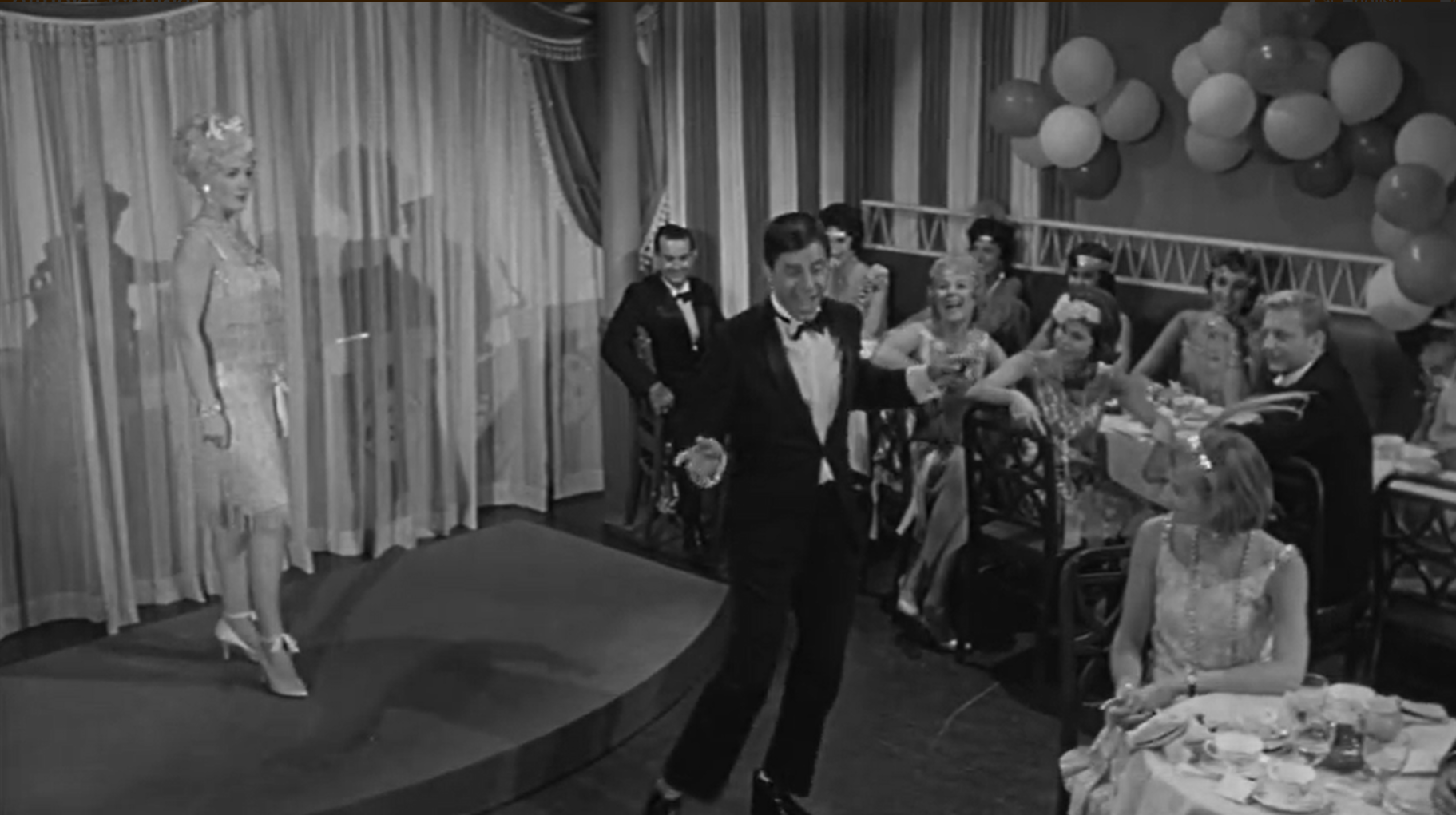
… and, when mistaken for an extra, completely ruins the scene he’s in by bursting into song.
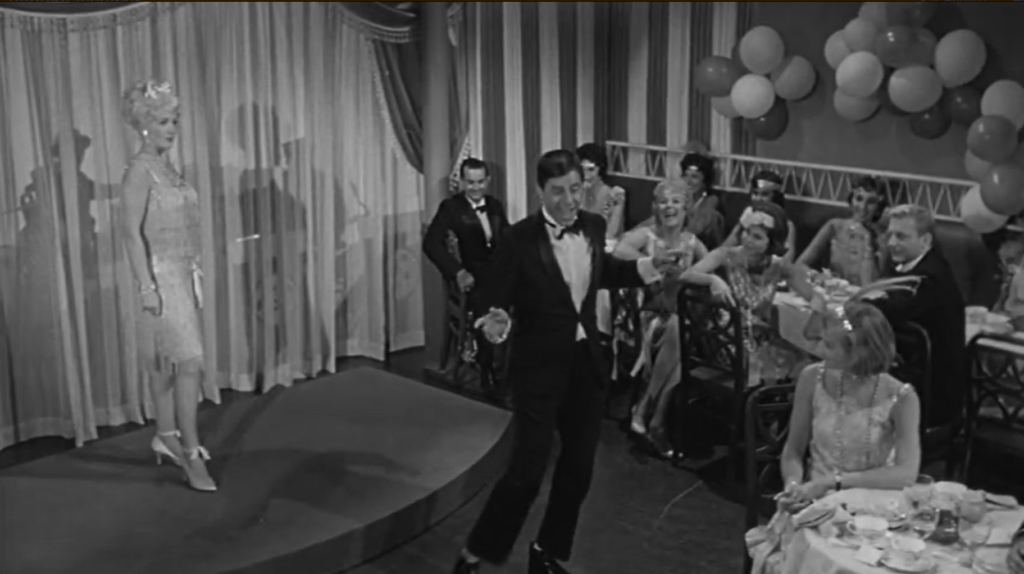
From there, however, Morty’s travails become increasingly repetitive and/or pointless, with several (i.e., Morty’s botched trip to the car wash with his boss’s laryngitis-ridden wife) simply defying all intelligence.
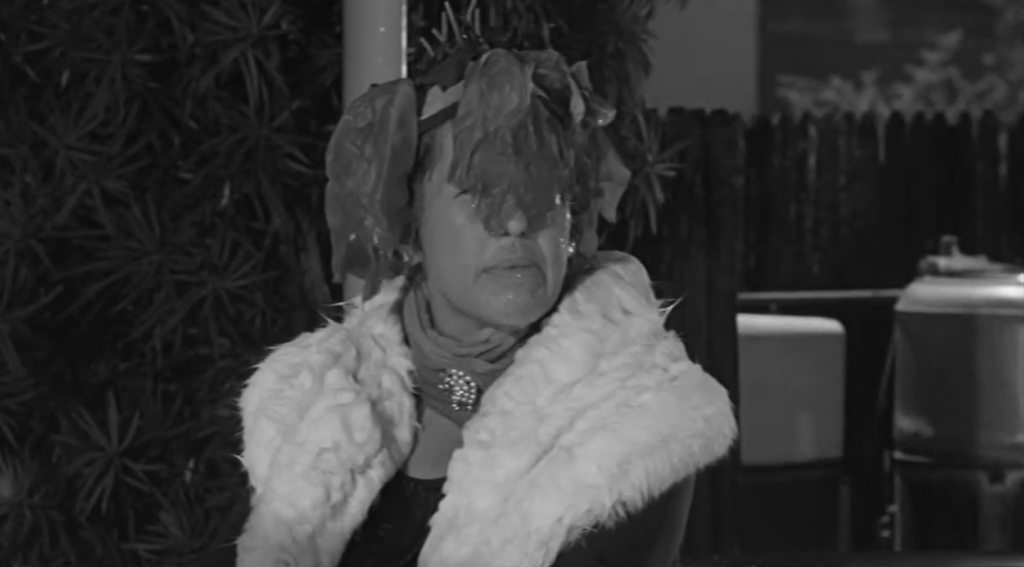
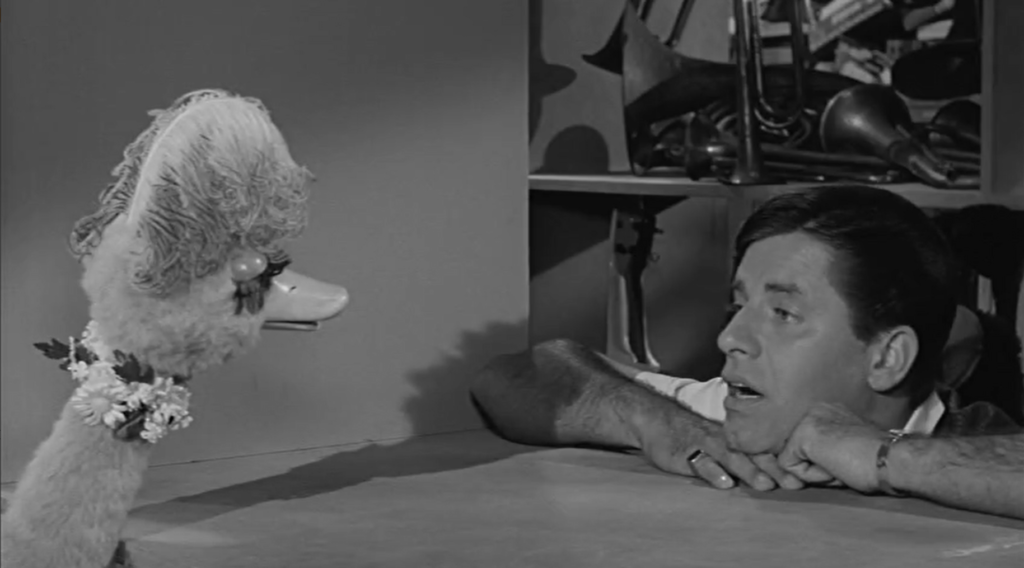
Much like in Lewis’s directorial debut, The Bellboy, the point here seems to be simply to watch Lewis’s nebbishy alter-ego meandering through a series of mishaps within a defined space — but while The Bellboy‘s blessedly mute Stanley is just one among many pawns in an enjoyably wacky universe, Morty (as usual for most of Lewis’s protagonists) quickly becomes simply a tiresome nuisance. Worst of all, the film’s nominal plot device — Morty being sent out to spy on his fellow employees — is simply never attended to in the screenplay, until a final mawkish sequence (loved by many, but not me) in which Lewis confesses his frustrations to a puppet.
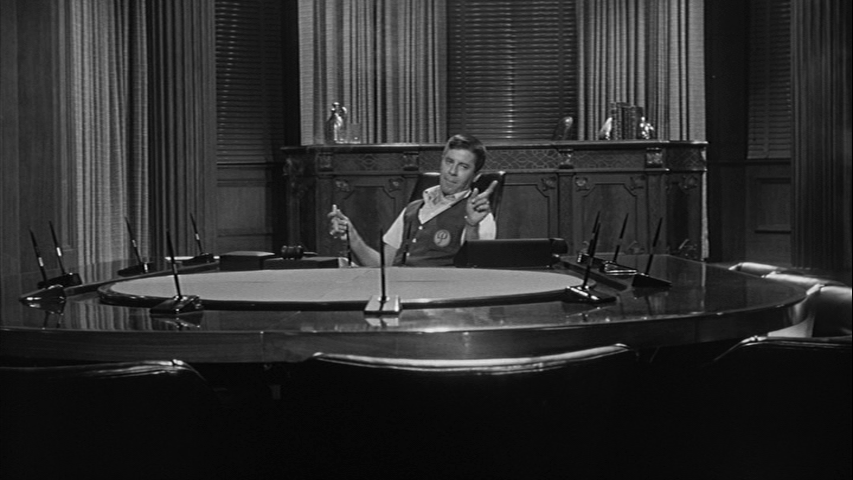
Worst of all is the incredibly self-serving denouement, which highlights Lewis’s arrogance as a performer more clearly than I’ve ever seen before. Yet there are at least a few sequences in The Errand Boy which make it worth your time to check out — most notably the justifiably lauded “board room” pantomime scene (available to view on YouTube). This scene alone shows evidence of Lewis’s intermittent genius.

Redeeming Qualities and Moments:

  • The truly impressive “board room orchestra” pantomime scene
  • The elevator scene (worth a few chuckles)
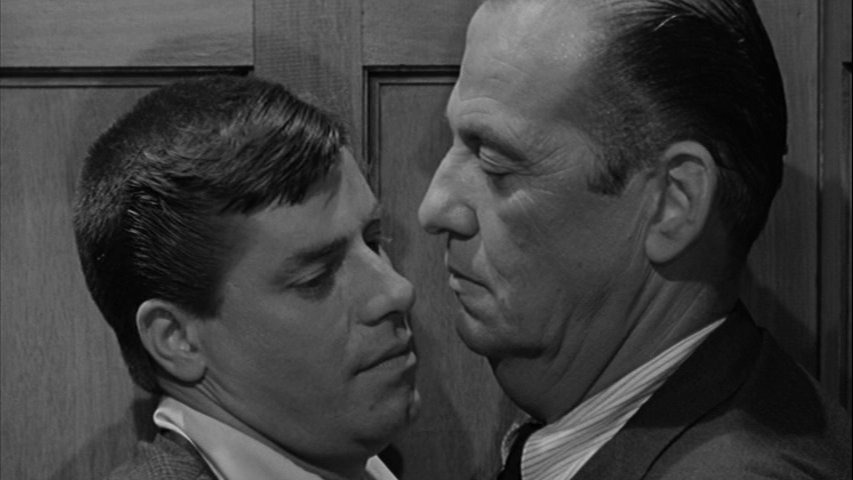
  • The clever opening sequence (in which various genres are exposed for the fiction they really are)
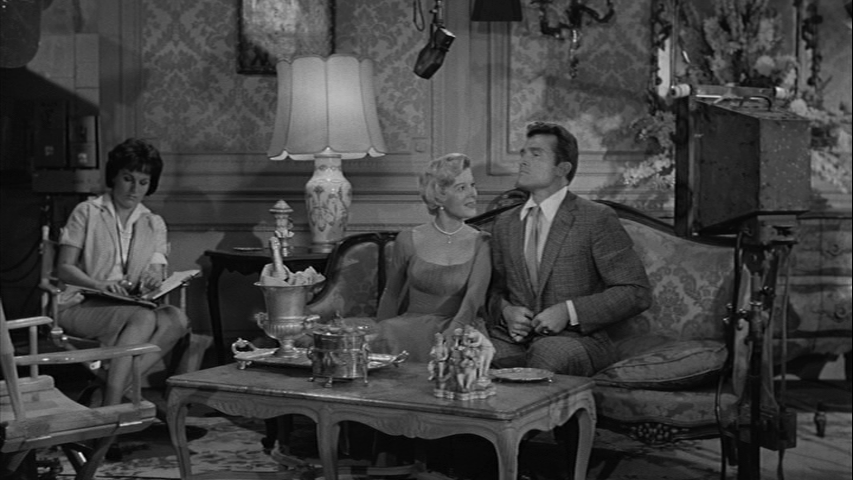
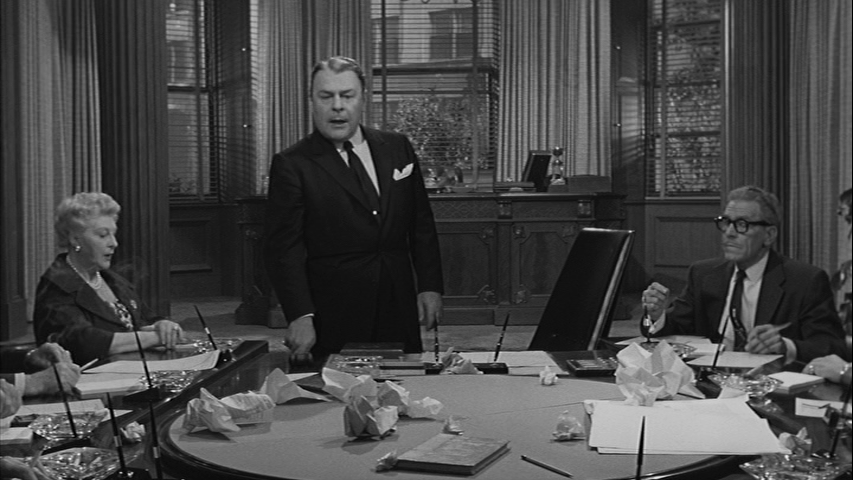
  • Brian Donlevy as the head of Paramutual Pictures
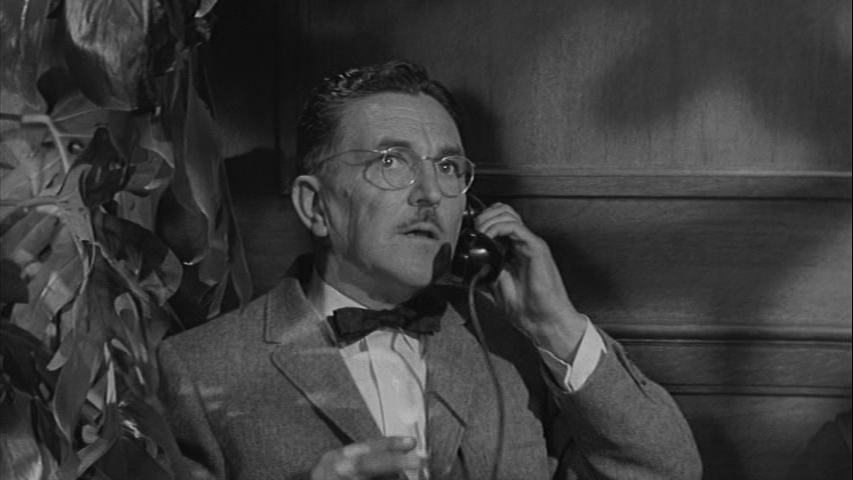
  • Howard McNear as a relentless sycophant
Must See?
No — though a few sequences make it worth a look. Listed as a Cult Movie and a Personal Recommendation in the back of Peary’s book.

Links:

My Favorite Brunette (1947)

My Favorite Brunette (1947)

“I wanted to become a detective, too. It only took brains, courage, and a gun — and I had a gun.”

Synopsis:
A baby photographer (Bob Hope) mistaken for a private eye is hired by a desperate young woman (Dorothy Lamour) to help her track down her missing uncle (Frank Puglia), who has been kidnapped by a gang of criminals.

Genres, Themes, Actors, and Directors:

  • Alan Ladd Films
  • Bob Hope Films
  • Detectives and Private Eyes
  • Dorothy Lamour Films
  • Flashback Films
  • Lon Chaney, Jr. Films
  • Mistaken Identities
  • Peter Lorre Films
  • Satires and Spoofs

Review:
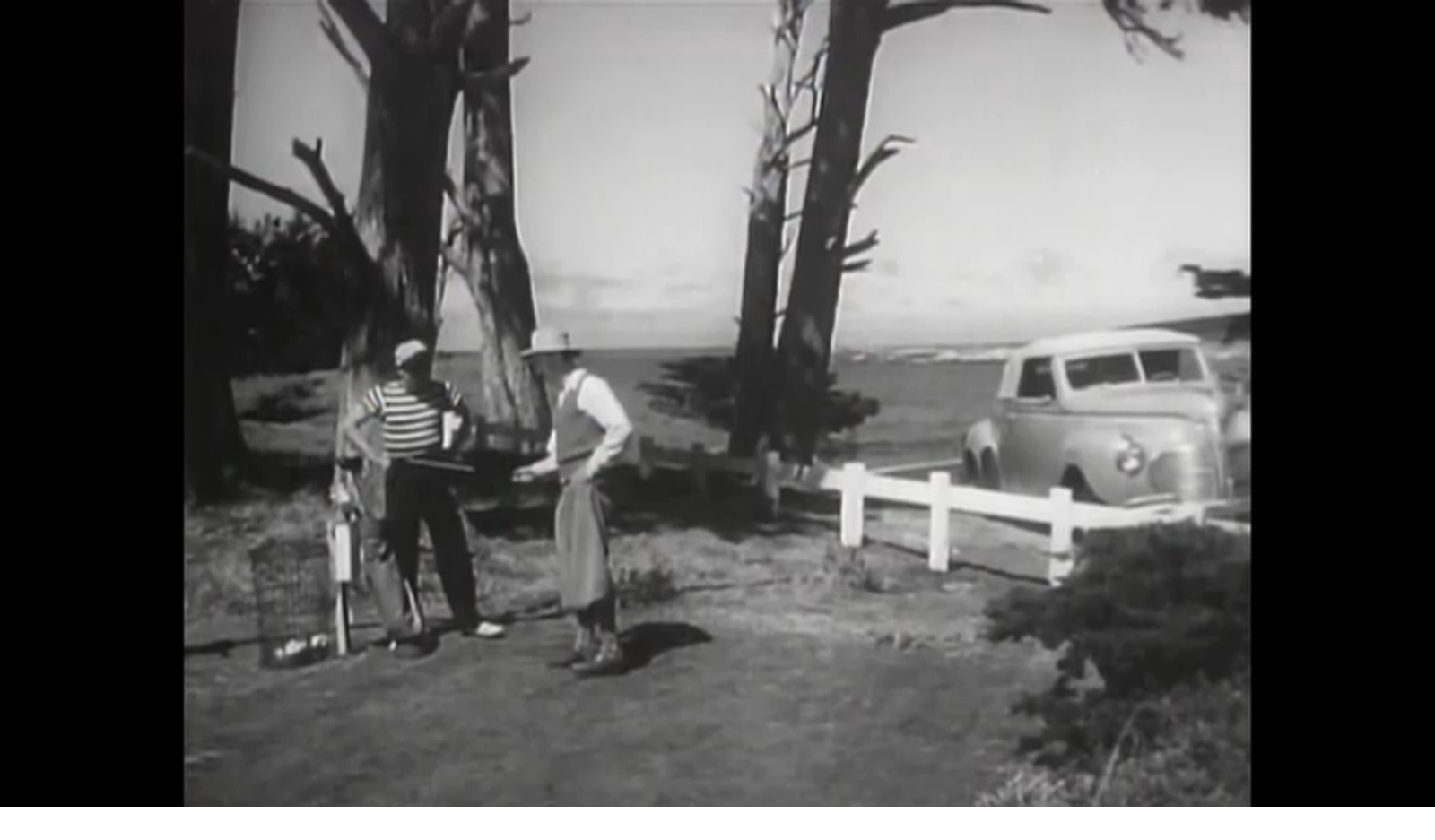
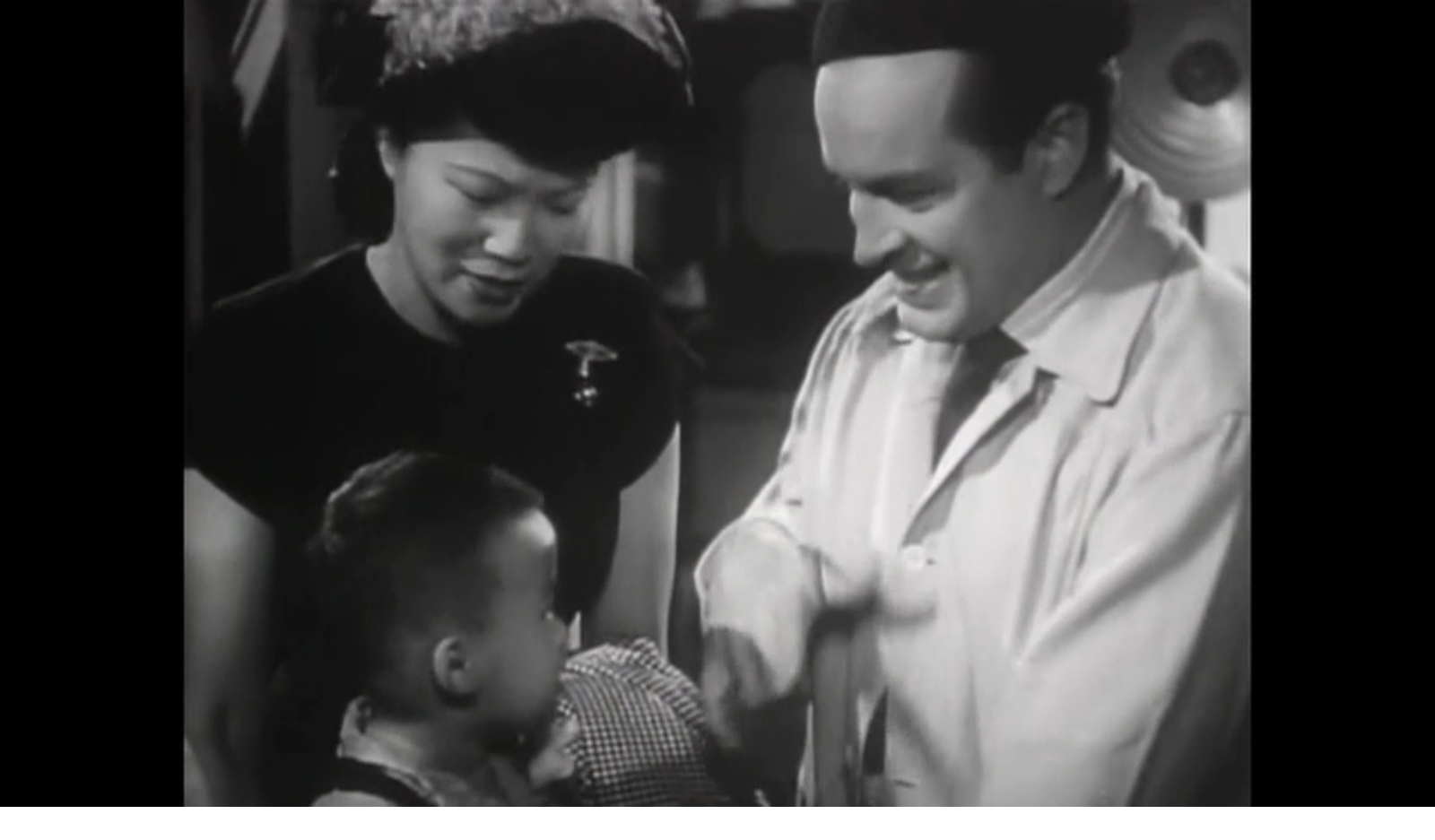
I was pleasantly surprised to revisit this private-eye spoof, which remains my favorite iteration of this unique comedic genre. Hope and Lamour are in fine form, with Hope flinging his characteristically deadpan one-liners (“Nutty as a fruitcake, and with all that beautiful frosting”) left and right, and Lamour remaining appropriately dark and mysterious throughout. It’s especially fun to see iconic character actors such as Peter Lorre and Lon Chaney, Jr. in respectful, meaty supporting roles — ones which pay fitting homage to their on-screen personae. Interestingly, part of what makes this film so successful (as pointed out by one contributor on IMDb) is that the storyline (minus Hope’s one-liners) would probably work just as well if played straight — a sign of its intelligence and ultimate staying power. Excellent use is made of real-life locales in Monterey, California; apparently the mansion where the criminals reside still exists on the town’s touristy 17-mile drive. Watch for the refreshing presence of an Asian-American actress (Jean Fong) in a small but pivotal role as a mother in Chinatown who brings her young son to be photographed by Hope; it’s truly criminal that she wasn’t given any official credit. Available for free viewing on the Internet Archive.

Redeeming Qualities and Moments:

  • Bob Hope as Ronnie Jackson
  • Dorothy Lamour as Carlotta Montay
  • Fun supporting performances

  • A consistently clever satire of private eye flicks
  • Fine use of location shooting (in Monterey, California)
  • Refreshing inclusion of an Asian-American woman (Jean Fong) in a non-stereotypical role
  • Plenty of humorous dialogue:

    “I don’t know how much more of this I can take – you’ve had me in hot water so long I feel like a tea bag.”

Must See?
Yes, as an all-around good show.

Categories

  • Good Show

Links:

Family Jewels, The (1965)

Family Jewels, The (1965)

“People can do funny things for 30 million dollars — even brothers!”

Synopsis:
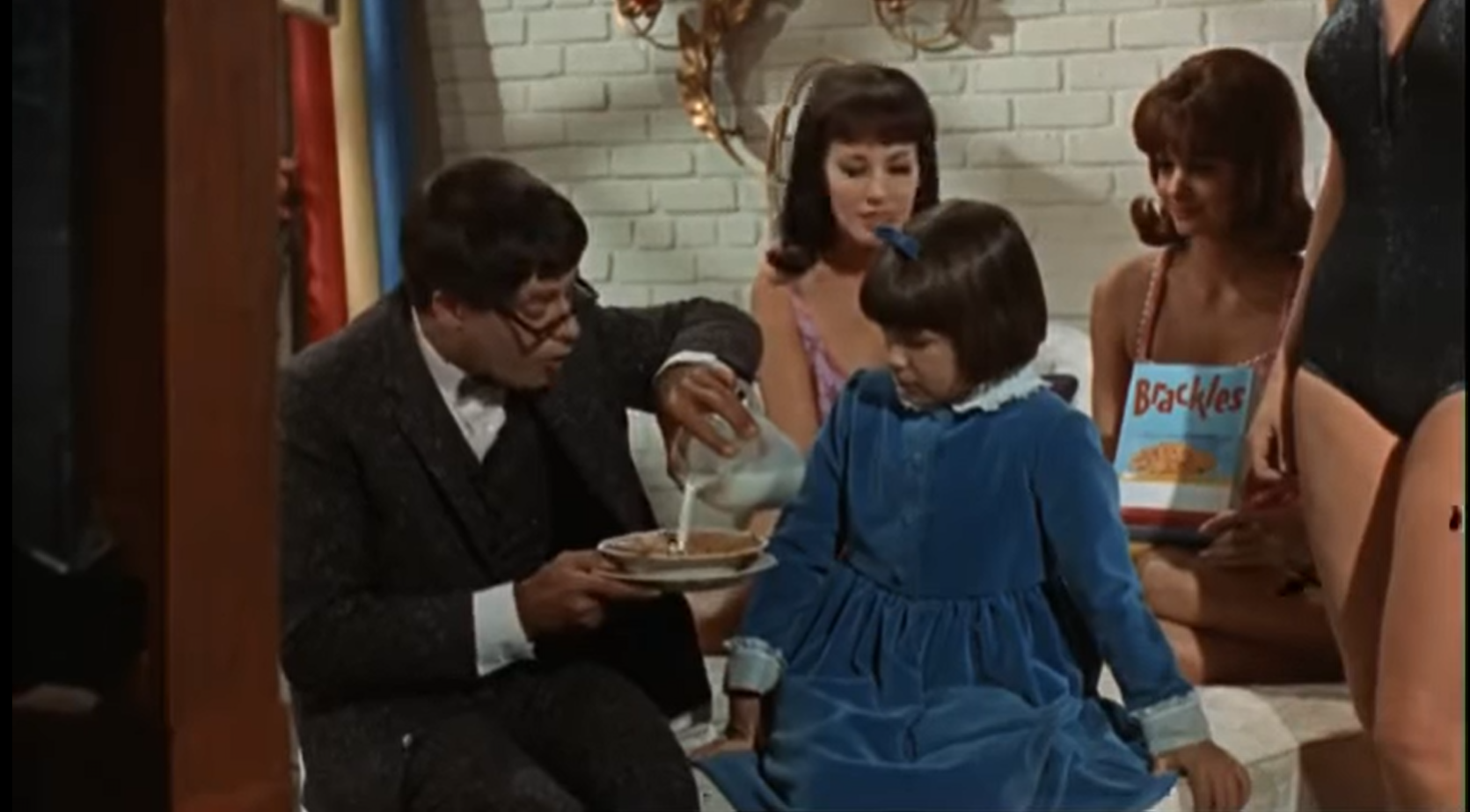
A wealthy orphan (Donna Butterworth) cared for by her kind chauffeur (Jerry Lewis) must choose which of her five uncles (all played by Jerry Lewis) she wants to live with.

Genres, Themes, Actors, and Directors:

  • Comedy
  • Heiresses
  • Inheritance
  • Jerry Lewis Films
  • Kidnapping
  • Orphans

Review:
The Family Jewels offered writer-director-producer Jerry Lewis the opportunity to not only star in his own vehicle (as usual), but to literally dominate the screen by playing almost every major character (thus following in the footsteps of such giants as Alec Guinness and Peter Sellers).


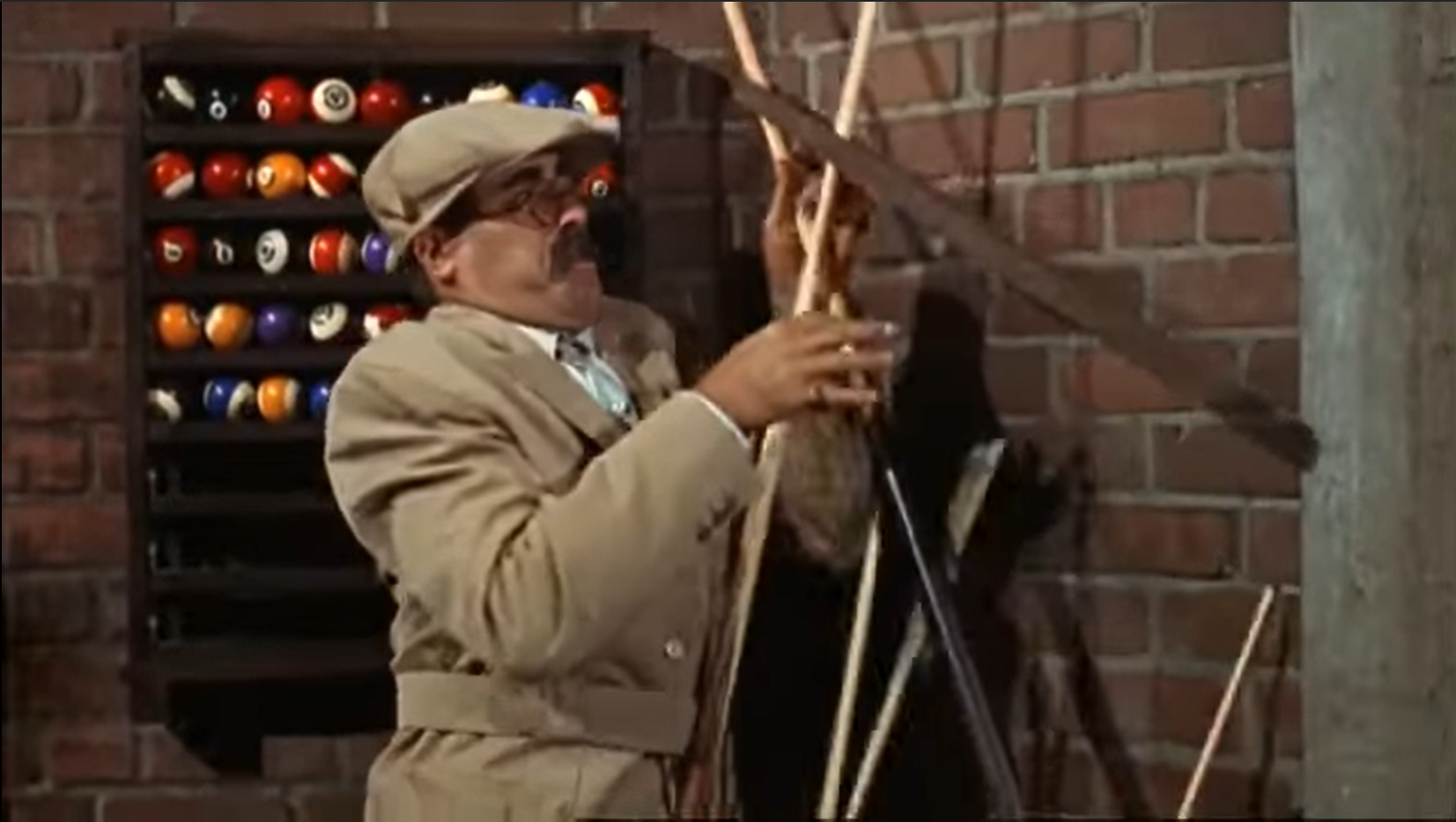
Unfortunately, apart from a few reasonably inspired comedic sequences, the bulk of the film is only mildly amusing, and Lewis’s impersonations truly come across more like caricatures than the real-life protagonists demanded by the plot (after all, thirty million dollars are at stake here!). The primary draw of the film is Donna Butterworth as Lewis’s young charge — she’s refreshingly natural, and holds her own admirably.

Note: If you’re curious to see a list of films featuring actors playing multiple roles, click here (though this Wikipedia entry is by no means complete, given that I had to add Family Jewels myself).

Redeeming Qualities and Moments:

  • Donna Butterworth as Donna
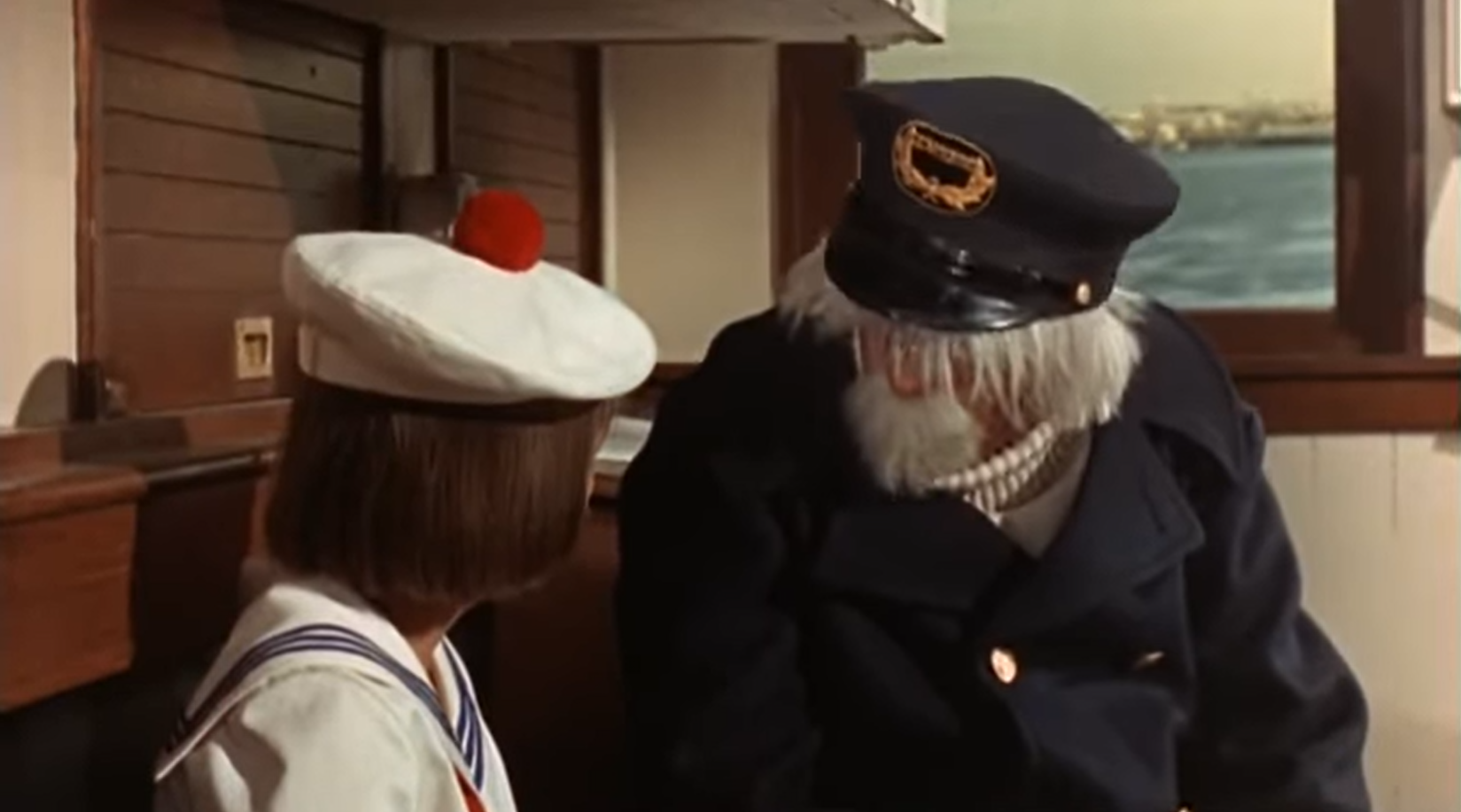
  • The amusingly inaccurate flashback sequence told by Donna’s seafaring uncle
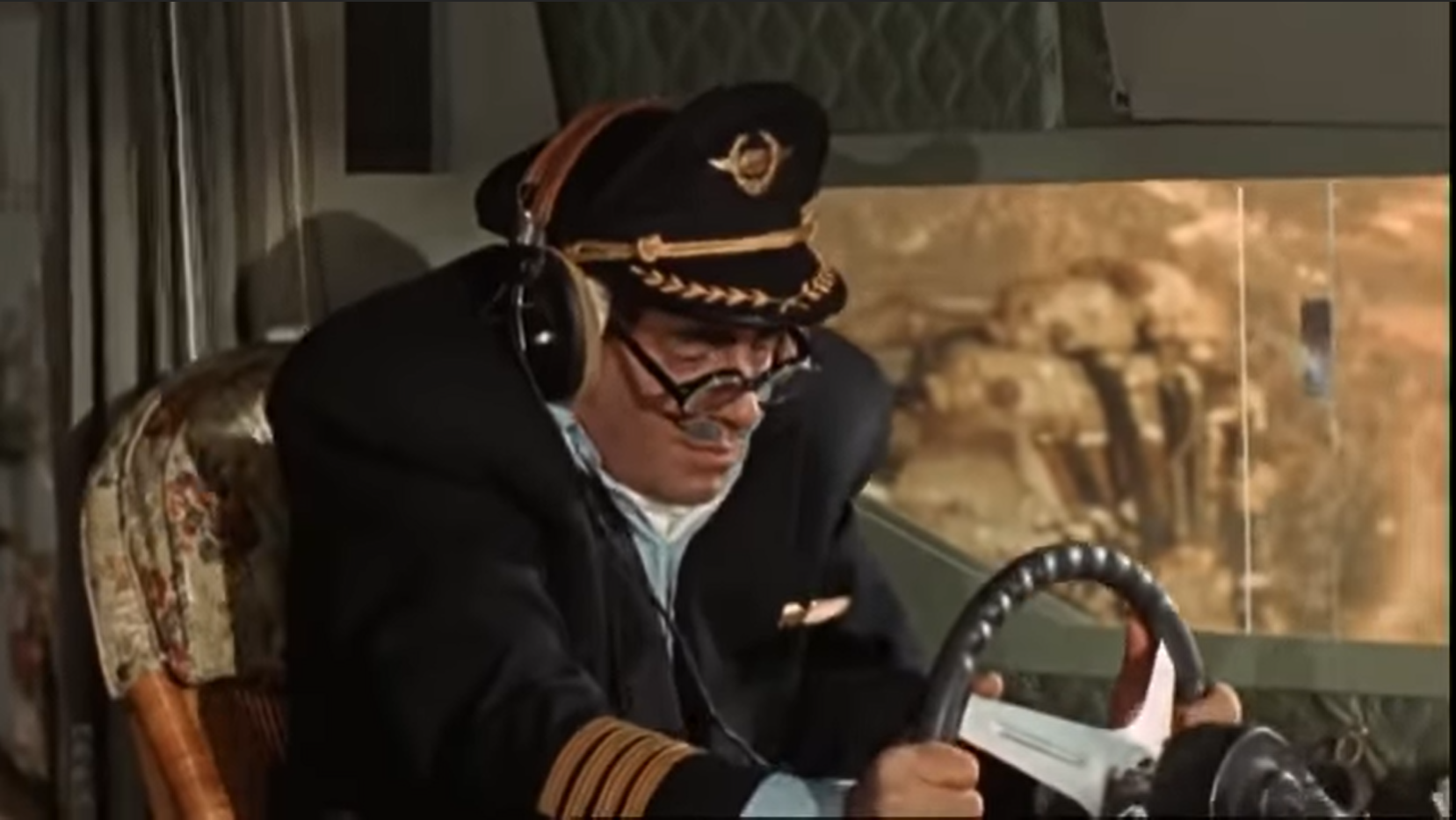
  • The “reactive” onflight film (starring an uncredited Anne Baxter)

Must See?
No; this one — like most Jerry Lewis films — is only must-see for his diehard fans.

Links:

Where’s Charley? (1952)

Where’s Charley? (1952)

“I’m Charley’s aunt, from Brazil — where the nuts come from.”

Synopsis:
In Victorian-era Oxford, a student named Charley (Ray Bolger) impersonates his wealthy aunt so that his girlfriend (Allyn Ann McLerie) and the girlfriend (Mary Germaine) of his friend (Robert Shackleton) can be “chaperoned” in their presence — but trouble arises when both Shackleton’s father (Howard Marion-Crawford) and McLerie’s father (Horace Cooper) decide to pursue the hand of Charley’s aunt in marriage, and a woman (Margaretta Scott) claiming to have known Charley’s aunt’s deceased husband suddenly arrives.

Genres, Themes, Actors, and Directors:

  • College
  • Gender Bending
  • Gold Diggers
  • Mistaken Identities
  • Musicals
  • Play Adaptation

Review:
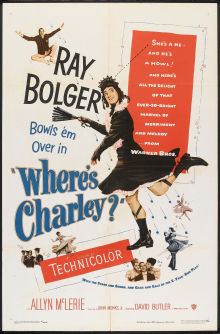
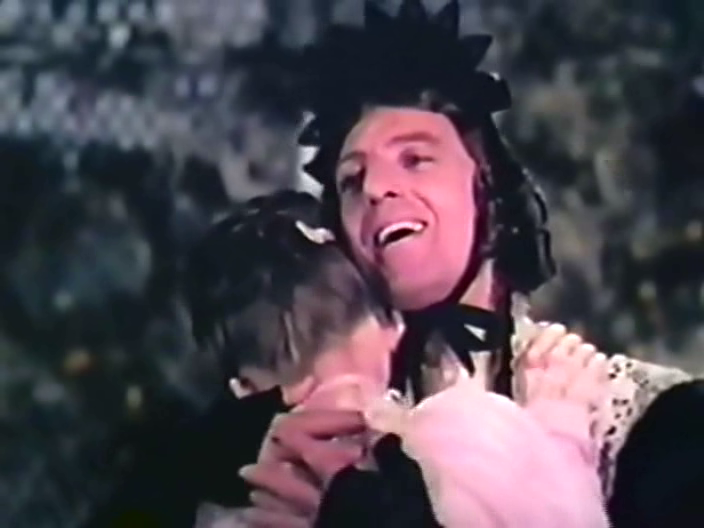
This long-out-of-circulation film adaptation of Frank Loesser’s popular Broadway musical (which was in turn based on the Victorian-era play Charley’s Aunt by Brandon Thomas) is notable primarily for allowing Ray Bolger to reprise his Tony-winning role on the big screen. As noted by Bosley Crowther in his review for the New York Times, the original Broadway production “was of such delightful buoyance and frank frivolity that a rhapsodized fan could only wish it preserved for all time in a deepfreeze” — which is essentially what has been done here, through David Butler’s competent if undistinguished direction. What that said, the decidedly creaky mistaken-identity storyline — which centers around Charley’s obvious inability to appear at the same time both in his own form and as his aunt:

— quickly becomes rather repetitive and tiresome, and Bolger’s broadly comedic acting style (which probably worked wonderfully on stage) ultimately is too close to caricature. However, there’s enough here for film fanatics to enjoy to make it worth a look — primarily the opportunity to see Bolger’s inimitable, Scarecrow-like dancing style in action. The tunes are also mostly jaunty and memorable (fans of movie musicals will be pleasantly surprised), and Allyn Ann McLerie (reprising her role from the Broadway production) is an enjoyable — if improbable — romantic partner for the 48-year-old (!) Bolger.

Redeeming Qualities and Moments:

  • Several enjoyable tunes
  • The opportunity to see the inimitable Ray Bolger dancing
  • Allyn Ann McLerie as Amy

Must See?
No, though it’s certainly worth seeking out for one-time viewing, as a curiosity.

Links:

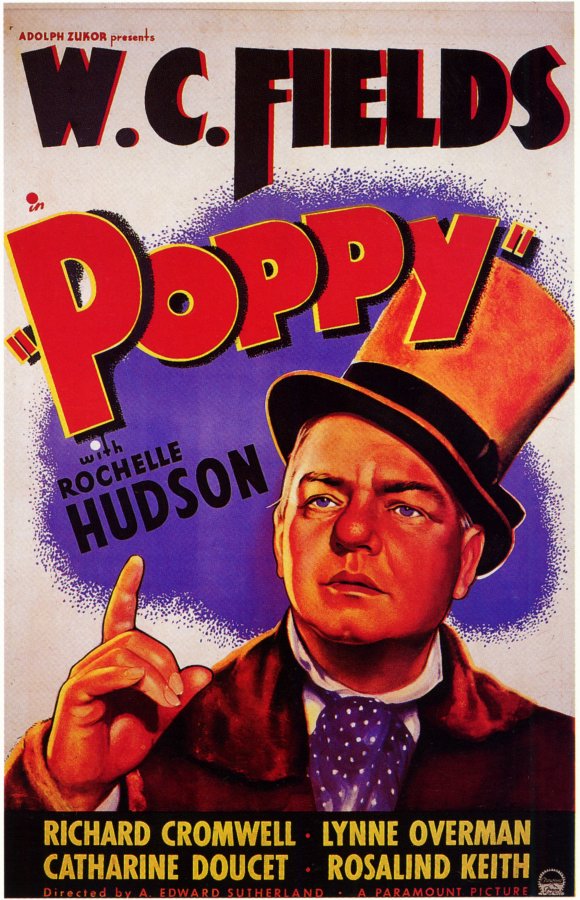
Poppy (1936)

Poppy (1936)

“If we should ever separate, my little plum, I want to give you just one bit of fatherly advice: never give a sucker an even break!”

Synopsis:
A con-artist (W.C. Fields) traveling through a small town attempts to pass off his grown daughter, Poppy (Rochelle Hudson), as the long-lost heiress to a local fortune; meanwhile, Poppy falls in love with the mayor’s son (Richard Cromwell), causing scandal in the town.

Genres, Themes, Actors, and Directors:

  • Comedy
  • Con-Artists
  • Cross-Class Romance
  • Play Adaptation
  • W.C. Fields Films

Review:
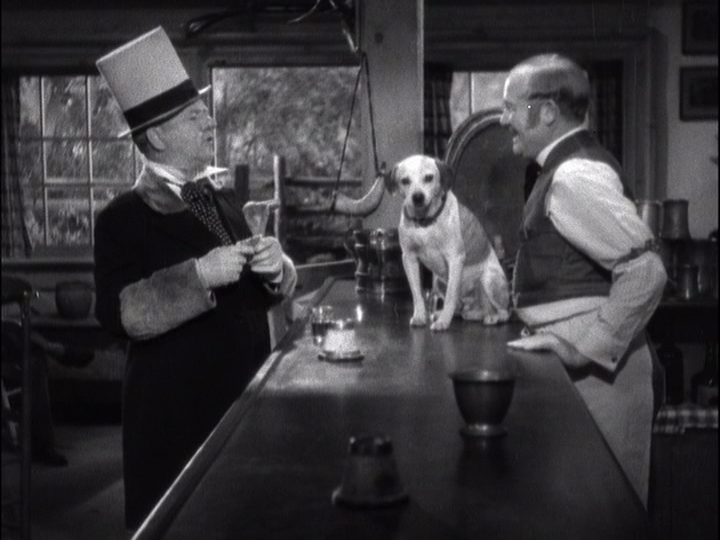
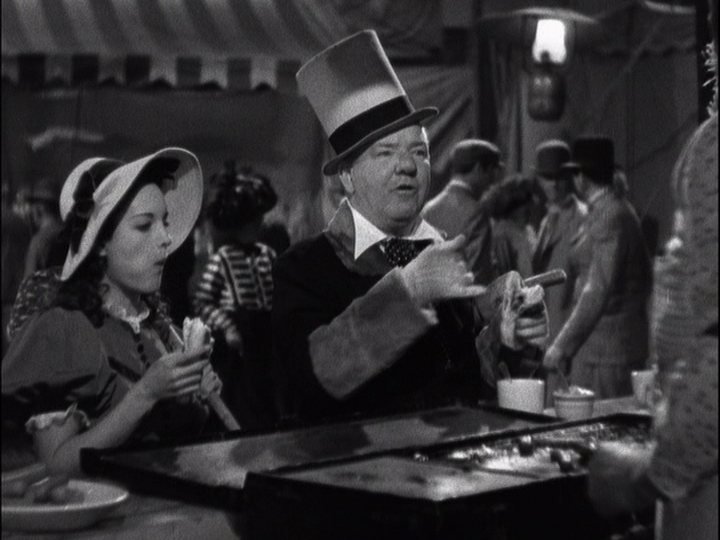
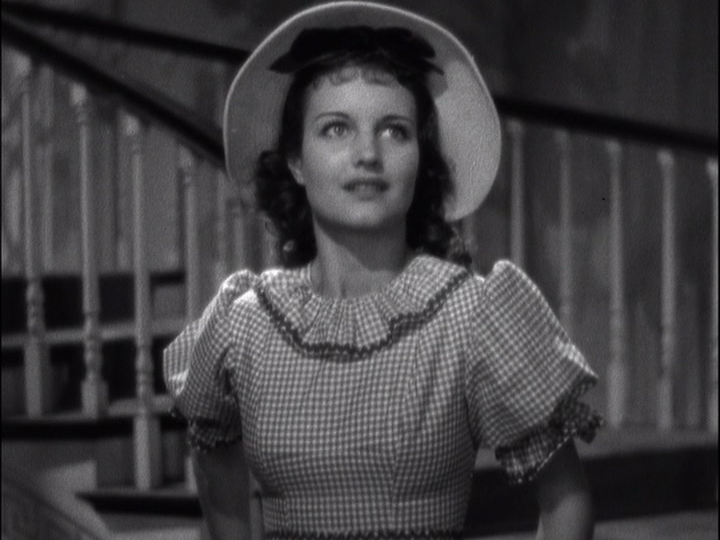
Based on a 1923 musical comedy, and turned into the silent film Sally of the Sawdust by D.W. Griffith in 1925, this W.C. Fields vehicle features the iconoclastic comedian in one of his signature roles, that of Professor Eustace McGargle. Despite being in enormous physical pain during the film’s production, Fields acquits himself admirably throughout, and it’s fun to see him slickly conning his way through several humorous situations: passing off a “talking” dog to a gullible barman:

and ordering lavishly garnished hotdogs he has no intention of paying for. Meanwhile, Hudson does a fine job retaining our sympathy in a tricky role which requires her to exhibit both charming innocence and unconditional love towards a father she knows to be a shyster. Unfortunately, the entire narrative upon which the film is based — particularly Hudson’s “scandalizing” cross-class romance with Cromwell — is both weak and stale; there’s really nothing new under the sun here. This one is primarily worth a look simply to see a few instances of Fields doing what he does best: conning the world, one scam at a time.

Note: I really do believe Fields was at his best in con-man roles, rather than the other archetype he often inhabited: that of a henpecked martyr.

Redeeming Qualities and Moments:

  • W.C. Fields as Professor McGargle
  • Rochelle Hudson as Poppy

Must See?
No, but it’s worth a look simply for a few amusing sequences. Listed as a Personal Recommendation in the back of Peary’s book.

Links:

Will Success Spoil Rock Hunter? (1957)

Will Success Spoil Rock Hunter? (1957)

“I’m not attracted to her — the whole thing’s publicity!”

Synopsis:
An adman (Tony Randall) hoping to convince a blonde bombshell (Jayne Mansfield) to star in his latest ad campaign suddenly finds himself the object of media frenzy when he becomes Mansfield’s new “Lover Boy”.

Genres, Themes, Actors, and Directors:

  • Advertising
  • Frank Tashlin Films
  • Jayne Mansfield Films
  • Joan Blondell Films
  • Play Adaptations
  • Satires and Spoofs
  • Social Climbers
  • Tony Randall Films

Review:
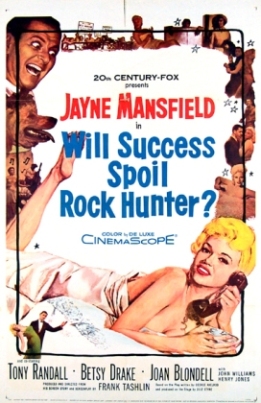
Frank Tashlin’s follow-up to The Girl Can’t Help It was this loose adaptation of a stage play by George Axelrod (shifting the storyline to a satire of television advertising but retaining its leading lady). As Peary notes in his review of TGCHI, the satirical theme of both TGCHI and WSSRH? is that “‘success’ [ironically] has nothing to do with leading a personally meaningful life” — though, fortunately, this doesn’t stop the characters in either film from trying for both. In WSSRH?, Randall’s desperation to keep his job leads him to compromise his steady relationship with Betsy Drake for the sake of an elaborate publicity stunt (which boosts his career opportunities enormously). Meanwhile, Mansfield’s ploy to use Randall to make her beefcake boyfriend (Mickey Hartigay, Mansfield’s real-life husband) jealous works extraordinarily well — but she eventually realizes that the true love in her life is one George Schmidlap (appearing in a bizarre cameo at the end). Add Drake’s forlorn attempts to bustify her slim figure (the “lasting” effects of which garner a couple of genuine chuckles), and the admission by Mansfield’s assistant (Joan Blondell, compelling as always) that she’s still pining for her long-lost milkman lover, and the entire film is essentially a tableaux of characters derailed — temporarily or otherwise — from “true” romantic happiness.

Unfortunately, while Tashlin is reasonably effective (as always) at skewering various obsessions of the ’50s (busty blondes, corporate success), the film as a whole isn’t entirely successful. Mansfield’s Rita Marlowe is far less sympathetic than her Jerri Jordan in TGCHI, coming across here as much more of a “pure” caricature — and her shrill imitation of Marilyn Monroe’s squeal quickly gets on one’s nerves. Meanwhile, the film’s denouement is a bit of a disappointment; it appears that Tashlin doesn’t quite know where to take his narrative or his characters. Nonetheless, given that this film was “selected for preservation in the United States National Film Registry by the Library of Congress as being ‘culturally, historically, or aesthetically significant'”, all film fanatics will surely be curious to check it out at least once.

Redeeming Qualities and Moments:

  • Tony Randall as Rockwell Hunter
  • Joan Blondell as Violet
  • Betsy Drake as Jenny

Must See?
Yes, simply for its historical relevance as one of Tashlin’s best-known films. Listed as a Cult Movie in the back of Peary’s book.

Categories

  • Historically Relevant
  • Important Director

Links:

Artists and Models (1955)

Artists and Models (1955)

“The not-so-handsome ones — they make the best husbands, you know. Other women don’t want them.”

Synopsis:
An aspiring artist (Dean Martin) and his comics-loving roommate (Jerry Lewis) fall for their beautiful neighbors, the illustrator of Bat Woman comics (Dorothy Malone) and her model (Shirley MacLaine); meanwhile, Martin gets a job writing a new comic book series, based on Lewis’s dreams — but Soviet agents are on their tail when it turns out Lewis has been dreaming secret formulas.

Genres, Themes, Actors, and Directors:

  • Anita Ekberg Films
  • Artists
  • Cold War
  • Comedy
  • Dean Martin Films
  • Dorothy Malone Films
  • Frank Tashlin Films
  • Jerry Lewis Films
  • Musicals
  • Shirley MacLaine Films

Review:
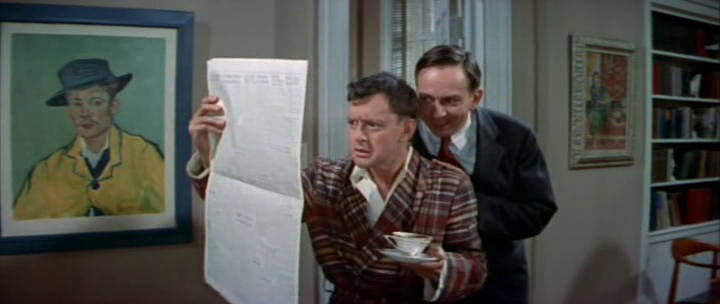
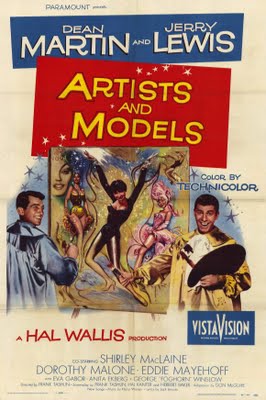
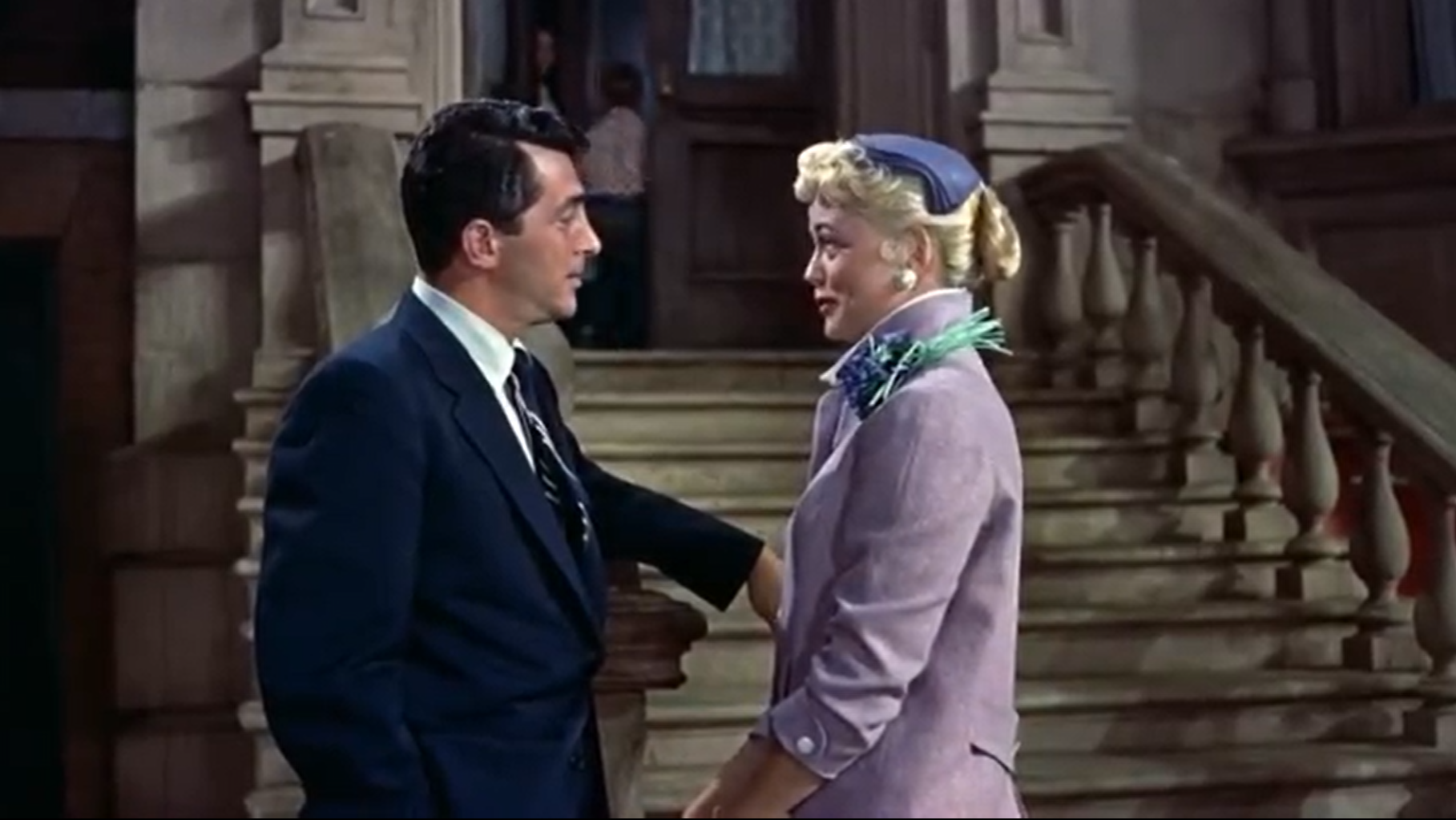
This Frank Tashlin-directed Martin & Lewis film (their third-to-last together) is considered by many to be their best joint effort, and it does start off with plenty of promise. Full of eye-popping Technicolor and creative sets (see stills below), the film is a visual treat, and the screenplay — which promises an effective skewering of comic books and the effect they have on avid readers — is reasonably involving at first. Less inspired are the romantic subplots between Martin and Malone (she detests him at first, then caves — natch):

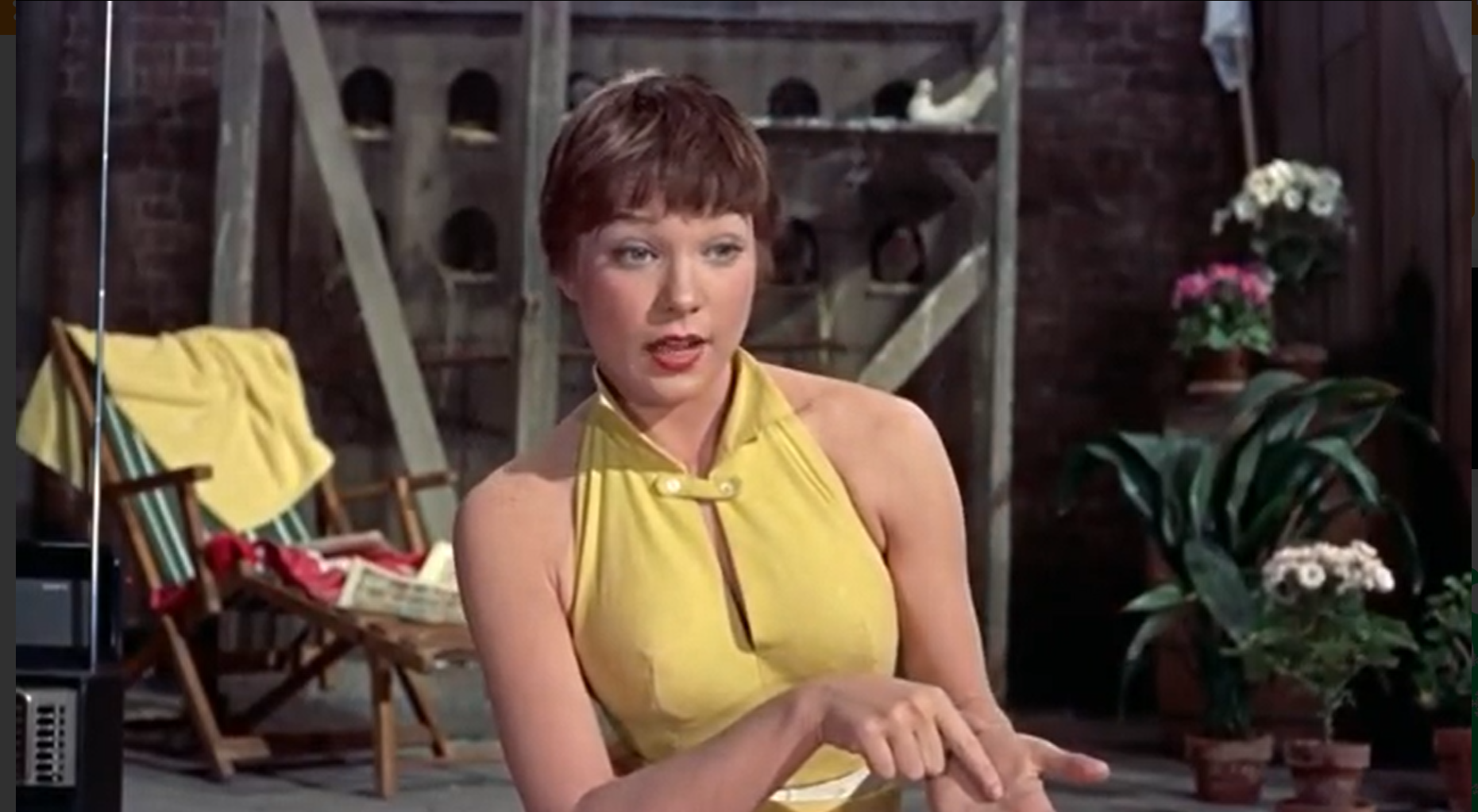
and between Lewis and MacLaine (who is surprisingly annoying, rather than endearing, in one of her earliest roles).

Meanwhile, the storyline really begins to falter once a Cold War-era “secret formula” spy plot — with Eva Gabor as a sexy foreign agent — enters the picture.

Ultimately, by its zany slapstick/musical ending, Artists and Models has worn out its welcome — but it’s still worth a look during its first half.

Note: Watch for some interesting homosexual tension between Martin and Lewis (evident in all their films together, but especially prominent here): Martin literally threatens to “divorce” Lewis; Lewis gives Martin a series of kisses on behalf of several people.

Redeeming Qualities and Moments:

  • Creatively eye-popping sets

  • Vibrant Technicolor cinematography
  • Reasonably clever satirical skewering of the effect of comics
  • Eddie Mayehoff as Mr. Murdock

Must See?
Yes, simply to have seen a representative Lewis and Martin partner-flick.

Categories

  • Representative Film

(Listed in 1001 Movies You Must See Before You Die)

Links:

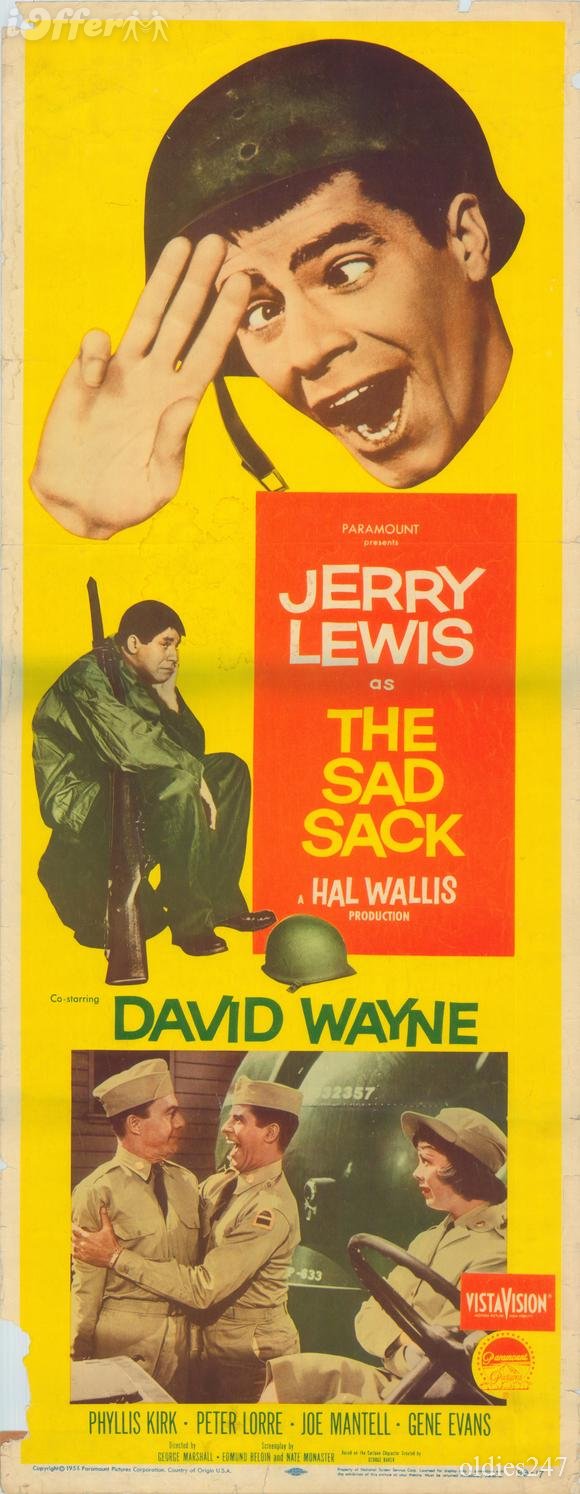
Sad Sack, The (1957)

Sad Sack, The (1957)

“If we can make a soldier out of a man with that kind of a record, it will pave the way for the Bixbys of tomorrow.”

Synopsis:
An army psychologist (Phyllis Kirk) tasks two servicemen (David Wayne and Joe Mantell) with helping a physically inept soldier (Jerry Lewis) to pass basic training. When she discovers Bixby (Lewis) has a photographic memory, she sends him on a secret mission to Morocco, where he falls in love with a beautiful nightclub dancer (Liliane Montevecchi).

Genres, Themes, Actors, and Directors:

  • Comedy
  • Comics and Comic Strips
  • George Marshall Films
  • Jerry Lewis Films
  • Peter Lorre Films
  • Soldiers

Review:
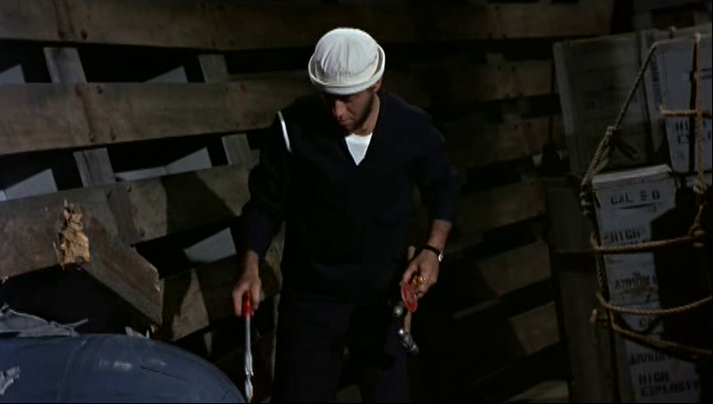
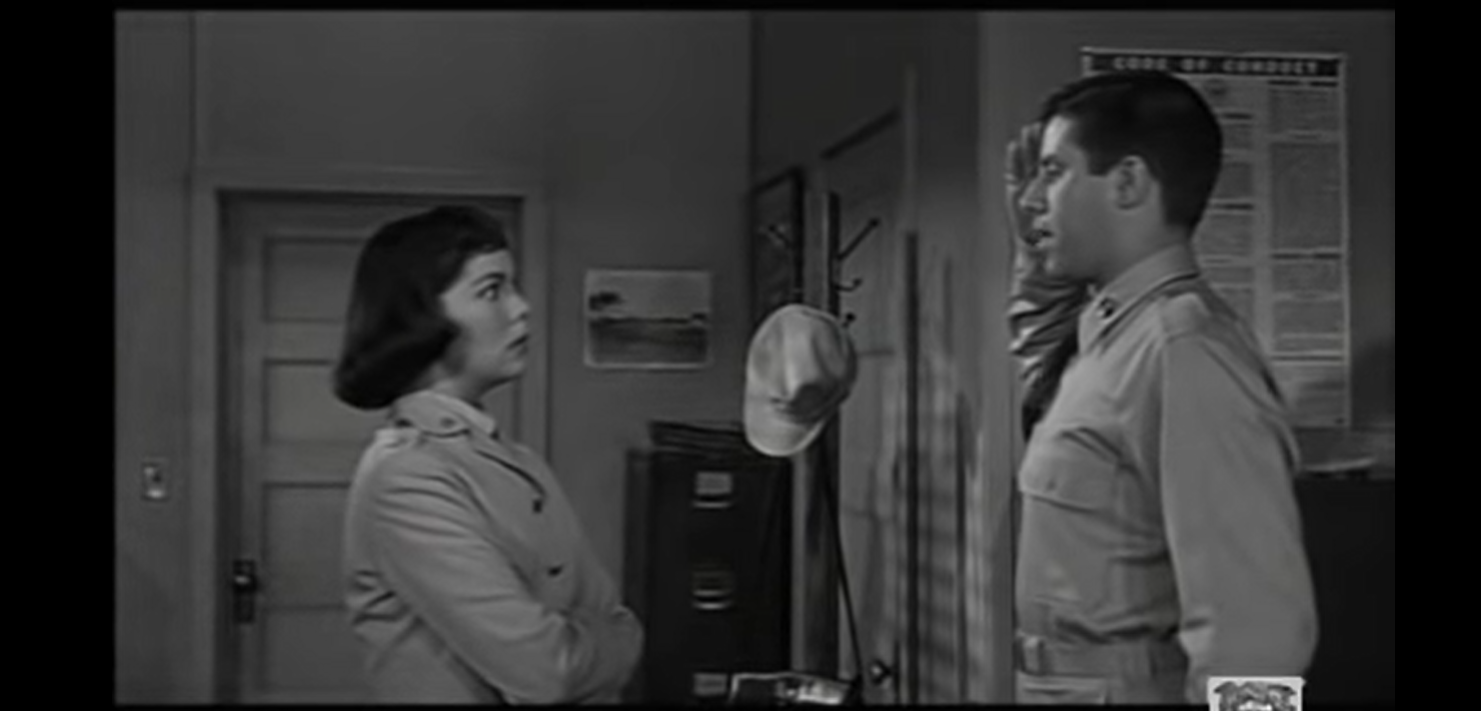
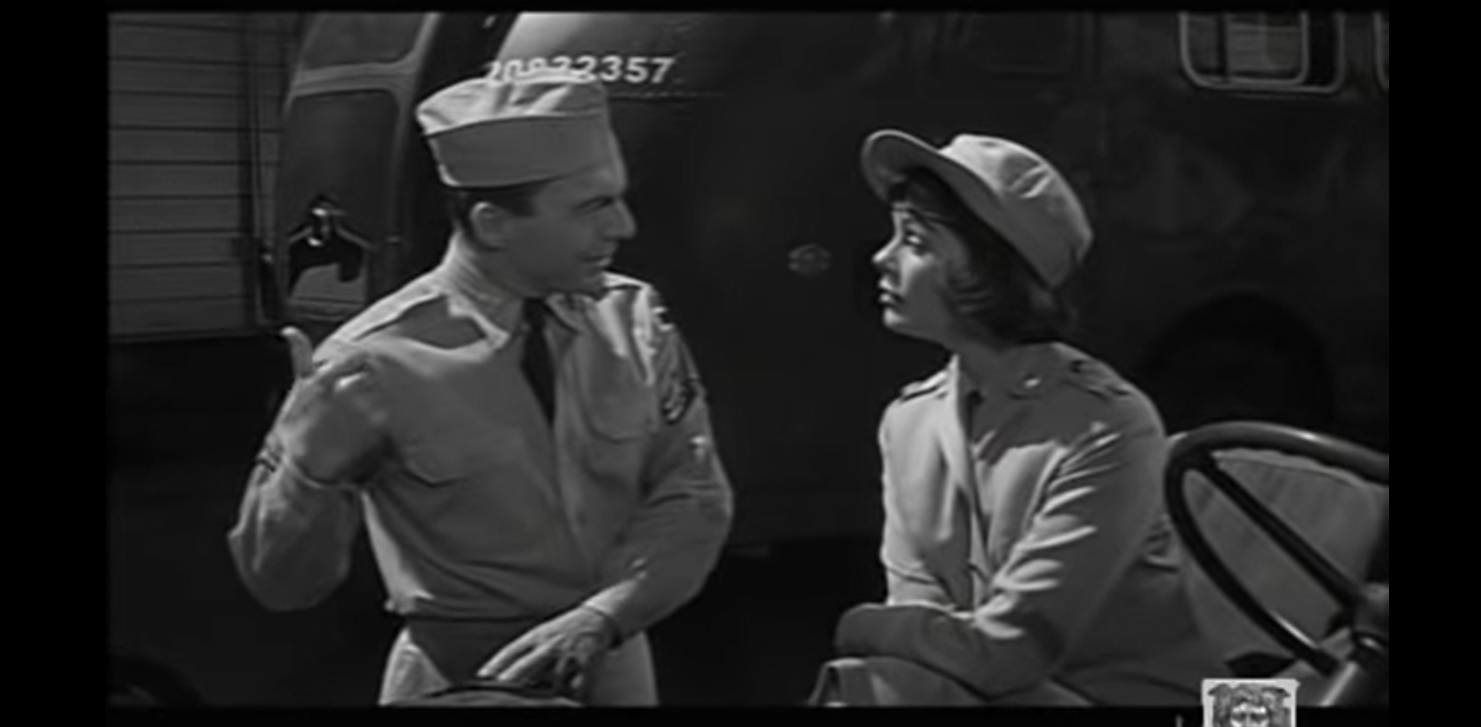
Based on a beloved WWII-era comic book series by George Baker, this was Jerry Lewis’s second solo feature after breaking with his longtime partner, Dean Martin. I’m honestly not sure why Peary includes it in his book, given that absolutely nothing about it stands out as particularly noteworthy, and in general it’s simply a real mess. Lewis plays yet another variation on his typically bumbling self:

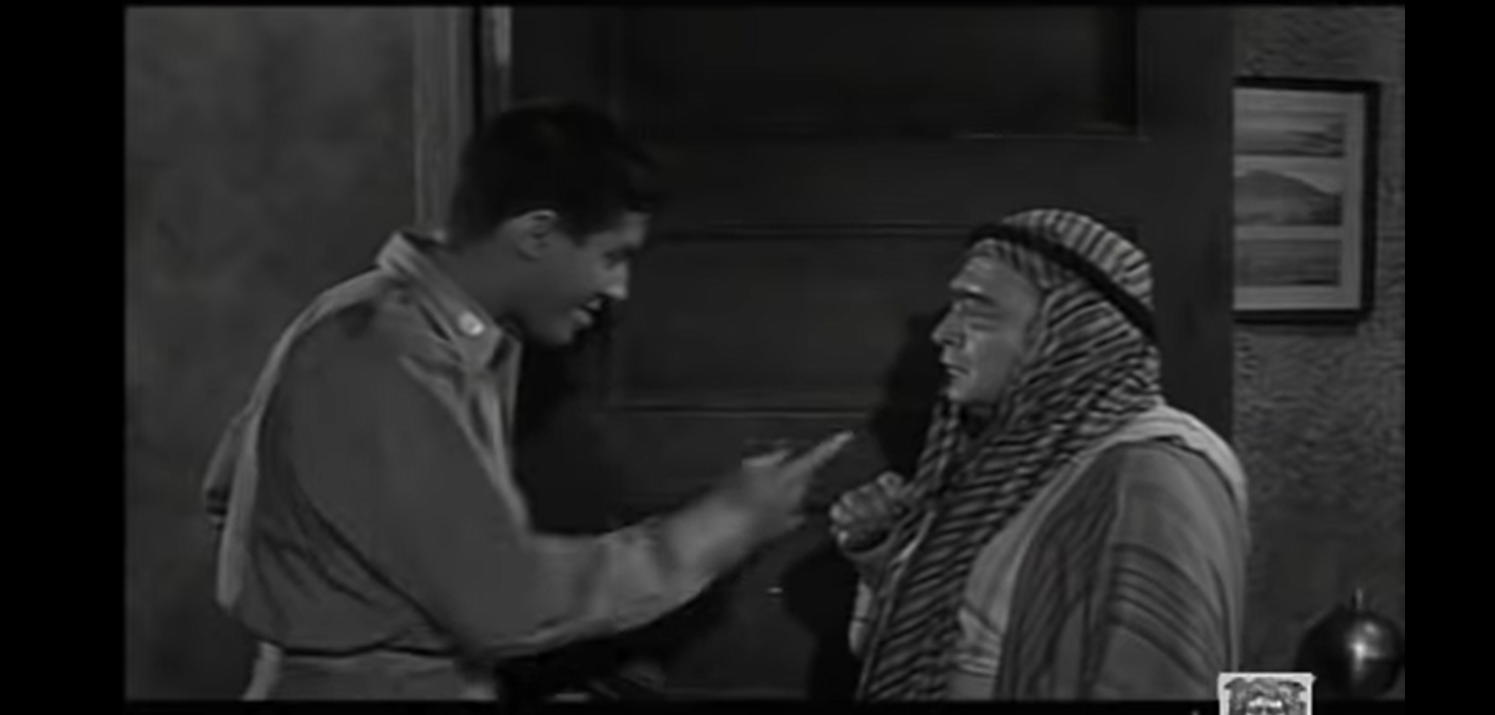
though in this case he also happens to be a savant of sorts, with a photographic memory and the ability to utilize said memory to grapple with complex mechanical concerns — thus leading to the film’s “exotic” second half, taking place in a sound-stage simulation of Morocco where Peter Lorre truly embarrasses himself in a demeaning bit role as an Arab baddie.

Meanwhile, feeble attempts at anti-feminist humor are doused liberally throughout, primarily at the expense of poor Kirk, whose romantic attraction to Wayne is surely one of the least convincing couplings ever attempted.

I suppose fans of the comic book series might be curious to see how its central protagonist is transformed into a flesh-and-blood character — but I doubt they’ll be very pleased.

Redeeming Qualities and Moments:
I can’t really think of anything at the moment.

Must See?
No; this one is definitely only must-see for Jerry Lewis fans.

Links: