Browsed by
Category: Original Reviews

Responses to Peary’s “must see” movie reviews, as well as my own “must see” movie reviews up to and after 1986 (when Peary’s book was published).

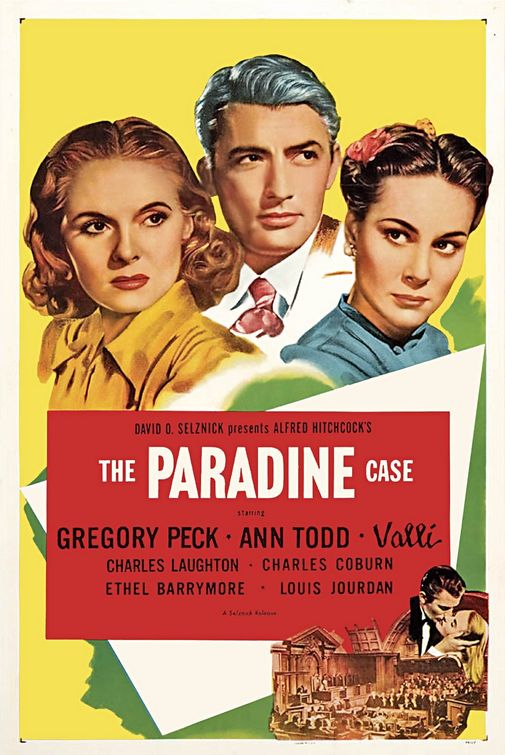
Paradine Case, The (1947)

Paradine Case, The (1947)

“I may not be the cleverest woman in the world, and there are lots of things I don’t know, but there’s one thing I know better than anyone else: I know you.”

Synopsis:
A married attorney (Gregory Peck) becomes obsessed with the beautiful widow (Alida Valli) he’s defending, much to the consternation of his loyal wife (Ann Todd).

Genres, Themes, Actors, and Directors:

  • Alida Valli Films
  • Charles Coburn Films
  • Charles Laughton Films
  • Courtroom Drama
  • Ethel Barrymore Films
  • Gregory Peck Films
  • Hitchcock Films
  • Louis Jourdan Films
  • Marital Problems

Review:
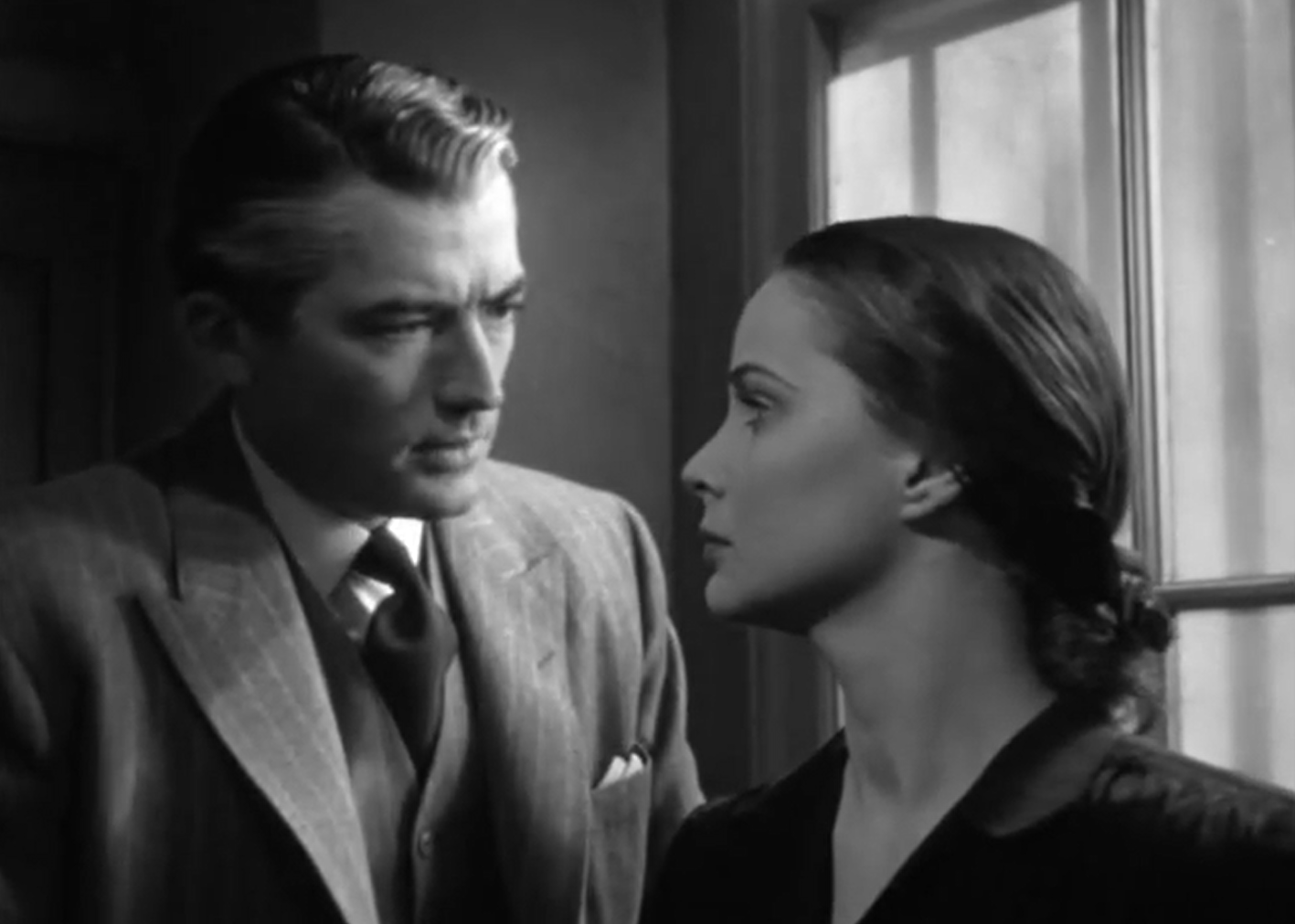
Alfred Hitchcock’s final film for producer David Selznick is widely regarded as one of his lesser efforts — and upon revisiting it, I’m inclined to agree. All the required ingredients for a fine Hitchcockian melodrama are present, but they never quite gel. Perhaps the greatest fault lies in the central conceit of Peck’s happily married barrister falling almost instantly in love with the enigmatic Valli: while she’s certainly gorgeous and sexually alluring, her personality (she’s consistently cold and aloof) isn’t nearly compelling enough to help us understand his infatuation.

Meanwhile, we’re simply exasperated by Todd’s overly compassionate approach to the “situation” she finds herself in; would any wife REALLY be quite that understanding and forgiving upon hearing her husband confess that he’s in love with another woman?

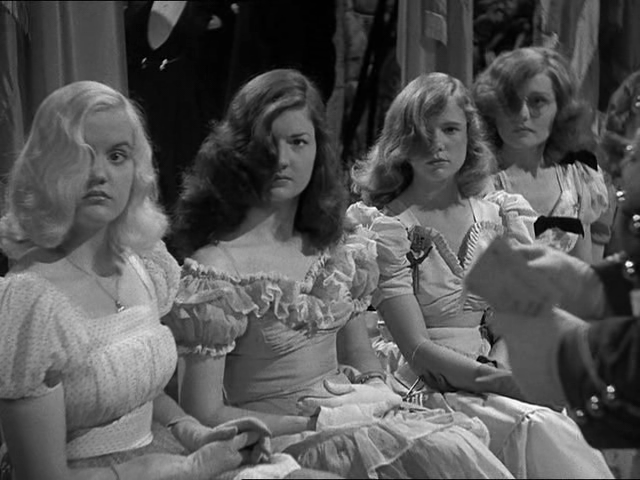
Another facet of the problem may lie in the fact that the film was drastically cut (it originally ran three hours), so certain elements are necessarily given short shrift; Charles Laughton as the lecherous judge overseeing the case, for instance, presents as simply a cameo:

while his interactions with his highly sensitive wife (Ethel Barrymore) seem to belong to another movie entirely.

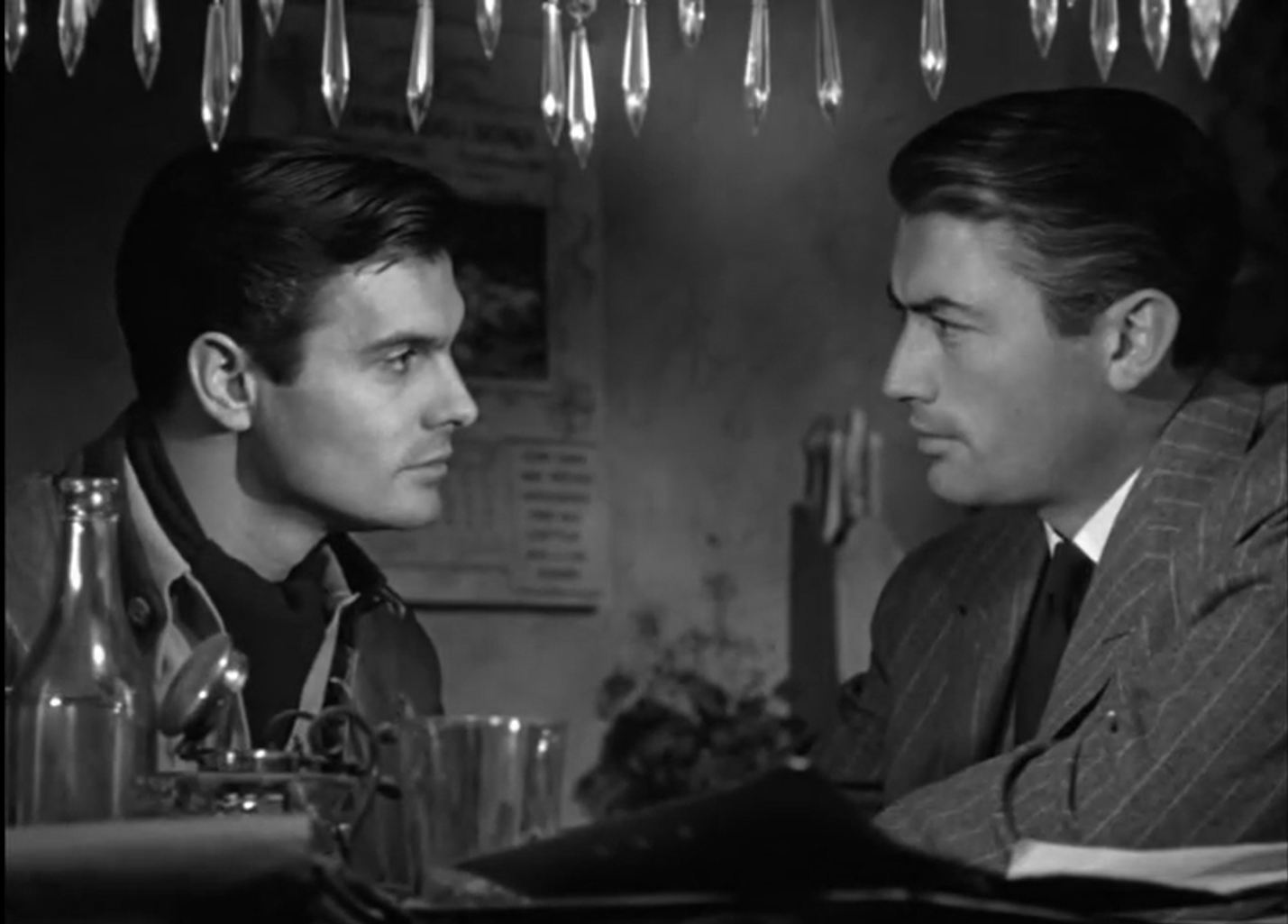
Louis Jordan does a fine job playing the valet accused by Peck of murdering Valli’s blind husband — but his critical role, too, seems to merit further expansion.

Ultimately, one watches The Paradine Case from a state of odd detachment, mildly curious to learn the truth behind the murder mystery, but sadly uninvolved on an emotional level.

Redeeming Qualities and Moments:

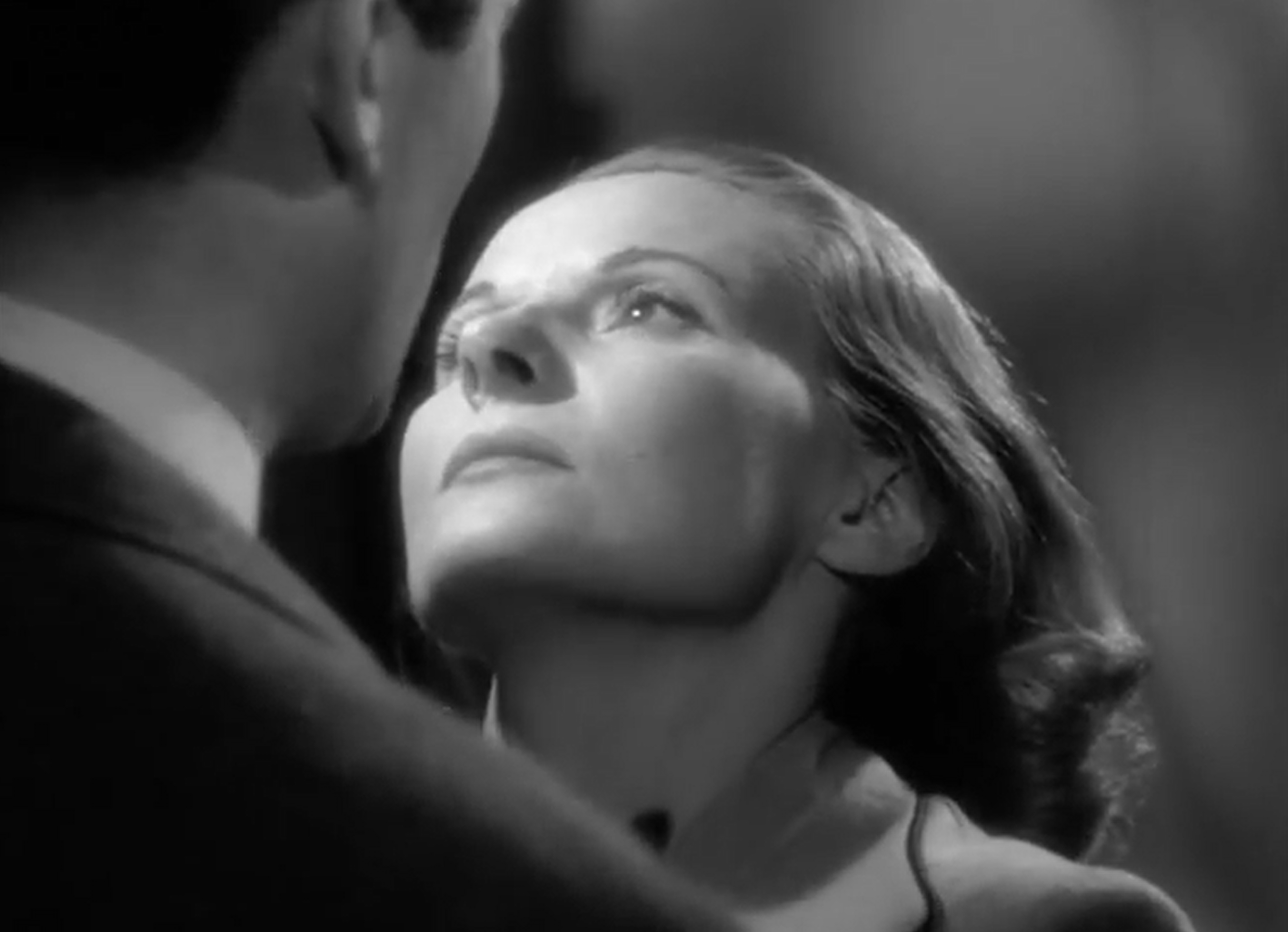
  • Lee Garmes’ cinematography

Must See?
No; this one is only must-see for Hitchcock completists.

Links:

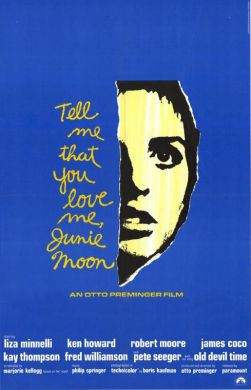
Tell Me That You Love Me, Junie Moon (1970)

Tell Me That You Love Me, Junie Moon (1970)

“We’re all freaks — so don’t try to steal the show!”

Synopsis:
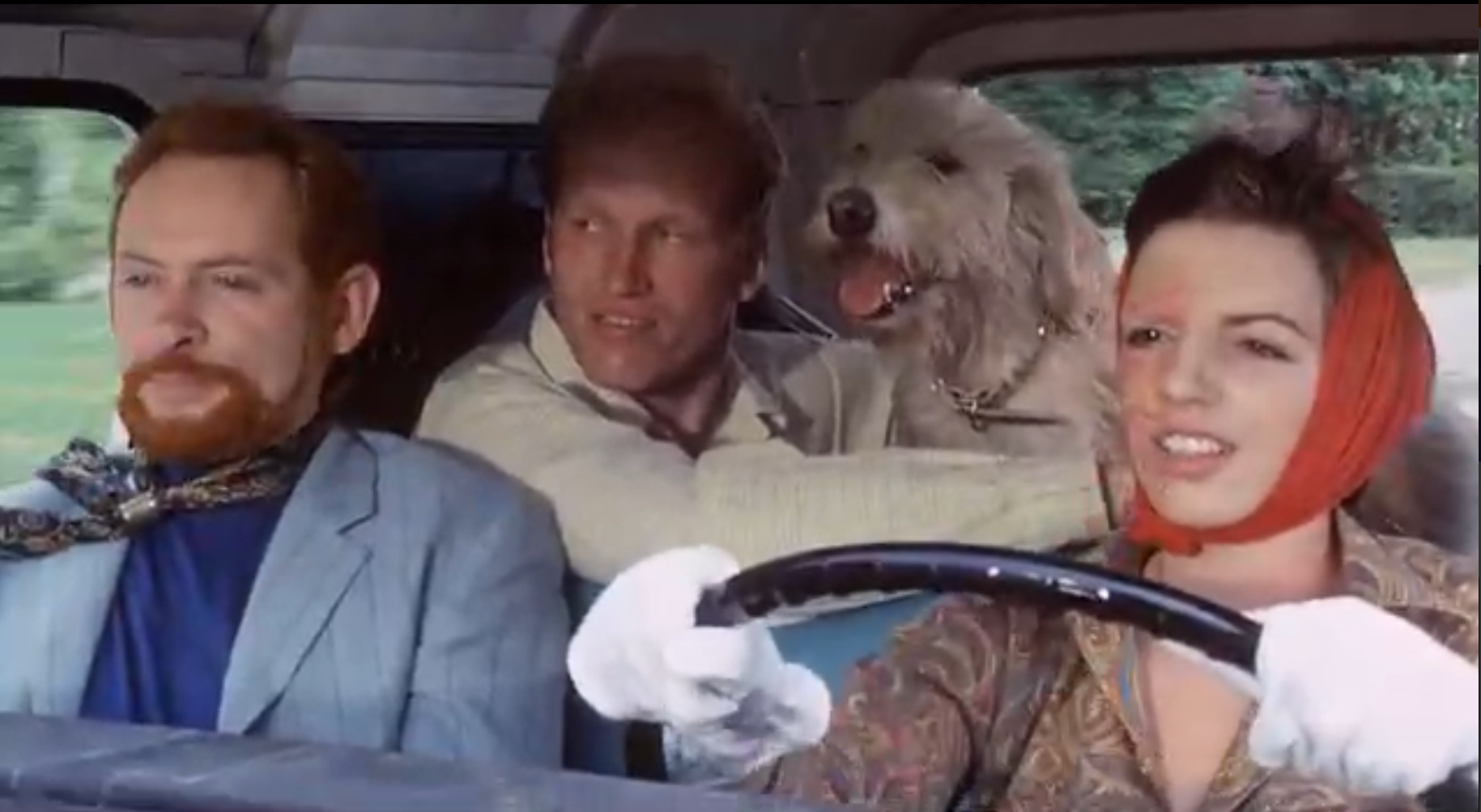
A young woman (Liza Minnelli) disfigured by an abusive date (Ben Piazza) finds solace and friendship when she rents a house with a gay paraplegic (Robert Moore) and an epileptic (Ken Howard).

Genres, Themes, Actors, and Directors:

  • Disabilities
  • Disfigured Faces
  • Liza Minnelli Films
  • Misfits
  • Otto Preminger Films

Review:
Based on a novel by Marjorie Kellogg, Tell Me That You Love Me, Junie Moon is one among several oddities in Otto Preminger’s late-life directorial career, when he was making movies so far removed from his earlier successes — such as Laura (1944), The Man With the Golden Arm (1955), and Anatomy of a Murder (1959) — that it’s honestly challenging to associate them with the same individual. While nowhere near as bizarre as Skidoo (1969), or as tawdrily melodramatic as Hurry Sundown (1967), … Junie Moon (even its title smacks of kitschy-coo) unfortunately presents itself as intentionally kooky — the type of insufferable story about lovable misfits banding together which indie directors these days seem to churn out in spades.

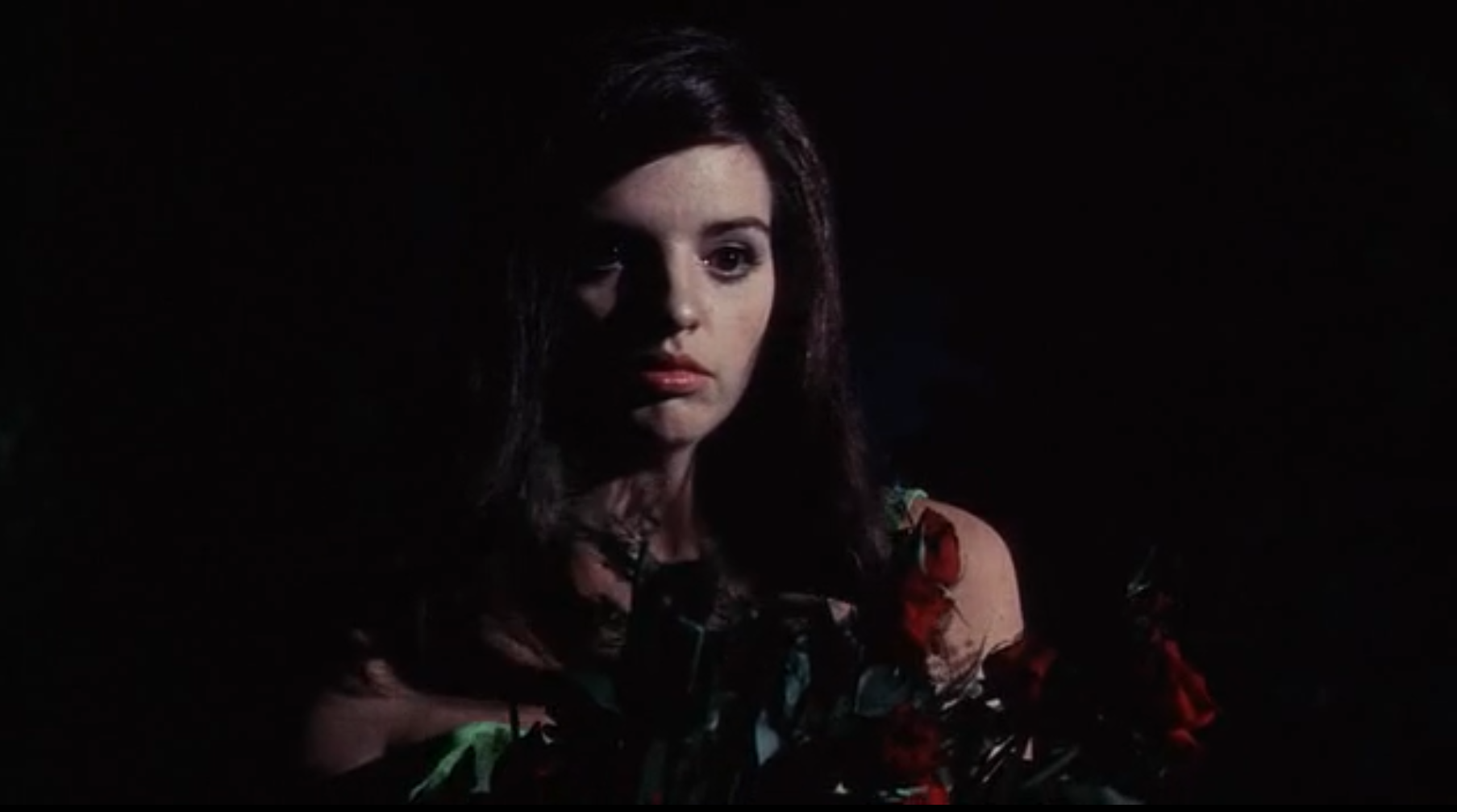
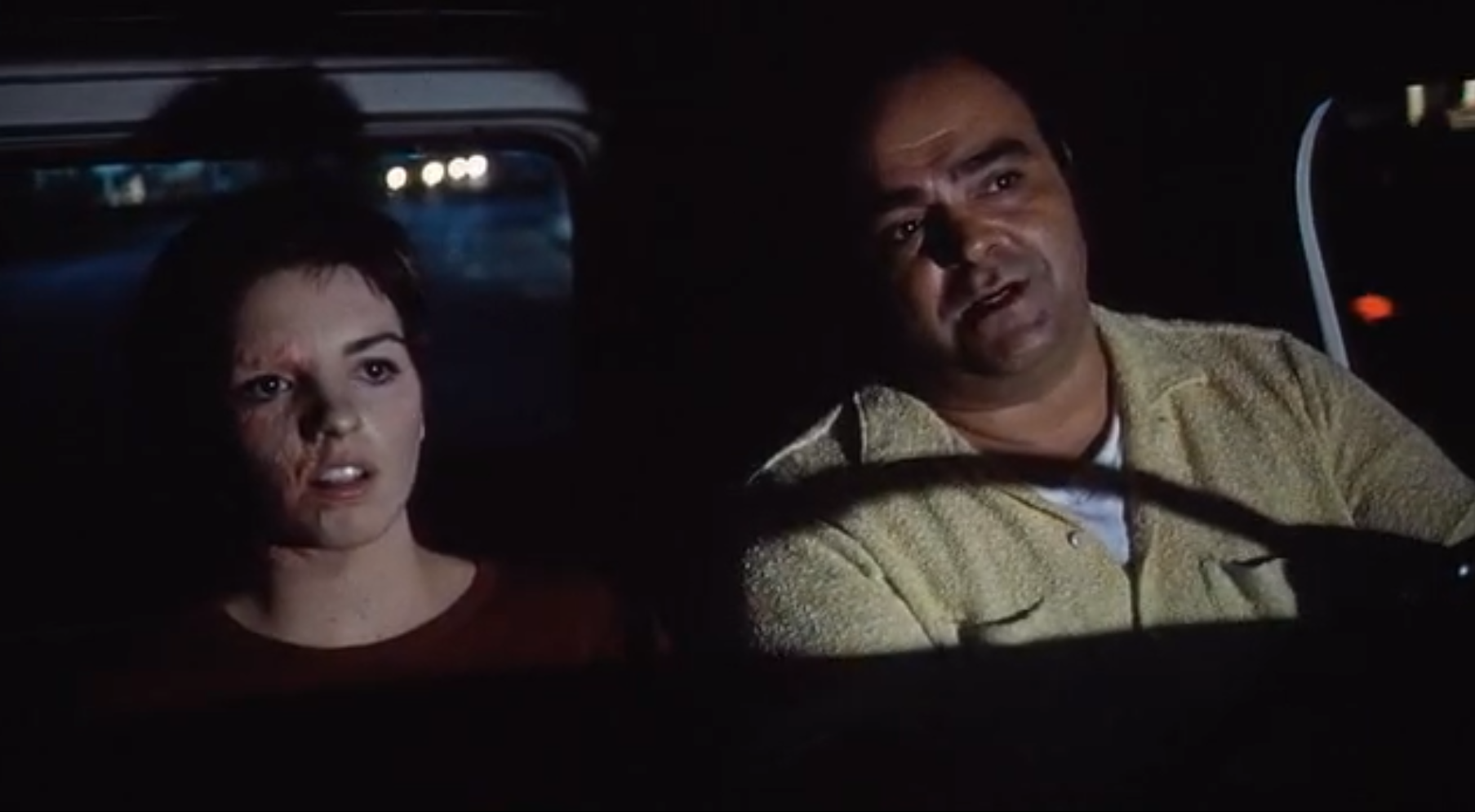
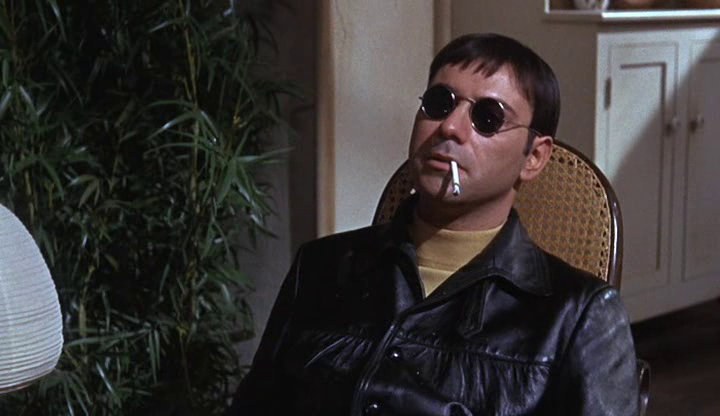
We’re made privy to each character’s “sordid” background story through dramatic flashbacks (beginning with a surreally scored scene in which we see how the once-beautiful Minnelli came to receive her tragic burns):

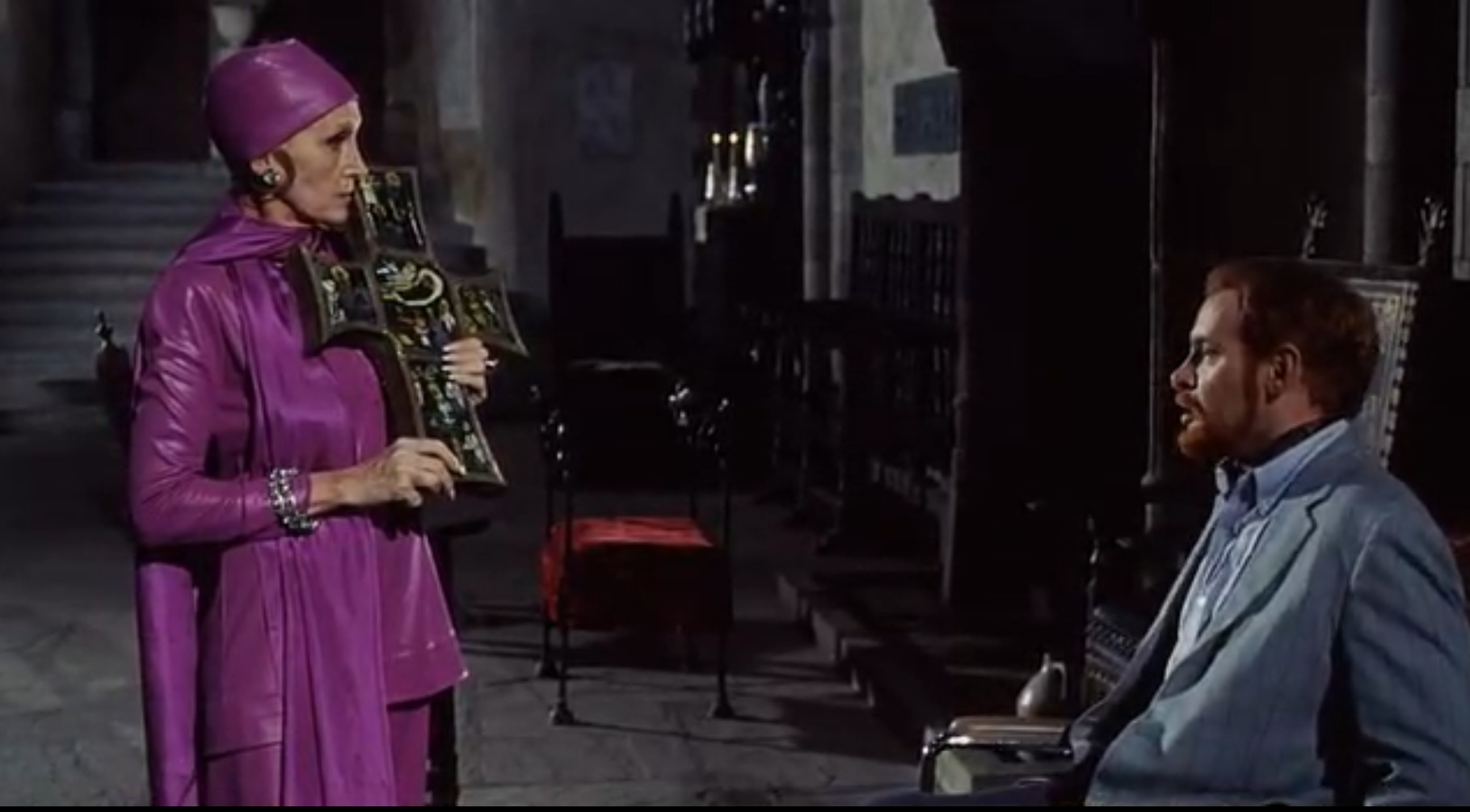
The remainder of the insipidly scripted film is simply concerned with detailing how they come to (marginally) accept themselves and find (temporary) happiness. Kay Thompson appears in near-cameo as the trio’s brusque and eccentric landlord:

… while James Coco is given a pathetically underdeveloped role as a fishmonger with an inexplicable crush on Minnelli.


Redeeming Qualities and Moments:

  • Robert Moore as Warren

Must See?
No; this one is simply a curiosity, and only a must-see for diehard Minnelli or Preminger fans.

Links:

Major and the Minor, The (1942)

Major and the Minor, The (1942)

“You know, SuSu, you’re a very peculiar child.”

Synopsis:
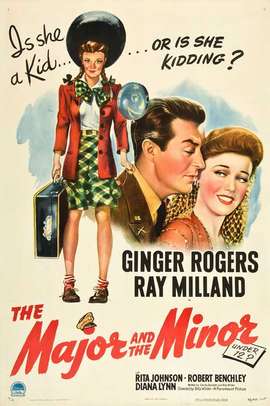
A young woman (Ginger Rogers) poses as a 12-year-old in order to buy a half-price train ticket, and falls for a kindly Army major (Ray Milland) who takes her under his wing. When visiting the military academy where Milland works, she enchants all the boys on campus, and poses a threat to Milland’s jealous fiancee (Rita Johnson).

Genres, Themes, Actors, and Directors:

  • Billy Wilder Films
  • Comedy
  • Ginger Rogers Films
  • Military
  • Mistaken or Hidden Identities
  • Ray Milland Films

Review:
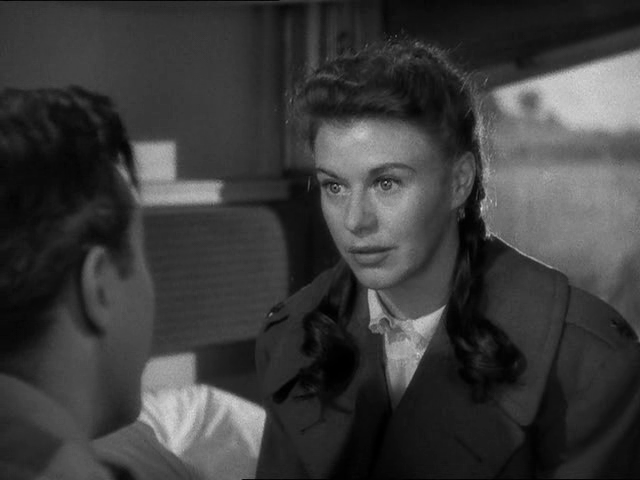
Billy Wilder’s directorial debut remains — as DVD Savant describes it — a “consistently hilarious, effortlessly diverting show”, one which “would lighten the spirits of someone on death row”. The premise is so silly and unbelievable that one happily suspends disbelief from start to finish, instead simply enjoying the ruse and rooting for the enormously appealing protagonists (Rogers and Milland). In his discussion of Rogers’ performance in Alternate Oscars (where he offers Rogers a split Best Actress Award, along with Carole Lombard for her work in To Be or Not to Be), Peary points out that “her attempts to be a kid aren’t particularly convincing”, given that “she can’t resist saying things with double meanings or under her breath”; despite her attempts to “keep her eyes wide and goofy”, to “walk awkwardly and graceless”, and to “display a vivid imagination”, her inner wisecracking dame shows through time and again. Yet this is precisely what makes her performance so amusing — and why we’re charmed by Milland’s apparent inability to see through her ruse.

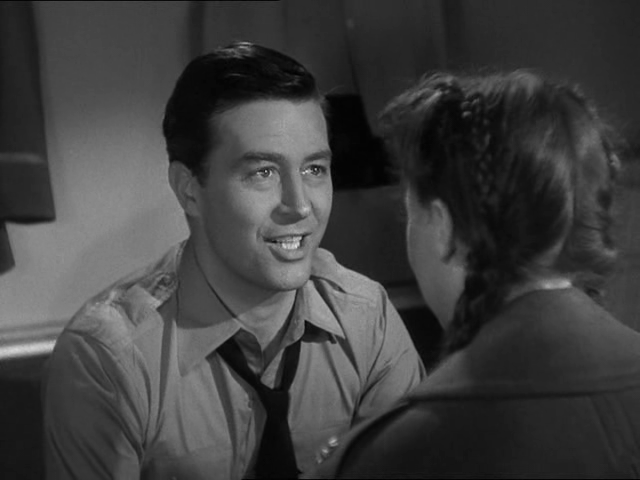
In a much less showy — but equally pivotal — role, Milland is perfectly cast as the kind-hearted yet hopelessly naive military man who takes SuSu under his wing. Given that the film eventually becomes a study in thinly veiled pedophilia (!), believing in his good graces (which we do) is essential. The film’s first half-hour — in which we witness “scalp massager” Rogers reaching her breaking point while being propositioned by a lecherous client (Robert Benchley) in New York, and “meeting cute” with Milland on the train — is probably its best; but the remainder of the storyline (taking place primarily at Milland’s military academy, where SuSu copes with dozens of would-be adolescent suitors) offers enough chuckles to keep us consistently amused. As DVD Savant points out, “The irony is that Susan ditched the Big Apple to be free of unwanted advances, only to be mauled and chased by a bunch of girl crazy” military cadets; she’s simply irresistible! The subplot involving Milland’s conveniently unsympathetic fiancee (Rita Johnson), who “keeps foiling his attempts at a transfer” to active duty, is slight but forgivable as a narrative device; more disappointing is the overly simplistic ending. However, this is easy to overlook in the face of what remains an otherwise most enjoyable romantic farce.

Redeeming Qualities and Moments:

  • Ginger Rogers as “SuSu”
  • Ray Milland as Major Kirby
  • Plenty of delightful exchanges and scenes

Must See?
Yes, as an all-around good show. Listed as a film with Historical Importance and a Personal Recommendation in the back of Peary’s book.

Categories

  • Good Show

Links:

Indiscreet (1958)

Indiscreet (1958)

“There is no sincerity like a woman telling a lie.”

Synopsis:
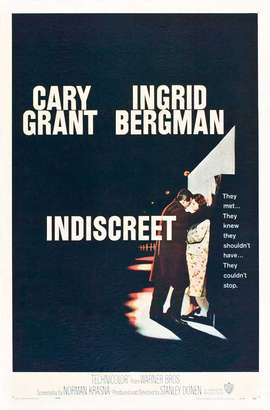
A successful actress (Ingrid Bergman) falls in love with an unhappily married diplomat (Cary Grant) who can’t divorce his wife; their passionate affair gets more complicated, however, when a disturbing secret is revealed.

Genres, Themes, Actors, and Directors:

  • Cary Grant Films
  • Ingrid Bergman Films
  • Play Adaptation
  • Romantic Comedy
  • Stanley Donen Films

Review:
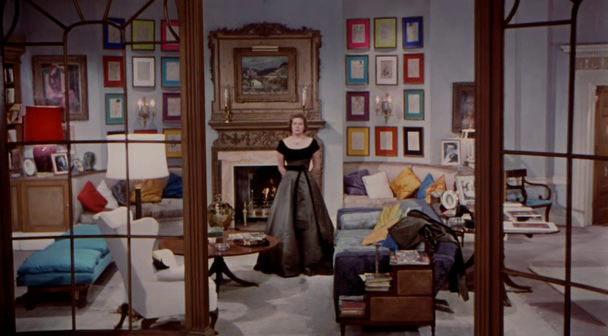
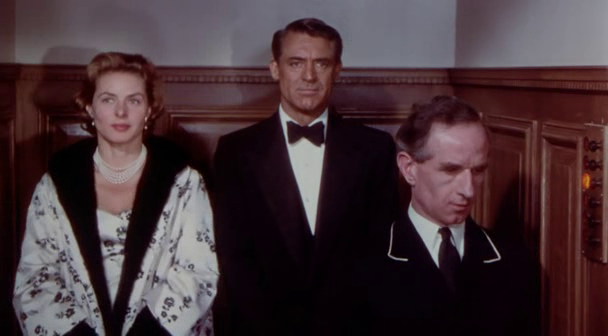
Twelve years after they co-starred in Alfred Hitchcock’s Notorious (1946), Cary Grant and Ingrid Bergman reappeared as screen lovers in Stanley Donen’s adaptation of Norman Krasna’s short-lived Broadway play Kind Sir; unfortunately, while both Grant and Bergman still possess potent chemistry together, the material here isn’t quite worth their talents or energy. The entire first hour of the film is concerned simply with showing their romantic courtship and “steamy” affair, complete with a cleverly filmed split-screen bedroom sequence (which predates the more infamous split-screen “bathroom sequence” in Pillow Talk by a full year). This all turns out to be an elaborate build-up to a substantial plot twist (don’t read about the film online if you wish to remain surprised) — but viewers may well find themselves impatient long before this point, and wondering where exactly things are going; the pacing feels off. While the twist itself adds some much-needed energy and punch to the proceedings, it never registers as anything other than a narrative device; meanwhile, the stagy denouement is both rushed and unrealistic. With that said, the film itself is consistently gorgeous to look at, from Freddie Young’s vibrant cinematography to visually innovative set designs (check out the still below of Bergman’s living room!) to the array of fashionable Christian Dior outfits Bergman is attired in — so at the very least, it provides pleasant eye candy throughout.

Redeeming Qualities and Moments:

  • Ingrid Bergman as Ann
  • Cary Grant as Philip
  • The innovative split-screen bedroom scene
  • Excellent set designs
  • Lovely Dior outfits

Must See?
No, but it’s recommended for fans of Bergman and/or Grant.

Links:

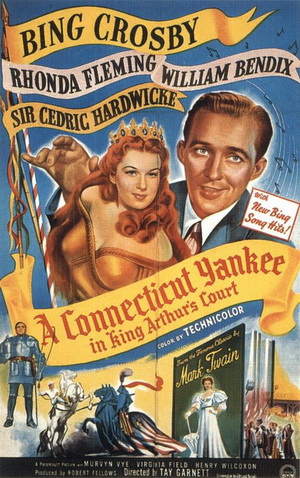
Connecticut Yankee in King Arthur’s Court, A (1949)

Connecticut Yankee in King Arthur’s Court, A (1949)

“Me thinketh I liketh Camelot — a lot.”

Synopsis:
A 20th century blacksmith (Bing Crosby) awakens from a hit on the head to find himself in medieval England, where he impresses King Arthur (Cedric Hardwicke) and Merlin (Murvyn Vye) with his technological know-how, and romances Lady Alisande (Rhonda Fleming) with his crooning melodies.

Genres, Themes, Actors, and Directors:

  • Bing Crosby Films
  • Historical Drama
  • Musicals
  • Royalty and Nobility
  • Time Travel

Review:
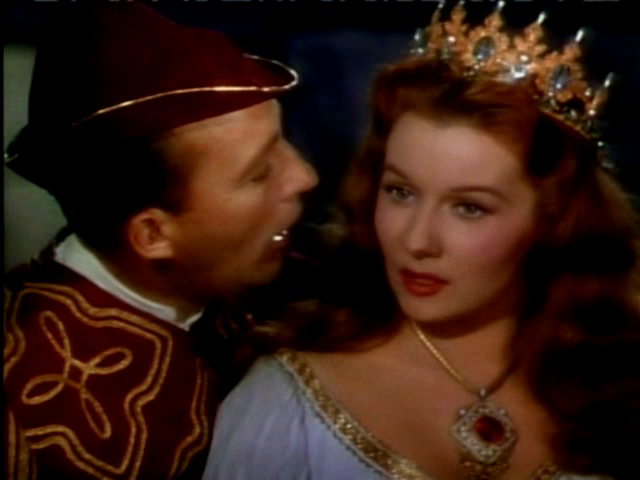
Mark Twain’s time-traveling sci-fi/fantasy novel has been filmed numerous times (including once with Will Rogers in 1931), but this Technicolor musical — a tailor-made Bing Crosby vehicle — is likely the best-known version. It’s a “feel-good”, song-filled adventure tale which allows Crosby to croon some forgettable ditties and get himself in and out of trouble numerous times, all while romancing gorgeous Rhonda Fleming (playing a vapid beauty with zero personality). Attempts at humor — mostly of the one-note variety — fall sadly flat; we’re meant to laugh at the fact that Harwicke’s sneezy King Arthur has a perpetually red and runny nose, for instance, and at Crosby’s modern-day attempts to speak in medieval lingo (viz. the selected quote above) — but it’s all simply tiresome. The film does have its devoted fans (see IMDb), but all-purpose film fanatics needn’t bother checking this one out.

Redeeming Qualities and Moments:

  • Vibrant Technicolor cinematography

Must See?
No; this one is strictly must-see for Crosby fans.

Links:

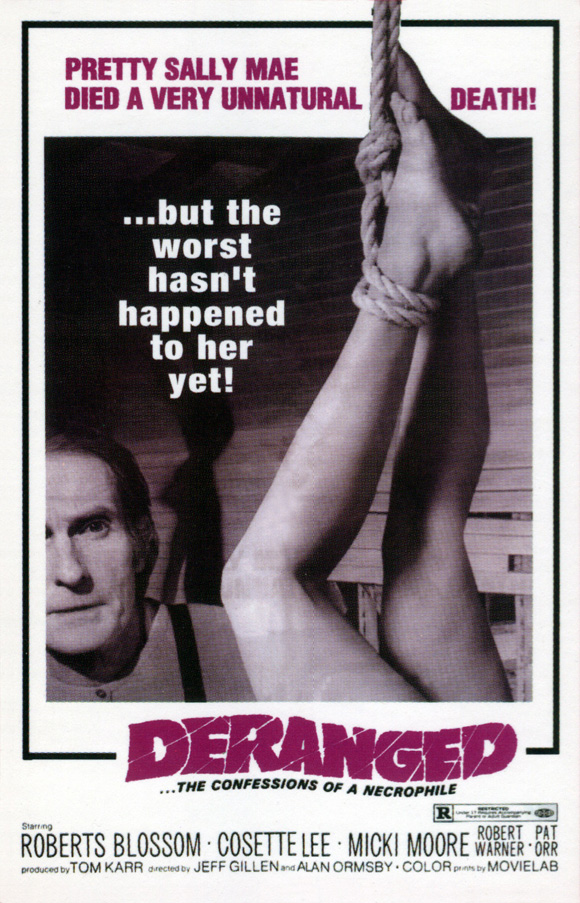
Deranged (1974)

Deranged (1974)

“I apologize for calling you a hog, mama.”

Synopsis:
A deranged farmer (Roberts Blossom) goes off the deep end when his overly religious mother (Cosette Lee) dies, recovering her body from its grave a year later, and murdering local women to help restore her decaying corpse.

Genres, Themes, Actors, and Directors:

  • Horror Films
  • Serial Killers

Review:
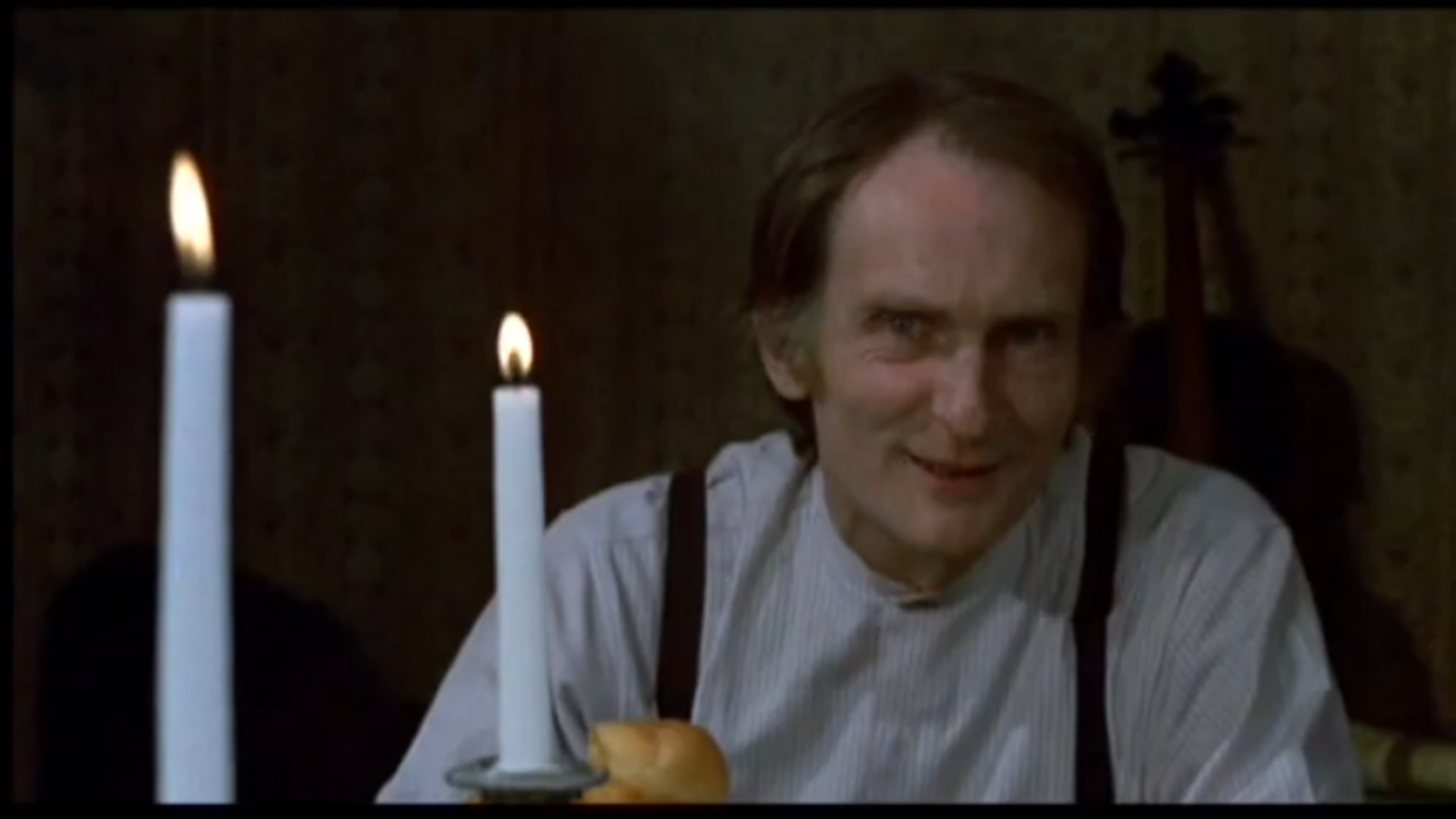
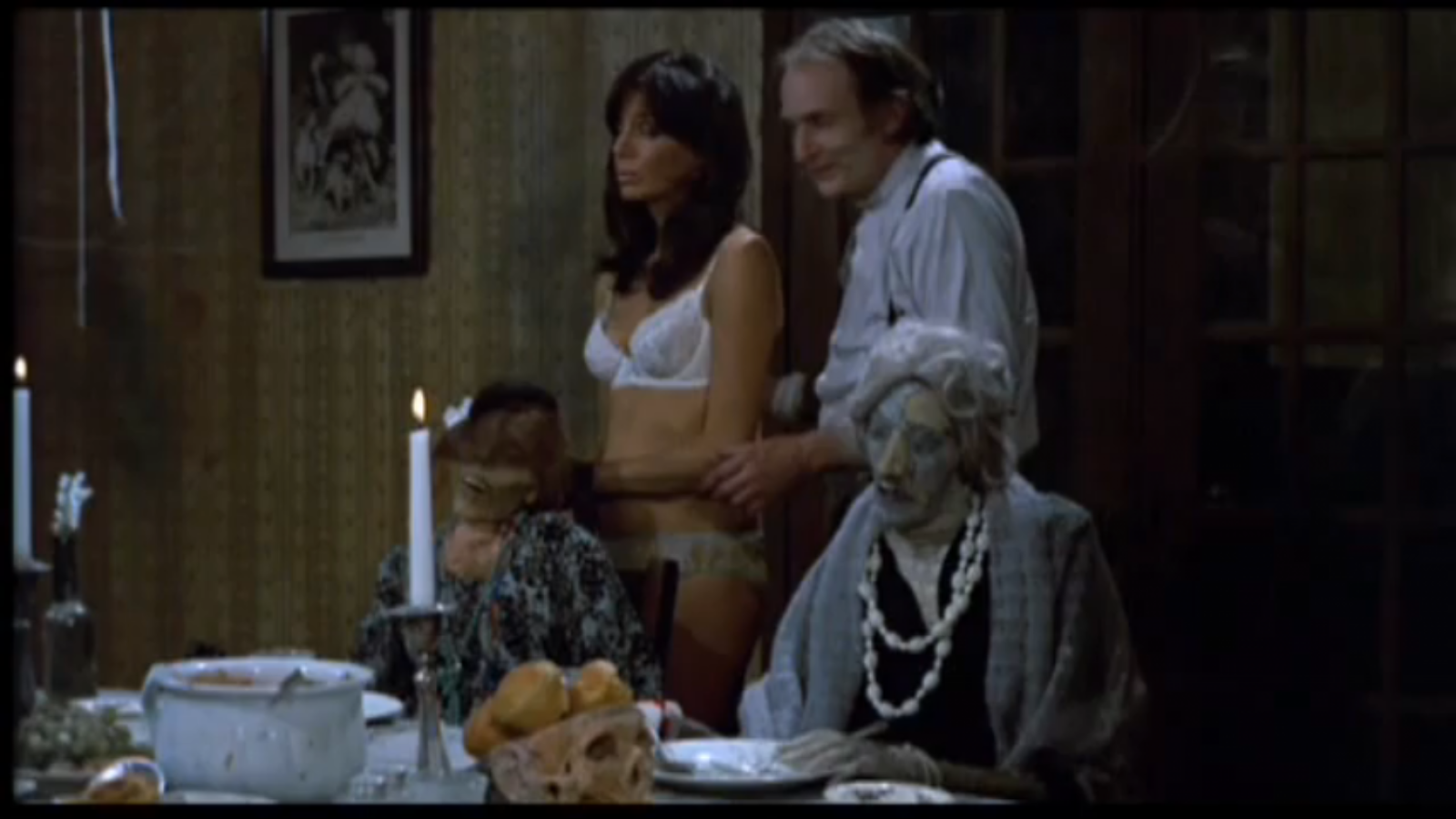
Essentially a thinly veiled biopic about “Mad Butcher” Ed Gein, Deranged remains a gruesome but surprisingly effective low-budget slasher flick. Most definitely not for the faint of heart, Deranged — filled with a healthy dose of black humor — spares no details in presenting the travails of its increasingly unhinged anti-hero, as it tracks his descent from dutifully compliant grown son to psychotic necrophiliac. Blossoms is well-cast in the central role, doing a fine job with an undeniably tricky character; we never doubt either his sincerity or his derangement for a single second. Co-directors Jeff Gillen and Alan Ormsby set up many tension-filled scenes (viz. barmaid Micki Moore’s introduction to Blossoms’ household existence!), which are all nicely paced and include a decent number of shocks and thrills; meanwhile, Carl Zittrer’s score (based thematically upon the hymn “Old Rugged Cross”) serves as an effective reminder about the religiosity behind Blossoms’ mental disturbance. I’m astonished to find myself recommending this one as must-see, but it’s good enough at what it sets out to do that I think it’s worth a look by all film fanatics.

Redeeming Qualities and Moments:

  • Roberts Blossom as Ezra
  • Many genuinely creepy moments
  • Jack McGowan’s cinematography
  • An effectively disturbing score

Must See?
Yes, simply as a well-crafted, low-budget genre flick — but be forewarned that it’s utterly gruesome. Listed as a Cult Movie in the back of Peary’s book.

Categories

  • Cult Movie

Links:

Country Girl, The (1954)

Country Girl, The (1954)

“They all start out as Juliets and wind up as Lady Macbeths.”

Synopsis:
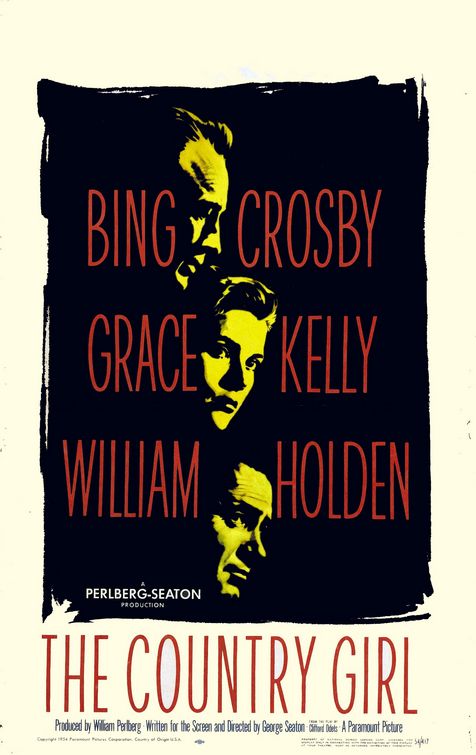
An aging has-been singer (Bing Crosby) with an embittered wife (Grace Kelly) is given a second chance at fame when a theatrical director (William Holden) insists on casting him as the star in an upcoming musical — but will Crosby’s insecurities and alcoholic tendencies prevent him from success?

Genres, Themes, Actors, and Directors:

  • Actors and Actresses
  • Bing Crosby Films
  • Grace Kelly Films
  • Has-Beens
  • Love Triangle
  • Play Adaptation
  • William Holden Films

Review:
Based on a play by Clifford Odets, this stagy melodrama will forever remain infamous as the film that “robbed Judy Garland of her Oscar”, given that a heavily deglamourized Grace Kelly won the Best Actress Oscar instead. Knowing this, one watches The Country Girl with an extra degree of skepticism — is Kelly’s performance really even a viable contender against Garland’s? Sadly, one emerges convinced that the rumors are all true: Garland WAS robbed.

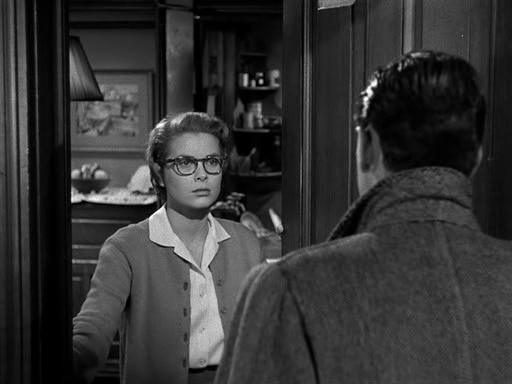
At first, Kelly’s performance is reasonably impressive, given that she does bravely (?) allow herself to be completely stripped of all charm and appeal (not to mention make-up), and convincingly embodies her character’s deeply held bitterness; but her portrayal ultimately emerges as one-note — and the film itself is such a troubled vehicle that it’s impossible to ever fully engage with her dilemma, or feel any genuine sympathy for her.

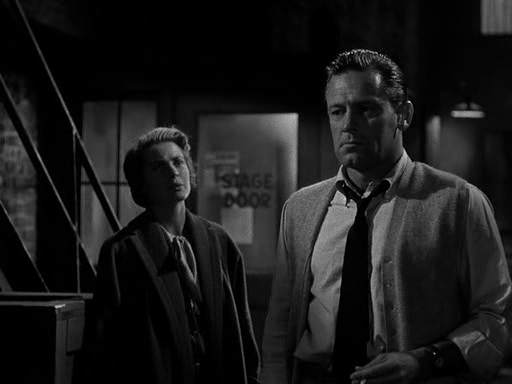
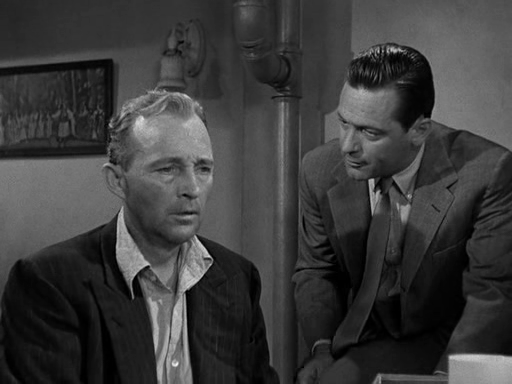
At its heart, The Country Girl is a tale of corrosive misogyny, with Holden’s cynical, divorced director so embittered by his own past romantic challenges that he seems to be questioning the utility of women in general — as evidenced in the following disturbing quotes:

“It’s a pity that Leonardo da Vinci didn’t have a wife to guide him; he might have really gotten somewhere.”
“I don’t like strong women, Mrs. Elgin.”
“You know why he lacks authority? Because his wife has too much of it.”
“They all start out as Juliets and wind up as Lady Macbeths.”

It’s up to Kelly, naturally, to convince Holden that all she’s ever wanted was for her husband to succeed — in other words, that’s she’s a good 1950s wife rather than a shrewish impediment to his happiness.

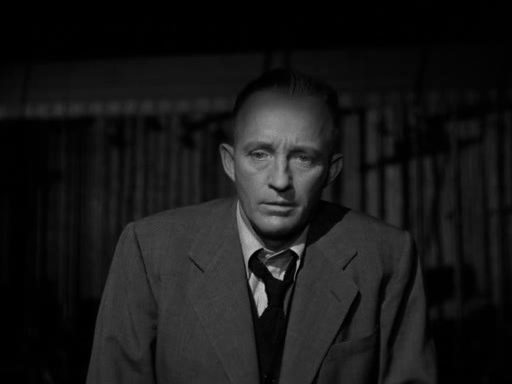
To say more about this evolution would give away spoilers — but suffice it to say that both her character arc and Holden’s feel palpably calculated. Meanwhile, Crosby provides the film’s only truly sympathetic performance:

Seemingly unafraid to present his character as the complex and conflicted individual he is, his cripplingly insecure Frank Elgin comes across as all too authentic and pathetic.

Redeeming Qualities and Moments:

  • Bing Crosby as Frank
  • Atmospheric cinematography

Must See?
No, though must film fanatics probably won’t be able to resist checking it out, given its historical notoriety. Listed as a film with Historical Importance in the back of Peary’s book.

Links:

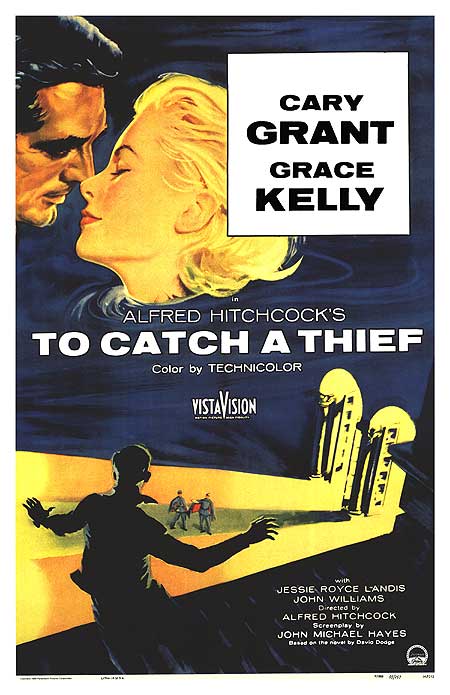
To Catch a Thief (1955)

To Catch a Thief (1955)

“I’ve never caught a jewel thief before; it’s stimulating.”

Synopsis:
During a rash of jewelry heists on the French Riviera, the daughter (Grace Kelly) of a wealthy widow (Jessie Royce Landis) tries to seduce a retired thief (Cary Grant) who’s busy attempting to clear his name.

Genres, Themes, Actors, and Directors:

  • Cary Grant Films
  • Falsely Accused
  • Grace Kelly Films
  • Hitchcock Films
  • Romance
  • Thieves and Criminals

Review:
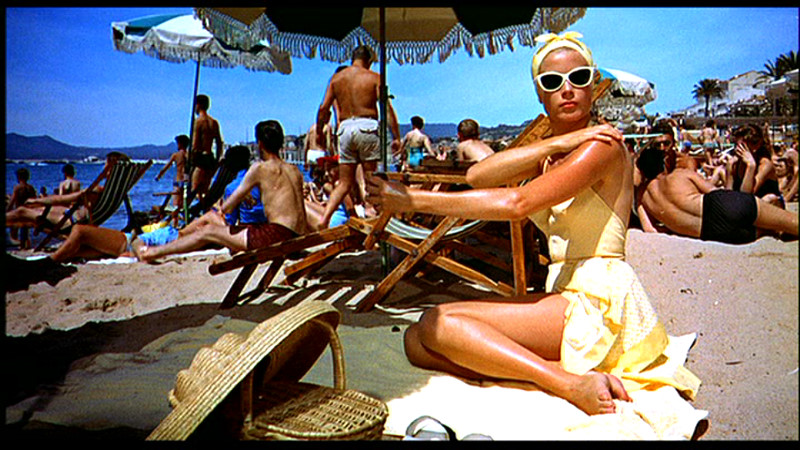
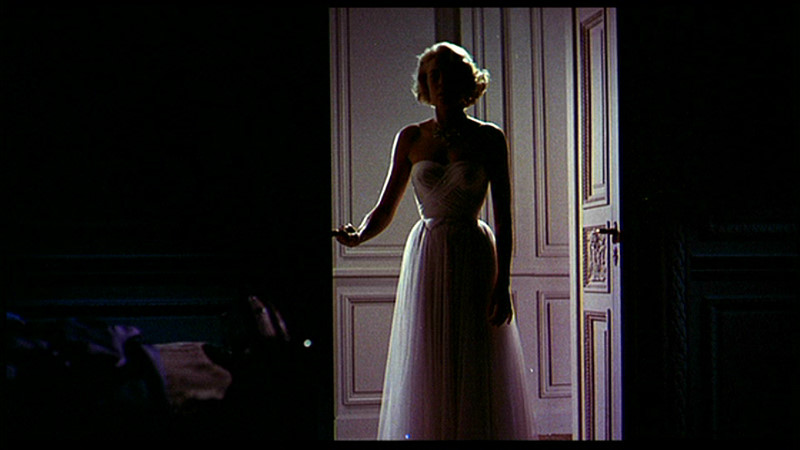
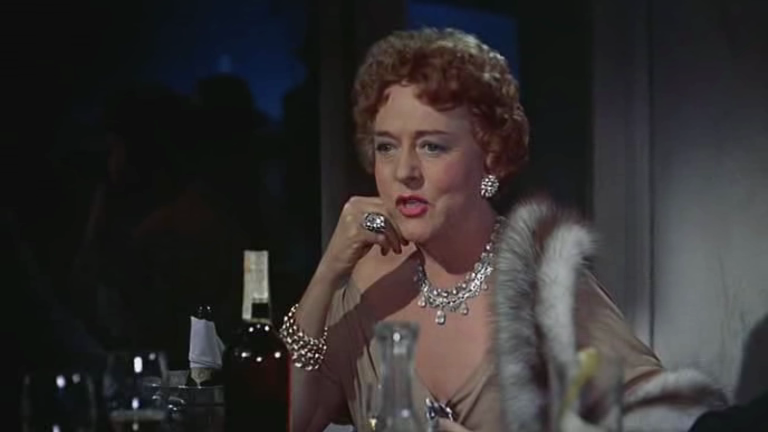
Made just after Rear Window (1954) and several years before North by Northwest (1959), the romantic-thriller To Catch a Thief is generally acknowledged as one of Hitchcock’s lighter-weight efforts. He managed to lure Cary Grant out of early retirement to star opposite Grace Kelly, who would soon be enjoying an early retirement herself, as the new Princess of Monaco; indeed, cultural historians will be interested to learn that it was during the filming of this movie that Kelly “spied a beautiful, walled garden she wanted to tour”, though “arrangements with the owner, Prince Rainier, could not be made in time”, and they didn’t meet until the following year. At any rate, the storyline of To Catch a Thief — essentially a whodunit combined with one of Hitchcock’s favorite tropes, a falsely accused man attempting to clear his name — is indeed a mere trifle; the primary enjoyment rests in soaking up the truly marvelous vistas along the French Riviera, which DP Robert Burks managed to capture in stunning Technicolor (I’ll admit to salivating). Grant (in fit form) and Kelly (gorgeous, naturally) are both fine romantic leads, but it’s Jessie Royce Landis — perhaps best known for playing Grant’s mother in NXNW — who really stands out here, playing a refreshingly humble heiress who consistently surprises us with her relaxed attitude towards life.

Redeeming Qualities and Moments:

  • Fabulous location shooting on the French Riviera
  • Robert Burks’ Technicolor cinematography

  • Jessie Royce Landis as Mrs. Stevens

Must See?
No, though it’s recommended for one-time viewing, and certainly a must for Hitchcock, Grant, or Kelly fans.

Links:

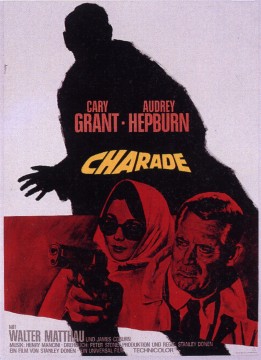
Charade (1963)

Charade (1963)

“I already know an awful lot of people; until one of them dies, I couldn’t possibly meet anyone else.”

Synopsis:
A young widow (Audrey Hepburn) pursued by three ex-compatriots (James Coburn, George Kennedy, and Ned Glass) of her deceased husband seeks solace and protection from a mysterious but friendly man (Cary Grant), who may or may not be equally interested in obtaining the $250,000 her husband supposedly had in his possession.

Genres, Themes, Actors, and Directors:

  • Audrey Hepburn Films
  • Cary Grant Films
  • George Kennedy Films
  • James Coburn Films
  • Mistaken or Hidden Identities
  • Murder Mystery
  • Stanley Donen Films
  • Walter Matthau Films
  • Widows and Widowers

Review:
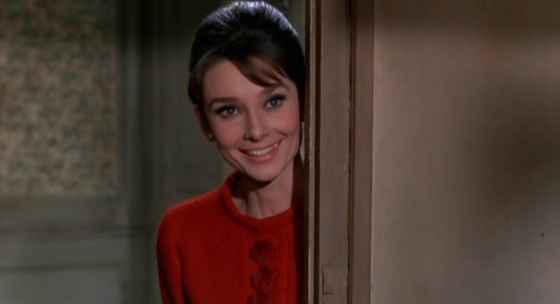
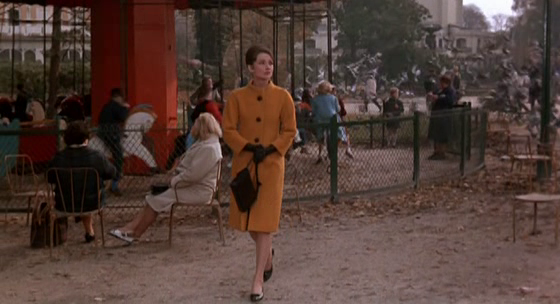
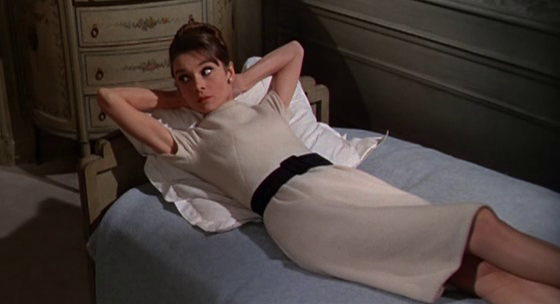
Infamously referred to as the “best Hitchcock film Hitchcock never made”, this Stanley Donen-directed romantic thriller has a lot going for it — including the only on-screen pairing of Cary Grant and Audrey Hepburn (who apparently loved working together), a clever script which offers plenty of surprises and violent shocks, and an overall air of breezy Parisian chic. Given its obvious credentials — and the wonderfully escapist enjoyment it offers — I was puzzled about my own niggling reticence with labeling it a true “classic”, until I read DVD Savant’s insightful (as always) review and realized I agree with his assessment that the film’s “only drawback [is]… a serious case of ‘the cutes’, a malady that seems to affect many ’60s films that want to capture a tongue-in-cheek cleverness.” Savant points out that “every word out of the mouths of Cary Grant and Audrey Hepburn is a guaranteed clever comeback, smart remark or flip observation, each delivered with more drollery than the last”; indeed, my primary complaint about the film is how easily Hepburn is able to glibly switch her focus back (again and again) to flirting with Grant, in the midst of her life being seriously in danger. Perhaps this is a function of the script having been changed (at the request of Grant) to make the much-younger Hepburn Grant’s pursuer, rather than the other way around; is it possible the same behavior coming from a man wouldn’t be quite so discomfiting?

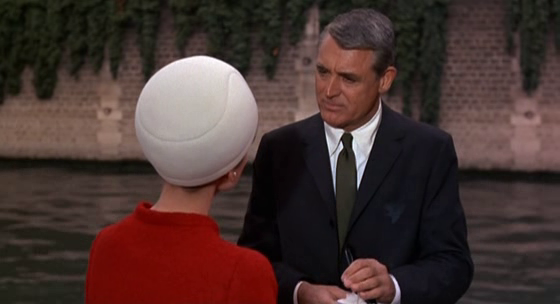
At any rate, despite this minor complaint, the film as a whole remains eminently enjoyable, and is guaranteed to keep you glued to the screen as you watch in anticipation to see which of the candidates (is it one of the three “baddies”, or the ever-elusive Grant himself?) will ultimately prove to be the real menace. Chances are you won’t guess correctly. Meanwhile, Donen makes very effective use of (largely) on-site locations in Paris; the performances (both lead and supporting) are all top-notch; and Hepburn is as lovely as ever in Givenchy (though it’s too bad she doesn’t get a chance to dress in at least one evening gown… oh well!). Hepburn and Grant possess fine chemistry together; Grant’s concerns about being too old as a romantic lead for her (perhaps in reaction to the lambasting Gary Cooper received after Love in the Afternoon) are ultimately unfounded. The final plot twist — where exactly is that stash of a quarter million dollars hidden? — is very cleverly handled as well.

Redeeming Qualities and Moments:

  • Audrey Hepburn as Regina Lampert
  • Cary Grant as “Peter Joshua”
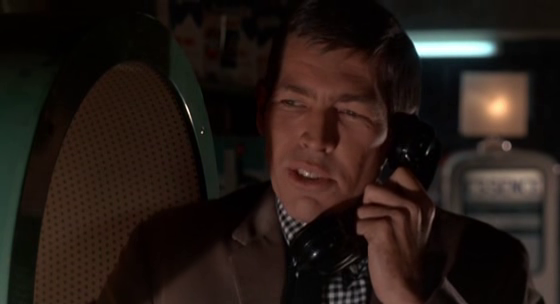
  • James Coburn as “Tex”
  • Fine use of authentic Paris locales
  • Lovely Givenchy outfits
  • Maurice Binder’s stylish opening titles

Must See?
Yes, as a stylishly classic thriller.

Categories

  • Genuine Classic

Links:

Wait Until Dark (1967)

Wait Until Dark (1967)

“This is the big bad world, full of mean people, where nasty things happen.”

Synopsis:
The blind wife (Audrey Hepburn) of a man (Efrem Zimbalist, Jr.) who unknowingly possesses a doll stuffed with heroin is terrorized by three men (Alan Arkin, Richard Crenna, and Jack Weston) determined to get the doll back at any price.

Genres, Themes, Actors, and Directors:

  • Alan Arkin Films
  • Audrey Hepburn Films
  • Blindness
  • Con-Artists
  • Play Adaptation<

Review:
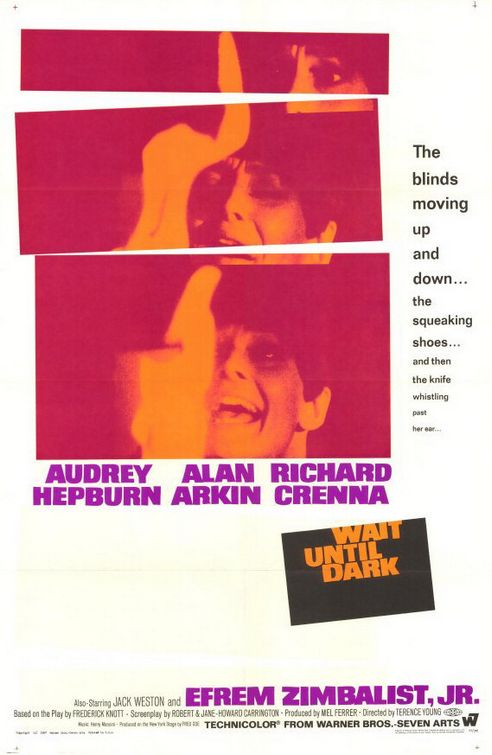
Wait Until Dark — based on a Broadway play by Frederic Knott (who also wrote Dial M for Murder) — is an often chilling and well-acted but ultimately frustrating thriller. It’s undone by its very premise, which is simply too contrived to swallow — beginning with the opening scenes, in which Hepburn’s naive husband (Zimbalist) befriends a beautiful woman (Samantha Jones) on a plane and agrees at the last minute to take a (heroin-filled, though he doesn’t know that) doll from her. After this puzzling, dialogue-free scene (frustratingly, we don’t learn until far too much later the rationale behind why Jones gave up the doll, and why Zimbalist accepted it), we’re suddenly plunged into the heart of the thriller, as we learn that the doll is now somewhere in Hepburn’s house — though once again, we’re given too little information to go on (what does Hepburn know about the doll, if anything?). Next, we’re introduced to an inexplicably bratty neighbor girl (Julie Herrod) who magically transforms into the more helpful assistant/accomplice Hepburn needs her to be, and we begin to learn more about the needlessly convoluted scenario the three con-men have devised in order to befriend Hepburn and convince her to give up the doll’s location.

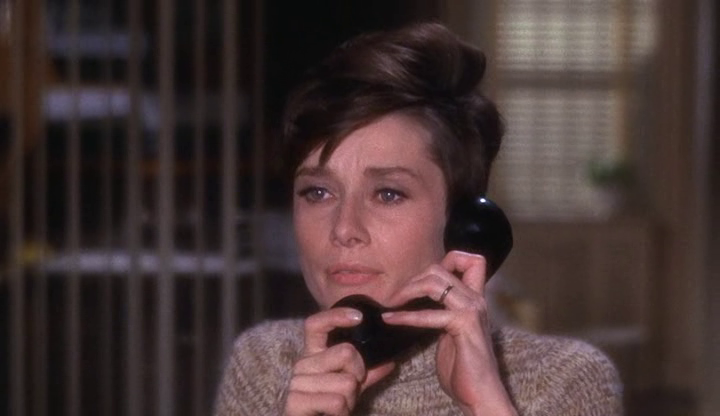
Clearly, there are flaws in the essential construction of the plot — yet director Terence Young does a fine job building and maintaining a fair amount of tension throughout; we can’t help wondering what will happen next, and how/when Hepburn will finally realize she’s being duped (then survive). The last half-hour of the film is particularly chilling, and is notable for supposedly offering audiences only the second on-screen instance of a now-very-common kind of horror thrill (which I can’t give away here at risk of divulging spoilers). The film as a whole remains of historic interest as well, given that it offered Audrey Hepburn her last significant role before her semi-retirement at the age of 38; along with Young, she trained extensively beforehand at a nearby institute for the blind, and is remarkably convincing. She deserved her Academy Award nomination for the role — though interestingly, Peary insists she actually should have been given the award for her performance the same year in Stanley Donen’s Two for the Road, and neglects to even nominate her for her work here.

Redeeming Qualities and Moments:

  • Audrey Hepburn as Susy Hendrix
  • Alan Arkin as Roat
  • The chilling finale
  • Henry Mancini’s score

Must See?
No, but it’s certainly recommended for one-time viewing.

Links: