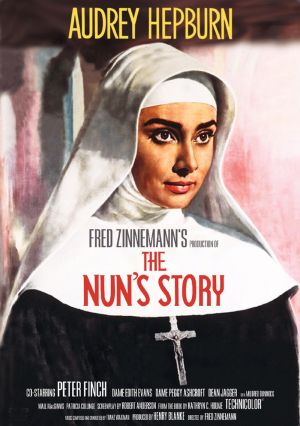
Nun’s Story, The (1959)
“Your personal wishes cease to exist when you enter that door.”
|
Synopsis: |
|
Genres, Themes, Actors, and Directors:
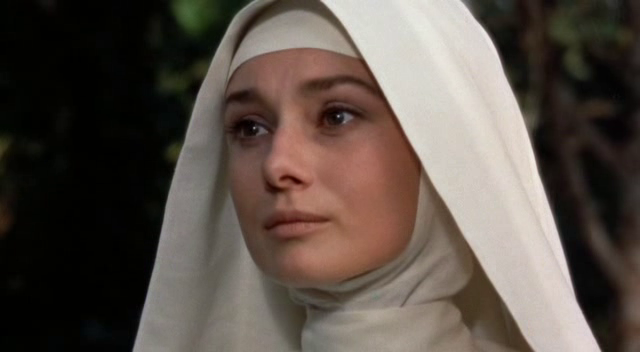
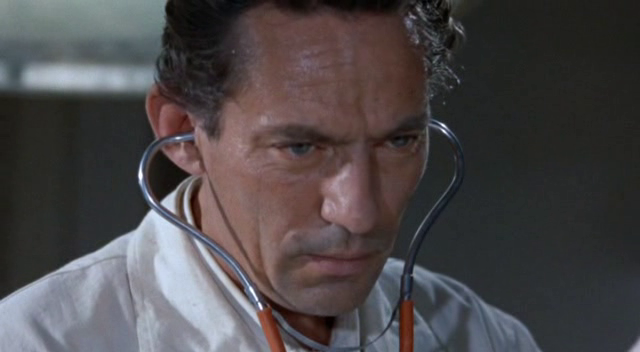
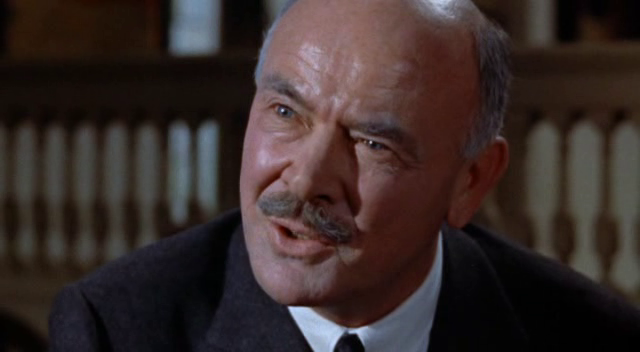
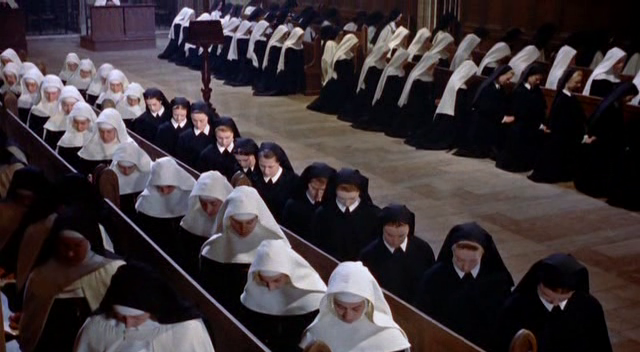
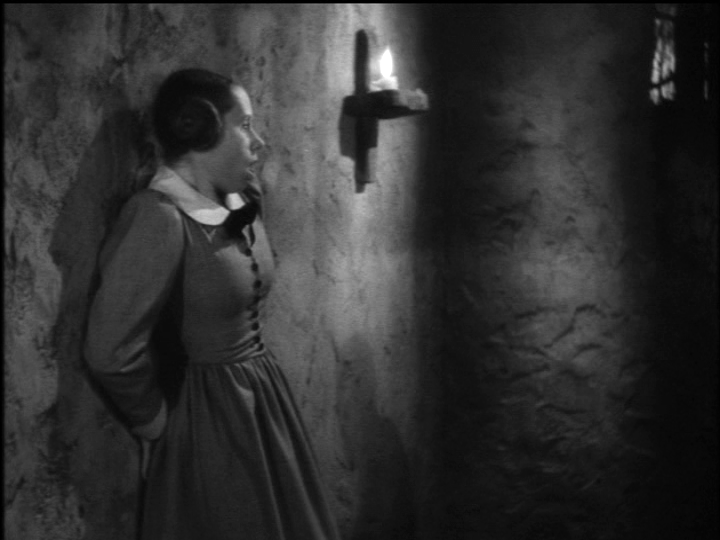
Review: The film’s first half-hour is arguably its most compelling — simply from an ethnographic perspective — as we’re made privy to the ritualistic experiences of novitiate nuns, whose lives are conducted largely in silence. After this, the narrative turns to the quietly compelling drama of Hepburn’s struggle to remain “Selfless”, as she’s trained for work as a nurse, and is given no choice in where she’s sent or who she’s asked to work with. Audiences must have wondered what — if anything — would be made of Sister Luke’s close working situation with Peter Finch’s enigmatic and handsome Dr. Fortunati (what a name!); thankfully, both the script and the performances preserve the essence of their platonic mutual respect for one another. The film’s final half-hour, as Sister Luke reaches a crisis in her personal identity, serves as a fine culmination to the meaty and respectful narrative we’ve experienced until then. In sum, The Nun’s Story will likely surprise you in the way it manages to present a saga of spiritual angst within such a compelling and engaging narrative framework. In a way, this would make a fascinating double-bill with Black Narcissus (1947), given that the two films — though obviously told in radically divergent cinematic styles — are thematically related in that they are both concerned with nuns who question their devotion to their order. Both films also feature a fine cast of supporting performers: as DVD Savant notes, The Nun’s Story offers a virtual “Who’s Who of professional actresses” popping up at various times throughout its narrative, including Edith Evans, Peggy Ashcroft, Mildred Dunnock, Beatrice Straight, Patricia Collinge, Ruth White, Colleen Dewhurst, and Dorothy Alison (the latter in a truly heartbreaking and memorable bit part). The male roster, while naturally smaller, is also impressive, and includes not only Finch but Dean Jagger (in a small but pivotal role as Hepburn’s father), Lionel Jeffries, and Niall MacGinnis. The collective energies that went into crafting this lovingly told, powerful tale make it well worth a film fanatic’s time to sit through. Redeeming Qualities and Moments:
Must See? Categories
Links: |