Browsed by
Category: Original Reviews

Responses to Peary’s “must see” movie reviews, as well as my own “must see” movie reviews up to and after 1986 (when Peary’s book was published).

Days of Wine and Roses (1962)

Days of Wine and Roses (1962)

“You and I were a couple of drunks on the sea of booze, and the boat sank.”

Synopsis:
A boozing PR man (Jack Lemmon) marries a beautiful secretary (Lee Remick) and turns her on to drinking, much to the chagrin of her hardworking father (Charles Bickford); soon both of them are fighting for their lives against alcoholism.

Genres, Themes, Actors, and Directors:

  • Alcoholism and Drug Addiction
  • Blake Edwards Films
  • Charles Bickford Films
  • Jack Lemmon Films
  • Lee Remick Films
  • Marital Problems

Review:
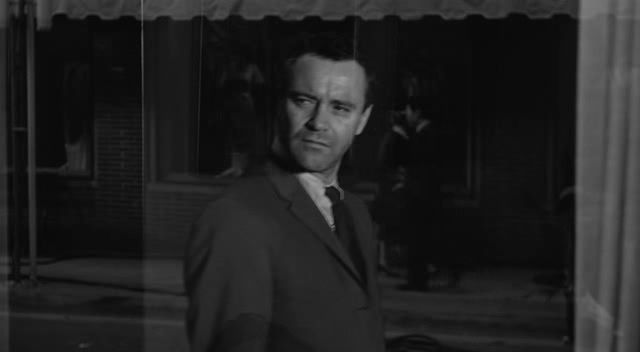
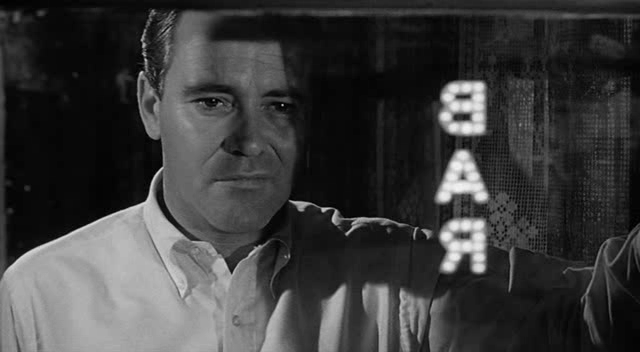
As Peary suggests in his review of The Lost Weekend (1945), there probably aren’t many who “really enjoy movies about junkies or alcoholics trying to cure their addictions” — which leads me to confess that I wasn’t particularly looking forward to revisiting this esteemed entry in the genre, despite its status as a highly regarded, Oscar-nominated classic (by director Blake Edwards). I’m pleased to report, however, that despite its inevitably dreary subject matter (and occasional descents into staginess), it remains overall a powerful, finely crafted film with much to recommend — from the consistently high quality b&w cinematography by Philip Lathrop, to a hard-hitting script by JP Miller (based upon his 1958 Playhouse 90 teleplay), to fine performances throughout, particularly by Lemmon.

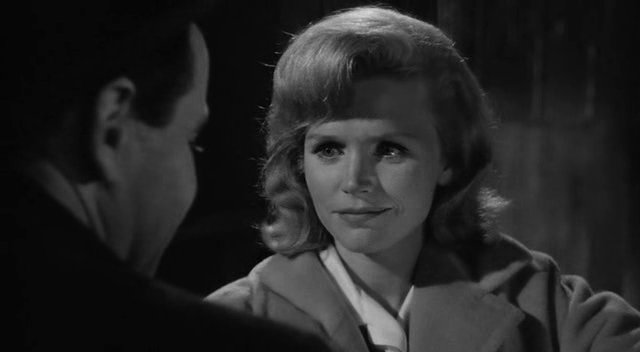
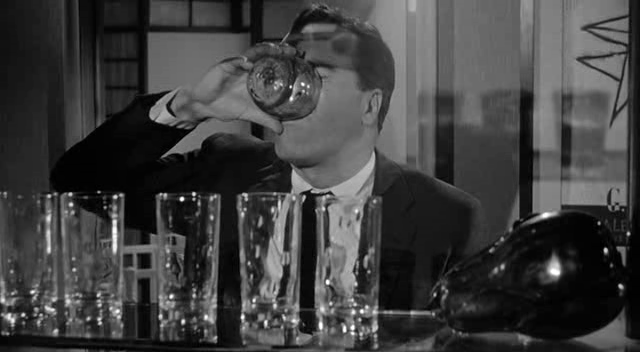
Indeed, it’s Lemmon’s performance here which ultimately kept me vitally engaged in the story. While his character starts off like simply a variation on the fun-loving jokesters he so often portrayed, Lemmon quickly invests his “Joe Clay” with far more depth and pathos than one might expect. We fully sympathize with the frustrations he feels in his job, and understand how the social drinking he’s expected to engage in likely accelerated his addictive approach to alcohol. When he’s first introduced on-screen, he’s already so immersed in destructive drinking patterns (without realizing it) that we can’t help wondering why Remick doesn’t react with a bit more concern — except for the fact that she appears to love him unconditionally. Indeed, it’s to Miller’s credit that so much care is taken to fully establish Lemmon and Remick’s characters as romantic individuals who fall deeply in love with one another before communal drinking enters the scene; they are clearly soulmates, which helps to ground the film as a tragic love story, first and foremost.

Lemmon’s inevitable next step is turning his beloved teetotalling wife on to boozing, in a much more disturbingly manipulative way than happens, for instance, between Al Pacino and Kitty Winn’s characters in 1971’s The Panic in Needle Park (wherein Winn is curious enough to try heroin herself, but is never pushed). Miller’s point, we learn, is that alcoholics will always try to push or guilt the ones they love into joining them — and that’s what perhaps remains most unique about this cinematic presentation of alcoholism: the way we witness its effects on a mutually drinking couple, not just an individual. To that end, Remick’s descent into alcoholism comes across as less authentic than Lemmon’s, perhaps due to the stage-bound nature of the screenplay, which skips across enormous periods of time. We see Remick tentatively joining her husband in a hard drink for the first time, and then suddenly alcohol has become so second-nature in their household that it’s causing irreparable damage. From what I’ve heard (and seen, in brief snippets), Piper Laurie — star of the original teleplay — was a bit more effective at portraying this undeniably complex character (though Remick remains sympathetic throughout, and certainly gives an impassioned performance).

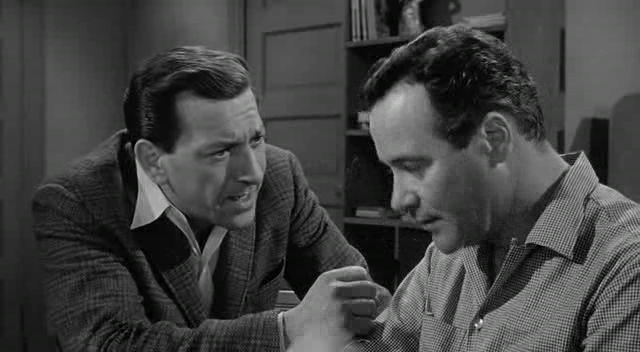
Speaking of the teleplay, kudos must be given for the decision to retain the story’s original bleak yet realistic ending. It’s a respectful finale to the hard-hitting ride we’ve engaged in, and one appreciates the honesty it offers in its assessment of the chances for recovery. To that end, along with I’ll Cry Tomorrow (1955), it provides one of the earliest on-screen depictions of Alcoholics Anonymous as a viable option for alcoholics with nowhere left to turn (and Jack Klugman turns in a fine, subtle, believable performance as Lemmon’s AA mentor, patiently counseling him through the worst of his challenging decisions). It’s refreshing to finally hear alcoholism acknowledged as the mysterious addiction it is; what a positive shift from the days when alcoholic characters such as Ray Milland’s Don Birnam in The Lost Weekend (1945), or Susan Hayward’s Angie Conway in Smash-Up: The Story of a Woman (1947), were — out of sheer ignorance — implicitly condemned for their behavior.

Redeeming Qualities and Moments:

  • Jack Lemmon as Joe
  • Lee Remick as Kirsten
  • Jack Klugman as Joe’s AA mentor, Jim
  • A powerful portrait of the devastation wreaked by alcoholism on a marriage
  • Gorgeous b&w cinematography

Must See?
Yes, for Lemmon’s powerhouse performance, and as director Blake Edwards’ most heartfelt work.

Categories

  • Noteworthy Performance(s)
  • Oscar Winner or Nominee

Links:

Invisible Boy, The (1957)

Invisible Boy, The (1957)

“Don’t make such a fuss; he’s probably doing this just to get attention.”

Synopsis:
A young boy (Richard Eyer) whose scientist father (Philip Abbott) is obsessed with building a Super Computer befriends a time-traveling robot named Robby, who becomes brainwashed by the Computer into attempting to dominate the Earth.

Genres, Themes, Actors, and Directors:

  • Father and Child
  • Mind Control and Hypnosis
  • Robots
  • Science Fiction
  • World Domination

Review:
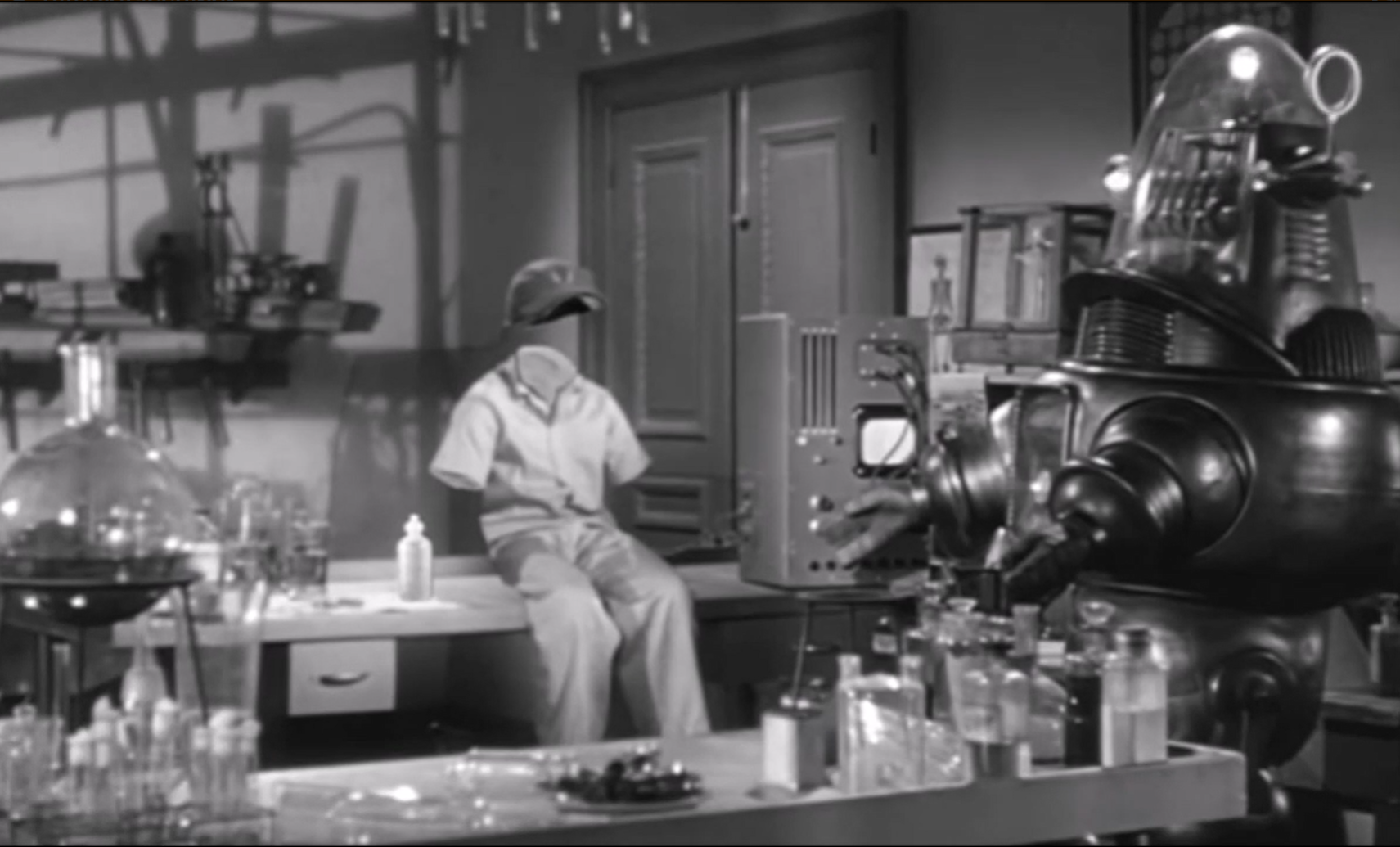
Forever known as the film that was made simply to get more mileage out of the expensive robot built for Forbidden Planet (1956), The Invisible Boy remains an odd little curio in its own right. Clearly a B-level production on many counts, much about the film comes across as simply laughable — such as the special effects used when the title character becomes invisible: i.e., his clothes simply sit there in the same spot as he contemplates his new status (wouldn’t he wriggle around at least a LITTLE bit?):

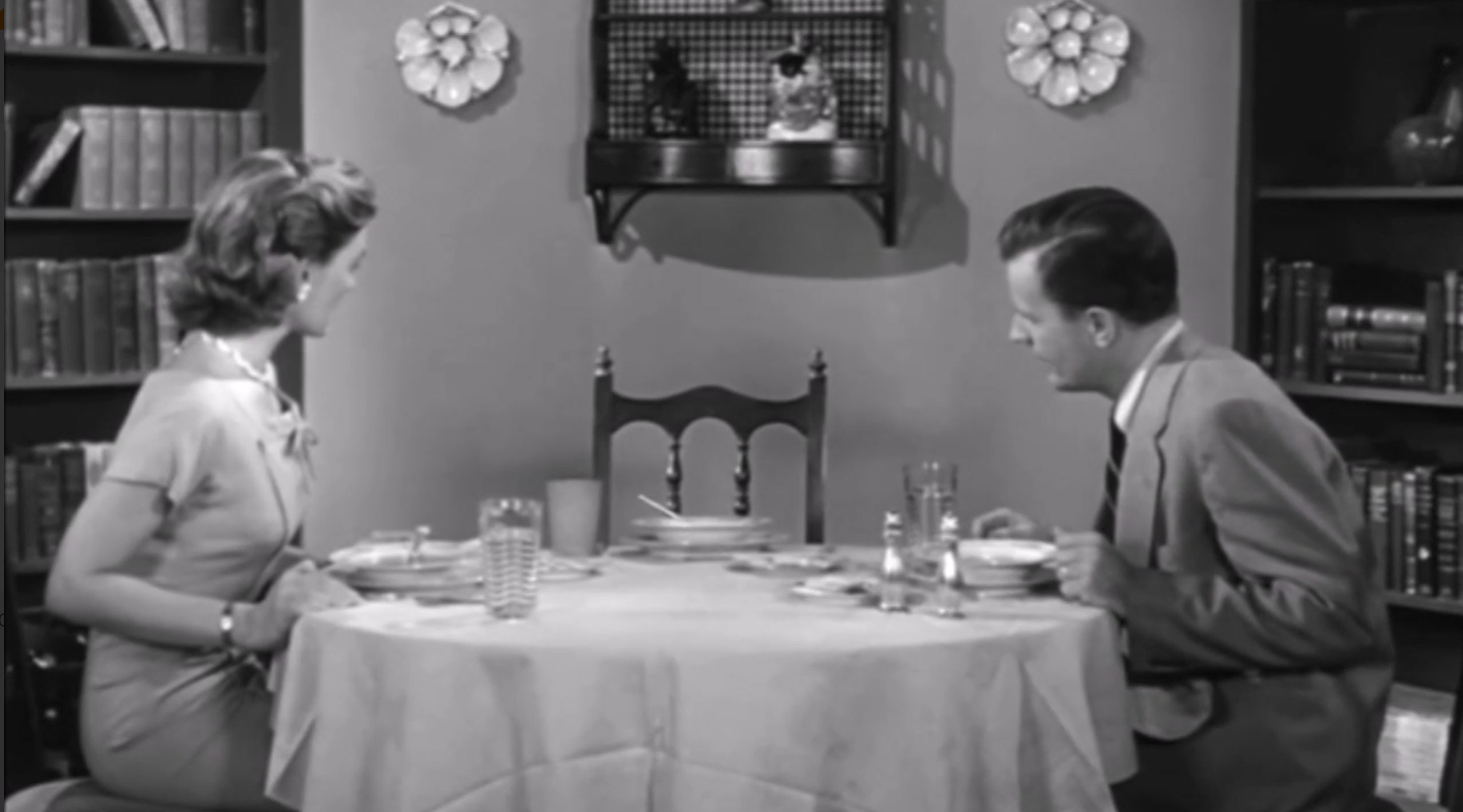
And if Robby the Robot dictates that everything within Eyer’s nearby “electromagnetic field” becomes invisible, too, why doesn’t the spoon he uses to noisily slurp soup in front of his parents disappear? However, many other elements about the film’s preposterous and convoluted storyline — which at first glance make one nearly guffaw from hysterics — turn out to have a “deeper” meaning, if you’re looking for it.

In essence, this entire film could be viewed as Eyer’s dream, given that he falls asleep not too far into the storyline:

… and such is the convention that we’ve learned to expect in movies — except…

(sorry for the spoiler; it’s relatively important to my argument here)

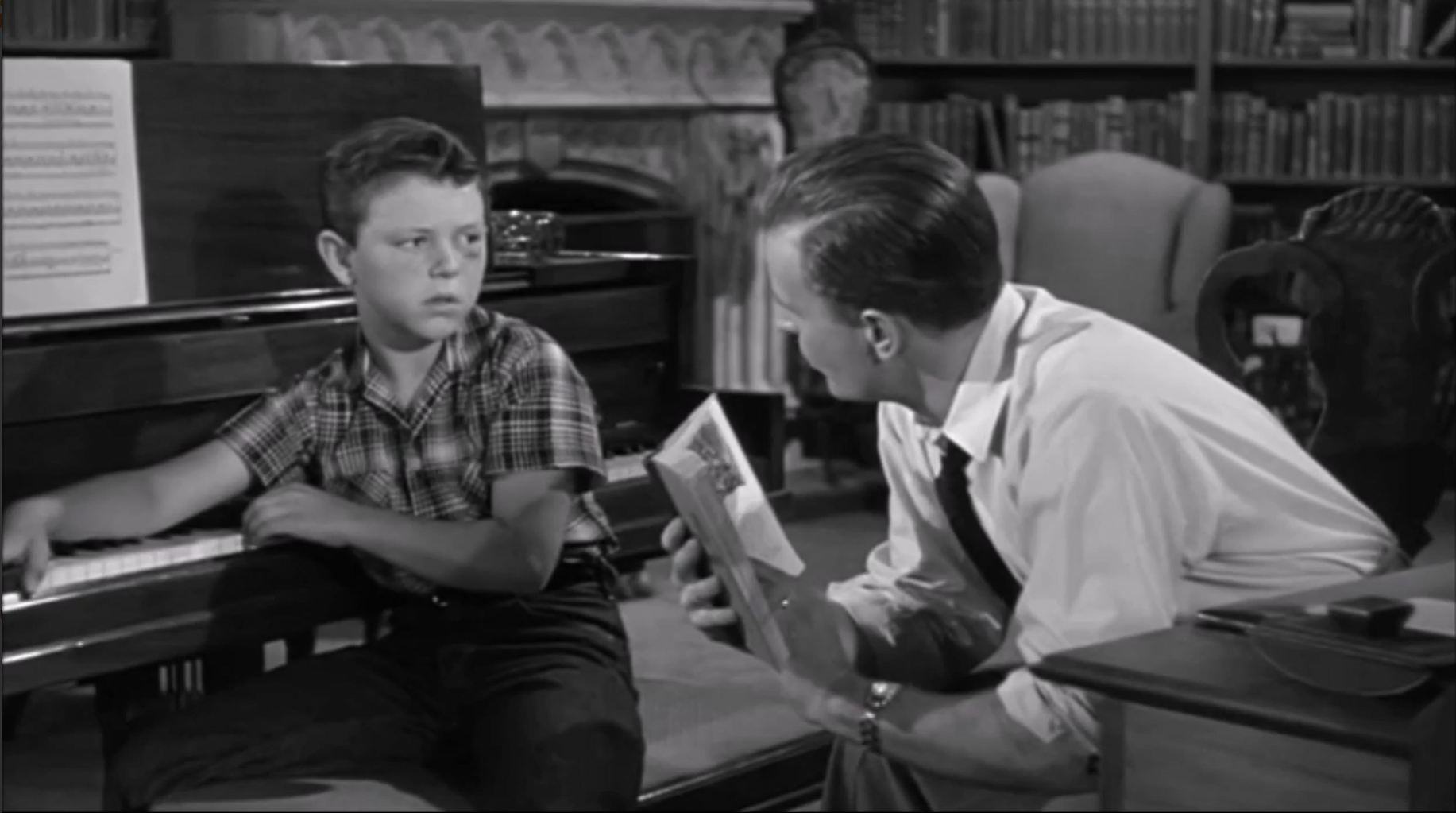
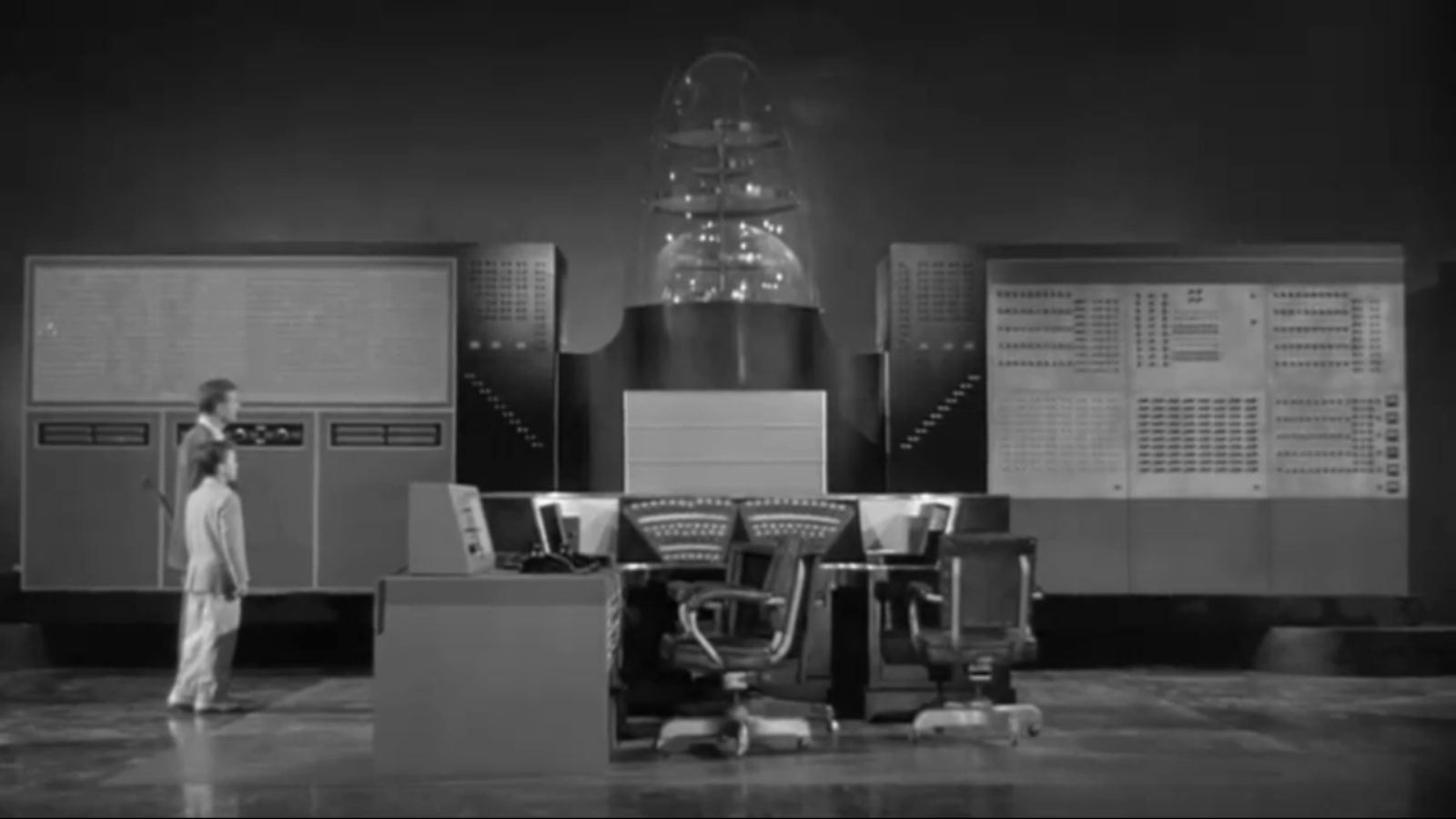
… he never “wakes up” at the end, thus leaving the situation intentionally (?) vague. As argued by one user on IMDb, Timmie (Eyer) not only becomes literally invisible; he starts off as “invisible” to his overworking father, who — as clearly established during the film’s opening sequences — views his non-mathematically-minded son as a huge disappointment.

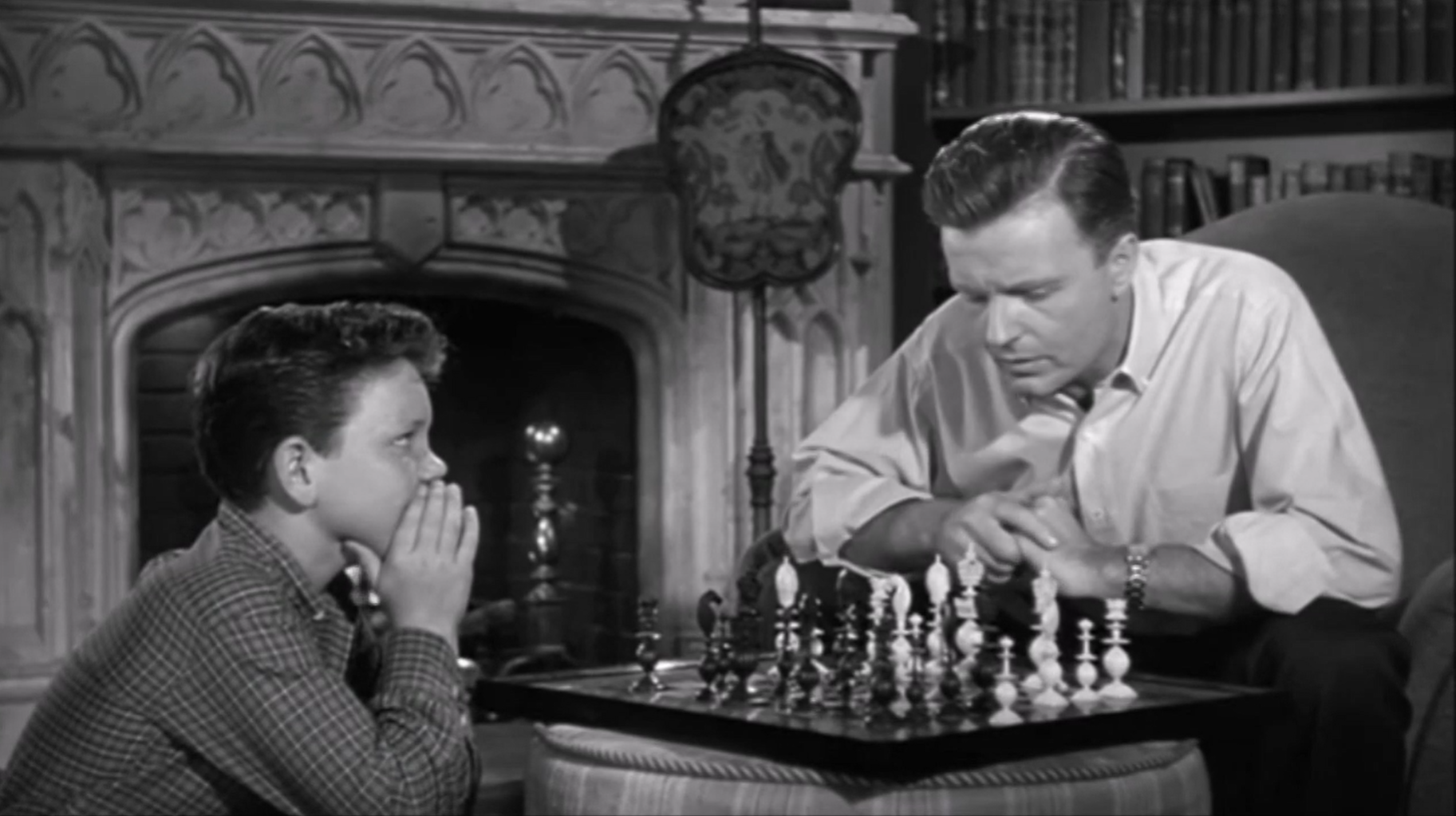
Thus, everything that happens after Timmie falls asleep in front of the Super Computer (where his father has placed him for some extra tutoring) could be seen as simply a manifestation of Timmie’s fantasies. He’s finally able to beat his father at chess:

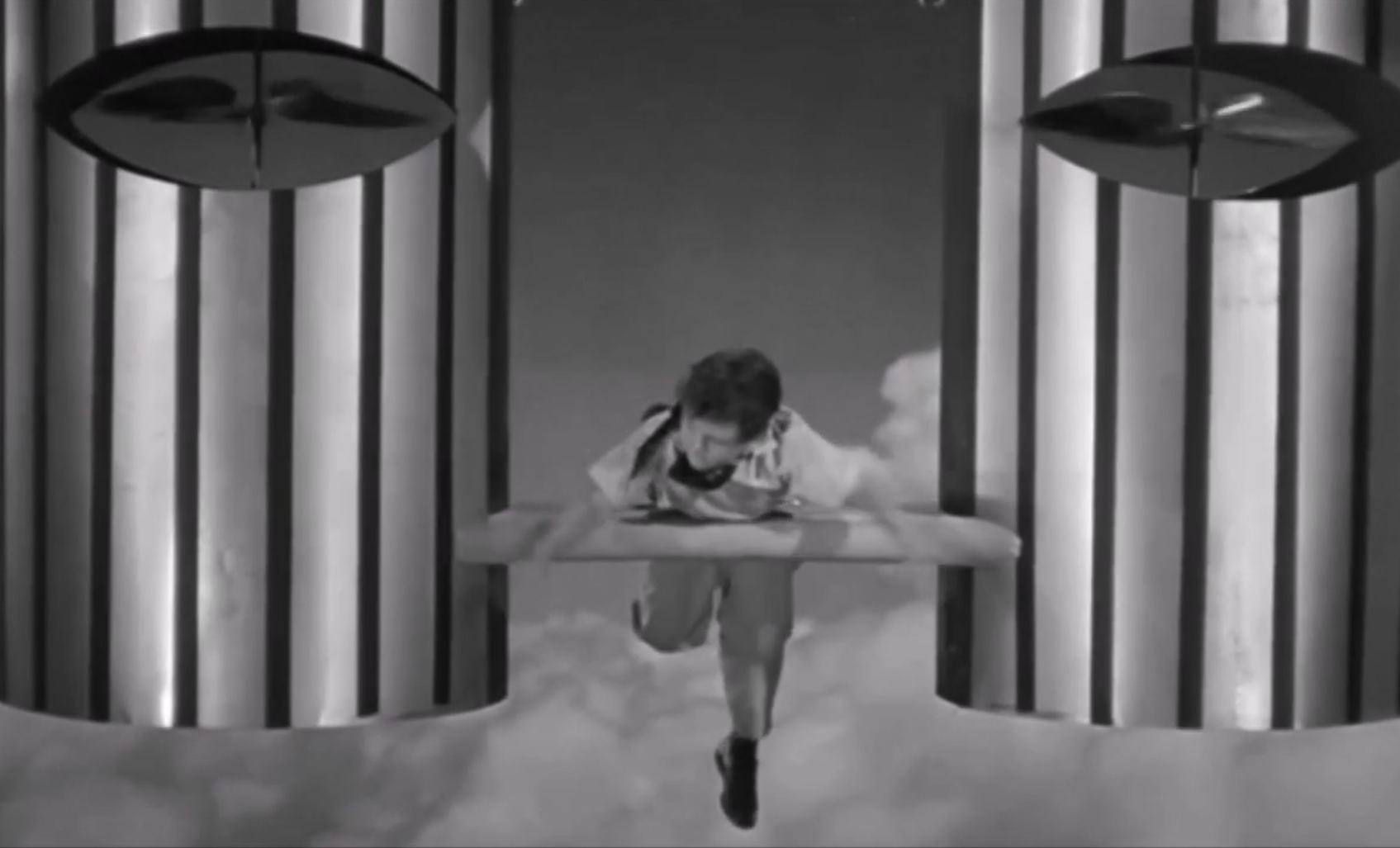
… he manipulates a robot — his new best friend — into doing his bidding (sending him up in a kite), even when this goes against the robot’s prime directive to not place any human in harm’s way:


… and his parents’ reactions to his invisibility are ridiculously ho hum: “Well, honey, these things all pass away in time”, says his father to his stereotypically demure ’50s wife (Diane Brewster). !!!

Indeed, everything about Timmie’s invisibility and the subsequent drama that ensues — involving a fairly serious amount of threat to Timmie’s very existence, not to mention the state of the Free World — occurs on a level that one soon realizes is not merely laughably implausible, but very much from a child’s perspective. I won’t say more here, since I’ve already spoiled enough, but suffice it to say that if you watch the film from this point of view, you may find yourself “appreciating” it on an entirely different level. In fact, it’s enough of a unique approach to the material that I found myself shifting my vote to “must see” for this reason alone; otherwise I would simply relegate it to a movie of minor historical interest for science fiction fans.

Redeeming Qualities and Moments:

  • A curiously clever, albeit undeniably low-budget, twist on a classic ’50s sci-fi tale

Must See?
Yes, as an unusual sci fi curio.

Categories

  • Historically Relevant

Links:

Badman’s Country (1958)

Badman’s Country (1958)

“I saw it today, Pat. Even without your badge, you were the lawman. You took over.”

Synopsis:
Retired sheriff Pat Garrett (George Montgomery) intends to marry his sweetheart (Karin Booth) and head to California, but is waylaid in Abilene, Kansas when notorious outlaw “Sundance” (Russell Johnson) and two cohorts appear in town, in anticipation of Butch Cassidy (Neville Brand) and his Wild Bunch Gang robbing a train headed straight towards them.

Genres, Themes, Actors, and Directors:

  • Neville Brand Films
  • Outlaws
  • Sheriffs
  • Westerns

Review:
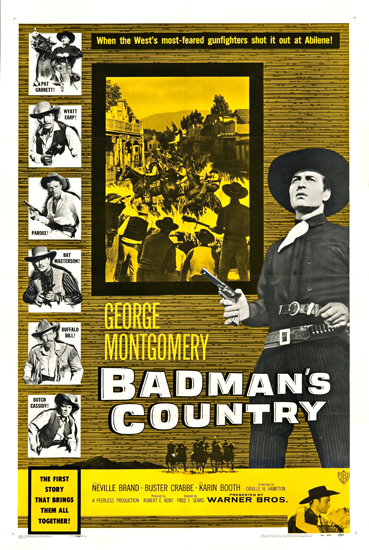
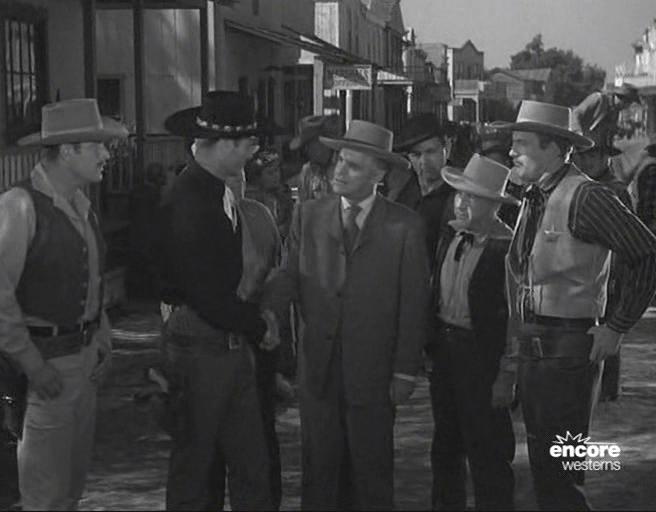
When reading about this little-seen B-western (helmed by prolific B-director Fred F. Sears) on IMDb, one immediately notes in the “Goofs” section that “Although the plot has well-known actual western figures Pat Garrett, Wyatt Earp, Bat Masterson and Buffalo Bill fighting Butch Cassidy’s gang, in reality by the time Cassidy had gathered his now-famous Hole-in-the-Wall Gang, Garrett was dead, Buffalo Bill was touring in his Wild West show, Earp was prospecting for gold in Alaska and Masterson was a sportswriter for a newspaper in New York City.” Clearly, one is not meant to view this fantastical western as anything close to a biopic about fabled sheriff Pat Garrett (best known for shooting Billy the Kid); instead, it should be seen as simply a creative reimagining of what might happen to someone like Garrett, eager to finally settle down with his longtime sweetheart, but pulled into assisting with the next notorious gang of criminals to arrive on the western landscape. Can a man seemingly born to defend really leave the scene when he’s most needed? This film, naturally, suggests otherwise (see the quote selected above).

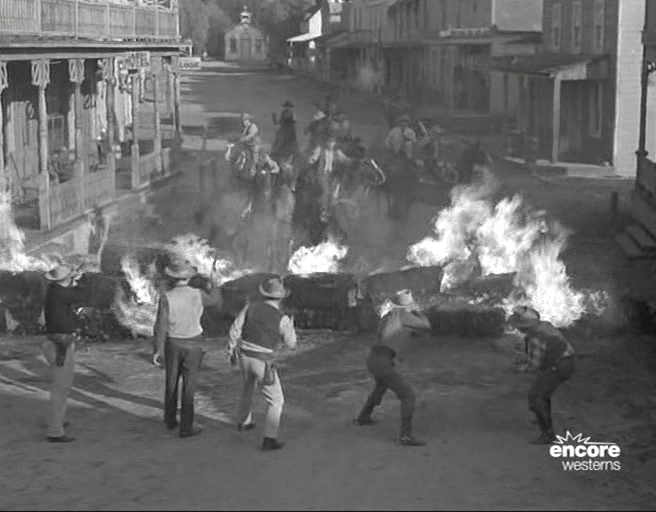
Ultimately, Badman’s Country come across like a B-level variation on High Noon, with Garrett calling upon a reluctant band of citizens to help him fight the corruption encroaching on their town. In this case, however, he also happens to have the the handy assistance of two other big name allies — Bat Masterson (Gregory Walcott) and Wyatt Earp (Buster Crabbe) — as well as moral support from Buffalo Bill Cody (Malcolm Atterbury), who conveniently (ahem) happens to be in town. Naturally, it’s fairly predictable how everything will turn out, but director Sears generates a fair amount of tension throughout, and keeps things moving at a fast clip (the film is only 68 minutes long, and ends with a nicely handled shootout). My favorite line (spoken by Atterbury as Cody, during the final shootout): “I sure wish they were buffalo; can’t make a rug out of an outlaw!”

Regarding the cast and crew, I feel guilty admitting that I found Karin Booth (a fairly unimpressive actress) a tad too old in appearance to be playing the female love interest for Montgomery (in real life, they were both 42; goes to show what years of unrealistic cinematic influence have done to me). Meanwhile, Ukranian-American former heavyweight boxer Montgomery is appropriately stalwart and handsome in the lead role (check out Trivia on IMDb for some fascinating tidbits about his life), and Neville Brand — who played Butch Cassidy in a different western, The Three Outlaws, just two years earlier — reprises that role here (though weirdly enough, he doesn’t make much of an impression; he only manages to squeeze in one of his characteristic sneers). Perhaps most jarring is seeing Russell Johnson — forever branded in audiences’ minds as The Professor from “Gilligan’s Island” — in an uncharacteristically baddie role as Sundance (!). Sadly, director Sears died young (at the age of 44), but helmed no less than 52 features in a variety of genres for Columbia Pictures; his best known picture was Earth vs. the Flying Saucers (1956).

Redeeming Qualities and Moments:

  • An effectively executed B-western

Must See?
No, though Western fans certainly won’t find it a waste of time.

Links:

Child Under a Leaf (1974)

Child Under a Leaf (1974)

“He might come and try to take our baby away; so I’d have to kill him.”

Synopsis:
A woman (Dyan Cannon) in a loveless marriage has a child with her lover (Donald Pilon), but lives in fear of her abusive husband (Joseph Campanella) finding out the baby isn’t his.

Genres, Themes, Actors, and Directors:

  • Dyan Cannon Films
  • Marital Problems

Review:
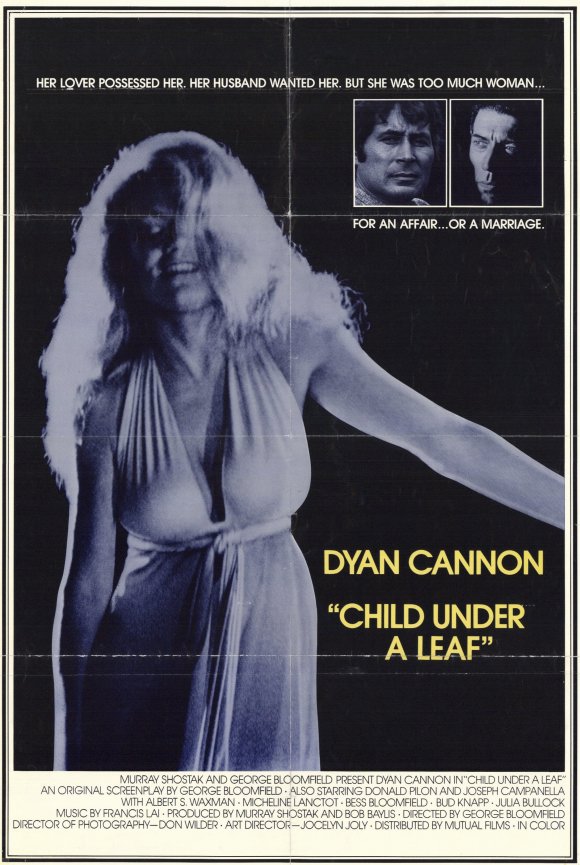
Peary reached a new all-time low in his inexplicable recommendation of this awful romantic melodrama (by writer/director/editor George Bloomfield) in his book. It’s actually difficult to know where to begin in critiquing it — it’s that uniformly terrible. The innocuous-sounding storyline — how could one get something so straightforward so wrong? — is botched from start to finish, as the mood (along with Francis Lai’s schizophrenic soundtrack) shifts from thriller (is Cannon’s husband stalking her?) to vaguely-European, wannabe-languorous-soft-filter romance (complete with a meadow as the lovers’ favored meeting place). We’re given no exposition at all — the film cuts immediately from some creepy looking shots-through-a-window in the first few minutes, to Cannon off jauntily trysting with her lover, leading us to question (among other things), When and how did she turn to him? What was her marriage with her “hideous” husband originally like, and when and why did it go sour? We never find out. Instead, the primary function of the screenplay seems to be simply to show us how deeply enamored these two insipid individuals are with both each other and with the love child they’ve created.

To that end, there’s a seemingly endless scene in which Cannon and Pilon make gaga eyes at their baby, who lies prone on (I kid you not) piles of white fur.

Later, Cannon exposes her milk-engorged breast to Pilon, as part of their foreplay — in fact, come to think of it, the entire film exists basically on the level of a porn flick, which may explain why Peary includes it in his book. Cannon does expose some bare flesh every now and then, after all, so maybe that was reason enough for him to be a fan.

[Is it obvious yet how irritated I am at being “forced” to sit through this one? I’m especially annoyed that no explanatory code or review was provided to give us a sense of WHY it’s included in GFTFF.]

At any rate, tension is clearly meant to build in the screenplay from both Pilon’s intermittent threats to kill Cannon’s husband (he buys a gun near the beginning) and Campanella’s sinister hints that he believes the baby in his household isn’t really his. But do these narrative threads lead anywhere logical? Not a chance. Instead, the inevitable tragedy that ultimately ensues makes little sense. Meanwhile, the egregious fetishization of an infant as an objet d’amour between the two illicit lovers may be my biggest overall complaint about the film (and that’s saying a lot); this baby clearly exists simply as a “clever” narrative device, physical “proof” of the narcissistic lovers’ illicit bond.

Note: The tagline listed on IMDb — “A Motion Picture for Lovers Who Have Won or Lost…And Lovers Who Have Yet to Win or Lose!” — begins to hint at the campy humor one MIGHT find if stretching hard enough.

Redeeming Qualities and Moments:
Not a single thing.

Must See?
No; head the opposite direction if you happen to see this one coming your way.

Links:

Heaven Knows, Mr. Allison (1957)

Heaven Knows, Mr. Allison (1957)

“I never even lived before. Not really lived before, inside.”

Synopsis:
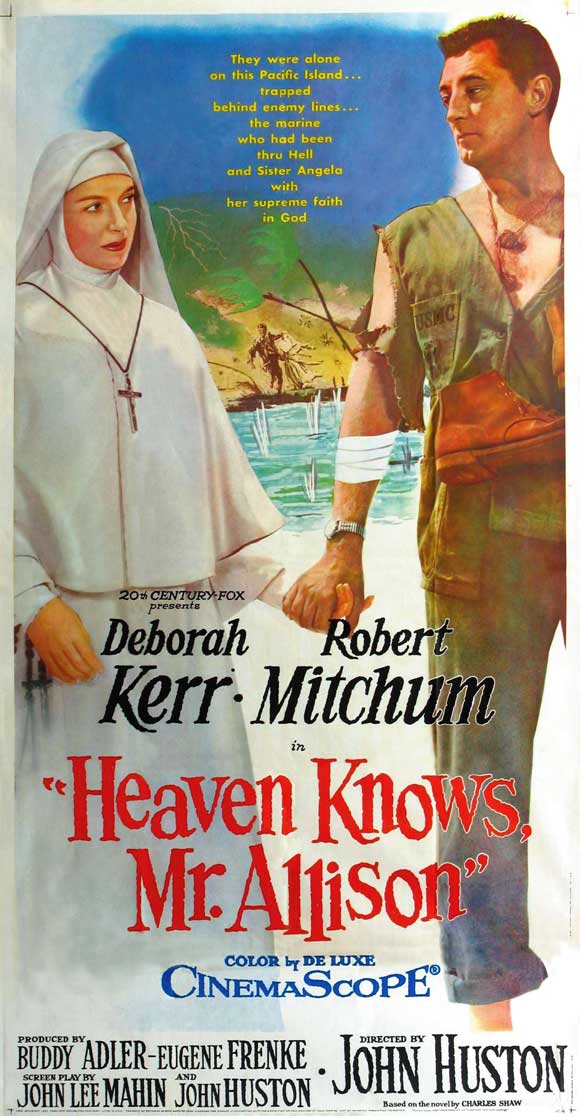
During World War II, a Marine (Robert Mitchum) drifts ashore onto a seemingly deserted South Pacific island, where he encounters its lone inhabitant: a stranded nun (Deborah Kerr). As they struggle to survive and devise a plan for escape, they develop a deep fondness for one another — but will Mitchum respect Kerr’s spiritual vows?

Genres, Themes, Actors, and Directors:

  • Deborah Kerr Films
  • John Huston Films
  • Nuns
  • Robert Mitchum Films
  • Romance
  • Soldiers
  • Survival
  • World War II

Review:
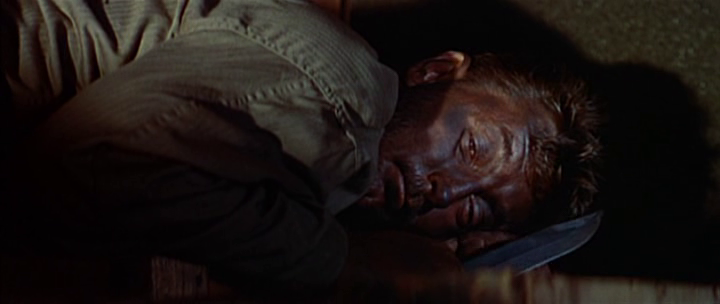
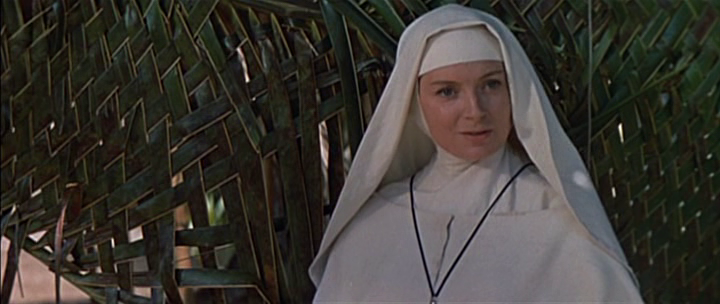
The first of Deborah Kerr and Robert Mitchum’s on-screen pairings (in 1960, they also co-starred in both The Sundowners and The Grass is Greener) was this unusual “romance” about a Marine and a nun bonding during a time of crisis. Such a scenario (ripe for exploitation, which co-writer/director John Huston masterfully avoids) could easily go in any number of different directions — but what’s so refreshing about this story is its ultimate simplicity. It’s essentially a character-driven relationship piece, set within the chaotic arena of war; other than a few minutes showing a pair of Japanese soldiers interacting with one another (their dialogue isn’t translated), and a couple of solitary lines by soldiers much later in the film, Mitchum and Kerr remain the sole speaking actors in the movie — thus, it’s the evolution of their interactions, coupled with their struggle to survive a seemingly impossible situation, that keeps us glued to the screen.

Mitchum reportedly named this a personal favorite among the many roles he played, and his character here comes across as remarkably sympathetic. We ache for this rough-hewn man — an orphan who found a home with the Marines — as he opens up his heart for the first time to Kerr’s impossibly kind nun. Kerr’s character is a bit more enigmatic (I believe we’re meant to relate to Mitchum as the central protagonist, rather then Kerr), but she does a fine job exhibiting both her enduring spiritual resolve and her growing fondness for Mitchum. Much like in The Nun’s Story (1959) with Audrey Hepburn, we wonder what kind of a decision this beautiful, strong-willed young nun will ultimately make in the face of competing desires.

Note: I’m not especially fond of this film’s title, which makes it sound like a comedy rather than the somewhat serious drama it really is. I understand its deeper meaning (“heaven”, or God, will know what transpires between the nun and Mitchum, even in their seeming isolation), but one can’t help immediately “reading” the title as a whimsical British turn of phrase instead.

Redeeming Qualities and Moments:

  • Robert Mitchum as Corporal Allison
  • Deborah Kerr as Sister Angela (a.k.a. “Ma’am”) (nominated by Peary as one of the Best Actresses of the Year in his Alternate Oscars)
  • Excellent use of a natural island setting
  • A fine, unconventional “love” story

Must See?
Yes, as an enjoyably character-driven film by a master director. Listed as a Personal Recommendation in the back of Peary’s book.

Categories

  • Good Show
  • Important Director

Links:

Big Beat, The (1958)

Big Beat, The (1958)

“The public is a monster with a very delicate palate. If it doesn’t like what you feed it — off comes the arm!”

Synopsis:
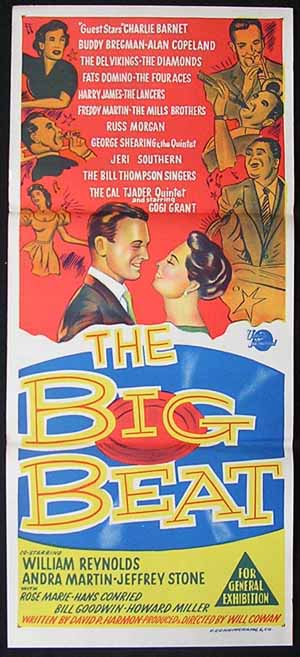
The son (William Reynolds) of a “square” music producer (Bill Goodwin) tries to sign on some hot rock ‘n roll bands, with the help of his beautiful secretary (Andra Martin); meanwhile, a popular singer (Gogi Grant) desperate for a life of domesticity tries everything she can to convince her boyfriend (Jeffrey Stone), also a music producer, to marry her.

Genres, Themes, Actors, and Directors:

  • Generation Gap
  • Musicals
  • Rock ‘n Roll

Review:
Peary is clearly a no-holds-barred fan of ’50s rock music, given how many obscure titles in this “genre” he lists in his book (presumably because of the time-capsule glimpse they afford of various performers in their prime). The Peary-reviewed titles Rock, Rock, Rock! and Rock Around the Clock were released in 1956, but by the time 1958 rolled around, apparently such films had already become ripe for unintentional satirizing, with Peary himself labeling this one a “Camp Classic”. While both the former titles had reasonably interesting and/or legitimate narratives stringing the musical numbers along, the storyline here is laughable in both its simplicity and its datedness. Reynolds’ attempt to convince his father (and the rest of the world) that rock ‘n roll is where it’s at passes muster, sort of; however, the insipid subplot about erstwhile musical phenomenon Gogi Grant’s desperate desire to leave behind her successful career for marriage with the extraordinarily pillish Stone is simply infuriating — especially given that just about every other character in the film (except Stone himself) seems onboard with the idea: “Now listen — you take her to dinner and either get her a recording contract or her name on a marriage license!”

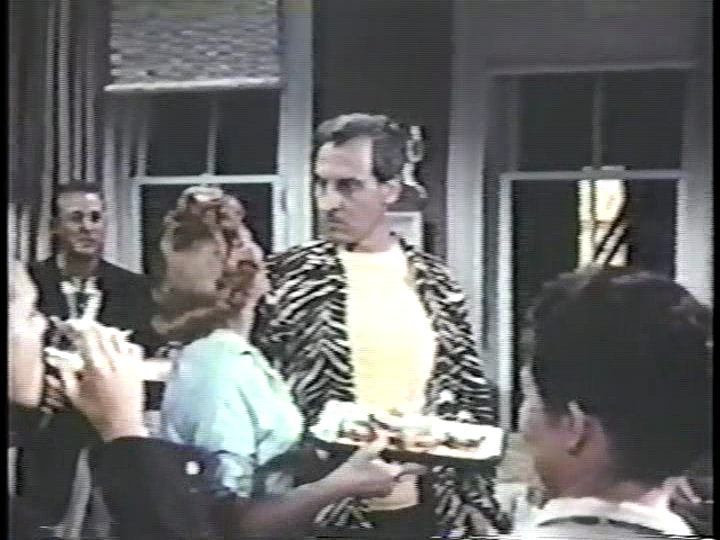
Meanwhile, what may draw curious modern-day film fanatics in to this film is the VERY odd casting of Hans Conried and Rose Marie in supporting roles; they perform one number together during a party scene that really will have you scratching your head as you wonder how in the world it possibly fits into the rest of the proceedings. (Conried turns out to play a pivotal role in the film’s denouement, so I guess that justifies his presence at least…). Otherwise, it’s clearly the “legitimate” musical acts that were meant to draw audiences at the time into the theater — but there are pathetically few on display; the best (by Fats Domino and the Mills Brothers) are over within the first 15 minutes of the film. Chances are you’ll find yourself hard-pressed to care about much of anything that happens thereafter in this clunker.

Redeeming Qualities and Moments:

  • A couple of enjoyable rock ‘n roll ditties (but not nearly enough)

  • The truly surreal musical sequence with Rose Marie and Hans Conried — wtf?

Must See?
No; don’t bother seeking this one out. Listed as a Camp Classic in the back of Peary’s book.

Links:

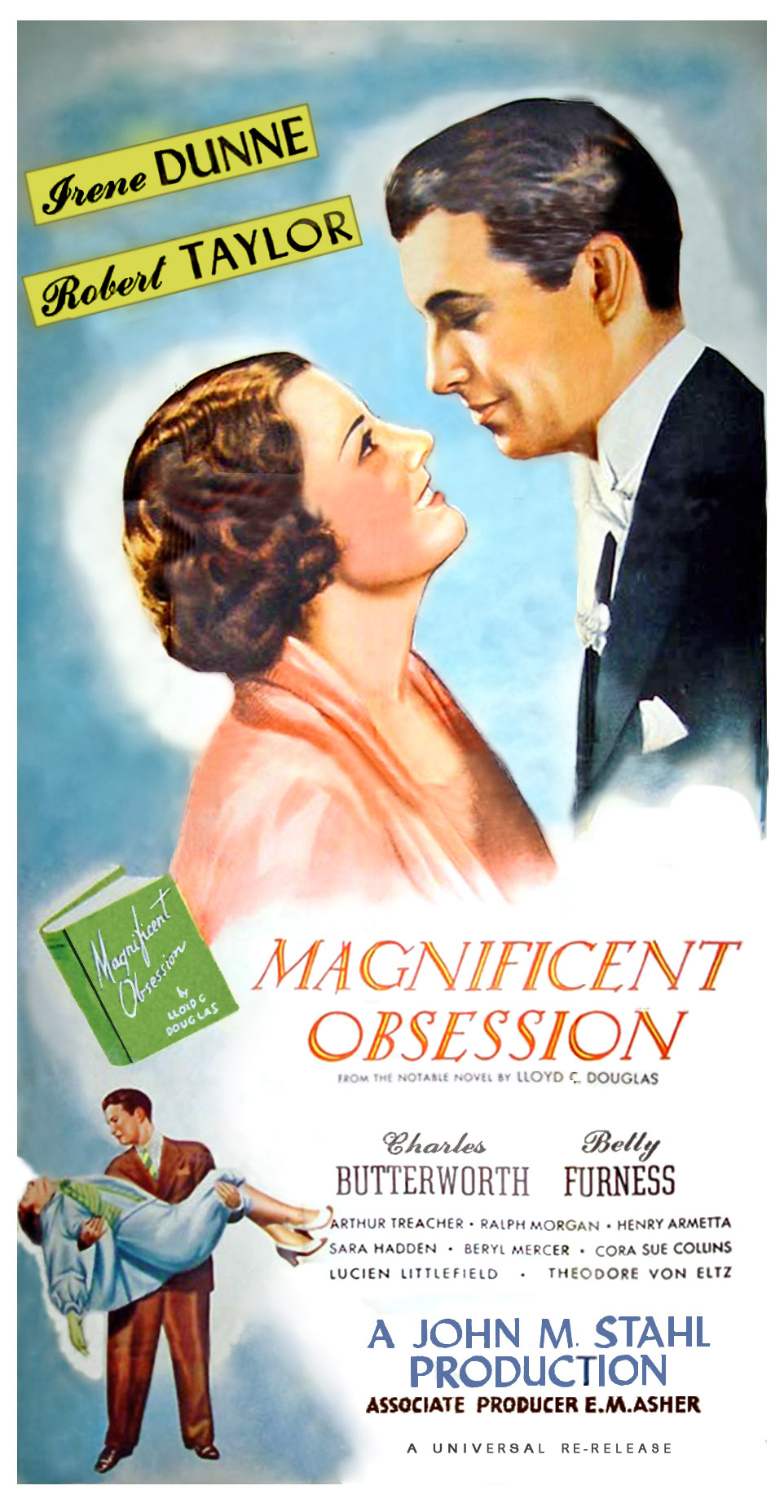
Magnificent Obsession (1935)

Magnificent Obsession (1935)

“He’s dead, I’m alive — we’re both out of luck.”

Synopsis:
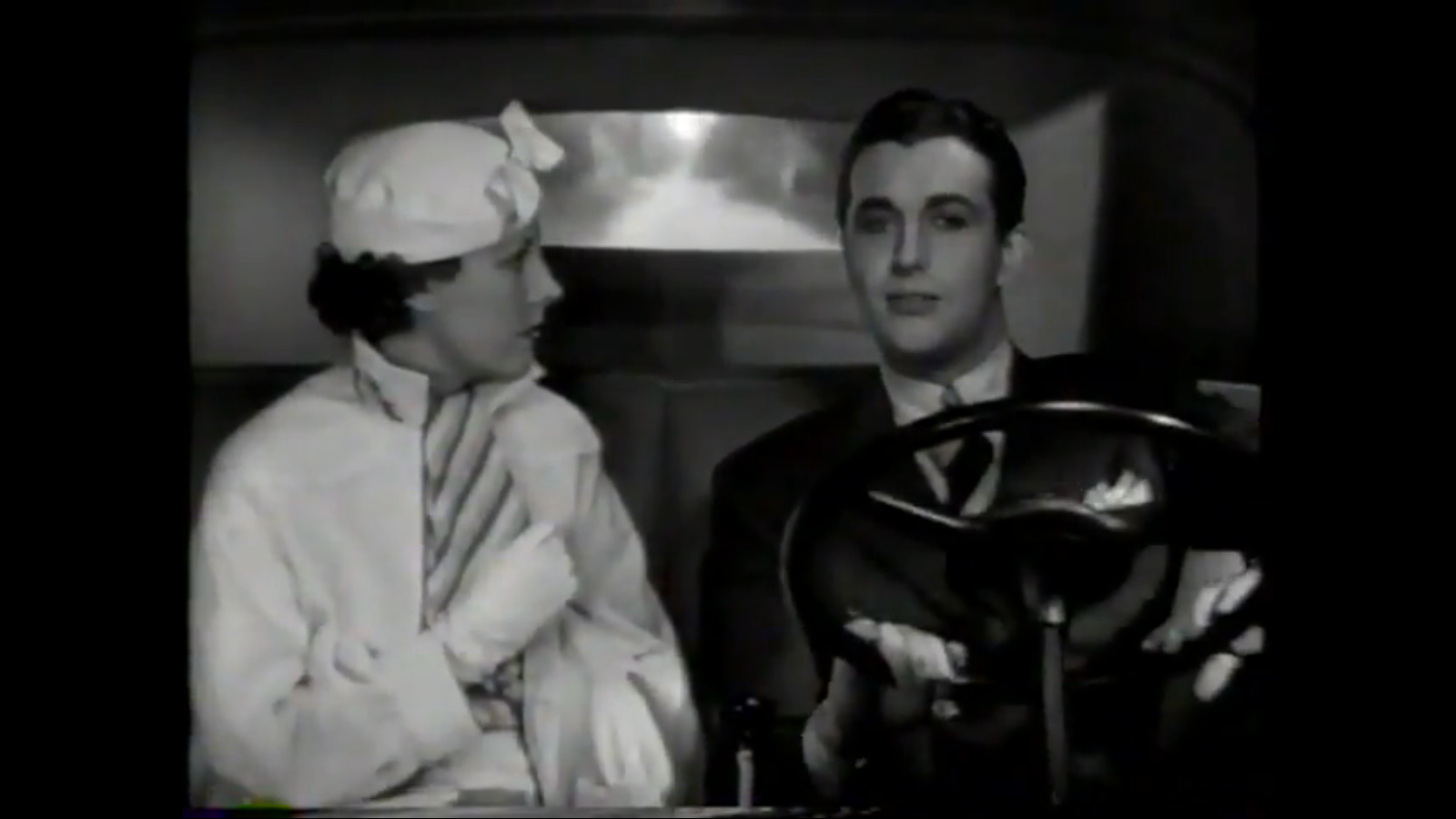
A wealthy playboy (Robert Taylor) pursues the beautiful widow (Irene Dunne) of a beloved doctor, accidentally prompting an accident that causes her to lose her sight. He conceals his identity and befriends her as she adapts to a world of blindness; soon the two fall in love.

Genres, Themes, Actors, and Directors:

  • Blindness
  • Character Arc
  • Doctors and Nurses
  • Irene Dunne Films
  • Robert Taylor Films
  • Romance
  • Widows and Widowers

Review:
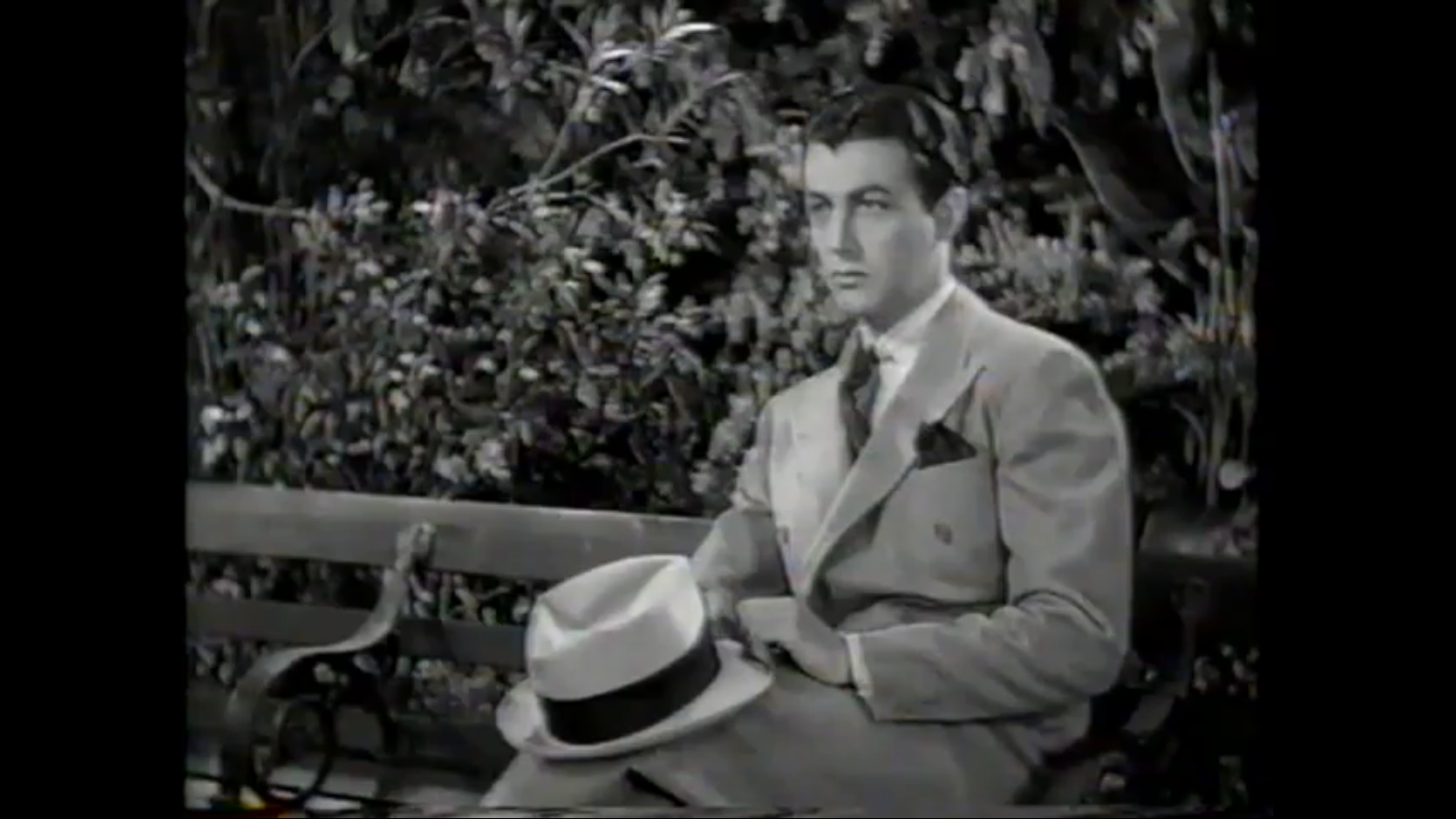
Primarily remembered today as the original version of Douglas Sirk’s 1954 Technicolor remake, this romantic melodrama is notable as the film which gave matinee idol Robert Taylor his breakthrough role — and it’s easy to see why audiences went gaga over him. Tall, charismatic, and impossibly handsome (his nickname was “The Man with the Perfect Profile”), he nicely handles his character’s transformation from reckless playboy to chastened suitor (and eventually to mature doctor).

The “spiritual” element of his transformation — made much more overt in Sirk’s version — is toned down here; indeed, director John Stahl exercises admirable restraint with the undeniably melodramatic material, doing his best to make the storyline feel relatively believable. (With that said, some will naturally prefer the direction in which Sirk took the material, which provides an entirely different cinematic experience altogether.) Dunne, interestingly, isn’t all that memorable here. Unlike Wyman’s counterpart in the 1954 film, she’s at least appropriately young and beautiful — but she really functions as Taylor’s foil; it’s his film all the way.

Redeeming Qualities and Moments:

  • Robert Taylor as Bob Merrick

Must See?
No, though it’s strongly recommended simply to see Taylor’s star-making turn. Listed as a film with Historical Importance and a Personal Recommendation in the back of Peary’s book.

Links:

Great Ziegfeld, The (1936)

Great Ziegfeld, The (1936)

“He’s up one day and down the next. If he got $10,000 tomorrow, he’d spend it on the girl he happened to like tomorrow night.”

Synopsis:
Carnival showman Flo Ziegfeld (William Powell) rises to fame and fortune when he decides to showcase some of the world’s most glamorous young women in a “Follies” show. But his roving eye causes tension in his first marriage with singer Anna Held (Luise Rainer), and his second marriage with Billie Burke (Myrna Loy) is colored by financial strain.

Genres, Themes, Actors, and Directors:

  • Biopics
  • Frank Morgan Films
  • Luise Rainer Films
  • Marital Problems
  • Myrna Loy Films
  • Showgirls
  • Vaudeville and Burlesque
  • William Powell Films

Review:
Referred to by TV Guide as “three hours of lumpy, overcooked pudding”, this infamously undeserving Best Picture winner may, as DVD Savant posits, set “new records for whitewashing a famous personage”. In his Alternate Oscars book, Peary refers to it as “an endless picture… with some of the most boring musical numbers imaginable”, noting that “even a number with a hundred chorus girls in their underwear is numbing”. DVD Savant is similarly no-holds-barred in his scathing review of the film, in which he asserts, “I’m assuming what we see here is almost a total fantasy”, given that:

“MGM’s Ziegfeld [apparently] had no faults, only the impish need to upstage his pompous pal played by Frank Morgan. He loved all women but had no affairs, and was essentially faithful to his first wife (doubtful) and devoted to his second (entirely possible). He’s that kind of rogue who’s forever broke but somehow living a permanent life of luxury, skating on his personality and promotional talent.”

Indeed, we ultimately learn frustratingly little about this larger-than-life historical figure, a man who had only been dead for a few years at the time of the film’s release, and whose widow (Billy Burke) was notoriously invested in ensuring that her beloved husband’s name not be sullied in any way. There actually seems to be an overarching fear of placing any of the characters here (most still alive) in too bad a light — with the exception of Virginia Bruce’s “Audrey Dane” (a stand-in for Ziegfeld’s real-life lover, Lillian Lorraine), who bears the brunt of the narrative’s bitchiness factor.

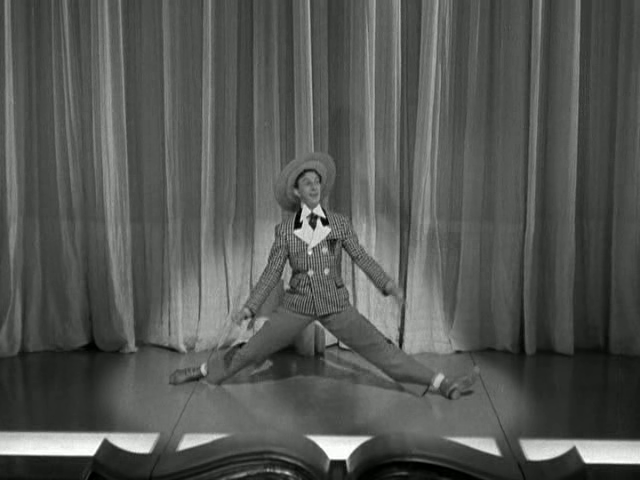
The real aim of the film, it seems, was to tap into audience members’ nostalgia for the Follies, since at that time, they were not all that far removed from people’s lived experiences; for today’s viewers, however, what passed as entertainment back then is simply puzzling in its unintentional banality. DVD Savant asserts that “most of the big numbers here are ugly in the extreme”, and that “grandiosity has never seemed so hollow” — sentiments which accurately capture my own feelings when watching one overblown production piece after another, all seemingly meant simply to wow audiences with sheer spectacle. But there’s very little “there” there. Other than a snippet of Fanny Brice singing “My Man”, and a pre-Wizard of Oz Ray Bolger performing a dance that shows ample evidence of why casting agents thought he would be perfect playing a limp-limbed scarecrow, the numbers really aren’t that memorable. Indeed, by the final one, I found myself simply distracted, with thoughts running through my head like, “Oh — there’s a woman in a drum majorette outfit dancing in front of a row of trained dogs. How strange.”

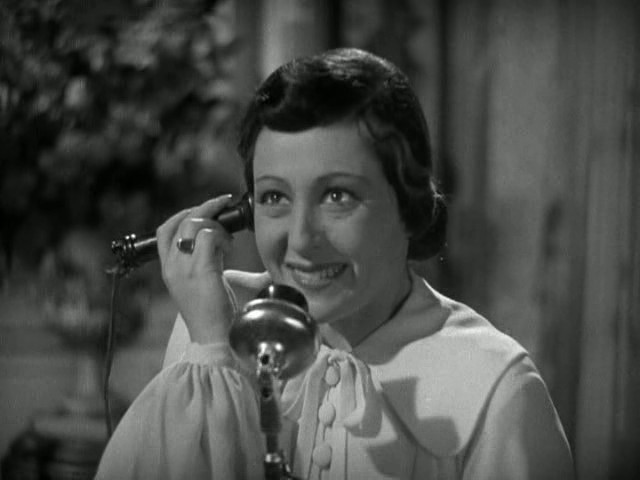
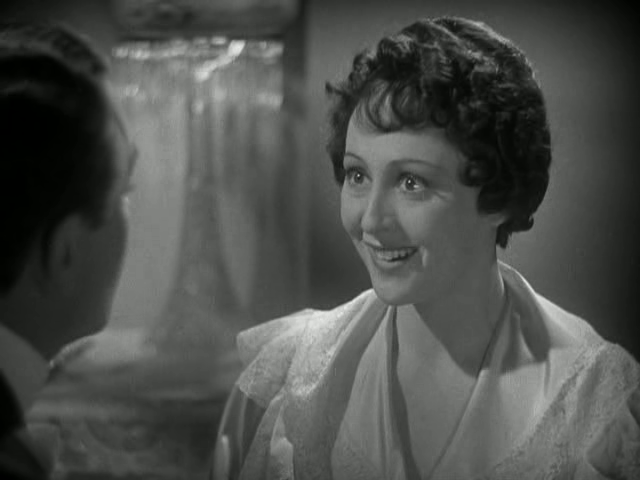
Luise Rainer’s Oscar-winning performance as Ziegfeld’s first wife, Anna Held (a.k.a. ‘The Viennese Teardrop’), is a primary reason film fanatics may be curious to see this movie — especially given that Rainer won an unprecedented second Oscar in a row the following year (for The Good Earth), then virtually disappeared from movies altogether; she’s a bit of an enigma. With that said, while she “had beauty, charm, and talent” (as stated by Peary in Alternate Oscars), audiences today will likely concede that “her characterization of Held as a sweet, emotional, indecisive, and insecure outsider wavers from being adorable to being irritating”. Peary further argues that her “celebrated phone call scene in which [she] pretends to be happy when she congratulates Ziegfeld on his [second] marriage… is a shameless scene that would have gotten an audience reaction no matter which actress played it”.

This is all true — and yet I’ll admit to finding myself somewhat transfixed whenever Rainer was on-screen; she did possess a strangely magnetic (if, indeed, mildly irksome) personality, and it’s a shame her cinematic career was so erratic after this.

Redeeming Qualities and Moments:

  • Rainer’s Oscar-winning performance as the petulant but winsome diva Anna Held
  • Fanny Brice singing (part of) “My Man”
  • Ray Bolger’s “elastic” dancing routine
  • Typically outrageous Follies costumes

Must See?
No, though most film fanatics will likely be curious to check it out once just for its dubious relevance as an Oscar winner. Listed as a film with Historical Importance in the back of Peary’s book.

Links:

Phantom of the Opera (1943)

Phantom of the Opera (1943)

“Christine, you’re going to be a great and famous singer — I’ll help you.”

Synopsis:
A middle-aged violinist (Claude Rains) secretly funds the voice lessons of a beautiful young understudy (Susanna Foster) at the Paris Opera. When he is dismissed from his job, Rains tries to earn money to continue Foster’s lessons by selling a concerto he’s composed, but is disfigured by acid when, in a fit of rage, he kills the man who he believes has stolen his work. He escapes from the police and goes underground at the opera house, determined to make Foster a star at any cost.

Genres, Themes, Actors, and Directors:

  • Character Arc
  • Claude Rains Films
  • Disfigured Faces
  • Horror
  • Hume Cronyn Films
  • Love Triangle
  • Opera

Review:
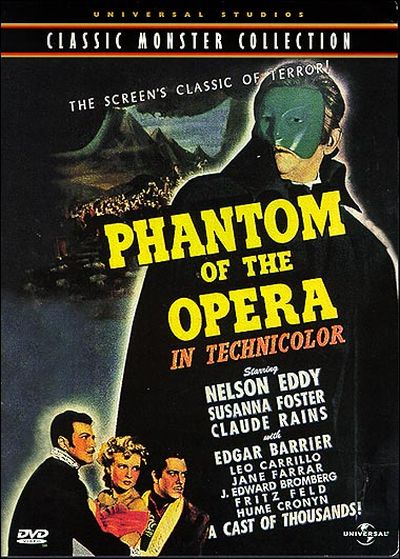
Universal Pictures’ remake of its own silent-era horror classic is an entirely different cinematic experience altogether — one which, unfortunately, can’t hold a candle to its atmospheric predecessor. As noted in Richard Schreib’s review of the 1925 Lon Chaney version, that film’s director “keeps the character of the Phantom deliberately mysterious –- as opposed to [in] other versions” (such as this one), “which create too much sympathy and not enough mystery for the Phantom.” Indeed, this later version is less a supernatural horror film than an operatic love triangle underscored by a tragic character study — a messy melange of genres which never really gel. In a significant departure from the original novel by Gaston Leroux, the first half-hour or so is given over to providing a back-story for the Phantom, who turns out to be a reasonably sympathetic, if deeply disturbed, violinist who, for reasons left frustratingly opaque — is he her father? (in the original novel, her father is a deceased fiddler) — holds a lifelong obsession with making Christine (Foster) a star. Rains is as compelling to watch as always, but — despite the clear effort made to flesh out his character — his Phantom feels “unfinished” somehow; it’s almost as though, in their attempt to humanize the Phantom, the filmmakers stripped him of his mystery while unintentionally opening up a host of other unanswered questions.

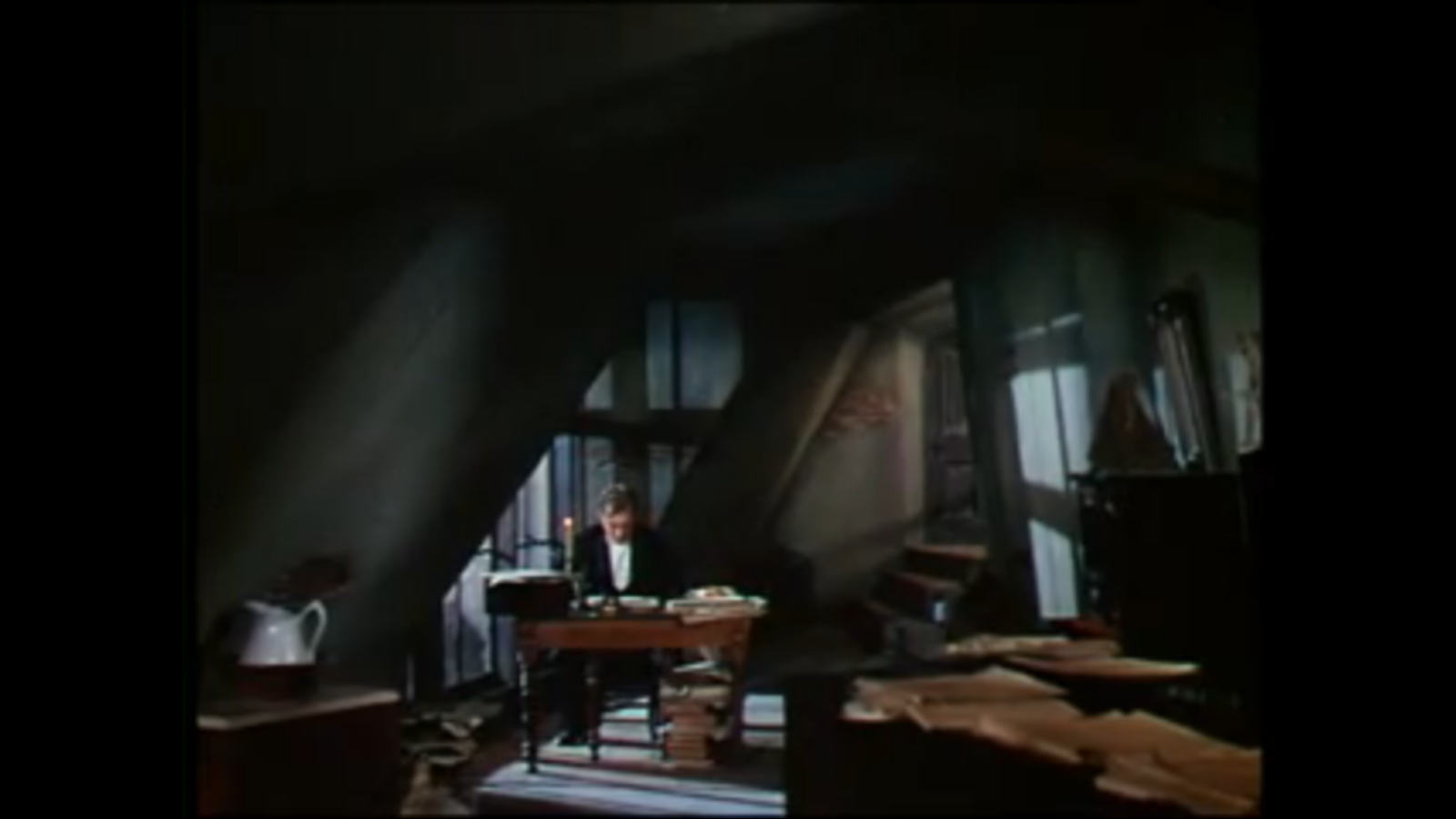
Meanwhile, as noted in Time Out’s review, the film is at least “very pretty to look at, with lush Technicolor, handsome sets, and even a fetchingly sculptured mask to give Claude Rains’ rather benign Phantom the look of a contented feline.” However, the “endless operatic snippets for Eddy and Foster to warble [make] it all a somewhat tiresome waste of Rains’ performance.” In addition, while there was a clear romantic rival for the Phantom’s affections in the original film, here this element of the plot has been needlessly opened up to include a pair of “humorously” rivalrous suitors for Foster — not just policeman Raoul D’Aubert (Edgar Barrier), but tenor Anatole Garron (Nelson Eddy) as well (presumably because Rains, as hinted above, never posits overtly romantic yearnings towards Christine). Foster is charming in her way (and certainly beautiful), but Barrier and Eddy are simply insipid male co-leads. Other than Rains’ performance, the best element of the film by far are its reasonably atmospheric sets, including the use of the same Paris Opera House replica that appears in the original silent version.

Note: Click here to read a list of the dozens of multi-media adaptations (so far) of Phantom… — a story which clearly resonates on an archetypal level for many.

Redeeming Qualities and Moments:

  • Oscar-winning sets
  • Claude Rains as Erique Claudin/”The Phantom”

Must See?
No; this one is only must-see for true Phantom-philes.

Links:

Johnny Belinda (1948)

Johnny Belinda (1948)

“There’s only one shame: failing a human being who needs you.”

Synopsis:
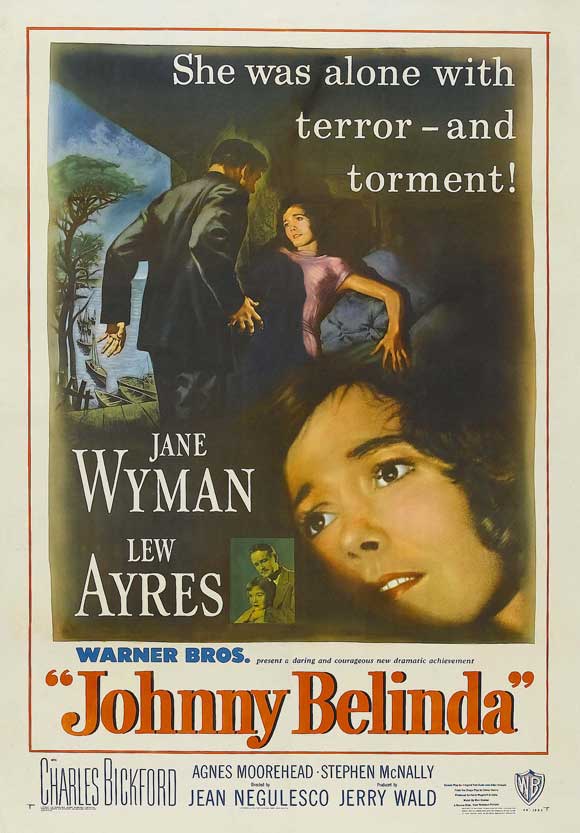
A doctor (Lew Ayres) in a Nova Scotian village befriends and tutors a young deaf woman (Jane Wyman) whose father (Charles Bickford) and aunt (Agnes Moorehead) previously thought she was simply a “dummy”. When Belinda (Wyman) is raped by a local fisherman (Stephan McNally), she becomes pregnant, and the entire town suspects Ayres of being the father.

Genres, Themes, Actors, and Directors:

  • Agnes Moorehead Films
  • Character Arc
  • Charles Bickford Films
  • Deafness
  • Doctors and Nurses
  • Jan Sterling Films
  • Jane Wyman Films
  • Jean Negulesco Films
  • Rape

Review:
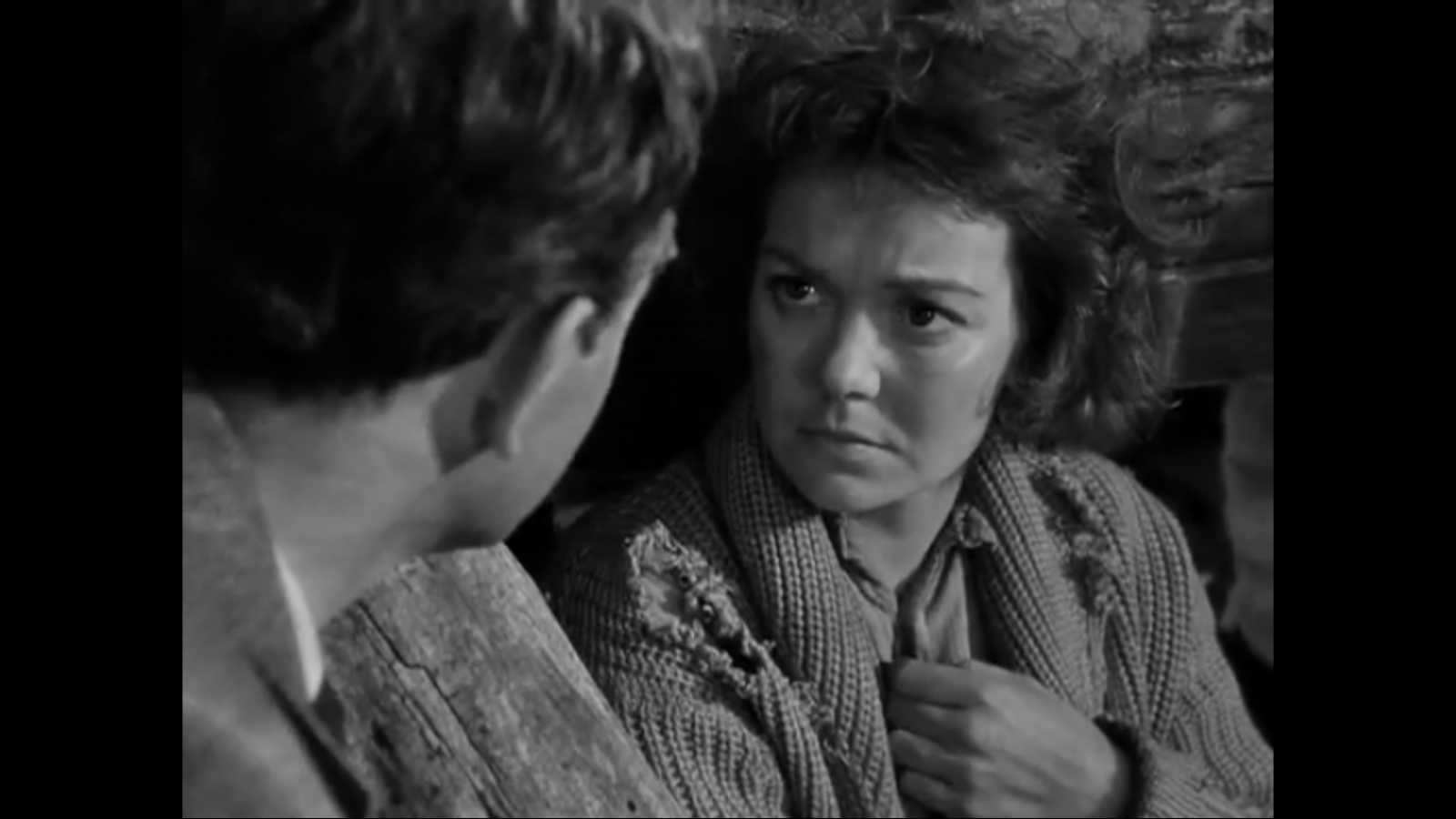
Peary doesn’t seem to be a big fan of this Oscar-nominated film, which garnered Jane Wyman a Best Actress award. While he doesn’t review it in his GFTFF (he simply lists it in the back), he discusses it a bit in the 1948 “chapter” of his Alternate Oscars book, where he notes that “after years in lightweight roles”, Wyman finally got her “big break” in this film. He argues that “the part was so strong already that Wyman really wasn’t required to act”, and that “director Jean Negulesco had her give a remarkably restrained performance (she rarely changes expressions) so it wouldn’t be so evident that they were milking the audience for sympathy”. He posits (unfairly, in my opinion) that “Wyman just smiled prettily and kept her eyes wide open”, ultimately coming across as “extremely huggable and lovable” — hence, her Oscar. Adding insult to injury, while Wyman was nominated no less than four times as best leading actress in a film, Peary never nominates her at all in his Alternate Oscars.

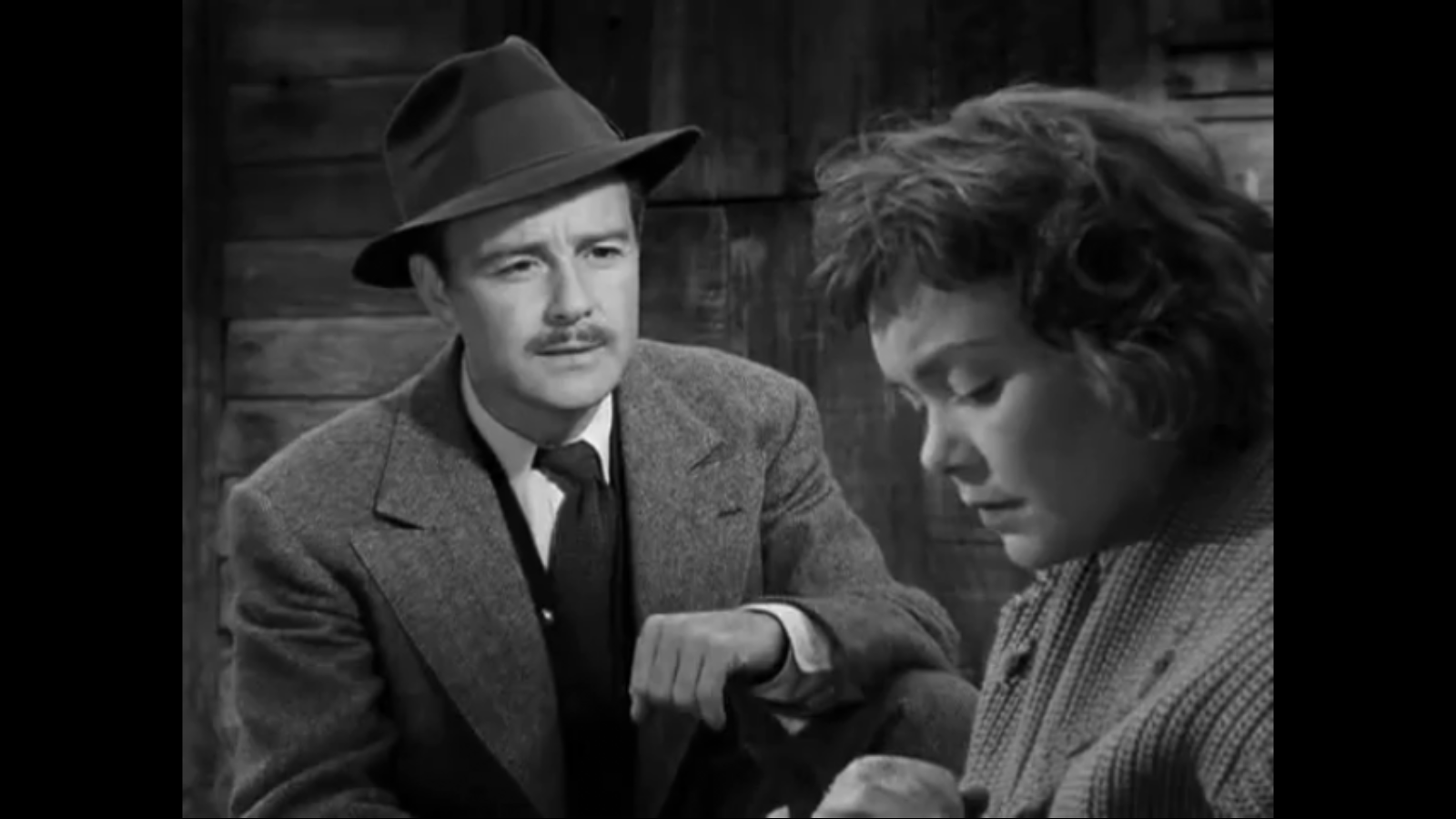
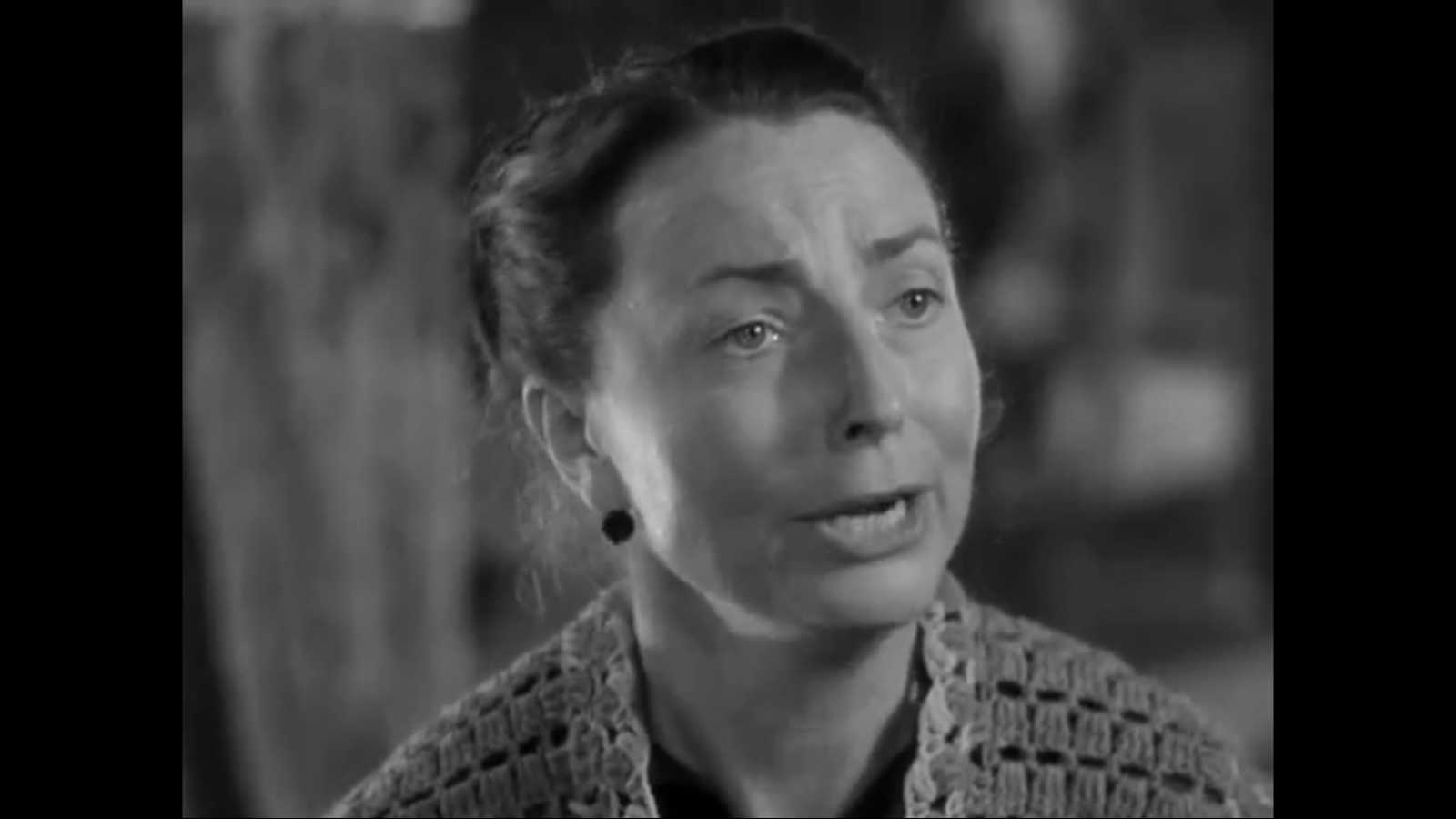
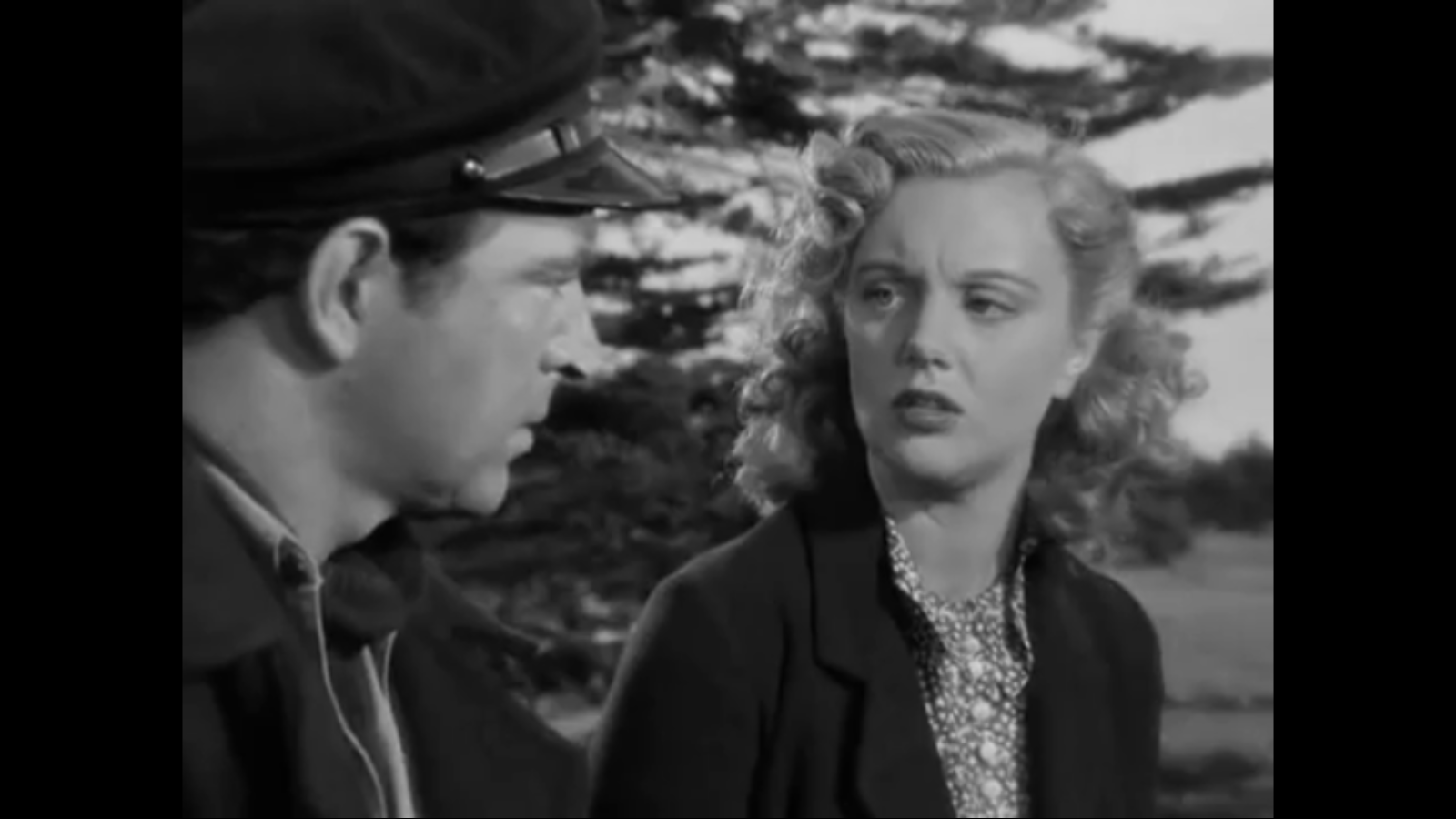
I’m not particularly a fan of Wyman myself — but I do find her performance here to be note-perfect; in fact, it’s likely my favorite of all her roles. Truth be told, I’ve always thought of Wyman as a bit dowdy, and have a hard time “buying” her in more glamorous parts (i.e., in Douglas Sirk’s films); she’s what you might call a handsome woman, but not particularly beautiful — and thus, she’s perfectly suited for her role here, where her “earthier” appeal is allowed to shine. Meanwhile, she’s surrounded by a top-notch supporting cast, with several familiar character actors — Charles Bickford, Agnes Moorehead, and Jan Sterling — given meatier roles than usual (to excellent effect). What’s especially refreshing is how each of these seemingly archetypal characters — bullish father (Bickford), shrewish aunt (Moorehead), jealous townswoman (Sterling) — are allowed to transcend their initial characterizations, each tapping into a store of deeply guarded humanity. Also notable is Lew Ayres (best known for his starring role in 1930’s All Quiet on the Western Front), who — as a noted pacifist during WWII — apparently had a hard time earning meaningful roles; he’s smartly cast here, and offers a refreshingly avuncular leading-man presence.

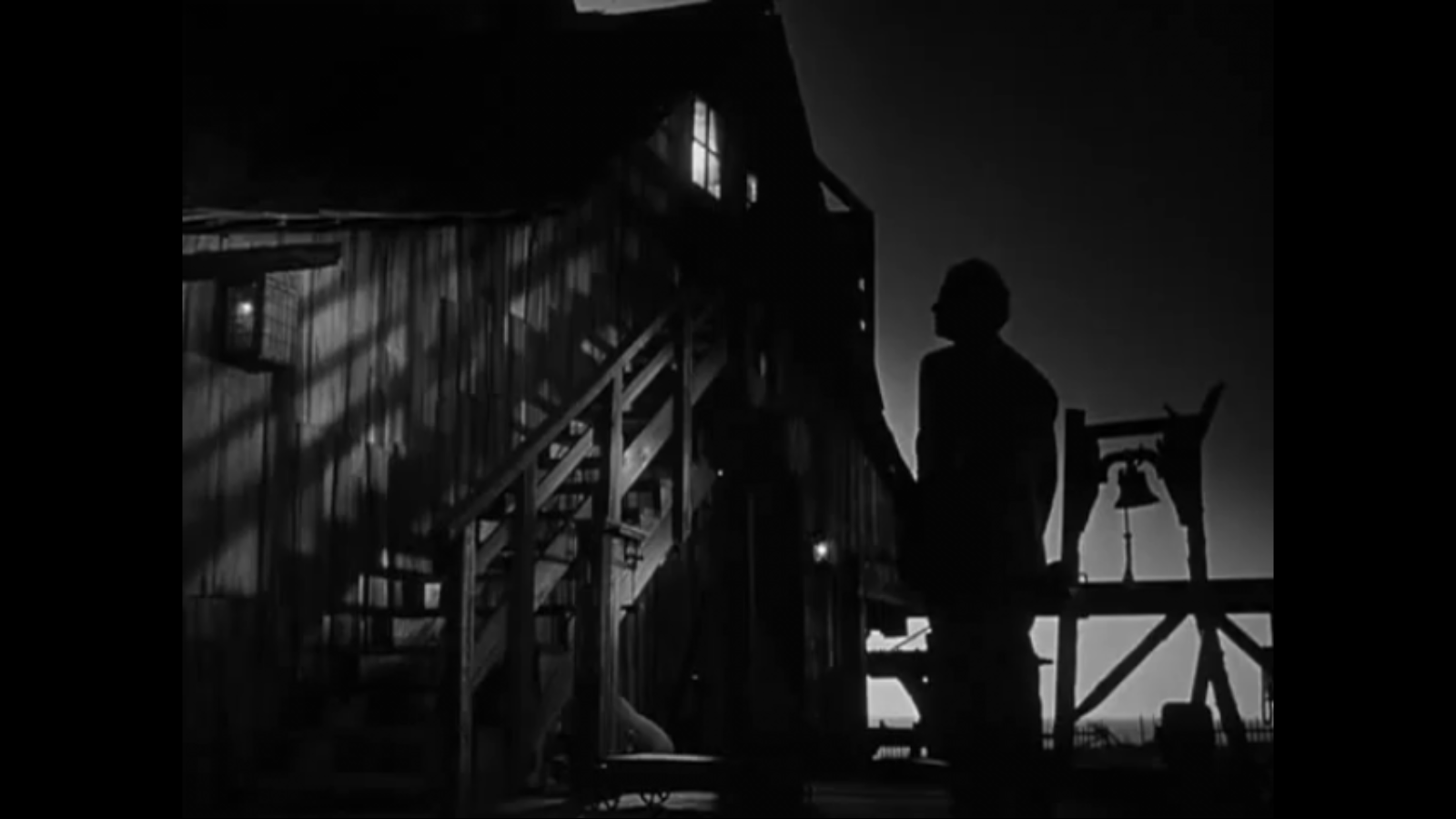
Interestingly, as DVD Savant points out, this was “one of the first Hollywood films to look at a handicapped [sic] person as a worthy subject for drama” — something we take for granted these days, when such a role almost guarantees that an actor will be nominated for an Oscar. The storyline itself, despite its undeniably harsh subject matter, is tastefully handled throughout; with the exception of a couple of key narrative twists later in the film which are handled a bit too facilely (I can’t say more at risk of spoiling), it’s a nicely balanced script, filled with plenty of local dialogue. Shot in coastal Northern California, the sets accurately reflect the windswept rockiness of Nova Scotia, and both cinematographer Ted McCord and Negulescu do a fine job presenting the tale through consistently atmospheric visuals. In sum, this one will likely surprise you as — in DVD Savant’s words — “a rare animal, a heart-warming sentimental story that doesn’t tax one’s intelligence, even if it does take a few melodramatic turns on its way.”

Redeeming Qualities and Moments:

  • Jane Wyman as Belinda
  • Lew Ayres as Dr. Richardson
  • A host of excellent supporting performances


  • Ted McCord’s atmospheric cinematography

  • Fine direction by Negulescu

Must See?
Yes, for Wyman’s Oscar-winning performance, and as an overall good show.

Categories

  • Noteworthy Performance(s)
  • Oscar Winner or Nominee

Links: