Browsed by
Category: Original Reviews

Responses to Peary’s “must see” movie reviews, as well as my own “must see” movie reviews up to and after 1986 (when Peary’s book was published).

Green Room, The (1978)

Green Room, The (1978)

“The dead belong to us, as soon as we agree to belong to them.”

Synopsis:
In the wake of WWI, a widowed journalist (Francois Truffaut) obsessed with honoring the memory of his deceased wife builds a shrine to her existence. While at an auction, he meets a young woman (Natalie Baye) who possesses a similar fascination with death, and they develop a tentative friendship — but will Truffaut’s obsession stand in the way of his current happiness?

Genres, Themes, Actors, and Directors:

  • Death and Dying
  • Francois Truffaut Films
  • French Films
  • Historical Drama
  • Journalists
  • Widows and Widowers

Review:
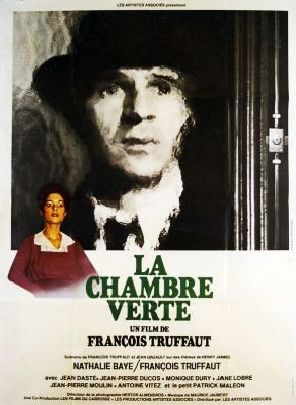
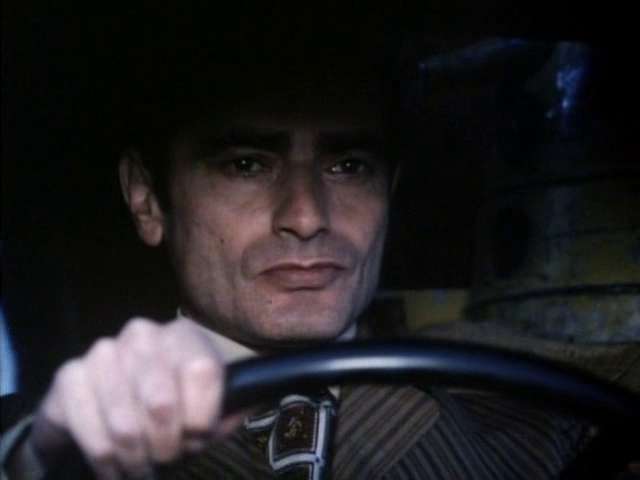
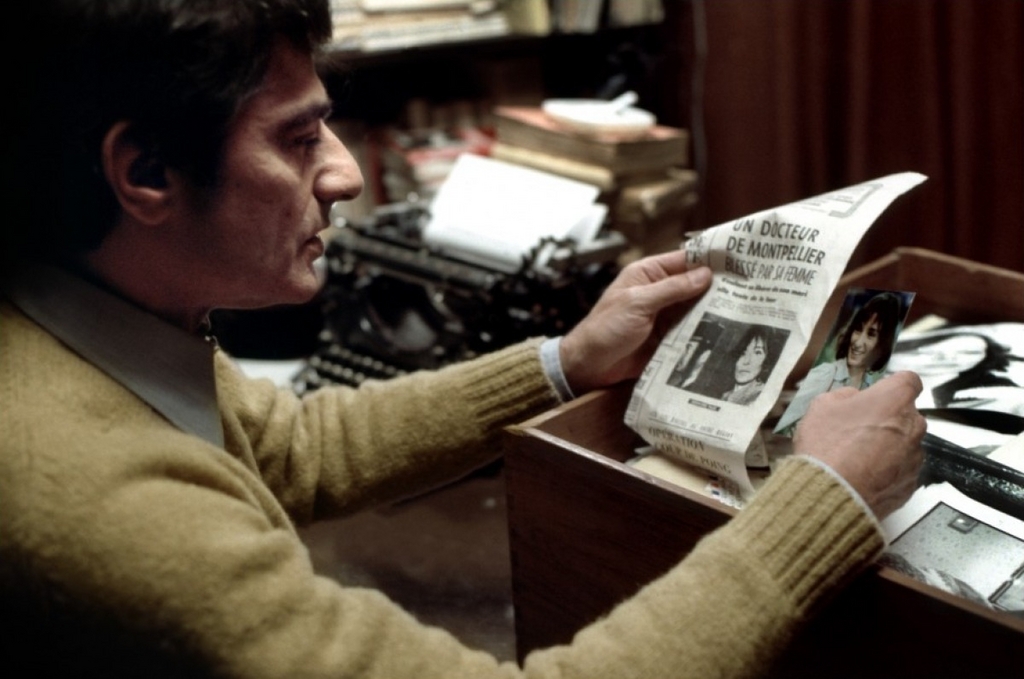
Based upon Henry James’ short story “The Altar of the Dead” (and incorporating elements of two other James stories), The Green Room was a project director Francois Truffaut held very close to his heart, given that so many of his close friends, colleagues, and mentors had recently passed away. In an interview, Truffaut noted that he wanted “to film what it would be like to show on screen a man who refuses to forget the dead” — with the ultimate moral, however, being that “One must deal with the living!” Unfortunately, while The Green Room was highly praised by critics upon its release (perhaps simply given their overall admiration for Truffaut’s work), it’s not a film one can recommend to anyone other than those most dedicated to covering the director’s oeuvre.

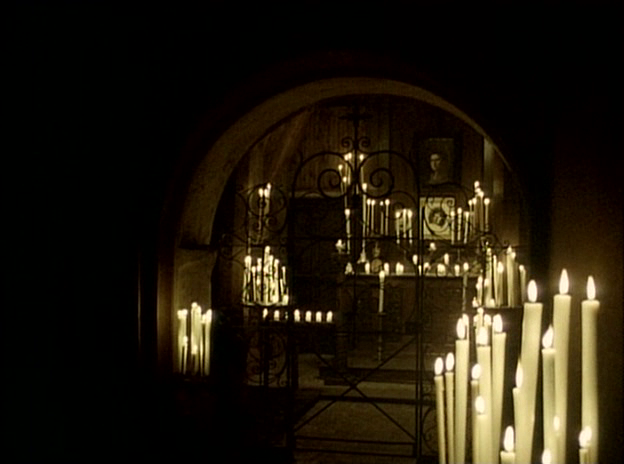
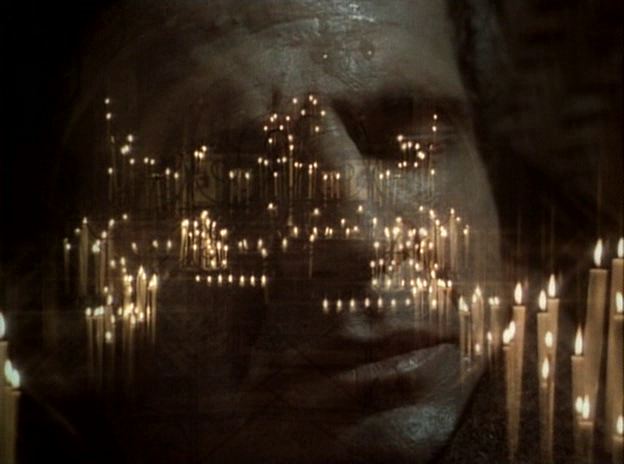
We quickly see that Truffaut’s character (“Julien Devenne”) is a man unwilling to move beyond his past: he writes obituaries for a slowly dying newspaper, lives with an aging housekeeper, and is mortally offended at the notion of finding a new wife (an idea embodied by another recently widowed character shown in the film’s opening scene). Baye’s character is introduced as a potential source of joy and life for Julien, but their relationship is based on the slimmest of connections, and is never fully explained. Indeed, there are many elements of the screenplay that are insufficiently explained: Is the deaf-mute boy living with Julien his own son? (One presumes so, but we’re never given any context for his existence.) Why does Julien have such an interest in buying a particular ring sold at an estate auction overseen by Baye? And who in the world is the pivotal (unseen) character of Paul Massigny? Ultimately, the most memorable aspect of the film remains Nestor Almendros’ atmospheric cinematography, which relies heavily on natural light from the candles placed throughout the altars Julien constructs in memory of the dead.

Redeeming Qualities and Moments:

  • Nestor Almendros’ cinematography

Must See?
No; this one is only must-see for Truffaut completists.

Links:

Mississippi Mermaid (1969)

Mississippi Mermaid (1969)

“I can’t say that I’m happy with her, but I’m unable to live without her.”

Synopsis:
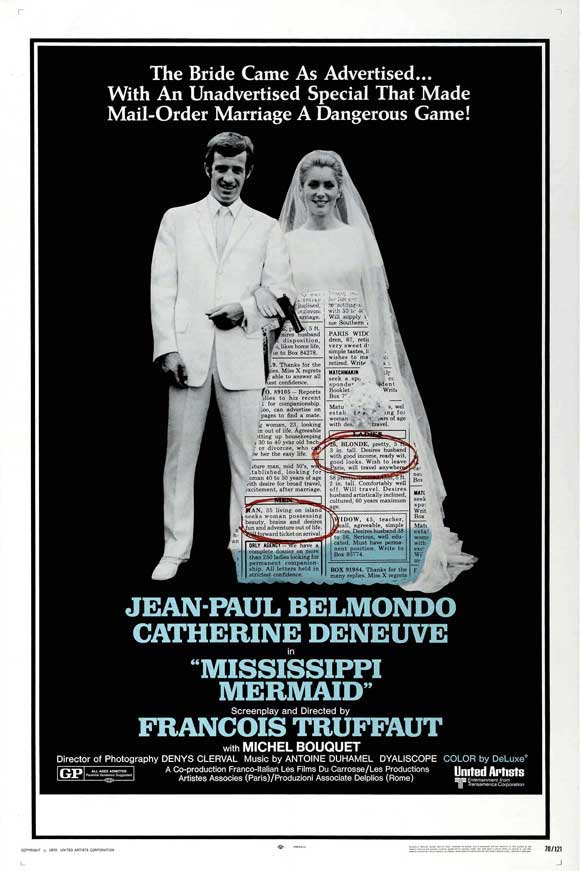
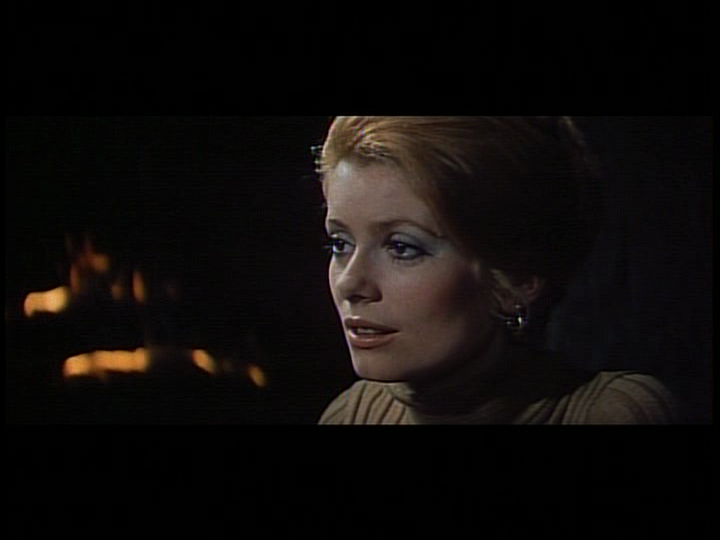
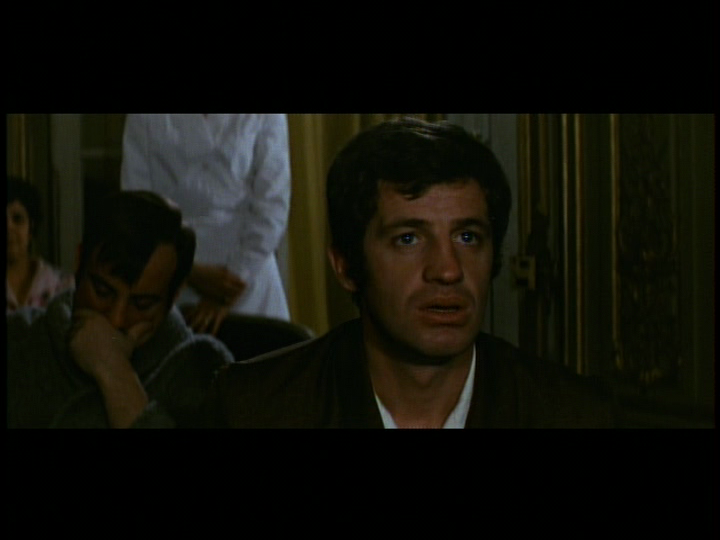
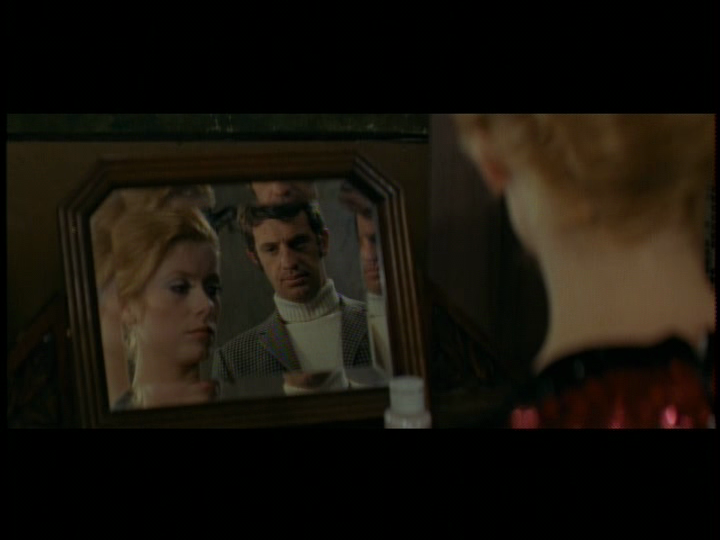
The owner of a tobacco factory (Jean-Paul Belmondo) on the island of Reunion is surprised to find that his new correspondence bride (Catherine Deneuve) looks nothing like the photo she sent him — but he falls in love with her nonetheless. As he learns more about his new bride, however, he quickly finds himself involved in an increasingly tangled web of deception and murder.

Genres, Themes, Actors, and Directors:

  • Catherine Deneuve Films
  • Femmes Fatales
  • Francois Truffaut Films
  • French Films
  • Jean-Paul Belmondo Films
  • Marital Problems

Review:
Based on Cornell Woolrich‘s 1947 novel Waltz Into Darkness, this Hitchcockian thriller by Francois Truffaut offers an intriguing variation on his cinematic obsession with deceptive, calculating, and/or murderous females (Deneuve’s “icy blonde” is a particularly suitable homage to Hitch’s sensibilities). To say very much about the plot would be to immediately give away spoilers, thus making it difficult to provide a fair critique of what happens throughout the two-hour film. Suffice it to say, however, that Deneuve and Belmondo make an appealing screen couple (naturally!), and that one can’t help remaining involved in their travails, even as one questions many of the foolhardy choices they make. Meanwhile, Truffaut makes excellent use of location filming in a diverse set of locales, ranging from the small island of Reunion off the coast of Madagascar, to Antibes, Aix-en-Provence, Lyon, Paris, and finally a snowy white cabin in the mountains. This one is worth a look.

Note: This deceptively titled film has nothing to do with either the state of Mississippi (it refers to the name of the ship Deneuve arrives on in Reunion) or to mermaids (other than an alliterative reference to a female “siren” of sorts). Be forewarned.

Redeeming Qualities and Moments:

  • Catherine Deneuve as Julie
  • Jean-Paul Belmondo as Louis
  • Fine, diverse location shooting
  • An intriguing tale of marital deception

Must See?
Yes, as a good show by Truffaut. Listed as a Personal Recommendation in the back of Peary’s book.

Categories

  • Good Show

Links:

Such a Gorgeous Kid Like Me (1972)

Such a Gorgeous Kid Like Me (1972)

Synopsis:
A sociology student (Andre Dussollier) writing his thesis on criminal women interviews a beautiful inmate named Camille (Bernadette Lafont) who has been jailed for murder. While listening to her recount her story, he finds himself deeply smitten with her, and dedicated to proving her innocence — but is she worthy of his adoration and trust?

Genres, Themes, Actors, and Directors:

  • Black Comedy
  • Femmes Fatales
  • Flashback Films
  • Francois Truffaut Films
  • French Films
  • Prisoners

Review:
Critical opinion seems fairly unanimous on this adaptation (by Francois Truffaut) of Henry Farrell‘s 1967 novel, with Time Out’s reviewer referring to it as “loud and crude”, and accurately naming it “Truffaut’s weakest movie, a black comedy which totally misfires”. Neither of the leads — either Dussollier’s hopelessly naive sociology student or Lafont’s calculating femme fatale — are anything close to likable, leaving us with nobody to root for and little interest in hearing Lafont relate her supposedly tragic background to Dussollier. Because it’s made clear to us from the beginning that Lafont is either lying and/or enormously deceptive, there is little point to learning more about her travails; we know that Dussollier is a dope for getting roped in, and we can see that he has nowhere to go but down. It’s especially disappointing to see Lafont — so appealing in her debut as the put-upon Marie in A Very Curious Girl (1969) — reduced to playing a comical tramp here. Charles Denner — star of Chabrol’s Bluebeard (1963) and Truffaut’s The Man Who Loved Women (1977) — gives the only semi-dignified performance in the film, playing an exterminator smitten with (and prey to) Lafont’s dubious charms.

Redeeming Qualities and Moments:

  • Charles Denner as Arthur

Must See?
No; definitely feel free to skip this one. Not even recommended for Truffaut fans.

Links:

Stepford Wives, The (1975)

Stepford Wives, The (1975)

“I’m not contemplating any Maidenform bonfires… But they could certainly use something around here!”

Synopsis:
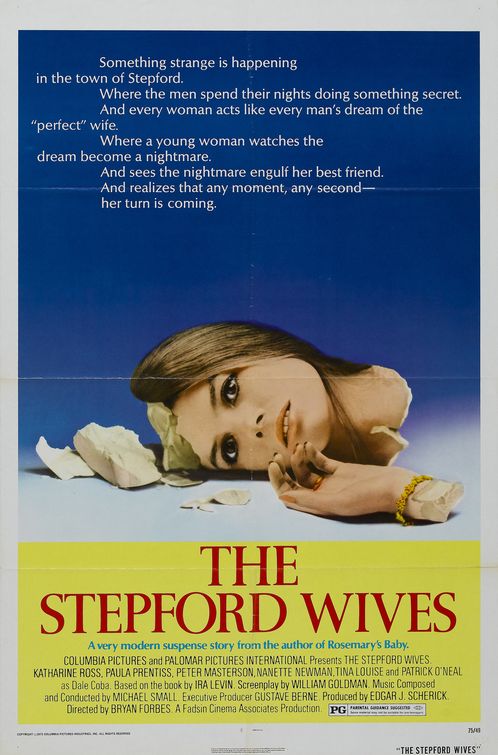
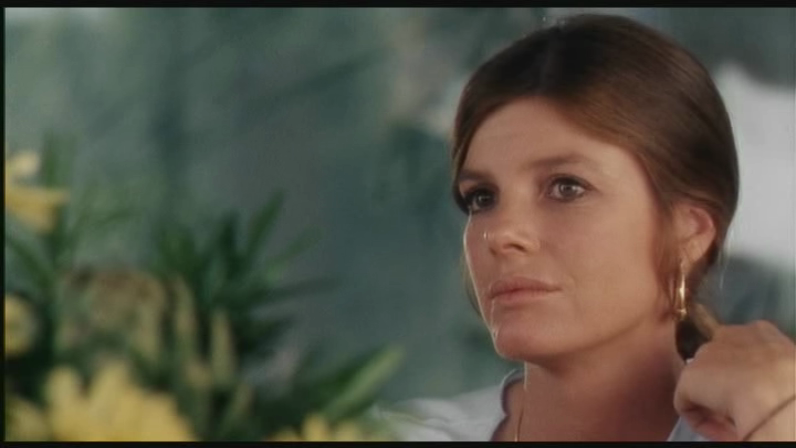
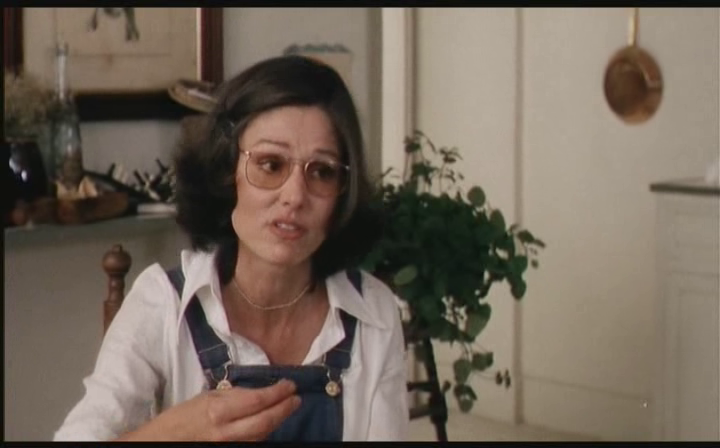
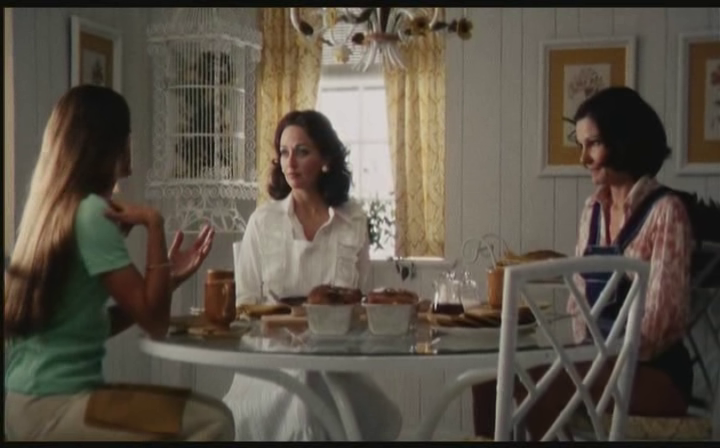
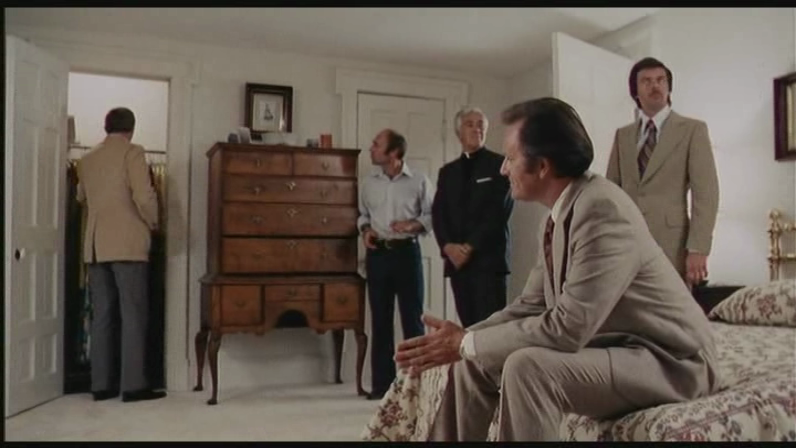
A lawyer (Peter Masterson) moves with his wife (Katharine Ross) and two kids from New York City to the suburb of Stepford, where Joanna (Ross) immediately begins to suspect that something isn’t quite right with the other wives. Along with her new best friend (Paula Prentiss), she tries to investigate, but finds that few of the women are interested in discussing any concerns deeper than housecleaning.

Genres, Themes, Actors, and Directors:

  • Bryan Forbes Films
  • Feminism and Women’s Issues
  • Housewives
  • Katharine Ross Films
  • Living Nightmare
  • Patrick O’Neal Films
  • Paula Prentiss Films
  • Science Fiction

Review:
Critical opinions remain mixed on the success of this first adaptation of Ira Levin’s widely read ’70s novel, with many complaining that director Bryan Forbes turned it into too much of a straight psychological thriller without sufficiently tapping into its satirical underpinnings. I disagree. Forbes — whose earlier successes as a director included Whistle Down the Wind (1961), The L-Shaped Room (1962), and Seance on a Wet Afternoon (1964) — does an impressive job projecting the seemingly idyllic Stepford as a suburb filled with quiet menace, leaving us with no doubt that Ross’s very life is in danger from the moment she reluctantly leaves behind her former life in NYC and suddenly finds herself surrounded by women she can’t relate to on any level (this is a true nightmare!). Her friendship with Prentiss — as well as her interactions with a wealthy, tennis-loving housewife (Tina Louise) — amply highlight the normalcy that’s missing from the rest of the Stepford wives; meanwhile, the screenplay’s slowly oppressive structure — as first Louise, then Prentiss, are “taken over”, and Ross is sneakily roped into having her portrait drawn, then her voice “captured” — is genuinely frightening.

Fans of Levin’s work (which includes the novel Rosemary’s Baby and the thriller-play Deathtrap) will know that he frequently placed wives in positions of vulnerability, positing their husbands as calculating villains whose motives are masked behind a façade of loving attention. That dynamic definitely plays out here, with Masterson doing a fine job as Ross’s husband — a man who seemingly has her best interests at heart, yet is clearly involved in nefarious dealings on some unknown level. Ross is perfectly cast in the lead role, projecting just the right amount of feminist spunk, and Prentiss gives one of her best supporting performances as Bobbie, who fearlessly shows off her body in casually sexy outfits (which are in noted contrast to the prim dresses and hats worn by the Wives). While one can certainly quibble with any number of logistical elements of the story (most having to do with the wives “transforming”), The Stepford Wives remains an engaging and culturally iconic sci-fi thriller, one which all film fanatics should check out.

Redeeming Qualities and Moments:

  • Katharine Ross as Joanna
  • Paula Prentiss as Bobbie
  • Peter Masterson as Walter
  • Tina Louise as Charmaine
  • A genuinely creepy premise


Must See?
Yes, as a culturally iconic psychological thriller.

Categories

  • Historically Relevant

Links:

Man Who Loved Women, The (1977)

Man Who Loved Women, The (1977)

“For me, nothing is more beautiful to see than a woman walking.”

Synopsis:
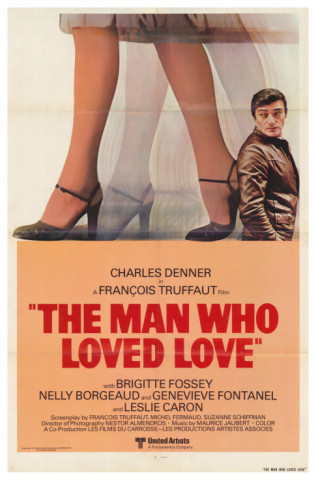
A scientist (Charles Denner) obsessed with beautiful women reflects back on the many partners he’s pursued over the years, as he writes his thoughts in a manuscript he hopes to publish.

Genres, Themes, Actors, and Directors:

  • Flashback Films
  • Francois Truffaut Films
  • French Films
  • Womanizers

Review:
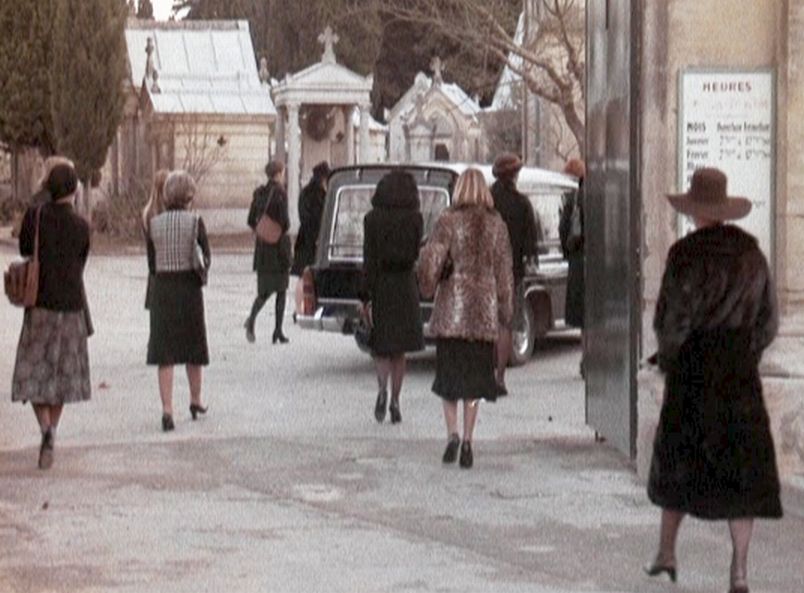
Francois Truffaut once insisted that “there is more truth in the bedroom than in the office or the board room” — which might explain his interest in making a film about a man literally obsessed with pursuing beautiful women, and making love to them at any cost. After a highly unrealistic opening scene (in which scores of women — mostly former lovers, along with a few friends — file by to pay their respects to the deceased Denner), the film’s first “scene of pursuit” shows Denner glimpsing a pair of enormously attractive female legs walking by in heels and a swishy skirt, then scrambling to jot down her license plate number as she drives away, and pursuing this phantom female (he never sees her face) with what amounts to foolhardy single-mindedness — only to learn that she lives in Canada, has a fiance, and won’t be back to France for another two years. This scene in many ways epitomizes the ludicrous and elusive nature of Denner’s ongoing sexual quests, which resemble more than anything those of Michael Fassbinder’s sorry sex addict in Steve McQueen’s Shame (2011).

Unlike McQueen, however, Truffaut keeps the tone of his film relatively lighthearted throughout; Denner’s obsession with accumulating female partners (most of whom are young, attractive, and unrealistically willing to jump straight into bed with him) rules his life, but his doctor — after telling him he’s contracted gonorrhea — simply chuckles at his lusty spirit, and Denner’s pursuits continue. Most of the screenplay is dedicated to showing us the string of varied women Denner beds, as well as his attempt to get his “scandalous” memoirs published; along the way, Truffaut intersperses occasional flashbacks to Denner’s youth, showing how his neglectful mother (Marie-Jeanne Montfajon) may have played a part in his lifelong neurosis. While there’s nothing particularly offensive about any of this — one can’t help staying engaged in what’s happening on screen, given Truffaut’s intrinsic storytelling talents — the film as a whole isn’t one of Truffaut’s best, and ultimately isn’t must-see viewing for all film fanatics.

Note: Leslie Caron shows up in a brief scene as — you guessed it — one of Denner’s former lovers, but her role is so small as to be considered a cameo.

Redeeming Qualities and Moments:

  • Nestor Almendros’ cinematography

Must See?
No, though it’s certainly worth a look by fans of Truffaut’s work.

Links:

Small Change / Argent de Poche, L’ (1976)

Small Change / Argent de Poche, L’ (1976)

“Of all of mankind’s injustices, injustice to children is the most despicable!”

Synopsis:
In a southern French town, a poverty-ridden young boy (Philippe Goldman) struggles to survive while the children around him deal with crushes, sexual awakenings, and other coming-of-age adventures.

Genres, Themes, Actors, and Directors:

  • Childhood
  • Coming of Age
  • Episodic Films
  • Francois Truffaut Films
  • French Films

Response to Peary’s Review:
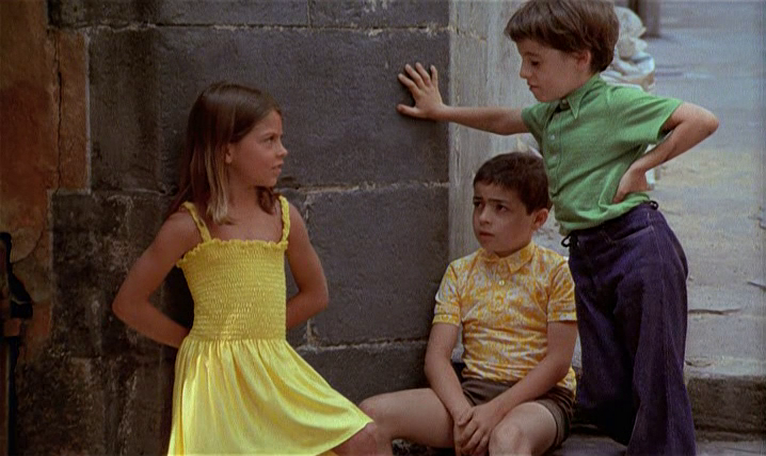
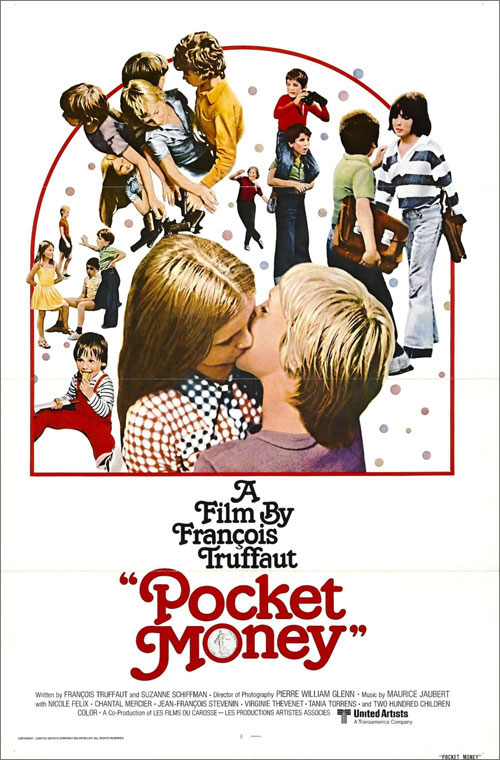
Peary refers to this episodic, “leisurely plotted” film as “Francois Truffaut’s glowing tribute to children, who must use all their immense, amazing resources to compensate for living in a sometimes brutal, adult-made, adult-controlled world”. He argues that the children in this film are “more relaxed than the students in [Truffaut’s] The 400 Blows, and the teachers are much more enlightened than those in 1959″ (though pedagogically-speaking, it remains painful to watch a well-meaning teacher [Chantal Mercier] alternately drill-and-kill her students on ‘important’ historical dates and force them to recite the same lines from a play ad nauseum). He notes that “the two children who share center stage” in the screenplay “are those who have the most difficult home lives” — a young boy (Geory Desmouceaux) “who lives alone with his handicapped father” and “develops a crush on his best friend’s mother”:
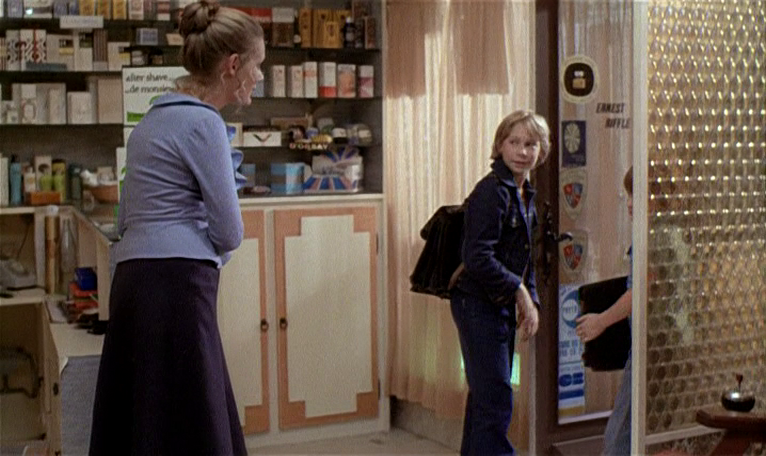
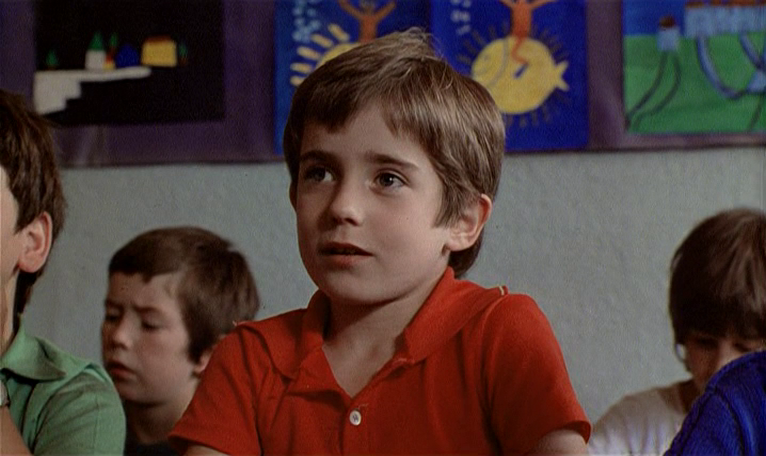
… and a “welfare case” (Goldman) with a mysteriously absent family. Otherwise, as Peary notes, “this is a simple film about innocent themes (a boy’s first kiss, boys sneaking into a movie, boys making their own breakfast, boys spying on a nude woman)” — though he argues that this simplicity masks “unforgettable scenes and faces”, with “much… revealed about children’s special, often-troubled world”.

While I recall greatly enjoying Small Change as a teenage film fanatic, I was less enamored with it during a recent revisit. The biggest problem is that the episodic nature of the screenplay — though clearly strategic to Truffaut’s purposes — makes it impossible to get to know much about any of these kids, each of whom seems like a potentially interesting protagonist on his/her own. To that end, the performances by the child actors are uniformly natural and engaging, and Truffaut should certainly be commended for the obvious time and energy he put into this pursuit — yet we continually long for more knowledge about each of their situations. Meanwhile, the overall tone of the film shifts too dramatically between humor and pathos, with certain scenes (such as an infamous episode involving a toddler left on his own in a high-rise with an open window) nearly too painful to watch, yet designed to garner chuckles (!?).

By its final scenes (spoiled in Peary’s review, though I won’t say more here), the movie has shifted into different territory altogether, with a well-meaning schoolteacher (Jean-Francois Stevenin) — who “will remind some of Truffaut” — providing a didactic lecture to his students before they leave for the summer; at this point, the true intent behind the film is suddenly revealed. Unfortunately, it casts an overly moralistic pall upon the film, which (as noted earlier) is otherwise presented as primarily a light-hearted coming-of-age ensemble tale. While there are many naturalistic moments to enjoy throughout the film, they ultimately don’t add up to a satisfying enough experience to recommend as “must-see” for all film fanatics.

Redeeming Qualities and Moments:

  • An often-engagingly naturalistic look at the lives of children in 1970s France
Must See?
No, though it’s clearly a must for Truffaut fans.

Links:

Importance of Being Earnest, The (1952)

Importance of Being Earnest, The (1952)

“I pity any young woman who isn’t married to a man named Ernest.”

Synopsis:
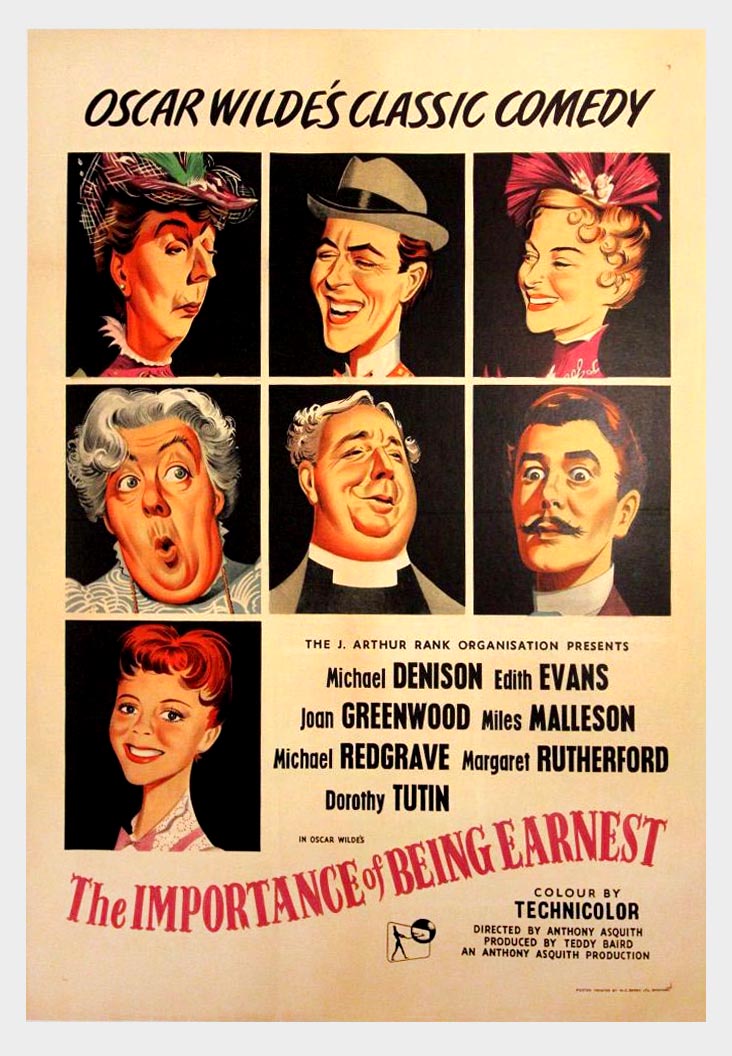
A wealthy bachelor (Michael Redgrave) going by the name of “Ernest” hopes to marry the daughter (Joan Greenwood) of arrogant Lady Bracknell (Edith Evans); meanwhile, Evans’ nephew (Michael Denison) — also posing as “Ernest” — falls in love with Redgrave’s beautiful 18-year-old ward (Dorothy Tutin). Troubles arise when Evans expresses concern over Redgrave’s dubious heritage, and both Greenwood and Tutin learn that their fiances are actually named something other than Ernest.

Genres, Themes, Actors, and Directors:

  • Class Relations
  • Joan Greenwood Films
  • Margaret Rutherford Films
  • Michael Redgrave Films
  • Mistaken or Hidden Identities
  • Play Adaptation
  • Romantic Comedy

Review:
Oscar Wilde’s final play — the initial production of which was infamously sabotaged by allegations of his homosexual “indiscretions” and his subsequent jailing — has been adapted for the big screen numerous times (including a 2002 version co-starring Reese Witherspoon), but this earlier adaptation by director Anthony Asquith is often cited as the most faithful and definitive version. Indeed, many critics complain that the film sticks too closely to its theatrical origins — a charge frequently leveled at Asquith, whose directorial style in general was more straightforward than stylistically creative. For my money, Wilde’s play is enjoyable enough to stand just fine on its own, and a more straightforward adaptation like this allows one simply to bask in its infinitely witty juices. Wilde truly was a genius at humorously skewering class relations, and his play was (thankfully) modified only slightly for the screen by Asquith, who refused to accept any credit for the work.

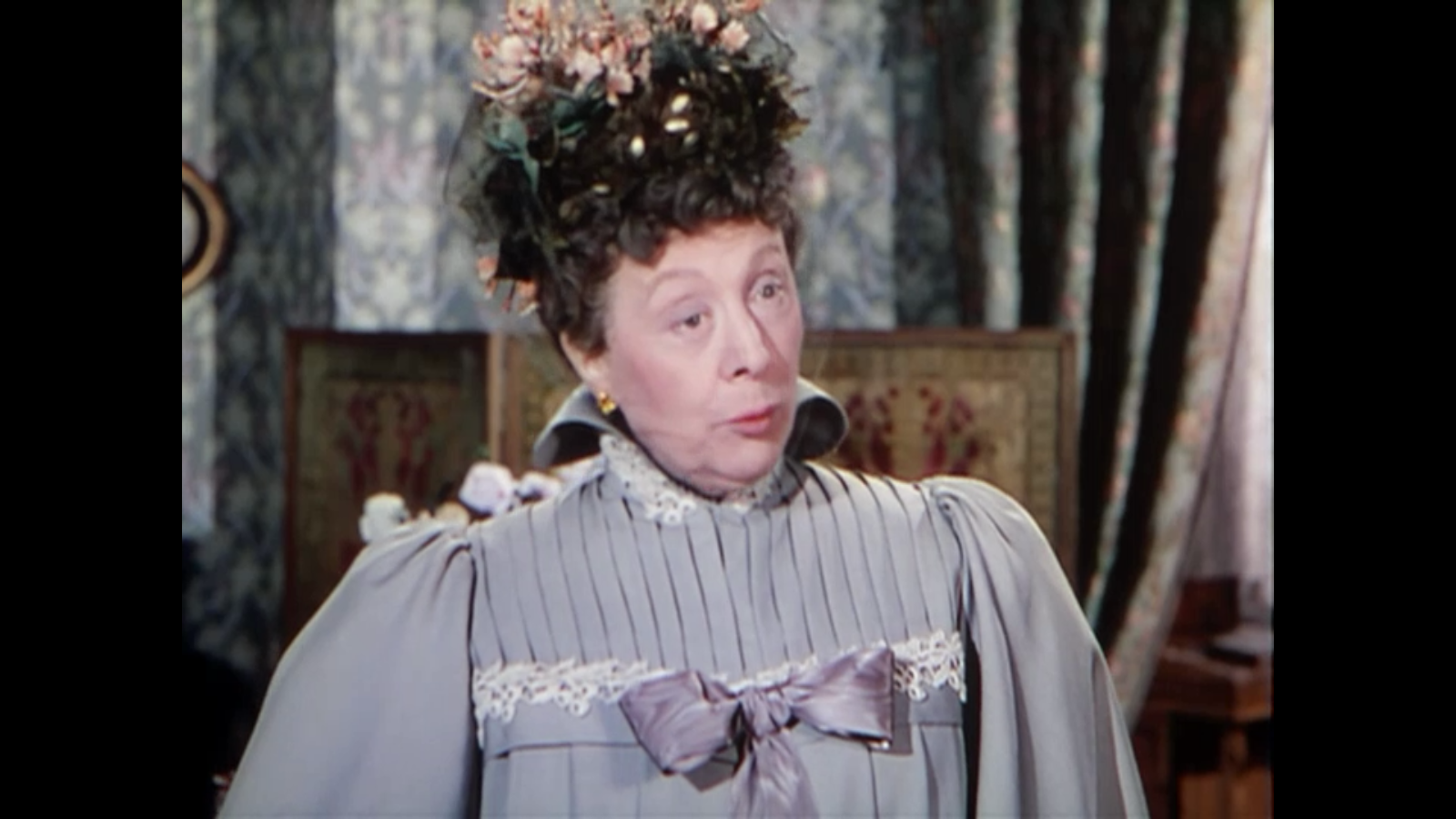
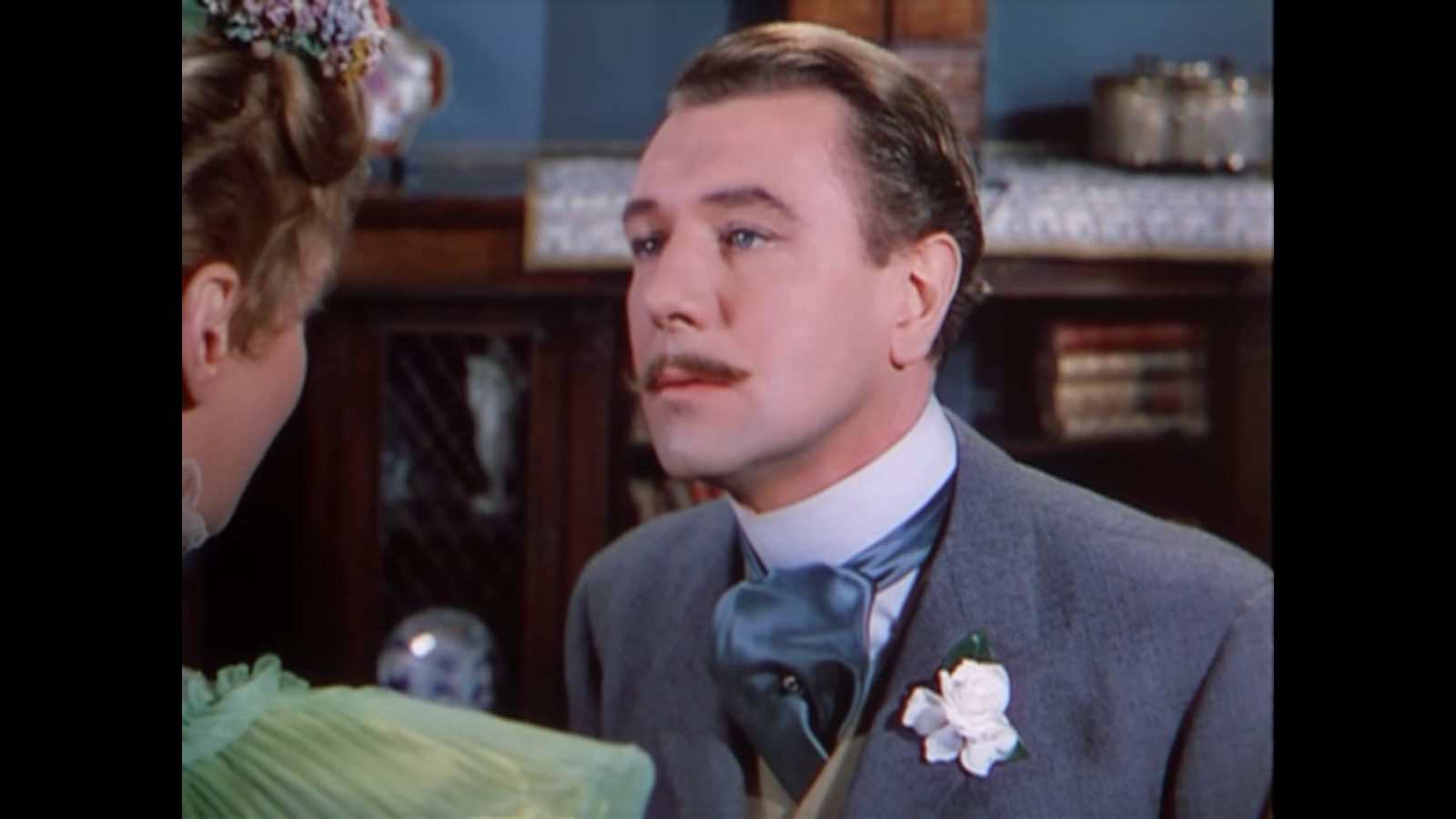
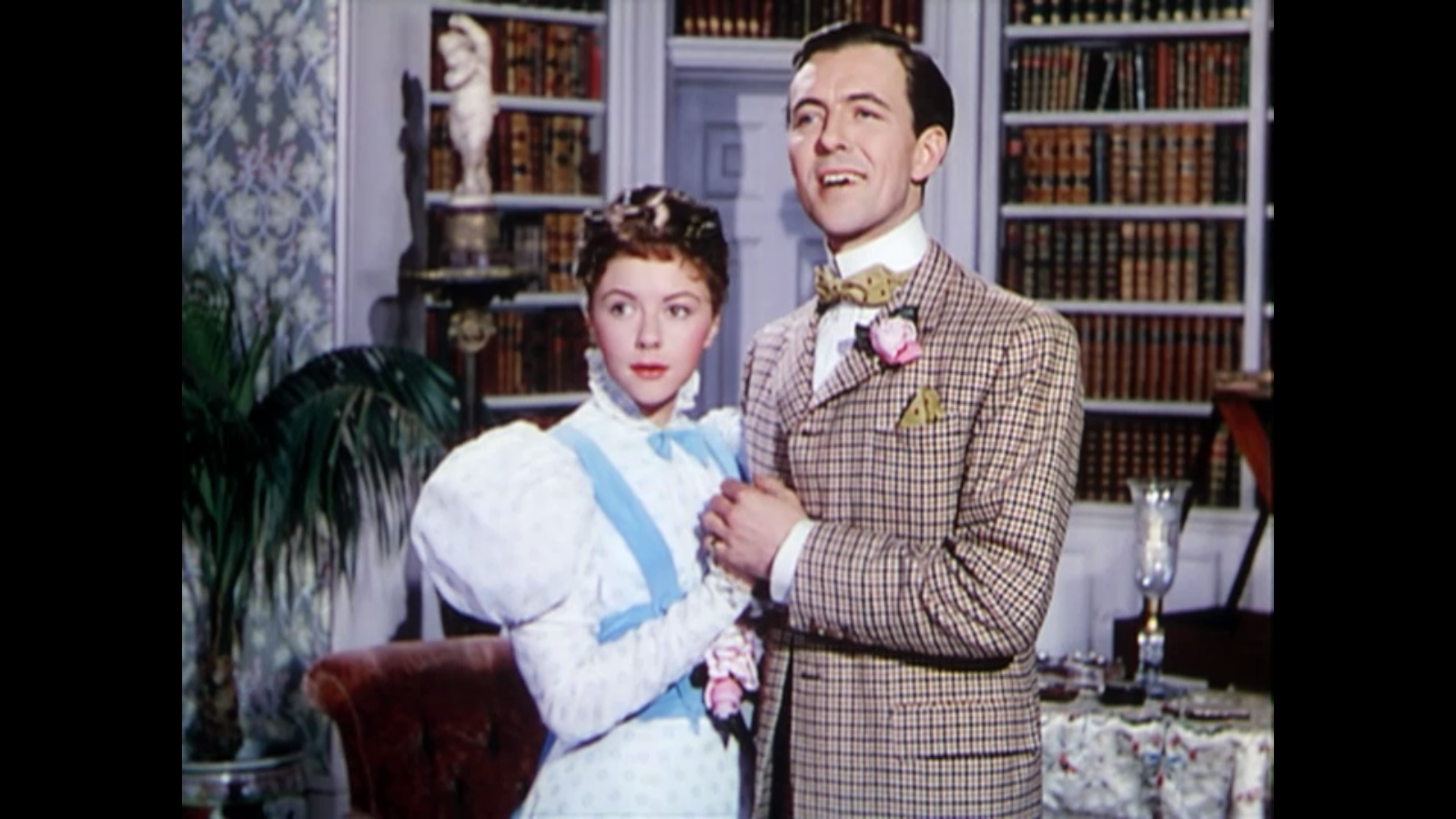
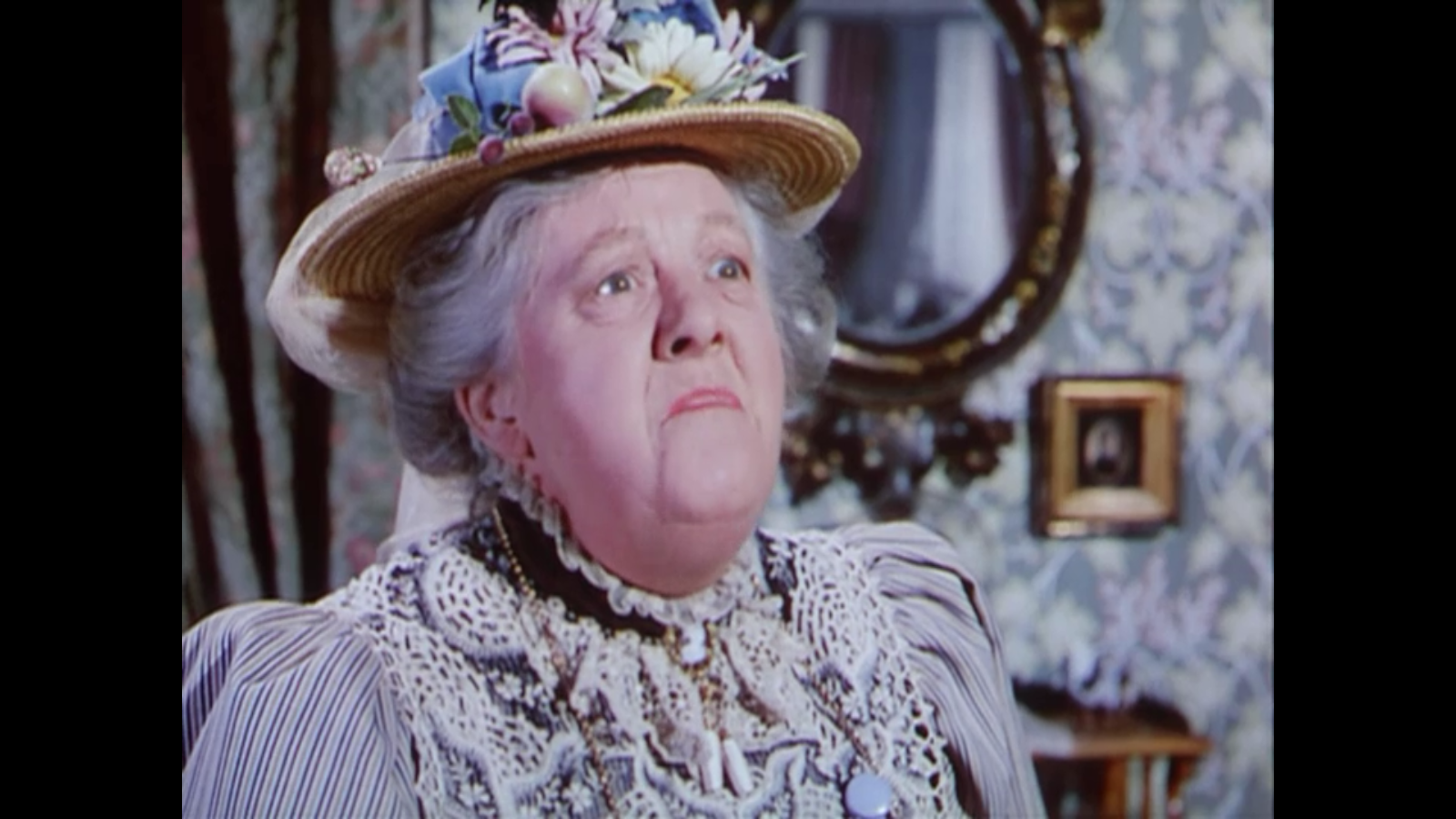
Although John Gielgud remains perhaps the most famous actor to perform as Jack/Ernest (he turned down an opportunity to star in this adaptation), Michael Redgrave is a fine — if perhaps slightly overage — replacement, and Michael Denison is perfectly cast as his roguish friend Algernon. Dorothy Tutin — who remained primarily a stage actress throughout her career — made her screen debut as Cecily, and is suitably youthful and naive in this critical role; meanwhile, Joan Greenwood purrs her way through a supporting performance as Redgrave’s betrothed, and Margaret Rutherford steals the few scenes she’s in as Tutin’s German tutor. The film’s most famous performance, however, is given by Dame Edith Evans, who played the role of Lady Bracknell for several decades on stage, and whose incredulous intonation here of the line, “A handbag?!” remains oft-cited.

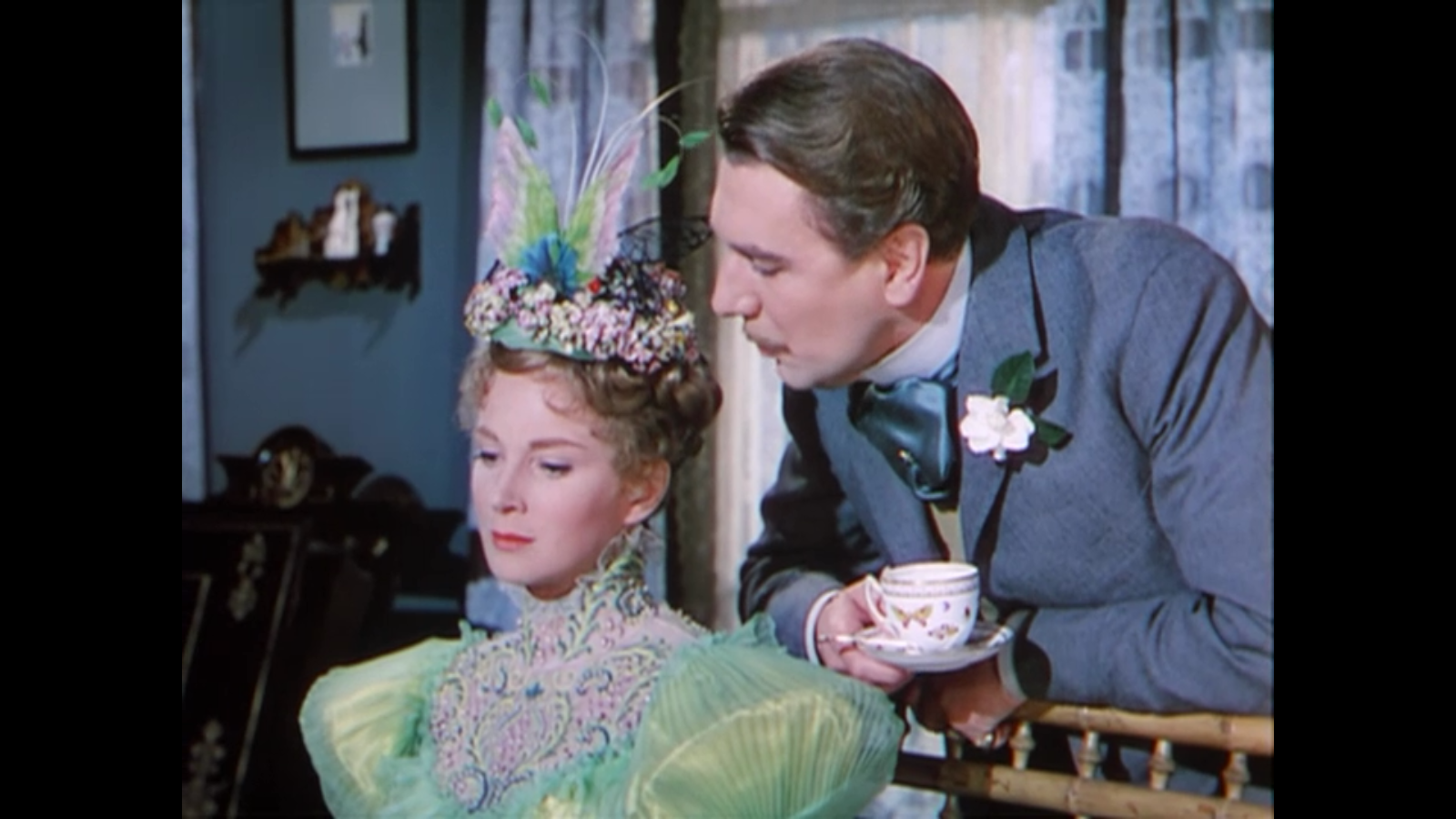
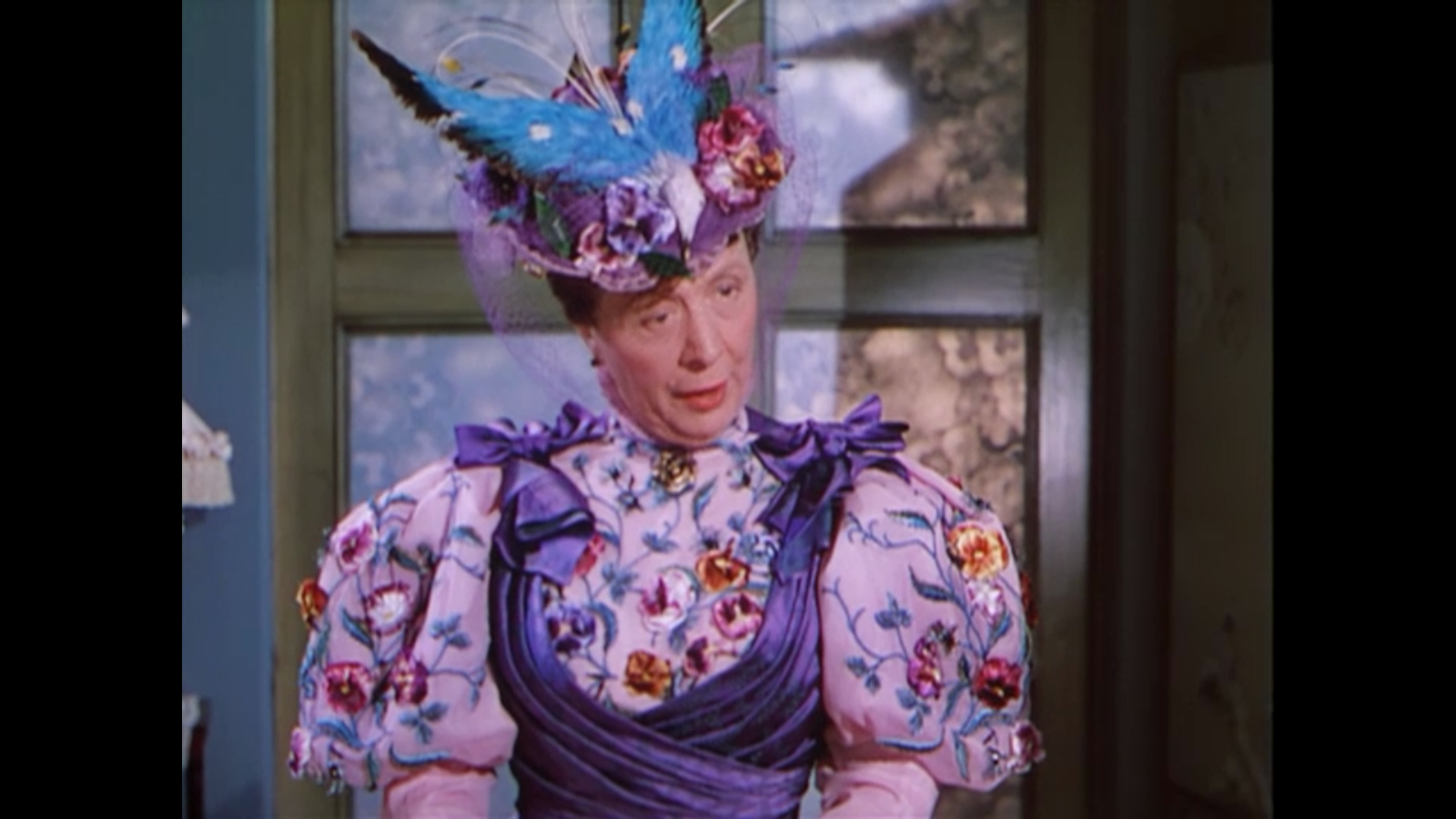
Note: Watch for some delightfully florid hats worn by the various women in the cast; the Technicolor cinematography brings out their hues quite nicely.

Redeeming Qualities and Moments:

  • Dame Edith Evans as Lady Bracknell
  • Michael Redgrave as Jack (a.k.a. “Ernest”)
  • Michael Denison as Algernon (a.ka. “Ernest”)
  • Dorothy Tutin as Cecily
  • Joan Greenwood as Gwendolen
  • Margaret Rutherford as Miss Prism
  • Colorfully ornate hats and costumes
  • Wilde’s incomparably quotable dialogue:

    “Ignorance is like a delicate, exotic fruit; touch it, and the bloom is gone.”

Must See?
Yes, as the “definitive” cinematic adaptation of Wilde’s classic play.

Categories

  • Genuine Classic

Links:

Alice’s Restaurant (1969)

Alice’s Restaurant (1969)

“Group W is where they put ya if you may not be moral enough to join the army after committin’ your special crime.”

Synopsis:
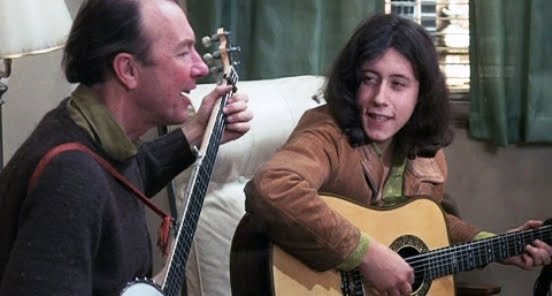
An itinerant folk singer (Arlo Guthrie) and his musician-friend (Geoff Outlaw) visit a couple of friends (James Broderick and Patricia Quinn) at the church they’ve converted into a restaurant. When Guthrie gets arrested for littering after a Thanksgiving feast, he recounts his experiences dealing with both the police and the draft board.

Genres, Themes, Actors, and Directors:

  • Arthur Penn Films
  • Counterculture
  • Musicians

Review:
Arthur Penn’s big-screen follow-up to Bonnie and Clyde (1967) was this loose adaptation of Arlo Guthrie’s beloved 18-minute folk song-narrative about a series of outlandish yet true events that occurred in Guthrie’s own life several years earlier. The song itself is a delightful musical monologue — witty, off-beat, and wonderfully representative of its era; Penn’s misguided movie, unfortunately, literalizes the elements of Guthrie’s song in such a way that any deeper insight or enjoyment is completely lost. The song clearly needed to be “expanded” to fill a feature-length film, but the resulting narrative threads — primarily focusing on the troubled relationship between Broderick and Quinn, and a young drug addict (Michael McClanathan) who comes between them — are both underdeveloped and uninteresting. The primary storyline appears to be a quasi-biography about Guthrie’s own life at the time, given that he’s shown making several visits to the deathbed of his father, Woody Guthrie (played by Joseph Boley) — but we learn surprisingly little about Arlo’s past or present, other than that he seems persistently bemused by the events occurring both to and around him. Interestingly, Arlo is now a Libertarian and member of the Republican party, indicating that perhaps he really did get fed up with many aspects of the counterculture lifestyle depicted here.

Note: Those who have never heard (of) the song this film is based on will be even more lost as to the relevance of any of the proceedings on-screen — not a good sign for any adaptation.

Redeeming Qualities and Moments:

  • Some enjoyable musical numbers

Must See?
No; skip this one unless you have a personal interest in the subject matter. Listed as a Cult Movie and a Personal Recommendation in the back of Peary’s book.

Links:

Sleuth (1972)

Sleuth (1972)

“There’s nothing like a little bit of mayhem to cheer one up.”

Synopsis:
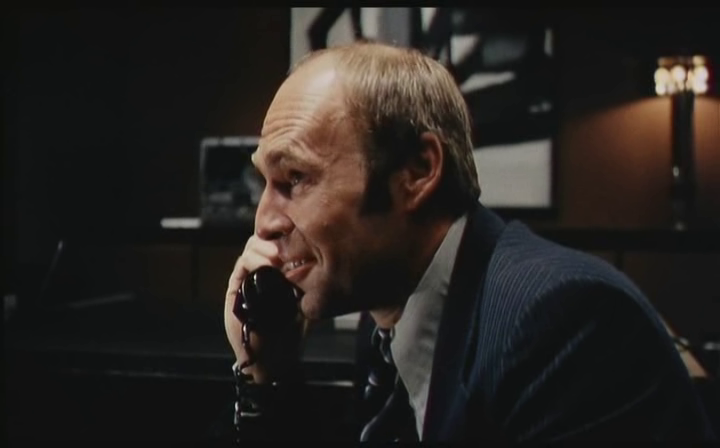
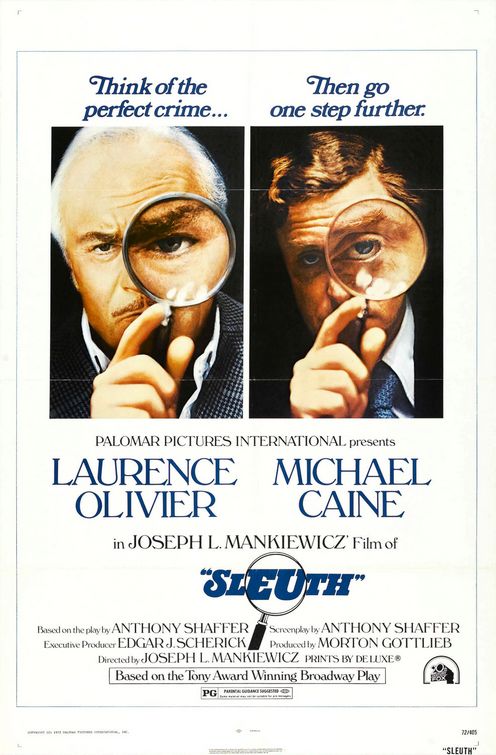
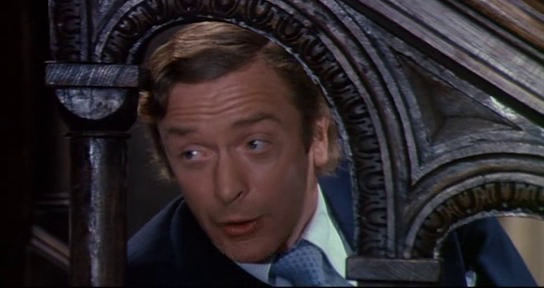
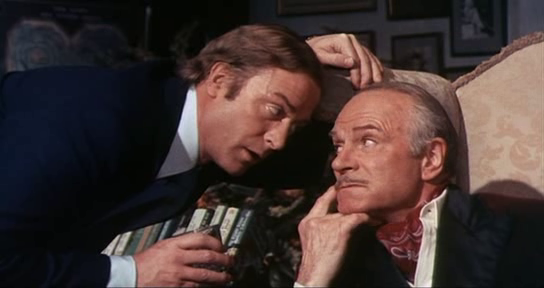
An aristocratic mystery writer (Laurence Olivier) invites his wife’s lower-class lover (Michael Caine) to his house, proposing an elaborate game of calculated heist that quickly turns into a much more serious cat-and-mouse affair.

Genres, Themes, Actors, and Directors:

  • Cat-and-Mouse
  • Class Relations
  • Infidelity
  • Joseph L. Mankiewicz Films
  • Laurence Olivier Films
  • Michael Caine Films
  • Play Adaptation
  • Writers

Review:
Joseph Mankiewicz’s final film as a director was this adaptation of Anthony Shaffer’s hit Broadway play, about a successful mystery novel writer who revels in the opportunity to utilize the “tools of his trade” as he engages in an increasingly taut game of cat-and-mouse with his wife’s lover. The storyline is full of so many spoilers that, as most reviewers have noted, it’s best not to read too much about the film ahead of time if you want to remain surprised throughout. With that said, I’ll keep this review rather short, simply noting that both Caine and Olivier’s performances are spot-on throughout, and that Mankiewicz’s direction of a decidedly house-bound play is consistently innovative and fresh, with excellent use made of various props around the house. Enjoy!

Note: Not surprisingly, it seems that Shaffer was “partially inspired” by his game-loving friend, Stephen Sondheim, who co-wrote (with Anthony Perkins) the similarly plot-twisty thriller The Last of Sheila (1973).

Redeeming Qualities and Moments:

  • Laurence Olivier as Andrew Wyke
  • Michael Caine as Milo Tindle
  • Fine direction by Mankiewicz

Must See?
Yes, as a most enjoyable thriller.

Categories

  • Good Show

(Listed in 1001 Movies You Must See Before You Die)

Links:

Kings Row (1942)

Kings Row (1942)

“Now, in this modern and complicated world, man breaks down under the strain and bewilderment, disappointment and disillusionment — gets lost, goes crazy, commits suicide.”

Synopsis:
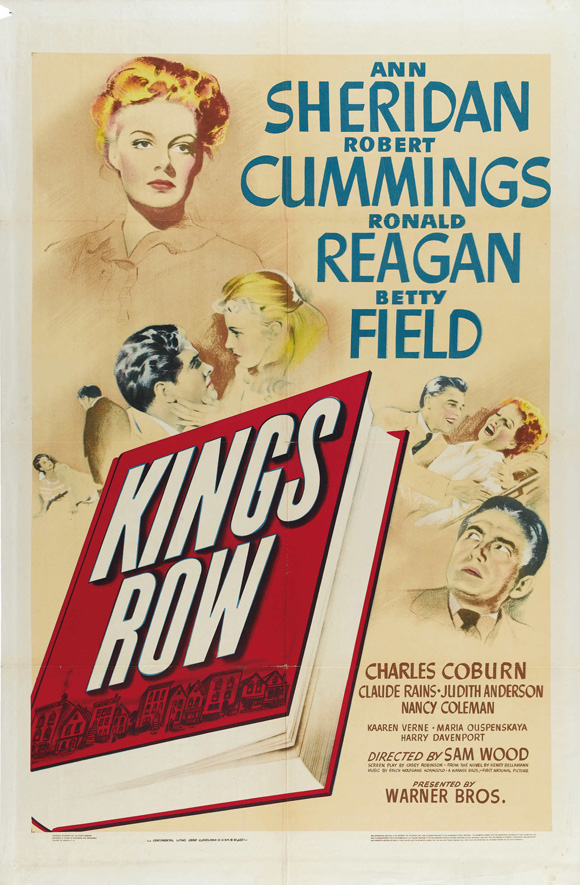
In a small American town near the turn of the 20th century, an aspiring psychiatrist (Robert Cummings) loves the troubled daughter (Betty Field) of a renowned doctor (Claude Rains) who mentors him in his new career. Meanwhile, his happy-go-lucky childhood friend (Ronald Reagan) hopes in vain to marry the daughter (Nancy Coleman) of the town’s surgeon (Charles Coburn), but turns to another lifelong friend (Ann Sheridan) for companionship.

Genres, Themes, Actors, and Directors:

  • Ann Sheridan Films
  • Betty Field Films
  • Charles Coburn Films
  • Claude Rains Films
  • Friendship
  • Judith Anderson Films
  • Robert Cummings Films
  • Ronald Reagan Films
  • Sam Wood Films
  • Small Town America

Review:
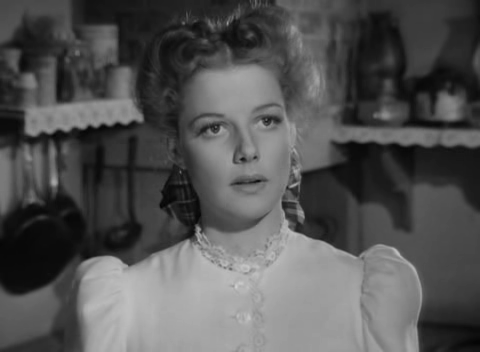
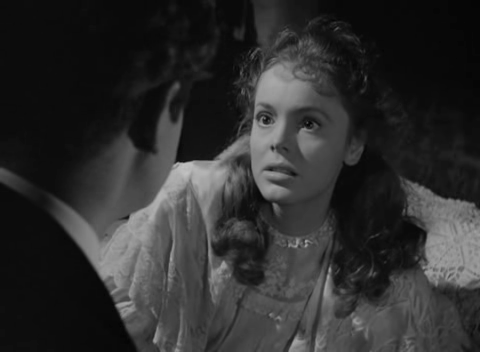
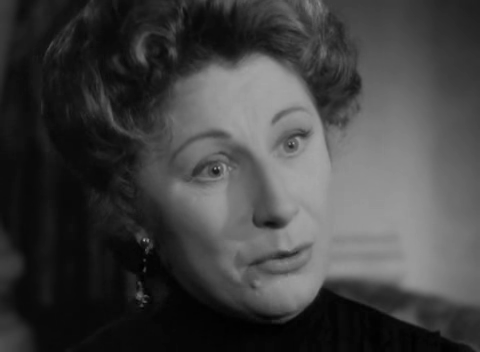
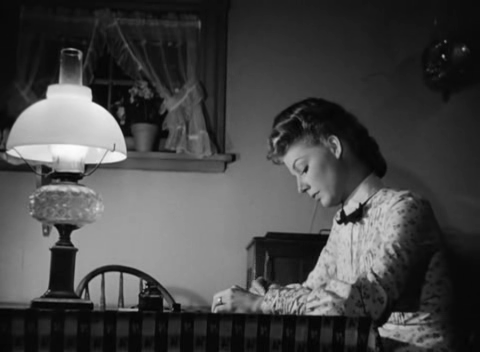
Based on the best-selling novel by Henry Bellamann, Kings Row is primarily known as the film where Ronald Reagan gave the best performance of his career — and though I haven’t seen all of Reagan’s movies, it would be hard to argue with that assertion. Indeed, while the movie’s nominal protagonist (“Parris Mitchell”) is played by Robert Cummings, Reagan’s “Drake McHugh” remains a much more fascinating individual to watch, as he shifts from a carefree existence as a trust-fund playboy to a young man with surprising levels of depth, loyalty, and honor; we can’t help but become inextricably involved in the arc of his troubled existence. Supporting performances by the large cast are fine as well — including Ann Sheridan as the girl from the “wrong side of the tracks” who falls for Drake, and Nancy Coleman as the daughter of a “mad” surgeon (Coburn) and his wife (Judith Anderson).

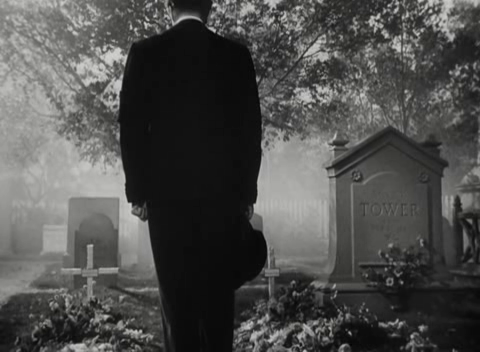
The multifaceted storyline — involving numerous romantic longings, family secrets, mental breakdowns, and other squalid details — was (not surprisingly) toned down quite a bit from the original novel, with a resulting screenplay that feels generally sordid yet a tad opaque at times. For instance, while we see how overly protective Dr. Tower (Rains) is of his sheltered daughter (played first by Mary Thomas, then Betty Field), the film doesn’t share with us the fact of their incestuous relationship (as revealed in the novel); instead, we’re left simply with countless “Don’t ask!” retorts by the increasingly disturbed Field, who is mysteriously forced by Rains to stay home from school at an early age. Indeed, Rains’ performance feels the most confusing in the film — he’s portrayed as a willing mentor to Cummings, yet clearly is ruining his daughter’s life, and thus can’t be seen as the type of life-altering “hero” Cummings builds him up to be.

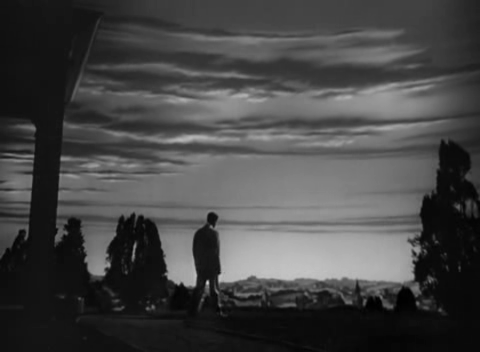
Regardless, Kings Row remains an admirable counterpart to other cinematic depictions of small-town American life at the time, given that it concedes the need for psychiatric intervention at a time when “psychiatry” was an unknown term, and daringly portrays the presence of a “mad” surgeon whose nefarious practices are clearly far from Hippocratic. Meanwhile, both James Wong Howe’s atmospheric cinematography and William Cameron Menzies’ strategically designed sets contribute to the creation of a world which feels both familiar and spooky at the same time. Also of note is Erich Wolfgang Korngold’s soaring score, which was apparently a direct influence on John Williams’ work for Star Wars (1977) years later.

Redeeming Qualities and Moments:

  • Ronald Reagan as Drake
  • Fine supporting performances


  • James Wong Howe’s cinematography
  • William Cameron Menzies’ sets

Must See?
Yes, for Reagan’s tour-de-force performance, and as a fine melodrama in its own right. Listed as a film with Historical importance in the back of Peary’s book.

Categories

  • Good Show
  • Noteworthy Performance(s)

Links: