Browsed by
Category: Original Reviews

Responses to Peary’s “must see” movie reviews, as well as my own “must see” movie reviews up to and after 1986 (when Peary’s book was published).

Lonely Hearts (1982)

Lonely Hearts (1982)

“You’re nearly fifty, you know – you’ve got to do something with your life!”

Synopsis:
When his mother dies, a 49-year-old bachelor (Norman Kaye) begins dating a pretty, inexperienced young woman (Wendy Hughes) with overly controlling parents. Though Kaye and Hughes get along famously, Hughes’ sexual repression eventually puts a kink in their relationship.

Genres, Themes, Actors, and Directors:

  • Australia
  • Dating
  • Romance
  • Sexual Repression

Review:
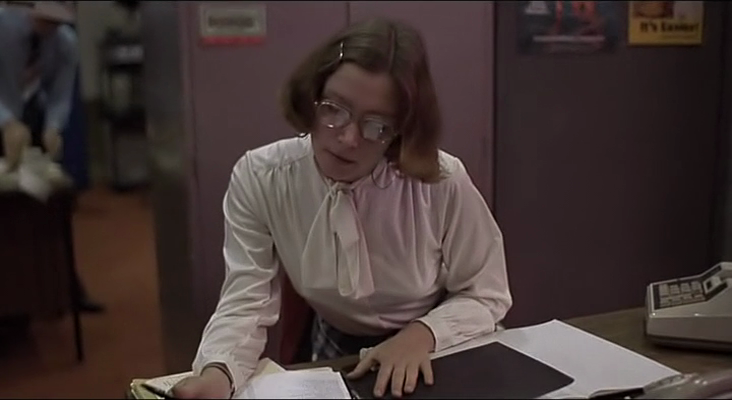
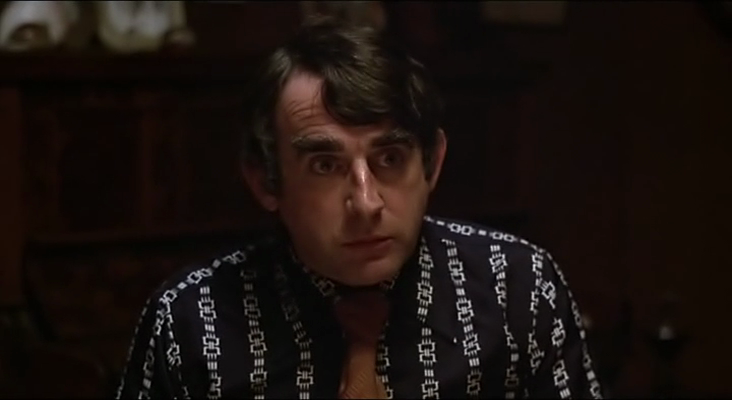
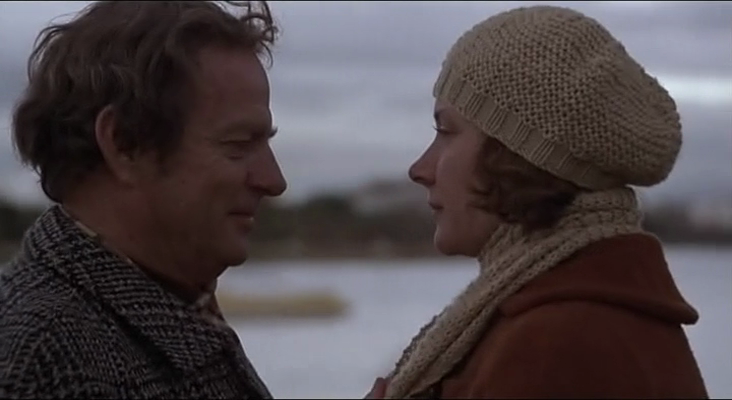
Australian director Paul Cox became known to U.S. audiences with the release of this amiable, sensitive romance about two awkward souls falling in love. Kaye and Hughes — fixtures of Australian cinema — are both impeccable in the lead roles; gorgeous Hughes somehow manages to instantly convince us that her “mousy” character is repressed and awkward, while balding Kaye radiates a unique kind of confidence and likable quirkiness (his grin says so much!). The screenplay is gently paced, never in a hurry, instead showing us the natural unfolding of this new couple’s love and respect for one another. They go out to eat and drink; listen to records; take leisurely strolls and kiss; have dinner with Kaye’s controlling sister (Julia Blake) and her husband (Jonathan Hardy); and join a local theater production of Strindberg’s The Father, run by a hilariously overwrought martinet (Jon Finlayson). Lurking in the background is Kaye’s desire to begin a sexual relationship with Hughes, and Hughes’ fear of this inevitable progression. While one wishes at times for a bit more explanation of certain character traits — Kaye’s struggle with kleptomania comes out of nowhere, for instance — it’s difficult to quibble with the overall sincerity of this sweet Australian flick.

Favorite (reaction to a) line: “A Swedish pastor.” (!!)

Note: Cox’s other Peary-listed film is Man of Flowers (1983), also starring Kaye.

Redeeming Qualities and Moments:

  • Norman Kaye as Peter
  • Wendy Hughes as Patricia
  • Jon Finlayson as George
  • Jonathan Hardy as Bruce
  • A sensitively filmed tale of emergent romance

Must See?
Yes, for the stellar lead performances, and as a fine, refreshingly unassuming romance. Listed as a Personal Recommendation in the back of Peary’s book. Winner of the Australian Academy Award for Best Picture.

Categories

  • Noteworthy Performance(s)

Links:

Magician, The (1958)

Magician, The (1958)

“You represent what I detest most of all: the unexplainable.”

Synopsis:
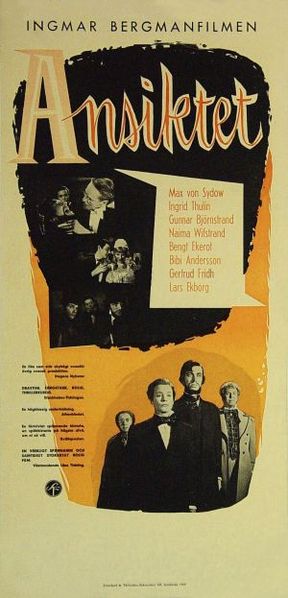
In 1840s Sweden, a mute magician (Max von Sydow) and his troupe arrive in a small town, where the police commissioner (Toivo Powlo), a doctor (Gunnar Bjornstrand), and a civil servant (Erland Josephson) all attempt to determine whether von Sydow’s powers are real or illusionary.

Genres, Themes, Actors, and Directors:

  • Ingmar Bergman Films
  • Magicians
  • Max von Sydow Films
  • Morality Police
  • Scandinavian Films

Review:
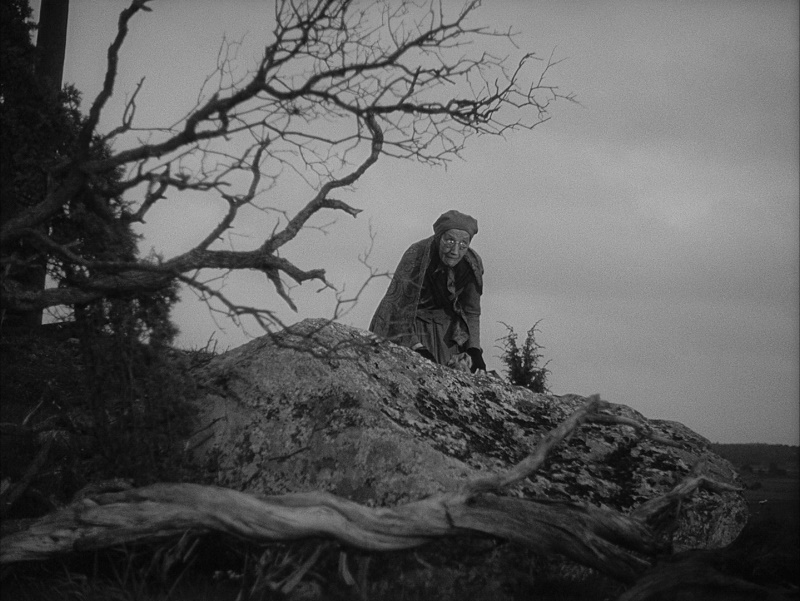
According to IMDb, Ingmar Bergman directed no less than 67 films (including some made-for-TV titles and some shorts) over the course of his lengthy career; of these, Peary lists 18 in his GFTFF. The Magician (also known as Ansiktet, or The Face) is chronologically the fifth “entry” in his book, following The Naked Night / Sawdust and Tinsel (1953), Smiles of a Summer Night (1955), Wild Strawberries (1957), and The Seventh Seal (1957); of these, it bears most resemblance to The Naked Night in its focus on travelling performers, who represent a disruptive presence to staid Scandinavian morality. In both films, Bergman compassionately yet ruthlessly reveals the hidden vulnerabilities of those whose calling is to provide respite and/or entertainment to the masses — and in The Magician, Bergman simultaneously exposes “magic” (a proxy for cinema?) as a necessary deception, a tool we use to allow ourselves the enjoyment and satisfaction we crave. In one particularly humorous and bawdy vignette, for instance, a cook lets herself be sweet-talked by a salesman in the troupe, revealing shortly thereafter that she’s aware his “love potion” is a sham but doesn’t mind, since her real goal is to bed him. (Ah, these refreshingly frank Scandinavian films! How 1950s American audiences must have eaten them up!)

This being a Bergman film, however, other vignettes are much less light-hearted. The central storyline — regarding von Sydow’s mute magician and his wife (Ingrid Thulin), dressed to look like his young male accomplice as part of their collective disguise — involves scandal, shame, and infidelity; and a subplot involving a suicidal traveler (Bengt Ekerot – “Death” in The Seventh Seal, though you may not recognize him) is decidedly grim. It’s to Bergman’s credit that he manages to mix sensibilities so fluidly throughout his episodic narrative, shifting easily from comedy to tragedy as various characters’ stories come together to tell a broader thematic tale. Bergman seems to be arguing that we all want to be “seduced” (visually, romantically, metaphorically) in one way or another, yet we simultaneously crave rational control over ourselves and our environment; the question is, can these conflicting goals co-exist? Unfortunately, The Magician‘s narrative gets a bit muddled towards the end, making it less satisfying as a whole than it could be; however, it remains worthy viewing at least once by all film fanatics.

Redeeming Qualities and Moments:

  • Gunnar Fischer’s cinematography
  • Fine performances by the entire cast
  • Bergman’s slyly satirical screenplay

Must See?
Yes, as yet another provocative early Bergman film. Listed as a film with Historical Importance and a Personal Recommendation in the back of Peary’s book.

Categories

  • Foreign Gem
  • Important Director

Links:

Odd Couple, The (1968)

Odd Couple, The (1968)

“You don’t understand — I’m nothing without my wife and kids!”

Synopsis:
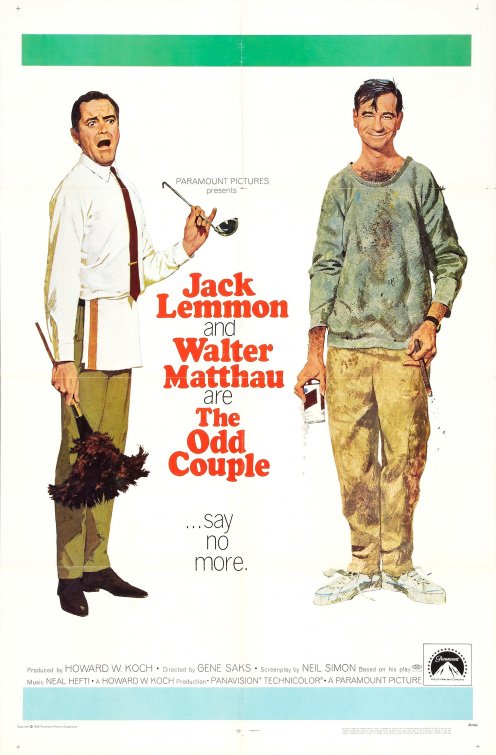
When compulsive neat freak Felix Ungar (Jack Lemmon) is thrown out of his house by his wife, he goes to live with his good friend Oscar Madison (Walter Matthau), who is quickly driven batty by Felix’s incessant housekeeping.

Genres, Themes, Actors, and Directors:

  • Divorce
  • Friendship
  • Jack Lemmon Films
  • Play Adaptation
  • Walter Matthau Films

Review:
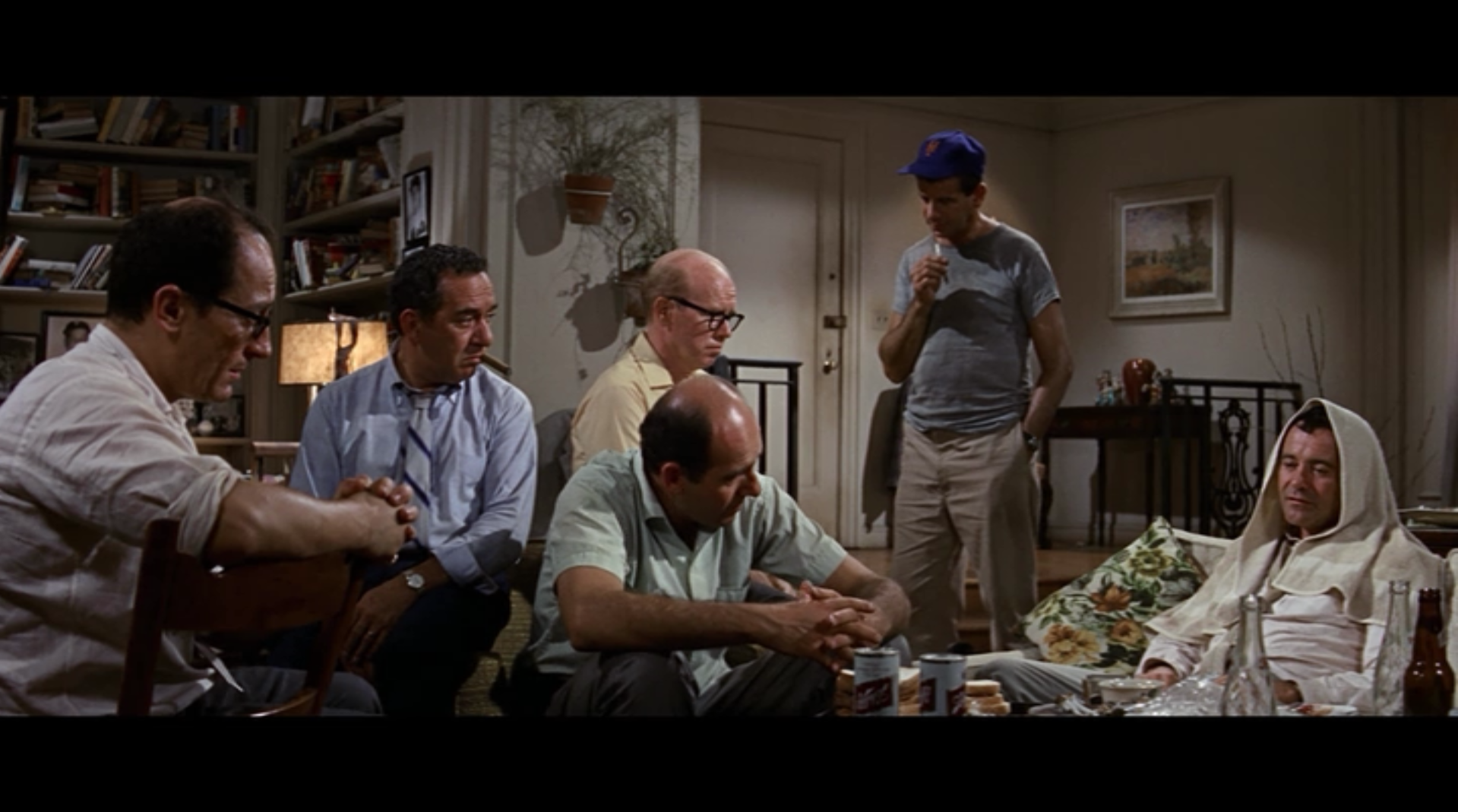
The characters of (neatnik) Felix Ungar and (slob) Oscar Madison have become so culturally iconic that it’s easy to forget just how clever their original big-screen incarnation was. Neil Simon’s screenplay (based upon his own play) plunges us immediately into surprisingly challenging territory, as we witness Felix wandering despondently through the streets of New York, hoping to die; his depression is palpable, and we feel for his situation. From there, we’re shown the true concern expressed by his circle of friends (nicely acted by John Fiedler, Herb Edelman, David Sheiner, and Larry Haines); while their attempts to prevent Felix from committing suicide are played for laughs, they’re consistently bolstered by a refreshing undercurrent of genuine love and concern. The increasingly tense situation that emerges once Felix and Oscar attempt to live with one another is likewise both hilarious and poignant: we can relate to Oscar’s sense that he’s slowly going crazy, yet we simultaneously feel compassion for what is clearly Felix’s (undiagnosed) obsessive-compulsive disorder (or some variation thereof) — and we certainly understand why his wife could no longer live with him!

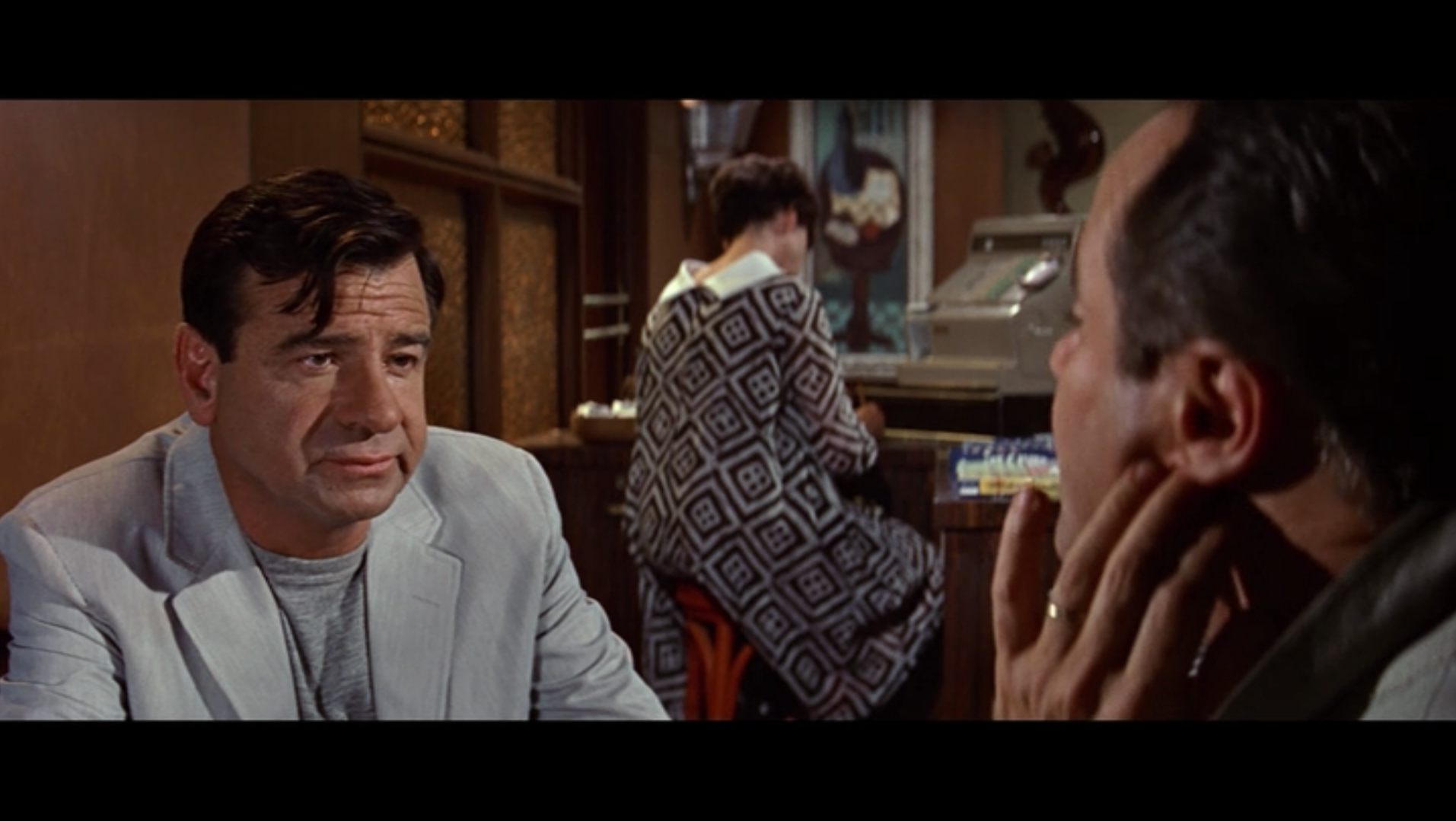
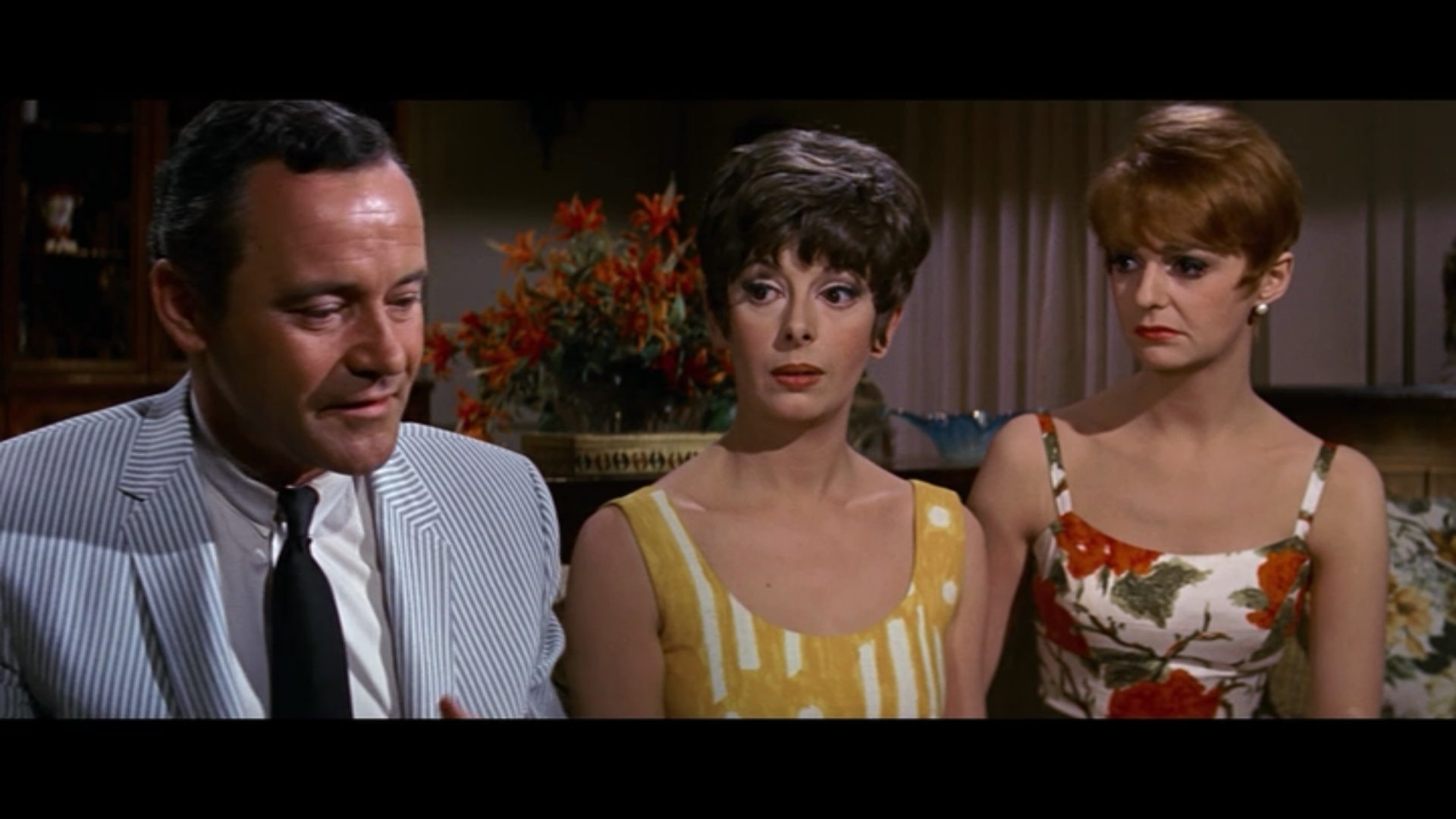
Lemmon and Matthau are perfectly cast as the title “couple”; their comedic timing and rapport is impeccable. Interestingly, Matthau originally thought he would be better suited as Felix — either given that he was a neatnik in real life (according to a quote in TCM’s article) or because he felt he was too much like Oscar and the role wasn’t enough of a stretch (according to a piece of IMDb trivia); do any readers know the true reason? At any rate, while both performances are excellent, I find Lemmon particularly impressive, given how fearlessly and emphatically he embraces his character’s “feminine” tendencies without devolving into stereotypes of any kind (naturally, one can’t help thinking of his memorably gender-fluid performance in Some Like it Hot). Also of note are Monica Evans and Carole Shelley (who reprised their characters in the long-running T.V. series) in hilarious supporting roles as the sexy British sisters Walter’s hoping to have a good time with, but who are instead distracted by Felix’s sob story.

Redeeming Qualities and Moments:

  • Jack Lemmon as Felix Unger
  • Walter Matthau as Oscar Madison
  • Monica Evans and Carole Shelley as Cecily and Gwendolyn Pigeon
  • A clever tale of friendship put to the ultimate test
  • Neal Hefti’s memorable score

Must See?
Yes, as a finely written and acted comedy. This one is a “good show” you’ll look forward to revisiting!

Categories

  • Good Show

Links:

Underworld (1927)

Underworld (1927)

“Nobody helps me! I help other people.”

Synopsis:
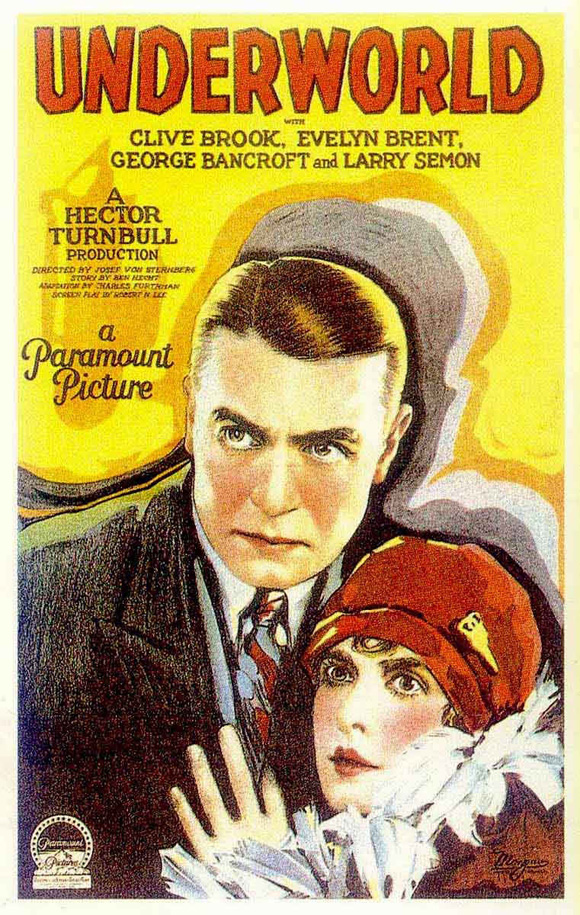
An inebriated man (Clive Brook) is picked up by a notorious gangster (George Bancroft), who takes pity on him and gives him a place to stay — but when Brook and Bancroft’s girlfriend “Feathers” (Evelyn Brent) fall for each other, and Bancroft’s chief rival (Fred Kohler) continues to make aggressive passes at Feathers as well, tensions quickly get heated.

Genres, Themes, Actors, and Directors:

  • Clive Brook Films
  • Gangsters
  • George Bancroft Films
  • Josef von Sternberg Films
  • Love Triangle
  • Silent Films

Review:
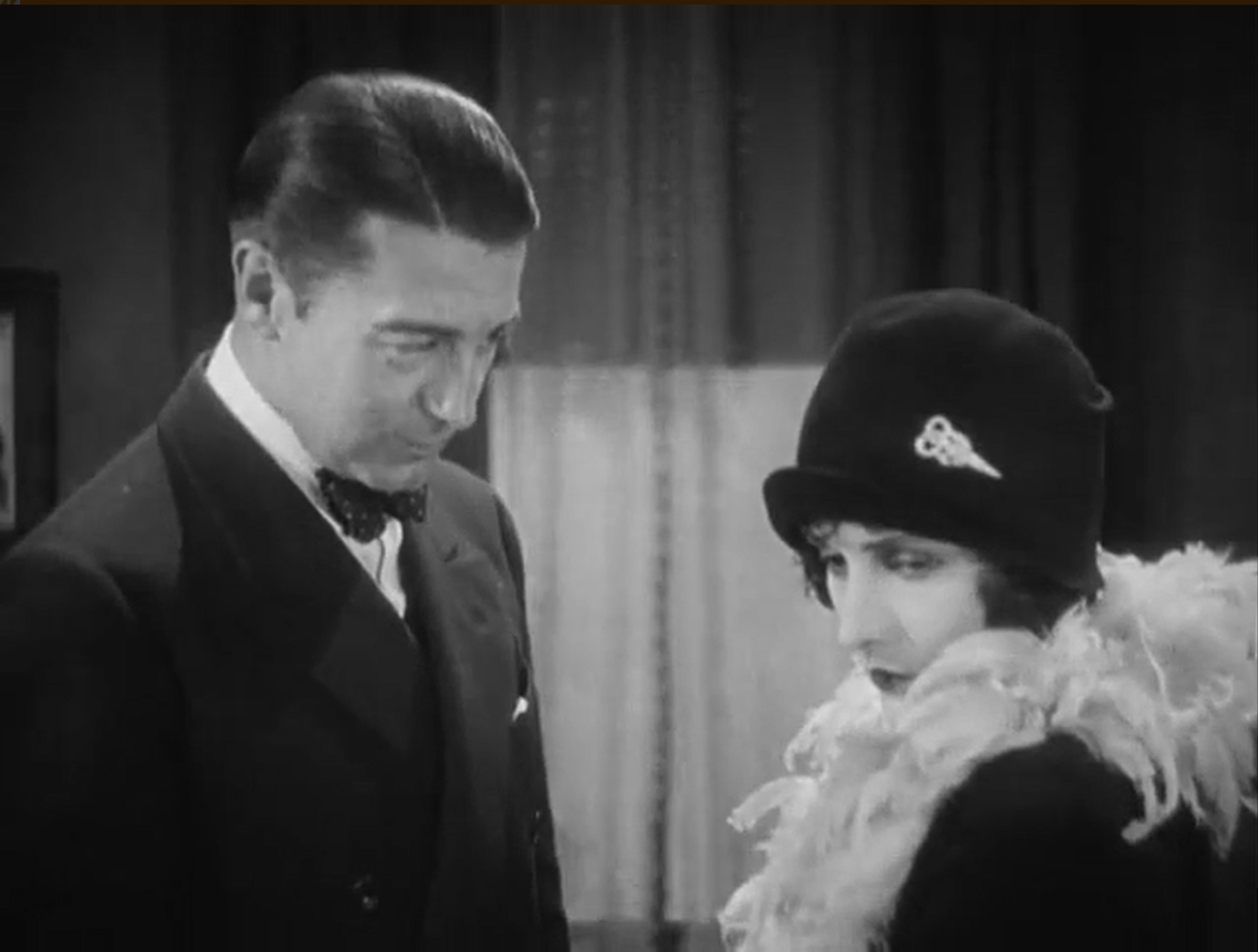
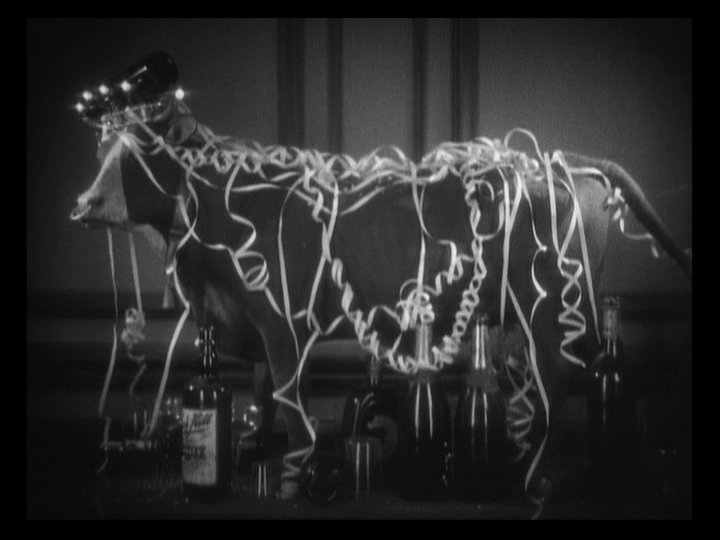
Peary lists three of Josef von Sternberg’s final silent films in his GFTFF: The Last Command (1927), The Docks of New York (1928), and this title, often cited as the thematic forerunner of several classic 1930s gangster flicks. Ben Hecht wrote the Oscar-winning screenplay, basing it upon real-life scenarios and people in Chicago’s gangland — but ultimately the film’s focus is less on the broader world of gangsters (Bancroft doesn’t seem to belong to a larger organization, for instance) than on the emotional conflicts faced by the key players. Indeed, the narrative is primarily concerned with exploring how Brook and Brent will deal with their love/lust for one another, given their sense of moral obligation to big-galoot Bancroft:

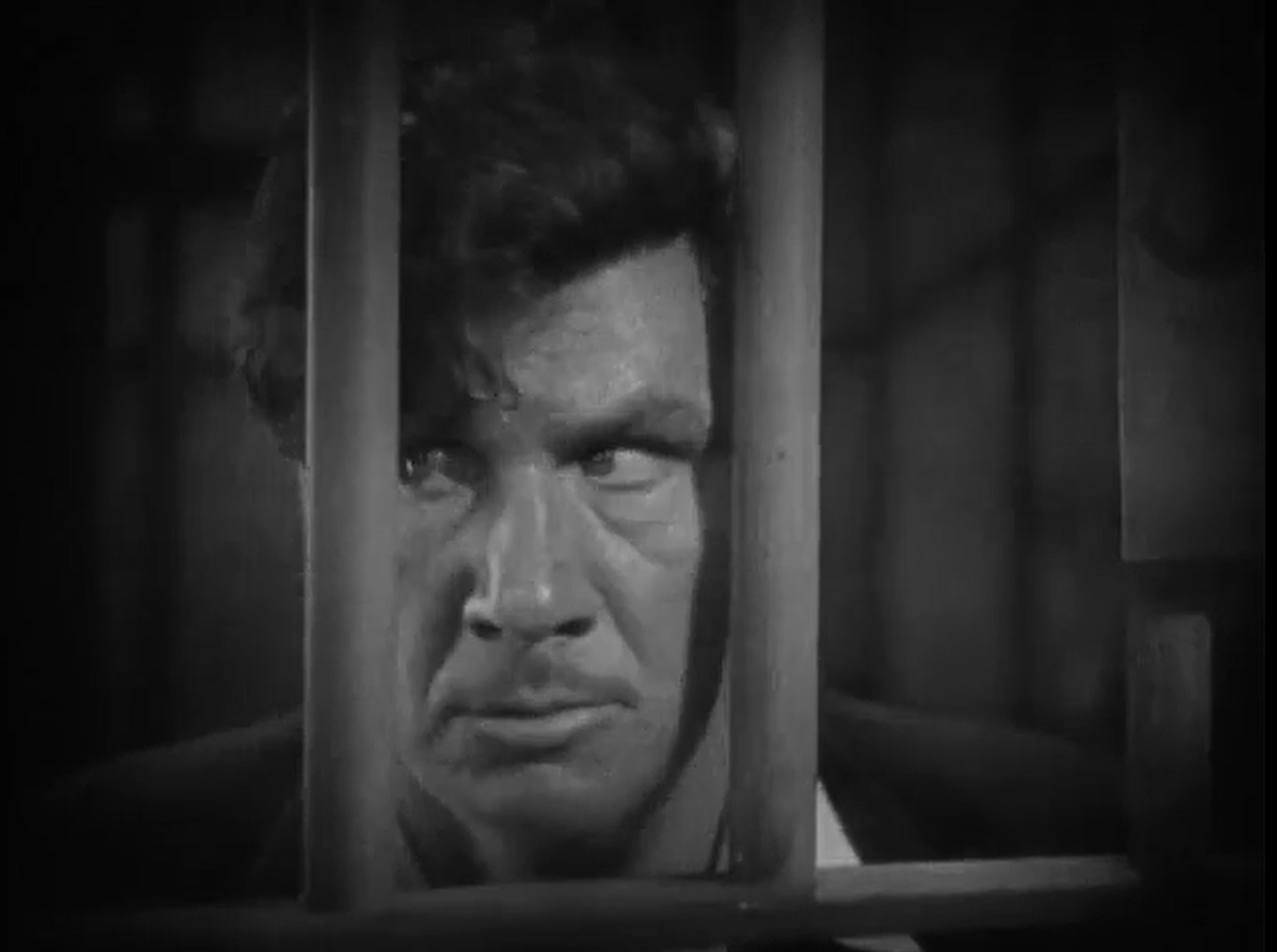
… and how Bancroft will handle their perceived disloyalty when his rivalry with Kohler turns fatal and he’s sent to jail.

Unfortunately, none of the characters are fleshed out enough for this rather simplistic scenario to become engaging on anything other than a surface level; we’d love to know more about stoic Brook, for instance, and how he ended up on the streets, or how and why “Feathers” feels such undying loyalty for Bancroft. With that said, von Sternberg’s directorial talents are in clear view — especially during the creatively filmed mid-way party sequence. While this one can’t quite be elevated to must-see status, it’s far more accomplished than most other films of its era, making it worth a one-time look.

Redeeming Qualities and Moments:

  • The creatively filmed party sequence

Must See?
No, though it remains of interest for its clear influence on future classics of the genre.

Links:

My Brilliant Career (1979)

My Brilliant Career (1979)

“Why does it always have to come down to marriage?”

Synopsis:
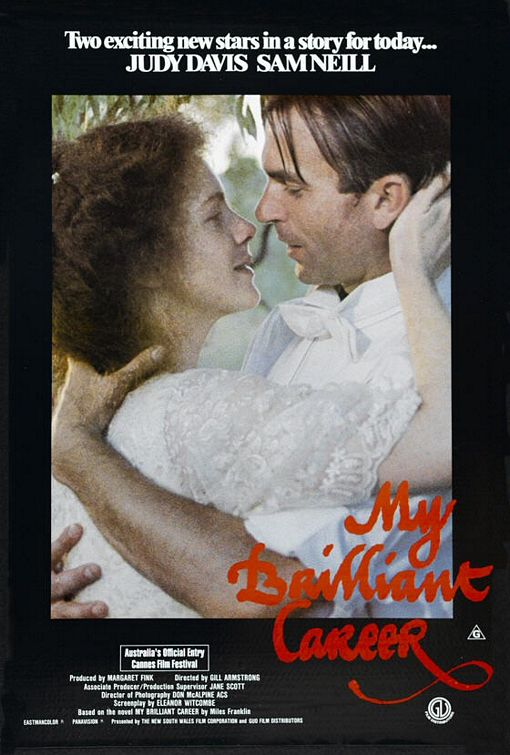
In 1890s Australia, a strong-willed young woman (Judy Davis) is determined to transcend her family’s hard-scrabble life and pursue a career in the arts — but when she becomes close friends with a handsome, wealthy acquaintance (Sam Neill), romantic tensions begin to complicate her goals.

Genres, Themes, Actors, and Directors:

  • Australian Films
  • Career-versus-Marriage<
  • Feminism and Women’s Issues
  • Historical Drama
  • Romance
  • Strong Females
  • Writers

Response to Peary’s Review:
Peary writes that “Judy Davis is perfectly cast” in director Gillian Armstrong’s “popular adaptation of [an] autobiographical novel” by (Stella) Miles Franklin, about “an aspiring writer and avowed bachelorette” in early 20th century Australia who “sees how repressed married women in all classes of society [are], and realizes that in order to write, she must remain single” — which means “turning down a kind, handsome, understanding, playful man (Sam Neill), although they love each other”. Peary argues that “while praised for its feminism, [the] picture has rightly been criticized for ignoring the fact that [the central character, Sybylla Melvyn] was a lesbian”. Regardless, “what is positive is that Davis truly enjoys the company of women (and they benefit from her friendship)”; however, while these women “don’t realize their potential because they married”, they nonetheless “expect free-spirited Davis” — who “knows better” — to “follow their lead”.

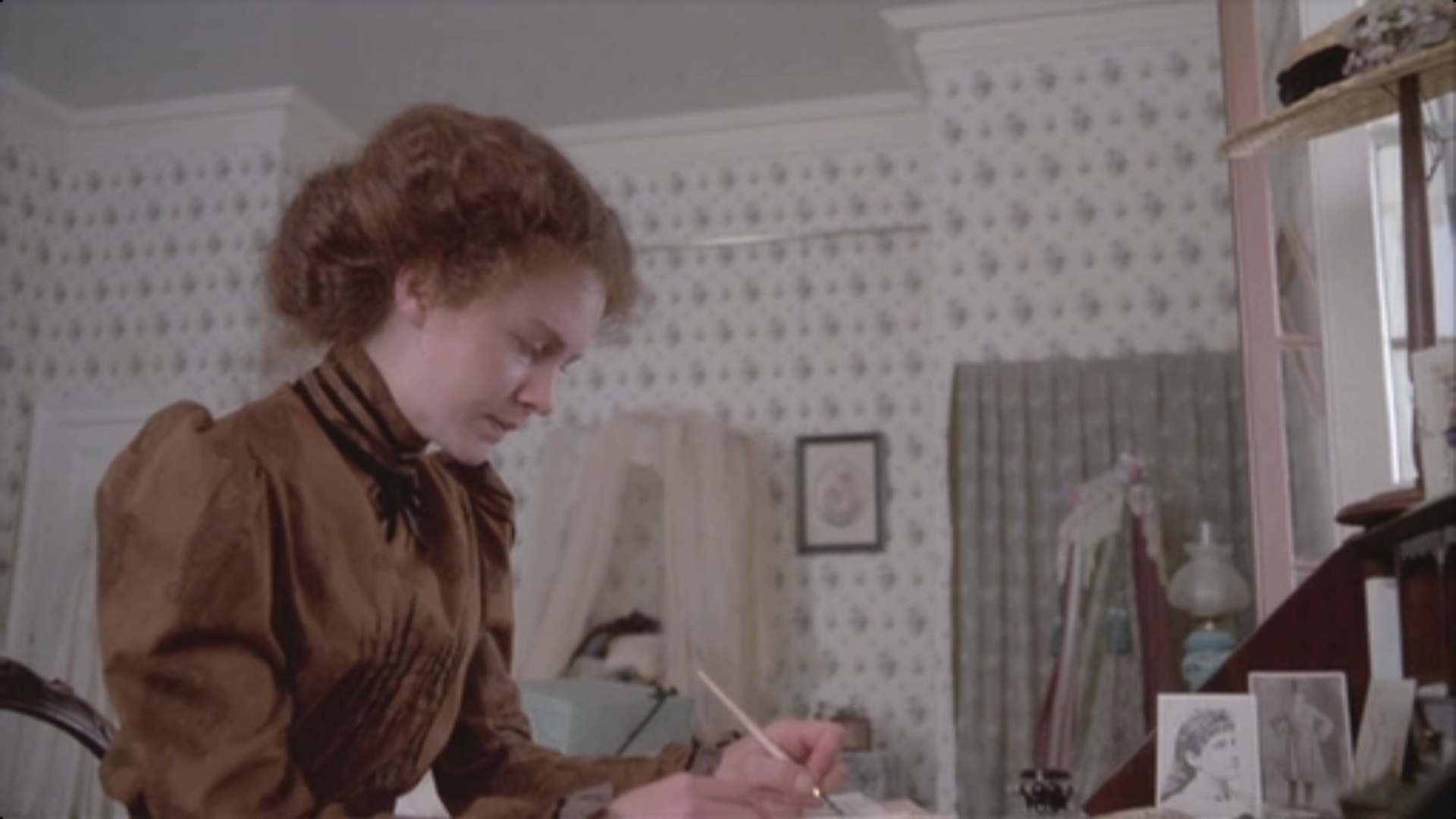
Just as we can’t help questioning Jill Clayburgh’s ultimate romantic decisions in the final scenes of An Unmarried Woman (1978) (released the previous year), it remains somewhat challenging to watch Davis respectfully rebuffing Neill’s initial marriage proposal. (He’s so wealthy! So handsome! So playful! So PERFECT for her!) Indeed, the romantic purist in us desperately wants these two kindred spirits to be united. Yet it’s to Armstrong’s and screenwriter Eleanor Whitcombe’s credit that they maintain their film’s focus on its feminist “agenda”: evoking a particular historical era (the period sets are stellar) when to be married was truly much more of a “life sentence” for women than we can conceive of today. From our modern perspective, we wish youthful Davis would be truly radical and reconsider the terms of marriage altogether, thus having her cake and eating it, too. But her decisions are made within a very specific milieu: having seen so many females around her suffering — most notably her once-beautiful mother [Julia Blake], now burdened with too much work, a good-for-nothing husband, and far too many kids; and her quietly heart-broken aunt (Wendy Hughes), whose husband abandoned her — we ultimately admire her strength of will.

Redeeming Qualities and Moments:

  • Judy Davis as Sybylla Melvyn (nominated by Peary as one of the Best Actresses of the Year in his Alternate Oscars)
  • Fine cinematography
  • Remarkably authentic period sets

Must See?
Yes, for Davis’s stand-out performance, and as a fine feature debut by a talented female director.

Categories

  • Important Director
  • Noteworthy Performance(s)

(Listed in 1001 Movies You Must See Before You Die)

Links:

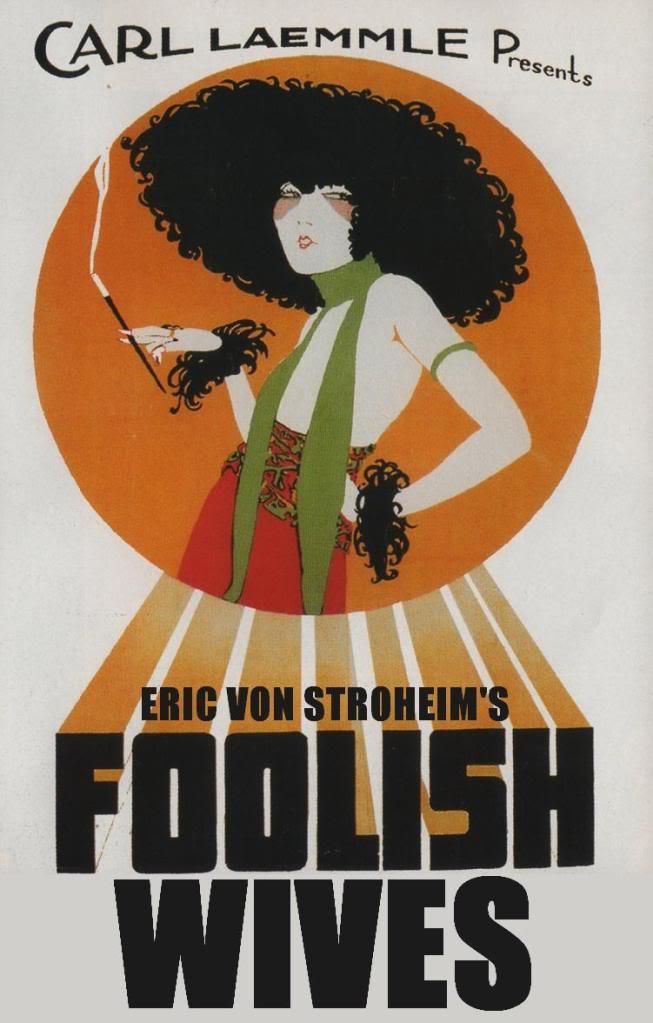
Foolish Wives (1922)

Foolish Wives (1922)

“It is a dangerous place for strangers — so many hungry sharks lying in wait to get hold of one’s money.”

Synopsis:
A con-artist (Erich von Stroheim) posing as a count in Monte Carlo attempts to seduce the wealthy, neglected wife (Miss DuPont) of an American envoy (Rudolph Christians) while continuing a duplicitous affair with his jealous housemaid (Dale Fuller), and trying to bed the “half-witted” daughter (Malvina Polo) of a counterfeiter (Cesare Gravina).

Genres, Themes, Actors, and Directors:

  • Con-Artists
  • Erich von Stroheim Films
  • Mistaken Identities
  • Silent Films

Review:
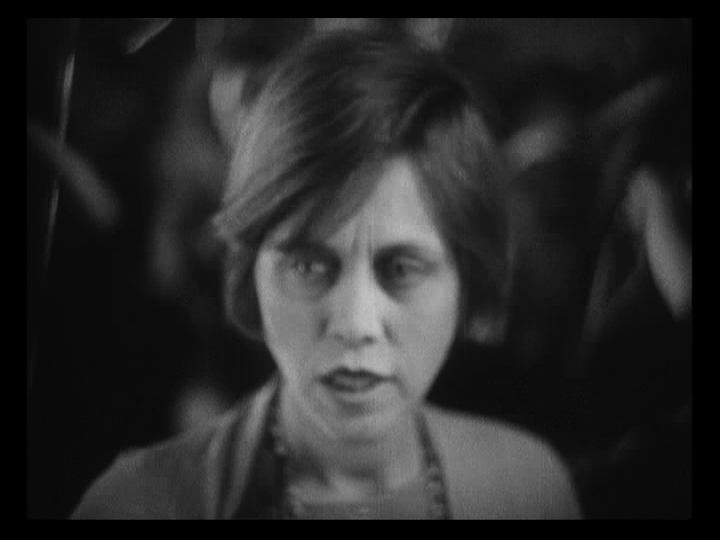
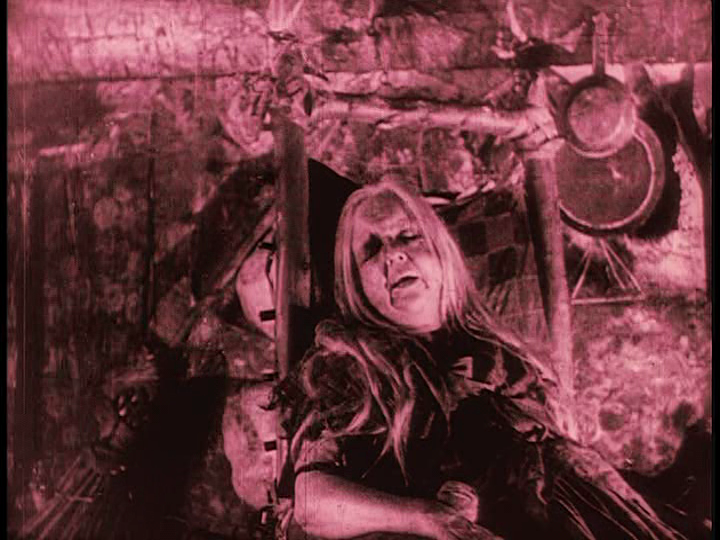
The production history of this extravagantly produced long-con flick by writer/director Erich von Stroheim — whose original budget of $250K skyrocketed to over $1 million, and whose initial cut ran for no less than 6 hours — is legendary, though it was merely the first in a series of several creatively thwarted films (followed by Greed, The Wedding March, and Queen Kelly) that led to von Stroheim’s downfall as a director. As viewed in its recently restored version (running approximately 2 1/2 hours long), it’s obvious that narrative strands are missing and/or truncated; however, most of it coheres quite well, thanks to a relatively straightforward storyline featuring an unambiguously evil central character, played with perverse glee by von Stroheim himself (known by audiences at the time as “The Man You Love to Hate”). Indeed, von Stroheim’s Count Karamzin remains one of cinema’s most dastardly protagonists — a psychopathic conman and sexual predator who lies and cheats with astonishing agility.

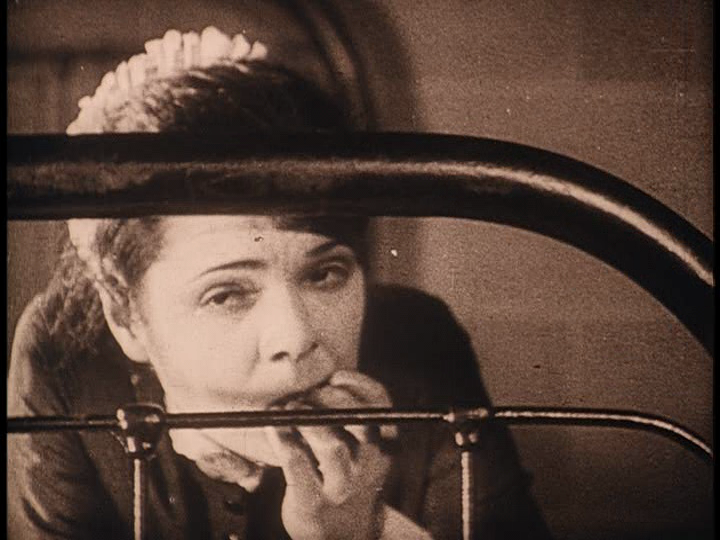
In the film’s most disturbing sequence, he’s interrupted just as he’s about to rape the unconscious DuPont; for an agonizingly long stretch, we watch him sitting in a chair nearby DuPont, visibly irritated as the cabin’s recently-arrived caretakers prevent him from carrying out his plan. Later in the film, a von Stroheim-favorite — the expressively distinctive Dale Fuller, playing his love-struck, deceived mistress — becomes a key player in the story, helping to move the film towards its relatively satisfying (though terribly truncated) ending. Despite its sorry-looking physical state — much of the recent restoration remains patchy-looking at best, unfortunately — Foolish Wives should be seen by all film fanatics as prime evidence of von Stroheim at his most unrepentantly reprehensible (as a character) and extravagant (as a director).

Redeeming Qualities and Moments:

  • Fine direction by von Stroheim


  • Dale Fuller as Maruschka

Must See?
Yes, as one of von Stroheim’s earliest successes — and as a prime example of the iconoclastic director at his vilest (character-wise, that is). Listed as a Personal Recommendation in the back of Peary’s book.

Categories

  • Historically Relevant
  • Important Director

(Listed in 1001 Movies You Must See Before You Die)

Links:

Nickelodeon (1976)

Nickelodeon (1976)

“Any jerk can direct!”

Synopsis:
In the early days of Hollywood, an attorney (Ryan O’Neal) and a cowboy (Burt Reynolds) — both in love with the same woman (Jane Hitchcock) — become involved in the burgeoning motion picture industry.

Genres, Themes, Actors, and Directors:

  • Brian Keith Films
  • Burt Reynolds Films
  • Comedy
  • Hollywood
  • Lawyers
  • Movie Directors
  • Peter Bogdanovich Films
  • Ryan O’Neal Films
  • Stella Stevens Films

Review:
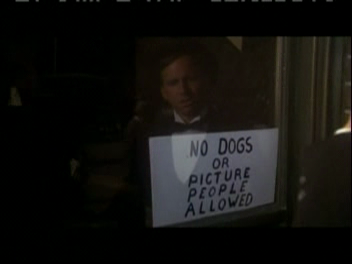
Peter Bogdanovich’s unabashedly affectionate paean to the earliest days of the motion picture industry remains a curiously uninvolving effort — one so focused on recreating elements and attributes of its era that it forgets to tell a compelling tale in its own right. The ultimate point of the storyline seems to be that luck and timing (i.e., serendipity) played a defining role in determining who found work and success in early Hollywood — see the selected quote above for an indication of the attitude on display, supposedly meant as a contrast to the arrival of “real” (i.e., auteurist) cinema (as signified by the film’s powerful culminating sequence, in which the various characters join a wider audience to watch the inaugural screening of D.W. Griffith’s The Birth of a Nation). Meanwhile, Bogdanovich’s screenplay incorporates weak attempts at silent-era slapstick (bespectacled O’Neal is a sort-of stand-in for Harold Lloyd), as well as a standard-issue love triangle subplot which fails to involve us. While serious cinephiles will surely be curious to check this one out given its subject matter, it’s ultimately a missed opportunity; see Howard Zieff and Rob Thompson’s Hearts of the West (released the previous year) for a much more successful and authentic evocation of early Hollywood.

Note: TCM’s article offers some valuable insights into why this film wasn’t as successful as it could have been; Bogdanovich’s vision was apparently thwarted.

Redeeming Qualities and Moments:

  • Burt Reynolds as Buck Greenway
  • An affectionate homage to early Hollywood

Must See?
No, though it’s worth a one-time look simply for its obvious interest to cinephiles.

Links:

Wedding March, The (1928)

Wedding March, The (1928)

“There is no such thing as accident. It is Fate — mis-named.”

Synopsis:
A fun-loving Viennese prince (Erich von Stroheim) is warned by his parents (George Fawcett and Maude George) that he must marry for money in order to maintain his sumptuous lifestyle; but despite becoming engaged to a club-footed heiress (Zasu Pitts), he falls in love with a beautiful innkeeper’s daughter (Fay Wray) whose own fiance (Matthew Betz) is a bullying brute.

Genres, Themes, Actors, and Directors:

  • Cross-Class Romance
  • Erich von Stroheim Films
  • Fay Wray Films
  • Royalty and Nobility
  • Silent Films
  • Star-Crossed Lovers

Review:
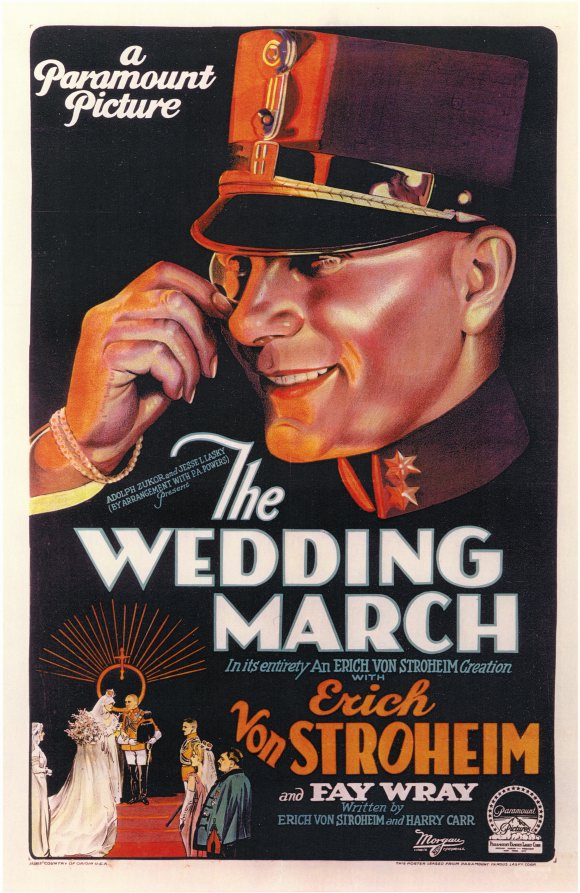
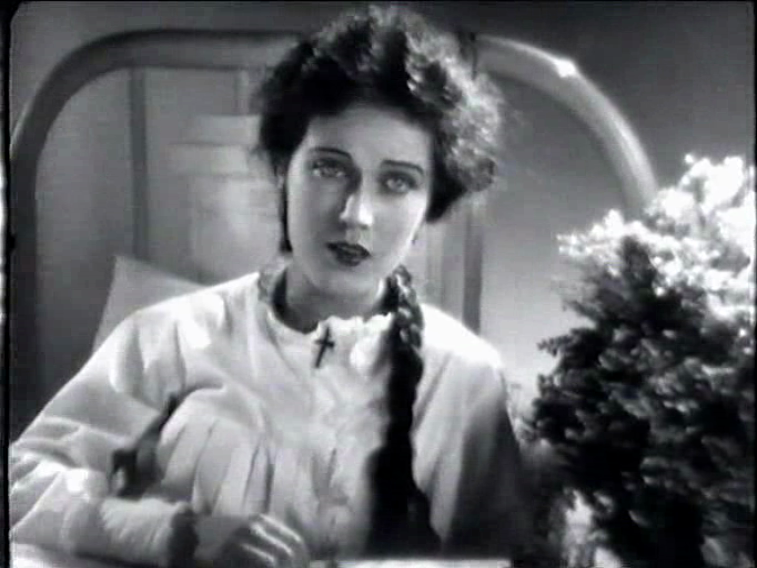
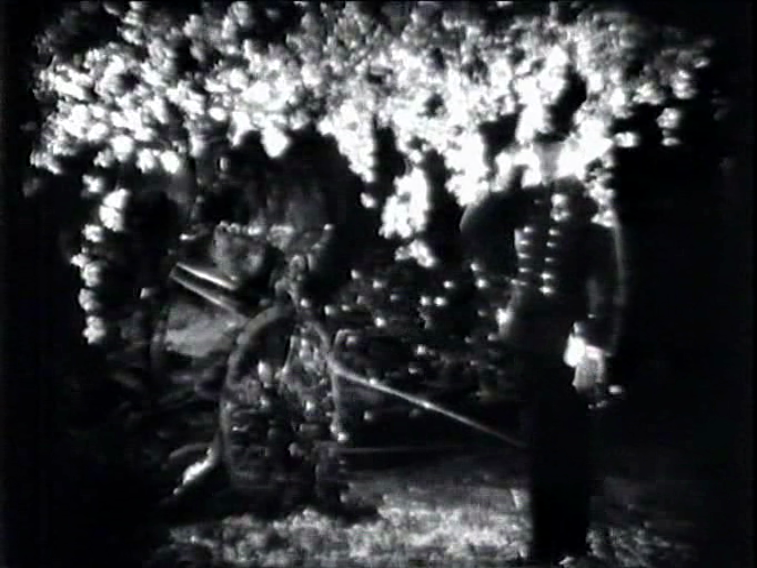
Peary seems to be an enormous fan of this fragmented silent epic by Erich von Stroheim, whose notoriously sadistic, perfectionist tendencies on set resulted in a bloated initial cut (11 hours!) which was eventually edited down into two films — this and its sequel, The Honeymoon (the only copy of which was lost in a fire in the 1950s). As with von Stroheim’s Queen Kelly (1929), The Wedding March must thus be viewed as a butchered version of the director’s original vision — yet despite being lauded by many as one of von Stroheim’s finest films, I simply can’t agree. Yes, the cinematography is lovely and the sets painstakingly rendered — but the melodramatic storyline and stereotypical characters (other than Wray’s luminous “Mitzi”) leave one feeling decidedly neutral about the actual proceedings. While it’s argued that the film’s story arc stands just fine on its own, one can’t help feeling that it is indeed (as intended) merely part of a longer, richer narrative. The Wedding March is ultimately only must-see for fans of silent cinema and/or von Stroheim’s uniquely truncated oeuvre.

Redeeming Qualities and Moments:

  • Fay Wray as Mitzi
  • Meticulously crafted sets

Must See?
No; only von Stroheim fans need seek this one out. Listed as a film with Historical Importance and a Personal Recommendation in the back of Peary’s book, and named one of the Best Films of the Year in his Alternate Oscars. Selected for preservation by the National Film Registry.

Links:

Hearts of the West (1975)

Hearts of the West (1975)

“There’s no such thing as wasted time for the writer; he’s always thinking.”

Synopsis:
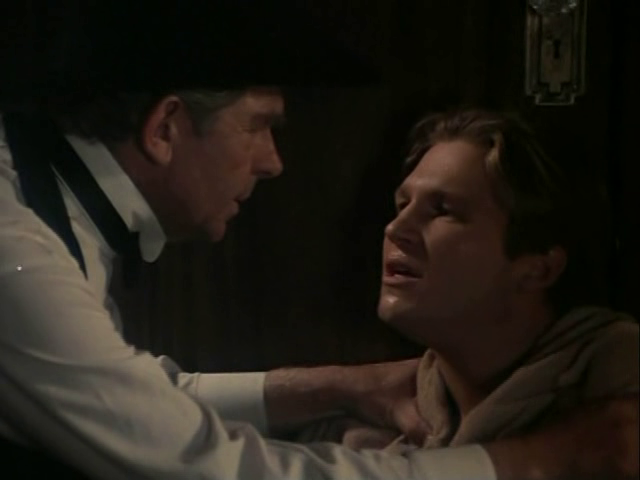
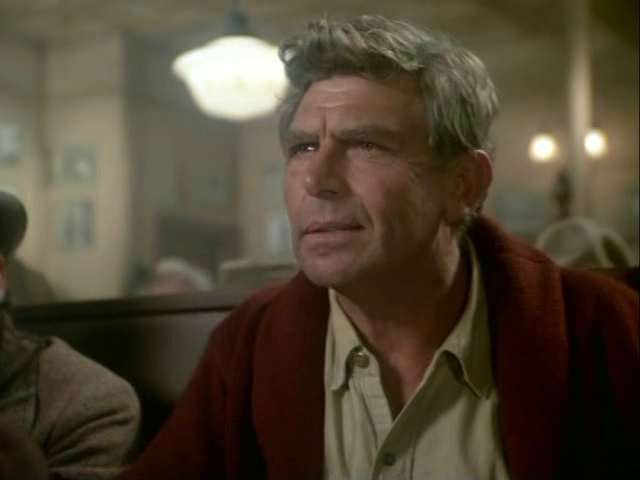
An aspiring western writer (Jeff Bridges) accidentally steals money from a pair of crooks (Richard B. Shull and Anthony James) running a sham correspondence school in Nevada, and escapes to Hollywood, where he finds work as an actor for a skinflint producer (Alan Arkin), falls for a pretty script girl (Blythe Danner), and receives advice from a grizzled performer (Andy Griffith).

Genres, Themes, Actors, and Directors:

  • Alan Arkin Films
  • Andy Griffith Films
  • Blythe Danner Films
  • Comedy
  • Con-Artists
  • Donald Pleasence Films
  • Historical Drama
  • Hollywood
  • Jeff Bridges Films
  • Westerns
  • Writers

Review:
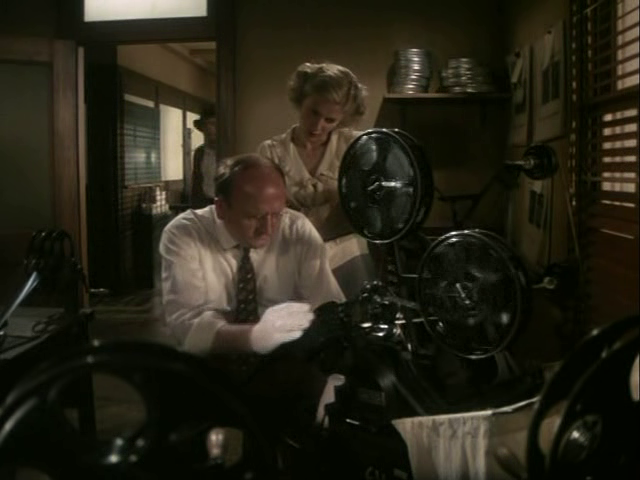
This humorous tale of an innocent Iowa farmboy fleeing from the clutches of villainous crooks and landing smack-dab in the middle of Depression-Era Hollywood remains a hidden treasure, one film fanatics will be pleased to discover. Bridges’ “Lewis Tater” is eminently likable: we care about his travails from the moment we first see him acting out a western scene playing in his head, and talking earnestly to whoever will listen about the craft of writing. He refuses to let any obstacles get in his way, instead viewing whatever happens to him — and my, quite a bit happens! — as welcome fodder for his prose. Director Howard Zieff and screenwriter Rob Thompson affectionately evoke the milieu of ’30s Western matinees, taking us behind the scenes to expose the business side of this kiddie-fantasy world, complete with both fond camaraderie and bitter bargaining. All supporting actors on board — Arkin, Danner, Griffith, and others — give fine performances, rounding out this consistently enjoyable coming-of-age tale, which never takes itself too seriously (viz. the comedic omnipresence of Shull and James, complete with their own theme music), yet maintains an unexpected level of poignancy throughout.

Redeeming Qualities and Moments:

  • Jeff Bridges as Lewis Tater
  • Andy Griffith as Howard Pike
  • A fun look at film-making in old (young?) Hollywood
  • Excellent period sets
  • Rob Thompson’s smart, affectionate screenplay

Must See?
Yes. Listed as a Sleeper in the back of Peary’s book — a perfect designation.

Categories

  • Good Show

Links:

Finian’s Rainbow (1968)

Finian’s Rainbow (1968)

“Things are indeed hopeless. Hopeless! But they’re not serious.”

Synopsis:
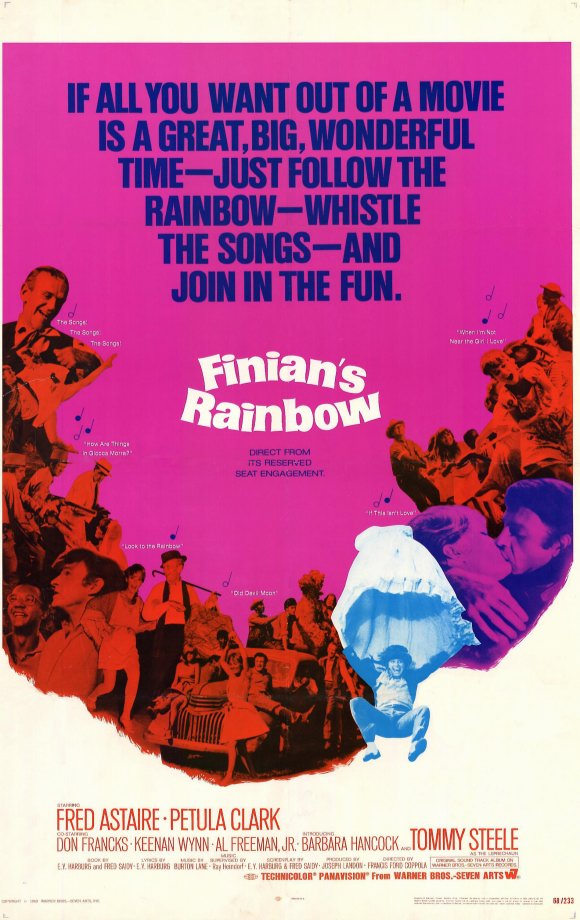
An Irishman named Finian (Fred Astaire) and his daughter Sharon (Petula Clark) arrive in the American state of “Miltucky” with a pot of gold which Finian has stolen from a leprechaun (Tommy Steele), intending to bury it in the ground and accelerate its growth; meanwhile, a local dreamer (Don Francks) collaborates with a botanist (Al Freeman, Jr.) to create mentholated tobacco, and a bigoted, greedy senator (Keenan Wynn) is turned into a black man while attempting to buy the land where Finian has planted his pot of gold.

Genres, Themes, Actors, and Directors:

  • Fantasy
  • Francis Ford Coppola Films
  • Fred Astaire Films
  • Keenan Wynn Films
  • Leprechauns
  • Musicals
  • Racism

Review:
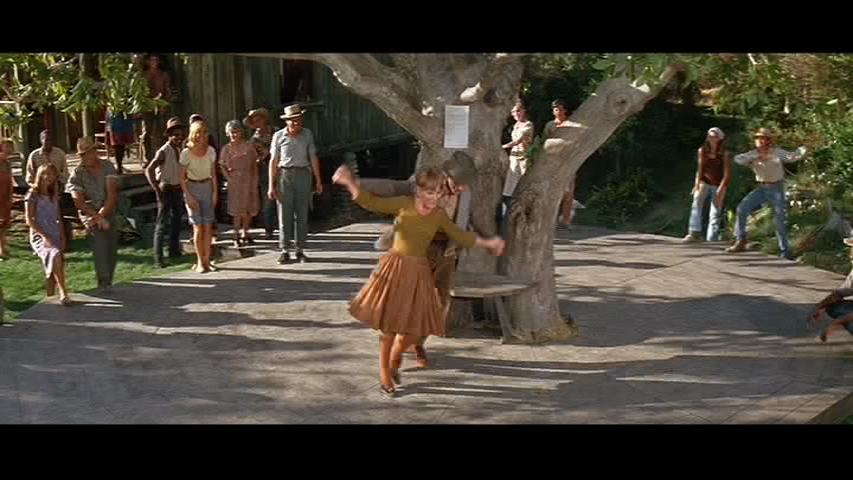
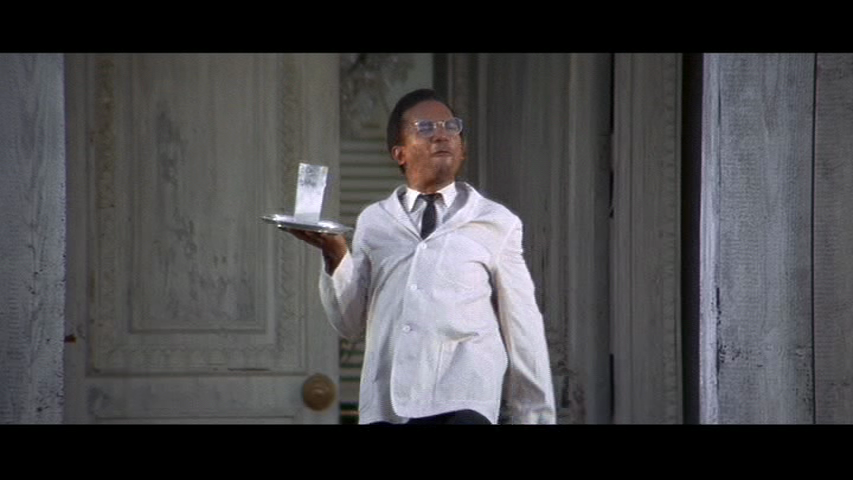
Early in his career, Francis Ford Coppola directed this adaptation of a popular Broadway musical (first produced in 1947, and revived in 2009) featuring an unusual mixture of light-hearted fantasy and some fairly trenchant social justice concerns — including racial bigotry, poverty, and political corruption. Indeed, these “hot button” topics apparently prevented the musical from being turned into a film for many years, until the social climate of the ’60s finally allowed for such concerns to be satirized head-on. The end result is a sporadically entertaining but ultimately uneven and over-long musical which tries to incorporate too many narrative strands, and never really reconciles its multiple foci. For instance, there’s a clever subplot in which Clark accidentally wishes Wynn (whose character is based on this real-life politician) could experience life as a black man, and the wish is made manifest — but we don’t see enough of how this impacts Wynn’s world-view; his storyline is treated on merely a surface level, and only occasionally makes an appearance in the remainder of the narrative. Freeman is hilarious in an early key scene as he kowtows to his new employer (Wynn), emulating the type of slow-moving black man Wynn assumes he should be — but this, too, goes no further than a single interaction. Meanwhile, a mute character named Susan the Silent (played by ballerina Barbara Hancock) flits throughout the proceedings, and eventually plays an important role in the denouement, but remains a cypher in every other way.

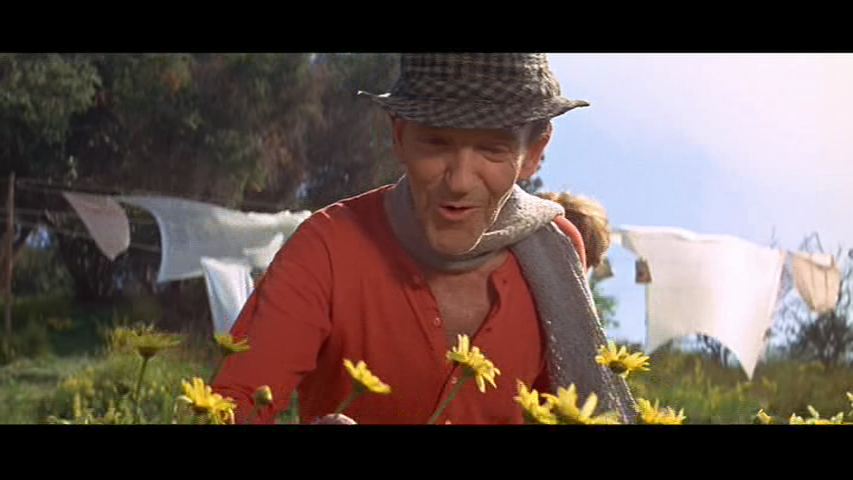
The performances are a mixed bag as well: it’s always a treat to see Astaire dancing on screen (he’s still sprightly at the age of 69), and he’s nicely cast here as the mischievous Finian; but Steele is ultimately overbearing as Og the Leprechaun (he’ll get on your nerves), and Clark’s primary selling point is her incomparable voice. She seems a bit old for the part, and doesn’t project quite enough charisma for such a central role; compare her performance with that of Janet Munro in Darby O’Gill and the Little People (1959) for an effective study in contrasts. The musical score is a winner (you’re guaranteed to be humming the theme song — “Look to the Rainbow” — for days after the film is over), and Coppola does a nice job bringing at least some of the action and dancing to real-life settings (as during the opening sequences, filmed in Napa Valley). But this one ultimately isn’t successful enough to recommend as must-see to anyone but diehard musical fans.

Redeeming Qualities and Moments:

  • Astaire and Clark dancing to “Look to the Rainbow”
  • Al Freeman, Jr. as Howard
  • Fine Technicolor cinematography
  • Burton Lane and E.Y. Harburg’s score

Must See?
No, though it’s recommended for one-time viewing.

Links: