Browsed by
Category: Original Reviews

Responses to Peary’s “must see” movie reviews, as well as my own “must see” movie reviews up to and after 1986 (when Peary’s book was published).

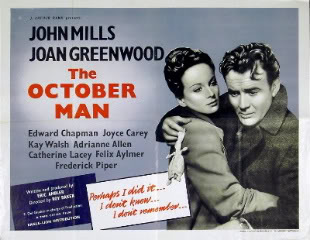
October Man, The (1947)

October Man, The (1947)

“An injured brain isn’t always logical.”

Synopsis:
A brain-injured man (John Mills) suffering from PTSD feels renewed hope for the future when he falls in love with a caring, beautiful young woman (Joan Greenwood) — but when he’s falsely accused of murdering a neighbor (Molly Newman), he must struggle to clear his name and convince police about the true identity of the killer.

Genres:

  • Falsely Accused
  • Joan Greenwood Films
  • John Mills Films
  • Roy Ward Baker Films

Review:
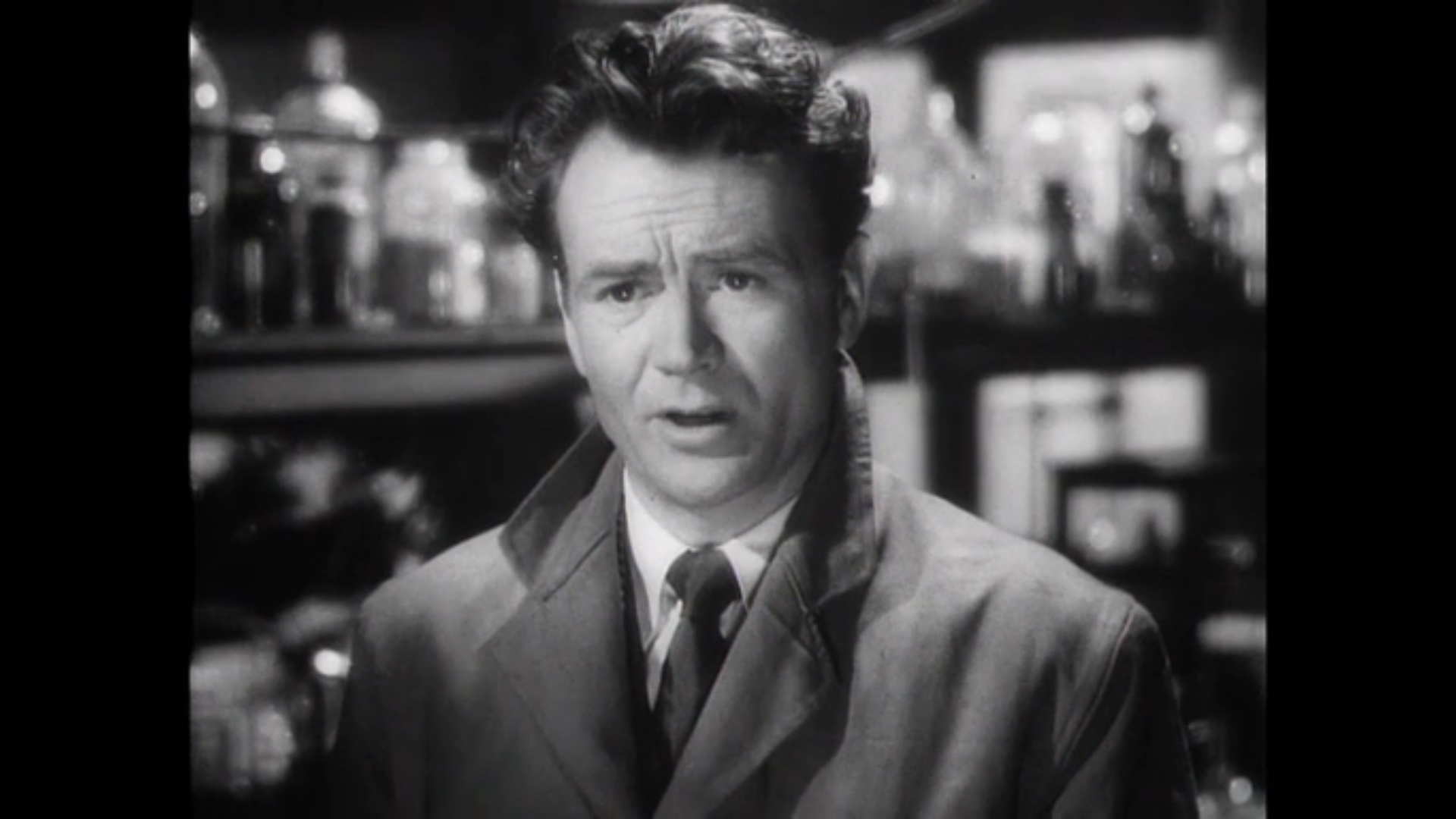
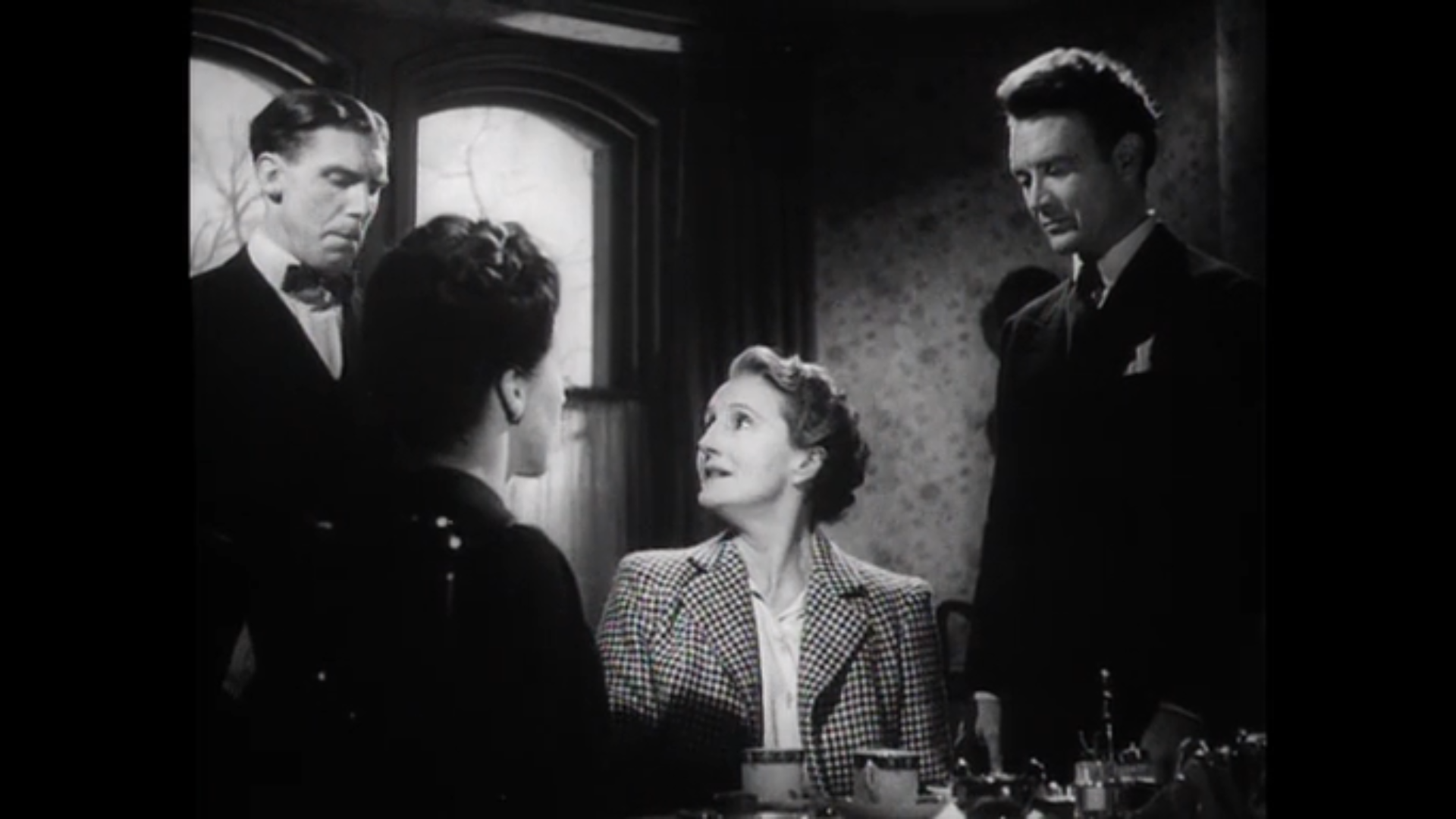
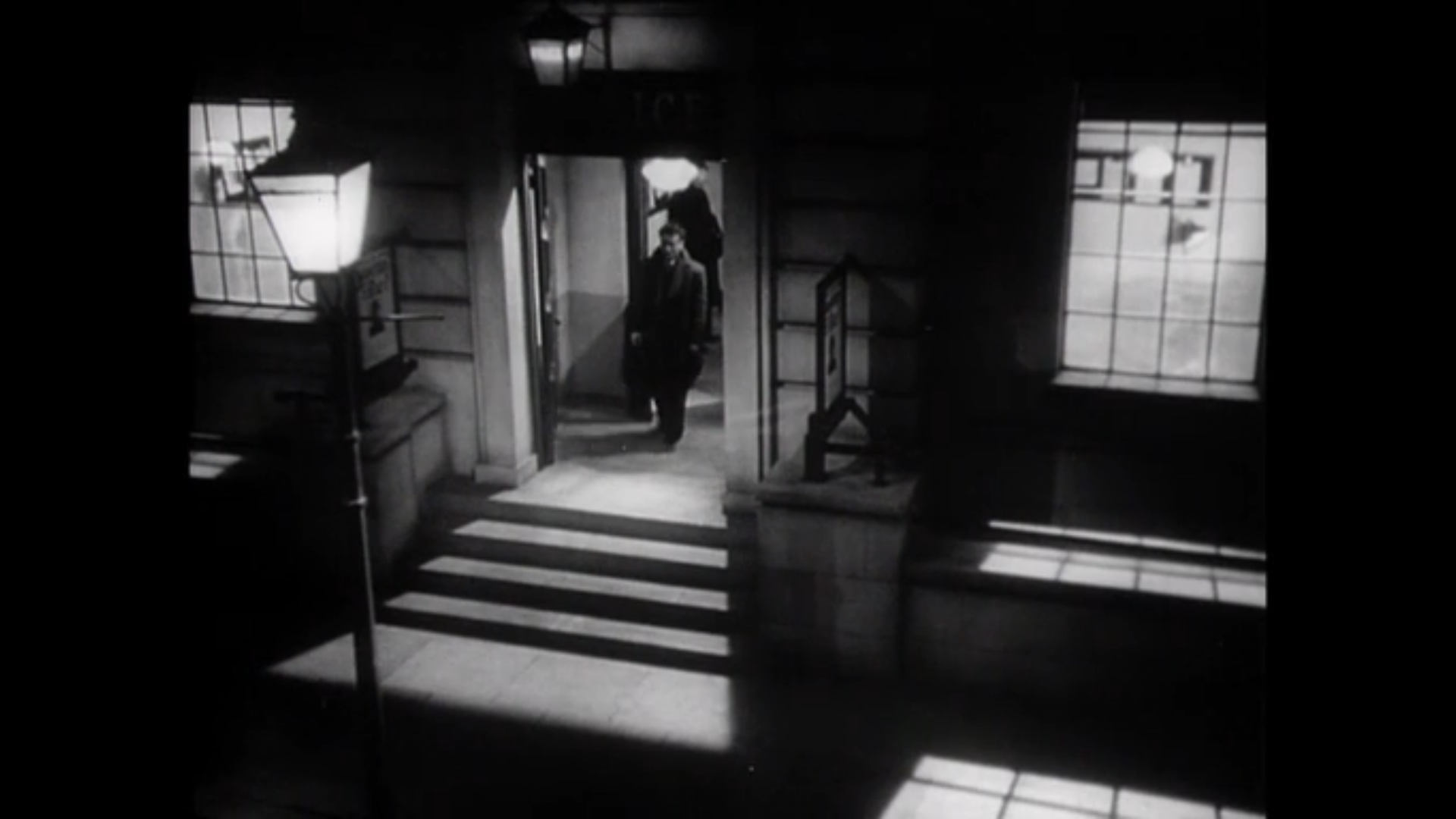
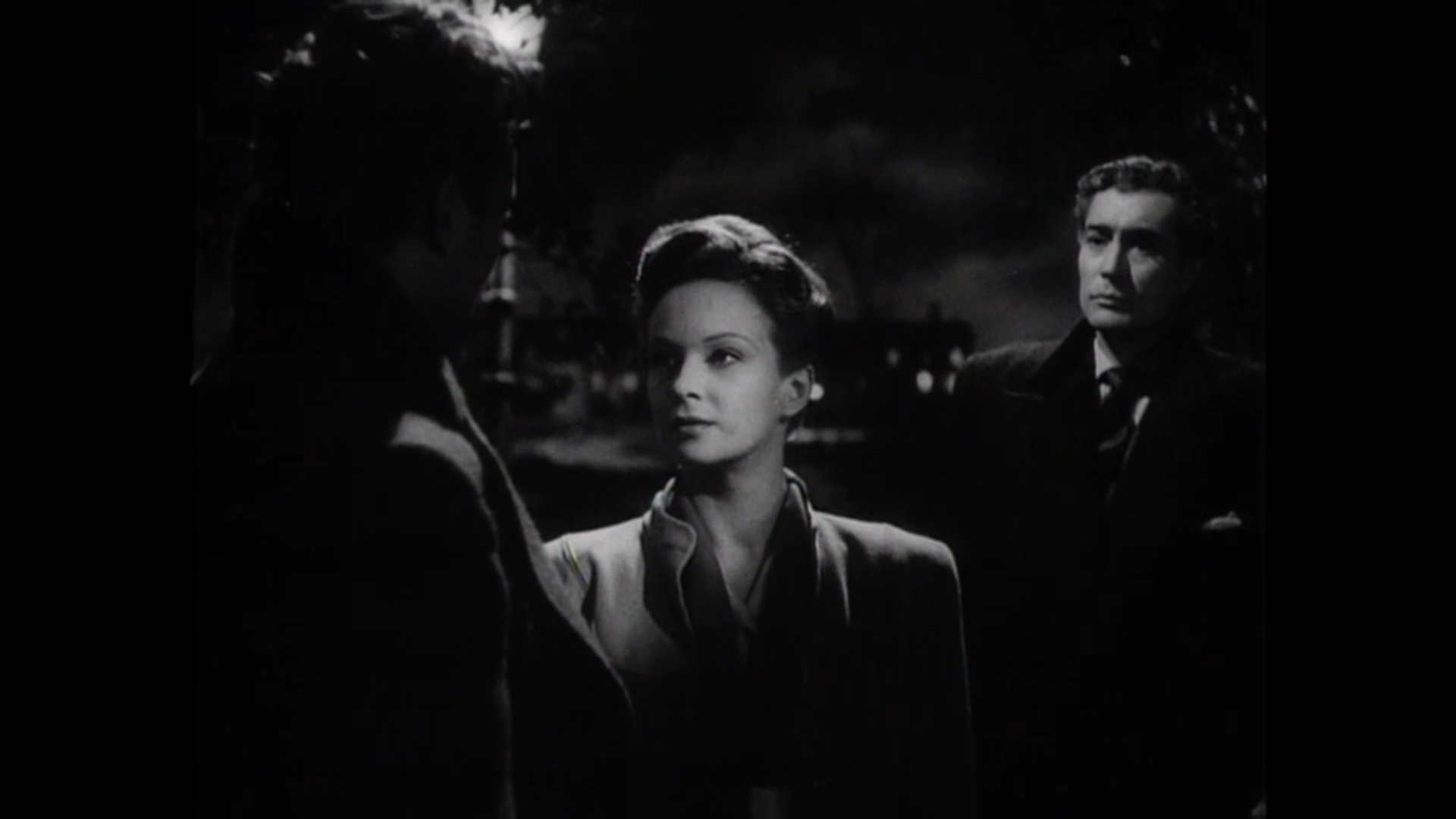
Roy Ward Baker’s directorial debut — based on a novel and screenplay by Eric Ambler, who also produced the film — remains an intriguing if mildly disappointing exploration of the effects of trauma on one’s sanity and well-being. After a taut opening sequence — during which Mills’ “Jim Ackland” witnesses the death of his friend’s young child (Juliet Mills) in a train crash while sustaining a significant brain injury — we experience brief joy on his behalf as he slowly begins to find peace and happiness, then suffer with him as he’s cruelly taken advantage of by both a vicious gossip (Joyce Carey) and a sociopathic boarder (Edward Chapman). The parallels between Jim’s story and those of countless other WWII veterans suffering from PTSD are unmistakable and poignant — so it’s especially frustrating to find that the pacing and tone of the film become far too leisurely for the potentially gripping material. Atmospheric cinematography and fine performances (by Mills and the supporting cast) make it worth a one-time look — but, as noted by Craig Butler in his All Movie Guide review, “There’s so much that’s good about The October Man that it’s a shame it doesn’t end up as a really good film, rather than a merely satisfactory one”.

Redeeming Qualities and Moments:

  • John Mills as Jim Ackland
  • A fine supporting cast
  • Erwin Hillier’s noir-ish cinematography

Must See?
No, though it’s recommended.

Links:

Mr. Skeffington (1944)

Mr. Skeffington (1944)

“I married the woman everyone else wanted to.”

Synopsis:
A narcissistic socialite (Bette Davis) marries a wealthy Jewish businessman (Claude Rains) to ensure that she and her shiftless brother (Richard Waring) are financially secure — but her marriage to Job Skeffington (Rains) remains loveless, and she continues to entertain a bevy of suitors until her looks finally begin to fade.

Genres, Themes, Actors, and Directors:

  • Bette Davis Films
  • Claude Rains Films
  • Historical Drama
  • Marital Problems

Review:
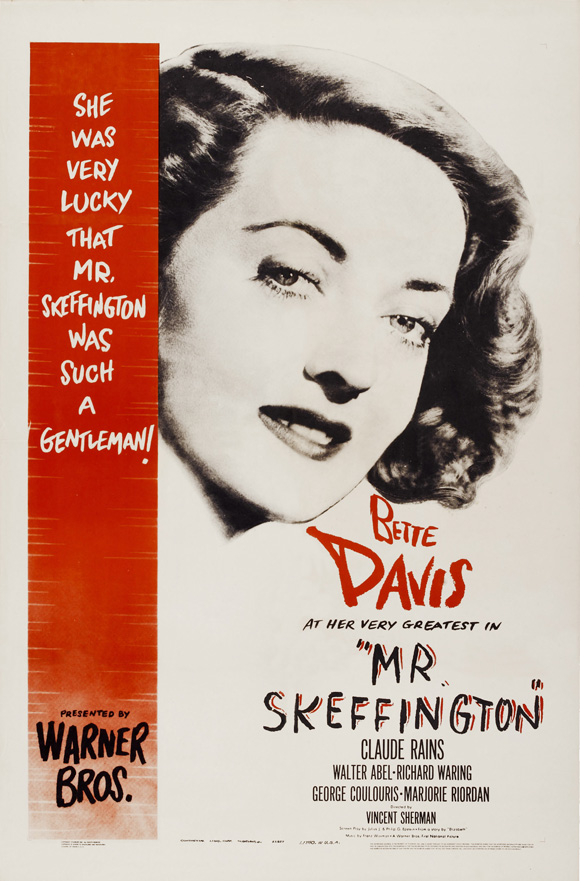
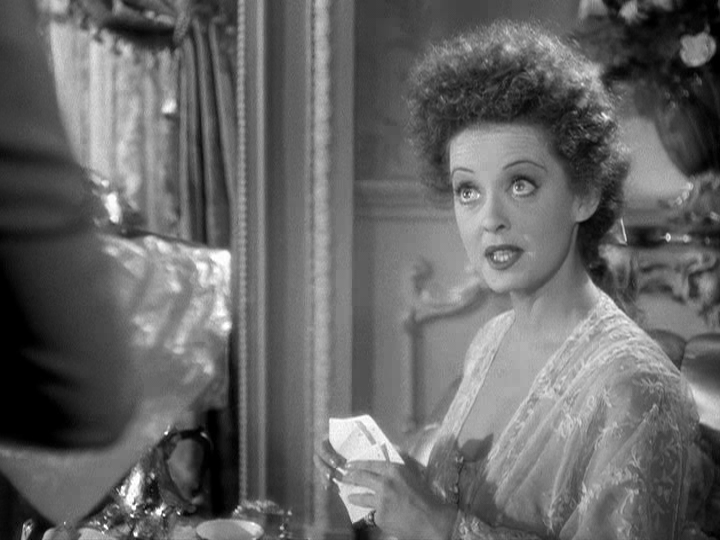
Vincent Sherman faced notoriously challenging circumstances during his filming of Elizabeth von Armin‘s historical novel — primarily the death of Davis’s husband one week into shooting, which led to Davis making life miserable for just about everyone on the set (including Sherman himself, her on-and-off-again lover). The resulting film is a sluggish, tonally inconsistent “women’s drama” which never really finds its footing and feels too long by half. Davis, though enthusiastic, is simply miscast as a flirtatiously irresistible beauty:

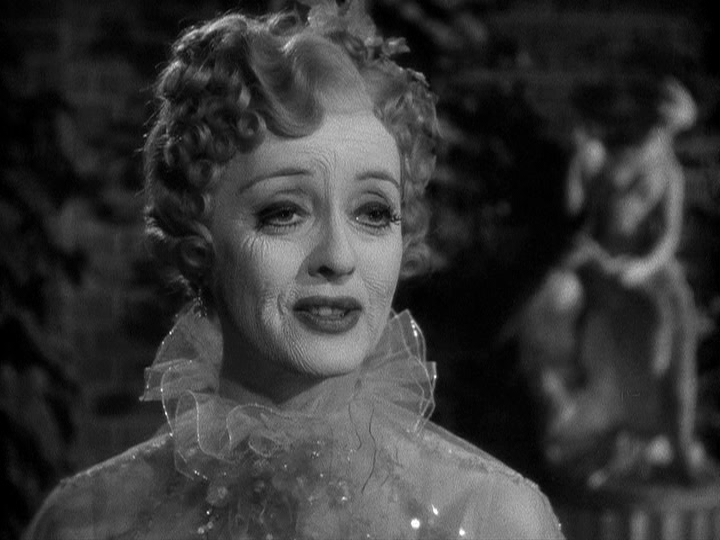
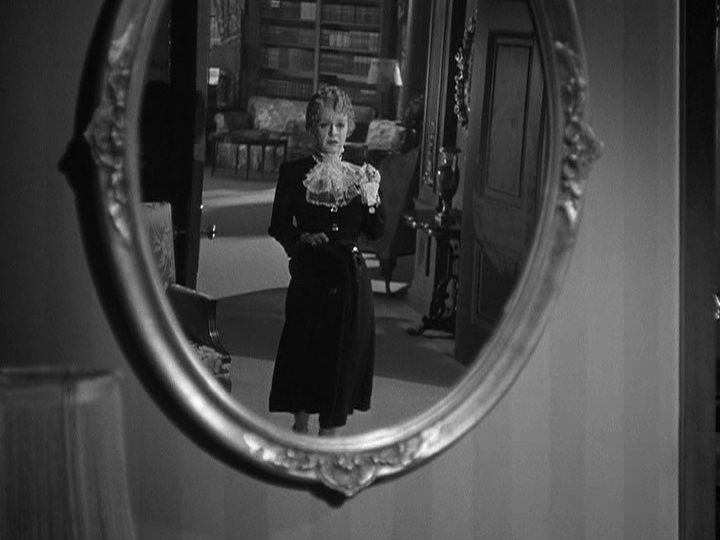
… who’s never at a loss for suitors (who in turn come across more like a comedic Greek chorus than realistic supporting characters). Rains is as invested as always in the title role — but he’s really secondary to the proceedings; this tale should have been called Fanny Skeffington instead, given that it’s primarily concerned with tracking Davis’s predictably disastrous fall-from-grace, hastened by a convenient bout of appearance-wracking diphtheria. To that end, the final portion of the film — in which the hideously transformed Fanny finally gets her comeuppance — provides the most entertainment value, in a gruesomely baroque manner; one can’t help thinking of Davis’s later Grand Guignol performances when viewing her mask-like visage (see still below).

Redeeming Qualities and Moments:

  • A grotesquely baroque tale of feminine narcissism turned sour


Must See?
No, though it’s worth a look simply for its curiosity value.

Links:

Bad Girl (1956)

Bad Girl (1956)

“Kindly allow me to choose my own friends!”

Synopsis:
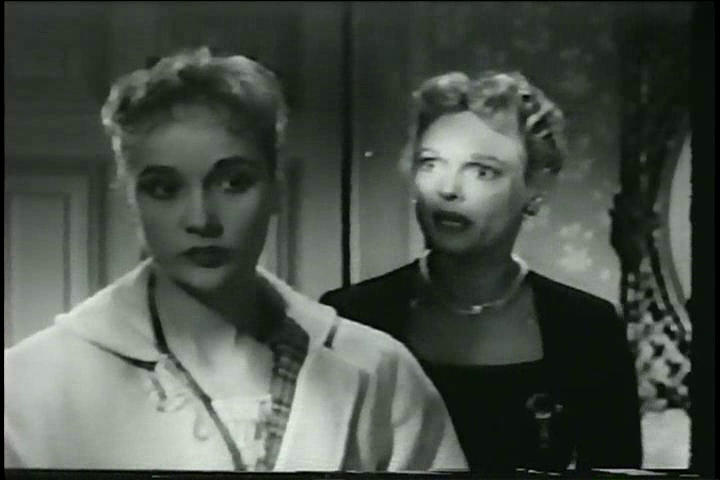
A widowed editor (Anna Neagle) reluctantly dates a handsome client (Norman Wooland) while becoming increasingly concerned about her rebellious daughter (Sylvia Syms), who is spending more and more time with a jive-loving hepster (Kenneth Haigh).

Genres:

Review:
Reportedly made as a British response to Rebel Without a Cause (1955), this collaboration by husband/wife team Herbert Wilcox and Anna Neagle is a competently directed but uninspired teen-angst flick. Neagle’s stoic-mother performance is just a tad shy of Joan-Crawford-territory — but that tad makes all the difference, in the wrong direction; her reactions and expressions are predictable through and through.

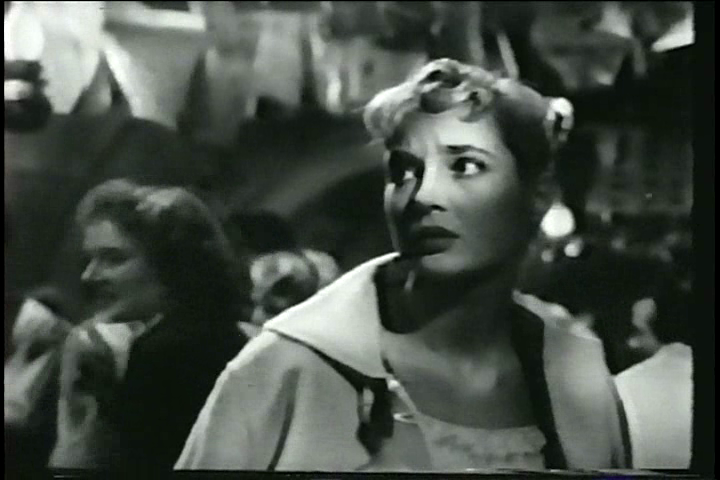
Meanwhile, Wooland is simply forgettable as her conveniently understanding and handsome suitor. The best feature of the film is Sylvia Syms (in her screen debut) as the pretty young protagonist, who’s torn between a desire to remain her mother’s “good” eldest daughter, and her itch to explore the wild-and-woolly world of soul-corrupting jive. The screenplay becomes needlessly melodramatic in its final third, as Neagle and Syms are provided with further opportunities to explore their complicated mother-daughter dynamic, and the overall tenor of the film begins to feel more like a “women’s weepie” than anything else.

Redeeming Qualities and Moments:

  • Sylvia Syms as Janet Carr

Must See?
No; feel free to skip this one. Listed as a Sleeper in the back of Peary’s book.

Links:

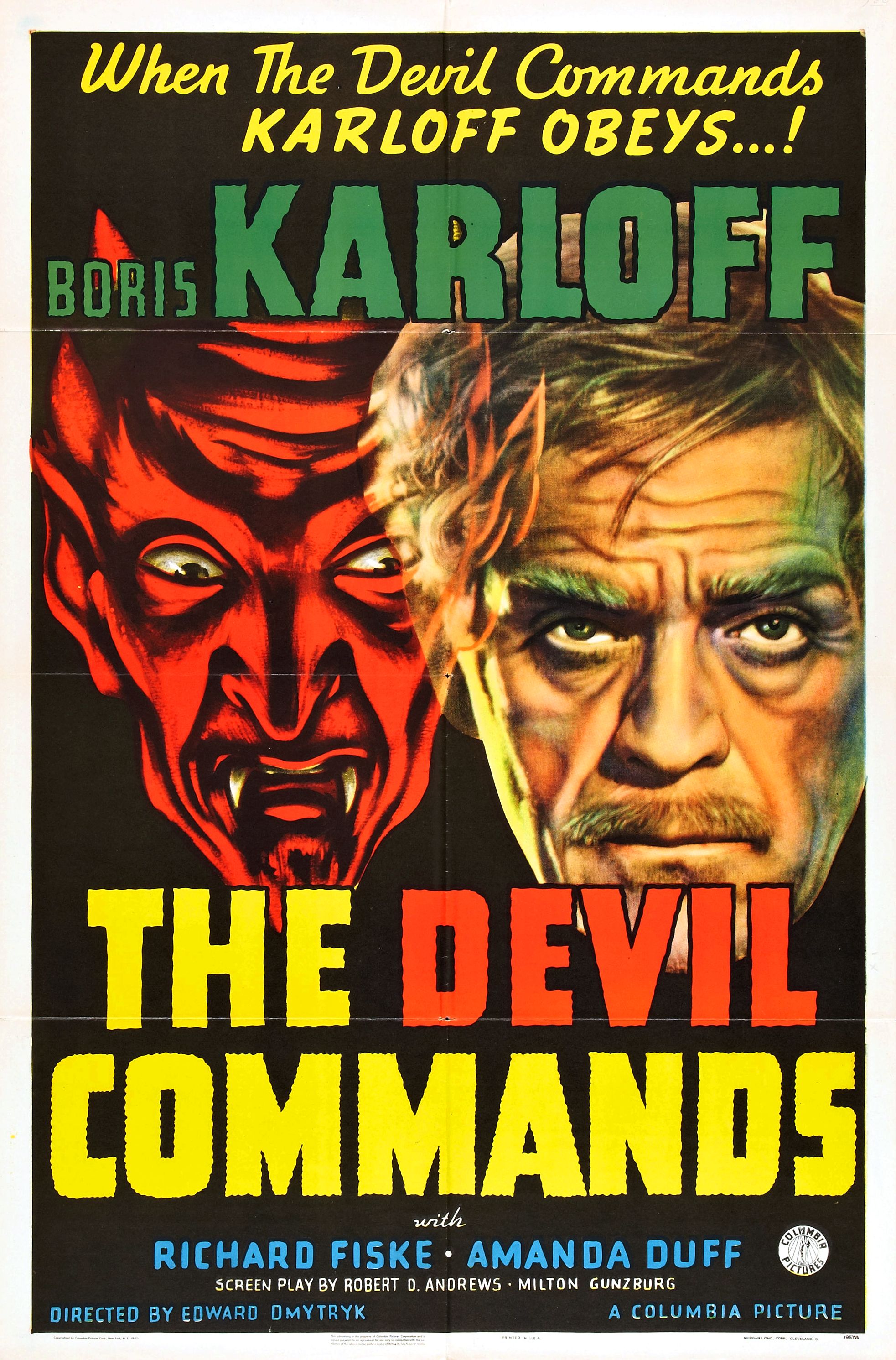
Devil Commands, The (1941)

Devil Commands, The (1941)

“Your mother is not dead – not really. She’s come back to me!”

Synopsis:
A scientist (Boris Karloff) mourning the loss of his beloved wife (Shirley Warde) enlists the help of a corrupt “medium” (Anne Revere) in making contact with Warde through brainwave technology.

Genres, Themes, Actors, and Directors:

  • Boris Karloff Films
  • Edward Dmytryk Films
  • Life After Death
  • Mad Doctors and Scientists
  • Obsessive Love
  • Widows and Widowers

Review:
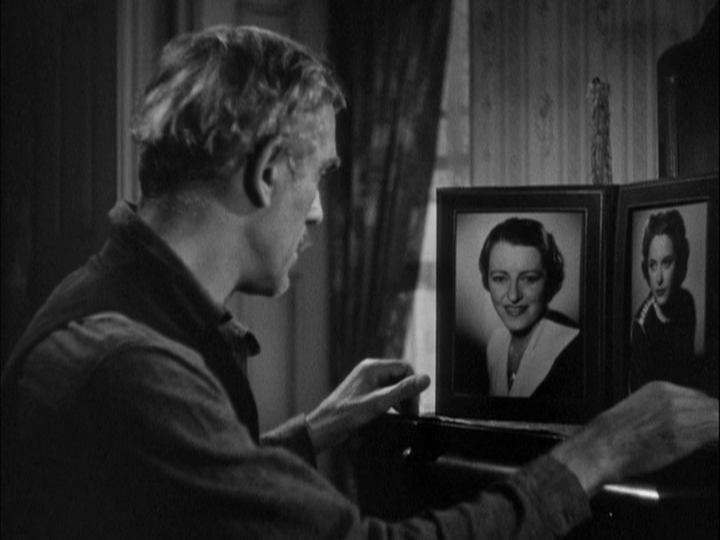
Boris Karloff starred in numerous B-level “mad doctor” flicks during the 1930s/1940s, five of which are listed in GFTFF (see here, here, here, and here for my other reviews). This title — part of a five-film “Karloff series” produced by Columbia Pictures — is, comparatively speaking, one of the best, thanks to a compelling rationale behind Karloff’s obsessive quest: his love for his dead wife (convincingly played by Shirley Warde in just a few minutes of early screentime).

Also lifting the film a notch above average is a strong performance by Anne Revere, playing a quietly psychopathic “medium” whose love of money overrides all other concerns, even her own safety.

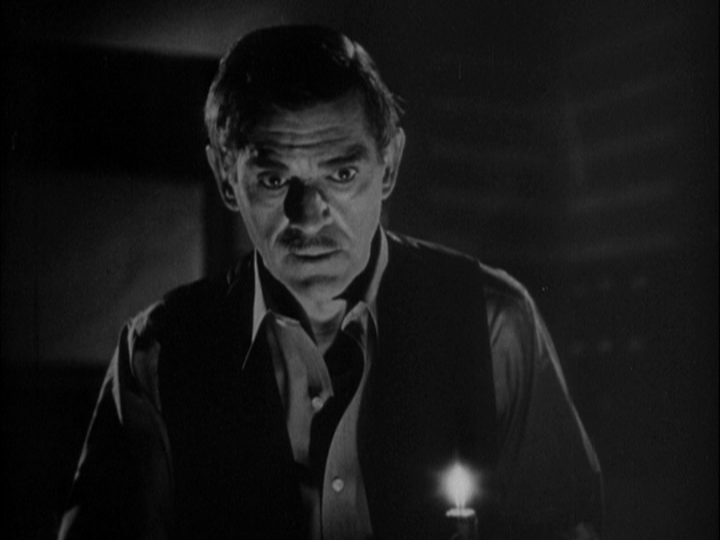
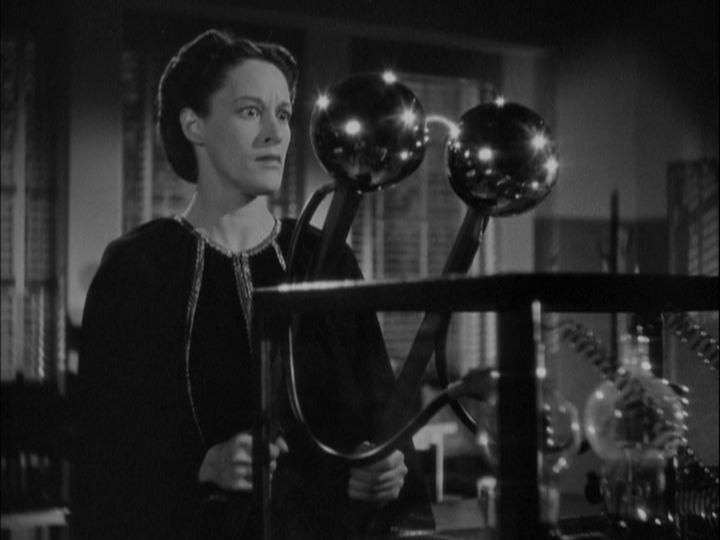
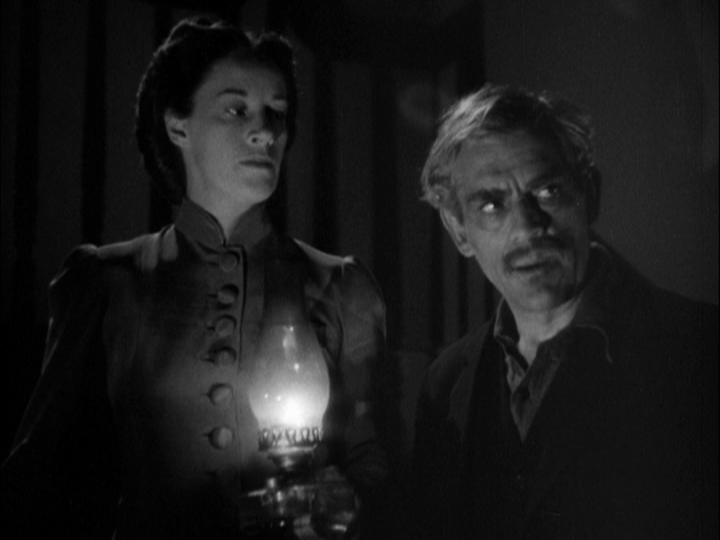
Other elements of the quickie screenplay (just over an hour long) feel somewhat conventional, but there’s certainly enough here — including a typically committed performance by Karloff:

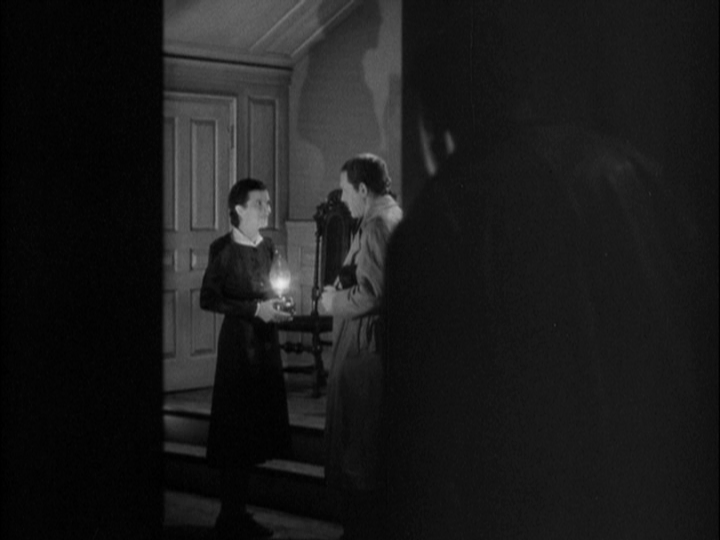
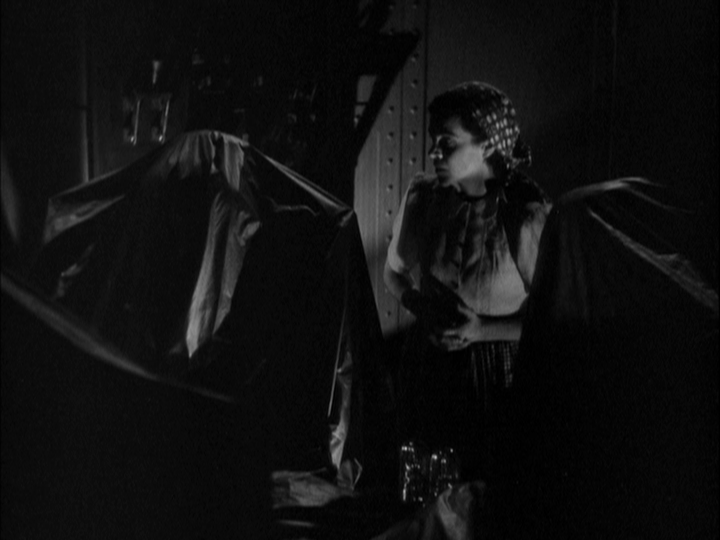
… and atmospheric cinematography —

… to recommend this one for fans of the genre.

Redeeming Qualities and Moments:

  • Anne Revere as Blanche Walters
  • Atmospheric cinematography

Must See?
No, though it’s certainly recommended for Karloff fans.

Links:

Paper Chase, The (1973)

Paper Chase, The (1973)

“I need a way of living that I can rationalize!”

Synopsis:
An ambitious law student (Timothy Bottoms) dates the daughter (Lindsay Wagner) of his professor (John Houseman) while joining forces with a handful of his classmates to prepare for final exams.

Genres, Themes, Actors, and Directors:

  • James Bridges Films
  • Lawyers

Review:
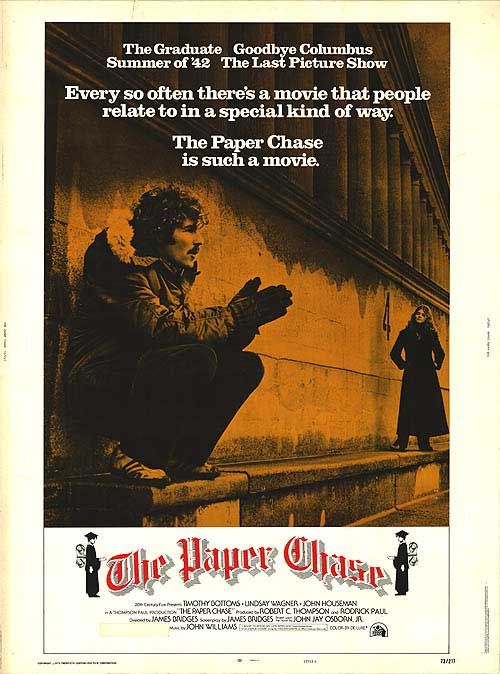
James Bridges’ adaptation of John Jay Osborn, Jr.’s novel about a first-year Harvard law student struggling to survive and thrive is perhaps best remembered as the showcase for John Houseman’s Oscar-winning performance as Professor Kingsfield — a larger-than-life instructor who is simultaneously revered and feared by his students.

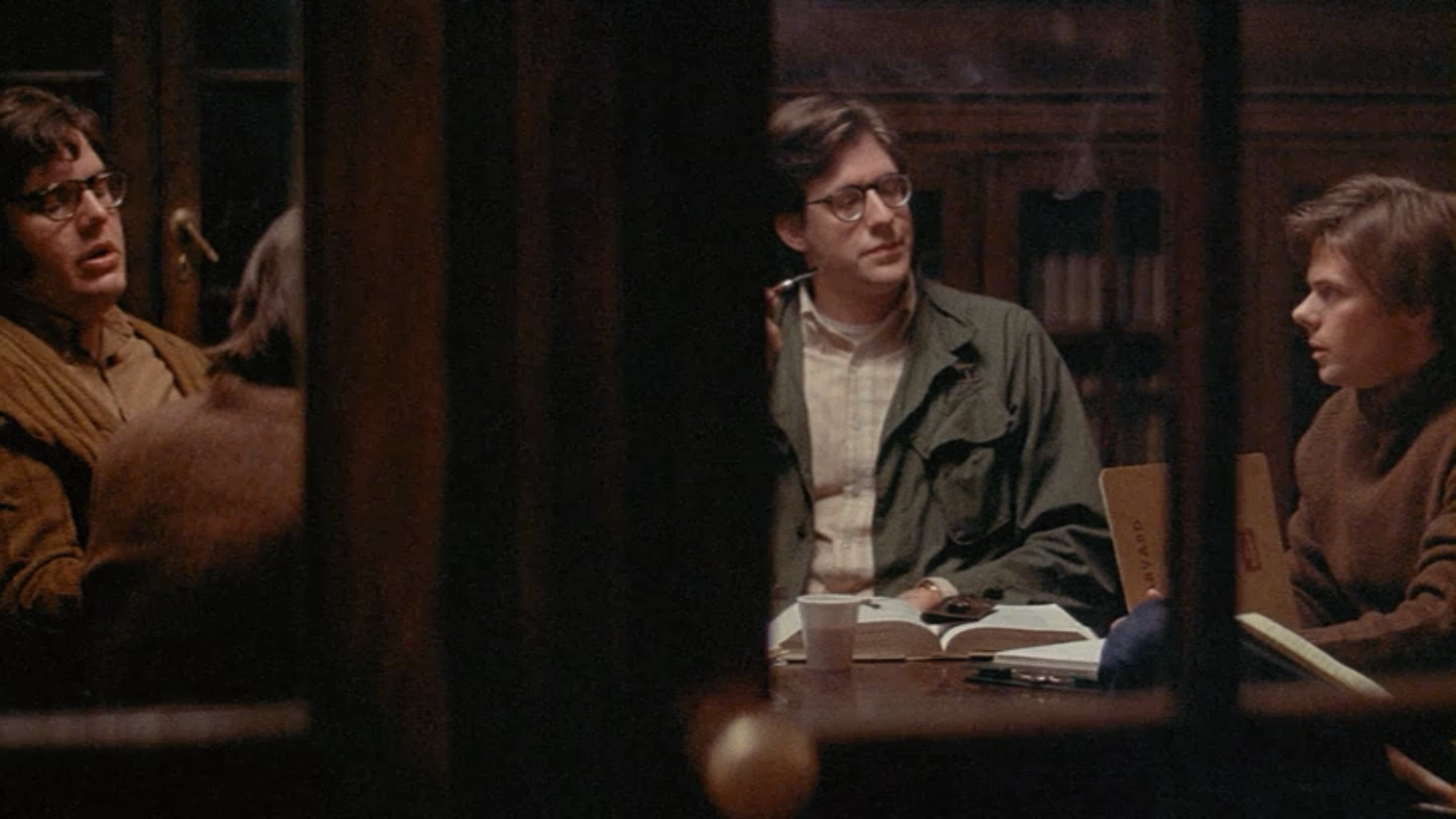
Indeed, in its depiction of Bottoms’ relentless quest to earn Houseman’s respect — and its overall presentation of the rigors of law school, complete with plenty of heady dialogue and ruthlessly competitive interactions —

The Paper Chase fully succeeds, and we remain enthusiastically engaged; as Vincent Canby points out in his review for The New York Times, it’s refreshing to see a movie that “acknowledge[s] the existence of a mind”. Unfortunately, however, this focus is interrupted time and again by a poorly developed romantic subplot, one which ultimately feels both contrived and unsatisfying.

Wagner’s character, while potentially fascinating, is insufficiently developed to earn our interest; instead, she functions merely as a distraction for Bottoms — someone who happens to conveniently possess an insider’s perspective on the man Bottoms is single-mindedly obsessed with. Meanwhile, Bottoms’ character eventually becomes so callously self-absorbed that we stop rooting for him — a dangerous outcome for a film predicated on whether or not our dauntless protagonist will succeed in his quest.

Redeeming Qualities and Moments:

  • John Houseman as Professor Kingsfield
  • Gordon Willis’s cinematography

  • A fascinating glimpse at the rigors of law school

Must See?
No, though it’s certainly worth a one-time look for Houseman’s performance.

Links:

Barefoot in the Park (1967)

Barefoot in the Park (1967)

“Corie, if it’s a good marriage, it’ll last until 5:30.”

Synopsis:
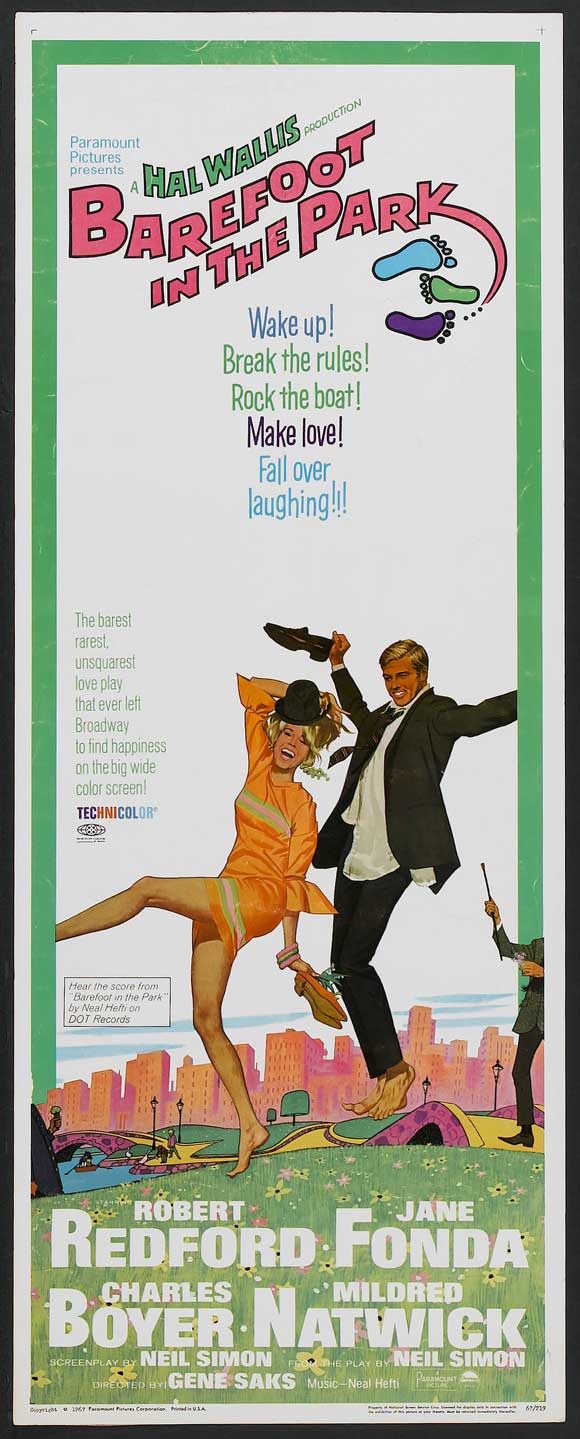
A newlywed couple — fun-loving Corie (Jane Fonda) and straitlaced Paul (Robert Redford) — struggle to adjust to married life in a tiny New York apartment.

Genres:

  • Charles Boyer Films
  • Jane Fonda Films
  • Marital Problems
  • Neil Simon Films
  • Newlyweds
  • Play Adaptations
  • Robert Redford Films
  • Romantic Comedy

Review:
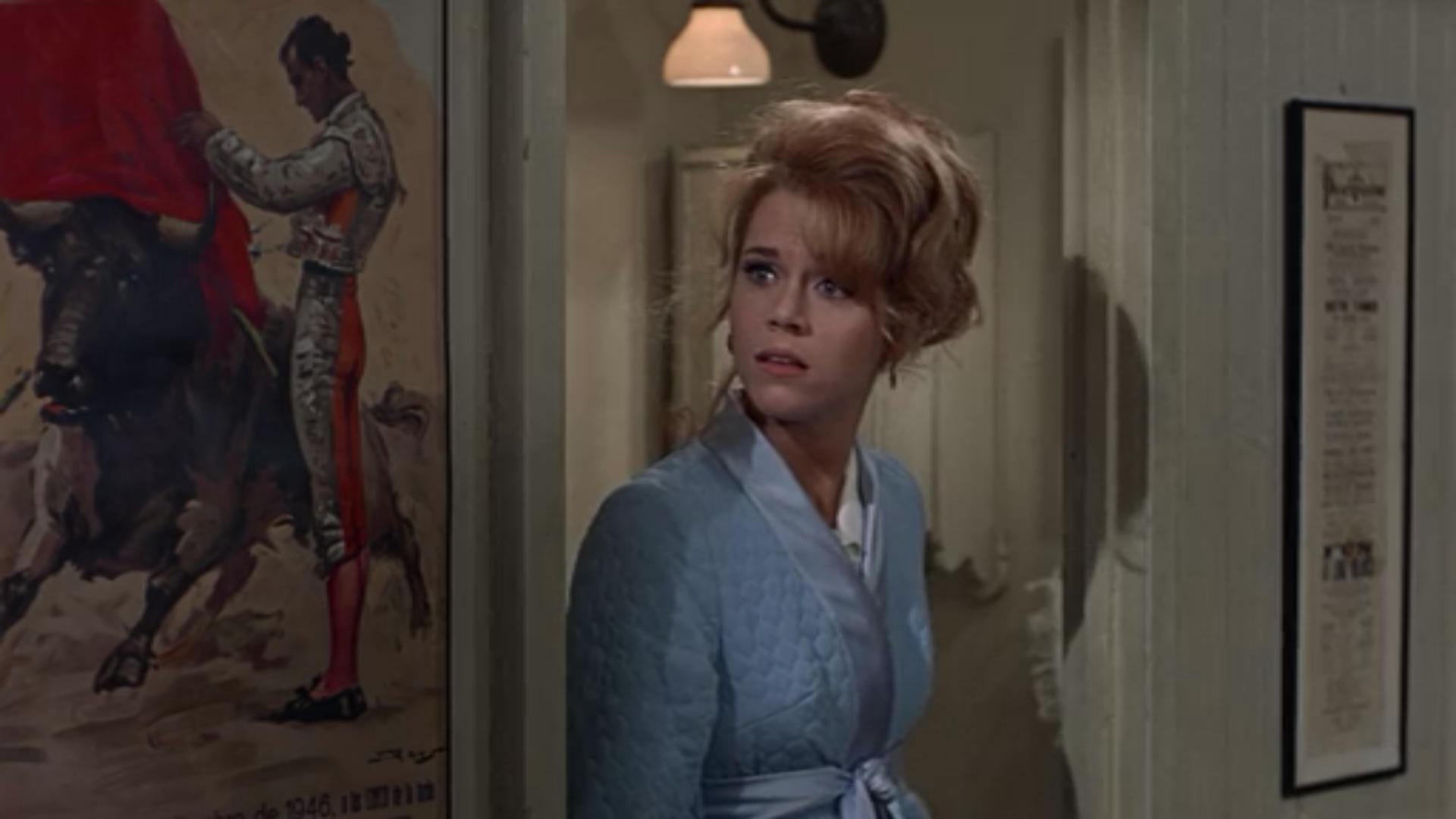
This early Neil Simon romantic comedy (based on his own long-running Broadway play) remains a surprisingly irritating and dated dud. The primary problem lies with Fonda’s character — an enthusiastic young housewife who’s either clinging rapaciously to her husband’s shirt-tails or petulantly throwing a fit; one desperately wishes she could channel her energies into some kind of career.

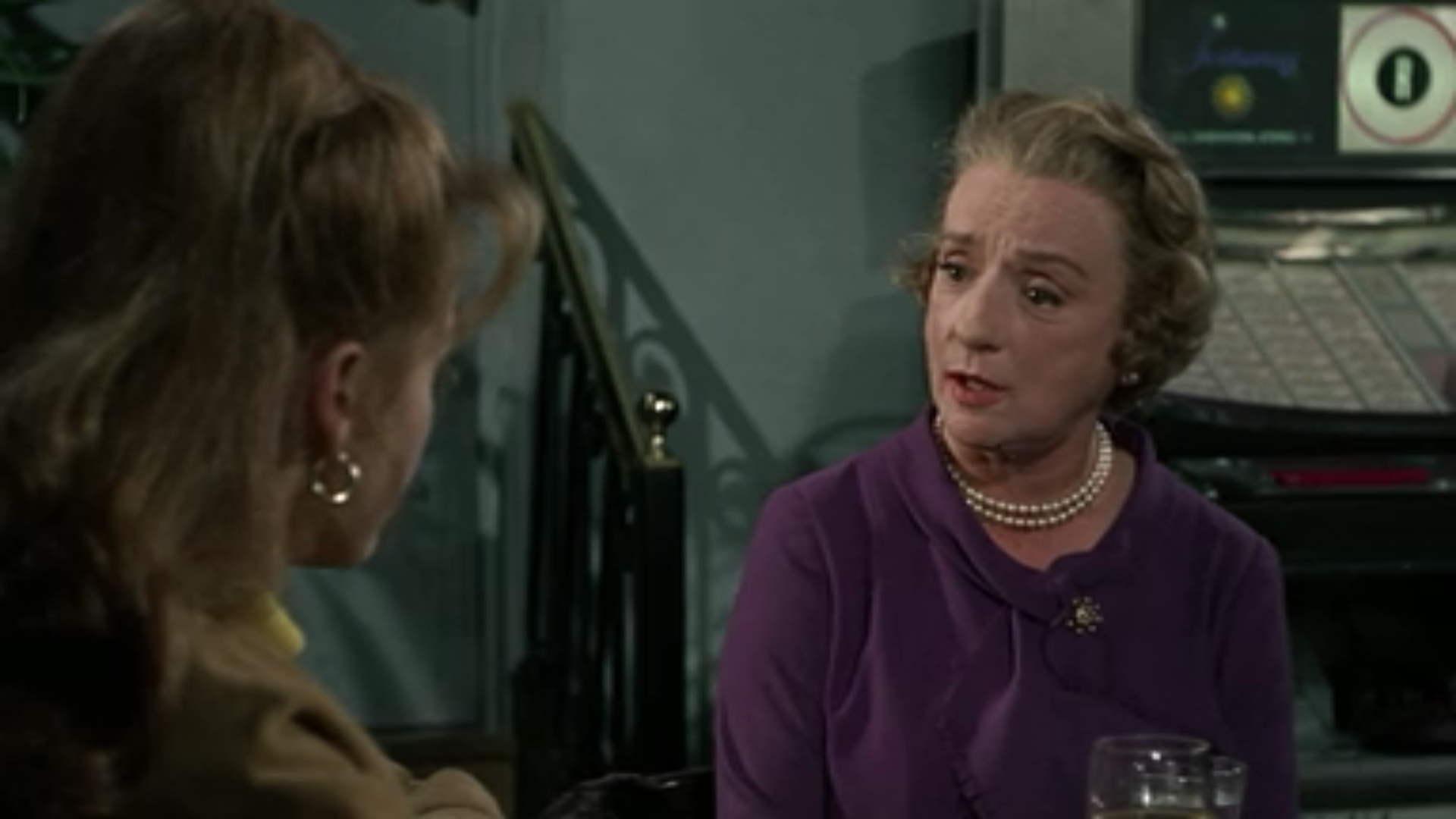
(Many actresses were apparently considered for the role of “Corie”, yet she’s so poorly written that it’s actually difficult to imagine anyone having better success with her than Fonda.) We’re presumably meant to sympathize with poor Redford’s character (a stand-in for Simon himself) — an every-man who simply wants to go to work and earn a living; but he’s so dull and under-written that we don’t care much for him, either. Another critical concern is that we aren’t given sufficient motivation to care about the ultimate survival of this couple’s sexually charged yet perilously unstable marriage, which suffers from seemingly irreconcilable personality differences (she’s free-spirited and likes to walk “barefoot in the park”, while he’s more conservative). Meanwhile, a critical subplot involving Fonda’s attempt to set up her single mother (Mildred Natwick) with an enigmatic foodie neighbor (Charles Boyer) is simply tiresome — as are the running “gags” about how tiny and elevated the couple’s new apartment is.

Note: Simon would rework the basic concept of conflicting personality types attempting (unsuccessfully) to live together in his infinitely more clever and enjoyable comedy The Odd Couple (1968).

Redeeming Qualities and Moments:

  • Mildred Natwick as Fonda’s mother, Ethel

Must See?
No; skip this one.

Links:

In Name Only (1939)

In Name Only (1939)

“I’ll see Ms. Eden whenever and wherever I can.”

Synopsis:
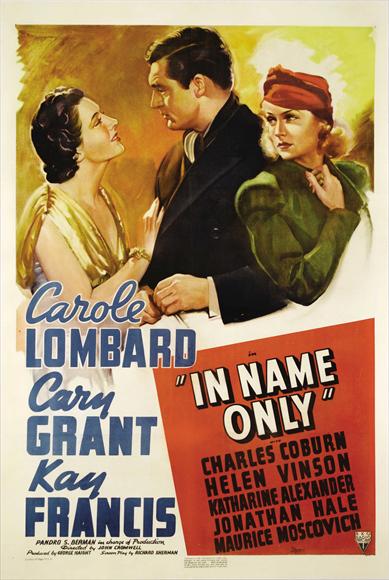
A man (Cary Grant) unhappily married to a shrewish, gold-digging wife (Kay Francis) falls in love with a young widow (Carole Lombard) — but their desire to get married is foiled by Francis’s deceptive interventions.

Genres, Themes, Actors, and Directors:

  • Carole Lombard Films
  • Cary Grant Films
  • John Cromwell Films
  • Kay Francis Films
  • Love Triangle
  • Marital Problems
  • Romance
  • Star-Crossed Lovers
  • Widows and Widowers

Review:
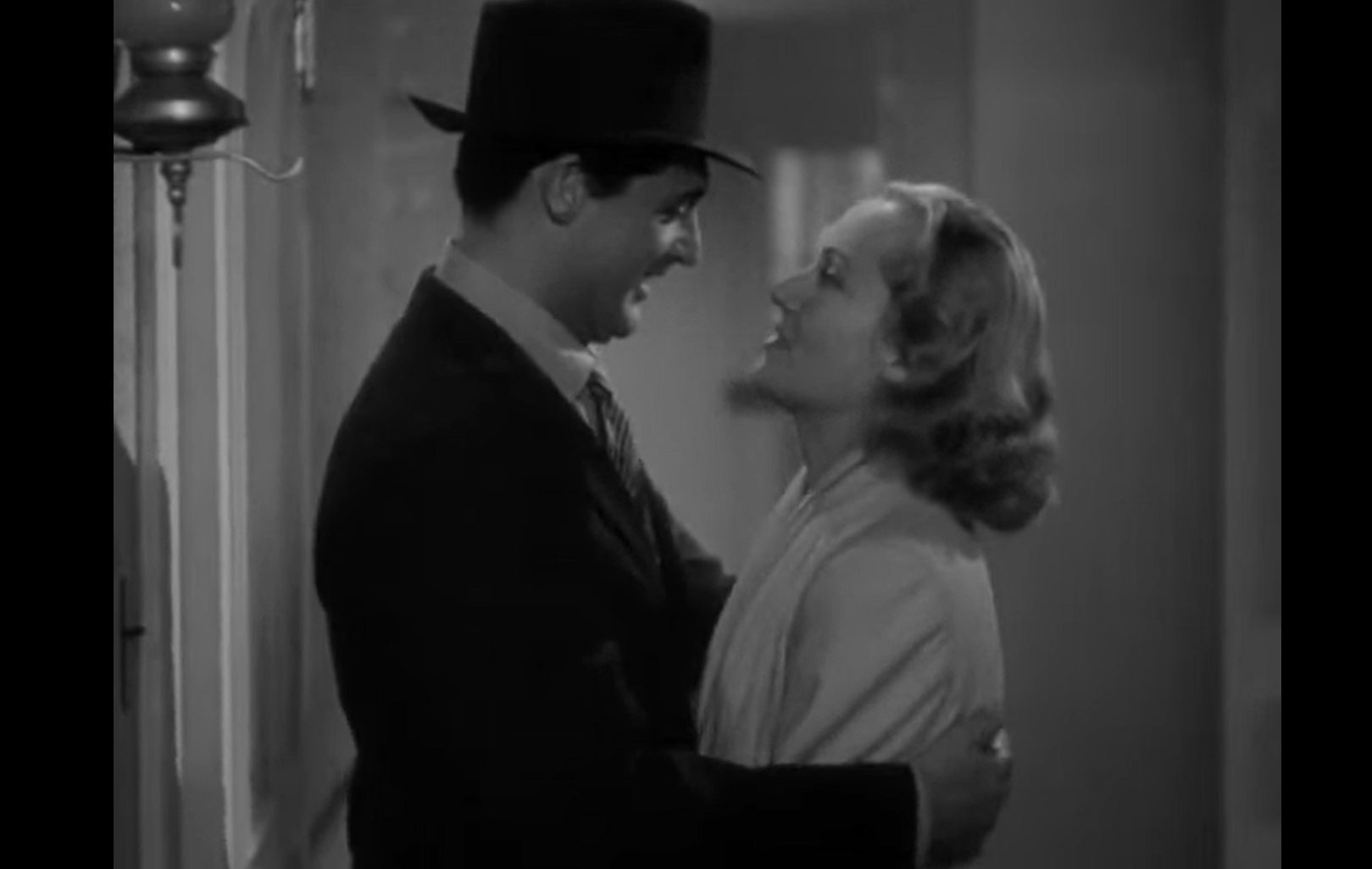
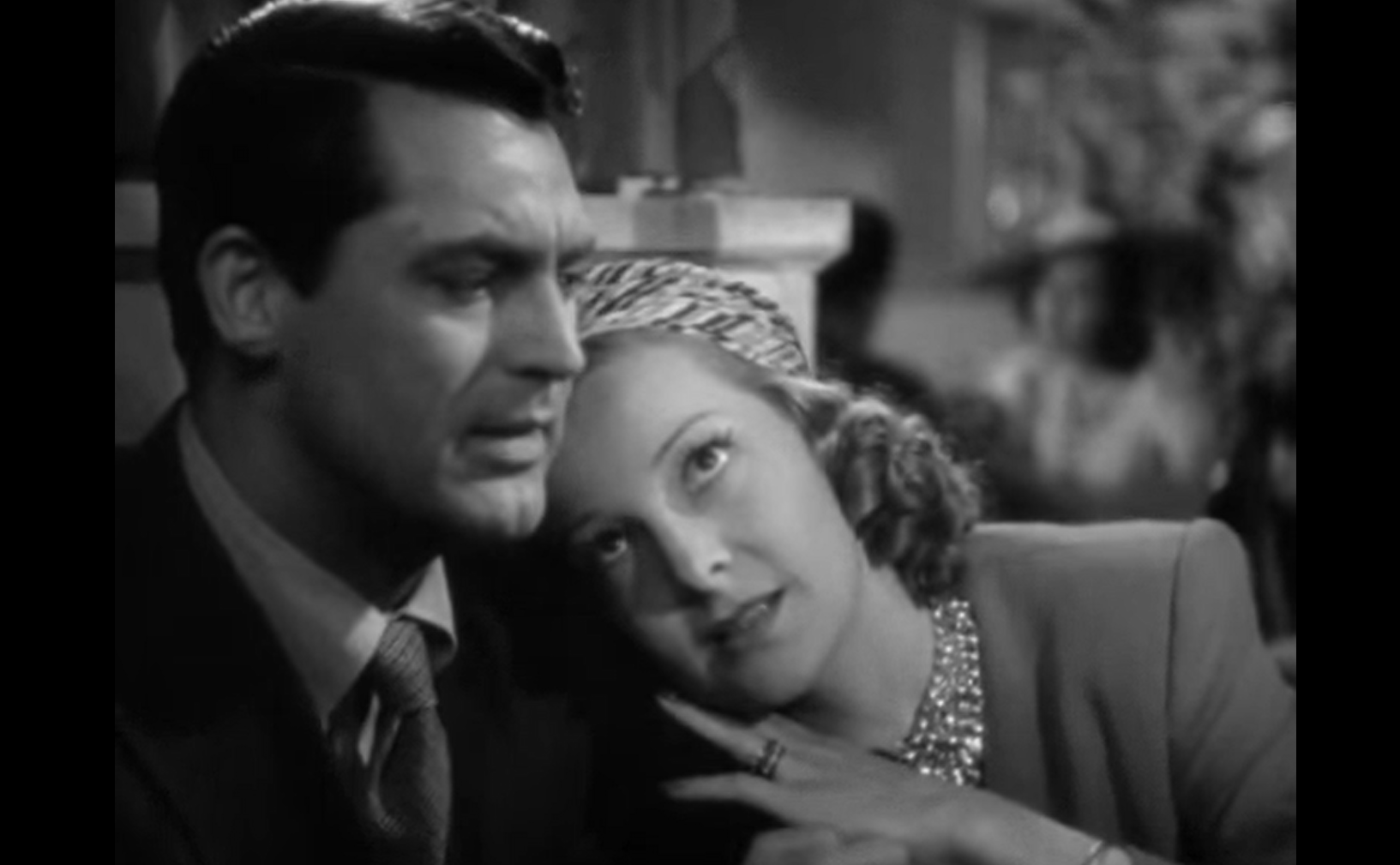
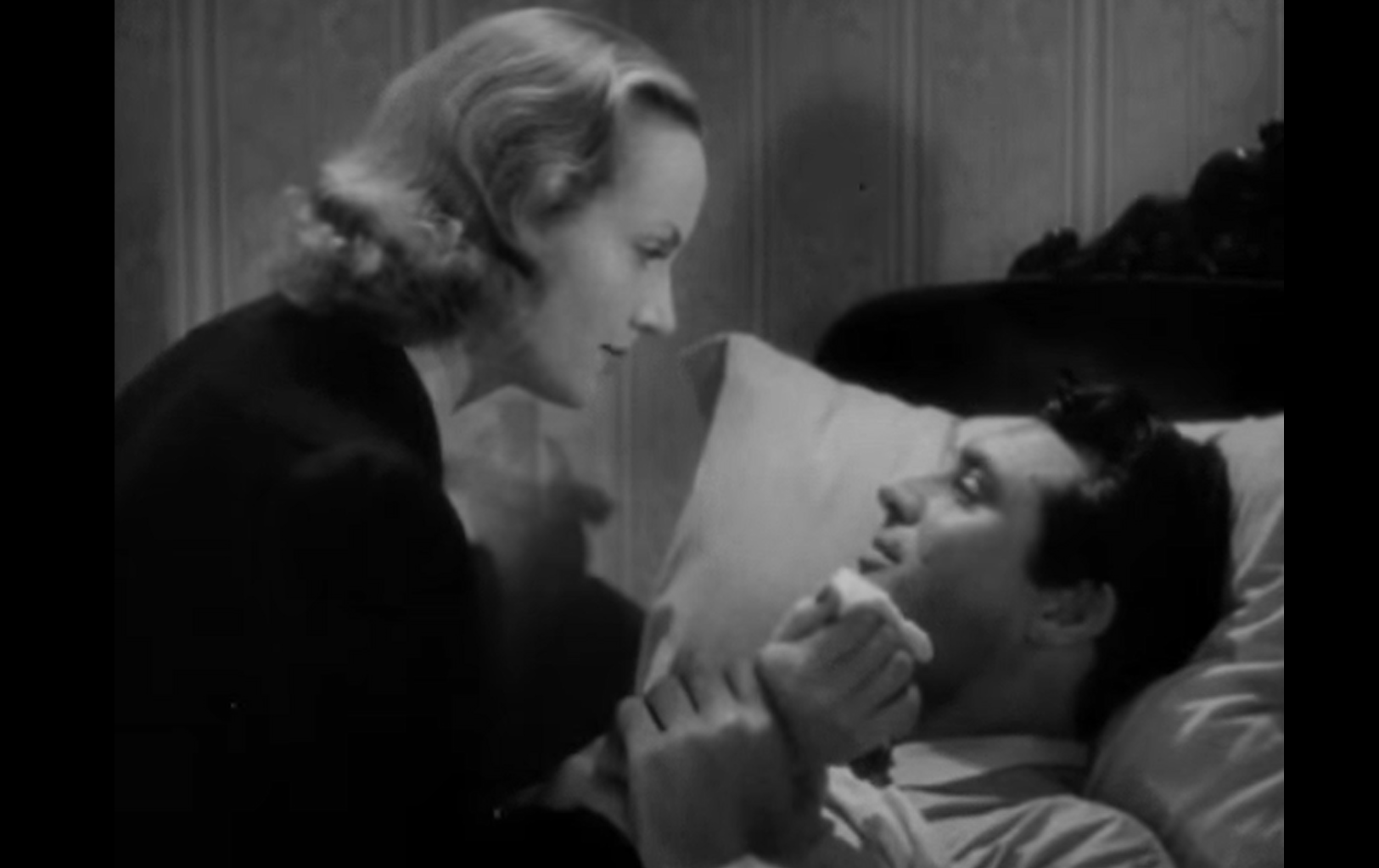
John Cromwell directed this maudlin, implausibly scripted romance about a pair of star-crossed lovers who can’t seem to get an even break:

… thanks to the evil machinations of a gold-digging wife-from-hell.

Grant and/or Lombard fans hoping for anything close to a screwball comedy will be disappointed, given that In Name Only takes itself quite seriously, with no laughs to be had — but the entire affair is competently directed, acted, and photographed (by J. Roy Hunt), making it fairly easy to sit through. Watch for a fun supporting performance by Helen Vinson as a philandering socialite who makes a play for Grant.

Redeeming Qualities and Moments:

  • Helen Vinson as Suzanne
  • Fine cinematography (by J. Roy Hunt) and direction (by John Cromwell)

Must See?
No; this one isn’t must-see.

Links:

Four Daughters (1938)

Four Daughters (1938)

“So they flipped a coin: heads he’s poor, tails he’s rich.”

Synopsis:
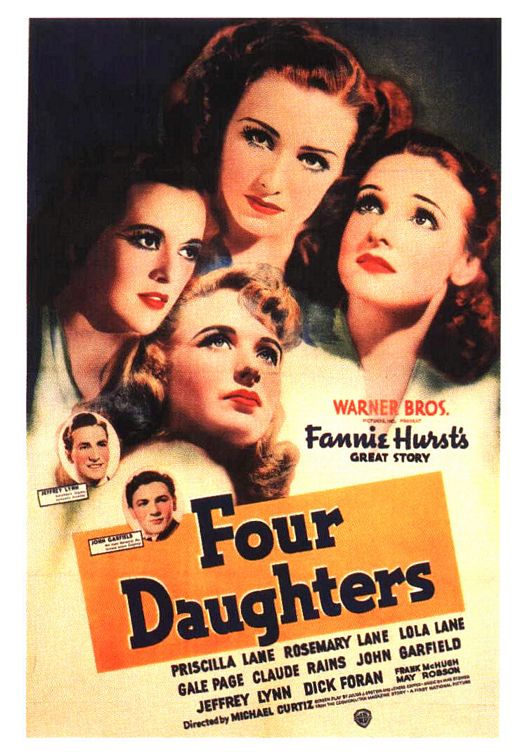
The four grown daughters — Thea (Lola Lane), Kay (Rosemary Lane), Emma (Gale Page), and Ann (Priscilla Lane) — of a musician (Claude Rains) struggle to find romantic happiness with the right partner. Emma resists overtures from the boy next door (Dick Foran), while Thea aspires to marry a wealthy banker (Frank McHugh) and Kay remains primarily focused on her career as a singer. Ann, the youngest, is determined not to marry — though she soon falls for a handsome musician (Jeffrey Lynn) whose charms sway her sisters as well; but when his troubled, cynical friend Mickey (John Garfield) arrives in town and falls for Ann, romantic entanglements become even more complicated.

Genres, Themes, Actors, and Directors:

  • Claude Rains Films
  • John Garfield Films
  • Love Triangle
  • Michael Curtiz Films
  • Musicians
  • Priscilla Lane Films
  • Siblings

Review:
Based on a story by Fannie Hurst, and designed as a vehicle for Priscilla Lane and her two sisters (Lola and Rosemary), Four Daughters — directed by Michael Curtiz — was originally intended as an “A”-level picture, before Errol Flynn dropped out of the cast and Jeffrey Lynn signed on.

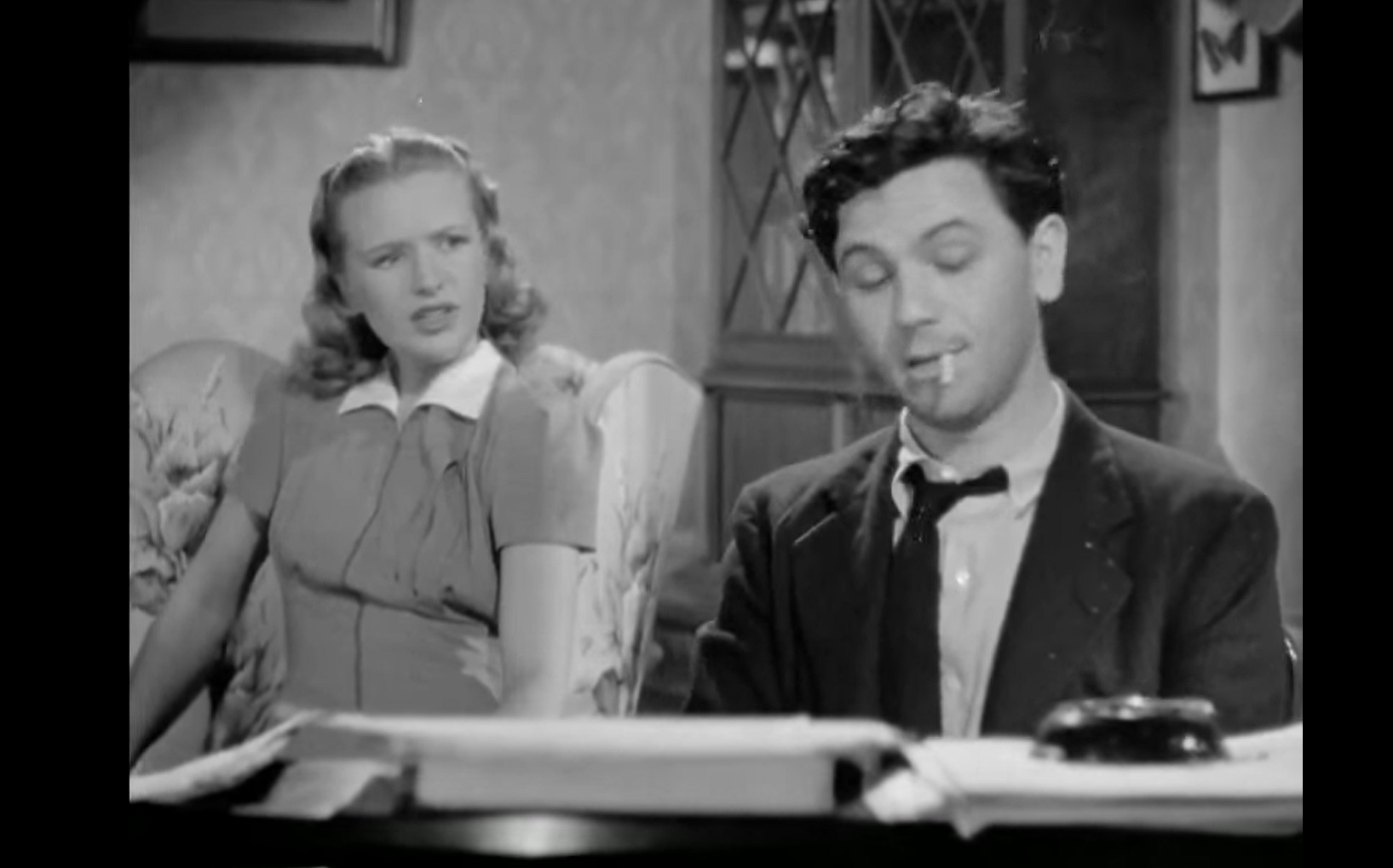
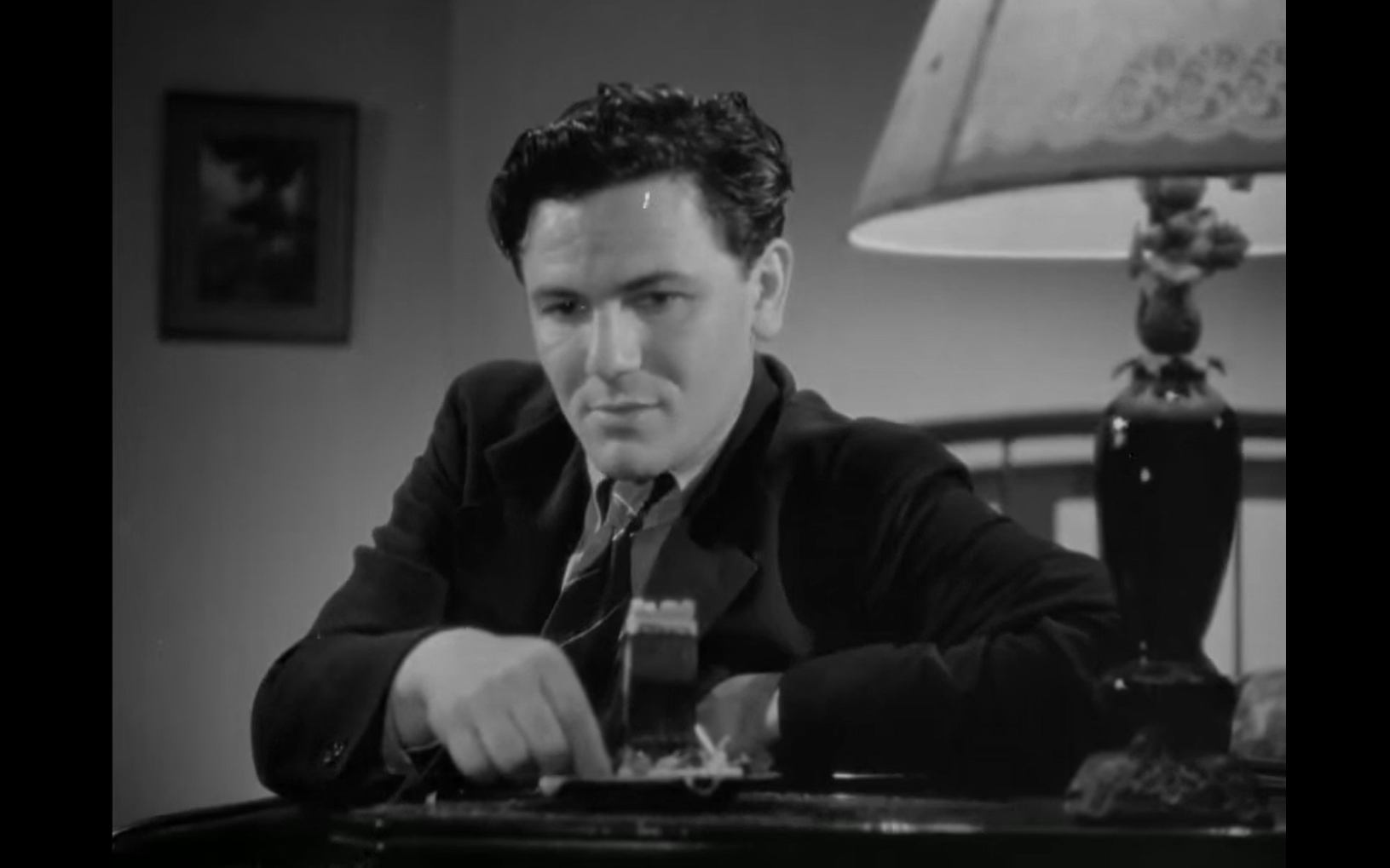
It’s primarily notable today for affording John Garfield his memorable screen debut:

Indeed, Garfield’s Oscar-nominated supporting performance as a philosophizing cynic who plucks Ann’s pity strings is likely why Peary includes this title in his GFTFF, and was enough to make the New York Times’ reviewer take note:

As the most startling innovation in the way of a screen character in years — a fascinating fatalist, reckless and poor and unhappy, who smokes too much, who is insufferably rude to everybody, and who assumes as a matter of course that all the cards are stacked against him, Mr. Garfield is such a sweet relief from conventional screen types, in this one character, anyway, so eloquent of a certain dispossessed class of people, that we can’t thank Warner Brothers, Michael Curtiz, the director; Mr. Epstein and Miss Coffee, the screen playwrights; and even Miss Fannie Hurst, the original author, enough for him.

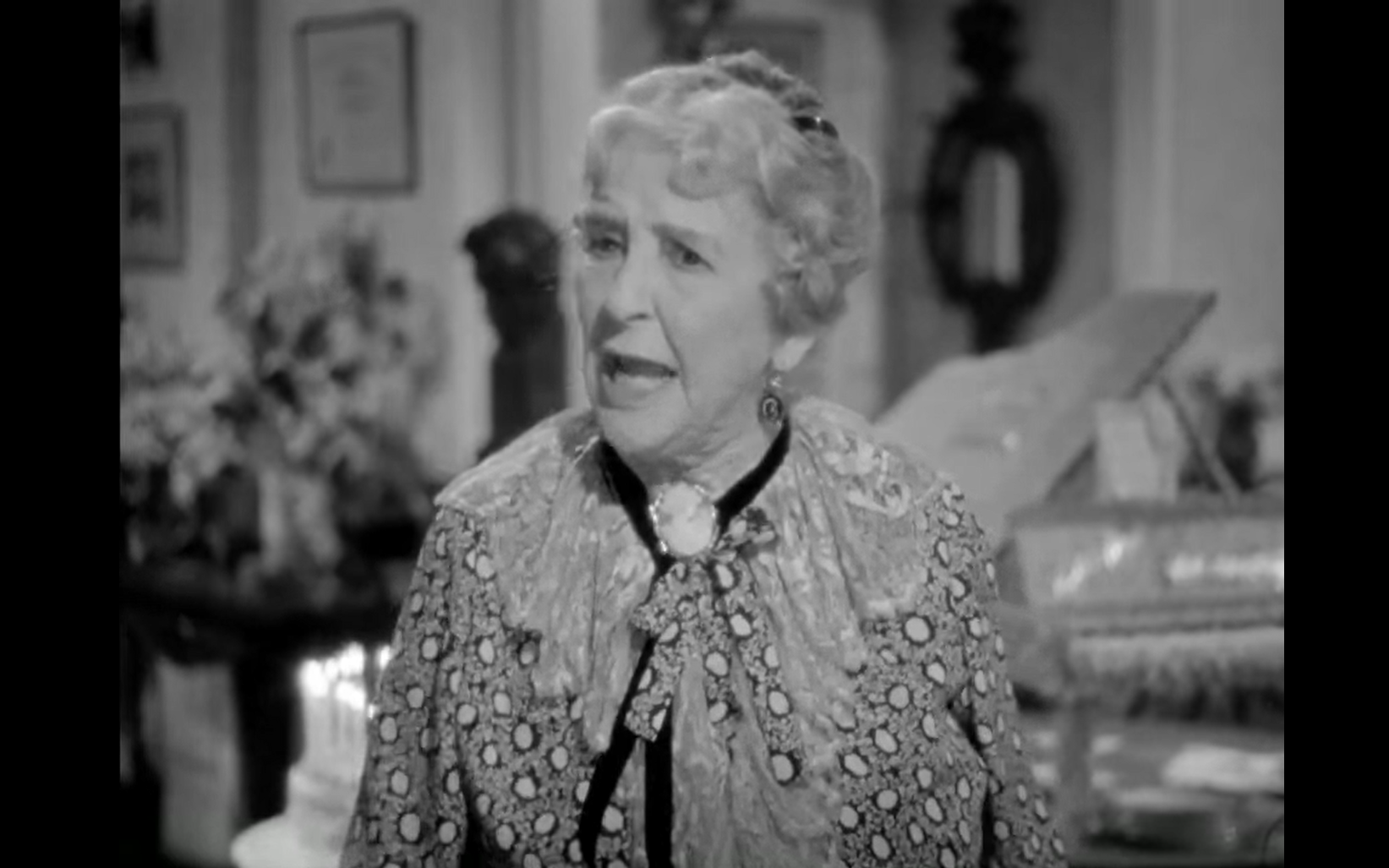
Otherwise, the film remains a fairly straightforward product of its era — a tearjerking romance full of conveniently implausible twists and turns, all taking place within the idyllic white-picket borders of a happy small-town household, presided over by avuncular Rains (in a throwaway role):

… and no-nonsense May Robson as “Aunt Etta”.

With that said, the script is surprisingly well-written for its genre, and contains quite a few lines of thoughtful and/or amusing dialogue (see examples below) — you’ll likely be pleasantly surprised if you decide to check this one out.

Redeeming Qualities and Moments:

  • John Garfield as Mickey Borden
  • Ernest Haller’s cinematography
  • Some surprisingly effective dialogue:

    “Do you think that’s right, to leave a song dangling in mid-air — no face, no feet?”
    “My name came first — then the curtains.”

Must See?
No, though it’s of interest simply for Garfield’s debut screen performance.

Links:

Different Story, A (1978)

Different Story, A (1978)

“Yes I have, several, and not particularly.”

Synopsis:
A real estate agent (Meg Foster) allows a homeless illegal immigrant (Perry King) to live with her, and they eventually become friends, then spouses, then lovers, then parents.

Genres, Themes, Actors, and Directors:

  • Homosexuality
  • Lesbianism
  • Romance

Review:
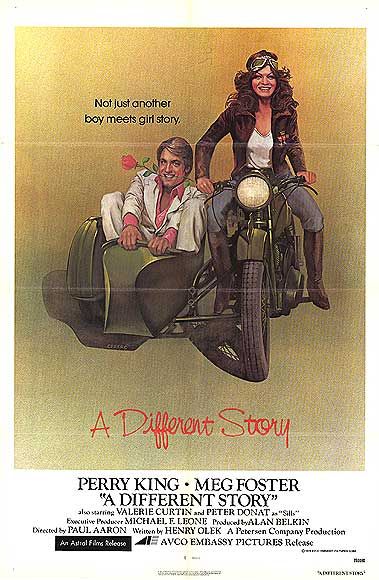
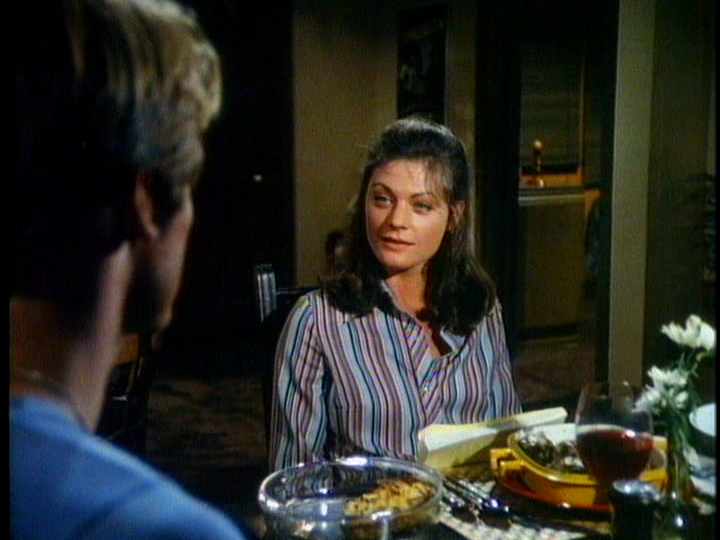
It’s unclear why Peary included this controversial indie film in the back of his GFTFF: is it because of Meg Foster’s strong performance in a leading role originally slated for Susan Sarandon, or because he found the subject matter itself intriguing? While I rented this title with an open mind, prepared to engage with what did indeed sound like a “different [romantic] story” (apparently based on a real couple), I was disappointed to find that, despite a promising start, it quickly devolves into a scenario that’s not only implausible and offensive but dull. Screenwriter Henry Olek seems to think that King’s “feminine” interest in clothing design is enough to remind us that he’s still (supposedly) gay even after marrying Foster; meanwhile, once Foster gives up her lesbian “lifestyle”, the only representation of lesbianism we’re left with is her pathologically clingy and neurotic ex-girlfriend (Valerie Curtin).

The Gay [and Lesbian] Activists Alliance wrote a letter of concern upon the film’s release, and it’s easy to see why: a movie which posits that a gay man and woman can suddenly find not only love but sexual satisfaction with one another feeds directly into the toxic fantasy that homosexuality can be “cured”, especially once a kid arrives on the scene. Clearly, this kind of scenario does occasionally happen — see IMDb user posts for at least one example; but it’s handled here with such lack of insight and nuance that this story really would have been better off not being told at all.

Note: King’s status as a Belgian illegal immigrant (purely a plot device — it’s the reason Foster marries him to begin with) is clumsily handled as well: when Foster asks him why he doesn’t have an accent, he declares it’s because he “doesn’t want one” (!!!).

Redeeming Qualities and Moments:

  • Meg Foster as Stella

Must See?
No; feel free to skip this one, unless you’re curious.

Links:

Abraham Lincoln (1930)

Abraham Lincoln (1930)

“Do you suppose there’s a human being who wants peace more than I do?”

Synopsis:
After mourning the loss of his first love, Ann Rutledge (Una Merkel), Abraham Lincoln (Walter Huston) marries Mary Todd (Kay Hammond), becomes president of the United States, oversees the bloodiest war in American history, and eventually dies at the hands of assassin John Wilkes Boothe (Ian Keith).

Genres, Themes, Actors, and Directors:

  • Biopics
  • D.W. Griffith Films
  • Historical Drama<
  • Walter Huston Films

Review:
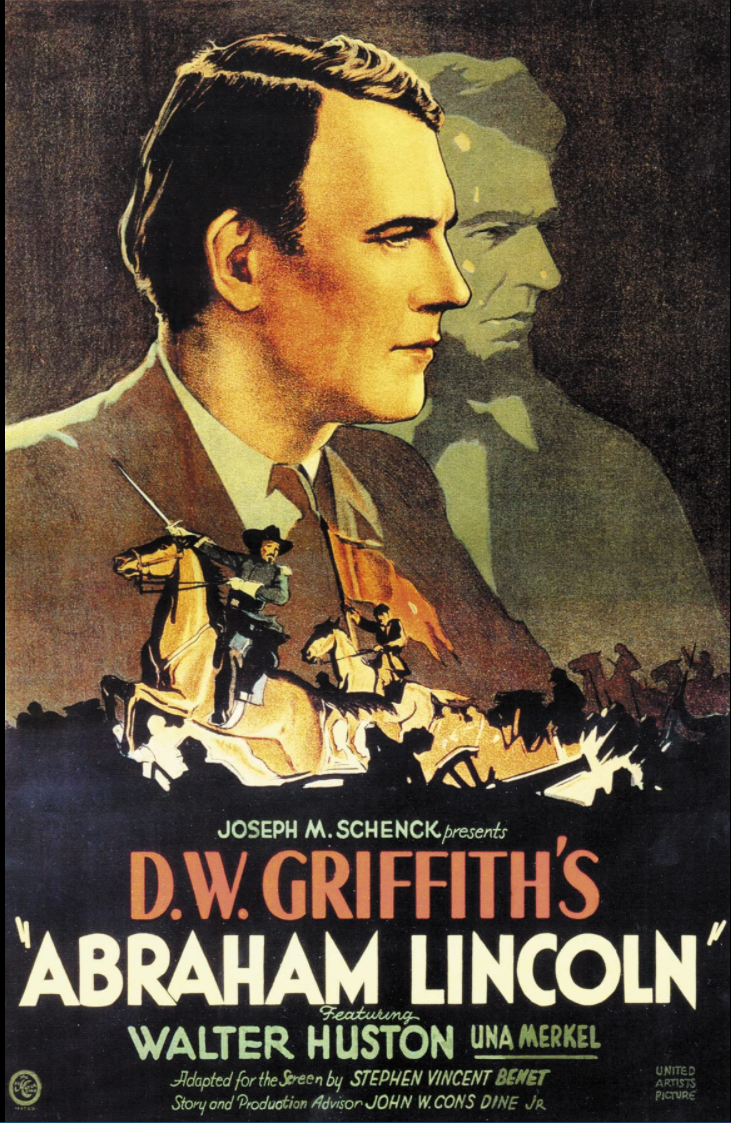
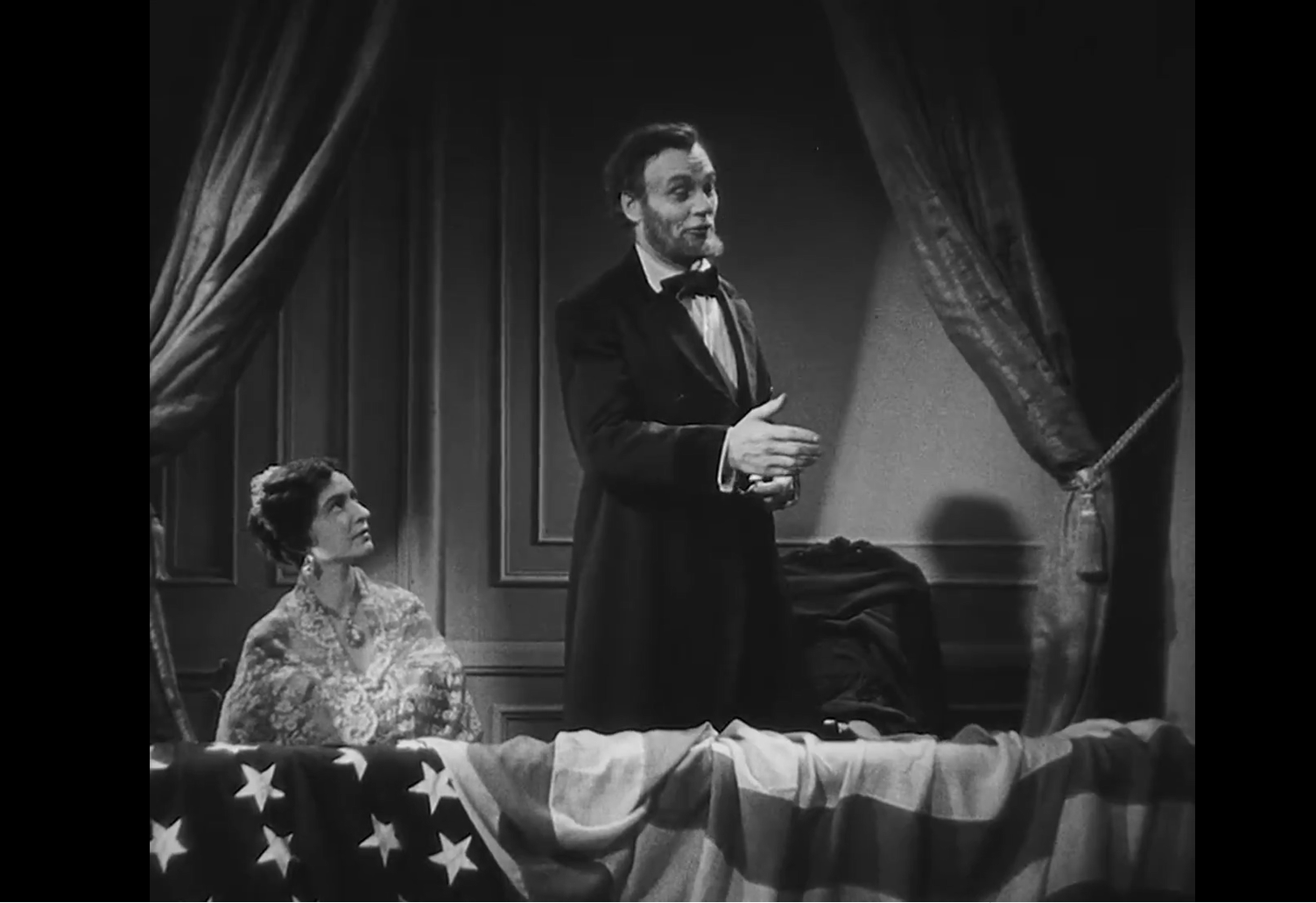
Famed silent director D.W. Griffith’s foray into sound films was less than successful, resulting in just two unexceptional “talkies”: 1931’s The Struggle (about a marriage threatened by alcoholism), and this episodic biopic about one of America’s most legendary presidents.

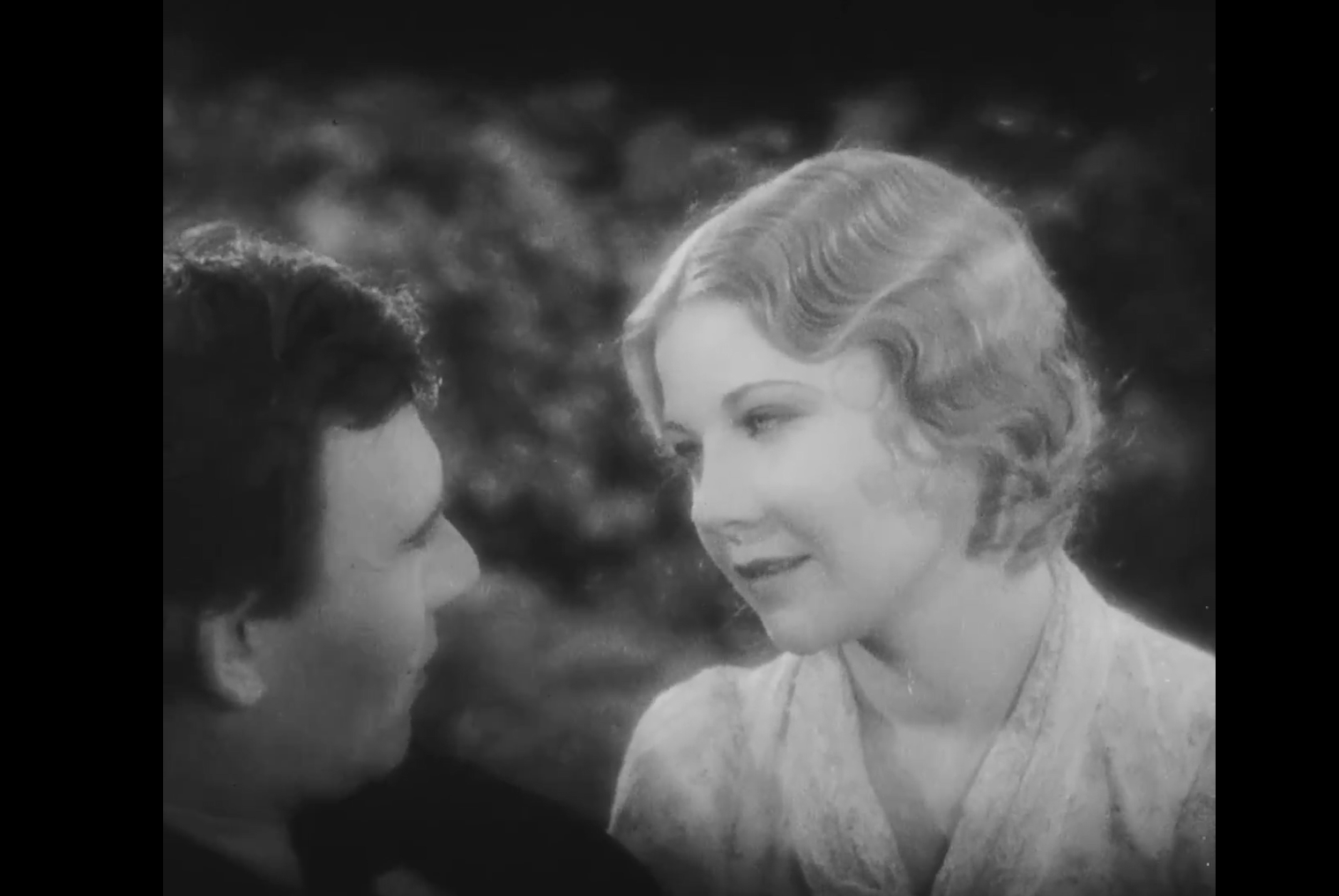
Abraham Lincoln has been somewhat unfairly maligned over the years — most notoriously by Harry Medved and Randy Dreyfuss in their book The Fifty Worst Films of All Time (1978), where the authors call out (among other things) the melodramatic acting style of Merkel (who they refer to as “very simply beneath contempt”):

… the occasionally clunky dialogue (“Oh, Ann! I love you so!”), and the screenplay’s revisionist tendencies (i.e., Lincoln spouting part of his inaugural address before settling down to watch his final play at Ford’s Theater).

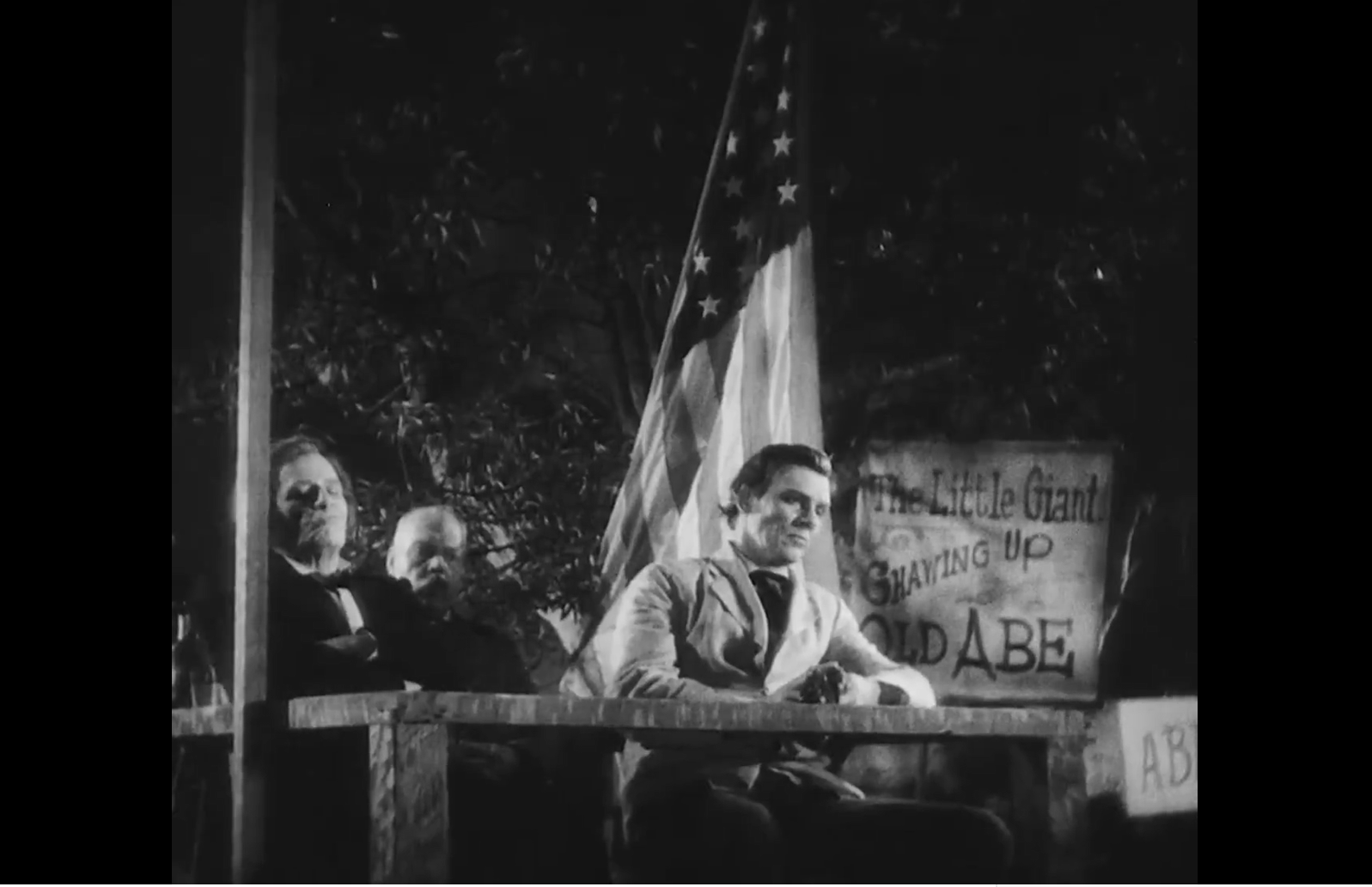
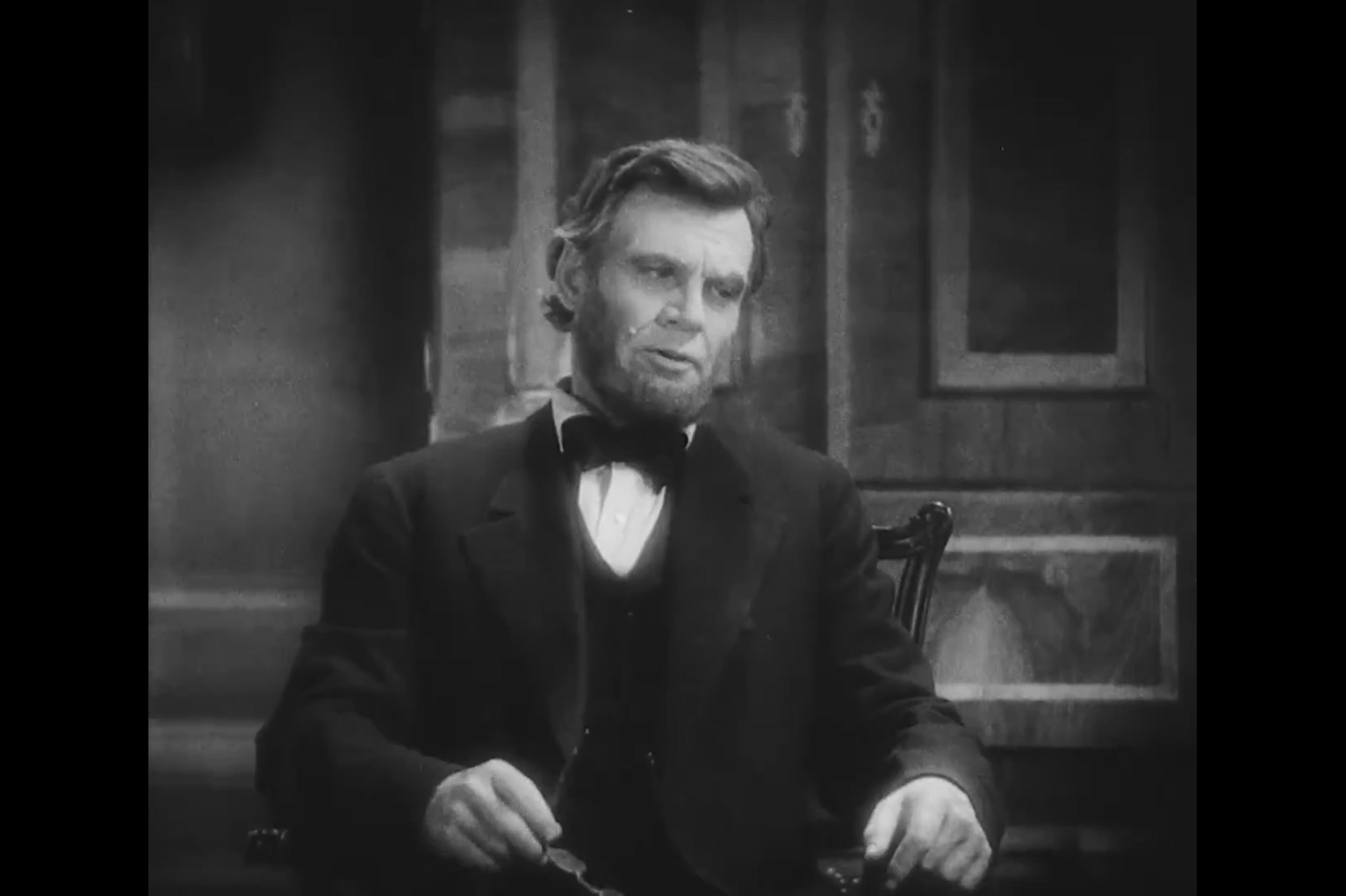
However, Medved and Dreyfuss’s attack simply comes across as mean-spirited — as is their entire book, come to think of it. While Abraham Lincoln hasn’t dated all that well, and is far from accurate as a nuanced history lesson, it’s not nearly the clunker these authors claim it to be. Abraham Lincoln is primarily a victim of its own era — the transition between silent films and talkies, a time when few directors were getting things completely “right”. In addition, the episodic nature of the screenplay doesn’t do the subject any favors, with far too much material covered in too short a time. Huston does a fine job as Lincoln:

… though I ultimately prefer Henry Fonda’s more introspective interpretation in John Ford’s superior Young Mr. Lincoln (1939).

Redeeming Qualities and Moments:

  • Some evidence of fine composition (by Griffith) and cinematography (by Karl Struss)

Must See?
No. Listed as a film with Historical significance in the back of Peary’s book.

Links: