Browsed by
Category: Original Reviews

Responses to Peary’s “must see” movie reviews, as well as my own “must see” movie reviews up to and after 1986 (when Peary’s book was published).

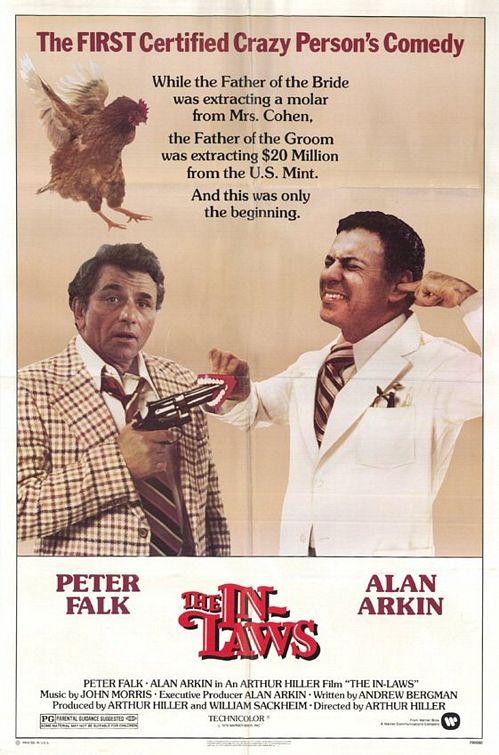
In-Laws, The (1979)

In-Laws, The (1979)

“The son is the acorn — you gotta look at the tree.”

Synopsis:
An unassuming New York dentist (Alan Arkin) finds his life uprooted when the father (Peter Falk) of the boy (Michael Lembeck) his daughter (Penny Peyser) is about to marry enlists his help in an undercover operation.

Genres, Themes, Actors, and Directors:

  • Alan Arkin Films
  • Comedy
  • Ed Begley Jr. Films
  • Living Nightmare
  • Peter Falk Films

Review:
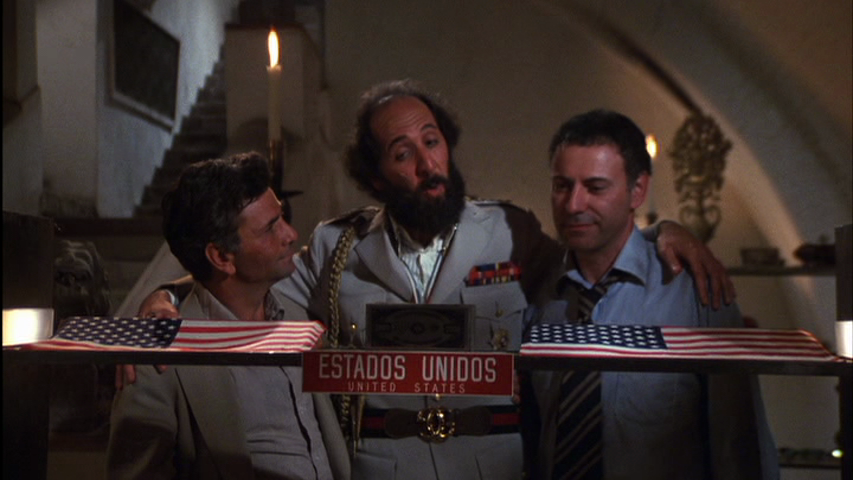
This hilariously gonzo comedy-adventure — directed by Arthur Hiller and based on a screenplay by Andrew Bergman (best known for scripting Blazing Saddles) — features Peter Falk and Alan Arkin as an unlikely, hysterically mismatched yet ultimately synergistic undercover duo. Both Falk and Arkin play on their strengths as (respectively) a suave operator and an indignantly befuddled everyman, brought together through their children’s upcoming nuptials, then taken on the wildest of adventures, eventually ending up on nebulously intimate terms with a crazed South American dictator (Richard Libertini). In some ways, the less said about this wildly serpentine cult favorite, the better — watch and enjoy!

Note: This film was remade in 2003 by Albert Brooks, though it’s widely acknowledged as the lesser of the two versions.

Redeeming Qualities and Moments:

  • Peter Falk as Vince Ricardo
  • Alan Arkin as Sheldon Kornpett
  • Richard Libertini as General Garcia
  • A frequently hilarious screenplay: “I’ll tell you, the benefits are fantastic. The trick is not to get killed; that’s really the key to the benefits program.”

Must See?
Yes, as a cult comedy favorite.

Categories

  • Cult Movie

Links:

Apprenticeship of Duddy Kravitz, The (1974)

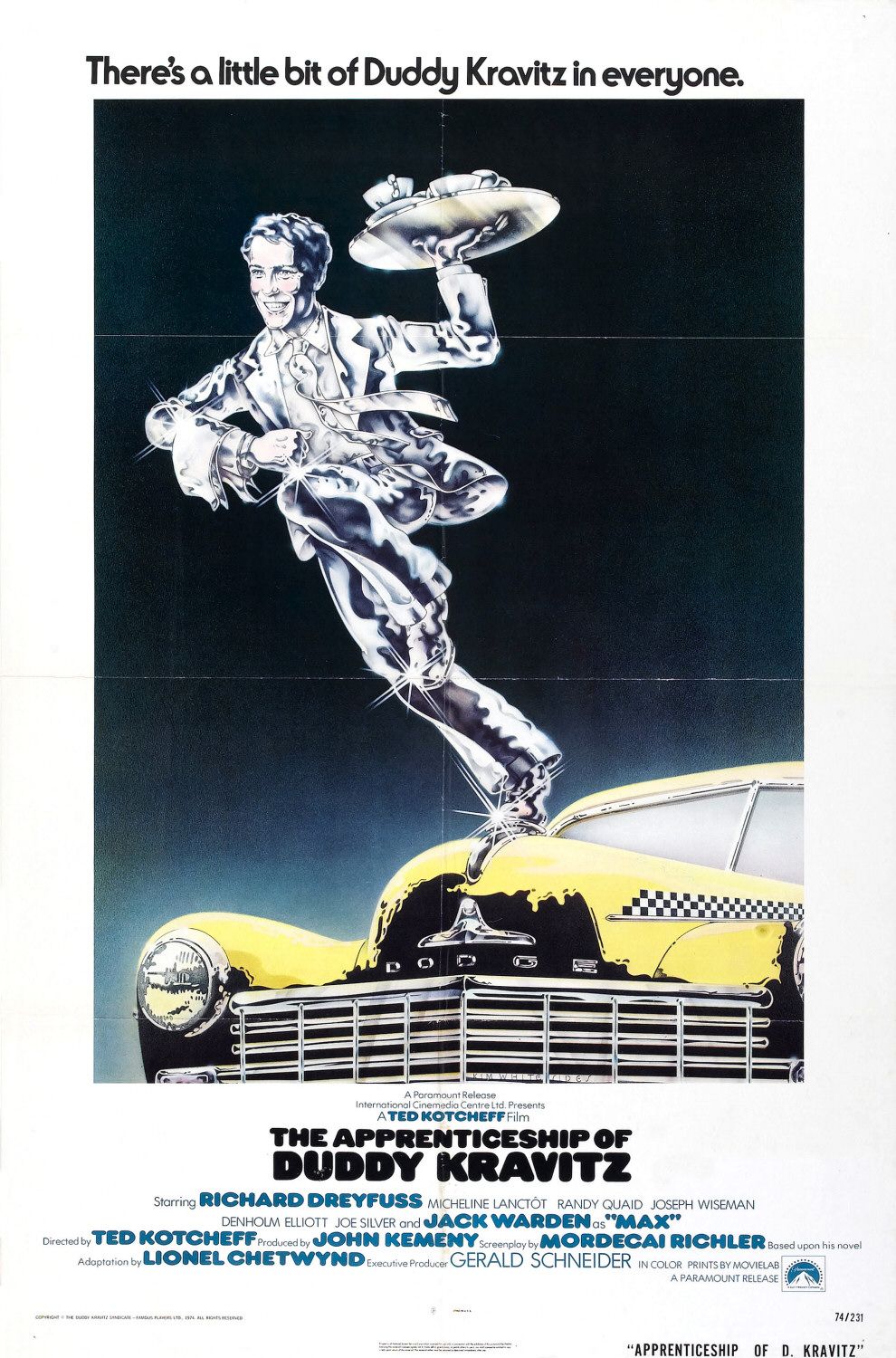
Apprenticeship of Duddy Kravitz, The (1974)

“A man without land is nobody.”

Synopsis:
An ambitious young man (Richard Dreyfuss) in post-WWII Montreal alienates his girlfriend (Micheline Lanctot) in his relentless pursuit to own a plot of land.

Genres, Themes, Actors, and Directors:

  • Coming of Age
  • Denholm Elliott Films
  • Get Rich Quick
  • Randy Quaid Films
  • Richard Dreyfuss Films

Review:
Canadian director Ted Kotcheff‘s adaptation of Mordechai Richler‘s novel remains an engrossing coming-of-age tale featuring a decidedly unlikable yet oddly sympathetic title character. Dreyfuss couldn’t have been better cast (who else comes to mind when thinking “obnoxiously brash male protagonist”?), and he brings appropriately relentless energy to his role as a young man so hell-bent on achieving property ownership that he ultimately sacrifices elements of his humanity. Richler’s screenplay makes it painfully clear how much suffering can result from differential treatment of siblings — which is why we understand what drives Duddy: when your older brother is the unambiguous “golden child”, receiving a disproportionate share of praise and financial support, what else can a young man do but find a way to make his own mark, in any way possible?

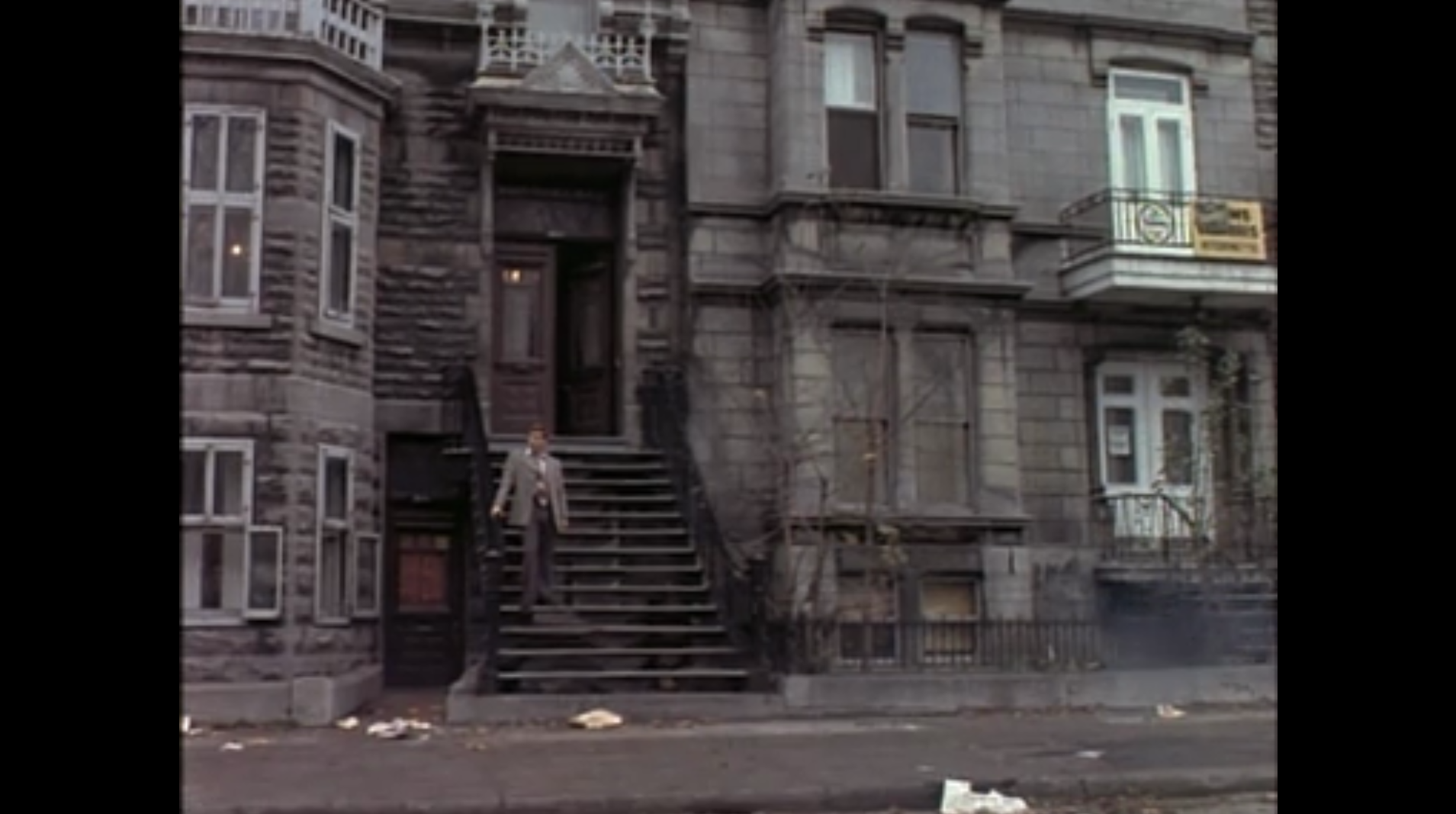
In addition to Dreyfuss’s memorable lead performance (that cackling laugh!), the film makes excellent use of authentic locales (it possesses a strong sense of time and place) and has an interesting score (by Stanley Myers). Various supporting characters and sub-plots are also strongly delineated — from Denholm Elliott’s portrayal as an alcoholic director hired by Duddy to film bar mitzvahs (the documentary-within-the-movie is truly inspired), to Randy Quaid as Duddy’s mentally slow buddy, to deep-voiced Micheline Lanctot as Duddy’s long-suffering (to a point) girlfriend. Despite its challenging subject matter and some decidedly dark narrative turns, this one is definitely worth a one-time look.

Redeeming Qualities and Moments:

  • Richard Dreyfuss as Duddy
  • Excellent use of authentic Montreal locales

Must See?
Yes, as an unusual and finely crafted character study. Listed as a Personal Recommendation in the back of Peary’s book.

Categories

  • Noteworthy Performance(s)

Links:

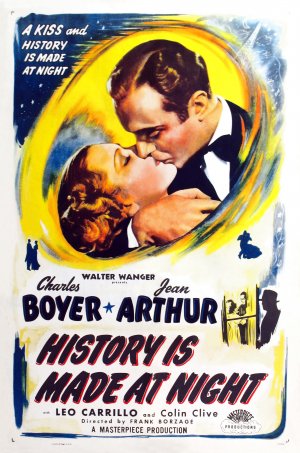
History is Made At Night (1937)

History is Made At Night (1937)

“I didn’t know then — he hates everybody, mostly himself.”

Synopsis:
A sociopathically controlling millionaire (Colin Clive) refuses to allow his wife (Jean Arthur) a divorce, attempting to blackmail her by putting her in a compromising situation with her chauffeur (Ivan Lebedeff). Ironically, this set-up leads her to meet the love of her life — a chivalrous French headwaiter (Charles Boyer) who intervenes and whisks her away to his restaurant, where he wines and dines her with assistance from his loyal chef-buddy, Cesare (Leo Carrillo). However, Clive’s jealous clutches remain so strong that Arthur is unable to get away, and she and Boyer are temporarily separated — though Boyer will do whatever he can to find her again.

Genres, Themes, Actors, and Directors:

  • Charles Boyer Films
  • Colin Clive Films
  • Frank Borzage Films
  • Jealousy
  • Jean Arthur Films
  • Star-Crossed Lovers

Review:
Frank Borzage directed this unabashedly romantic tale of star-crossed lovers determined to reunite. Arthur has never been lovelier (her performance is typically stellar), and Boyer taps into his most appealing romantic-lead strengths as her ardent pursuer. Less impressive — though arguably well-cast — is Colin Clive (in his final role before dying from tuberculosis at just 37 years old) as Arthur’s husband-from-hell. Clive’s “Bruce Vail” is a stereotypically vile baddie; while we certainly believe he’s vindictive enough to stop at nothing to prevent his wife from leaving him, a bit more nuance would have strengthened his characterization. Also distracting is the comic-relief role played by Leo Carrillo as Boyer’s conveniently loyal buddy — an Italian with a Chico Marx accent (working in a top French restaurant!?) who literally drops everything time and again to help out his friend; a running joke about his famous lobster dish and salad feels stale from the get-go. With that said, this remains classic Hollywood soaper material, served up with visual panache by director Frank Borzage (channeling Ernst Lubitsch) and cinematographer David Abel. It possesses a small but solid fan base, who value Boyer and Arthur’s romantic chemistry and Clive’s unrepentant villainy. Despite its flaws, this one’s worth a one-time look if you can catch it.

Note: Reading a bit more about Borzage’s background, I found myself wondering if Carrillo’s accent was an homage of some kind to Borzage’s Italian-speaking stonemason dad? I was also glad to finally be informed that his name is pronounced “bor-ZAY-gee” rather than rhyming with “corsage”.

Redeeming Qualities and Moments:

  • Jean Arthur as Irene Vail
  • Charles Boyer as Paul Dumond
  • Fine cinematography and direction

Must See?
No, though it’s certainly recommended.

Links:

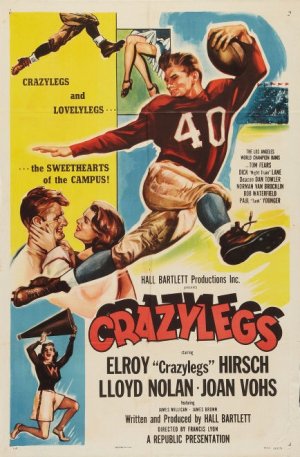
CrazyLegs / Zero Hour (1953)

CrazyLegs / Zero Hour (1953)

“You forget about everything out on that field, don’t you?”

Synopsis:
Football legend Elroy “Crazylegs” Hirsch stars as himself in this overview of his fabled athletic career.

Genres, Themes, Actors, and Directors:

  • Biopics
  • Football

Review:
It’s difficult to understand why Peary includes this tepid, poorly scripted biopic of football star Elroy Hirsch — a.k.a. “Crazylegs” — in his GFTFF, given that it suffers from a serious lack of genuine dramatic tension, and will only be of interest to diehard sports fans or those specifically interested in Hirsch’s story. For what it’s worth, Hirsch — who has a decent on-screen presence — actually seems like a nice enough guy: he’s hardworking, devoted to his all-American “girl” (Joan Vohs) and loyal parents (Norman Field and Louise Lorimer), and intensely committed to both his country (he voluntarily enlisted as a Marine) and to sportsmanship in general. But niceness and a strong work ethic don’t necessarily make for a particularly interesting protagonist or storyline.

While he’s best known for his stellar work as a running back and receiver for the L.A. Rams and Chicago Rockets, Hirsch was also the only University of Wisconsin student to win a Varsity letter in 4 major sports in one year. To that end, the thesis of the film seems to be summed up in the following quote:

Sports aren’t just a sideline; it’s a way of life, competing against the very best. There’s a special way you feel about things — you can’t buy it, you can’t explain it to anybody else; you have to live it.

It’s unfortunate that such an intriguing life perspective — ripe for dramatic exploration — is handled so dully. Don’t bother seeking this one out unless you’re a true football fan (in which case you’ll likely appreciate all the vintage footage of actual games).

Redeeming Qualities and Moments:

  • Vintage footage of Hirsch on the field

Must See?
No; this one will only be of interest to fans of football history.

Links:

Night Monster (1942)

Night Monster (1942)

“All matter is really cosmic substance in vibration.”

Synopsis:
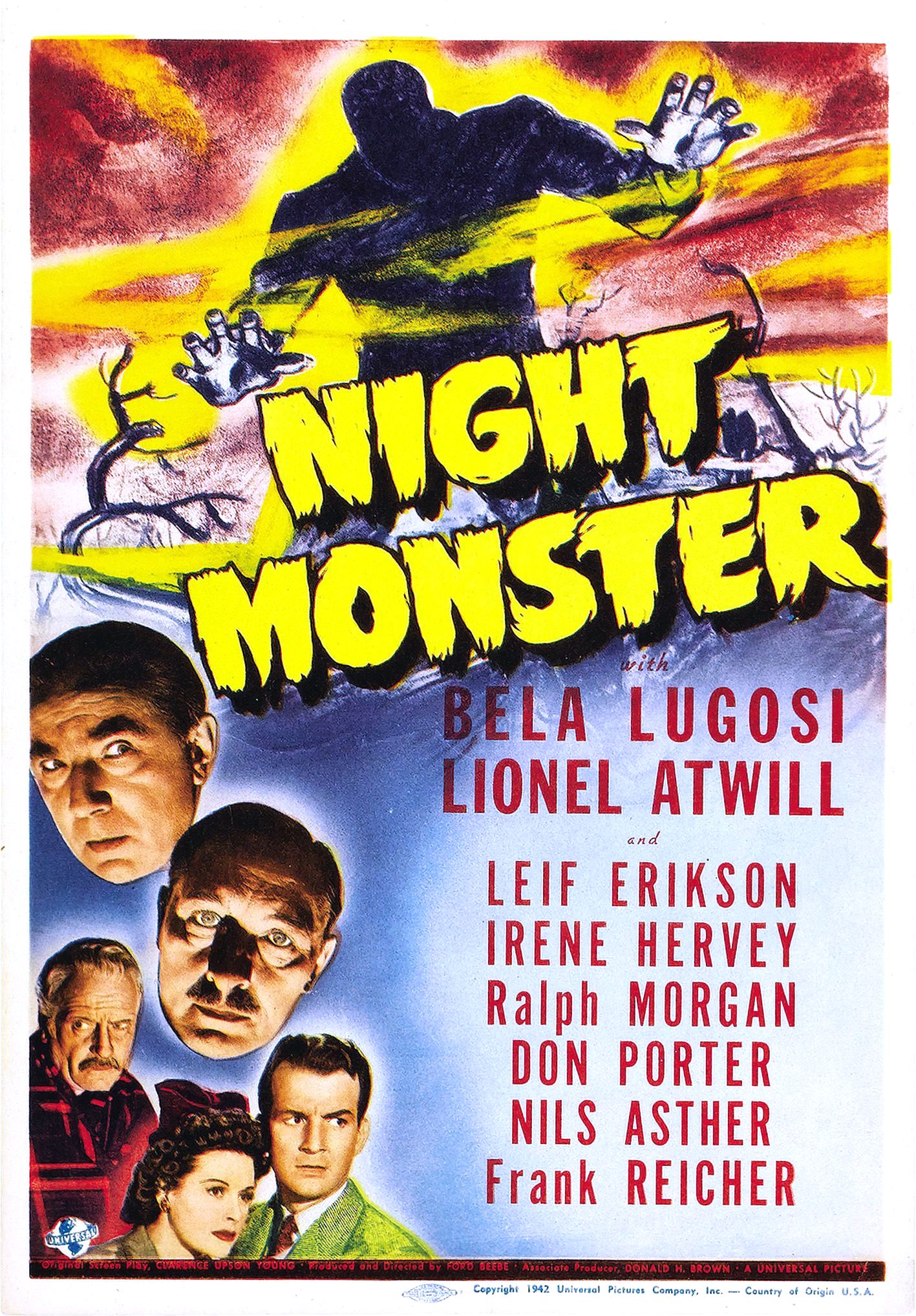
A reclusive cripple (Ralph Morgan) with a seemingly insane daughter (Fay Helm), a lurking butler (Bela Lugosi), a skittish maid (Janet Shaw), and a menacing chauffeur (Leif Erickson) invites a diverse group of guests to his decaying mansion — including a mystic (Nils Asther), a psychiatrist (Irene Hervey) hoping to help Helm, two doctors (Frank Reicher and Francis Pierlot) who may or may not have played a role in botching Morgan’s recovery from his disabling accident, and a young crime novelist (Don Porter) intent on solving the series of murders that are shortly played out.

Genres, Themes, Actors, and Directors:

  • Bela Lugusi Films
  • Lionel Atwill Films
  • Murder Mystery
  • Old Dark House

Review:
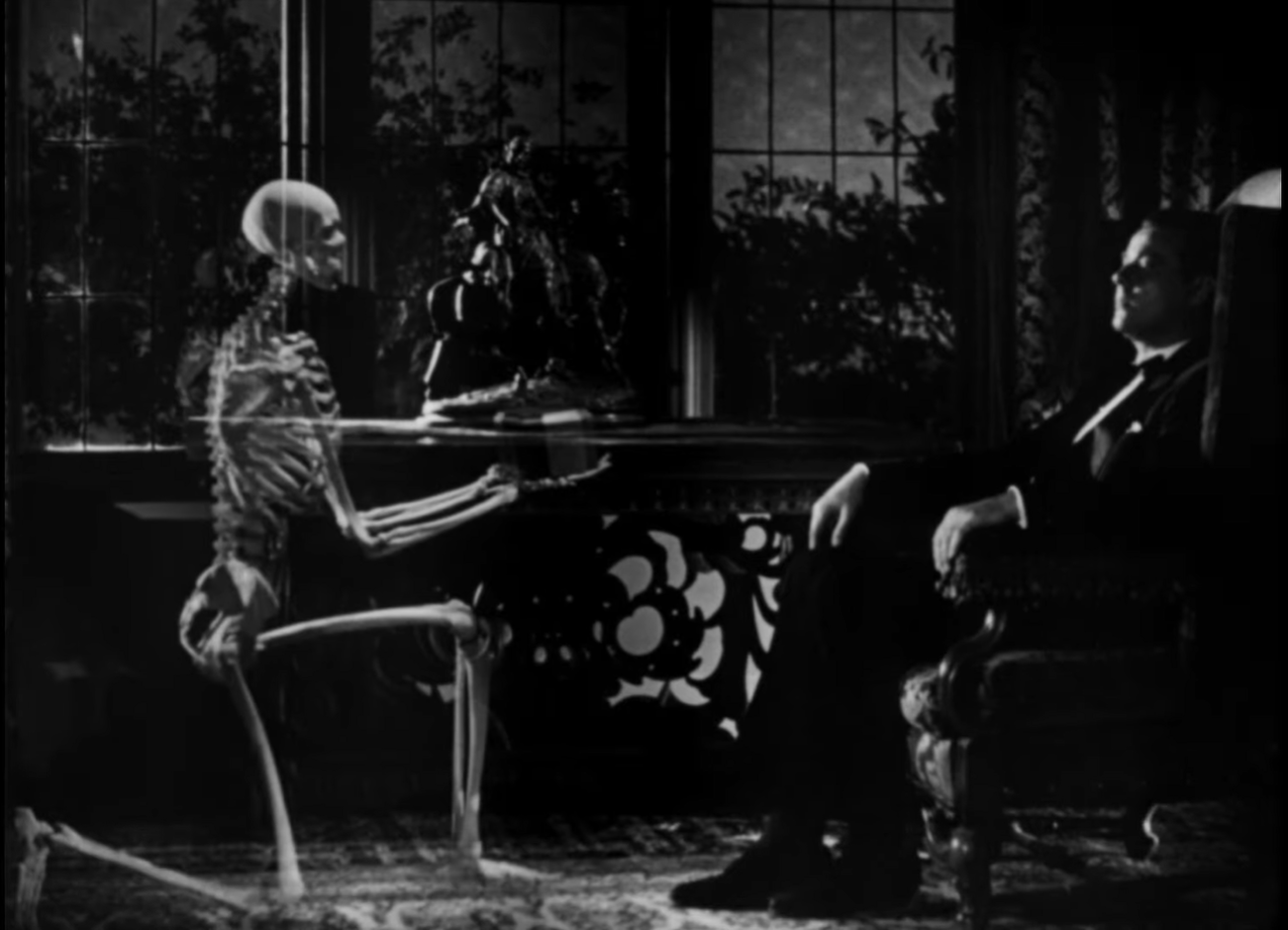
While this “old dark house” thriller (directed by Hollywood workhorse Ford Beebe of Flash Gordon fame) will clearly be of most interest to Bela Lugosi fans, they’ll quickly find that his role is peripheral at best. Fortunately, the storyline — though predictably convoluted, and overpopulated by too many characters — is engaging while it lasts; of particular interest is the sequence in which Asther works his creepy mumbo-jumbo (“There are certain details in the process that we are not allowed to explain to the uninitiated.”), and Atwill’s nicely handled “big reveal” scene. Not must-see viewing, but not a total snooze, either.

Redeeming Qualities and Moments:

  • Atmospheric cinematography (by Charles Van Enger)
  • Some humorously corny dialogue:

    “How is it dames always know what’s on a guy’s mind before he knows himself?”

Must See?
No; this one is only must-see for diehard Lugosi fans.

Links:

Three Strangers (1946)

Three Strangers (1946)

“We’re three strangers — that’s the point.”

Synopsis:
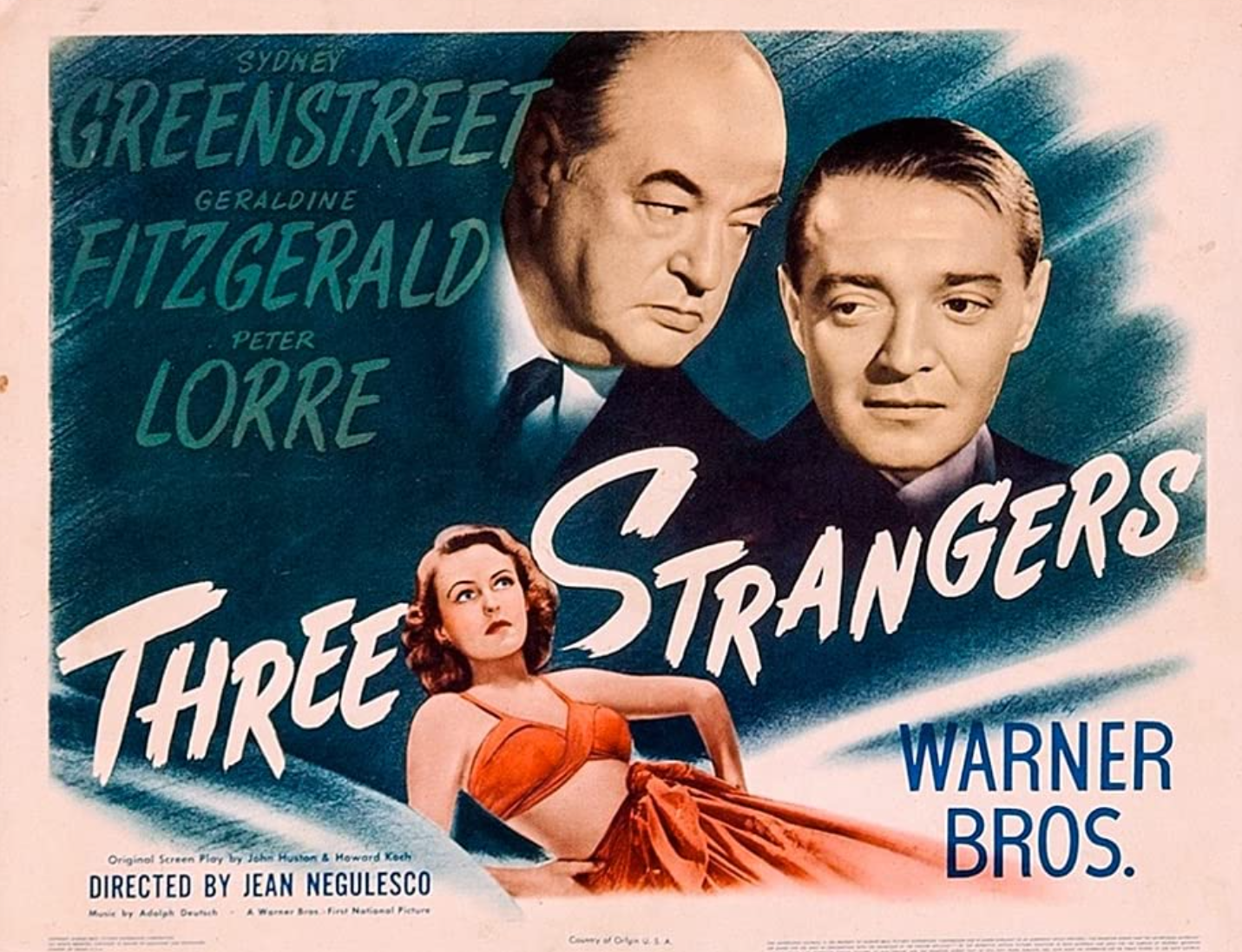
On Chinese New Year, three strangers — a socially-aspiring attorney (Sydney Greenstreet), the wealthy wife (Geraldine Fitzgerald) of a philanderer (Alan Napier), and a petty thief (Peter Lorre) — share in the outcome of a lottery ticket after praying to a goddess of fortune.

Genres, Themes, Actors, and Directors:

  • Geraldine Fitzgerald Films
  • Jean Negulesco Films
  • John Huston Films
  • Peter Lorre Films
  • Sydney Greenstreet Films

Review:
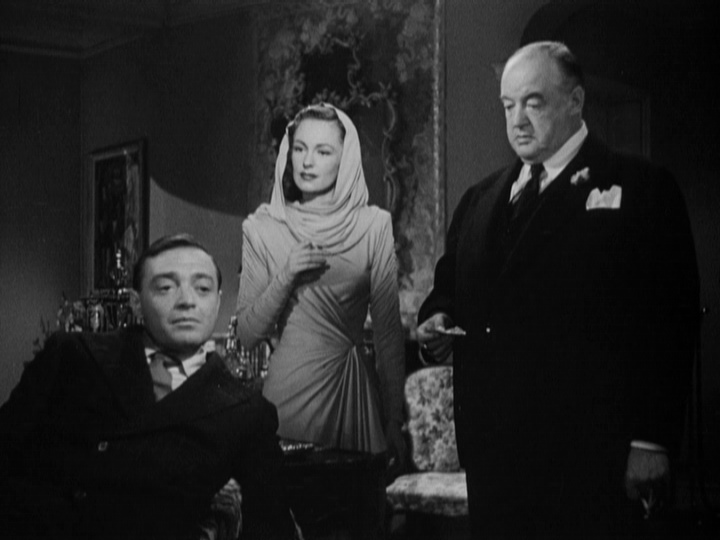
Jean Negulesco directed this atmospheric, fast-paced thriller, based on a script by John Huston and Howard Koch and featuring Maltese Falcon (1941) co-stars Sydney Greenstreet and Peter Lorre (as well as luminous Geraldine Fitzgerald, who seemed to specialize in playing women with a potentially loose screw). Huston and Koch’s tight screenplay intrigues and invites from the very beginning; we’re held captive throughout, wondering what will befall each of our hapless, all-too-human protagonists. There’s really not a false step taken here, with uniformly strong performances, atmospheric cinematography (by Arthur Edeson), and a satisfyingly ruthless screenplay, complete with potent character names (“Crystal Shackleford”, “Icey Crane”, etc.). Enjoy this one!

Note: Warner Brothers teamed Lorre and Greenstreet in one other title — 1944’s The Mask of Dimitrios, also directed by Negulesco and listed in Peary’s GFTFF.

Redeeming Qualities and Moments:

  • Excellent performances by the three leads
  • Fine cinematography by Arthur Edeson

Must See?
Yes, as a most enjoyable sleeper.

Categories

  • Good Show

Links:

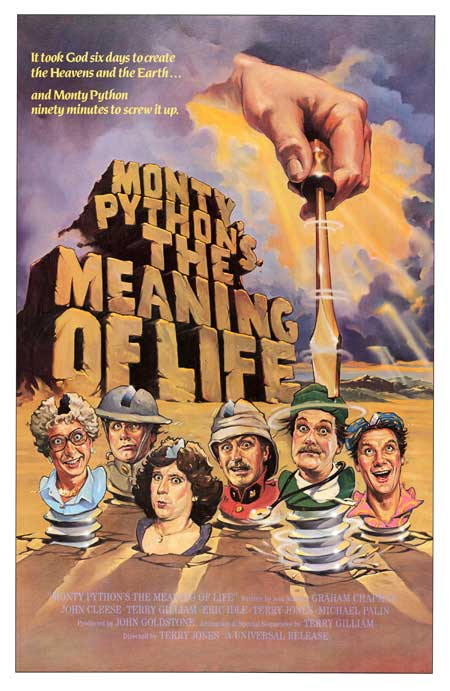
Monty Python’s The Meaning of Life (1983)

Monty Python’s The Meaning of Life (1983)

“Would you like to talk about the meaning of life, dear?”

Synopsis:
British comedy troupe Monty Python enacts a series of sketches about the absurdity of birth, child-rearing, and human existence.

Genres, Themes, Actors, and Directors:

  • Comedy
  • Episodic Films
  • Monty Python Films

Review:
The Trivia section on IMDb provides some revealing insights into the inception and production of this final Monty Python collaboration, openly acknowledged by the troupe as one of its lesser (and less coherent) efforts. Python claims to have refused to show Universal Studios a script, instead relying on collective inspiration and strategic ad-libbing to produce a series of loosely linked vignettes — some of which are (inevitably) more successful than others. It opens with a Terry Gilliam-directed live short entitled “The Crimson Permanent Assurance” — originally conceived as an homage to the cinematic convention of showing a short film before the feature presentation, though in typically surreal Python fashion, it re-emerges later as part of the overall episodic arc. Next we’re presented with a developmental overview of humanity, beginning with the Miracle of Birth and proceeding through Growth and Learning, Middle Age, Live Organ Transplants (!), the Autumn Years, and Death (with the Middle of the Film and the End of the Film — as well as an exploration of the Meaning of Life — thrown in for the sake of cohesion and philosophical rigor).

Sketches in Part I (The Miracle of Birth) and Part II (Growth and Learning) are the most memorable and inspired, and could easily be considered must-see viewing in their own right — indeed, all film fanatics should likely be familiar with the magical “machine that goes ping”, with what happens when one believes that “every sperm is sacred”, and with the fact that a classroom setting can turn even a live sex act into a humdrum, yawn-inducing mundanity. Unfortunately, most of the later vignettes are decidedly less amusing, though the infamous “Mr. Creosote” sketch — in which a morbidly obese man is enjoined to eat one more “wafer thin” treat before literally exploding — should likely be endured once, simply for its cultural relevance. (Quentin Tarantino apparently admitted to finding it beyond his own considerable gruesome-tolerance level — no small admission.) Ultimately, however, film fanatics unfamiliar with Monty Python’s cinematic genius should start with their cult masterpiece, Monty Python and the Holy Grail (1975) — and decide from there whether they’re interested in exploring more.

Redeeming Qualities and Moments:

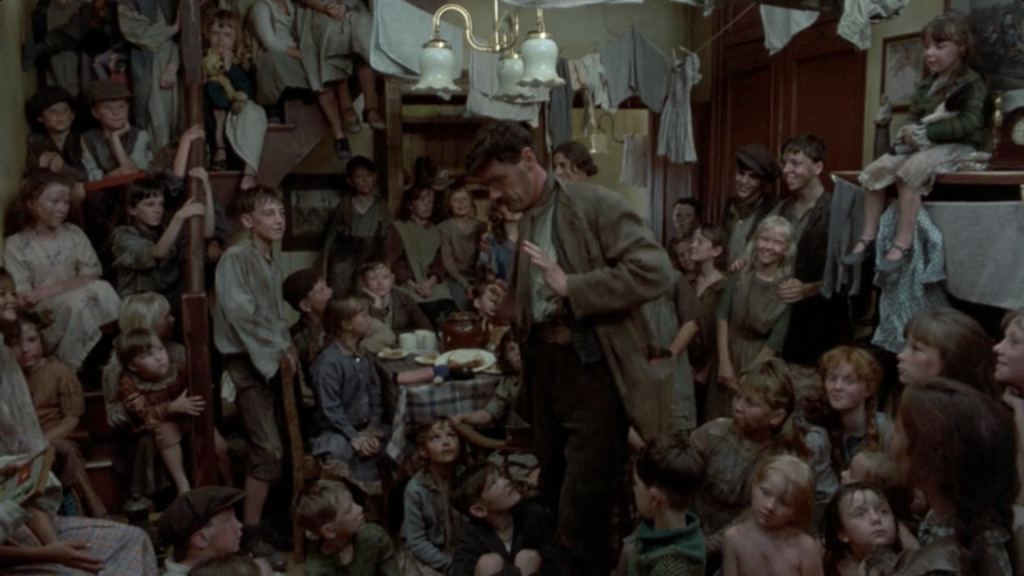
  • Several genuinely surreal, hilarious, and memorable sequences
Must See?
No, though it’s obviously must-see for Monty Python fans, and certainly worth a look by all film fanatics. Listed as a Cult Movie and a Personal Recommendation in the back of Peary’s book.

Links:

Life With Father (1947)

Life With Father (1947)

“Vinnie, we have four children — if we’re not married now, we never will be!”

Synopsis:
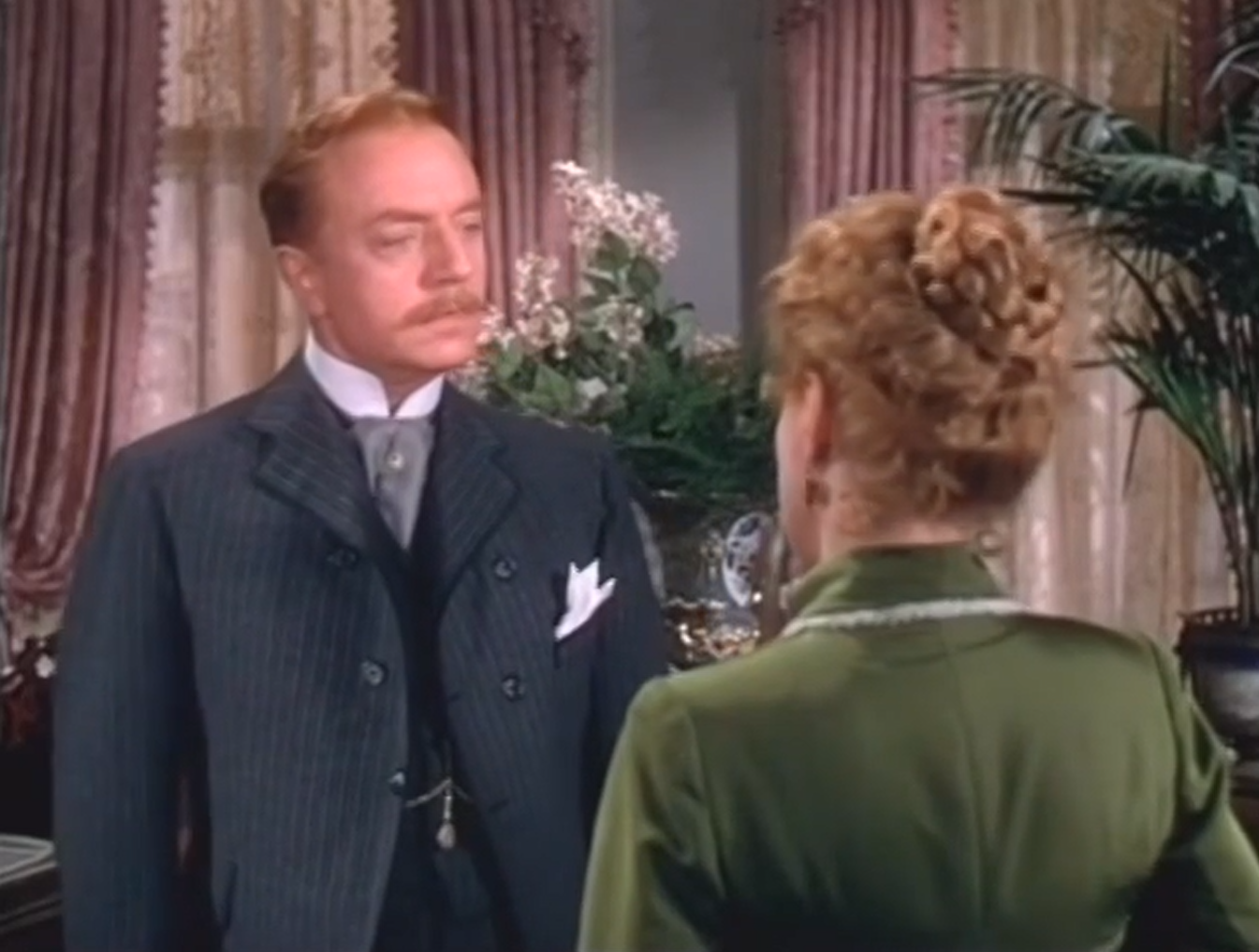
In 1880s New York, the domineering father (William Powell) and scatterbrained mother (Irene Dunne) of four red-headed boys (Jimmy Lydon, Derek Scott, Johnny Calkins, and Martin Milner) deal with a series of household challenges — including Lydon’s crush on a beautiful visiting teen (Elizabeth Taylor), and Dunne’s distress that Powell has never been baptized.

Genres, Themes, Actors, and Directors:

  • Edmund Gwenn Films
  • Elizabeth Taylor Films
  • Historical Drama
  • Irene Dunne Films
  • Michael Curtiz Films
  • Play Adaptation
  • William Powell Films
  • Zasu Pitts Films

Review:
Clarence Day Jr.‘s affectionate homage to his Victorian-era upbringing was originally published as an autobiographical memoir in 1935, then turned into the longest-running non-musical play on Broadway before gaining an even wider audience via this cinematic adaptation (directed by Michael Curtiz) and finally being made into a T.V. series in the mid-’50s. Clearly, Day’s recollections of his parents’ loving yet contentious pre-Suffrage marriage struck a nerve with audience members of the day, many of whom likely appreciated watching a domineering control freak effectively “managed” by his clever wife. To that end, Dunne’s ability to run her household the way she wants to — through strategic use of deception, feigned ignorance, and passive-aggressive techniques — is played for laughs, most notably in her extended ploy to trick her reluctant husband into getting baptized.

While dosing his anecdotal storyline with plenty of humor and nostalgia, Day makes it clear that one of his primary goals is to reveal the inanity (and futility) of his father’s dated patriarchal beliefs:

“Men have to run this world, and it’s not an easy job. It takes work and it takes thinking. A man has to reason things out. Now you take a woman, a woman doesn’t think at all. If a man thinks a certain thing is wrong, he shouldn’t do it. If he thinks it’s right, he should do it. You just have to let the women know that what you’re doing is for their good. Be firm.”

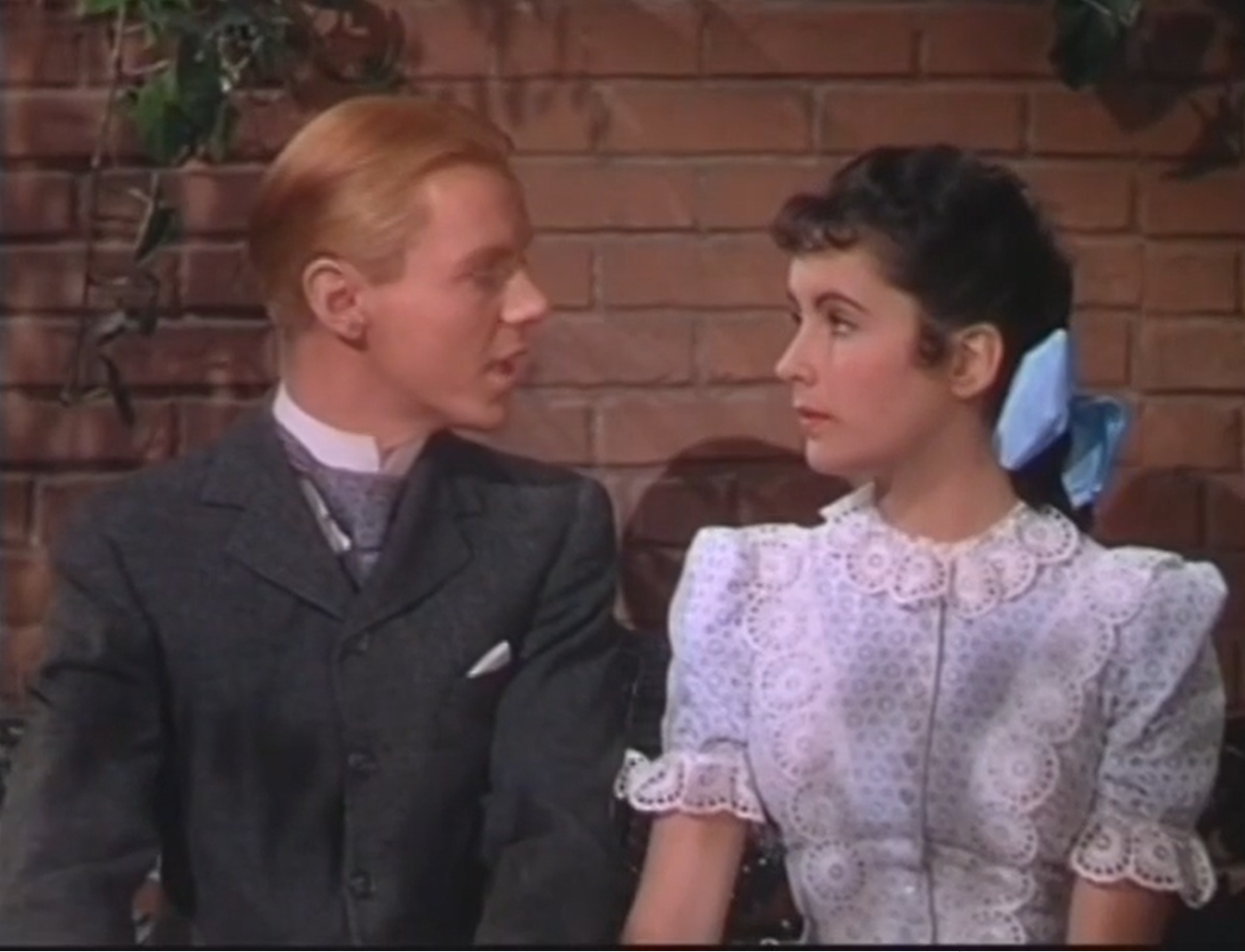
The fact that Day manages to salvage his father’s character while simultaneously skewering such nonsensical drivel reveals the secret to the film’s blockbuster success. Meanwhile, Michael Curtiz’s solid direction helps move the proceedings along smoothly. With that said, Life With Father will likely only hold minimal appeal for modern film fanatics, and remains of interest primarily to see Dunne and Powell’s typically solid lead performances. Fans of Elizabeth Taylor will also, of course, want to watch it for her:

Redeeming Qualities and Moments:

  • William Powell as “Father”
  • Irene Dunne as Vinnie

Must See?
No, though it’s worth a look simply for Dunne and Powell’s performances.

Links:

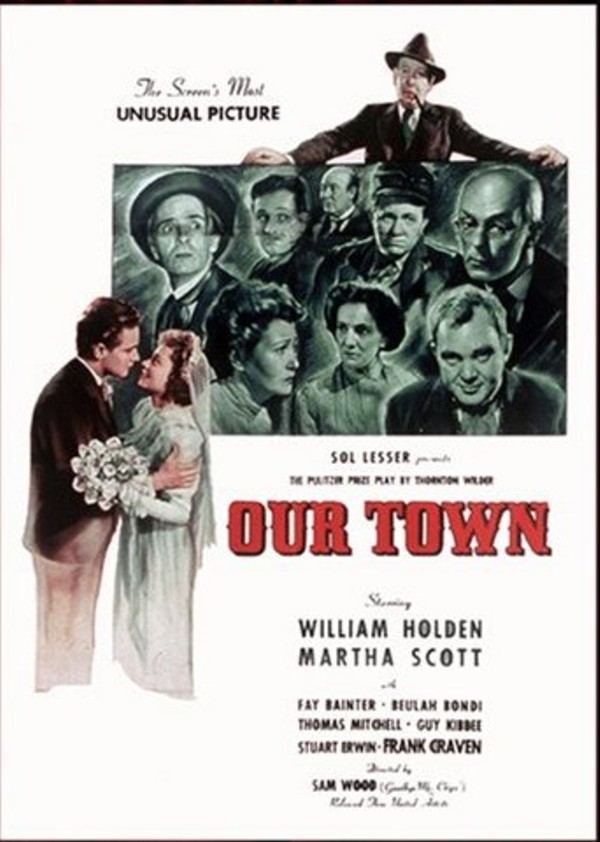
Our Town (1940)

Our Town (1940)

“The day wouldn’t come when I wouldn’t want to know everything about our town.”

Synopsis:
A narrator (Frank Craven) reflects on the lives, hopes, and dreams of citizens in the small American town of Grover’s Corners, focusing specifically on young sweethearts Emily (Martha Scott) and George (William Holden).

Genres:

  • Beulah Bondi Films
  • Fay Bainter Films
  • Flashback Films
  • Historical Drama
  • Play Adaptation
  • Sam Wood Films
  • Small Town America
  • Thomas Mitchell Films
  • William Holden Films

Review:
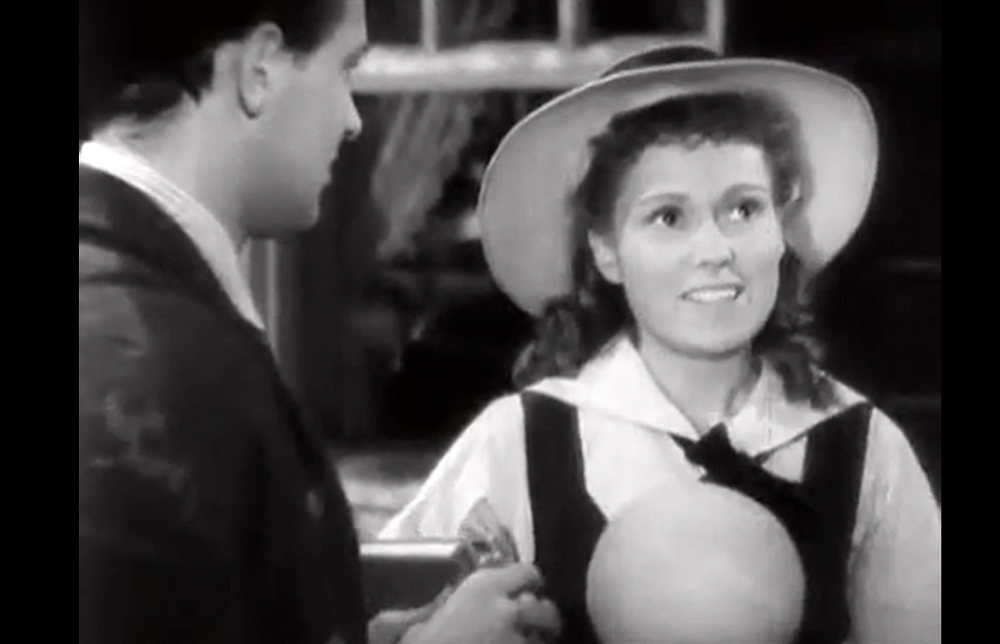
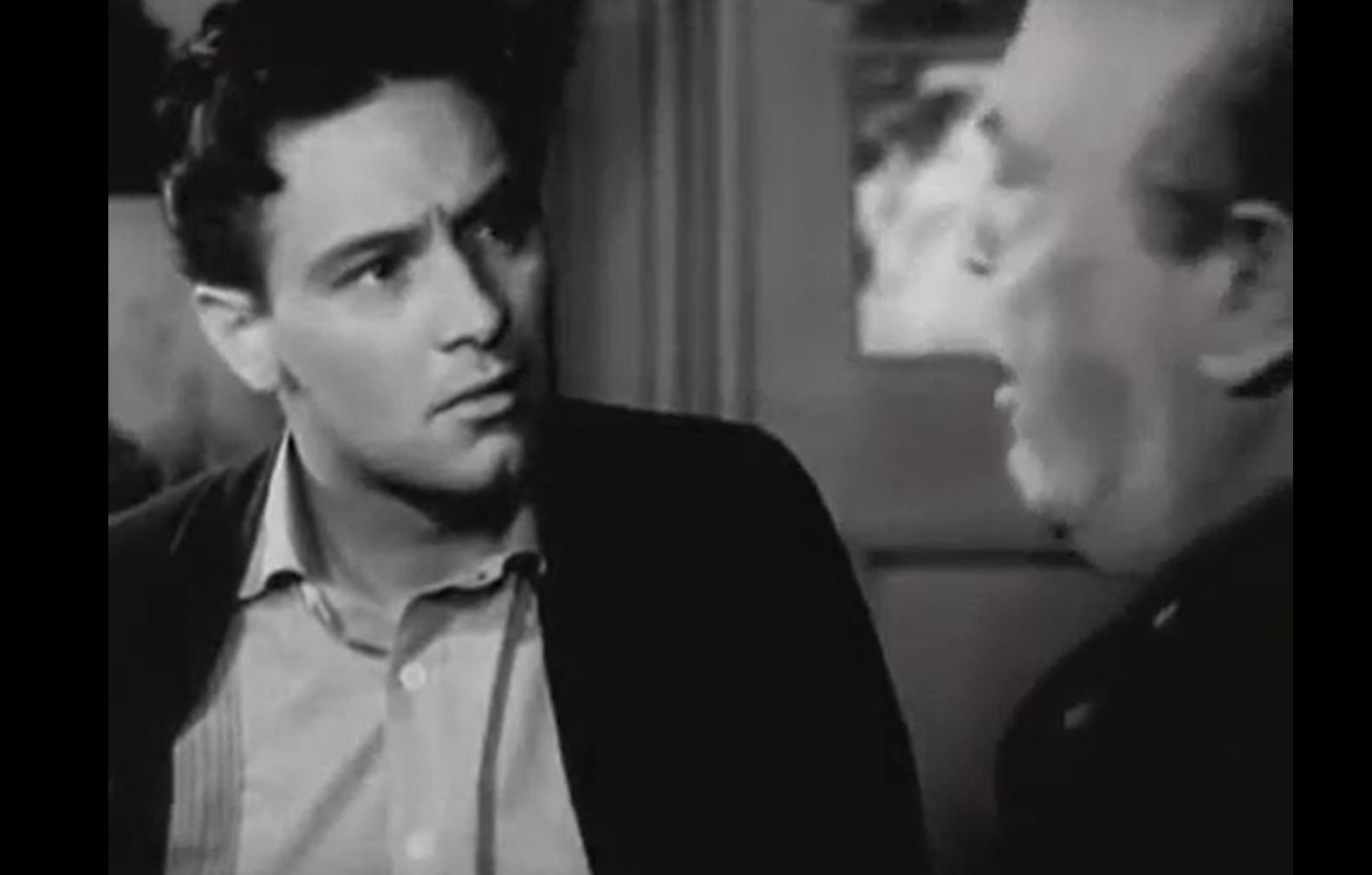
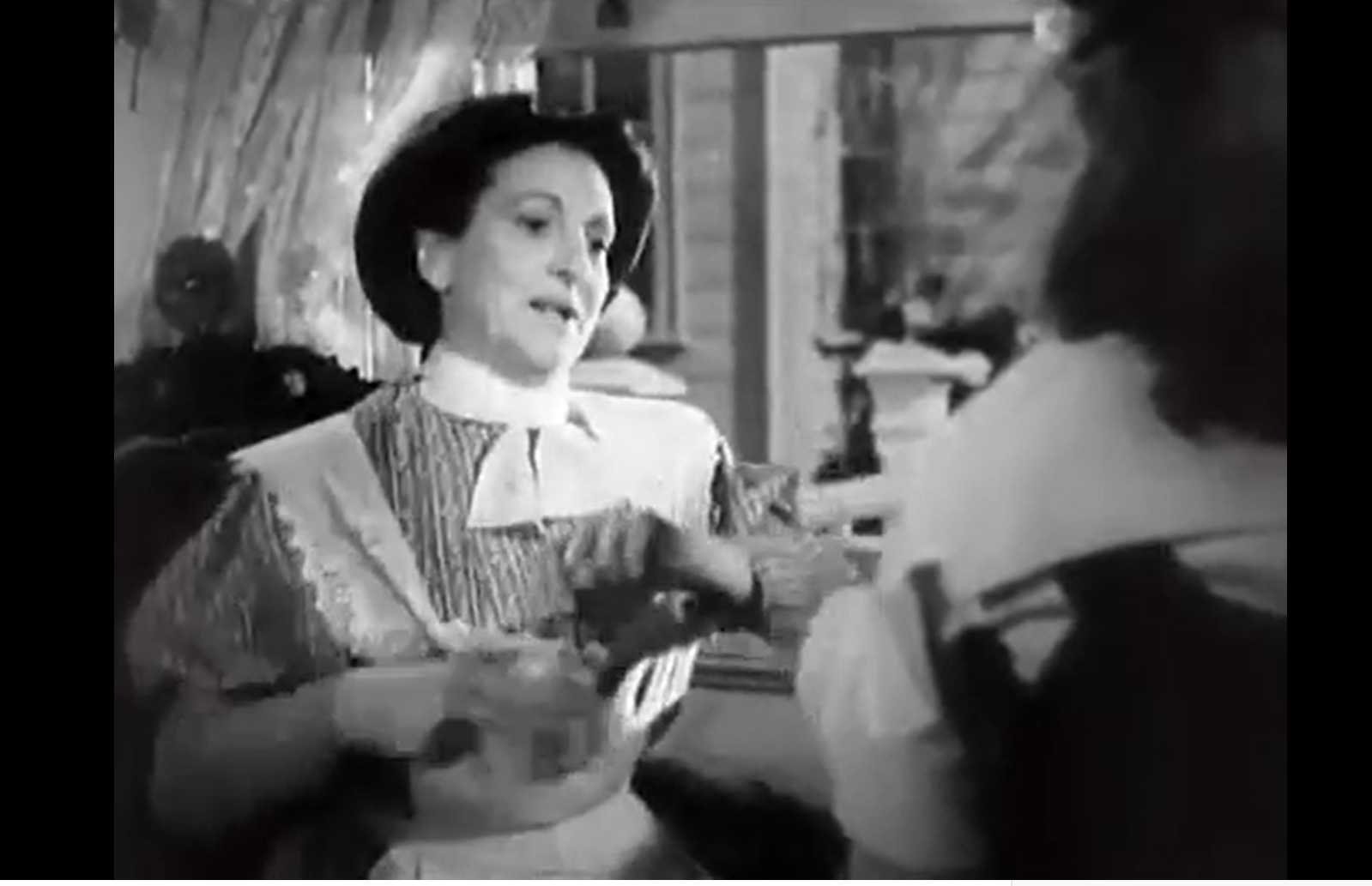
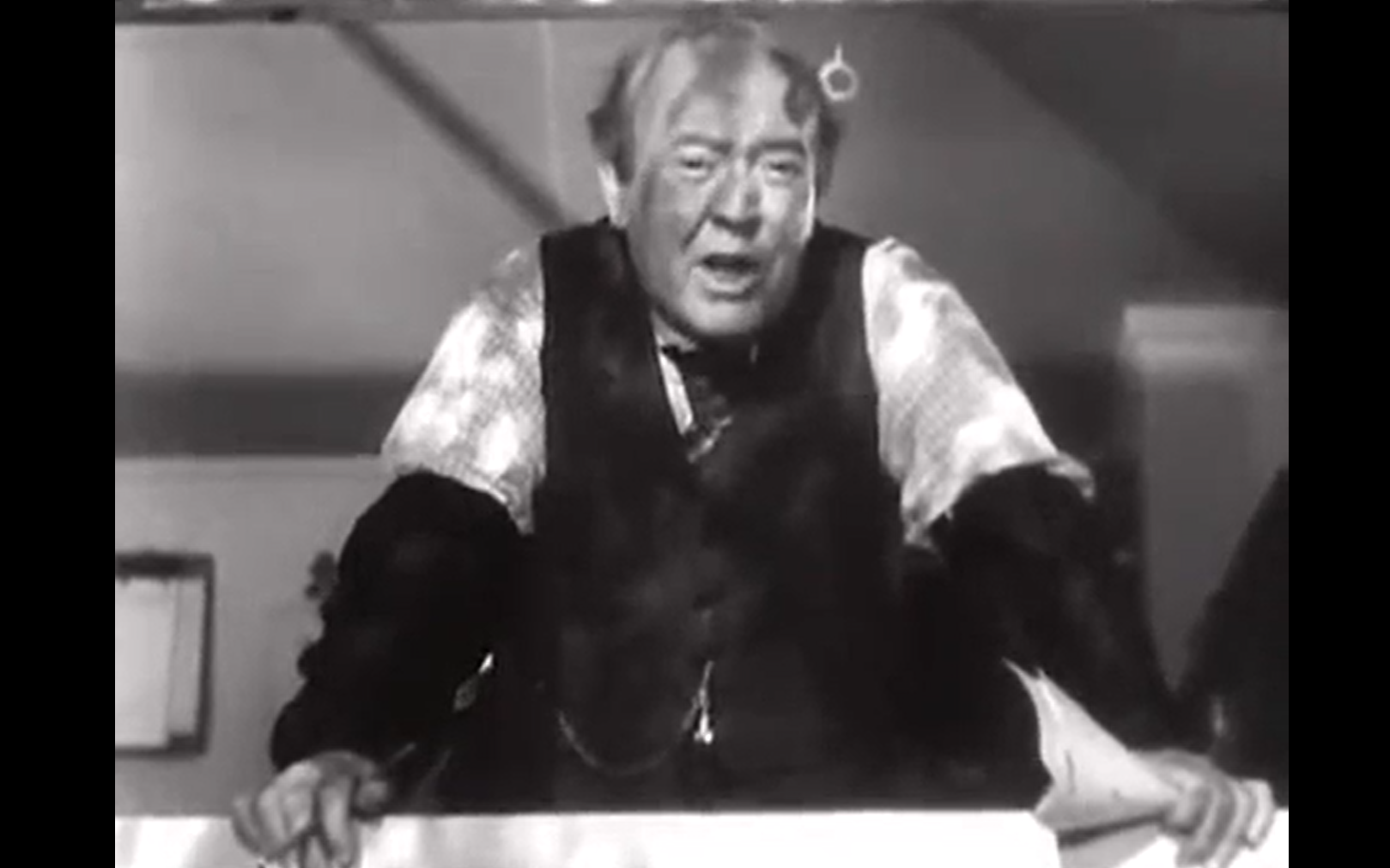
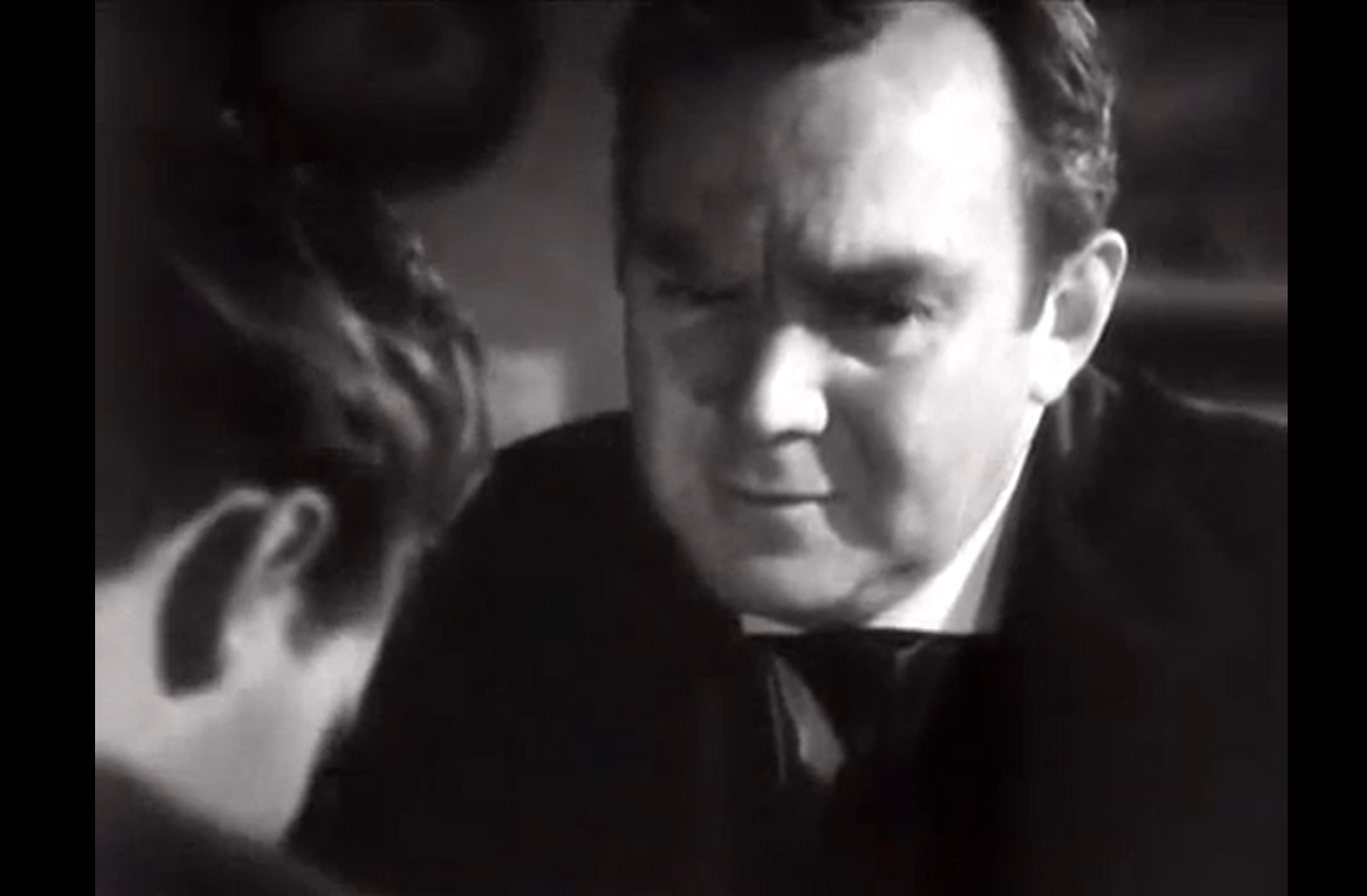
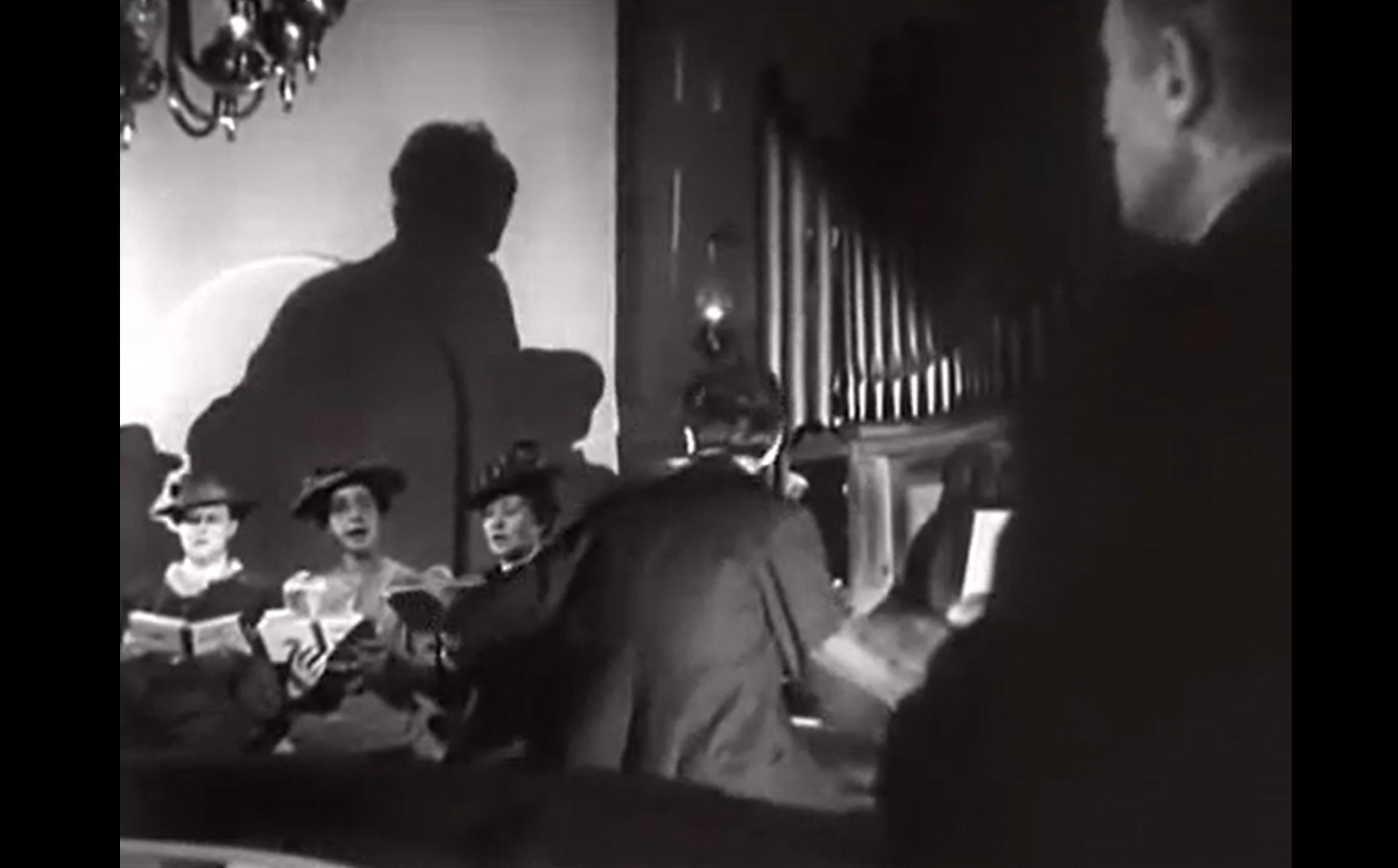
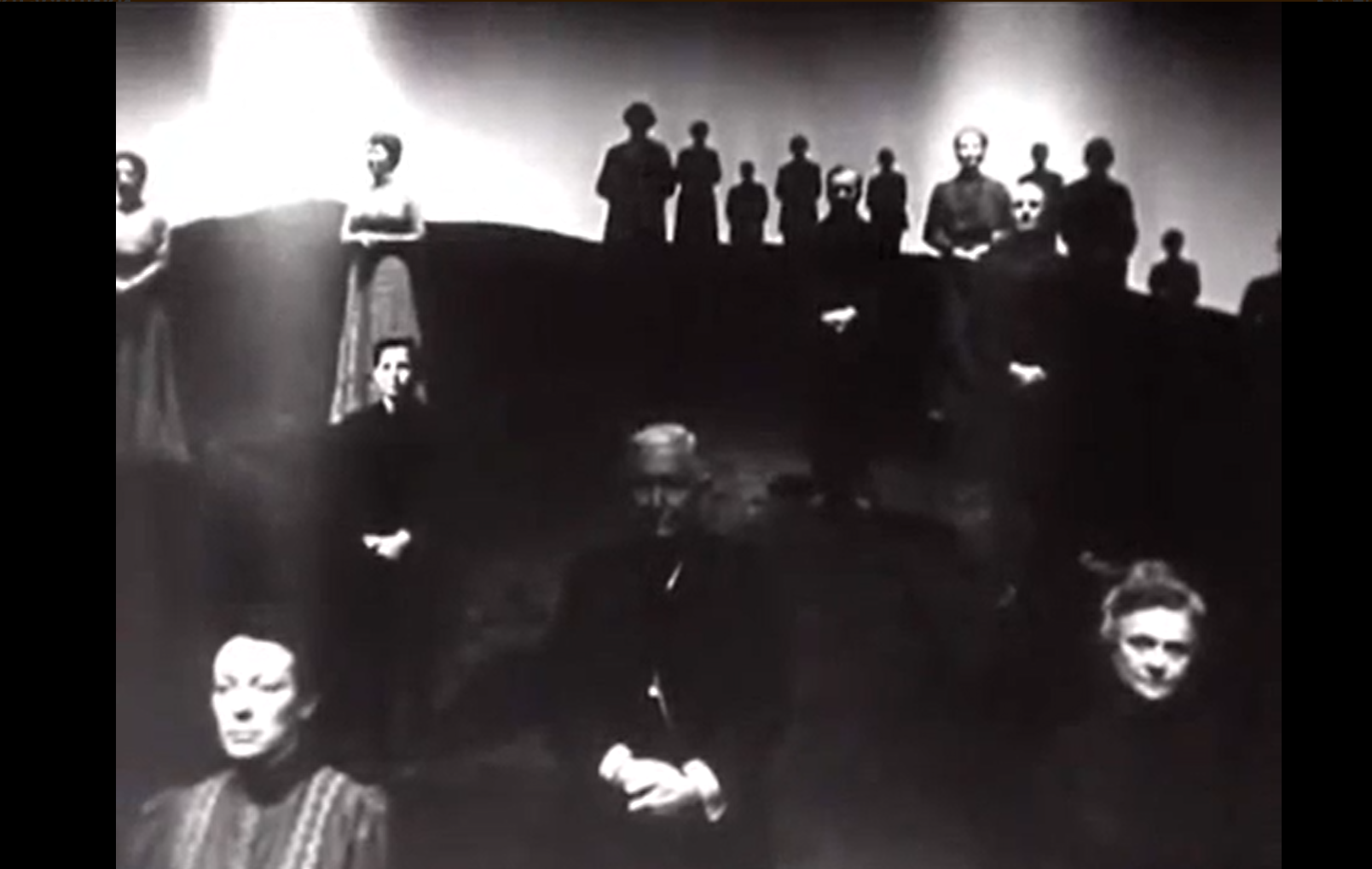
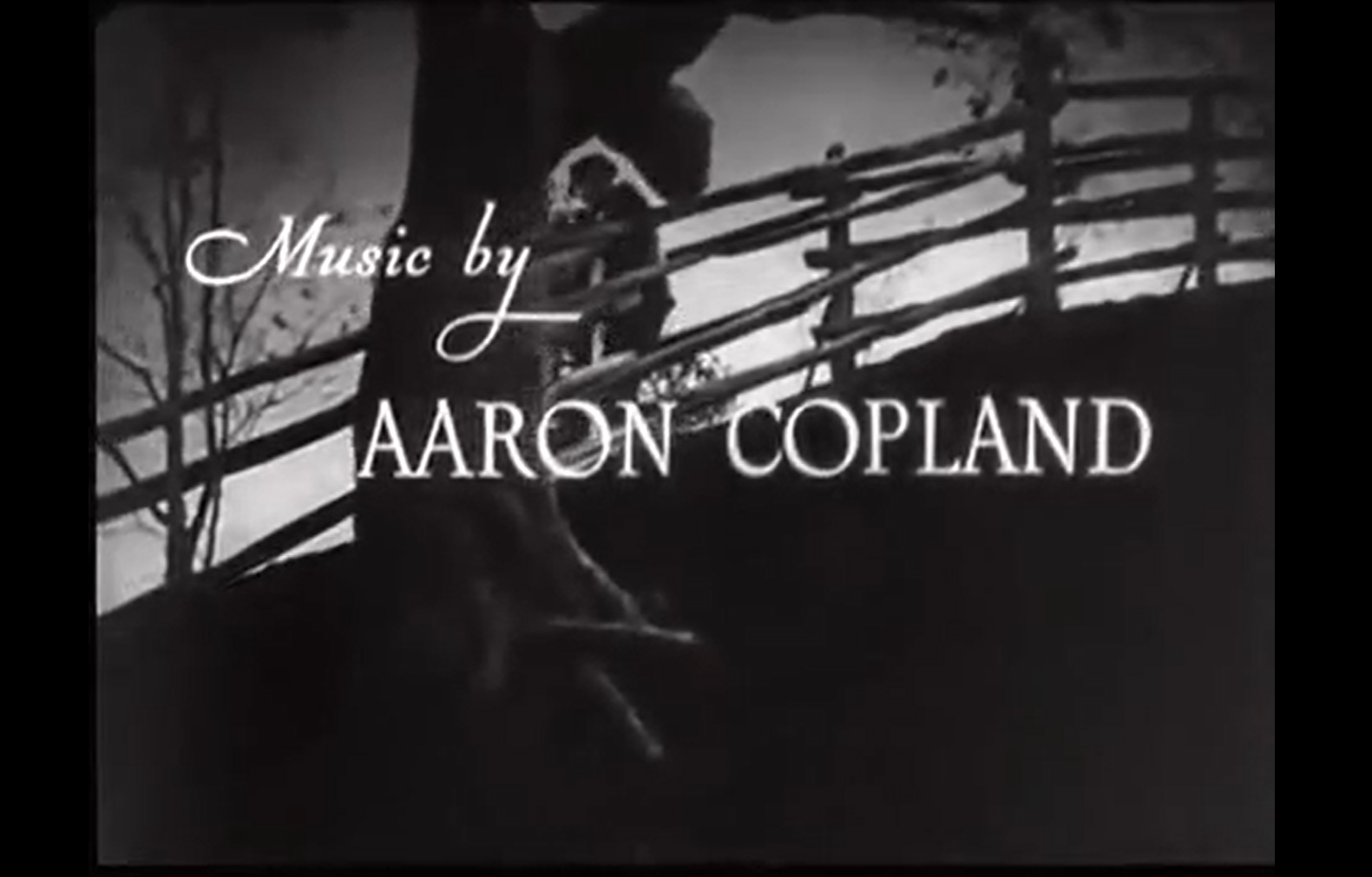
This early cinematic adaptation of Thornton Wilder’s Pulitzer Prize-winning 1938 play remains a solid telling of an oft-staged, deeply philosophical tale about the beauty and value of everyday life. With effectively stylized sets by William Cameron Menzies, atmospheric cinematography by Bert Glennon, a typically distinctive score by Aaron Copland, and confident direction by Sam Wood, the film successfully “opens up” Wilder’s play, maintaining some theatrical conventions while also making creative use of cinematic possibilities. Other than a substantial change to a major event in the third act (sanctioned by Wilder himself, who agreed the play’s original ending would be too downbeat for movie audiences), the film remains relatively faithful to its source material. Watch for fine performances by Oscar-nominated Martha Scott (in her cinematic debut):

a very young William Holden:

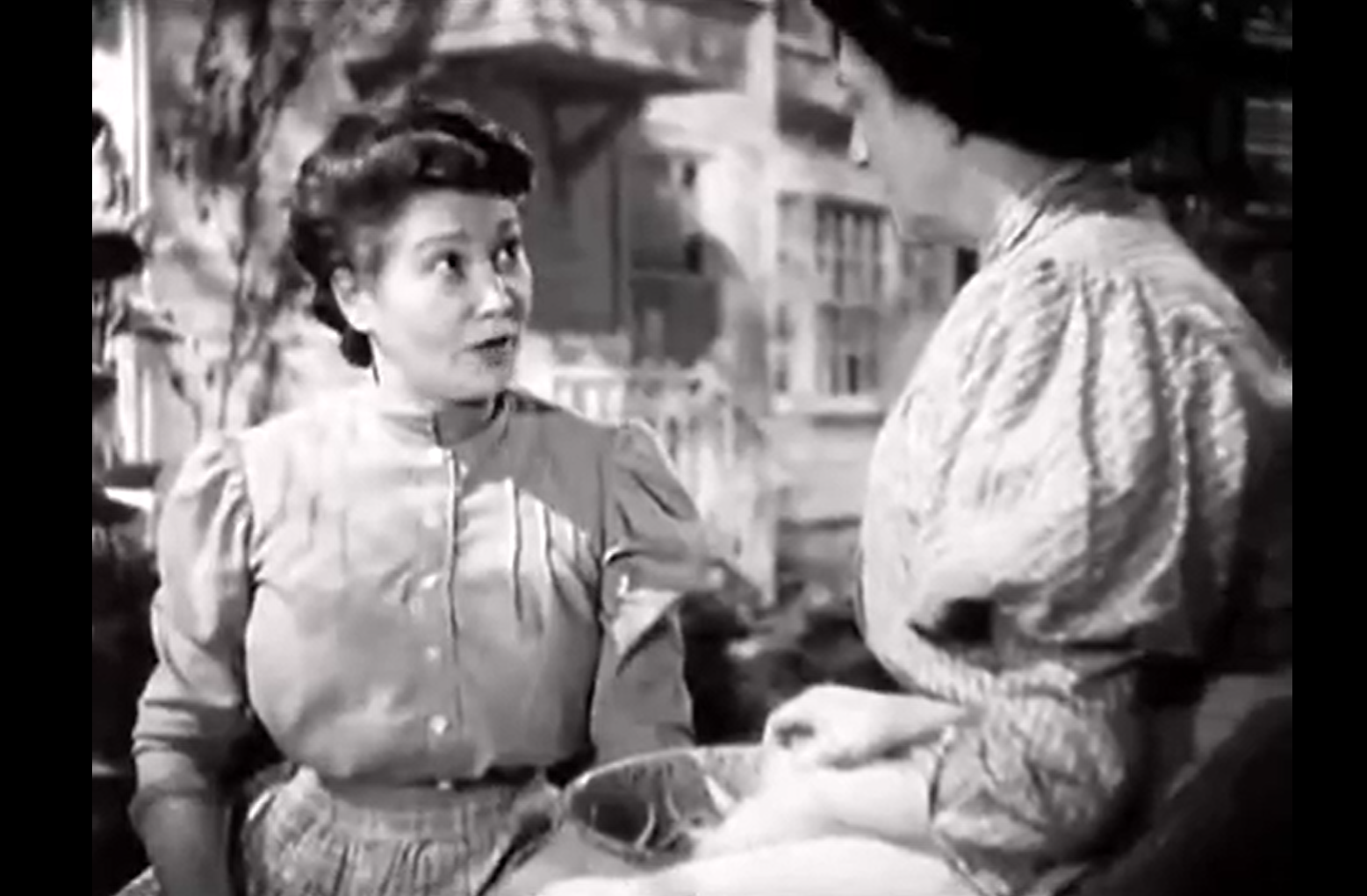
and stalwart character actors Fay Bainter, Beulah Bondi, Guy Kibbee, and Thomas Mitchell as Emily and George’s parents.


Note: Film fanatics may be curious to watch this title on a “double bill” with Wood’s 1942 melodrama Kings Row, which offers a less nostalgic, more cynical glimpse into small town life in early-20th-century America.

Redeeming Qualities and Moments:

  • Fine cinematography by Bert Glennon
  • William Cameron Menzies’ stylized sets
  • Aaron Copland’s memorable score

Must See?
Yes, as a solid adaptation of an American theatrical classic.

Categories

  • Good Show
  • Oscar Winner or Nominee

Links:

Has Anybody Seen My Gal? (1952)

Has Anybody Seen My Gal? (1952)

“At least when you’ve got money, you can afford to buy your own kind of misery.”

Synopsis:
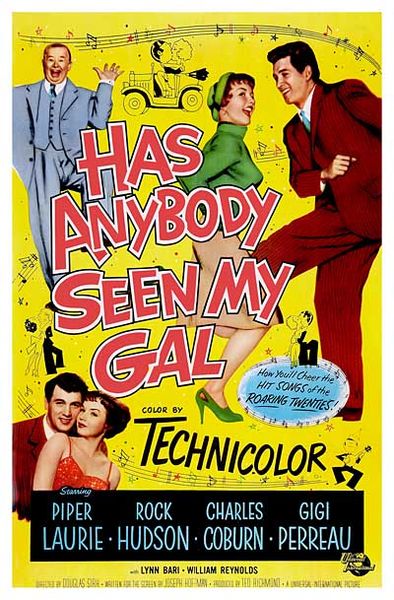
An eccentric millionaire (Charles Coburn) decides to secretly live with the descendants of a woman who once turned down his proposal of marriage, to determine whether they’re worthy of becoming his heirs. He quickly grows to like the Blaisdell family — including beautiful Millicent (Piper Laurie), her young sister Roberta (Gigi Perreau), her brother Howard (William Reynolds), her parents (Lynn Bari and Larry Gates), and her boyfriend (Rock Hudson) — but when he anonymously gifts the Blaisdells with $100,000, he learns that money is actually causing them more grief than true joy.

Genres:

  • Charles Coburn Films
  • Douglas Sirk Films
  • Inheritance
  • Millionaires
  • Mistaken or Hidden Identities
  • Musicals
  • Piper Laurie Films
  • Rock Hudson Films
  • Small Town America

Review:
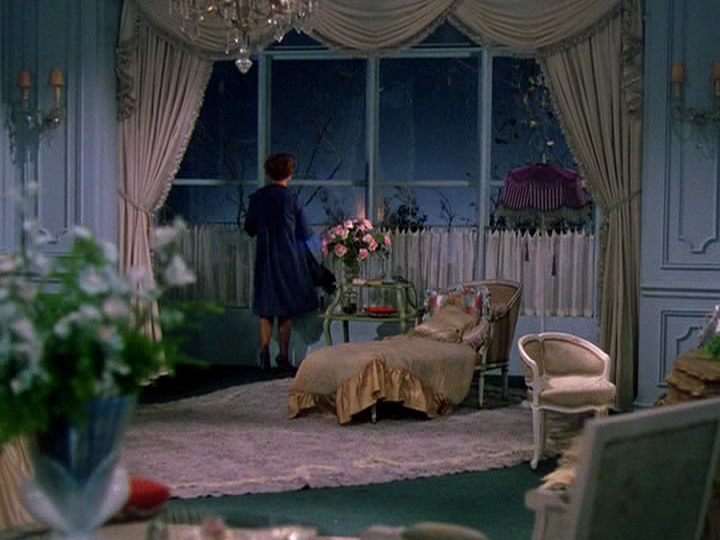
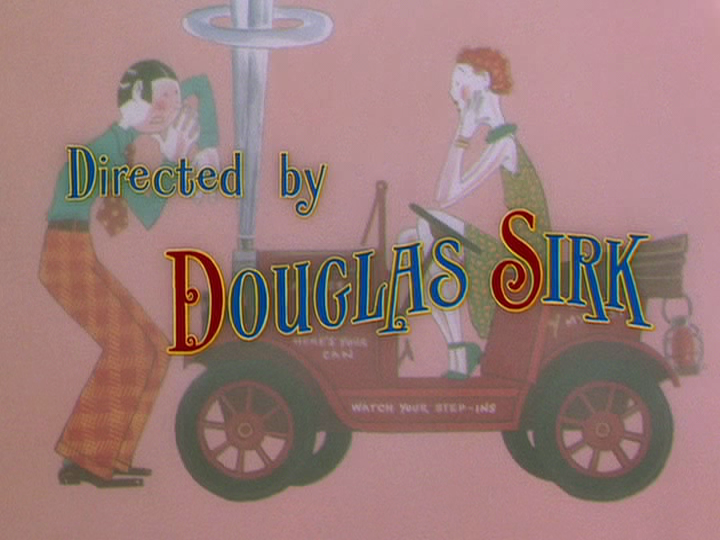
The premise of this frothy ’20s-era “musical” by Douglas Sirk is preposterous — but it’s fun seeing bristly character-actor Coburn in a rare leading role as an avuncular if screwy benefactor, and we can’t help hoping his “Secret Santa” maneuvers will yield positive results. Unfortunately, once Bari’s character shifts into bitchy petulance and snobbery, we get the feeling that Coburn has put all his eggs-of-charity in the wrong basket. One wonders what Sirk’s satirical and narrative aims here are, exactly — especially given that the ultimate moral of the story (money can’t buy love or happiness) isn’t exactly groundbreaking. Sirk’s production values are as colorful as always, and the opening credits are fun — but this one ultimately remains simply a curiosity in Sirk’s oeuvre. For a more potent example of how unexpected wealth can yield surprising challenges, see the fast-paced comedy Brewster’s Millions (1945).

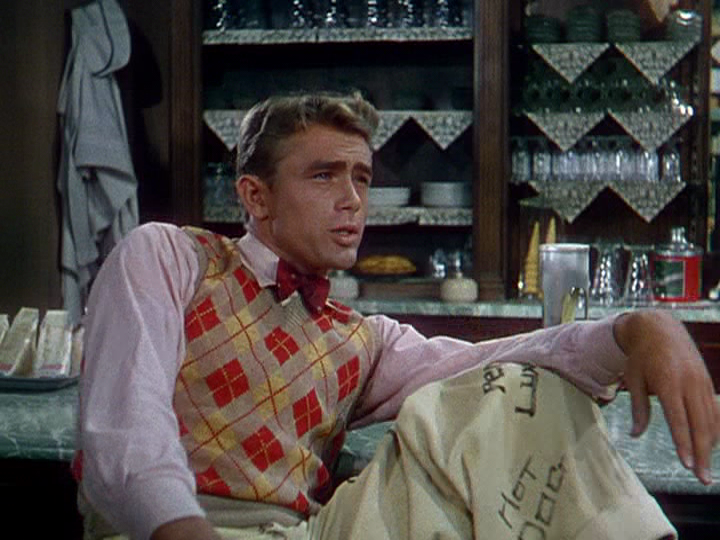
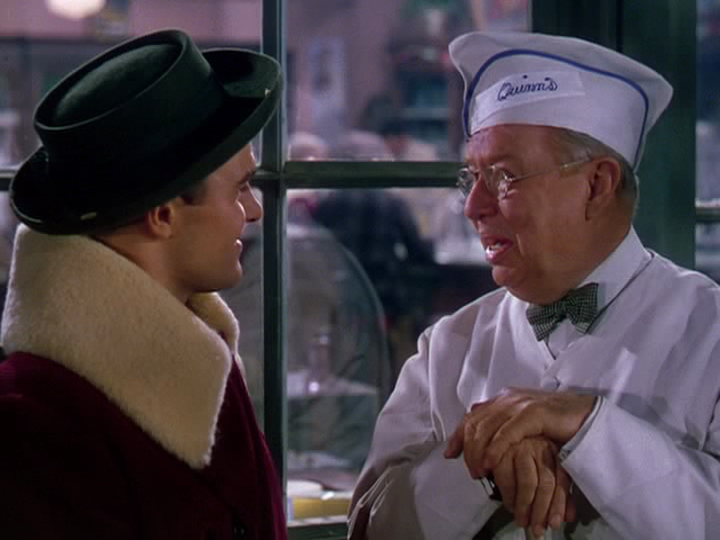
Note: Step away and you’ll miss a brief appearance by James Dean as an (uncredited) “youth at the soda fountain”! (Check out the strange writing on his pants in the still below… I can make out “HOT DOG”.) Does anyone have more info on his presence here?

Redeeming Qualities and Moments:

  • Charles Coburn as “John Smith”
  • Coburn’s fun interactions with Gigi Perreau (as young Roberta)
  • Typically fine “Sirk-ian” production values
  • Fun opening credits

Must See?
No, though it’s worth a look. Listed as a Sleeper in the back of Peary’s book.

Links: