Browsed by
Category: Original Reviews

Responses to Peary’s “must see” movie reviews, as well as my own “must see” movie reviews up to and after 1986 (when Peary’s book was published).

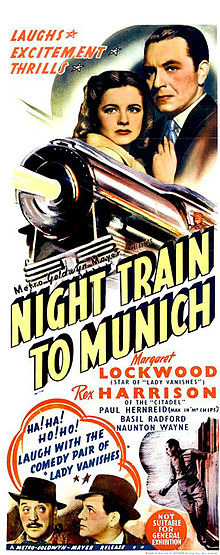
Night Train to Munich (1940)

Night Train to Munich (1940)

Hello, CMBA members! I’m excited to be participating in the fall Trains, Planes, and Automobiles blogathon. This is my third blogathon entry for CMBA: others were reviews of Intermezzo (both versions — 1936 and 1939) for Fabulous Films of the 30s and The Fabulous World of Jules Verne (1958) for Fabulous Films of the 50s.

Welcome! Please click here to read more about this site.

“In time you will see things the way I do — the way everyone in Germany does.”

Synopsis:
An armor-plating inventor (Felix Aylmer) flees Prague in time to avoid Nazi occupation, but his daughter (Margaret Lockwood) is caught and sent to a concentration camp, where she meets a handsome prisoner (Paul Henreid) who helps her escape to England. When she and her father are kidnapped and taken back to Germany, they must rely on the help of a charismatic spy (Rex Harrison) to help them cross to Switzerland — but will their ruse be spoiled by a pair of nosy British passengers (Basil Radford and Naunton Wayne)?

Genres, Themes, Actors, and Directors:

  • Carol Reed Films
  • Historical Drama
  • Kidnapping
  • Mistaken or Hidden Identities
  • Rex Harrison Films
  • World War II

Review:
Made just two years after Hitchcock’s classic pre-war thriller The Lady Vanishes (1938), this film — directed by Carol Reed — bears inevitable comparison in many respects, given that it was co-authored by the same screenwriting team (Sidney Gilliat and Frank Launder), took place in part on a train, and featured both the same leading actress (Lockwood) and the same wisecracking comedic duo (Basil Radford and Naunton Wayne). By 1940, however, war had officially broken out, and the difference in narrative emphasis shows: Nazis are called out explicitly as heinous villains, concentration camps (albeit in a sanitized sound-set version) are shown, and the call to action on behalf of Brits was more profound than ever. This became an early entry in the lengthy array of wartime cinema produced by Britain, functioning both as escapist fare and patriotic stimulation.

The movie’s pace is fast-moving, and while we find out the true identity of one key character early on, this doesn’t lessen the tension. We are primarily focused on admiring the daring-do of Harrison, who is nicely cast here as a brave (if slightly rash) spy willing to risk his life to help Aylmer and Lockwood.

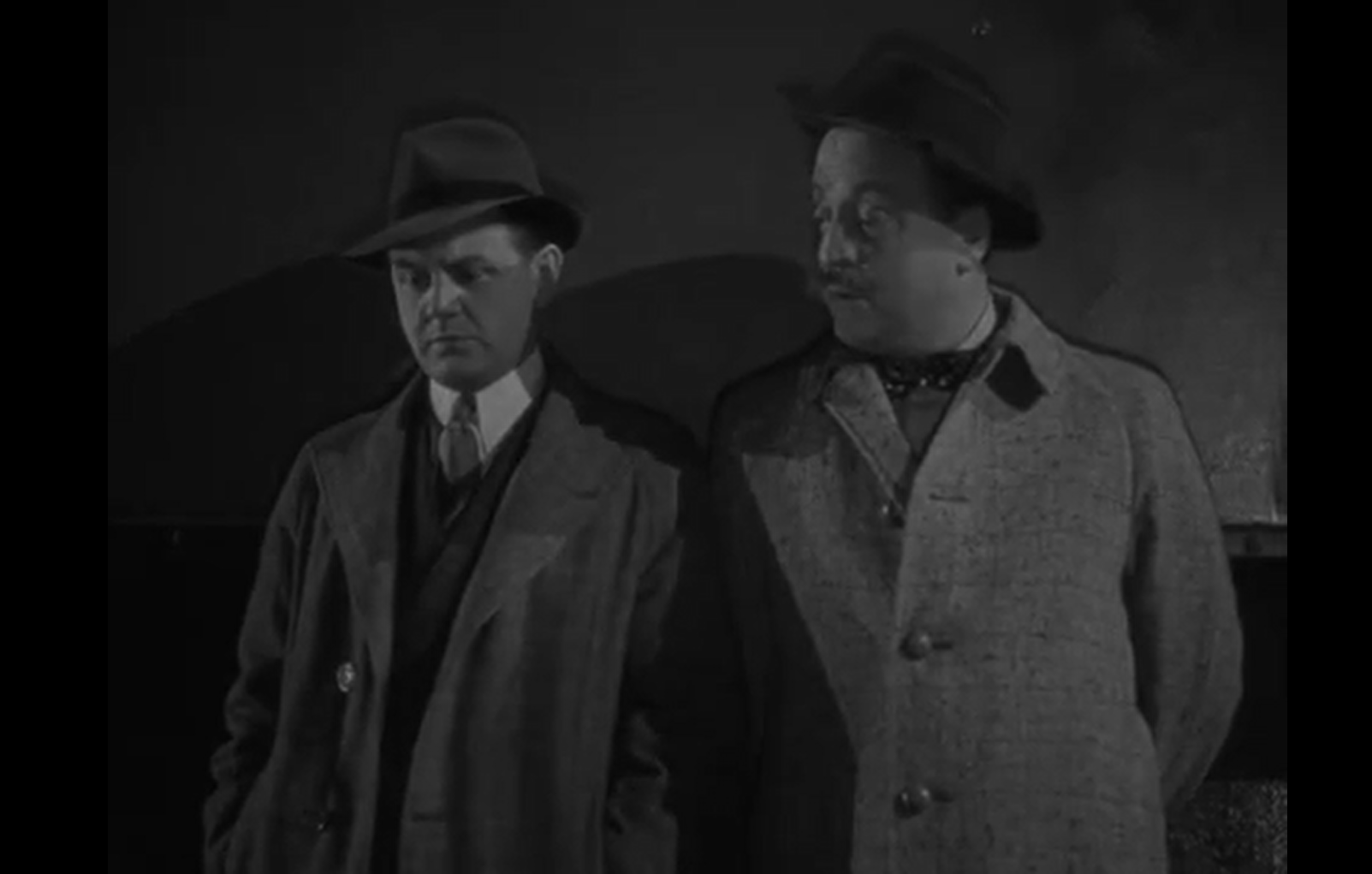
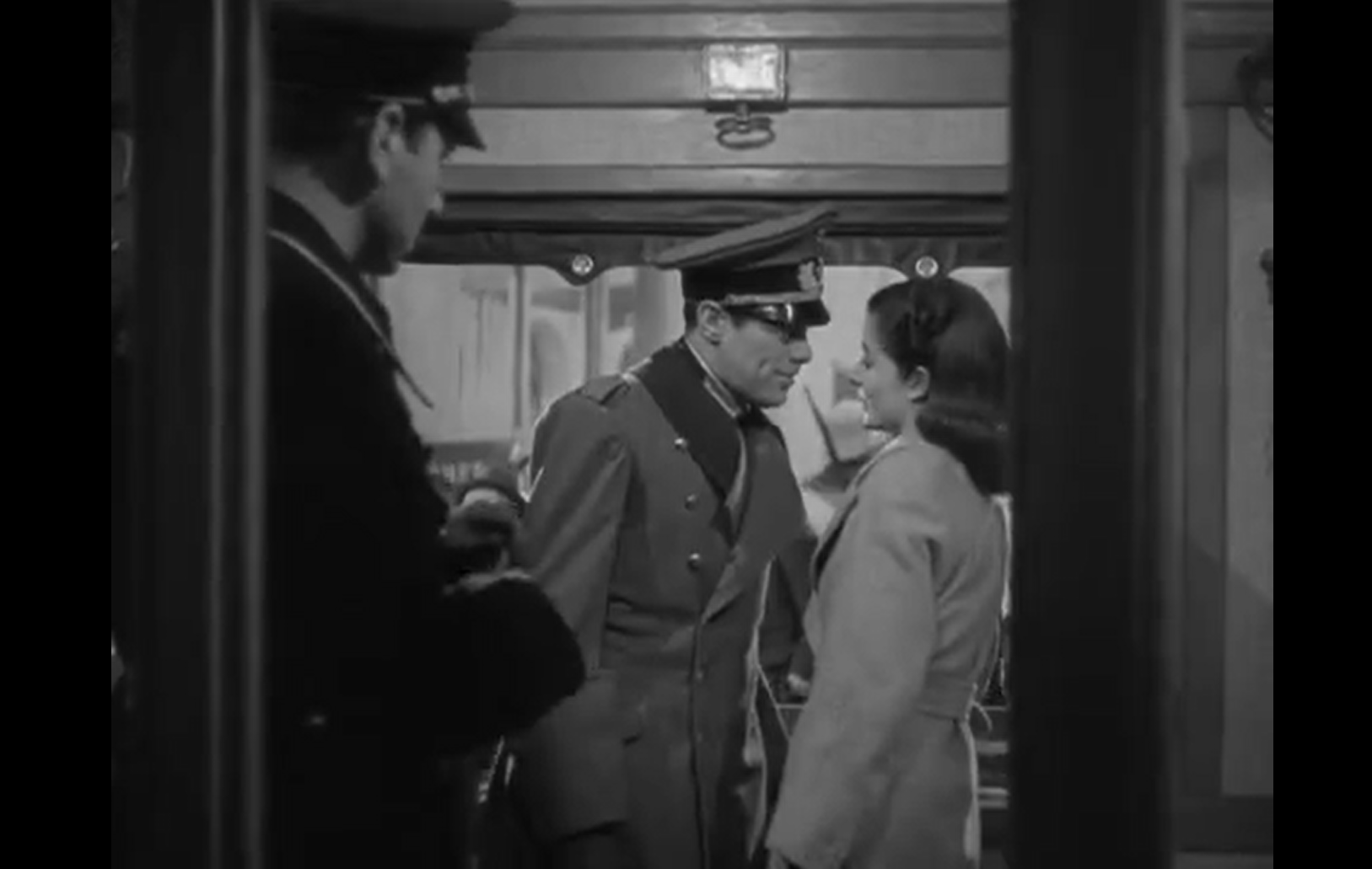
As in The Lady Vanishes, I’m not a fan of Radford and Wayne’s presence, though they are at least tightly integrated into the plot and serve a critical function:

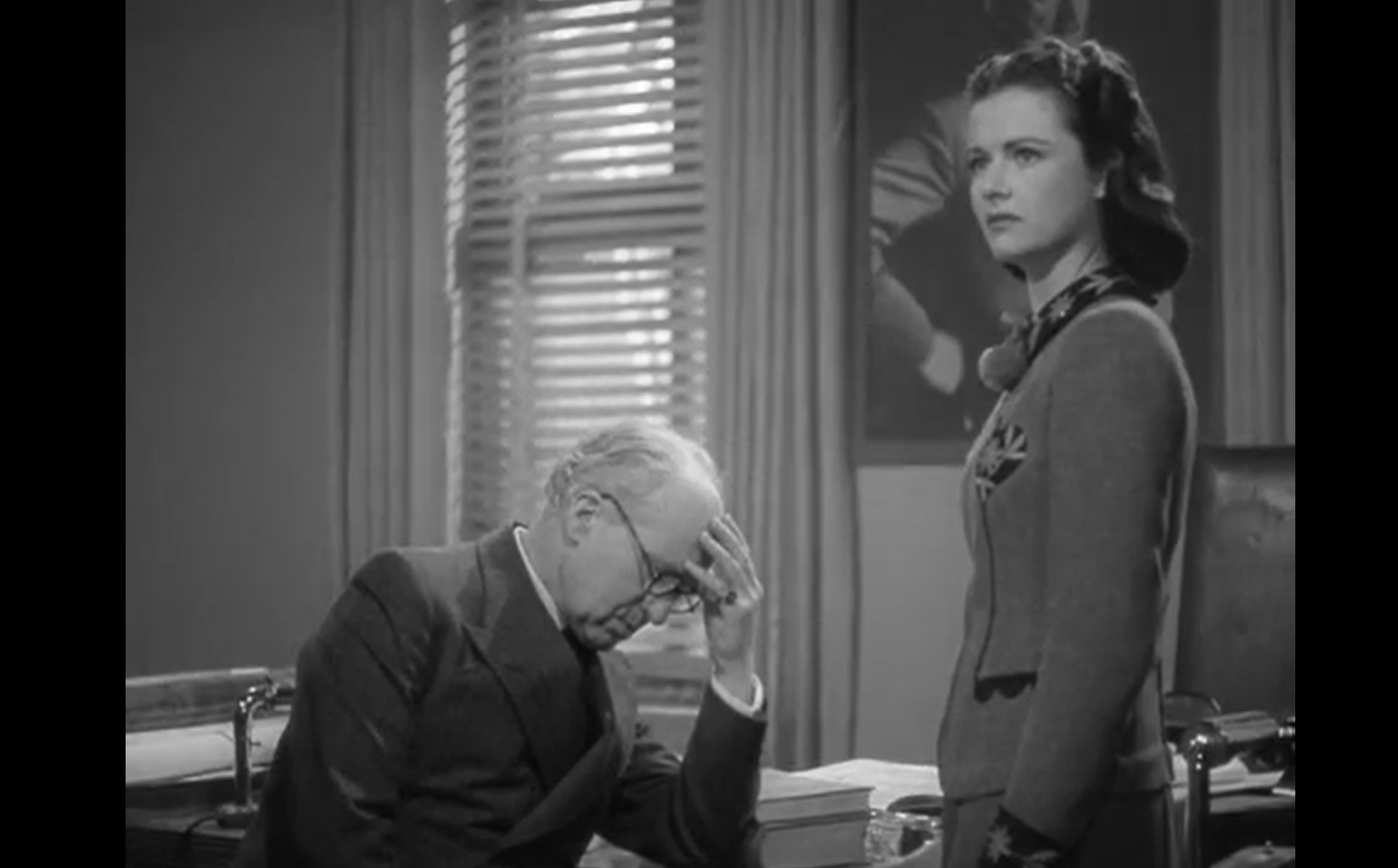
Although Lockwood’s character isn’t all that memorable:

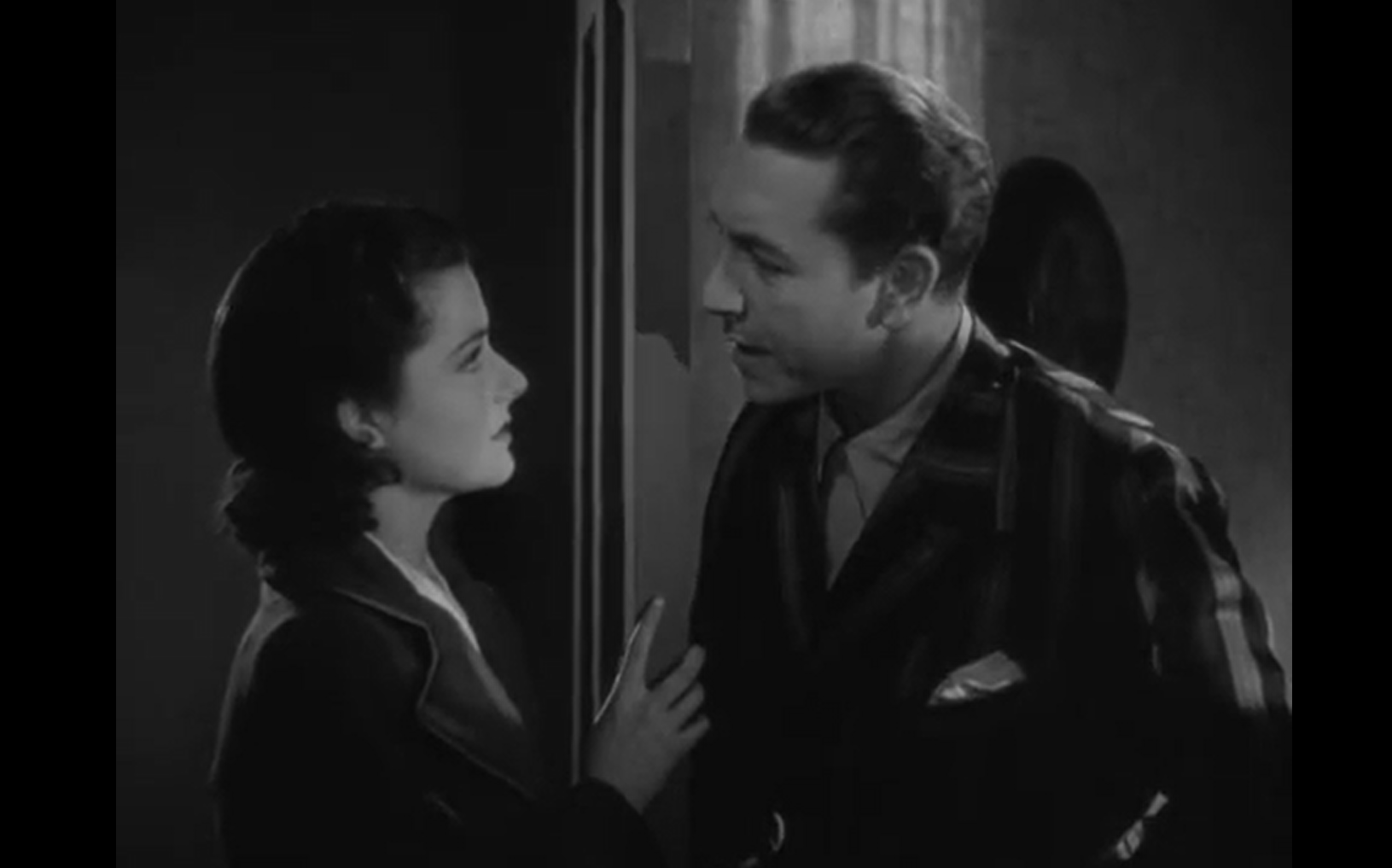
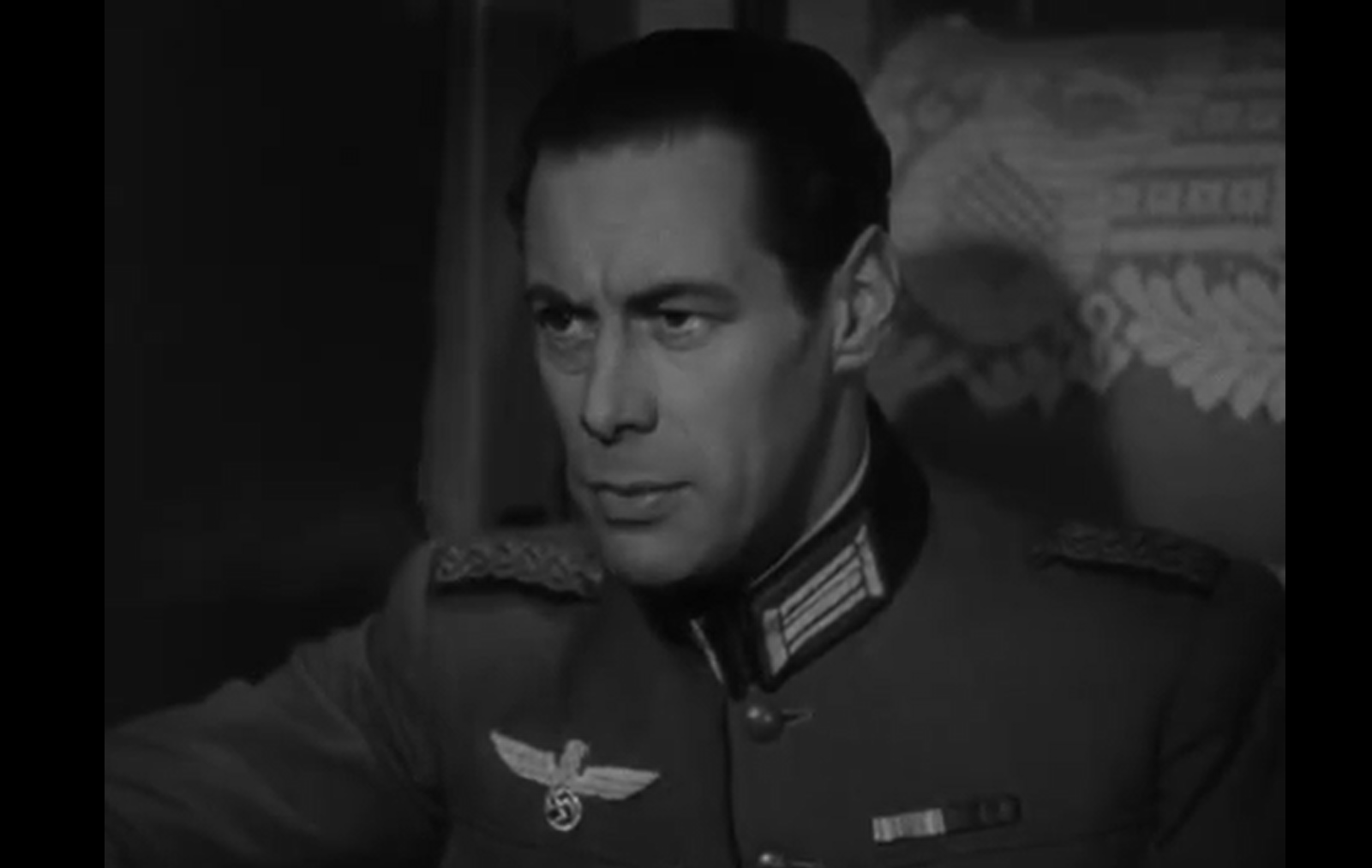
… Henreid — perhaps best known for his work in Now, Voyager (1942) and Casablanca (1942) — does a fine job in an unenviable role:

… and Harrison is actually not annoying (plus, he SINGS — for real!).

Redeeming Qualities and Moments:

  • Rex Harrison as Gus Bennett
  • Atmospheric cinematography

Must See?
No; this one is fun but optional viewing for film fanatics.

Links:

It Conquered the World (1956)

It Conquered the World (1956)

“I won’t love a monster — I won’t!”

Synopsis:
A cynical scientist (Lee Van Cleef) helps a Venusian alien (Paul Blaisdell) land on earth and begin a campaign to rid humans of all emotions — but his wife (Beverly Garland) and colleague (Peter Graves) are immediately concerned about his ideas.

Genres, Themes, Actors, and Directors:

  • Aliens
  • Dick Miller Films
  • Lee Van Cleef Films
  • Mad Doctors and Scientists
  • Mind Control any Hypnosis
  • Roger Corman Films
  • Science Fiction
  • World Domination

Review:
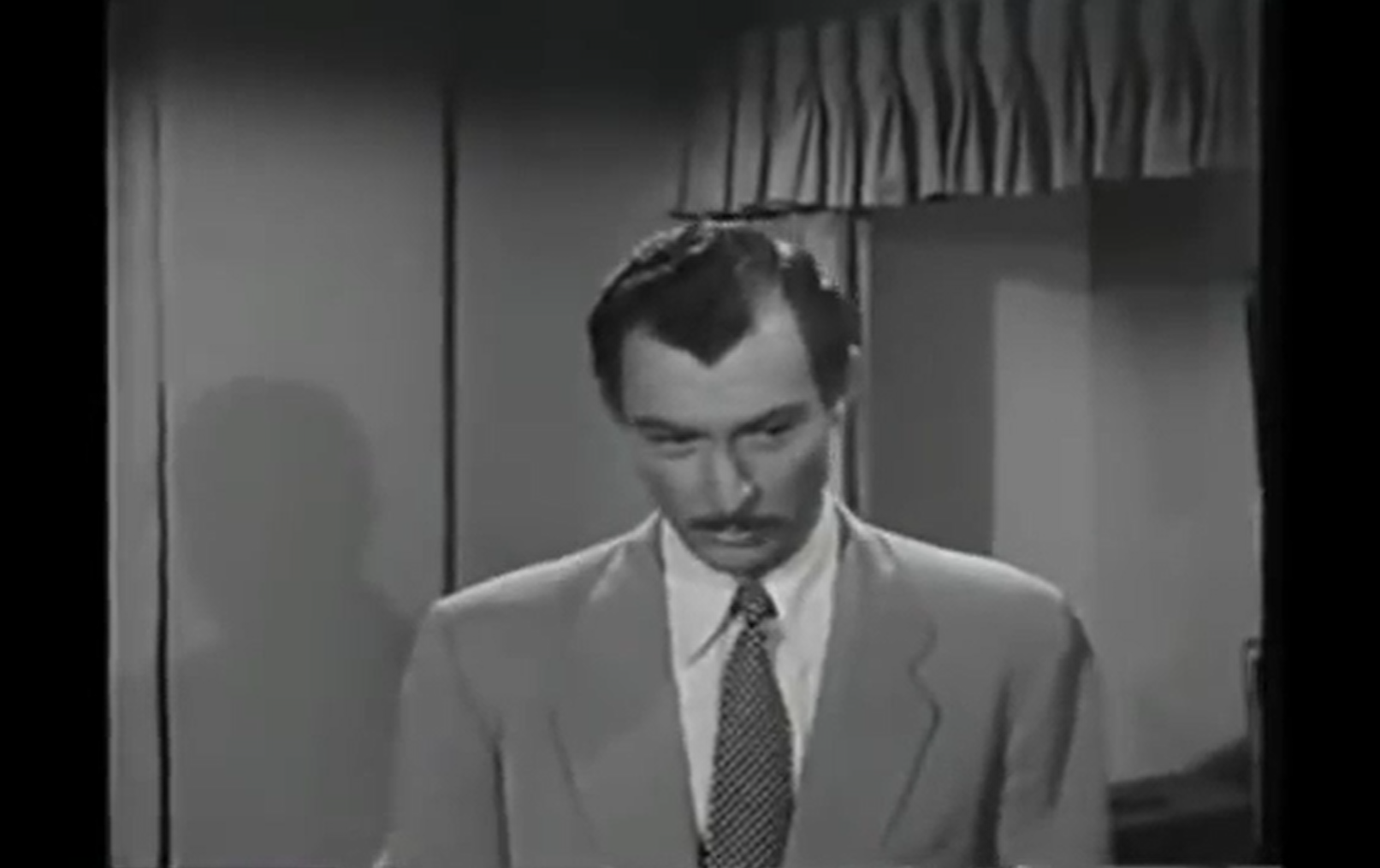
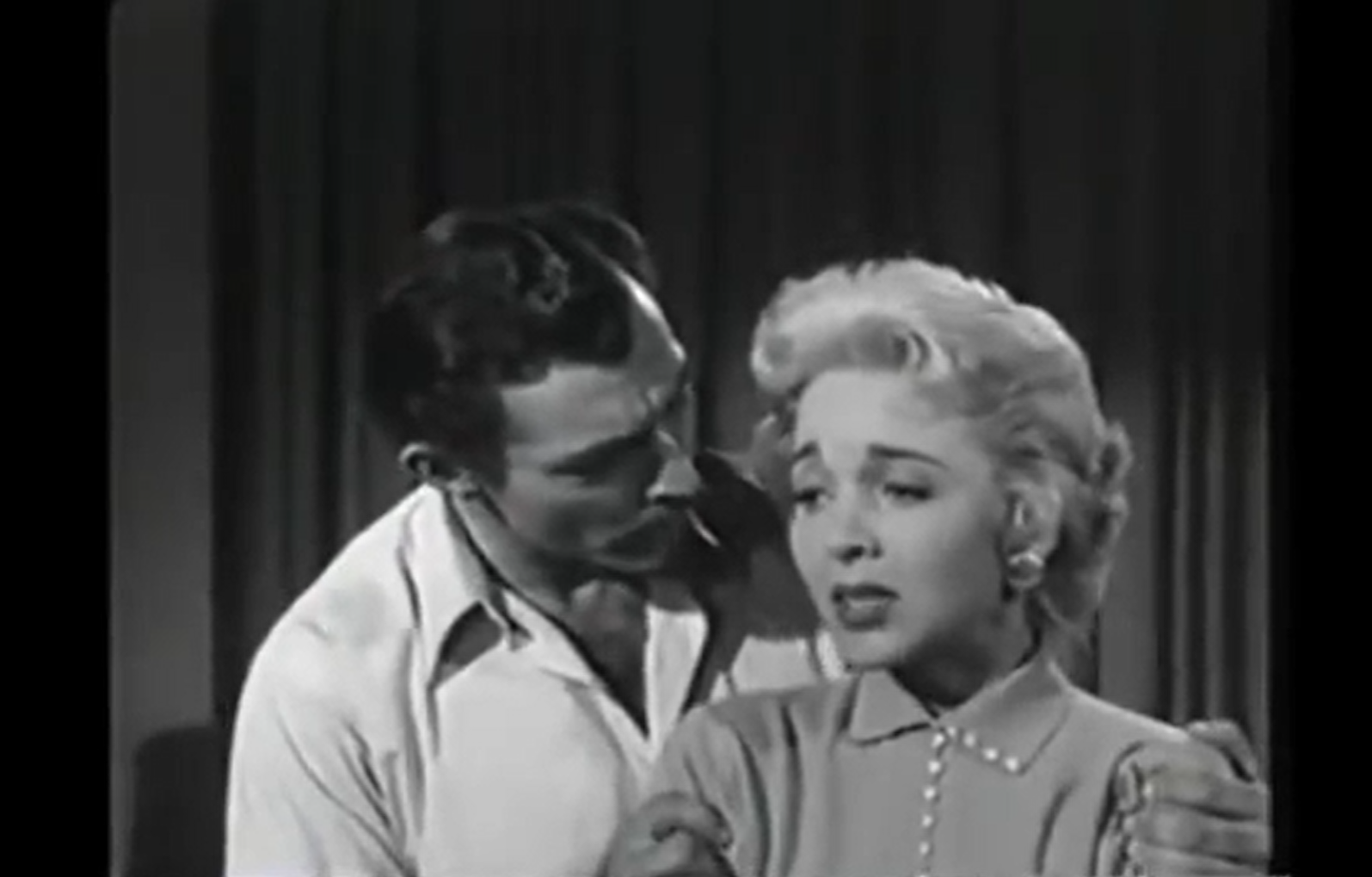
Roger Corman’s low-budget (what else?) alien-invasion flick is perhaps best known for Paul Blaisdell‘s ridiculously vegetable-like rubber Venusian alien, but actually remains a decent entry in the sub-genre of mid-century Communist hysteria films [such as Invaders From Mars (1953) and Invasion of the Body Snatchers (1956)]. Van Cleef is eerily effective (and well-cast) in the central role as a scientist so disillusioned by humanity he’s allowed his ethos to be taken over by an alien agenda, certain that the Venusians will “rescue the world from itself”; and Garland is equally convincing as his concerned, no-nonsense wife. Charles B. Griffith’s sharp script does wonders with scenarios that are otherwise laughable (i.e., rubber bats flying at humans’ necks to remove all emotions), with several scenes in particular — i.e., Graves’ wife (Sally Fraser) matter-of-factly attempting to “infect” him — highly effective. I watched this one with MST3K commentary, but actually believe it should have been seen on its own first. Read And You Call Yourself a Scientist!’s review for an in-depth, appreciative look at this flick, in which the reviewer notes right away that “I have almost as much admiration for this film as I do affection, and I don’t intend to make fun of it any more than is absolutely necessary”.

Redeeming Qualities and Moments:

  • Lee Van Cleef as Dr. Tom Anderson
  • Beverly Garland as Claire Anderson
  • Charles B. Griffith’s solid B-script:

    “Oh, look! Can’t you two talk about anything else? I’m getting tired of hearing about nothing but satellites, isotopes, conical graduations, and the rest!”
    “I’d have to take a long, hard look at anything that was going to change the world — and me — so completely.”
    “You can’t rub the tarnish from men’s souls without losing a little of the silver, too.”

Must See?
Yes, as one of Corman’s better low-budget outings.

Categories

Links:

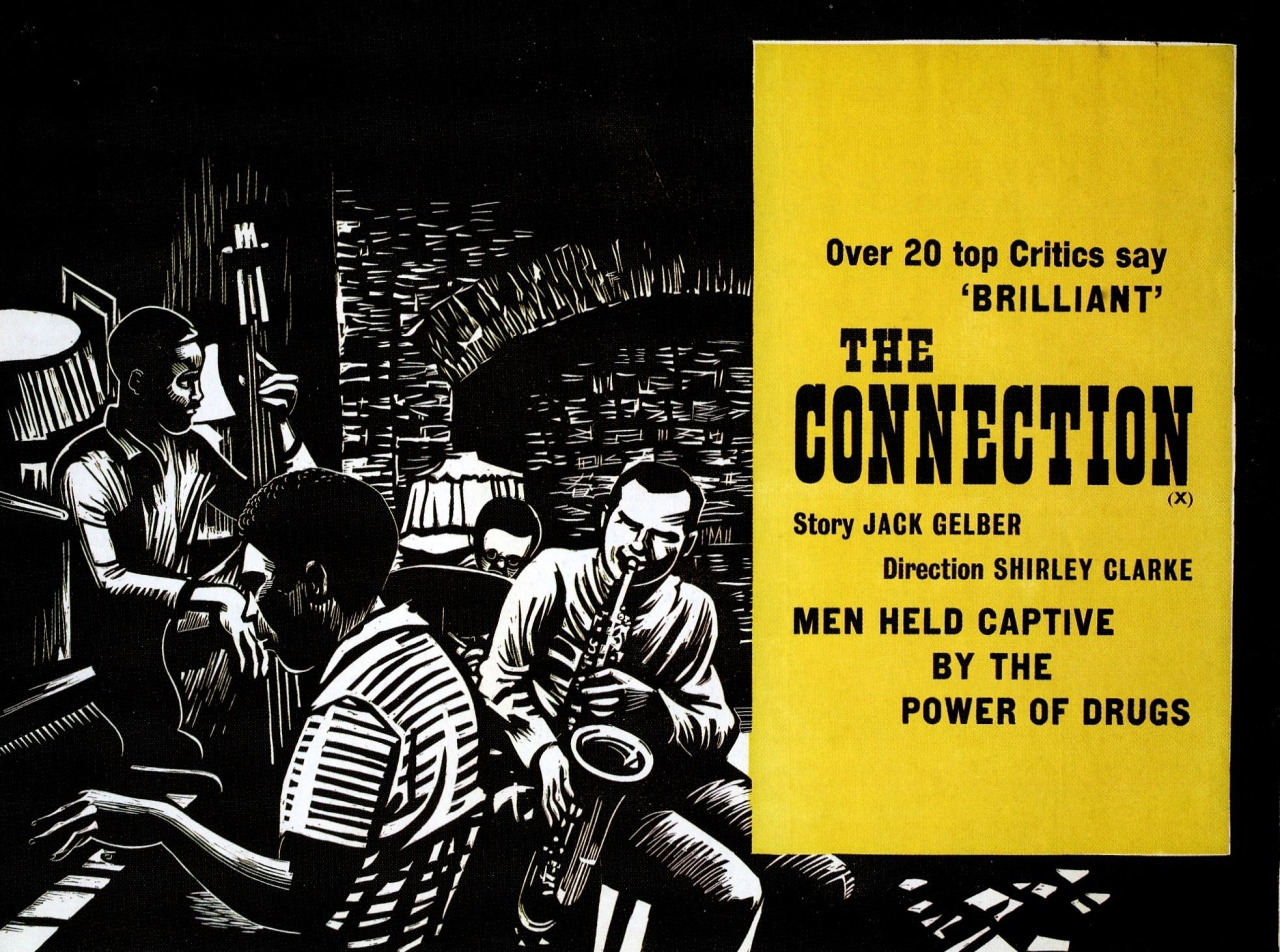
Connection, The (1962)

Connection, The (1962)

“You will not see the man behind the man — because there is no such man!”

Synopsis:
A director (William Redfield) agrees to fund the next fix for a group of heroin junkies gathered in the apartment of a friend (Warren Finnerty) as they wait for the arrival of their “connection”, a drug supplier known as Cowboy (Carl Lee).

Genres, Themes, Actors, and Directors:

  • Alcoholism and Drug Addiction
  • Play Adaptations
  • Shirley Clarke Films

Review:
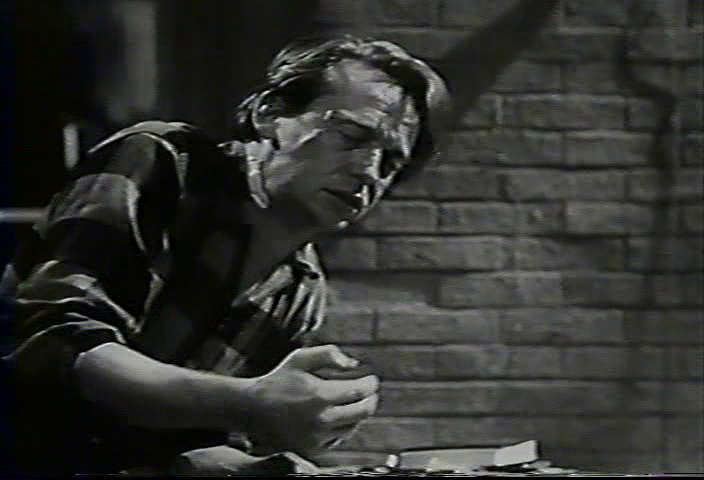
Shirley Clarke’s black-and-white cinéma vérité film — crafted like a documentary, but actually highly scripted and based on a play by Jack Gelber — broke cinematic ground in its gritty depiction of heroin addiction, overtly flaunting New York’s censorship rules. Indeed, watching this independently produced film puts more mainstream movies of the same year in an interesting perspective: while many of these titles (i.e., To Kill a Mockingbird, The Manchurian Candidate, Days of Wine and Roses) were concerned with “social issues”, none were anything close to this raw in their depiction. With that said, The Connection unfortunately isn’t all that interesting or compelling; it’s far too stagy and dry, and I would revisit any of the above titles before this one for sheer entertainment value. Yet The Connection remains of minor interest simply for its historical importance.

Redeeming Qualities and Moments:

  • A refreshingly frank (for the time in which it was made) look at drug use

Must See?
No, though it’s recommended for one-time viewing simply given its historical significance. Listed as a film with Historical Importance and a Personal Recommendation in the back of Peary’s book.

Links:

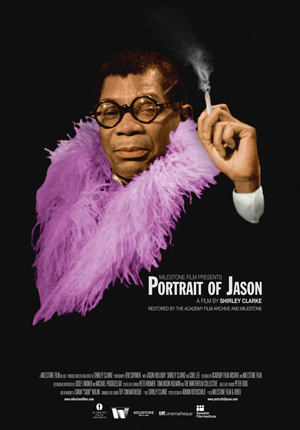
Portrait of Jason (1967)

Portrait of Jason (1967)

“It only hurts when you think of it. And if you’re real, you’ll think of it a long, long time.”

Synopsis:
Filmmaker Shirley Clarke interviews a self-described gay black “hustler” (Jason Holliday) who tells countless entertaining tales of his life as a sexually voracious “houseboy” and aspiring cabaret singer.

Genres, Themes, Actors, and Directors:

  • African-Americans
  • Aspiring Stars
  • Class Relations
  • Documentary
  • Homosexuality
  • Race Relations
  • Shirley Clarke Films

Review:
Shirley Clarke’s cult classic — filmed in her Hotel Chelsea apartment over the course of 12 hours — remains a uniquely structured, unexpectedly haunting entry in her oeuvre as an independent female documentarian. Without explanation or captions, the film plunges into Clarke’s talk with Jason, beginning with how he transformed from “Aaron Payne” to “Jason Holliday” with the help of a budding international spiritual organization which promotes the changing of one’s name to something more “authentic”. (As a bit of trivia, my parents joined this group at around the same time and also changed their birth names.) The film quickly moves on, however, to even more fascinating fare, as Jason, continuously drinking, begins sharing seemingly endless tales of his life as a hustler — or wait, as a houseboy? A companion? What exactly DID Jason do to earn money, and how often did this overlap with his own entertainment? Well, it turns out he did just about anything, and (supposedly) never felt bad about it:

“They think you’re just a dumb, stupid little colored boy and you’re trying to get a few dollars, and they’re gonna use you as a joke. And it gets to be a joke sometime as to who’s using who.”

The stories he has to tell are simply hilarious — at least until the hours wear on and his revelations become increasingly fraught with vulnerability (especially as Clarke’s cameraman, Carl Lee, eggs him on). You’re sure to be engaged — if not haunted, disturbed, and/or entertained — by this most unusual docu-interview.

Note: A docudrama re-imagining what might have taken place during the marathon shooting of this film has just been released; click here to read more.

Redeeming Qualities and Moments:

  • A surprisingly engrossing “one man show”, covering both light-hearted and much more serious topics

Must See?
Yes, as a unique historical document by an unusual director. Listed as a film with Historical significance and a Personal Recommendation in the back of Peary’s book.

Categories

  • Historically Relevant

Links:

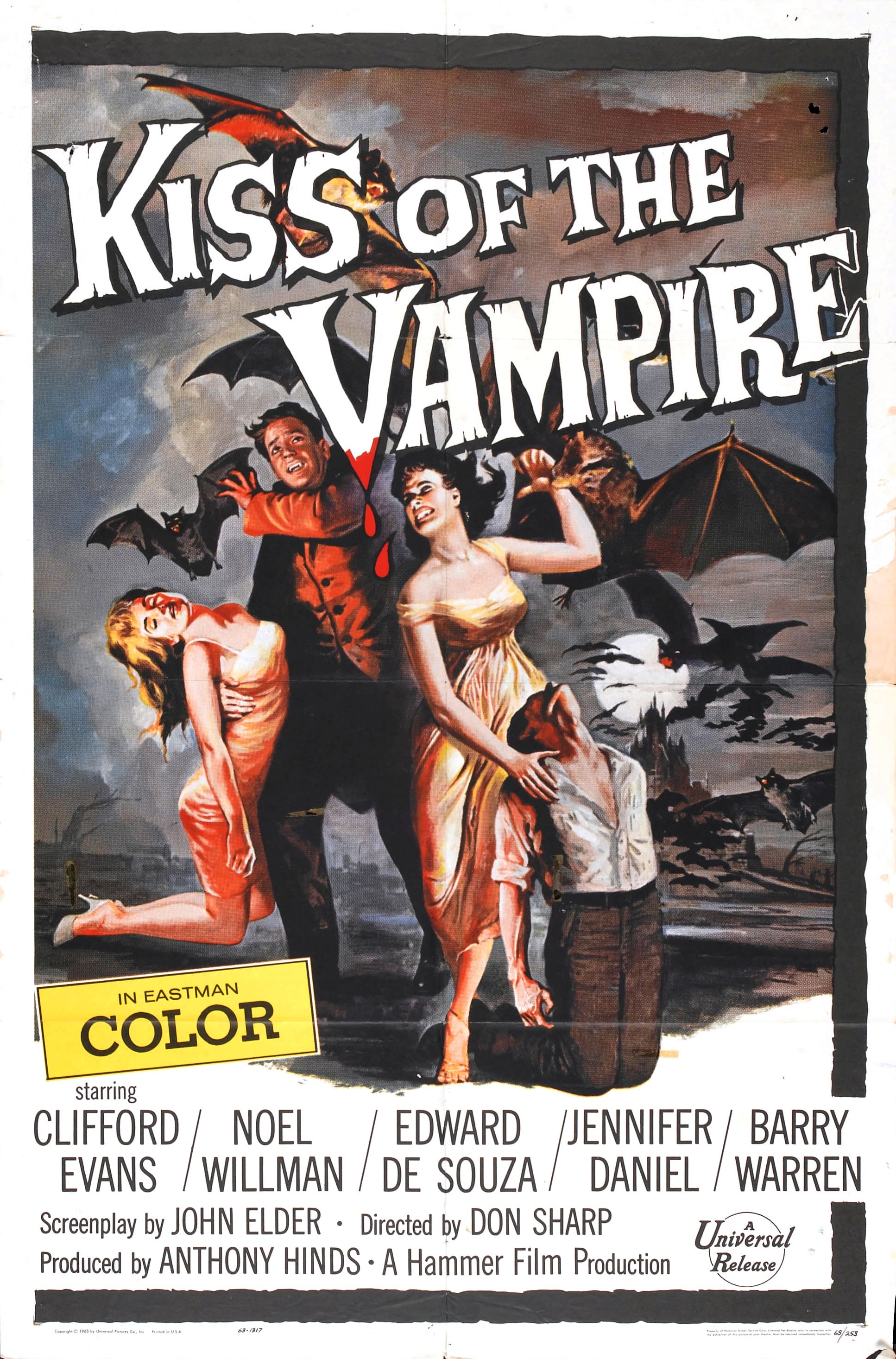
Kiss of the Vampire (1963)

Kiss of the Vampire (1963)

“I advise you to ask no questions of anyone in this region.”

Synopsis:
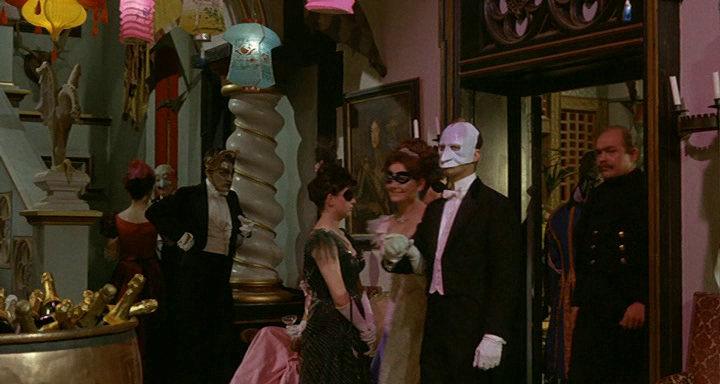
A honeymooning couple (Edward de Souza and Jennifer Daniel) staying in a remote inn run by a nervous man (Peter Madden) and his depressed wife (Vera Cook) — with an inebriated professor (Clifford Evans) as the only other inhabitant — are invited to dinner by a local nobleman (Noel Ravna) and his two grown children (Barry Warren and Jacquie Wallis), who seduce the couple with their charms and lure them back for a masquerade ball with nefarious purposes.

Genres, Themes, Actors, and Directors:

  • Cults
  • Horror Films
  • Newlyweds
  • Vampires

Review:
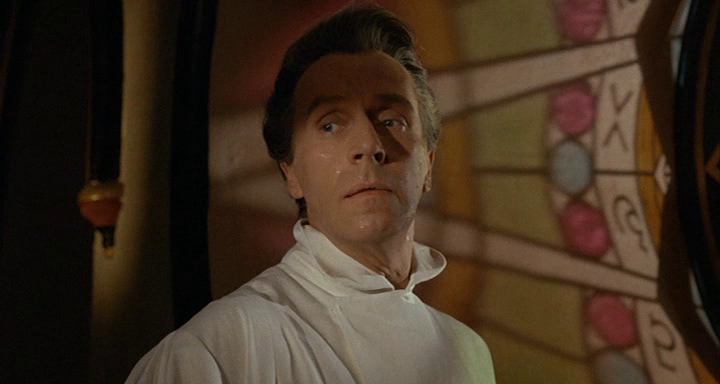
Hammer Studios’ unique entry in the vampire genre offers an appropriate sense of menace, effectively atmospheric visuals and sets, and a convincingly creative vision of what a “den of vampires” might look and act like. While De Souza and Daniel are a little too conveniently naive as the film opens — caught up in conjugal bliss and unaware of how strange their new environment really is — this allows the plot to move forward smoothly, as Daniel is easily taken in by the charms of their enchanting new friends, and de Souza realizes too late that his wife has been brainwashed and kidnapped into the vampires’ cult. The scenes showing white-shrouded vampires sitting around a room waiting for their leader to tell them what to do are eerily reminiscent of Moonie life in the early 1960s, demonstrating the power of fantasy and horror to tap into the cultural zeitgeist. The climax is genuinely heart-stopping, as we wonder how Daniel can be “deprogrammed” without dying. This would make a fascinating if unconventional double-bill with the cult sleeper Ticket to Heaven (1981).

Redeeming Qualities and Moments:

  • Highly effective sets, costumes, and make-up


  • Atmospheric cinematography
  • Noel Willman as Dr. Ravna
  • The surprising yet innovative ending

Must See?
Yes, as one of Hammer Studios’ best outings, and a uniquely timely take on the vampire genre.

Categories

  • Good Show

Links:

From Mao to Mozart (1981)

From Mao to Mozart (1981)

“Music is not black and white. It is every color — and even some that painters don’t have.”

Synopsis:
Virtuoso violinist Isaac Stern travels through China three years after the end of the Cultural Revolution, giving concerts and master classes.

Genres, Themes, Actors, and Directors:

  • China
  • Documentary
  • Musicians

Review:
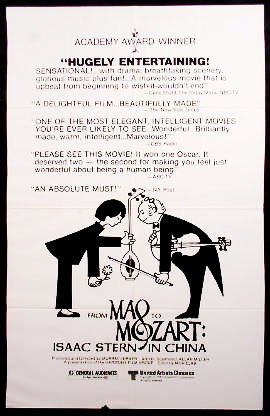
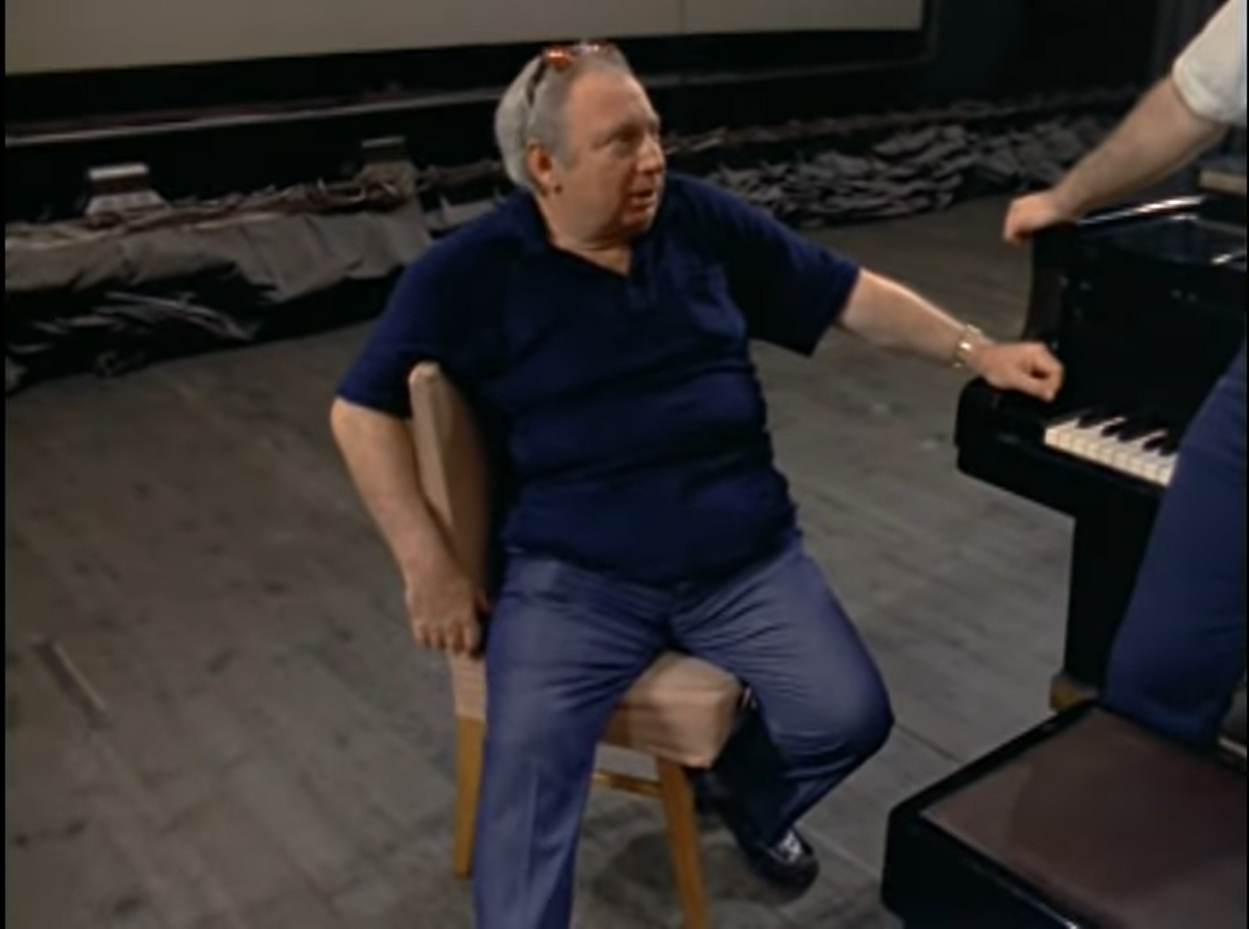
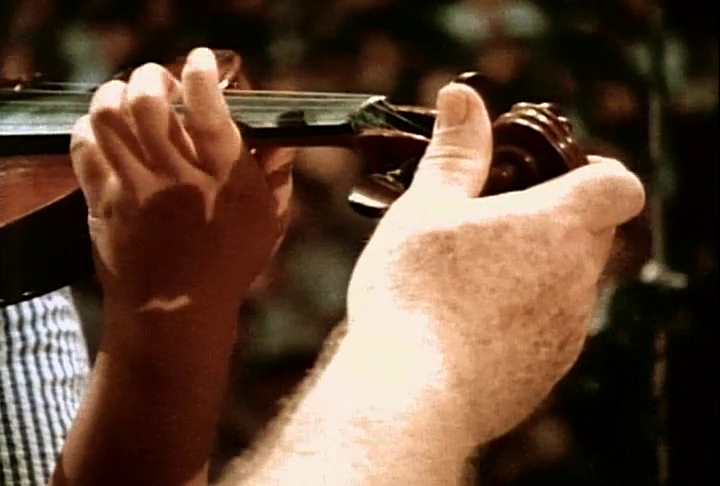
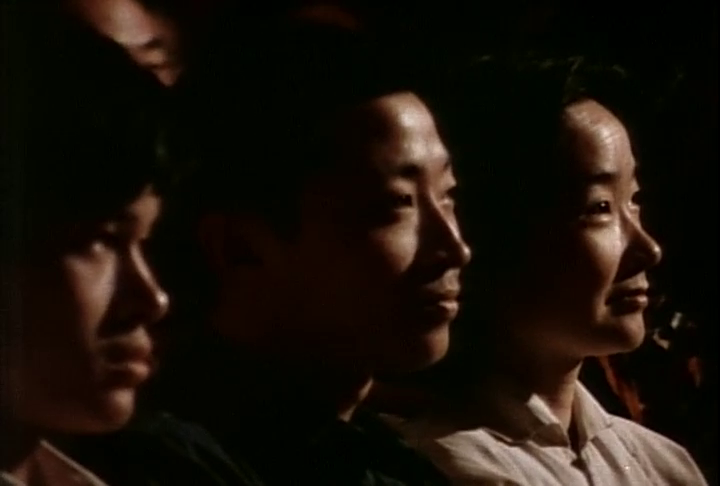
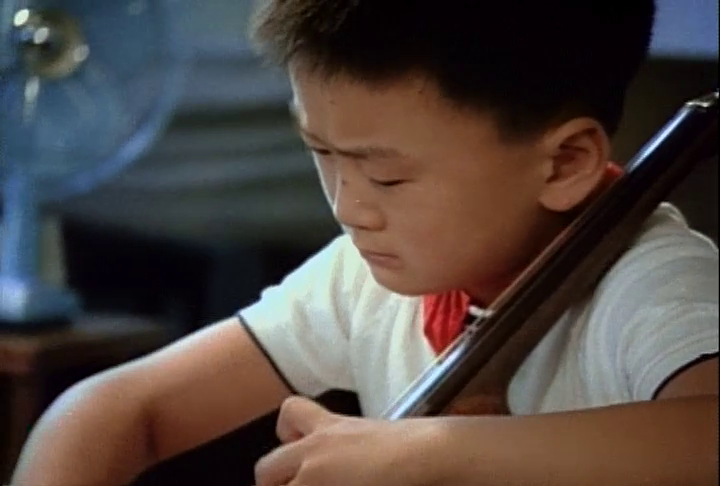
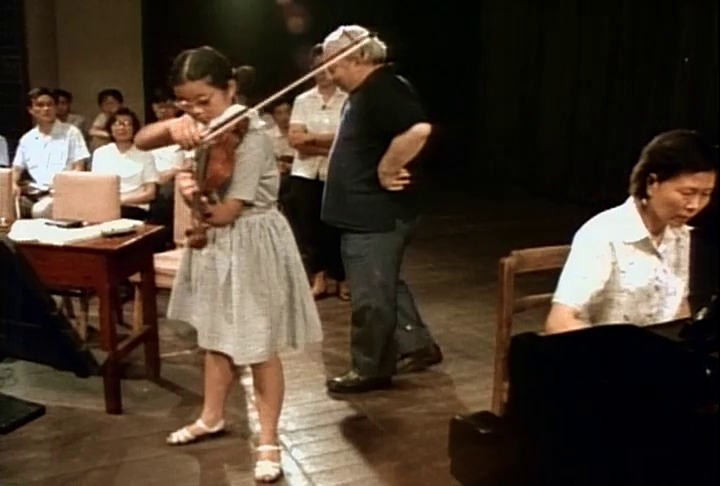
This Oscar-winning documentary chronicles the first collaboration between an American musician and the China Central Symphony Society (now known as the China National Symphony Orchestra) — a historical moment perhaps not fully appreciated today, when U.S. relations between China are strained but ongoing, and we have seen countless Chinese musicians embarking on international careers. In 1979, however, when Stern visited Peking and Shanghai, he saw young students just emerging from years of cultural repression, playing “western” classical music with immense technical skill and passion but without personal ownership or deep insight into the music itself. While there’s an inevitable sense throughout the film of a white male Westerner coming to China to “fix” Asians’ musical sensibility (and, in one case, force them to provide him and his accompanist with a more suitable piano!):

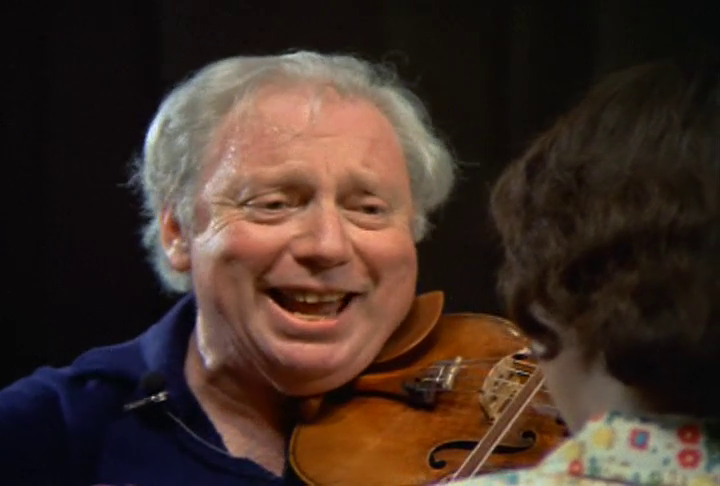
this is thankfully moderated by several factors, including Stern’s irrepressible, toothy enthusiasm and talent; stunning footage of highly gifted young musicians; and a powerful strand of cultural context and history woven into the narrative, primarily through a moving interview with violin maker Tan Shuzhen (who survived the Cultural Revolution).

Note: Interested viewers should definitely watch the half-hour follow-up documentary (included on the DVD) in which Stern returns to Beijing 20 years later and we’re privy to interviews with many of the young musicians profiled in the film. It’s interesting to see that Stern became a bit more crotchety and impatient in his later years, though he conceded that Chinese musicians had become much more proficient since his last visit.

Redeeming Qualities and Moments:

  • Isaac Stern’s enjoyable presence and musicality
  • An uplifting tale of cultural connection after years of division


  • Tan Shuzhen’s story of surviving the Cultural Revolution
  • Chinese children playing with passion and immense skill


Must See?
Yes, as an uplifting and enjoyable Oscar-winner.

Categories

  • Oscar Winner or Nominee

Links:

Slime People, The (1963)

Slime People, The (1963)

“It looks as if the slime people have won — for now.”

Synopsis:
A pilot (Robert Hutton) landing in fog-filled Los Angeles learns from a professor (Robert Burton) and his two daughters (Susan Hart and Judee Morton) that the city has been overrun by reptilian Slime Men emerging from underneath the ground. Joined by a Marine (William Boyce), the small group of survivors attempts to fight back against the monsters while developing romantic relationships.

Genres, Themes, Actors, and Directors:

  • Mutant Monsters
  • Science Fiction
  • Survival

Review:
Appropriately lampooned by MST3K, this clunker of a low-budget ’50s monster flick is hard to watch — literally. About half the movie is filmed in a deep (deliberate) mist of fog meant to represent a solidified wall constructed by the Slime Men, thus leaving audiences simply listening to the characters interacting and guessing at who’s on set. The monsters’ costumes are the most effective element of the film by far (see still below), and they’re revealed within the first few minutes, making it unnecessary to sit through the rest unless you’re a serious fan of awful cinema.

Redeeming Qualities and Moments:

  • The effective monster costumes (which apparently consumed half the film’s ~$80K budget)

Must See?
No; definitely feel free to skip this one. Listed as a Camp Classic in the back of Peary’s book.

Links:

Blood and Roses (1960)

Blood and Roses (1960)

“The Karnsteins are not a naturally happy family.”

Synopsis:
During a masquerade ball celebrating the upcoming wedding of her cousin (Mel Ferrer) and his fiancee (Elsa Martinelli), a young woman dressed in the clothing of her vampire-ancestor emerges from a fireworks display believing she has been possessed.

Genres, Themes, Actors, and Directors:

  • Flashback Films
  • Jealousy
  • Love Triangle
  • Roger Vadim Films
  • Vampires

Review:
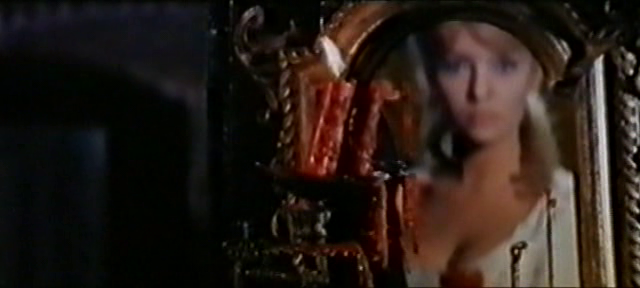
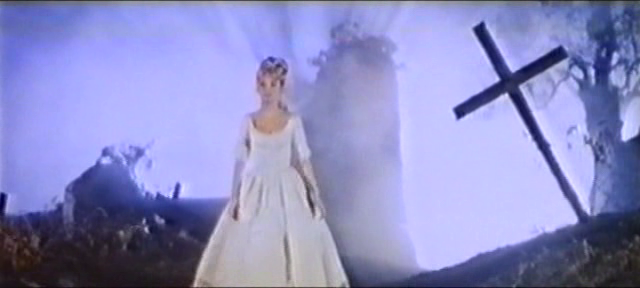
Loosely based on the 1872 novella Carmilla by Joseph Sheridan le Fanu, Roger Vadim’s softcore vampire flick with lesbian overtones bears inevitable resemblance to Roy Ward Baker’s later cult adaptation for Hammer Films, The Vampire Lovers (1970). While the visuals in Vadim’s film are impressive (and deserve a digitalized upgrade), the storyline itself is overly simplistic: because we can predict from the beginning what will occur, there’s little narrative tension throughout. Instead, we simply wonder how long this trio of lovers-plus-hanger-on will maintain its tenuous status quo (not for long, it turns out). Ultimately, Blood and Roses will be of most interest — naturally — to fans of vampire flicks, as well as those curious to see Roger Vadim’s early work before his campy space opera Barbarella (1968).

Note: The dialogue about a swordfish and a sardine provides an unexpectedly silly interlude of bawdy humor.

Redeeming Qualities and Moments:

  • Claude Renoir’s cinematography

  • Some memorable imagery

  • Joan Prodromides’ haunting score

Must See?
No, though it’s worth a look for its cult status. Listed as a Cult Movie in the back of Peary’s book.

Links:

Black Girl (1972)

Black Girl (1972)

“A spiritualist told me that a child that wasn’t mine was gonna make me happy one day!”

Synopsis:
An aspiring dancer (Peggy Pettit) is pressured by her bullying sisters (Gloria Edwards and Rhetta Greene) into mistreating a visiting foster sister (Leslie Uggams) who is idolized by their mother (Louise Stubbs).

Genres, Themes, Actors, and Directors:

  • African-Americans
  • Jealousy
  • Play Adaptations
  • Ruby Dee Films
  • Siblings

Review:
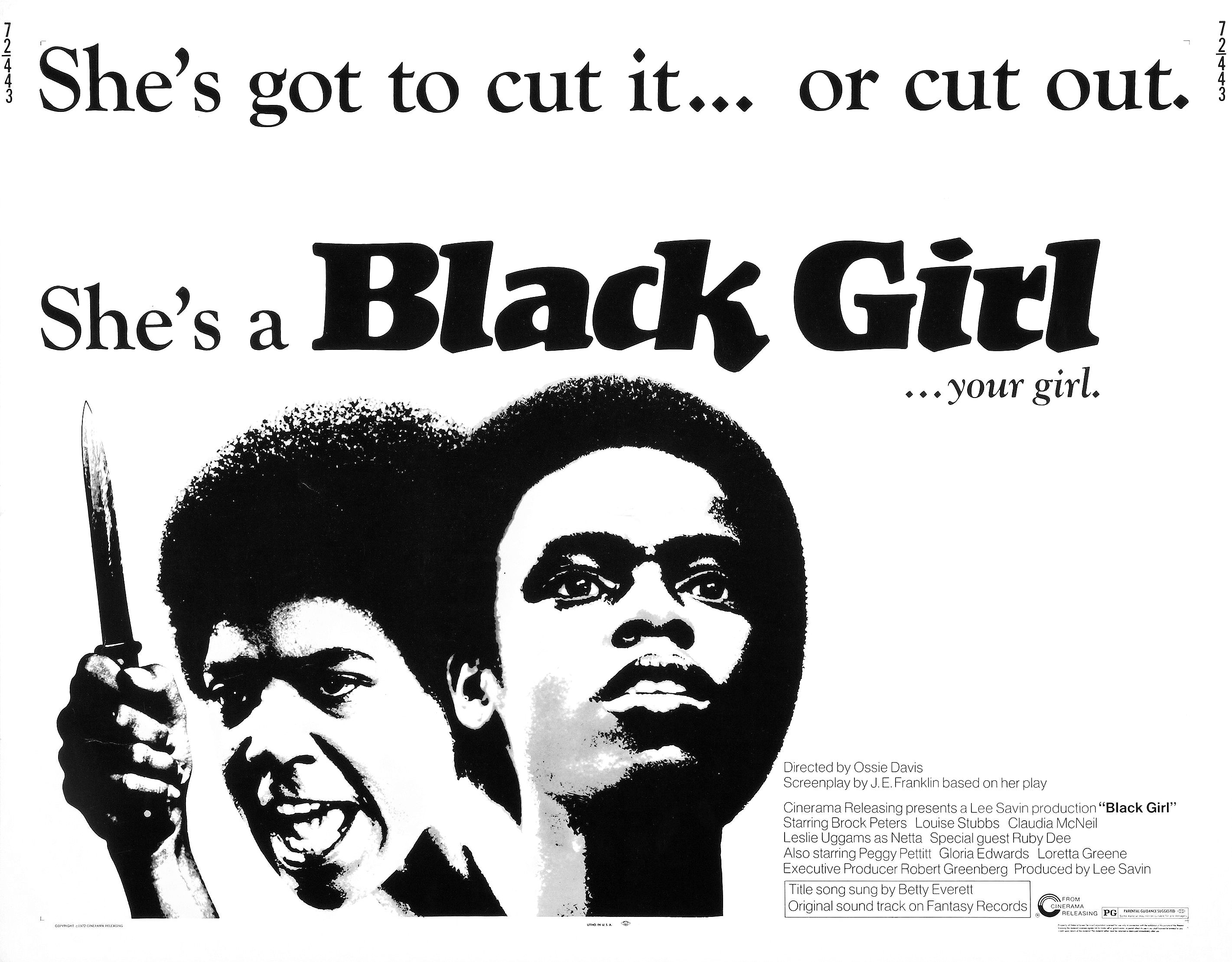
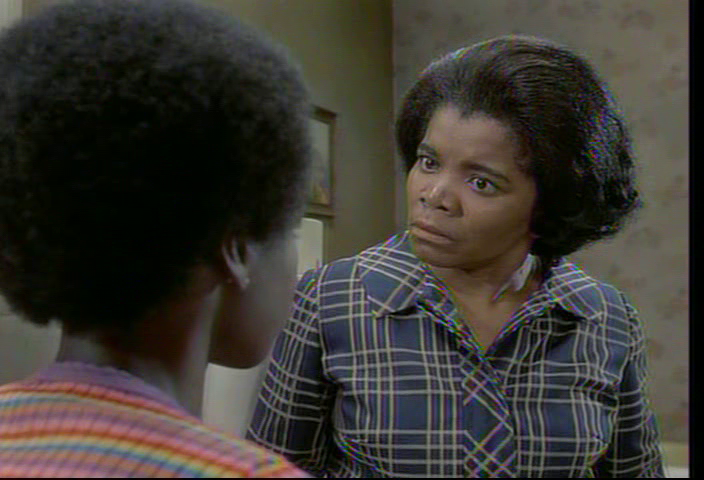
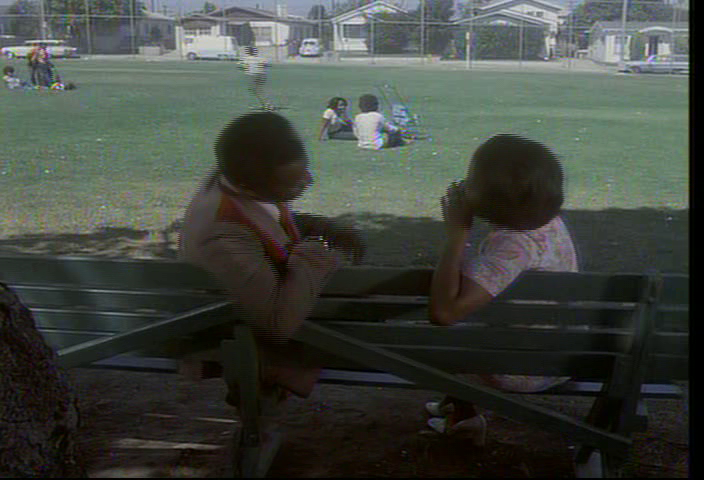
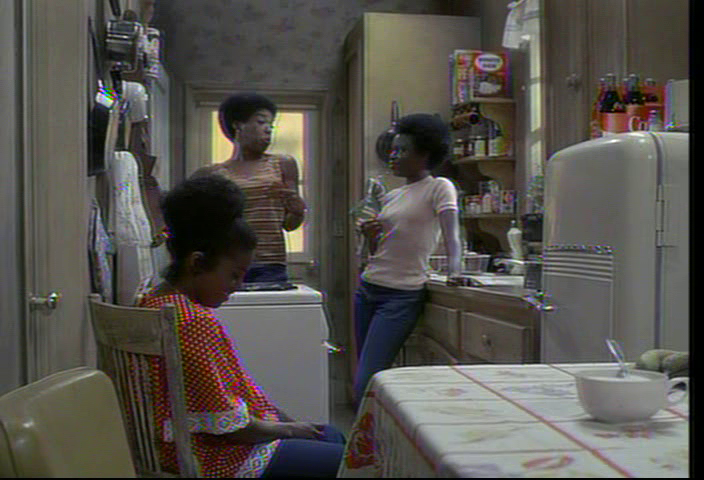
This hard-hitting family drama — based on a play by J.E. Franklin — is graphically authentic in its representation of family dysfunction spiraling through generations. Full of profanity and cruel mistreatment, it’s a challenging but oddly refreshing viewing experience — much like August: Osage County (2013) (also based on a play). Pettit and her two half-sisters — all high school dropouts, living in a cramped apartment with their mother, grandmother (Claudia McNeil), and grandmother’s boyfriend (Kent Martin) — are deeply embittered by their mother’s overt dismissal of their own potential, and understandably furious that Stubbs turned to foster parenting in an attempt to salvage her own reputation as a supportive mother. Uggams — who’s gone away to a “white person’s college”, and whose own mother (Ruby Dee) had a nervous breakdown — adores “Mama Rose”, but feels conflicted about the effect her own success has had on her foster siblings.

An early interlude involving a visit from Stubbs’ first husband (Brock Peters) — biological father to Edwards and Greene — reveals quite a bit about Stubbs’ history and crushed dreams. He arrives waving $100 bills around, demonstrating his enduring power over the household years after he cheated on Stubbs and left for Detroit; he only half-jokingly withholds money from Pettit, who has borne the burden of different paternity her entire life. To that end, she clearly represents an opportunity to escape — if she can manage the wrath of her envious sisters, who are desperately trying to hold her back along with them. While not a true literary masterpiece like Lorraine Hansbury’s Raisin in the Sun, Black Girl remains worthy viewing for those interested in fearless exploration of family dynamics.

Redeeming Qualities and Moments:

  • Louise Stubbs as Mama Rose
  • Good use of outdoor locales
  • A hard-hitting script

Must See?
No, though it’s strongly recommended if you can stomach it.

Links:

Spirits of the Dead (1968)

Spirits of the Dead (1968)

“Why am I telling you this? Why did you ask me here? What do you want from me?”

Synopsis:
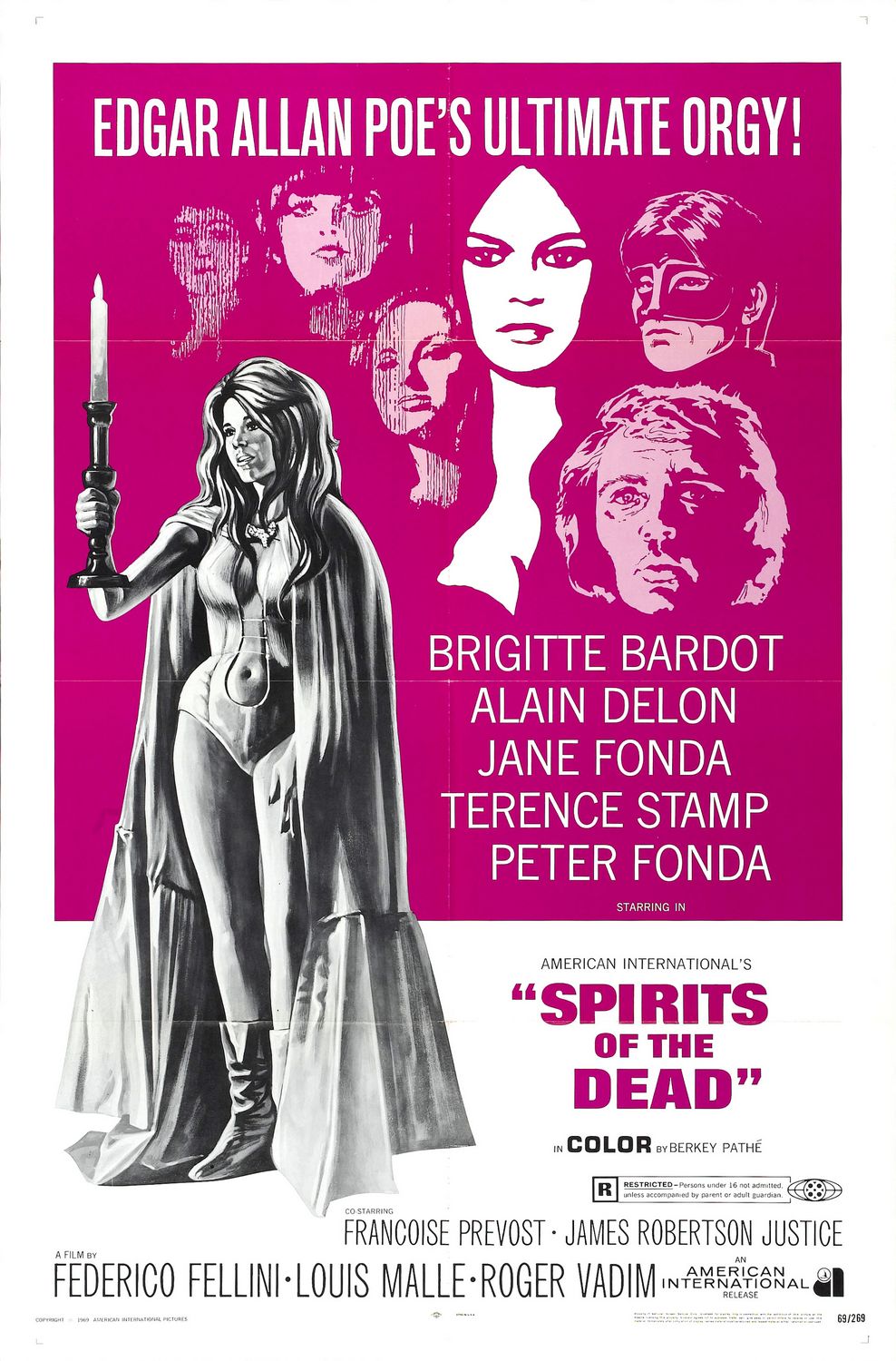
Three mean-spirited individuals — Jane Fonda, Alain Delon, and Terence Stamp — meet appropriately grisly endings.

Genres, Themes, Actors, and Directors:

  • Actors and Actresses
  • Alain Delon Films
  • Brigitte Bardot Films
  • Edgar Allan Poe Films
  • Episodic Films
  • Fellini Films
  • Horror Films
  • Jane Fonda Films
  • Living Nightmare
  • Louis Malle Films
  • Peter Fonda Films
  • Roger Vadim Films
  • Terence Stamp Films

Response to Peary’s Review:
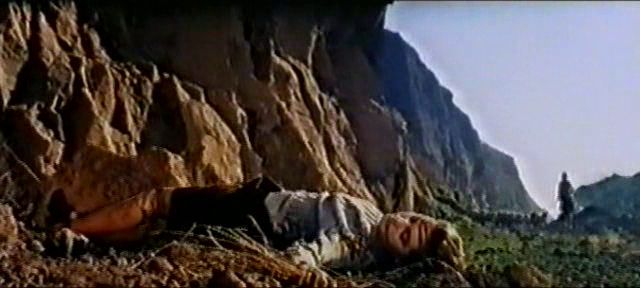
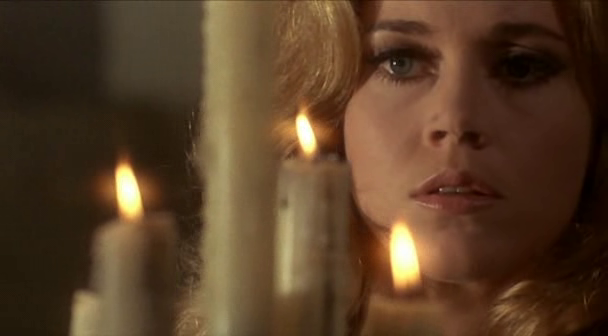
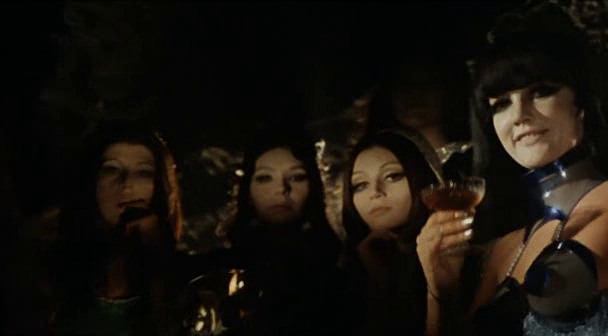
Peary is clearly not a fan of this “disappointing horror anthology for which three Poe tales were adapted by internationally known directors and which starred actors who usually stayed away from the genre”. Roger Vadim helmed the first episode, “Metzengerstein”, starring Jane Fonda as a cruel, “depraved libertine” who secretly covets her humble cousin (played by her real-life brother, Peter — kinky). It seems to exist primarily as an excuse for Fonda to wear yet more “revealing costumes” (after her starring role in Vadim’s Barbarella) while riding horses, staring at tapestries, and engaging in orgies that “must give TV censors fits”; unfortunately, it’s a real snooze. Next is a slightly more compelling but still disappointing episode — directed by Louis Malle — “about a sadist… who keeps seeing his moral counterpart, a lookalike named William Wilson”. Peary argues it is “poorly dubbed, unnecessarily vicious, and, surprisingly, contains no surprises”; its most memorable (if squeamishly disturbing) sequence involves Brigitte Bardot as “a cigar-smoking brunette who loses to the cheating Wilson at cards and must submit to his beating”.

Peary writes that “the most praised episode is Federico Fellini’s ‘Never Bet the Devil Your Head’, starring Terence Stamp as a booze-soaked, self-loathing American actor [Toby Dammit] who has come to Italy to make a moralistic western about redemption”, and “encounters Fellini’s usual array of grotesque movie- and press-types and the devil — a little blonde girl who keeps turning up in creepy settings”. He argues that while Fellini’s story is “too long and self-consciously arty”, “at least its violent ending… is carried out in an original manner”. Most other critics give Fellini’s short film even greater due, with DVD Savant (for instance) noting that “for once, a critique of showbiz goes beyond the obvious representations of phoniness and insincerity, and takes the extra step into insanity.” Indeed, this final episode — a deliciously surreal satire with a relentless pace and consistently jarring imagery — at least partially redeems the entire film. But as a whole, Spirits of the Dead remains an unpleasant outing that is more of a curiosity than essential viewing.

Redeeming Qualities and Moments:

  • Claude Renoir’s cinematography in “Metzengerstein”
  • Terence Stamp as Toby Dammit
  • Typically surreal imagery by Fellini

Must See?
No, though you may be curious to check out the third story.

Links: