Browsed by
Category: Original Reviews

Responses to Peary’s “must see” movie reviews, as well as my own “must see” movie reviews up to and after 1986 (when Peary’s book was published).

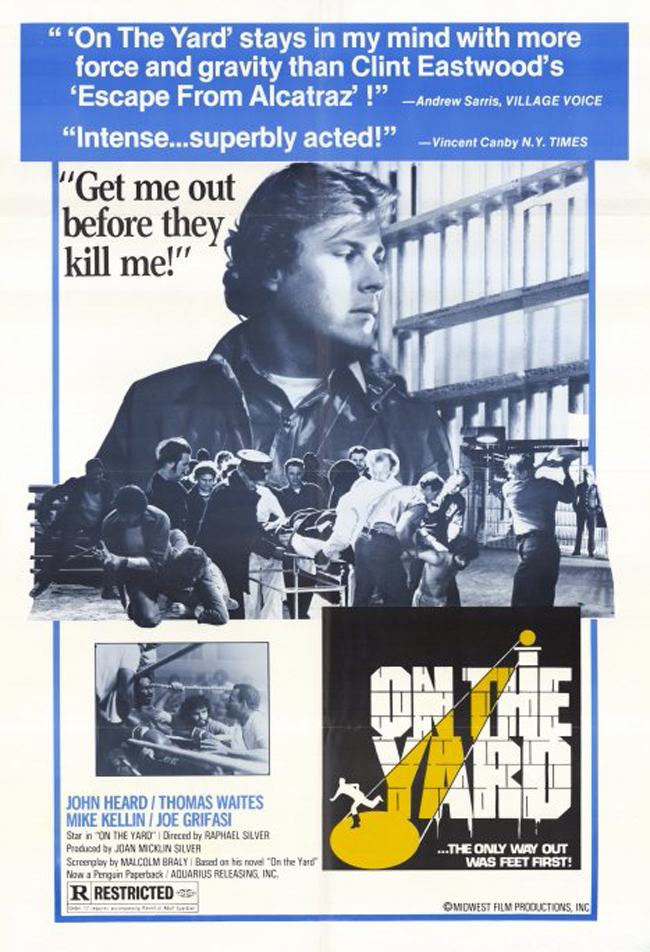
On the Yard (1978)

On the Yard (1978)

“You run the yard — everybody knows that.”

Synopsis:
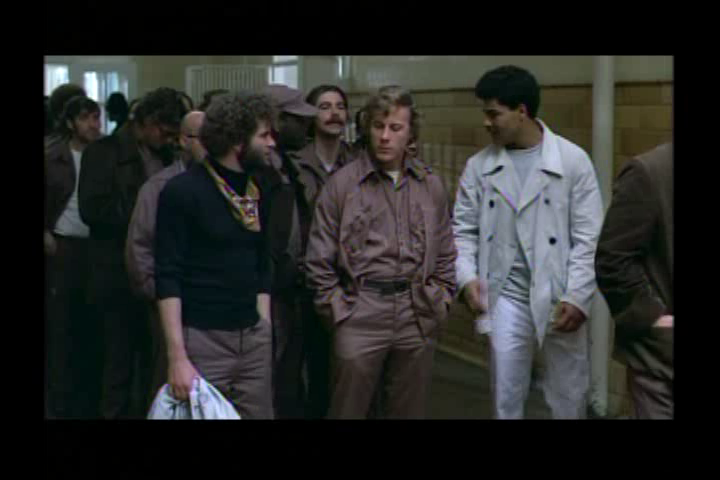
A convicted wife-murderer (John Heard) buys cigarettes on credit from a top-dog inmate (Thomas G. Waites), but finds his life at risk when he can’t pay Waites back on time, and refuses to collude with a captain (Lane Smith) determined to nail Waites. Meanwhile, Waites’ right-hand man (Mike Kellin) hopes the parole board will grant him early release, and an optimistic inmate (Joe Grifasi) attempts to sew an escape-worthy hot air balloon.

Genres, Themes, Actors, and Directors:

  • Bullies
  • John Heard Films
  • Prisoners

Review:
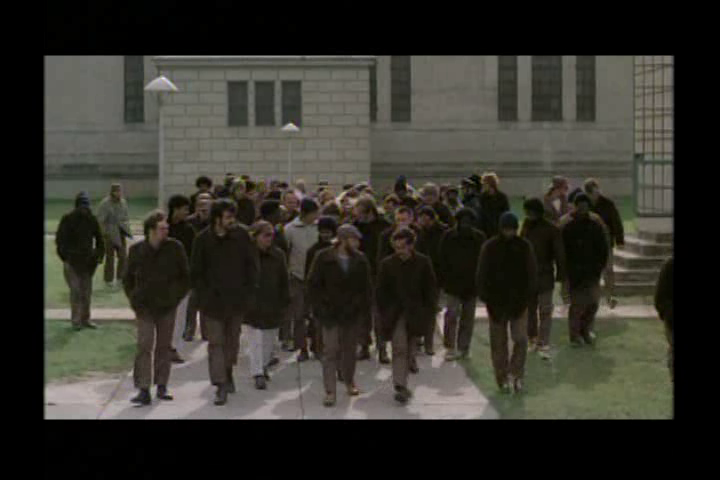
Based on a novel by an ex-con (Malcolm Braly), and co-produced and directed by husband-wife team Raphael D. Silver and Joan Micklin Silver, this downbeat but realistic glimpse of life in a men’s prison (filmed on-site at the State Correctional Institution at Rockview, Pennsylvania) offers a refreshingly authentic portrayal of survival “on the inside”, where existence is predicated on careful navigation of power dynamics among prisoners and correctional staff. While Heard’s stubbornness is foolishly naive, he at least maintains his morals at all costs, and his decisions shift the storyline in unexpected directions.

The sub-plot involving Grifasi’s hoped-for escape a la The Wizard of Oz (1939) strains credibility, but Kellin is a likable supporting character, and Waites gives a quietly convincing lead performance.

Redeeming Qualities and Moments:

  • Mike Kellin as Red
  • An authentic glimpse at power dynamics and survival in prison

Must See?
No, though it’s strongly recommended. Listed as a Sleeper and a Personal Recommendation in the back of Peary’s book.

Links:

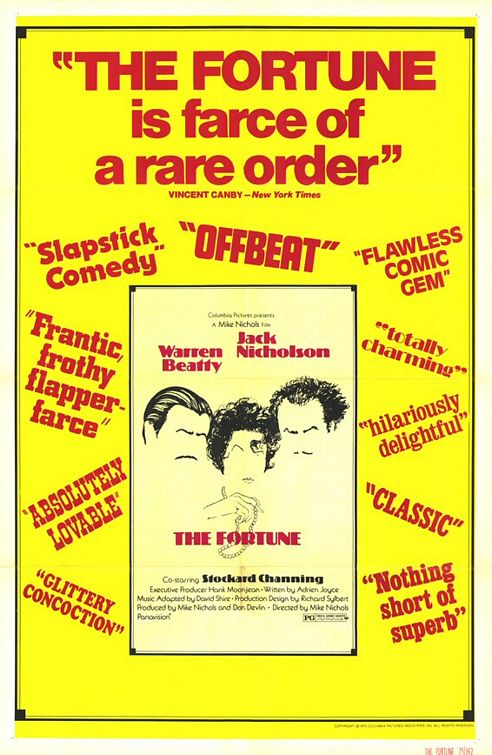
Fortune, The (1975)

Fortune, The (1975)

“She’s the mouse-bed heiress.”

Synopsis:
A married man (Warren Beatty) in “love” with an heiress (Stockard Channing) convinces his best friend (Jack Nicholson) to marry her so they can legally cross state lines during the height of the Mann Act — but complications quickly ensue as the trio struggles to co-exist in Los Angeles.

Genres, Themes, Actors, and Directors:

  • Black Comedy
  • Heiresses
  • Jack Nicholson Films
  • Mike Nichols Films
  • Plot to Murder
  • Warren Beatty Films

Review:
This clunker of a romantic slapstick (directed by Mike Nichols) remains noteworthy only for Stockard Channing’s breakthrough performance as a delightfully ditzy heiress. Unfortunately, the storyline starts off on shaky ground, as an opening title card informs us that:

During the 1920’s in the United States, a law known as the Mann Act was much feared. It prohibited transporting a woman across state lines for immoral purposes. Because of the Mann Act, a man who wanted to run off with a woman and was unwilling — or unable — to marry her, would sometimes go to unusual lengths.

(The Mann Act was more commonly known as the “White-Slave Traffic Act”, and was meant to “combat forced prostitution and ‘debauchery'” of white women, though that historical context is never made relevant.)

We quickly learn — in an elaborate visual “joke” — that Channing will marry wild-haired Nicholson instead of Beatty (who she’s obviously in love/lust with), but it’s never explained why flying to Los Angeles will help Beatty’s status as an already-married man, or how much he may actually like Channing apart from her wealth. Eventually, he and Nicholson collude to kill Channing, planning to split the proceeds 50/50 — but everything about this plan smells justifiably foul, and inevitably goes awry. There’s some fun to be had in watching Channing nimbly escaping from the bumbling duo’s feeble clutches, but the point of it all simply isn’t clear.

Note: The quote selected above alludes to Channing’s status as the heiress to a sanitary pad company; Nicholson shares a lame anecdote early on about being told these were “mouse beds” as a child, hence the continual wordplay.

Redeeming Qualities and Moments:

  • Stockard Channing as Freddie
  • Effective period sets

Must See?
No, but check it out if you’re curious to see Channing’s performance.

Links:

Cheerleaders, The (1973)

Cheerleaders, The (1973)

“Mom! Dad! I made the team!”

Synopsis:
A virginal teen (Stephanie Fondue) with a ho-hum boyfriend (Jonathan Jacobs) is thrilled to join her school’s squad of promiscuous cheerleaders — Claudia (Denise Dillaway), Bonnie (Jovita Bush), Debbie (Brandy Woods), Suzie (Clair Dia), and Patty (Kimberly Hyde) — who will stop at nothing to help their team win the game, and who are determined to help Fondue lose her virginity.

Genres, Themes, Actors, and Directors:

  • Cheerleaders
  • Comedy
  • Football
  • Virginity

Review:
Peary lists many questionable titles in his GFTFF, including numerous hardcore and softcore flicks that should be considered with caution. With that said, I’ll quickly note that this “Camp Classic” — beloved by men-of-a-certain-age who remember it fondly from their youth — is actually a terribly acted but competently filmed piece of softcore p*** that, as noted in Grindhouse Film’s podcast review, “promotes unprotected teenage sexual activities and rape”. These cheerleaders are so over-the-top in every way that it’s impossible to take them or their antics seriously — but certain scenes are still deeply disturbing in their implication that nubile young women are eagerly awaiting any and every opportunity to “get it on”.

Redeeming Qualities and Moments:

  • Some creative sets

Must See?
Nope. If you’re nostalgic for this kind of flick, you know who you are already. Listed as a Camp Classic in the back of Peary’s book.

Links:

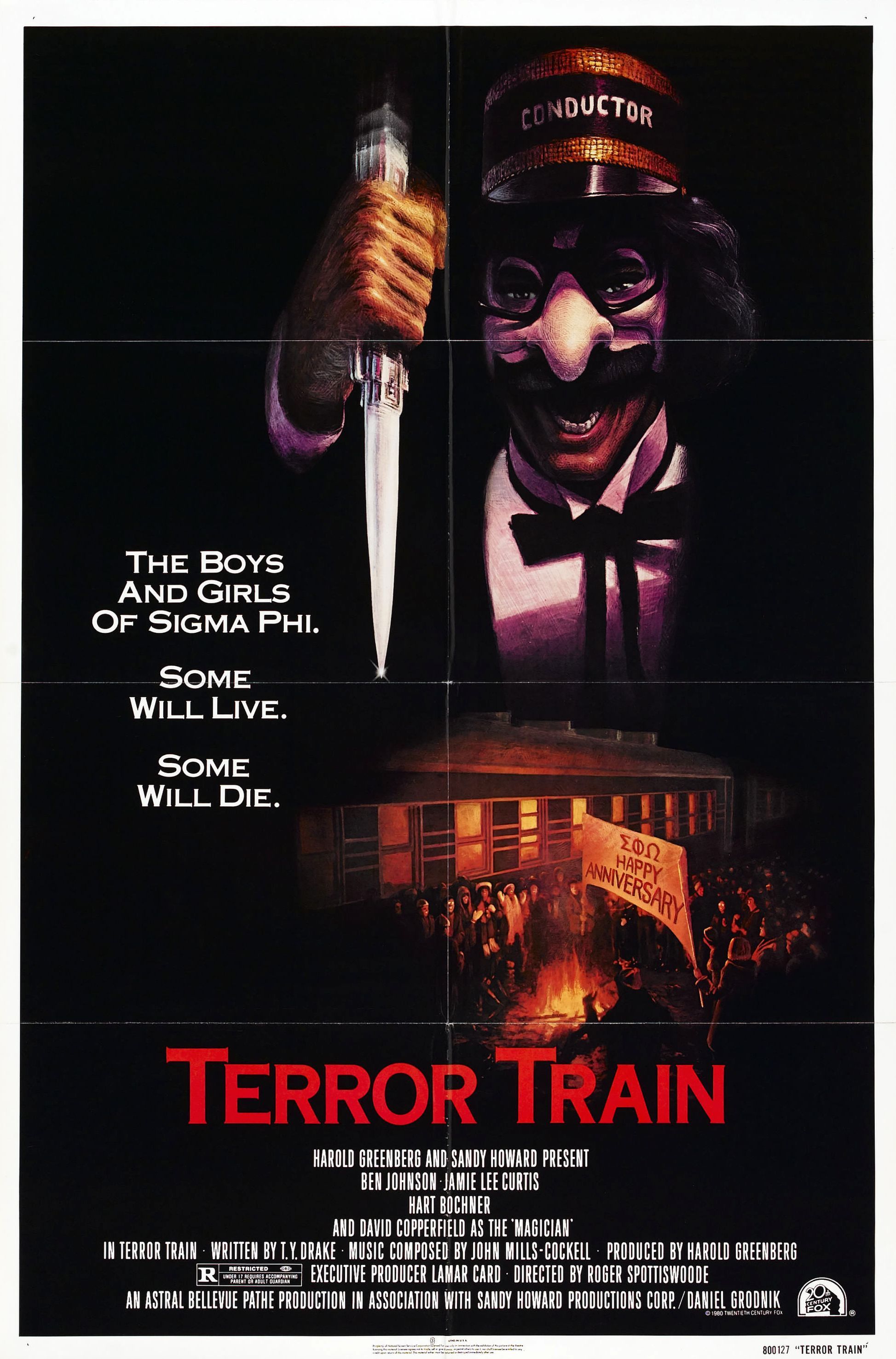
Terror Train (1980)

Terror Train (1980)

“I hate magic. It’s just tricks.”

Synopsis:
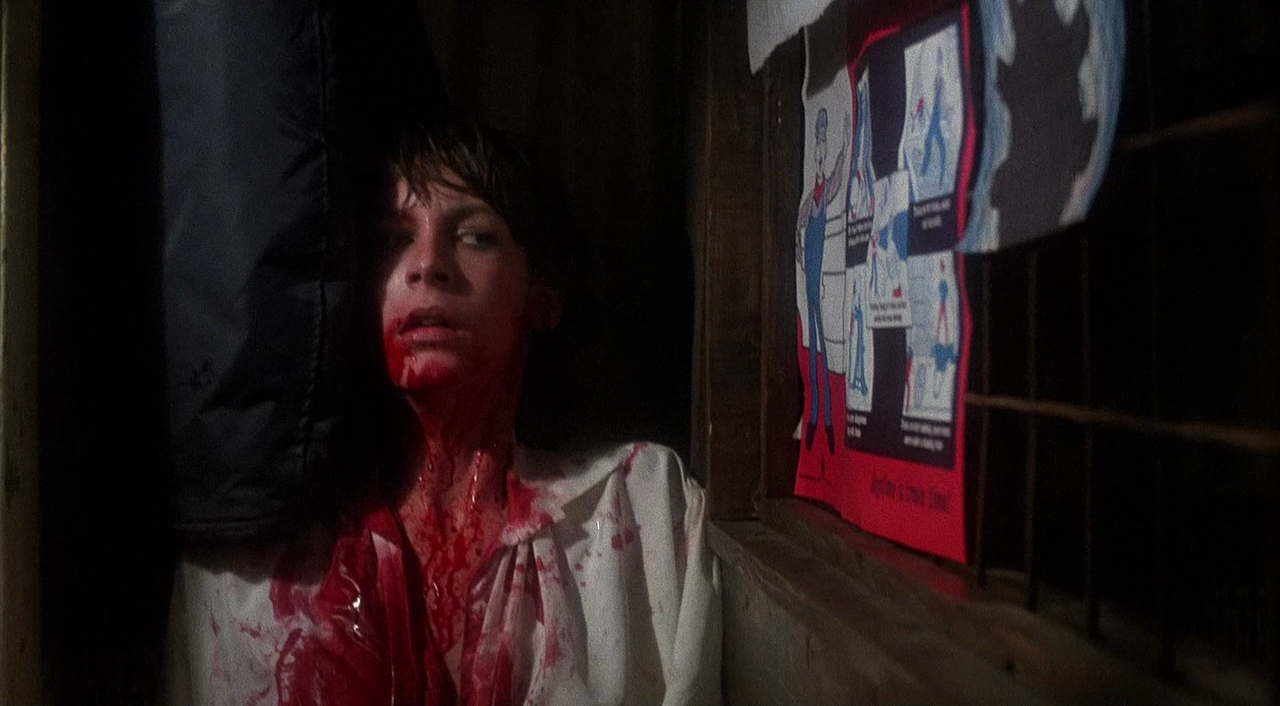
Several years after playing a vicious prank on a classmate (Derek McKinnon), a group of pre-med students dressed in various costumes — including a monk (Hart Bochner), Groucho Marx (Howard Busgang), an alien lizard (Anthony Sherwood), a witch (Sandee Currie), and a bird (Timothy Webber) — find themselves serially murdered on a New Year’s Eve train trip featuring a magician (David Copperfield) as a guest performer. While the conductor (Ben Johnson) tries his best to protect the passengers, the lone survivor (Jamie Lee Curtis) is still at risk.

Genres, Themes, Actors, and Directors:

  • Ben Johnson Films
  • Horror Films
  • Magicians
  • Murder Mystery
  • Revenge
  • Serial Killers
  • Trains

Review:
Jamie Lee Curtis developed a well-deserved reputation as a “scream queen” after her starring turn in Halloween (1978), and she lives up to it in this inferior but reasonably shock-filled thriller, set on a train moving through remote and snowy territory. John Alcott’s rich cinematography is appropriately atmospheric, and the presence of real-life magician David Copperfield is an inspired component of the script, contributing to a pervasive sense of tricks lurking around every corner. Otherwise, this is simply standard slasher-fare, with only one likable character (Curtis) and a somewhat inevitable ending (albeit it with a creative twist to the “reveal” of the killer).

Redeeming Qualities and Moments:

  • Jamie Lee Curtis as Alana
  • Many effectively scary moments
  • John Alcott’s cinematography

Must See?
No, though fans of the genre will want to check it out.

Links:

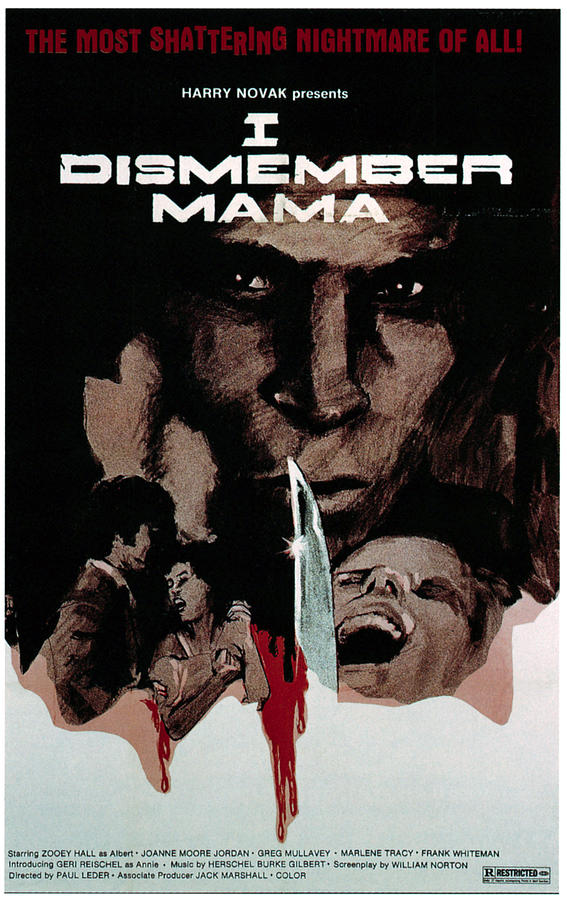
I Dismember Mama (1972)

I Dismember Mama (1972)

“My mother’s a whore; in the middle ages, she would have been stoned to death.”

Synopsis:
After attempting to strangle a nurse (Elaine Partnow) and then killing an attendant (James Tartan), a deeply disturbed psychopath (Zooey Hall) escapes from his mental institution intent on murdering his mother (Joanne Moore Jordan), who naively believes a psychiatrist’s (Frank Whiteman) claim that Hall can be “cured”. But when Hall rapes and murders his mother’s personal assistant (Marlene Tracy), then kidnaps Tracy’s naive young daughter Annie (Geri Reischl) and “marries” her in a hotel room, a detective (Greg Mullavey) knows he has no time to lose in capturing “poor Albert” (Hall).

Genres, Themes, Actors, and Directors:

  • Horror Films
  • Insanity and Insane Asylums
  • Serial Killers

Review:
This embarrassment of a psycho-thriller belongs nowhere near a must-see film list. It’s disturbing not only to think about this film being written and made, but to contemplate its hypothetical fan base. The film’s original title — Poor Albert and Little Annie — strongly hints we should remain sympathetic to this monstrous man:

who befriends “pure” Annie much like Frankenstein’s monster befriends the little girl he drowns in a lake. (Albert courts Annie by going boating on a lake… Yes, the ‘homage’ is that explicit.)

Hall’s other notable role was as a sadistic prisoner in Fortune and Men’s Eyes (1971), so I guess he was riding a convenient wave of stereotyped casting.

Redeeming Qualities and Moments:
None.

Must See?
For goodness’ sake, no. Listed as a Camp Classic, a Cult Movie, and (appropriately) Trash in the back of Peary’s book.

Links:

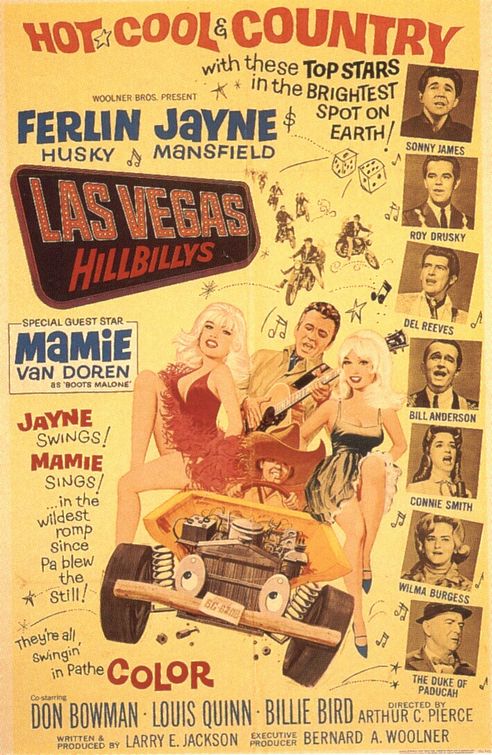
Las Vegas Hillbillys, The / Country Music U.S.A. (1966)

Las Vegas Hillbillys, The / Country Music U.S.A. (1966)

“My mamma didn’t raise no fools — and I’m gonna give a crack to this nightclub business before I give up!”

Synopsis:
An aspiring country singer (Ferlin Husky) and his buddy (Don Bowman) head to Las Vegas, where Husky takes over a debt-ridden dive bar he’s inherited from his deceased uncle. With help from bar-singer “Boots” Malone (Mamie van Doren) and local phenom “Tawny” (Jayne Mansfield), Husky and Bowman attempt to revive the joint by bringing in top-name country music talent.

Genres, Themes, Actors, and Directors:

  • Comedy
  • Inheritance
  • Jayne Mansfield Films
  • Mamie van Doren Films
  • Musicals

Review:
It’s unclear why Peary lists this “Hee Haw” precursor in his GFTFF, but my guess is he couldn’t resist including the only film “co-starring” two of the “Three Ms” (Marilyn Monroe, Jayne Mansfield, and Mamie van Doren) — though Mansfield and van Doren apparently detested each other enough that doubles were used in the one scene in which they appear together. M&M do what they do best — flaunt their curves, their vocal pipes, and their outsized personalities — but otherwise, this flick is really just an excuse to incorporate a number of singing performances by current country music stars (including Sonny James, Roy Drusky, Del Reeves, Bill Anderson, Connie Smith, Wilma Burgess, Duke of Paducah, Junior Carolina Cloggers, the Jordanaires, Don Bowman, and Lois Quinn).
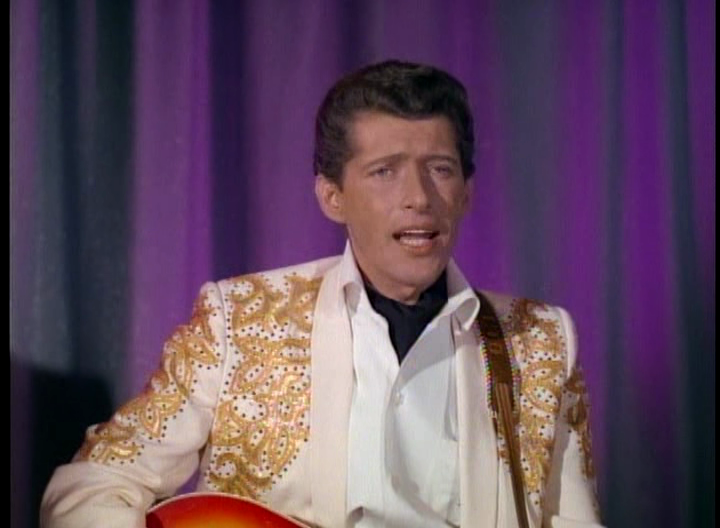
The slim-to-none storyline utilizes every possible opportunity to make fun of “hillbillys” (dilapidated cars, burning hooch stills, drawling accents) while also demonstrating their tenacity and family ties (“Aunt Clem” — Billie Bird — comes to the rescue near the end). Watch for a “cameo” by Richard Kiel (“Jaws” in Moonraker) as, of course, a hulking bodyguard.

Redeeming Qualities and Moments:

  • Fun presence of van Doren and Mansfield (albeit only on screen together once — using doubles)

Must See?
No; this one’s strictly for fans of van Doren, Mansfield, or country music of the era.

Links:

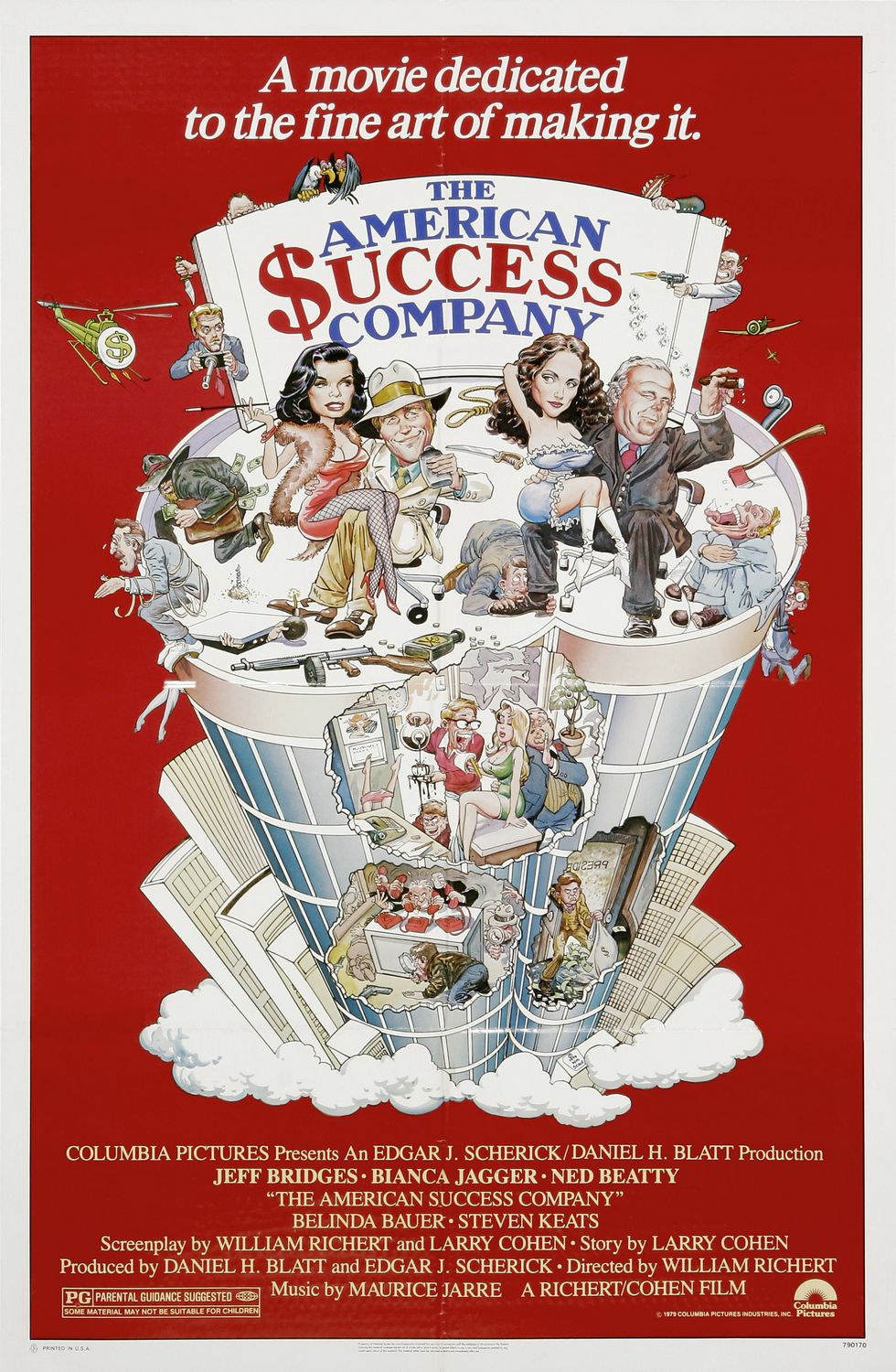
American Success Company, The (1980)

American Success Company, The (1980)

“I sensed there was something I could learn from him that would save my marriage.”

Synopsis:
A milquetoast (Jeff Bridges) married to the supremely spoiled daughter (Belinda Bauer) of an arrogant millionaire (Ned Beatty) is inspired by an aggressively virile man (David Allen Brooks) he sees at a party, and seeks help from a prostitute (Bianca Jagger) in gaining confidence to take on a new identity and carry out a heist at his father-in-law’s business.

Genres, Themes, Actors, and Directors:

  • Black Comedy
  • Character Arc
  • Heists
  • Jeff Bridges Films
  • Mistaken or Hidden Identities
  • Ned Beatty Films

Review:
This obscure black comedy — written by Larry Cohen, and directed by William Richert, best known for helming the assassination paranoia flick Winter Kills (1979) — is a surreal ride through a rather simplistic premise, one that seems better suited for a short comedy sketch than a full-length feature. Nothing much happens here other than a man of questionable taste and morals seeking revenge on a raging narcissist; it’s all meant to be madcap and satirical, but falls pretty flat. I’m puzzled why Peary lists this title in GFTFF; it’s only recommended for diehard Bridges fans.

Redeeming Qualities and Moments:

  • Jeff Bridges as Harry/Mac

Must See?
No. Listed as a Sleeper and a Cult Movie in the back of Peary’s book.

Links:

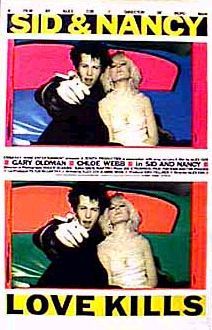
Sid and Nancy (1986)

Sid and Nancy (1986)

“If I asked you to kill me, would you?”

Synopsis:
Bass guitarist Sid Vicious (Gary Oldman) falls for a whining junkie (Chloe Webb) who sends them both on a downward spiral towards lethal violence.

Genres, Themes, Actors, and Directors:

  • Alcoholism and Drug Addiction
  • Biopics
  • Flashback Films
  • Musicians
  • Obsessive Love

Review:
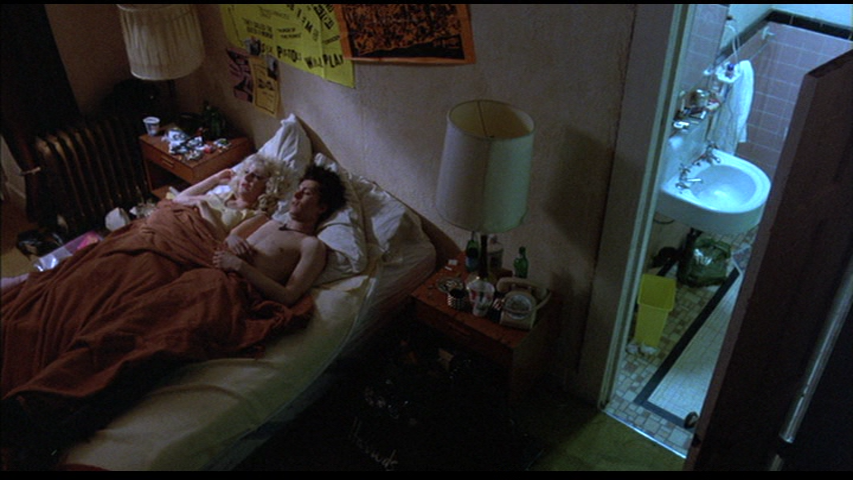
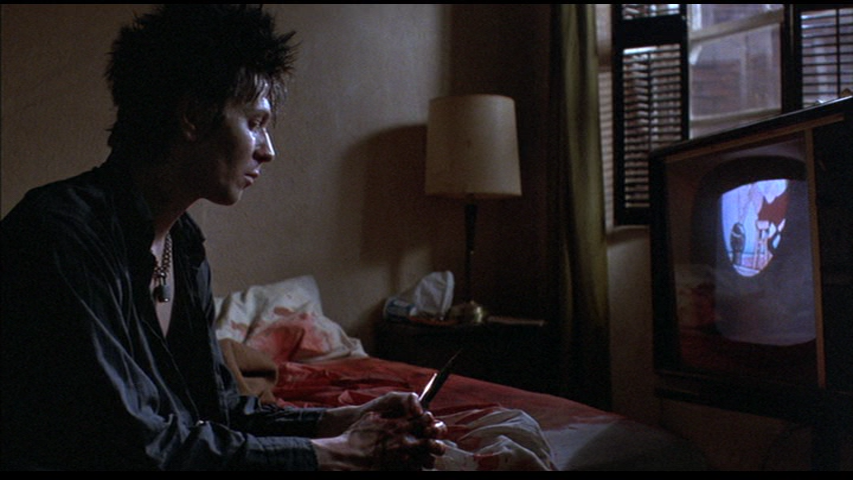
Having recently reread Deborah Spungen’s heartbreaking account of her struggles to raise Nancy Spungen — the chaotically disturbed girl who gained infamy as punk rocker Sid Vicious’s slain girlfriend — I was curious to view Alex Cox’s cult film about the couple (which Spungen insists she’s never watched). (The film was also soundly disavowed by Sex Pistols lead singer Johnny Rotten, who claims he wasn’t consulted and that the film got everything “all wrong”.) Nearly three decades after “nauseating Nancy”‘s death by stabbing in New York’s Chelsea Hotel, the story holds some morbid fascination, but will likely only be of interest to true fans of early punk. On its own, it’s a challenging film to sit through, given its inherently unlikable protagonists: sure, Oldman and Webb give fine performances as the duo Roger Ebert referred to as the “Romeo and Juliet of punk”, but why should we care about their painfully dysfunctional existence?

Redeeming Qualities and Moments:

  • Gary Oldman as Sid Vicious
  • Chloe Webb as Nancy Spungen
  • Authentically gritty sets

  • Roger Deakins’ cinematography

Must See?
No, though it’s worth a look as a cult flick. Peary’s clearly a big fan, given that he lists this title as a Cult Movie, a film with Historical Importance, and a Personal Recommendation in the back of his book. He also nominates it as one of the Best Movies of the Year in his Alternate Oscars, and nominates both Oldman and Webb for their performances.

Links:

Journey Into Fear (1943)

Journey Into Fear (1943)

“I can forgive almost anything but stupidity.”

Synopsis:
During World War II, a ballistics expert (Joseph Cotten) in Turkey is separated from his wife (Ruth Warrick) and taken by a business representative (Everett Sloane) to a nightclub, where he is nearly killed. A Turkish colonel (Orson Welles) arranges for him to travel home by steamer — but when his would-be assassin (Jack Moss) appears to be stalking him on-board the ship, Cotten relies on the friendship of a beautiful nightclub dancer (Dolores Del Rio) to help him make sense of his nightmarish situation.

Genres, Themes, Actors, and Directors:

  • At Sea
  • Dolores Del Rio Films
  • Hans Conried Films
  • Joseph Cotten Films
  • Living Nightmare
  • “No One Believes Me!”
  • Orson Welles Films

Review:
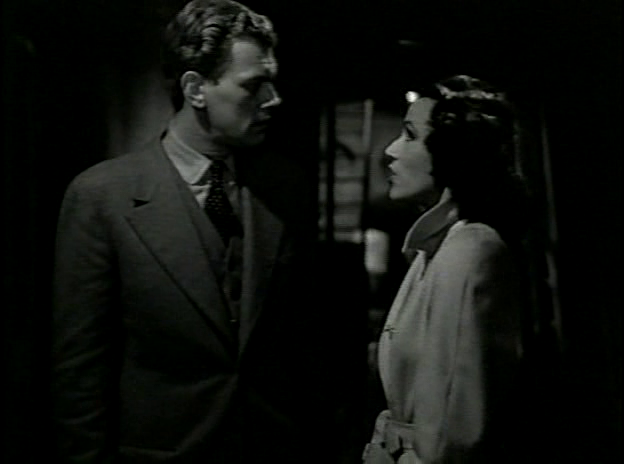
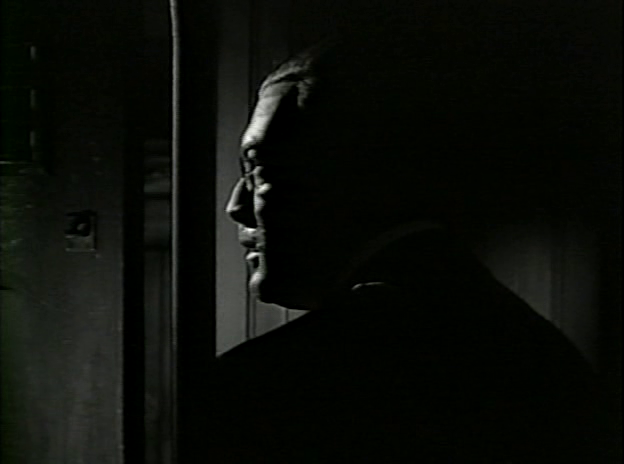
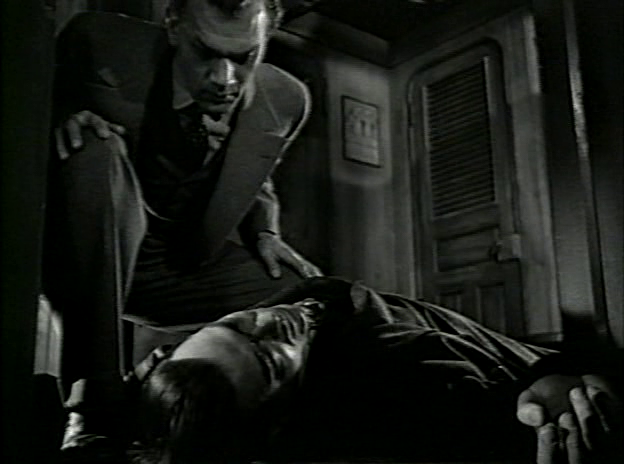
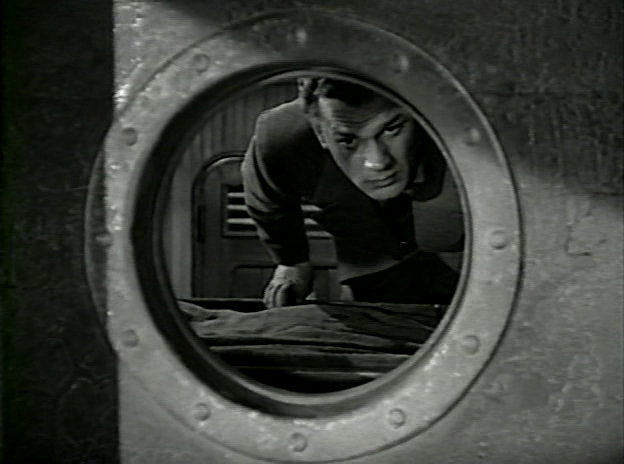
Orson Welles was reportedly deeply unhappy with the results of this adaptation of Eric Ambler’s spy-novel, which he designed, produced, and co-scripted (with Cotten), but which got severely butchered by RKO during editing. It’s easy to understand why Welles was so upset: the footage that’s here (just 69 minutes) is atmospheric, creatively filmed (by director Norman Foster and DP Karl Struss), and filled with quirky characters and dialogue — but the whirlwind tale needs much more context to sufficiently flesh it out. The existing film is essentially a Kafka-esque living-nightmare — straightforward to follow, but in a way that will have your head spinning with endless unanswered questions: Was Cotten’s life jeopardized from the get-go, or did Sloane trigger a domino effect, and if so, to what point? Is this meant to be a “realistic” spy thriller, or an allegorical tale about the insanity of war? Is Cotten’s marriage really at risk, or was his voice-over added to bring “romantic tension” to the story? Fans of Welles’ distinctive work will certainly be curious to check out this interesting film, but be prepared for frustration at what-might-have-been.

Redeeming Qualities and Moments:

  • Atmospheric cinematography

  • Creative direction

Must See?
No, though it’s recommended for its historical and cinematic interest. Listed as a Sleeper in the back of Peary’s book.

Links:

Key Largo (1948)

Key Largo (1948)

“When your head says one thing and your whole life says another, your head always loses.”

Synopsis:
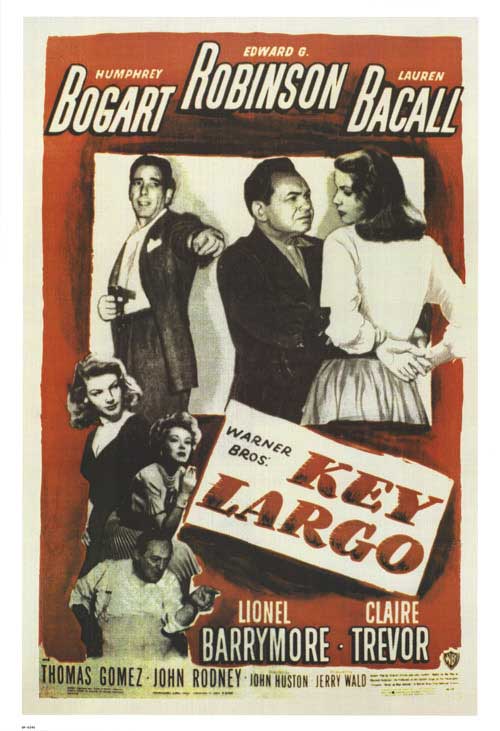
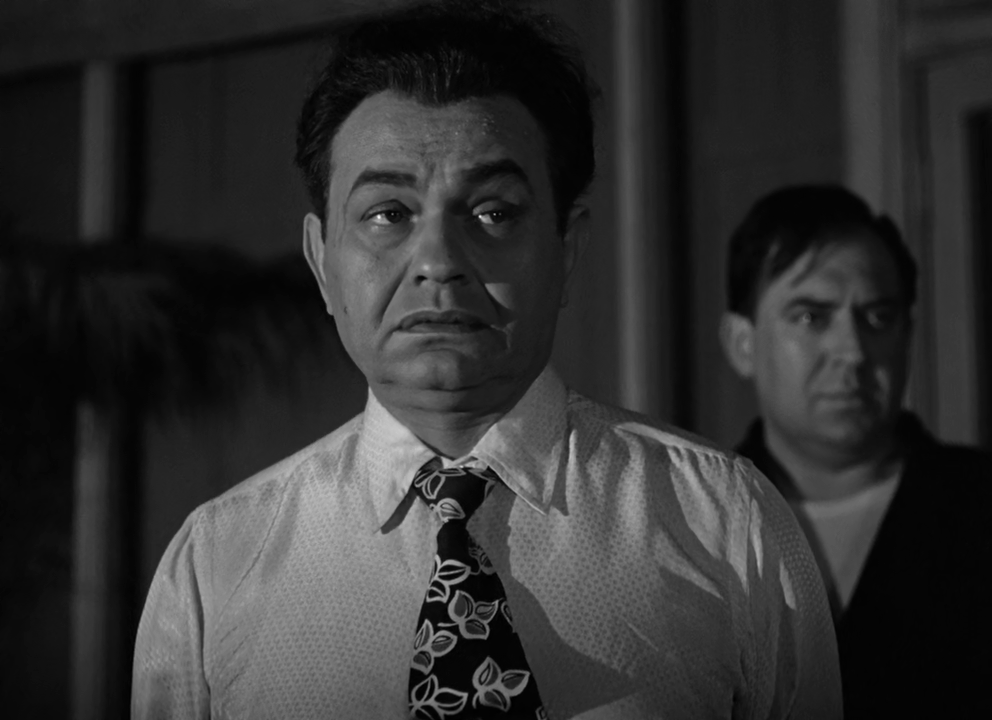
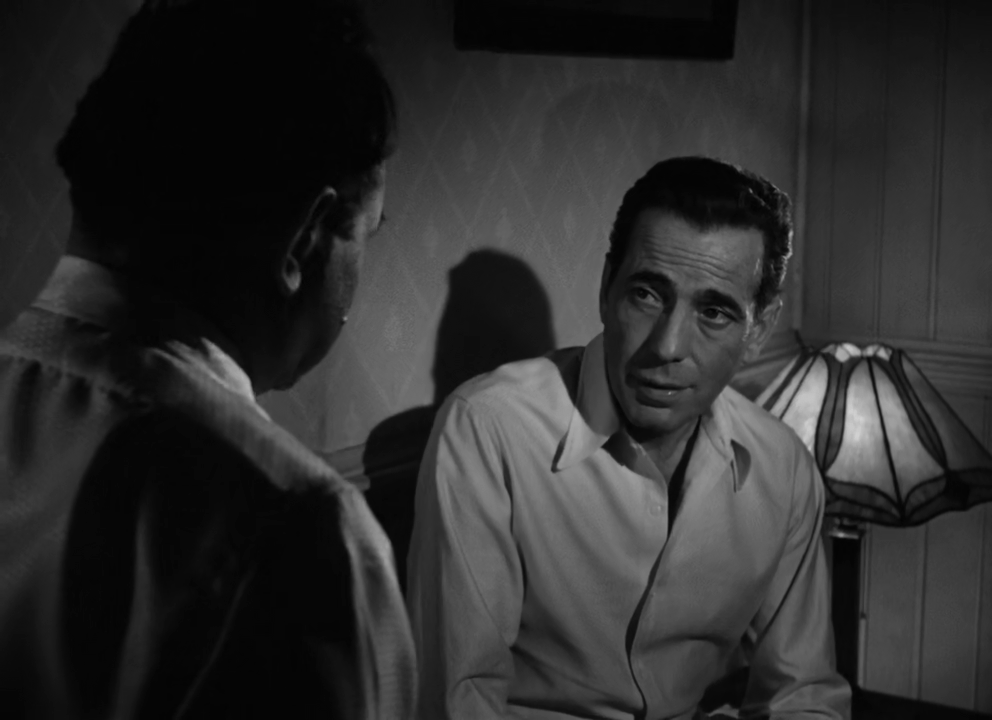
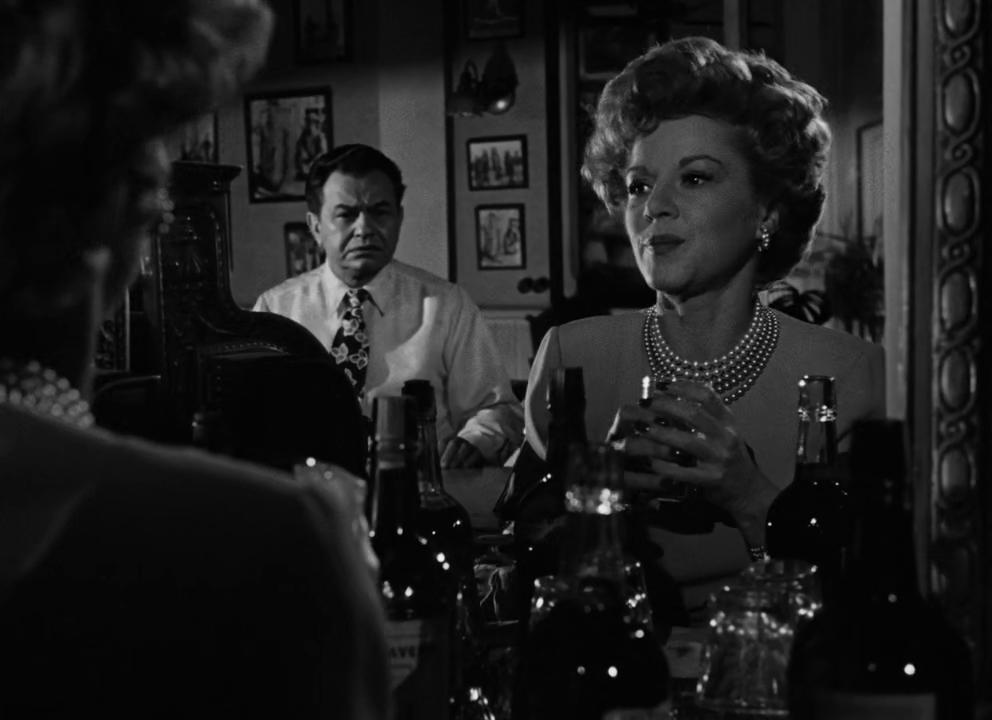
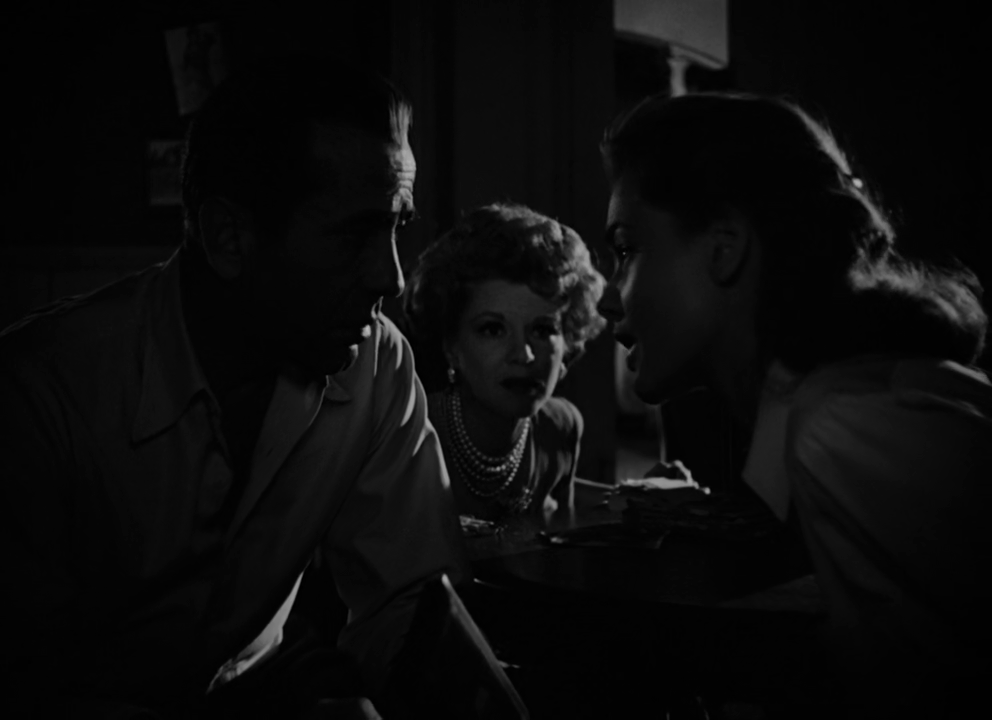
On the eve of a hurricane, an ex-major (Humphrey Bogart) travels to a hotel in the Florida Keys to visit the widow (Lauren Bacall) and father (Lionel Barrymore) of a deceased army friend. He is soon embroiled in a stand-off with the hotel’s only guests: gangster Johnny Rocco (Edward G. Robinson), Rocco’s assistants (Harry Lewis, Thomas Gomez, William Haade, and Dan Seymour), and Rocco’s alcoholic moll (Claire Trevor).

Genres, Themes, Actors, and Directors:

  • Claire Trevor Films
  • Edward G. Robinson Films
  • Gangsters
  • Hostages
  • Humphrey Bogart Films
  • John Huston Films
  • Lauren Bacall Films
  • Lionel Barrymore Films
  • Play Adaptation

Review:
Directed by John Huston and based on a play by Maxwell Anderson, this tension-filled hostage flick featured the fourth on-screen pairing of real-life couple Lauren Bacall and Humphrey Bogart — after To Have and Have Not (1944), The Big Sleep (1946), and Dark Passage (1947) — and afforded Robinson an opportunity to reprise his “gangster persona” as a fictional mash-up of Al Capone and Charles ‘Lucky’ Luciano. The screenplay (by Huston and Richard Brooks) makes excellent use of a claustrophobic “old dark house” setting, as the characters are bound together through both an impending hurricane and the threats of a ruthless, psychopathic gangster; meanwhile, surviving veteran Bogart is able to prove his masculinity and integrity to Bacall, others, and himself. Excellent performances, atmospheric cinematography, and a taut script make this a must-see classic by a master director.

Redeeming Qualities and Moments:

  • Fine performances by the entire cast


  • Karl Freund’s cinematography

  • An exciting, tension-filled script

Must See?
Yes, as a genuine classic.

Categories

  • Genuine Classic
  • Important Director

Links: