Browsed by
Category: Original Reviews

Responses to Peary’s “must see” movie reviews, as well as my own “must see” movie reviews up to and after 1986 (when Peary’s book was published).

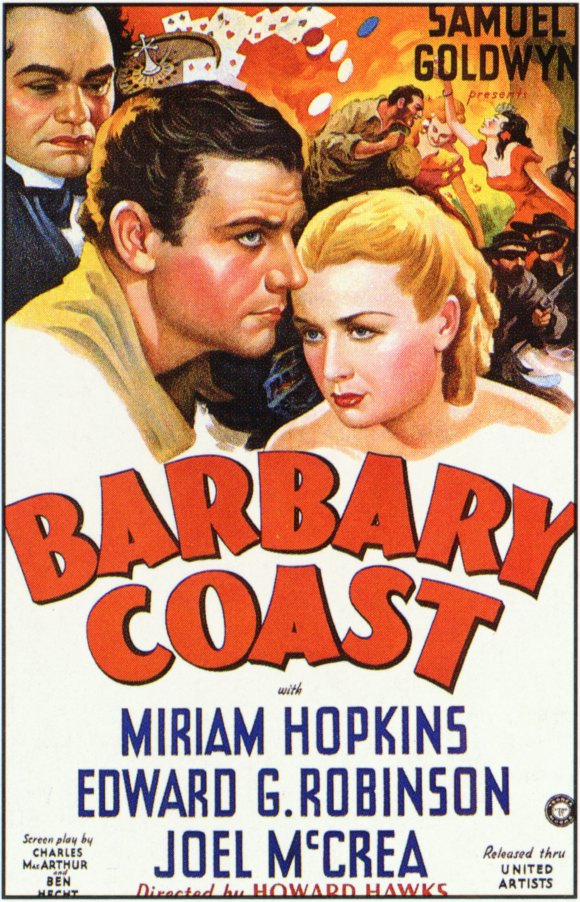
Barbary Coast (1935)

Barbary Coast (1935)

“San Francisco is no place for a bad loser — man or woman.”

Synopsis:
Accompanied by a retired colonel (Frank Craven), a single woman (Miriam Hopkins) sails to San Francisco during the Gold Rush, hoping to marry a wealthy man sight unseen. After learning her fiancé has been killed in a lawless dispute, the local crime-boss (Edward G. Robinson) offers Hopkins work in his corrupt saloon, hoping she’ll come to love him — but Hopkins instead loses her heart to a poetic goldminer (Joel McCrea).

Genres:

  • Brian Donlevy Films
  • Corruption
  • Edward G. Robinson Films
  • Feminism and Women’s Issues
  • Gold Diggers
  • Historical Drama
  • Howard Hawks Films
  • Joel McCrea Films
  • Love Triangle
  • Mining Towns
  • Miriam Hopkins Films
  • Mistaken or Hidden Identities
  • Strong Females
  • Westerns

Review:
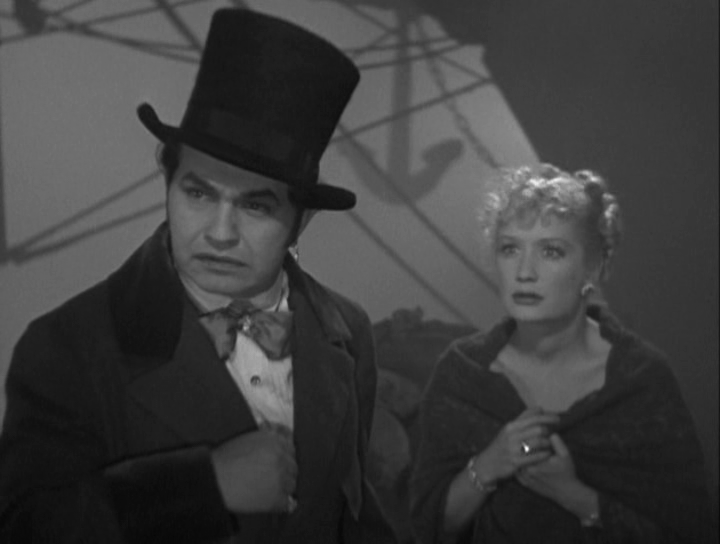
Howard Hawks directed this cryptically titled historical drama which manages to cover an enormous amount of dramatic territory — mistaken identities, unrequited love, gold-digging, goldmining, feminism, vigilante justice, corruption, and freedom of speech, to name just a few topics — in its 91 minute running time. Robinson is suitably cast as a power-hungry crime-lord who wants to possess the most beautiful creature to enter “his” town in recent years:

… speaking of which, there are some uncomfortably dated moments early in the film when much is made of Hopkins being an enormously desirable WHITE woman (after the camera has panned past attractive women with darker skin), as well as a scene openly mocking Chinese immigrants’ presumed beliefs about wearing a braided queue to get into heaven (see here for a more accurate history of this hairstyle). With these caveats aside, the cinematography is atmospheric, and the story is reasonably engaging — particularly the critical subplot about Craven’s attempts to start an honest newspaper in a town that would rather keep its law and order tactics secret. (The more things change…)

Redeeming Qualities and Moments:

  • Atmospheric cinematography

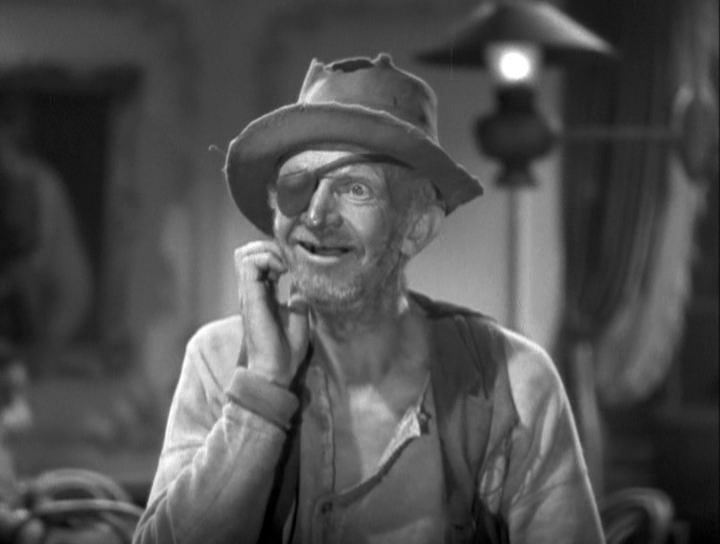
  • Walter Brennan as Old Atrocity

Must See?
No, though Hawks fans will surely want to check it out.

Links:

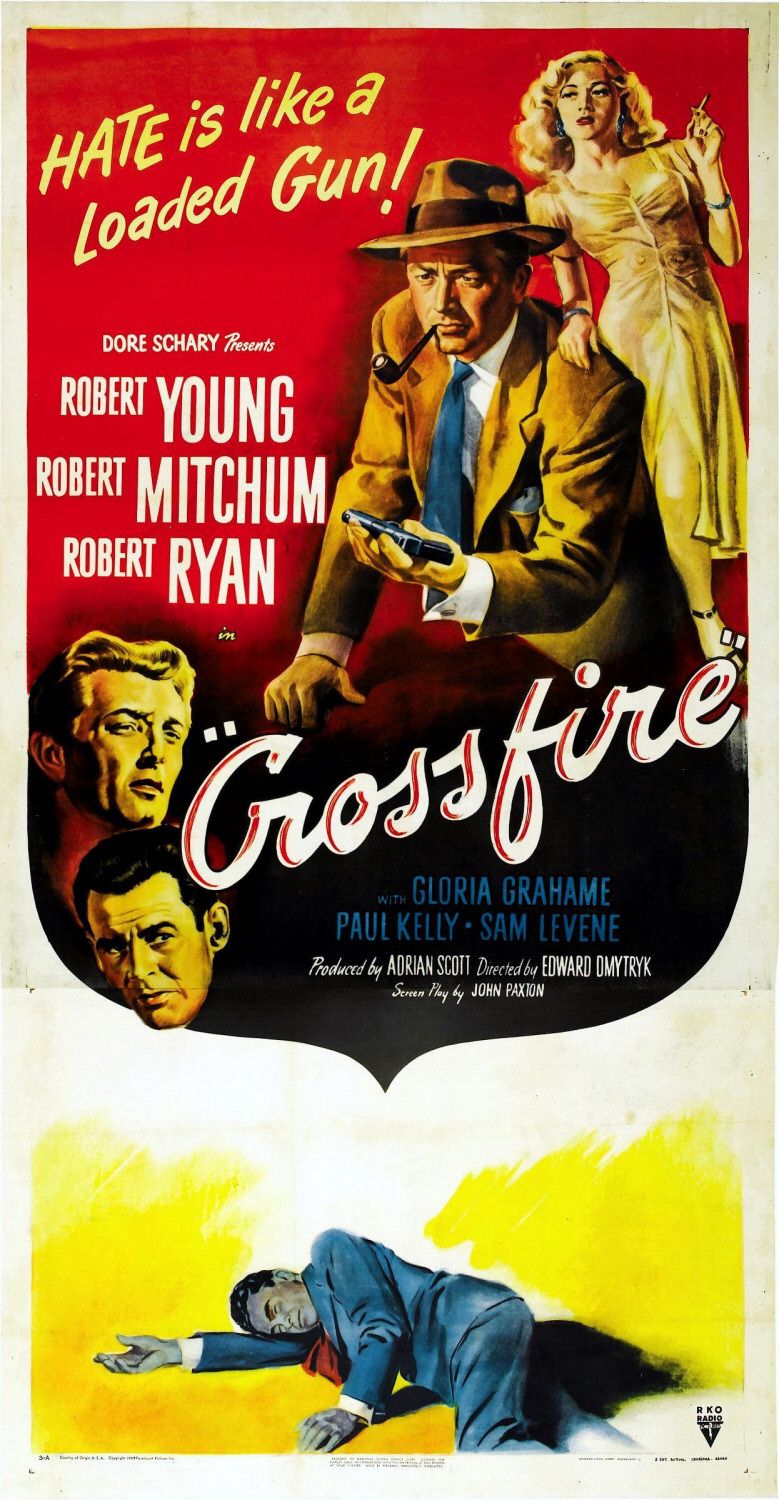
Crossfire (1947)

Crossfire (1947)

“Some of them are named Samuels; some of them have got funnier names.”

Synopsis:
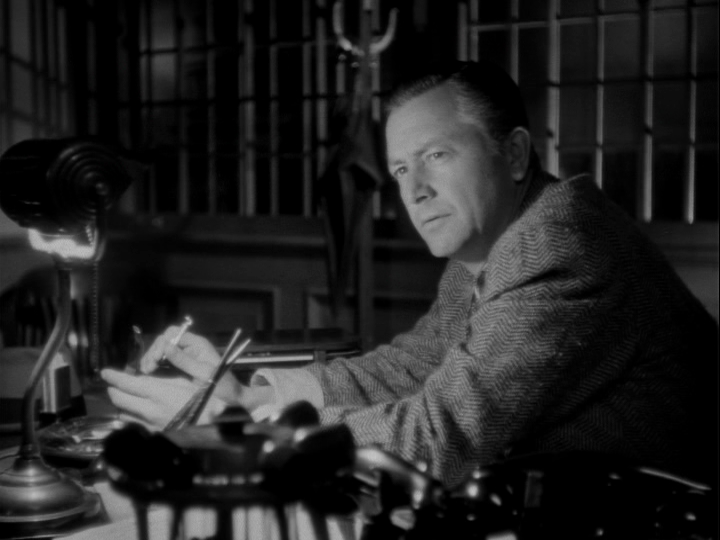
When a Jewish man (Sam Levene) is murdered in his apartment after socializing with a group of soldiers in a nearby bar, a detective (Robert Young) investigates the case. While the presumed culprit is a drunken soldier (George Cooper) who visits a dance hall girl (Gloria Grahame) while pining for his wife (Jacqueline White), Cooper’s anti-Semitic platoon buddy (Robert Ryan) soon arouses suspicion as well.

Genres, Themes, Actors, and Directors:

  • Detectives and Private Eyes
  • Edward Dmytryk Films
  • Gloria Grahame Films
  • Jews
  • Murder Mystery
  • Robert Mitchum Films
  • Robert Ryan Films
  • Robert Young Films
  • Soldiers

Review:
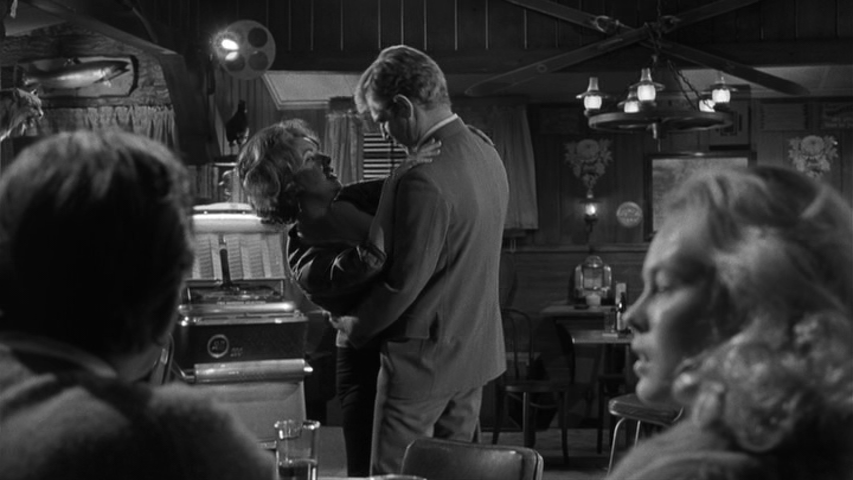
Edward Dmytryk’s adaptation of Richard Brooks’ novel The Brick Foxhole is notable both as the first B-level film to be nominated for an Oscar as Best Picture of the Year, and for running neck to neck with Gentleman’s Agreement (1947) as one of the first Hollywood movies to openly address anti-semitism. Ironically, Brooks’ novel was actually about homophobia, a topic banned at the time by the Production Code. However, unlike Brooks’ own directorial adaptation of Tennessee Williams’ Cat On a Hot Tin Roof (1958) — which suffers from a fatal loss of sensical motives when Paul Newman’s homosexuality is taken out of the storyline — the thematic switch here works fine; it’s easy to be convinced that anti-Semitism (ever present, albeit often in more subtle forms) might drive a senseless murder like this one. As Dmytryk wrote in his autobiography:

After our rough-cut showing to the sound and music department, one of the young assistant sound cutters, an Argentine, complimented me on the picture.
“It’s such a fine suspense story,” he said. “Why did you have to bring in that stuff about anti-Semitism?”
“That was our chief reason for making the film,” I answered.
“But there is no anti-Semitism in the United States,” he protested. “If there were, why is all the money in America controlled by Jewish bankers?”
I stared at him in astonishment. “That’s why we made the film”, was all I could think of to say.

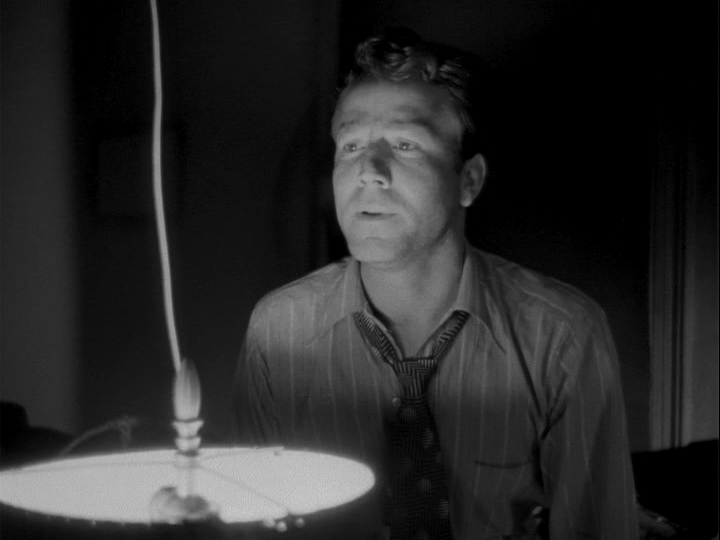
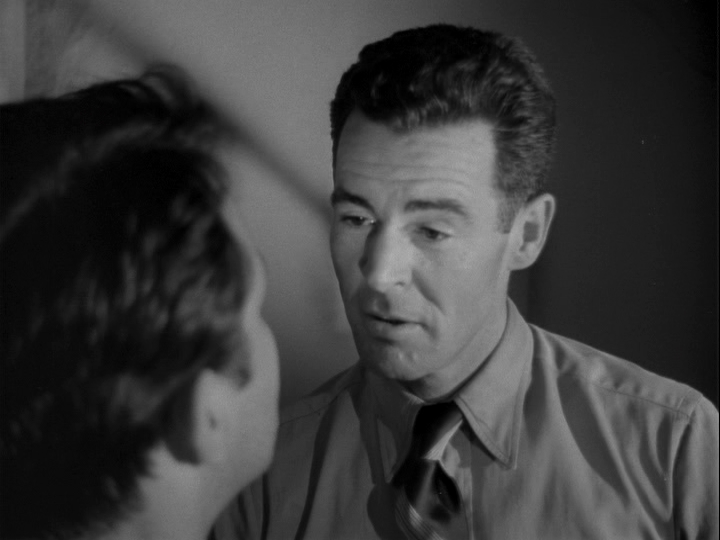
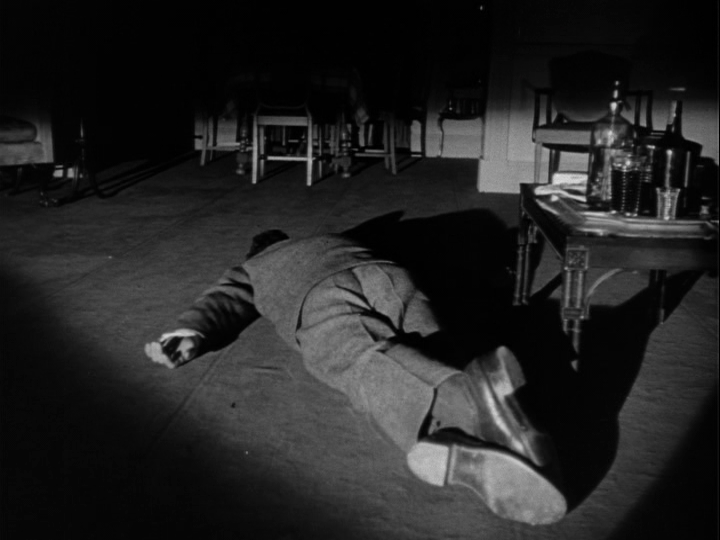
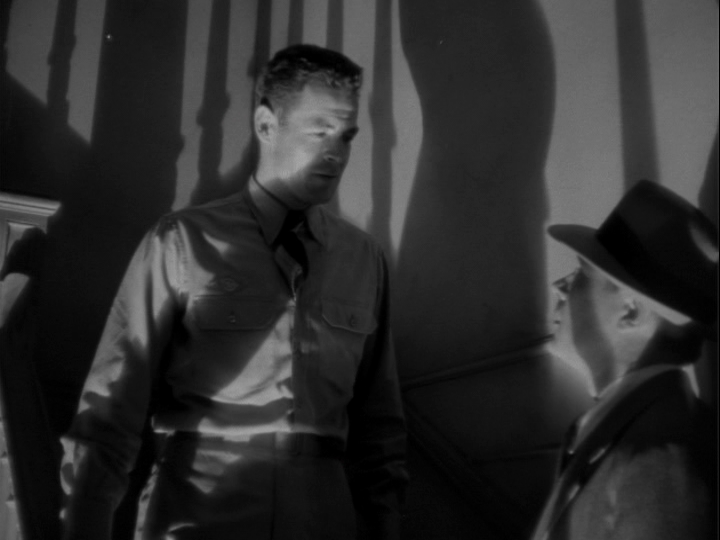
As a noir, Crossfire works exceptionally well, with each frame maximizing use of light and shadow to heighten the drama and suspense; Dmytryk and his crew managed to get the film made with only 150 set-ups (be sure to listen to the commentary soundtrack on the DVD to learn more about the film’s production, as well as Dmytryk’s blacklisting by HUAC). Equally impressive are the stellar performances, most notably by Ryan: check out his soulless eyes as he tells a faux flashback tale to Young, and his chilling scene with terrified Steve Brodie as “Floyd”.

Grahame is also a stand-out in her supporting role as a world-weary dance hall girl with a mysterious man (Paul Kelly) living in her apartment.

Redeeming Qualities and Moments:

  • Strong performances across the board


  • Dmytryk’s creative direction


  • J. Roy Hunt’s cinematography

Must See?
Yes — definitely check this one out. Listed as a film with Historical Importance in the back of Peary’s book.

Categories

Links:

Life of Brian (1979) / Monty Python’s Life of Brian

Life of Brian (1979) / Monty Python’s Life of Brian

Hello, CMBA members! I’m happy to be participating in the Classic Movie Blog Association’s “Banned and Blacklisted” blogathon. If you’re new to my site, please click here to read more. Welcome!

“Only the true Messiah denies his divinity!”

Synopsis:
A man (Graham Chapman) named Brian — born in the Roman Empire on the same day as Jesus Christ — becomes involved with the revolutionary People’s Front of Judea, and is mistaken as a messiah by eager crowds of would-be followers. Will his mother (Terry Jones) or his new girlfriend (Sue Jones-Davies) be able to save him from certain crucifixion?

Genres, Themes, Actors, and Directors:

  • Ancient Greece, Rome, and Egypt
  • Biblical Stories
  • Black Comedy
  • Historical Drama
  • Mistaken or Hidden Identities
  • Monty Python Films
  • Revolutionaries

Review:
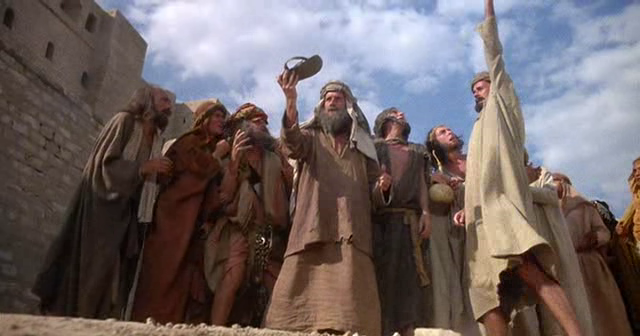
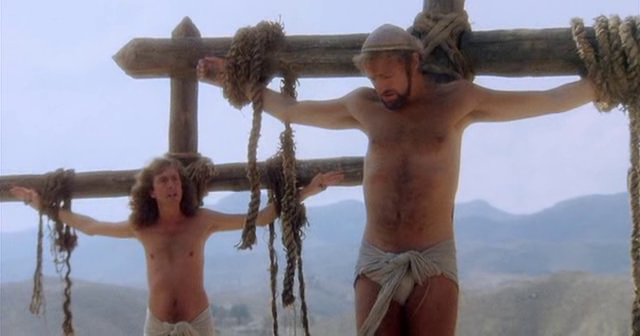
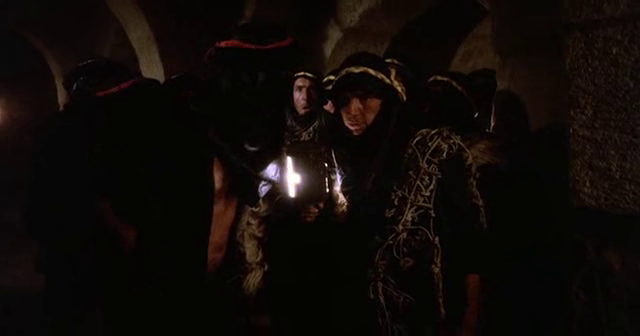
Comedy troupe Monty Python’s follow-up after the success of Monty Python and the Holy Grail (1975) was this irreverent cult classic, beloved by many and infamous for the controversy it generated both before and after its release (and into recent years). To name just a few of its credentials as a “banned and blacklisted” film, its funding was pulled a few days before production was set to begin (George Harrison stepped in to help); several countries (including Ireland and Norway) banned or limited its screening upon release; rabbis and nuns picketed its opening in New York; and the United States Conference of Catholic Bishops gave the film an “O” for Offensive rating, offering the following summation:

Monty Python movie about a hapless fellow named Brian, a contemporary of Jesus, who is mistaken for the Messiah and eventually crucified by the Romans. The nihilistic, anything-for-laughs thrust of director Terry Jones’s comedy deliberately exploits much that is sacred to Christian and Jewish religious tradition. Especially offensive is the mocking parody of the crucifixion scene.

Yes, there is much to be offended by in Life of Brian: it’s a satire which truly leaves nothing sacred, and that’s the point. Its sharpest attacks are made on the mobs of worshipers who insist Brian is their messiah, and who turn his every word and action into a literal sign from God; and on left-leaning revolutionary groups which end up competing against each other for the ability to break free from Rome, while conceding that Roman imperialism actually brought quite a few positive elements to their lives. (“All right, but apart from the sanitation, medicine, education, wine, public order, irrigation, roads, the fresh water system and public health, what have the Romans ever done for us?”) Not all the humor here will work for all viewers, naturally; I’m not a fan of the running gag about Pilate’s lisping, for instance, or amused by the Roman names such as “Biggus Dickus” and “Incontinentia Buttocks”. However, there’s plenty here to enjoy on repeat viewings — including but not limited to the classic closing ditty (“Always Look on the Bright Side of Life”).

Note: Be sure to check out IMDb’s Trivia page for plenty of interesting facts about the making of this film, as well as Wikipedia’s in-depth overview and analysis; I’m sure the DVD commentary is worthy, too (though I haven’t listened to it yet myself).

Redeeming Qualities and Moments:

  • Many classic, laugh-out-loud scenes

  • Fine cinematography

Must See?
Yes, as a cult favorite. Listed as a Cult Movie in the back of Peary’s GFTFF.

Categories

  • Cult Movie
  • Historically Relevant

(Listed in 1001 Movies You Must See Before You Die)

Links:

Who’s Afraid of Virginia Woolf? (1966)

Who’s Afraid of Virginia Woolf? (1966)

“A drowning man takes down those nearest.”

Synopsis:
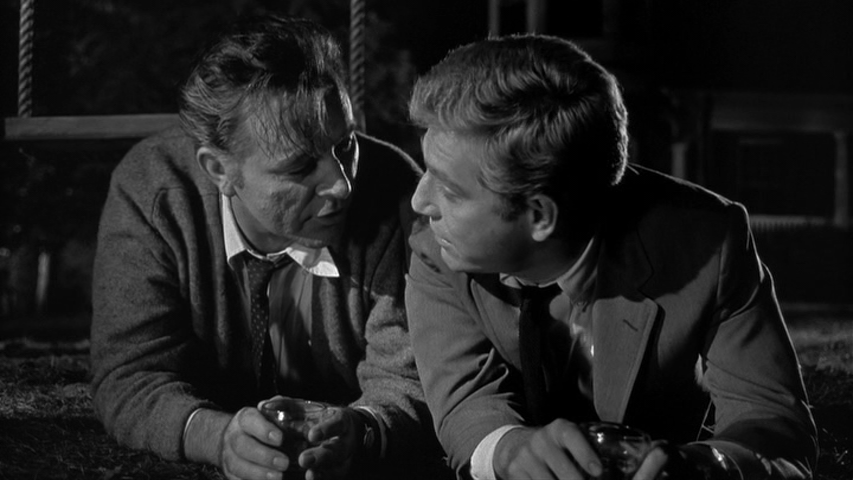
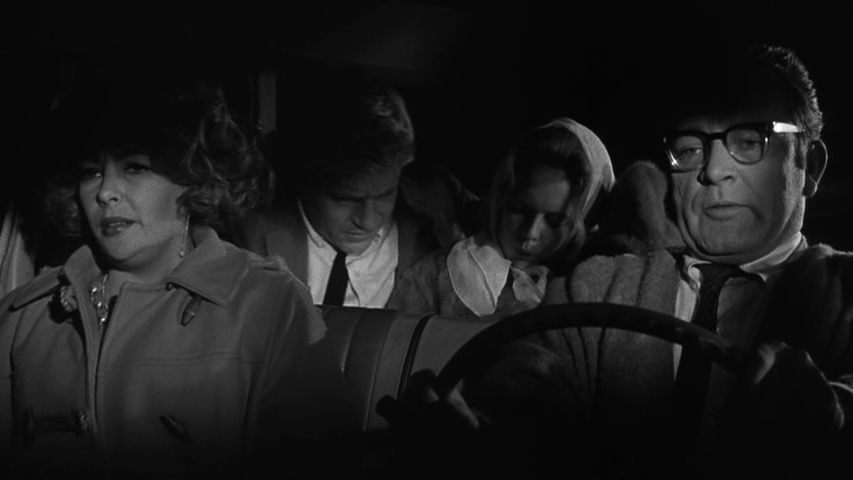
A bickering professor (Richard Burton) and his wife (Elizabeth Taylor) invite a young academic (George Segal) and his mousy spouse (Sandy Dennis) over for drinks after a party, and proceed to victimize them mercilessly.

Genres, Themes, Actors, and Directors:

  • Black Comedy
  • Elizabeth Taylor Films
  • George Segal Films
  • Marital Problems
  • Mike Nichols Films
  • Play Adaptation
  • Revenge
  • Richard Burton Films
  • Sandy Dennis Films

Review:
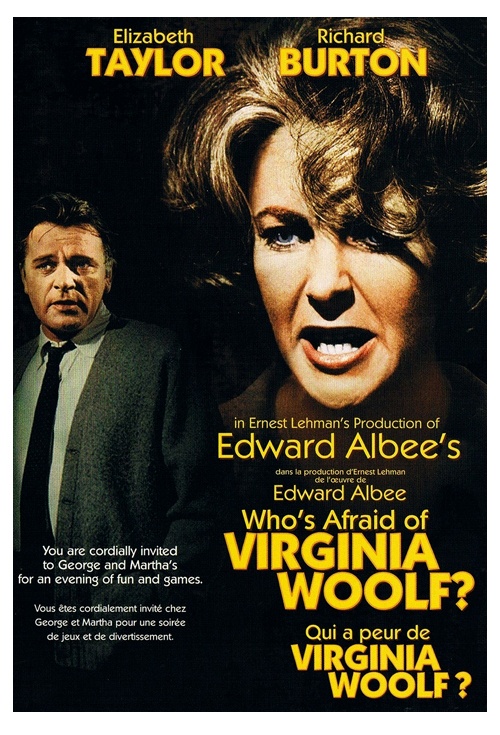
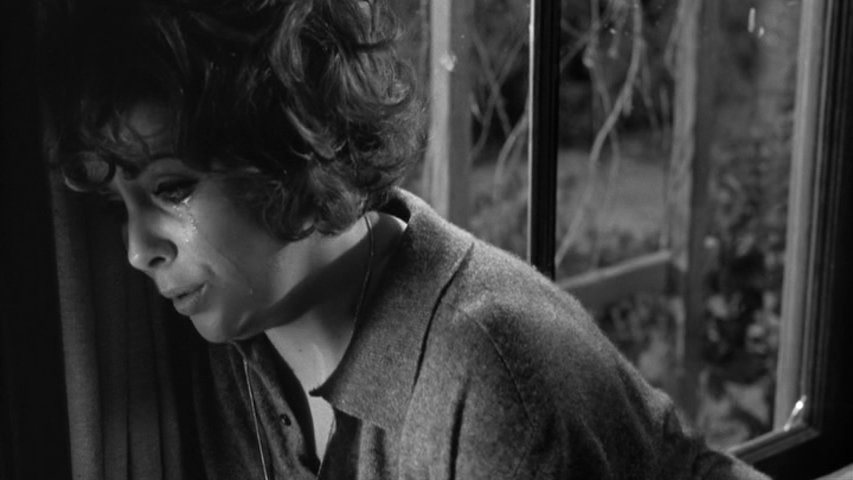
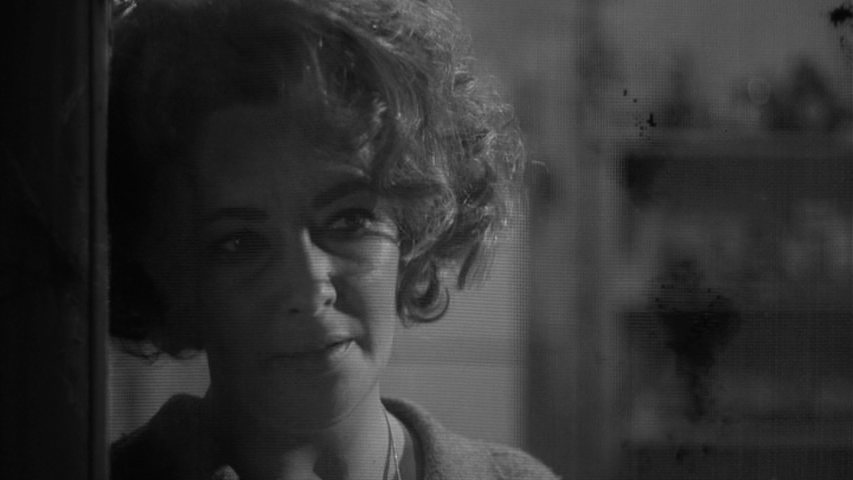
Mike Nichols’ cinematic directorial debut was this adaptation of Edward Albee’s popular Broadway play, which Nichols has stated he instantly connected with and felt drawn to translate for the screen. Nichols’ instincts were right: his film qualifies as an unabashedly successful “opening up” of a play — one which utilizes the power of close-ups, angles, editing, and mixed settings to maximize the impact of Albee’s grueling tale about marital discord. Taylor — one of the most glamorous women in the world at the time — was only 32 when she donned a grey wig and gained 30 pounds to play middle-aged Martha, winning an Oscar for her efforts.

In Peary’s Alternate Oscars — where he reluctantly gives Taylor the award as well — he writes that while “Taylor doesn’t come across as being natural or at ease,” we should “at least give her credit for attempting to act rather than just inhabit a character”. While he complains that her portrayal of Martha is “too shrill” and “should appear to be strong for most of the play/film, rather than just loud and irritating”, he concedes that “when it really counts Taylor makes us understand this troubled woman.”

I’m not bothered at all by Taylor’s performance, and find it difficult (though not impossible) to imagine someone else in the role — primarily due to the casting of Taylor’s real-life husband as her spouse. Speaking of Burton, Peary also awards him an Oscar, noting that Taylor’s “performance is so ostentatious… that it takes a while to realize that the comparatively subdued Burton is giving a brilliant characterization”.

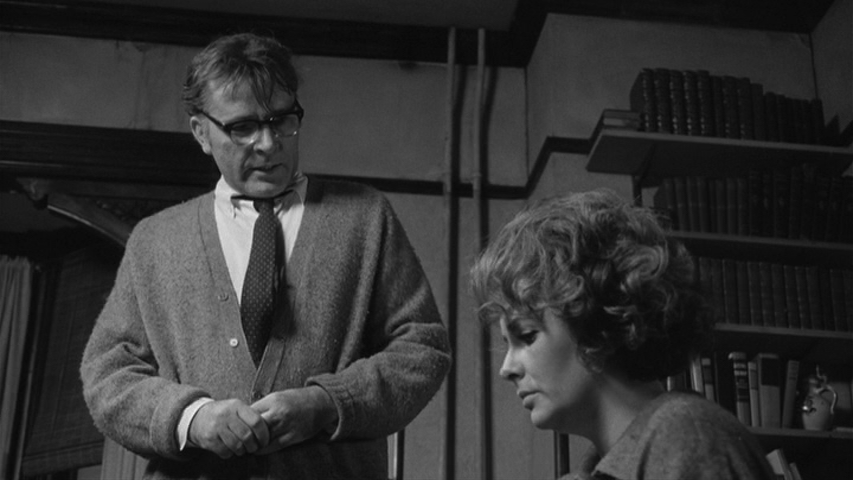
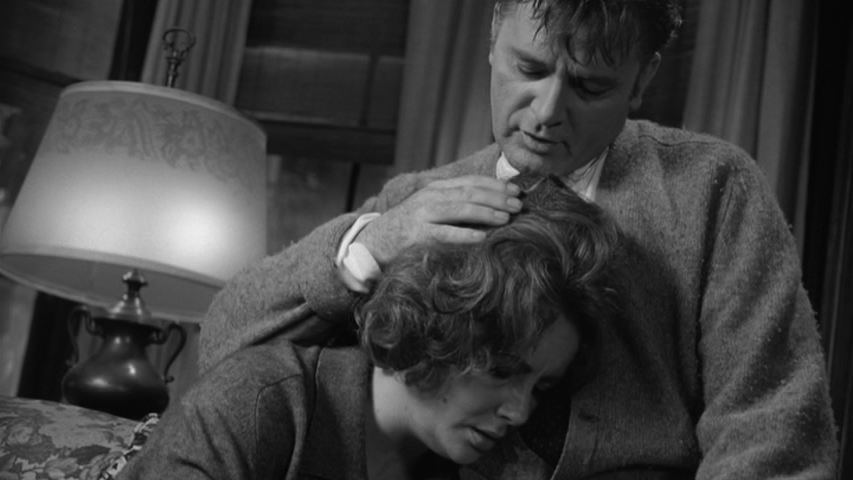
He adds that “we are transfixed by [Burton’s] every movement, dazed by his wise yet not always logical remarks, kept off balance by his secretive smiles and powerful gazes, knocked backward by his every shout.” He goes on to provide an analysis of George and Martha’s relationship — one which helps put all the shouting and manipulation into context:

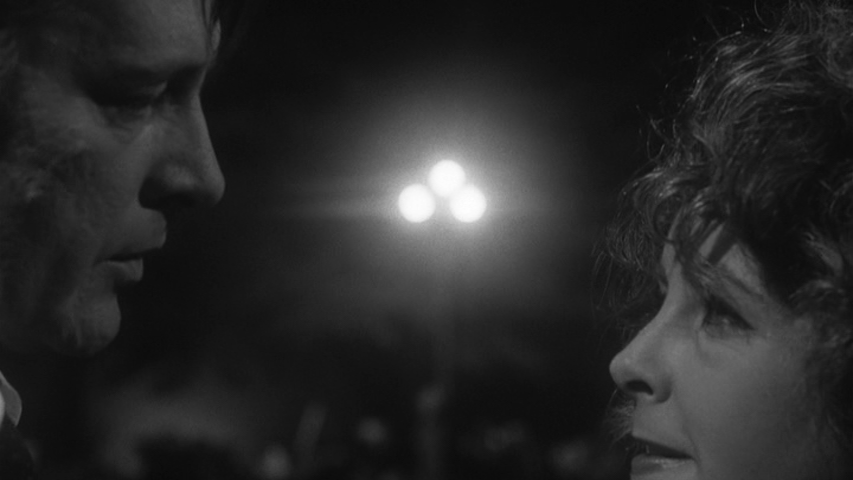
“[George] tries to blank or drown out Martha’s vicious words (and the meaningless conversation of his unimportant guests) with the long-winded observations of a history professor. But after twenty years [Martha] can still hit nerves if she screams loudly enough and blasts him with the appropriate cruel words, some of which he supplies to her himself. She knows that despite his professed boredom, he won’t back away when she initiates their horrible nightly games … When he goes to sleep each night, he is with the woman he loves. Their battles are what keep them stimulated and spare them from dealing with what is really wrong with their lives … He must remain solid if Martha… is to be protected. The years of combat have taken their toll on George, but it is still through his strength that this shaky marriage survives.”

Who’s Afraid of Virginia Woolf? isn’t an easy or pleasant film to watch by any means. However, Nichols’ confident direction, Haskell Wexler’s Oscar-winning b&w cinematography, and the memorable performances (including those by Segal and the oh-so-unique Dennis) make it well worth at least one visit. Be sure to check out the commentary on the DVD in which Nichols chats with Steven Soderbergh about his directorial choices and the film’s production history; it’s quite fascinating and insightful.

Redeeming Qualities and Moments:

  • Strong performances by the entire cast


  • Nichols’ direction

  • Haskell Wexler’s cinematography

  • Alex North’s score

Must See?
Yes, as a powerful if gut-wrenching classic.

Categories

(Listed in 1001 Movies You Must See Before You Die)

Links:

Raintree County (1957)

Raintree County (1957)

“War is the most monstrous of man’s illusions. Any idea worth anything is worth not fighting for.”

Synopsis:
On the cusp of the Civil War, an aspiring writer (Montgomery Clift) with plans to marry his childhood friend (Eva Marie Saint) becomes smitten with a southern belle (Elizabeth Taylor) whose troubled background continues to haunt her.

Genres:

  • Agnes Moorehead Films
  • Civil War
  • Deep South
  • Edward Dmytryk Films
  • Elizabeth Taylor Films
  • Eva Marie Saint Films
  • Historical Drama
  • Lee Marvin Films
  • Love Triangle
  • Mental Breakdown
  • Montgomery Clift Films
  • Race Relations
  • Rod Taylor Films

Review:
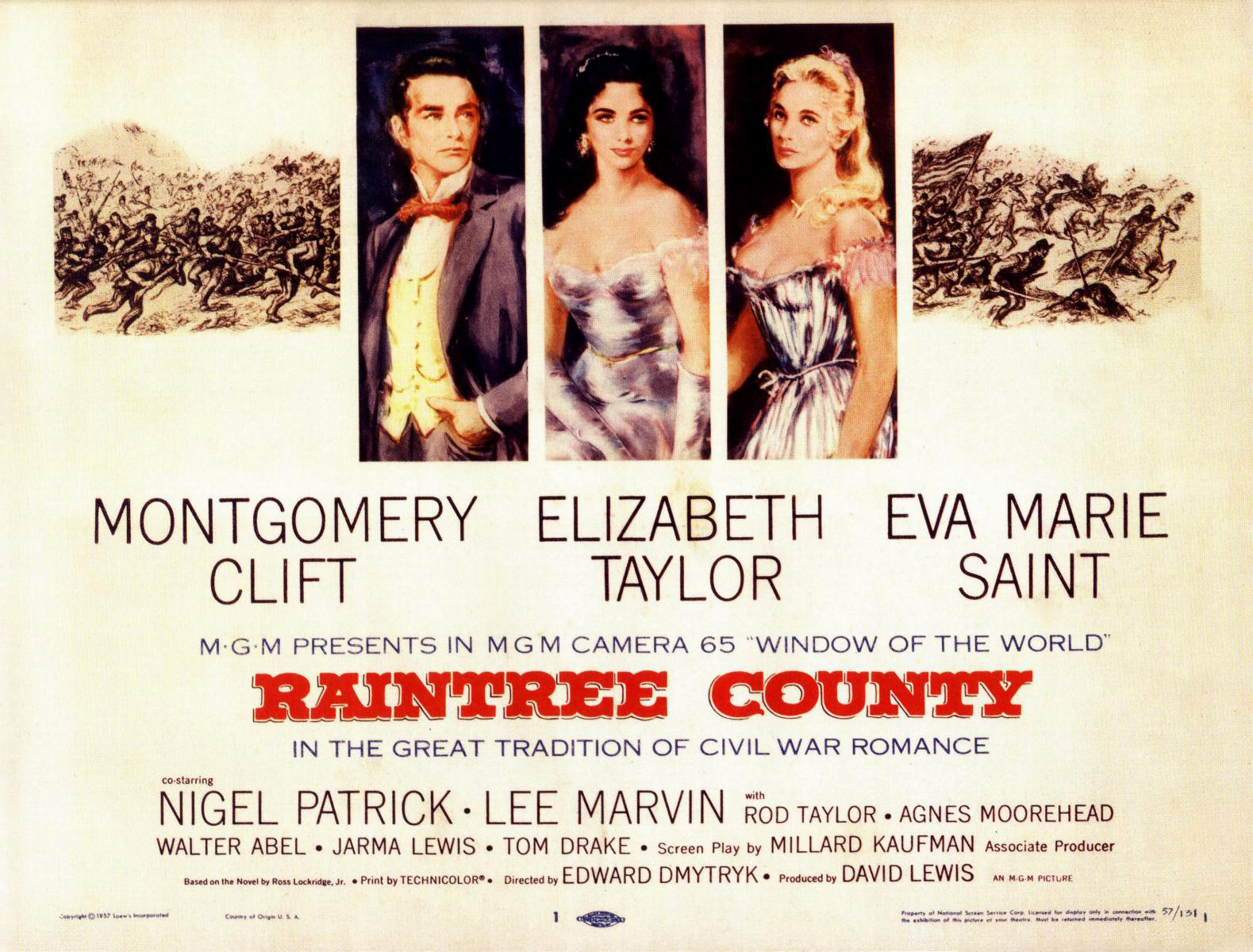
Edward Dmytryk’s adaptation of Ross Lockridge Jr.’s bestselling novel is perhaps best known as the film featuring Montgomery Clift both before and after his disfiguring car accident.


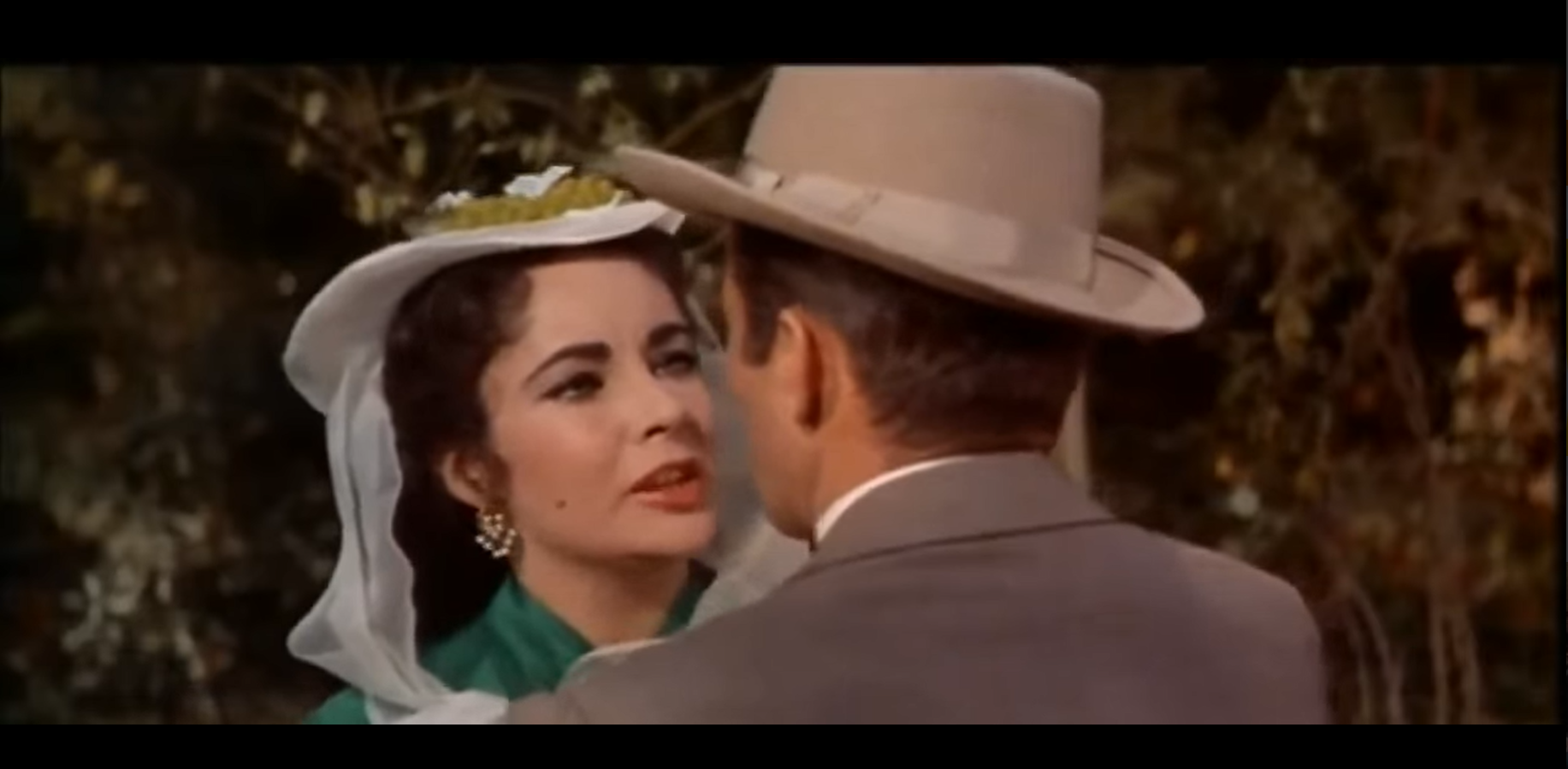
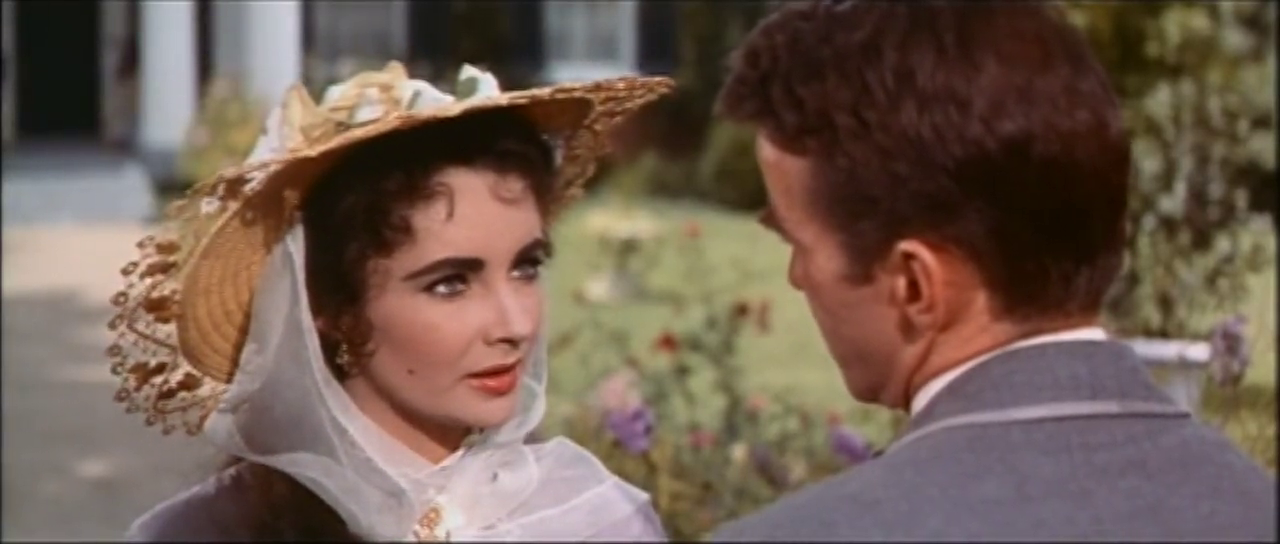
Unfortunately, it’s a rambling, thematically dubious film which never settles on a satisfying story arc and fails to engage. Clift’s performance seems dialed in (small wonder, given what he was going through), and it’s hard to figure out (or care much about) his character. Meanwhile, Taylor over-emotes like she’s in a Tennessee Williams play:

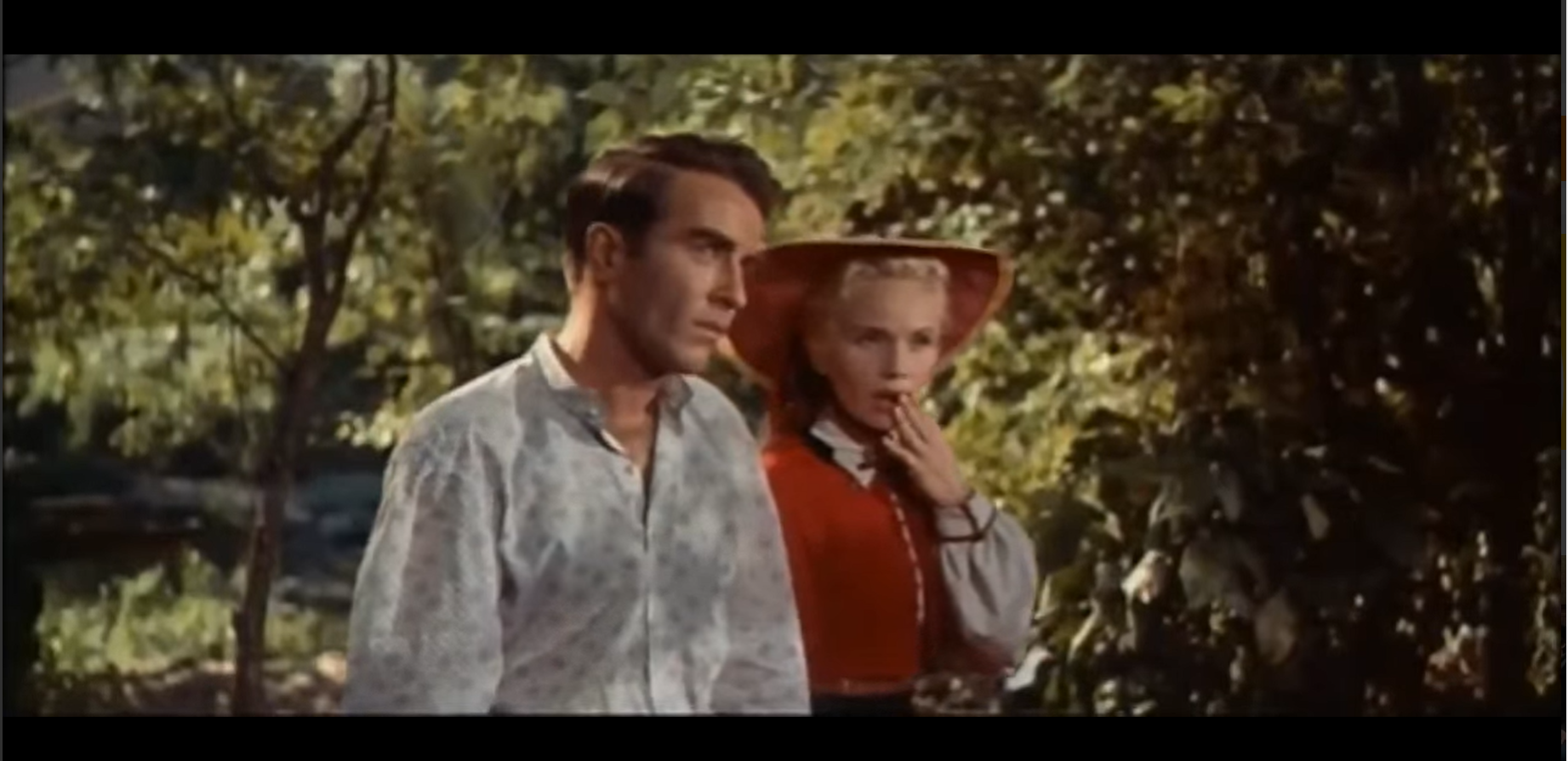
… and the narrative threads about her mental instability, her attachment to creepy dolls, and her obsession with racial “purity” make it awfully difficult to sympathize with her. Eva Marie Saint has a thankless part as the beautiful small-town girl who is shoved aside by Taylor’s insistent charm:

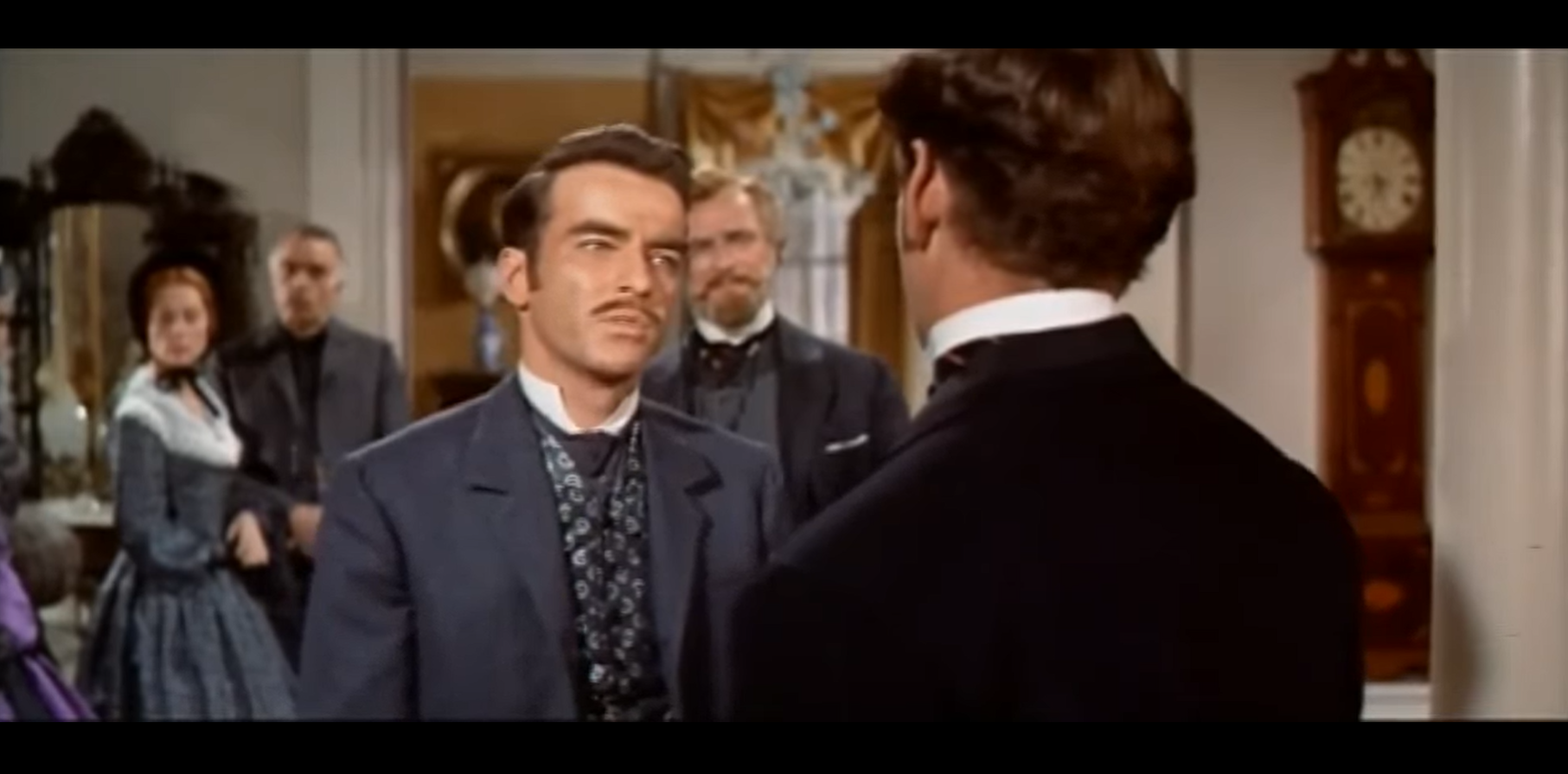
… and Lee Marvin, Rod Taylor:

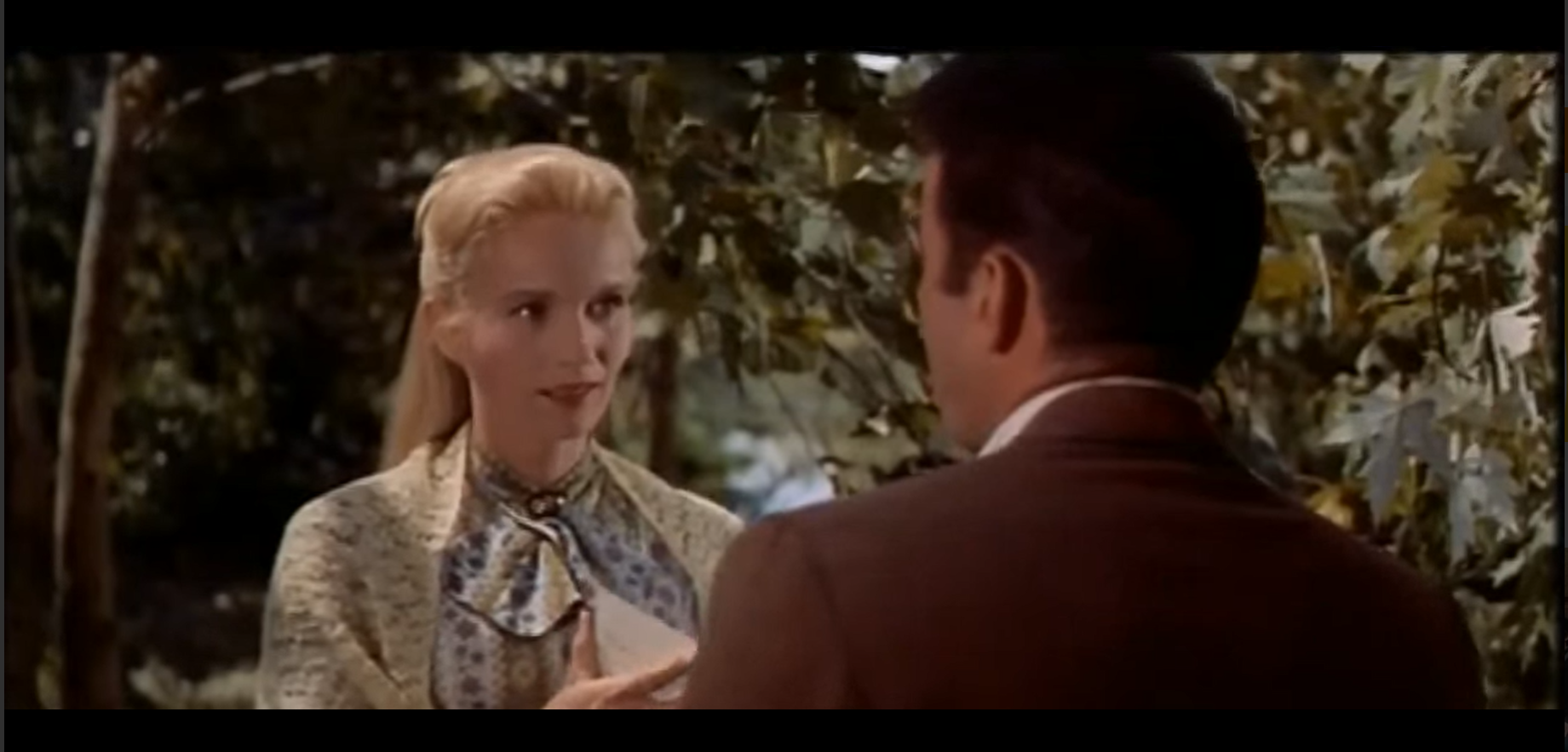
… and Agnes Moorehead:

… are all underutilized as well. There’s little to recommend here other than fine cinematography.

Redeeming Qualities and Moments:

  • Beautiful cinematography

Must See?
No. Skip this one unless you’re curious.

Links:

Place in the Sun, A (1951)

Place in the Sun, A (1951)

“If you’re an Eastman, you’re not in the same boat with anyone.”

Synopsis:
The poor nephew (Montgomery Clift) of a wealthy factory owner (Herbert Heyes) secretly dates a co-worker (Shelley Winters), who becomes pregnant. Meanwhile, Clift is invited into his uncle’s social circle and falls in love with a beautiful socialite (Elizabeth Taylor). Will Clift make Winters a respectable wife and mother, or follow his passions and pursue Taylor?

Genres, Themes, Actors, and Directors:

  • Class Relations
  • Courtroom Drama
  • Cross-Class Romance
  • Elizabeth Taylor Films
  • Falsely Accused
  • George Stevens Films
  • Love Triangle
  • Montgomery Clift Films
  • Plot to Murder
  • Raymond Burr Films
  • Shelley Winters Films

Response to Peary’s Review:
Peary isn’t a big fan of this Oscar-nominated Best Picture — “one of the major hits of the fifties” — which was “adapted by Michael Wilson and Henry Brown for director George Stevens” from Theodore Dreiser’s An American Tragedy, following an earlier adaptation by Josef von Sternberg. He notes that the “cynical film seems dated and the sociological, psychological, and moral aspects of the story are ambiguous”, pointing out that “it never becomes completely clear what Clift’s initial attraction to Winters is; and we’re never sure if his wish to dump her for Taylor is based on how much prettier Taylor is, happier she is…, nicer she is…, or richer she is.” He further adds, “We never really understand the nature of Clift’s continuous guilt — is it because he seduced Winters, is betraying Winters, has not told Taylor about Winters, [or] is trying to break away from his humble beginnings to join the American aristocracy…?”

While I understand Peary’s reservations, I don’t share them. Clift is attracted to Winters because she’s an available female in a soul-stifling environment, and he’s lonely. His wish to dump Winters for Taylor is understandable (if utterly shameful), and is due to a mix of all the factors named by Peary above. Peary writes that while “it’s obvious that Clift wants to escape poverty for wealth”, it “becomes apparent that he’d run off with Taylor at the first opportunity, leaving behind her family, her rich young friends, and her money” — which is true; one doesn’t cancel out the other. Peary also criticizes Clift’s “mannered performance”, which he claims “has been much overrated — rather than seeming cerebral and attractive, he has the expression and stance of someone who is one step away from a psycho ward” — but Clift is in a pretty darn miserable situation, with no positive solution in sight, so it’s hard to blame him or fault his deep angst.

What goes unstated in Peary’s review is that Stevens’ adaptation is ultimately a fatalistic noir — although it’s debatable exactly who the femme fatale is: is it Taylor, without whose alluring presence Clift would never have found himself in this mess? Or is Winters the direct cause of his downfall? The atmospheric cinematography (by William C. Mellor) and carefully crafted direction show how clearly allegorical this “American tragedy” is (though it could really be a tragedy of any nationality). While it’s hard to sit through this film more than once or twice, it’s worth a look by all film fanatics — especially given, as Peary concedes, that “when [Clift] and Taylor dance closely, gaze into each other’s eyes, or kiss passionately… these two superstars are a remarkably romantic duo”.

Redeeming Qualities and Moments:

  • Montgomery Clift as George Eastman
  • Elizabeth Taylor as Angela
  • Fine direction by Stevens

  • Atmospheric b&w cinematography

Must See?
Yes, for its status as a classic — but you may or may not be able to stomach a second viewing.

Categories

  • Genuine Classic
  • Oscar Winner or Nominee

(Listed in 1001 Movies You Must See Before You Die)

Links:

Robe, The (1953)

Robe, The (1953)

“Why must men betray themselves with doubts?”

Synopsis:
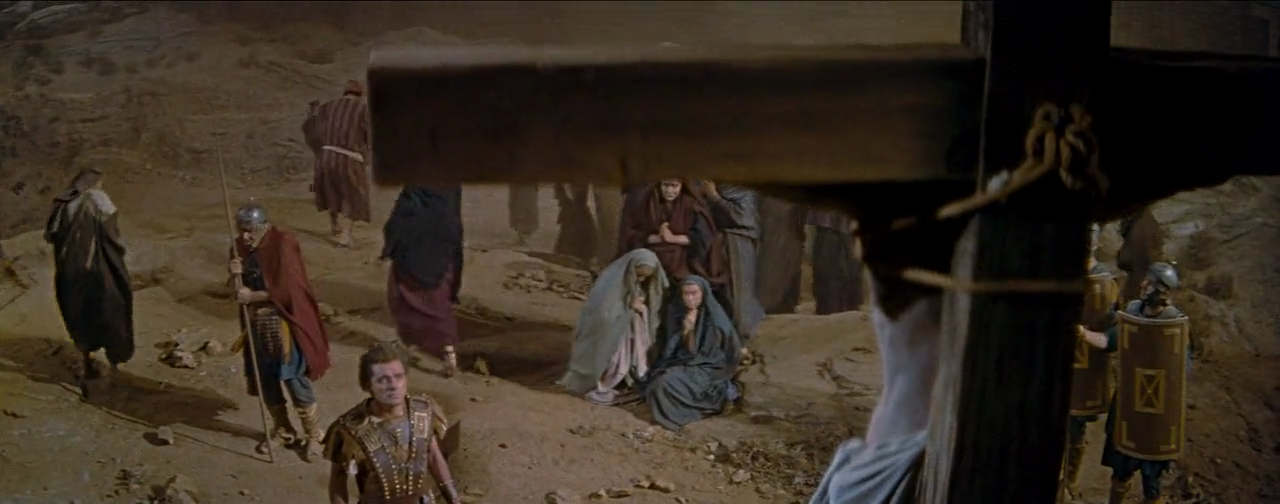
A Roman tribune (Richard Burton) in love with a childhood sweetheart (Jean Simmons) promised in marriage to Emperor Caligula (Jay Robinson) finds his life changed forever when his slave (Victor Mature) runs away after Burton assists in crucifying Jesus, and Jesus’s robe seems to cast a spell on him.

Genres, Themes, Actors, and Directors:

  • Ancient Greece and Rome
  • Biblical Stories
  • Character Arc
  • Christianity
  • Dean Jagger Films
  • Historical Drama
  • Jean Simmons Films
  • Religious Faith
  • Richard Burton Films
  • Slavery
  • Victor Mature Films

Review:
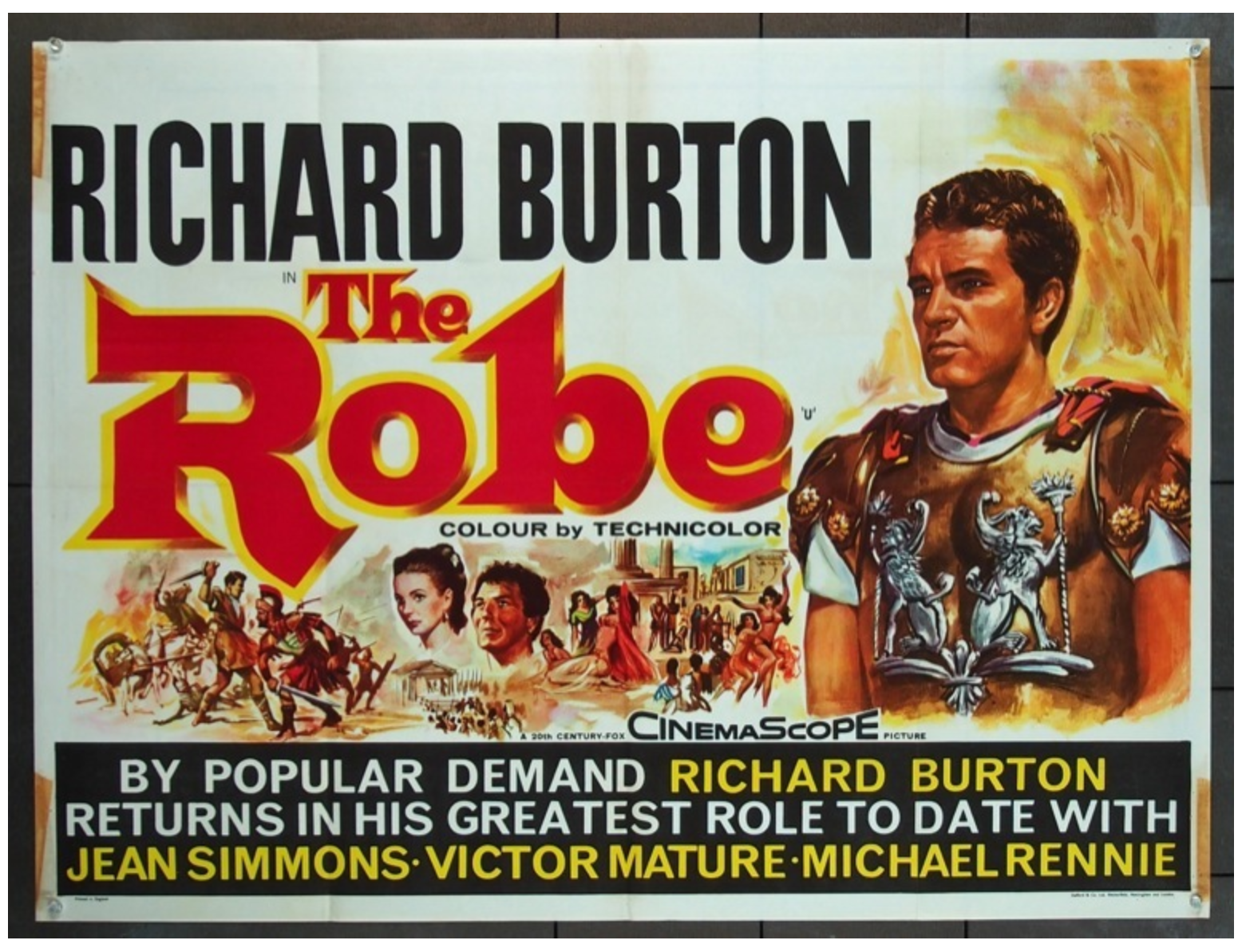
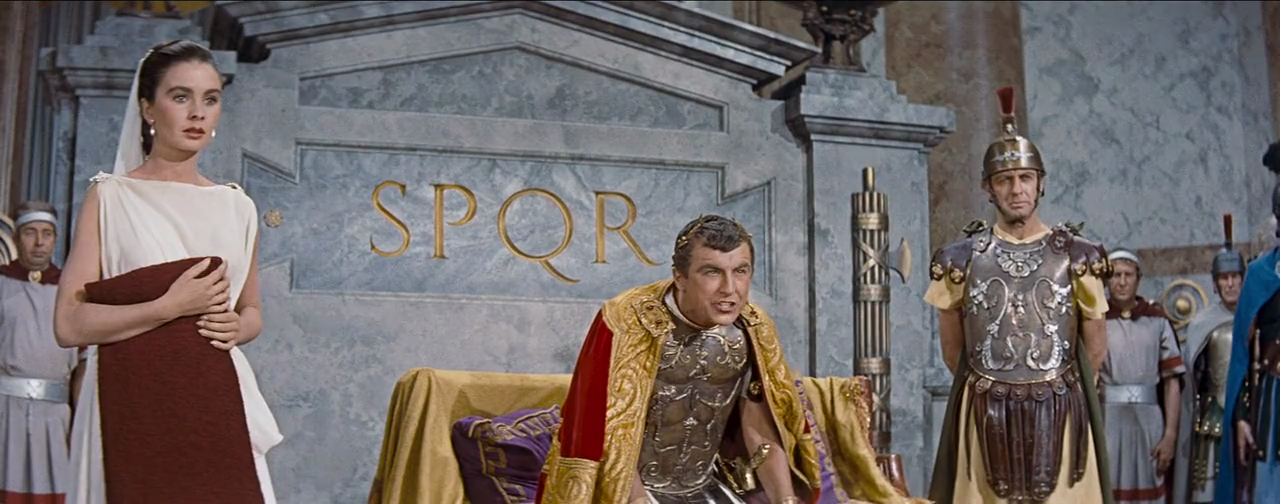
Best known as the first film released in CinemaScope, this adaption of Lloyd Douglas’s best-selling historical novel about the crucifixion of Jesus Christ looks impressive in widescreen, and makes fine use of vivid Technicolor. Indeed, it won Oscars for art direction and costume design (in color), and was nominated for best cinematography. As biblical epics go, it’s refreshingly focused on a journey of personal faith; one gets a strong sense of how persecuted early Christians were for their loyalty to Christ’s teachings, and why they were willing to sacrifice everything for their religion. Less convincing is Robinson as a snivelling, child-like Caligula; he opts for over-the-top theatrics when much less would serve equally well.

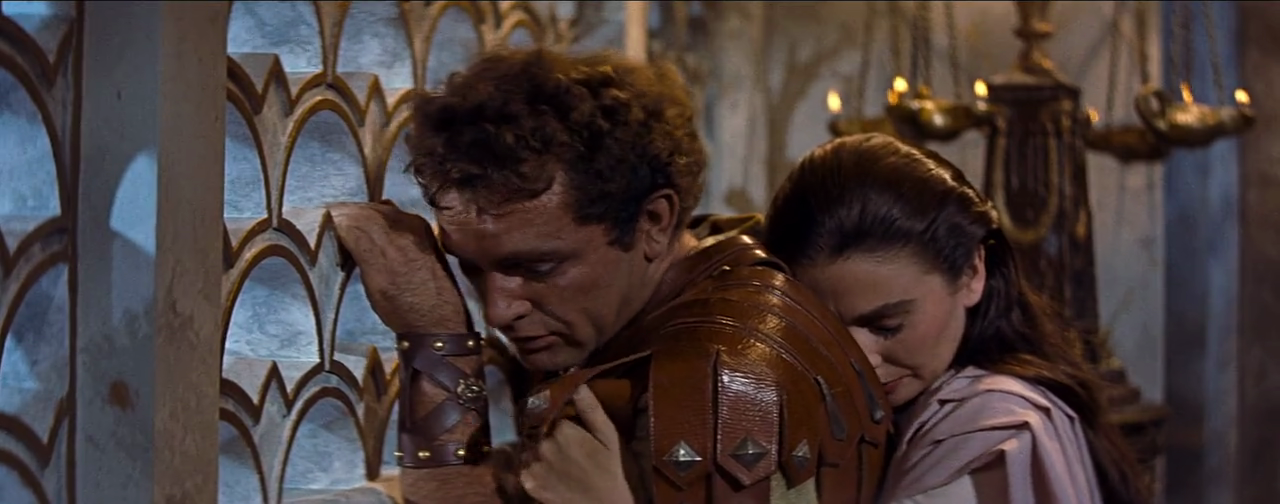
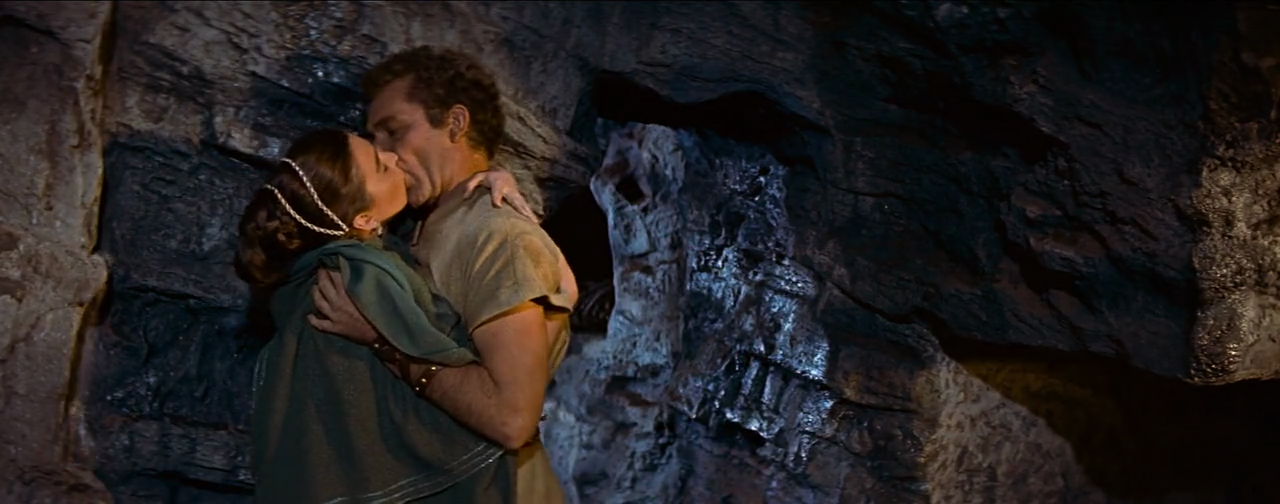
Burton’s Oscar-nominated, impassioned performance is impressive, however, and his on-screen chemistry with Simmons (borne out in real life) is potent.

Ultimately, however, this one is only must-see viewing for fans of the genre or those who like to watch all Oscar winners.

Redeeming Qualities and Moments:

  • Fine use of Technicolor CinemaScope


Must See?
No, though it’s certainly worth a look for its historical relevance.

Links:

Ivanhoe (1952)

Ivanhoe (1952)

“I love you, with all the longing in this lonely world.”

Synopsis:
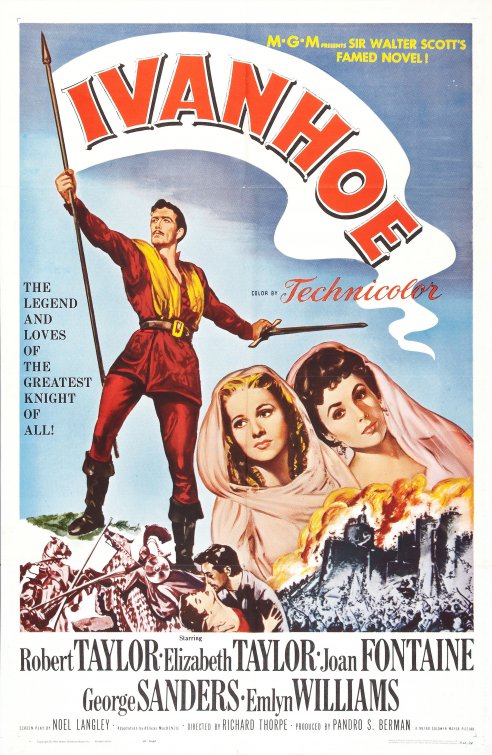
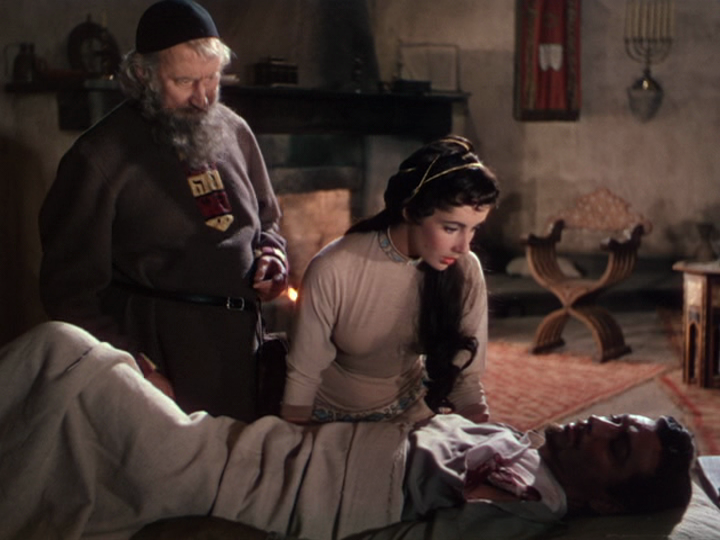
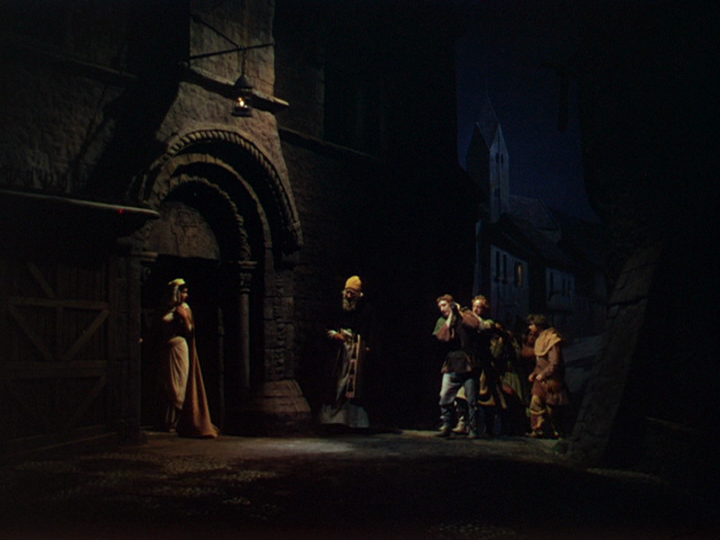
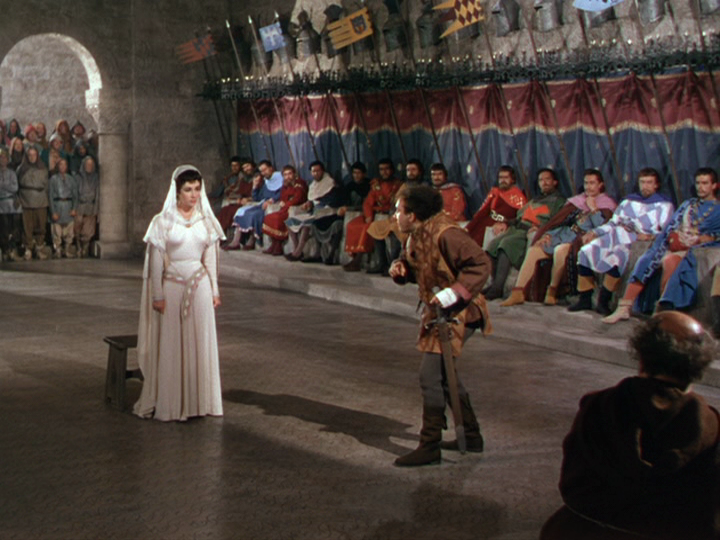
While visiting his estranged father (Finlay Currie) to request money for the ransom of Richard the Lionheart (Norman Wooland) — who is being held prisoner by his treacherous brother Prince John (Guy Rolfe) — a Saxon knight named Ivanhoe (Robert Taylor) visits his life-long love, Lady Rowena (Joan Fontaine), and earns the loyalty of the court jester (Emlyn Williams). When his father rejects his plea, Ivanhoe turns to a Jewish banker (Felix Aylmer) whose daughter Rebecca (Elizabeth Taylor) falls secretly in love with Ivanhoe and risks her life to assist him. With an entourage of Norman knights — including Sir Brian de Bois-Guilbert (George Sanders) — determined to defeat him, and a team of men led by a Robin Hood-like fighter (Harold Warrender) on his side, will Ivanhoe prevail in his quest?

Genres, Themes, Actors, and Directors:

  • Elizabeth Taylor Films
  • George Sanders Films
  • Historical Drama
  • Jews
  • Joan Fontaine Films
  • Love Triangle
  • Robert Taylor Films
  • Royalty and Nobility

Review:
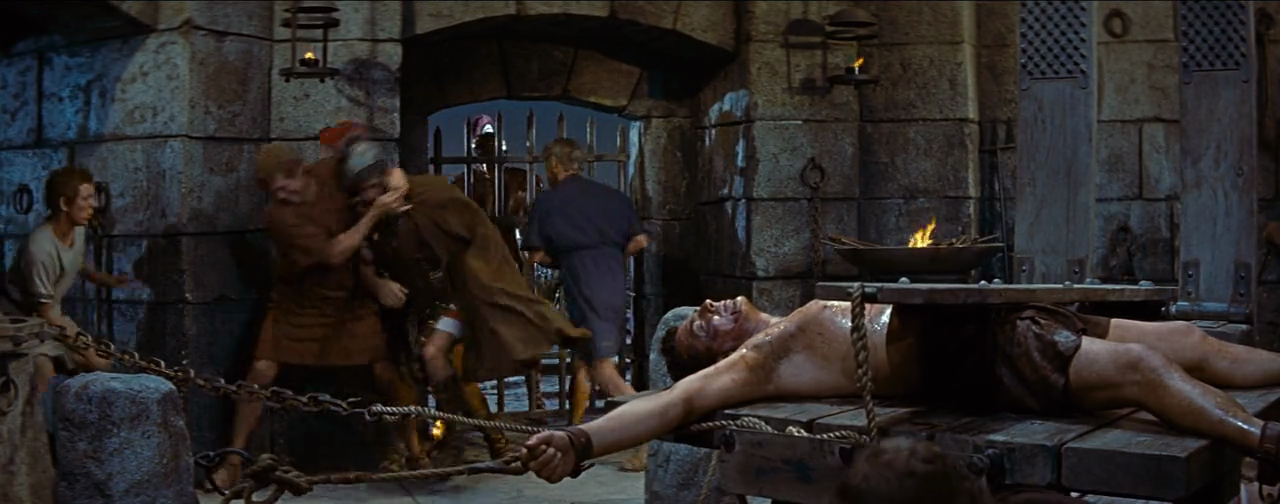
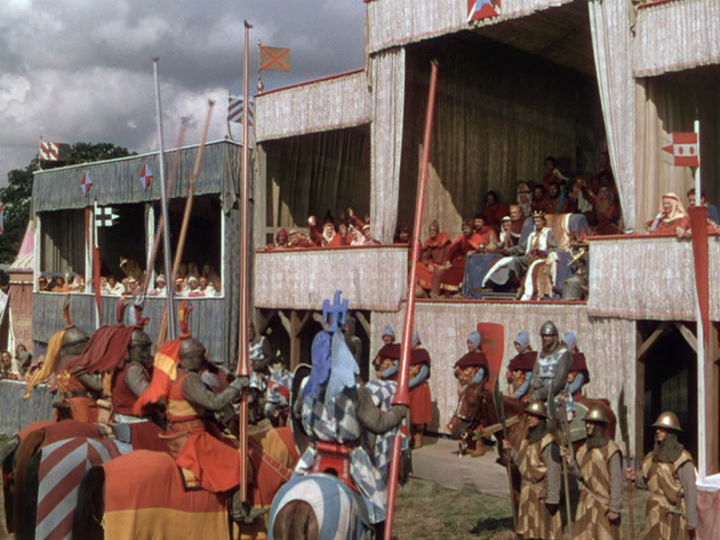
No money was spared on this adaptation of Sir Walter Scott’s novel, which turned into the highest grossing film for MGM studios in 1952. In his review for the NY Times, Bosley Crowther referred to it as a “brilliantly colored tapestry of drama and spectacle”, and it does remain that — particularly given the excellent cinematography (by Freddie Young) and sets (by Alfred Junge). However, Robert Taylor’s uncharismatic performance as Ivanhoe leaves quite a bit to be desired, and it’s awkward to see beautiful Liz Taylor pining for someone we know she “shouldn’t” have (given Ivanhoe’s allegiance to Rowena). It’s bold of the filmmakers to openly tackle issues of anti-semitism; knowing one of the lead screenwriters was banned from Hollywood given her unwillingness to testify before HUAC adds extra poignancy to this aspect of the screenplay. Ultimately, however, this visually appealing film will be of most interest to those who enjoy well-mounted medieval dramas with plenty of swordplay, castles, jousting, and festive attire.

Redeeming Qualities and Moments:

  • Freddie Young’s cinematography

  • Fine sets and art direction by Alfred Junge

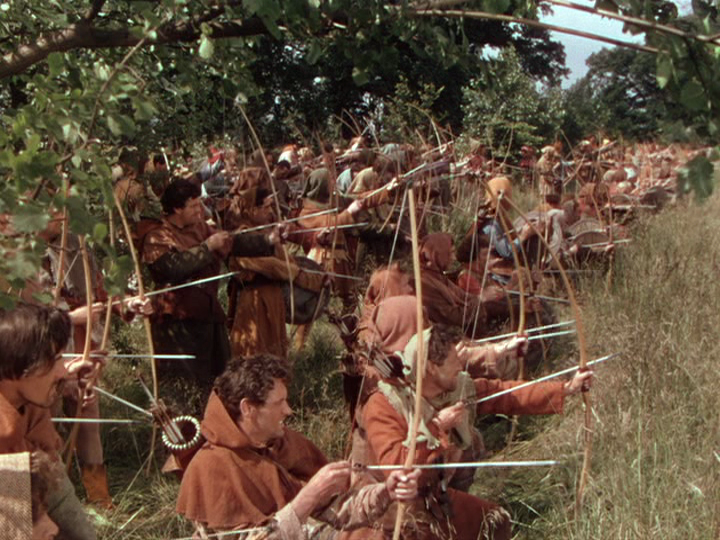
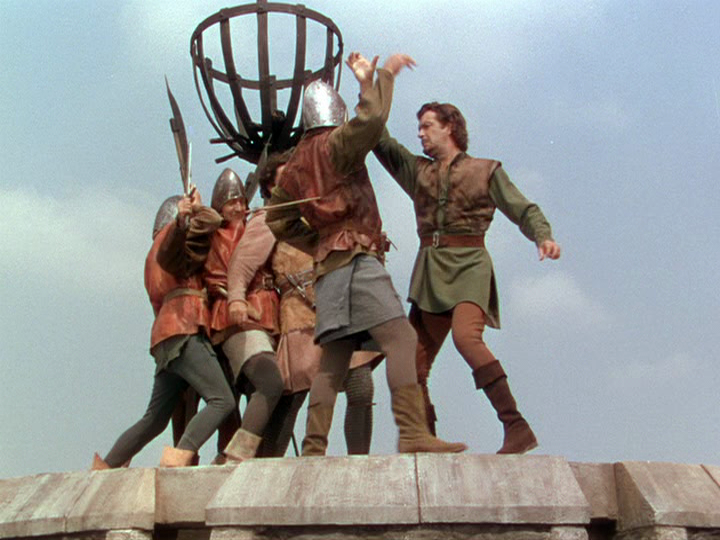
  • The exciting castle siege sequence

Must See?
No, but it’s worth a one-time look simply for the visuals.

Links:

Cleopatra (1963)

Cleopatra (1963)

“A woman, too, must make the barren land fruitful. She must make life grow where there was no life. Just as the Mother Nile feeds and replenishes the Earth, I am the Nile.”

Synopsis:
After helping Queen Cleopatra (Elizabeth Taylor) banish her brother — Pharaoh Ptolemy XIII (Richard O’Sullivan) — and become the sole ruler of Egypt, Julius Caesar (Rex Harrison) and Cleopatra begin a romance which results in the birth of a boy and joint plans to rule the world. When Caesar is killed on the Ides of March, however, Cleopatra is dismayed to learn that his adopted son Octavian (Roddy McDowell) is next in line as dictator of the Roman Empire. She gains solace and hope in an affair with General Mark Anthony (Richard Burton), but Anthony’s allegiance to Rome and Egypt remains conflicted.

Genres, Themes, Actors, and Directors:

  • Ancient Greece and Rome
  • Egypt and Egyptology
  • Elizabeth Taylor Films
  • Historical Drama
  • Hume Cronyn Films
  • Jealousy
  • Joseph L. Mankiewicz
  • Martin Landau Films
  • Rex Harrison Films
  • Richard Burton Films
  • Roddy McDowell Films
  • Royalty and Nobility
  • Star-Crossed Lovers
  • World Domination

Review:
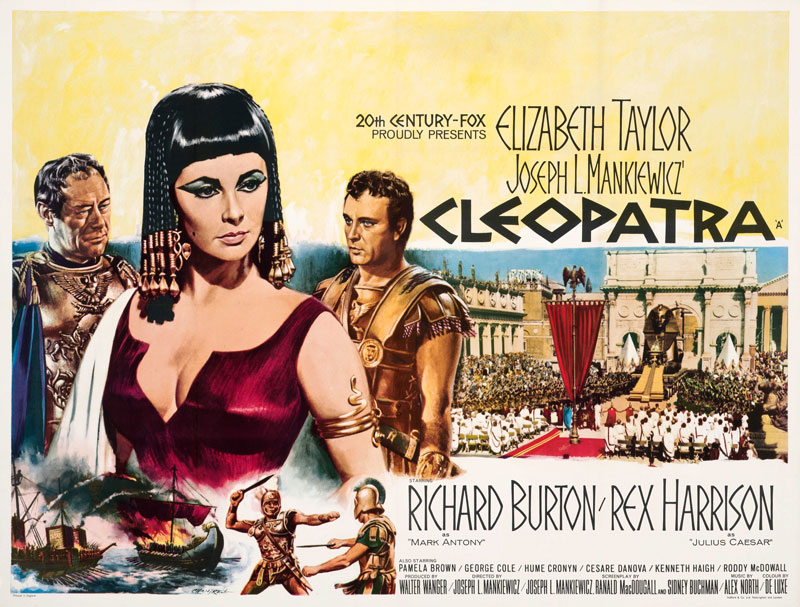
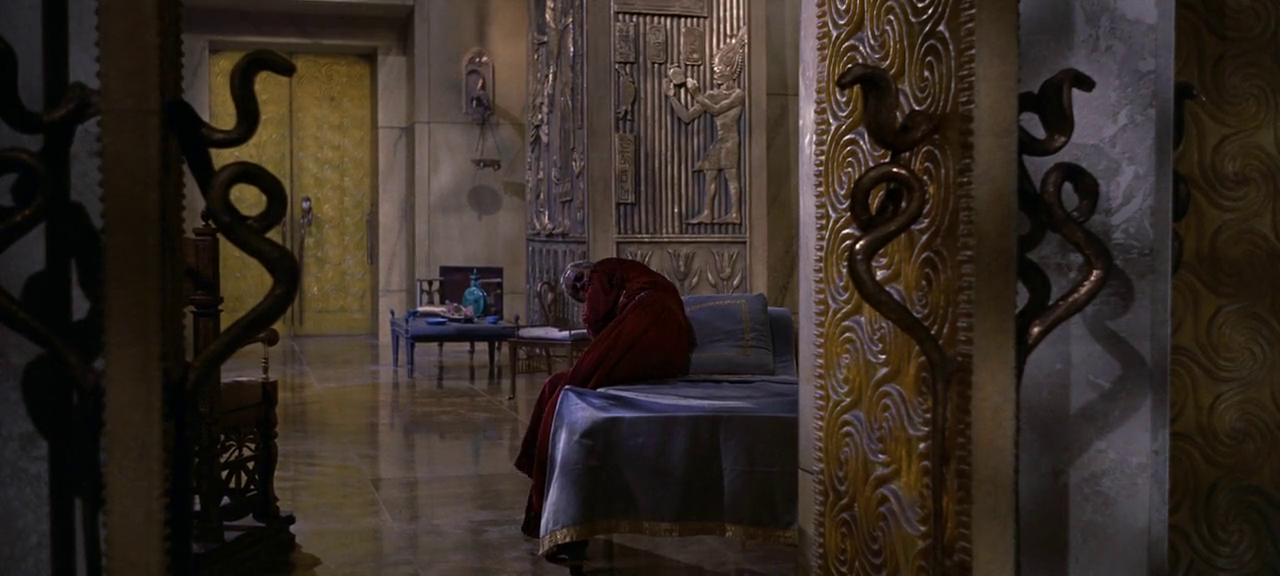
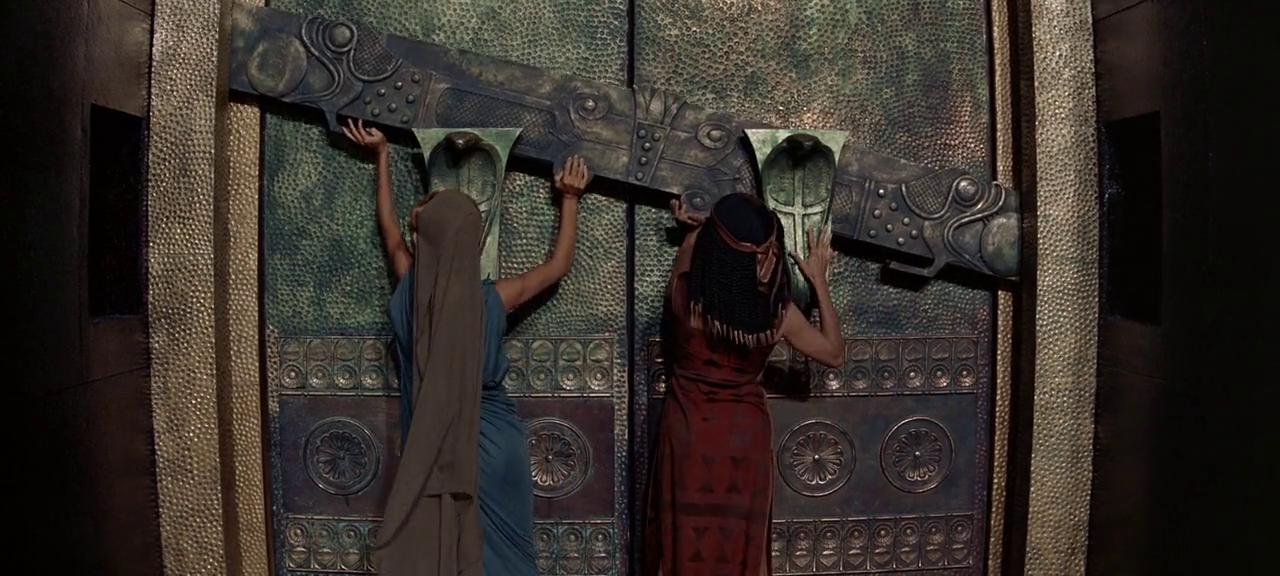
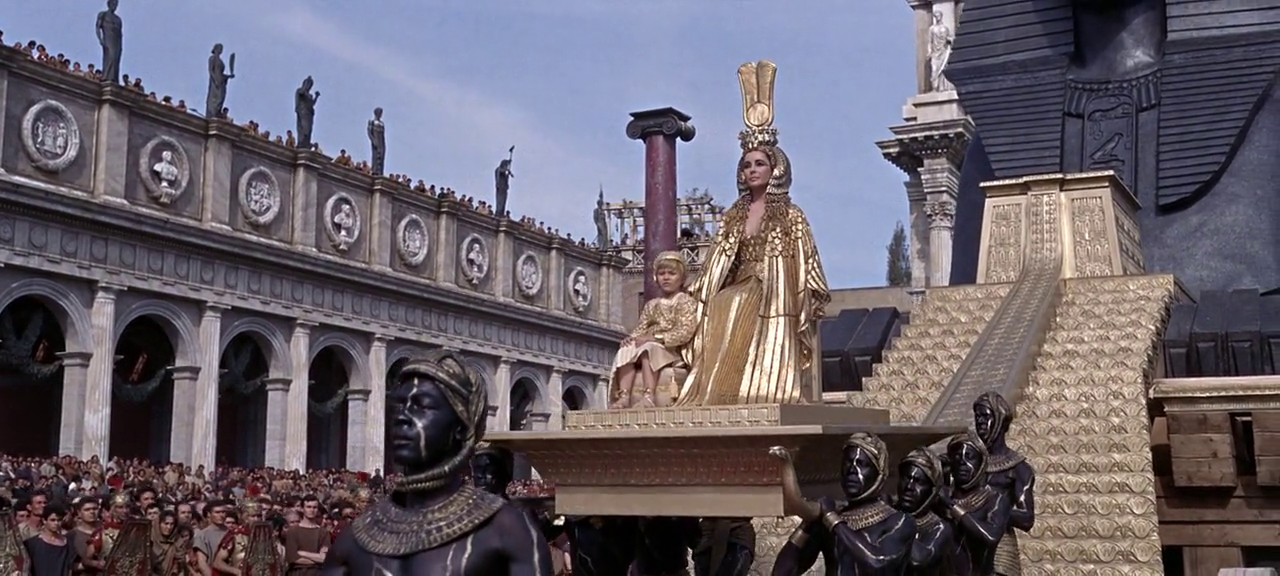
It’s impossible not to begin a review of this epic historical drama by noting its infamy — not only as the costliest movie in Hollywood history, but one whose production drama alone could fill a mini-series; indeed, a documentary about the making of the film lasts two hours (see TCM’s article for a full breakdown of exactly how costs very quickly spiraled out of control). Setting aside its legendary production, however, the film that exists today — that is, the “full” four-hour+ version, rather than the truncated three-hour+ version that was released in theaters (to the public dismay of writer/director Manckiewicz and Taylor, among others) — remains a reasonably engaging (if over-long) saga of opulence, narcissism, treachery, and high drama among the elite ruling class. The Oscar-winning sets, costumes, make-up, art design, and cinematography are reason enough to check this movie out at least once; literally no expense was spared to (re)create a vision of ancient Egypt and Rome fantastic enough to represent the delusional grandeur of such fabled rulers.

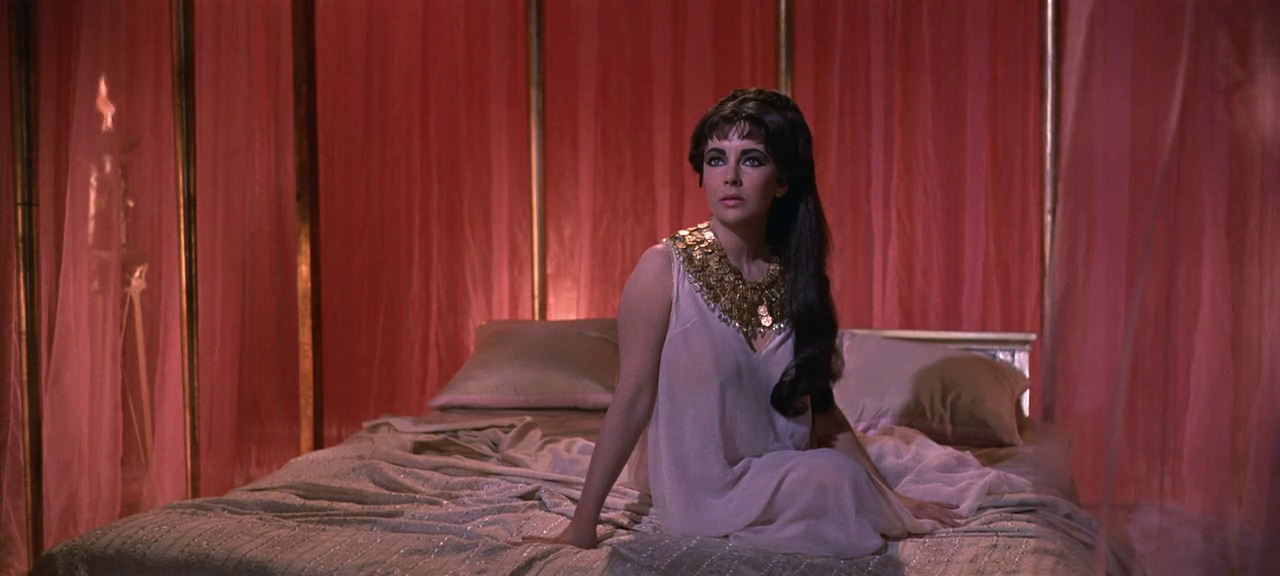
Elizabeth Taylor was a notorious diva throughout the making of this film, which most definitely translates onto screen. To her credit, she puts forth a Cleopatra both hopelessly entitled and surprisingly sympathetic — albeit not without a healthy dose of campiness; my favorite unintentionally hilarious scenes include her infamous carpet-roll-out emergence, her “Mother Nile” speech (see quote above), and her appearance in countless over-the-top outfits and hairstyles. Other performances throughout the film — this was an all-star cast, for sure — are fine as well; despite not working from a coherent script, and/or having much of their scenes left on the cutting room floor, the characters seem reasonably well-formed — at least, enough to understand the general tenor of the complex, back-stabbing politics at play in this era.

Speaking of politics, watching this film in 2017, one can’t help taking note of the portrayal of Caesar as a Trump-like dictator. When Caesar complains that he “must wish what needs commanding”, one of his senators asks him in horror, “Do you suggest that the Senate no longer deliberate the welfare of Rome? Do you suggest an end to the process of Roman Law?” — to which Caesar replies, “I must be the law!” without any hint of awareness that his request is unreasonable. When Caesar humble-brags by insisting, “I want no more meaningful privileges and considerations, no more honors designed to pacify me. I’d far rather have nothing — remain what I am at heart, a humble man, anxious only to serve.”, we once again hear eerie echoes of the current U.S. President (“I think I’m much more humble than you would understand,” Trump stated in all earnestness to Barbara Walters during an interview).

Suffice it to say that this film remains an especially timely and potent reminder about the cyclical nature of humanity — including our group-like tendency to adore spectacle and ‘royalty’, the seemingly inescapable lust for power and domination, and the corrupt inner workings of love and politics.

Note: Diehard fans will likely want to read producer Walter Wanger’s memoir My Life With Cleopatra: The Making of a Hollywood Classic.

Redeeming Qualities and Moments:

Must See?
Yes, once, as an infamous Oscar-winning epic. Listed as a Sleeper and a Camp Classic in the back of Peary’s book.

Categories

  • Historically Relevant
  • Oscar Winner or Nominee

Links:

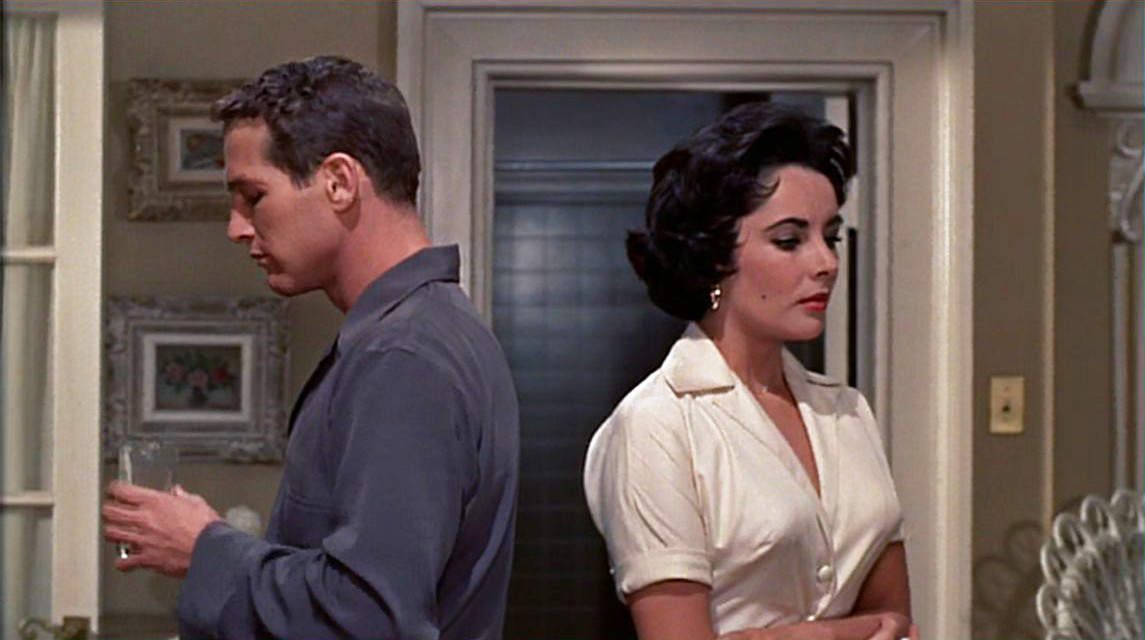
Cat on a Hot Tin Roof (1958)

Cat on a Hot Tin Roof (1958)

“Something ain’t right: you’re childless, and my son drinks.”

Synopsis:
A dying patriarch (Burl Ives) and his wife (Judith Anderson) celebrate Ives’ birthday with their two grown sons: an alcoholic ex-athlete (Paul Newman) whose childless wife (Elizabeth Taylor) is desperate for sexual attention, and a man (Jack Carson) whose pregnant wife (Madeleine Sherwood) wants to secure the family inheritance for her growing brood.

Genres, Themes, Actors, and Directors:

  • Alcoholism and Drug Addiction
  • Burl Ives Films
  • Elizabeth Taylor Films
  • Family Problems
  • Father and Child
  • Has-Beens
  • Inheritance
  • Jack Carson Films
  • Judith Anderson Films
  • Marital Problems
  • Paul Newman Films
  • Play Adaptation
  • Richard Brooks Films
  • Tennessee Williams Films

Review:
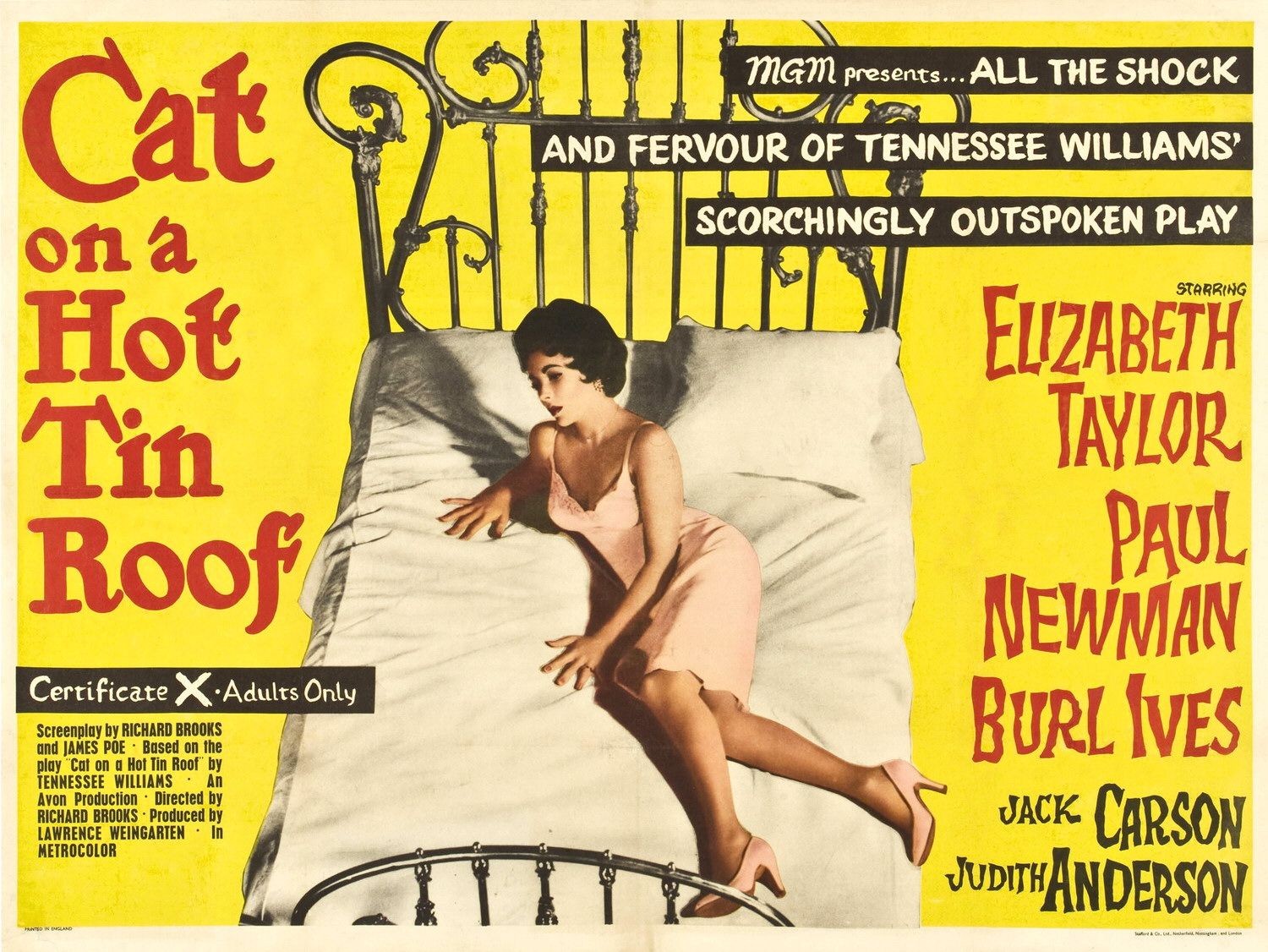
Richard Brooks’ adaptation of Tennessee Williams’ Pulitzer Prize-winning play suffers from a fatal flaw (albeit one that didn’t stop audiences from flocking to it upon release): the central character (Newman) has been shifted (per Hays Code) from a suppressed homosexual to a man simply lamenting the loss of a high school buddy. Yes, there’s more than this to the melodramatic storyline, which revolves around “motifs such as social mores, greed, superficiality, mendacity, decay, sexual desire, repression and death”, as we watch squabbling family members desperate to hold onto or gain whatever it is they most want (money, love, sex, respect, hope). However, the primary focus of the film is the strained relationship between “Maggie the cat” (Taylor) — a gorgeous woman literally in heat — and her equally gorgeous but relentlessly brooding husband (Newman). As DVD Savant writes, “the notion of the incredibly sexy Elizabeth Taylor begging in vain to sleep with Paul Newman strikes us as a sin against nature” — especially without the believable premise that Brick (Newman) is gay. However, the performances are all strong, the stunning co-stars are enjoyable to watch on-screen, and writer-director Richard Brooks keeps the direction interesting throughout.

Redeeming Qualities and Moments:

  • Strong performances and direction

Must See?
No, but film fanatics will likely be curious to check it out.

Links: