|
Genres, Themes, Actors, and Directors:
- Comedy
- Death and Dying
- Doris Day Films
- Rock Hudson Films
- Tony Randall Films
Review:
My dear collaborator and friend, writer93_99, argues in his response to my review of Pillow Talk (1959) that all three of the comedies Doris Day and Rock Hudson made together — Pillow Talk, Lover Come Back (1961), and Send Me No Flowers (1964) — could/should be considered must-see for film fanatics, given that they represent the inimitable duo at various stages of their onscreen romantic career together. Inspired by his confidence, I recently re-watched Send Me No Flowers, and was tickled to find that it’s actually my favorite of the bunch. It remains likely the best film ever made about hypochondria, given that it takes this wonderfully ripe premise to its “logical” conclusion, and exploits every comedic possibility along the way. And while Pillow Talk and Lover Come Back were crafted from the same deliciously cynical mold (with Hudson and Day simultaneously duking it out and falling in love under false pretenses), the deception in Send Me No Flowers is much gentler: Hudson really DOES believe he’s about to die in three weeks’ time, so any deception (at least for the first hour or so of the film) is unintentional.
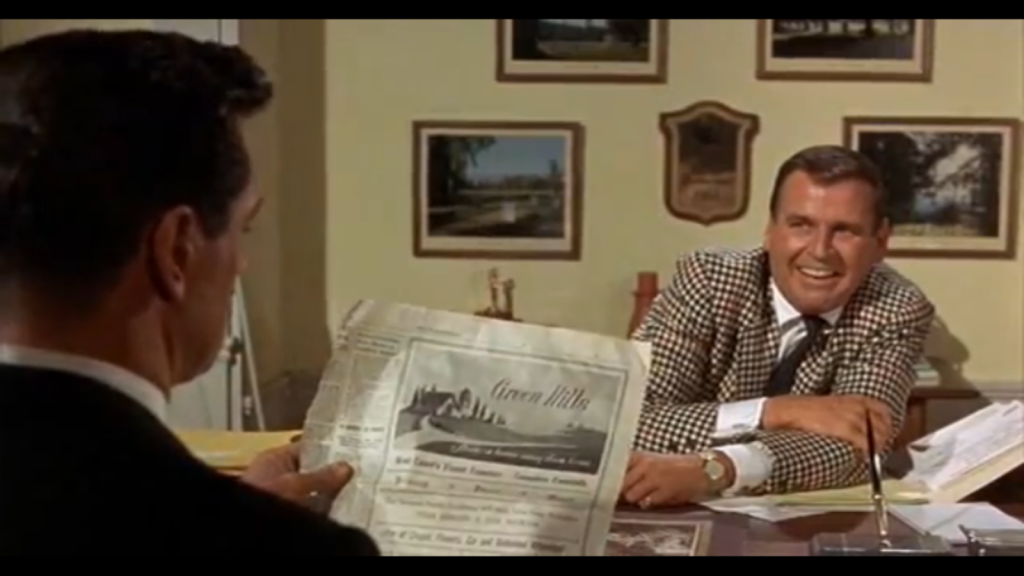
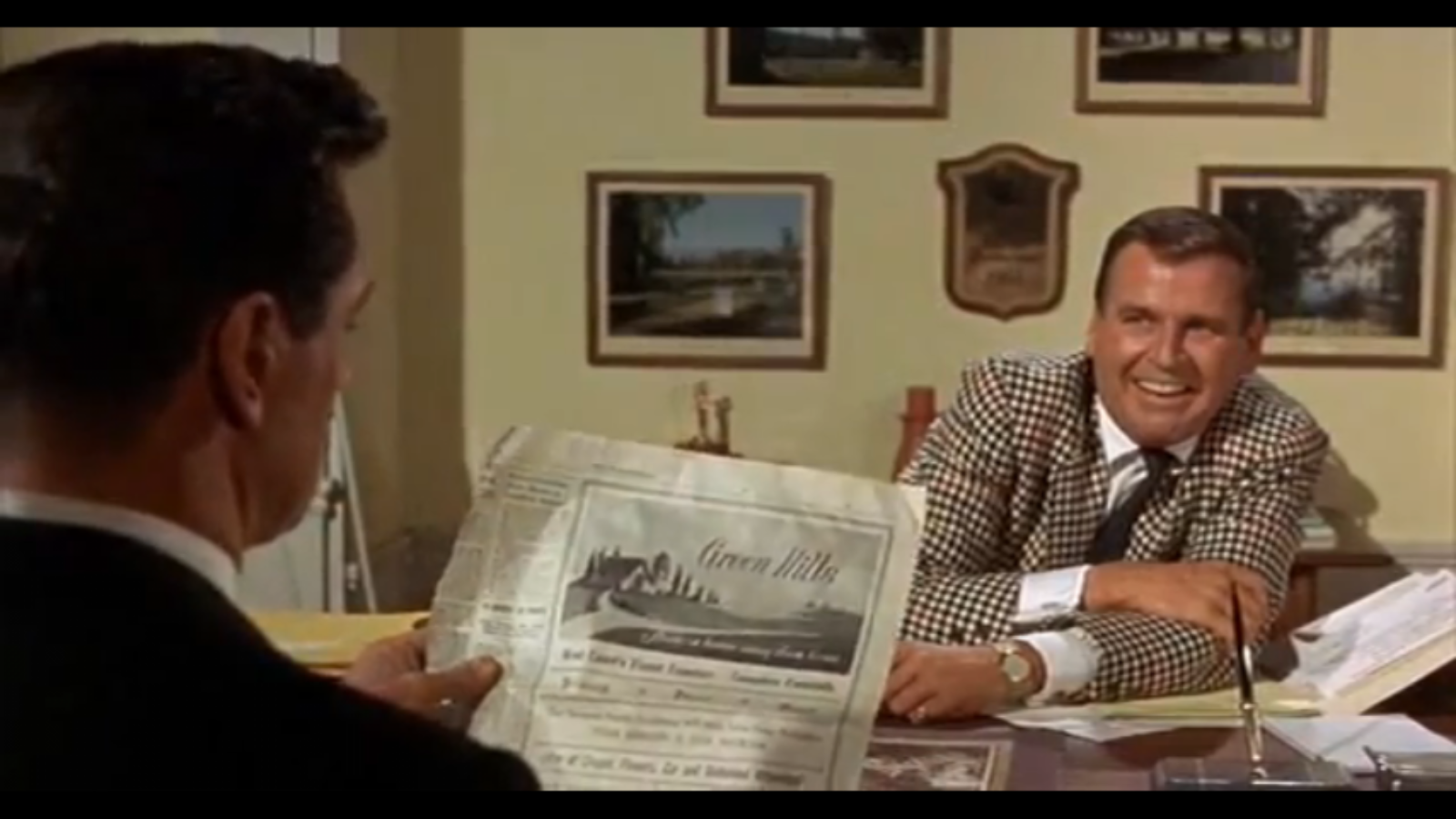
Hudson and Day are both in peak comedic form (as usual) — but it’s co-stars Tony Randall and Paul Lynde who really steal the scenery in this one. Lynde wasn’t in many big-name movies (most viewers will recognize him simply from his work on “Hollywood Squares”), but his role here as an earnest cemetery plot salesman is flat-out hilarious:
Lynde: As you can see, we suggest the entire family all go out and select the final resting place together. The kids love it; they have a ball.
Hudson: You see, I’d rather my wife didn’t know about this.
Lynde: You want to surprise her.
Hudson: Yes.
Lynde: Well, this’ll give her a real thrill! It makes a very thoughtful gift.
Hudson (with astonishment): You really enjoy your work, don’t you?
Lynde: I sure do. I wouldn’t want to do anything else. [pauses, then explains] I like people.
Note that, in addition to his early scene-stealing interaction with Hudson, Lynde’s character plays an unexpectedly important role in the film’s denouement as well.
Meanwhile, Randall proves why he was such an essential element in all three of the Day/Hudson films: his consistently maudlin reaction to Hudson’s morbid situation convincingly grounds the entire affair. The thinly-veiled “connection” between the two men (best friends, neighbors, and…? where IS Randall’s wife, anyway?) has been duly noted (indeed, it’s hard to miss); check out the infamous bed-sharing scene, for instance. Yet it’s all simultaneously so “innocent” — and Hudson’s adoration of his wife so clear — that audiences at the time were likely comfortable with the film as the heteronormative experience it was more broadly meant to be.
Redeeming Qualities and Moments:
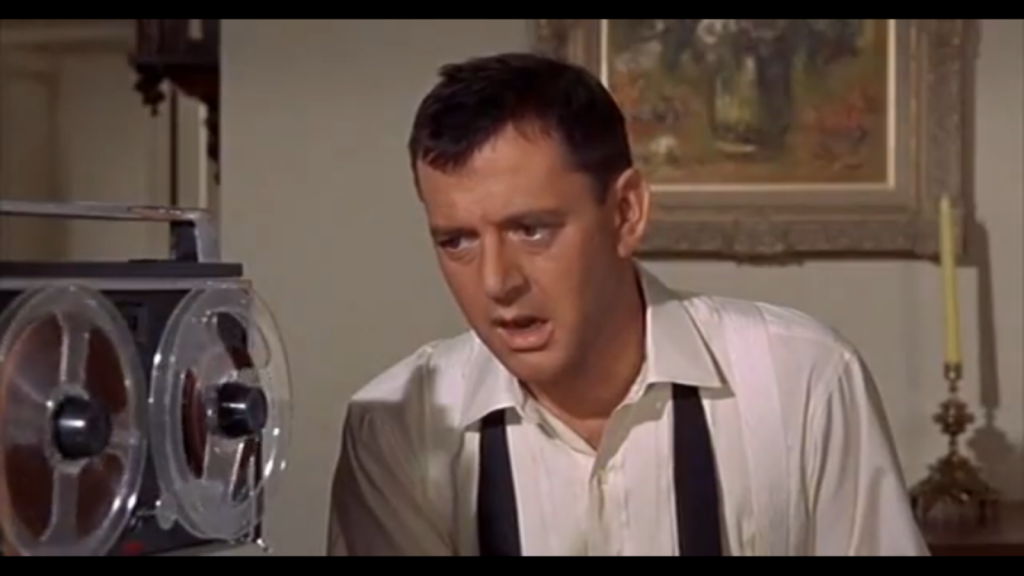
- Tony Randall as Arnold
- Paul Lynde as Mr. Akins
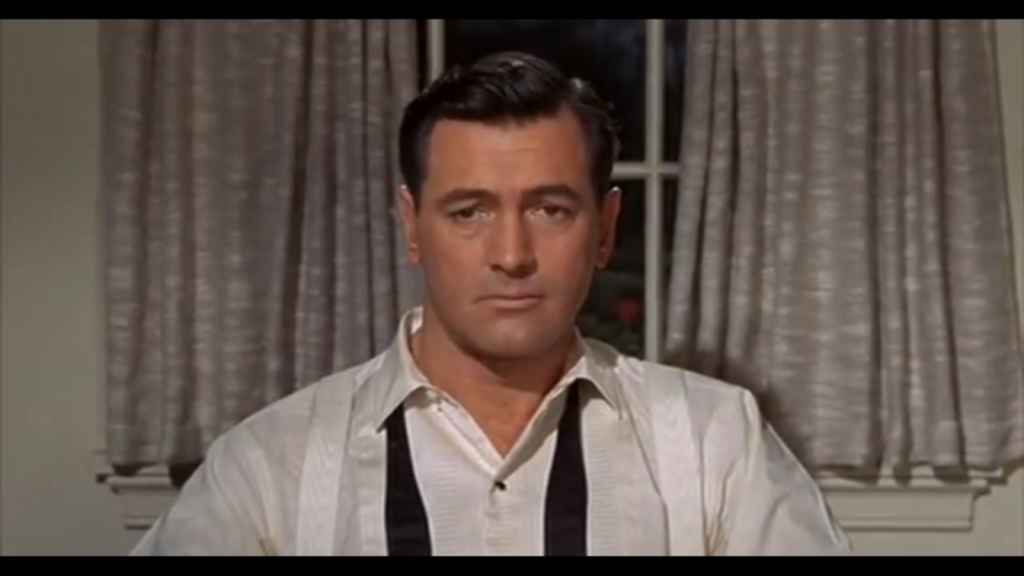
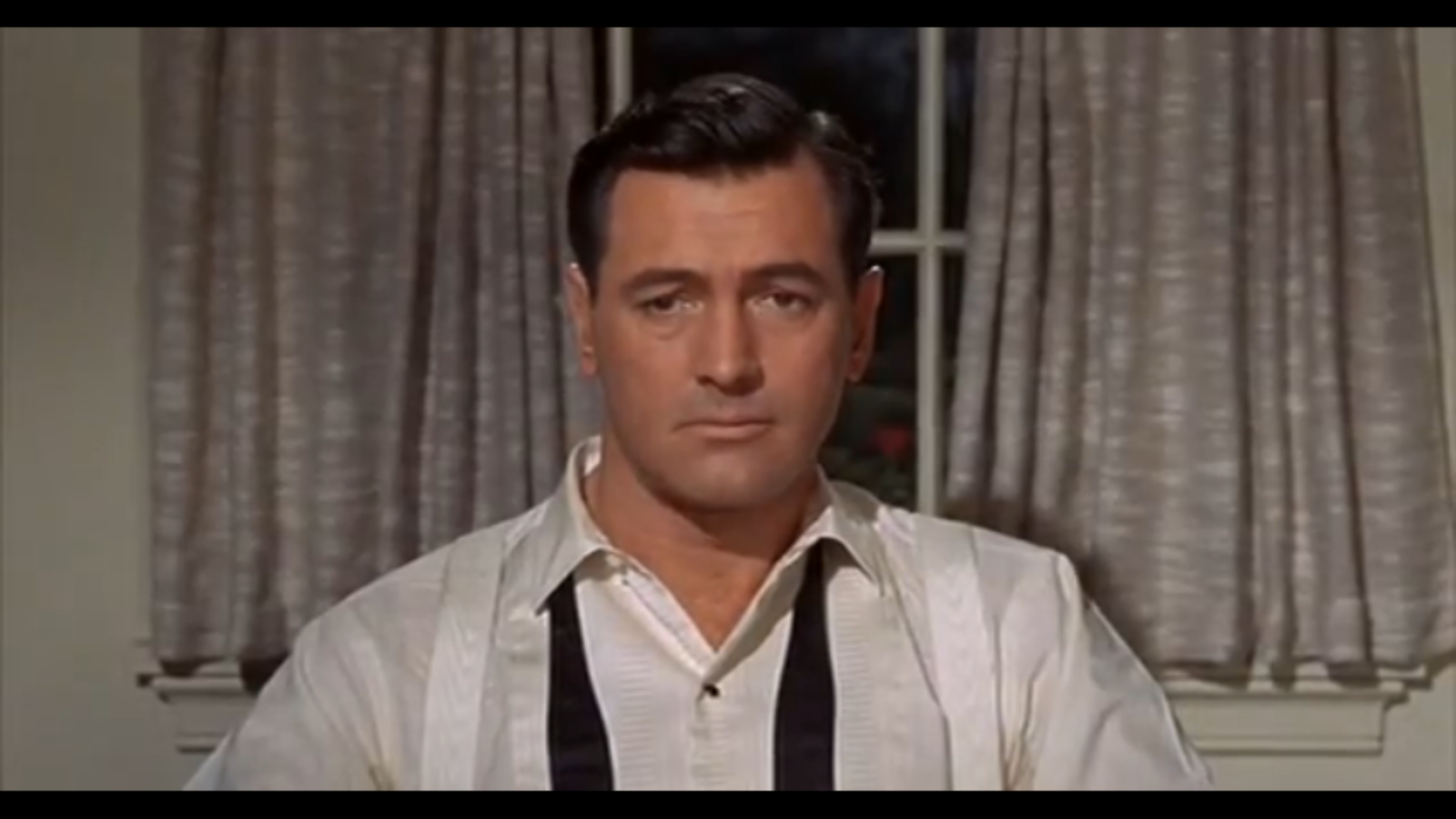
- Rock Hudson as George
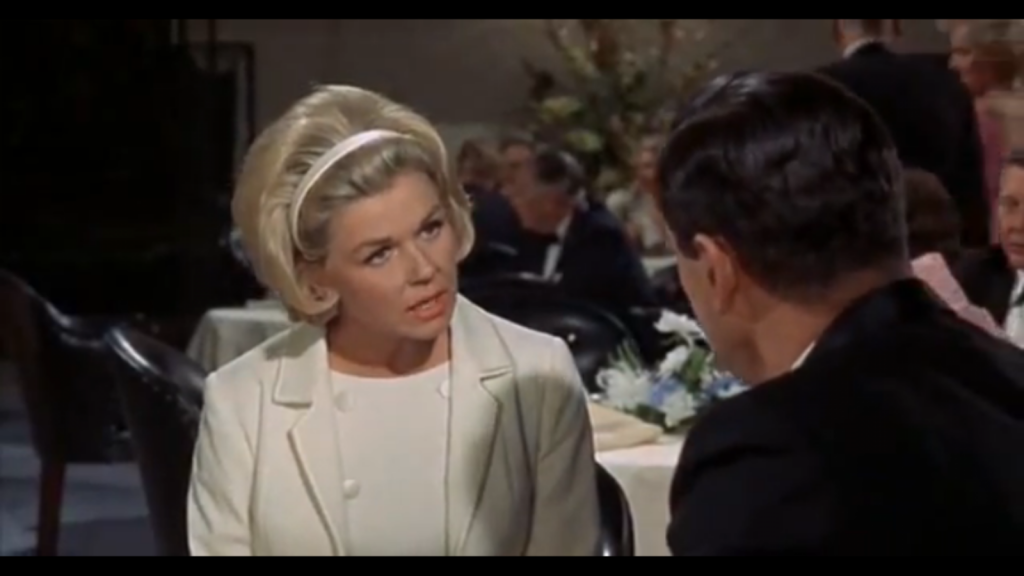
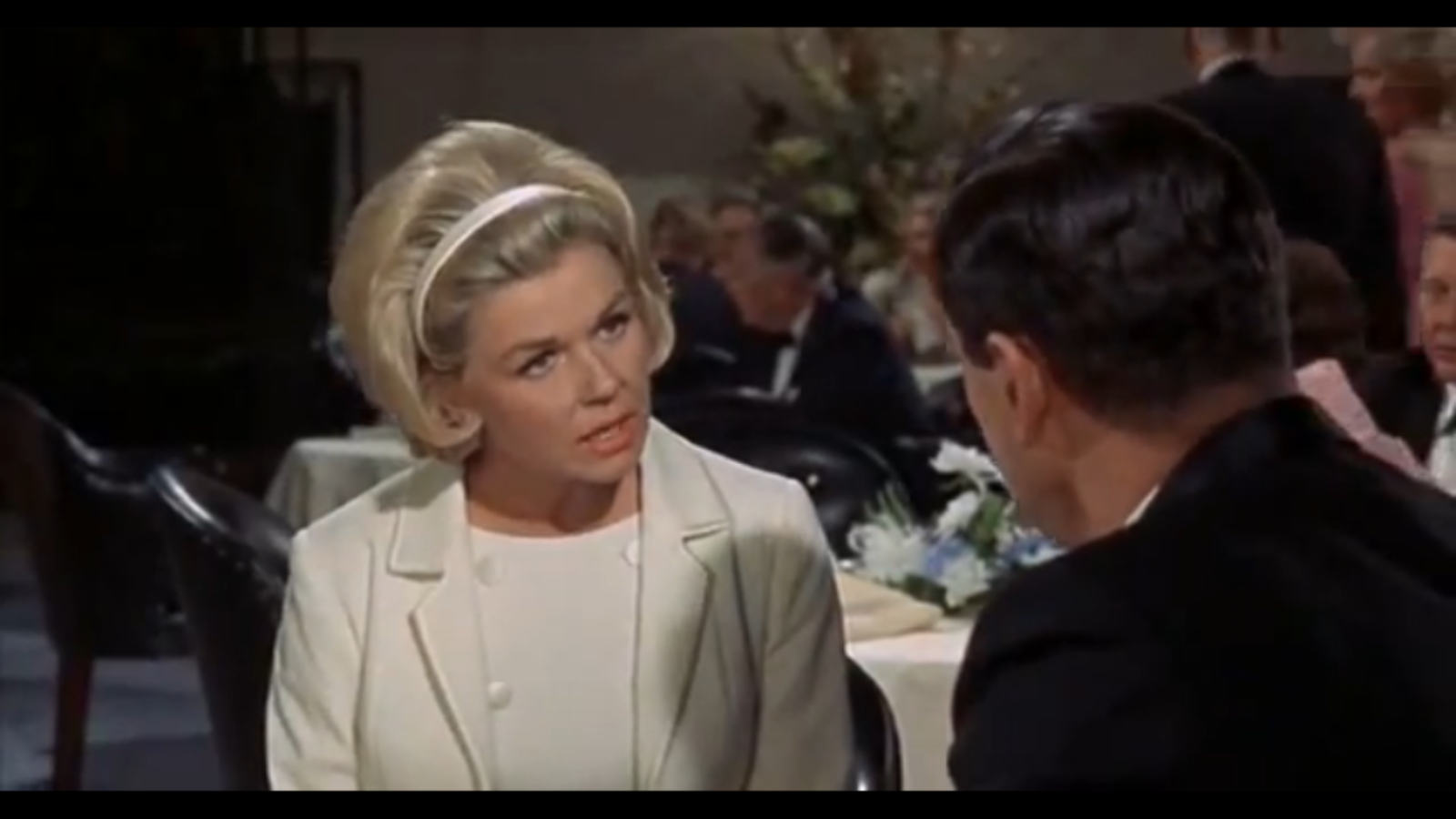
- Doris Day as Judy
- Julius Epstein’s marvelous script
- Frank De Vol’s hilariously melodramatic film score
Must See?
Yes, as a most enjoyable comedy featuring fine performances throughout.
Categories
Links:
|


One thought on “Send Me No Flowers (1964)”
Thanks for the nod above! 😉
I just rewatched this in its blu-ray release – which is particularly bold and perky, thus heightening the film’s sharp yet light charm. Julius Epstein’s screenplay is indeed a marvel of comic construction.
The performances are all finely nuanced under Norman Jewison’s direction – it appears that Jewison made a point of accenting the various characters’ psychological motivation. (Jewison would move on from this kind of film to start making things like ‘In the Heat of the Night’. It takes real talent to be equally adept at light comedy and high drama.)
Doris and Rock are pitch-perfect and Randall and Lynde are top-notch as co-stars (though all of the other supporting cast members are strong here as well). Of particular note is Lynde’s first scene, alone with Hudson – two gay actors at the top of their game (concealed as heterosexuals; though there is no definite hint of Lynde’s character’s sexuality on way or the other).
A lot of ’60s comedies are more on the tepid side – but not this one! Very much a must-see! Tons of fun!